9.8 - Control of heart rate in mammals
 Call Kai
 Learn
Learn Practice Test
 Spaced Repetition
 Match
Match Flashcards
 Knowt Play
1/11

There's no tags or description
Looks like no tags are added yet.
Name | Mastery | Learn | Test | Matching | Spaced | Call with Kai |
|---|
No analytics yet
Send a link to your students to track their progress
12 Terms
What is the equation to calculate cardiac output?
Cardiac output = stroke volume x heart rate
What is cardiac output?
The volume of blood the heart pumps through the circulatory system in one minute
What is stroke volume?
The volume of blood pumped from the left ventricle with each beat of the heart
Describe the autonomic nervous system
Self-governing & controls involuntary activities of internal muscles & glands
Consists of two divisions: sympathetic & parasympathetic nervous system
Compare the sympathetic & parasympathetic nervous systems
Sympathetic ‘fight or flight’:
helps the body prepare for a perceived threat
inhibition of digestive & immune systems (diverting blood to muscles)
pupil dilation & increased heart rate
expansion of the lungs
Parasympathetic ‘rest & digest’:
effects are antagonistic to the sympathetic system
stimulation of digestive & immune systems
decreased pupil size & heart rate
contraction of the lungs
What is the name & location of the two nodes involved in heart contraction?
Sinoatrial node (SAN): within the wall of the right atrium
Atrio-ventricular node (AVN): near the lower end of the right atrium in the wall that separates the two atria
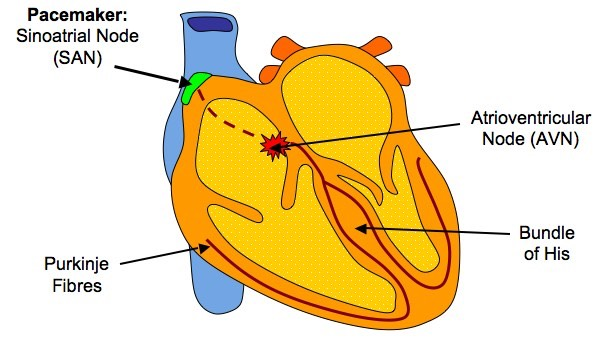
Describe the sequence of stimulation that occurs in a mammalian heart in one cardiac cycle
SAN acts as pacemaker & initiates a wave of depolarisation
Wave of depolarisation spreads across both atria (atrial systole)
AVN delays the transmission of the impulse, while the ventricles fill with blood & the valves close
AVN conveys wave of depolarisation down the septum via Bundle of His, which branches into purkyne fibres along ventricles
This causes the ventricles to contract from the apex upwards
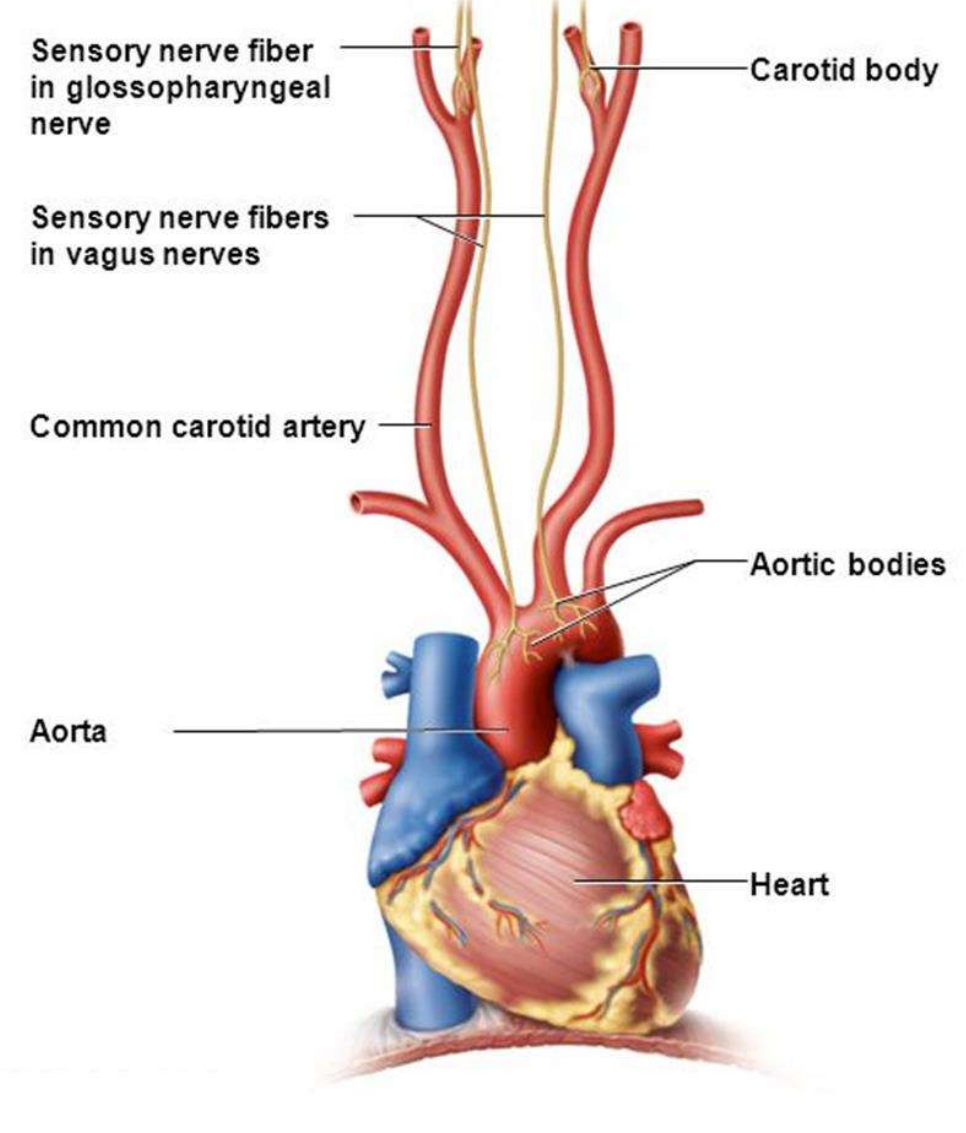
What is the function & location of the receptors involved in changing heart rate?
Baroreceptors: detect changes in blood pressure → carotid body
Chemoreceptors: detect changes in pH (e.g. due to increase in CO2 or lactic acid concentration) → carotid & aortic body
How does the body respond to an increase in blood pressure?
When blood pressure rises above normal, the baroreceptors are stretched
They send more nerve impulses to the cardio-inhibitory centre in the medulla oblongata that decreases heart rate
This centre sends impulses via the parasympathetic nervous system to the sinoatrial node of the heart, which decreases the rate at which the heart beats & causes vasodilation (widening of blood vessels)
This stimulates the release of acetylcholine, which decreases the heart rate
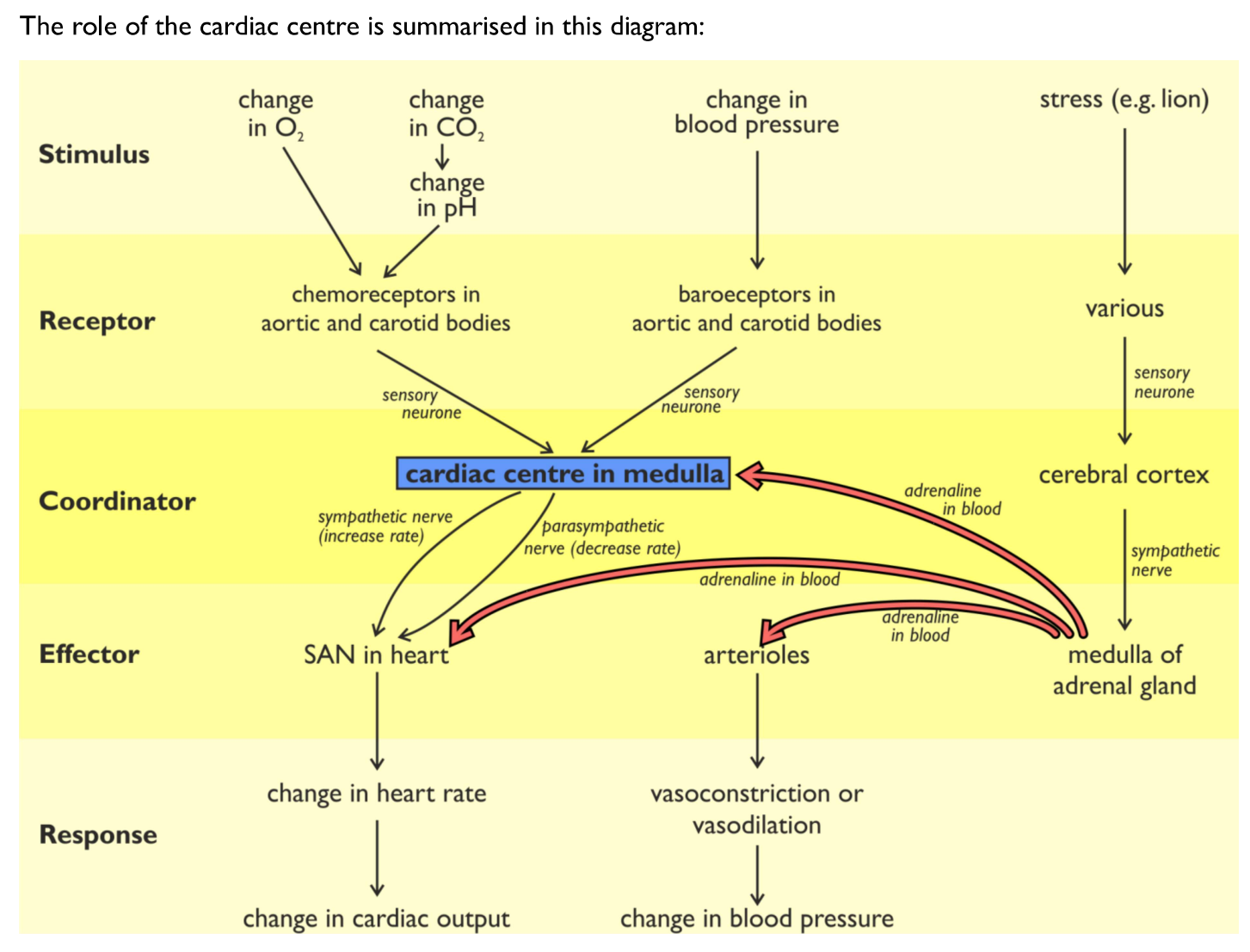
How does the body respond to an decrease in blood pressure?
When blood pressure falls below normal, the baroreceptors stretch less
They send more nerve impulses to the cardio-acceleratory centre of the medulla oblongata that increases heart rate
This centre sends impulses via the sympathetic nervous system to the sinoatrial node of the heart, which increases the rate at which the heart beats & causes vasoconstriction (narrowing of blood vessels)
This stimulates the release of noradrenaline, which increases the heart rate & strength of contraction
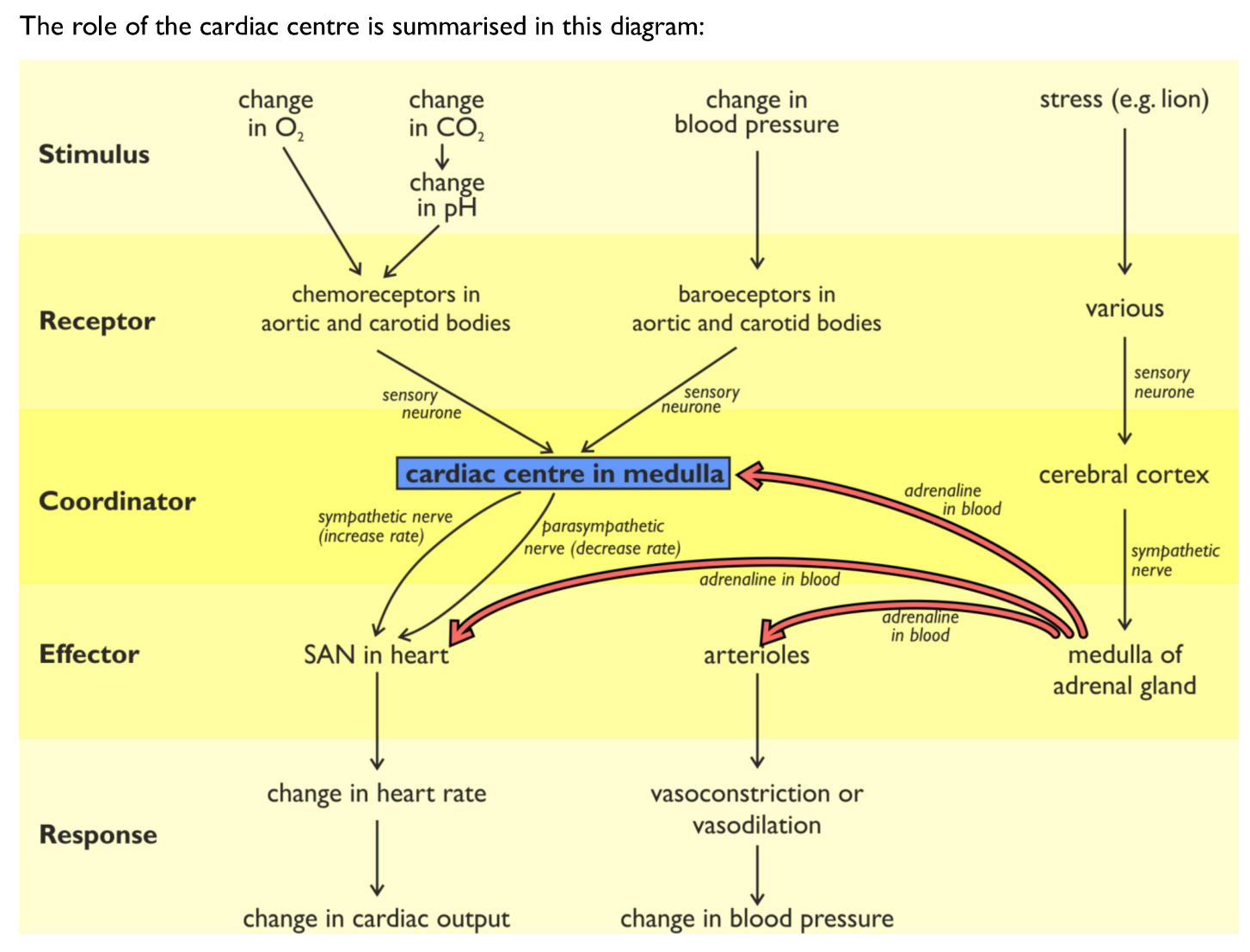
How does the body respond to an increase in CO2 concentration?
Chemoreceptors detect a decrease in pH & send more impulses to the cardio-acceleratory centre of the medulla oblongata
More impulses are sent to the sinoatrial node of the heart via the sympathetic nervous system
Heart rate increases, so the rate of blood flow to the lungs increases, meaning the rate of gas exchange & ventilation increases
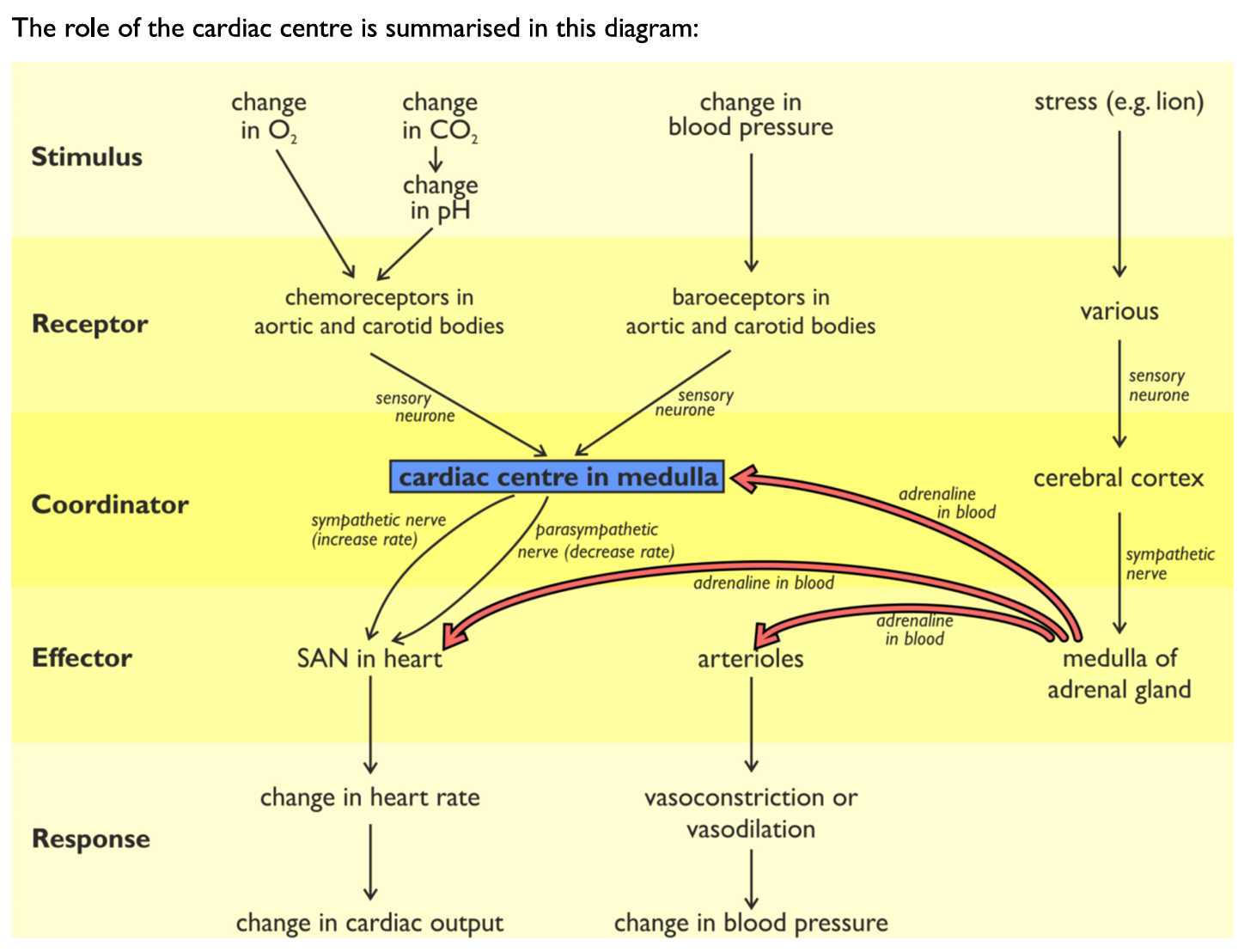
How does the autonomic nervous system increase heart rate?
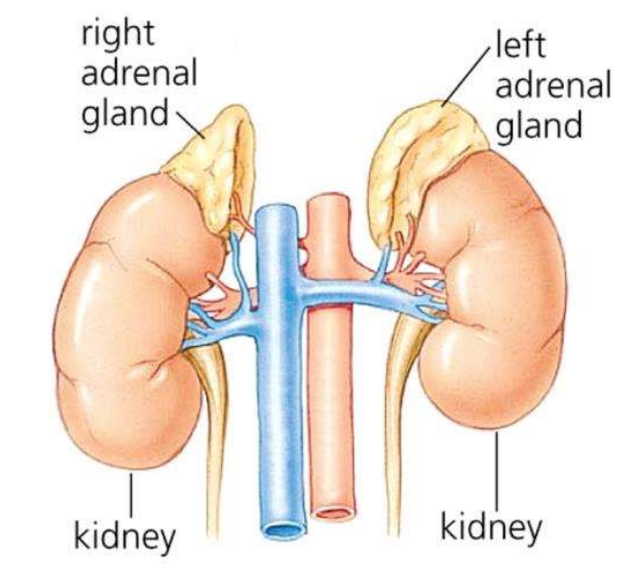
In times of stress (e.g. fight or flight response), the sympathetic nervous system stimulates the release of adrenaline from the adrenal glands
Adrenaline stimulates the cardiac centre in the brain, increasing the impulses in the sympathetic neurons supplying the heart & sinoatrial node to increase heart rate