AP Euro Unit #5 Vocab LM 낱말 카드 | Quizlet
 Call Kai
 Learn
Learn Practice Test
 Spaced Repetition
 Match
Match Flashcards
 Knowt Play
1/26

There's no tags or description
Looks like no tags are added yet.
Name | Mastery | Learn | Test | Matching | Spaced | Call with Kai |
|---|
No analytics yet
Send a link to your students to track their progress
27 Terms
Cecil Rhodes
British entrepreneur and politician, born in 1853, involved in the expansion of the British Empire from South Africa into Central Africa. The colonies of Southern Rhodesia (now Zimbabwe) and Northern Rhodesia (now Zambia) were named after him. (p. 736). Played a major political and economic role in colonial South Africa. He was a financier, statesman, and empire builder with a philosophy of mystical imperialism.
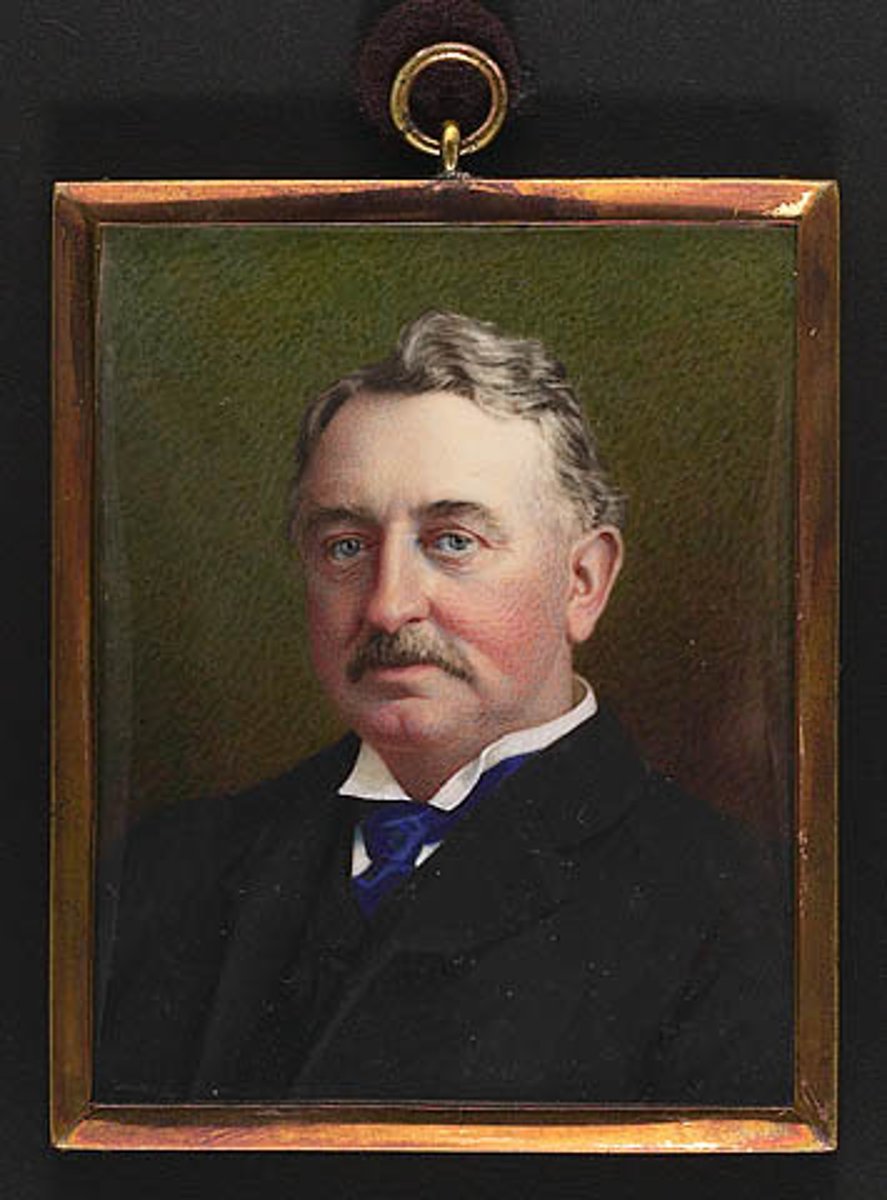
Dreyfus Affair
1894; A divisive case in which Alfred Dreyfus, a Jewish captain in the French army, was falsely accused and convicted of treason (supplying French secrets to the Germans). Found guilty and sent to Devil's Island. After 10 years there he was given a full pardon by President Loubet. The Catholic Church sided with the anti-Semites against Dreyfus; after Dreyfus was declared innocent, the French government severed all ties between the state and the church.
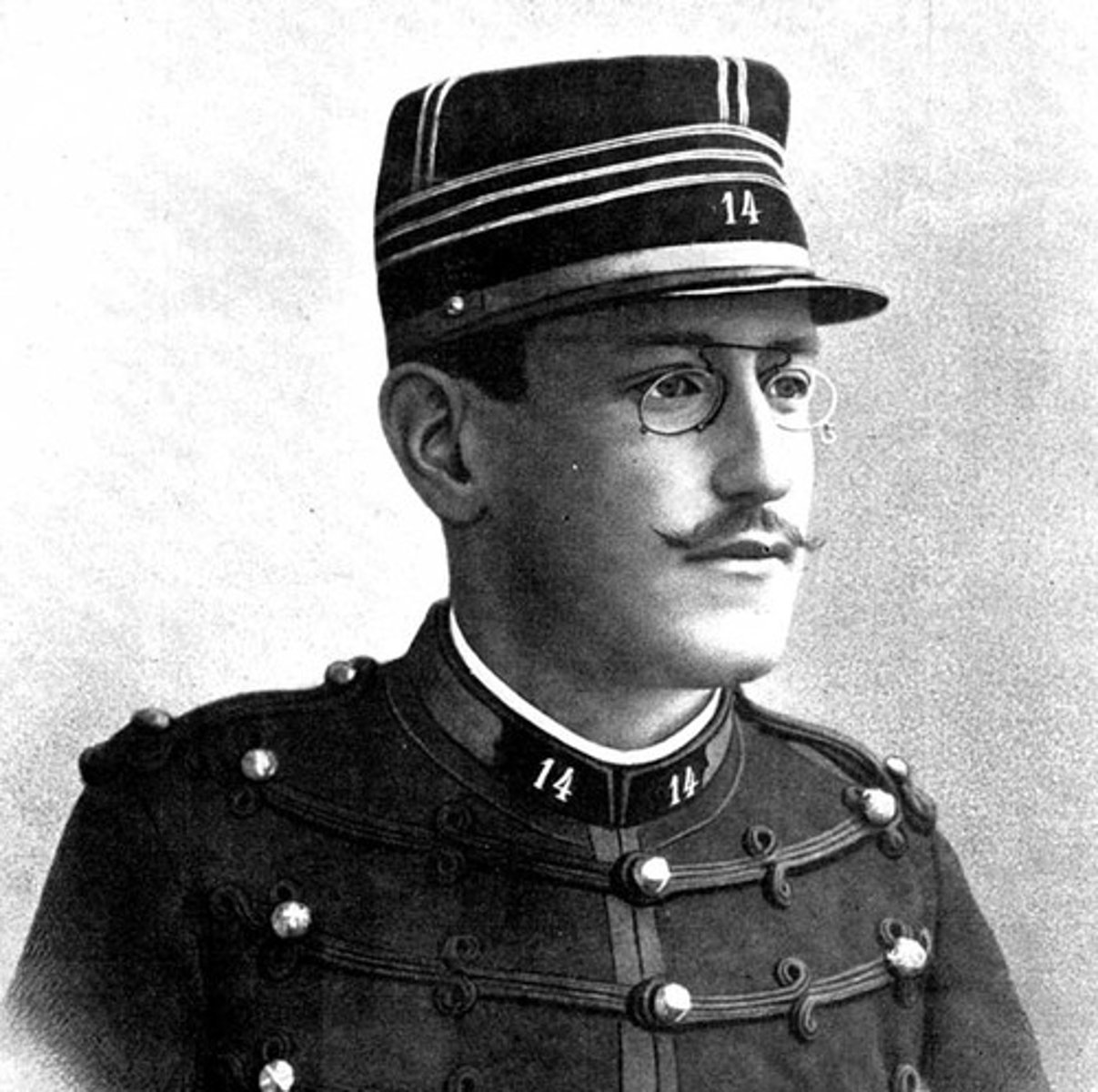
Giuseppe Garibaldi
(1807-82) An Italian radical, "super patriot", who emerged as a powerful independent force in Italian politics. He planned to liberate the Two Kingdoms of Sicily, Italy; helped unify southern Italy with the help of his Red Shirts
Victor Emmanuel
King of Piedmont, Savoy, and Sardinia. Eventually became first king of a united Italy. Led the north in Italian unification and united with Garibaldi's south in 1861. Drove the pope into the Vatican city, and eventually made Rome the capital of Italy.
Otto Von Bismark
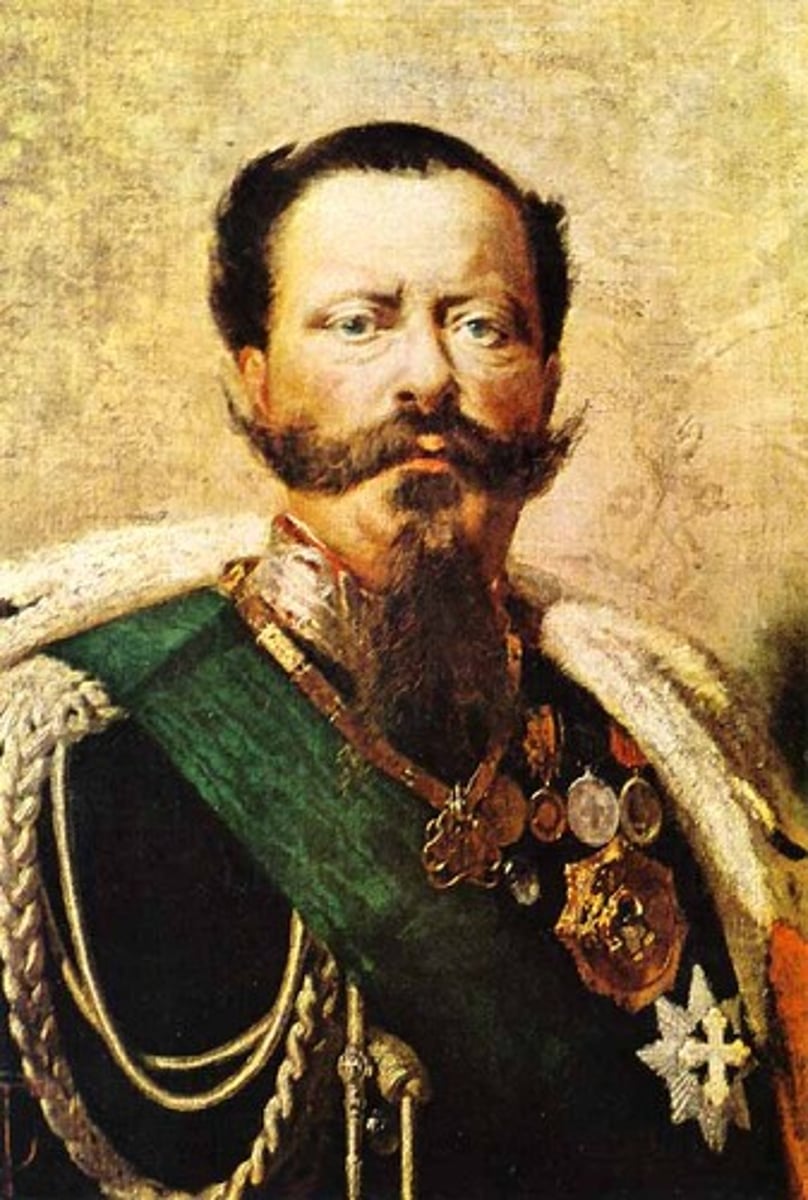
Prussian diplomat and prime minister; Germany's chancellor. He was successful in unifying Germany. He wanted to make sure he est. alliances to keep the peace in Europe, so he started making alliances w/ other countries, which led to war. He felt France was the biggest threat, so aimed to isolate France. Formed "dual alliance" w/ Austria-Hungary. 13 yrs. later Italy joins the alliance to form the "triple alliance". In 1887, Germany forms a separate alliance with Russia
Proletariat
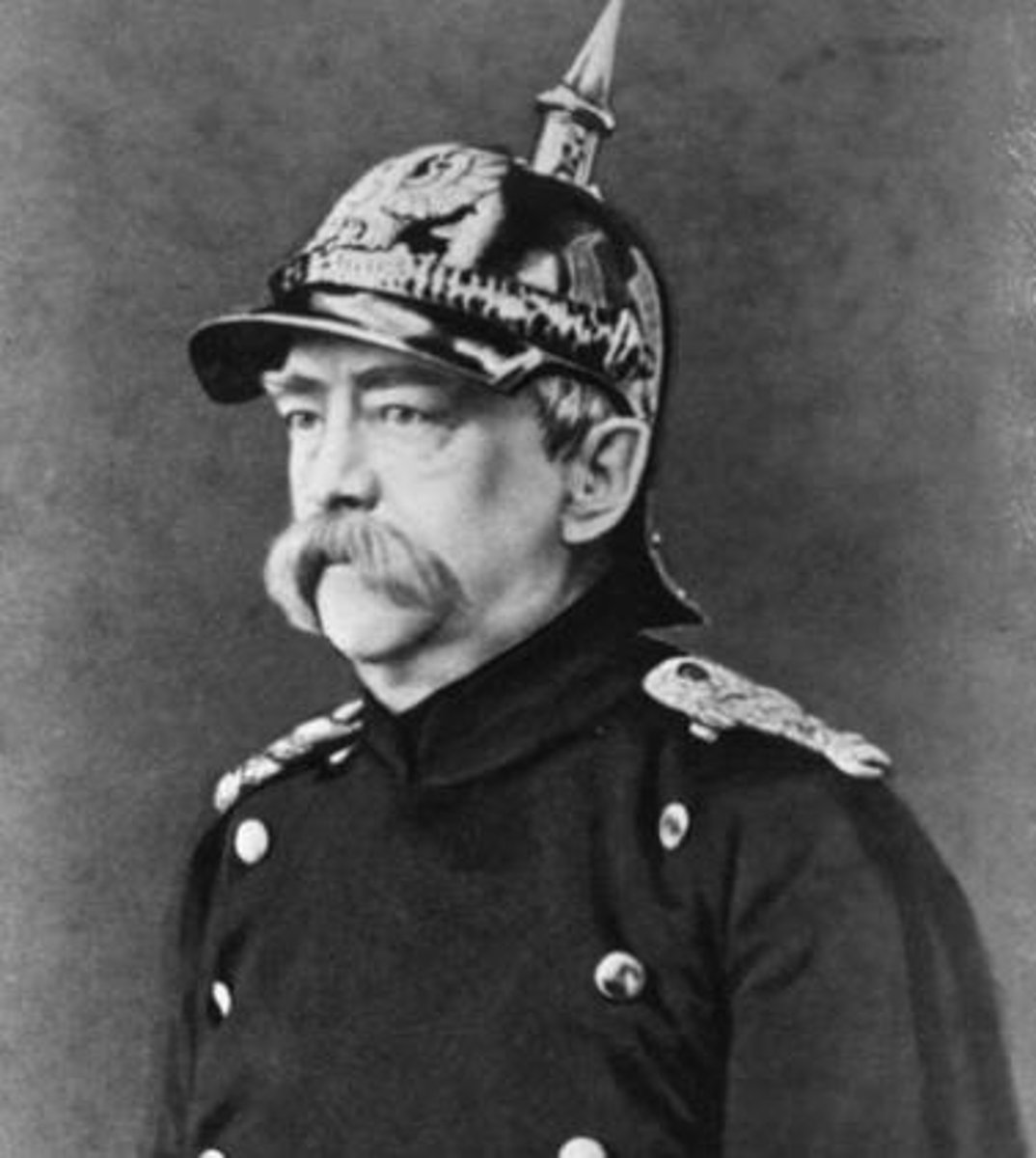
Marx's term for the exploited class, the mass of workers who do not own the means of production (working class)
Communist Manifesto
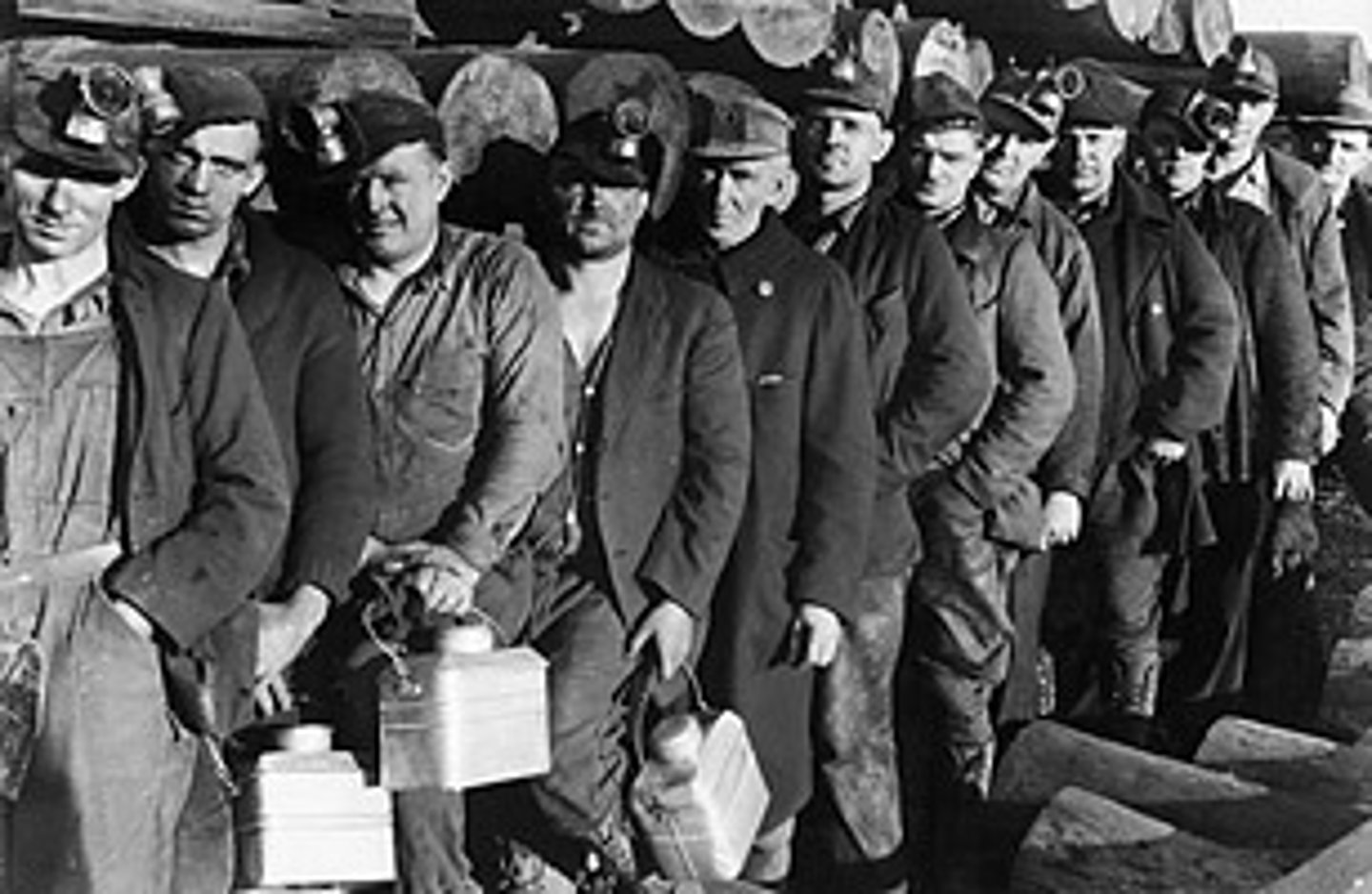
A socialist manifesto written by Karl Marx and Friedrich Engels (1848) describing the history of the working-class movement according to their views; urges an uprising by workers to seize control of the factors of production from the upper and middle classes.
Liberalism
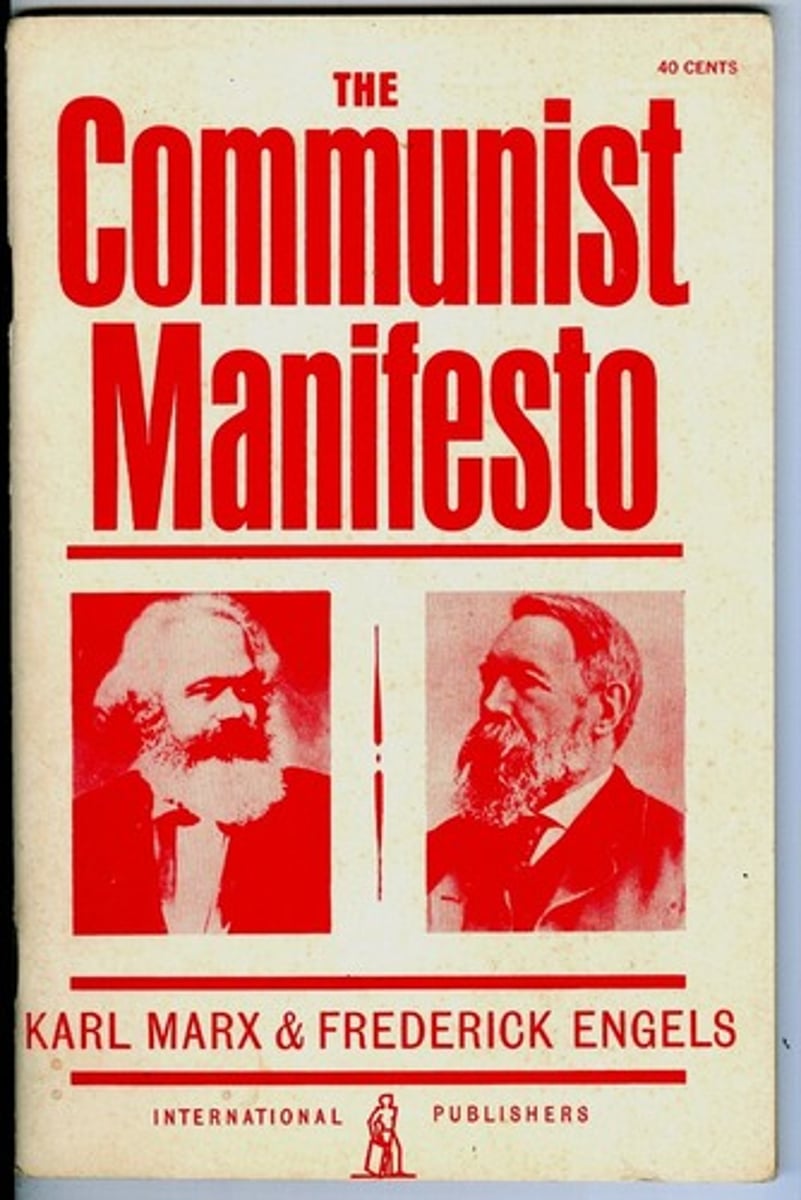
A political ideology that emphasizes rule of law, representative democracy, rights of citizens, and the protection of private property. This ideology, derived from the Enlightenment, was especially popular among the property-owning middle classes.
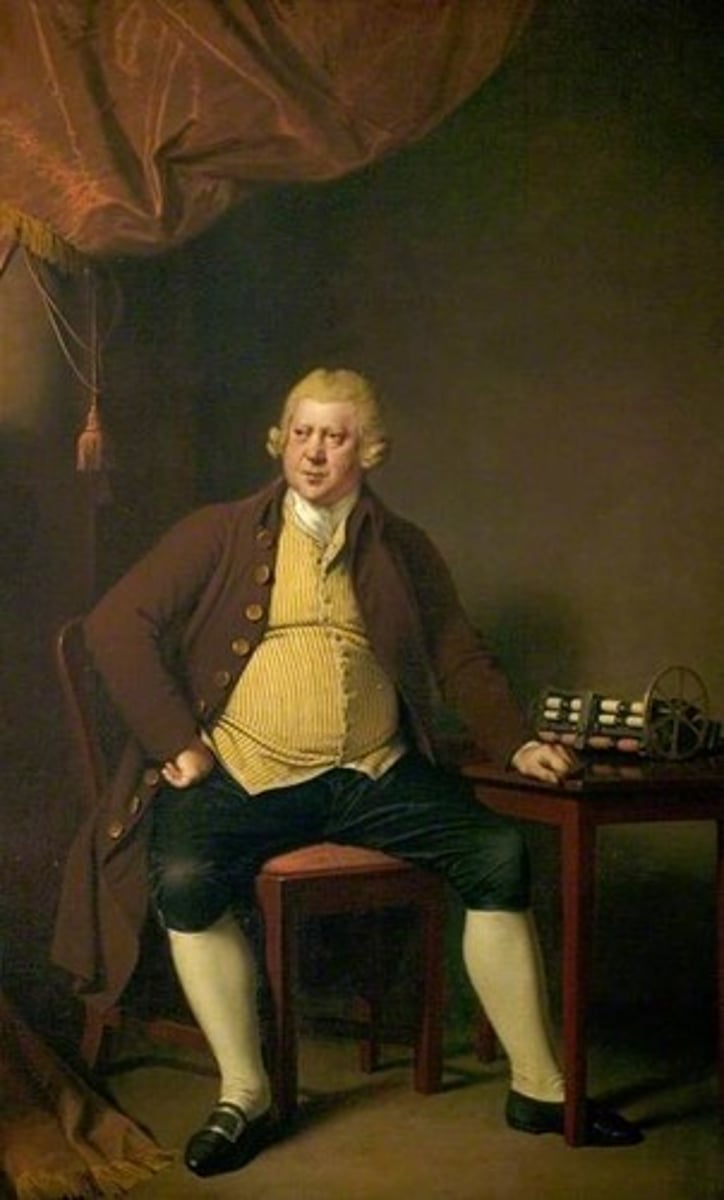
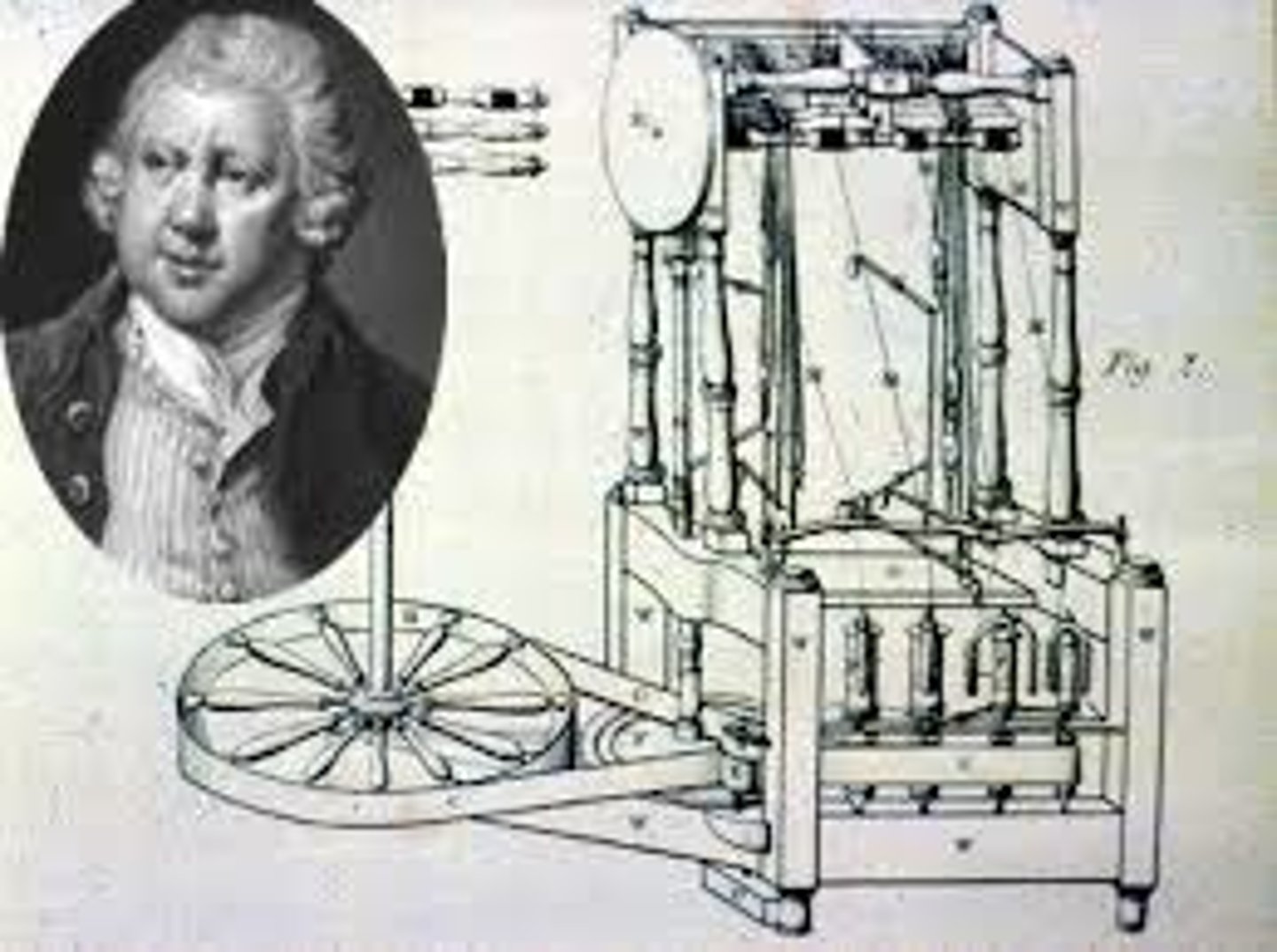
Sir Richard Arkwright
(1733-1792) Invented water frame at almost the same time as the spinning jenny was invented.
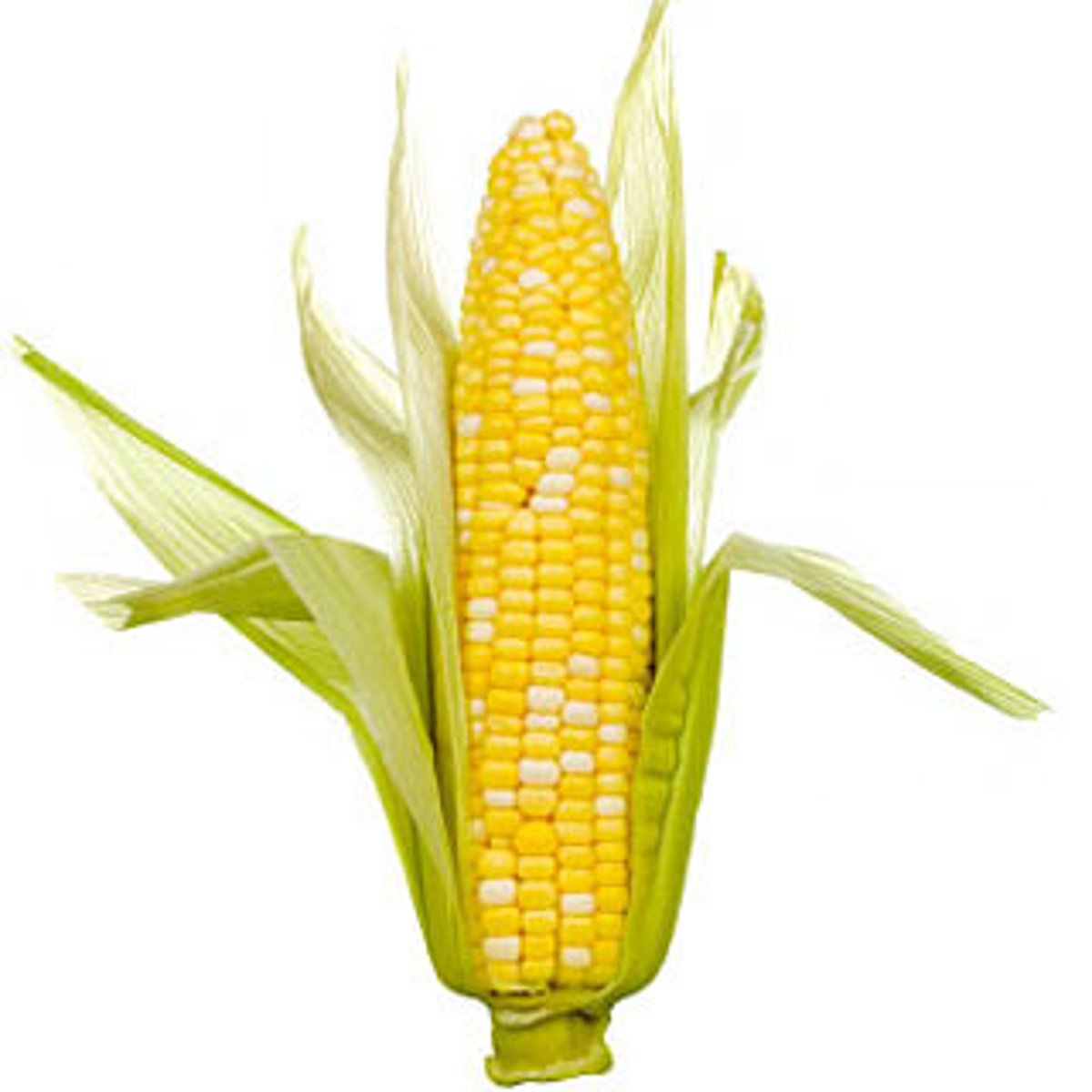
Corn Laws
British laws governing the import and export of grain, which were revised in 1815 to prohibit the importation of foreign grain unless the price at home rose to improbable levels, thus benefiting the aristocracy but making food prices high for working people.
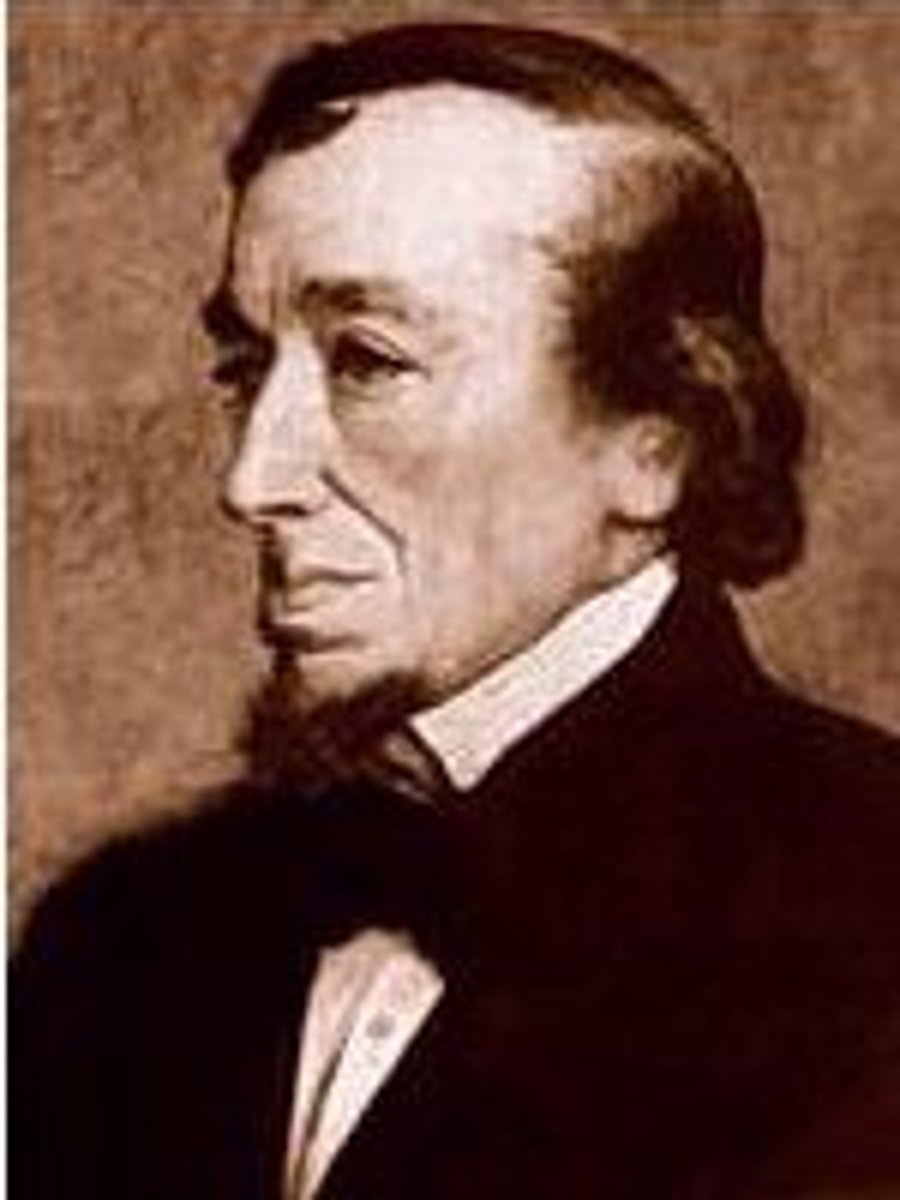
Benjamin Disraeli
A British Prime Minister, parliamentarian, Conservative statesman and literary figure. Only Prime Minister of Jewish heritage. He played an instrumental role in the creation of the modern Conservative Party after the Corn Laws schism of 1846 by forging the Tories into the modern Conservative Party; Extended the vote to the rich middle class in order to broaden the political base of the conservative partyterm-11
Friederich Engels
German socialist who wrote The Condition of the Working-Class in England in 1844; described how disgusting and dirty the city of Manchester was; Self-educated in philosophy, financially supports Marx
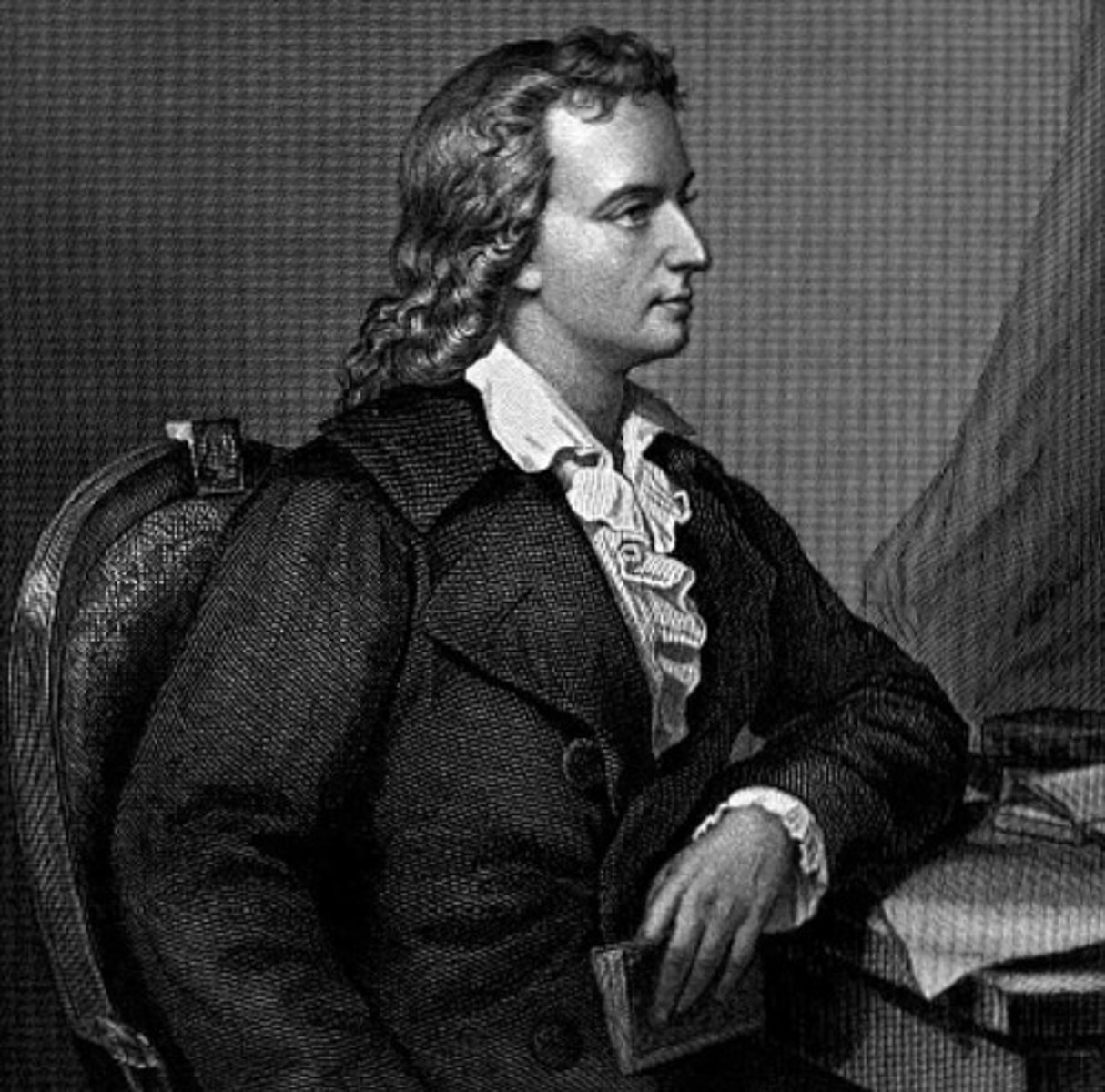
Factory Acts 1833
Passed by Parliament in 1833; Limits the workday for children from 9 -13 to eight hours a day, 14 - 18 to twelve hours, and children under 9 were to be enrolled in elementary schools that employers were supposed to establish; Banned employment of women/children in mining. Enforced in response to the Sadler commission.
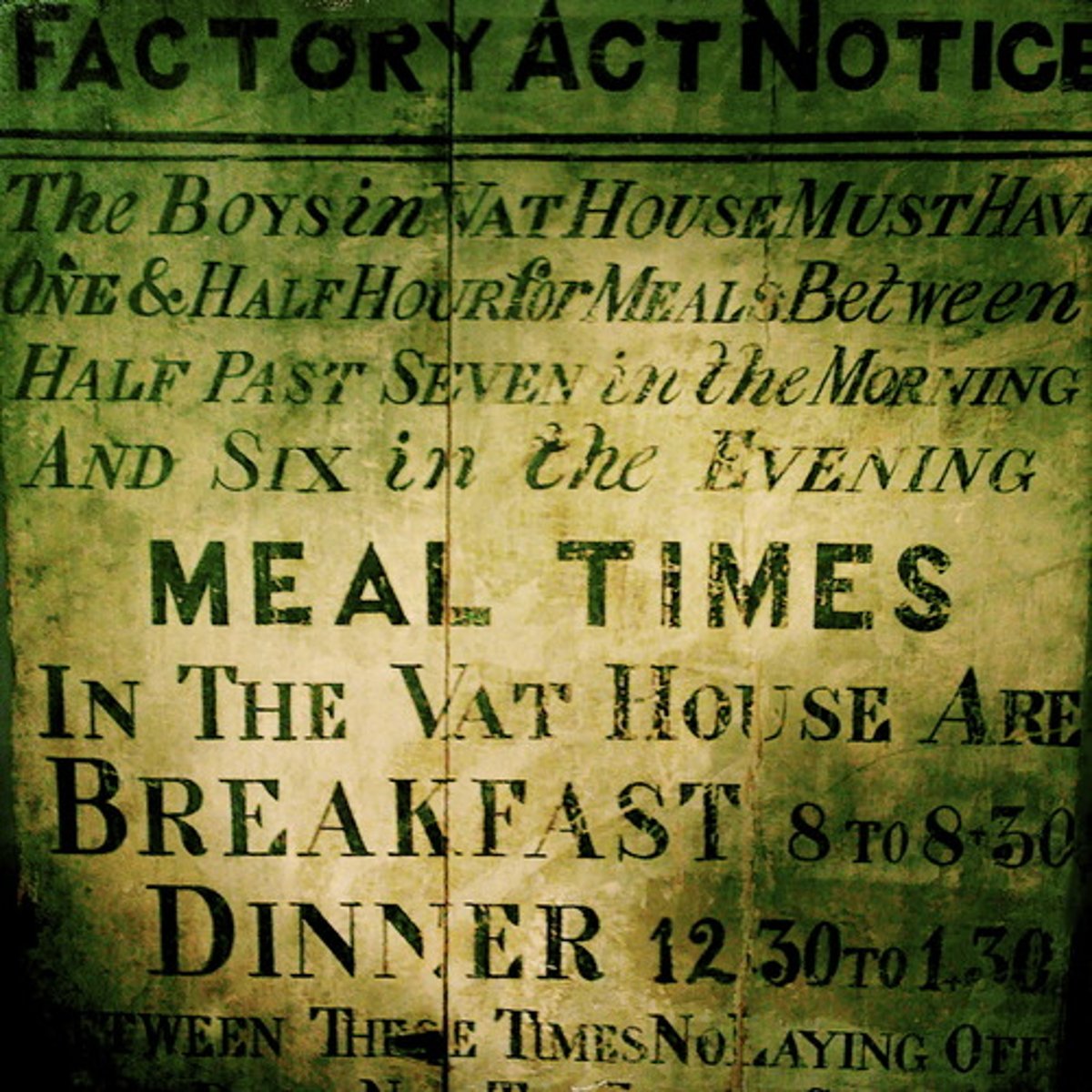
Flying Shuttle
1733; Was developed by John Kay, its invention was one of the key developments in weaving that helped fuel the Industrial Revolution, enabled the weaver of a loom to throw the shuttle back and forth between the threads with one hand; Sped up the weaving process
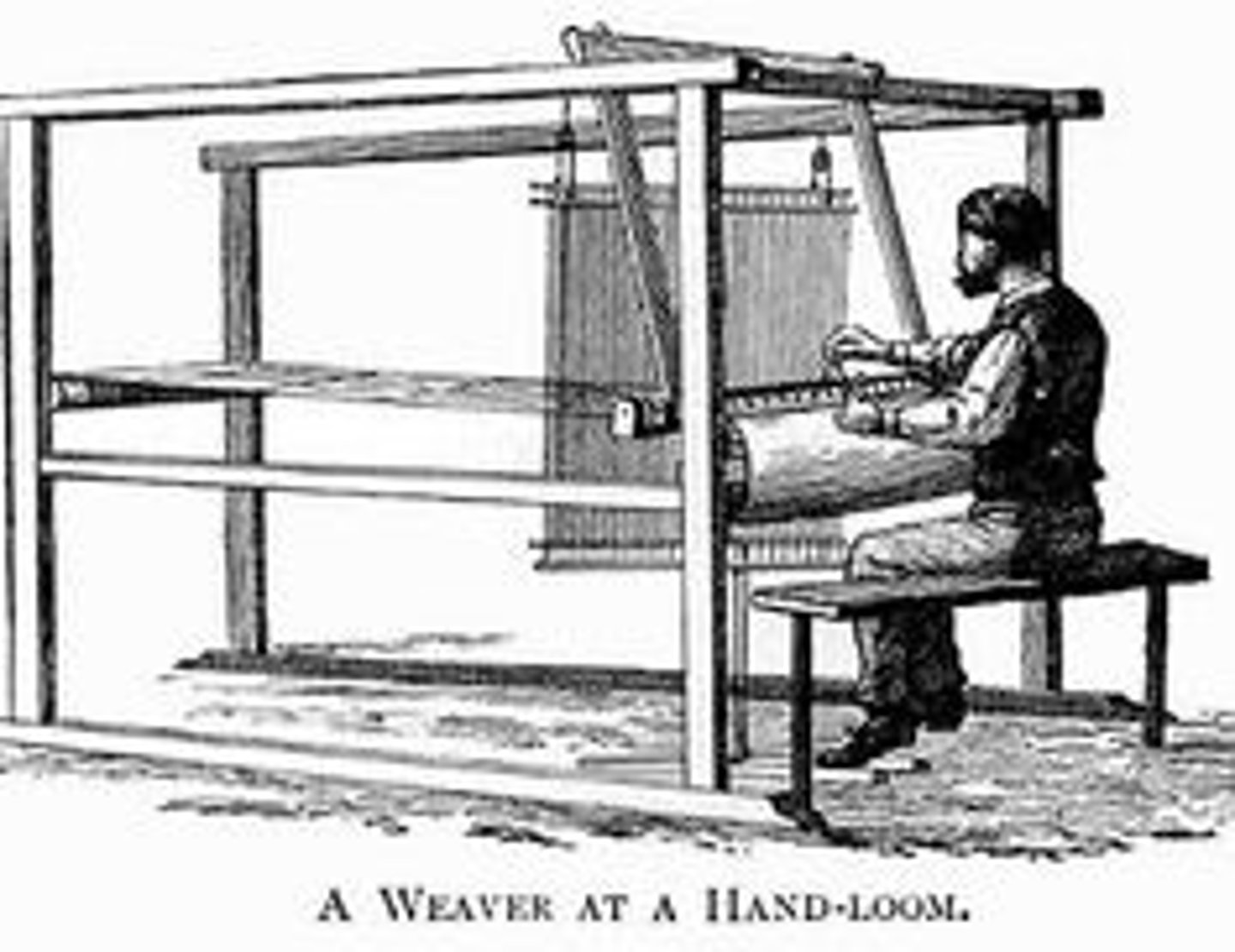
James Hargreaves
Invented a spinning Jenny in 1764 which spun many threads at the same time; sped up yarn production
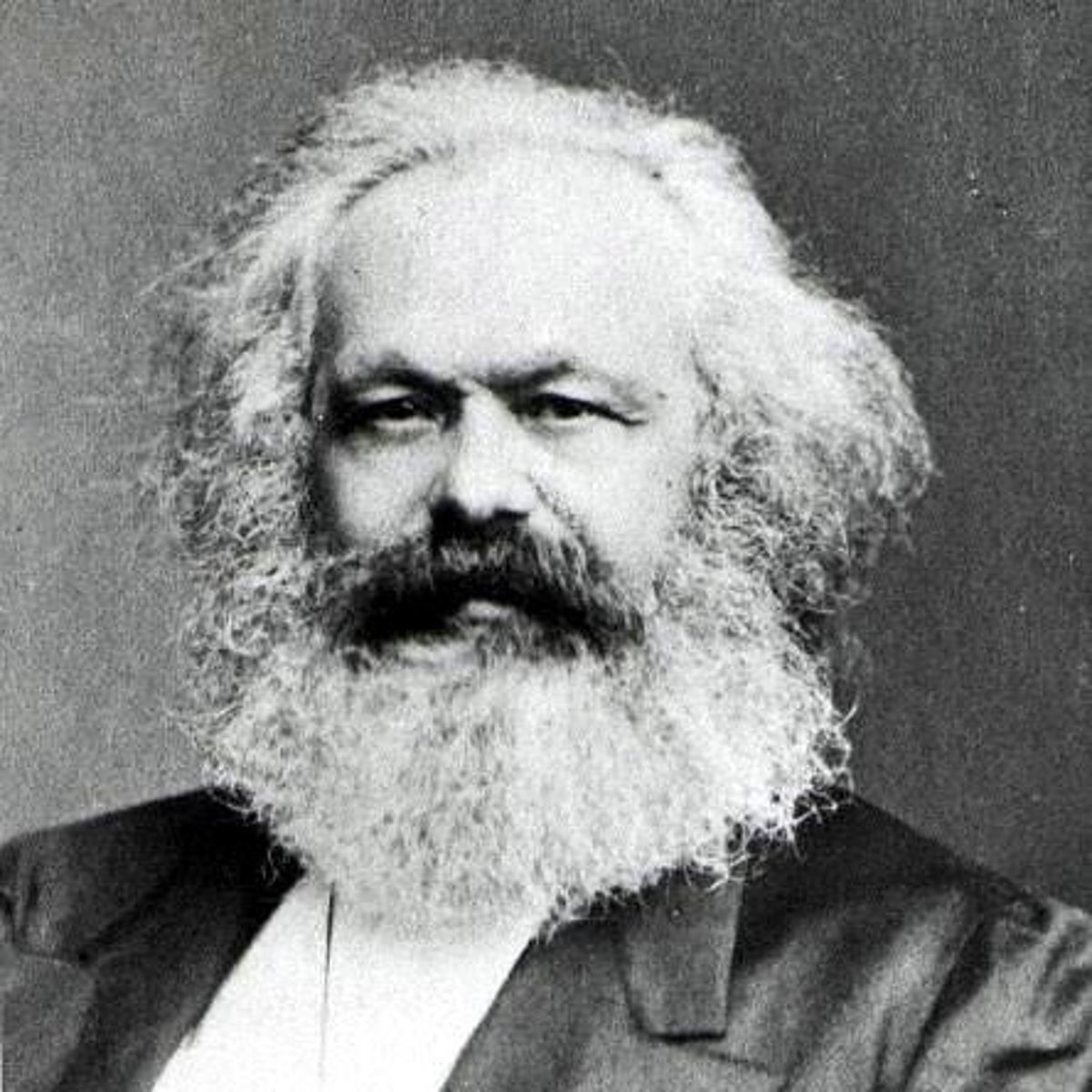
Karl Marx
1818-1883. 19th century philosopher, political economist, sociologist, humanist, political theorist, and revolutionary. Often recognized as the father of communism. Analysis of history led to his belief that communism would replace capitalism as it replaced feudalism. Believed in a classless society. Wrote the "Communist Manifesto."
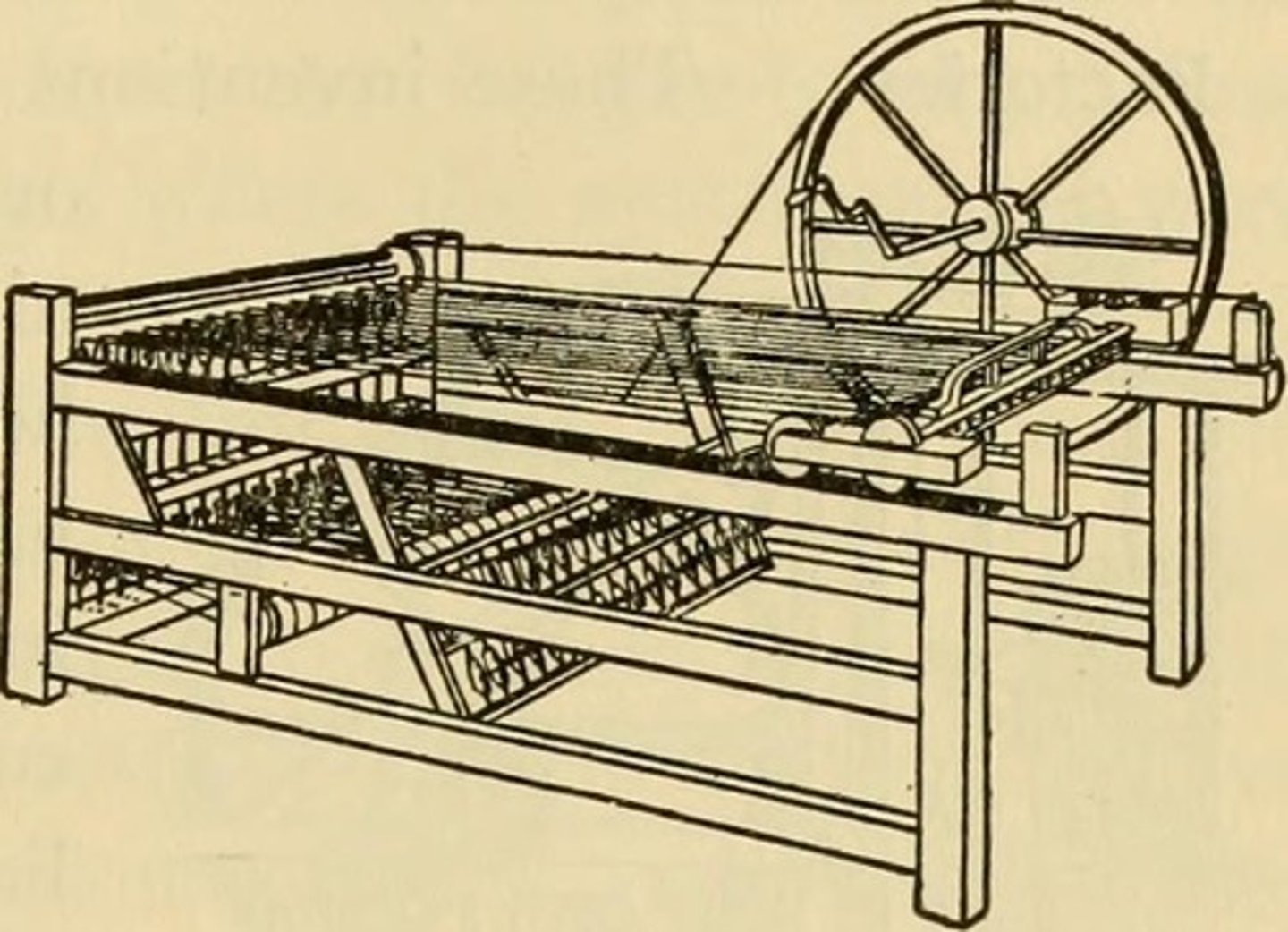
Spinning-Jenny
This machine played an important role in the mechanization of textile production. Like the spinning wheel, it may be operated by a treadle or by hand. But, unlike the spinning wheel, it can spin more than one yarn at a time. The idea for multiple-yarn spinning was conceived about 1764 by James Hargreaves, an English weaver. In 1770, he patented a machine that could spin 16 yarns at a time. (643, 727)
Tory
a person who supported the British cause in the American Revolution; a loyalist
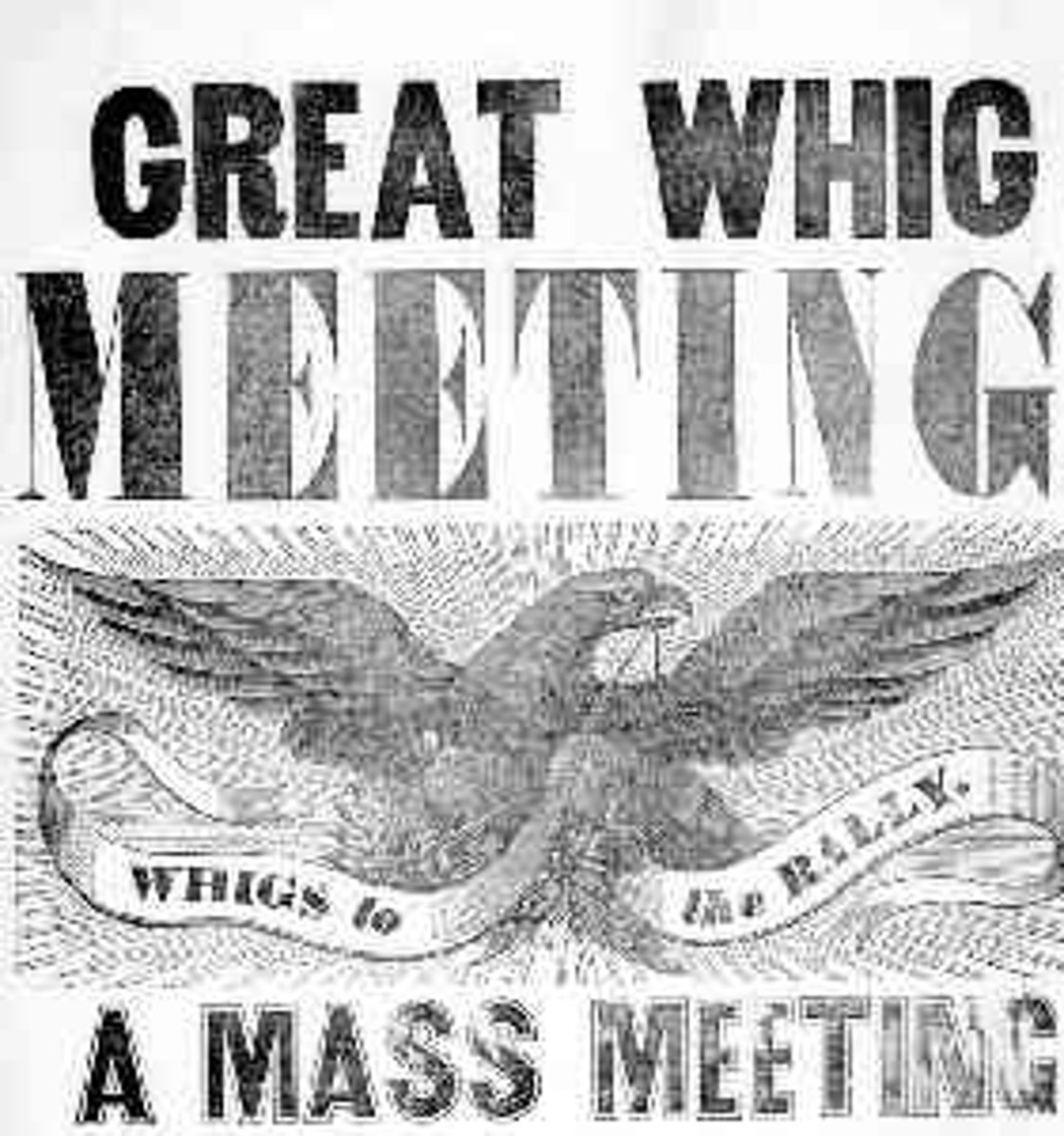
Whig
British party more responsive to commercial and manufacturing interests; Member of the nationalist political party formed in 1832 in opposition to the Democrats
Water Frame
1780's; Richard Arkwright; powered by water; turned out yarn much faster than cottage spinning wheels, led to development of mechanized looms
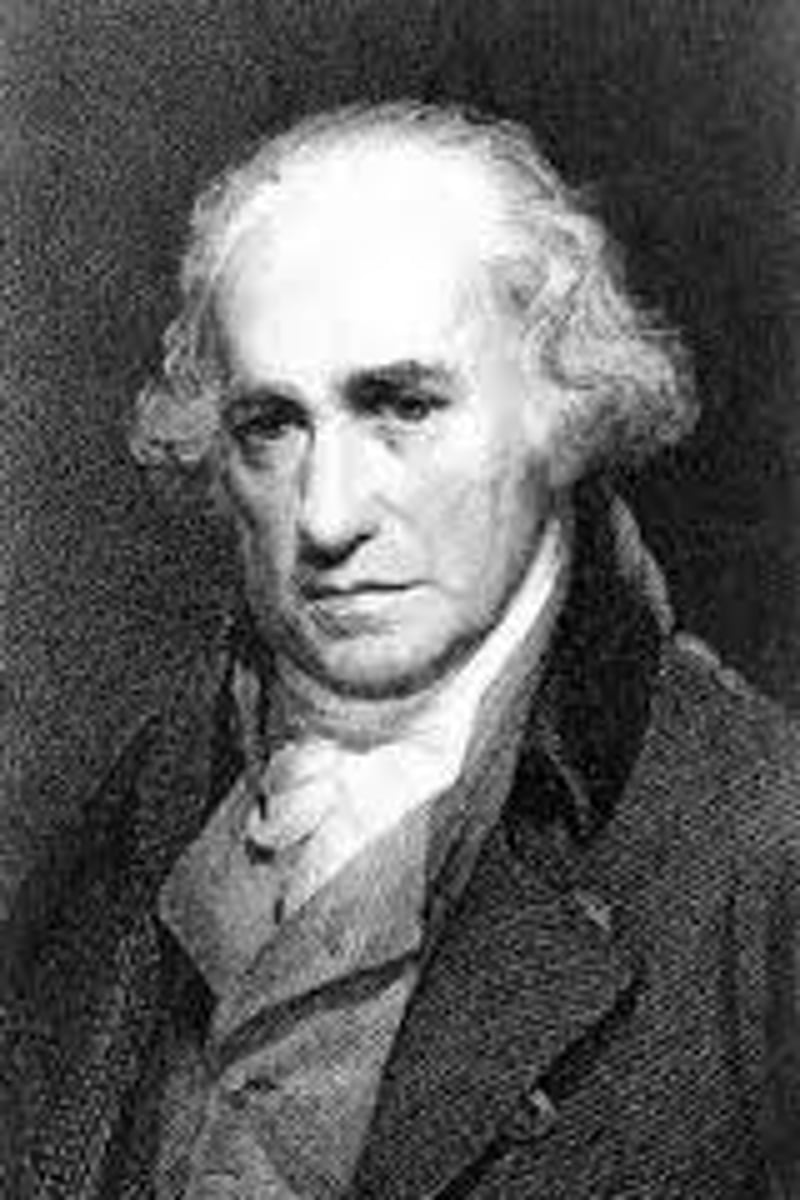
James Watt
Scottish engineer and inventor whose improvements in the steam engine led to its wide use in industry (1736-1819).
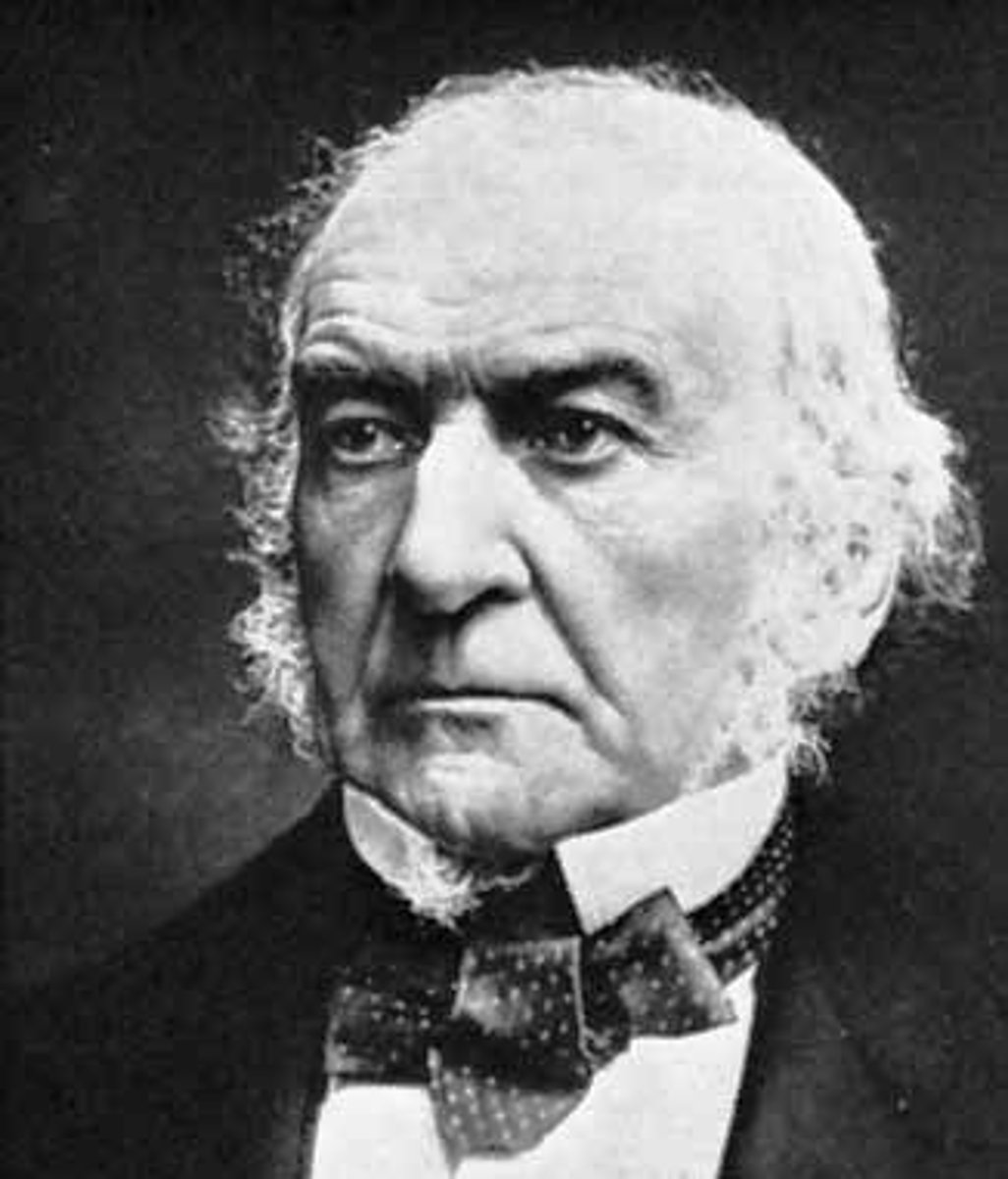
William Gladstone
A Liberal British Prime Minister who served 4 times and gave concessions to various parties and ultimately introduced bills for Irish self-governance; Worked to extend suffrage to farm workers and most other men
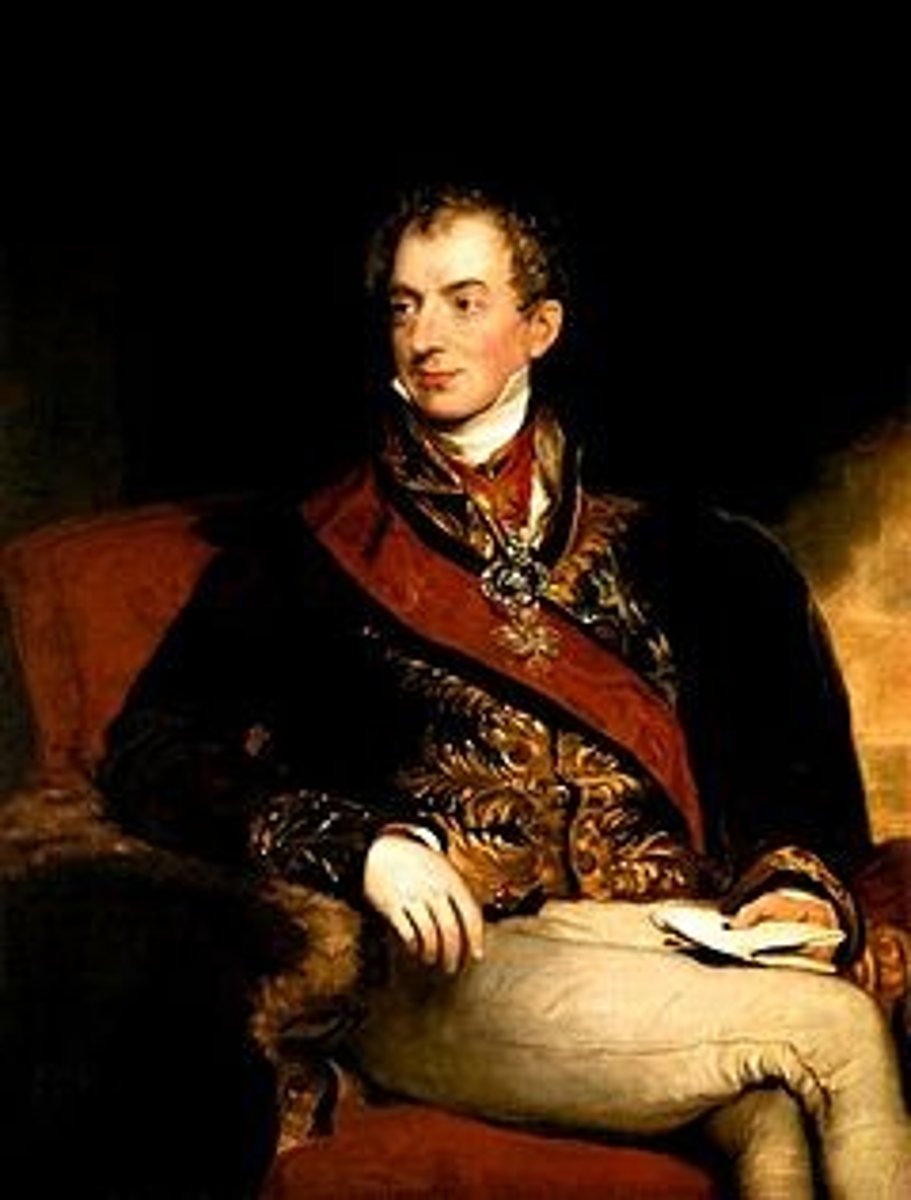
Klemons Von Metternich
The Austrian foreign minister from 1809 to 1848, he was a strong conservative who greatly opposed both liberalism and nationalism in the vast Austrian empire. He represented Austria and was the most influential leader at the Congress of Vienna.
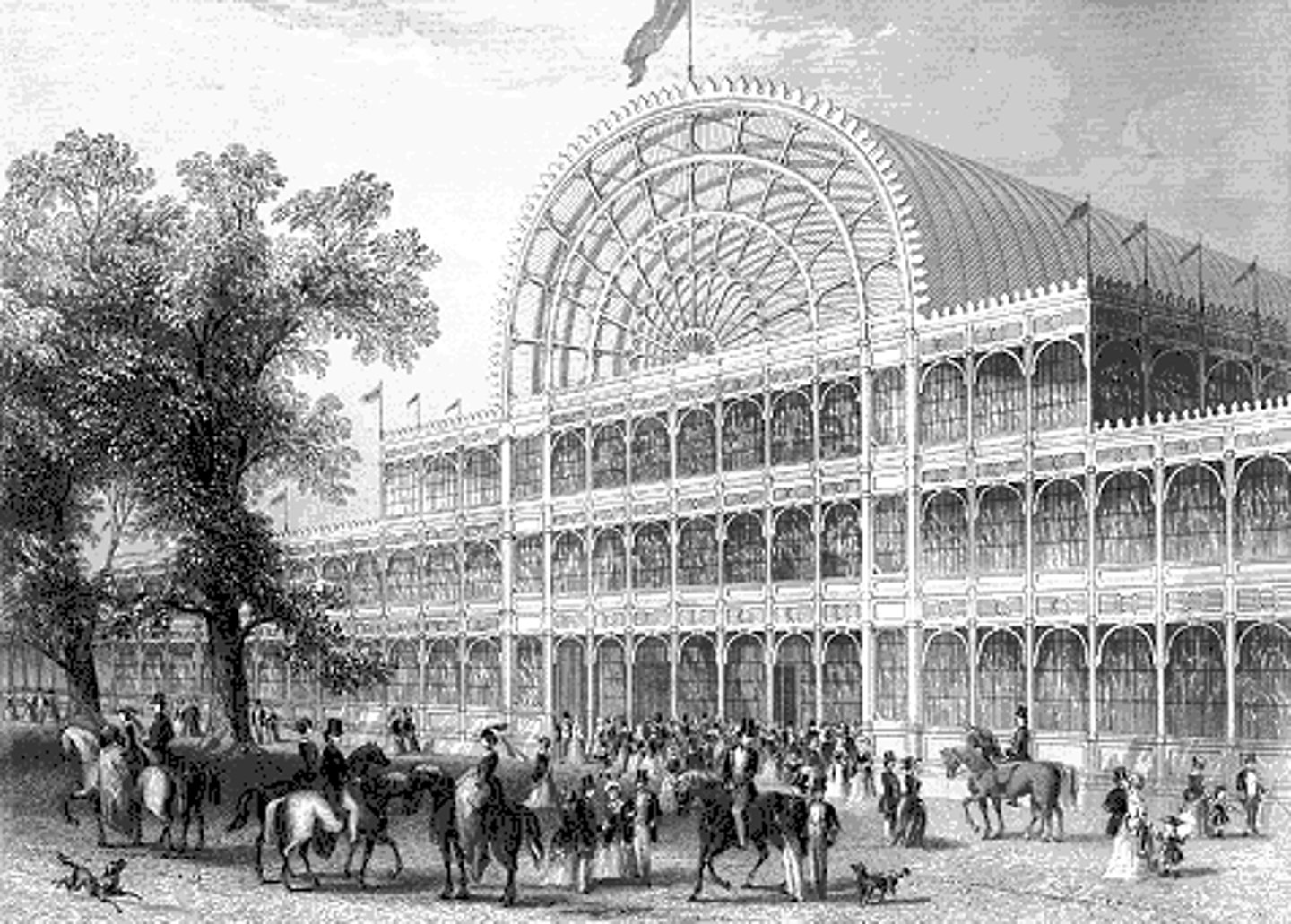
Crystal Palace at the Great Exhibition of 1851
Building in Hyde Park, London, for the Great Exhibition of 1851. Made of iron and glass, like a gigantic greenhouse, it was a symbol of the industrial age; Sponsored by the British royal family (Queen Victoria and Prince Albert), celebrated the new era of industrial technology and the kingdom's role as world economic leader
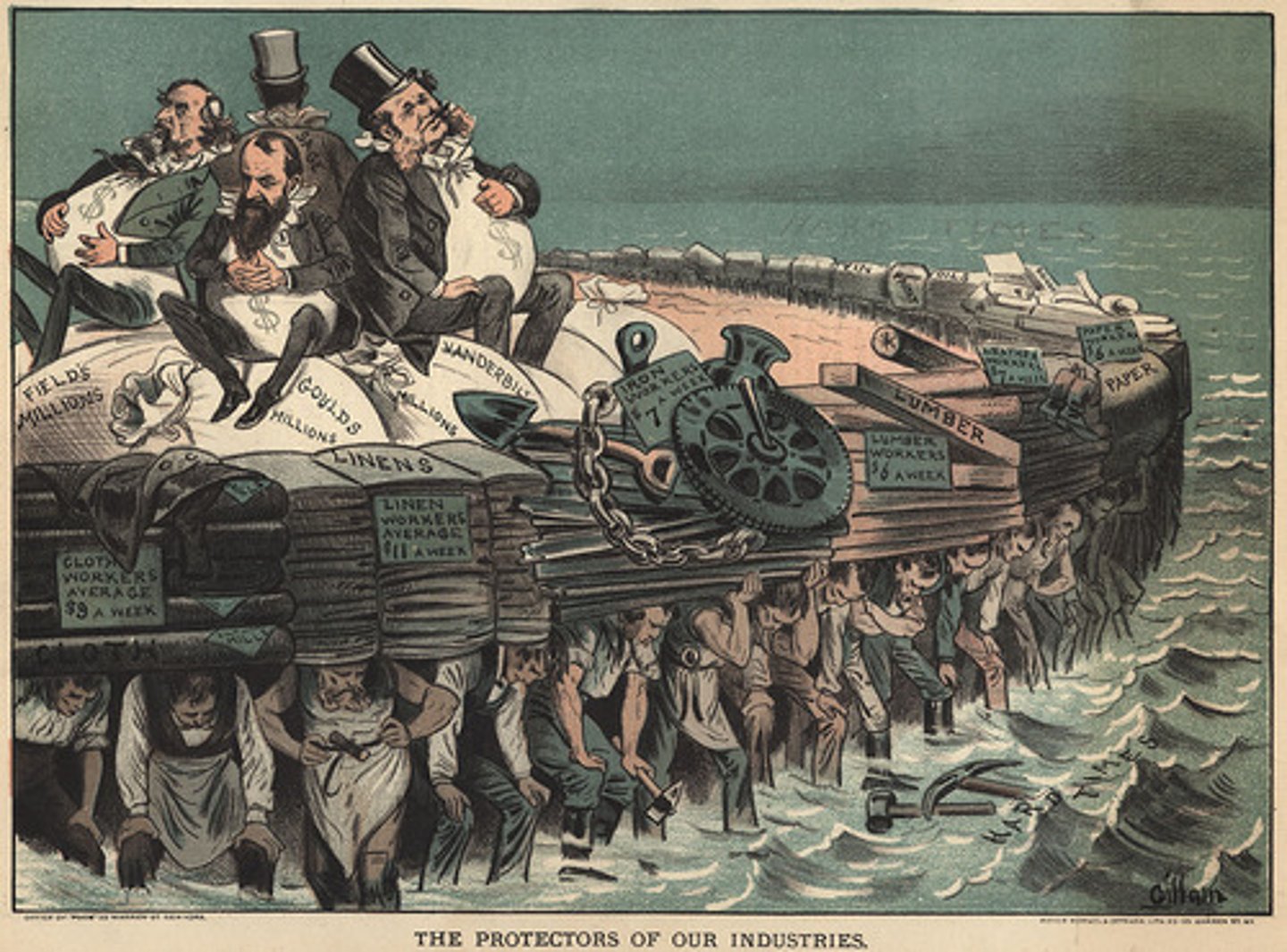
Social Darwinism
The application of ideas about evolution and "survival of the fittest" to human societies - particularly as a justification for their imperialist expansion; Named after Charles Darwin
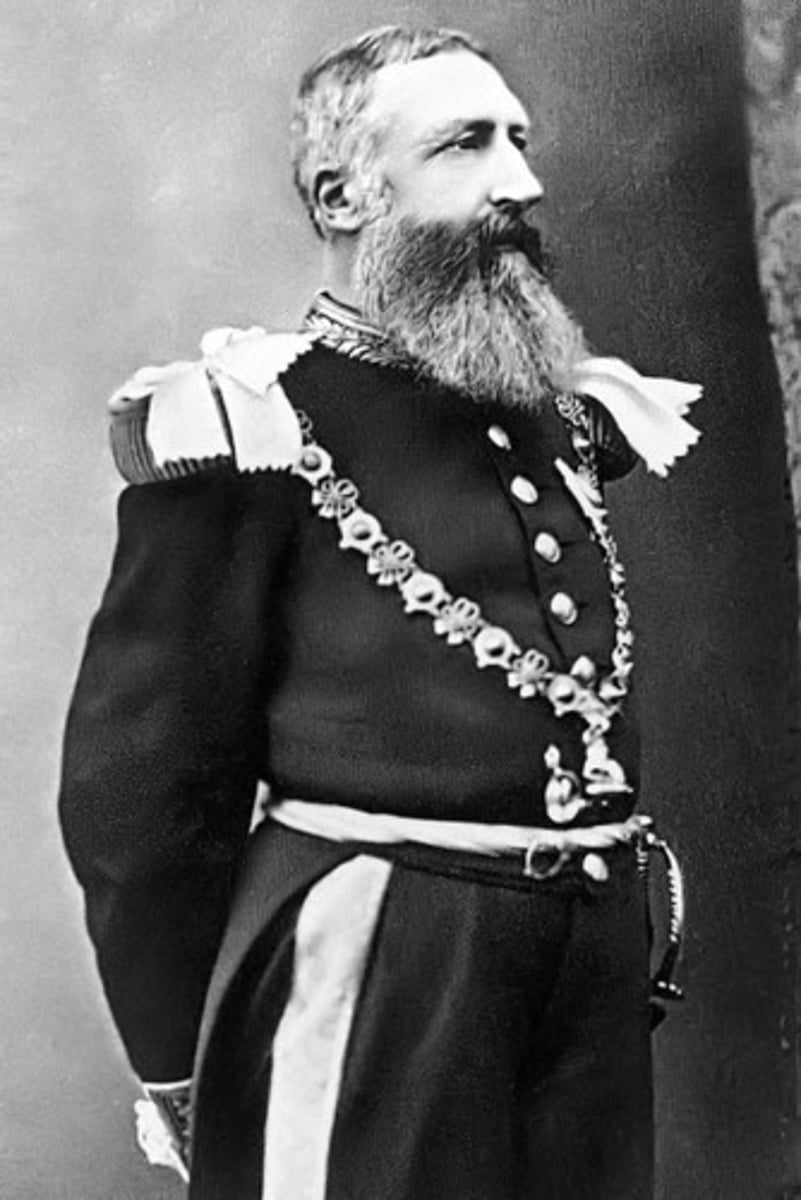
Leopold II of Belgium
first monarch to colonize Africa who commissioned reporter Henry Stanley to obtain land in the Congo in his name; Authorized private companies to cruely and violently force villagers to collect rubber in the forest.
Charles Dickens
English writer whose novels depicted and criticized social injustice (1812-1870); Wrote "A Christmas Carol", "Oliver Twist", and "Great Expectations".