FINAL EURO DANG
 Call Kai
 Learn
Learn Practice Test
 Spaced Repetition
 Match
Match Flashcards
 Knowt Play
1/101

There's no tags or description
Looks like no tags are added yet.
Name | Mastery | Learn | Test | Matching | Spaced | Call with Kai |
|---|
No analytics yet
Send a link to your students to track their progress
102 Terms
Romanticism
a movement in the arts and literature that originated in the late 18th century, emphasizing inspiration, subjectivity, and the primacy of the individual.
3 multiple choice options
Caspar David Friedrich
German Romantic Painter known for his works that express the sublimity of nature Wanderer above the Sea of Fog.
3 multiple choice options

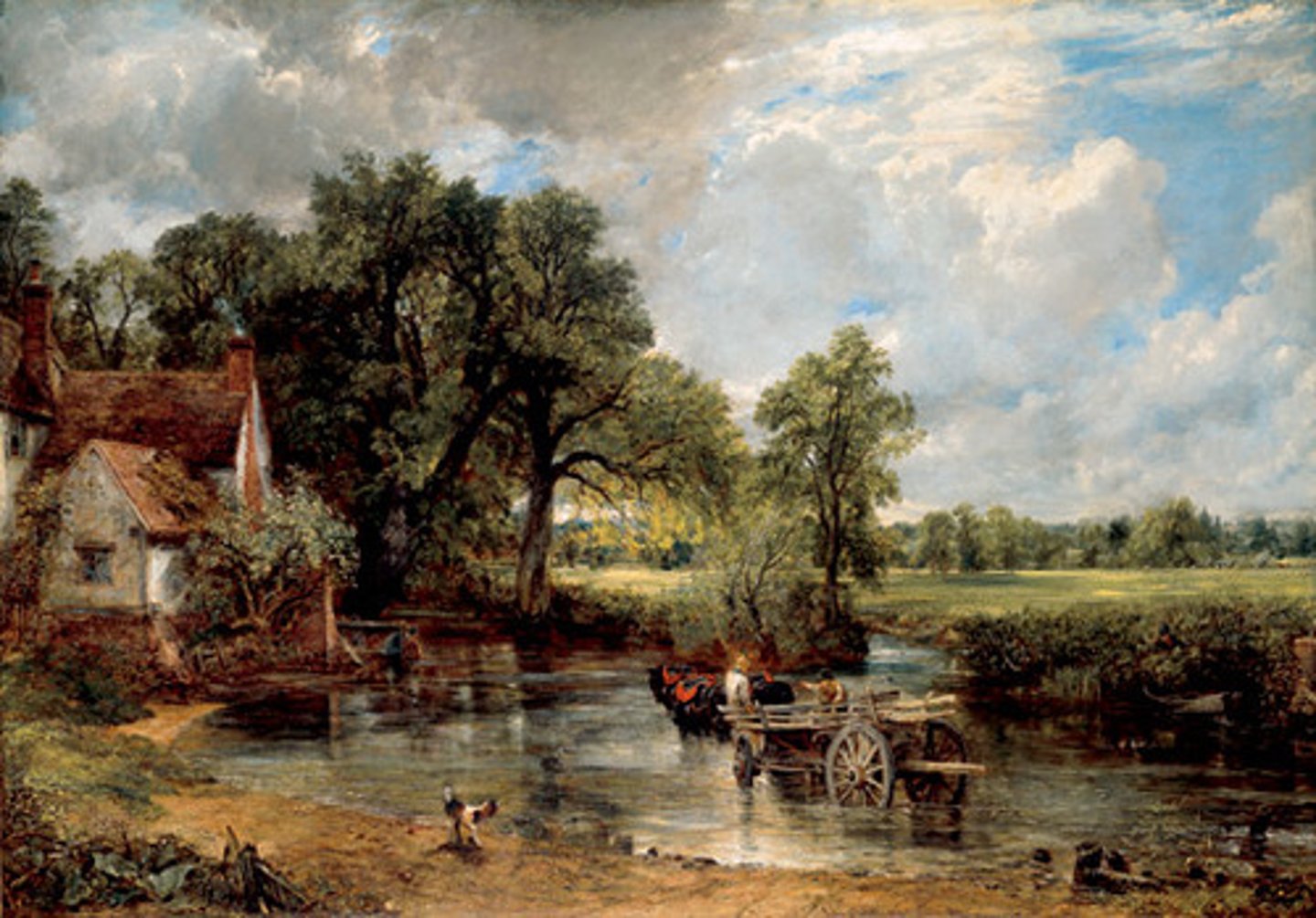
John Constable
English landscape painter. Used natural color stippled with white to demonstrate shifting atmosphere and changing seasons. (The Hay Wain)
3 multiple choice options
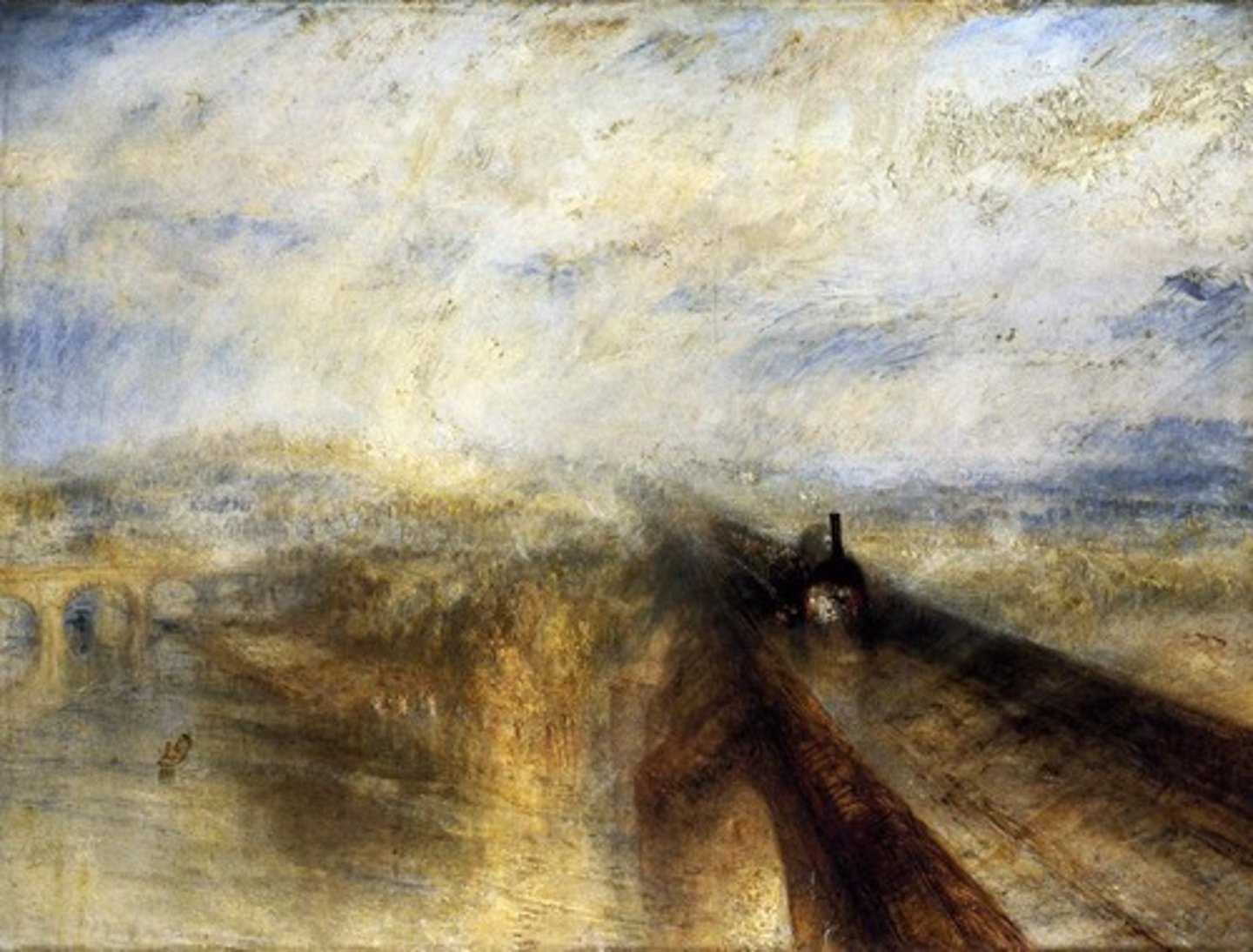
J.M.W. Turner
An English romantic painter of the late eighteenth and early nineteenth centuries, known especially for his dramatic, lavishly colored landscapes and seascapes. (Rain Steam and Speed)
3 multiple choice options
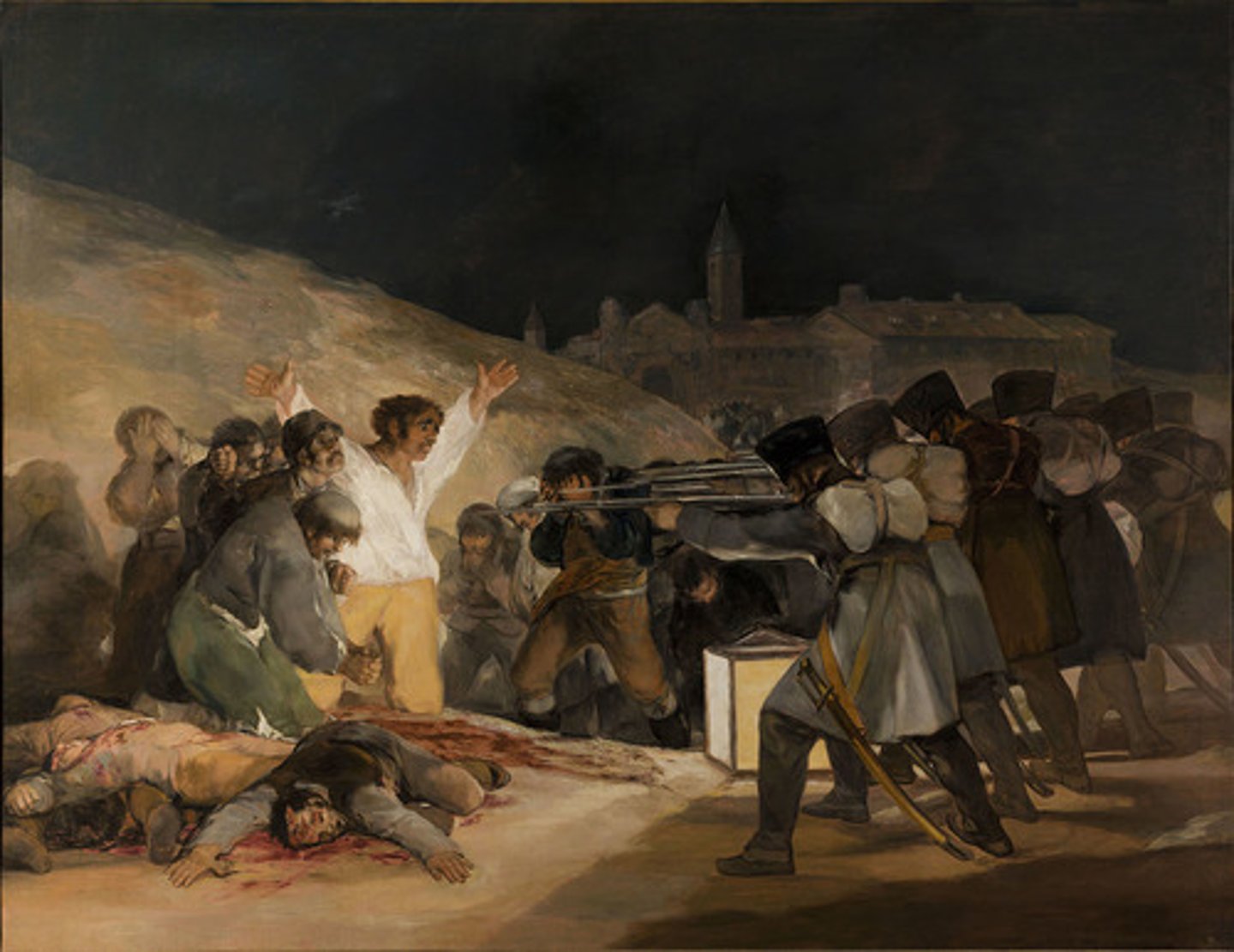
Francisco Goya
A Spanish painter of the late eighteenth and early nineteenth centuries. Among his works is a series of paintings and etchings that powerfully depict the horrors of war. (The Third of May)
3 multiple choice options
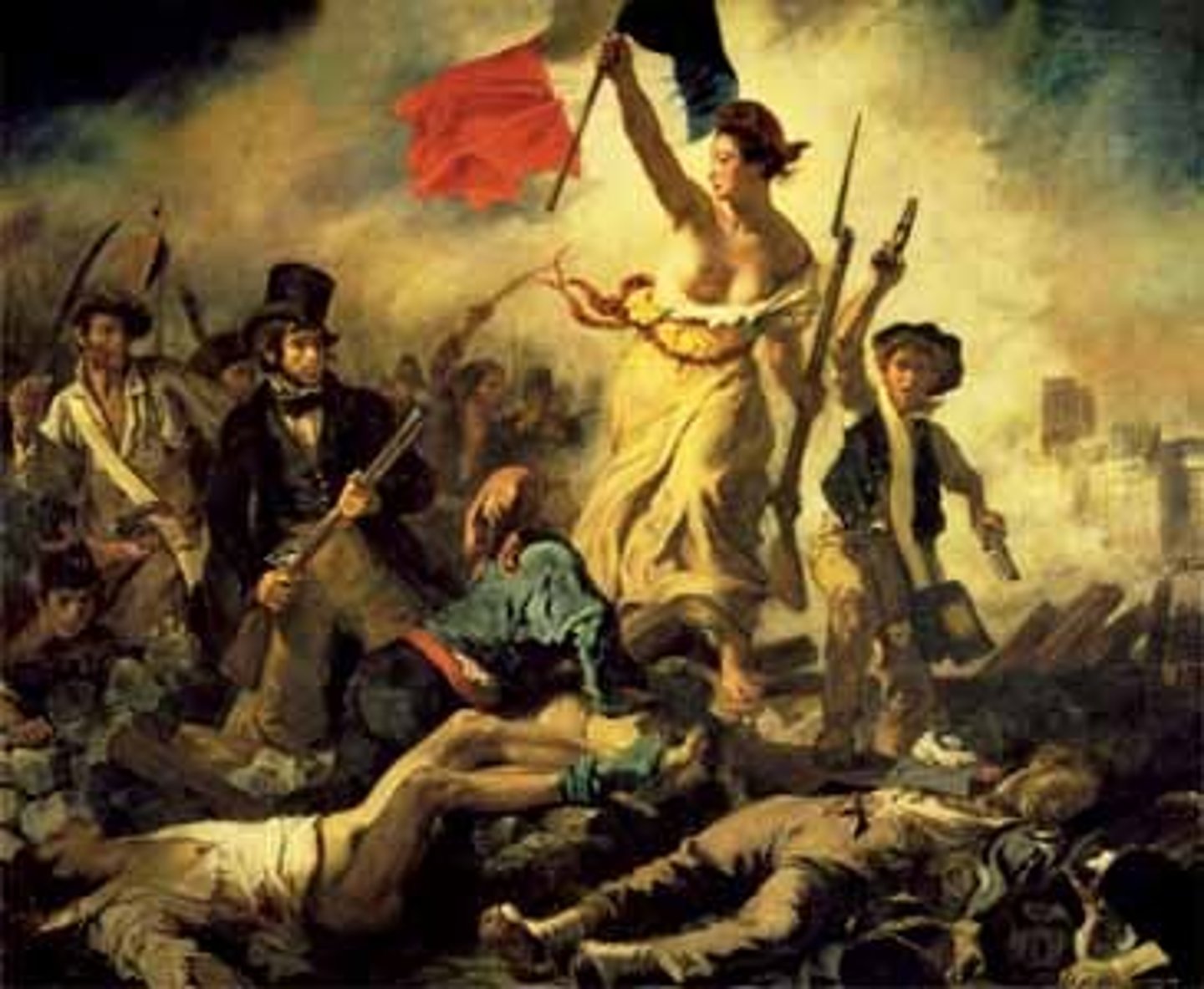
Eugene Delacroix
French romantic painter, master of dramatic colorful scenes that stirred the emotions. remote and exotic subjects. (Liberty Leading the People)
3 multiple choice options
Ludwig van Beethoven
romantic composer who was the first to take full advantage of the broad range of instruments in the modern orchestra (5th Symphony, Egmont Overture)
3 multiple choice options
Frederic Chopin
A nineteenth-century Polish romantic composer. He is known for his expressive piano pieces (Nocturne)
3 multiple choice options
Pyotr Ilyich Tchaikovsky
Russian Romantic composer. (Nutcracker and 1812 Overture.)
3 multiple choice options
Richard Wagner
German composer of operas and inventor of the music drama in which drama and spectacle and music are fused (Ride of the Valkyries)
3 multiple choice options
Johann Wolfgang von Goethe
(1749-1832) A German Romantic author fuel the Sturm und Drang movement (Faust, The Sorrows of Young Werther)
3 multiple choice options
William Wordsworth
English romantic poet who wrote about the natural world.
3 multiple choice options
Lord Byron
English Romantic poet who embodied the idea of the "Romantic Hero" died on way to fight in the war for Greek independence
3 multiple choice options
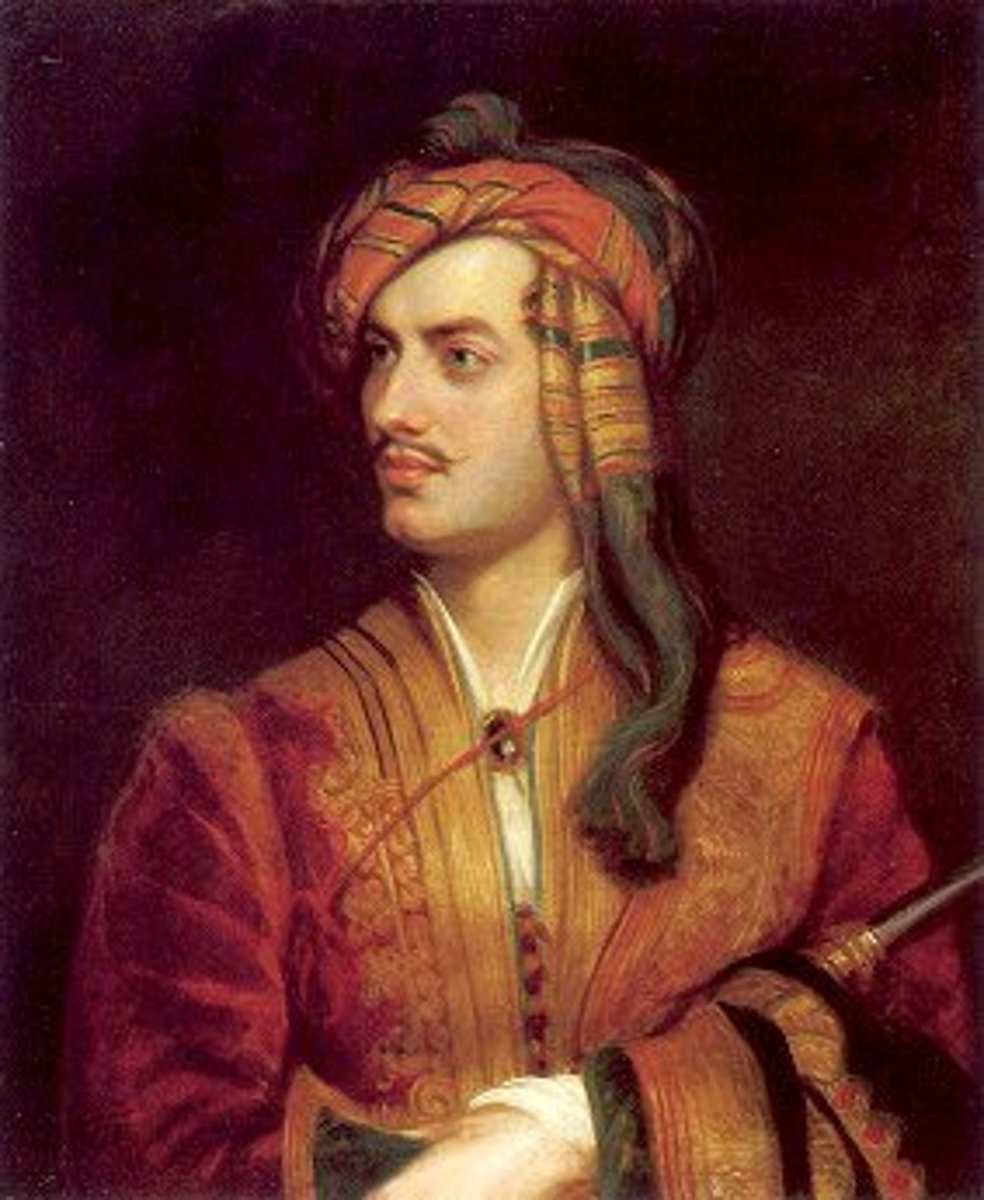
Percy Bysshe Shelley
English Romantic poet; Ode to the West Wind, To a Sky-Lark, Ozymandias
3 multiple choice options
John Keats
English Romantic poet who wrote "Ode to a Nightingale"
3 multiple choice options
Mary Shelley
Romantic horror novelist. Author of Frankenstein.
3 multiple choice options
Victor Hugo
French romantic novelist who wrote The Hunchback of Notre Dame and Les Miserables.
3 multiple choice options
Romanticism
Artistic movement of the 19th Century that was, in part a backlash/reaction to the cold logical of the Age of Reason/Enlightenment. Believed sentiment and imagination were vital for a true understanding of the world.
3 multiple choice options
Jean Jacques Rousseau
Enlightenment thinker whose works beyond his political philosophy emphasized nature, spontaneity, individualism, passion, and the subjective, making him seen as the "father of the Romantic Movement" by many historians.
3 multiple choice options
subjective
based on or influenced by personal feelings, tastes, or opinions rather than the rational empiricism of science.
3 multiple choice options
religious revival
An effort to restore religious beliefs after a period in which the religion was practiced less.
3 multiple choice options
Evangelical Movement
A religious movement where members actively shared their religious message in an effort to persuade outsiders to voluntarily and sincerely commit to Christianity.
3 multiple choice options
Methodism
A religion founded by John Wesley. Insisted strict self-discipline and a methodical approach to religious study and observance. Emphasized an intense personal salvation and a life of thrift, abstinence, and hard work.
3 multiple choice options
John Wesley
English clergyman and founder of Methodism
3 multiple choice options
Methodist Movement
Religious movement of people who were at the forefront of many social causes such as the abolition of slavery, prison reform, relief for the poor, improvements in education and charitable work in general.
3 multiple choice options
modern nationalism
Inspired by Enlightenment ideals it involved support of individual liberty, equality among citizens, and fraternity among all people of a State.
3 multiple choice options
mass uprising
mass movement of the people formed to overthrow an authoritarian power and replace it with a representative government. Such as what happened in the French Rev.
3 multiple choice options
British Conservative Party
Political party that originally worked to protect the interests of wealthy landowners.
3 multiple choice options
British Liberal Party
Political party that in general supported the interests of the business class/industry.
3 multiple choice options
British Labour Party
British Political party that was formed to support the interests of the working class people pushing for reforms in social safety nets etc.
3 multiple choice options
Napoleon III
Declared self emperor of France in 1852 but had a "liberal empire" after 1860 where he gave greater power to the legislature in France.
3 multiple choice options
Paris Commune
Formed by socialists and anarchists in Paris after the end of the rule of Napoleon III, it was an attempt at a society separate from the rest of France based on socialist ideals. It was defeated.
3 multiple choice options
Social Democratic Party
Working class political party in Germany. Through pressure was able to push for social legislation (health insurance, accident insurance, old age pensions and disability pensions)
3 multiple choice options
Philanthropies
charitable organizations
3 multiple choice options
Josephine Butler
Presented women prostitutes as vulnerable women preyed upon by ruthless men, instead of criminals. Worked to help give female job skills and against human trafficking.
3 multiple choice options
temperance movement
organized attempt to ban the sale and consumption of alcohol because they believed it was dragging down working class people.
3 multiple choice options
Sunday School Movement
provided basic education for working class children that was run primarily by middle class women in England.
3 multiple choice options
Barbara Smith Bodichon
Led "Ladies of Langdon Place" a group in which advocated for women's suffrage and right to control property.
3 multiple choice options
Emmeline Pankhurst
most famous of a family of women who fought for women's suffrage in Britain. Organized huge rallies and was not afraid to get attacked, go on hunger strikes.
3 multiple choice options
Women's Social and Political Union (WSPU)
militant organization for women's right to vote, founded by the Pankhurst family.
3 multiple choice options
laissez faire
Policy that government should interfere as little as possible in the nation's economy.
3 multiple choice options
interventionism
the belief that the government should make more rules for economies and societies in order to curb the most horrible abuses of society and prevent revolution.
3 multiple choice options
Edwin Chadwick
Social reformer who attempted to change the Poor Laws that jailed people for not having a job and to get sanitary codes and public health standards in Britain's urban areas.
3 multiple choice options
Georges Haussmann
Urban planner who redesigned Paris under reign of Napoleon III. For both sanitary improvements and military reasons (wider boulevards prevented barricades from going up easily).
3 multiple choice options
Urban redesign
The effort in many 19th c European cities to widen streets, neighborhood organization, add parks and make generally more livable cities.
3 multiple choice options
militant feminism
movement in Britain, led by the Pankhursts where they went beyond just talk and petitions to loud demonstrations, civil disobedience, hunger strikes and other shocking actions to draw attention to their cause.
3 multiple choice options
William Wilberforce
leader in the fight to end slavery in Britain, he accomplished his goal in 1833
3 multiple choice options
kindergarten
Idea of having a "Garden of Children" where young children will blossom by using play and songs to kickstart learning and a love of learning in young children.
3 multiple choice options
politics
all activities related to government, including rivalries among those competing for power.
3 multiple choice options
19th c Liberalism
the political philosophy that emphasizes the rights of the individual and the idea that the government should have a limited role in lives of citizens.
3 multiple choice options
19th c Conservatism
A movement of people who believed that governments were more stable when based on traditional sources of power such as the monarchy and church.
3 multiple choice options
Popular Sovereignty
the idea that the people, rather than just nobility/king should hold the greatest power in society.
3 multiple choice options
Great Reform Act of 1832
Widened the right to vote (for men) and balanced representation in Parliament across all districts.
3 multiple choice options
Corn Laws
1815 tariff on imported grain in Britain to protect domestic farmers (opposed by Urban areas).
3 multiple choice options
Anti-Corn Law League
Group who opposed high tariffs on imported wheat and regulation of the wheat trade in order to lower food prices for urban areas.
3 multiple choice options
enlightened self-interest
the idea that a person can see how acting for the good of society also benefits themselves.
3 multiple choice options
Jeremy Bentham
British author/philosopher/social reformer who came up with the Utilitarian Philosophy.
3 multiple choice options
Utilitarianism
The theory, proposed by Jeremy Bentham in the late 1700s, that government actions are useful only if they promote the greatest good for the greatest number of people.
3 multiple choice options
John Stuart Mill
19th Century Liberal in favor of expanding voting rights, eliminating corruption in government, and equal rights for women.
3 multiple choice options
social liberty
The idea, promoted by John Stuart Mill, that everyone was entitled to seek happiness as long as they did no harm to others in the process.
3 multiple choice options
Chartism
A working class Political reform movement in Britain, that favored universal male suffrage and secret ballots for voting
3 multiple choice options
Universal Male Suffrage
The idea that all men, no matter their economic status, should have the right to vote.
3 multiple choice options
suffrage
the right to vote
3 multiple choice options
Flora Tristan
Socialist and feminist who called for working woman's social and political rights and improving the working and living conditions of all workers in mid-19th century.
3 multiple choice options
Socialism
a political and economic system under which the means of production (how people get and create manufactured goods) are owned or controlled by society and/or government and used for the public good.
3 multiple choice options
Henri Saint-Simon
Founder of the philosophy of Utopian Socialism
3 multiple choice options
Utopian Socialism
a philosophy that promoted the idea of a society led by intellectuals providing for the welfare of the lowest classes based on the Christian ideals of loving kindness and charity.
3 multiple choice options
Charles Fourier
French reformer who supported the idea of intentional communities.
3 multiple choice options
Robert Owen
British Reformer who supported the idea of intentional communities
3 multiple choice options
intentional communities
small societies governed by the principles of utopian socialism. All property is owned communally (by all members of the society).
3 multiple choice options
Karl Marx
Author of the Communist Manifesto with Friedrich Engels. Founder of communism.
3 multiple choice options
Marxism
a branch of socialism, that holds that the more powerful classes oppress and exploit the less powerful by denying them their fair share of the surplus they create but that the lower class will rise up and overthrow the upper.
3 multiple choice options
historical determinism
The belief that history, like physics and chemistry, followed underlying laws that were entirely predictable. In this case of human nature that determined how events would unfold.
3 multiple choice options
Communism
The idea that all property used to produce goods would be owned collectively by the people and all social classes would disappear. No private property.
3 multiple choice options
Clara Zetkin
German Marxist who focused on women's issues in the Communist Party and supported international workers' movements.
3 multiple choice options
Rosa Luxemburg
radical female German socialist; Believed workers had a right to take up arms against oppressive government. Was murdered in aftermath of WWI by right-wing Germans
3 multiple choice options
Anarchism
The theory that all forms of government should be abolished. Society should be based on the voluntary cooperation of all members.
3 multiple choice options
Mikhail Bakunin
Russian anarchist. Supported the violent overthrow of established governments and the destruction of property owned by Capitalists.
3 multiple choice options
Georges Sorel
believed socialism would come to power in a general strike of the workers, who would be controlled by a small revolutionary elite
3 multiple choice options
Syndicalism
Belief that after the overthrow of Capitalism by labor unions, all property would be transferred to labor unions who would organize workers into small, self-supporting groups.
3 multiple choice options
19th c Conservatism
A movement of people who believed that governments were more stable when based on traditional sources of power such as the monarchy and church.
3 multiple choice options
Edmund Burke
Member of British Parliament and author of Reflections on the Revolution in France, which criticized the underlying principles of the French Revolution and argued conservative thought.
3 multiple choice options
limited monarchy
government in which a constitution or legislative body limits the monarch's powers. Also called Constitutional Monarchy.
3 multiple choice options
natural order
The belief by 19th Century Conservatives that there is a hierarchy of people with power and authority flowing downwards from the upper classes.
3 multiple choice options
Joseph de Maistre
in favor of the hereditary absolute monarchy to maintain order. Believed political authority should be based on religious and moral teachings.
3 multiple choice options
Klemens von Metternich
The Foreign Minister of Austria; he had the most influence at the Congress of Vienna. "Architect of the Peace Plan"
3 multiple choice options
Congress of Vienna
First meeting to bring together all major Nations of Europe with a goal to determine the future of Europe and re-establish peace and stability through balance of power.
3 multiple choice options
Concert of Europe
Series of alliances in the first half of 19th c. to help prevent revolution. European countries would work together to crush any rebellions.
3 multiple choice options
balance of power
a political situation in which no one nation is powerful enough to pose a threat to others
3 multiple choice options
Ottoman Empire
A Muslim empire based in Turkey that lasted from the 1300's to 1922--in 1820s Greeks fought to break free of them.
3 multiple choice options
Decembrists
Russian army officers who were influenced by liberal ideas and wanted to overthrow Tsar Nicholas I in Russia--revolt was crushed.
3 multiple choice options
July Revolution
overthrow of French King Charles X in 1830--he was trying to be an Absolute Monarch.
3 multiple choice options
Revolutions of 1848
A series of political upheavals throughout Europe that ended the Concert of Europe.
3 multiple choice options
Napoleon III
became president of the Second Republic of France in 1848 and engineered a coup, making himself head of the Second Empire.
3 multiple choice options
Alexander II
A Russian Tsar who implemented rapid social change and general modernization of Russia and freed the Serfs.
3 multiple choice options
Alexander III
Politically reactionary Russian tsar who promoted economic modernization of Russia but crushed political reforms started by his father.
3 multiple choice options
Sergei Witte
russian minister of finance responsible for the economic modernization of Russia esp in the development of Russian industry/factories.
3 multiple choice options
Duma
Russian Parliament established after 1905 Revolution.
3 multiple choice options
Peter Stolypin
conservative Russian prime minister who attempted reforms to make Russian peasants more prosperous so that they could stabilize Russia and prevent revolution.
3 multiple choice options
hierarchy
a system or organization in which people or groups are ranked one above the other according to status or authority.
3 multiple choice options

