Acute Neuro Conditions PPT Pt. 1
 Call Kai
 Learn
Learn Practice Test
 Spaced Repetition
 Match
Match Flashcards
 Knowt Play
1/77

There's no tags or description
Looks like no tags are added yet.
Name | Mastery | Learn | Test | Matching | Spaced | Call with Kai |
|---|
No analytics yet
Send a link to your students to track their progress
78 Terms
After successful completion of this module, you will be able to:
Utilize the clinical judgment measurement model as a framework for care of patients with:
- Skull Fracture
- Brain Injury
- Intracranial Bleed/Hemorrhage
- Progressive Neuromuscular (ALS, Guillain Barre Syndrome) requiring ventilationDescribe the management of patients with increased intracranial pressure (ICP).
Monitor and manage the acute complications of spinal cord injury.
Discuss the surgical interventions for patients with cranial/vascular and/or spinal cord injury.
TBI= Traumatic Brain Injury
OBJECTIVES
OBJECTIVES
what is the content focus for this PPT?
•Spinal Injuries & Surgeries
•Brain Trauma
•ICP Monitoring
•Endarterectomy
•Intracranial Bleeds
—•Hematoma Evacuation/Vascular Clipping
Review assessment info – particularly neuro assessment and which nerves control what – how to assess each of the cranial nerves.
Review assessment info – particularly neuro assessment and which nerves control what – how to assess each of the cranial nerves.
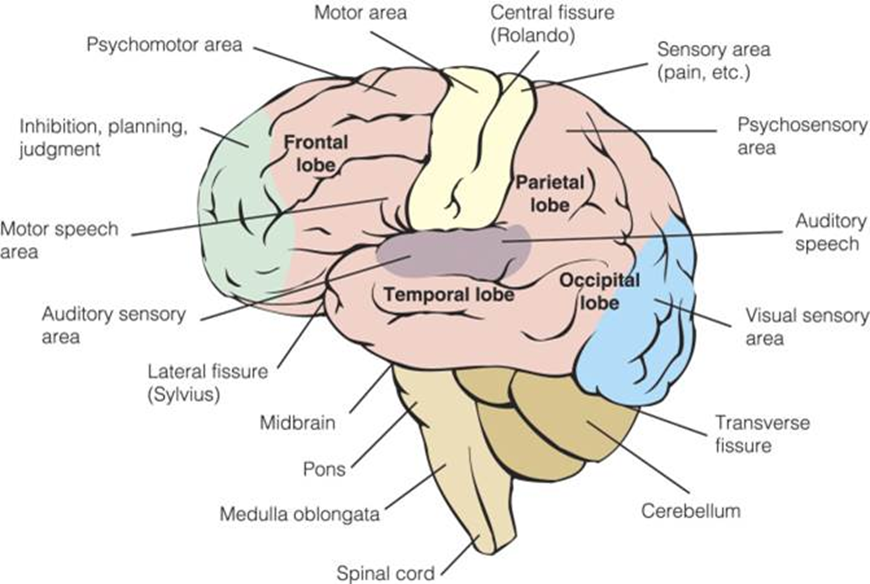
nervous system anatomy
nervous system anatomy
Assessments – Indications things aren’t right with the head……..What are a few?
changed LOC
pupil changes (indicate stroke, opioids, or other)
entire neuro assessment (different spinal injuries=different presentations)
motor function
ASK QUESTIONS - what brought them to this state is a big help on what happened
what is the first cue that there is a neuro change?
they’ll have an inability to respond to stimuli and a change in:
Wakefulness
Alertness
Cognition
what are some observation cues to lock in on that a pts mental status is shifting?
changes in…
Patient’s Grooming & Hygiene
Posture/Gestures
Motor Movements
Facial Expressions
Speech
Sensation
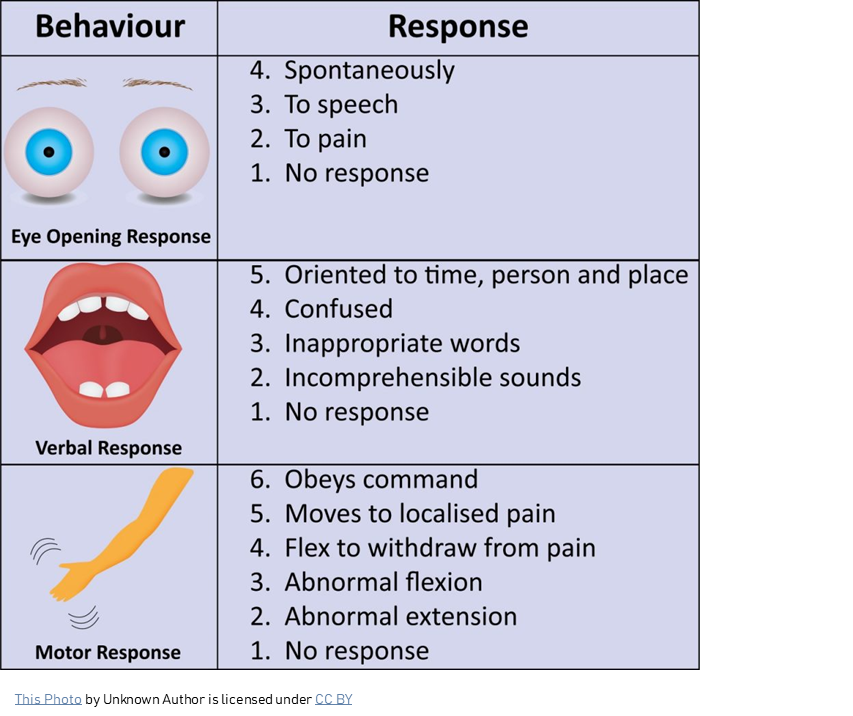
Glasgow coma scale
Glasgow coma scale (MEMORIZE)
what are the portions of the eye opening response in the GCS?
no response
to pain
to speech
spontaneously
what are the portions of the verbal response in the GCS?
no response
incomprehensible sounds
inappropriate words
confused
oriented to time, person, and place
what are the portions of the motor response in the GCS?
no response
abnormal extension
abnormal flexion
flex to withdraw from pain
moves to localized pain
obey’s command
what are the portions of LOC?
motor ability
language ability
cranial nerves
(just GCS portions essentially)
how do you assess for motor ability with regards to LOC?
Assess Cortical Motor Integration:
•Comb Hair
•Brush Teeth
how do you assess for language ability with regards to LOC?
Understand Written & Spoken Language:
•Can Patient Read?
•Answer Questions Appropriately
how do you assess the cranial nerves with regards to LOC?
Compare Bilateral Face & Neck:
•Eye Movement (CN III, IV, VI)— pts should close eye when you bring finger close to eyeball
•Dysphagia (CN IX, X, XII) — BIG ONE TO LOOK AT, if they can’t swallow they’re at risk for PNA
when does an altered LOC exist/occur?
when a patient is not oriented, does not follow commands, or needs persistent stimuli to achieve a state of alertness.
what does altered LOC exist ON? — what does it look like?
LOC exists on a continuum from a normal state of alertness to coma (with coma may still have brainstem reflexes but no purposeful movement).
what can be some causes of altered LOC?
may have neurologic, metabolic, or toxicologic causes.
what is altered LOC often caused BY?
brain herniation and/or increased intracranial pressure.
what are seizure precautions?
pad the bed
get the rails up
DO NOT hold the pt down
TIME THE SEIZURE and how long is the pt postictal
in the event of altered LOC, what is absolutely NEEDED?
Systematic, thorough assessment is necessary.
what is the most common cause of death from trauma in the United States?
head injuries
what is the “primary injury” in a head injury?
the initial damage to the brain.
what is the “secondary injury” in a head injury?
the damage from the sequelae of the primary injury (e.g., increased intracranial pressure).
define head injury.
broad term for any injury of the scalp, skull, or brain. 1.4M receive treatment for head injuries each year.
what is the most serious type of head injury?
TBIs — Only about 40% have good outcomes.
what types of TBI are there— break it down?
-Can be primary or secondary injury:
-- primary: related to actual injury
-- secondary: related to ischemia, seizure, infection, etc.
what do you NEED to consider in the event of a TBI or head injury?
all of the potential complications of TBI or head injury; the brain affected the whole body in different ways – endocrine abnormalities like diabetes insipidus, SIADH
what is THE big question to ask in the event of a head injury?
IS THE BRAIN INJURED????
define skull fracture
A break in the continuity of the skull caused by forceful trauma
what happens to the brain in the event of a skull fracture?
May occur with or without damage to the brain
what are the characteristics of treating a NONDEPRESSED skull fracture?
they generally do not require surgical treatment
what are the characteristics of treating a DEPRESSED skull fracture?
they usually require surgery
what is our BIGGEST concern in the event of a skull fx?
CSF leak
Increased ICP
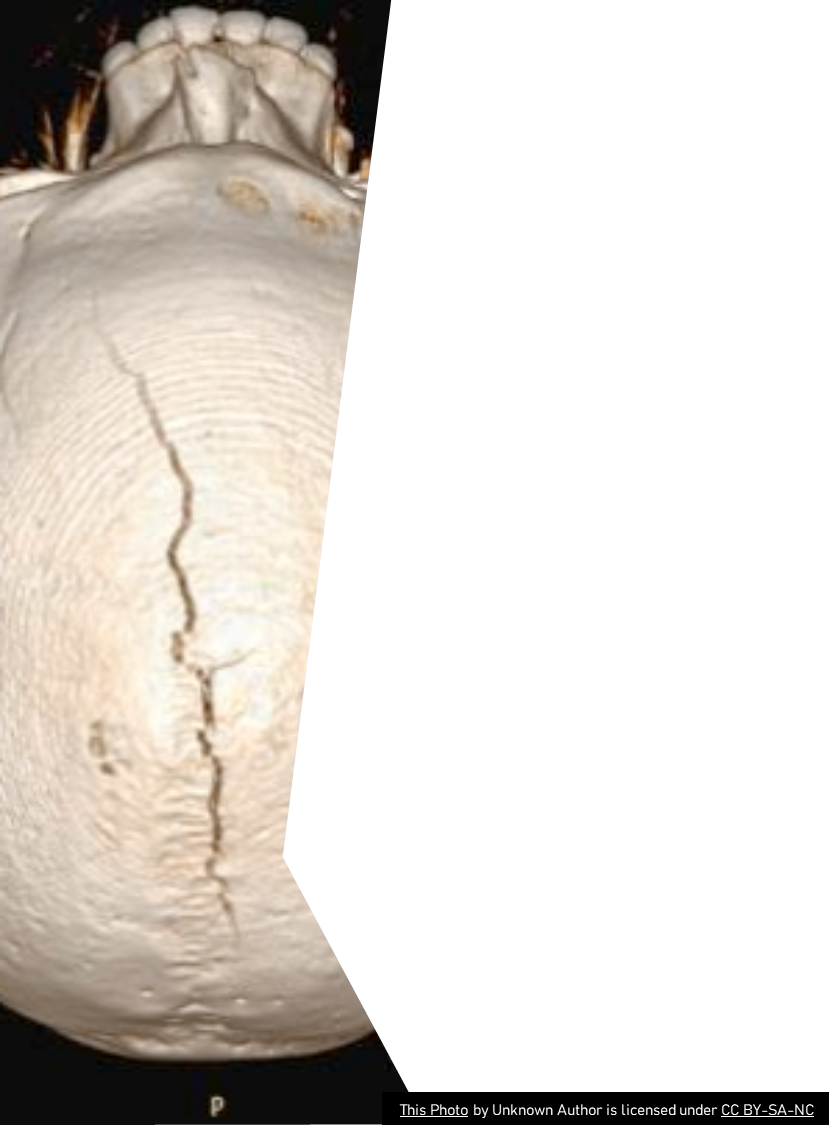
skull fx visual
skull fx visual
not too serious and not compressing the brain (nondepressed)
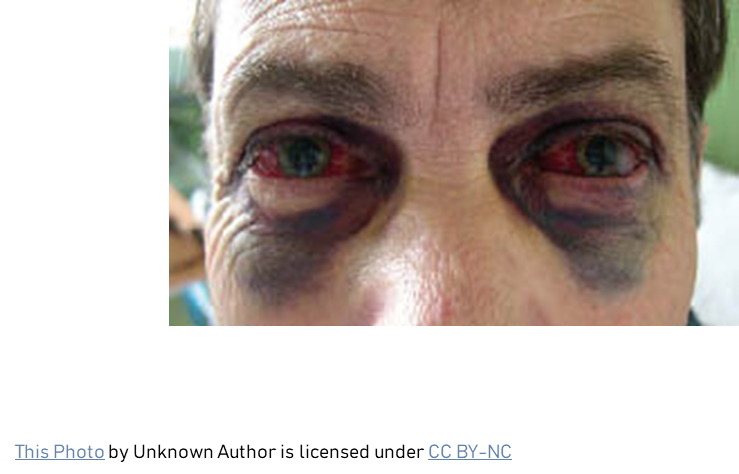
what is this image showing and what does it mean?
this is a battle sign
happens in the event of a skull fx
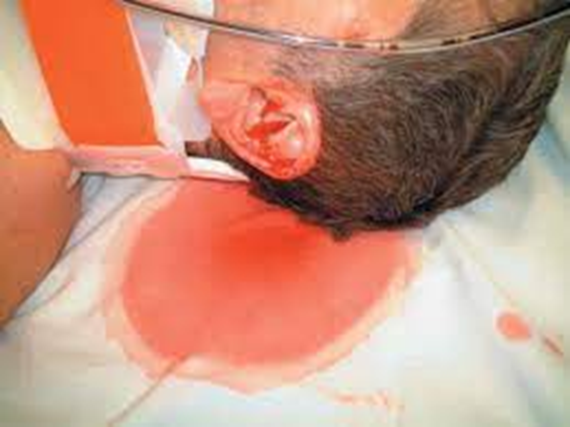
your pt presents w this^^. what is this and what is going on?
The patient is leaking cerebrospinal fluid. (halo sign)
they have a significant skull injury
if your pt presents w a halo sign, indicating they’re possibly leaking CSF, what do you need to do as the nurse?
this clear fluid that is draining from the nose or ears should be collected and tested for glucose. If the drainage is CSF, it will be positive for glucose. It is unlikely that the patient would be leaking plasma from his or her nose. Diuresis would not cause this phenomenon.
what is the nursing management in the event of skull fx/brain injury?
Test for CSF leak
Keep HOB at 30 degrees to reduce ICP and help with spontaneous leak closure
NO NGT only OGT
No Nasal suction
Do not allow pt to blow their nose
Typically, does not require surgery if early CSF rhinorrhea
If late onset (>/=7 days post-injury usually requires surgical intervention)
what’s “early CSF rhinorrhea”?
leaking CSF from the nose within 6 days of head trauma. if it presents AFTER 6 days, then they’ll likely need surgery
what’s a LONG TERM problem in a skull fracture?
INFECTION!!!!!
what’s a priority in a skull fx?
getting the CSF where it needs to be
CSF leak is a concern and can lead to infection among other things.
what do you need to do continuously in the event of a head trauma?
Continued frequent assessments for changes to cognition or leaking fluid/bruises is important. Check all clear fluids for the potential of CSF.
what are the big portions of brain injury?
Concussion
Contusion
Diffuse axonal injury
define concussion
An alteration in mental status that results from trauma, and may or may not involve loss of consciousness
Mild TBI
Result of trauma – may or may not lose consciousness
what’s the tx for a concussion?
involves observing the patient for symptoms, including headache, dizziness, lethargy, irritability, anxiety, photophobia, phonophobia, difficulty concentrating, and memory difficulties
define postconcussive syndrome
symptoms after injury – can last years.
how long should loss of consciousness last if it occurs in a concussion?
no longer than 24 hours
define contusion
A more severe injury, involving bruising of the brain, with possible surface hemorrhage
what is the progression a pt will go through in the event of a contusion?
Pt has short period of unconsciousness
May go through period of cerebral irritability
what are some things you can do for a pt who has a brain contusion and is presenting w cerebral irritability?
decrease things that can disturb the patient
- lights, sounds, voices, stimulation
what do the s/sx of a contusion depend on?
on the size of the contusion and amount of swelling.
BP and temp – subnormal
define diffuse axonal injury
Involves widespread damage to axons in the cerebral hemispheres
in what severity of a head trauma will you see a diffuse axonal injury?
Seen in mild, moderate, or severe head trauma
a pt presents w the following:
immediate Coma, global cerebral edema
Posturing
what’s going on?
diffuse axonal injury
what are the different types of posturing (to assess for)?
decorticate and decerebrate
define decorticate posturing?
think everything coming to the “Core”
Flexion of BUE (bilateral upper extremities) and BLE
Indicative of damage to the upper midbrain
define decerebrate posturing?
Extension of BUE and BLE
Indicates severe brain damage to lower midbrain and upper pons
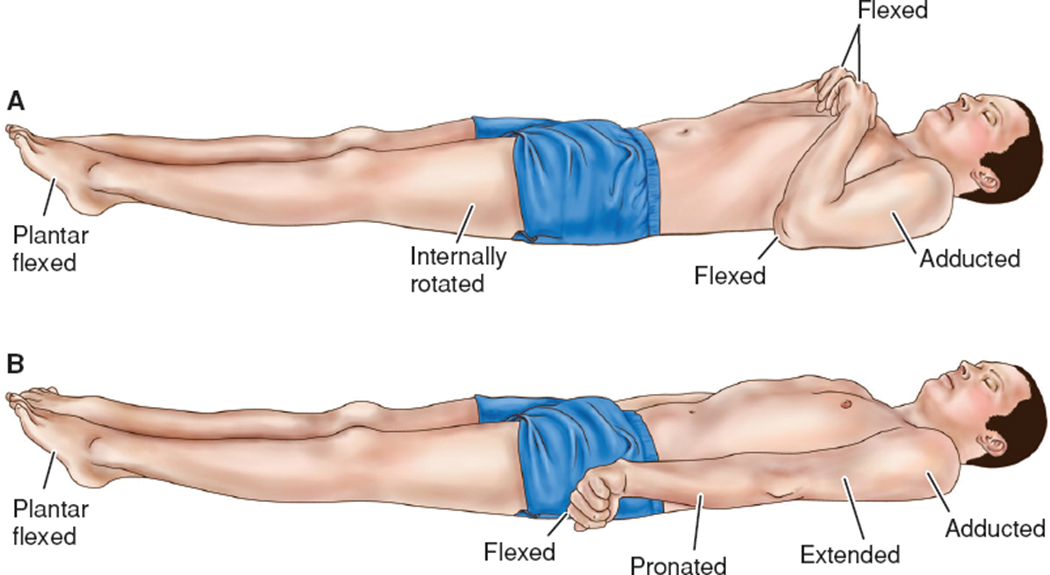
Decorticate (A)
Decerebrate (B)
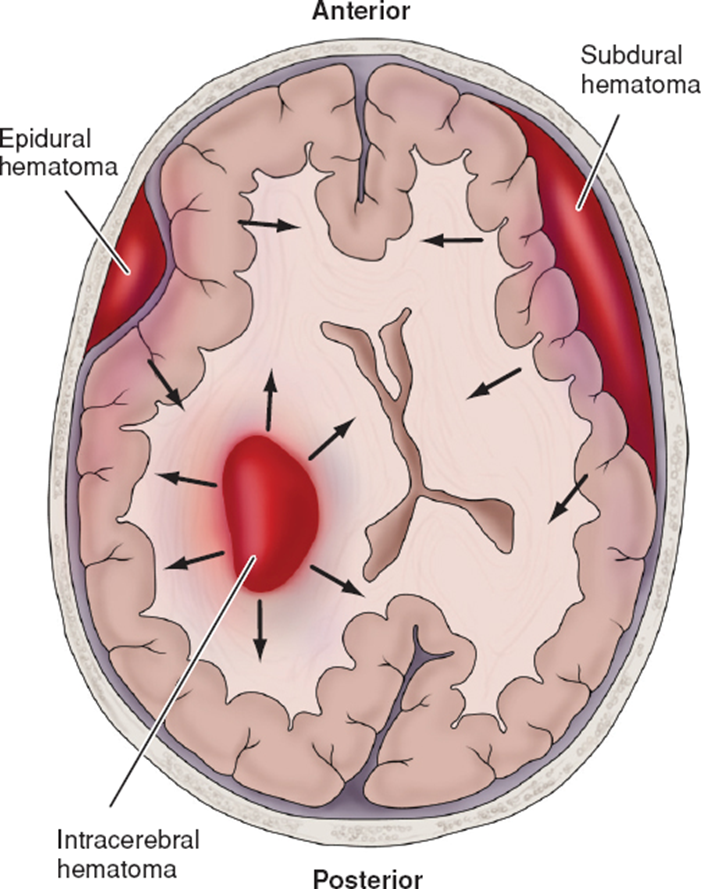
hematoma visual
hematoma visual
how severe are hematomas?
all bad
some are more severe than other
epidural hematoma is the worst
do you ever say “pt asleep” in an assessment?
NOOOO
say “pt appears to be resting”
then give all vitals and resp status as well as positions
define a hematoma
Collections of blood that develop within the cranial vault; the most serious type of brain injury
define epidural hematoma
Collection of blood in the space between the skull and the dura
define subdural hematoma (SDH)
Collection of blood between the dura and the brain — may be acute or chronic
define intracerebral hemorrhage (ICH)
Bleeding into the parenchyma of the brain
what is the tx for all hematomas
it’s directed toward preserving brain homeostasis and preventing secondary brain injury
what does an injury causing an epidural hematoma cause?
nature of injury leads to bleeding and rapid increase in pressure on the brain.
THIS IS AN EXTREME EMERGENCY
what can happen when a pt as an epidural hematoma?
this is a bleed that has NOWHERE TO GO!!!! so we need to get the blood to go elsewhere and not compress the brain
Neuro defect and respiratory arrest can happen in minutes.
Need to remove the pressure/bleeding or clot – burr holes, craniotomy, and/ or drain.
what type of hematoma is most common cause is trauma or coagulopathies/bleeding disorders?
Subdural hematoma
what can cause an ICH (intracerebral hemorrhage)?
trauma like bullet/knife
your pt presents w the following:
Can be insidious onset related to something else (hypertension, aneurysm rupture, tumor, etc.)
what type of hematoma would you suspect?
ICH – (trauma like bullet/knife)
how do we dx brain aneurysms?
•CT head
•MRI Brain
what are the precautions for c-spine things?
•Log roll
•C-collar
•Backboard
what is the tx for aneurysms?
•Craniotomy
•Craniectomy
•Burr Hole
•ICP monitoring
•Vascular clip
what assessments do you need to prioritize for an aneurysm pt?
•RESPIRATORY
•NEURO
•Cranial nerves (reflexes)
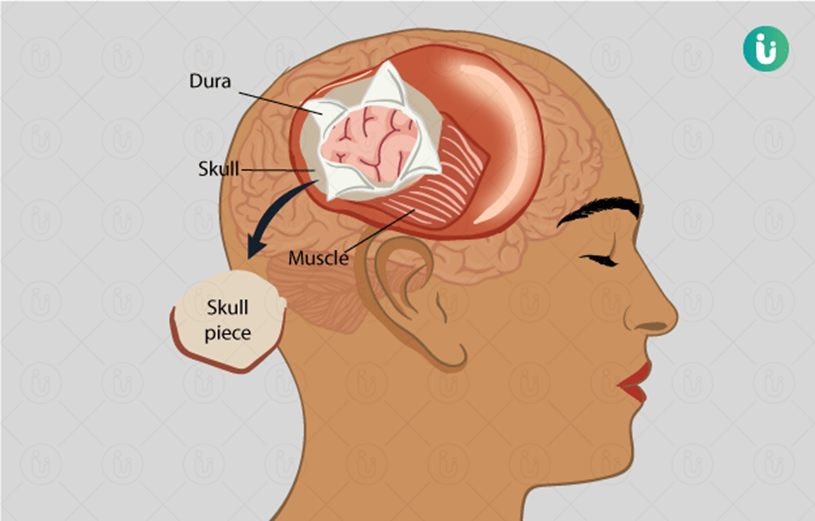
craniotomy visual (tx for aneurysm)
craniotomy visual (tx for aneurysm)
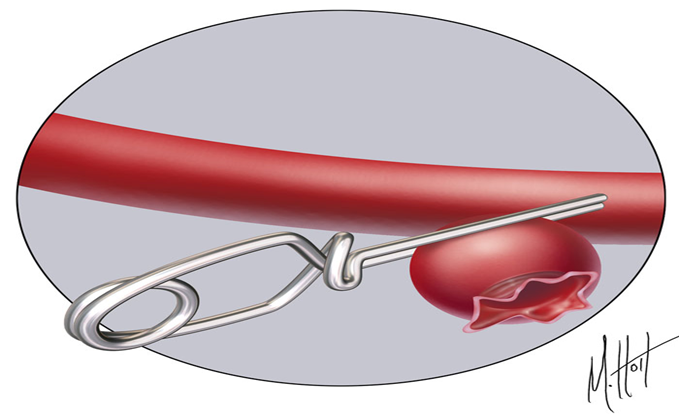
vascular clipping of an aneurysm (tx for aneurysm)
vascular clipping of an aneurysm (tx for aneurysm)

