Wildlife Ecology Lab- Herp ID/Natural History
 Call Kai
 Learn
Learn Practice Test
 Spaced Repetition
 Match
Match Flashcards
 Knowt Play
1/32

There's no tags or description
Looks like no tags are added yet.
Name | Mastery | Learn | Test | Matching | Spaced | Call with Kai |
|---|
No analytics yet
Send a link to your students to track their progress
33 Terms
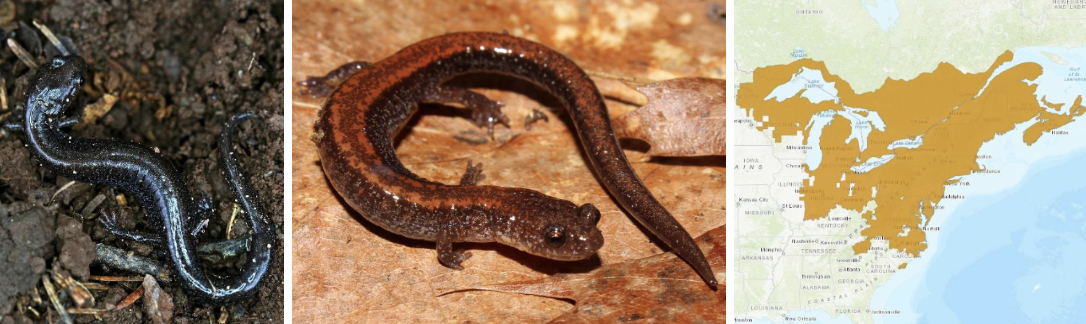
Red-backed Salamander
Habitat: forests with moist ground layer, need especially moist areas since they lay their eggs out of water, territorial especially during times of low moisture
Diet: non insect arthropods (mites, spiders, centipedes, millipedes, beetles, snails, ants, earthworms, etc.)
Characteristics: smooth, slimy, slender, red-backed phase- straight-edged red, orange, or yellow stripe down back, lead-backed phase- uniform dark gray/black, always have black and white speckled belly
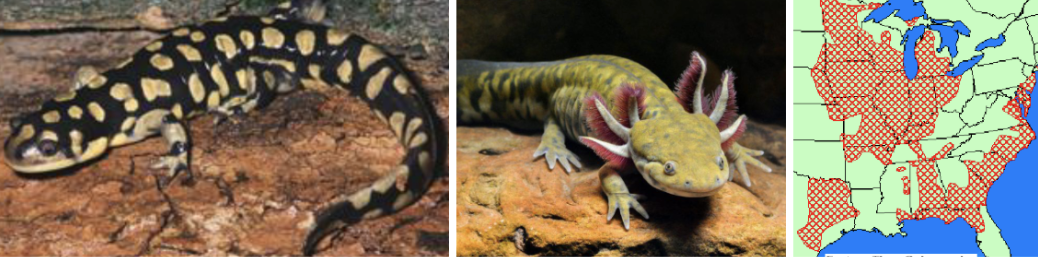
Eastern Tiger Salamander
Habitat: more variable, generally associated with forest, need access to burrows and water
Diet: worms, snails, insects, slugs, smaller salamanders, small snakes, etc.
Characteristics: smooth, slimy, stocky, biggest of these salamanders, can retain gills and be aquatic, dark black/gray/brown with larger yellow/olive blotches
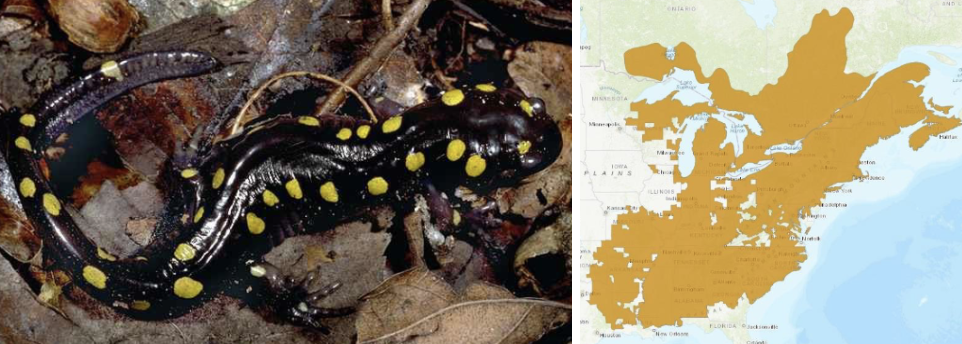
Spotted Salamander
Habitat: moist forested areas with abundant leaf litter, need extra moisture in leaf litter/under debris because they do not return to water to lay eggs
Diet: arthropods- ants, mites, earthworms, flies, snails, beetles, etc.
Characteristics: smooth, slimy, stocky, dark black/gray/brown with two irregular rows of smaller yellow/olive spots, more black than tiger salamander
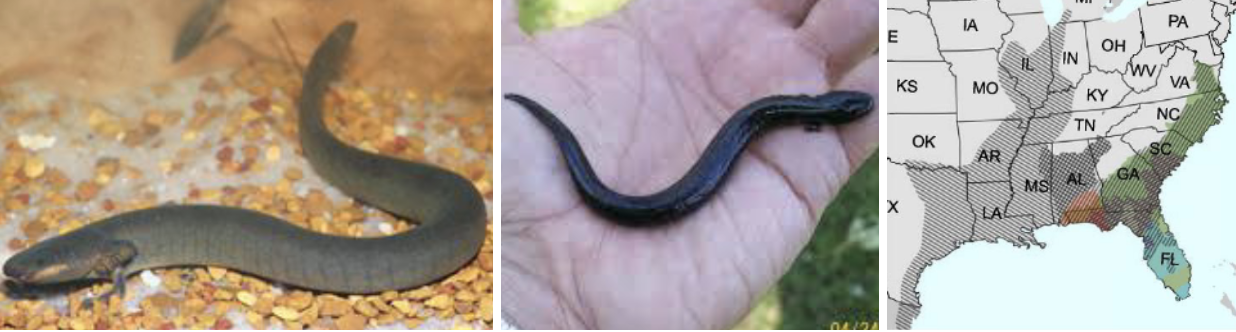
Western Lesser Siren
Habitat: fully aquatic, calm backwaters and swamps with “warm” shallow water
Diet: aquatic invertebrates, salamanders and salamander larvae
Characteristics: smooth, slimy, slender, fully aquatic, no back legs, dark gray/black/olive body, bushy reddish gills, often dark spots or lighter belly
Mudpuppy
Habitat: fully aquatic, found in water with abundant structure and varying depths
Diet: crayfish, small fish, invertebrates, snails, fish and salamander eggs, carrion
Characteristics: smooth, slimy, stocky, can get much bigger than sirens, fully aquatic, have back legs, gray to rust brown body, blue-back spots, permanent large red bushy external gills
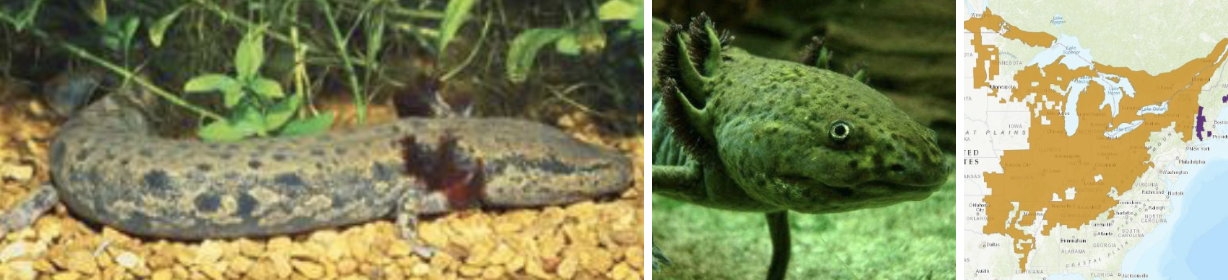
Eastern Newt
Habitat: efts- terrestrial in forests with abundant moist leaf litter, adults- aquatic in ponds/marshes usually with mud bottoms
Diet: both stages eat invertebrates of appropriate size found in their habitats
Characteristics: smooth, slimy, small, three-stage life cycle
Larvae- aquatic, olive-green, feathery external gills, dark stripe running through eye
Juvenile (“red efts”)- terrestrial, bright orange-red (toxic), drier bumpy skin, no tail fin
Adult- mostly aquatic, olive-green or greenish-brown or yellowish-brown with a yellowish belly with tiny black spots, two rows of small red spots along back

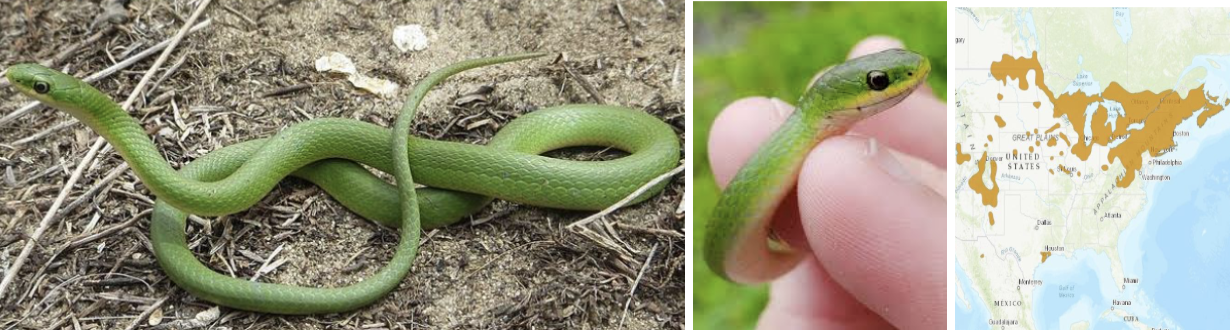
Smooth Green Snake
Habitat: most common in moist grassy areas but can be found in open forest
Diet: invertebrates (grasshoppers, crickets, caterpillars, snails, slugs, etc.) and occasionally amphibians
Characteristics: small, skinny, uniform bright green with white-to-yellowish belly
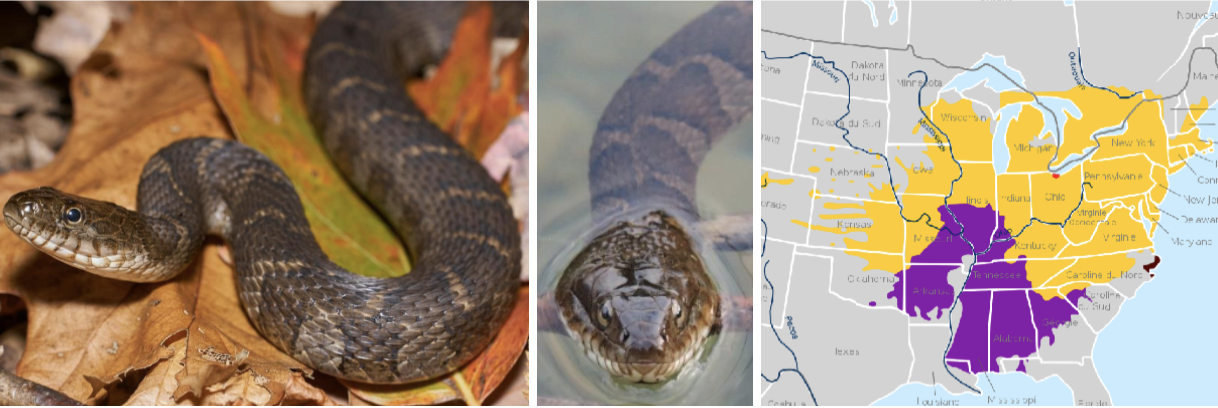
Northern Water Snake
Habitat: various relatively still aquatic habitats with open areas for basking
Diet: amphibians, fish, large insects, leeches, snakes, some small mammals, will scavenge
Characteristics: not super large, stocky, almost always found near water, keeled scales (rough appearance), vary in color and pattern- lighter, darker, not super stark (normal), stark, gray/tan/brown with dark reddish-brown or black bands/blotches
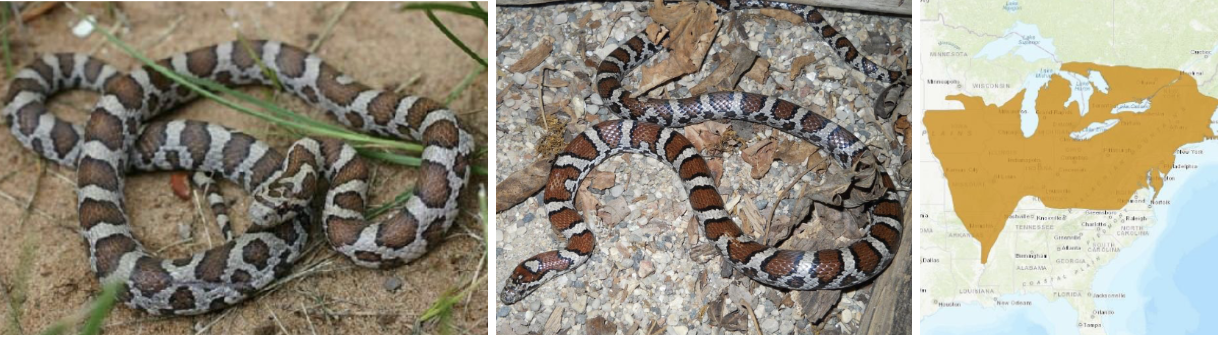
Eastern Milk Snake
Habitat: generalist but most common near forest edges
Diet: small mammals (mice, voles, etc.) comprise largest diet component, will consume birds, reptiles, amphibians
Characteristics: small to medium, usually have “Y” pattern on back of head (can be abstract), stark contrast between grayish background and orange/red spots with black outlines
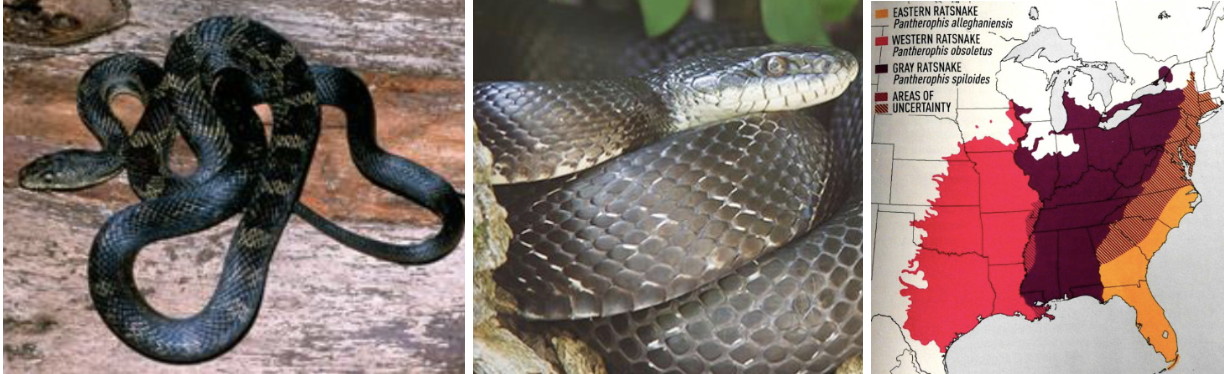
Gray (Black) Rat Snake
Habitat: generalist but most common in forested areas, spends large amounts of time in trees (tree-dwelling)
Diet: small mammals (mice, voles, chipmunks, etc.) occasional birds
Characteristics: medium to large, mostly solid dark gray/black, may see some faint pattern, white chin/throat
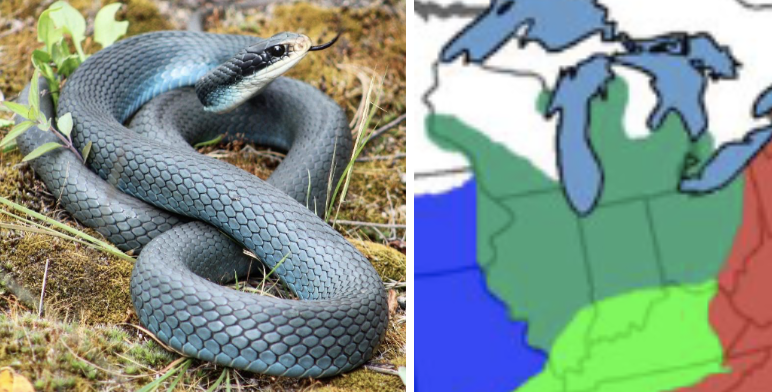
Blue Racer
Habitat: old fields, hedgerows, forest edges, occasional wetland areas, prefer more open spaces than rat snakes
Diet: mammals up to small squirrels, birds, snakes
Characteristics: medium to large, slender and long, smooth scales, blue-gray with white/cream belly and black mask behind large eyes
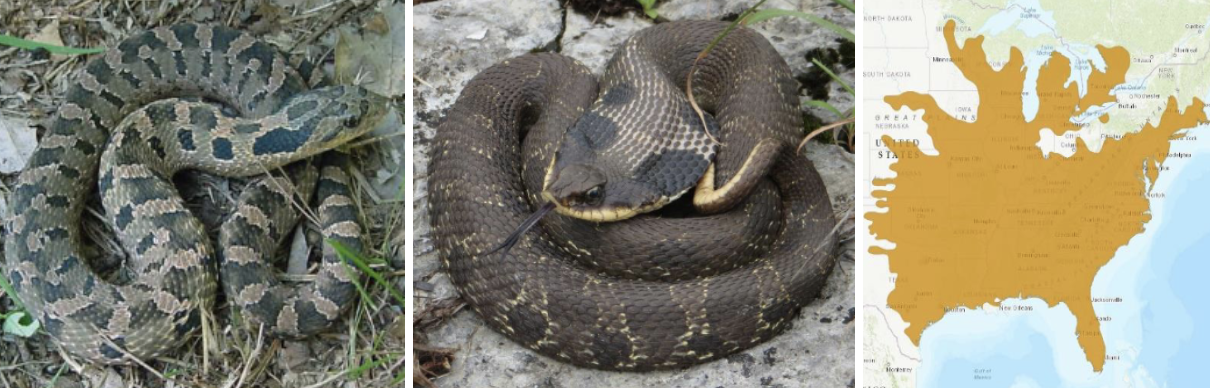
Eastern Hog-nosed Snake
Habitat: normally associated with sandy soils and open habitat (old fields, grasslands, forest edges)
Diet: primarily toads, occasional small mammals, birds, frogs, eats toads (resistant to toxins)
Characteristics: small to medium, stocky but not long, keeled scales (rough appearance), range in color- dark to light tan, gray, brown, or red with often asymmetric dark blotches (large on back, small on side), upturned/pushed-in snout, flatten out side of neck to look like cobra, play dead
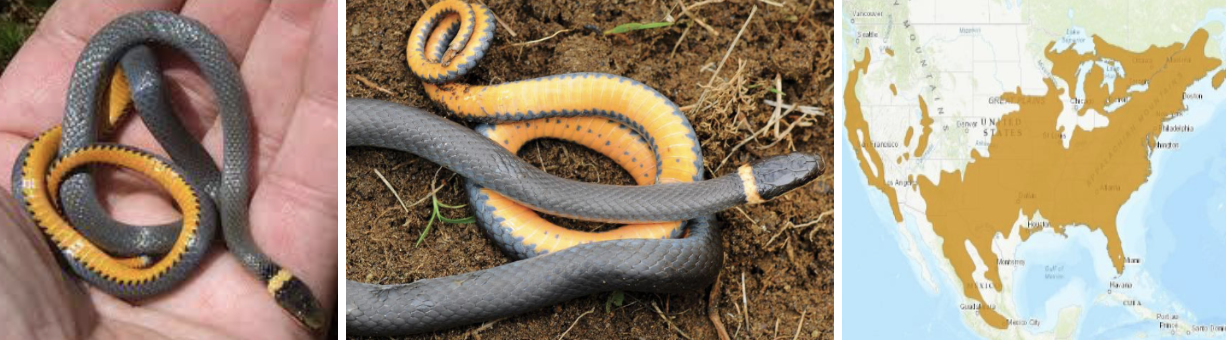
Ringneck Snake
Habitat: various habitats with moist ground layer and abundant cover (rocks, coarse woody debris, etc.)
Diet: small salamanders, lizards, frogs, juvenile snakes, earthworms and invertebrates in soil
Characteristics: tiny even as adults, slender, dark gray/black back with bright orange belly and neck/collar
Eastern/Common Garter Snake
Habitat: very adaptable but prefer moist grassy habitats
Diet: earthworms, amphibians, slugs, smaller snakes, etc.
Characteristics: fairly small, keeled scales (rough appearance), range in color, dark often checkered body, three lighter stripes run the length of their pattern (one down back, two on the sides)
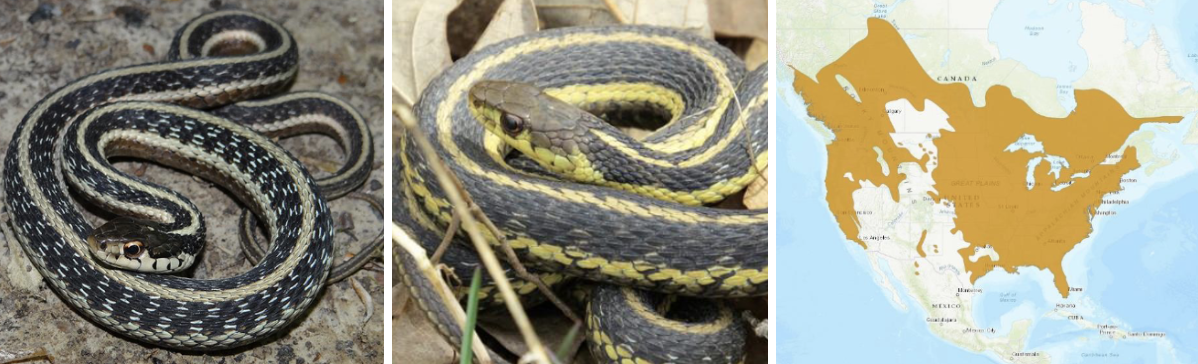
Eastern Fox Snake
Habitat: marshes, sedge meadows, prairies and old fields
Diet: rodents, birds
Characteristics: medium to large, yellow to light brown body with large dark chocolate/black dorsal blotches and a yellowish black-checkered belly, stark contrast between spots and background, foxy orange coloration on head (most vibrant) and tail
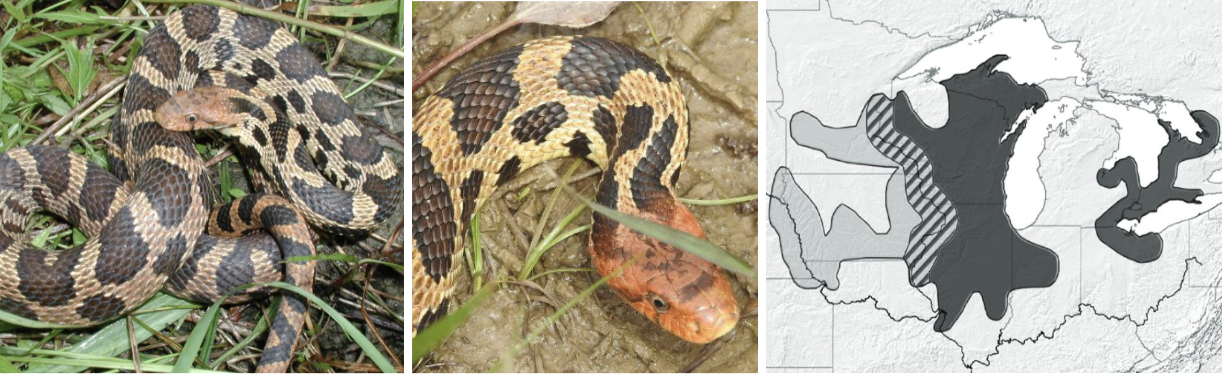
Eastern Massasauga Rattlesnake
Habitat: lowland/wetland habitat often adjacent open upland habitat used for basking and foraging
Diet: small mammals (voles, mice, shrews, etc.) occasional snakes, amphibians, birds
Characteristics: small to medium, only venomous snake in MI, not likely to encounter them, keeled scales (rough appearance), gray to light brown color with dark brown saddle-shaped blotches, triangular head, and rattle on tail
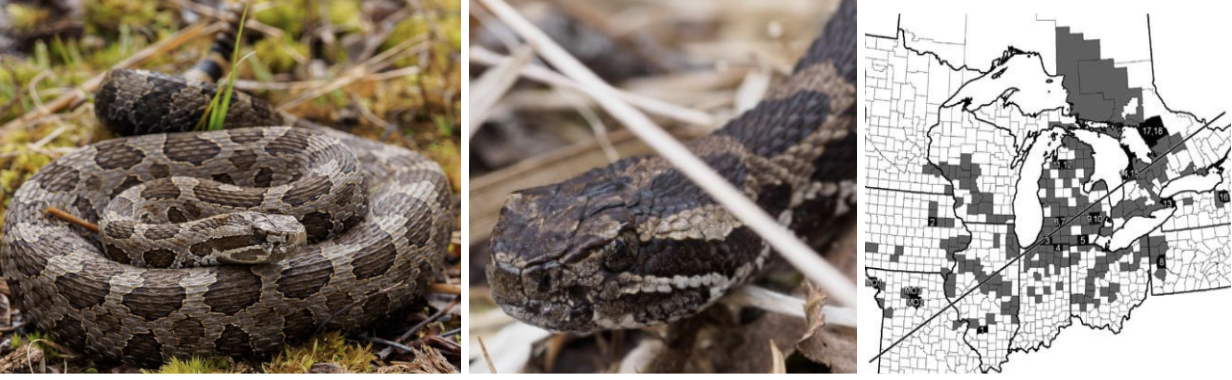
Spiny Soft-shell Turtle
Habitat: aquatic habitat with small amounts of vegetation and sandy/muddy bottom, sandy elevated areas for nesting
Diet: aquatic invertebrates including crayfish and occasional fish
Characteristics: fully aquatic, very flat, muddy brown shell with dark circles, leather covering on shell, long narrow snout
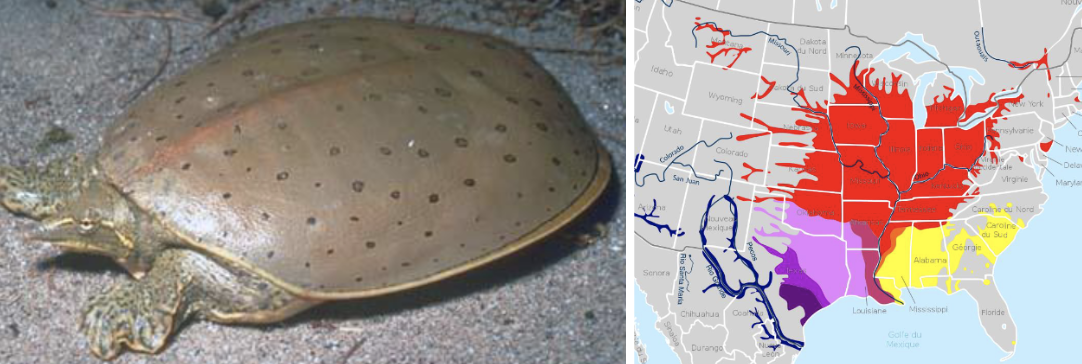
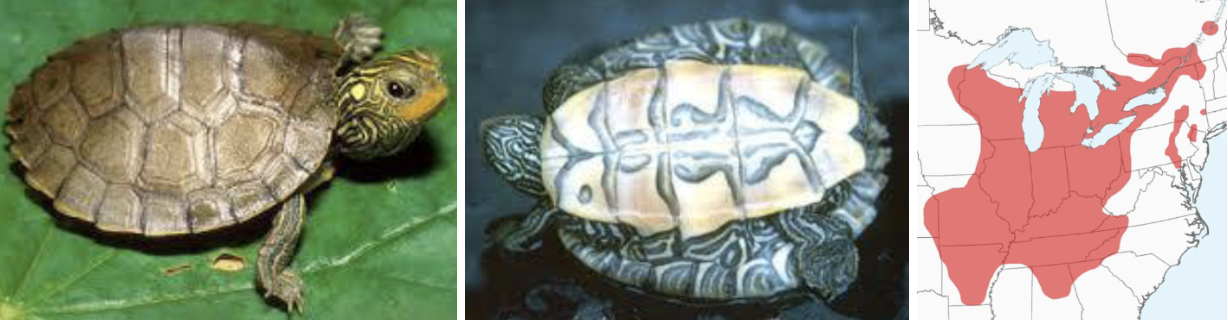
Common Map Turtle
Habitat: water (little or no current) with large amounts of vegetation and logs, etc. for basking
Diet: females eat larger prey (crayfish, snails, clams), males- snails, small crustaceans, insects. Both sexes will scavenge and consume some plant material
Characteristics: semi-aquatic, flat, olive to brown low-keeled shell, cartographic pattern on plastron, yellow stripes on head
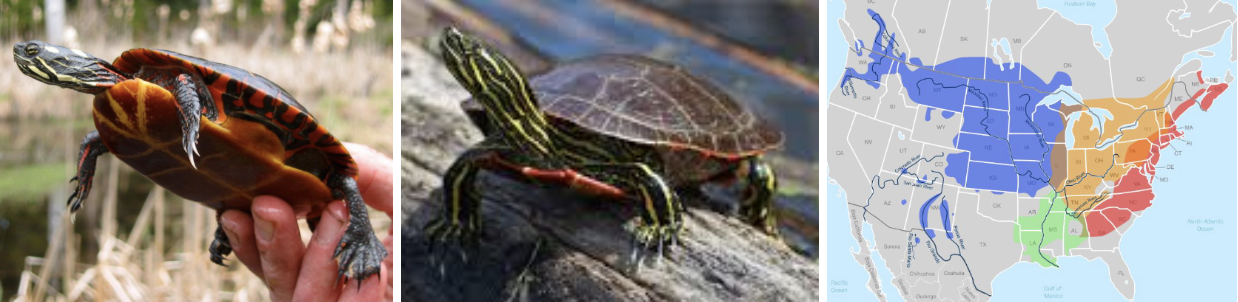
Painted Turtle
Habitat: shallow water bodies with muddy substrate, little current, and basking sites
Diet: plants, small fish, insects, crustaceans, carrion
Characteristics: semi-aquatic, flat, smooth dark carapace, vibrant under edges of carapace (ranges from yellow to bright red), same vibrancy down legs and up neck, no map-like markings on plastron
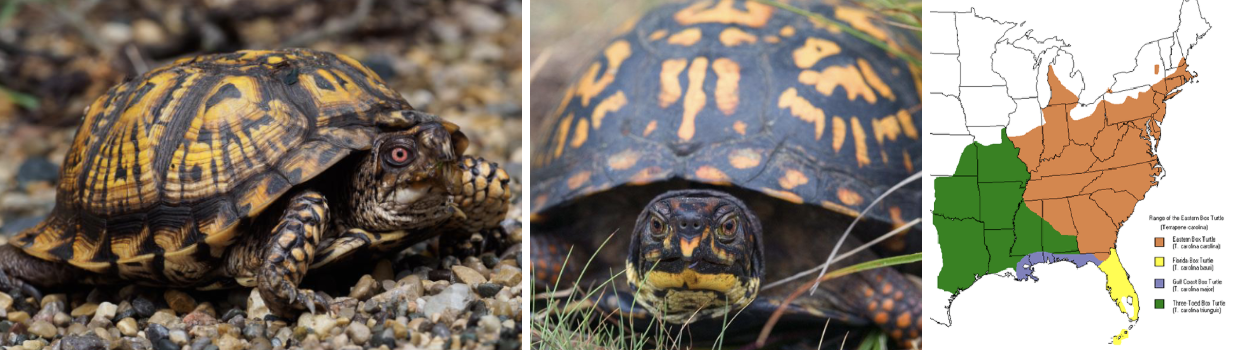
Eastern Box Turtle
Habitat: open woodlands, grasslands, wet meadows, often near water
Diet: snails, insects, berries, fungi, slugs, worms, carrion
Characteristics: mostly terrestrial but still need water, domed box-like shell, hinged plastron allows shell to close completely, variable yellow/orange/olive markings on a dark brown/black shell and skin, often resembles radiating pattern
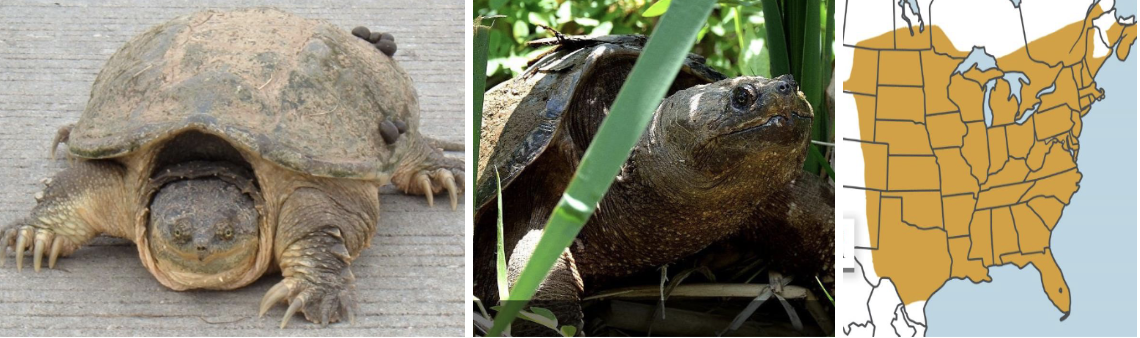
Common Snapping Turtle
Habitat: water bodies with muddy bottoms and abundant aquatic vegetation
Diet: aquatic vegetation, fish, invertebrates, small mammals, birds, carrion
Characteristics: semi-aquatic, relatively flat, large blocky head with pointed snout, dingy brown all over, often algae-covered shell with jagged rear edges, massive claws, long tails with saw-toothed crests, cannot fully retract into shell, rely on fast aggressive snapping bites for defense
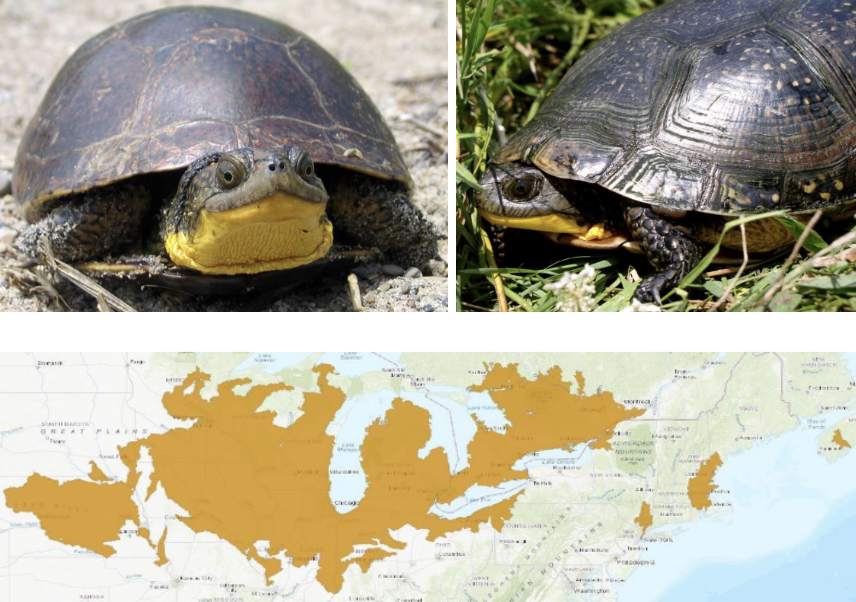
Blanding’s Turtle
Habitat: semi-aquatic using ephemeral wetlands/ponds in spring and nearby terrestrial habitat in the summer
Diet: plant material (roughly 50%), crayfish and other crustaceans, insects, occasional fish
Characteristics: semi-aquatic, semi-terrestrial, decently domed shell, dark smooth mottled shell, yellow chin, inner arms and sides may also have yellow coloration
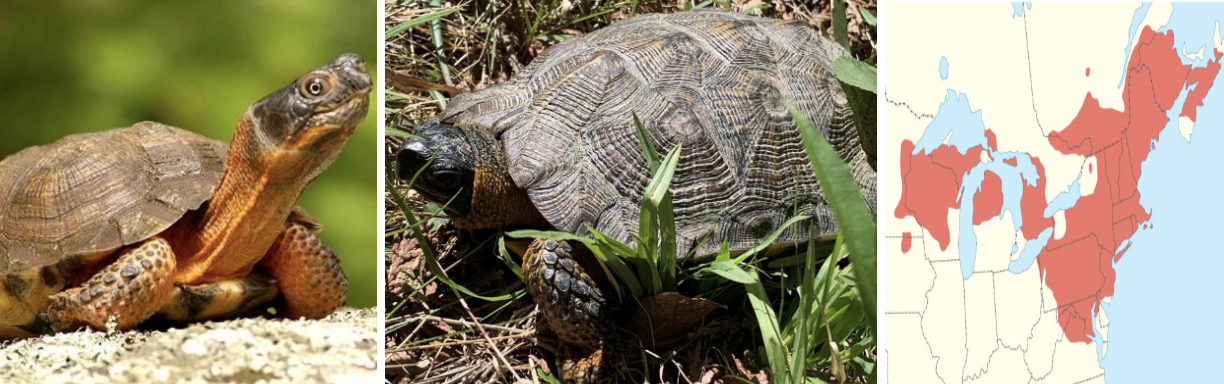
Wood Turtle
Habitat: wooded habitats near moving water with gravel or sandy bottom
Diet: flowers and fruit (berries) of herbaceous plants, slugs, fungi, snails, worms, slugs, carrion
Characteristics: semi-aquatic, relatively flat, rough ridged brown carapace, vibrant orange/yellow/red on throat and underside of limbs
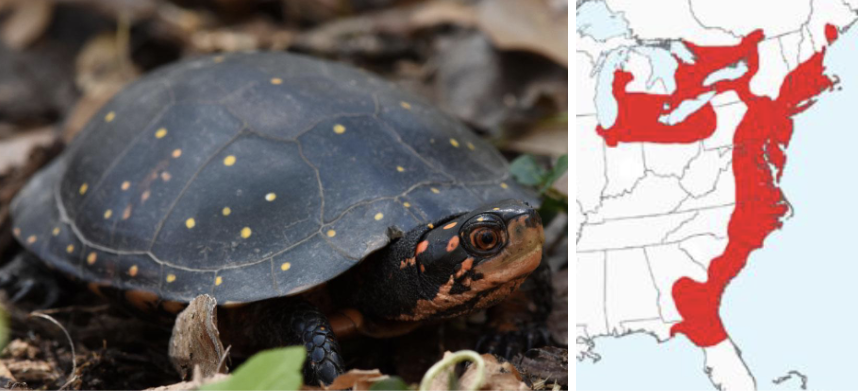
Spotted Turtle
Habitat: shallow aquatic areas such as fens and bogs, often associated with eastern massasauga habitat in the Midwest
Diet: small invertebrates and vertebrates, also vegetation
Characteristics: semi-aquatic, flat, smooth black carapace with little yellow to red spots, head will have spots
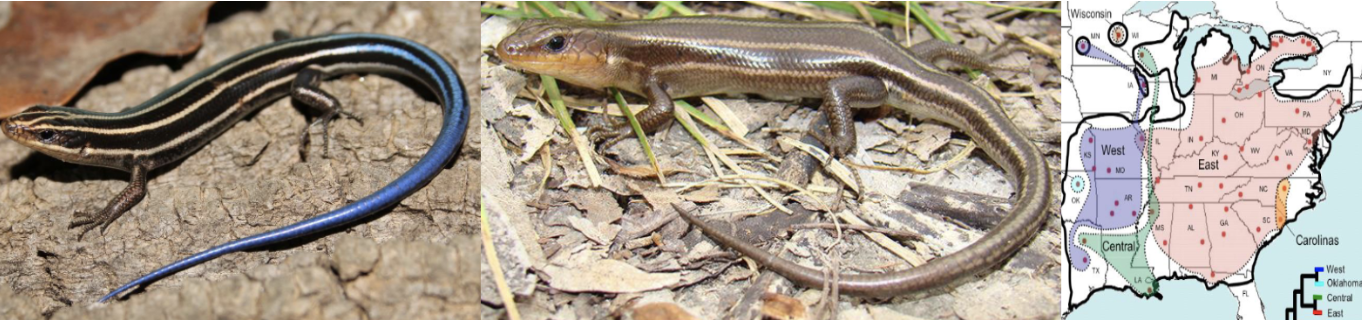
Five-lined Skink
Habitat: moist areas including open woods, partially wooded areas, attracted to woodland edges (basking sites)
Diet: insects (spiders, millipedes, crickets, etc.), occasional small frogs, salamanders, or newborn mice
Characteristics: dry, scaly, dark brown/black body with five white/cream stripes down length of body, juveniles and some females have bright blue tail, adults become more uniform tan/brown/olive with fades indistinct stripes, males heads become reddish during breeding season
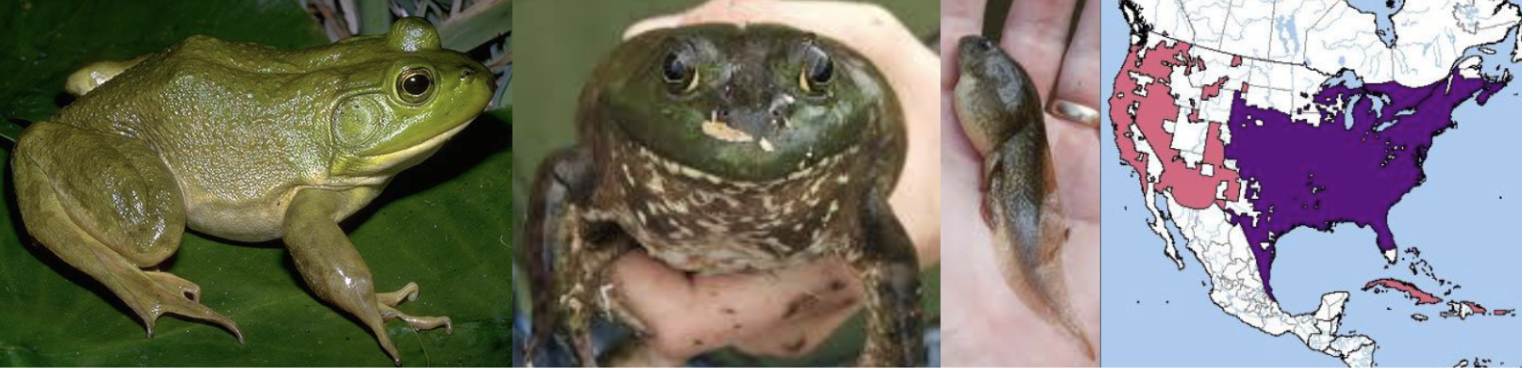
Bull Frog
Habitat: permanent bodies of still water with abundant aquatic vegetation
Diet: insects, snakes, worms, frogs, salamanders, crustaceans, eggs of frogs, fish, salamanders
Characteristics: smooth, wet, bigger when full grown but often overlap with green frog, vary in color/mottling (can overlap with green frog), ridge runs from eye to shoulder
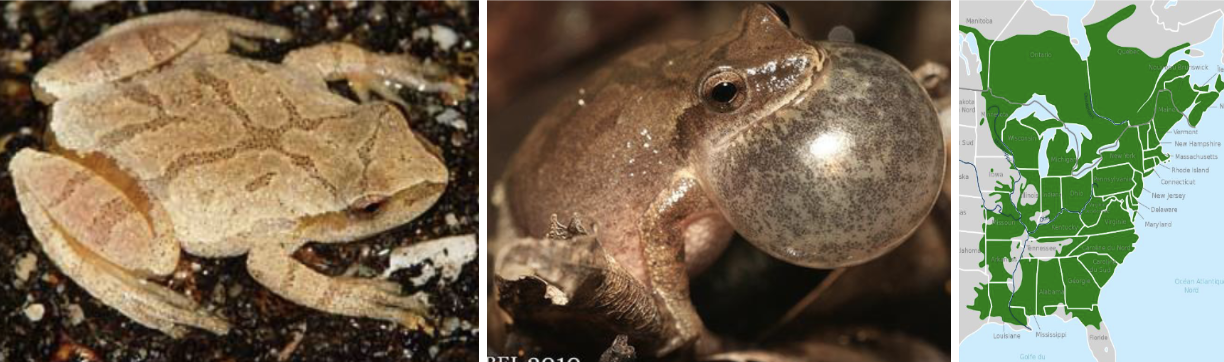
Northern Spring Peeper
Habitat: moist woods, shrublands near areas with at least ephemeral bodies of water
Diet: small insects (ants, beetles, flies, spiders, etc.)
Characteristics: smooth, wet, tiny, brownish to olive, darkish-X on back (can be abstract), some of the earliest to come out in spring
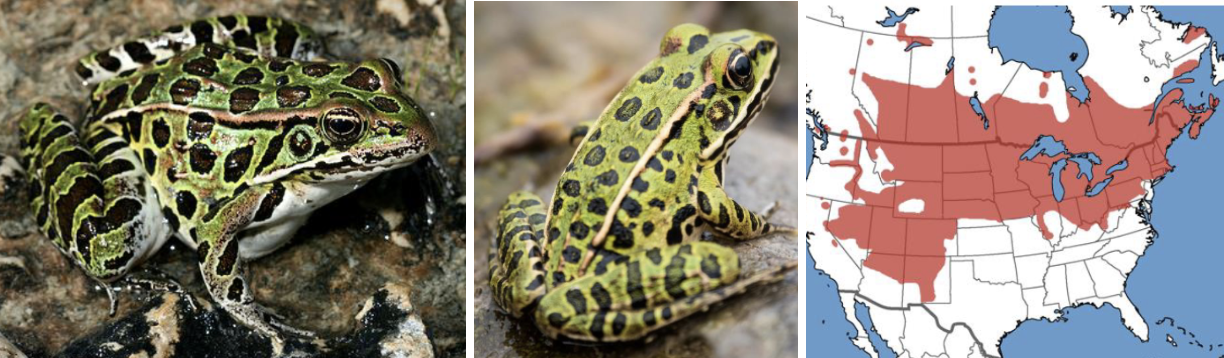
Northern Leopard Frog
Habitat: marshes, bogs, pond/lake edges, forages far from water in areas with moist vegetation
Diet: insects, slugs, snails, earthworms. Larger individuals may eat smaller frogs
Characteristics: smooth, wet, medium sized, slender body, pointed snouts, green to brown skin (can overlap with pickerel frog), prominent dark circular spots
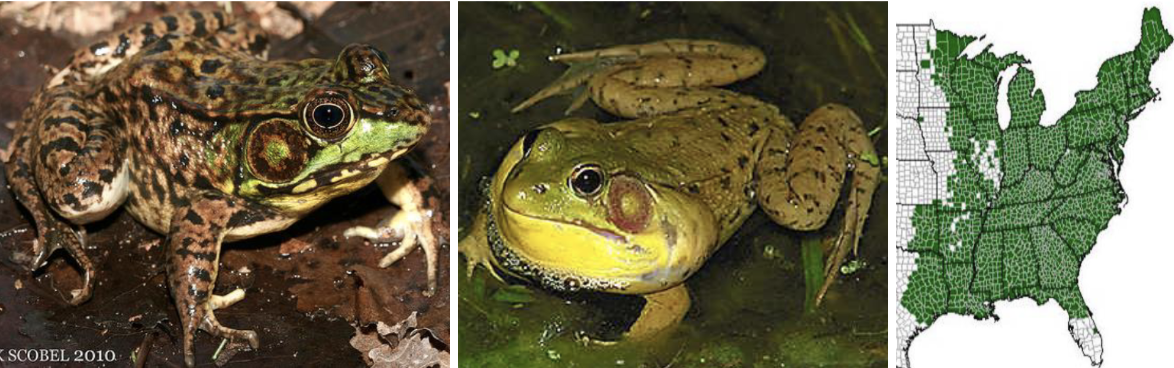
Green Frog
Habitat: similar to bull frogs- permanent bodies of still water with abundant aquatic vegetation
Diet: slugs, snails, various insects, larger individuals will eat smaller frogs, snakes
Characteristics: smooth, wet, large, vary in color/mottling (can overlap with bull frog), dorsal lateral ridge runs from behind eye to the hip
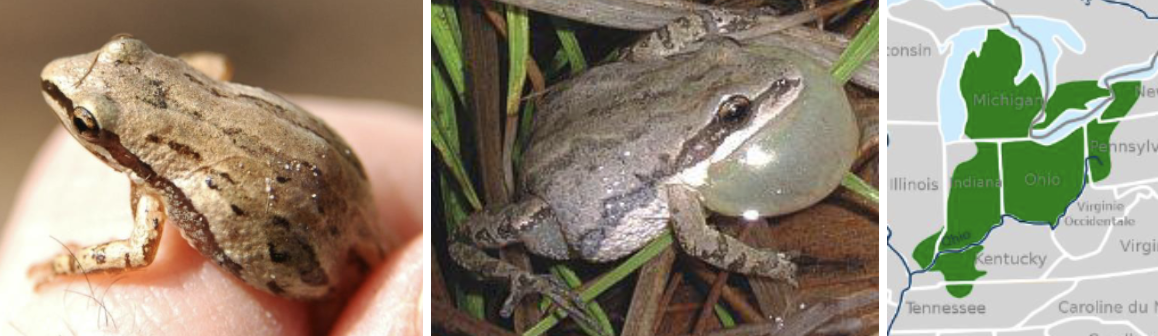
Western Chorus Frog
Habitat: marshes, meadows, swales, also can be found in open woods, usually in leaf litter or under cover.
Diet: insects, including mosquitos
Characteristics: smooth, wet, tiny, brown/olive/gray with dark stripe on sides of body from tip of nose to groin, some more faded lines, species of special concern in MI
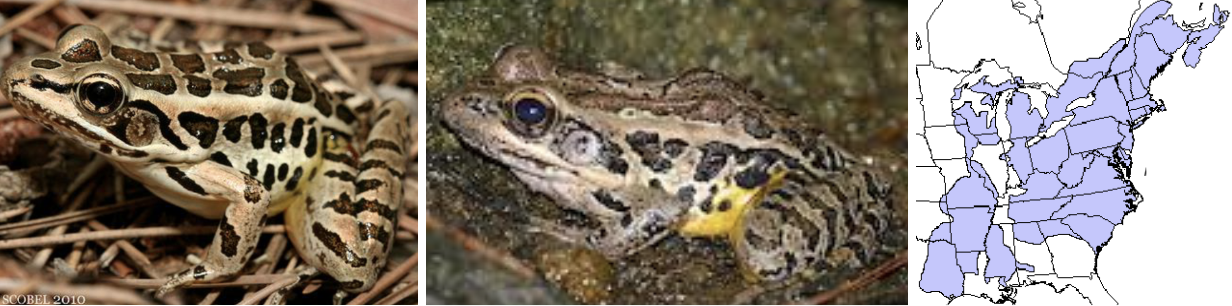
Pickerel Frog
Habitat: similar to leopard frogs- marshes, bogs, pond/lake edges, forages far from water in areas with moist vegetation
Diet: insects, slugs, snails, earthworms
Characteristics: smooth, wet, medium sized, tan to greenish brown skin (can overlap with leopard frog), bright yellow patch on inside of thigh, prominent dark square spots
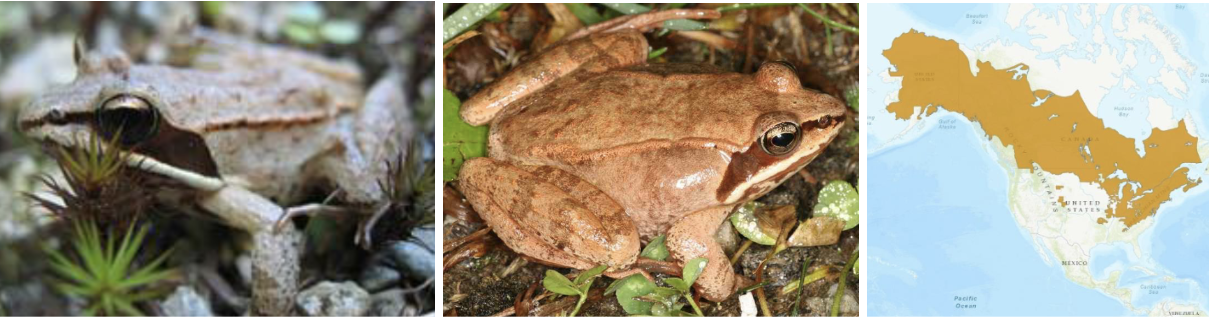
Wood Frog
Habitat: thickets, wet meadows, bogs, coniferous or deciduous forests
Diet: slugs, snails, beetles, moth larvae, etc.
Characteristics: smooth, wet, medium sized, tan/gray/brown/reddish-pink with dark stripe mask that starts at nose and forms patch behind eye
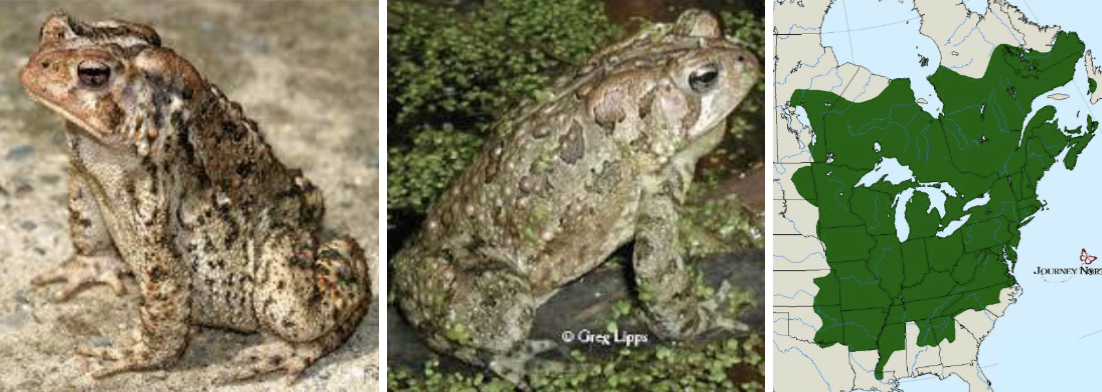
American Toad
Habitat: fairly generalist as long as there is adequate cover for foraging and shelter
Diet: snails, beetles, slugs, earthworms
Characteristics: dry, bumpy, medium sized, colors range from brown to olive or red, lighter belly with dark spots, glands on back of head produce toxic compounds, short legs
Explore top notes

Explore top flashcards
