Biology Exam 7
0.0(0)
 Studied by 0 people
 Call Kai
 Learn
Learn Practice Test
 Spaced Repetition
 Match
Match Flashcards
 Knowt Play
Card Sorting
1/99

There's no tags or description
Looks like no tags are added yet.
Last updated 7:51 PM on 4/24/23
Name | Mastery | Learn | Test | Matching | Spaced | Call with Kai |
|---|
No analytics yet
Send a link to your students to track their progress
100 Terms
1
New cards
Phenotype:
EX:
EX:
Physical Form of a trait.
Phenotype (Brown fur)
Phenotype (Brown fur)
2
New cards
Genotype:
EX:
EX:
Alleles for a Trait. Genotype (Bb)
3
New cards
Segregation:
Separation of alleles into gametes
4
New cards
Diploid:
Having both maternal and paternal copies of a chromosome
5
New cards
Haploid:
Having one copy (mother OR father) of each chromosome
6
New cards
Dominant Allele:
\-What can they do?
\-What can they do?
Expressed in heterozygotes. *Can mask the presence of recessive traits.*
7
New cards
Recessive Allele:
Hidden in heterozygotes. Does not produce a trait at all when only one copy is present.
8
New cards
Allele:
Code for the same trait, but have different forms of a gene.
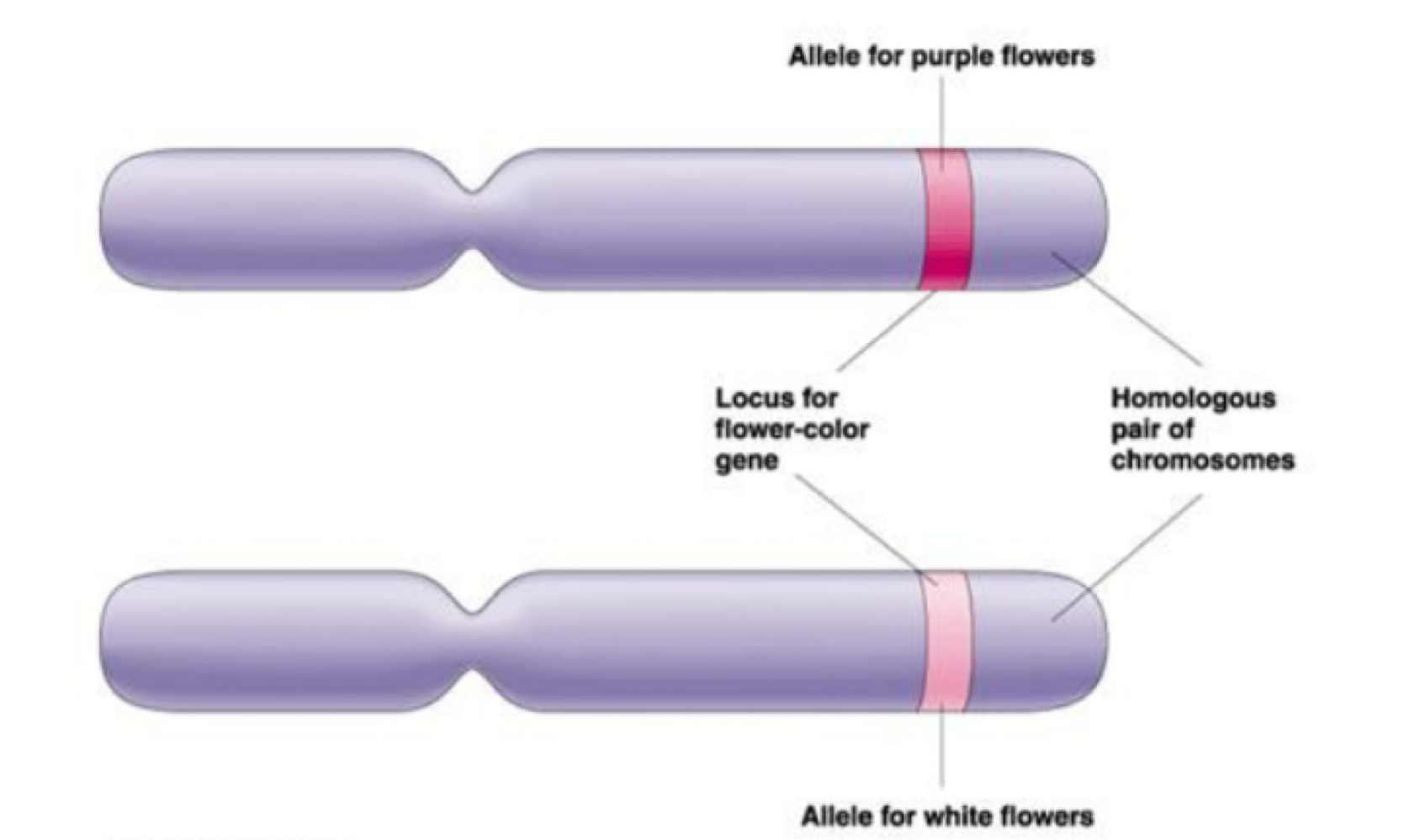
9
New cards
How many alleles do diploid cells have?
Diploid individuals have 2 genes/alleles for every trait, though more than 2 alleles may exist.
10
New cards
What happens in multiple allelism:
No matter how many alleles for a trait are present in the population, each individual can only have two of the alleles - one from each parent.
11
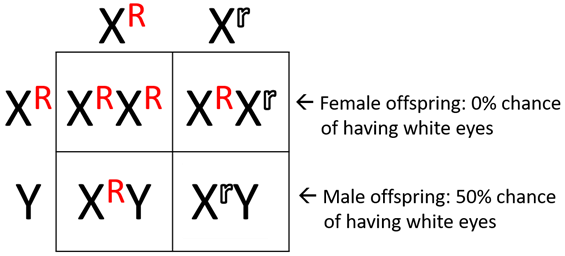
New cards
Homozygous:
EX:
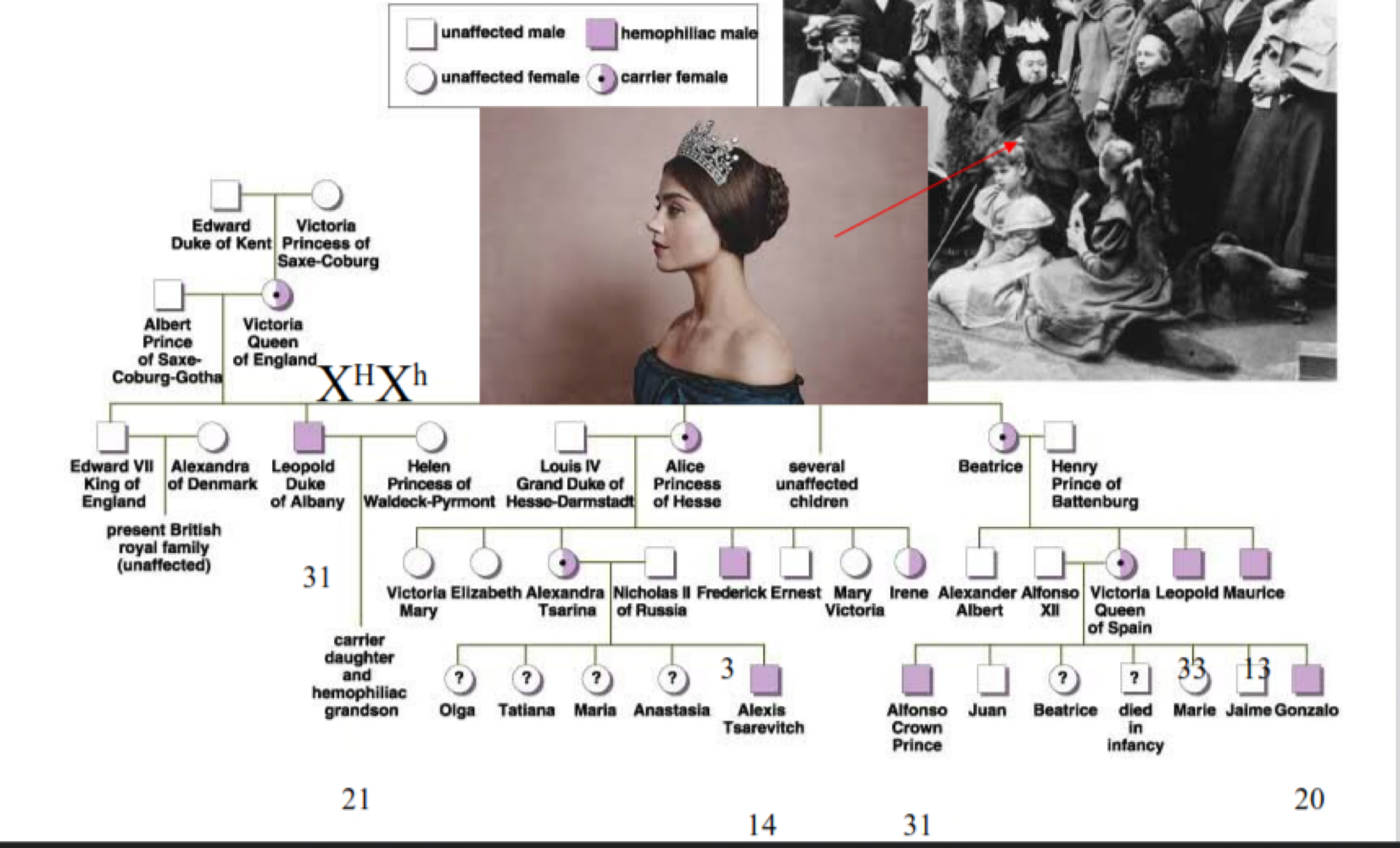
EX:
Same alleles.
Homozygous (BB or bb)
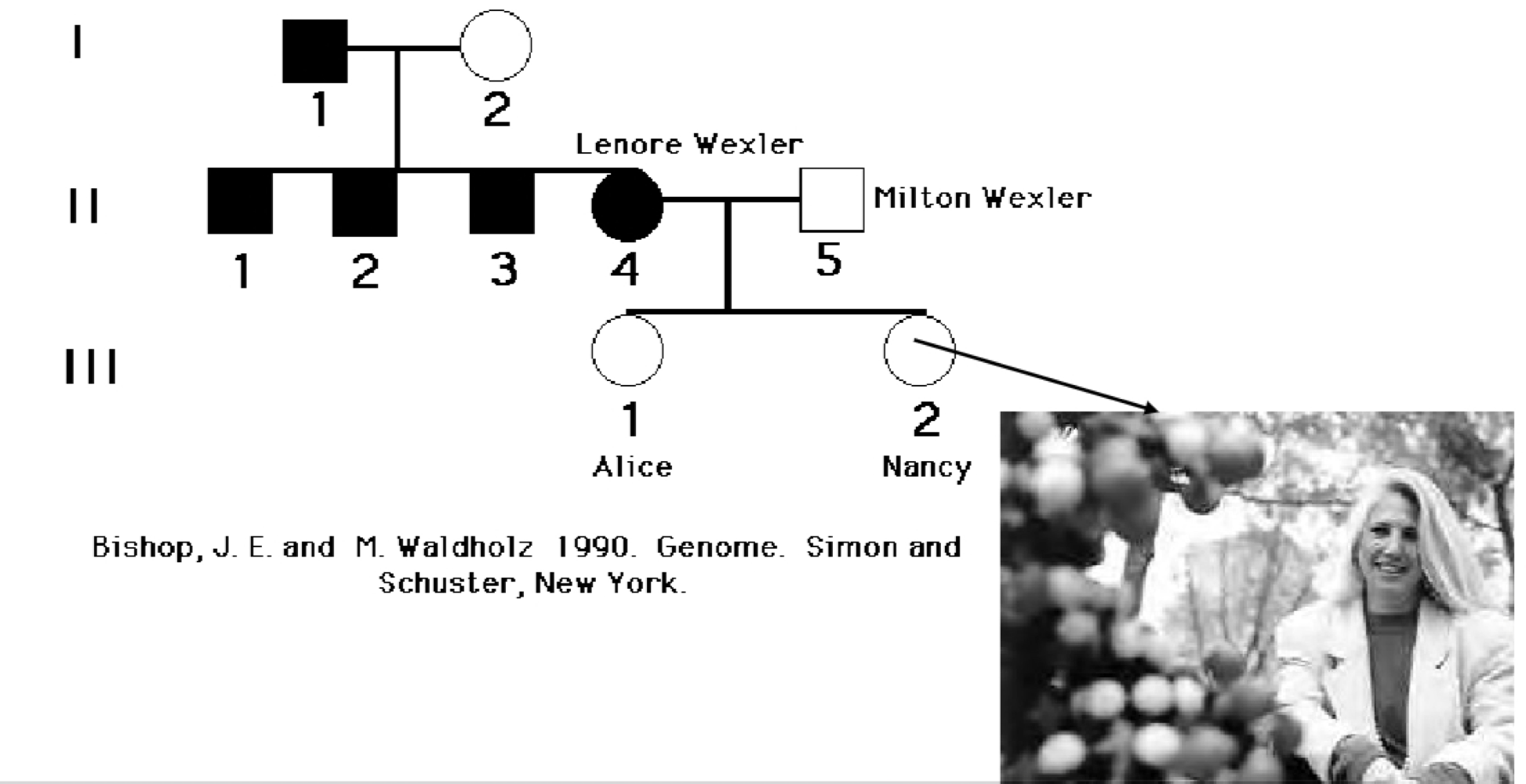
Homozygous (BB or bb)
12
New cards
Heterozygous:
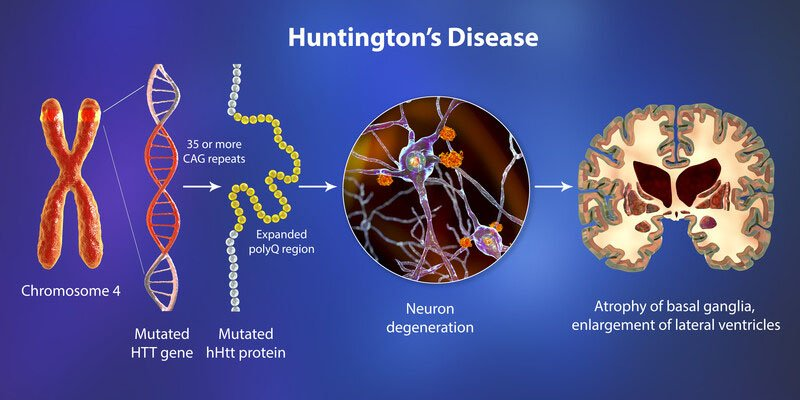
EX:
EX:
Different alleles. Heterozygous (Bb)
13
New cards
**Mendelian Genetics:**
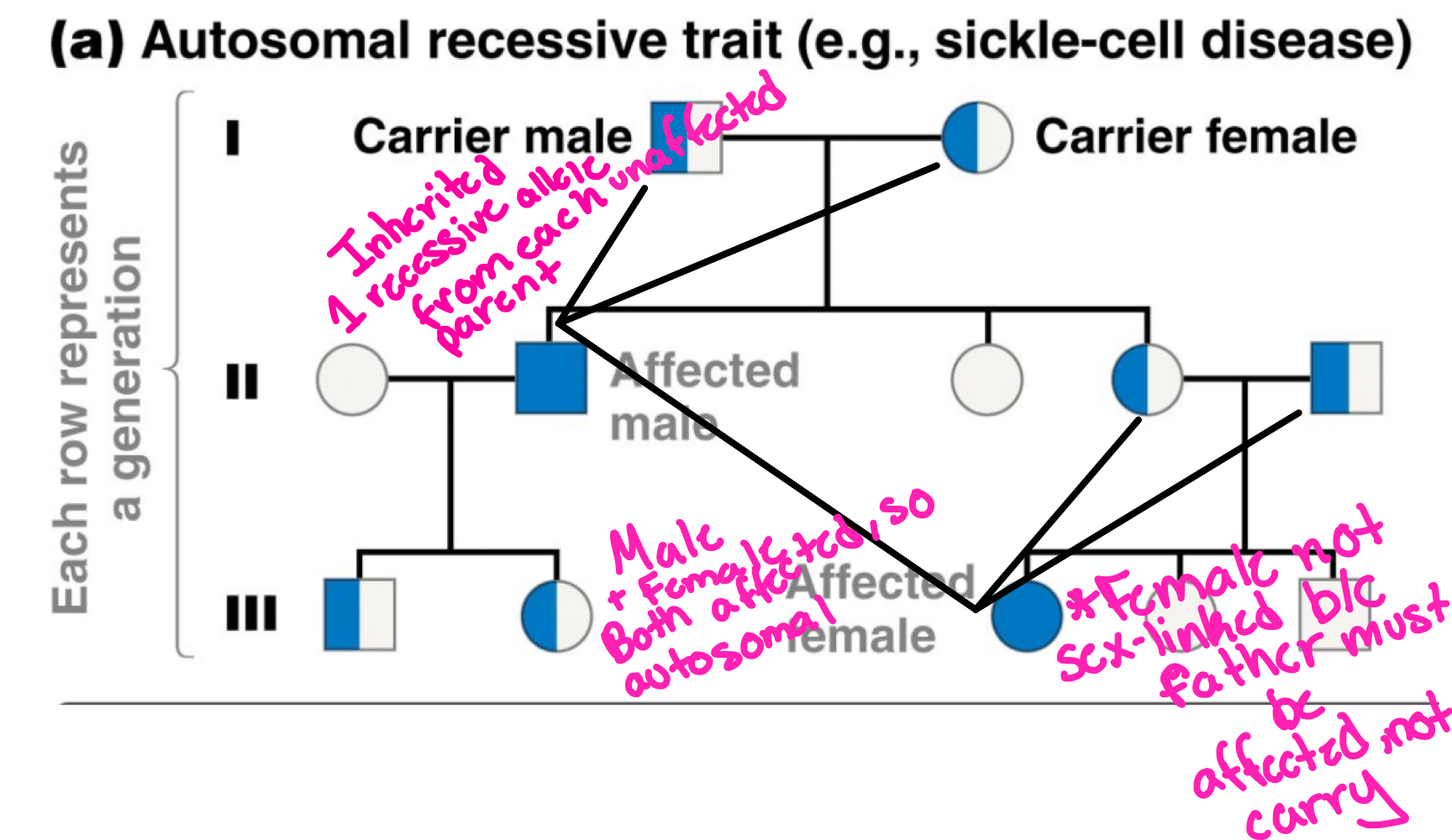
Studies inheritance of traits
14
New cards
What does mendelian genetics display?
Shows traits are passed on as discrete units from parent to offspring vs previous “blending” idea.
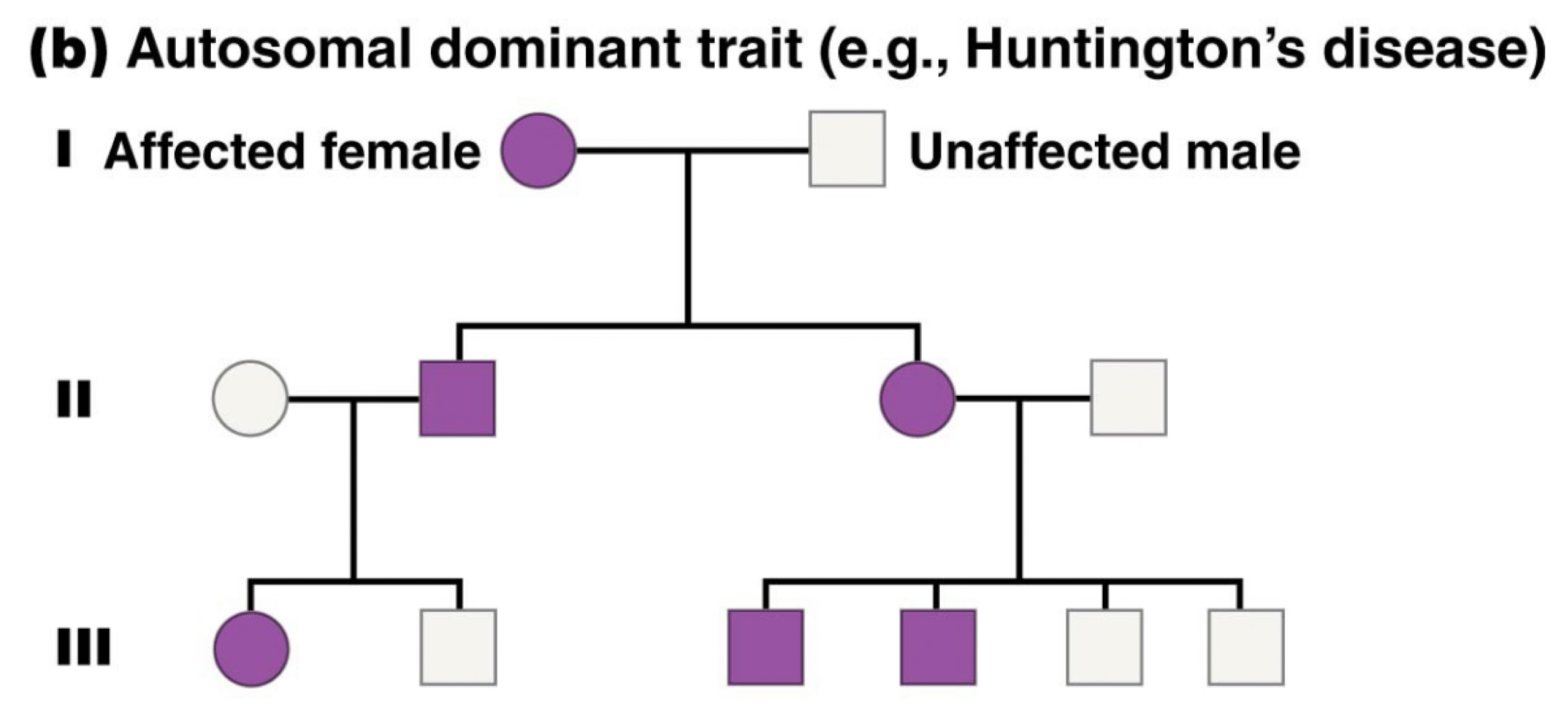
15
New cards
What did Mendel study?
Studied 7 non-linked traits of garden pea plants
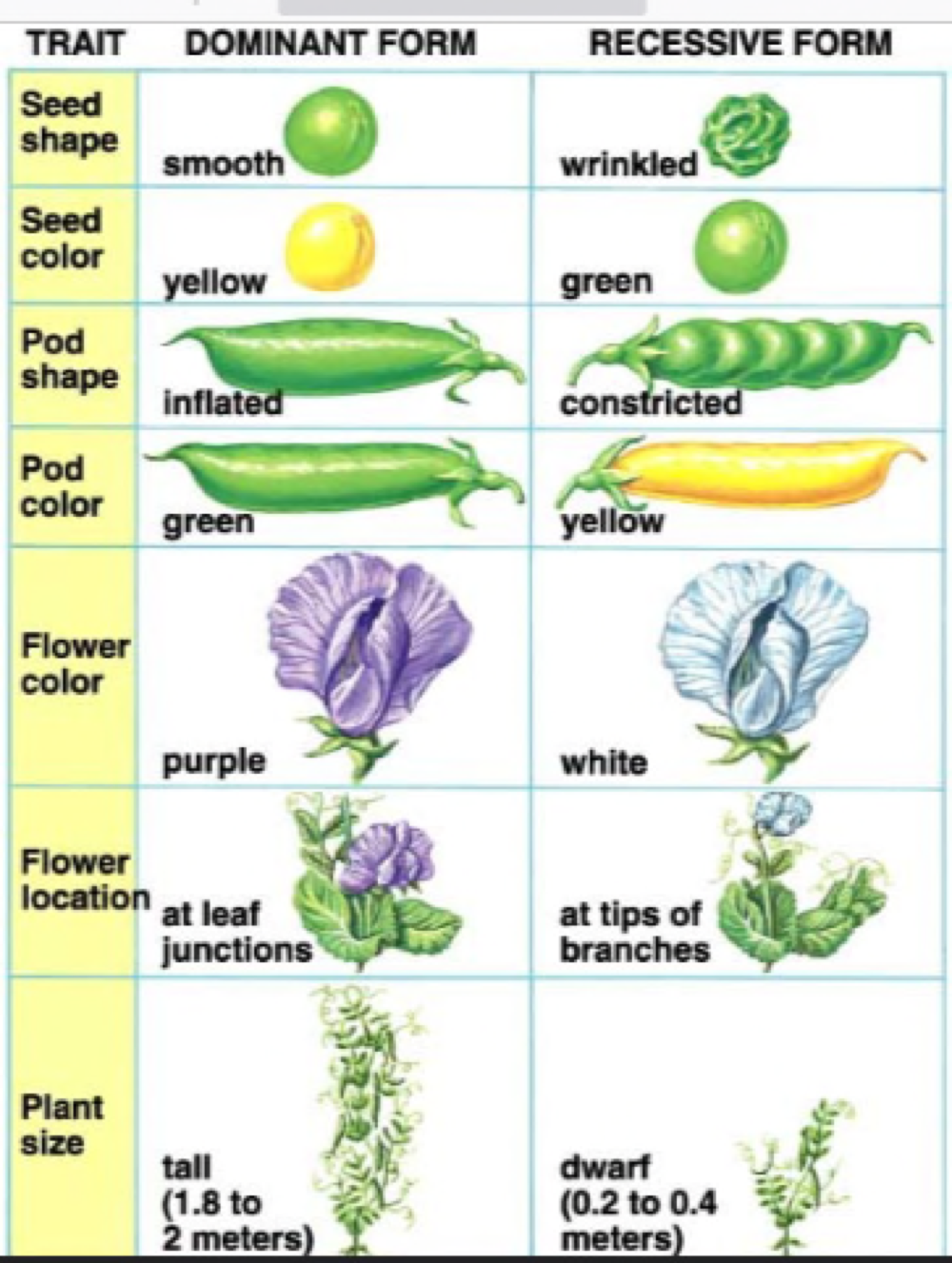
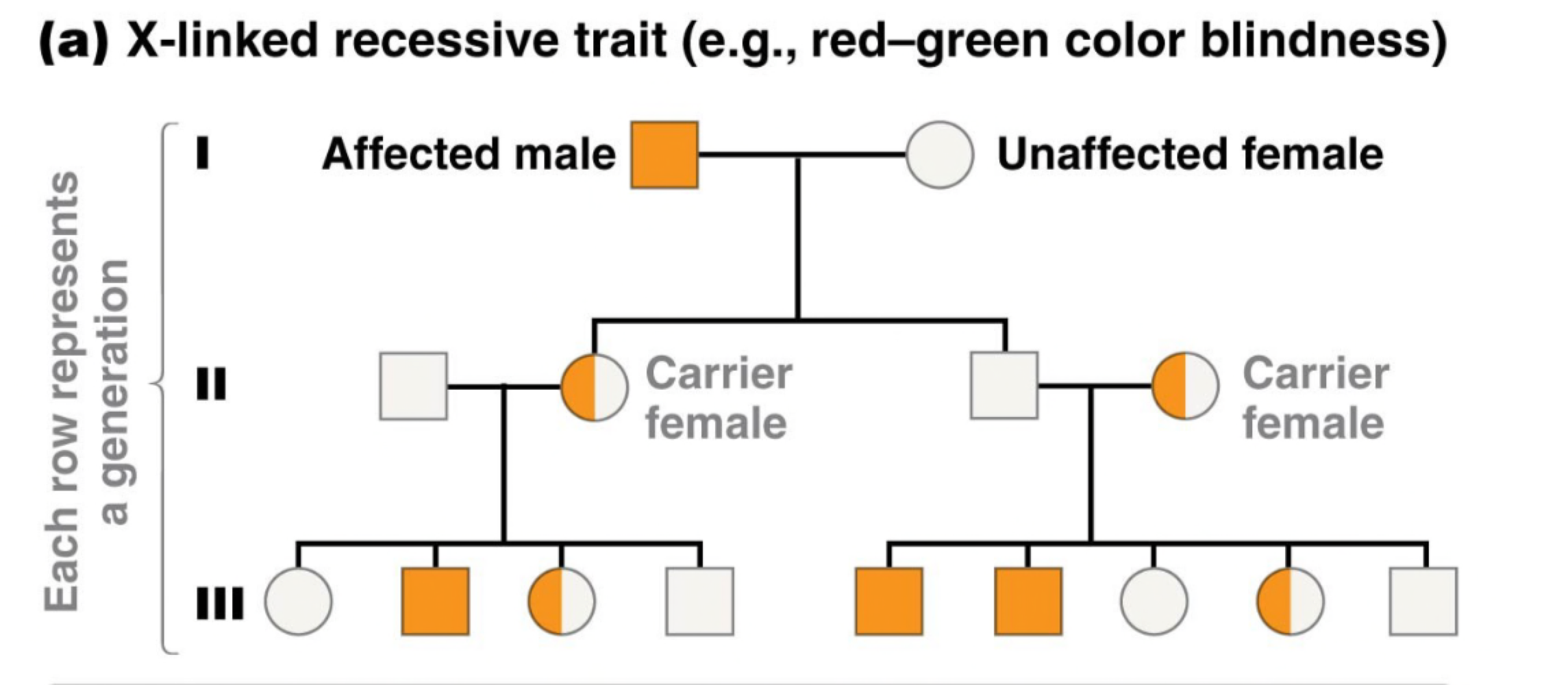
16
New cards
**True-breeding** Parents:
Are parents that always have offspring with the same trait.
17
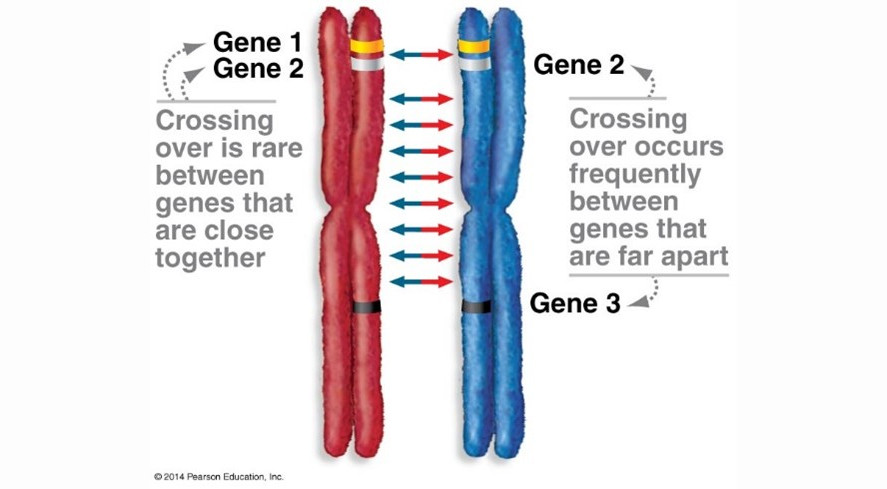
New cards
What are the true-breeding parents referred to?
The parents are called the **P (parental)** generation.
18
New cards
What are the offspring of true-breeding parents referred to as?
The offspring of the parental cross are called the **F1** generation.
19
New cards
What happens when you cross F1 generation to eachother?
Crossing them to each other, produces **F2** plants.
20
New cards
basic ratio when you have a dihybrid cross with 2 heterozygotes:
* 9/16 are dominant for both traits
* 3/16 are dominant for 1 traits, recessive for the other
* 3/16 are recessive for 1 trait, but dominant for the other
* 1/16 are recessive both both traits
* 3/16 are dominant for 1 traits, recessive for the other
* 3/16 are recessive for 1 trait, but dominant for the other
* 1/16 are recessive both both traits
21
New cards
**Alternative Patterns of Inheritance we will be discussing.**
\
\
A. Incomplete Dominance
B. Epistasis
C. Polygenic Inheritance
D. Pleiotropy
E. Multiple Alleles and Codominance
F. Sex-Linked Traits
G. Dominant Defects
B. Epistasis
C. Polygenic Inheritance
D. Pleiotropy
E. Multiple Alleles and Codominance
F. Sex-Linked Traits
G. Dominant Defects
22
New cards
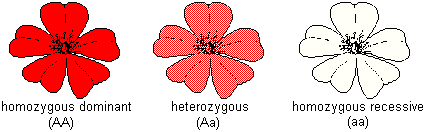
**Incomplete Dominance:**
Both alleles are expressed in the heterozygote to give an intermediate phenotype, where both of them are expressed.
23
New cards
Incomplete Dominance punnet characteristic:
You would only use capitals when making the punnett square for these problems.
24
New cards
Incomplete Dominance Examples:
* Roan livestock. RR= red, WW=white, RW= roan
* Many pink flowers.
* Wavy hair. SS=straight, CC=curly, SC=wavy
* Yellow-green seedlings
* Many pink flowers.
* Wavy hair. SS=straight, CC=curly, SC=wavy
* Yellow-green seedlings
25
New cards
How are pink flowers made?
A cross between red and white flower plants results in offspring with pink flowers
26
New cards
27
New cards
**Epistasis:**-Where is it commonly seen?
One set of genes suppresses expression of another (often coloring genes in animals, plants, and hair color).
28
New cards
Epistasis. Phenotype characteristics:
Always has 3 phenotypes
29
New cards
What must you do to all ratios?
ratios always have to be simplified!
30
New cards
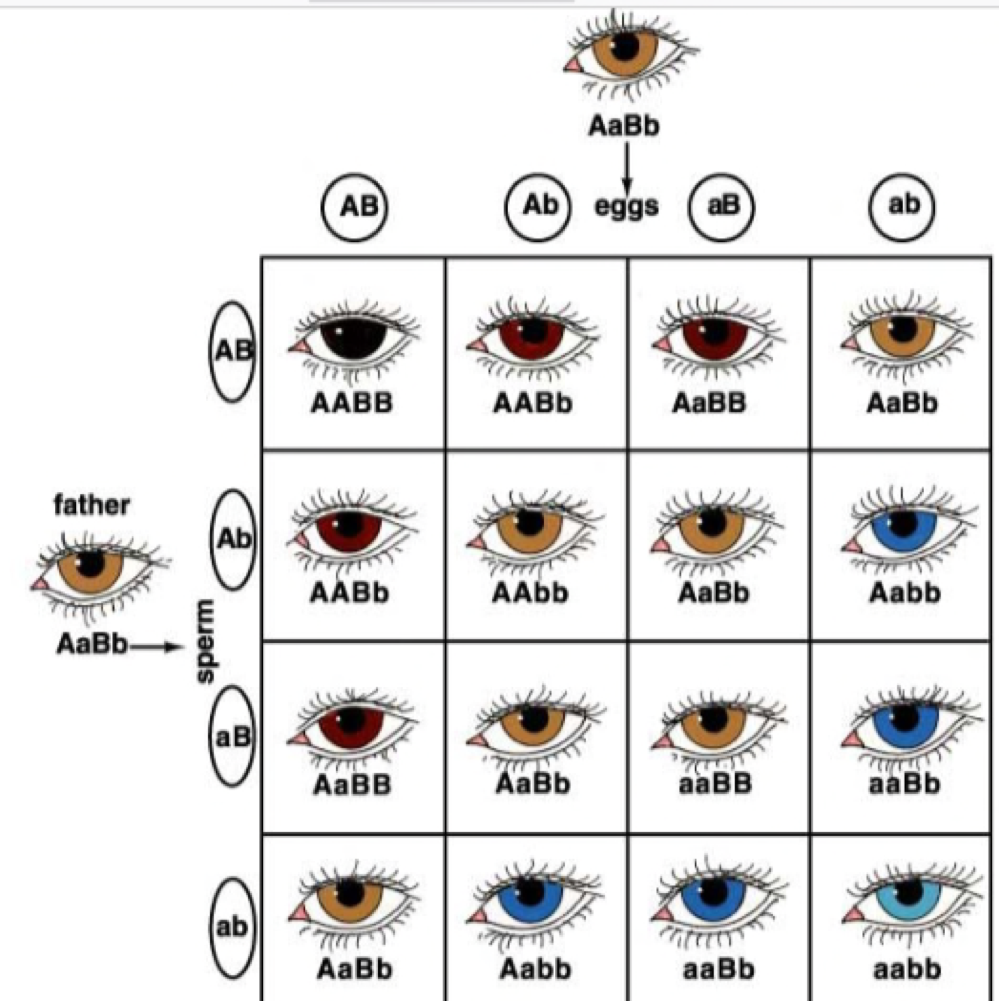
**Polygenic Inheritance:**
When __many__ genes influence one trait (most traits!)
31
New cards
Polygenic Inheritance.
Ex:
Ex:
Eye color, hair color, height.
32
New cards
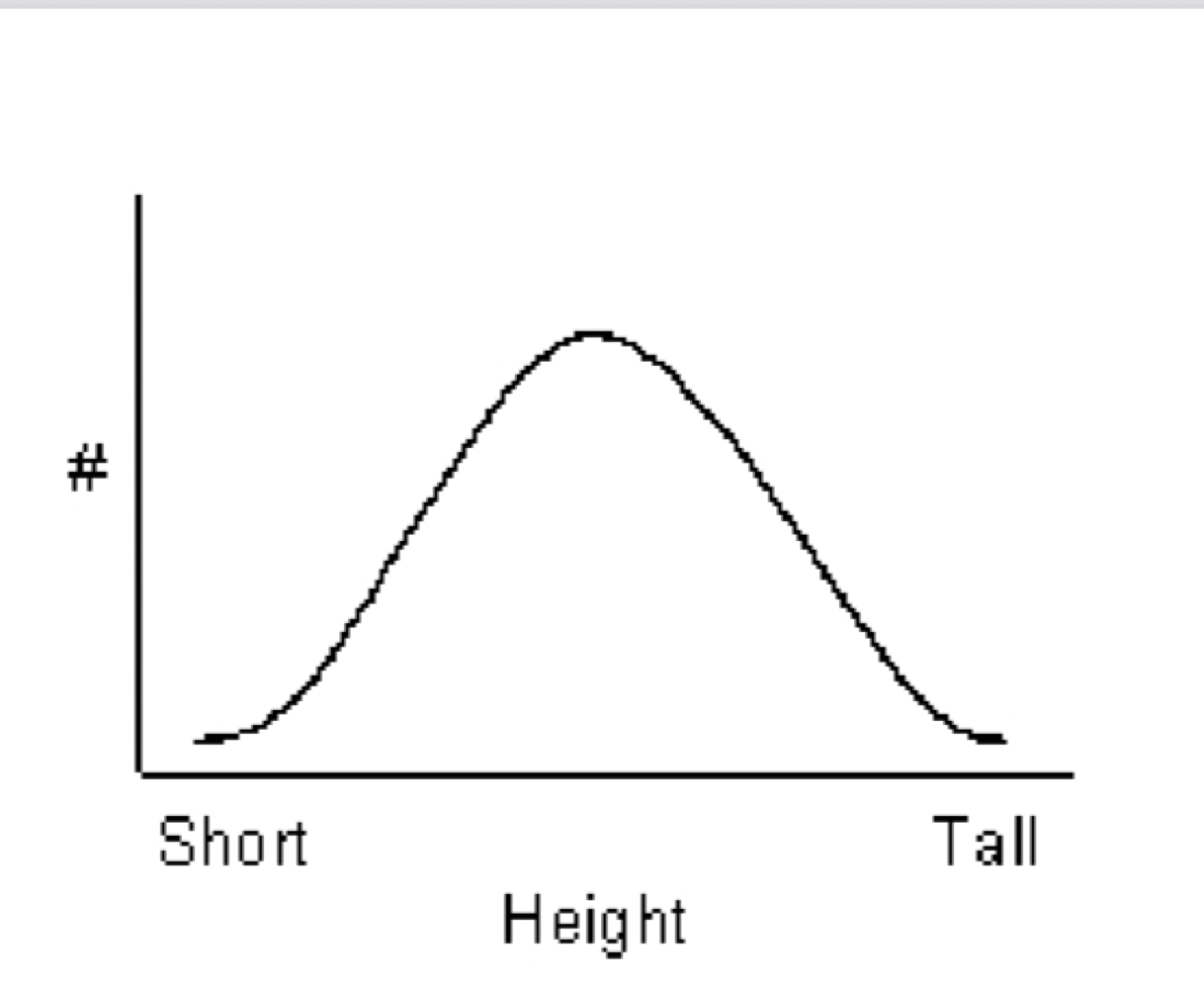
How can you tell if a trait is polygenic and why?
Can tell when a trait is polygenic when there is **continuous variation** in phenotype since so many genes contribute.
33
New cards
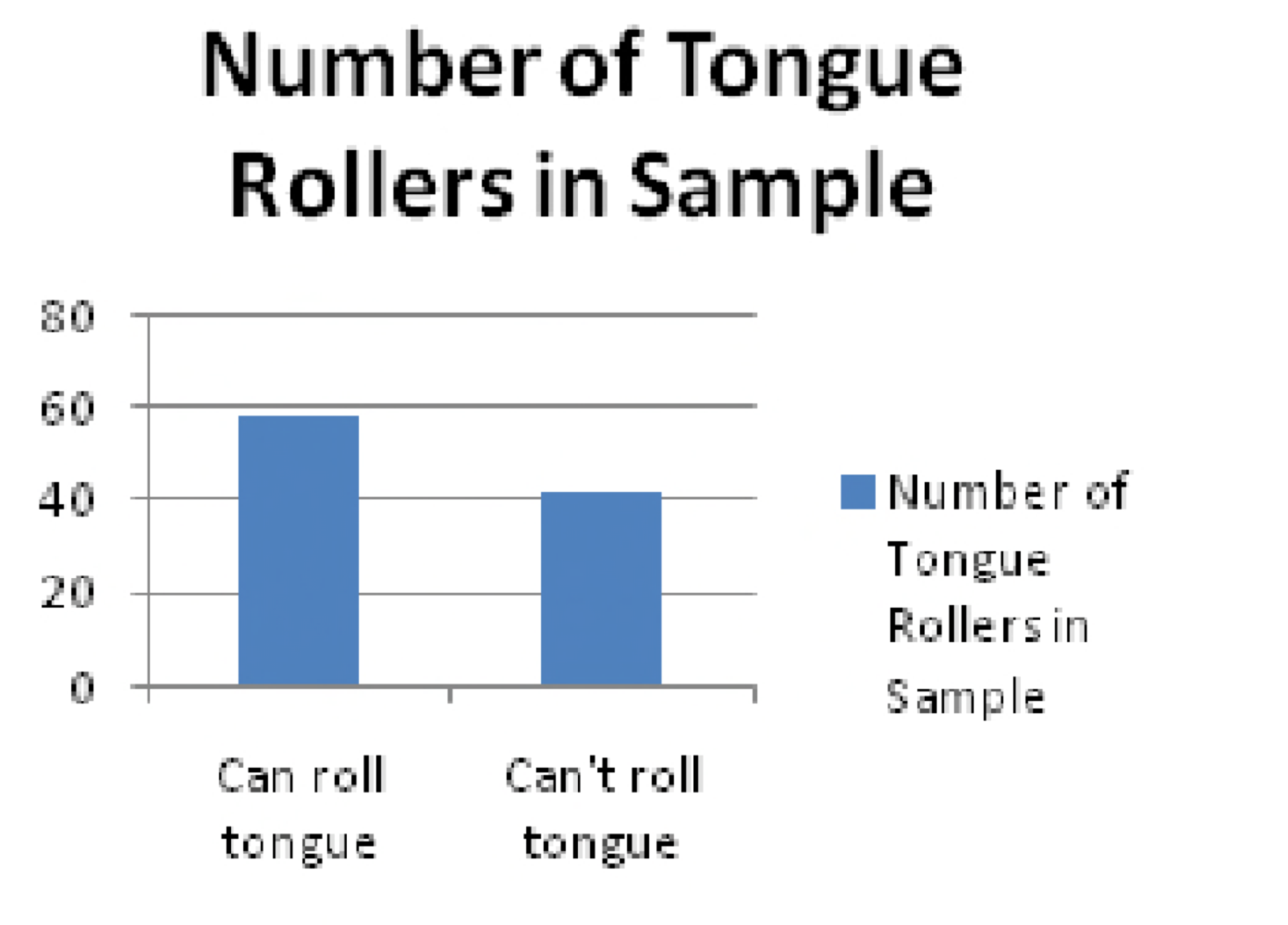
What variation is shown when a few genes are present?
Traits due to one or two genes show **discontinuous variation** = just a few phenotypes
34
New cards
**Pleiotrophy:**
When one gene influences many traits
35
New cards
Pleiotrophy Ex:
SRY Gene
36
New cards
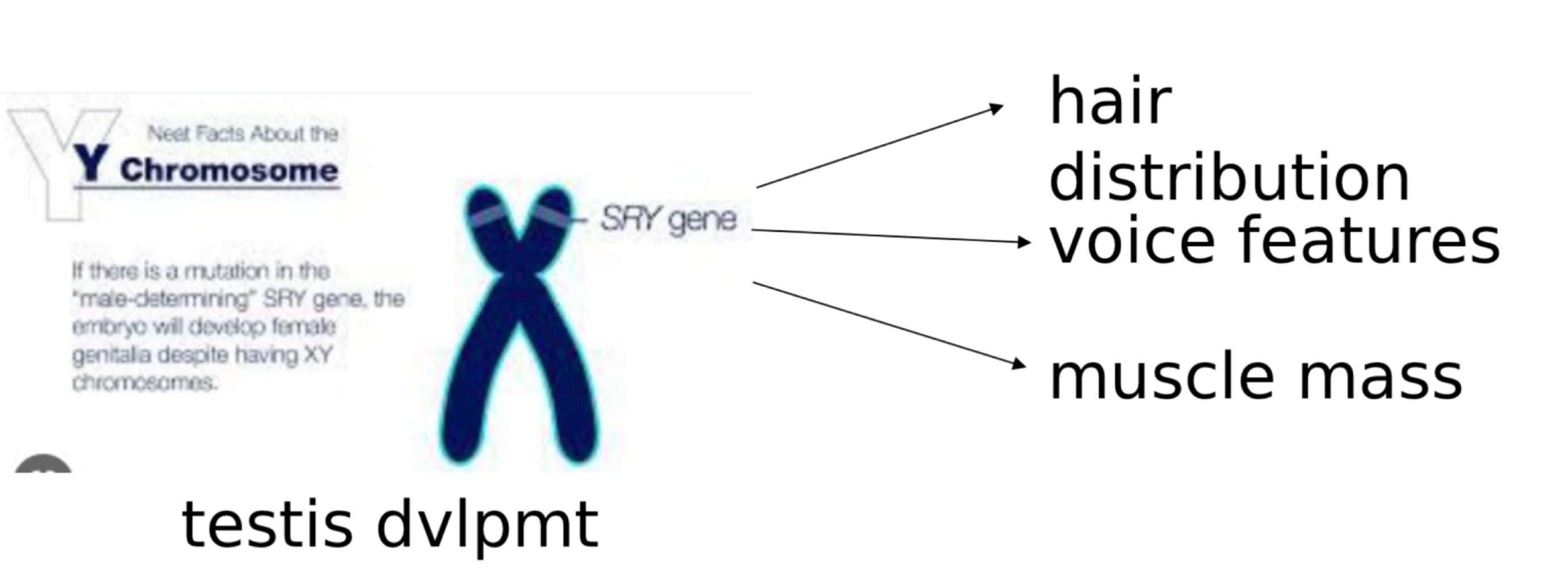
What does the SRY gene do?
\-What happens when it’s mutated?
\-What happens when it’s mutated?
SRY Gene starts testis development. Mutation will cause females to develop male characteristics.
37
New cards
**Carrier:**
Heterozygote who has one copy of a recessive allele (don’t have the disease), typically doesn’t know they have it
38
New cards
What is the term carrier only used for?
Used in reference to disease genes only. EX: not I am a carrier for blue eyes.
39
New cards
**Diseases Caused By Autosomal Recessive Alleles:**
PKU
albinism
cystic fibrosis
Tay Sachs Disease
Sickle cell anemia
Xeroderma pigmentosum
albinism
cystic fibrosis
Tay Sachs Disease
Sickle cell anemia
Xeroderma pigmentosum
40
New cards
What do Autosomal Recessive Alleles mean?
someone could be a carrier
41
New cards
Albinism:
Can’t make any pigment.
42
New cards
Multiple Alleles and Codominance Ex:
**Human ABO blood types**
43
New cards
What are the blood type alleles?
IA= A antigen
IB= B antigen
i= No antigen
IB= B antigen
i= No antigen
44
New cards
How many blood type alleles do humans have?
Everyone has 2 of these 3 alleles (1 from each parent).
45
New cards
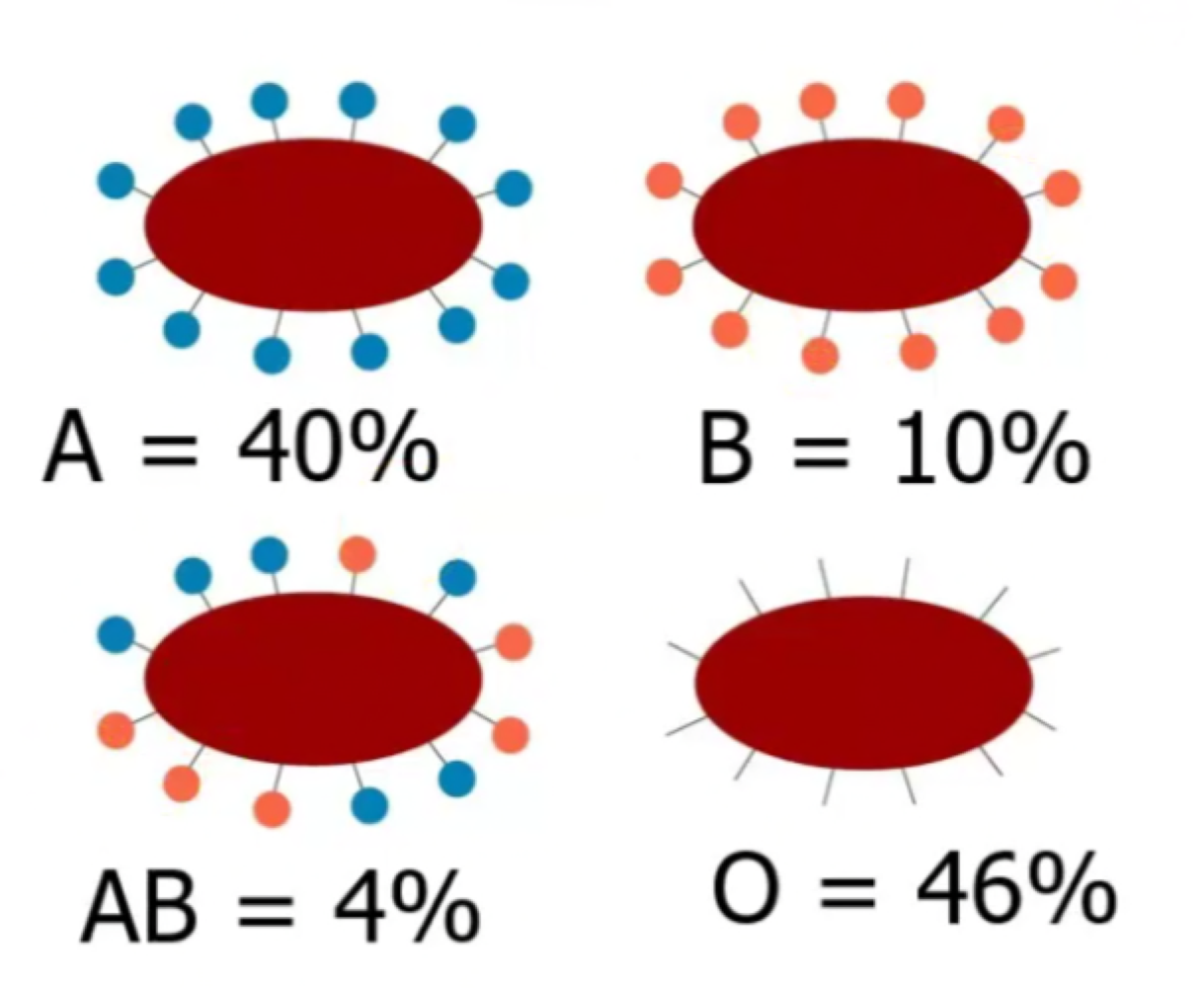
What part of ABO blood type is codominant and why?
IA and IB are **Codominant**- Equally expressed in heterozygotes.
46
New cards
A and B are _______ to what?
A and B are dominant to the i allele.
47
New cards
What do the alleles in blood do?
The alleles code for **Antigens**
48
New cards
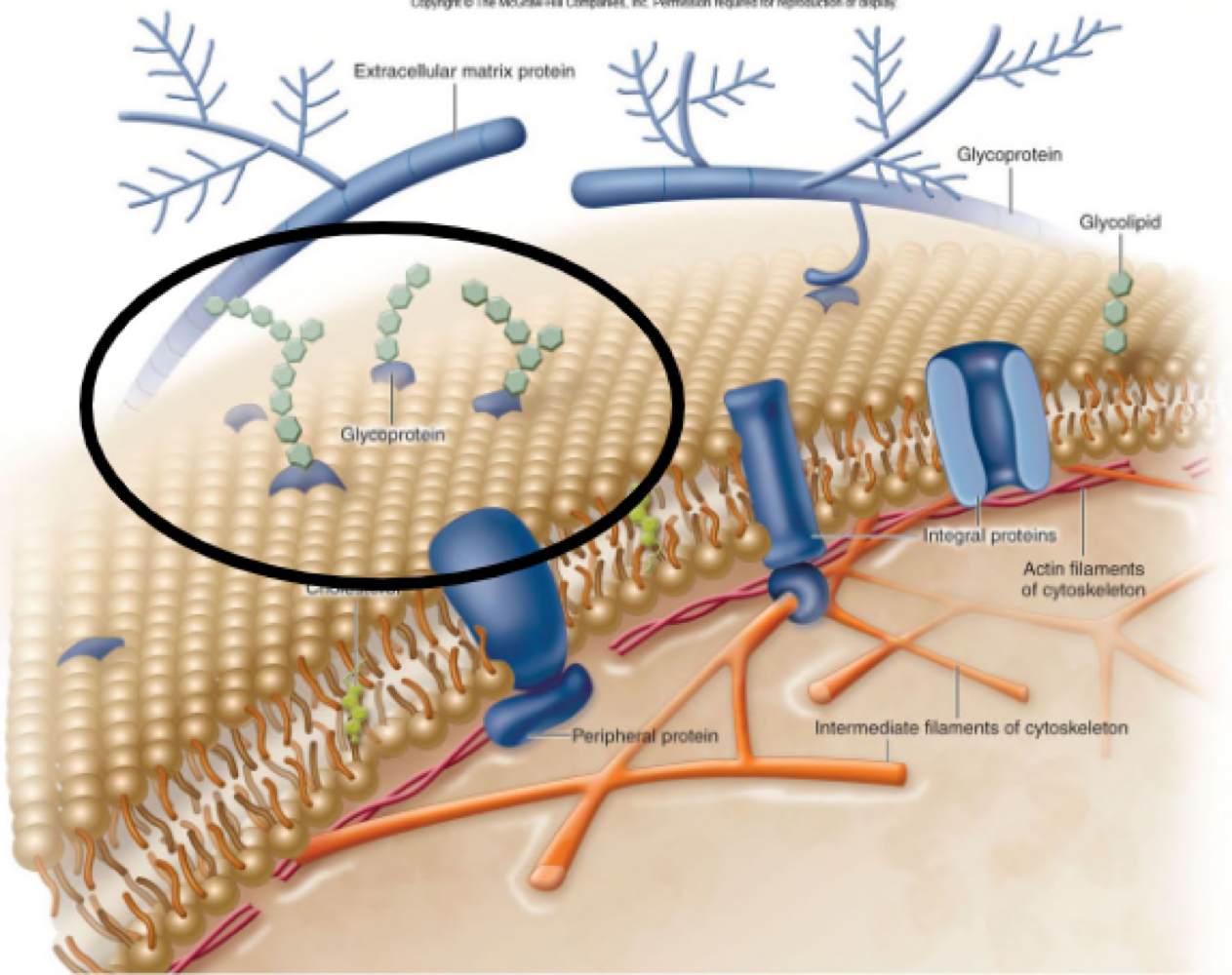
**Antigens**:
Proteins on the surface of cells (glycoproteins or rbc’s)
49
New cards
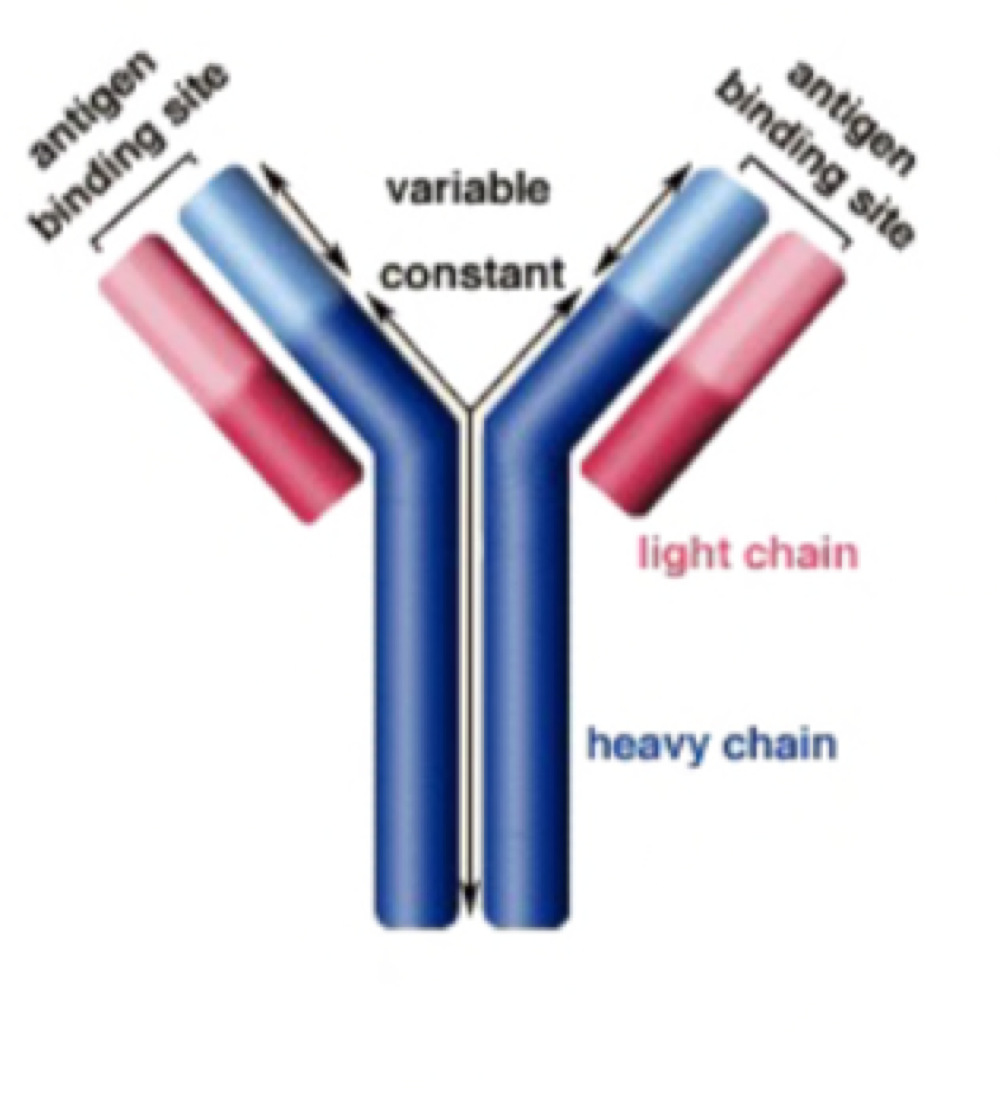
**Antibody:**
Protein in the blood that destroys foreign antigens, gives long-lasting immunity.
50
New cards
How do antibodies give immunity?
We make antibodies against antigens our cells don’t have-perceived as foreign
51
New cards
Blood Type-A
Genotype(s):
Antigens:
Antibodies:
Genotype(s):
Antigens:
Antibodies:
\-IAIA (homozygous) or IAi (heterozygous, has one of the recessive I alleles)
\- A
\-Anti-B
\- A
\-Anti-B
52
New cards
Blood Type-B
Genotype(s):
Antigens:
Antibodies:
Genotype(s):
Antigens:
Antibodies:
* IBIB or IBi
* B
* Anti-A
* B
* Anti-A
53
New cards
Blood Type-AB
Genotype(s):
Antigens:
Antibodies:
Genotype(s):
Antigens:
Antibodies:
* IAIB (codominant)
* A and B
* None. Universal recipient
* A and B
* None. Universal recipient
54
New cards
Blood Type- O
Genotype(s):
Antigens:
Antibodies:
Genotype(s):
Antigens:
Antibodies:
* ii
* None
* Anti-A and Anti-B. Universal donor
* None
* Anti-A and Anti-B. Universal donor
55
New cards
If a black chicken is crossed with a white chicken and the offspring are black and white checkered, this is an example of:
Codominance b/c both colors are expressed.
56
New cards
If a black horse mated with a white horse and their foal was grey, this is an example of:
Incomplete Dominance
57
New cards
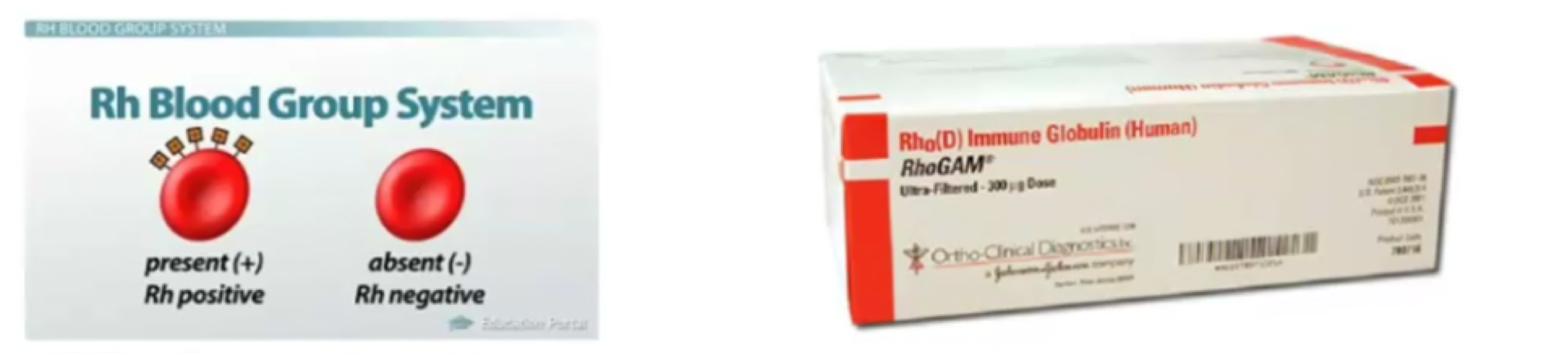
Rh Blood Types (rhesus factor):
Another antigen on the surface of RBC’s.
58
New cards
Rh blood type. Phenotypes:
Rh+ (dominant)
rh-
rh-
59
New cards
RG blood type genotype:
* RR (homozygous) or Rr (heterozygous)
* rr (recessive allele, means you are homozygous)
* rr (recessive allele, means you are homozygous)
60
New cards
What is the problem with Rh blood type?
There are problems resulting from an rh- mother carrying an Rh+ baby.
61
New cards
Why is an rh- mother with Rh+ baby bad?
Because mother makes antibodies against the baby’s antigens, at birth problems arise.
62
New cards
**Sex-Linked Traits:**
Alleles are carried on the X chromosome., most are recessive.
63
New cards
Sex-Linked Traits alleles characteristics:
Alleles for X-linked traits are shown as a superscript over the letter X.
64
New cards
Sex-Linked Traits ratio characteristics:
MUST give m/f ration separately
65
New cards
Sex-Linked Traits Ex:
* Red-Green color blindness
* Duchenne’s muscular dystrophy: Fatal muscle deterioration, starts in childhood
* Hemophilia: bleeders disease
* Duchenne’s muscular dystrophy: Fatal muscle deterioration, starts in childhood
* Hemophilia: bleeders disease
66
New cards
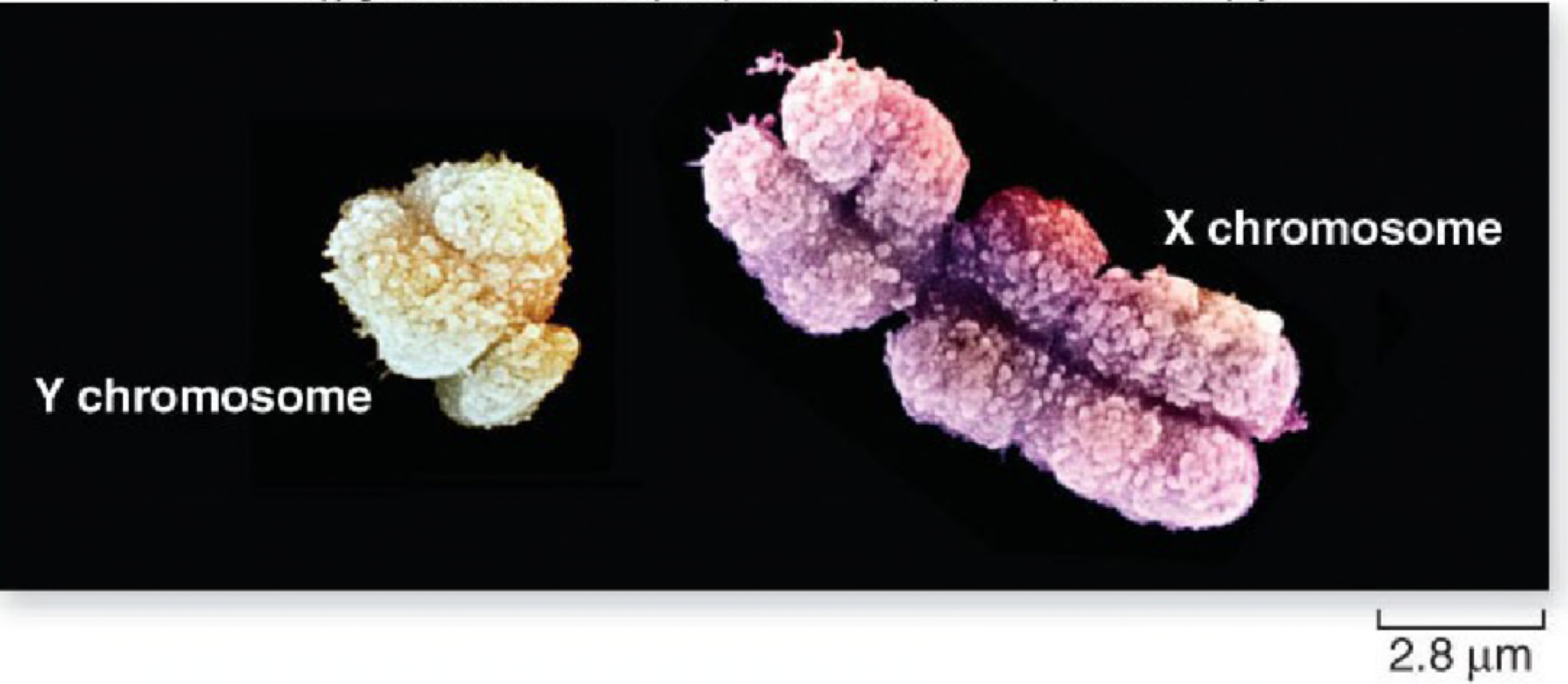
Why is sex chromosomes unusual?
Sex chromosomes are unusual homologues, X is so much bigger than the Y chromosome.
67
New cards
What gender is most likely to show these traits?
Males are much more likely to show these traits
68
New cards
Why are males more likely to show these characteristics?
Since males only have one X chromosome (one x alllele), having just one recessive gene gives the trait (express).
69
New cards
Hemophilia genotypes:
* XhY = male w/hemophilia
* XHXh = unaffected carrier female
* XhXh = Female with hemophilia
* XHXh = unaffected carrier female
* XhXh = Female with hemophilia
70
New cards
What are males to X-linked traits and why?
Males are __hemizygous__ for X-linked traits = only have one copy.
71
New cards
What can’t we call males and why?
Can’t call a male homo or heterozygous for a trait because it implies they have 2 alleles, they only have one on X.
72
New cards
**How are sex-linked traits generally transmitted between generations?**
From carrier mother to son (dads give their Y to sons).
73
New cards
Can there be hemophilic/color-blind etc. Females?
\- Could be born to a carrier mother and an affected father
74
New cards
With any sex-linked recessive trait, what must affected females (EX: xhxh) always have and why?
Have to have affected fathers (dads have to give daughters one of their recessive x’s).
75
New cards
**Dominant Gene Abnormalities:**
Parents have a 50% chance of passing these traits onto their offspring.
76
New cards
In dominant gene abnormalities why do parents have a 50% chance of passing traits onto offspring?
Those with dominant diseases are generally always heterozygous for that disease. It only takes one copy of the dominant allele to cause the genetic disease.
77
New cards
How can offspring be homozygous for a dominant linked disease?
Only way for a child to be homozygous for a dominant linked disease is for both parents to have the disease = exceedingly rare
78
New cards
dominant linked disease Ex:
* Huntington’s Chorea
* Polydactyly (extra digits)
* Marfan’s Syndrome
* Polydactyly (extra digits)
* Marfan’s Syndrome
79
New cards
Huntington’s Chorea characteristics:
* Late onset (after 35)
* Jerking
* twitching
* mental decline
* fatal withinin 15 yrs of onset
* Jerking
* twitching
* mental decline
* fatal withinin 15 yrs of onset
80
New cards
Pedigree:
A family tree showing the transmission of the genetic traits between generations.
81
New cards
Pedigree.
What do horizontal lines indicate?
What do horizontal lines indicate?
Horizontal lines between people indicate that they had offspring together.
82
New cards
Pedigree.
\-What do vertical lines indicate?
\-What do vertical lines indicate?
Vertical lines indicate a child born from a relationship.
83
New cards
Pedigree.
\-How are generations drawn?
\-How are generations drawn?
Each generation is drawn in a parallel row.
84
New cards
Pedigree.
\-How are men and women represented?
\-How are men and women represented?
In pedigrees, men are represented by squares, and women are represented by circles.
85
New cards
Pedigree.
How are traits represented?
How are traits represented?
When following a genetic trait, the circles or squares are filled in to indicate individuals who have the trait, half filled=carrier.
86
New cards
Autosomal Recessive Trait:
Autosomal recessive traits carried on autosomes pass from both parents onto their child.
87
New cards
Autosomal Recessive Trait Characteristics:
* Males and females are equally likely to be affected
* Affected offspring often have unaffected parents
* Unaffected parents of affected offspring are heterozygous (carriers)
* Affected offspring are homozygous
* Won’t appear for every generation, maybe yes, maybe no.
* Affected offspring often have unaffected parents
* Unaffected parents of affected offspring are heterozygous (carriers)
* Affected offspring are homozygous
* Won’t appear for every generation, maybe yes, maybe no.
88
New cards
For an autosomal recessive trait, affected individuals are homozygous recessive.
True
89
New cards
For an autosomal recessive disease, how can two unaffected individuals have an affected child?
* Both parents are carriers.
* Both parents are heterozygous.
* Both parents are heterozygous.
90
New cards
Autosomal Dominant Trait Characteristics:
* No unaffected carriers
* Mother and father are equally likely to be affected
* Affected offspring have atleast one affected parent
* Affected offspring are heterozygous if only one parent is affected
* Unaffected offspring are homozygous recessive
* If one parent is heterogygous, about ½ of the offspring will be affected
* Trait does not skip generations
* Mother and father are equally likely to be affected
* Affected offspring have atleast one affected parent
* Affected offspring are heterozygous if only one parent is affected
* Unaffected offspring are homozygous recessive
* If one parent is heterogygous, about ½ of the offspring will be affected
* Trait does not skip generations
91
New cards
PIC: Autosomal Dominant Trait Pedigree
92
New cards
For an autosomal dominant disease, unaffected individuals are homozygous recessive.
True
93
New cards
For an autosomal dominant inherited disorder, why can't two unaffected people have an affected child?
* Neither of the parents have the disease-causing allele.
* Both parents are homozygous recessive.
* Both parents are homozygous recessive.
94
New cards
X-linked recessive trait characteristics:
* Males are affected more frequently than females
* Trait is never passed from father to son
* Affected sons are usually born to carrier mothers
* About ½ of the sons of a carrier mother will be affected
* All daughters of affected males and unaffected non-carrier females are carriers
* Trait often skips generations
* Trait is never passed from father to son
* Affected sons are usually born to carrier mothers
* About ½ of the sons of a carrier mother will be affected
* All daughters of affected males and unaffected non-carrier females are carriers
* Trait often skips generations
95
New cards
PIC: X-linked recessive trait pedigree
96
New cards
**Linked Genes:**
Genes found on the same chromosome.
97
New cards
How are linked genes different from sex-linked genes?
Sex-linked Genes refers to a gene that is on the X chromosome.
98
New cards
Crossing over increases the number of possible gamete combinations for linked genes.
True.
99
New cards
Linked genes characteristics:
* Don’t follow the principle of independent assortment, but are often passed on together.
* The closer together two genes are on a chromosome, the less likely they will assort independently.
* As the distance between 2 genes increases, the probability of crossover between them increases
* The closer together two genes are on a chromosome, the less likely they will assort independently.
* As the distance between 2 genes increases, the probability of crossover between them increases
100
New cards
Why are genes less likely to go through independent assortment the closer they are together?
This is because a crossover is less likely to happen between them, making it more likely that they will stay linked
 Note
Note  Flashcards (64)