Central Nervous System Overview
 Studied by 1 person
 Call Kai
 Learn
Learn Practice Test
 Spaced Repetition
 Match
Match Flashcards
 Knowt Play
1/40

Earn XP
Description and Tags
A set of vocabulary flashcards covering key concepts related to the Central Nervous System, including its structure, functions, and related topics.
Name | Mastery | Learn | Test | Matching | Spaced | Call with Kai |
|---|
No analytics yet
Send a link to your students to track their progress
41 Terms
Central Nervous System (CNS)
The body's control center that includes the brain and spinal cord.
Describe the structure of the cerebrum.
Largest part of the brain, divided into left and right hemispheres with gray matter in the outer cortex and white matter deep underneath.
Cerebellum
Part of the brain that coordinates movement and balance.
Brainstem
Composed of midbrain, pons, and medulla oblongata; controls vital functions like breathing and heart rate.
Gray Matter
Neuron cell bodies; involved in processing information in the brain.
White Matter
Myelinated axons; responsible for communication between different brain regions.
Homeostasis
The body's ability to maintain stable internal conditions.
Diencephalon
Contains the thalamus and hypothalamus; involved in sensory relay and homeostasis regulation.
Hemispheric Specialization
The concept that the left and right hemispheres of the brain have specialized functions. Right is creativity and left is logical reasoning and language.
Neural Plasticity
The brain's ability to change and adapt as a result of learning and experience.
Concussion
Temporary brain injury caused by impact.
Stroke
Interruption of blood flow to the brain, resulting in tissue damage.
Spinal Cord
Extends from the brainstem through the vertebral column; conducts nerve impulses to and from the brain.
Cerebrospinal Fluid (CSF)
Fluid that cushions the brain and spinal cord, providing protection, absorbs shock, removes waste, and nutrient transport.
Corpus Callosum
Structure that connects the left and right hemispheres of the brain.
Frontal Lobe
Part of the brain responsible for reasoning, planning, speech, and voluntary movement.
Temporal Lobe
Responsible for hearing, memory, and aspects of language.
Occipital Lobe
Region of the brain that processes visual information.
Thalamus
Serves as a sensory relay station for the brain.
Hypothalamus
Regulates homeostasis, including hunger, thirst, and body temperature, by receiving and releasig signals and hormones.
What are the major parts of the brain?
Cerebrum, cerebellum, diencephalon, and the brainstem
What are the functional areas of the cerebrum?
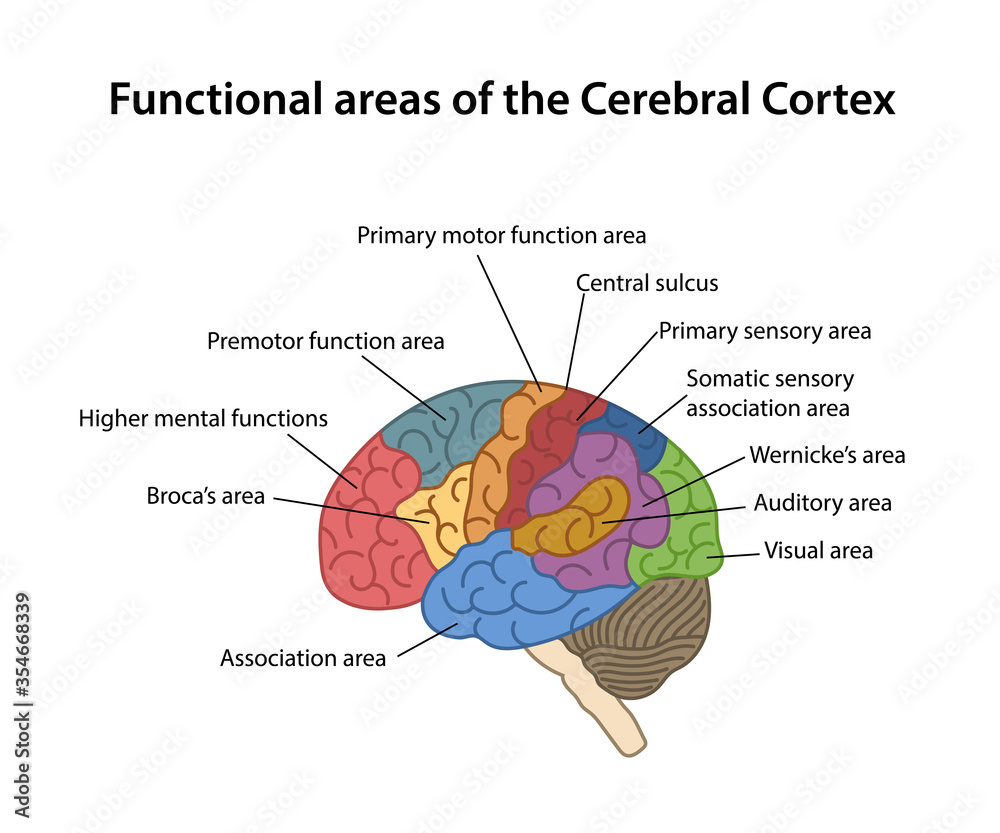
Motor cortex, somatosensory cortex, visual cortex, auditory cortex, broca’s speech area, and wernicke’s area.
What do each of the cortexs do in the cerebrum?
Motor Cortex: controls voluntary movement, located in the frontal lobe.
Somatosensory Cortex: processes touch, pressure, pain, and temperature, located in the parietal lobe.
Visual Cortex: takes and process (interprets) visual information, located in the occipital lobe.
Auditory Cortex: handles sound and hearing, located in the temportal lobe.
Broca’s Speech Area: handles speech production/talking, located in the frontal lobe just in front of the motor cortex.
Wernicke’s Area: handes speech comprehension and understanding, located in the temporal lobe near the auditory cortex.
What are the functions of the diencephalon?
Located deep in the center of the brain, underneath the cerebrum.
Acts as a major control center, containing the thalamus and the hypothalamus.
Thalamus: sorts sensory information and sends it to the correct places in the outer cortex.
Hypothalamus: regulates homeostasis
What are the functions of the pituitary gland?
Located just below the hypothalamus at the base of the skull (but not inside the diencephalon).
The hypothalamus manages and controls the pituitary gland, which carries out orders by releasing hormones into the bloodstream.
What are the areas and functions inside the brain stem?
Order from top to bottom: midbrain, pons, and medulla oblongata (the diencephalon sits above the brain stem and the spinal cord is beneath it).
Controls vital functions: breathing, heart rate, and blood pressure
Connects the brain to the spinal cord, specifically with the medulla.
What is/are the location and functions of the cerebellum?
Located underneath the occipital lobe, at the back of the brain.
Coordinates movement and balance, maintains balence, keeps muscle tone and posture.
What is the function of blood-brain barrier?
Provides selective protection of what can be let into the brain from the blood flow.
What are the function and locations of the ventricles?
CSF is the fluid located inside the ventricles
Filled with cerebrospinal fluid acting as a shock absorber and protecting the brain. The fluid carrier nutrients to the brain and removes waste.
What protects the brain?
Blood-brain barrier, cerebrospinal fluid, the skull, and meningies
Where are the lateral ventricles?
Two large, C-shaped located within each cerebral hemisphere
Where is the third ventricle?
Very thin, vertical space located in the center of the diencephalon
Where is the fourth ventricle?
Located lower down, between the brain stem and the cerebellum and tent or diamond shaped.
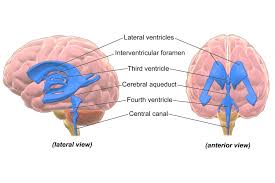
What is this?
Ventricles, specfically lateral, third, and fourth.
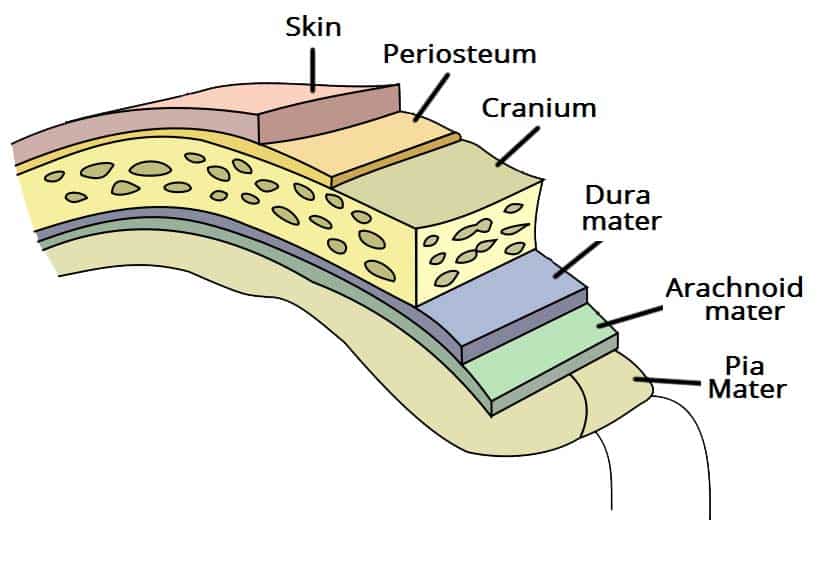
What is this?
Meningies, specifically the dura, arachnoid, and pia mater.
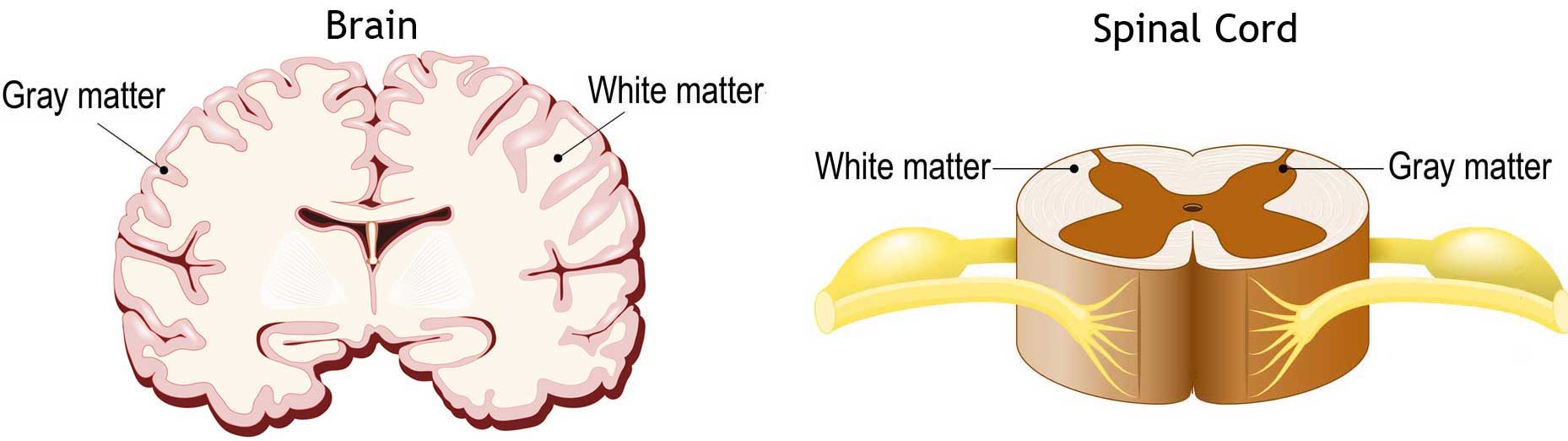
What are the locations of gray and white matter for the brain and spinal cord?
Brain: gray matter is on the outside and white matter in on the inside.
Spinal Cord: gray matter is on the inside and white matter is on the outside.
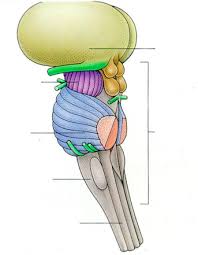
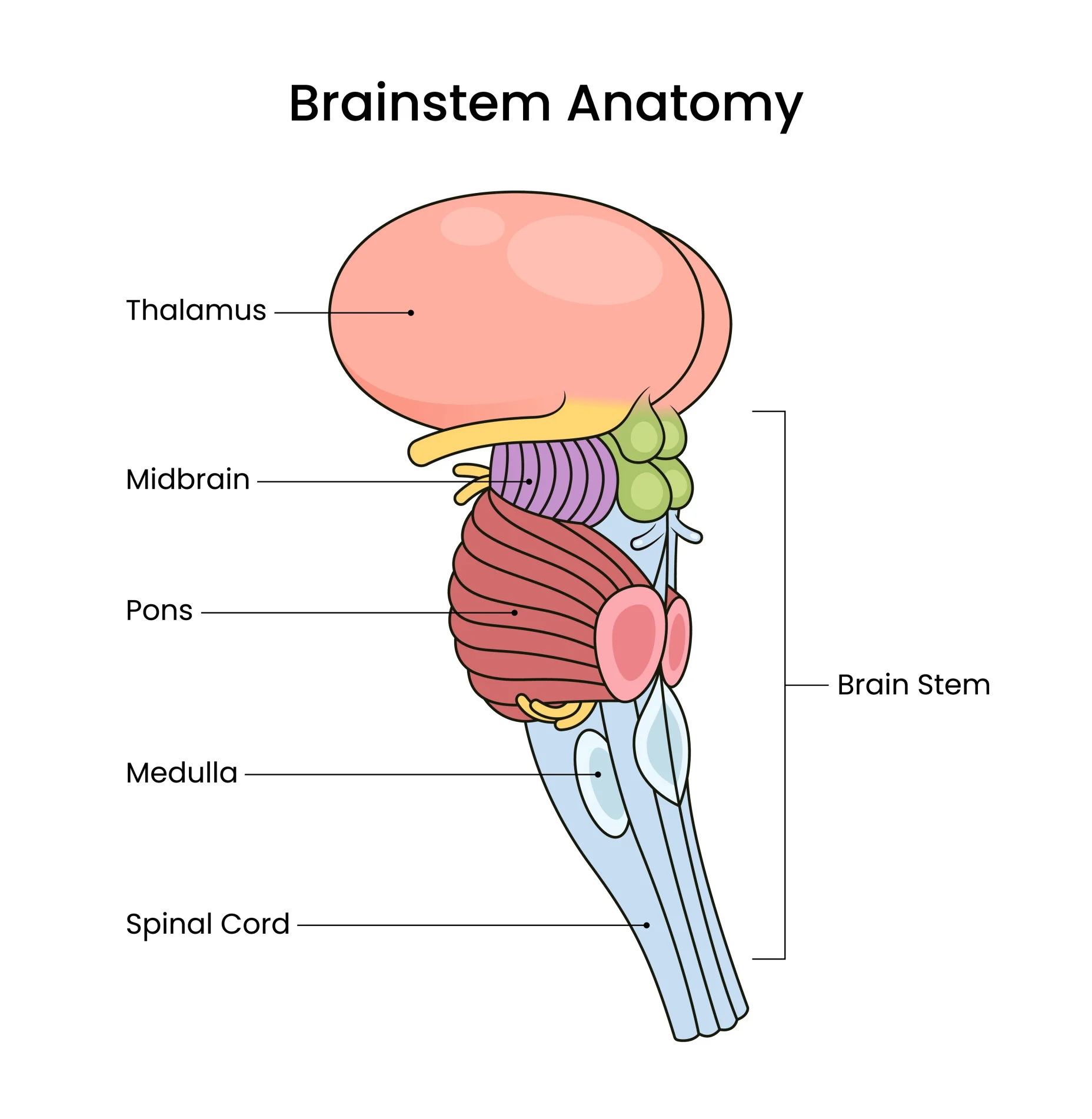
Label the pons, midbrain, and medulla onlongata on this brain stem diagram.
Order from top to bottom: midbrain, pons, medulla
Mnemonic device: My Perfect Mocha Steams
My- midbrain, perfect- pons, mocha- medulla, steams- close to steam for brainsteam
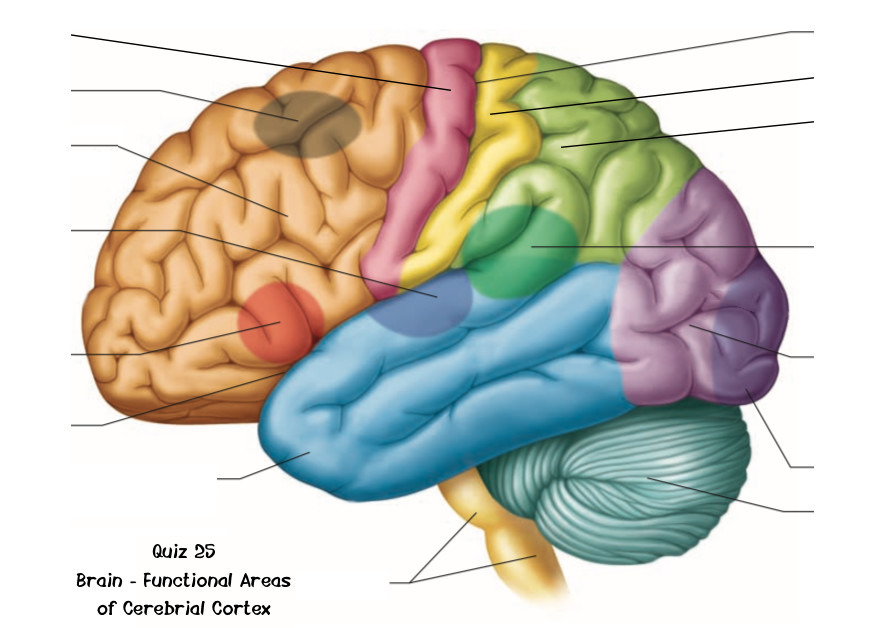
Label the functional areas of the cerebrum.
Sentences to help remember the location:
Motor & somatosensory (two long vertical strips)
Move forward (as in walking and your movements/motor cortex is in the frontal lobe)
“The sky senses the stimuli” (meaning the top of your head senses touch which is somatosensory, and the top of your head is the parietal lobe)
Visual cortex (very back of brain)
“The teacher has eyes in the back of her head.”
Meaning visual is in the occipital lobe
Auditory cortex (on the side, in the temporal lobe)
“Your temples are near your ears.”
Broca’s and Wernicke’s area (Bronca in the frontal lobe & Wernicke in the temporal lobe)
“Broca babbles” (meaning speech production because babbling is like nonstop talking)
“"Wernicke understands words” or “Wernicke wisely watches words” (meaning speech comprehension)
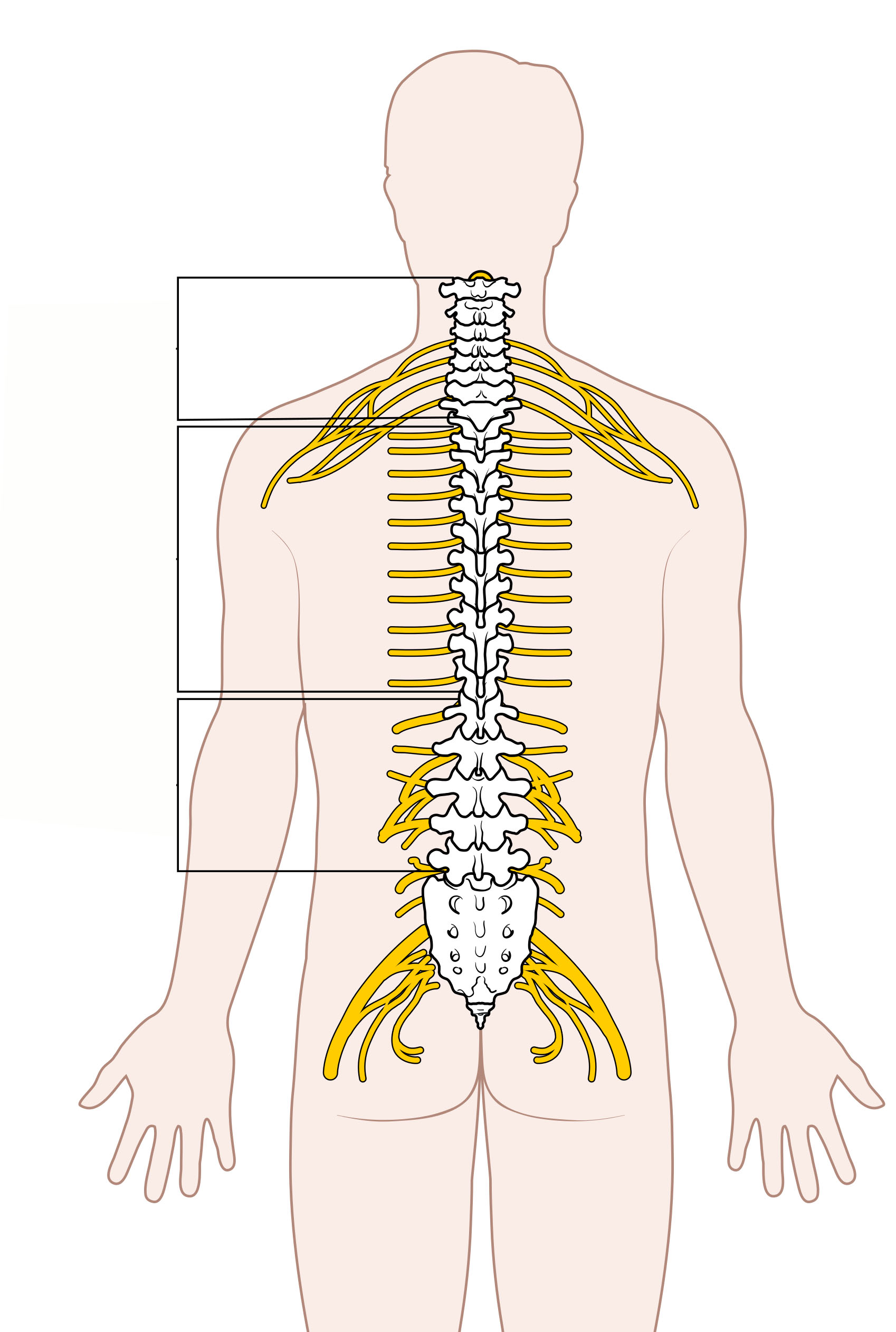
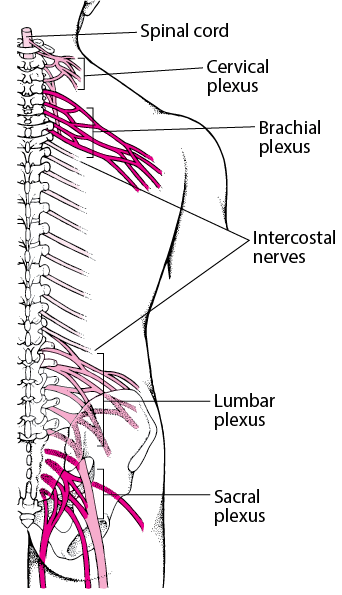
Where and what are the plexuses on the spinal cord?
Order from top to bottom: cervical, brachial, lumbar, sacral
Cervical=neck, brachial=arm, lumbar=back, sacral=lower back
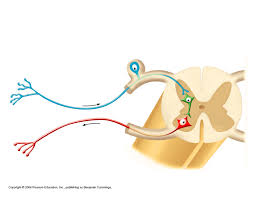
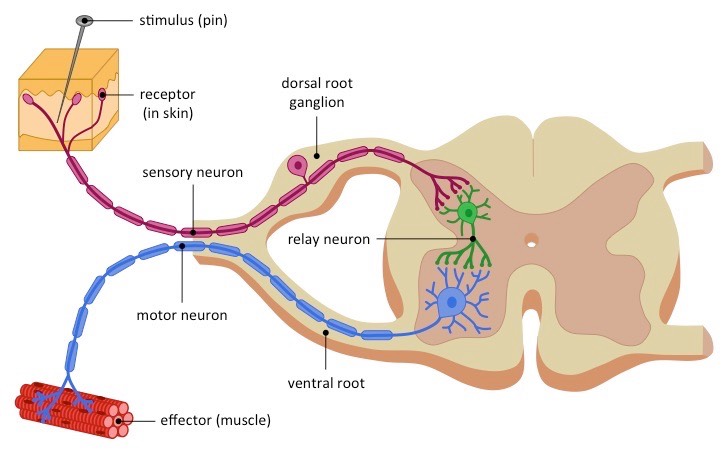
Label the parts of the reflex arc diagram.
Things to help remember the direction of travel:
When you get pricked or touch a hot stove, your skin senses or touches it first (sensory neuron) and then you move (motor neuron)
D.A.V.E: dorsal=afferent & ventral=efferent
Remember: afferent means coming in and efferent means going out
 Note
Note  Flashcards (123)