Intro Classical arch
 Studied by 2 people
 Call Kai
 Learn
Learn Practice Test
 Spaced Repetition
 Match
Match Flashcards
 Knowt Play
1/18

There's no tags or description
Looks like no tags are added yet.
Name | Mastery | Learn | Test | Matching | Spaced | Call with Kai |
|---|
No analytics yet
Send a link to your students to track their progress
19 Terms
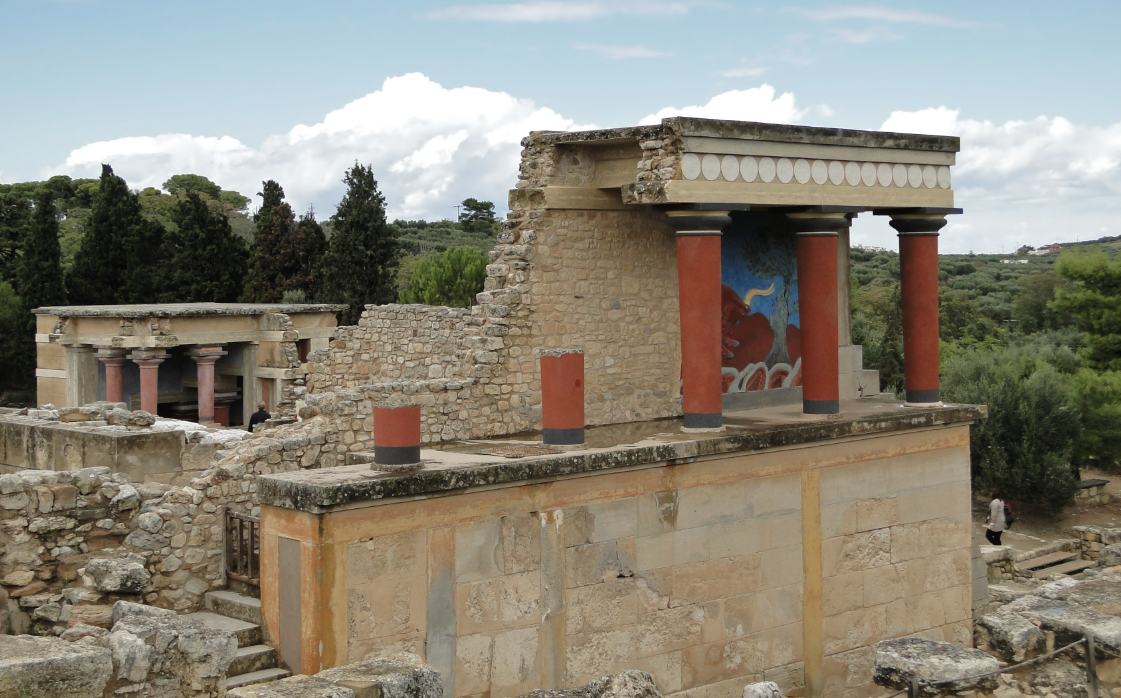
Knossos
Center-ish on Crete.
Palace of Minos/Knossos
Late Bronze Age
Largest Minoan palace, Excavated by Sir Arthur Evans.
Long, labyrinth hallways, Evans thought it was related to Minotaur.
Reconstructions based on frescos, clay models.
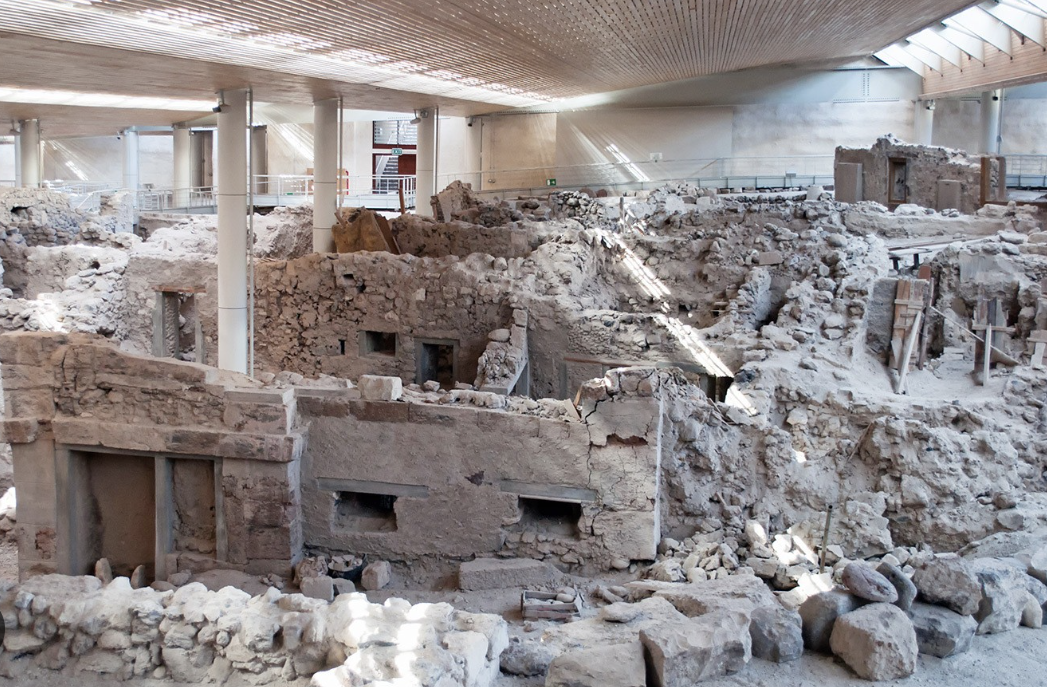
Akrotiri (Thera)
On Santorini
Late Bronze Age
Buildings with material culture
Well preserved from Thera eruption of 1650-1530 BCE which led to Minoan Civilization collapse.
Atlantis connection when central part of island collapsed underwater after earthquake.
Many frescos found, similar to Knossos.
Minoan
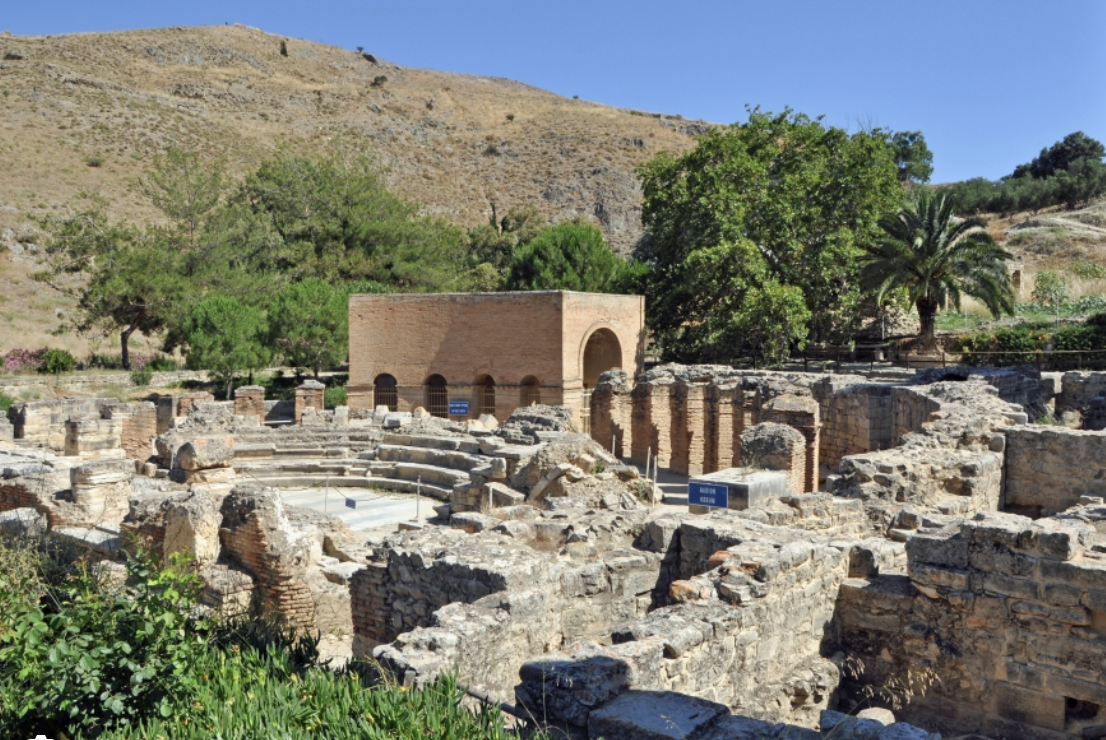
Phaistos
Palace of Phaistos, in Crete. 2nd largest palace.
Repetitive architectural pattern- elongated rectangular courtyard like Palace of Knossos.
Pithoi found within them.
Incomplete since it was on a cliff, damaged by fire/earthquakes
Middle Bronze Age
Phaistos disk found here.
Minoan
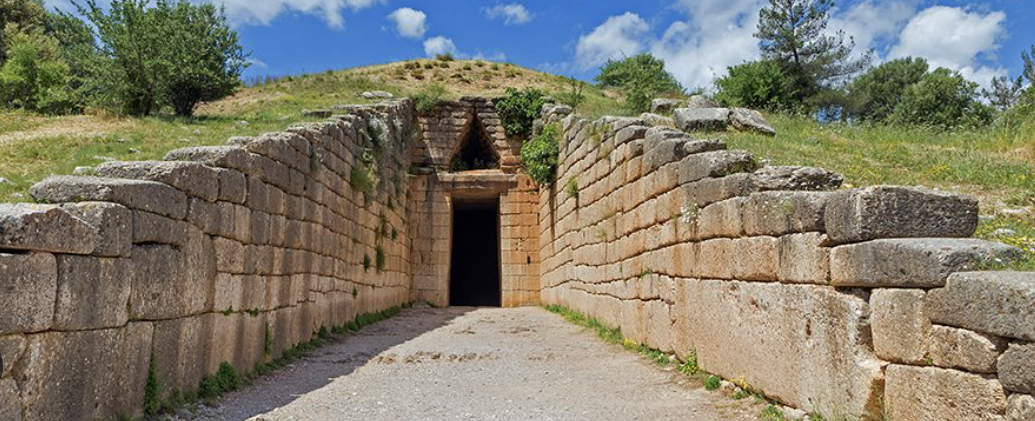
Mycenae
Excavated by Schleimann
Located on Peloponnese
Major Late Bronze Age civilization
Supposed home of Agamemnon
Circle Grave A, Megaron, Lion’s gate located here
It is a large fortified hilltop
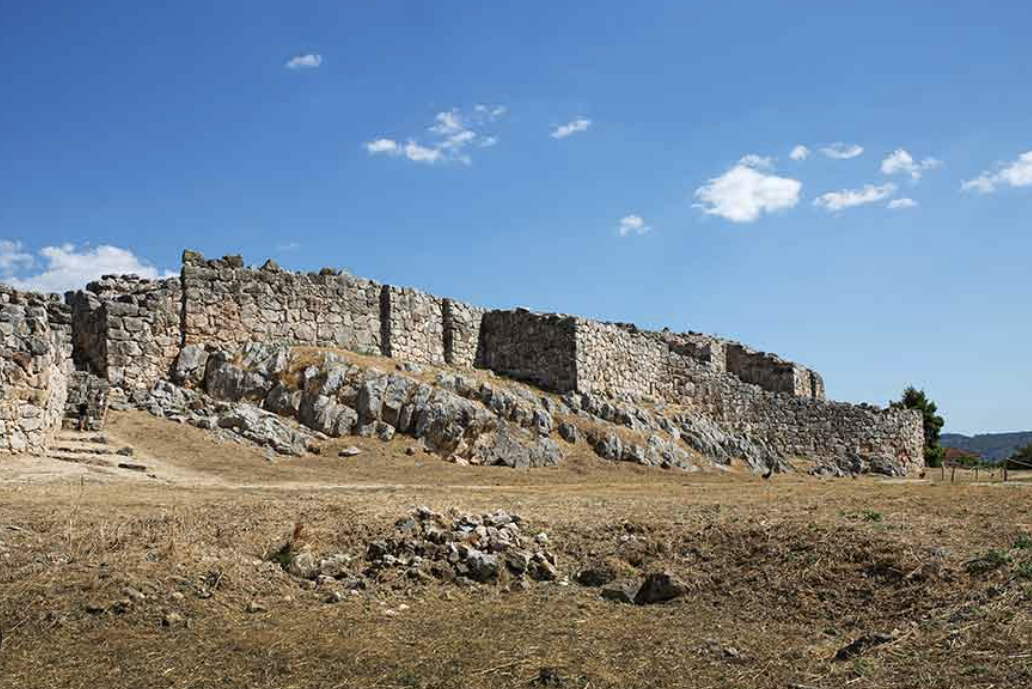
Tiryns
Late Bronze Age
Peloponnese
Mycenean
Heavily fortified citadel
Expands after Pylos and Thebes are destroyed.
Known for Cyclopean masonry
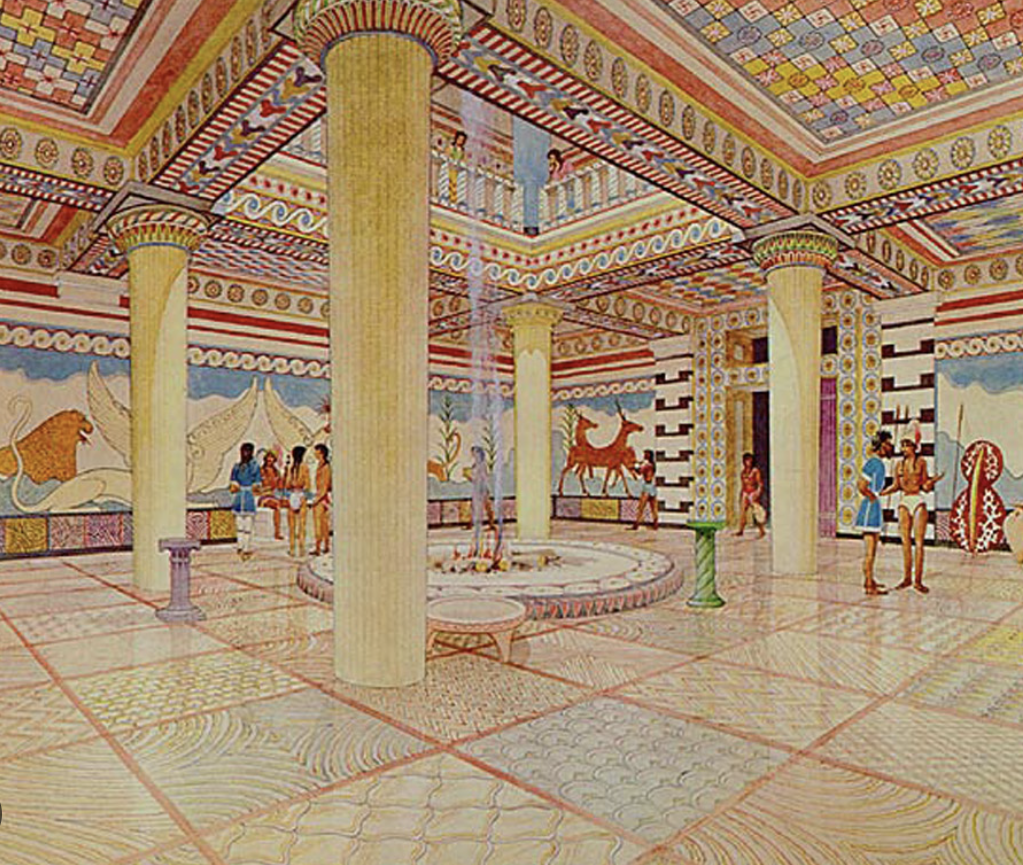
Pylos
Late Bronze Age
Peloponnese
Nestor’s Palace: Megaron, No fortification wall, many Linear B tablets
Mycenaean
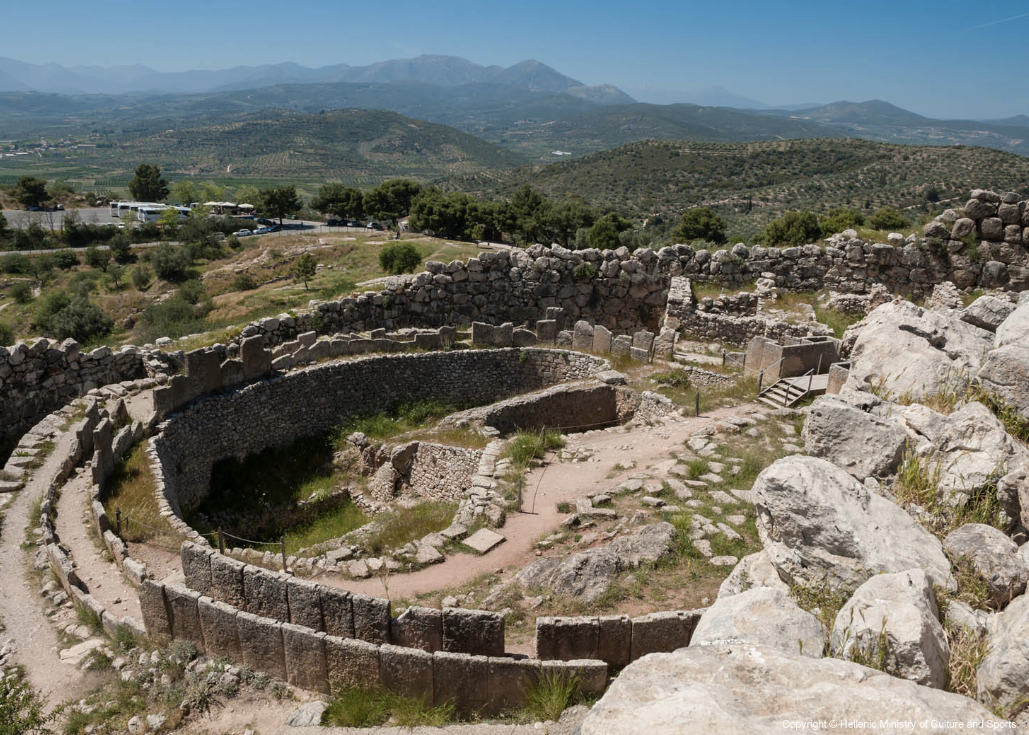
Grave Circle A
1500 BCE
Mycenae
6 shaft graves: rich, 20 bodies identified. Bodies of members of elite. Gold/precious artifacts. Tells us about social status, hierarchy.
Mask of Agamemnon found here
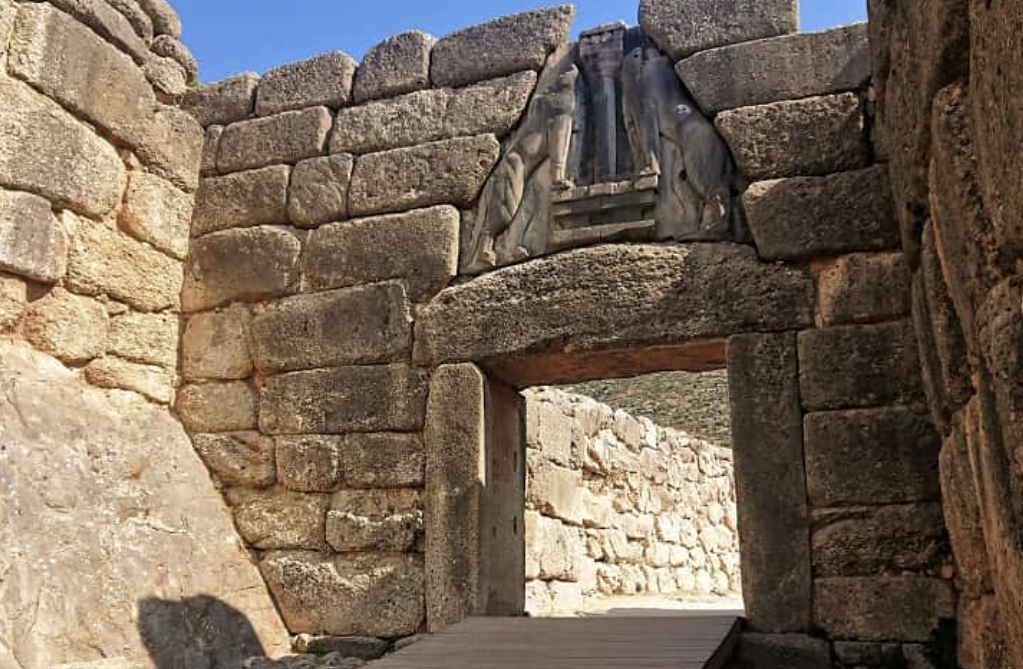
Lion’s Gate
Late Bronze Age
In Mycenae (Northeastern Peloponnese)
Excavated by Schleimann
Cyclopean masonry
Top formed by corbelling
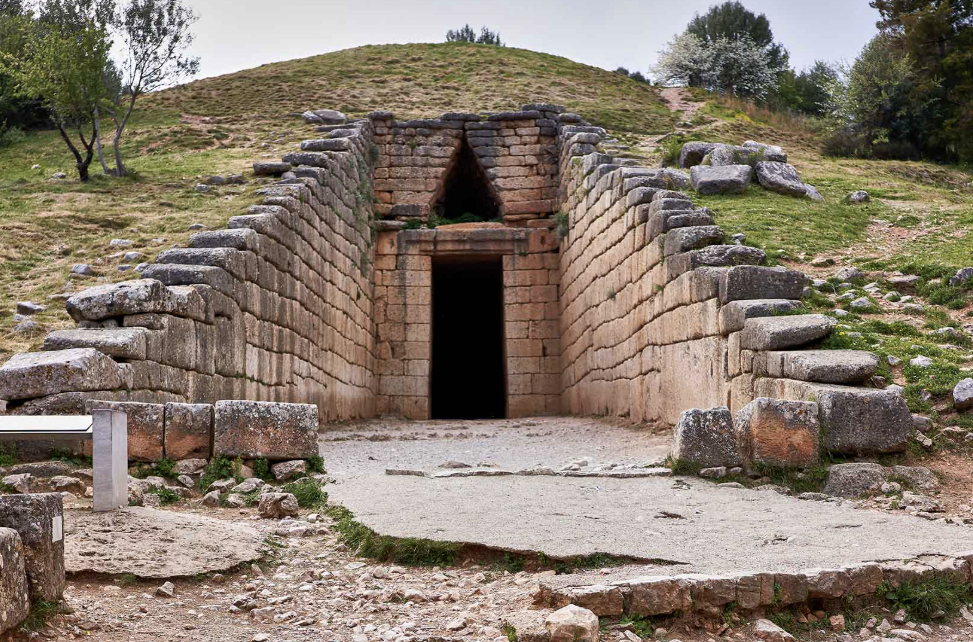
Treasury of Atreus (Tomb of Agememnon)
Outside Mycenae
Late Bronze Age
Cyclopean masonry
Long entrance called dromos / beehive tomb
Corbel vaulting technique
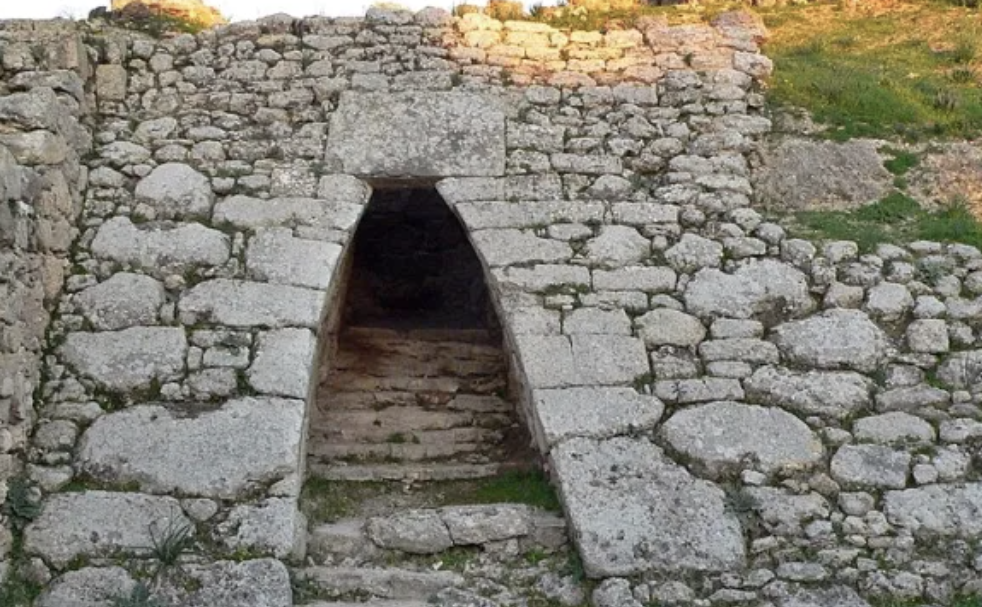
Corbelling
Stones stacked to create false arch/vault
Stacking, overlapping materials (stone/brick) inward to support weight
Acts as a support for beams, arches, shelves, overhangs
made from stone, wood, or metal
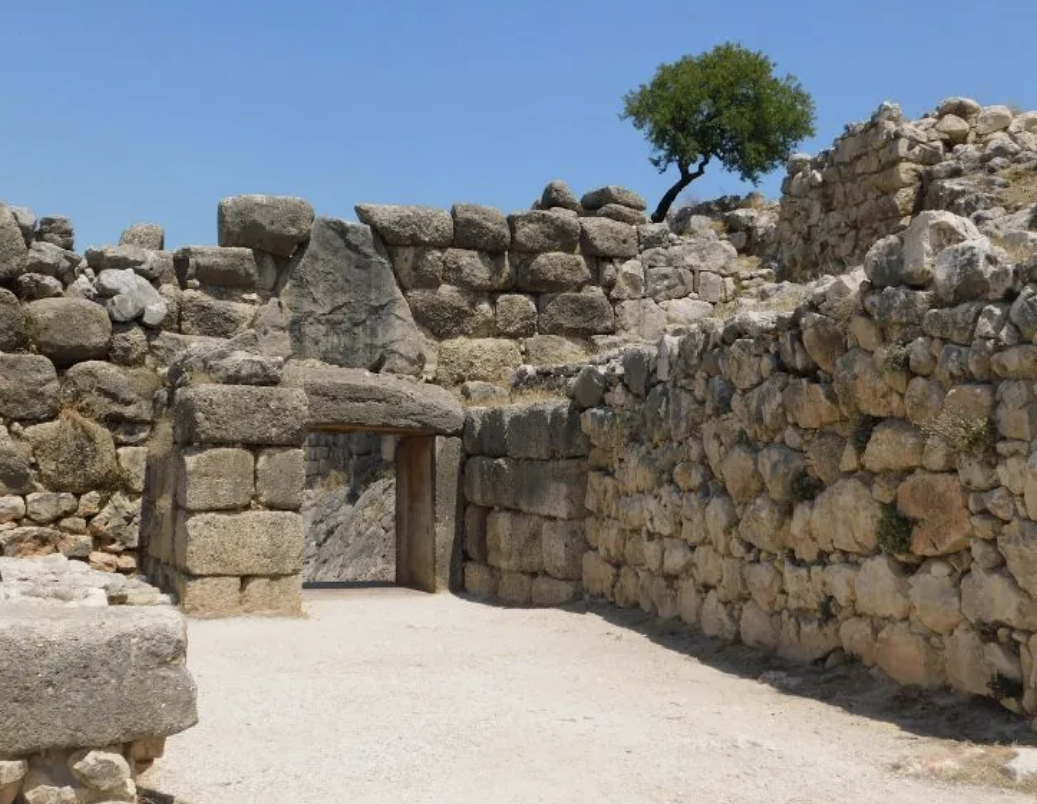
Cyclopean Masonry
“Stones so big only cyclops could have moved them”
Characteristic of monumental mycenean architecture
Lion’s Gate/Tomb of Agamemnon/Tiryns built this way
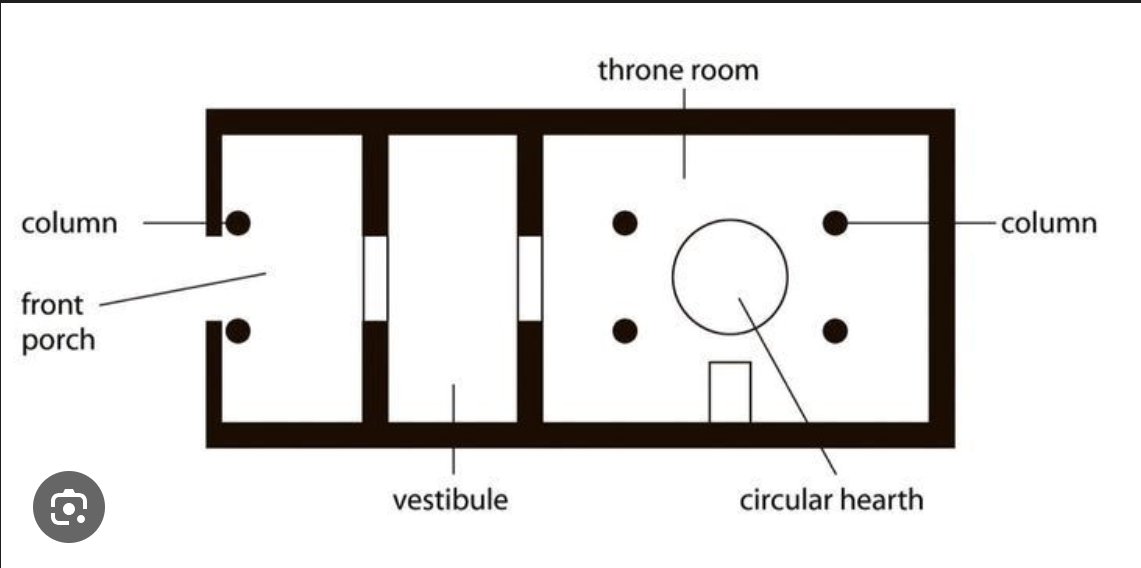
Megaron
“Big room” in greek
Central of political, administrative part, connected to king (reception room?)
Mycenae has one
All look very similar architecturally
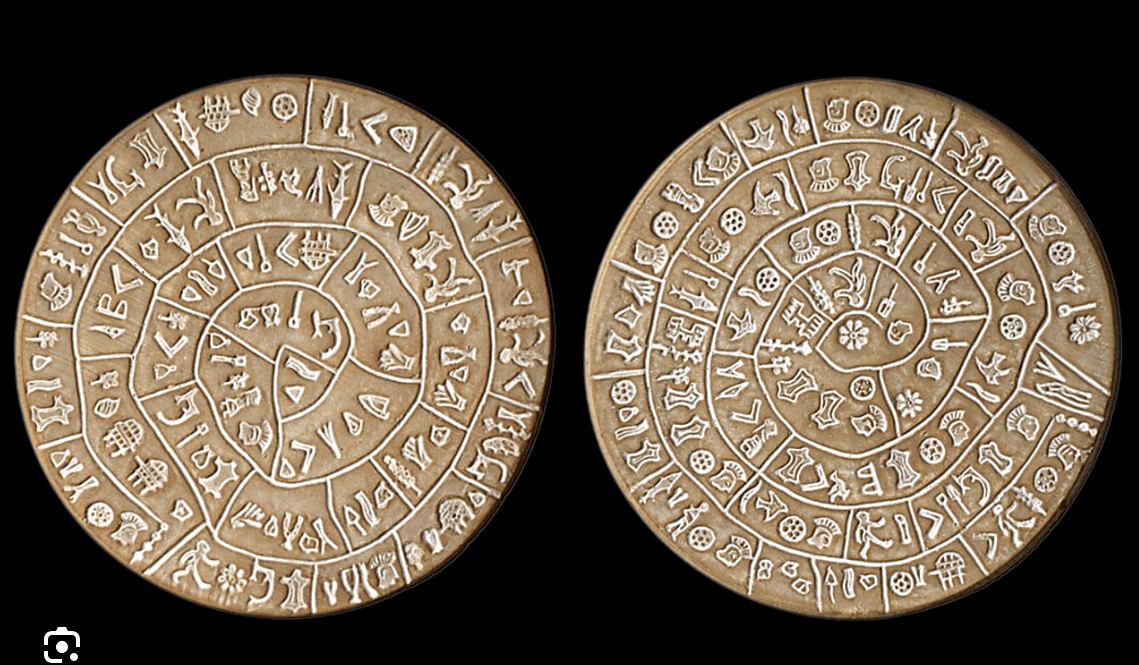
Phaistos Disk
Found in Crete, Palace of Phaistos
Clues to how Minoans write/speak, syllables/sounds
Early/Middle Bronze Age Greece
Hieroglyphics, no one knows what they mean. Spiral design, both sides.
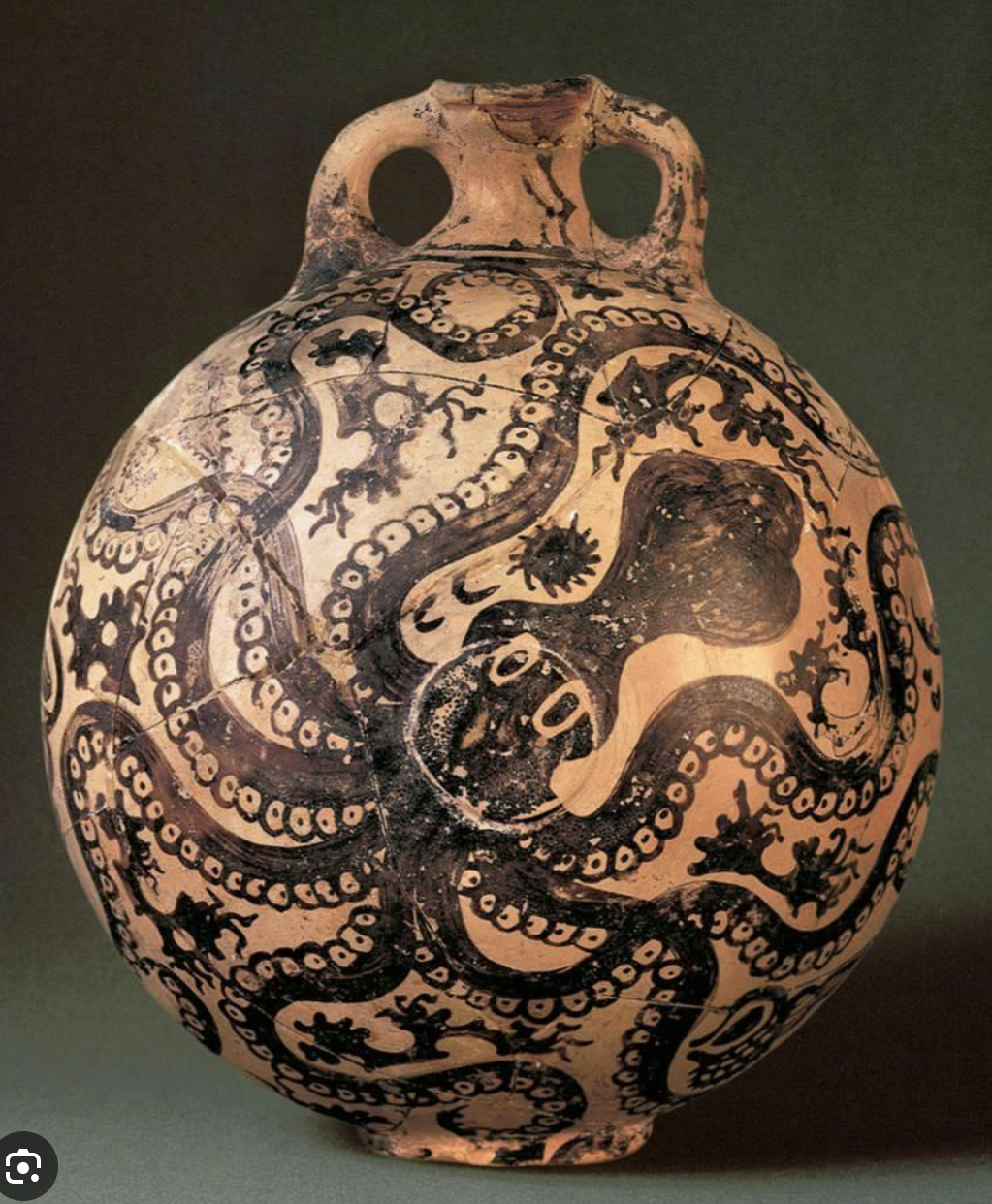
Marine Style Pilgrim Flask
Minoan
1500-1450 BCE
Palikastro, Crete
Sea creatures, octopi, fish
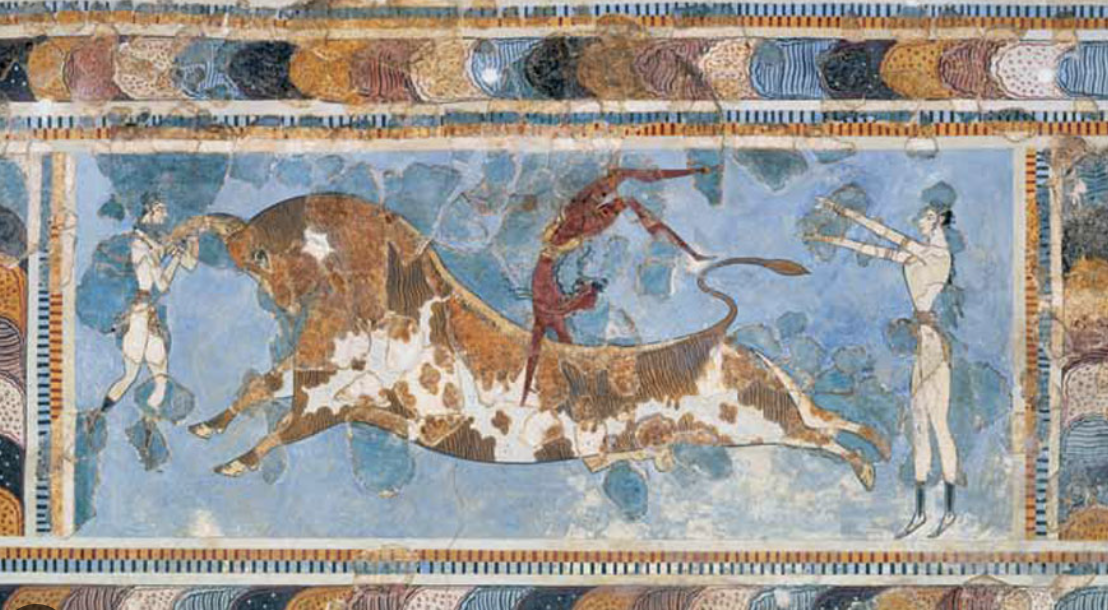
Bull leaping Fresco
From Palace of Knossos
Late Bronze Age
Bulls in Minoan world: Important in their society. Many bull related activities on frescos and other architecture.
Unknown if bulls are related to religion/sport
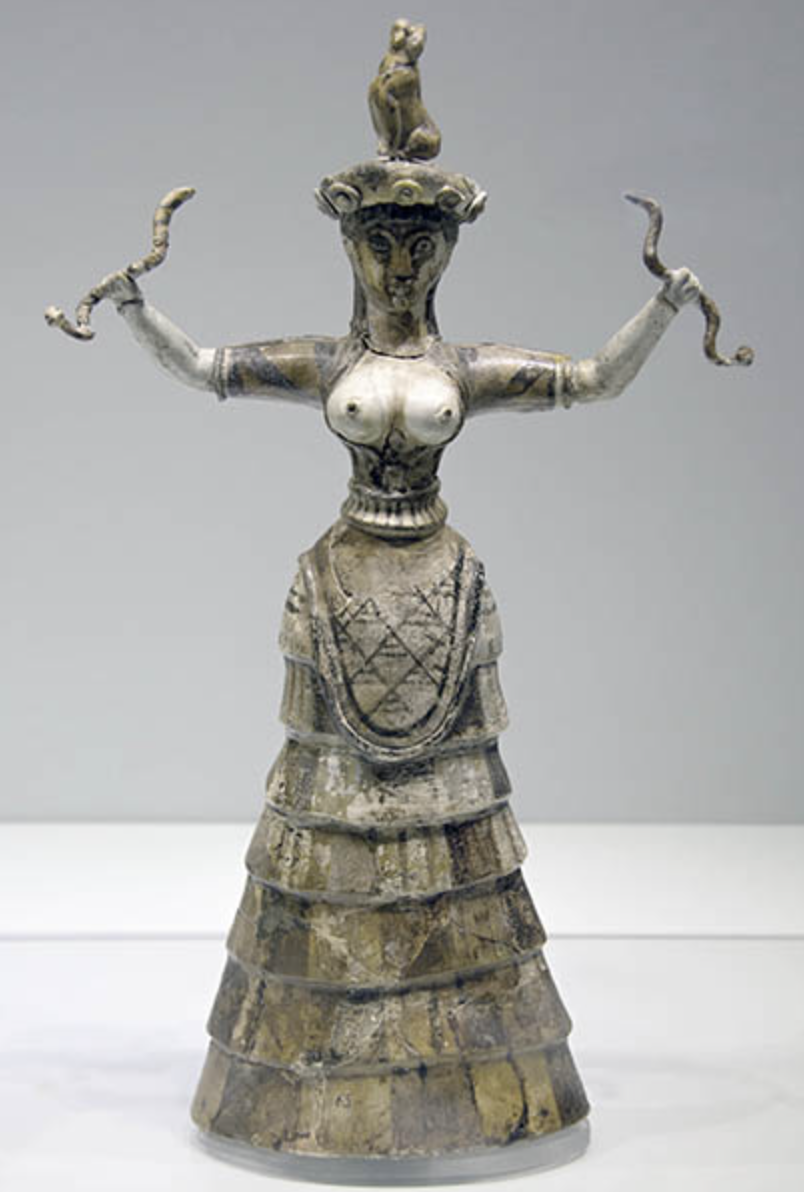
Snake Goddess Figurine
A Potnia Theron (Mistress of animals) Represents Minoan Divinity
Made of tin. Dress, boobs, snakes, cool hat consistent.
Bronze Age
Seen in Palace of Knossos in Crete
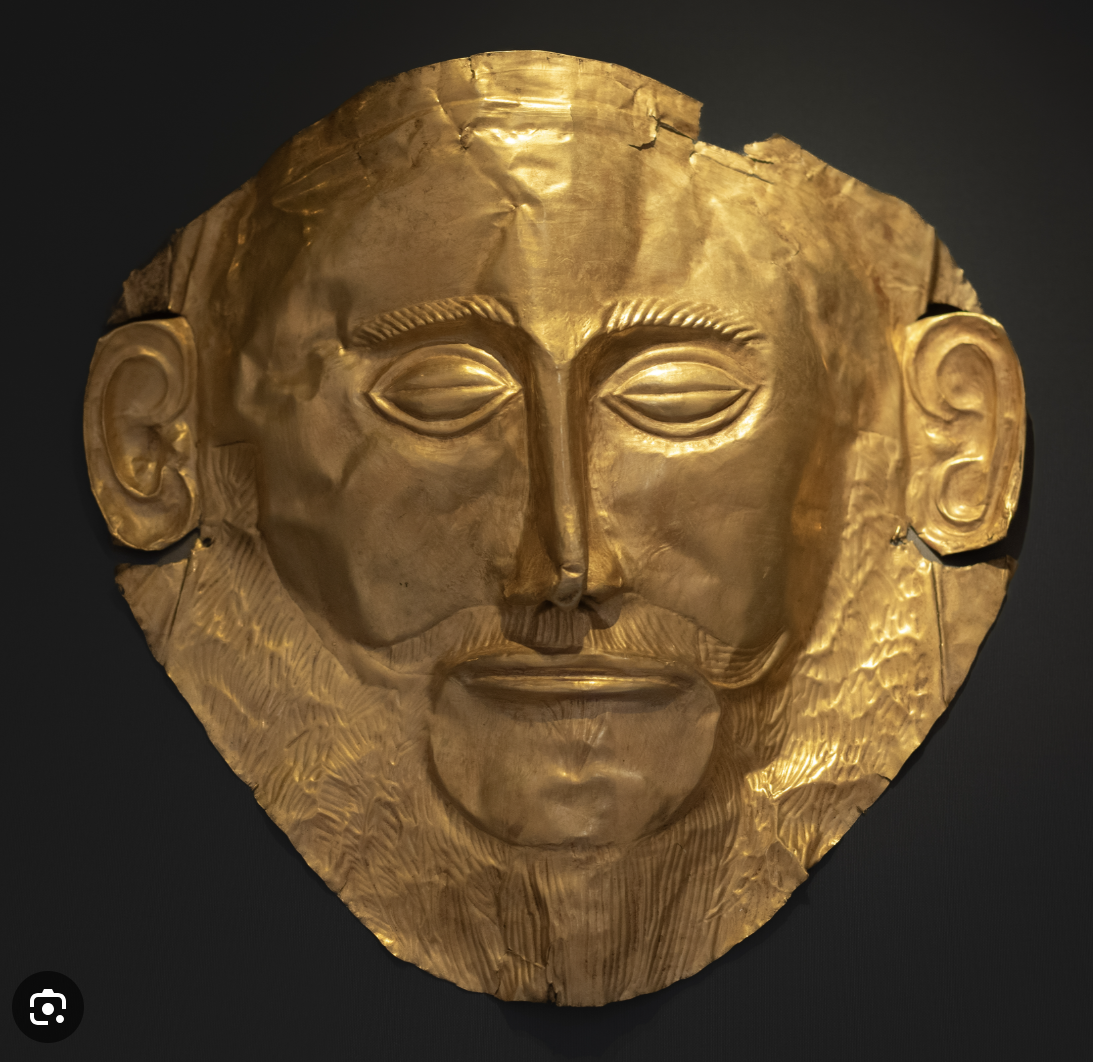
Mask of Agamenmon
Found by Schleimann in Grave Circle A, Mycenae
Late Bronze Age
Gold funerary mask, within shaft graves
Pushed against dead persons face, hammered for details
Linear A
Middle Bronze age
Used by Minoans
Undeciphered, thought to be used for counting/recording
Influences later writing system
Linear B
Late Bronze Age
Has been deciphered
Early form of Greek writing, records deities names/documents trade
Mainland Mycenean region
 Note
Note  Flashcards (35)