Water Movement Through Vascular Plants & the Transpiration-Cohesion-Tension Model
 Studied by 0 people
 Call with Kai
 Learn
Learn Practice Test
 Spaced Repetition
 Match
Match Flashcards
 Knowt Play
1/11

There's no tags or description
Looks like no tags are added yet.
Name | Mastery | Learn | Test | Matching | Spaced | Call with Kai |
|---|
No study sessions yet.
12 Terms
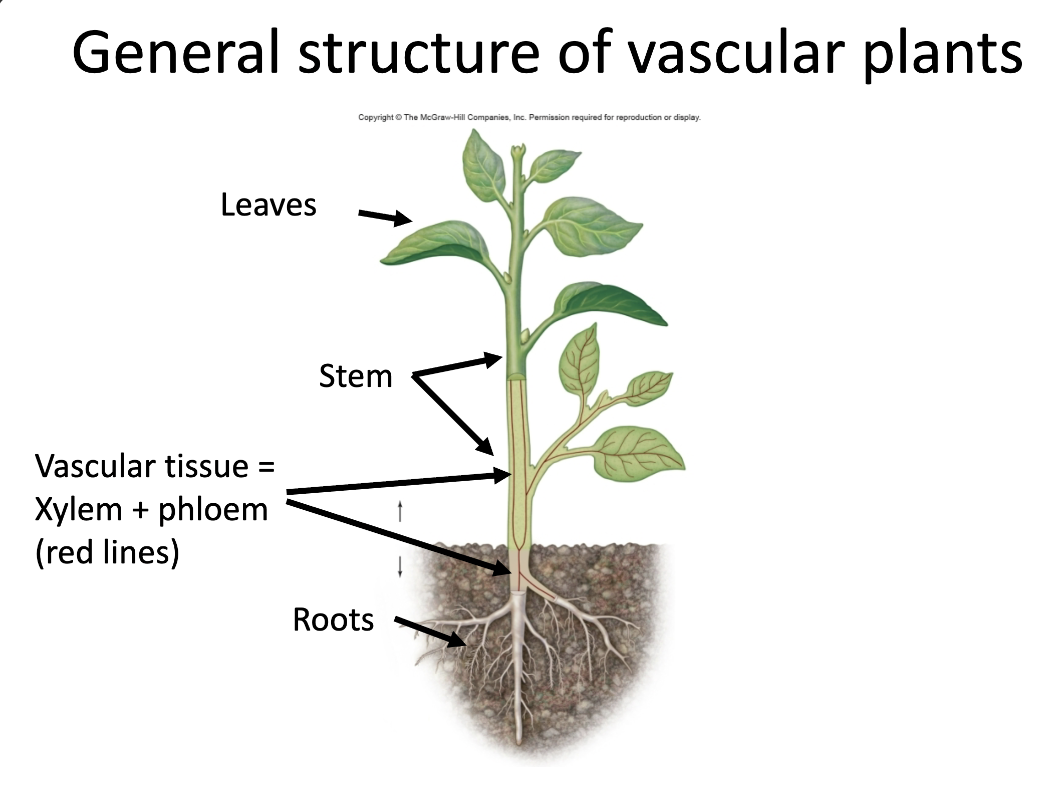
along with vascular tissue came the evolution of specialized organs
roots: absorb water and minerals
xylem ‘starts’ here, and the pipes run upward through the stem to the leaves
leaves: make sugars by photosynthesis
phloem ‘starts’ here, and the pipes run downward through the stem to the roots
stems: support the plant to elevate the leaves and spread them out to maximize photosynthesis
general structure of vascular plants (tracheophytes)
vascular plants (tracheophytes) are characterized by a dominant sporophyte generation with specialized tissues—xylem for water transport and phloem for nutrient transport—organized into three main vegetative organs: roots, stems, and leaves. These structures allow efficient transport, structural support, and photosynthesis, enabling growth on land
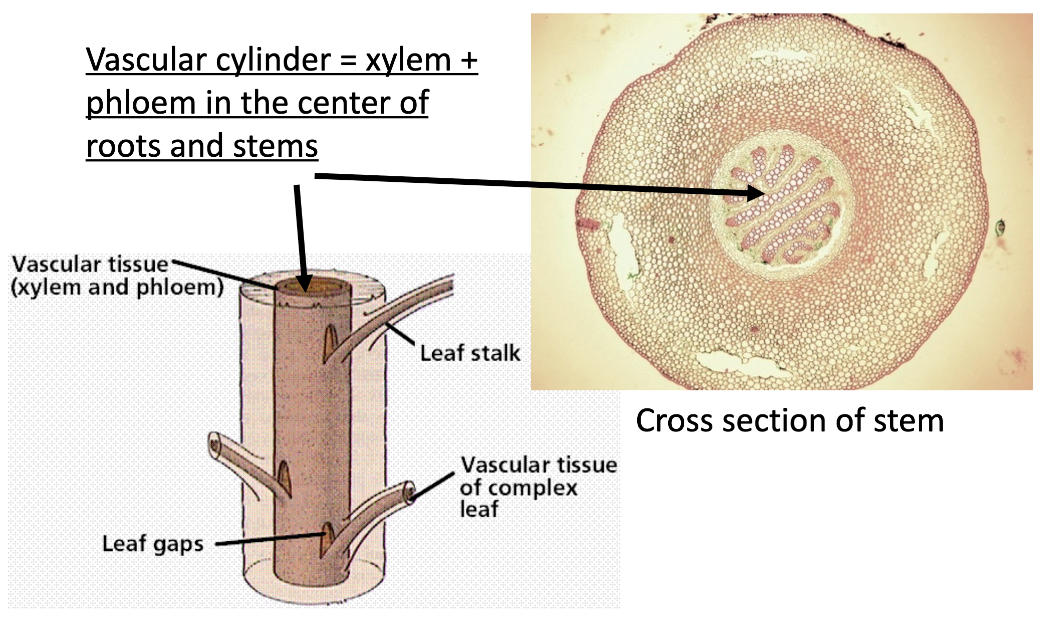
vascular tissue
found in the center of stems and roots
vascular cyclinder: xylem & phloem in the center of roots and stems
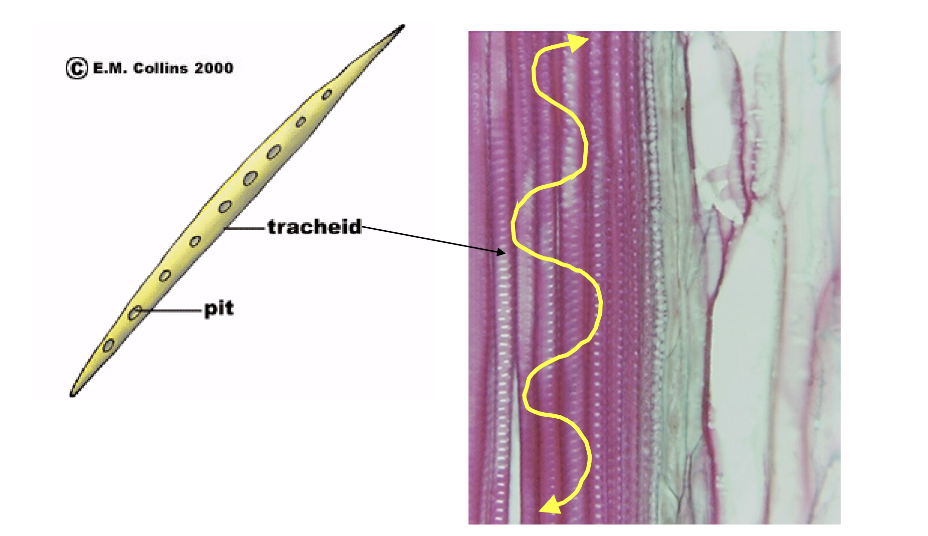
tracheids (xylem cells)
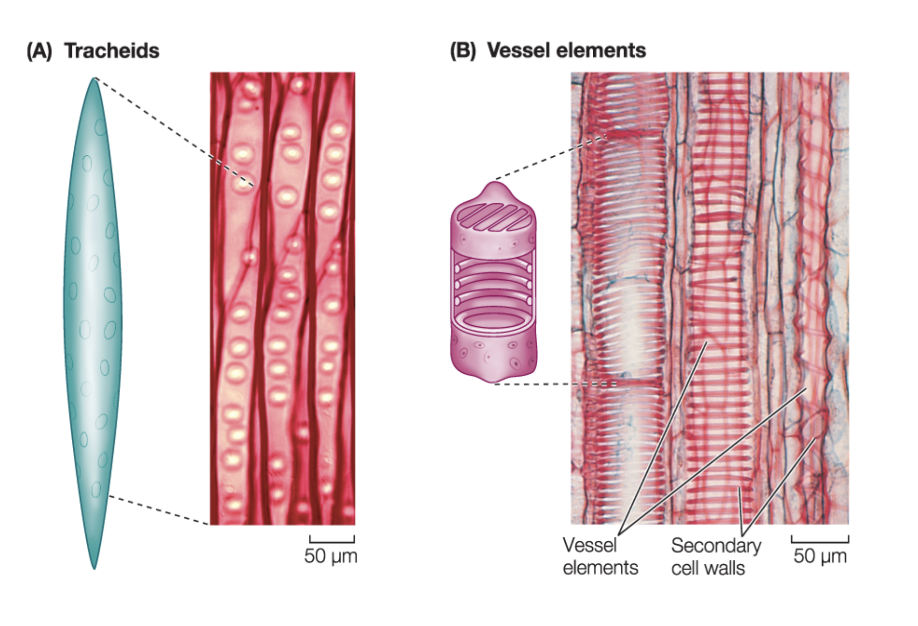
tracheids: long zylem cells, full of holes called pits, empty and dead at maturity
water moves between tracheids in continuous flow
all tracheophytes have xylem cells called tracheids
vessel elements
vessel elements: a specialized type of xylem cell found in angiosperms
specialized, non-living, tube-like cells in the xylem of angiosperms and some gymnosperms that conduct water and nutrients from roots to leaves
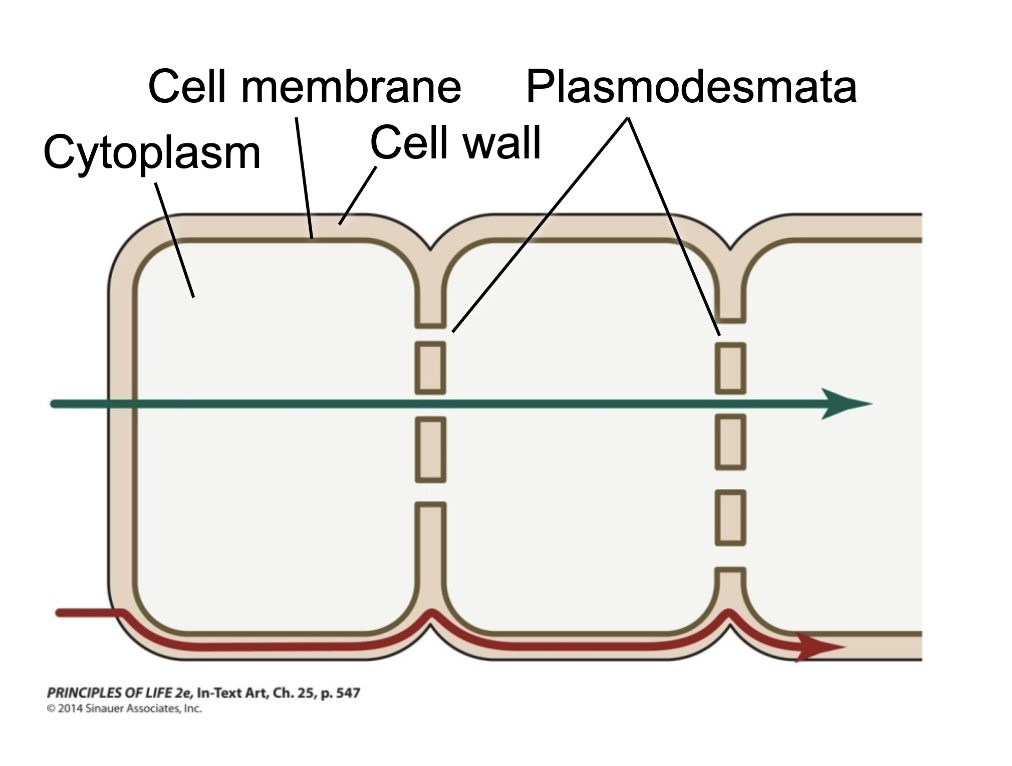
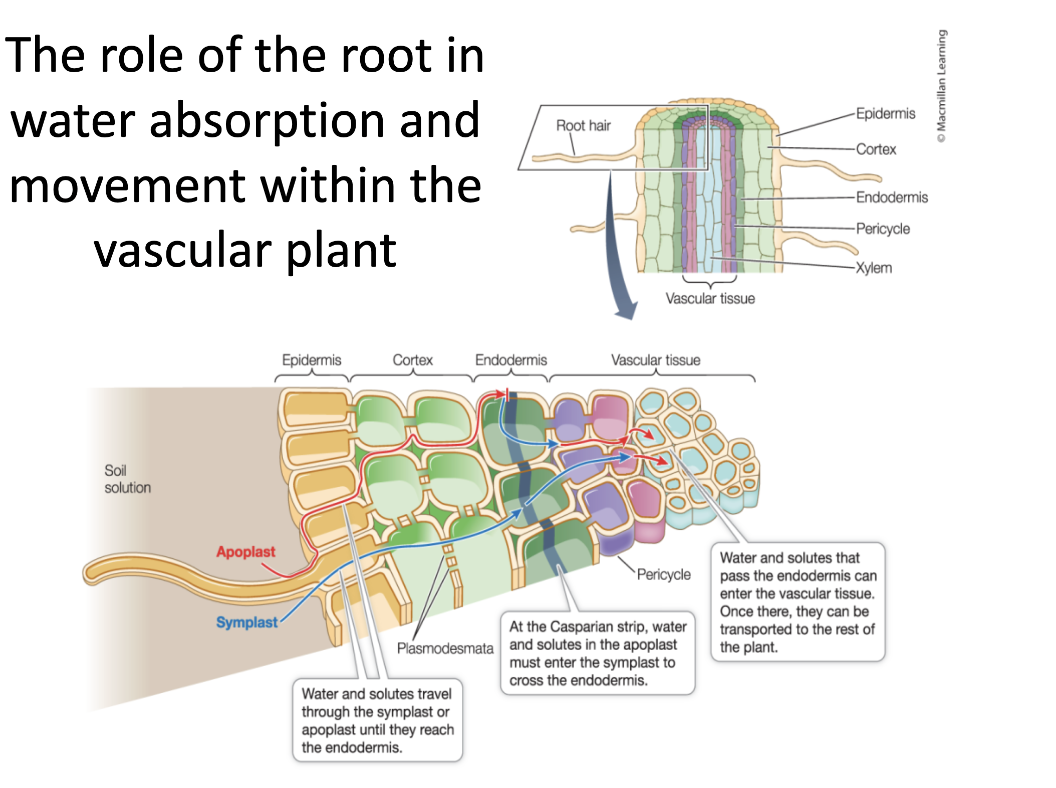
water and ions move through roots to the xylem via 2 pathways (apoplast & symplast)
the apoplast includes water inside:
the continuous meshwork of cellulose within cell walls
intercellular spaces
tracheids and vessel elements
in the apoplastic pathway, water and solutes never cross a membrane
the symplast includes water within:
the cytoplasm of living cells connected by plasmodesmata
plasma membranes control movement of water and ions in the symplastic pathway
leaf anatomy
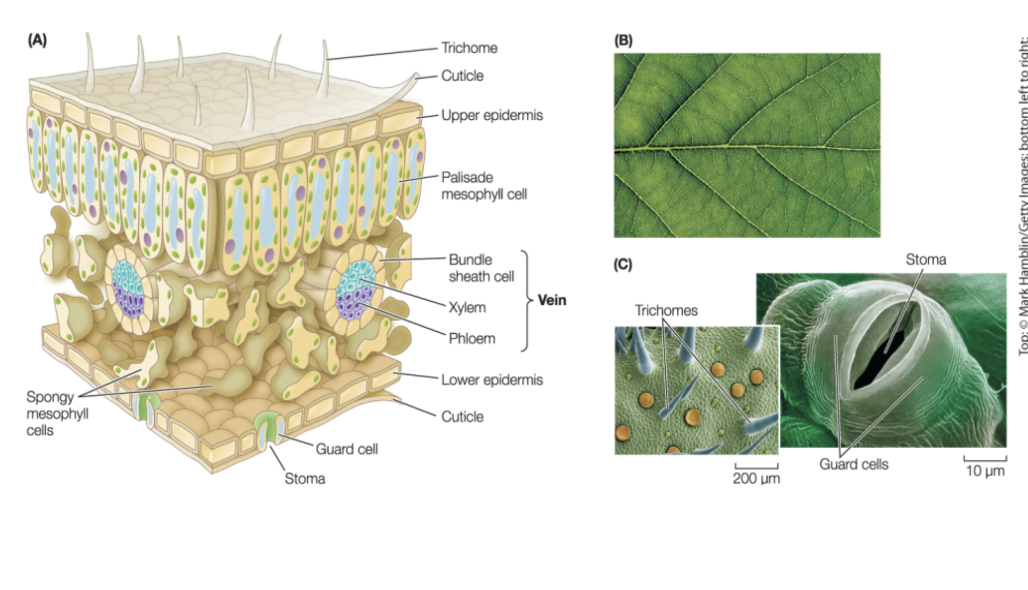
Leaf blade (lamina): Broad, flat part; main site of photosynthesis
Petiole: Stalk that attaches the leaf to the stem; positions leaf for light
Cuticle: Waxy outer layer; reduces water loss
Upper epidermis: Protective outer cell layer; lets light pass through
Lower epidermis: Protective layer; usually contains most stomata
Stomata: Small pores for gas exchange (CO₂ in, O₂ out)
Guard cells: Control opening and closing of stomata
Mesophyll: Middle tissue layer specialized for photosynthesis
Palisade mesophyll: Tightly packed cells with many chloroplasts
Spongy mesophyll: Loosely packed cells with air spaces for gas exchange
Veins (vascular bundles): Transport materials
Xylem: Transports water and minerals
Phloem: Transports sugars (food)
what can transpiration cause?
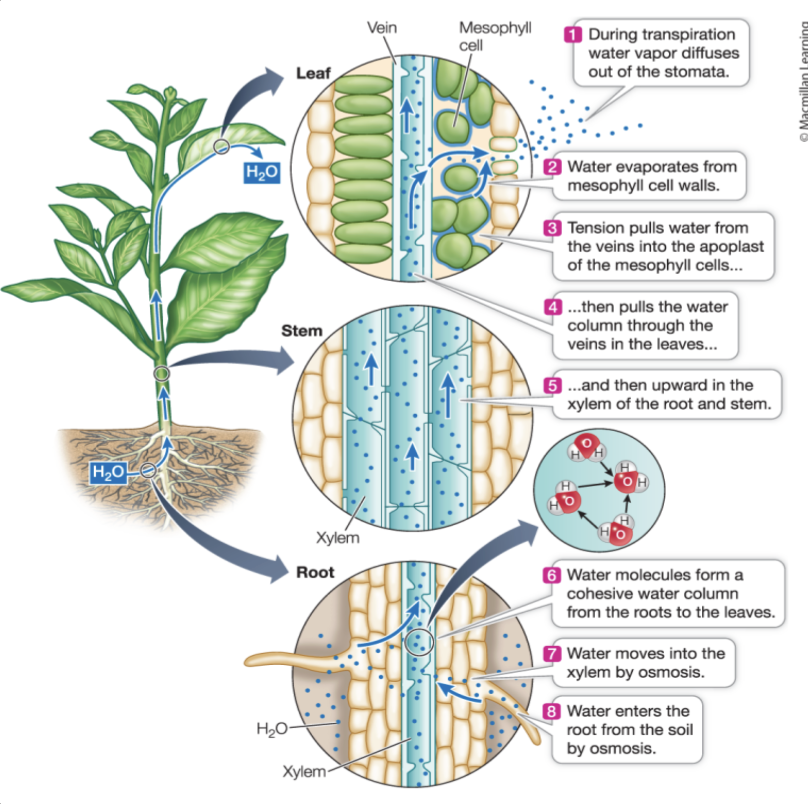
transpiration generates tension, which draws water from xylem of the nearest vein into the apoplast surrounding the mesophyll cells
the drawing and removal of water from the veins establishes tension on the entire column of water
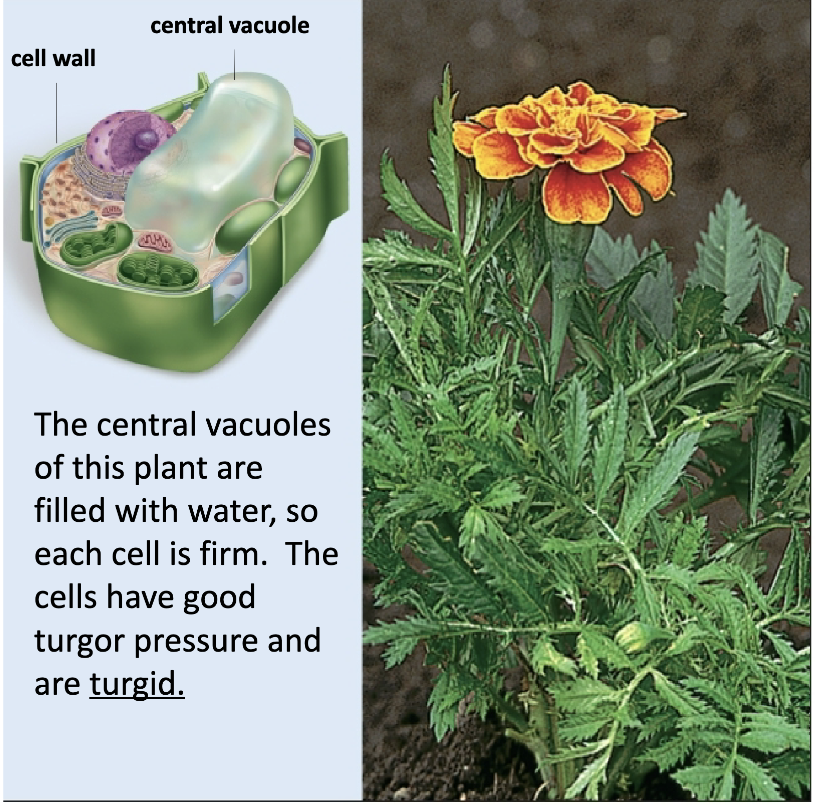
turgor pressure: keeps plants upright
ex: the central vacuoles of a plant, when filled with water, make each cell firm. the cells have good turgor pressure and are turgid
loss of turgor pressure causes wilting
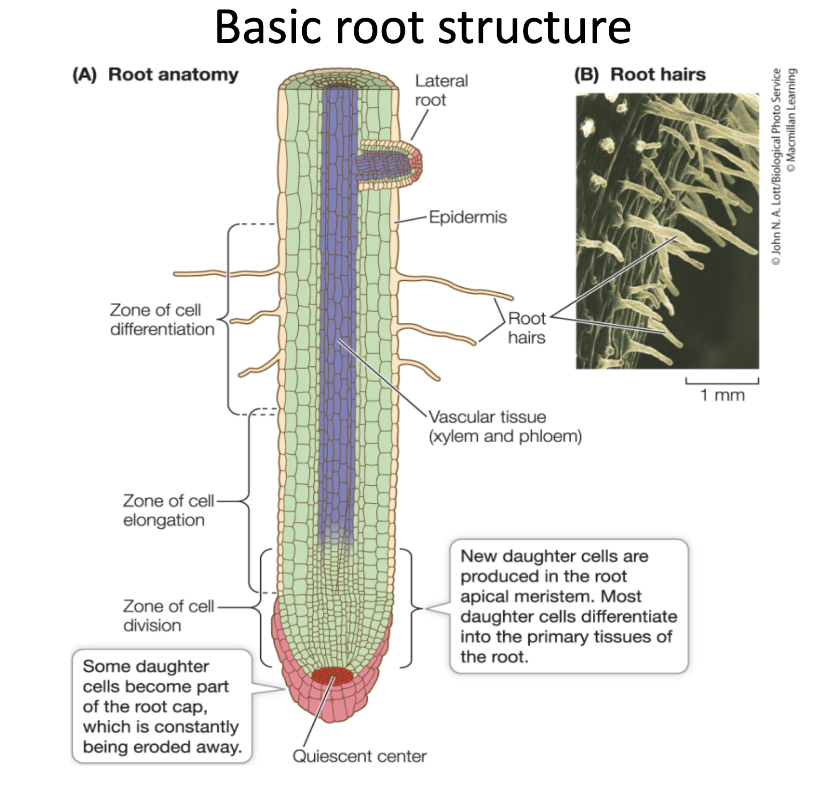
basic root structure
Root cap: Protects the growing tip; helps root push through soil
Apical meristem: Region of active cell division for root growth
Zone of elongation: Cells lengthen, increasing root size
Zone of differentiation (maturation): Cells specialize into different tissues
Epidermis: Outer layer; absorbs water and minerals
Root hairs: Tiny extensions of epidermal cells; increase surface area for absorption
Cortex: Stores food and transports water inward
Endodermis: Selective barrier controlling movement of water into vascular tissue
Pericycle: Gives rise to lateral roots
Vascular cylinder (stele): Central transport system
Xylem: Conducts water and minerals upward
Phloem: Conducts sugars throughout the plant
the role of the root in water absorption and movement within the plant
Root hairs absorb water from soil by osmosis
Water moves through the epidermis and cortex
Endodermis (Casparian strip) controls what enters
Water enters the xylem
Xylem carries water upward to the rest of the plant
phloem function
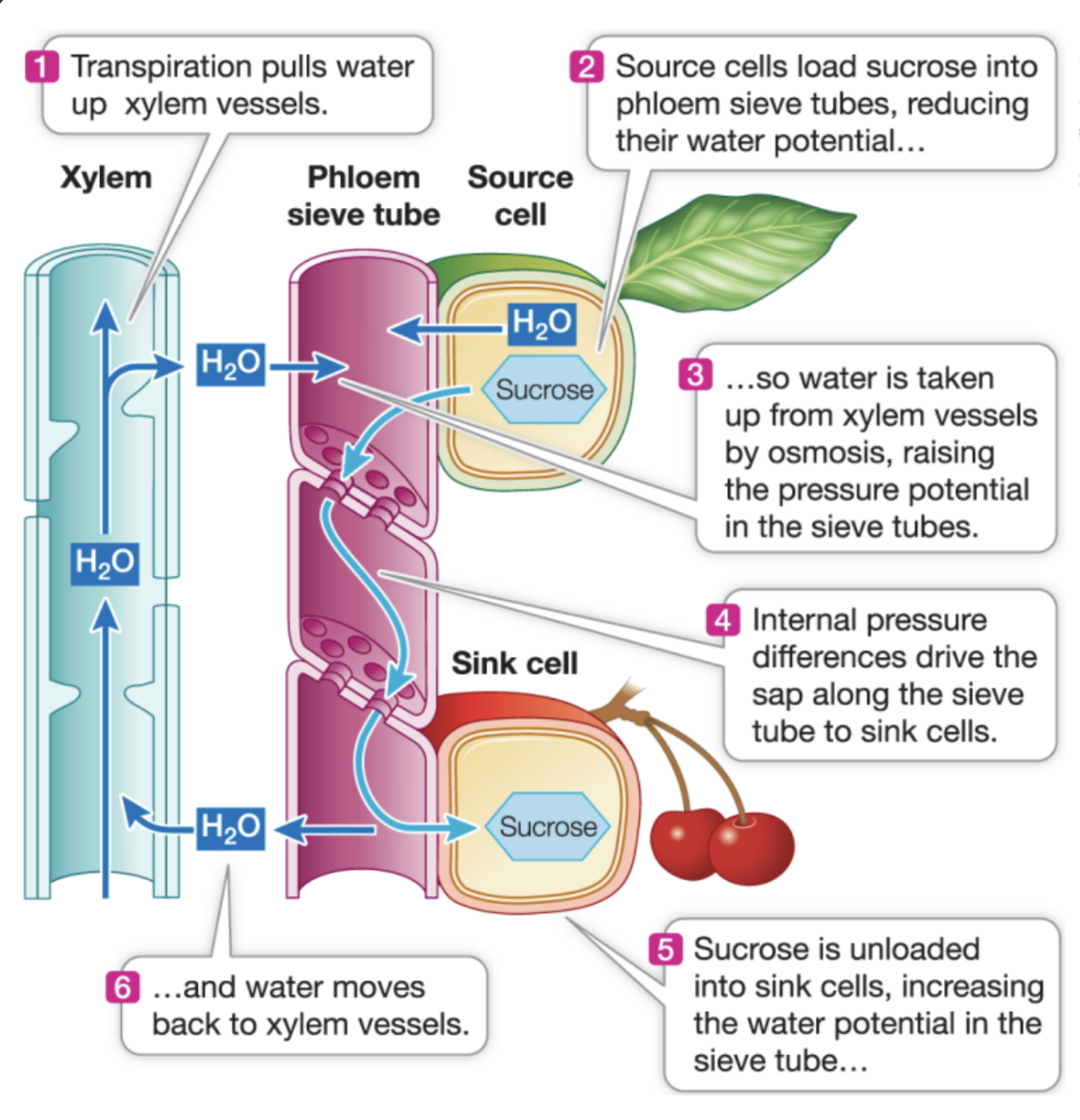
phloem sap is mostly sucrose in solution. (glucose from photosynthesis is converted into sucrose for transport in the plant.)
phloem cells conduct in different directions, traveling from source (where sugars are made) to sink (where sugars are needed in non-photosynthetic cells)
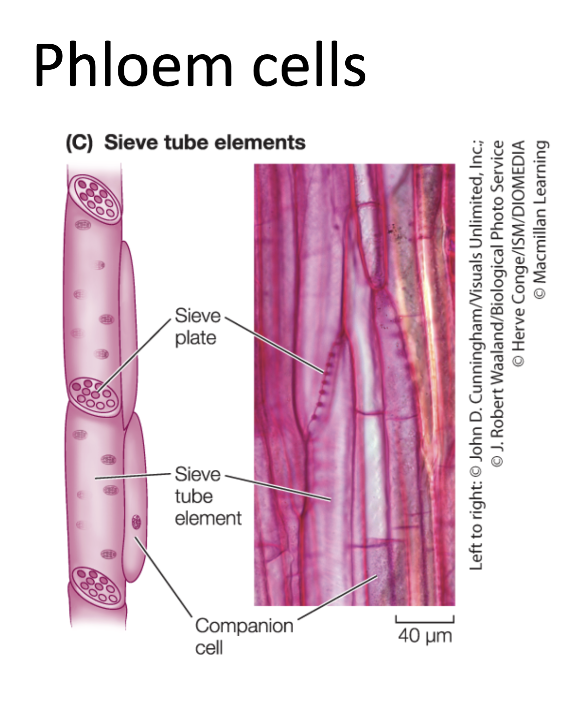
phloem cells: sieve tube elements
sieve tube elements: long phloem cells, living at maturity, that have perforated ends in the cell wall
sugars must move across the cell membrane from sieve cell to sieve cell through the sieve plate perforations
sieve tube elements have no organelles and depend upon companion cells for metabolism
at a source cell, sucrose is actively transported into the phloem sieve tubes
now these sieve tubes higher sucrose concentration, thus water enters from xylem by osmosis
this causes increased pressure in the sieve tubes, which pushes the sucrose solution towards the sink via pressure and solute gradients
at sink cells, sucrose is unloaded: water then flows from the sieve tubes back into the xylem
 Note
Note  Flashcards (54)