Epithelial Tissue
 Call Kai
 Learn
Learn Practice Test
 Spaced Repetition
 Match
Match Flashcards
1/9

Earn XP
Description and Tags
Anatomy & Physiology
Name | Mastery | Learn | Test | Matching | Spaced | Call with Kai |
|---|
No analytics yet
Send a link to your students to track their progress
10 Terms
Epithelial Tissue
Tissue that covers the body and make the organ’s lining.
Simple Epithelium
A type of epithelial tissue that consists a single layer of cells, allowing for efficient absorption, secretion, and filtration.
Stratified Epithelium
A type of epithelial tissue composed of multiple layers of cells.
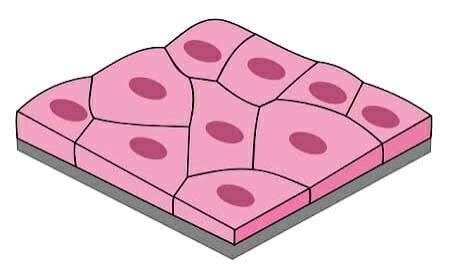
Simple Squamous Epithelium
A thin, flat layer of epithelial cells that facilitates diffusion and filtration, commonly found in areas like alveoli and blood vessels.
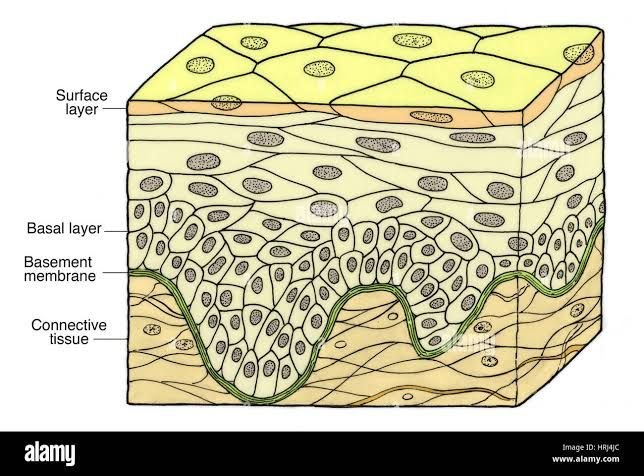
Stratified Squamous Epithelium
A type of stratified epithelium made up of several layers of flat cells, providing protection against abrasion and found in areas like the skin, mouth, and esophagus.
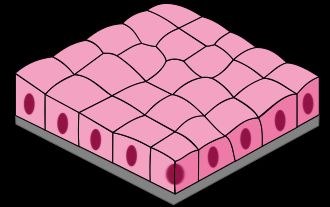
Simple Cuboidal Epithelium
A type of epithelial tissue consisting of a single layer of cube-shaped cells, involved in secretion and absorption, commonly found in glands and kidney tubules.
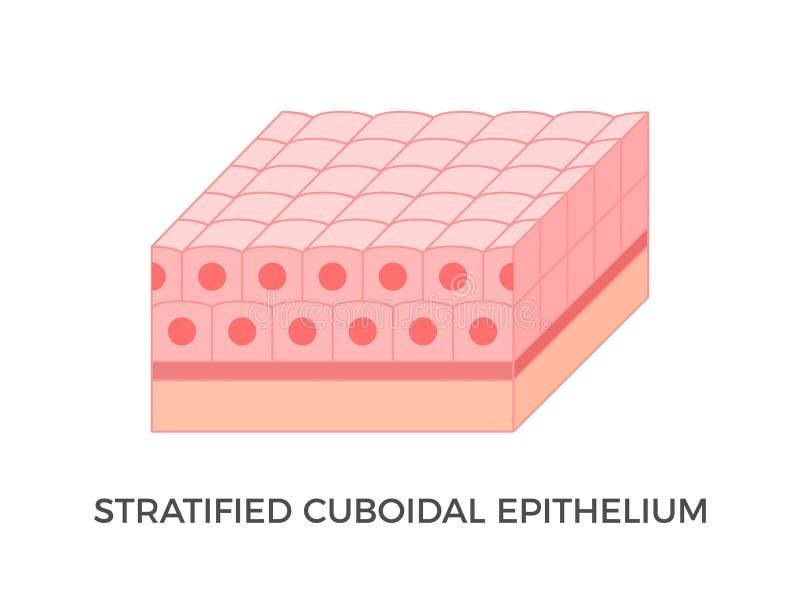
Stratified Cuboidal Epithelium
A type of stratified epithelium consisting of two or more layers of cube-shaped cells, primarily providing protection and found in ducts of sweat glands, mammary glands, and salivary glands.
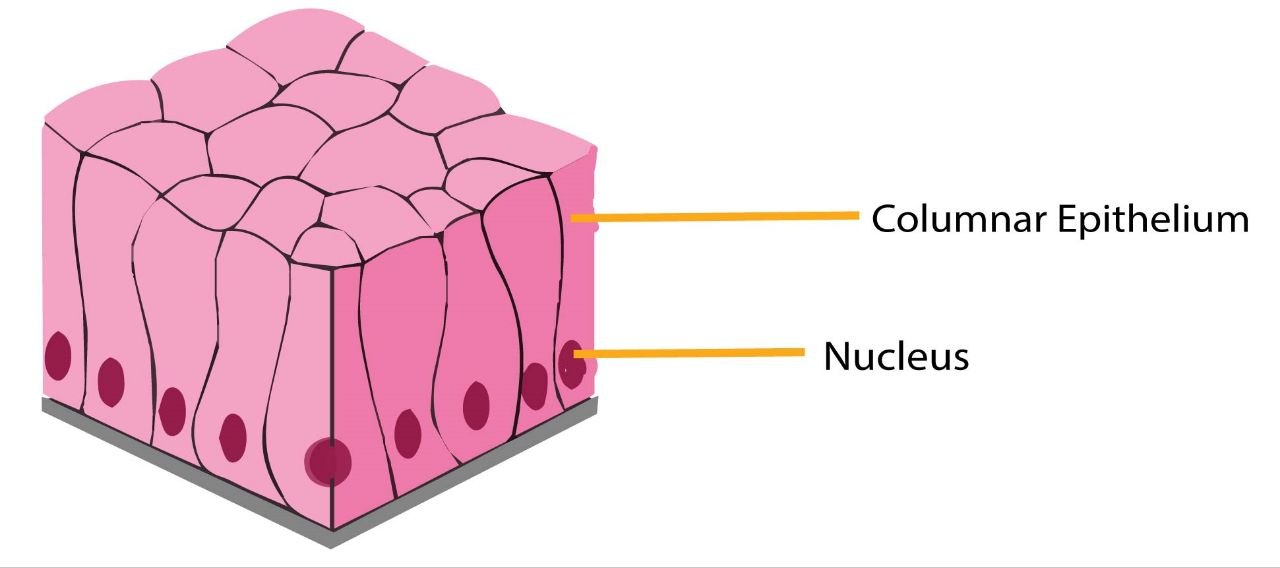
Simple Columnar Epithelium
A type of epithelial tissue composed of a single layer of tall, column-like cells, involved in absorption and secretion, typically found in the digestive tract and uterine lining.
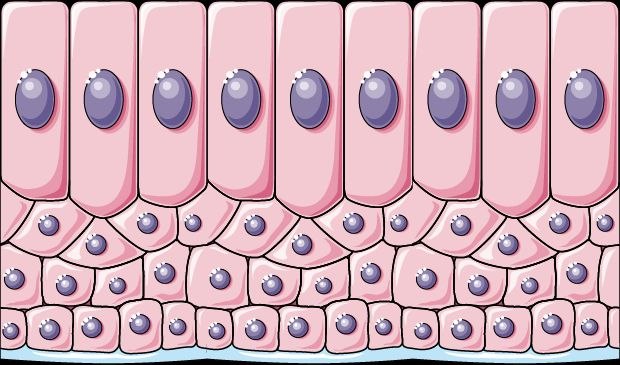
Stratified Columnar Epithelium
A type of epithelial tissue consisting of multiple layers cells with the column shaped cells on the top.
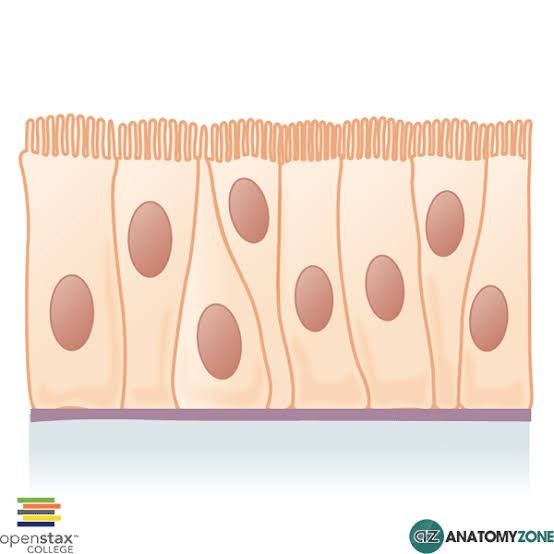
Pseudostratified Columnar Epithelium
A type of epithelial tissue that appears to have multiple layers due to varying cell heights but is actually a single layer, commonly found in the respiratory tract and involved in secretion and movement of mucus.

