ACCT201A Chapter03 - The measurement process
 Studied by 0 people
 Call Kai
 Learn
Learn Practice Test
 Spaced Repetition
 Match
Match Flashcards
 Knowt Play
1/16

Earn XP
Description and Tags
so ican measure
Name | Mastery | Learn | Test | Matching | Spaced | Call with Kai |
|---|
No analytics yet
Send a link to your students to track their progress
17 Terms
cash-basis accounting
record transactions only at the time cash is received or paid; was cash received from customers? if no, there is no transaction
accrual-basis accounting
was a service provided to customers at the time of the transaction? Timing differences are recorded as assets, liabilities, revenues, and expenses as they occur
adjusting entries
used to update balances of assets and liabilities(related revenues and expenses) at the end of each year
prepaid expenses
when a company pays cash to purchase an asset in advance of using that asset; timing difference - cash is paid now, and then later, the expense is recognized for the cost of asset used
expense recognition
depreciation
the process of allocating the cost of an asset to expense over the asset’s useful life
accumulated depreciation account
called a contra account, which is an account with a balance that is opposite, or “contra” to its related accounts
deferred revenues
when a company receives cash in advance from customers, but goods or services won’t be provided until a later period, creating a timing difference between when cash is received and when related revenue is recognized
classified balance sheet
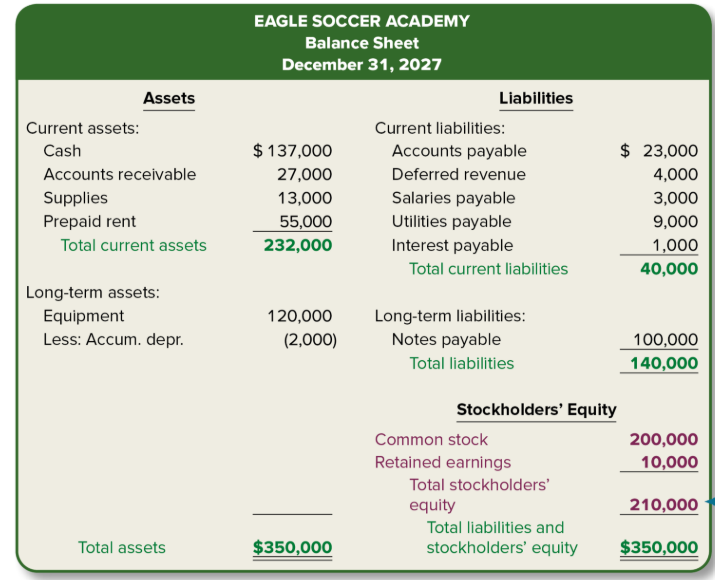
groups a company’s assets and liability accounts based on timing of activity: current versus long-term
operating cycle
the average time it takes to provide a service to a customer and then receive cash from the customer
intangible assets
assets that lack physical substance but have long-term value to a company
permanent accounts
appear in the balance sheet, including retained earnings; balances carried forward from one period to the next
temporary accounts
measures activity for a year only and thus their balances are rest to $0 by the start of the next year
closing entries
transfers the balances of all temporary accounts to the balance of the retained earnings account
adjusted trial balance
temporary accounts
measure activity for one year only; balances reset to $0 by the start of the next year by moving them to retained earnings thru closing entries (revenues, expenses, and dividends)
permanent accounts
appear in the balance sheet, including retained earnings (assets, liabilities, and equity)

