FA tech skills: ID quiz
 Studied by 0 people
 Call Kai
 Learn
Learn Practice Test
 Spaced Repetition
 Match
Match Flashcards
 Knowt Play
1/66

There's no tags or description
Looks like no tags are added yet.
Name | Mastery | Learn | Test | Matching | Spaced | Call with Kai |
|---|
No analytics yet
Send a link to your students to track their progress
67 Terms
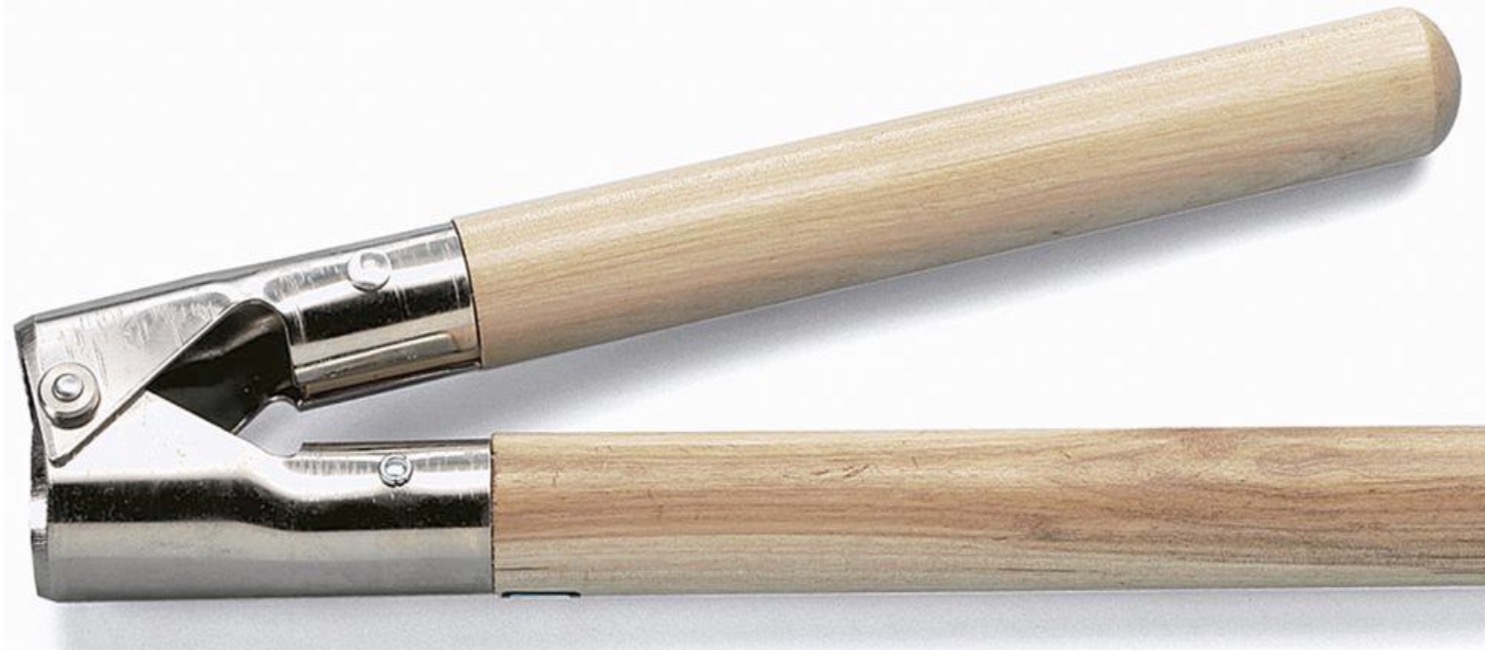
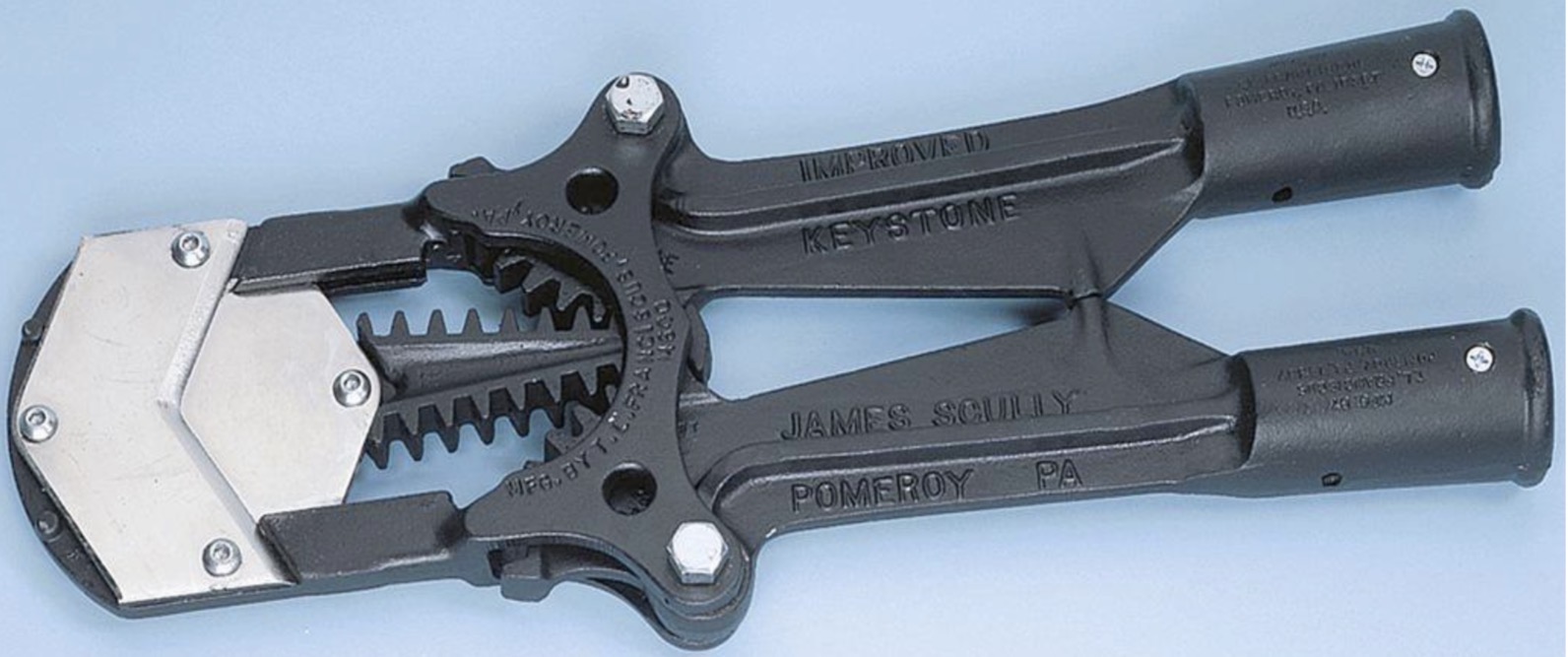
Barnes Dehorner- to remove small horns from calves/goats/sheep. Sharp, half-curved blades are affixed to handles that are 12 to 17½ inches long. The blades make a complete circle when the handles are brought together, and they close together when the handles are pulled apart. This allows the user to place the blades as close to the skull as possible so that the entire horn is removed
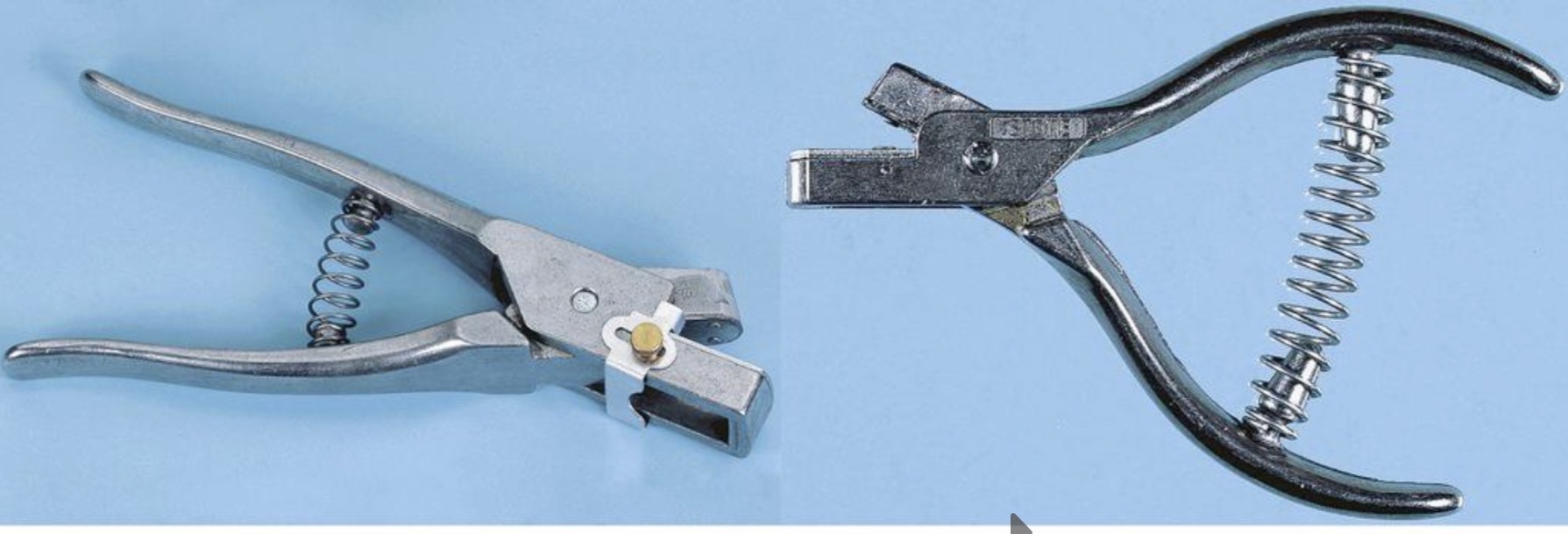
Ear notcher-to make permanent identifying marks in the ears of pigs/goats/sheep. One jaw of this instrument has a sharp blade that punches a hole or makes a notch; the other is a solid block. The pinna is placed between the jaws of the notcher. When it is squeezed, a piece of tissue is removed from the pinna. The resulting hole or notch is placed around the edge of the pinna and indicates a particular number based on the position and left or right ear. The size of the notch at its base varies from to ½ inch. A notch of can be a V, an inverted U, or around hole
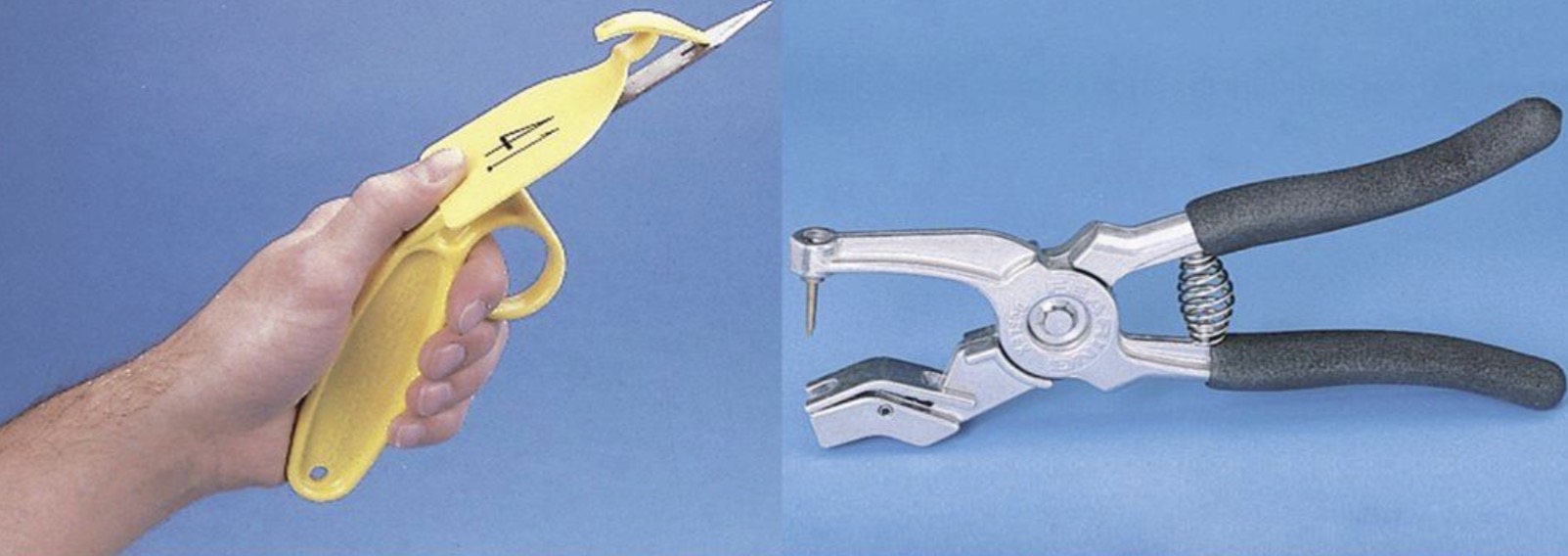
ID-tag applicator: to apply ear tags to cattle, sheep, and goats. These targets come in a variety of versions. Their purpose is to attach some form of ear tag. Most involve a puncturing device onto which the tag is threaded; the other jaw of the applicator is fitted with the back of the tag (much like a human's post-style pierced earring), which is designed to keep the tag in the ear. The tag is placed into the ear so that it faces forward. This is not a permanent form of identification because the tags can be ripped from the ear
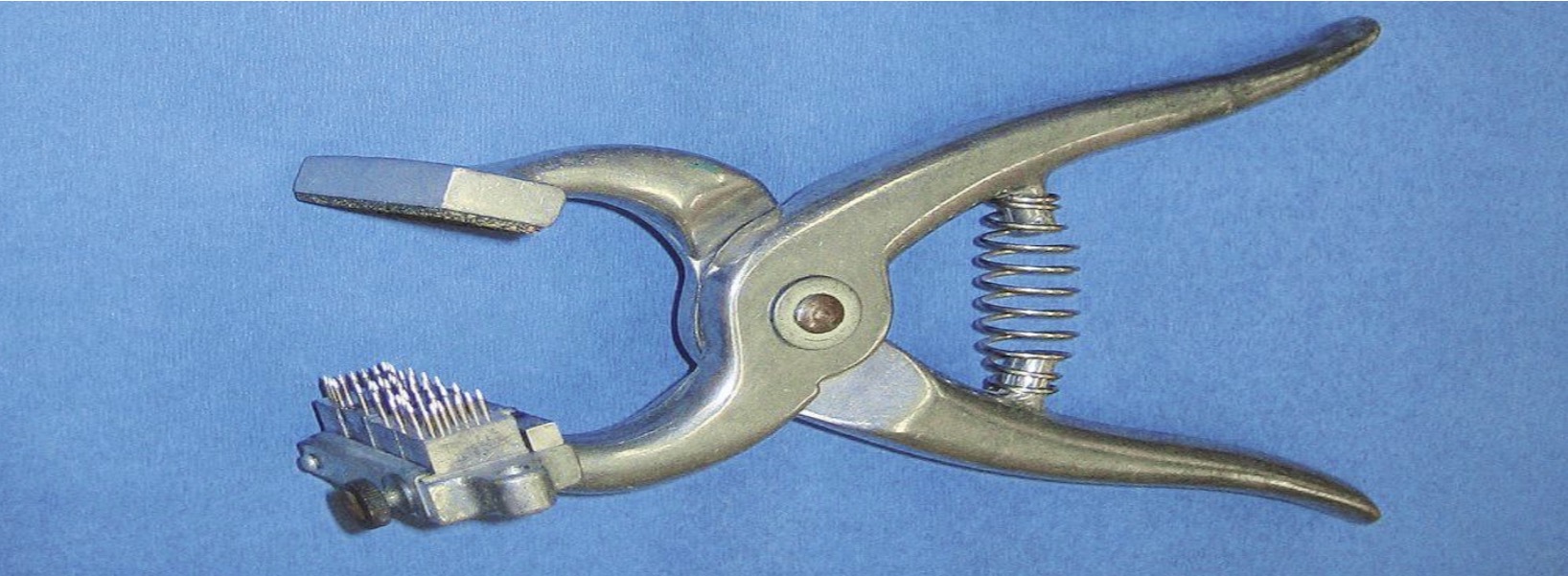
Tattoo outfit: manual- to identify an animal permanently by placing numbers or letters inside the ear, lip or thigh. One jaw of the instrument is designed to hold three to five digits or letters; the other has a padded block. The body part is placed between the jaws of the instrument, and the handles are squeezed with enough pressure to puncture the skin. Tattoo ink is then rubbed into the resulting holes. Large- and small-animal tattoo outfits are available. Reasons for tattooing include verification of brucellosis vaccination and identification of a specific purebred animal.
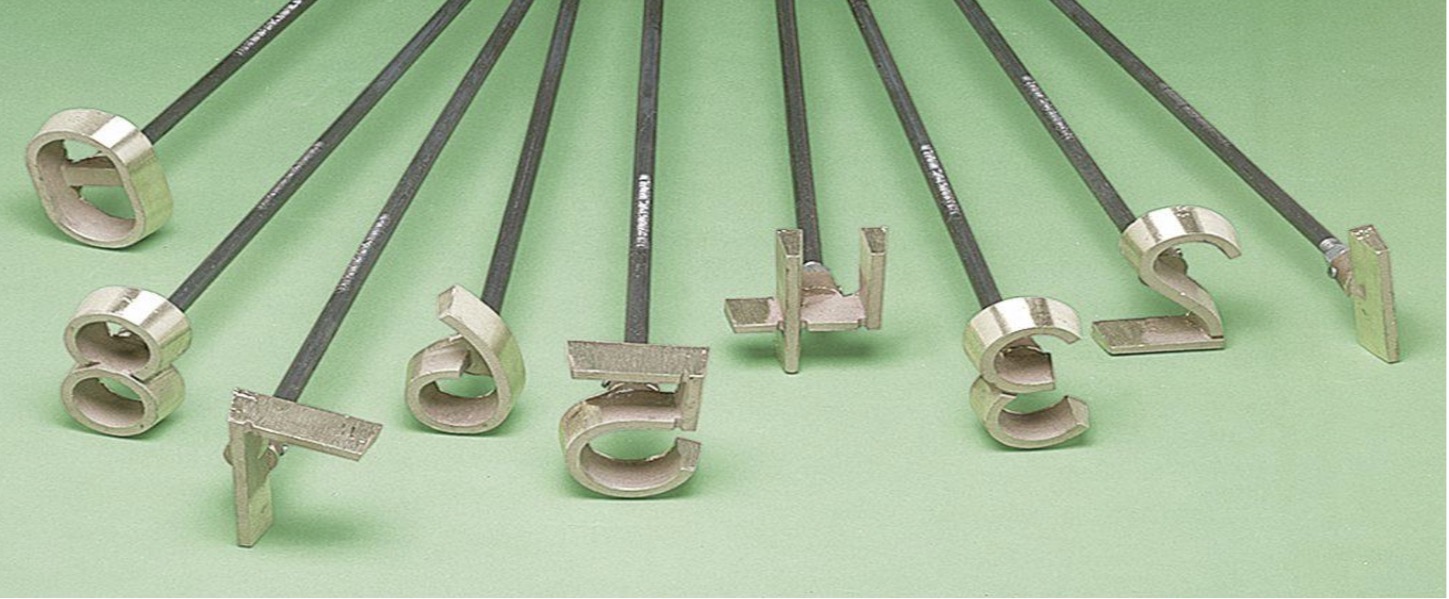
Hot iron branding irons-to identify an animal permanently by placing numbers, letters, or designs on the animals shoulder or hip. These irons are made of heavy-duty copper and are available in letters, numbers, and custom designs. The handles are 32 inches long. The irons are heated in a propane heater until they are red-hot. The iron is quickly placed against the skin in the body area registered for that particular herd. The iron is held in place until the operator is sure that the skin has been burned. The resulting scar is a permanent mark
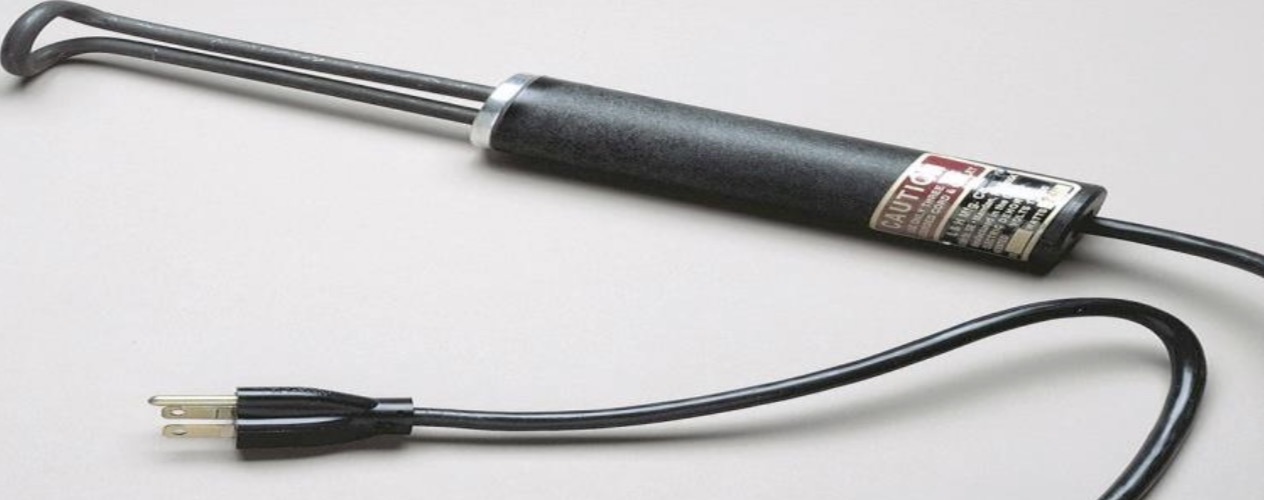
Electric branding irons- to identify an animal per mantle by placing numbers, letters, or designs on the animals shoulder or hip. This iron has its own heating element in the handle. The brand can be single numbers, letters, or designs, or it can be a series of bends and curves that, when used together, form numbers, letters, or designs. The disadvantage of these irons is that a power source is necessary
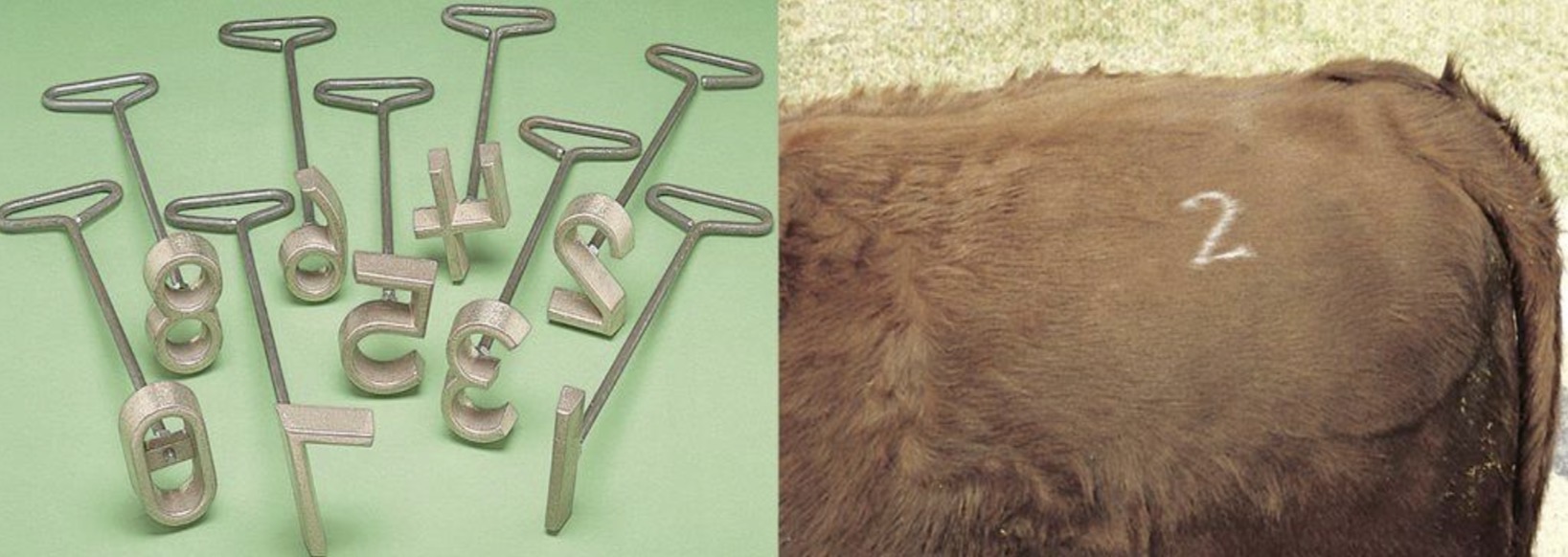
Freeze branding irons-to identify an animal permanently by placing numbers, letters, or designs on the animals shoulder or hip. These irons are super-cooled by liquid nitrogen or a combination of dry ice and alcohol. The irons are placed on the animal's hide, and they kill the pigment-producing cells. The returning hair growth is white, making the mark permanent. The only disadvantage of this method is that it takes about three months for the hair to grow back
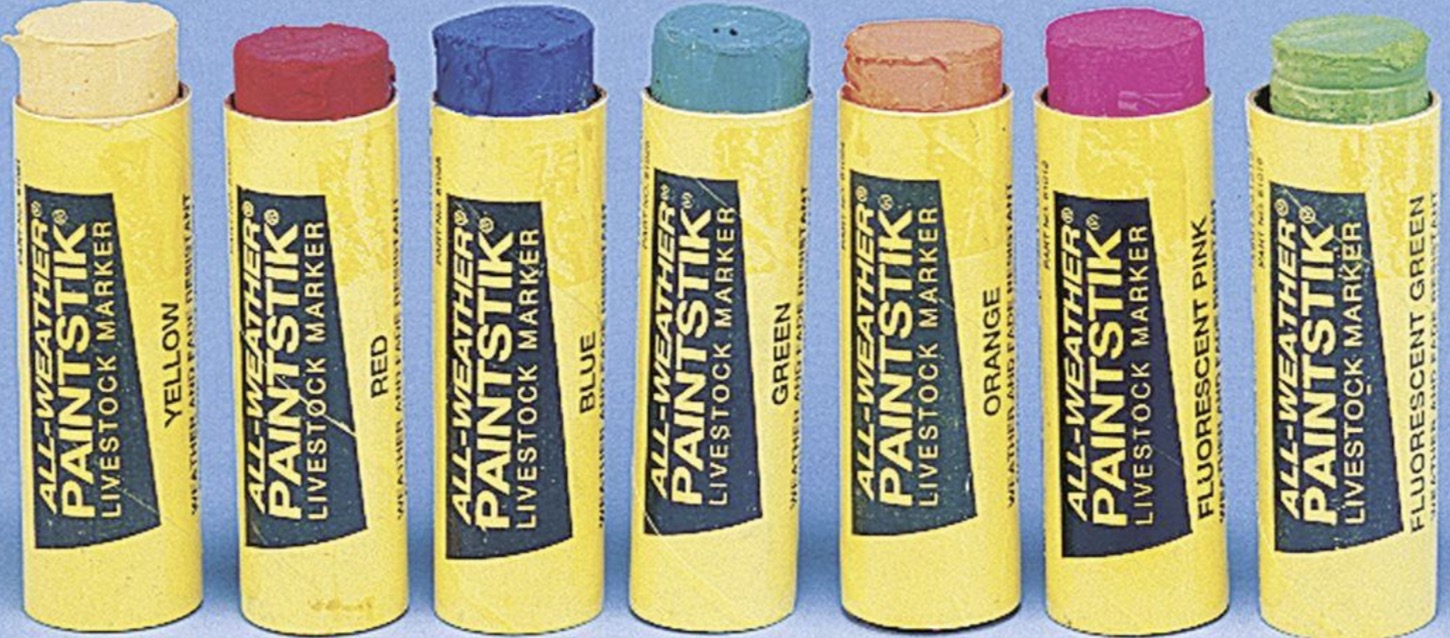
Marking paint (paint stick)-to mark an animal temporarily. These biodegradable, nontoxic products are designed to be applied to an animal a it is being medicated, vaccinated, or otherwise processed, so as to prevent duplicate administrations. The paints wash off or wear off over time. They are available in aerosol sprays, liquid paints, and paint sticks. There is even a paintball gun that can be used to mark an individual in a pasture or a large group without getting near the animal
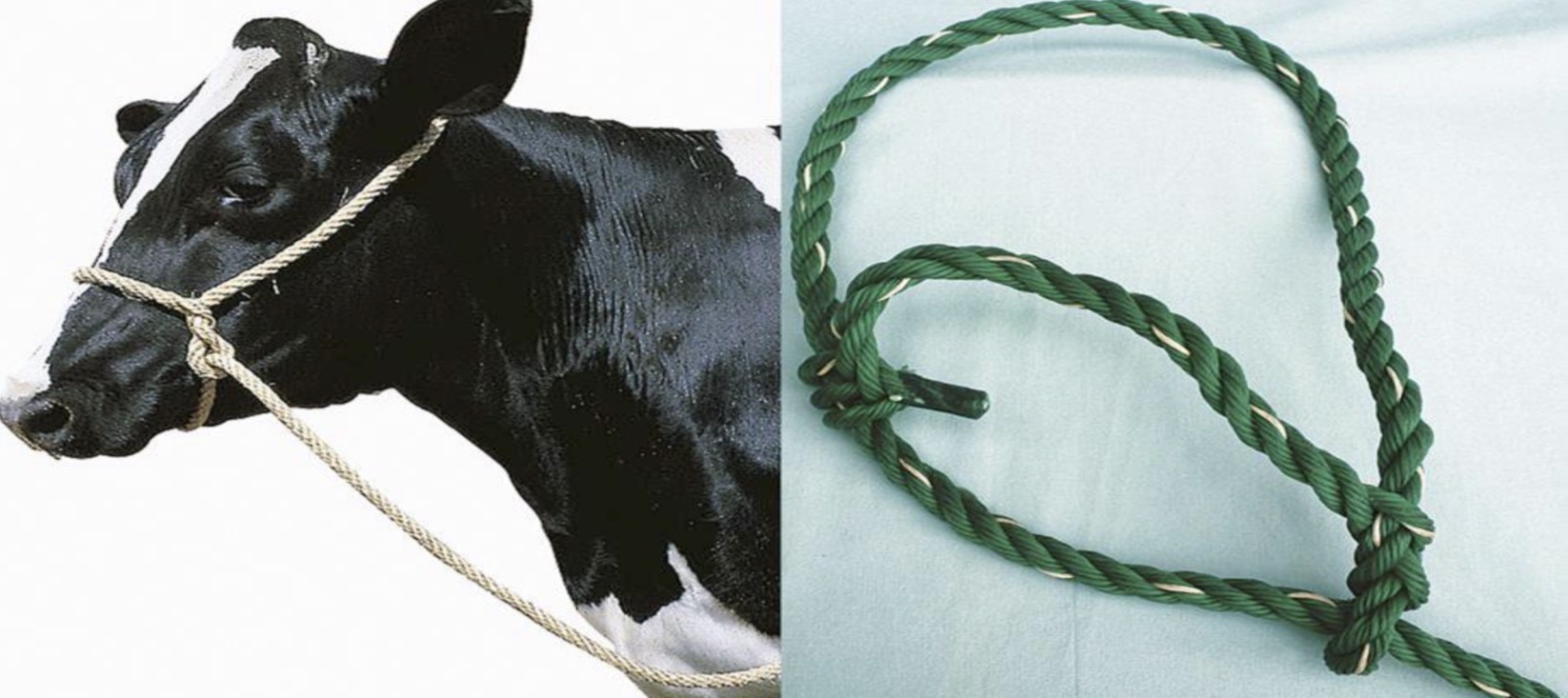
Rope halter-to control an animals head while the animal is in the chute or while it is being led. This is an adjustable halter. The headstall can be lengthened and the noseband made wider by pulling the lead rope through a series of loops. The noseband is tightened by pulling on the lead rope. This is an important distinction because if the noseband is placed around the animal's neck, it can become a choking hazard; in addition, it does not provide good control of the head. When the halter is placed on the head properly, the end of the lead rope should be on the left side of the animal's cheek. These halters are made of round plastic, polyethylene, nylon, or sisal ropes. They come in sizes that fit adults and calves and are used for routine work, such as jugular venipuncture, drenching, surgical procedures on the head, and teaching a show animal how to walk on lead
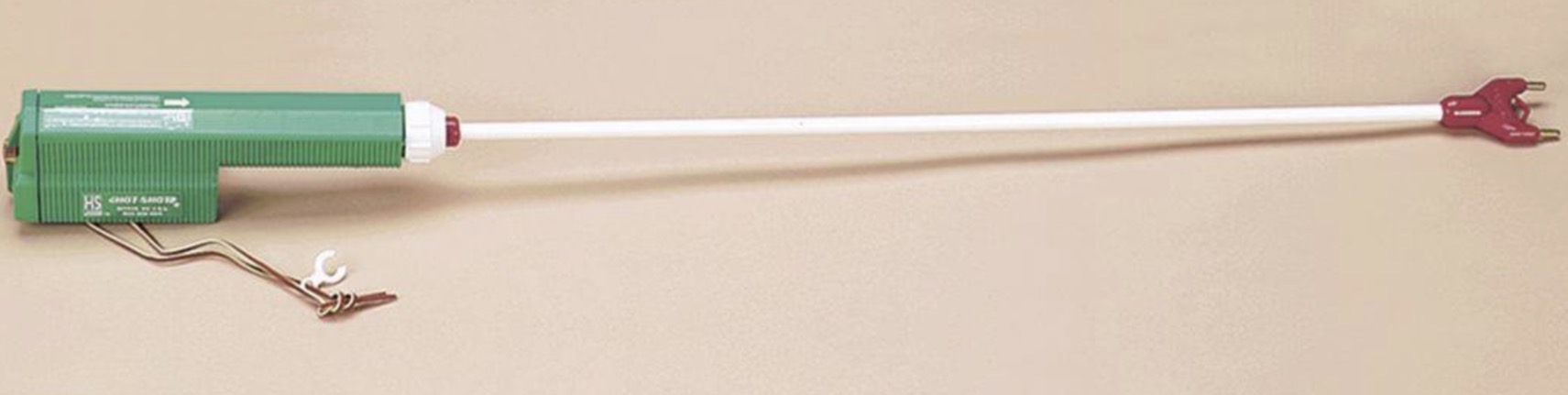
Cattle prods- to make livestock move into chute or alley ways. These prods are battery powered so they can deliver an electric jolt to an animal. Proper placement is important. To move an animal forward rather than down, the electrodes should be placed under the tail or anywhere on the vertical surface of the rump. An animal can be turned if the prod is used on the side of the body or the neck. If the electrodes are placed on the body's top, the animal becomes confused because the only way for it to move is down. This is a fairly rough form of motivation and should be used judiciously
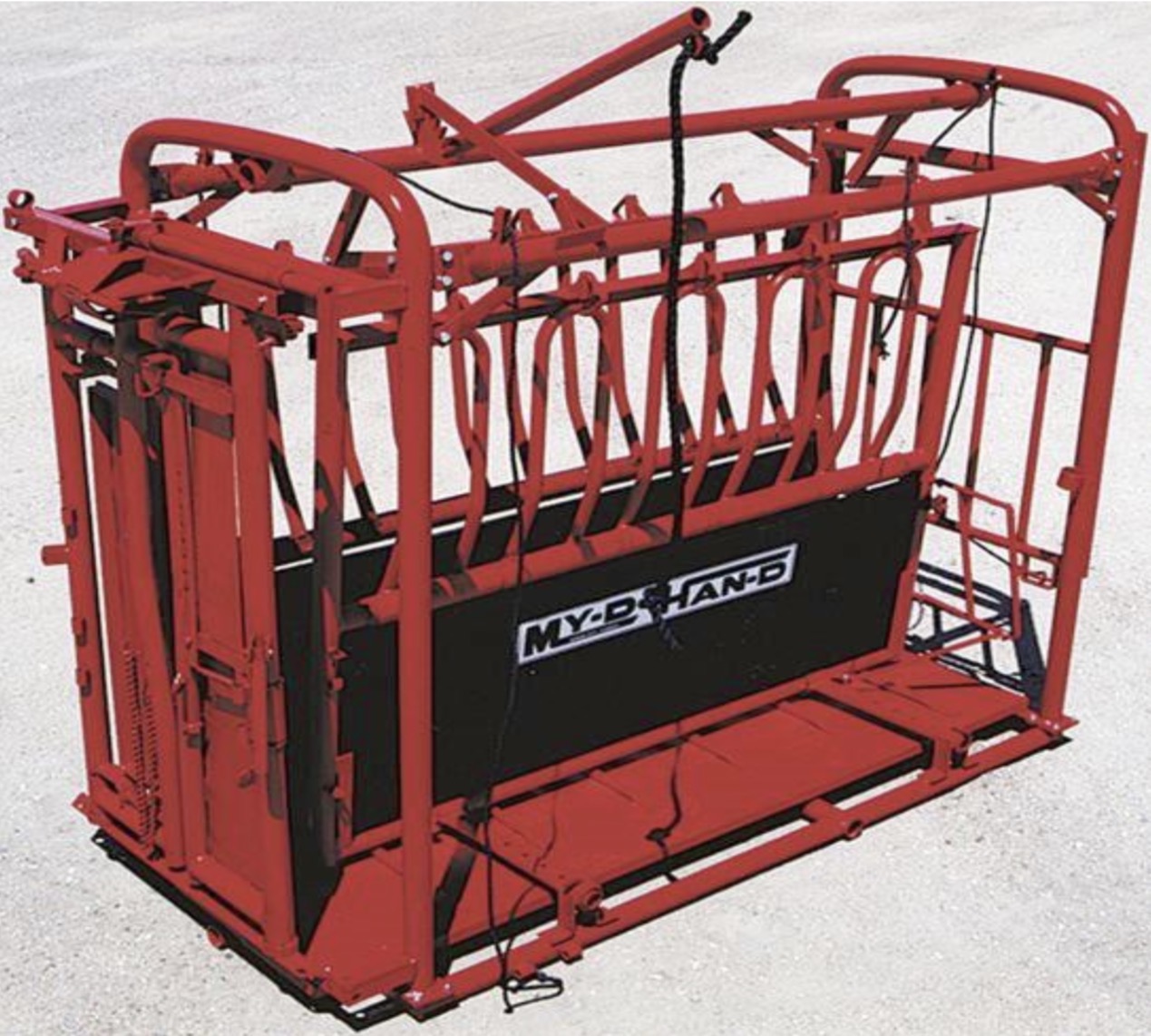
Squeeze chute- to secure a cow or bull in place while maintaining access to its head, feet, and rear. Most chutes work on the principle of catching the head with some type of squeeze mechanism. Lateral movement is prevented by squeezing the walls of the chute together. Access to the rear is facilitated by a gate or bar that is placed across the back legs of the animal. Feet can be examined by lowering the side panels. This is an extremely useful instrument for cattle restraint, especially for beef cattle
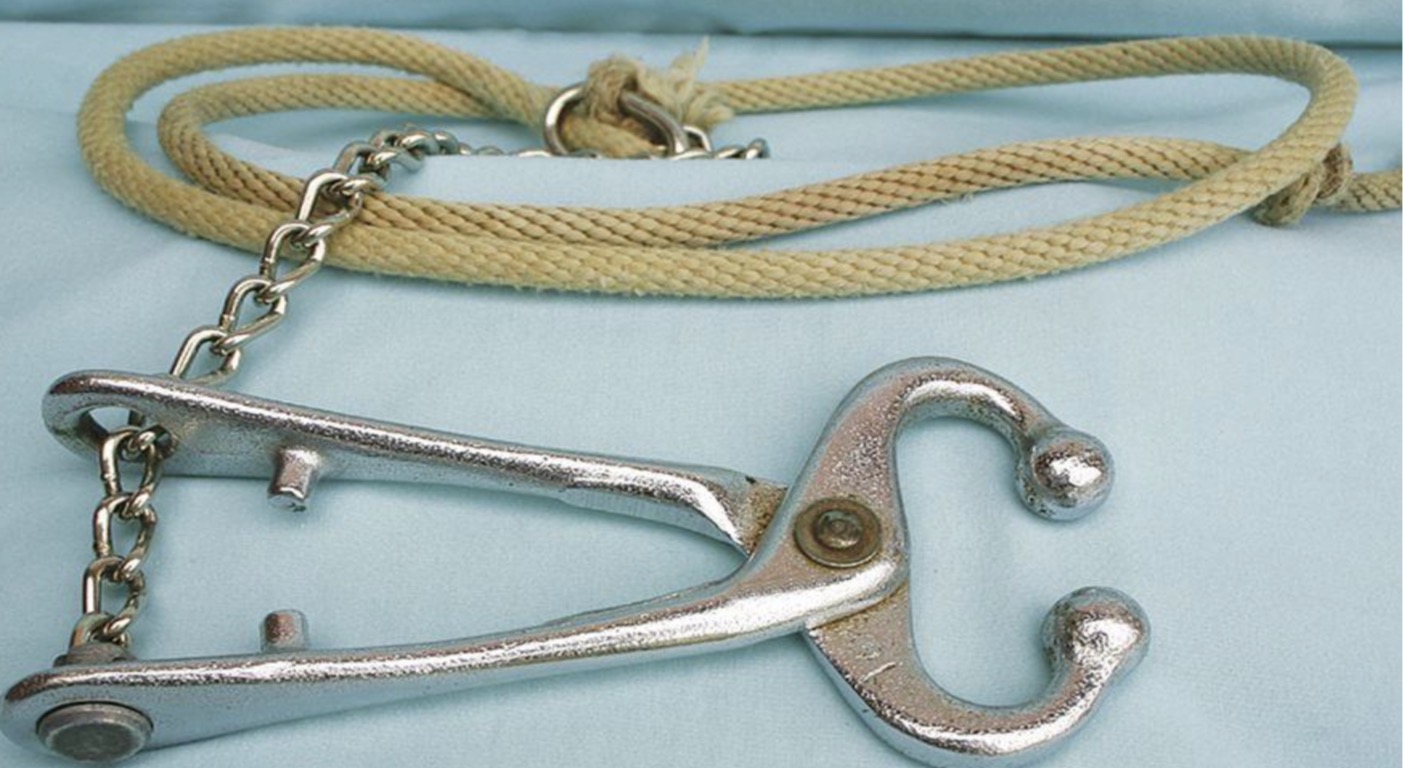
Nose lead-to control the head by applying pressure to the nasal septum. Two rounded, smooth balls are situated on curved handles. The balls are placed on either side of the nasal septum and the handles are brought together by a rope or chain and secured to a chute or stanchion. The maximum time for application of this instrument is 20 to 30 minutes; after that, the septum loses feeling and the cow struggles. The balls should be inspected for protrusions, which can cause cuts in the nasal septum. If the balls are too close together, the circulation is cut off faster. If they are too far apart, the instrument slips off
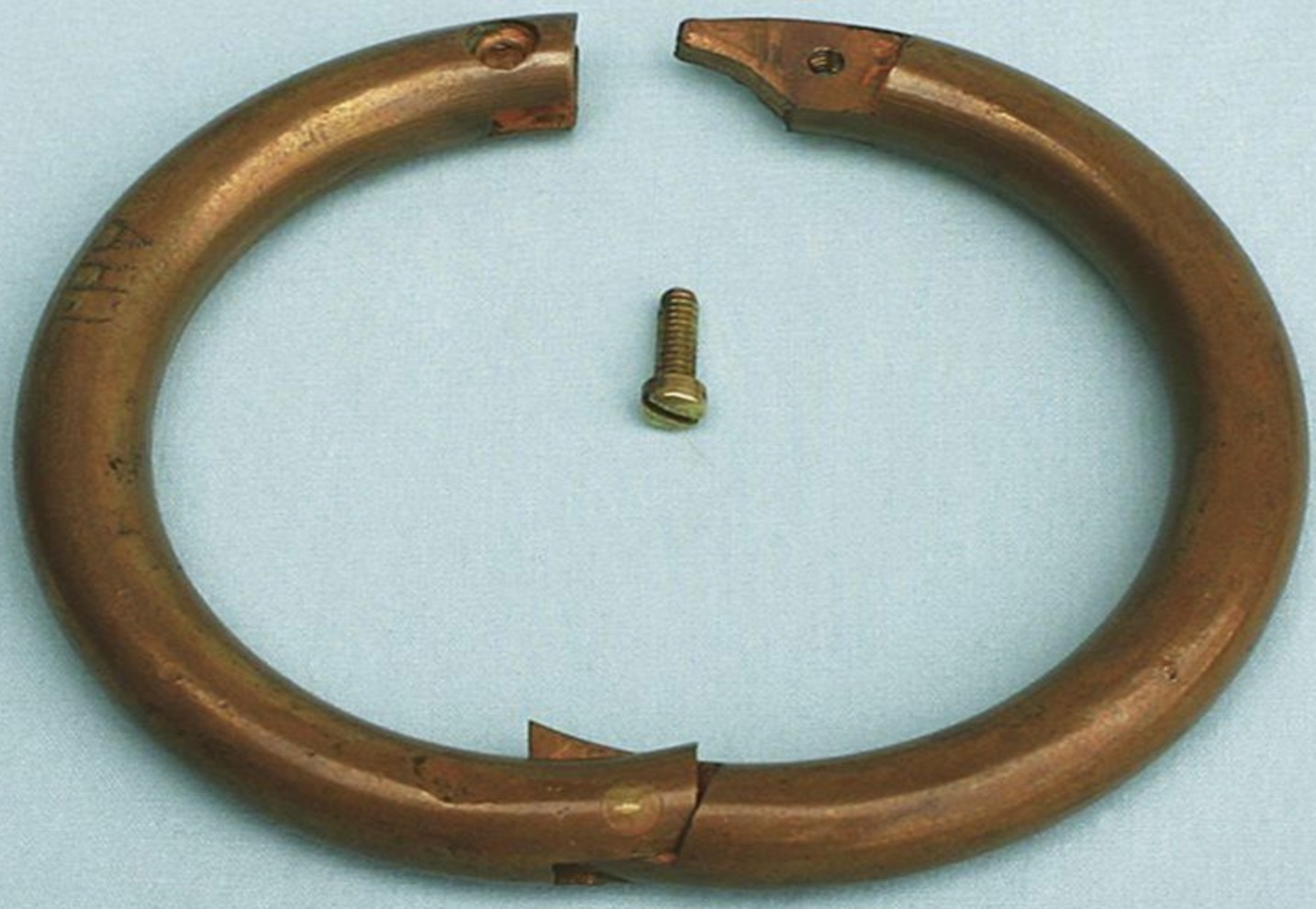
Bull ring-to control the head of a bull by applying pressure to the nasal septum in a semipermanent basis. The ring is surgically placed in the nasal septum. As the tissue heals, the ring must be turned continually to prevent the tissue from adhering to the ring. Once healing has taken place, staffs with clips on one end are attached to the ring and, with the aid of a halter, the bull is led around “by the nose.” The rings are available in brass or polished steel. When the bull is no longer of service, the ring can be removed before the animal goes to market
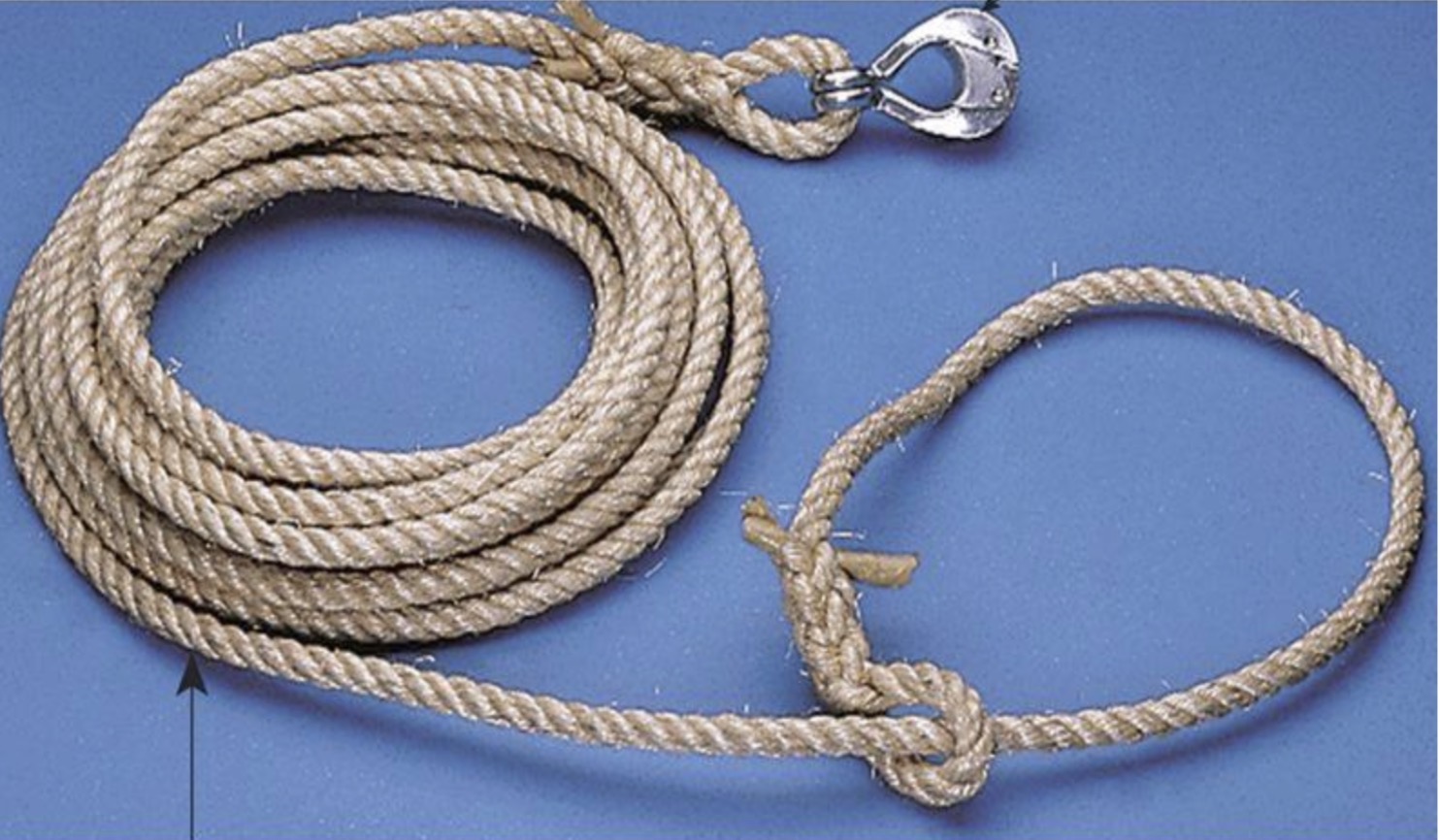
Lariat with quick release Honda-to capture an animals head while by the neck or feet. Lariats are nylon, nylon-polyester blend, or silk sisal ropes that are between 30 and 35 feet in length. They end in a honda (burner), a Turk's head knot, or a quick-release honda, which holds the loop open. The quick-release honda is a metal device; once the animal has been caught and secured, the loop can be opened by releasing the clasp that holds it together. The honda and the Turk's head knot have to be pulled along the rope for the loop to be opened
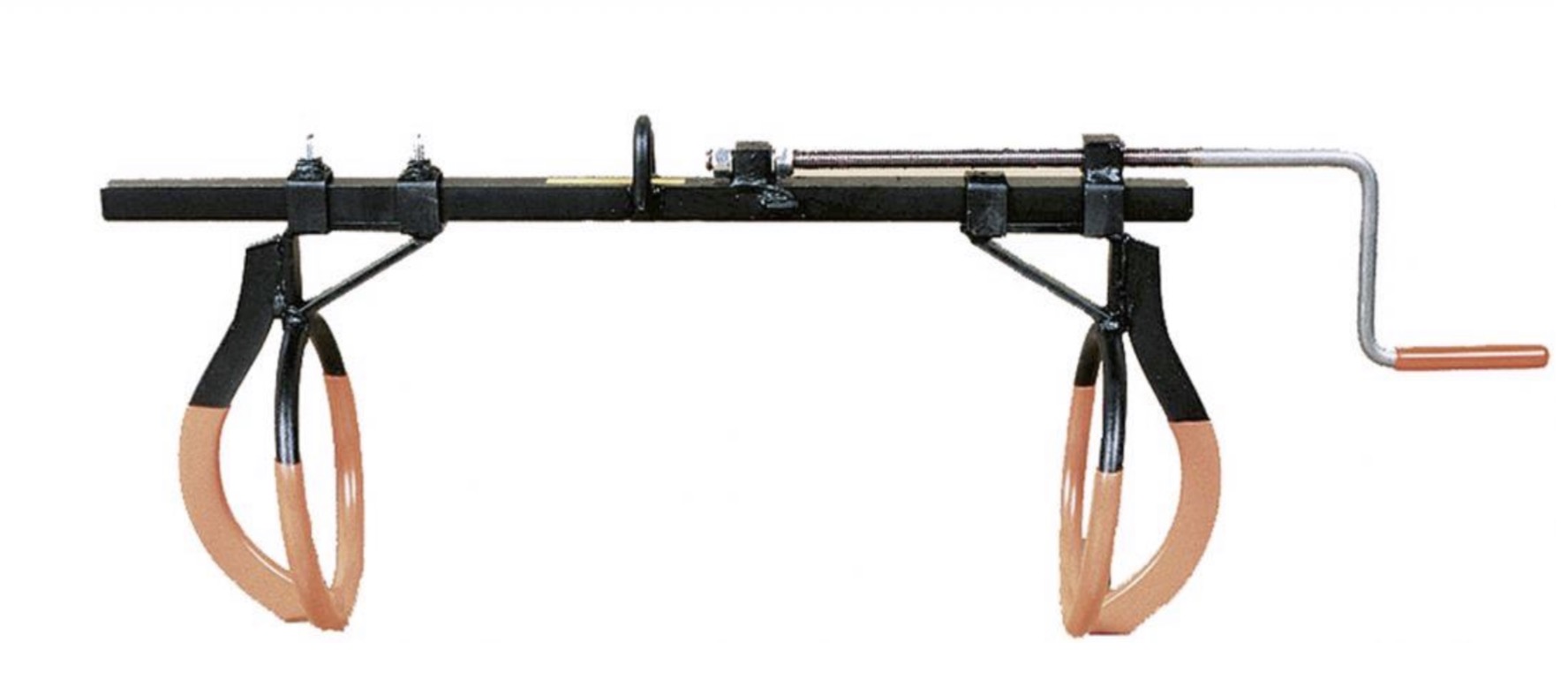
Hip lift-to assist a cow to stand; most commonly used in postparturient paresis, milk fever, generalized weakness, obturator paralysis caused by fracture repairs, and when a cow is down on wet cement. Padded rings are attached to a sturdy cross that can be lengthened by turning a crank. The bar is adjusted so that the rings fit tightly to the cow's hips. A cable is attached to the bar and passed over a beam; a winch or a come-a-long is used to hoist the cow up so that it is standing on its feet
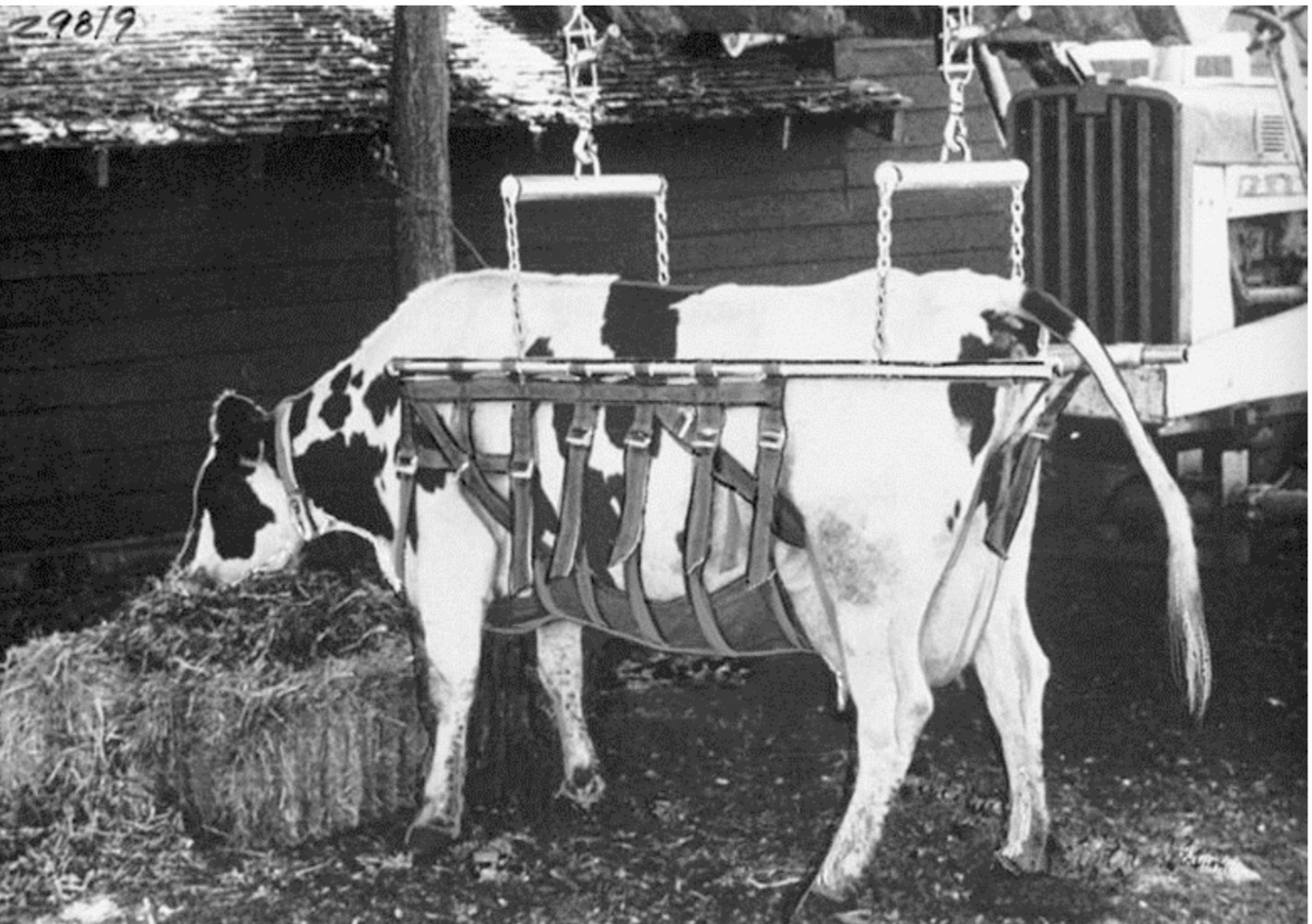
Cow sling-to get a cow back on its feet after surgery, injury, or illness. A series of straps is positioned under the animal's chest, one in front of the front legs and the rest over the rib cage. The sling is brought up the animal's sides and attached to bars that can be attached to crossbeams in the ceiling or, for small animals, to carts. Models are available for sheep, horses, and dogs
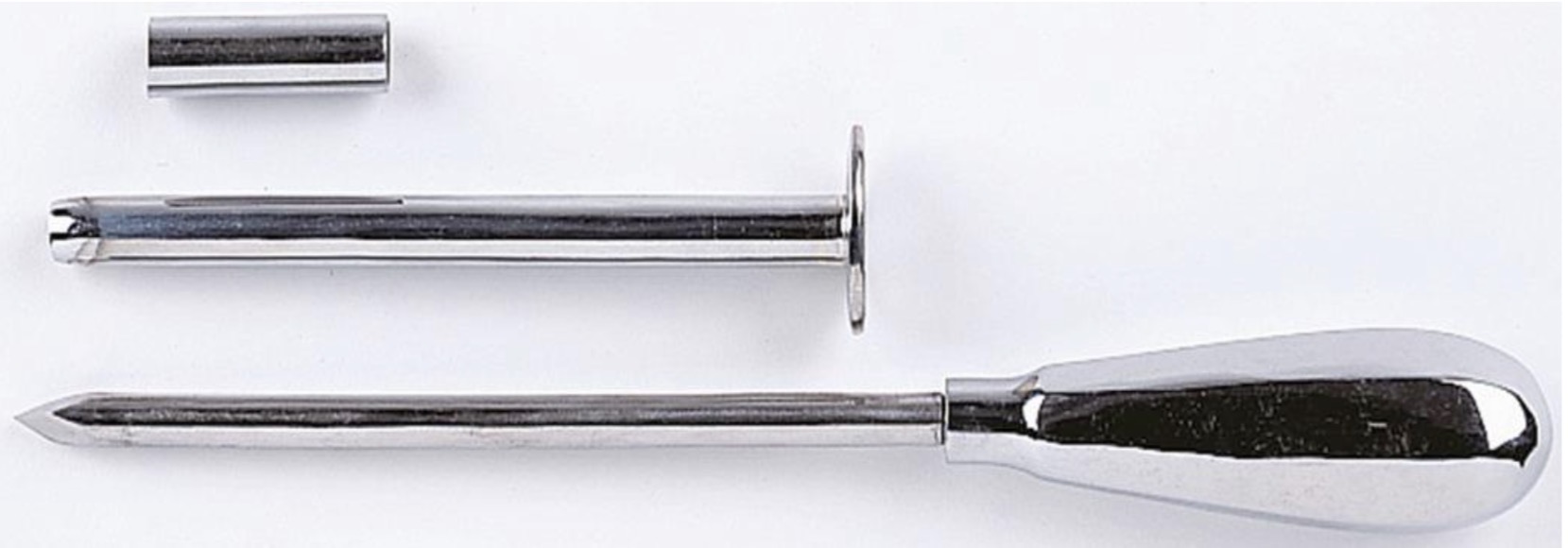
Trocar and cannula-to release from the rumen gases that cause bloating. A sharp metal shaft is attached to a handle. The user plunges the trocar into the side of the animal. The cannula is a tube that is placed over the trocar and left in the hole created by the trocar. That allows gases to escape from the rumen. The cannula can be left in place until the reason for the bloating has passed, or in cases of chronic bloat it can be left in place indefinitely
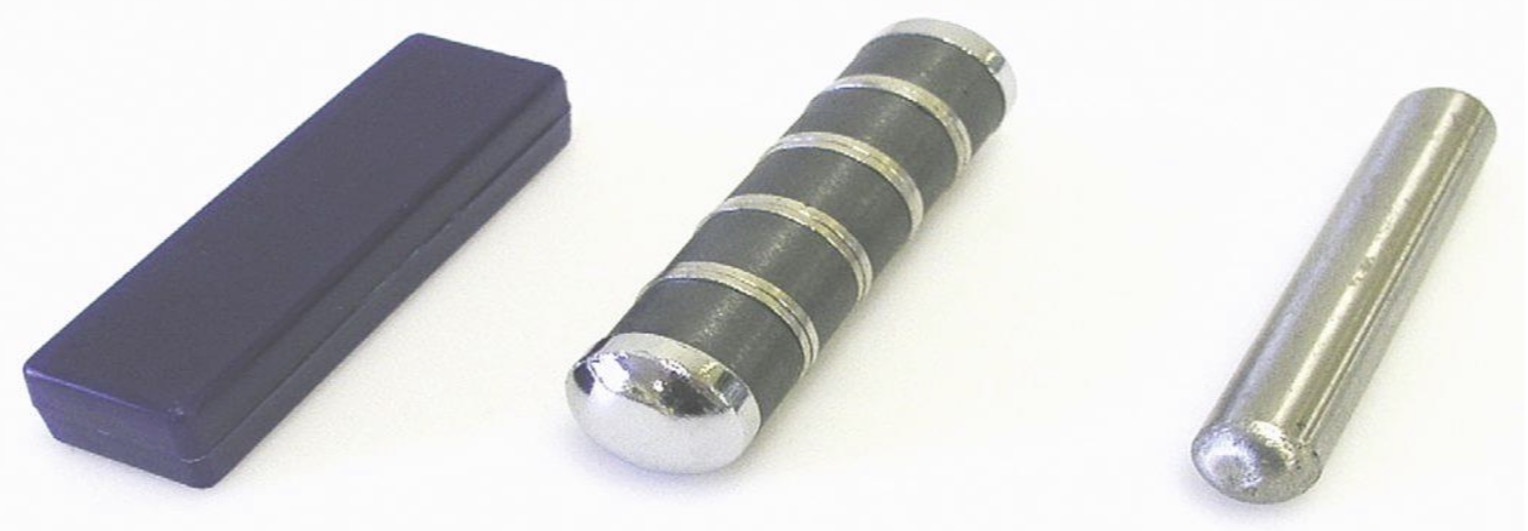
Magnets-to collect and hold metal that has been ingested by a cow as it eats. The metal can cause “hardware disease” of allowed to pass through the rumen. Three-inch magnets are passed into the rumen through the mouth. They remain in the rumen and collect bits of wire, nails, and other metal items that are inadvertently swallowed. Unfortunately, this is a cow's only option, because it cannot spit
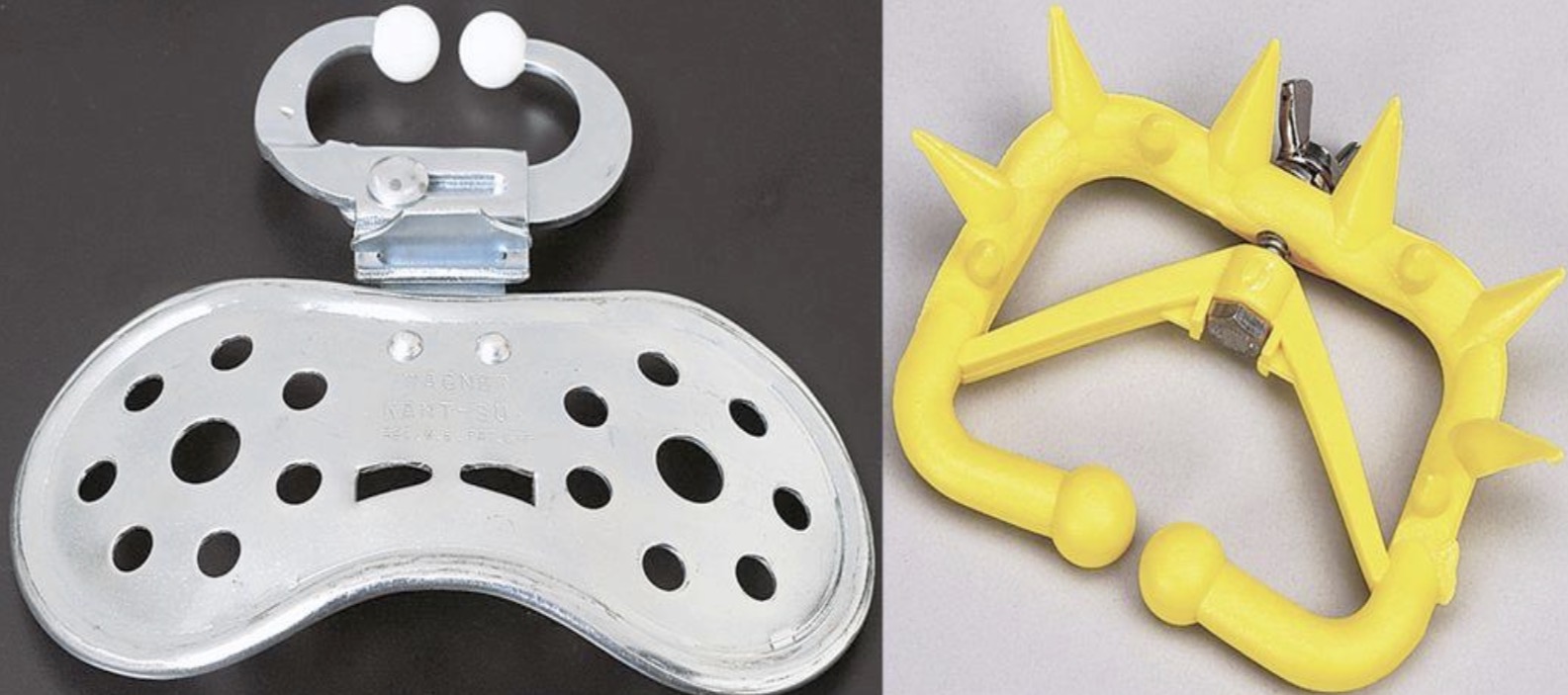
Calf weaners-to keep weaned calves and adults from nursing. This device is attached to the nasal septum of an animal that insists on nursing long after it has been weaned. The device has prongs that prick the udder, making the cow kick the offender, or it has a flap that rests on the nose and prevents the animal from nursing. Both forms allow the animal to eat and drink normally
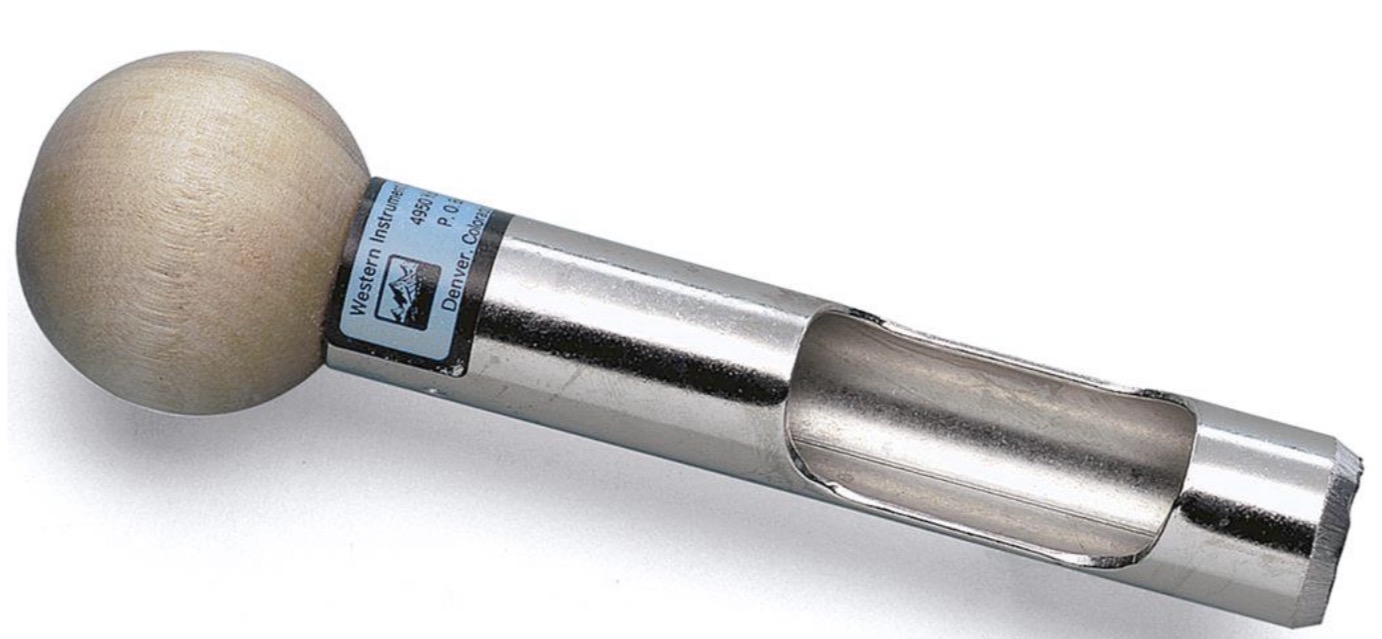
Horn gouge-to remove horn buds or very small horns. A metal tube ending with a very sharp edge is used to cut through tissue; the handle is usually rounded for easy gripping. The tube is pushed down around the horn until it hits the skull, then twisted around, first one way and then the other. The instrument is moved to a 45-degree angle to scoop the horn off the head. Another name for this instrument is the tube calf dehorner
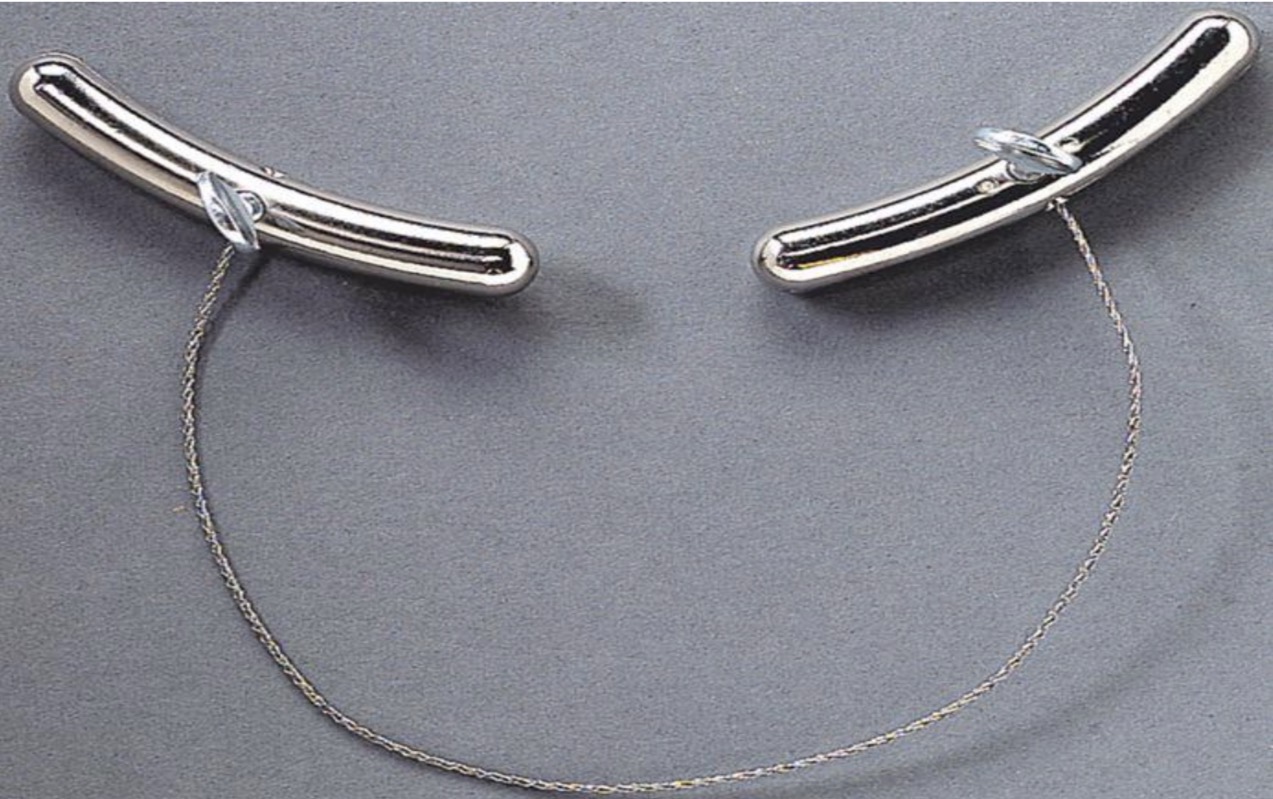
Wire saw (Gigi wire) with handles-to remove large horns. A rough-surfaced wire with handles is pulled back and forth across the surface of the horn, and it cuts through
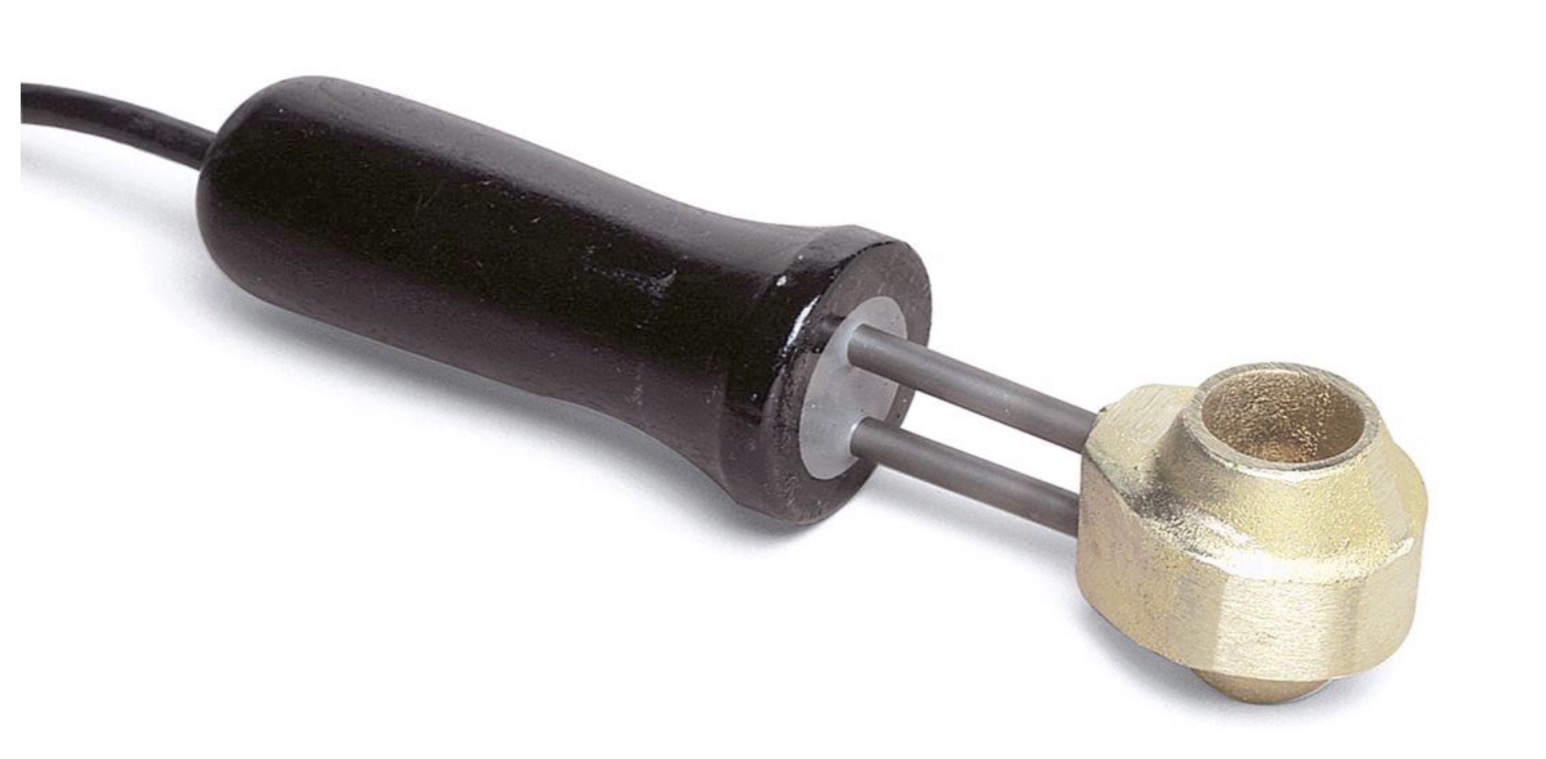
Electric dehorner-to remove horn buds by killing the cells that produce horns or to cauterize blood vessels after the horn has been removed by other methods. A metal head is heated by an electric or propane power source. The metal heads can be obtained in a multitude of shapes and sizes. They can be used to prevent horn growth in animals as old as 4 months and to prevent blood loss and the possibility of shock resulting from blood loss when large horns are removed
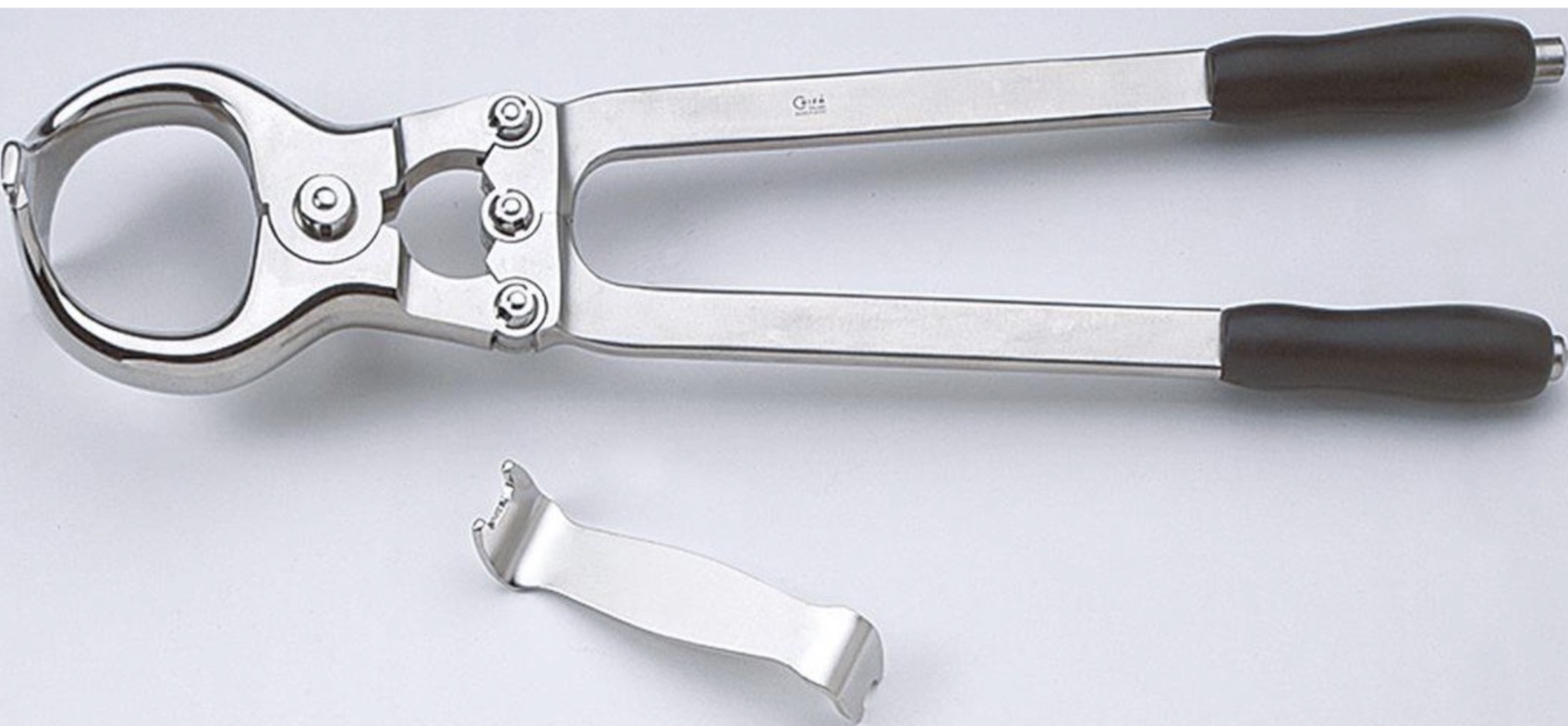
Burdizzo emasculatome- to perform a bloodless castration in a large animal. Blunt jaws that have a double-action wrenching device crush the blood vessel and spermatic cord through the skin of the testicle. This is not recommended on very large testicles because it is difficult to apply enough pressure. This instrument is available in 9-, 12-, 14-, 16-, and 19-inch lengths. A knee brace is available for the larger models
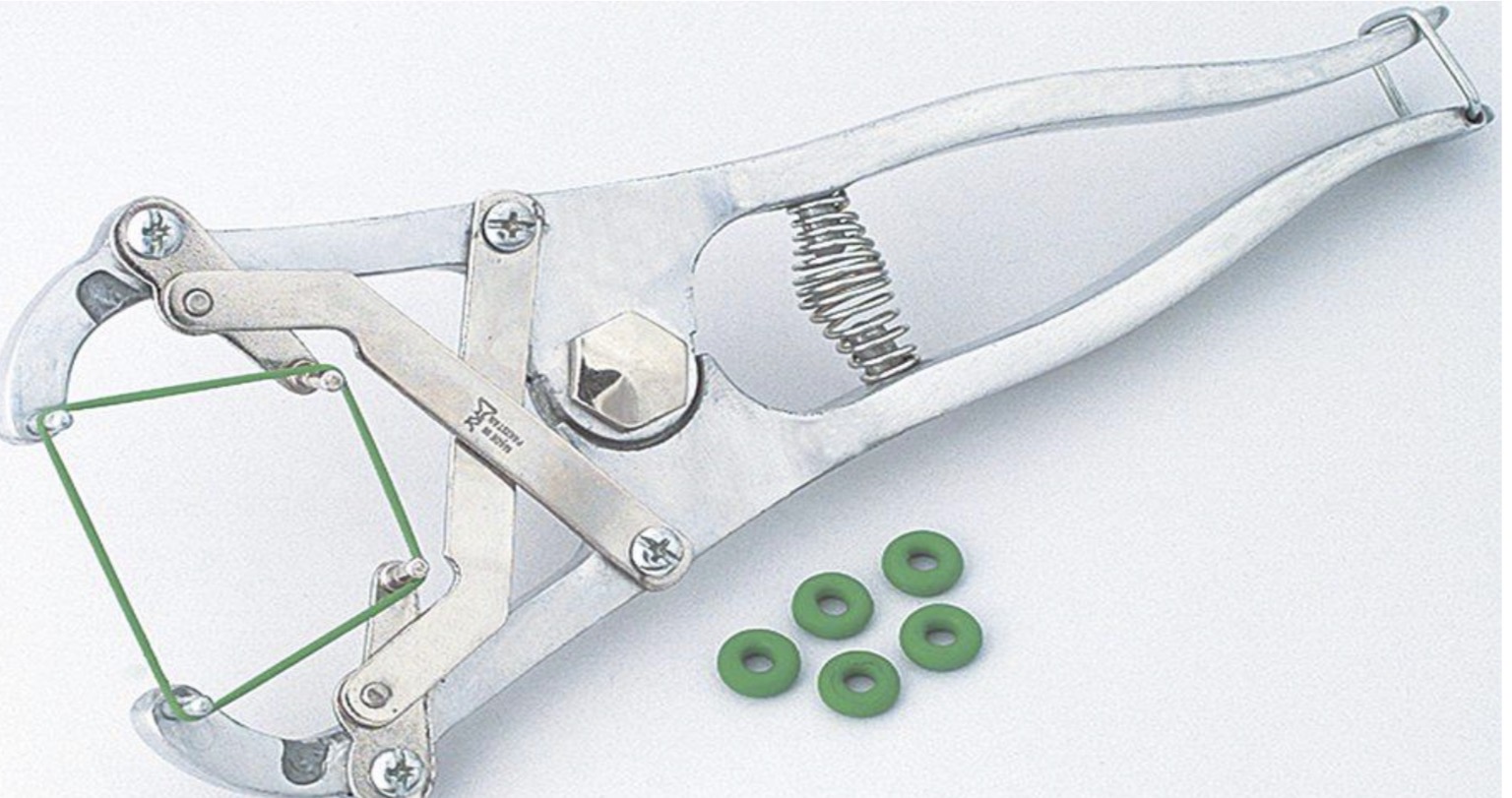
Elastrator-to perform a bloodless castration or tail dock on a large animal. This instrument has pegs; a thick rubber band can be placed around them. The handles are squeezed to stretch the rubber band so that it goes around the testicle or tail. The rubber band restricts blood flow to the testicle or tail, and it is left in place until the testicle or tail falls of
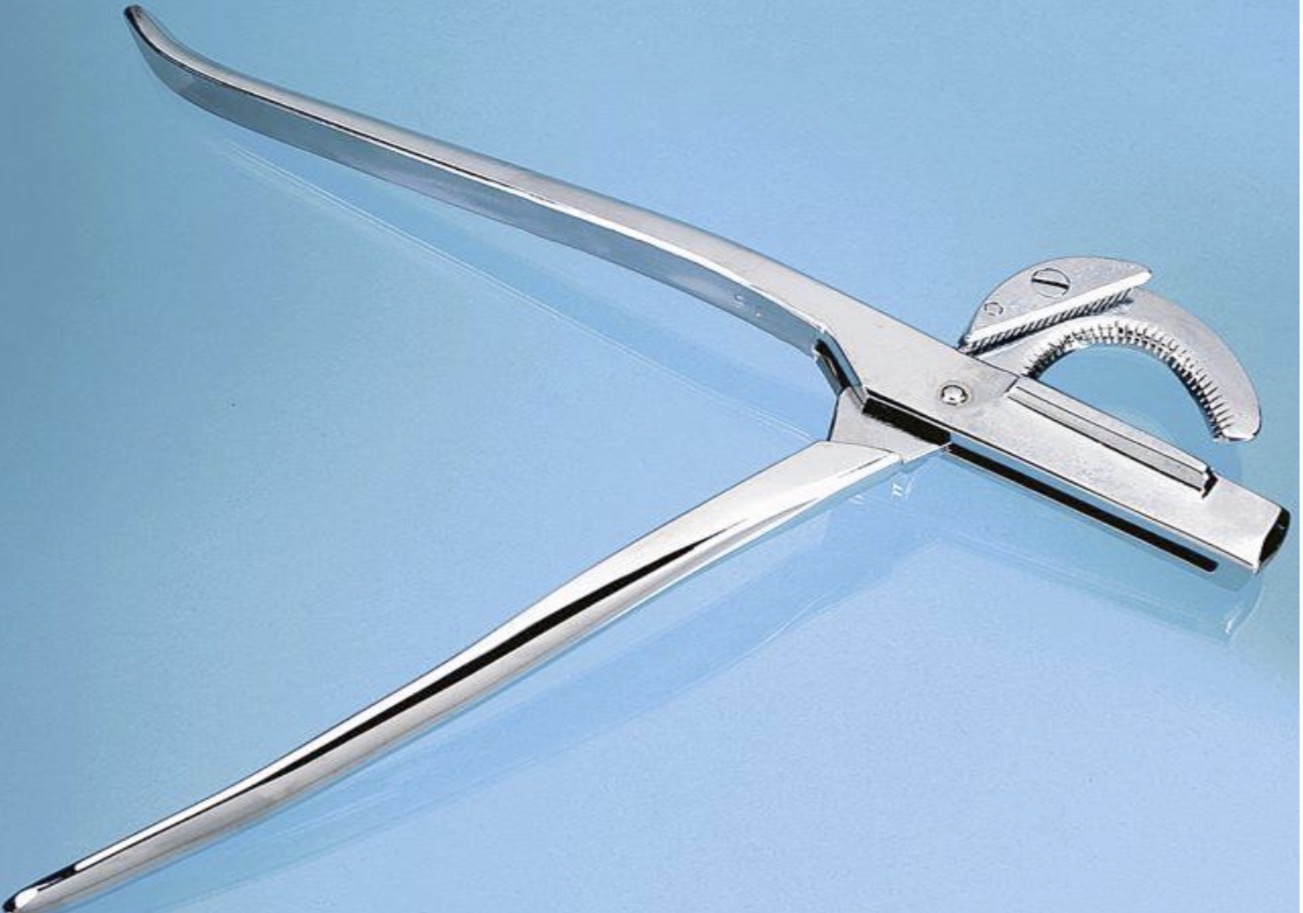
White emasculator- to perform castration on a large animal. The business end of this instrument has a cutting blade as well as a crushing platform. The scrotal sack is incised with a scalpel blade; the testicle is pulled out of the sack and the emasculator is applied so that the cutting edge is next to the testicle and the crushing platform is toward the body. When the handles are squeezed, the testicle is severed from the body and the blood vessel and spermatic cord are crushed. This prevents heavy bleeding
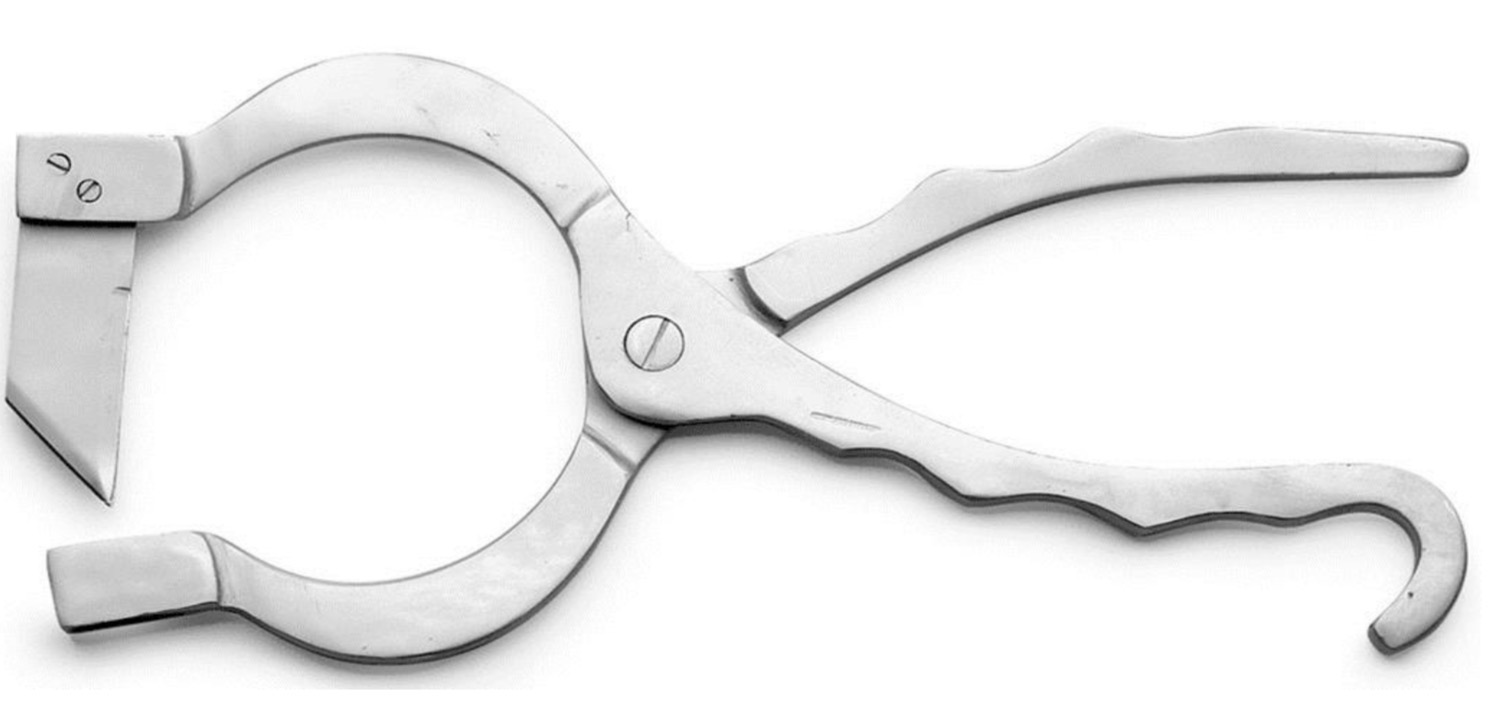
Newsberry castrating knife-to cut the scrotal sac for testicle exposure. A sharp blade is attached to handles; this allows the handler to split the scrotal sac in a controlled manner
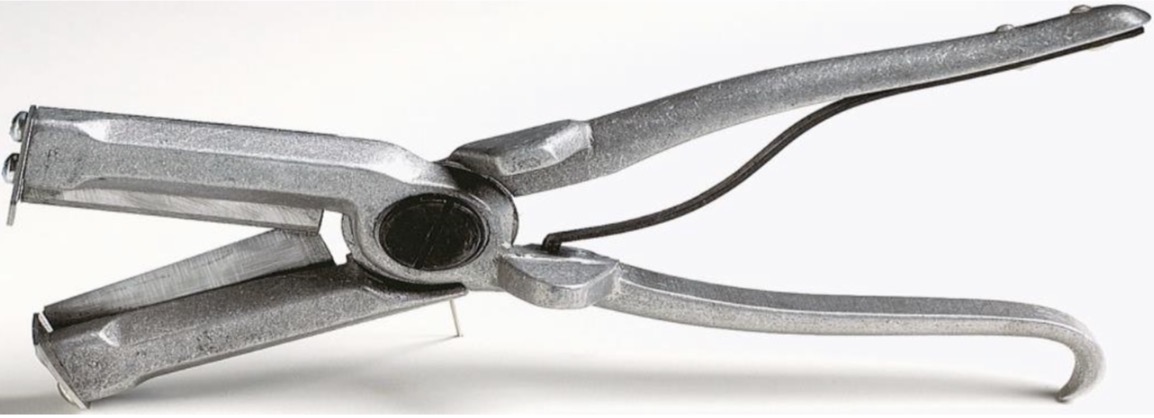
All in one lamb castration, docker, and ear marker- to castrate, dock the tails, and notch the ears of lambs, kids, and piglets. Sharp blades on the side of the instrument are used to dock the tail and nip off the end of the scrotal sac. The jaws are used to stretch-pull the testicles out of the body. The ear notcher is located at the base of the knife section
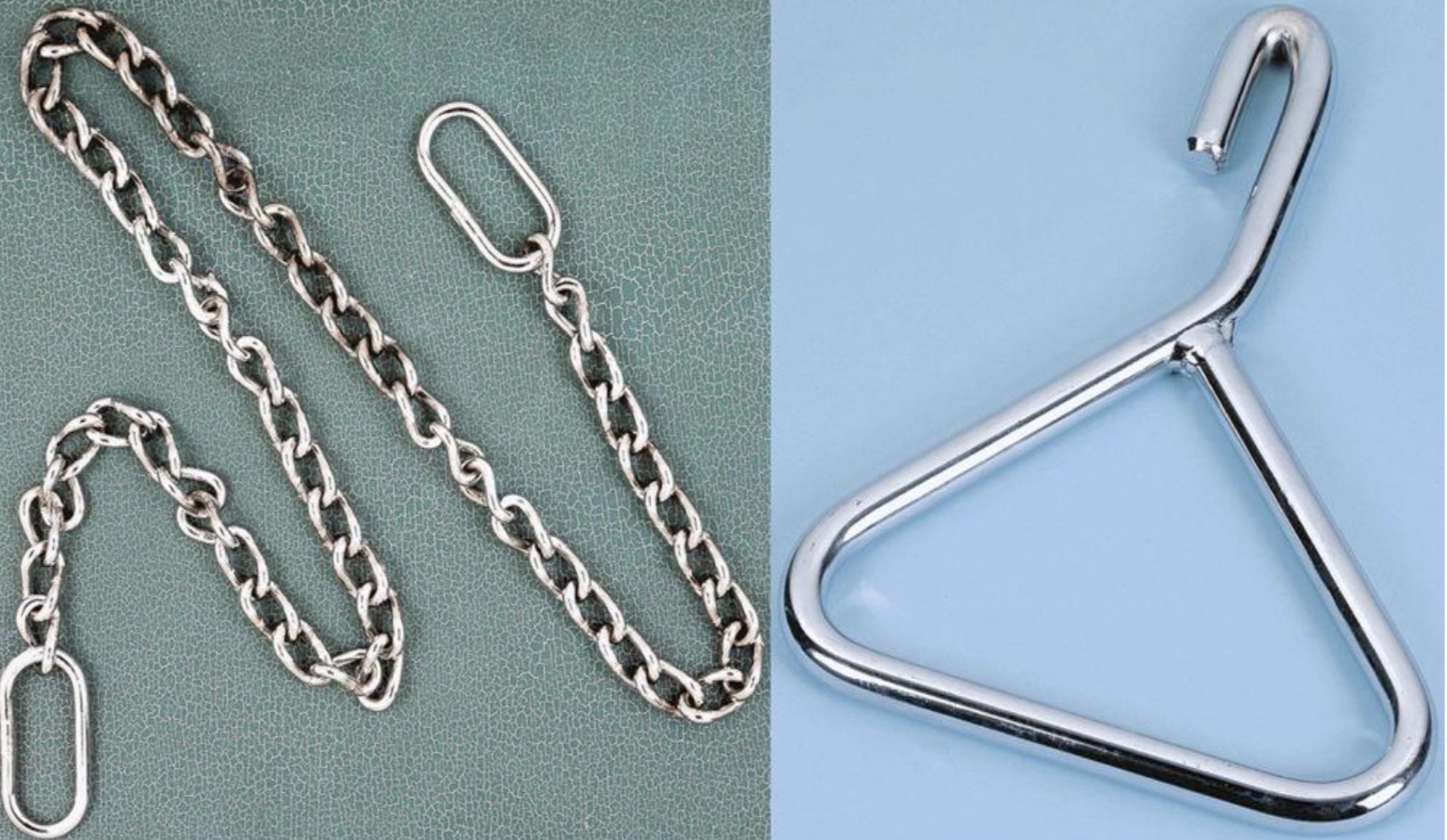
Obstetrical chains and handles-to assist with the delivery of a calf. The chains are flat links that prevent trauma to the calf's legs. The handles have a hook that fits onto the chains at any link for optimal directional and pulling power
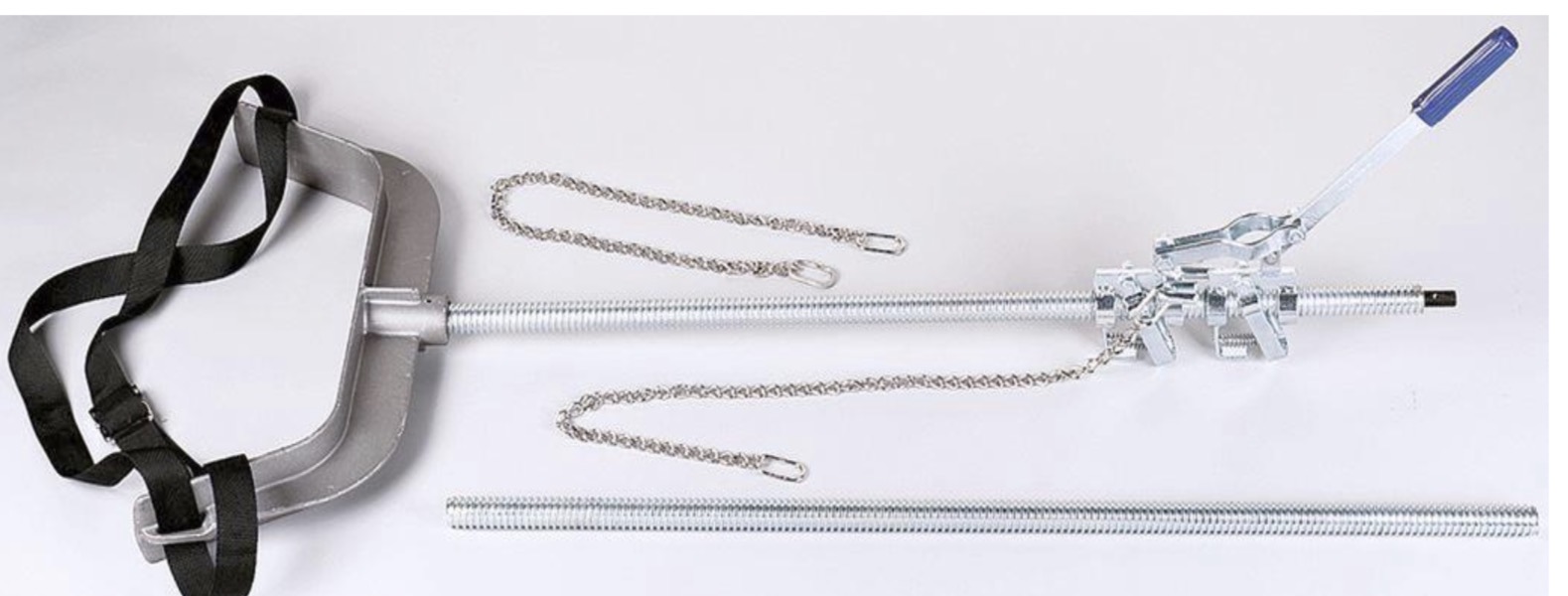
Fetal extractor-to assist with the delivery of a calf. The strap on the brace piece is placed over the hips of the cow. Obstetrical (OB) chains or straps are attached to the legs of the calf. Along the shaft of the calf puller is a come-along, which is a cable attached to a ratchet that reels the cable into a spool. The cable is attached to the OB chains, and the user gently inches the calf out of the cow, while working with the cow's contractions and at the correct angles
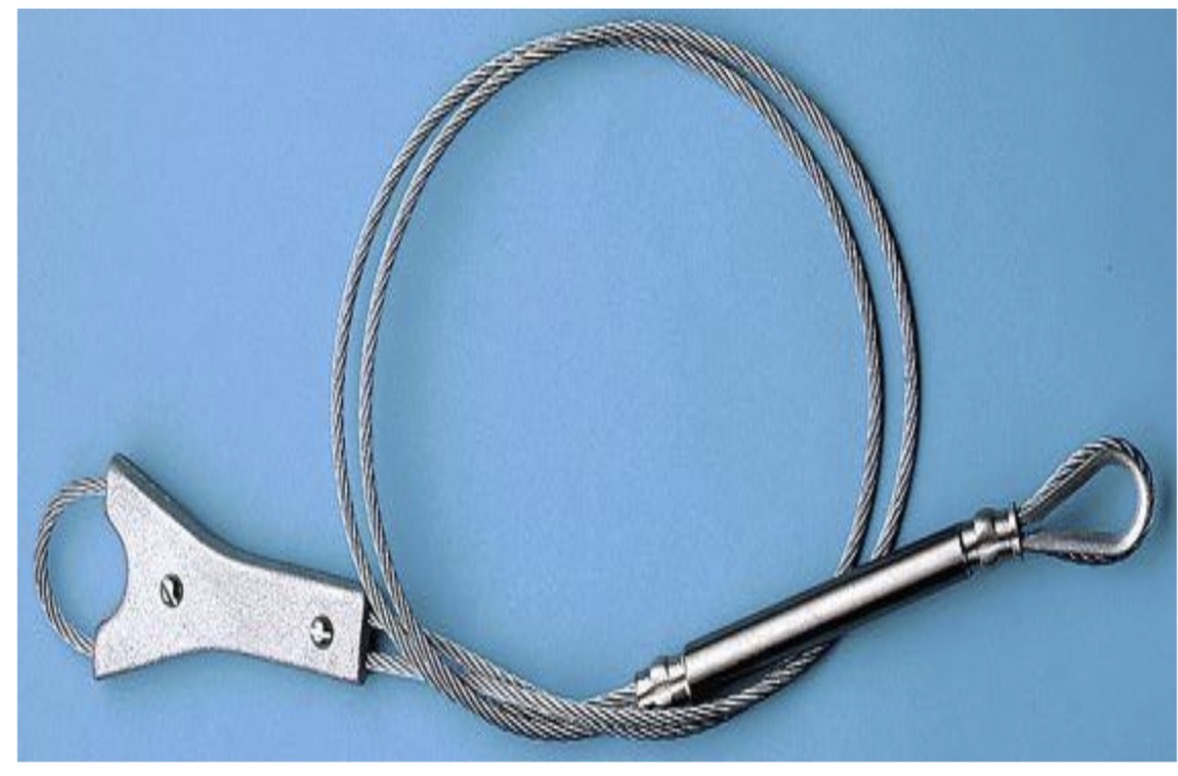
Calf snare- to assist with the delivery of a calf. This nylon-coated cable is equipped with a locking device that will not tighten down on the body part to which it is attached. This is very useful in pulling a head into proper alignment and keeping it in place until the calf is delivered
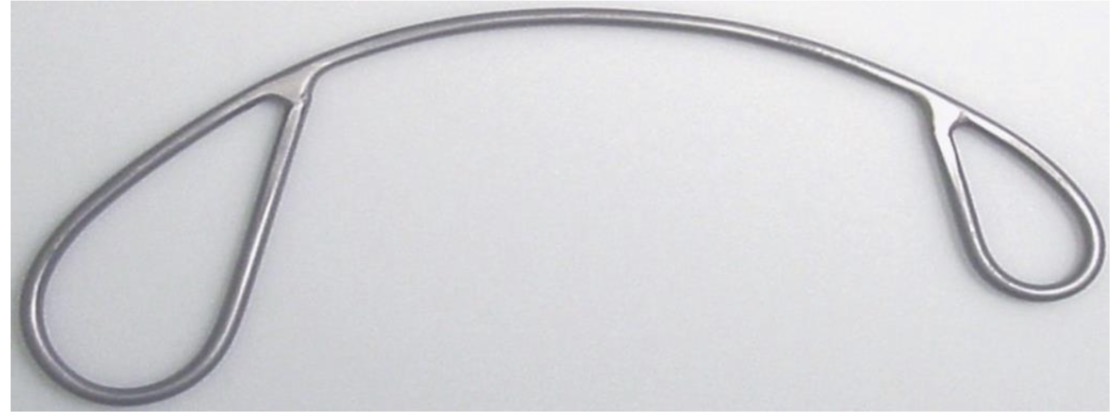
Obstetrical wire guide-to help guide the OB wire to the appropriate area for cutting. A curved handle ends in a weighted bulb in which the wire is threaded
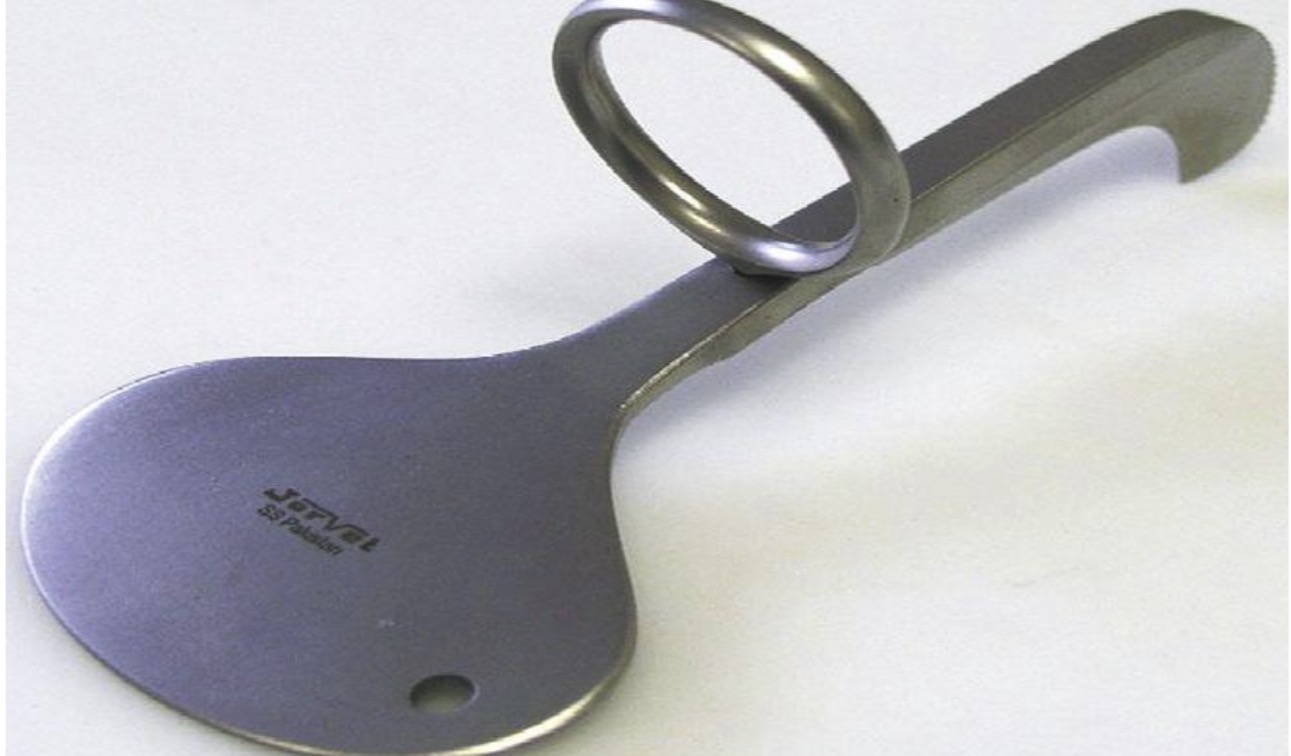
Fetotomy knife-to disarticulate a dead fetus to aid in its removal. This instrument is designed to fit into the palm of the hand. The index finger is slipped into the ring and curled over the top of the blade. This allows the knife to be directed to the appropriate area for cutting
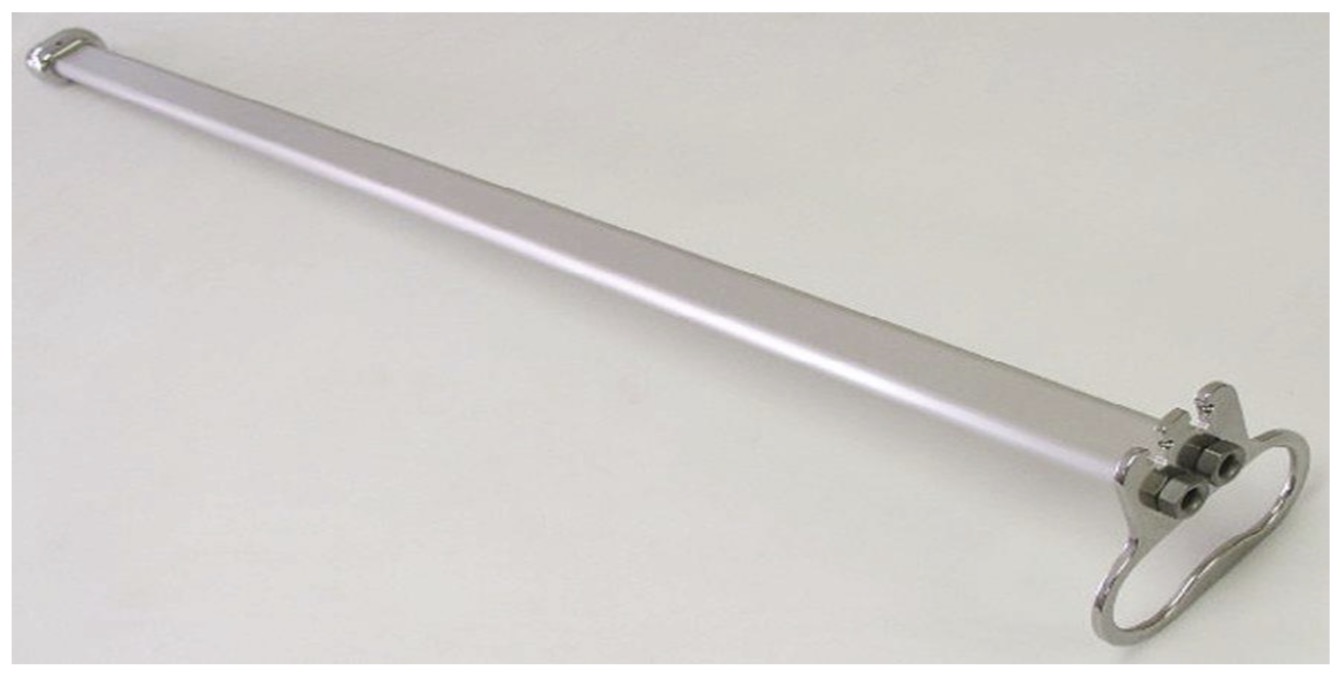
Fetatome-to disarticulate a dead fetus so as to aid in its removal. An OB wire is passed inside the fetatome; it protects the mothers delicate tissues as the saw is worked back and forth
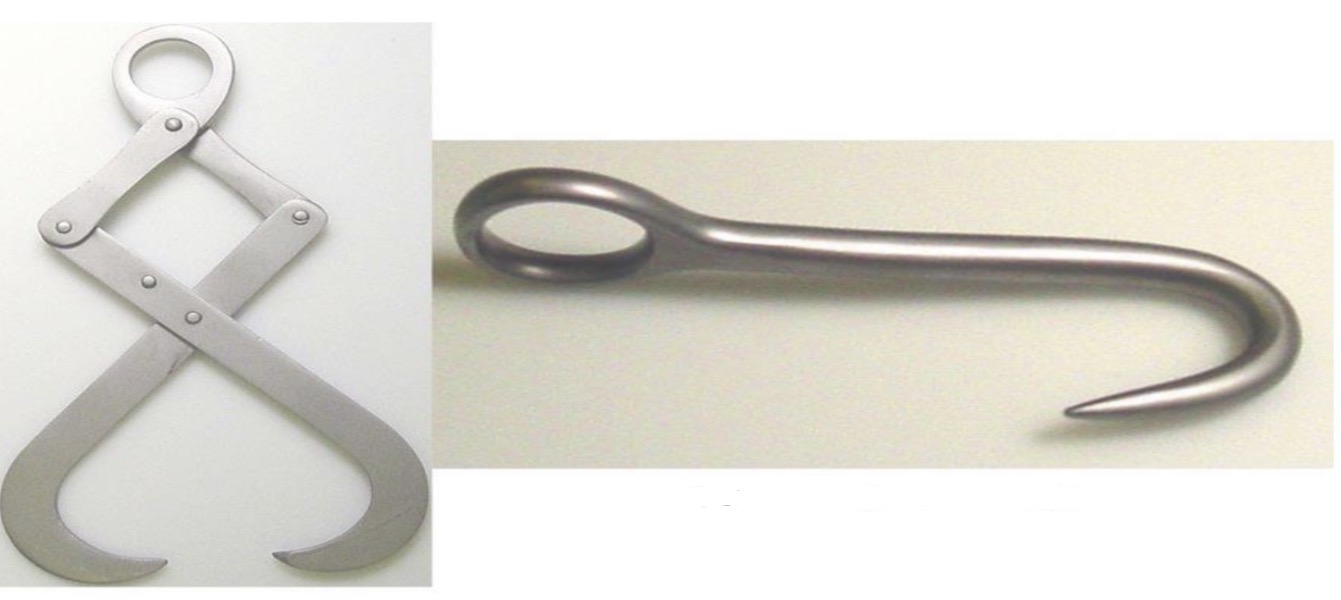
Krey obstetrical hook (OB hook)-to hold onto the fetus while performing an embryotomy. The hooks bite into the fetus to hold it steady
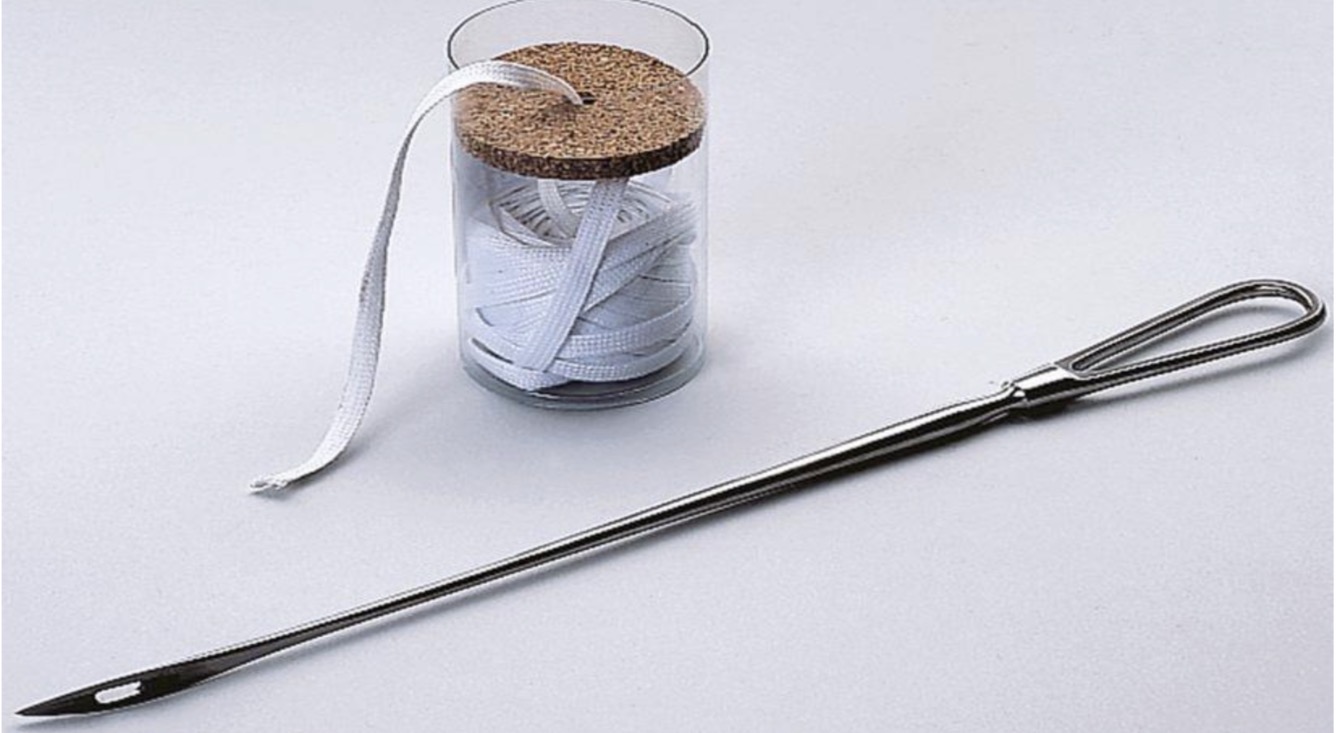
Umbilical tape with Buchner needle- to suture a large animal after abdominal surgery or to suture the vagina closed after a prolapse. Polyester braided “tape” comes in ⅛-, ⅜-, and ¼-inch widths. It is usually packaged in a canister that allows the user to withdraw as much as needed without contaminating the remainder
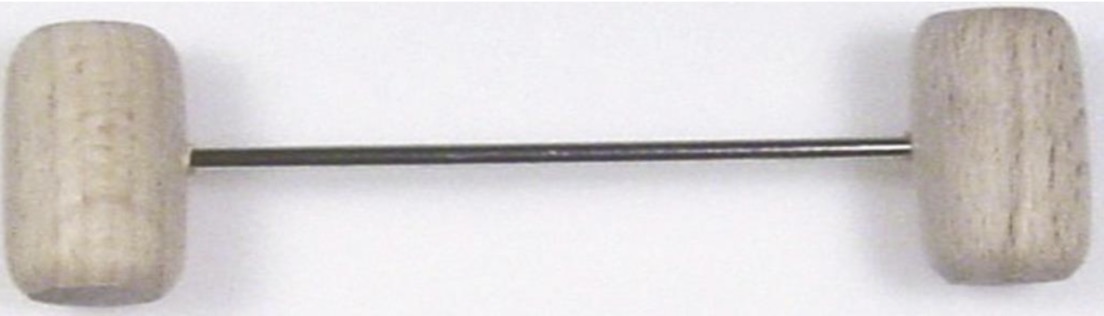
Vulva suture pins-to retain a uterine or vaginal prolapse. Metal puns are placed across the vulva and stoppered with hard rubber ends that keep the pins in place
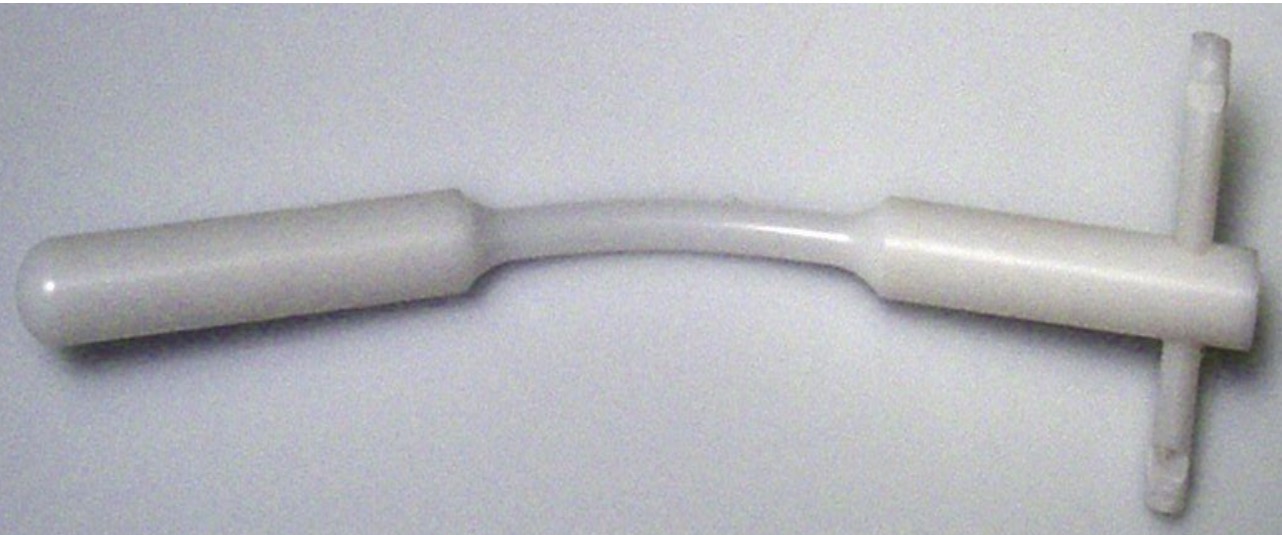
Freemartin probe-to check for free Martin heifers and to determine whether a heifer that is a twin to a bull calf has a normal reproductive tract. The probe end of this instrument is placed inside the vagina. If it measures 7 cm or less, the heifer is a freemartin. If the heifer is born with a bull twin, the tract may be as large as 14 cm
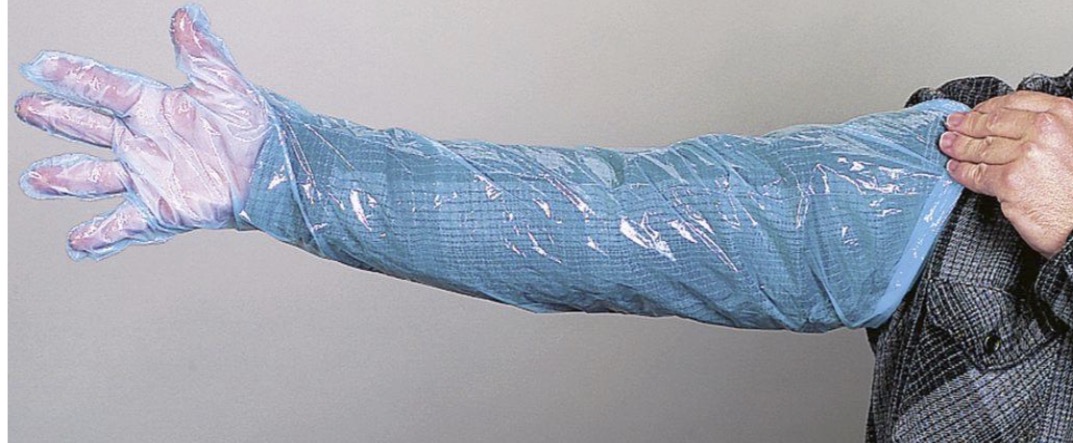
Obstetrical gloves-to protect personnel from zoonotic diseases and keep clothing clean. These gloves have extra long sleeves that reach to the shoulder. They are mad rod plastic or latex and are disposable
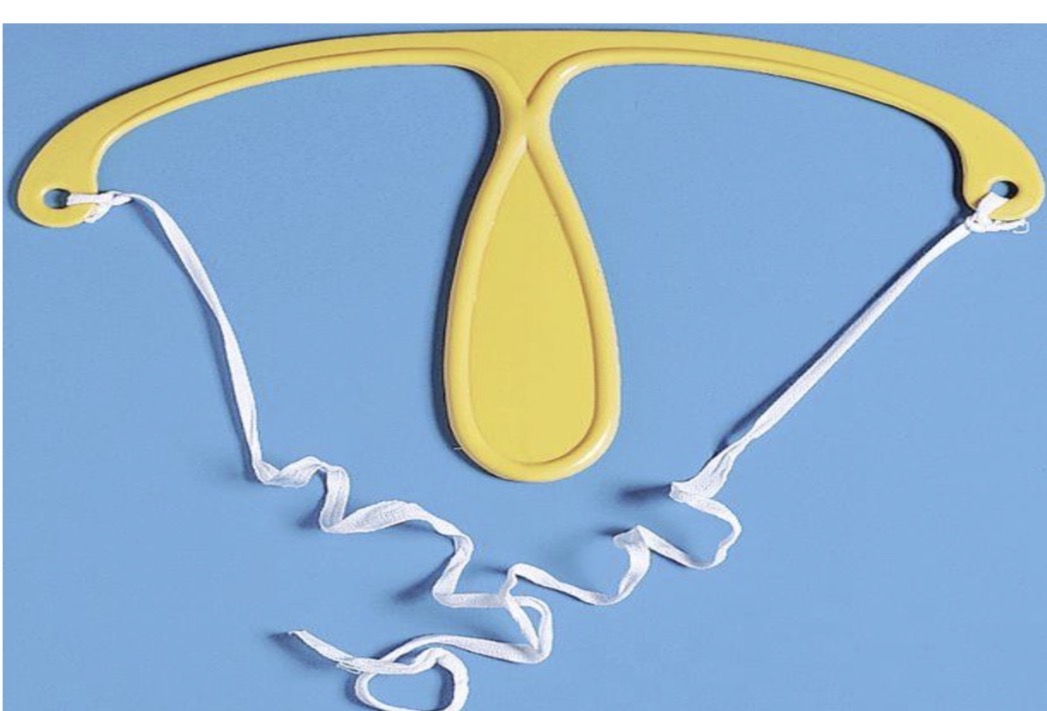
Eew prolapse retainer-to retain a vaginal prolapse. The paddle is placed inside the vagina, and the wings are secured to the outside of the sheep. The retainer does not interfere with lambing and can be left in place for an extended period.
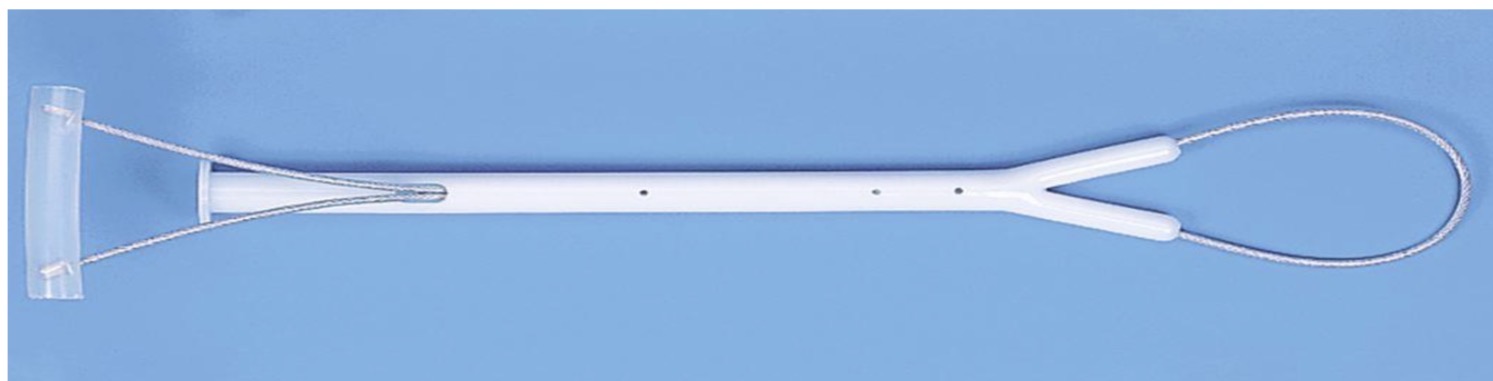
Lambing instrument-to help a lamb from the birth canal. A loop is placed around the lambs front legs and the body is eased out as the ewe has a contraction
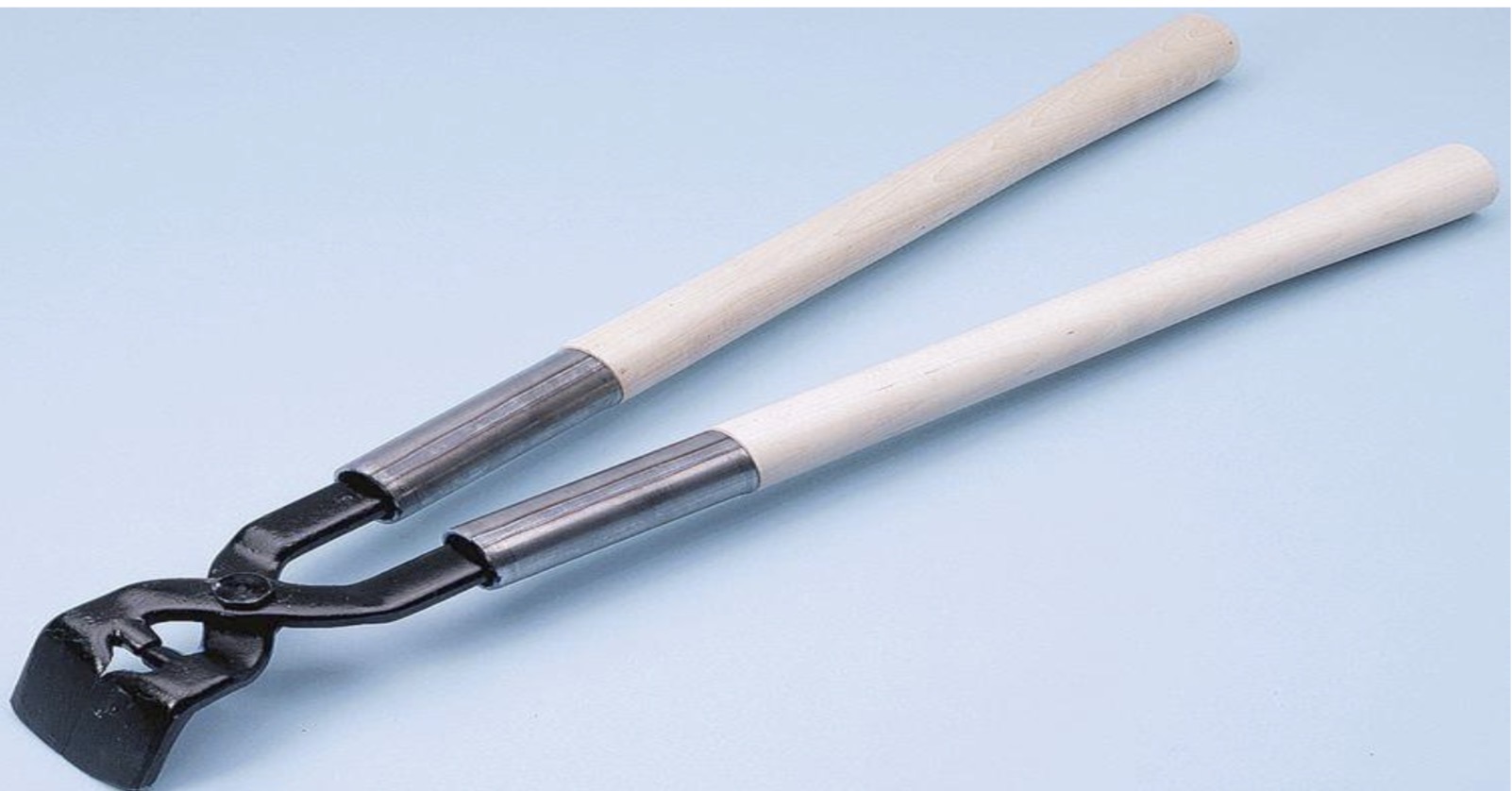
Long handled hoof nippers (squire hoof trimmers)-to rough cut long hooves of cattle and horses while the foot is on the ground. Two sharp blades are placed on 30-inch handles, which allow the user to stand at a distance and use the knees to assist in squeezing the handles together. The trimmer is used to remove large pieces of overgrown hoof so that the smaller instruments can be used to shape the hoof
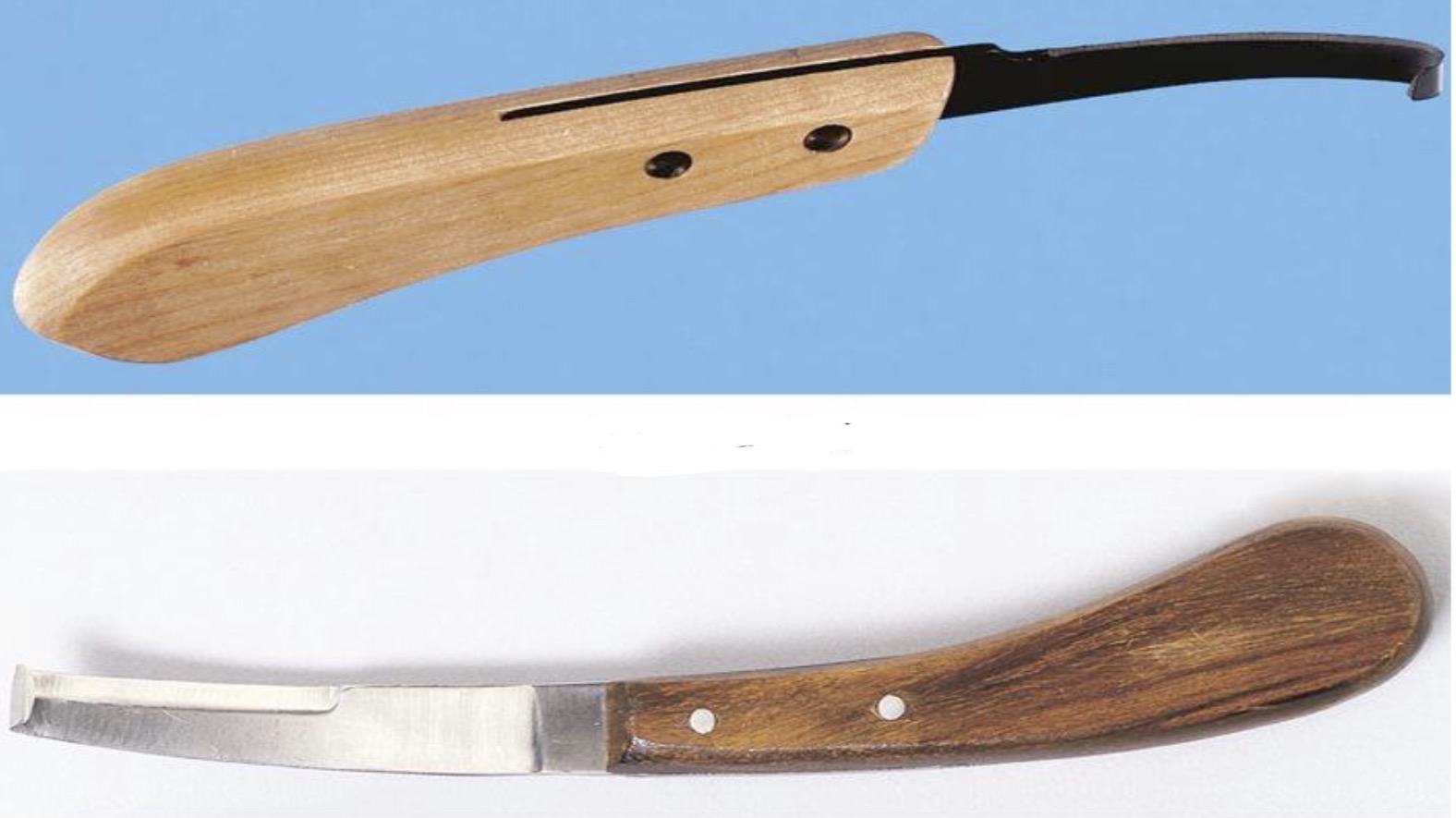
Hoof knife-to trim the from and sole of an animals foot. A sharp blade on a wooden handle is used to trim away excess frog and sole after the hoof is shaped. Right- and left-handed blades are available
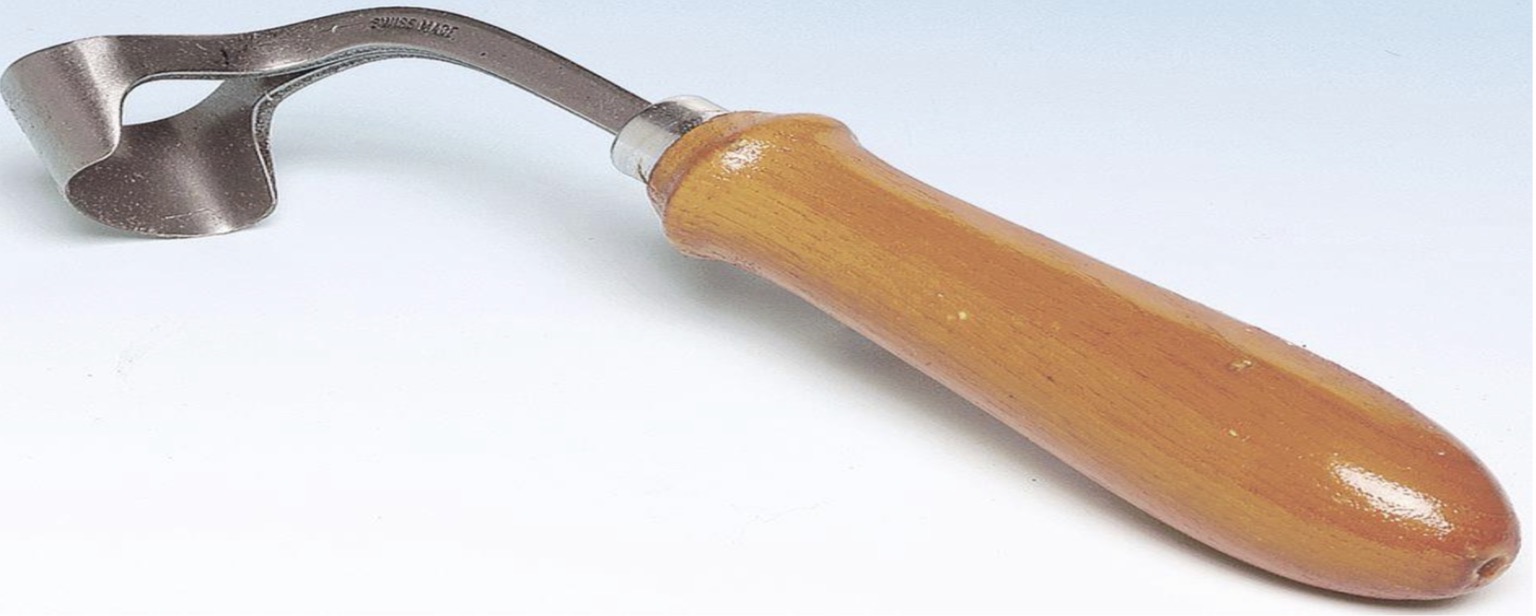
Swiss hoof knife-to trim the sole of an animals foot. An oval, sharp blade on a wooden handle is used to trim away excess sole after the hoof is shaped. A larger version is simply called an oval hoof knife.
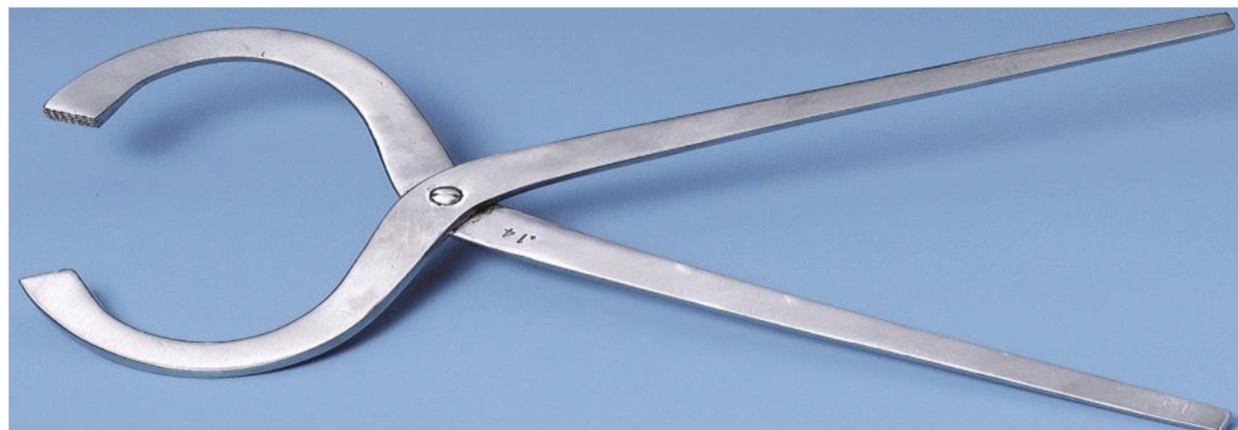
Hoof tester-to check through a hoof wall for abscesses or sore spots. Two jaws are curved so they fit around a hoof; they are attached to handles. The jaws are placed on the hoof wall and sole and squeezed. If the animal reacts, the presence of an abscess is to be suspected
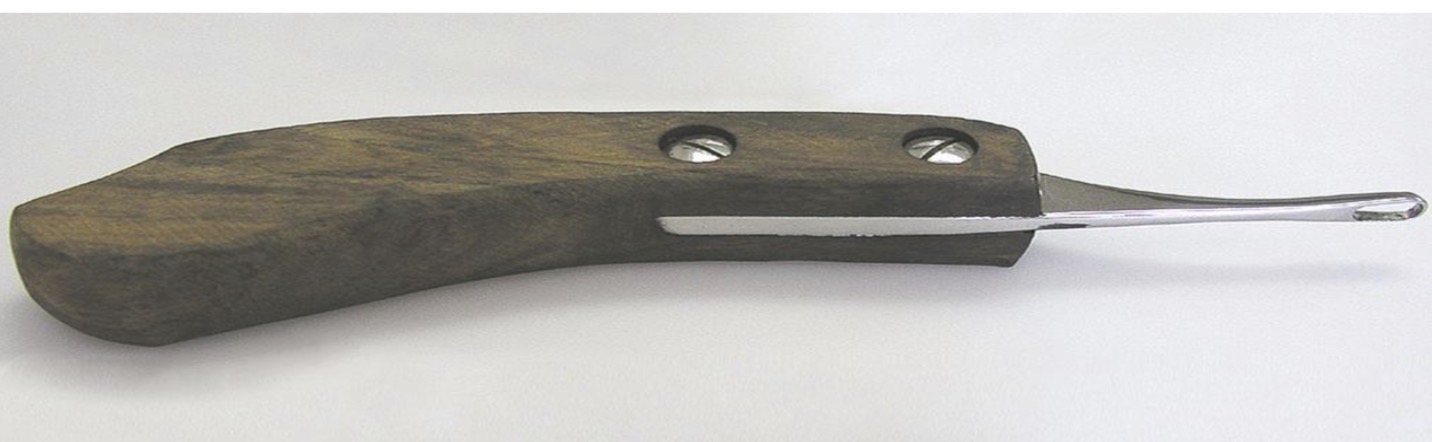
Hoof abscess knife-to curette a small hoof abscess. A very small, sharp loop is attached to an ergonomic handle; it clears out the area of the abscess
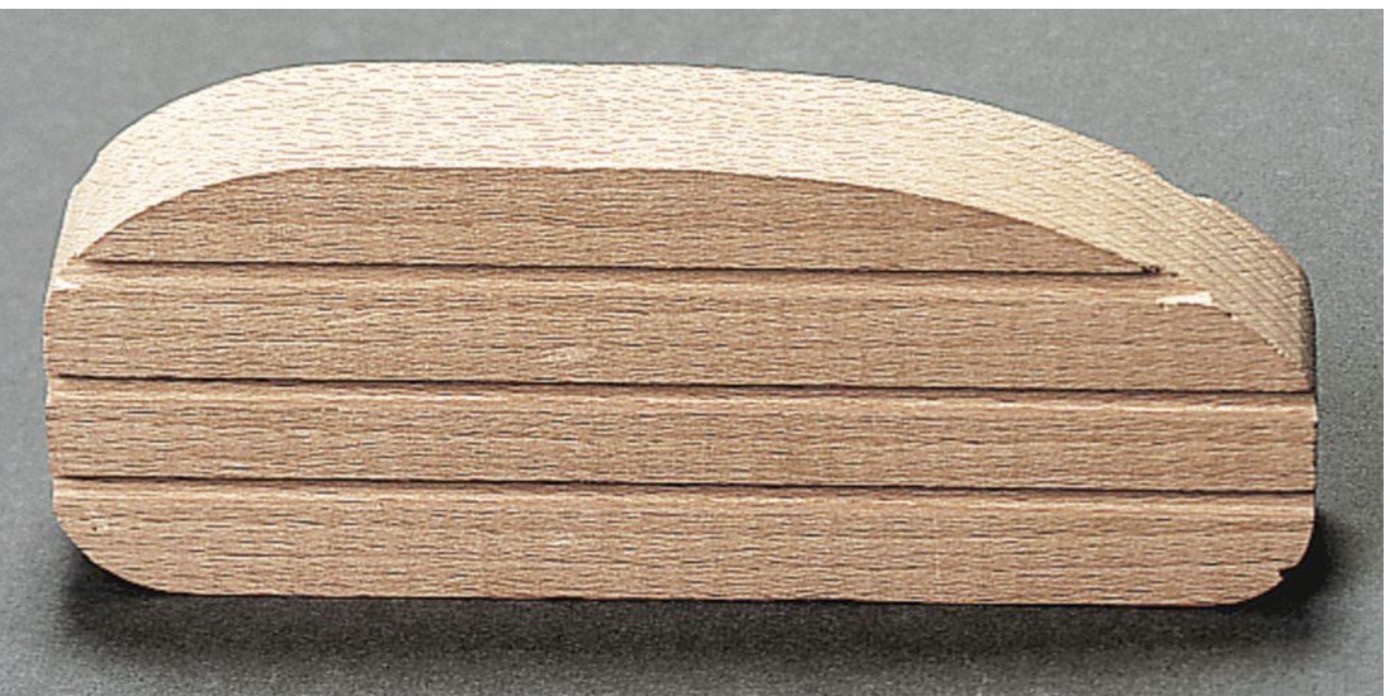
Hoof blocks-to help a cow that has injured a hoof by protecting the injured hoof. Hoof blocks are applied to the uninjured claw to take the weight off the injured claw. They are adhered to the hoof by a special acrylic that can also be used to fix a quarter-crack or other hoof abnormality in a horse
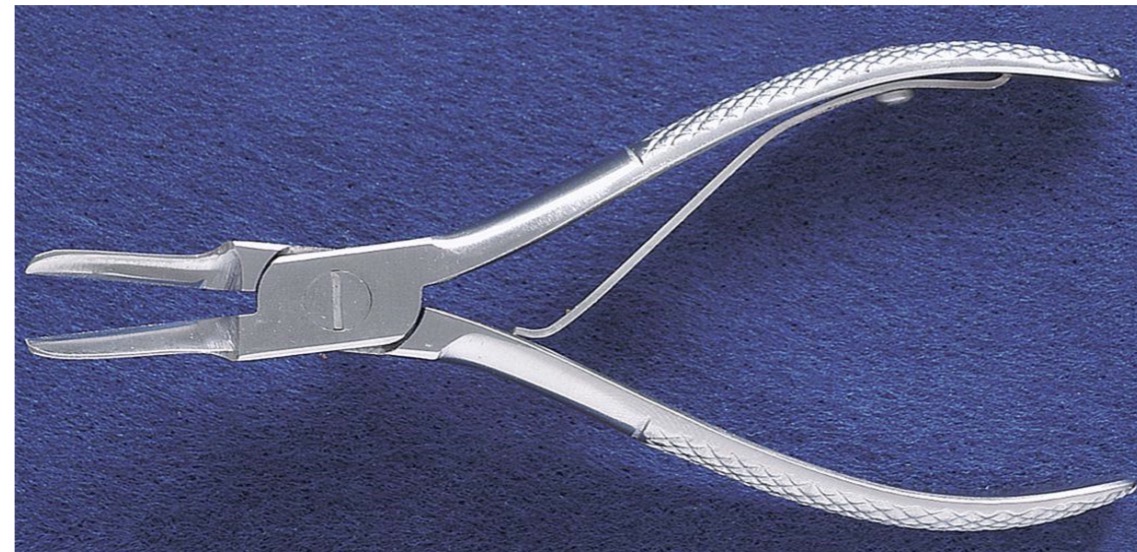
Pig tooth nipper-to clip the wolf teeth of piglets. Looking much like the side-cutters found in most toolboxes, this sharp-jawed instrument allows the user to nip off the teeth that can cause great harm to a sow's udder
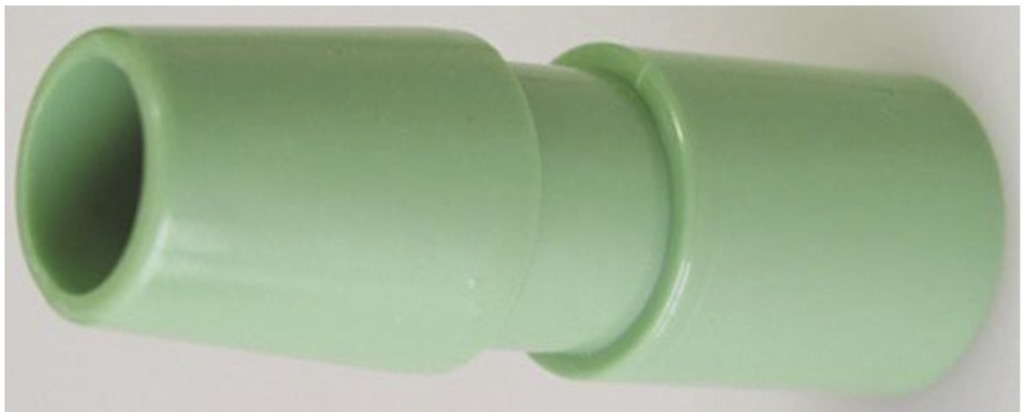
Rectal prolapse rings-to retain rectal prolapses. These acrylic plastic rings come in a variety of sizes to fit the diameter of the rectum. Diameters are ½, ⅝, ¾, ⅞, and 1 inch, all of these 2 inches long; there is also a ring that is 1¼ inches in diameter and 3 inches long
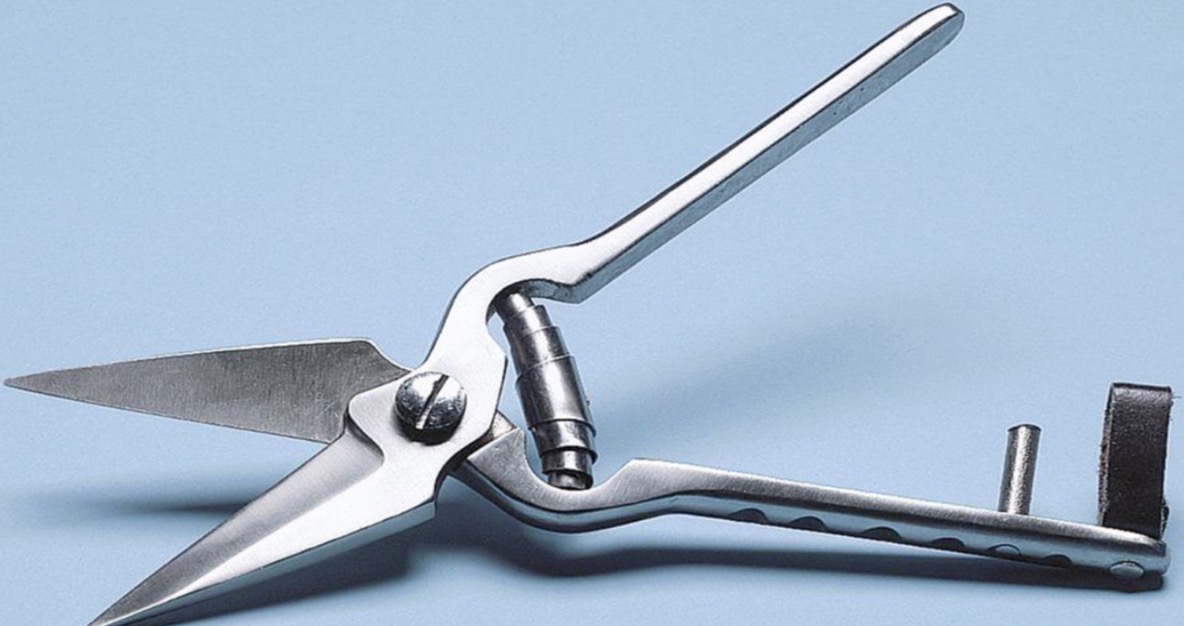
Hoof Trimmer for sheep and goats-to trim excess hoof material. These shears have long blades that can easily trim one entire side of a hoof at a time. They are available with angled or straight blades and with blades that can be replaced
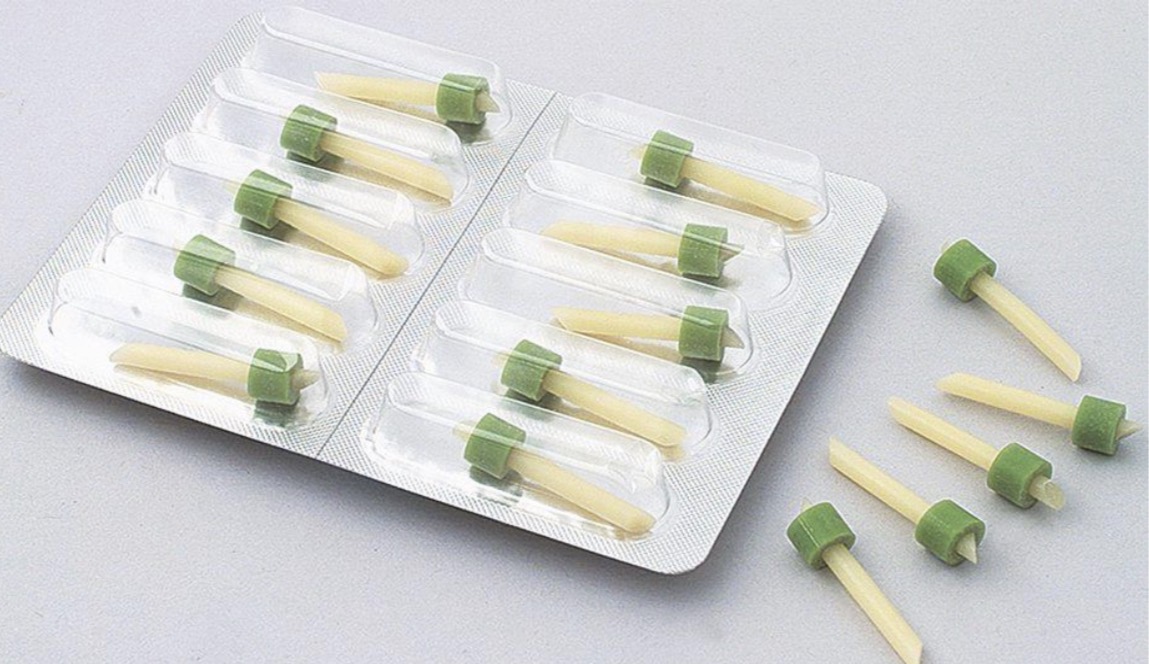
Teat dilator-To open the teat canal. A gradually widening instrument is slipped into the teat canal to open it
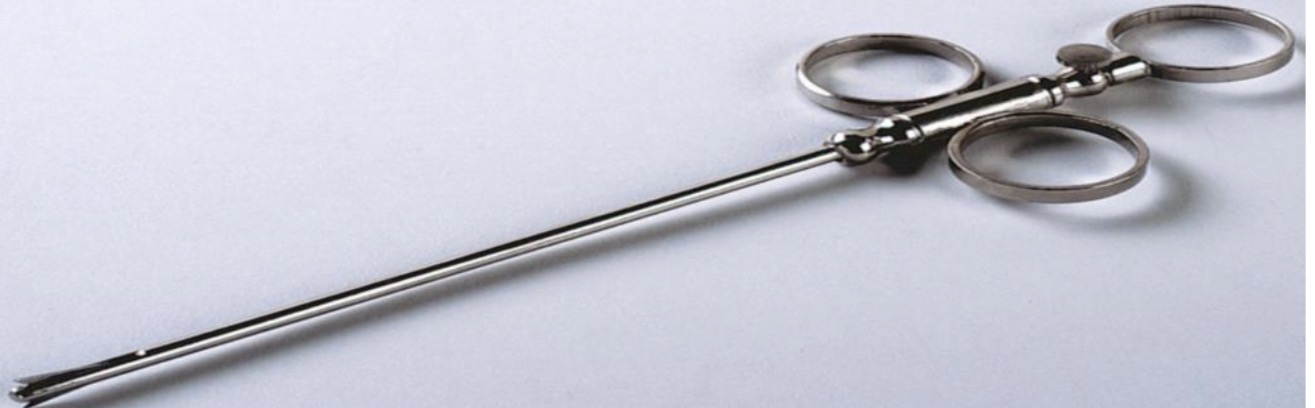
Teat slitter- to make an incision from the inside to the outside. The blade of this slim instrument is hidden inside the shaft. The instrument is slipped into the teat canal, and the blade is released by pushing on the ring; that allows an incision to be made from the inside to the outside
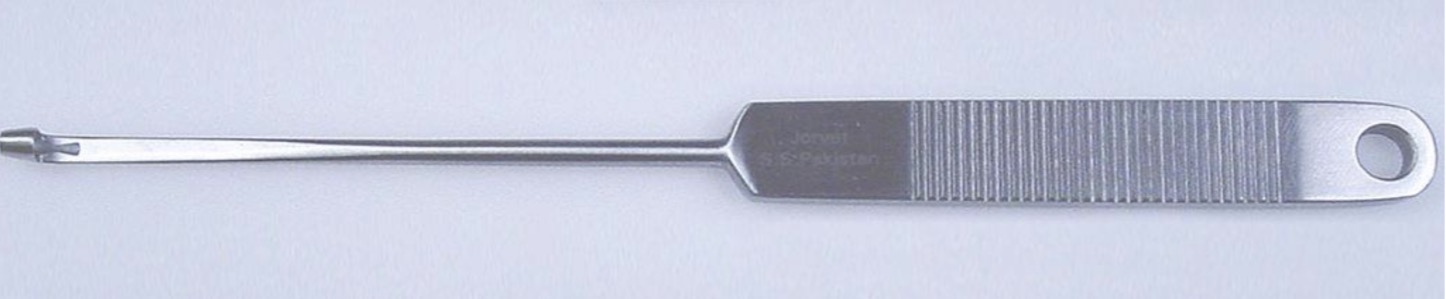
Cornell teat curette-To scrape the inside of the teat canal and remove obstructions or tumors or to take biopsy specimens. The bottom of the loop has a sharp edge and is affixed to a handle. The loop gathers tissue as it is pulled out of the teat
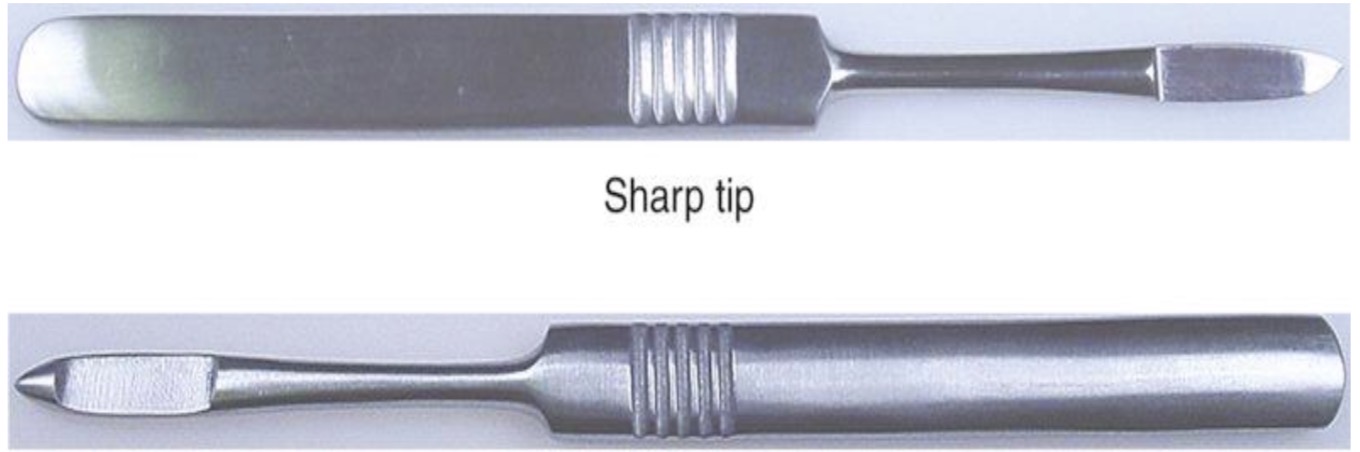
Lichty teat knife, or bistoury-to open stenotic teats by incising through scar tissue or other constricting tissue. A slim stainless steel blade is attached to a handle. The point or tip of the blade may be sharp or blunt
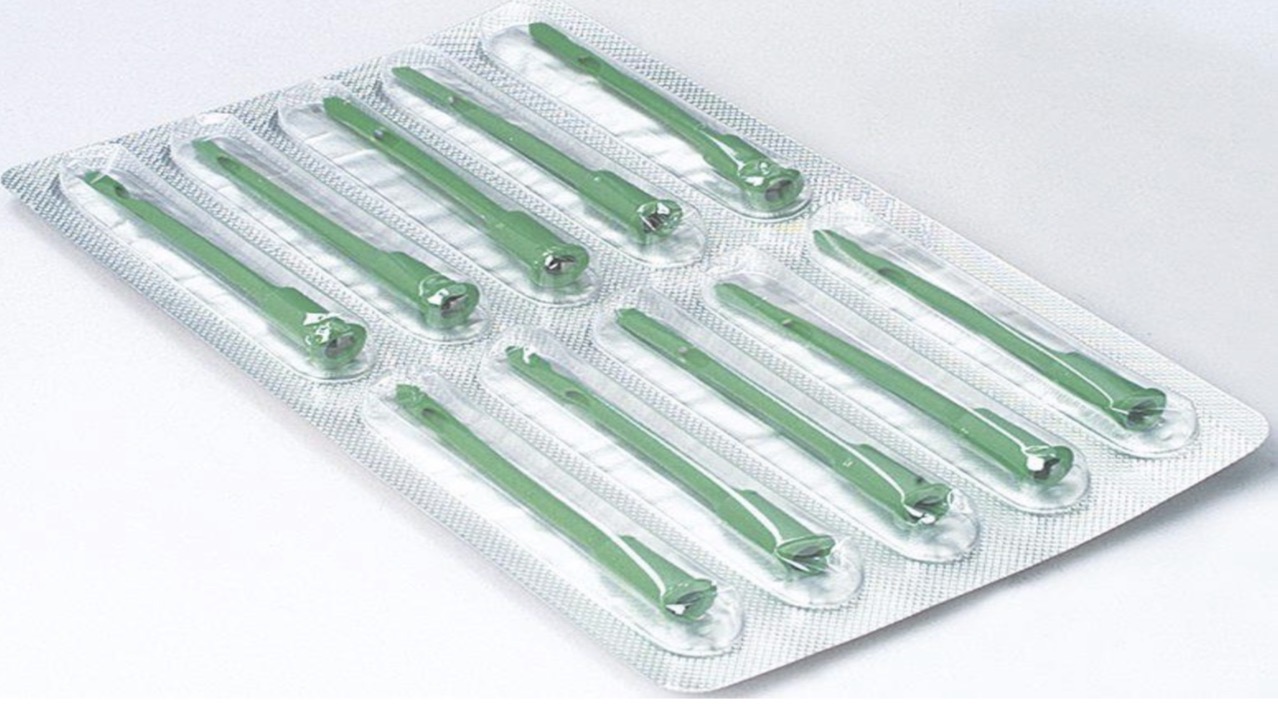
Udder-infusion cannula-To administer medications into the teat canal. Other possible uses include draining a mastitic quarter, keeping a teat canal or sphincter open during and after surgery, flushing an abscess, and performing a peritoneal tap. A blunted needlelike tube can be inserted into the teat canal; by using a syringe, medication can then be injected
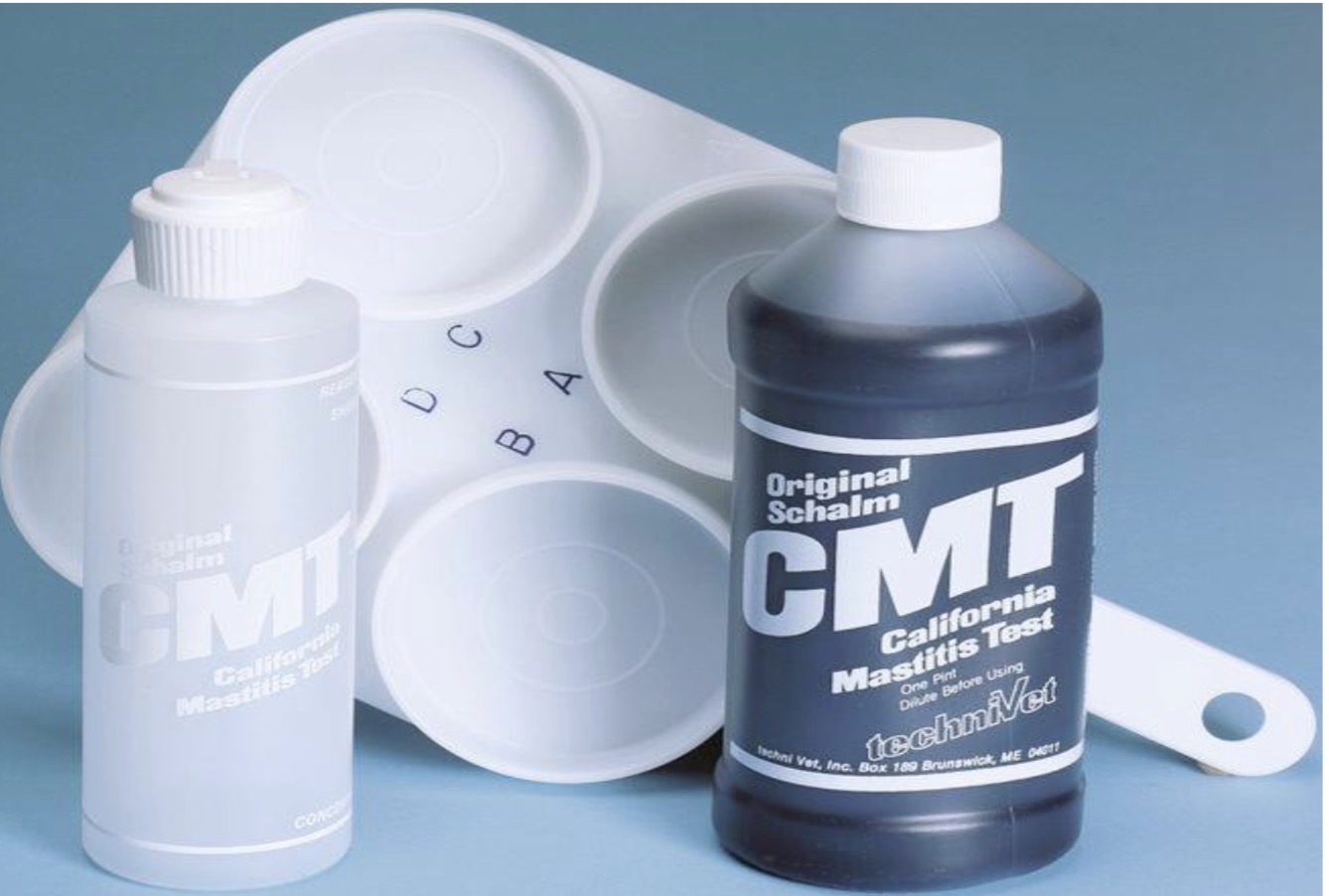
California mastitis test kit-to screen for and diagnose mastitis in cattle. The paddle is divided into four quarters that correspond to the four teats. Milk from each quarter is placed into its corresponding circle. A reagent is mixed with the milk, and if agglutination is seen, mastitis is suspected.

Milking tubes-to keep an injured teat open for milking. These tubes are inserted after surgery or after an injury that may cause the teat to swell. They help to keep the canal patent while the teat heals
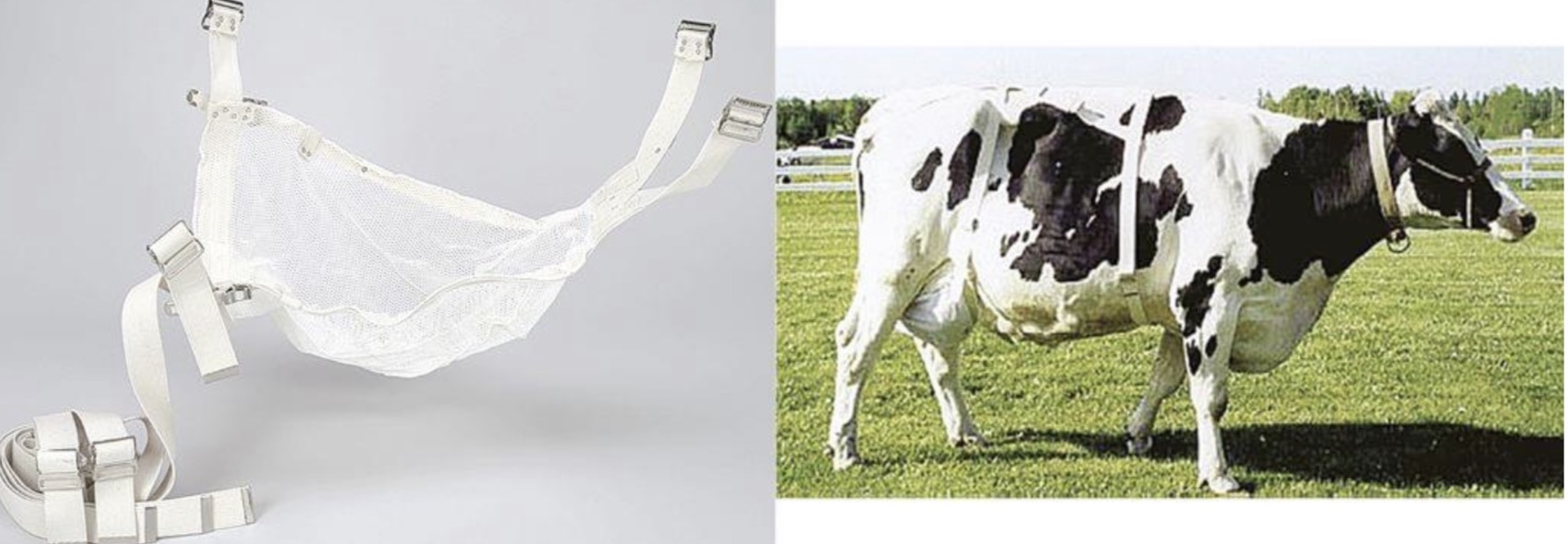
Udder support-to support an injured or pendulous udder. A net is placed around the udder, then strapped to the cow's body. This transfers the weight of the udder to the cow's back and keeps the udder from being stepped on or injured
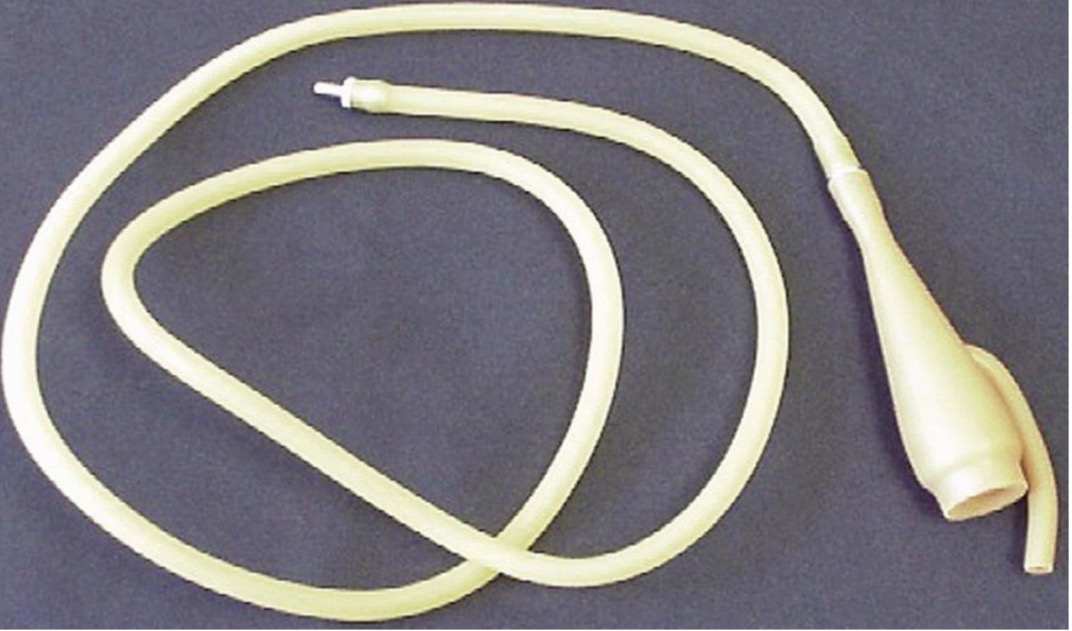
Simplex Intravenous bell sets (gravity IV set)-To provide a connection between the IV catheter and the IV fluids and to regulate the flow of those fluids. This set uses gravity to enable the flow of the fluids. Latex tubing has a flexible funnel at one end that fits over the top of a bottle; the other end of the tubing has a tip that fits into a standard catheter hub. Some models have an air hose that can be clamped to prevent the fluids from flowing. The bottle is raised or lowered to speed up or slow down the rate at which the fluids are introduced into the animal. This set is used in large animals
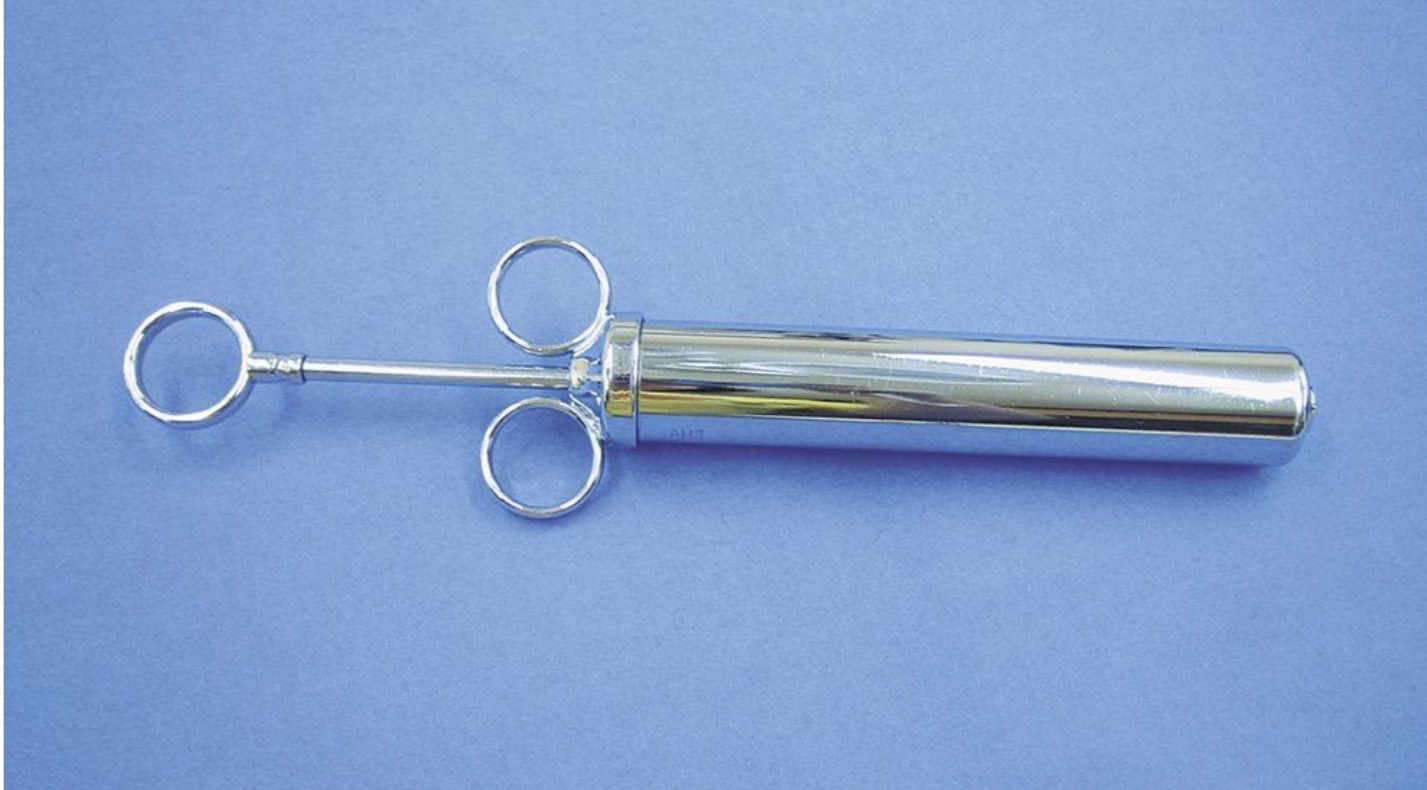
Dose syringe-to administer liquid medications orally. A stainless steel syringe is marked in oz and ml; it can be used to give multiple animals an oral dose of medication by pushing in the plunger
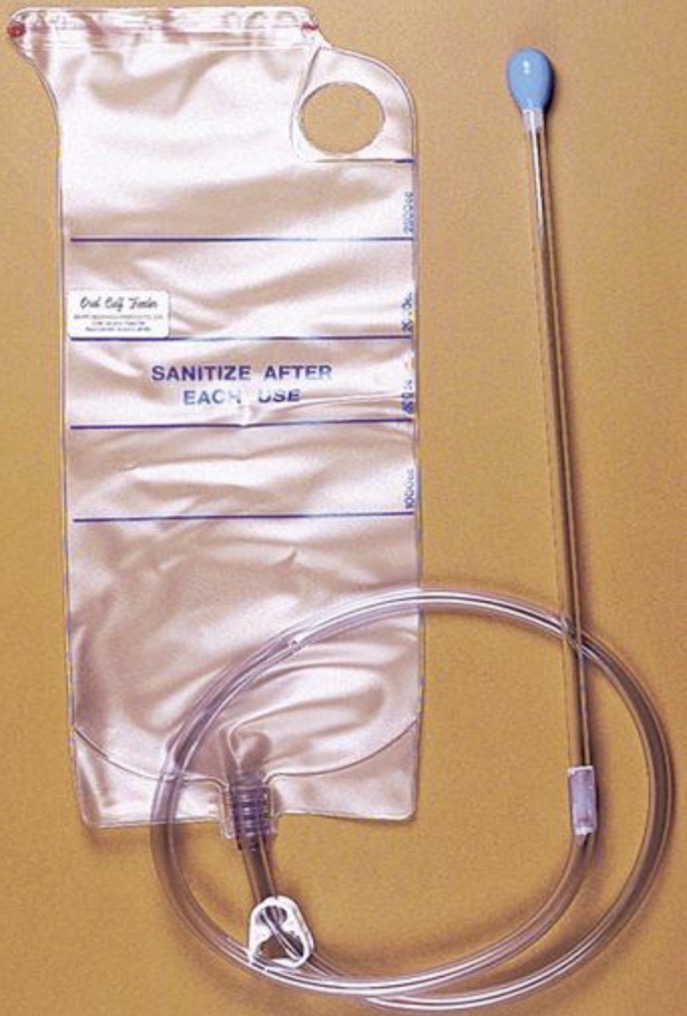
Oral calf drencher-to give large amounts of oral fluids to calves, foals, or lambs. A large reservoir bag ends in a drenching wand. The wand is passed into the esophagus, and gravity causes the bag to empty
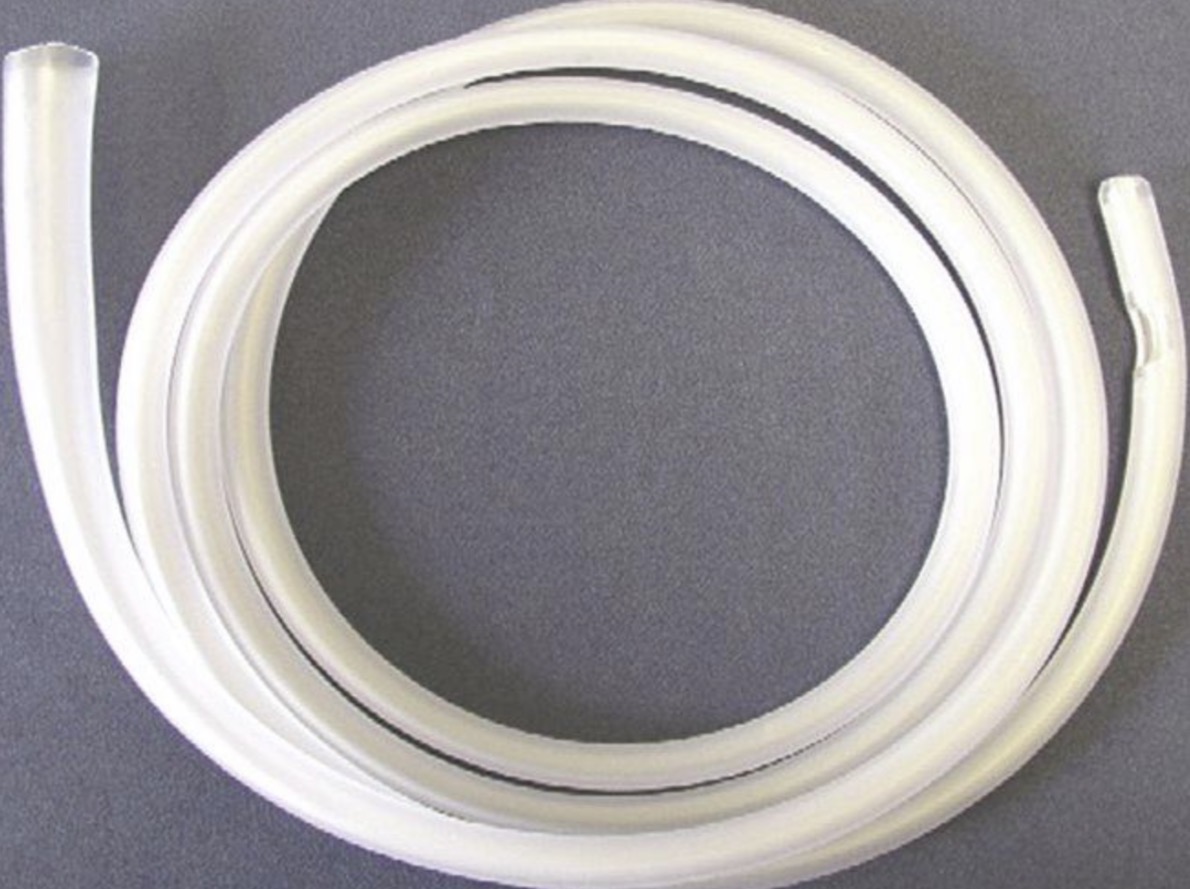
Stomach tube-to deliver liquid medications directly to the stomach via the esophagus; also used to relieve gas from the rumen in cases of moderate bloat. Long red rubber or PVC tubes come in a variety of diameters and lengths. Inside diameters and length are are ¼ inch x 7 feet, ¼ in x 9 feet, 3/8 in x 9 feet, ½ in x 10 feet
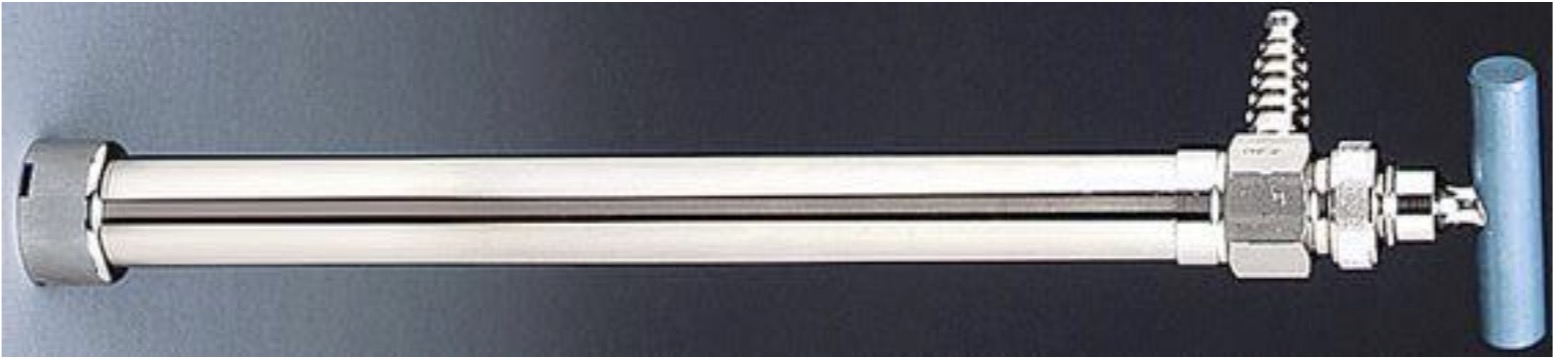
Drench pump-to pump medication through the stomach tube into the stomach. A stainless steel pump with a handle at the top performs the pumping; an adapter for the stomach tube can be attached to the pump. Once the tube is in place, it is attached to the pump. The operator pulls the handle up to load the pump and pushes it down to deliver the medication through the tube.
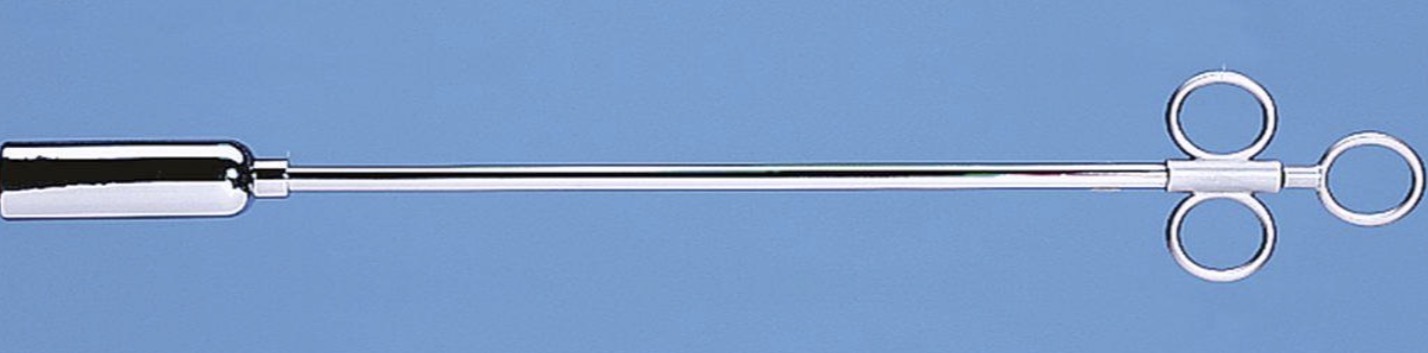
Balling gun-to deliver solid medication to large animals orally. A plunger reaches through the shaft of the instrument and ends in a flared receptacle for a pill or bolus. Some guns have springs inside the receptacle to hold the bolus in place. The gun is pushed down the throat, and once past the esophageal groove, the plunger is pushed to send the bolus the rest of the way down the esophagus. The receptacle comes in ⅝-inch, ⅞-inch, and 1-inch diameters. Some models have interchangeable heads that screw on and off
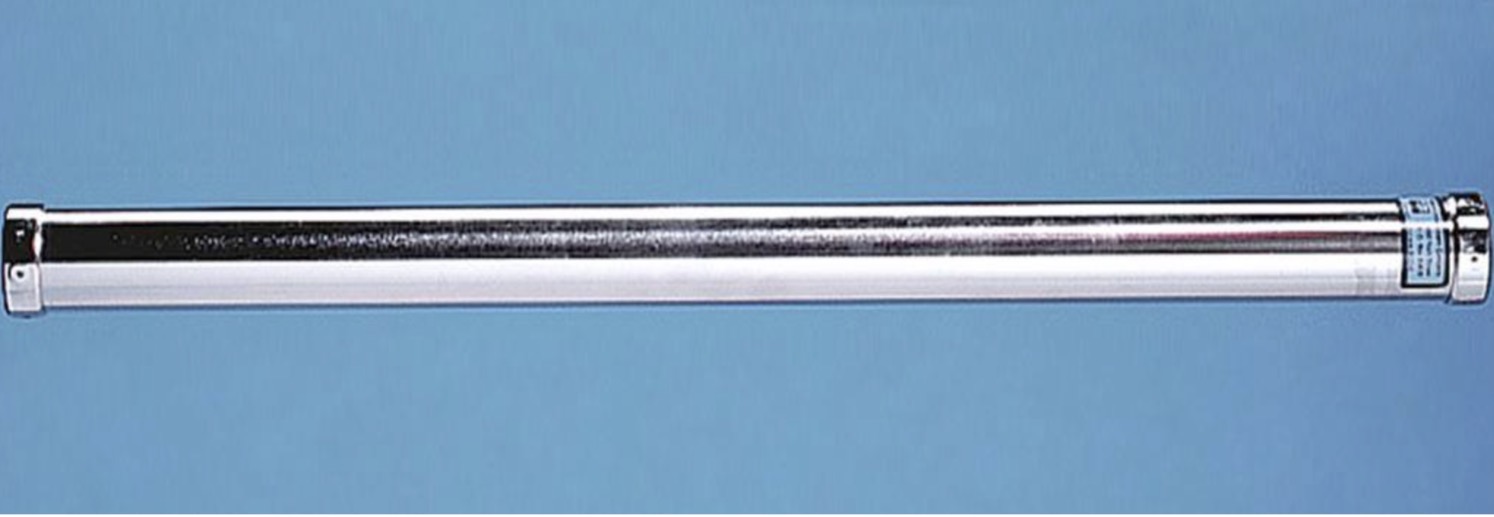
Frick speculum-used on large animals to hold the jaws open wide enough to enable the passage of teh stomach tube down the throat. A stainless steel tube that is about 19 ½ inches long
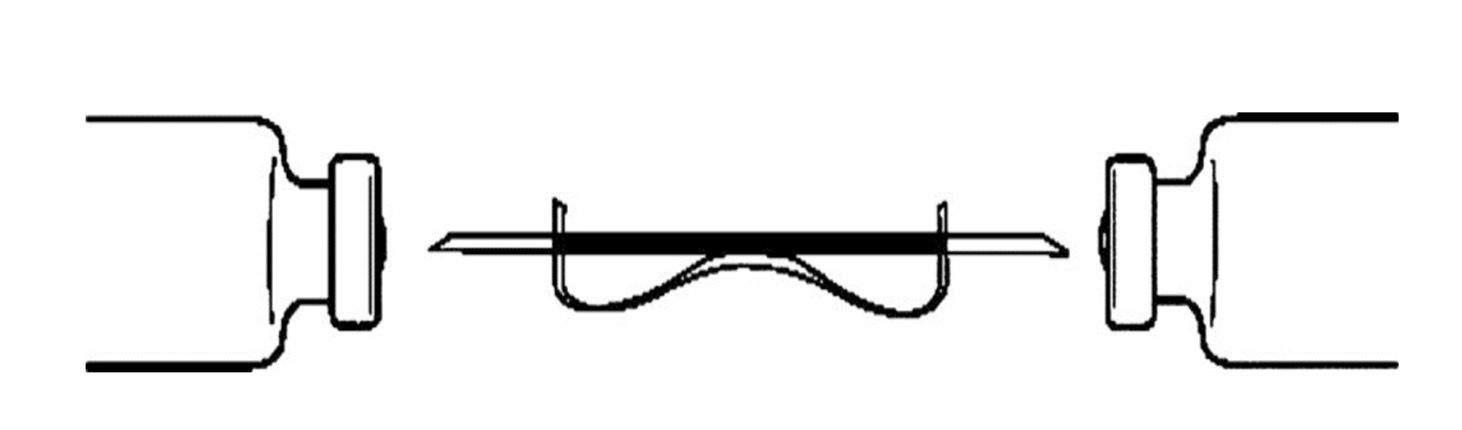
Transfer needle-to transfer liquids contents of one bottle to another without the use of a syringe. The double ended needle can aseptically piece the rubber stoppers on the bottles
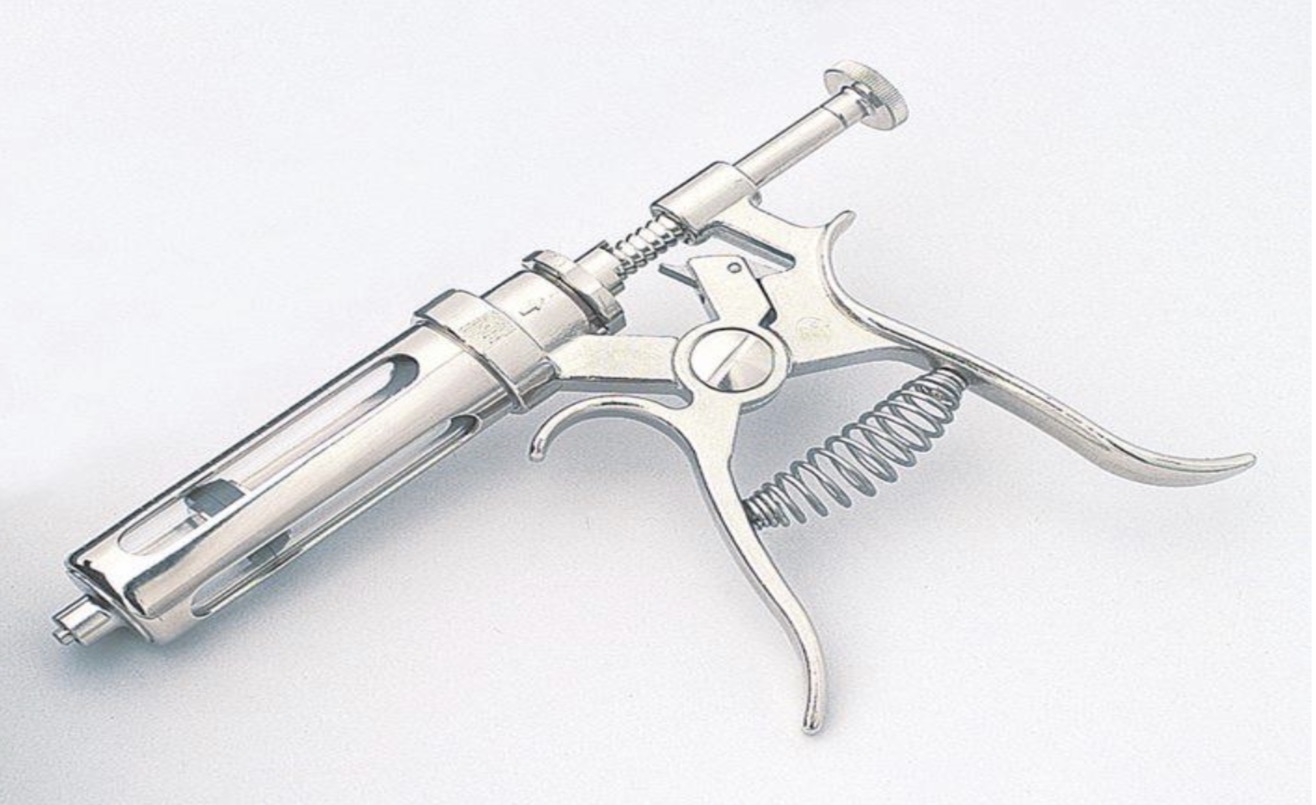
Automatic dose syringe-to administer intramuscular (IM) or subcutaneous (SQ) injections to multiple animals without reloading the syringe. A syringe barrel is attached to a handle with a dial that can be set to deliver 1 to 5ml at a time with a squeeze of the handle. Care must be taken to clean the syringe thoroughly to prevent drug interactions and to prevent the spread of disease
 Note
Note  Flashcards (49)