geog or cad test 1
 Call Kai
 Learn
Learn Practice Test
 Spaced Repetition
 Match
Match Flashcards
 Knowt Play
1/94

Earn XP
Description and Tags
understainfing how physical characteristics come togtehr to shap areas of the world. about understanding connections between land, people, hidtory , and identity in each region
Name | Mastery | Learn | Test | Matching | Spaced | Call with Kai |
|---|
No analytics yet
Send a link to your students to track their progress
95 Terms
Canadas Regions
ATlantic Canada
Quebec
Ontario
Western Canad
British Columbia
Territorial North
Canadas regions drawn out
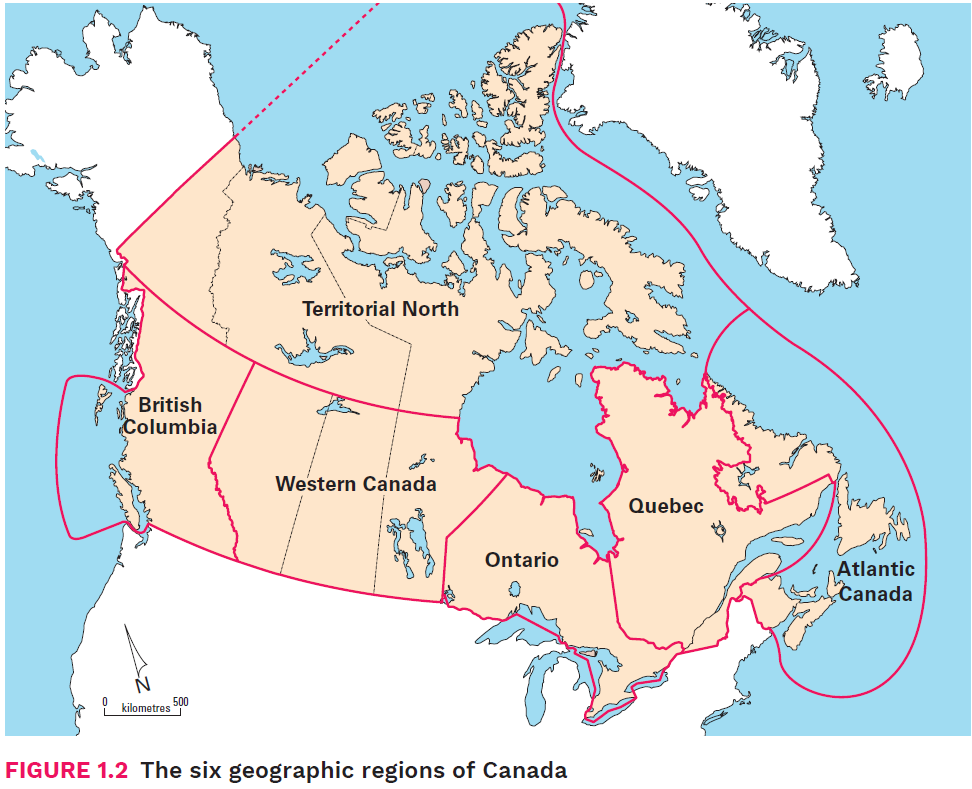
what makes each region distinct
geographic location
population size
economic role
historical development
Regional Consciousness
Faultlines definition
divisin in society
can erupt into tension or conflict
in canada, there are four majot =r faultlines that shape out geography + politics
Candas faultlines
Regional Faultlines : tensions b/t provinces and Ottowa, Western Alienation, Federal-provincial power struggles, Perceptions of Central Canda as “dominating interest”
The quebec Faultline; ongoing tensions over language, identity, autonomy.
Indigenous Faultline
Immigration Faultline
core + periphery
Core: where populaions, welath, and undustry concentrate
periphery: areas that supply resource but lack same economic power/population.
Canadas Core + periphery
core region: Ontario + quebec - manufacturing, finance, political power
Rapidly growing periphery: British Columbia + Western Canada - resource development + diversification
Slow growing Periphery: BC and Western Canada- resource development + diversification
slow-growing periphery: Atlantic Canada - population loss and declining industries
Resource Frontier: The territorial North - resource rich but underdeveloped
Provinces and terriotories of Canada:
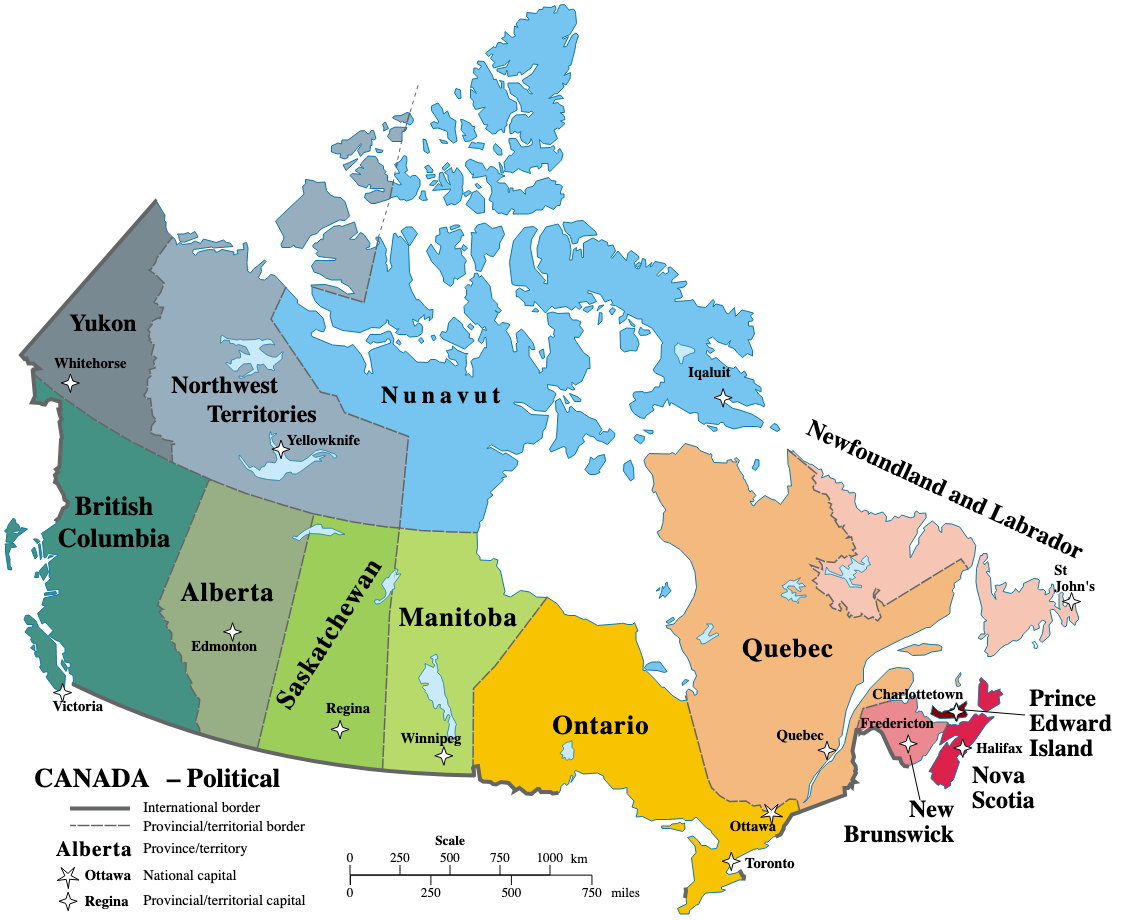
regional consciousness:
the shared sense of identity, culture, and interests among people living in a specific geographic region
continentalism
a political and economic theory favoring closer ties, integration, or cooperation between nations within the same continent
Canadas Landfrom types:
mountains- formed by tectonic activity
Plateaus - elevated flatlands, shaped by erosion
Lowland - broad flat areas @ lower elevation
Natural processes that alter landforms:
Weathering breaks down solid rock into smaller particles.
Erosion moves those particles using air, ice, or water.
Deposition drops the material elsewhere, forming new landscapes.
Denudation is the long-term wearing down of elevated areas like mountains.
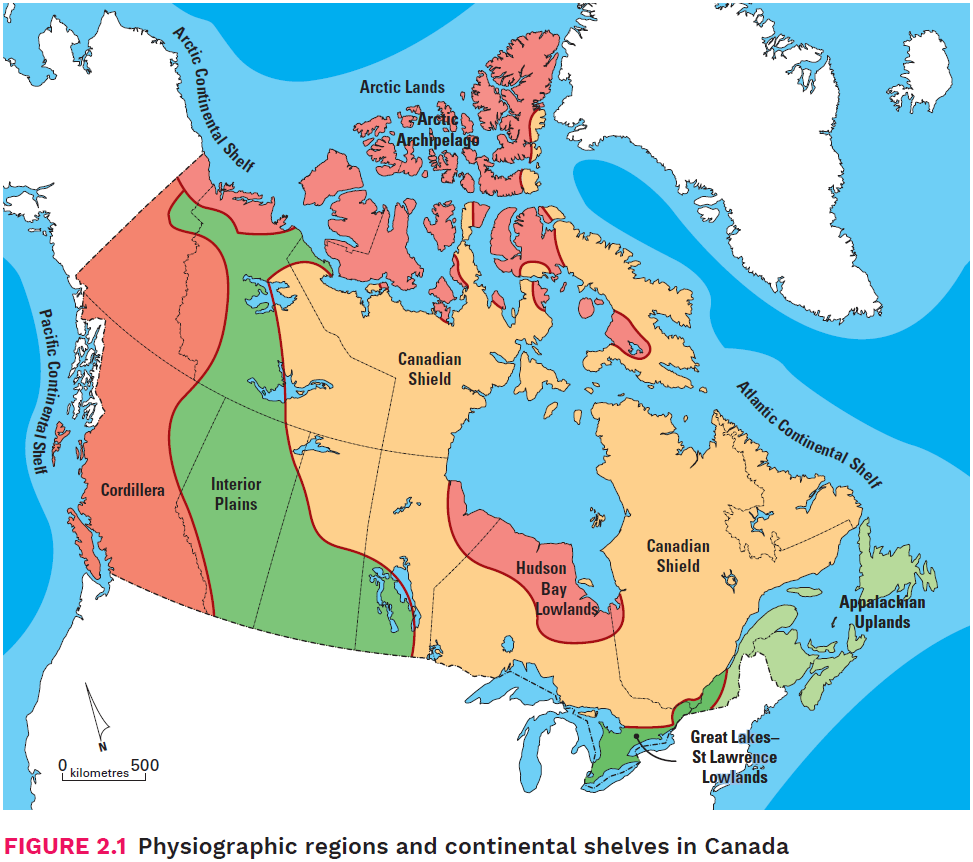
physiographic region:
large are with sim surface features, geological history, same geomorphic processes at work
Canads physiographic regions:
The Canadian shield: largest, characterized by hard rock surfaces, glacial features, vast mineral resources
The cordillera - mountain regions in W Canada
Interior planes- flat, stable region. rich in soil + gas
The Hudson Bay lowlands- flat wet, sparsely populated with peat rich muskeg
The Arctic Land - vast area north of arctic Cure, cold, permafrost terrain
Appalachian Uplands - rounded hills and river valleys E canada
Great Lakes - St. Lawrence Lowlands- small in size, but huge pop _ economic importance
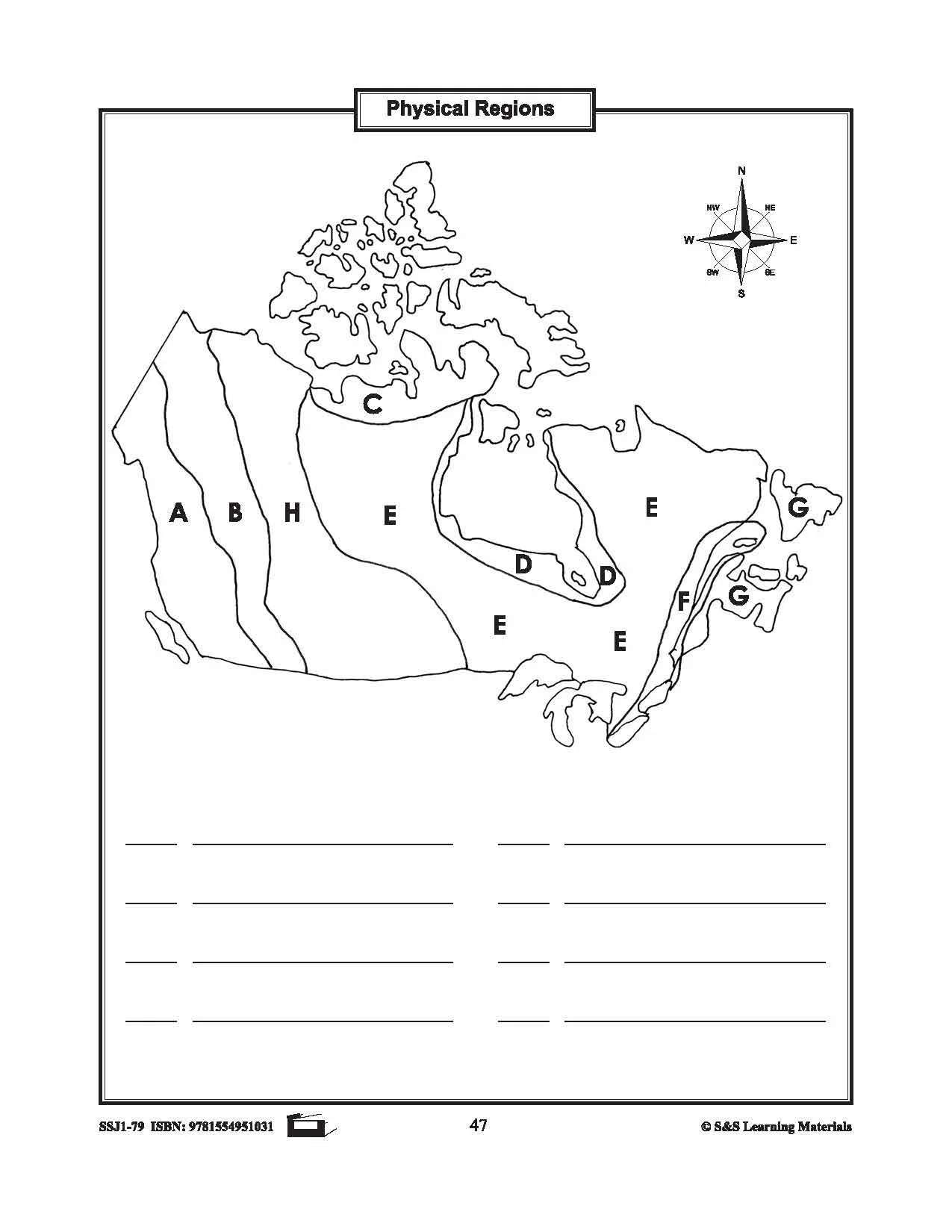
CADS physiographic regions pic
Cads four facotrs of climate
solar enegery - influences temp + seasons
Global circulation Systems - wind + oceam currents distribute energy
Air Masses - continental and marine air masses bring dif humidity + temp conditions
Continental Effect - land heats + cools faster than water, so areas far from ocean see greater temp extremes
Types of precipitation:
convectional - warm air rises, cools, and drops moisture
Frontal- warm and cold air masses meet (central + E Canada)
Orographic - moist air rises over mountains, cools, and causes rain or snow (cordillera)
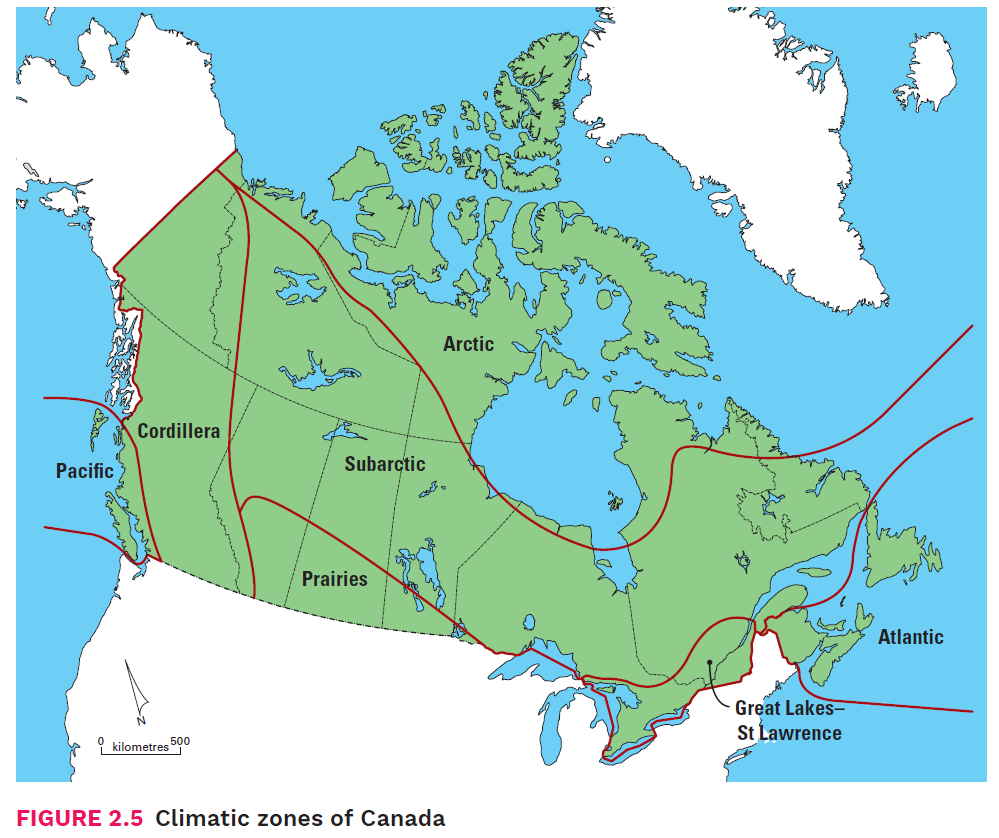
Cads climatic zones:
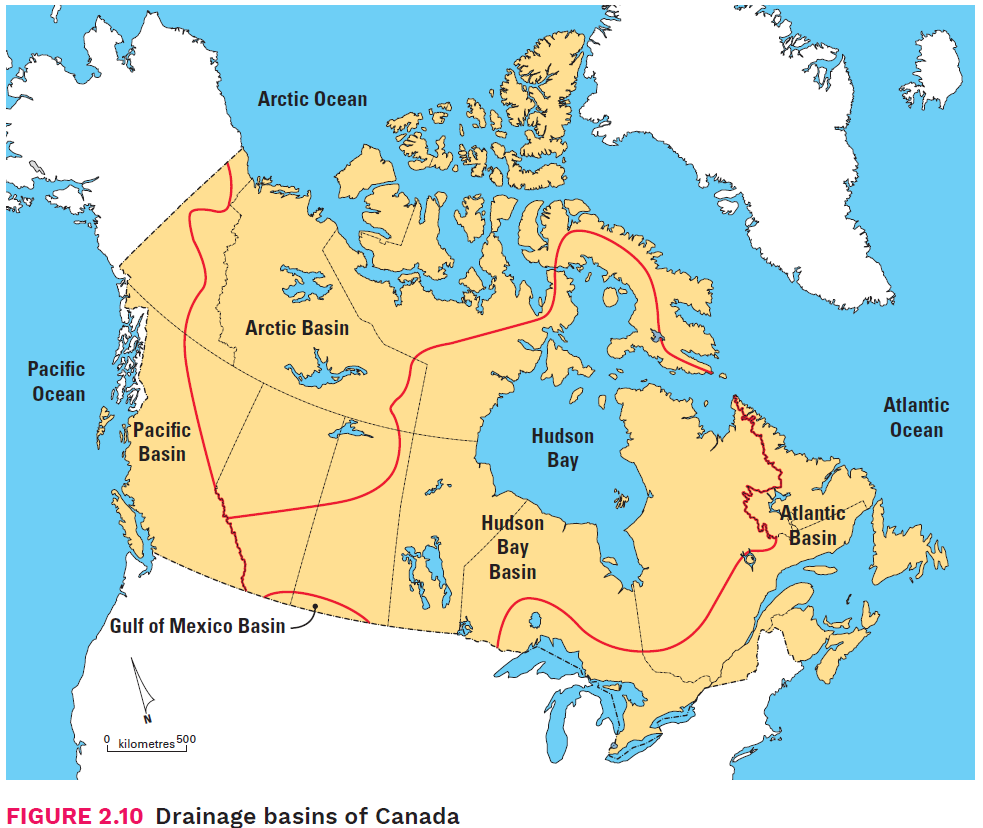
Cads drainage basins
atlantic Basin - 3rd ;argesy in area, 2nd in streaflow. excellent for hydroelectric power
Hudson Bay Basin - largest, idel for hydro bc of shield topography
Arctic Basin- 2nd largest but low streamflow. long distances + sparse population limit hydro electricity
Pacific Basin - smallest in size, has major hydroelectric projects
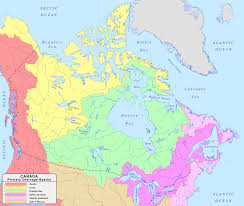
Cads drainage basins pic:
Permafrost
permanantly frozen ground
thawing acros Arctic , destabilizing building and roads
Historics Geography
explores how geogrpahies of past have shaped present and future.
Dominion of Cad
created in 1867 w British North America Act
Cad was just fioru colonies @ the time : ontario, QUebec, Nova Scotia, New Brunswick
Migration route theories
Corridor ROute: migrations happened throughj ic-free corridor b/t the Cordilleran and Lauarentide ice sheets
Sea route: suggests early people traveled along W coast , island-hoppign and using boats
Paleo-Indians
earliest knwon North American cultures, descendants of the original migrants
3 Paleo Indian cultures:
Clovis Culture : used fluted spear points called clovis points
Folsom Culture: expert bison hunters
Plano Culture: represented a broader range of tools and food services
Terra Nullius
term used by first Europeans coming to North America
“land belonging to no one”
rather tha seeing it as land full of distinct sovereign nations
Doctrine of Discovery
legal and ideological framework stating tha:
-europeans christian powers could claim any land not ruled by christians
-indigenous ppl were not recognized as sovereign nations
land was considered “discovered”
Regoinal consciousness
snese of identity/belonging for people of specific geographic area
Brian Gable
political cartoonist for globe + mail
created cartoon of canada to show tensions w/in country
used satire to show regional disparities
Jeffrey Simpson
Globe + Mail collumist
applied term “faultlines” to xanada as crackes in countries Psyche
John Ralston Saul
Canadian political philospher
decribed canada as “soft” country
meaning conflict in Canada mainly resovled via negotian
John friedmann
adapted core + periphery model in 1966
realized its easier to expand # of cores within one place
Continetalism
opposite of nationalism
example is canada and united states relationship as they share geographic advantage of being neighbours
Ecumene
refers to inhabited land
where ppl have made land permanent hime
cannad’s Ecumene is spread evenly throughout country
Drumlin
low hills formed by glacial deposits
Esker
long widing ridges of sand + gravle
formed by deposits in flowing waters beneath glaciers
Pingo
ice chord hills formed by freestyle processes
Denudation
refers to wearing down of mountains due to weathering and erosion
process coontantly reshaping earths surface
Deposition
piling up of a material in new locations
process coontantly reshaping earths surface
Deed of surrender
1870
Hudsons Bay Company agreed to transfer land holding to Canadian Government
inc: ruperts land + North-Western Territory
added huge tracts to canada, brought in Red river Settlement, started conflict with the Metis and First Nations who never consented to this transfer
Rpid expansion of Canda: 1870 -1905
-1871 - BC joined, promis of railway
-1873 - PEI joined after rinancial trouble
-1898 - Yukon jcreated klondike gold rush
-1905 - Alberta and sask were carved form NW territories
Residential Schools
funded by Indian Act, where children forced of of their homes + communties and subjected to :
sultural erasure
physical + emotional abuse
loss of identity and connection to land
last school closed in 1996
Indigenous rights
collective rights stemming from pre-contact of land
inherent
protected by section 35 of contitution
main recognized for Status firtsnations and Inuit
Treaty rights
negotiated agreements b/t Nations + crown
set aside reserve land
defines benefits. + services
strongest in areas where treaties were signed
Treaty of Paris
1763
ended war
gave control of New France to Britain which began quebec fualtline
now, cananda would be controlled territory by britian
Quebec Act
1774
created to maintain order + avoid rebellion
expanded terriotiry of Quebec
Religous freedom for Roman catholics
allowed french civil law
QUiet revolution
1960’s quebec had a period of quick social and political change
modernized economy
reuced power of catholic church
expanded education + public services
Embrace ethnic nationalism, growing pride in identity
Doukhobors
religous refugess
puritanical christain sect
originated in russia in 1600’s
4000 imigrated to saskatchewan in 1899 -
Dominion Lands Act
1872
freed land to settlers as
land grabts for pacific canadian railway
land alocation for resevres, religous organizations, etc…
Clifford Sifton
minister of interior
populated the west
campaign “Last Best West” focussed on:
British + American Immigrants
ukraine
Poland
Rusiia
Germany
Scandinavia
Candian Pacific Railway
created by John A. Macdonald, completed in 1885
connected the country
Berringia Land Bridge
how first humans likely arrived in NA during last ice age (40,000 ya)
during this time glaciers locked up huge amts of water, which exposed land bt Siberia and Alaska
The great melt
Samuel de Champlain
qeubec citys leader in 1608
led the creation of quebec city being first perminant European settlemnt in canada
Loyalist
refers to Americans that remained loyal to Britain after the American War of Independance (1775-1783)
fled to NA
sertled in Nova Scotia, Eastern Quebec
SOuthern Ontaria
SIr John Alexander Mcdonald
first prime minister of Canada
believed canda should stretch from sea to sea
expanded the country wchi laniched immigrations, land survey, infrastructure dvlpment but also…
displaced Indigenous + metis ppl
Truth and Reconciliation Commission
milestone in Indigenous + federal relations
created to document survivor stories and guide healing
British North American Act
united three separate territories of Canada, Nova scotia and New Brunswick into single dominion called canada in 1867
renamed as Constitution Act in 1867
Historical vs Modern Treaties
HUman Geograohy
Study of how, where, people live and why
pop and culture helps us better understand geographic patterns + social dynamics
3 key features of pop geog in Canada
concentration near US boarder
Westward shift in pop centre of gravity
sparse pop in N regions
ways pop growth happens
Natural Increase (birth - death)
Immigration
before 1986, pop growth was mainy from natural increase, since then immigration has been main driver.
Demographic Transition Theory
explains how pops change as societies dvlp
pre-industrial : high birth rate + death rate
early industrial: death rate drops
late industrial: birth rates decline
Early post-industrial: Low birth + death rate
Late post industrial: birth rate below replacement
Canada is in ealry post- industrial phase, not counting immigration.
Replacement Feritility
3 of children each women needs to have for pop to replace itslef
replacemnet lvl is 2.1
cnadas fertility rate is below replacemnt lvl.
Age Dependancy ratio
compares # of ppl economically dependant (under 15 and over 64) to those in working age group (15-64)
Aging in Canda
canada aging fast, why?:
low fertility rates
higher life expectancy
AGing baby boomers
Generations:
Silent. (1928 -1945) grew up in war + depression
Baby boomer (1946 - 1964) retiring
Gen X (1965 - 1980) independant
Millenials (1981 - 1996) Digital Native
Gen Z (1997 - 2012) grew up wiith smart phone
Gen Alpha(2013+) born in AI world
Population Distribution
how ppl spread across country
in Canda most people live in national ecumene (areas close to US)
where trade, agriculture, settlement most viable
Physilogical density
people per unit of arable land
CADS; 32/km squared
canadas populaton density is
low : 3.6 ppl/km squared
Candas population zones
core region: great lakes st. lawrence (densets)
sedondary zone (van, clagary)
Tertiary zone: boreal forest towns
Empty zone: arctic + remote N settlements
Census Metropolitan Area (CMA)
urban centre + surrounding areas
must have 100,00+ total, 50,000+ in the core
ex; ttoronto , van , cakgary
Indigenous population demographics
500k indigenous people pre contact
dropped to 105,611 by 1911
recovery began in 1930s - 2021 count 1.8 million
Komagata Maru
example of exclusion in Cnadas past
in 1914, ship carrying 376 passengers from British India denied entry @ vancouver port
forced to return to Indian after 2 months at sea
showcases canadas discrimination towards non-European immigration
Economic Geography
study of how poeple make a living + how that activity is shaped by place
looks at industries development, why jobs cluster in some groups
Staples economy
building around extracting + exportog raw materials
how canda historically came up with wealth (fishing, farmland, minerals)
Staples Thesis
Introduced by economist Harlold Innis
candas regional dvlpmt shaped bu the type of staple resources available
ex; timer in BC, fur in the North, cod in Newfoundland
Staples Trap
occurs when relying too heavily on raw exports
country fails to move beyond extraction and into more vakue added activities like naufacturing/innovation
CADs four main economy sectors
primary sector: extracting resources (mining, loggin, fishing, farming)
Secondary sector: manufacturing + construction (turning materials into goods)
Tertiary Sector: services (very broad from retail to education to health care)
Quaternary Sector: Knowledge-based services (reserach, IT, AI)
today almost 80% work in tertiary and quaternary sectors
Continentalism and Trade Agreements: Auto Pact (1965), Free Trade Agreement (1989), NAFTA (1994), CUSMA (2020)
deepened ties with US through trade agreements:
Auto Pact : integrated Candian and US auto production'
Free Trade Agreement: marled first free trade deal b/t cad and US
NAFTA: removed tarrifs bt Cad, US and Mexico
CUSMA: updated NAFTA w new digital and labor rules
agreements alligned our economy with US
Super cycles
decade long period of booming global demand for raw materials
usually industrialization in major economies
canada economy is best during cycle (western canada where oil and gas in dominate)
last major one was ealry 2000s bc exports to china soard as growth grew. stopped in 2011 bc growth stopped. ppl believe that it will happen in india again. but diff now bc sustainable exports + environemental responibilty important.
Knowledge Based economy
refers to growth depending on ideas, innovation, and tech
Canada is shifting towards this
Richard Florida
Sociologist that came up with term creative class
describes highly skilled workers who drive innovation (scientists, engineers, designers, software developers)
not manual labour, entire work based on thought
typically cluster in cities w good infrastructure, diverse comm, public investment (toronto, van, montreal)
Alan turing + turing Test:
britihs mathmetician and code braker who asked question in 1950: can machines think?
turing test: way to asses if computers can imitate human convo convinsingly. if humans cant tell a diff, then machine passes
turings ideas lead the way for modern comp sciences
Artificial Inteligence:
powers search engines, rec systems, custmioer service nots.
can learn , analyze, and make desicions
CAD is global AI leader, major reasearch hubs in Toronot Montreal and Edmonten
Artificila Genral Intelligence
when machines can perfom any intellectual task that a human cand to
Rostows Model of economic growth
Economic Walt rostow came up w/ model of dvlpmt:
Traditional Society
Preconditions for Take-Off; early signs of modernization
Take-Off; break thru period
Drive to Maturity; groth spreads thru other sectors
Age of Mass Consumption; country now fully industrialized
this assumes that all countries have western industrial path - not the case.
Globalization (stage 6 of rostow model)
refers to integration of economies, cultures, and political systems thru trade, tech, and migration
equalization payments
transfers from ottawa to less wealthy provinces
goal to ensure fair access to public service even if provinces government doesnt generate more revenue than others
Quebec recieves most overall
PEI recieves most per capita
BC and ALBERTA dont recieve any payments bc economys were stronger
Trans mountain pipeline
system that transports crude and refined oil from edmonton to burnaby
built in 1993
controversial project bc of climarte responsibilities
expansion of pipeline is in process which would triple the systems capacity for oil transportation
federal gov bought fromo company in order to provide money + jobs for canadian
anger bc interfees. with climate sustanaibity goals; canadas signing of paris agreement,
Relationality
refers to idea that evrything is connected through relationship
ex; people, land, wayer, animals, future generations are all a part of a interdependant sytsem.
ex; climate chnage not just being an environementak problem but also a social, cultural, political, and ethical problem.
sterwardhsip
responsibilty to care for land, water, animals, and future generations. not abou townerhsip, but rather an obligation.
embodied knowledge
knowledge gained through lived experiences. leanred through doing, observing, and living,
for indigenous comms knowledge of weather, animals, water, and land comes from generations of close relationship with dif environemnts
Paris agreement
aaal

