Domes of Paradise and Poetry
 Studied by 0 people
 Call Kai
 Learn
Learn Practice Test
 Spaced Repetition
 Match
Match Flashcards
 Knowt Play
1/24

There's no tags or description
Looks like no tags are added yet.
Name | Mastery | Learn | Test | Matching | Spaced |
|---|
No study sessions yet.
25 Terms
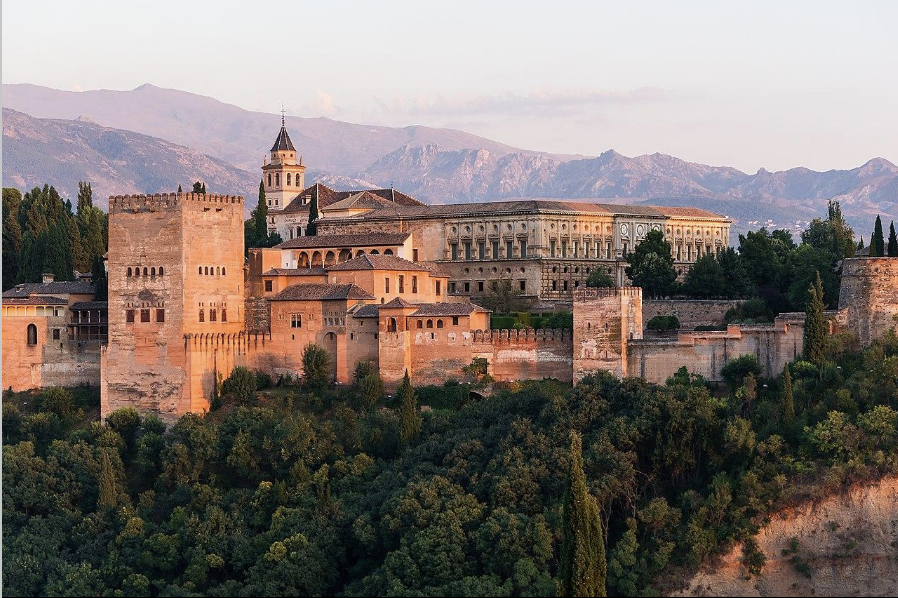
Alhambra, Granada, Spain, primarily constructed in the 14th century
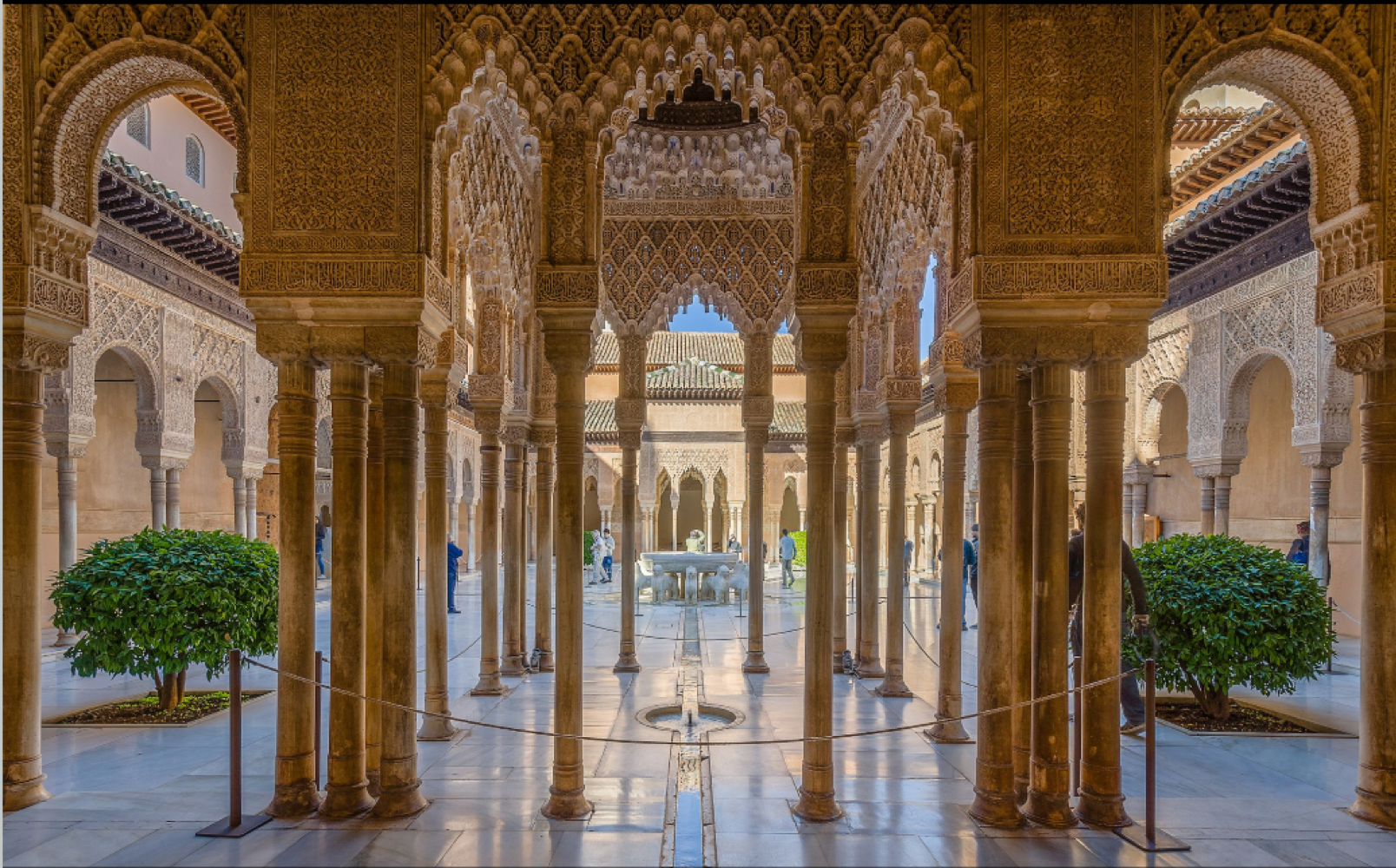
Describe the architecture in the Court of the Lions Alhambra and its significance
slim delicate columns frame garden, stucco work walls with lace like appearance like floating garments: textiles were valuable, patterns and words, once richly painted. Center: fountain with 12 lions and inscription: disorientation of human perception like moving water that appears still=activate imagination
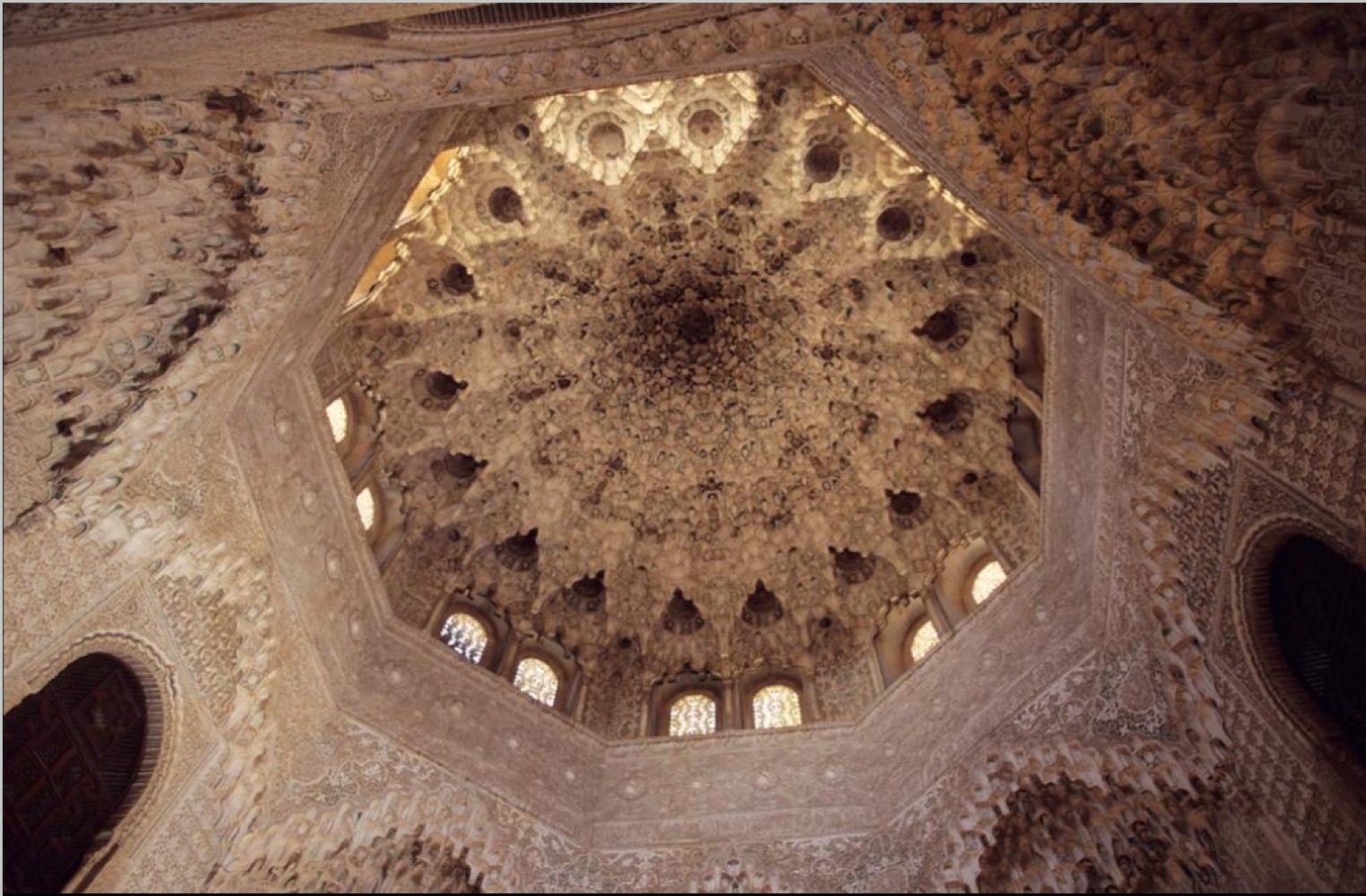
Describe the architecture in the Hall of 2 sisters Alhambra and its significance
aesthetic of wonder: dizzying, speaks to viewer of a “garden full of beauty”. Muquarnas decoration: 3D projections that dissolve and come together=earth and cosmos
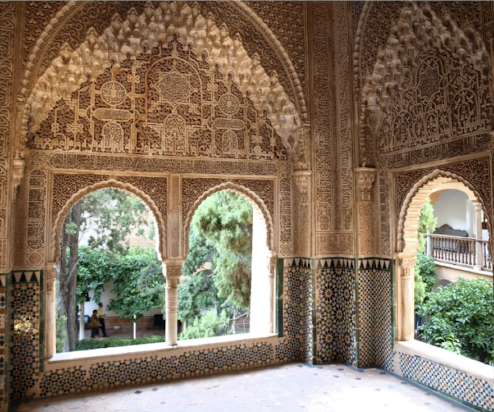
Describe the architecture of the Lindaraja Mirador Alhambra and its significance
framed look-out point for ruler to look out at people but not vv. Outside imposing, inside: rich ornamentation. Inscription: frames Mirador as an “eye” and gives it emotion. Form of control through the gaze of Islamic ruler
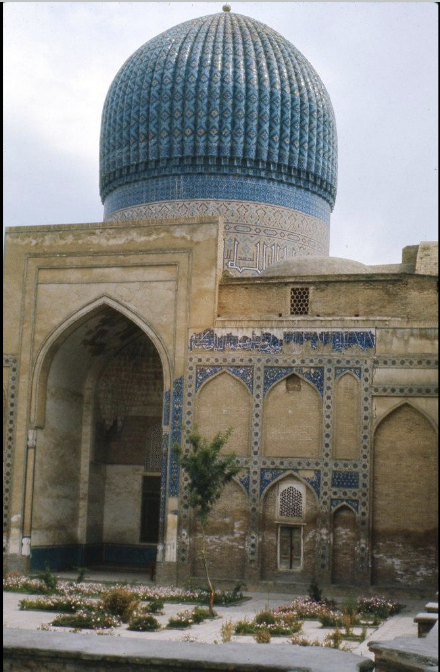
Gur-i Amir (“Tomb of the Leader”), Timurid, Samarkand, Uzbekistan, 1400-4
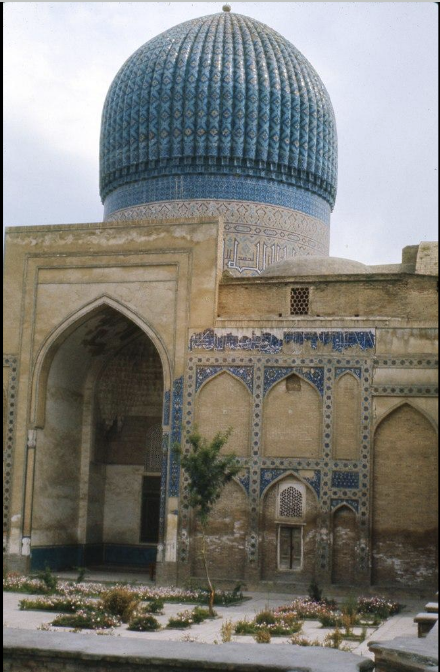
Describe the architecture on the outside of the Gur-i Amir and its significance
striking, tall and cylindrical drum with dome, rises giving it a tower like feeling. Bulbous dome that projects slightly, ribbed=emphasize verticality, shows power
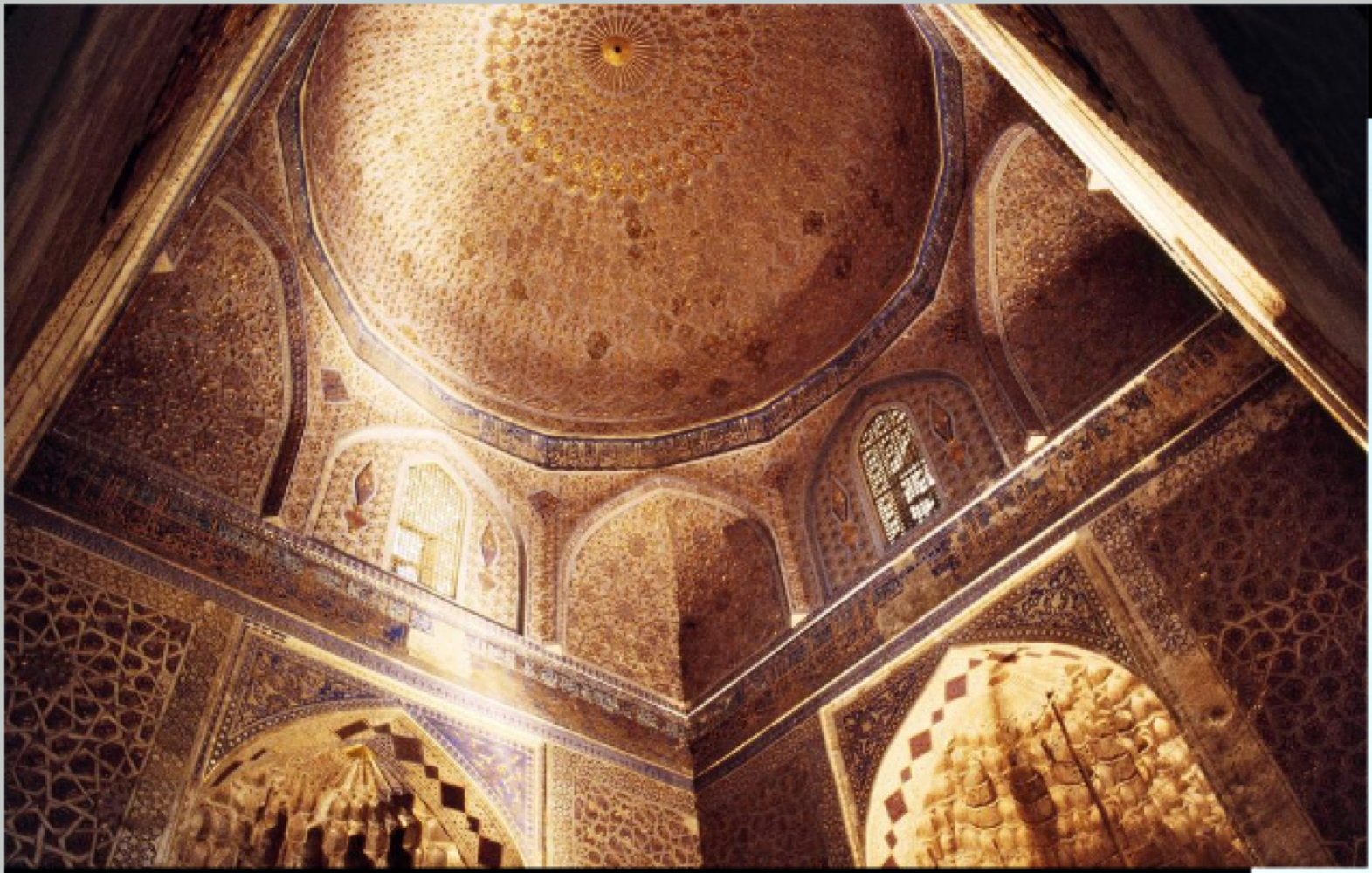
Describe the architecture on the inside of the Gur-i Amir and its significance
decorated with protrusion of material, niches with muquarnas, windows have screens so it doesn’t look choppy, dome with paper mache and shallow and less bulbous: because of double shell=shallow dome with the taller dome with supports between
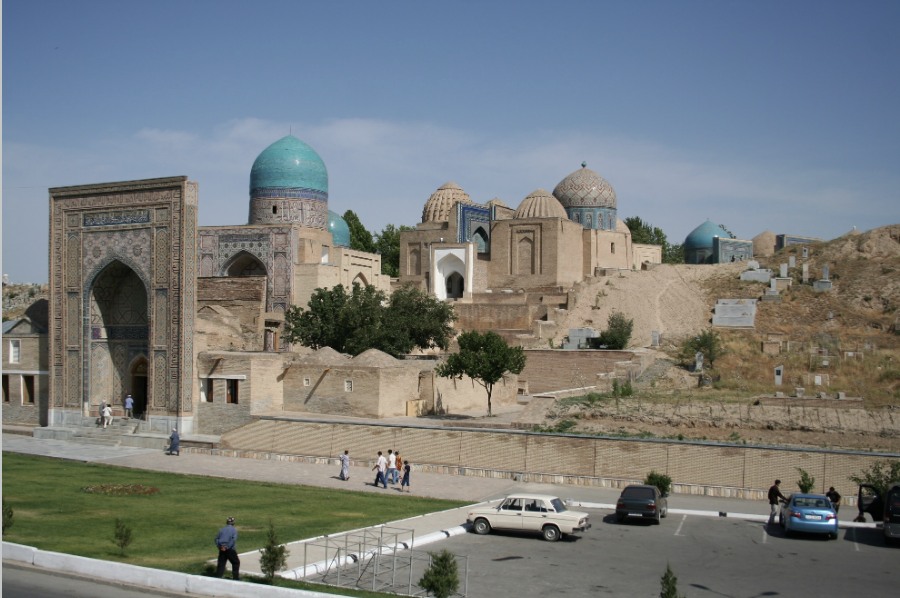
Shah-i Zinda (“The Living King”), Timurid, Samarkand, Uzbekistan, primarily constructed 1370-1435, Mausoleum of Shirin Beg Agha, 1385-86
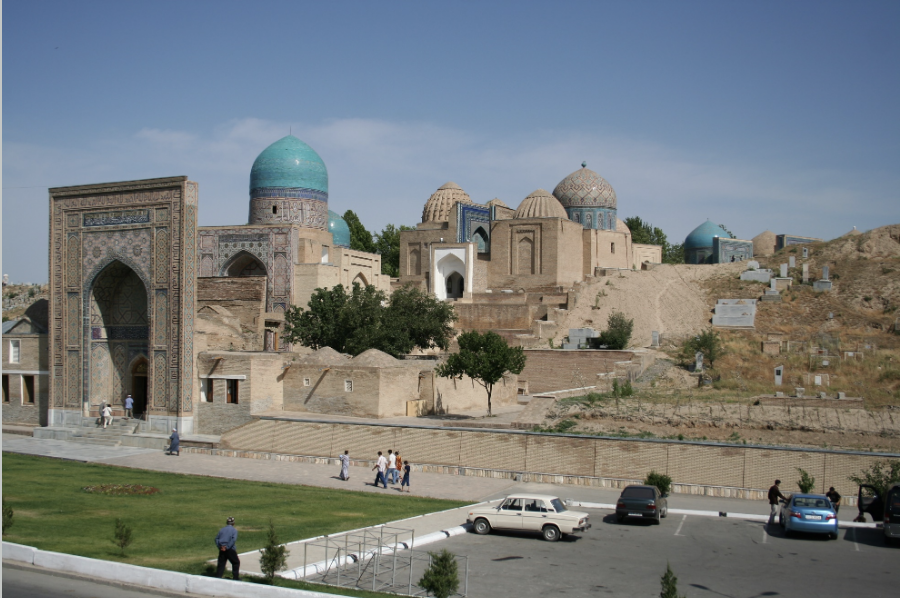
Describe the context of Shah-i Zinda and its significance
Desire to rest close to saintly person: Mohammeds cousin. Infused Mongol and Islamic: women had some power. Space for procession and ritual, pilgrimage. People buried there are never truly alone
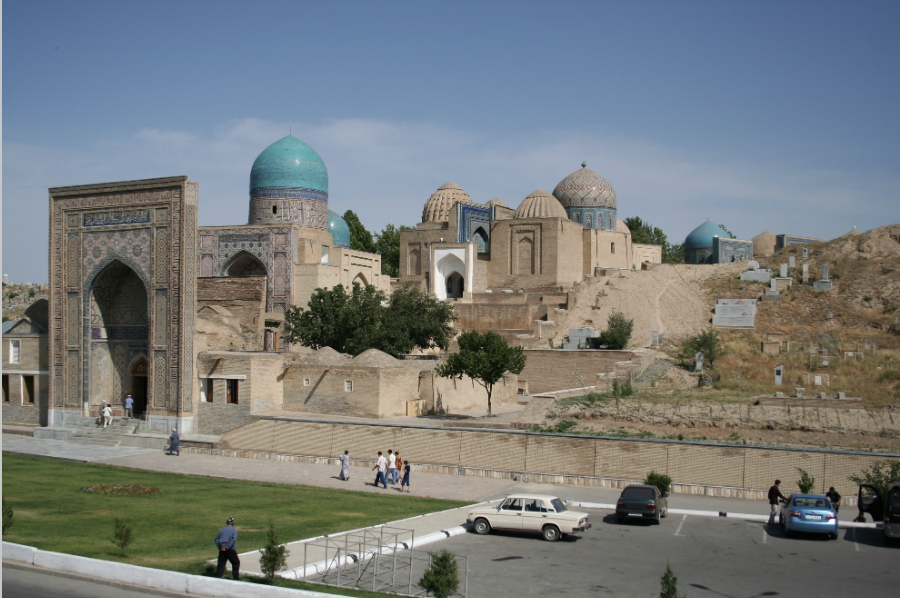
Describe the architecture of the Shah-i Zinda and its significance
tombs of women. Corridor flanked by mausoleums: modest in form and smaller, theme of poetry: adorns tomb=individualism.
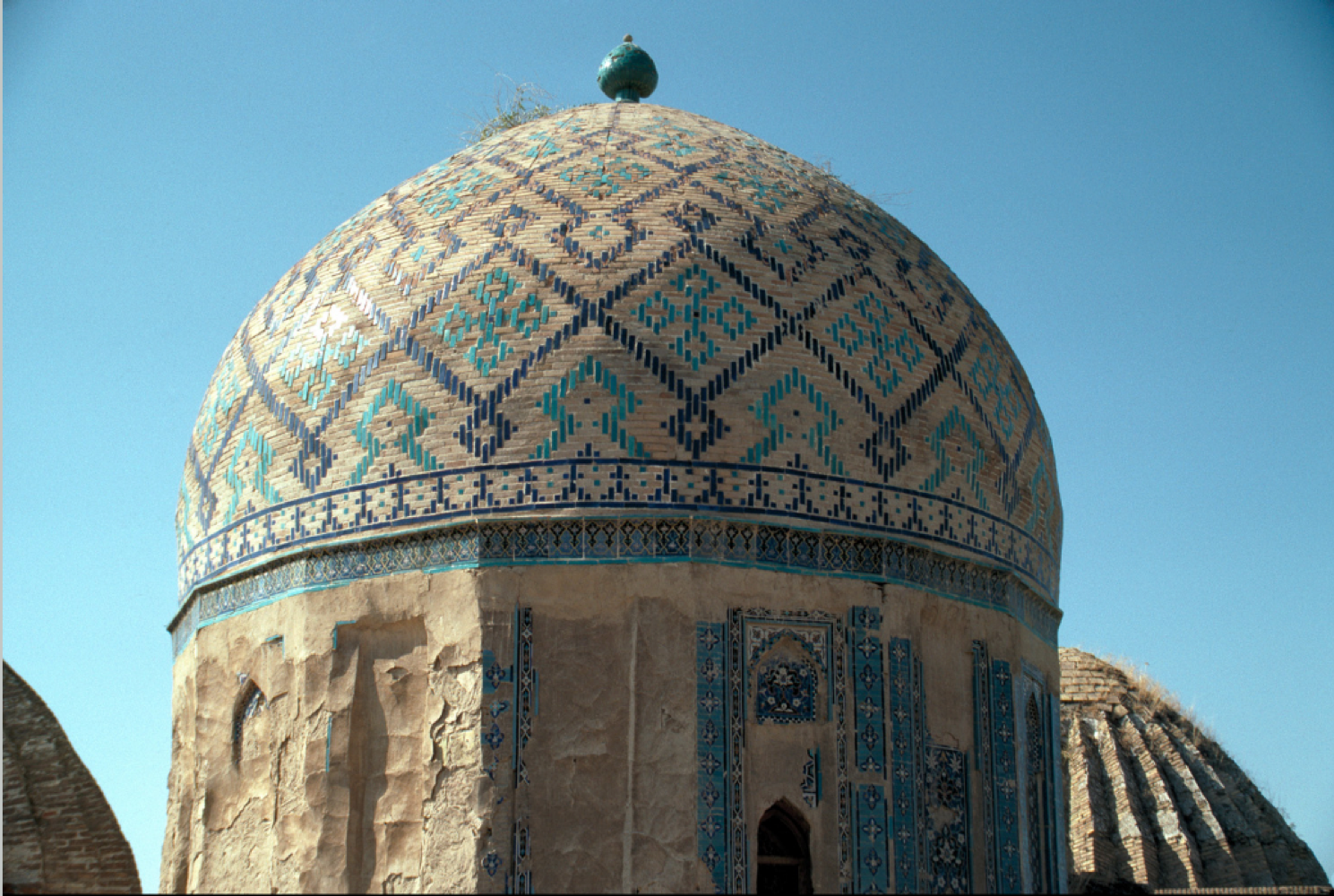
Describe the overall architecture of the Mausoleum of Shirin Beg Agha and its significance
Sister of Timur. Taller, square base and bulbous dome, windows with screens and stained glass: upper space for light. Double shell dome: dual feeling of outside=impressive and inside=harmony. Decor: colorful brick, pattern and ornament
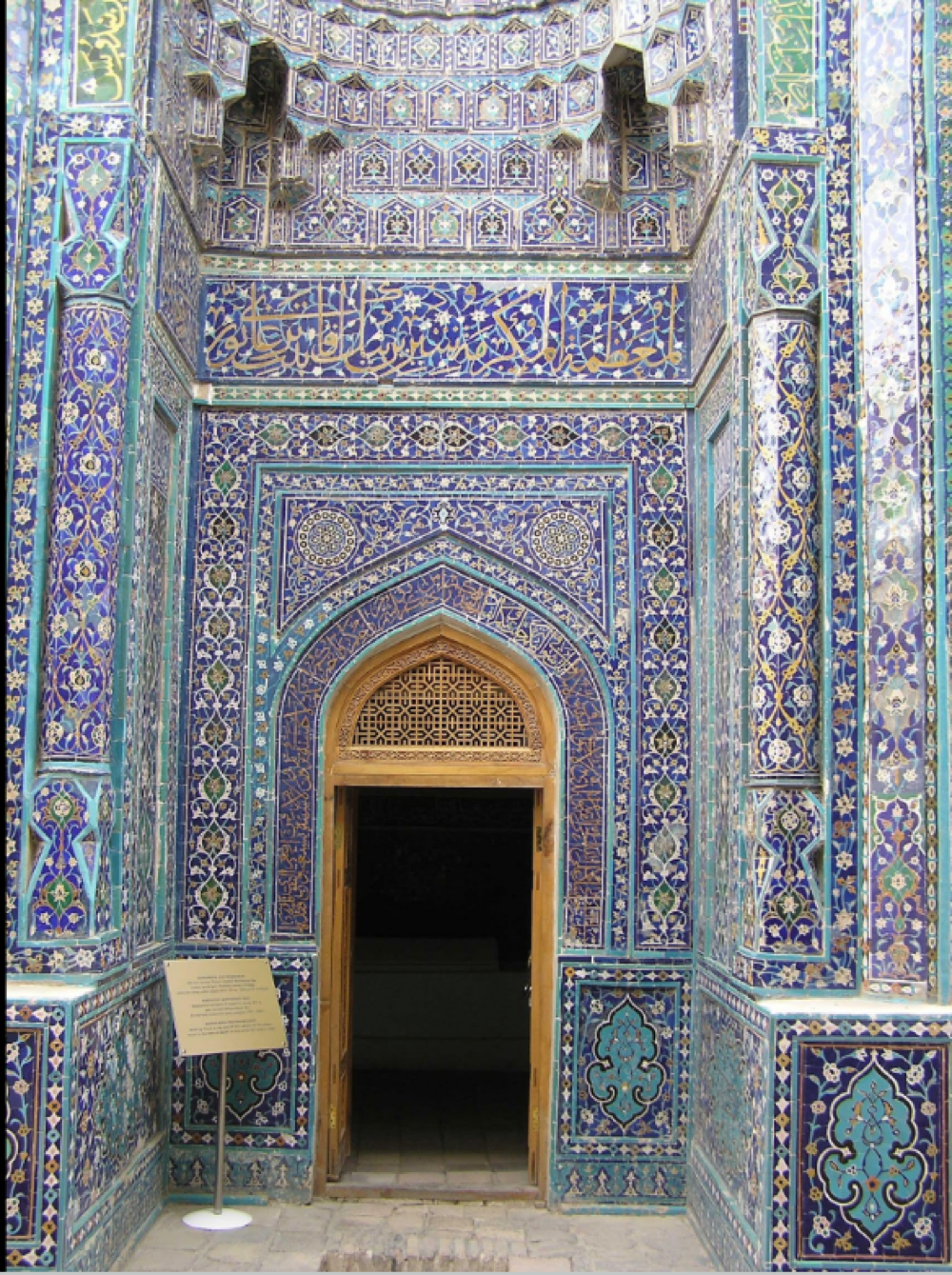
Describe the Pishtaq of the Mausoleum of Shirin Beg Agha and its significance
rising, monumental entryway/portal, iwan inside, covered by tile mosaics: brilliant blues with white and teal (Muquarnas in tile). Inscription: socrates, projects her as a woman of culture and knowledge. Tile panels like carpets=apparel personify building and cross between textiles and architecture=roles of women. Inscription: futility of earthly wealth and status, painful appeal and request, loneliness of death.
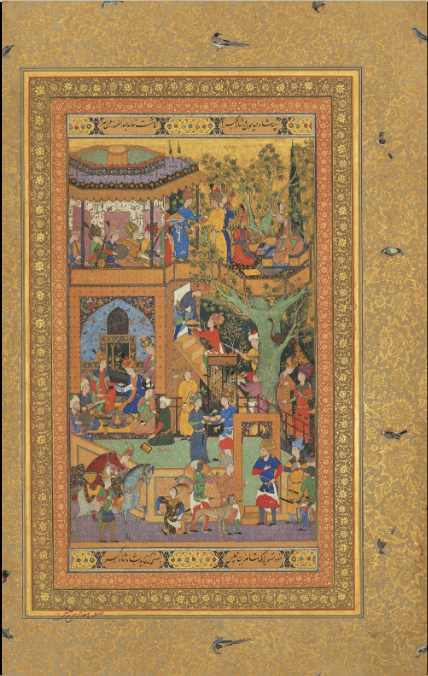
The Youthful Akbar Presenting a Picture to his Father Humayun, Mughal, 1550s, ‘Abd al-Samad (Golestan Palace Library, Tehran)
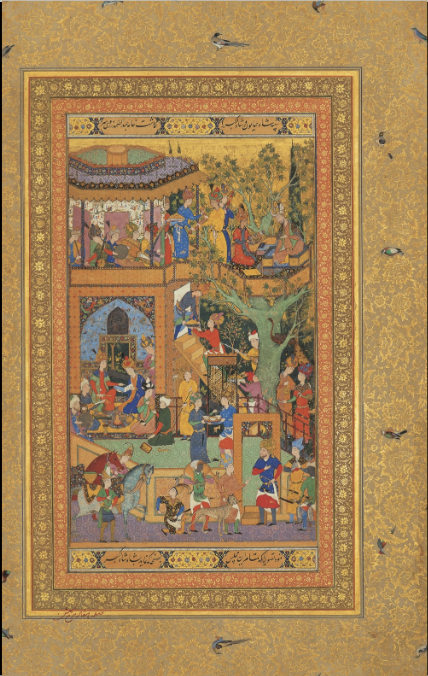
Describe the composition of the Youthful Akbar Presenting a Picture to his Father Humayun and its significance
small and intricate. Architectural setting: move through it: enter in street, move to door with servant and music and man in profile with pen and paper=artist, then go up staircase to upper story=treehouse and climax. Climax: emperor to come offers painting to father=this very painting=who is author? Shows prowess to associate his painting with the emperor
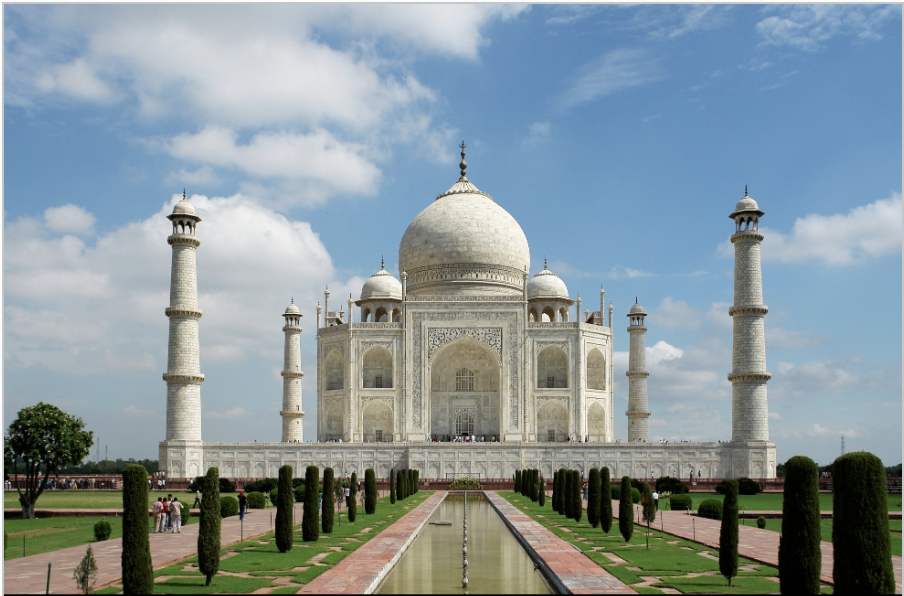
Taj Mahal, Mughal, Agra, India, 1631-47
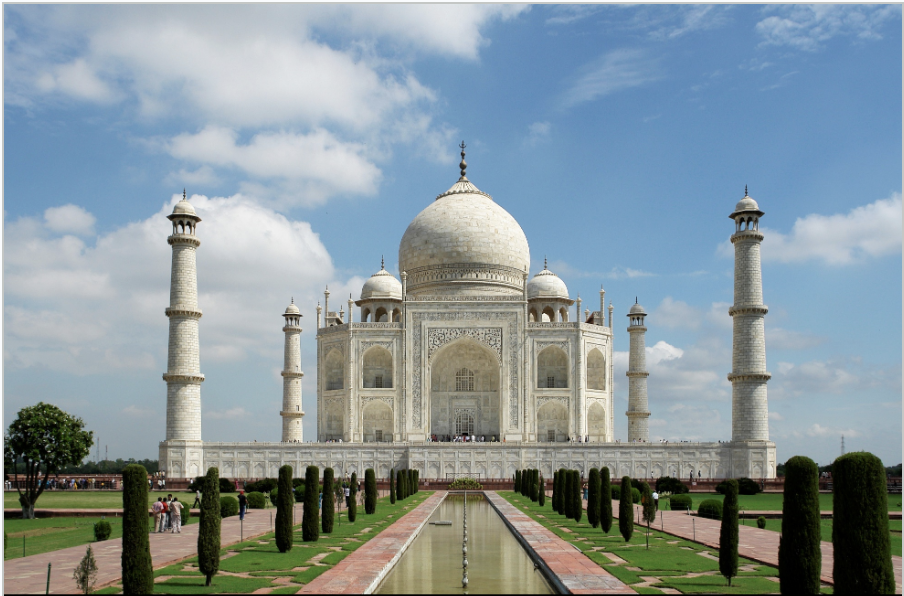
Describe the context of the Taj Mahal and its significance
he was in mourning for his wife so he built it for his own glory and mourning. “Poem in stone”: love or power, Indian color symbolism=both Islamic and Indian
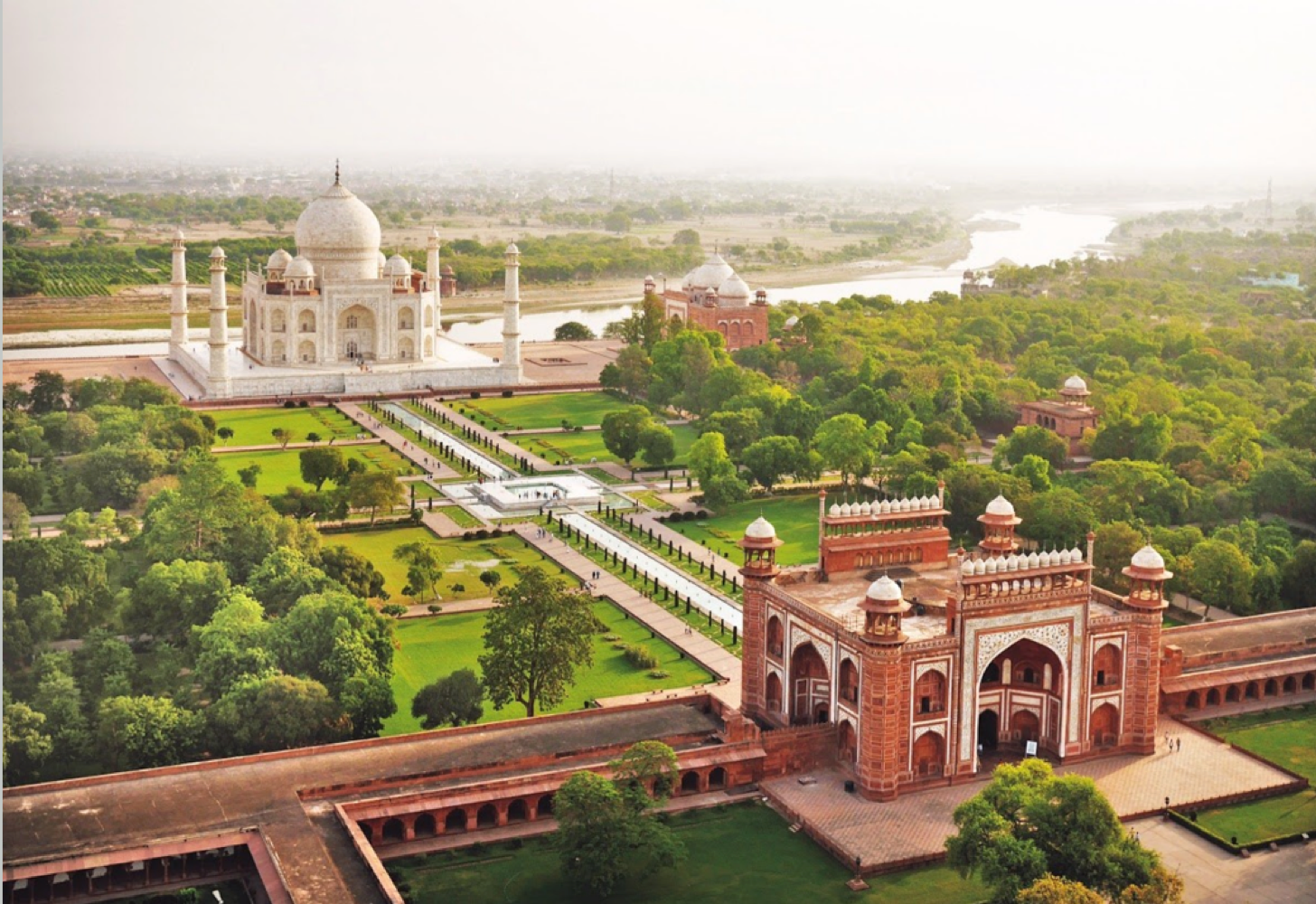
Describe the plan of the Taj Mahal complex and its significance
axial complex: bilateral symmetry with multiple buildings. Geometry, axial planning, funerary section and utilitarian, gate open to 4 part garden with pool leading to Mausoleum: blurr earthly=ethereal. Flanked by mosque and assembly hall and red buildings: inn for travelers and market streets=upkeep for funerary side and supports tomb, for all to see and admire and visit
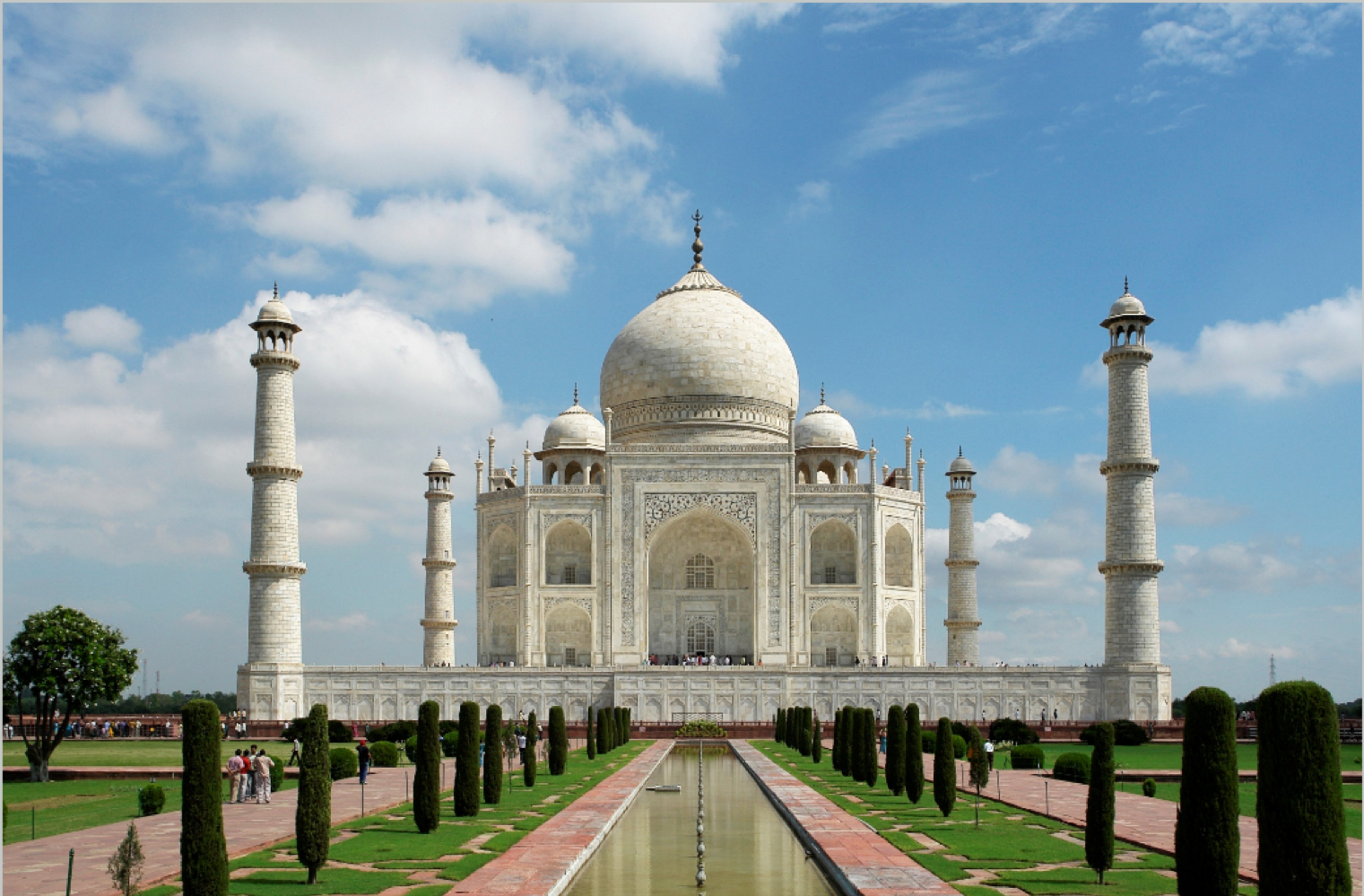
Describe the architecture of the Mausoleum and its significance
Bulbous dome on drum, Pishtaq, base with Minurets, features from Timur’s and Amir. White marble=priest class and red sandstone=warrior class: hierarchy, local Indian sandstone. White marble shows garden: paradise, base has continuous vegetation motifs with plants from across the globe.
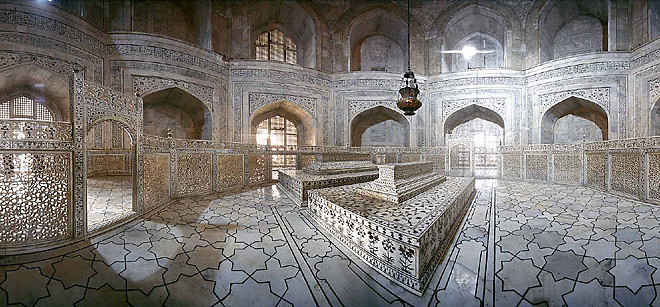
Describe the inside of the Taj Mahal and its significance
empty tombs with bodies below, buried next to wife, adorned by flowers: pietra dura=hard stone, precious gemstones.

mirador
a framed lookout point that offers expansive views

Pishtaq
a tall rectangular frame around an arched opening
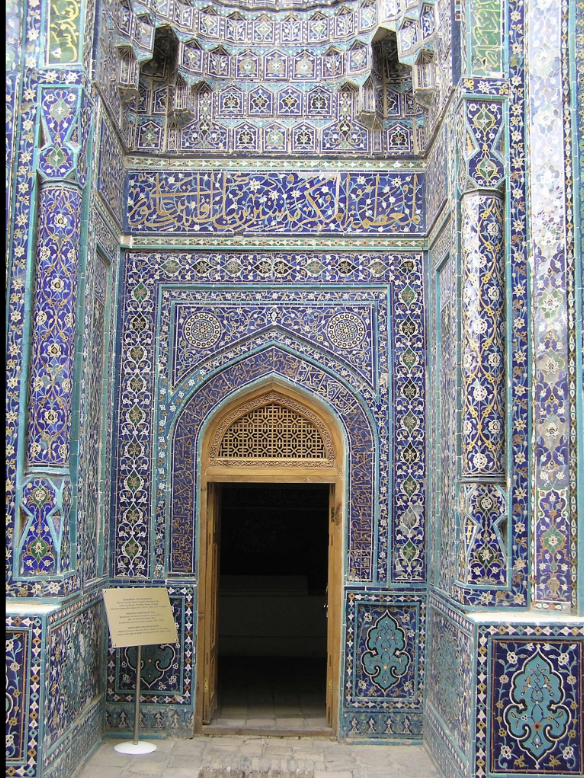
iwan
an architectural feature that consists of a vaulted space enclosed on three sides and open on the other
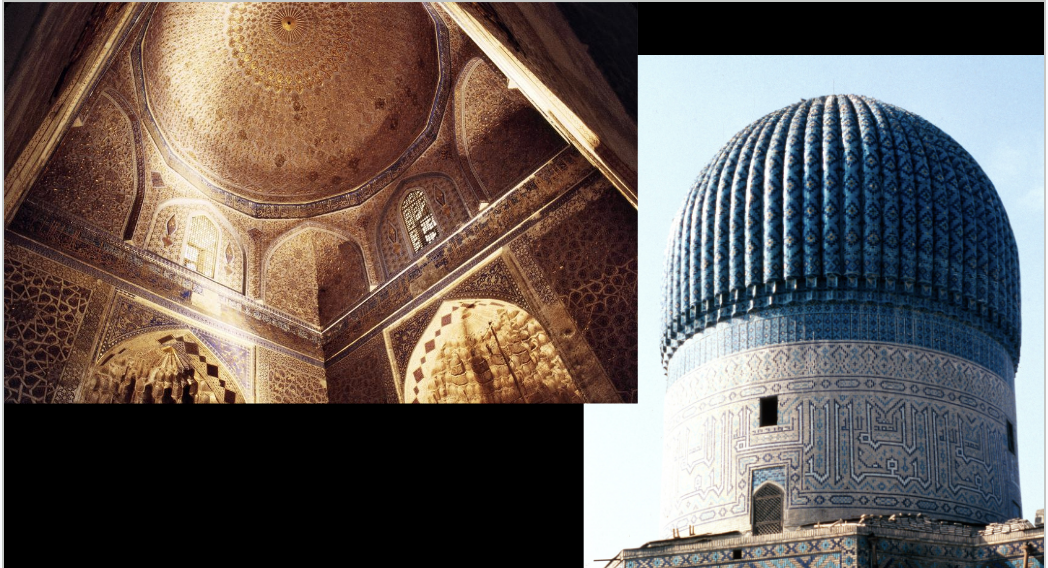
double shell dome
a dome with distinct exterior and interior profiles
caravanserai
an inn for travelers
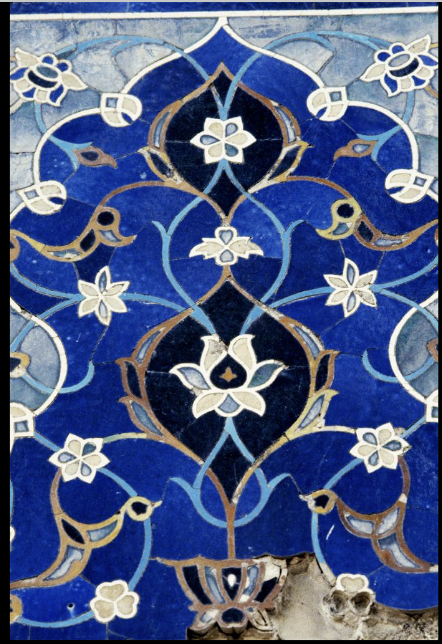
pietra dura
inlay of cut and fitted stones
 Note
Note  Flashcards (141)