Unemployment
 Call Kai
 Learn
Learn Practice Test
 Spaced Repetition
 Match
Match Flashcards
 Knowt Play
1/16

Earn XP
Description and Tags
lecture 9
Name | Mastery | Learn | Test | Matching | Spaced | Call with Kai |
|---|
No analytics yet
Send a link to your students to track their progress
17 Terms
working age population
those age 16 or older who are not in the military or institutionalized (school)
no maximum age
no restriction on number of hours worked
military and institutionalized individuals are not available to work
employed
working age people who are working
employed if:
self employed
temporarily absent from a job
worked at least one hour for pay of some kind in the past week
unemployed
working age people without jobs who are trying to get jobs
must be:
part of working age population
not currently working
actively searching for work
able to accept a job if it were offered
labor force
the employed PLUS the unemployed
those in the working age population who are neither employed nor unemployed are NOT IN THE LABOR FORCE
ex) retired, in school, taking care of family, gave up looking for a job
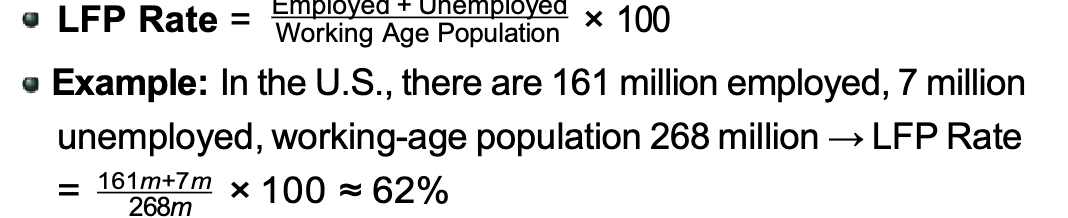
labor force participation rate
(employed + unemployed)/working age population multiplied by 100
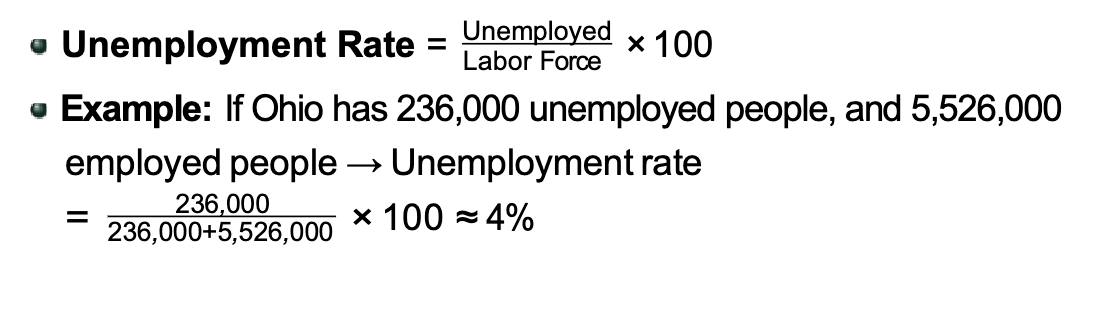
unemployment rate
the percentage of the labor force that is unemployed
unemployed/labor force times 100
equilibrium unemployment rate
the long run unemployment rate to which the economy tends to return
in the US- between 4 and 5 percent
Dynamic labor market
makes it easy for new people to find jobs quickly
think of a restaurant:
some people leave= others take their place; can be quick but can also be a long line
some sectors have shrunk while others have expanded
Unemployment in a dynamic labor market
job seekers:
most job seekers already have jobs
employers prefer candidates who are currently employed
unemployment spells
most are short
risk of long term unemployment (6+months) rises in economic downturns
lasting impacts of long term unemployment
employer discriminiation
skill loss, weaker networks
broader implication: some stop searching
alternative measures of unemployment
official rate: only counts active job seekers
marginally attached: want work but aren’t currently searching
discouraged workers: stop searching because they believe no jobs are available (counted in marginally attached)
underemployed: part-time but want full time, or job is underusing skills
involuntary part time: someone who wants full time work and is working part time because they haven’t found a full time job
frictional unemployment
unemployment due to the time itakes for employers to search for workers and for workers to search for jobs
factors that shape:
efficiency of resources the employers and workers use to find each other
alignment of skills workers have and the skills that employers desire
unemployment insurance and other income support during unemployment
structural unemployment
unemployment that occurs because wages don’t fall to bring labor demand and supply into equilibrium
reasons:
efficiency wages
institutional causes
wages kept from falling by structural elements
when wage is above equilibrium:
employers demand fewer workers
more workers want those jobs
cyclical unemployment
unemployment that is due to a temporary downturn in the economy
efficiency wages
higher wages paid to encourage greater work productivity
instututional causes for structural unemployment
unions keep wages high for some workers
job protection regulations make it hard to fire workers
the minimum wage keeps wages from falling below the set minimum wage
economic costs of unemployment
earnings lost,
hysteresis
high unemployment can raise natural unemployment rate- slow job recovery
government budget strain
less tax revenue + higher safety net spending
social costs of unemployment
unemployment is isolating and painful
less structured
more stress
reduced spending
worse life outcomes
permanent earnings losses,
poorer health
children of laid off workers:
worse academics, mental health,
ultimately, lower adult earnings

