Ch. 5 The Integumentary System
 Studied by 0 people
 Call Kai
 Learn
Learn Practice Test
 Spaced Repetition
 Match
Match Flashcards
 Knowt Play
1/26

There's no tags or description
Looks like no tags are added yet.
Name | Mastery | Learn | Test | Matching | Spaced | Call with Kai |
|---|
No analytics yet
Send a link to your students to track their progress
27 Terms
Parts of the integumentary system
skin, hair, nails, sweat/oil glands
Skin
- largest organ
- accounts for 7% of body weight
- varies in thickness from 1.5-4.4 mm
2 layers of skin
epidermis and dermis
hypodermis
the layer of skin beneath the dermis, which serves as a storage repository for fat
skin structure
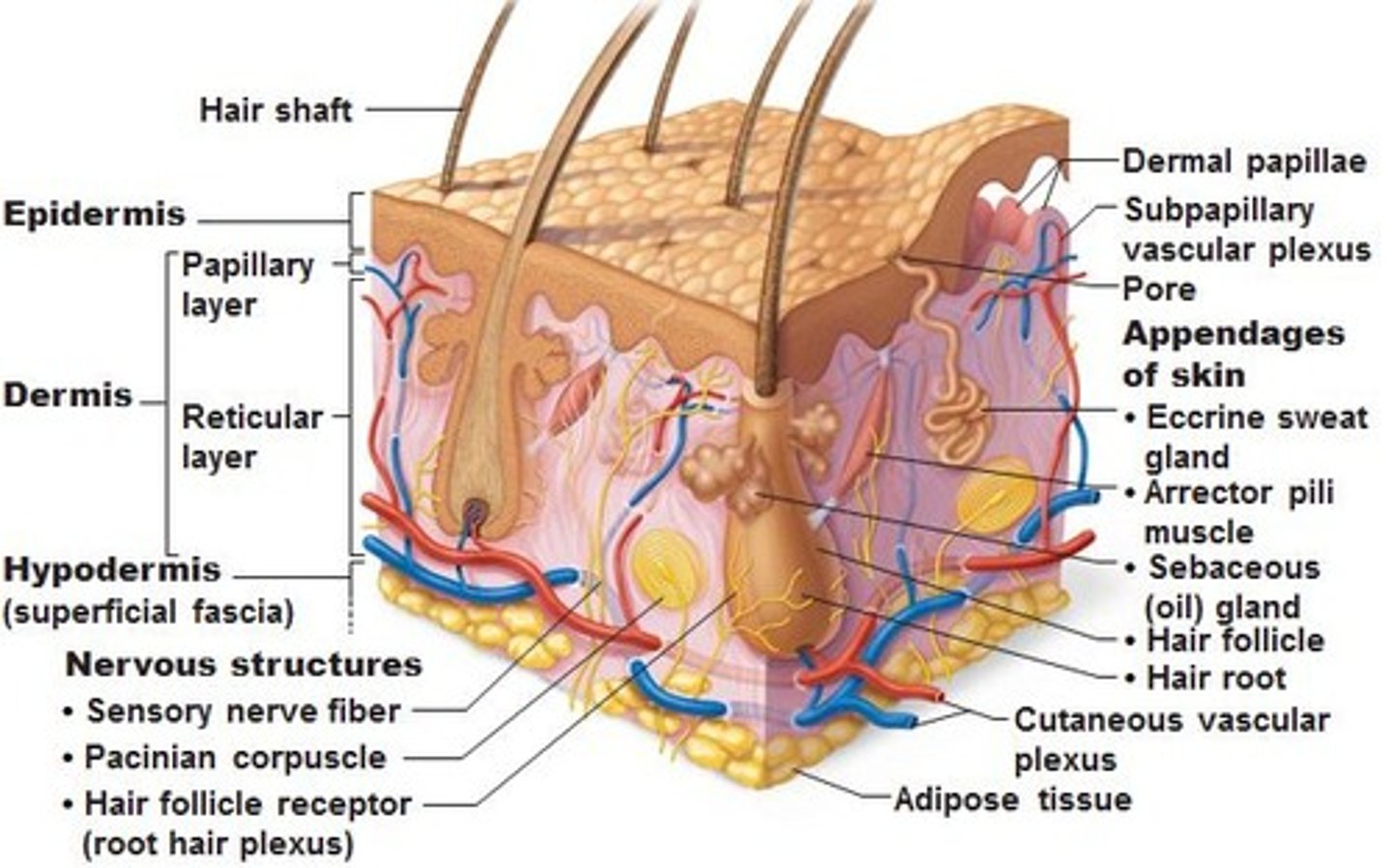
function of skin and hypodermis
- cushions and insulates deeper organs
- protects body from bumps, scrapes, and cuts
- protects body from chemicals, heat, and cold
- acts as a mini-excretory system
- produciton of vitamin D (calcium absorption for strong bones)
- contains sensory receptors associated with nerve endings
what are the 4 main cell types in the epidermis
- Keratinocytes
- Melanocytes
- Tactile (Merkel) cells
- Dendritic (Langerhans) cells
melanocytes
produce melanin
tacticle epithelial cells (Merkel cells)
sense of touch
dendritic cells (langerhans cells)
immune system
keratinocytes
most abundant cell type in epidermis
function of keratinocytes
- arise from deepest layer of epidermis
- produce keratin: a tough fibrous protein
- produce antibodies and enzymes
- dead at skin's surface
layers of epidermis from deepest to shallowest
stratum basale (stratum germinativum), stratum spinosum, stratum granulosum, stratum lucidum (only in thick skin), stratum corneum
stratum basale
- deepest layer of epidermis
- attached to underlying dermis
- cells actively divide
- contains keratinocytes merkel cells (sensory nerve ending), melanocytes (secrete melanin)
melanin in stratum basale
leaves melanocytes and goes into keratinocytes to get between the nucleus and UV rays to protect nucleus
stratum spinosum (spiny layer)
- "spiny" appearance caused by artifacts of histological preparation
- contains keratinocytes
- contains star-shaped dendritic cells which are are type of macrophage
- uses endocytosis to engulf and dispose
stratum granulosum
- keratinocytes
- keratohyaline granules: contain a waterproofing glycolipid which prevents water loss
- skin gets tougher as layer gets more superficial
Stratum lucidum (clear layer)
- occurs only in thick skin
- composed of a few rows of flat, dead keratinocytes
Stratum corneum (horny layer)
- thick layer of dead keratinocytes and thickened plasma membranes
- protects skin against abrasion and penetration
- callus: stratum corneum getting thicker
dermis
- second major layer of the skin
- strong, flexible connective tissue
- richly supplied with blood vessels and nerves
what are the 2 layers of the dermis
Papillary layer- includes dermal papillae
Reticular layer- deeper layer (80% of thickness of dermis)
lines and ridges of the hand
- friction ridges
- openings of sweat gland ducts
- finger prints
dermal papillae
increase surface area between dermis and epidermis, diffusion, reduce risk of blisters
hypodermis
- deep to the skin also called (superficial fascia)
- contains areolar and adipose connective tissues
- anchors skin to underlying structures
- helps insulate the body
what are the 3 pigments that contribute to skin color
melanin (most important), Carotene, hemoglobin
carotene
yellowish pigment from carrots and tomatoes
hemoglobin
caucausin skin contains little melanin, allows crimson color of blood to show through

