Week 2 - Special Senses - Taste

0.0(0)
Studied by 0 people
call kaiCall Kai
learnLearn
examPractice Test
spaced repetitionSpaced Repetition
heart puzzleMatch
flashcardsFlashcards
GameKnowt Play
Card Sorting

1/18

encourage image

There's no tags or description

Looks like no tags are added yet.

Last updated 10:20 AM on 3/14/26
Name
Mastery
Learn
Test
Matching
Spaced
Call with Kai

No analytics yet

Send a link to your students to track their progress

19 Terms

1
New cards

Special Senses & Organs

All special senses have corresponding ORGANS:

  • Organ → special sense → stimuli → neural sensation

  • eye → vision → light → colour

  • Ear & cochlea → hearing → sound waves → pitch

  • Vestibular apparatus → balance → head movement → motion

  • Noes & olfactory epithelium → smell → airborne chemicals → smell

  • Tongue & taste buds → gustation → tastants → flavour

2
New cards

Taste & Smell: Definitions

Both taste and smell are primitive senses that influence if nearby substances should be savoured (eaten) or avoided (possible toxicity).

  • Both senses influence digestive secretions; apetite

  • People have varying degrees of taste & smell acuity (sharpness)

3
New cards

Taste vs Smell

Smell is less important and sensitive than taste in humans

4
New cards

Taste & Smell: Function

Taste is 80% smell

  • Both stimulated by chemoreceptors, often working in tandem

  • Taste receptors → excited by food chemicals dissolved in saliva

  • Smell receptors → airborne chemicals coating nasal membrane

  • Both receptor cells can be continuously renewed

    • Smell receptors can be damaged by toxic fumes

    • Taste receptors can be damaged by hot foods, rigorous mechanical action

  • Old people have a decreased ability to replace these neurons, hence they prefer to salt their foods more, and bitter foods they disliked when young

    • THIS IS WHY DAD IS SO OBSESSED WITH COROLLA / BITTER MELON
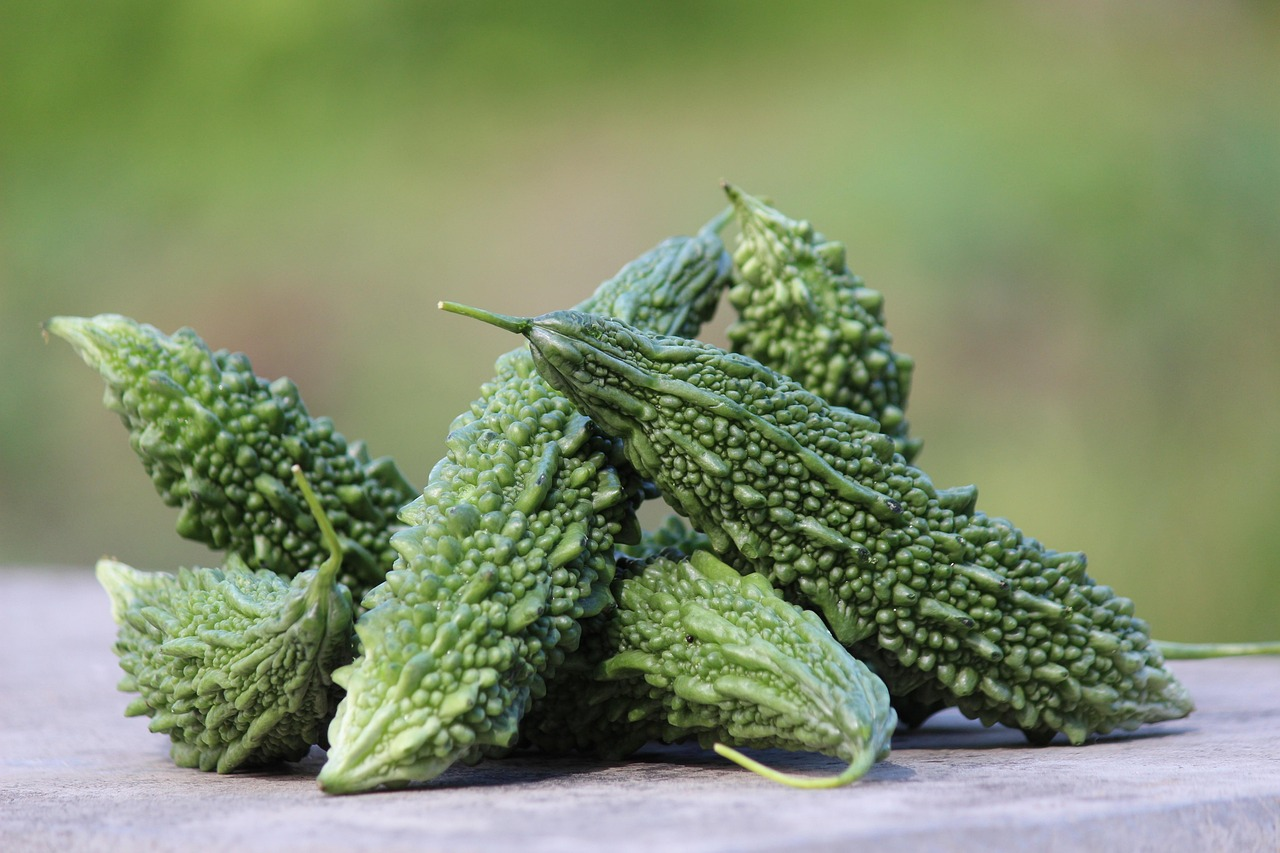
<p><strong><em><u><mark data-color="yellow" style="background-color: yellow; color: inherit;">Taste is 80% smell</mark></u></em></strong></p><ul><li><p>Both stimulated by <strong><mark data-color="green" style="background-color: green; color: inherit;">chemoreceptors</mark></strong>, often working in tandem</p></li><li><p><strong><em>Taste</em></strong> receptors → excited by food chemicals dissolved in saliva</p></li><li><p><strong><em>Smell</em></strong> receptors → airborne chemicals coating nasal membrane</p></li><li><p><strong><em><u><mark data-color="green" style="background-color: green; color: inherit;">Both receptor cells can be continuously renewed</mark></u></em></strong></p><ul><li><p>Smell receptors can be damaged by toxic fumes</p></li><li><p>Taste receptors can be damaged by hot foods, rigorous mechanical action</p></li></ul></li><li><p>Old people have a decreased ability to replace these neurons, hence they prefer to salt their foods more, and bitter foods they disliked when young</p><ul><li><p>THIS IS WHY DAD IS SO OBSESSED WITH COROLLA / BITTER MELON</p></li></ul></li></ul><p></p>
5
New cards

Taste/Gustation: Tongue anatomy

  • Approx 10,000 taste buds on the tongue

  • Raised bumps, called papillae, transduce gustation/taste

    • Release action potentials depending on the chemicals sensed in food that has been digested by saliva

6
New cards

Taste/Gustation: Papillae & Taste buds

Each papillae is made of many taste buds.

Each taste bud consists of:

  • Supporting cells

    • Extend through a taste pore

  • Gustatory (taste) cells - chemoreceptors

    • Extend through a taste pore

  • Gustatory (taste) hairs

    • Found on the surface bathed in saliva

    • On both gustatory (taste) cells & supporting cells

  • Basal cells

    • stem cells that divide and differentiate to replace gustatory (taste) cells (chemoreceptors)

Each taste bud responds to 2 or more taste qualities
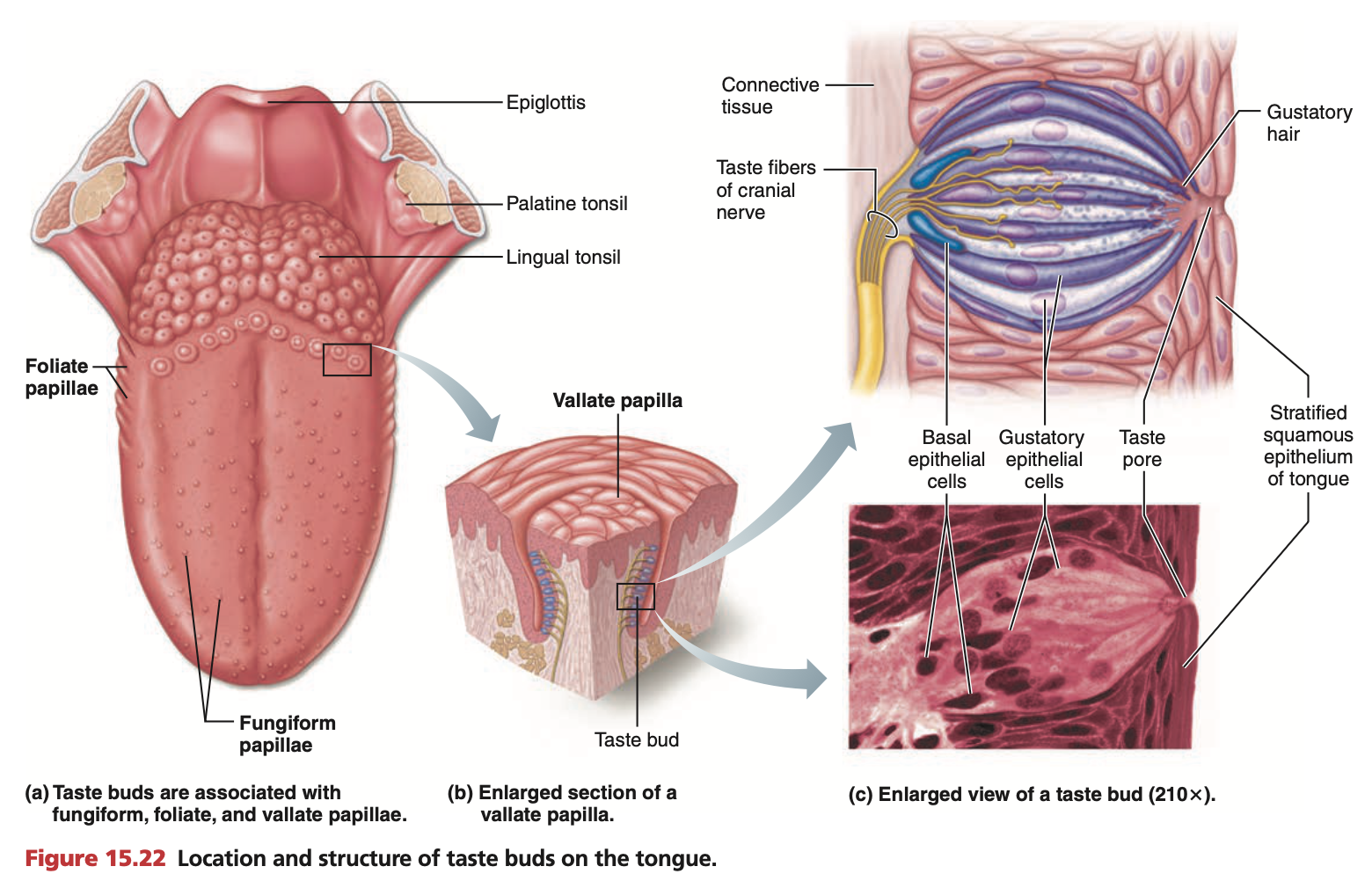
<p>Each papillae is made of many <strong><mark data-color="yellow" style="background-color: yellow; color: inherit;">taste buds</mark>.</strong></p><p>Each <strong><mark data-color="yellow" style="background-color: yellow; color: inherit;">taste bud</mark> </strong>consists of:</p><ul><li><p>Supporting cells</p><ul><li><p>Extend through a <strong>taste pore</strong></p></li></ul></li><li><p><mark data-color="green" style="background-color: green; color: inherit;">Gustatory (taste) cells - chemoreceptors</mark></p><ul><li><p>Extend through a <strong>taste pore</strong></p></li></ul></li><li><p>Gustatory (taste) hairs</p><ul><li><p>Found on the surface bathed in saliva</p></li><li><p>On both gustatory (taste) cells &amp; supporting cells</p></li></ul></li><li><p>Basal cells</p><ul><li><p>stem cells that divide and differentiate to replace gustatory (taste) cells (chemoreceptors)</p></li></ul></li></ul><p>Each taste bud responds to<strong> 2 or more taste qualities</strong></p>
7
New cards

Taste/Gustation: Mouth

Food in the mouth can have their taste enhanced or reduce by:

  • Mechanoreceptors - food texture (e.g crispy chips)

  • Thermoreceptors - food temperature (e.g warm soup)

  • Nociceptors (pain) - food spiciness (e.g chillies)

8
New cards

Taste/Gustation: 5 Taste sensations

  1. Sweet - encourages carbohydrate (CHO) intake

  2. Salty - encourages mineral intake

  3. Sour - encourages Vitamin C intake, an essential vitamin

  4. Bitter - protective taste, warns of natural poisons and spoilt food

  5. Umami - Guides intake of protein

5 tastes can be simultaneoulsly interpreted by the brain, allowing for complex flavours.

  • all 5 tastes are stimulated by food chemicals the body requires to function, hence why the foods they are stimulated by are perceived as “tasty”

  • Each taste has a homeostatic value - value towards retaining the body’s homeostasis

9
New cards

Taste/Gustation: 5 Taste sensations - Sweet chemicals

  • Glucose

  • Similarly structured molecules (artificial sweeteners)

10
New cards

Taste/Gustation: 5 Taste sensations - Salty chemicals

  • Na+

  • Table/cooking salt, processed foods

11
New cards

Taste/Gustation: 5 Taste sensations - Sour chemicals

  • H+ molecules — acids (think pH, presence of Hydrogen)

  • Fruits (lemon, lime), fermented foods (e.g vinegar, yoghurt)

12
New cards

Taste/Gustation: 5 Taste sensations - Bitter chemicals

  • Wide range of chemicals and toxins

  • alkaloids (coffee), hops (beer), tannins (wine), tea, aspirin

13
New cards

Taste/Gustation: 5 Taste sensations - Umami chemicals

  • Savoury taste

  • Activated by amino acid

    • L-glutamate

  • protein rich foods, soy sauce, dashi

14
New cards

Taste/Gustation: Possible 6th taste?

Possible 6th taste available for fats & lipids

15
New cards

Taste/Gustation: Gustatory (taste) cells, chemoreceptors — Sensation (sans SALT)

  1. Food chemicals (tastants) are released when dissolved in saliva

    1. Tastants include: H+ ion (sour chemical), L-glutamate (umami chemical), glucose (sugar chemical), etc. NOT SALT

  2. Tastants travel down taste pores, connecting with gustatory hairs on gustatory (taste) cells (chemoreceptors)

  3. Tastant (food chemical) is a ligand that binds to ligand-gated/chemically-gated ion channels on the cell membrane of gustatory cells (chemoreceptors)

  4. Depolarisation of sensory neuron (gustatory cell - chemoreceptor) is triggered.

  5. Sudden cell depolarisation triggers voltage-gated ion channels to open, increasing flow of cations INTO the gustatory cell.

  6. Increased cation reflux triggers gustatory cell releases neurotransmitters

  7. Neurotransmitter binds to “sensory dendrites”, triggering depolarisation and action potentials to be sent across afferent nerve fibres
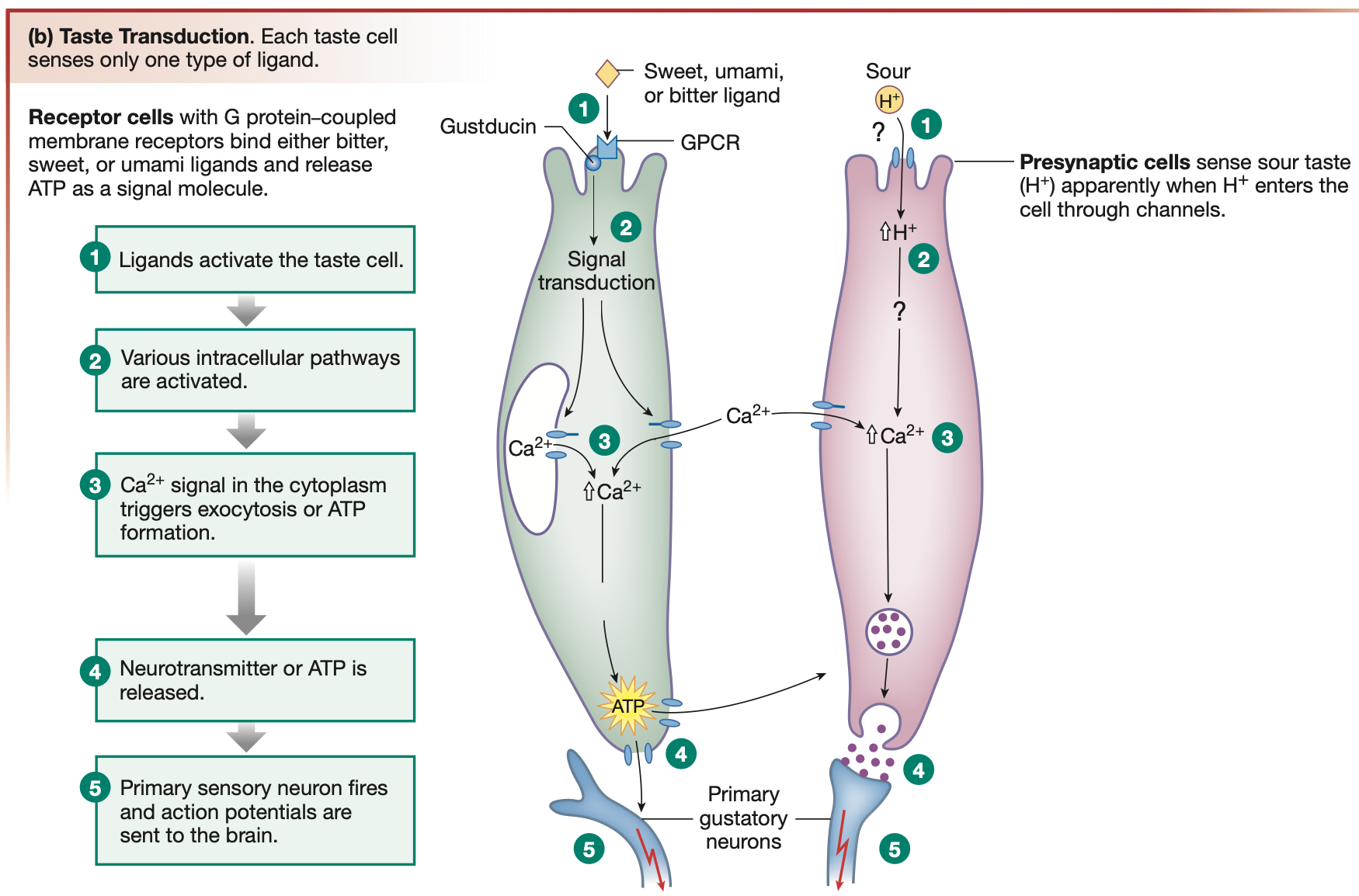
<ol><li><p>Food chemicals (<strong><mark data-color="green" style="background-color: green; color: inherit;">tastants</mark></strong>) are released when dissolved in <strong><mark data-color="green" style="background-color: green; color: inherit;">saliva</mark></strong></p><ol><li><p>Tastants include: H+ ion (sour chemical), L-glutamate (umami chemical), glucose (sugar chemical), etc. <strong><em><u>NOT SALT</u></em></strong></p></li></ol></li><li><p>Tastants travel down <strong><mark data-color="yellow" style="background-color: yellow; color: inherit;">taste pores</mark></strong>, connecting with <strong><mark data-color="green" style="background-color: green; color: inherit;">gustatory hairs</mark></strong> on <strong><mark data-color="green" style="background-color: green; color: inherit;">gustatory (taste) cells (chemoreceptors)</mark></strong></p></li><li><p>Tastant (food chemical) is a ligand that binds to <mark data-color="green" style="background-color: green; color: inherit;">ligand-gated/chemically-gated ion channels</mark> on the cell membrane of <strong>gustatory cells (chemoreceptors)</strong></p></li><li><p><strong><mark data-color="purple" style="background-color: purple; color: inherit;">Depolarisation</mark></strong> of sensory neuron (gustatory cell - chemoreceptor) is triggered.</p></li><li><p>Sudden cell depolarisation triggers <strong><mark data-color="green" style="background-color: green; color: inherit;">voltage-gated ion channels</mark></strong> to open, increasing flow of <mark data-color="green" style="background-color: green; color: inherit;">cations</mark> INTO the gustatory cell.</p></li><li><p>Increased cation reflux triggers gustatory cell releases <mark data-color="purple" style="background-color: purple; color: inherit;">neurotransmitters</mark> </p></li><li><p>Neurotransmitter binds to “<mark data-color="purple" style="background-color: purple; color: inherit;">sensory dendrites</mark>”, triggering depolarisation and action potentials to be sent across <strong><mark data-color="blue" style="background-color: blue; color: inherit;">afferent</mark></strong><mark data-color="blue" style="background-color: blue; color: inherit;"> nerve fibres</mark></p></li></ol><p></p>
16
New cards

Taste/Gustation: Gustatory (taste) cells, chemoreceptors — Sensation (SALT only)

  1. Tastant Na+ from salty foods dissolves in saliva

  2. Na+ diffuses into taste pore and comes into contact with gustatory hairs

  3. Na+ enters the gustatory cell - chemoreceptors, triggering cell depolarisation

  4. Change in membrane potential triggers voltage-gated ion channels (Na+ & Ca2+) to open, allowing both ions to flow INTO the cell

  5. Increased cation reflux triggers gustatory cell releases neurotransmitters - serotonin

  6. Binding of serotonin to “sensory dendrites” triggers depolarisation and action potentials to be sent along afferent nerve fibres.
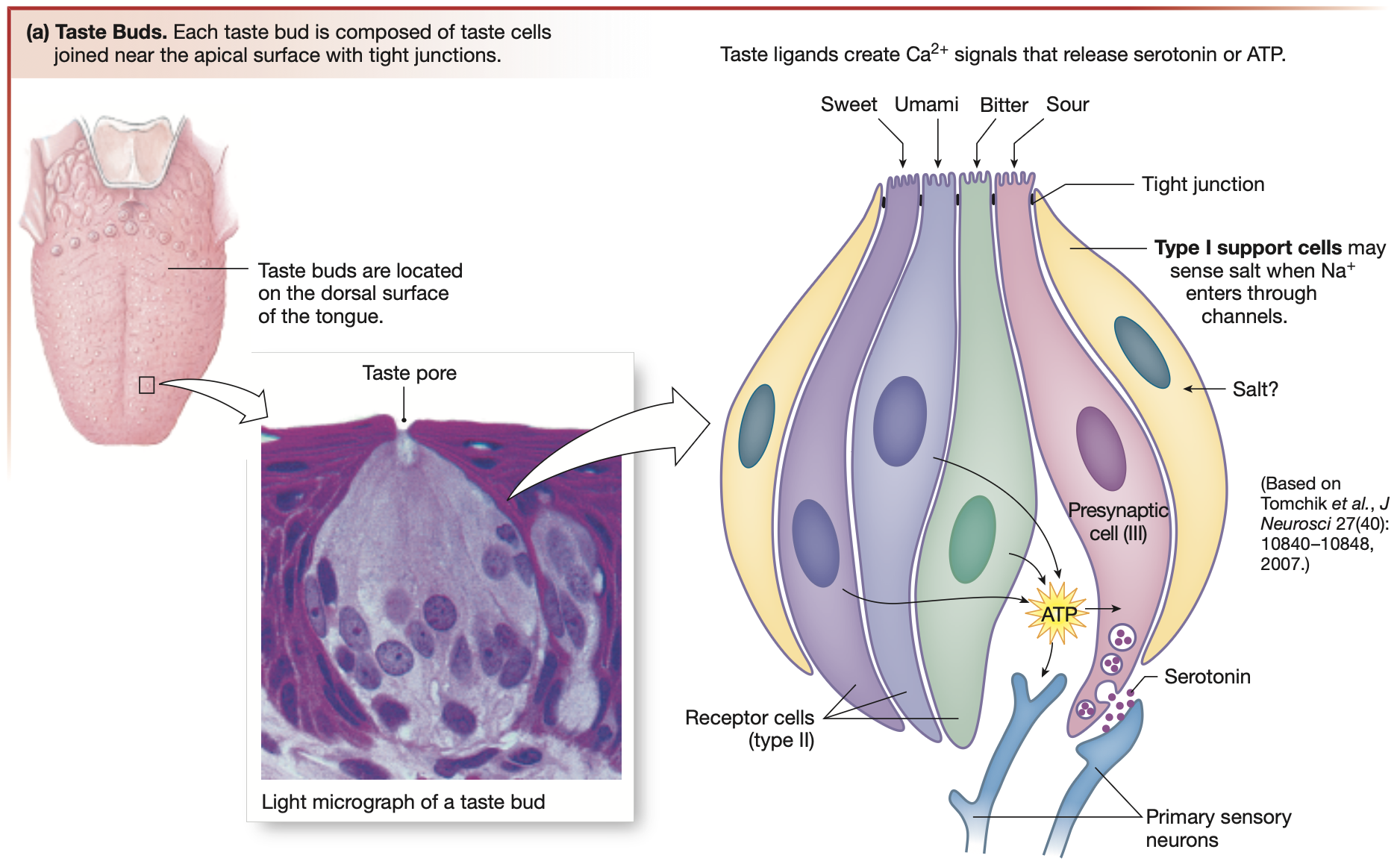
<ol><li><p><strong><mark data-color="green" style="background-color: green; color: inherit;">Tastant Na+</mark></strong> from <strong><mark data-color="red" style="background-color: red; color: inherit;">salty foods</mark></strong> dissolves in <strong><mark data-color="green" style="background-color: green; color: inherit;">saliva</mark></strong></p></li><li><p>Na+ diffuses into <strong><mark data-color="yellow" style="background-color: yellow; color: inherit;">taste pore</mark></strong> and comes into contact with <strong><mark data-color="yellow" style="background-color: yellow; color: inherit;">gustatory hairs</mark></strong></p></li><li><p>Na+ enters the <strong><mark data-color="green" style="background-color: green; color: inherit;">gustatory cell - chemoreceptors</mark></strong>, triggering cell <strong><mark data-color="purple" style="background-color: purple; color: inherit;">depolarisation</mark></strong></p></li><li><p>Change in membrane potential triggers <strong><mark data-color="green" style="background-color: green; color: inherit;">voltage-gated ion channels</mark></strong> (<strong><mark data-color="green" style="background-color: green; color: inherit;">Na+ &amp; Ca2+</mark></strong>) to open, allowing both ions to flow INTO the cell</p></li><li><p>Increased cation reflux triggers gustatory cell releases <mark data-color="purple" style="background-color: purple; color: inherit;">neurotransmitters - </mark><strong><mark data-color="purple" style="background-color: purple; color: inherit;">serotonin</mark></strong> </p></li><li><p>Binding of serotonin to “<strong><mark data-color="purple" style="background-color: purple; color: inherit;">sensory dendrites</mark></strong>” triggers depolarisation and action potentials to be sent along <mark data-color="purple" style="background-color: purple; color: inherit;">afferent nerve fibres.</mark></p></li></ol><p></p>
17
New cards

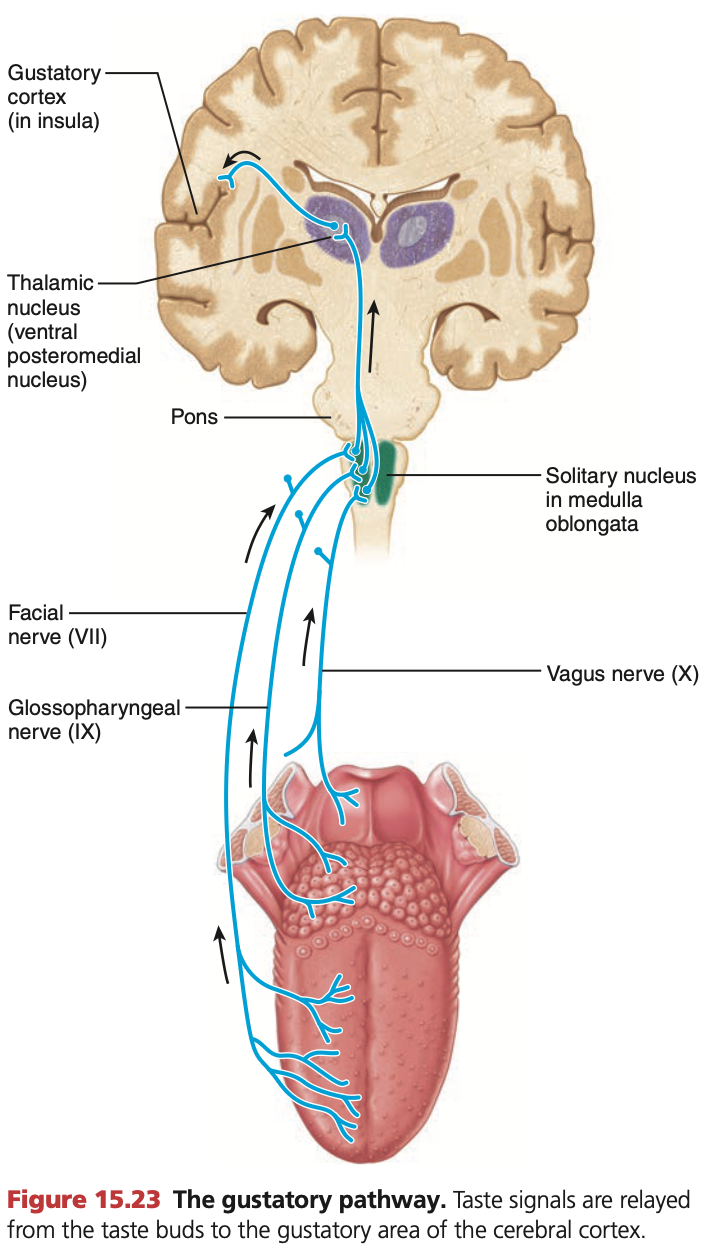
Taste/Gustation: Neural Pathways

3 Cranial nerves are used to relay taste sensations to the brain.

  • Cranial nerve 7: innervates front third of tongue

  • Cranial nerve 9: innervates back two-thirds of tongue

  • Cranial nerve 10 (Vagus nerve): innervates the very back of the tongue, more sensitive to unpleasant & bitter stimuli

Then, all three cranial nerves converge at the solitary nucleus within the brain stem.

Signals sent to the thalamus → then to gustatory cortex (insular lobe)
<p>3 Cranial nerves are used to relay taste sensations to the brain.</p><ul><li><p><mark data-color="blue" style="background-color: blue; color: inherit;">Cranial nerve 7:</mark> innervates <strong>front third</strong> of tongue</p></li><li><p><mark data-color="blue" style="background-color: blue; color: inherit;">Cranial nerve 9:</mark> innervates <strong>back two-thirds</strong> of tongue</p></li><li><p><mark data-color="blue" style="background-color: blue; color: inherit;">Cranial nerve 10 (Vagus nerve):</mark> innervates the <strong>very back</strong> of the tongue, more sensitive to <strong><mark data-color="green" style="background-color: green; color: inherit;">unpleasant &amp; bitter stimuli</mark></strong></p></li></ul><p></p><p>Then, all three cranial nerves converge at the <strong><mark data-color="purple" style="background-color: purple; color: inherit;">solitary nucleus</mark></strong> within the <strong><mark data-color="blue" style="background-color: blue; color: inherit;">brain stem</mark></strong>.</p><p>Signals sent to the <strong><mark data-color="blue" style="background-color: blue; color: inherit;">thalamus</mark> </strong>→ then to <strong><mark data-color="purple" style="background-color: purple; color: inherit;">gustatory cortex</mark></strong> (<strong><em><u><mark data-color="green" style="background-color: green; color: inherit;">insular lobe</mark></u></em></strong>)</p>
18
New cards

Taste/Gustation: Gustatory cortex (insular lobe)

  • Information on taste first travels to the hypothalamus, travelling through the limbic system

    • area that perceives “appreciation” for what is being tasted

  • Taste triggers digestive reflexes to prepare GI tract and gagging/vomiting if we eat foul-tasting substances

19
New cards

Taste/Gustation: Variation in taste

Taste is the most variable sense across all humans.

  • Humans an have a varying number of taste buds (max 10,000)

    • More tastebuds allow for more sensitivity to flavours in food

    • Children have more tastebuds than adults

      • People with a high number of taste buds: supertasters (~25%)

      • People with a low number of taste buds: non-tasters (~25%)

  • Humans can have a varying pattern in taste buds.

    • Colder climate populations better tolerate/enjoy bitter foods like coffee, tea, beer.

    • Tropical-region descendants enjoy spicy foods.

Explore top notes

note
AP Music Theory Ultimate Guide
Updated 1072d ago
0.0(0)
note
Human Geography Unit 5
Updated 347d ago
0.0(0)
note
Data Trends
Updated 1149d ago
0.0(0)
note
Fluids: chapter 8
Updated 480d ago
0.0(0)
note
AP Music Theory Ultimate Guide
Updated 1072d ago
0.0(0)
note
Human Geography Unit 5
Updated 347d ago
0.0(0)
note
Data Trends
Updated 1149d ago
0.0(0)
note
Fluids: chapter 8
Updated 480d ago
0.0(0)

Explore top flashcards

flashcards
Frans HCE 11
53
Updated 1094d ago
0.0(0)
flashcards
IMENICE
32
Updated 393d ago
0.0(0)
flashcards
abeka history 10 section 5.1
23
Updated 920d ago
0.0(0)
flashcards
Culture Quiz #2
24
Updated 473d ago
0.0(0)
flashcards
SAT Math Formulas
20
Updated 234d ago
0.0(0)
flashcards
Ap psych unit 1 vocab
36
Updated 933d ago
0.0(0)
flashcards
Frans HCE 11
53
Updated 1094d ago
0.0(0)
flashcards
IMENICE
32
Updated 393d ago
0.0(0)
flashcards
abeka history 10 section 5.1
23
Updated 920d ago
0.0(0)
flashcards
Culture Quiz #2
24
Updated 473d ago
0.0(0)
flashcards
SAT Math Formulas
20
Updated 234d ago
0.0(0)
flashcards
Ap psych unit 1 vocab
36
Updated 933d ago
0.0(0)



