Midterm
 Multiple Choice
 Call Kai
1/100

Earn XP
Description and Tags
Name | Mastery | Learn | Test | Matching | Spaced | Call with Kai |
|---|
No analytics yet
Send a link to your students to track their progress
101 Terms
Which of the following statements best explains the structure and importance of plasmids to prokaryotes?
Plasmids are circular, double-stranded DNA molecules that provide genes that may aid in survival of the prokaryotic cell.
Antibiotics can be used to kill the specific pathogenic bacterium, Mycobacterium tuberculosis, that causes tuberculosis. The appearance of antibiotic-resistant strains has made it more difficult to cure M. tuberculosis infections. These antibiotic-resistant bacteria survive and pass on the genes to their offspring, making the resistant phenotype more common in the population.
DNA analysis indicates that the genes for antibiotic resistance are not normally present in bacterial chromosomal DNA.
Which of the following statements best explains how the genes for antibiotic resistance can be transmitted between bacteria without the exchange of bacterial chromosomal DNA?
The genes for antibiotic resistance are located on a plasmid that can be passed to neighboring bacteria.
When DNA replicates, each strand of the original DNA molecule is used as a template for the synthesis of a second, complementary strand. Which of the following figures most accurately illustrates enzyme-mediated synthesis of new DNA at a replication fork?
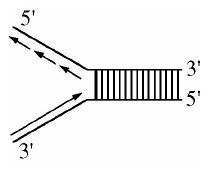
Cells that contain only circular chromosomes are most probably which of the following?
Bacterial cells
In the 1940's, Avery MacCleod, and McCarty transformed nonencapsulated bacteria into encapsulated forms by growing the nonencapsulated cells in a culture containing an extract made from dead encapsulated cells. The transformed cells produced colonies of encapsulated bacteria. Three different procedures and their results are outlined below.
Procedure I:
Extract made from dead encapsulated cells added to culture medium.
Nonencapsulated bacteria added to culture medium.
Results: Both nonencapsulated and encapsulated bacteria grow.
Procedure II:
Extract made from dead encapsulated cells treated with protein-degrading enzymes before adding extract to culture medium.
Nonencapsulated bacteria added to culture medium.
Results: Both nonencapsulated and encapsulated bacteria grow.
Procedure III:
Extract made from dead encapsulated cells treated with DNAse (an enzyme that selectively destroys DNA) before adding extract to culture medium.
Nonencapsulated bacteria added to culture medium.
Results: Only nonencapsulated bacteria grow.
What was the purpose of treated the extract with DNAse in Procedure III??
To serve as a negative control by demonstrating that transformation does not occur without DNA
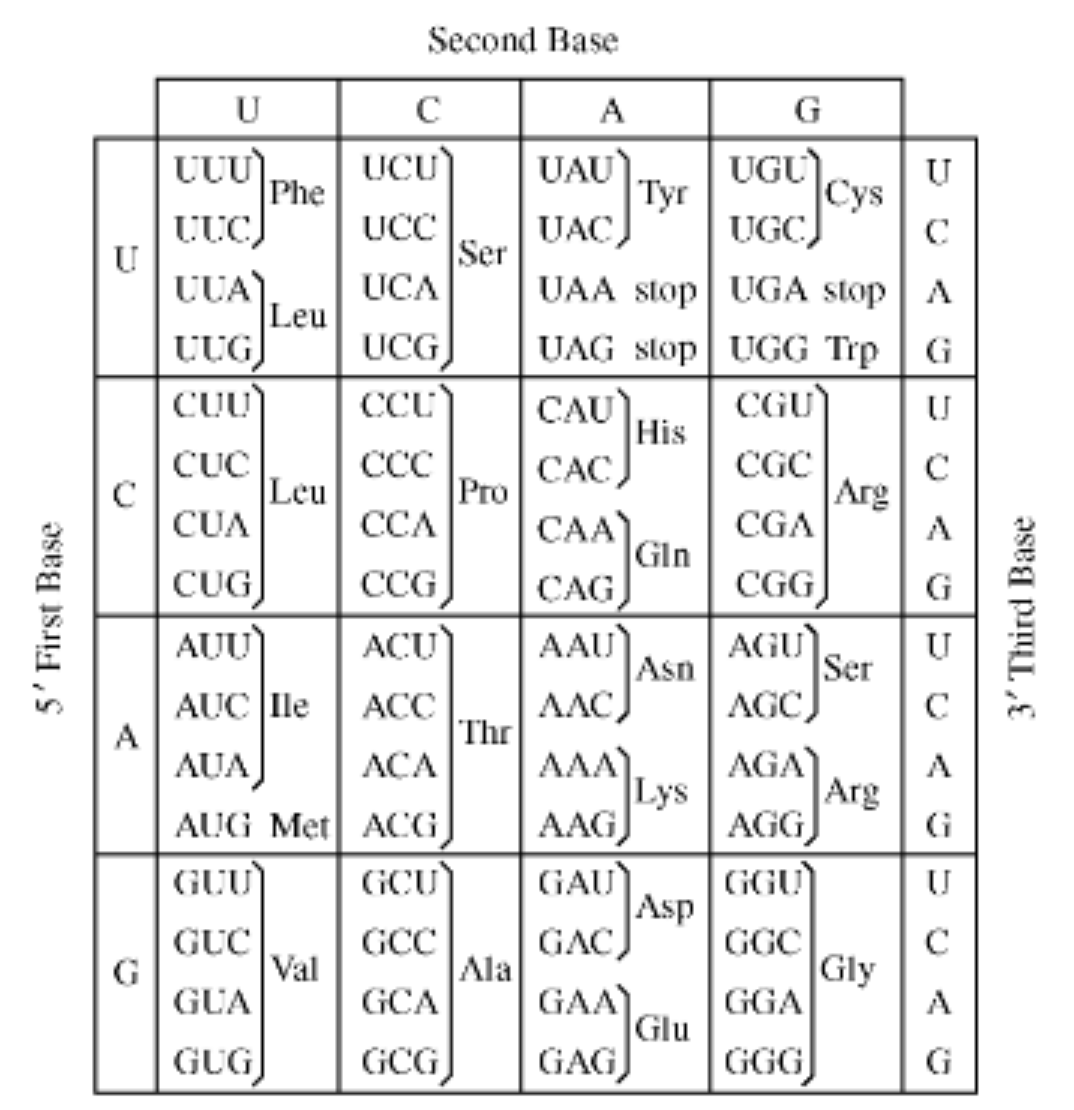
The question refers to the following DNA strand and table of codons:
The mRNA transcribed from the DNA would read
5’ AUC AAG UUU GGC GCA UUG UAA 3’
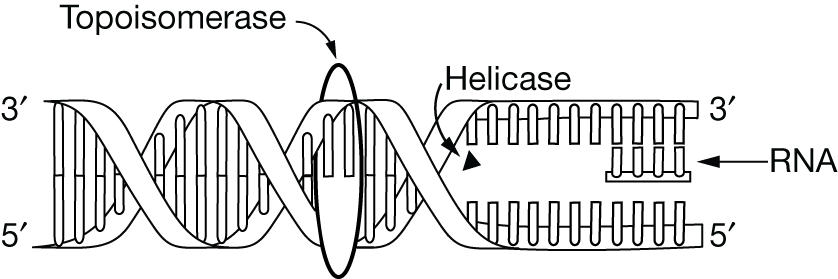
Figure 1 illustrates a model of the molecules involved in DNA replication and their placement relative to each other.
Figure 1. Model including molecules involved in DNA replication
Which of the following correctly explains where DNA replication will begin on the strand oriented 5'→3', reading from left to right?
DNA replication will be initiated immediately to the left of the RNA , since DNA polymerase requires an RNA primer.
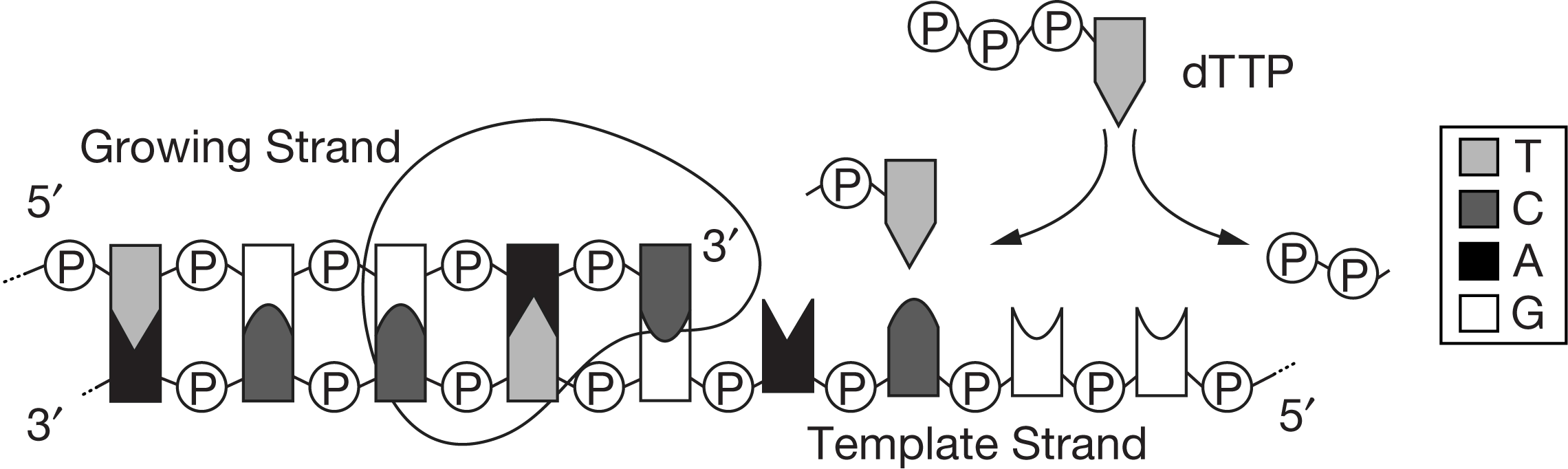
Figure 1 shows some relevant details of a model of how a deoxynucleotide, in this case dTMP, is added to a growing strand of DNA.
Figure 1. Model showing details of adding a deoxythymidine monophosphate (dTMP) nucleotide to a growing strand of DNA
The features of this model provide evidence for which explanation of why all growing strands are synthesized in a 5′ to 3′ direction?
The phosphate group, attached to the 5′ carbon of the dTMP, forms a covalent bond with the oxygen atom attached to the 3′ carbon of the growing strand.

Which of the following best describes an event during step 2 in the simplified model above?
Noncoding sequences are removed from a newly synthesized RNA molecule.

Figure 1 represents part of a process that occurs in eukaryotic cells. There are untranslated regions (UTR) in this sequence.
Figure 1. Cellular process involving nucleic acids
Which of the following best explains the process represented by Figure 1?
The enzyme-regulated processing of pre‑mRNA into mature mRNA
_______ is the process in which RNA is produced by using a DNA template.
Transcription
Which of the following statements concerning a gene is correct?
A gene can code for a specific protein.
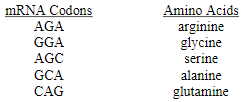
. . . . glycine-serine-glycine . . .
Which of the following DNA strands will code for the amino acid sequence shown above?
. . . CCTTCGCCT . . .
Analysis of DNA sequences from two individuals of the same species results in a greater estimate of genetic variability than does analysis of amino acid sequences from the same individuals because
different DNA sequences can code for the same amino acid
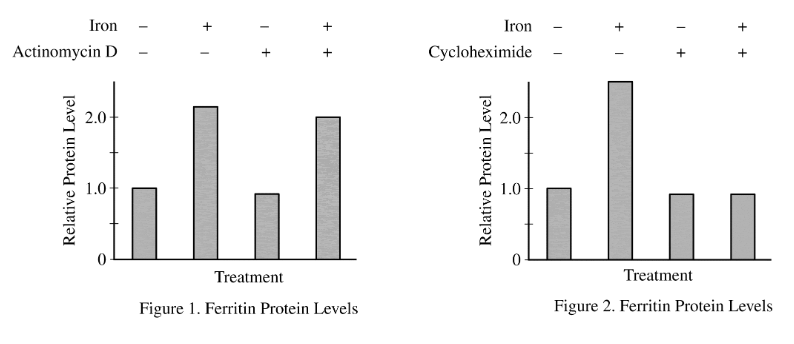
Iron is an essential nutrient that is acquired by organisms from the environment. When intracellular levels of iron are relatively high, living cells synthesize an iron-storage protein called ferritin.
The induction of ferritin synthesis by iron was investigated in rats. Figure 1 shows the results of an experiment in which cellular levels of ferritin protein were measured in the presence or absence of iron and actinomycin D, a drug that inhibits transcription.
Figure 2 shows the results of an experiment in which cellular levels of ferritin protein were measured in the presence or absence of iron and cycloheximide, a drug that inhibits translation.
In individuals with iron-rich diets, intracellular levels of iron are higher than in individuals with iron-poor diets. Which of the following best explains how organisms regulate ferritin protein levels in response to available iron?
Translation of ferritin mRNA is stimulated by iron.
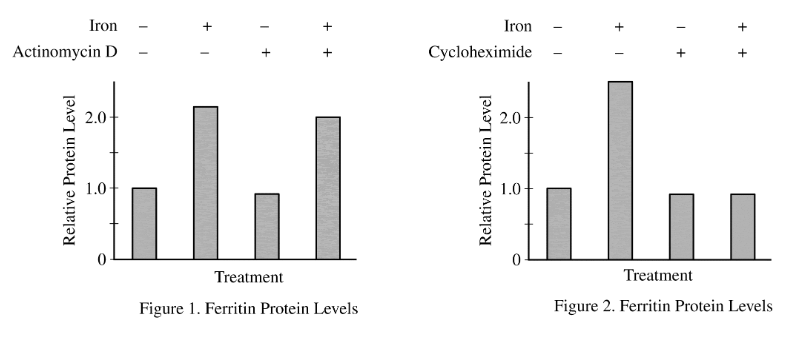
Iron is an essential nutrient that is acquired by organisms from the environment. When intracellular levels of iron are relatively high, living cells synthesize an iron-storage protein called ferritin.
The induction of ferritin synthesis by iron was investigated in rats. Figure 1 shows the results of an experiment in which cellular levels of ferritin protein were measured in the presence or absence of iron and actinomycin D, a drug that inhibits transcription.
Figure 2 shows the results of an experiment in which cellular levels of ferritin protein were measured in the presence or absence of iron and cycloheximide, a drug that inhibits translation.
The data can best be used to support which of the following claims about the mechanism for regulating ferritin gene expression?
Iron increases ribosome binding to ferritin mRNA.
Retroviruses have an RNA genome. HTLV-1 is a lysogenic retrovirus that establishes a latent infection in human cells. By which of the following mechanisms does infection by a retrovirus such as HTLV-1 most likely cause long-lasting genetic changes to host cells?
The RNA viral genome is reverse transcribed into DNA that integrates into the host genome.
Antibiotics interfere with prokaryotic cell functions. Streptomycin is an antibiotic that affects the small ribosomal subunit in prokaryotes. Specifically, streptomycin interferes with the proper binding of tRNA to mRNA in prokaryotic ribosomes.
Which of the following best predicts the most direct effect of exposing prokaryotic cells to streptomycin?
Synthesis of polypeptides will be inhibited.
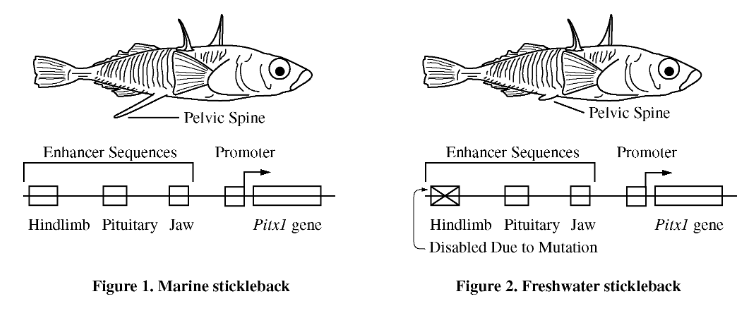
The three-spined stickleback (Gasterosteus aculeatus) is a small fish found in both marine and freshwater environments. Marine stickleback populations consist mostly of individuals with pronounced pelvic spines, as shown in Figure 1. Individuals in freshwater stickleback populations, on the other hand, typically have reduced pelvic spines, as shown in Figure 2.
As represented in Figure 1 and Figure 2, the phenotypic difference between marine and freshwater sticklebacks involves Pitx1, a gene that influences the formation of the jaw, pituitary gland, and pelvic spine. Enhancer sequences upstream of the Pitx1 genetic locus regulate expression of the Pitx1 gene at the appropriate times and in the appropriate tissues during development. Previous studies have found that a mutation in the hindlimb enhancer interferes with the formation of a pronounced pelvic spine.
Which of the following best describes how sticklebacks in the same population with identical copies of the Pitx1 gene can still show phenotypic variation in the pelvic spine character?
Expression of the Pitx1 gene is affected by mutations at other genetic loci.
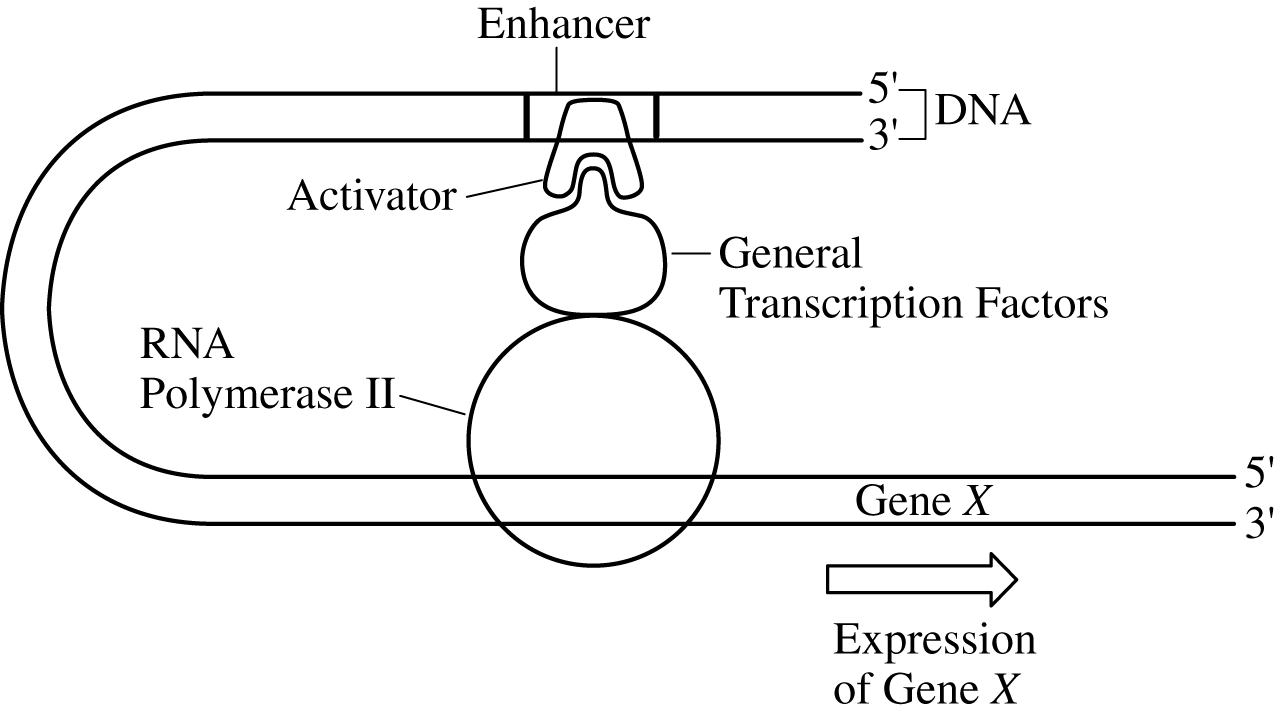
The figure above depicts the DNA-protein complex that is assembled at the transcriptional start site of gene X when the expression of gene X is activated in liver cells. Previous studies have shown that gene X is never expressed in nerve cells. Based on the diagram, which of the following most likely contributes to the specific expression pattern of gene X ?
The activator is a sequence-specific DNA-binding protein that is present in some tissues but not in other tissues.

The lac operon in E. coli consists of genes that code for enzymes necessary for the breakdown of lactose. When lactose is absent, the operon is inactive because a repressor protein binds to a specific site in the lac operon. When lactose is present, lactose molecules bind to the repressor protein, causing the repressor protein to dissociate from the binding site. In the absence of glucose (a preferred energy source for bacteria), the protein CAP binds to a regulatory site near the lac promoter to activate transcription of the lac operon.
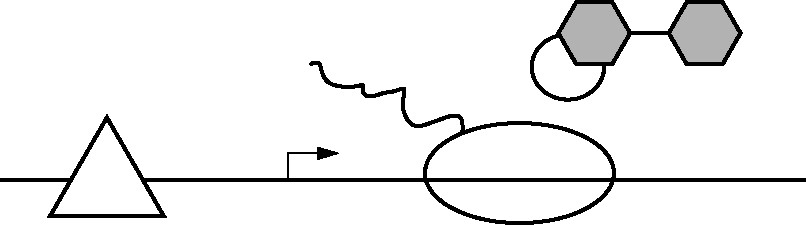
The following symbols represent the macromolecules involved in regulation of the lac operon.
In the diagrams below, the horizontal line represents the lac operon and the bent arrow represents the transcription start site of the lac operon. Which of the following diagrams best represents the scenario in which lactose is available to the cell and glucose is absent?
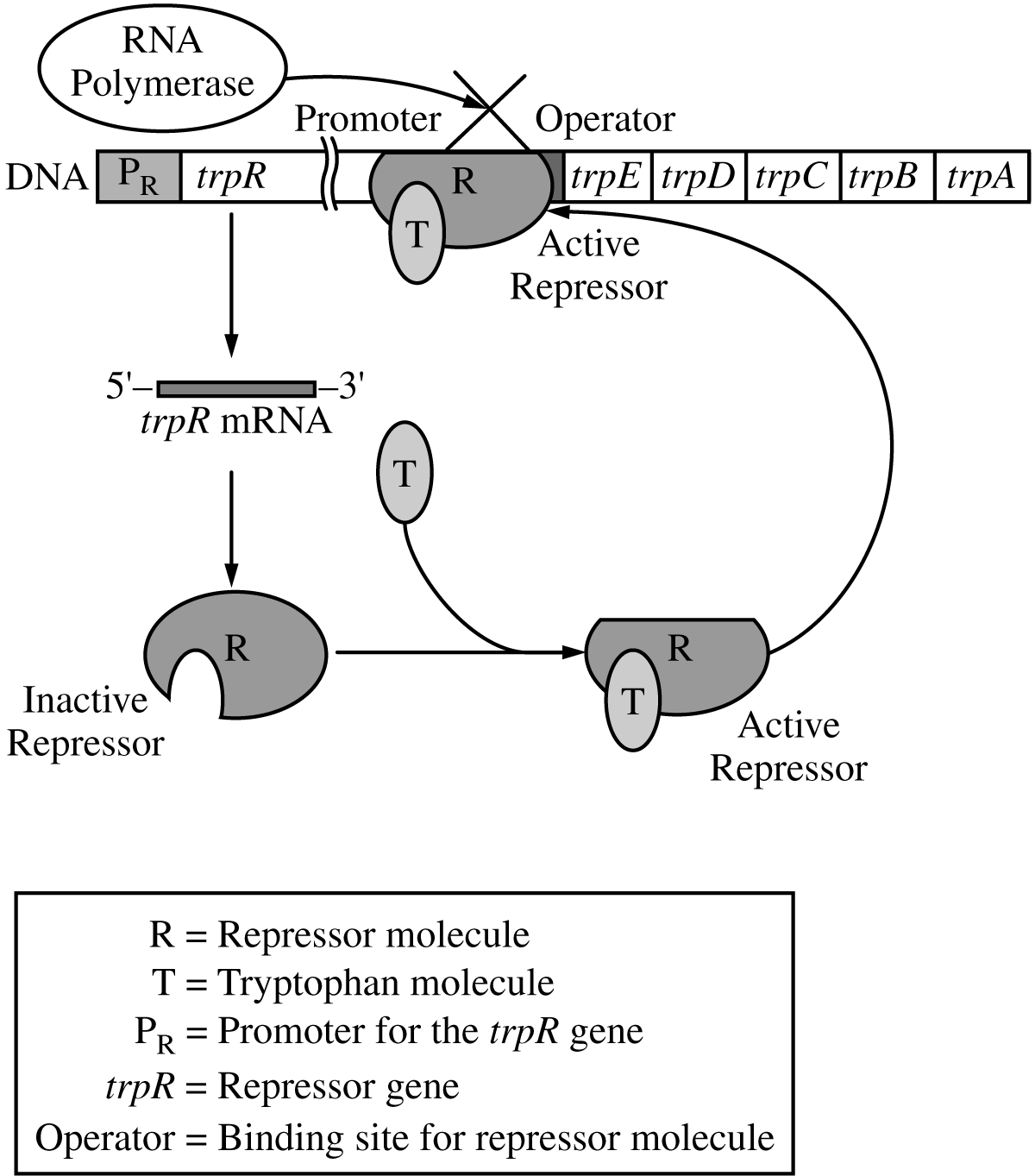
The Trp operon is a coordinately regulated group of genes (trpA–trpE) that are required for tryptophan biosynthesis in E. coli. Based on the figure above, which of the following correctly describes the regulation of the Trp operon?
In the presence of tryptophan, the repressor is active and binds to the Trp operator, preventing RNA polymerase from transcribing the operon.

Figure 1. Model of lac operon, comparing repressed and active states
Which is a scientific claim that is consistent with the information provided and Figure 1?
When bound to the operator, the repressor protein prevents lactose metabolism in E. coli.

Phytochromes are molecules that change light stimuli into chemical signals, and they are thought to target light-activated genes in plants. A study was conducted to determine how certain cell proteins were made in a plant cell using a phytochrome. Figures 1 and 2 represent findings from the study.
Figure 2. Phytochrome response to exposure to far‑red light
Use the response models shown in Figures 1 and 2 to justify the claim that phytochromes regulate the transcription of genes leading to the production of certain cellular proteins.
When inactive phytochrome Pr is activated by red light to become phytochrome Pfr, it is transported into the nucleus where it binds to the transcription factor PIF3 at the promoter. This stimulates transcription, ultimately leading to protein production. Far-red light inactivates the phytochrome, which will turn transcription off by not binding to PIF3.
Sickle-cell anemia is associated with a mutation in the gene encoding the beta subunit of hemoglobin that results in a change from glutamic acid to valine at position 6. All other amino acids are identical to a normal hemoglobin molecule.
Based on the information above, which of the following mutations is the most likely cause of sickle-cell anemia?
A single base-pair substitution in the gene encoding the beta subunit
Living cells typically have biosynthetic pathways to synthesize at least some of the amino acids used in making proteins. Some strains of E. coli, a prokaryote, can synthesize the amino acid tryptophan, while other E. coli strains cannot. Similarly, some strains of the yeast S. cerevisiae, a eukaryote, can synthesize tryptophan, while other S. cerevisiae strains cannot.
Which of the following describes the most likely source of genetic variation found in the tryptophan synthesis pathways of both species?
Errors in DNA replication lead to genetic variation.
Tay-Sachs disease is a rare inherited disorder caused by an autosomal recessive allele of the HEXA gene. Affected individuals exhibit severe neurological symptoms and do not survive to reproductive age. Individuals who inherit one copy of the allele (Tay-Sachs carriers) typically show no symptoms of the disorder. The frequencies of Tay-Sachs carriers in the general population of North America and in three different subpopulations are presented in the table.
Which of the following is an ethical question about Tay-Sachs disease that cannot be answered using scientific methods?
Should genetic testing be required before individuals in subpopulation III are advised to not have children?
Sickle-cell anemia results from a point mutation in the HBB gene. The mutation results in the replacement of an amino acid that has a hydrophilic R-group with an amino acid that has a hydrophobic R-group on the exterior of the hemoglobin protein. Such a mutation would most likely result in altered
properties of the molecule as a result of abnormal interactions between adjacent hemoglobin molecules
_______ is the process in which naked DNA is taken up by a bacterial or yeast cell.
Transformation
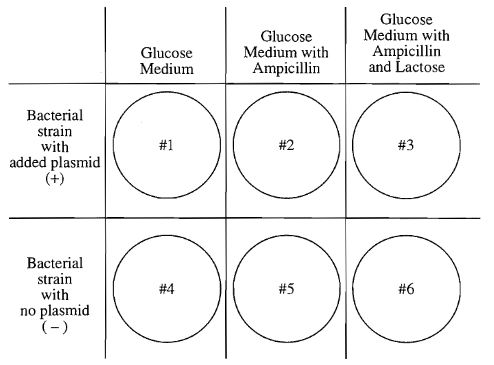
A scientist is using an ampicillin-sensitive strain of bacteria that cannot use lactose because it has a nonfunctional gene in the lac operon. She has two plasmids. One contains a functional copy of the affected gene of the lac operon, and the other contains the gene for ampicillin resistance. Using restrictions enzymes and DNA ligase, she forms a recombinant plasmid containing both genes. She then adds a high concentration of the plasmid to a tube of the bacteria in a medium for bacterial growth that contains glucose as the only energy source. This tube (+) and a control tube (-) with similar bacteria but no plasmid are both incubated under the appropriate conditions for growth and plasmid uptake. The scientist then spreads a sample of each bacterial culture (+ and -) on each of the three types of plates indicated below.
If the scientist used the cultures to perform another experiment as shown above, using medium that contained lactose as the only energy source, growth would most likely occur on which of the following plates?
7 and 8 only
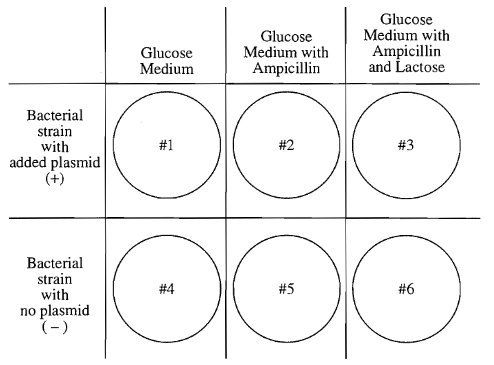
A scientist is using an ampicillin-sensitive strain of bacteria that cannot use lactose because it has a nonfunctional gene in the lac operon. She has two plasmids. One contains a functional copy of the affected gene of the lac operon, and the other contains the gene for ampicillin resistance. Using restrictions enzymes and DNA ligase, she forms a recombinant plasmid containing both genes. She then adds a high concentration of the plasmid to a tube of the bacteria in a medium for bacterial growth that contains glucose as the only energy source. This tube (+) and a control tube (-) with similar bacteria but no plasmid are both incubated under the appropriate conditions for growth and plasmid uptake. The scientist then spreads a sample of each bacterial culture (+ and -) on each of the three types of plates indicated below.
If no new mutations occur, it would be most reasonable to expect bacterial growth on which of the following plates?
1, 2, 3, and 4 only
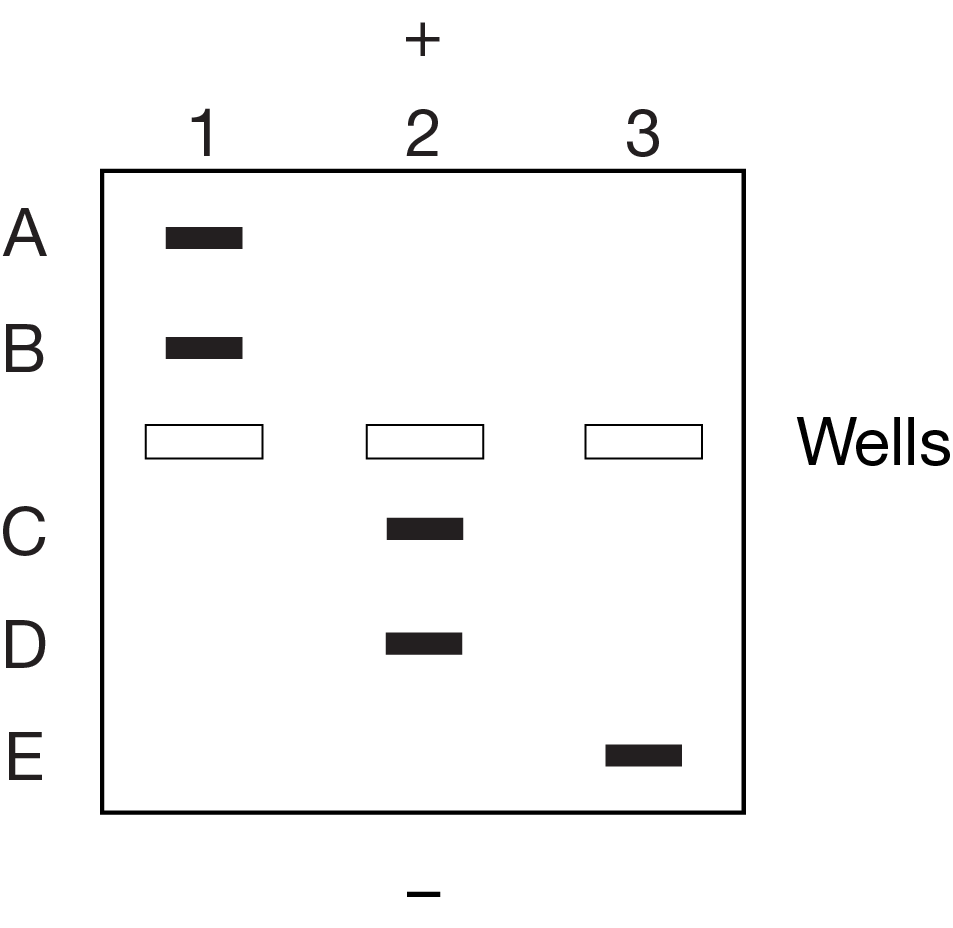
Students subjected three samples of five different molecules to gel electrophoresis as shown in Figure 1.
Figure 1. Gel electrophoresis of three prepared samples
Which of the following statements best explains the pattern seen on the gel with regard to the size and charge of molecules A and B?
Molecules A and B are negatively charged, and molecule A is smaller than molecule B.
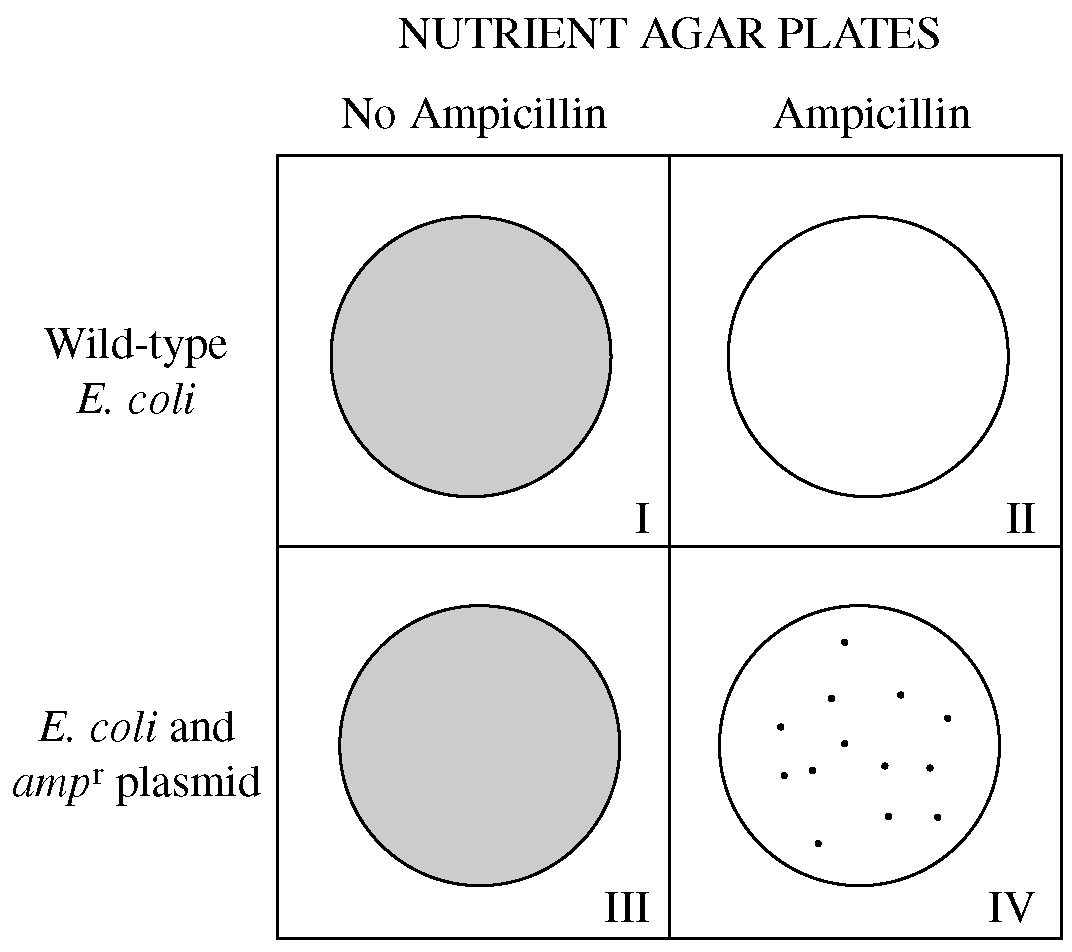
In a transformation experiment, a sample of E. coli bacteria was mixed with a plasmid containing the gene for resistance to the antibiotic ampicillin (ampr). Plasmid was not added to a second sample. Samples were plated on nutrient agar plates, some of which were supplemented with the antibiotic ampicillin. The results of E. coli growth are summarized below. The shaded area represents extensive growth of bacteria; dots represent individual colonies of bacteria.
Plates that have only ampicillin-resistant bacteria growing include which of the following?
IV only
Which of the following statements best summarizes organic evolution as it is viewed by modern evolutionists?
It is the differential survival and reproduction of certain phenotypes.
Competition for food would probably be most severe between two
closely related species in similar niches
In Darwinian terms, the fittest individuals of a species are those that
leave the greatest number of reproducing descendants
Stickleback fish are found in both marine and freshwater habitats. The marine fish have no scales but have hardened, armorlike plates along their sides. The plates are thought to protect sticklebacks from certain predators.
In the late 1980s, sticklebacks from a marine population colonized Loberg Lake, a freshwater lake in Alaska. Starting in 1990, researchers sampled fish from the lake every four years and recorded the armor-plate phenotypes of the male sticklebacks in each sample. The armor-plate phenotypes were categorized as either complete (plates extending from head to tail), partial (plates extending from head to abdomen), or low (a few plates near the head only). The results are shown in the table below.
ARMOR-PLATE VARIATION IN THE STICKLEBACK POPULATION OF LOBERG LAKE
Percent of Males in the Sample with Each Armor-Plate Phenotype
Which of the following best explains the changes in the phenotype frequencies of the stickleback population in Loberg Lake?
Predation in the marine environment is different from predation in Loberg Lake.
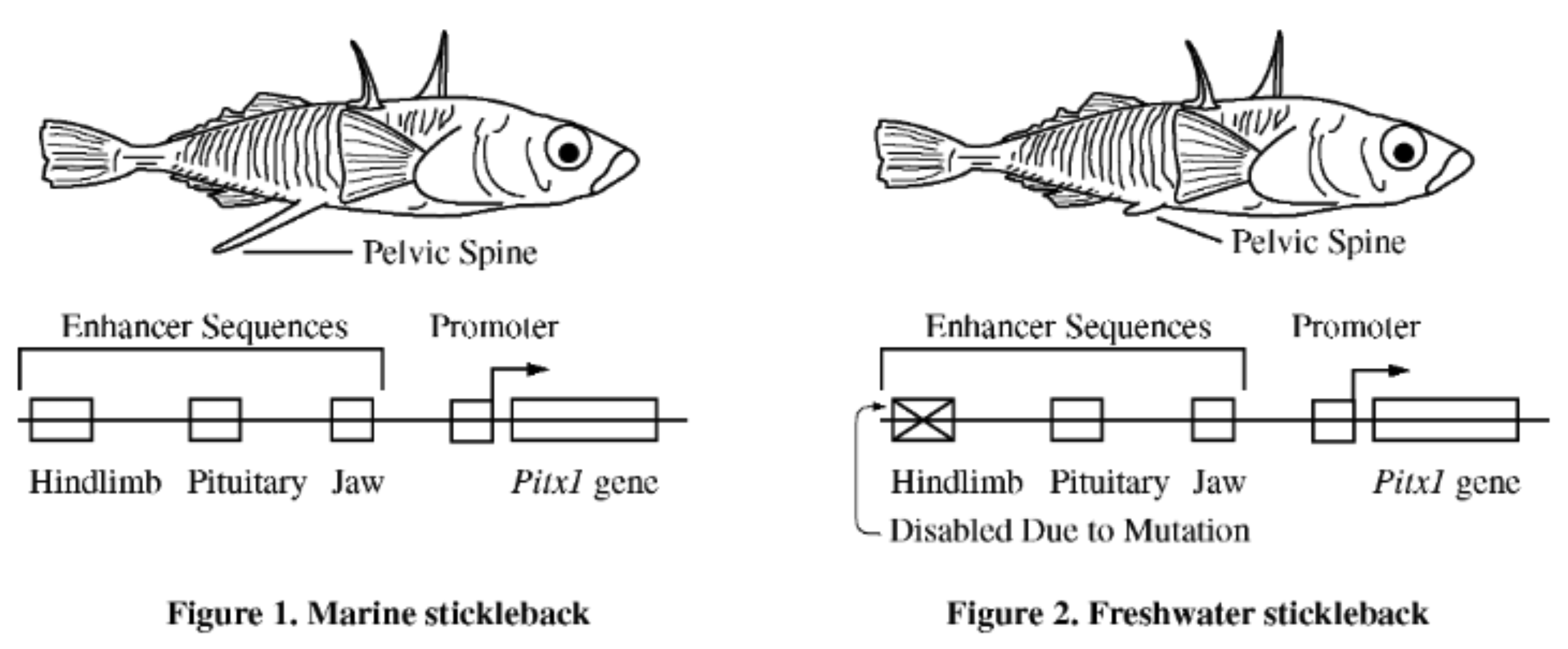
The three-spined stickleback (Gasterosteus aculeatus) is a small fish found in both marine and freshwater environments. Marine stickleback populations consist mostly of individuals with pronounced pelvic spines, as shown in Figure 1. Individuals in freshwater stickleback populations, on the other hand, typically have reduced pelvic spines, as shown in Figure 2.
As represented in Figure 1 and Figure 2, the phenotypic difference between marine and freshwater sticklebacks involves Pitx1, a gene that influences the formation of the jaw, pituitary gland, and pelvic spine. Enhancer sequences upstream of the Pitx1 genetic locus regulate expression of the Pitx1 gene at the appropriate times and in the appropriate tissues during development. Previous studies have found that a mutation in the hindlimb enhancer interferes with the formation of a pronounced pelvic spine.
Which of the following describes a possible selective mechanism to explain why freshwater sticklebacks typically have reduced pelvic spines?
Reduced pelvic spines increase the likelihood of escaping predators in freshwater environments.
Stickleback fish are found in both marine and freshwater habitats. The marine fish have no scales but have hardened, armorlike plates along their sides. The plates are thought to protect sticklebacks from certain predators.
In the late 1980s, sticklebacks from a marine population colonized Loberg Lake, a freshwater lake in Alaska. Starting in 1990, researchers sampled fish from the lake every four years and recorded the armor-plate phenotypes of the male sticklebacks in each sample. The armor-plate phenotypes were categorized as either complete (plates extending from head to tail), partial (plates extending from head to abdomen), or low (a few plates near the head only). The results are shown in the table below.
ARMOR-PLATE VARIATION IN THE STICKLEBACK POPULATION OF LOBERG LAKE
Percent of Males in the Sample with Each Armor-Plate Phenotype
To evaluate the reliability of the results, it would be best to know which of the following?
The number of males in each sample
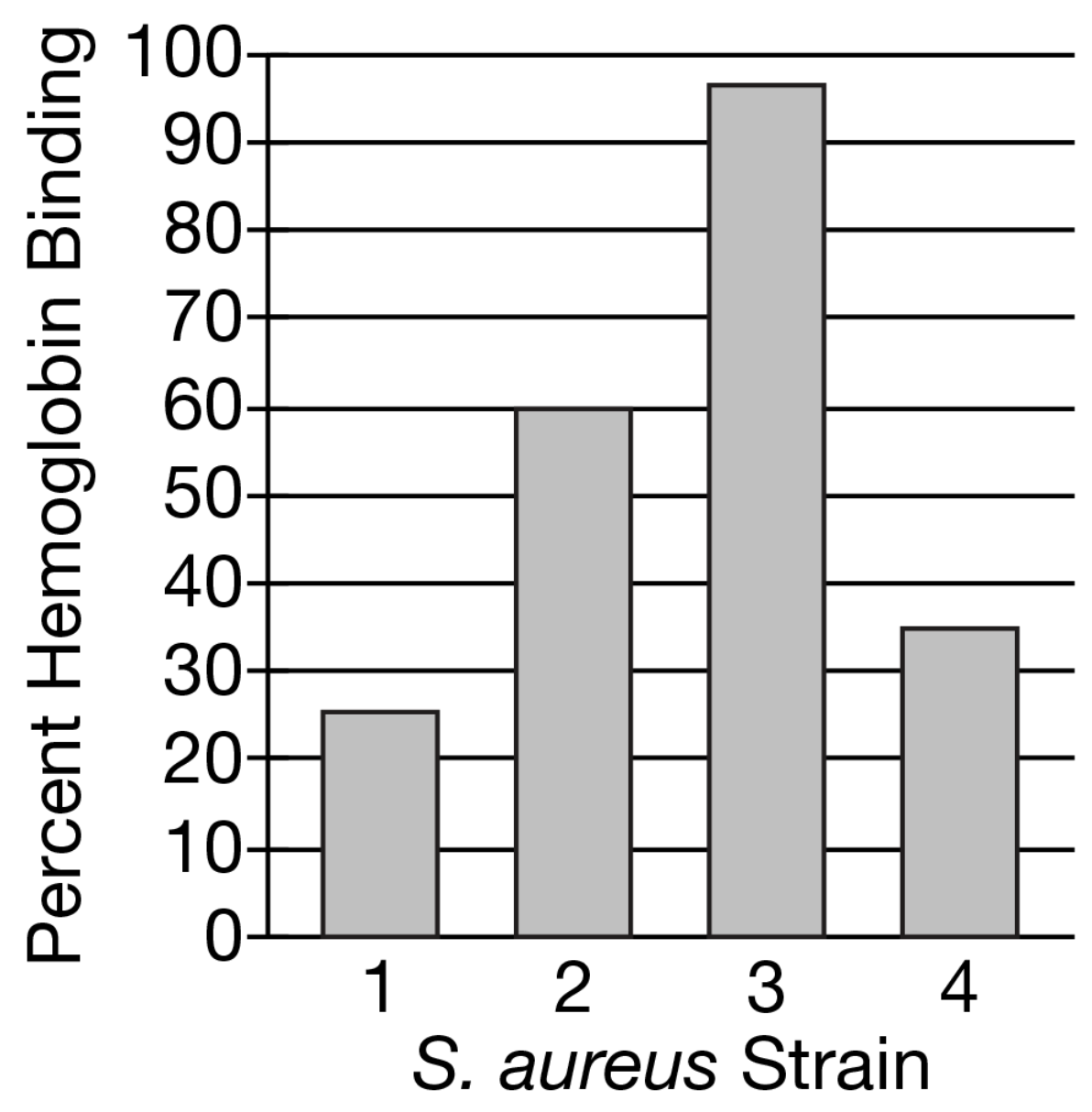
Staphylococcus aureus is a pathogenic bacterium that can infect a wide range of host species, including humans. S. aureus has a particular protein that binds with hemoglobin from the host organism. Hemoglobin is the iron-containing protein used to transport oxygen in the blood. Since iron is important for growth, S. aureus have evolved the ability to absorb the iron from the host's hemoglobin.
Different S. aureus strains preferentially infect different hosts and have different amino acid sequences at their hemoglobin-binding domains (Table 1; letters indicate different amino acids). In an experiment, different S. aureus strains were mixed with hemoglobin from macaque monkeys and their binding ability was measured (Figure 1). The differences in amino acid sequences contributed to the differential binding abilities observed.
Table 1. Selected amino acid sequences and preferred host for four strains of S. aureus
Figure 1. Macaque hemoglobin binding ability of different strains of S. aureus
Which of the following processes is most consistent with the differences in the amino acid sequences listed in Table 1?
Each strain is best adapted to a specific host species.
A species of snail lives in the intertidal zone along the coast of New England. The dark-colored variety of the species is more common in northern New England, the light-colored variety is more common two hundred miles away in southern New England, and both varieties are commonly found together in central New England. Which of the following best explains the observed distribution pattern of the snails?
Dark-colored snails absorb more solar energy and so survive more readily in the colder northern waters.
Evolutionary fitness is measured by
reproductive success
In humans, one allele of the APOE gene, called APOE–ε2, can result in a high tolerance of cholesterol. Cholesterol is a vital substance for humans but may lead to heart disease in an older adult with a history of high cholesterol diets. High cholesterol diets are becoming more prevalent in the United States. Currently only about 2% of humans carry the APOE–ε2 allele.
Which of the following states a valid null hypothesis about the future distribution of APOE alleles in future generations in the United States?
The variant protects an individual from a condition that is only common among humans beyond reproductive age, so the frequency of the allele will likely not change much in the future because it is not influenced by natural selection.
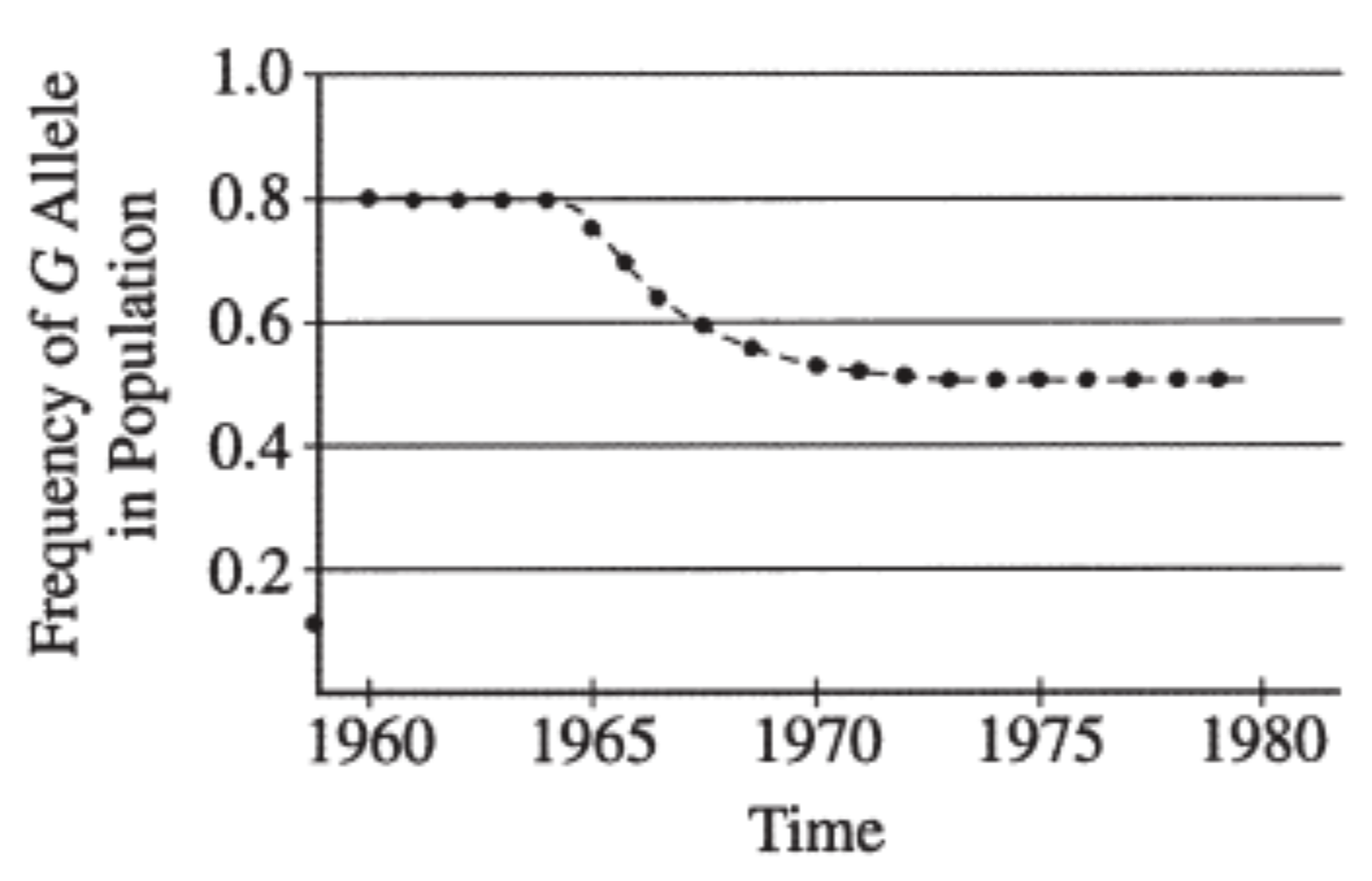
A moth's color is controlled by two alleles, G and g, at a single locus. G (gray) is dominant to g (white). A large population of moths was studied, and the frequency of the G allele in the population over time was documented, as shown in the figure below. In 1980 a random sample of 2,000 pupae was collected and moths were allowed to emerge.
Which of the following is the most likely reason for the observed differences in the frequency of the G allele between 1965 and 1972?
Selection against gray phenotypes
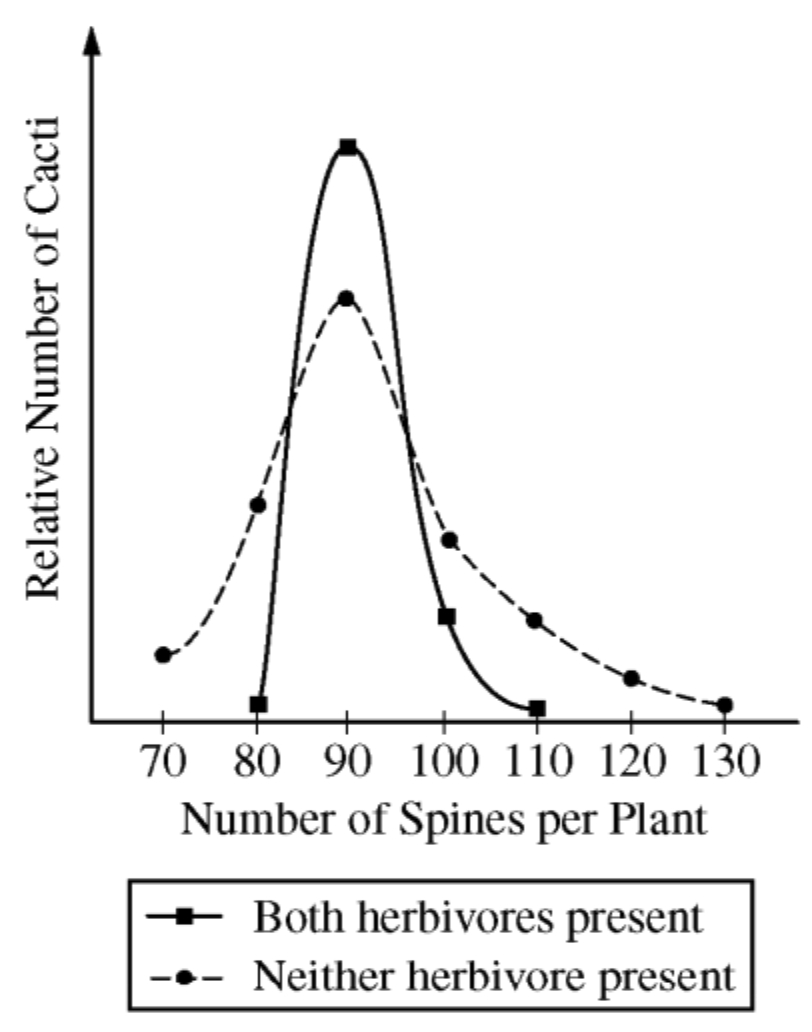
In a species of cactus, the number of spines on a plant is genetically determined. The graph above shows frequency distributions for populations of the cactus species growing in the presence or absence of two herbivores: peccaries (a New World pig) and wasp larvae. Which of the following best accounts for the different frequency distributions in the graph?
Peccaries eat cacti with a smaller number of spines, and wasp larvae eat cacti with a greater number of spines.
Which of the following factors is the most effective in changing the allele frequency in a natural population?
Selection

Table 1 shows a trend of increasing milk yield for cows. Part of the increase in milk production can be attributed to improved nutrition and health protocols for dairy cows.
Based on the information provided, which of the following best describes the source of the rapid increase in milk production from 1976 to 2015?
Starting in the 1970s, farmers increased the selective breeding of cows and bulls for offspring that produced more milk.
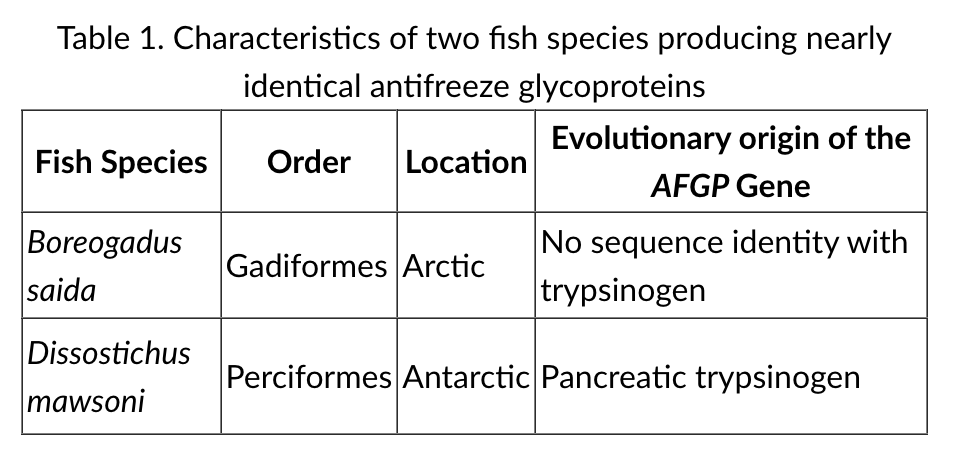
Two species of fish that live in extremely cold environments produce near-identical antifreeze glycoproteins, called AFGPs. Scientists have determined the origins of the AFGP gene in both species. Selected characteristics of the two fish species are provided in Table 1.
Based on the information in Table 1, which of the following statements best describes the production of nearly identical AFGPs in these two species of fish?
The fish live in environments with similar selective pressures, and those that produce AFGPs are better able to survive.
The California newt, Taricha torosa, lives in the coastal areas around Los Angeles. Which of the following is a valid null hypothesis relating fitness to survival of a bottleneck event in a coastal area where a small, isolated population of California newts resides?
Surviving the bottleneck event will be random, so any change in the allelic frequencies of the salamander population is not attributed to fitness.
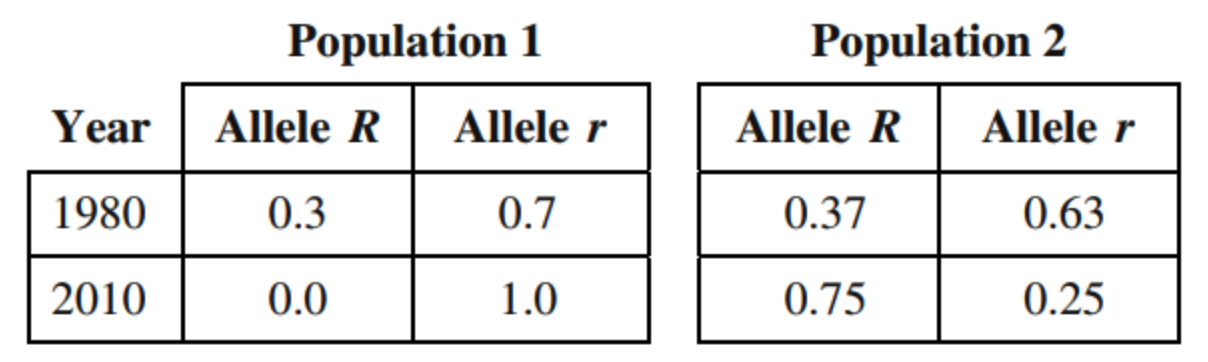
The table shows the changes in allele frequencies of a specific gene in two populations of randomly mating small mammals after 30 years. The populations inhabit adjacent equatorial islands that have similar topography and climate. Which of the following is the most reliable conclusion that can be drawn from analysis of the data above?
Genetic drift has occurred in population 1.
In a certain flock of sheep, 4 percent of the population has black wool and 96 percent has white wool. Assume that the population is in Hardy-Weinberg equilibrium.
What percentage of the population is homozygous for white wool?
64%
Nine percent of a population is homozygous recessive (aa) at a certain locus. Assuming that the population is in Hardy-Weinberg equilibrium, which of the following is closest to the frequency of the recessive allele (a)?
0.30
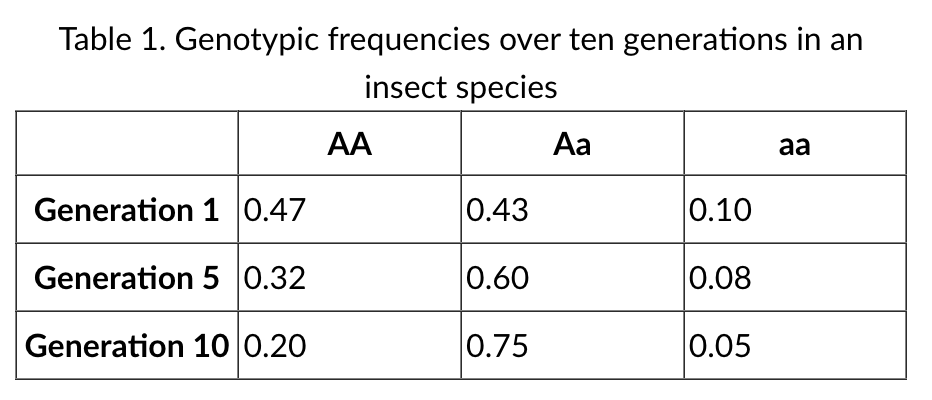
In a large, isolated population of an insect species, a specific gene locus has one dominant allele (A) and one recessive allele (a). The genotype frequencies of the gene were collected for ten generations, as shown in Table 1.
Which of the following could best account for the change in genotypic frequencies over the ten generations?
The population is not exhibiting random mating between individuals.
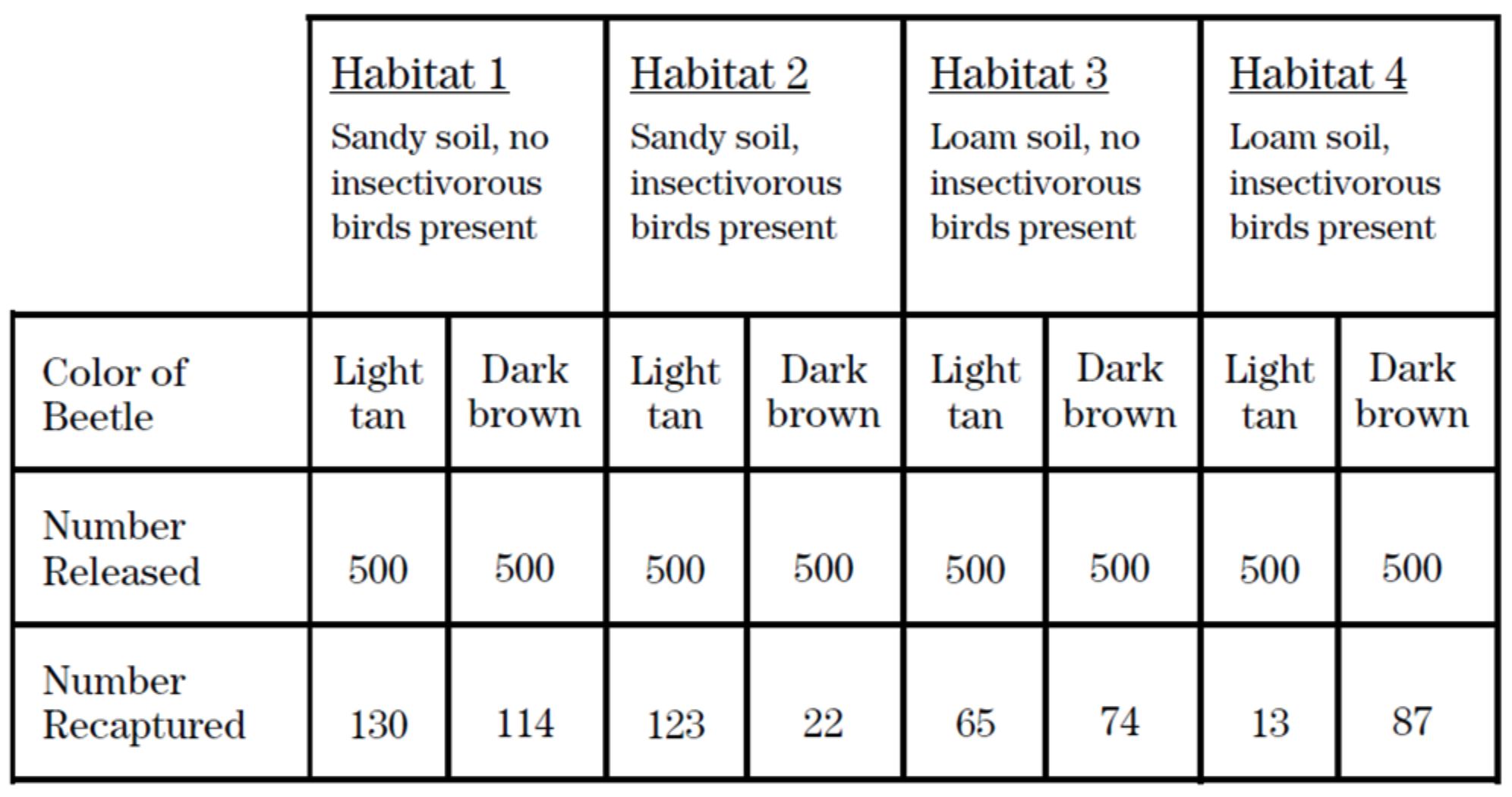
Individuals of a particular species of ground beetle are either light tan or dark brown. Light-tan beetles are predominant in habitats with light-colored sandy soils, and dark-brown beetles are predominant in habitats with dark-colored loam soils. In an experiment designed to determine the survival rates of light-tan beetles and dark-brown beetles in different habitats, 500 light-tan beetles and 500 dark-brown beetles were released in each of four habitats. Each beetle had been marked with a small spot of red paint on the underside of its abdomen before it was released. One week after the beetles had been released, any marked beetles that could be found were recaptured. The results are presented in the table below. It is assumed that differences in the numbers of beetles recaptured are directly related to differences in survival rates.
Which of the following can be inferred from the data in the table?
Insectivorous birds are predators of this species of ground beetle.
A survey reveals that 25 percent of a population of 1,000 individuals have attached earlobes (are homozygous recessivefor the trait). For the following questions, assume that the population fits the parameters of the Hardy-Weinberg law.
Unlike most natural populations, this population is best characterized in which of the following ways?
There is genetic equilibrium.
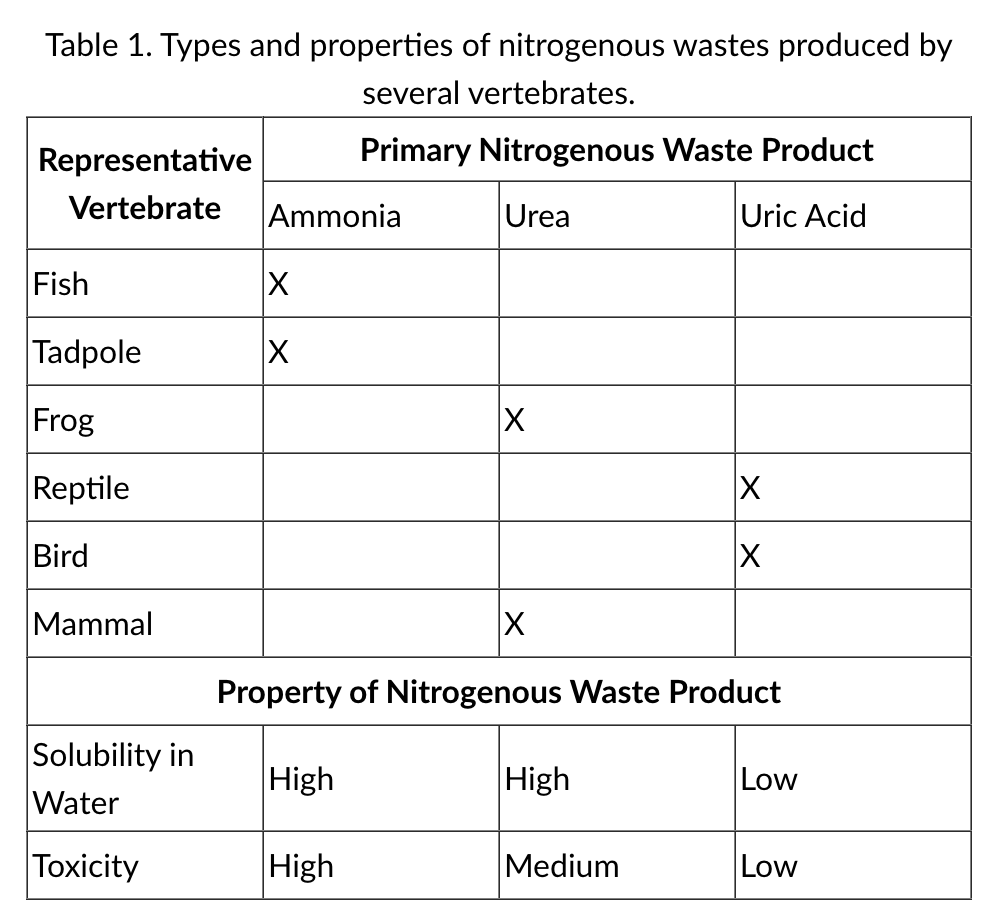
The table above shows the types and properties of nitrogen-containing wastes produced by several vertebrates. Which of the following is the best evolutionary explanation of the data?
Ammonia secretion requires a large volume of water and was therefore selected against in terrestrial vertebrates.
Low doses of antibiotics are often added to livestock feed to increase production. Studies have shown that bacterial populations constantly exposed to the sublethal doses can evolve resistance to the antibiotics. A research group claimed that when a population of bacteria are constantly exposed to sublethal doses of streptomycin, their fitness declines due to the increased energy requirements for survival in the presence of the antibiotic. For subsequent studies, the researchers wish to determine whether adding a low, sublethal dose of an additional antibiotic causes further decline in the fitness of the bacteria.
Which of the following best represents the next step the researchers should take with respect to experimental design?
Group 1: low dose of streptomycin + no dose of additional antibiotic
Group 2: low dose of streptomycin + low dose of additional antibiotic
On a large volcanic island, researchers are studying a population of annual herbaceous plants. Which of the following observations best supports the prediction that speciation will occur within the existing plant population?
Lava has separated the population into two areas: an upland forest and a lowland marsh.
Rhagoletis pomonella is a parasitic fly native to North America that infests fruit trees. The female fly lays her eggs in the fruit. The larvae hatch and burrow through the developing fruit. The next year, the adult flies emerge.
Prior to the European colonization of North America, the major host of Rhagoletis was a native species of hawthorn, Crataegus marshallii. The domestic apple tree, Malus domestica, is not native to North America, but was imported by European settlers in the late 1700s and early 1800s.
When apple trees were first imported into North America, there was no evidence that Rhagoletis could use them as hosts. Apples set fruit earlier in the season and develop faster, where hawthorns set later and develop more slowly.
Recent analysis of Rhagoletis populations has shown that two distinct populations of flies have evolved from the original ancestral population of flies that were parasitic on hawthorns. One population infests only apple trees, and the other infests only hawthorns. The life cycles of both fly populations are coordinated with those of their host trees. The flies of each population apparently can distinguish and select mates with similar host preferences and reject mates from the population specific to the other host tree. There is very little hybridization (only about 5 percent) between the two groups.
The divergence between the two populations of Rhagoletis must have occurred very rapidly because
the apple tree was imported into North America with European settlement approximately 200 years ago
Female European corn borer moths (Ostrinia nubilalis) produce the sex pheromone 11−tetradecenyl acetate (11−TDA), which attracts males of their species. 11−TDA can be produced in two forms, E and Z, each with a different three-dimensional shape. Researchers have discovered two different strains of the European corn borer moth living in the same area. Females of the E strain produce primarily the E form of 11−TDA and females of the Z strain produce primarily the Z form of 11−TDA. Males of both strains are more attracted to the form of 11−TDA produced by the females of the same strain.
Which of the following best predicts a long-term effect of the differences between the E and Z strains?
The difference between the forms of the sex pheromone 11−TDA produced by E and Z strains will act as a prezygotic reproductive barrier leading to sympatric speciation.
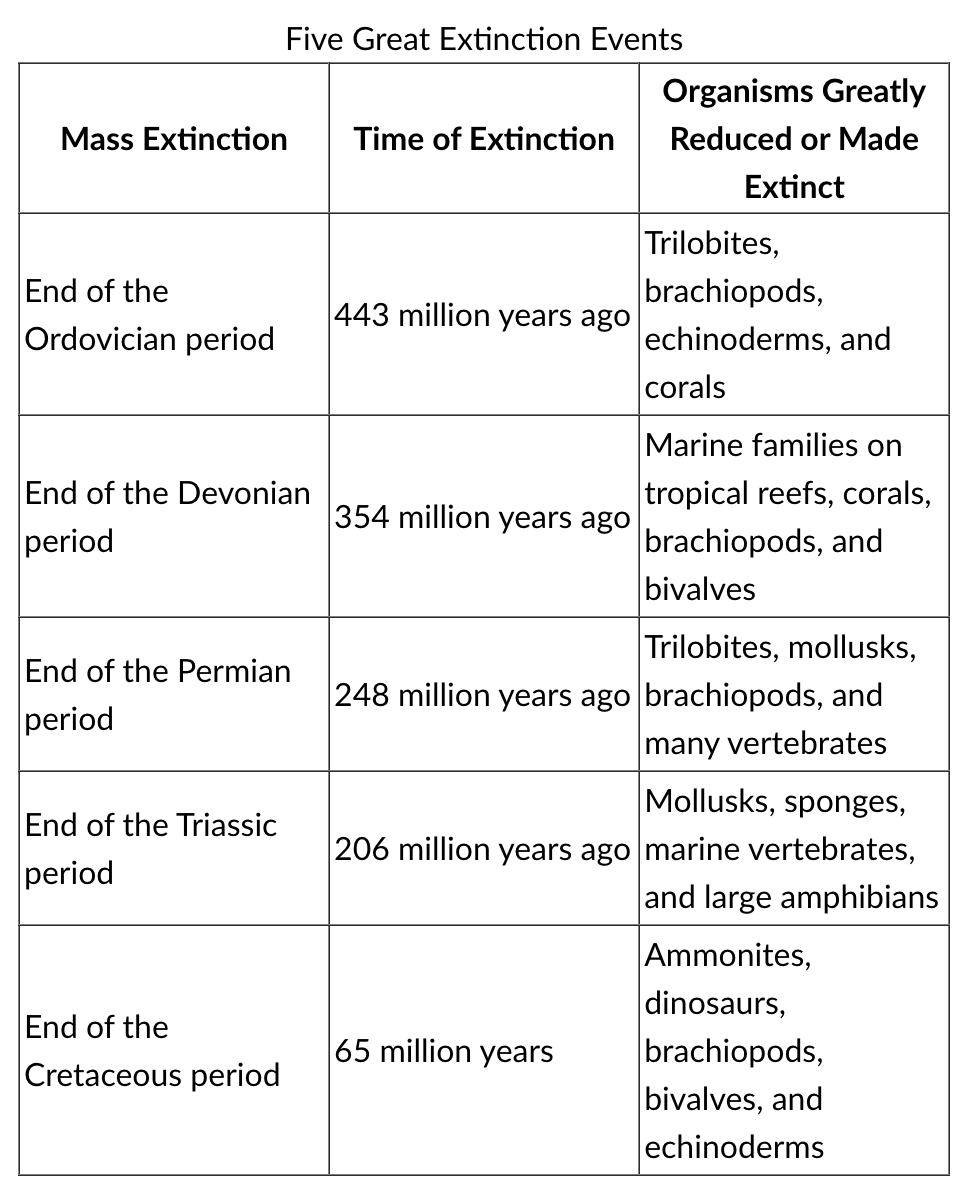
A group of students summarized information on five great extinction events.
The students are sampling a site in search of fossils from the Devonian period. Based on the chart, which of the following would be the most reasonable plan for the students to follow?
Collecting fossils from rock layers deposited prior to the Permian period that contain some early vertebrate bones
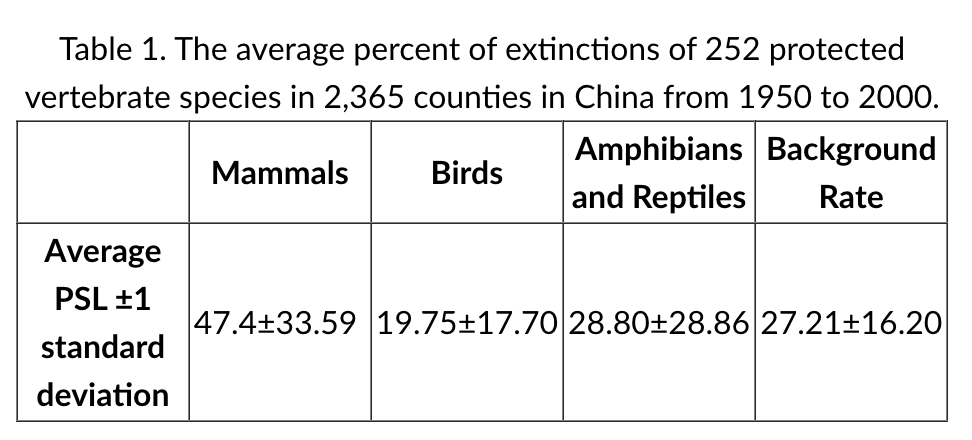
Scientists want to determine whether the rapid economic growth in China between 1950 and 2000 caused a mass extinction of animal species during that time period. A mass extinction event is considered to occur when the rate of species extinction far exceeds the background extinction rate. The scientists collected data on the number of extinctions of selected vertebrate species in China between 1950 and 2000, as shown in Table 1. Extinction rates were ascertained by measuring the average percent of species lost (PSL).
Which of the following is the null hypothesis most relevant for evaluating the data in Table 1?
There is no significant difference between the extinction rate of animals between 1950 and 2000 in China and the background extinction rate.
Paleoclimatic analysis has generated a claim that there is a possible correlation between an extinction event around 29 million years ago that allowed grasslands to become abundant and the adaptive radiation of several groups of butterflies.
Which of the following proposes the best alternative hypothesis for the claim?
Evidence of rapid speciation among butterfly species 29 million years ago is evenly distributed among all environments of that period.

In a hypothetical population of beetles, there is a wide variety of color, matching the range of coloration of the tree trunks on which the beetles hide from predators. The graphs below illustrate four possible changes to the beetle population as a result of a change in the environment due to pollution that darkened the tree trunks.
Which of the following includes the most likely change in the coloration of the beetle population after pollution and a correct rationale for the change?
The coloration in the population shifted toward more darker-colored beetles, as in diagram IV. The lighter-colored beetles were found more easily by the predators than were the darker-colored beetles.
Ellis-van Creveld syndrome is a recessive genetic disorder that includes the characteristics of short stature and extra fingers or toes. In the general population, this syndrome occurs in approximately 1 in 150,000 live births. In a particular isolated population, however, the incidence of this syndrome among live births is 1 in 500.
Assume that both the isolated population and the general population are in Hardy-Weinberg equilibrium with respect to this syndrome. Which of the following best describes the difference between the frequency of the allele that causes the syndrome in the general population and the frequency of the allele in the isolated population?
The frequency of the Ellis-van Creveld allele is 0.0447 in the isolated population and 0.0026 in the general population, which suggests that genetic drift has occurred in the isolated population.
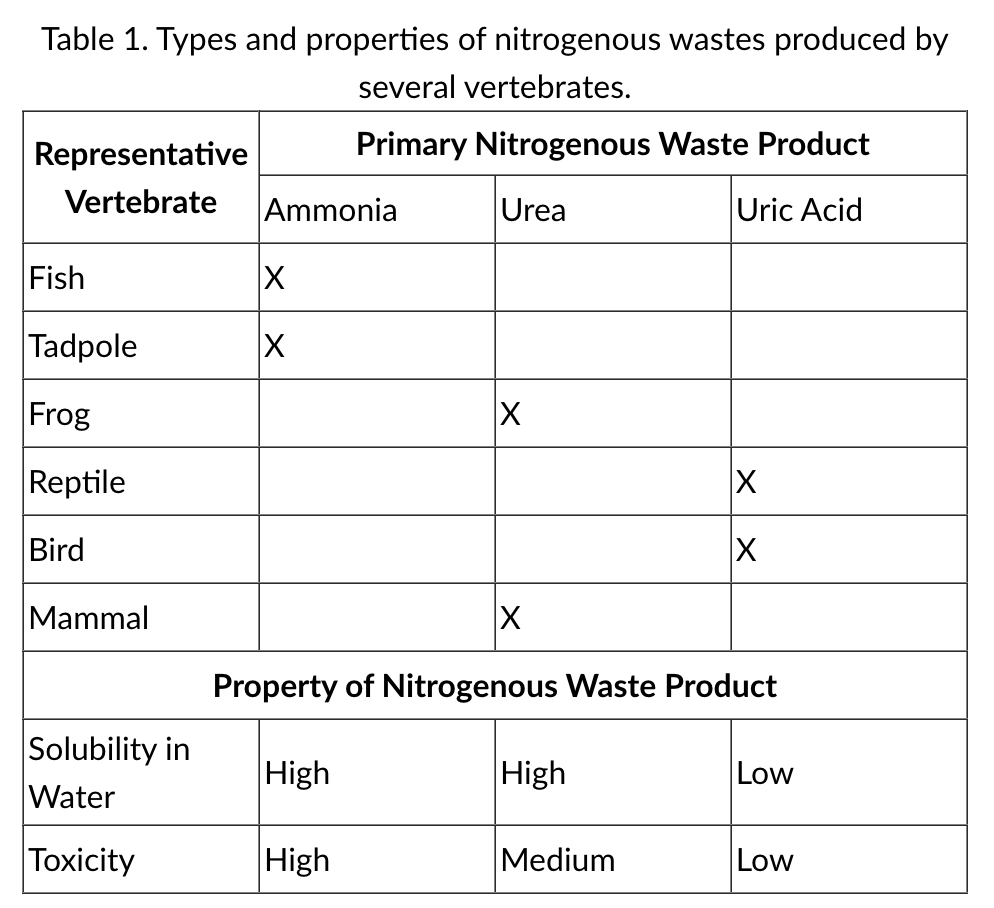
The table above shows the types and properties of nitrogen-containing wastes produced by several vertebrates. Which of the following is the best evolutionary explanation of the data?
Ammonia secretion requires a large volume of water and was therefore selected against in terrestrial vertebrates.
Low doses of antibiotics are often added to livestock feed to increase production. Studies have shown that bacterial populations constantly exposed to the sublethal doses can evolve resistance to the antibiotics. A research group claimed that when a population of bacteria are constantly exposed to sublethal doses of streptomycin, their fitness declines due to the increased energy requirements for survival in the presence of the antibiotic. For subsequent studies, the researchers wish to determine whether adding a low, sublethal dose of an additional antibiotic causes further decline in the fitness of the bacteria.
Which of the following best represents the next step the researchers should take with respect to experimental design?
Group 1: low dose of streptomycin + no dose of additional antibiotic
Group 2: low dose of streptomycin + low dose of additional antibiotic
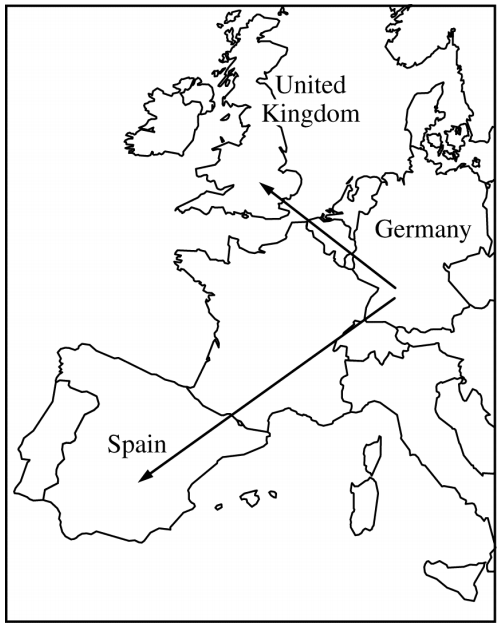
Blackcap birds (Sylvia atricapilla) migrate out of Germany before wintertime. Prior to the 1960s, all members of a particular blackcap population flew to Spain, which had an abundant natural food source. Now, some members of the same blackcap population fly to the United Kingdom, where food placed in feeders by humans is abundant. The blackcaps return to the same forests in Germany to nest during the breeding season.
Some blackcaps that migrate to the United Kingdom have become distinguishable by certain physical and behavioral traits from blackcaps that migrate to Spain. Which of the following best predicts the effect on the blackcap population if humans in the United Kingdom continue to place food in feeders during the winter?
The blackcaps that migrate to the United Kingdom will become reproductively isolated from the blackcaps that migrate to Spain, resulting in speciation in the blackcap population.
Which of the following statements best expresses the concept of punctuated equilibrium?
Evolutionary changes consist of rapid bursts of speciation alternating with long periods in which species remain essentially unmodified.
The appearance of a fertile, polyploid individual within a population of diploid organisms is a possible source of a new species. If this individual is capable of reproducing to form a new population, scientists would consider this to be an example of
sympatric speciation
Some scientists claim that amphibians are currently experiencing a period of mass extinction.
Which of the following should be included in an alternative hypothesis that would best support this claim?
The current extinction rate of amphibians compared with the background rate of extinction as determined by the fossil record
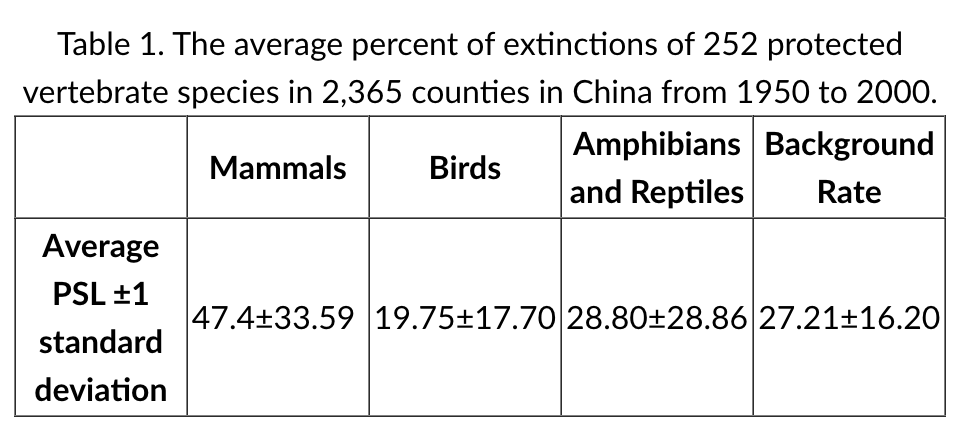
Scientists want to determine whether the rapid economic growth in China between 1950 and 2000 caused a mass extinction of animal species during that time period. A mass extinction event is considered to occur when the rate of species extinction far exceeds the background extinction rate. The scientists collected data on the number of extinctions of selected vertebrate species in China between 1950 and 2000, as shown in Table 1. Extinction rates were ascertained by measuring the average percent of species lost (PSL).
Which of the following is the null hypothesis most relevant for evaluating the data in Table 1?
There is no significant difference between the extinction rate of animals between 1950 and 2000 in China and the background extinction rate.
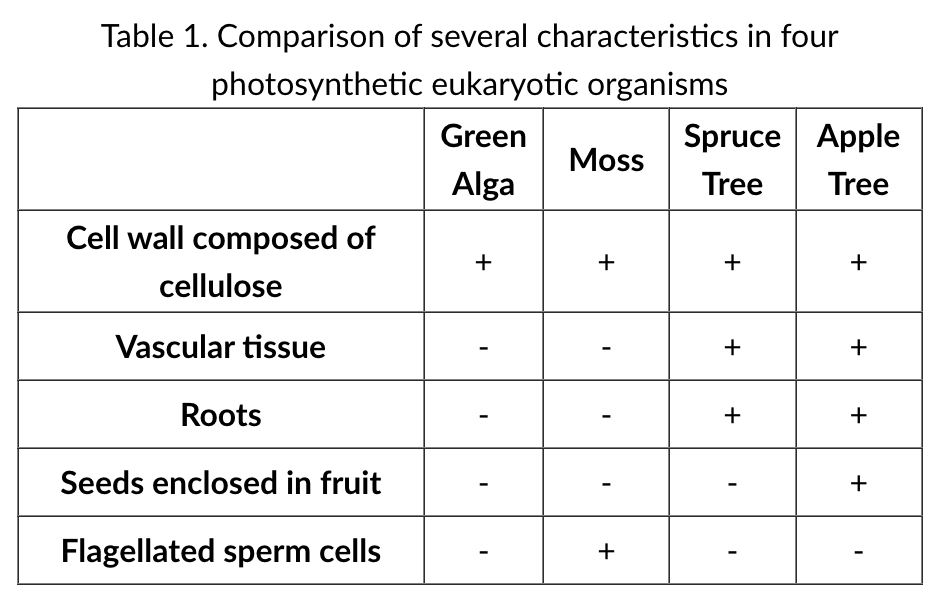
Spirogyra (a green alga), a moss, a spruce tree, and an apple tree. Table 1 compares several characteristics in the organisms (+ indicates the trait is present, − indicates the trait is absent).
Which of the following rows of data listed in table 1 best supports the possibility of a common ancestor for the organisms listed there?
Cell wall composed of cellulose
The wing of a bat, the flipper of a whale, and the forelimb of a horse appear very different, yet detailed studies reveal the presence of the same basic bone pattern. These structures are examples of
homologous structures
The amino acid sequence of cytochrome c is exactly the same in humans and chimpanzees. There is a difference of 13 amino acids between the cytochrome c of humans and dogs, and a difference of 20 amino acids between the cytochrome c of humans and rattlesnakes.
Which of the following statements is best supported by these data?
The human is apparently more closely related to the chimpanzee than to the dog or rattlesnake.
Which of the following pieces of evidence best supports the hypothesis that birds and crocodilians (crocodiles and alligators) are more closely related to each other than they are to other organisms?
The skulls of birds and crocodilians have an opening that is absent in the skulls of other reptiles.
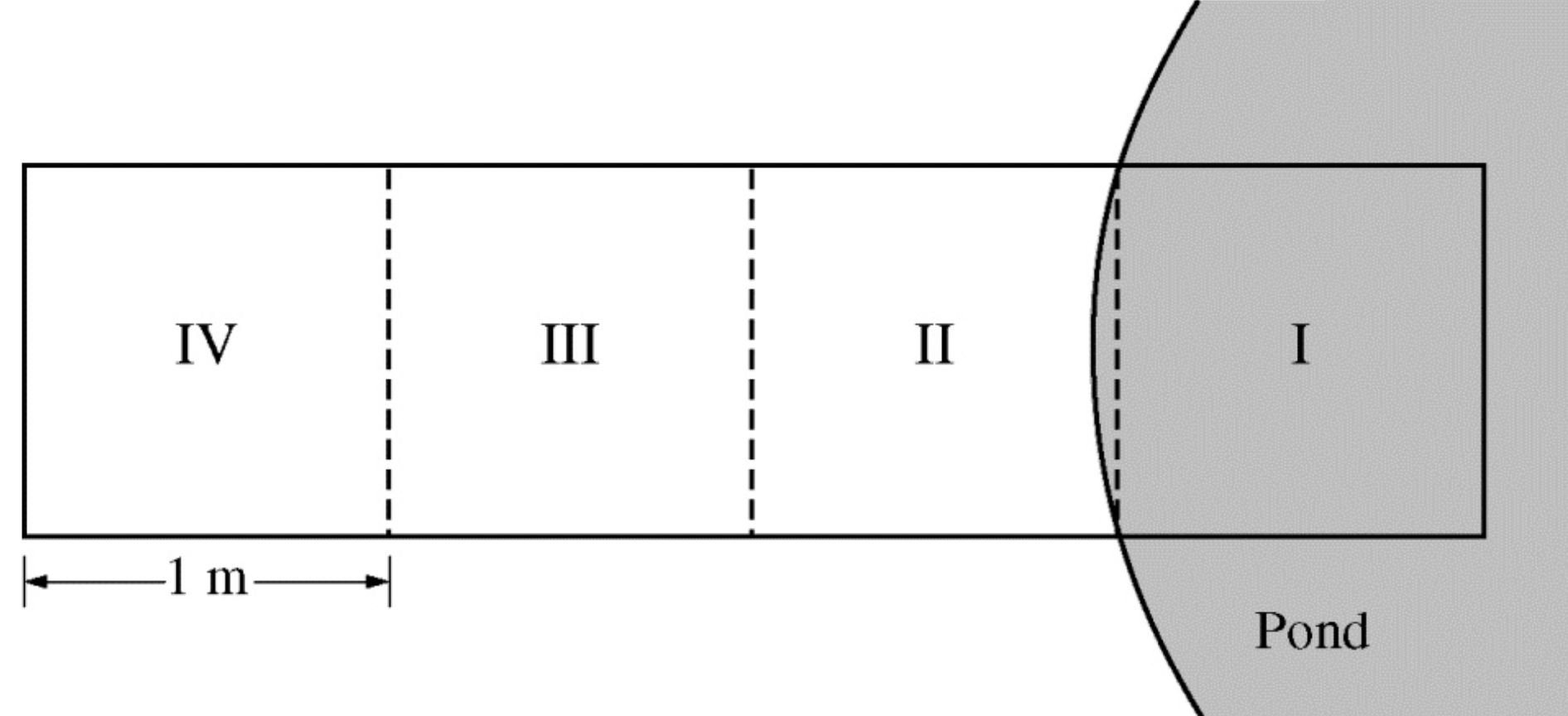
Researchers investigated the habitat preferences of two species of garter snakes, Thamnophis sirtalis and Thamnophis atratus. To create a choice chamber, the researchers built a meshed enclosure and positioned one end of the enclosure at the edge of a small pond. Zone I of the enclosure was located in the water, whereas zone IV of the enclosure was located 2–3 meters away from the water, as represented in the figure below. Snakes inside the enclosure were able to move freely between zones.
In a series of experiments, the researchers introduced a single snake into zone IV of the enclosure at 7:00 A.M. The researchers recorded the location of the snake at six time points throughout the day. In a related experiment, the researchers introduced two snakes, one of each species, into the enclosure at the same time and observed the location of each of the two snakes at the same six time points as before. The researchers repeated both the one-snake and two-snake experiments using different individual snakes of each species. The results are presented in the table.
Both species of garter snakes prey on the California newt, Taricha torosa, a small amphibian that produces a potent neurotoxin (TTX) in its skin. However, neither species of garter snake is affected by TTX. The resistance to TTX is associated with mutations in the SCN4A gene. Which of the following best supports a claim that TTX resistance arose independently in T. atratus and T. sirtalis?
The two species of snakes have different genetic mutations in the SCN4A gene.
A number of different phylogenies (evolutionary trees) have been proposed by scientists. These phylogenies are useful because they can be used to
evaluate which groups of organisms may be most closely related
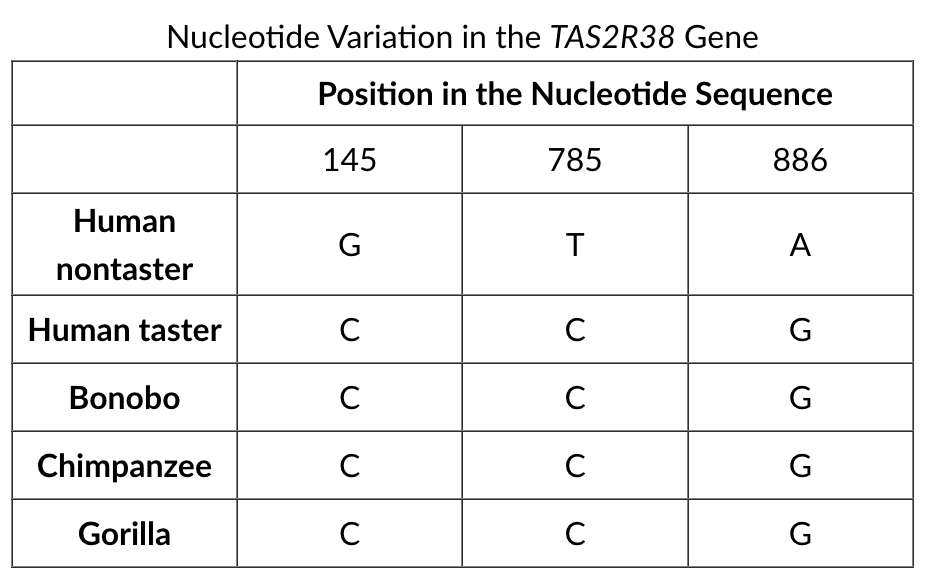
The TAS2R38 gene encodes a receptor protein that influences the ability to taste bitterness. The gene has two alleles: a dominant, wild-type allele that enables an individual (taster) to taste bitterness and a recessive, mutant allele that interferes with the ability of an individual (nontaster) to taste bitterness. Three single nucleotide mutations in the coding region of the TAS2R38 gene are associated with the nontaster allele. The nucleotides present at the three positions are shown in the table below.
Toxic substances often have a bitter taste that causes animals who try to eat such substances to spit them out rather than swallow them. Additional data suggest that gorilla populations have a very low frequency of nontasters.
Which of the following best describes the likely evolution of the TAS2R38 locus in the gorilla population?
Gorillas who could taste bitter toxins were more likely to survive and reproduce than nontasters.
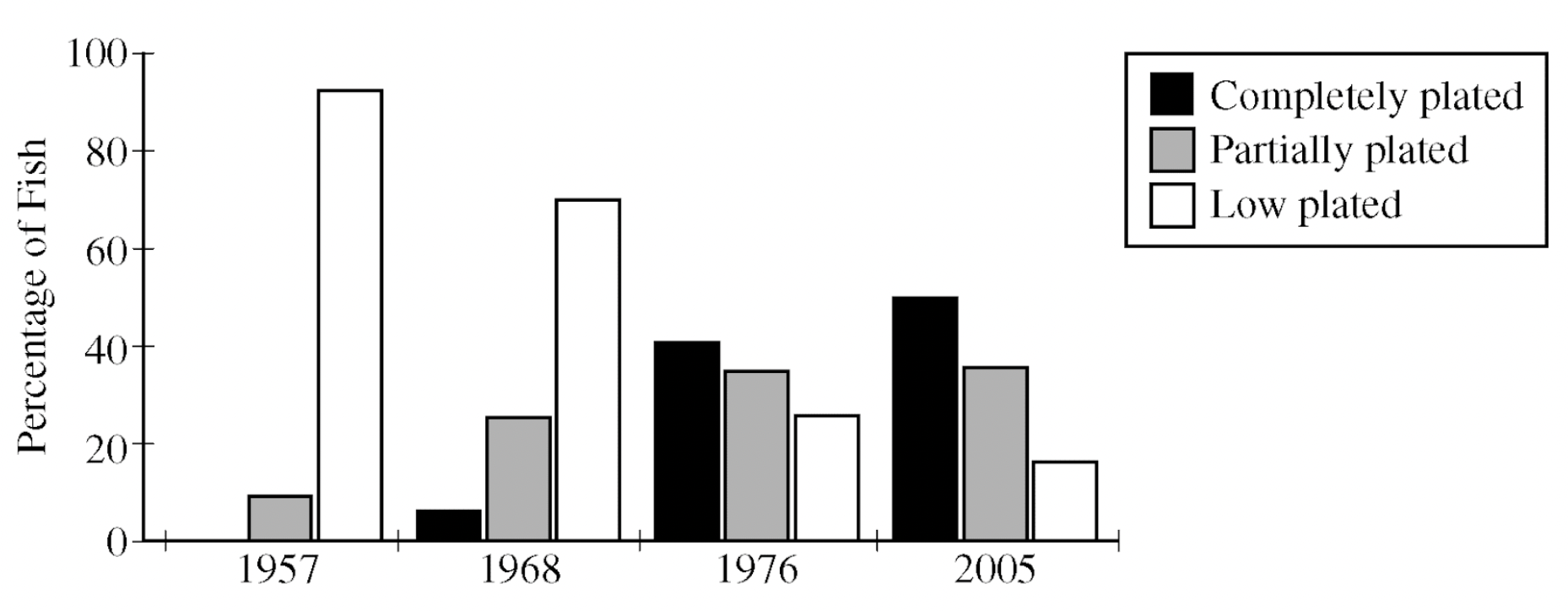
The three-spined stickleback (Gasterosteus aculeatus) is a small fish found in both marine and freshwater environments. Marine stickleback populations consist mainly of individuals with armor-like plates covering most of their body surface (completely plated). Approximately 10,000 years ago, some marine sticklebacks colonized freshwater environments. After many generations in the freshwater environments, the freshwater stickleback populations lacked the armor plating (low plated) typical of marine stickleback populations.
Over the period between 1957 and 2005, one freshwater population, in Lake Washington, a lake in a coastal region of the northwestern United States, changed from having a majority of individuals of the low-plated phenotype to having more individuals of the completely-plated phenotype than of the low-plated phenotype. Figure 1 shows the distribution of plated phenotypes in Lake Washington sticklebacks at four time points between 1957 and 2005.
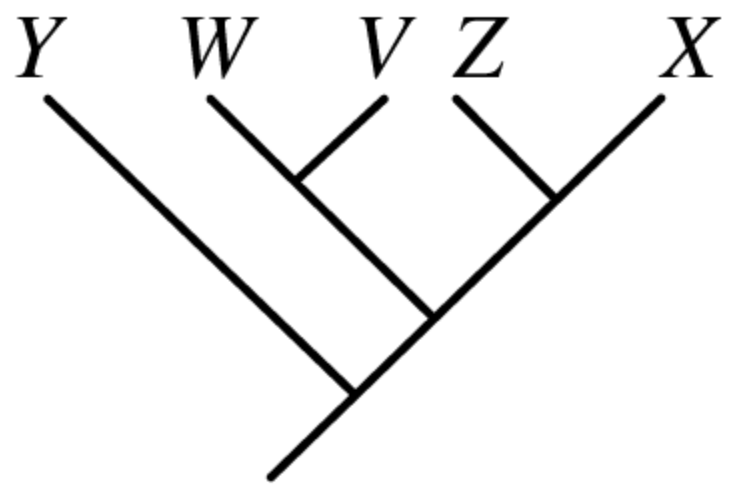
A single gene, ectodysplasin (EDA), is thought to be responsible for the variation in the number of armor plates in sticklebacks. Figure 2 shows a phylogenetic tree constructed by comparing DNA sequences of the EDA gene from a number of stickleback populations with low-plated or completely plated phenotypes. Figure 3 shows a phylogenetic tree constructed by comparing the sequences of 25 genes that were randomly selected from the same populations as shown in Figure 2. In both figures, shaded populations display the completely plated phenotype.
Evolution of a new trait typically takes many generations. Yet a dramatic shift in the extent of armor plating in the Lake Washington stickleback population occurred in the 50 years following the cleanup of the lake. Which of the following best describes the mechanism of the rapid evolution of the armor phenotype in the Lake Washington sticklebacks?
New selective pressures favored individuals with the plated phenotype, causing the plated allele frequency in the population to quickly increase.

Data regarding the presence (+) or absence (-) of five derived traits in several different species are shown in the table below.
Which of the following cladograms provides the simplest and most accurate representation of the data in the table?
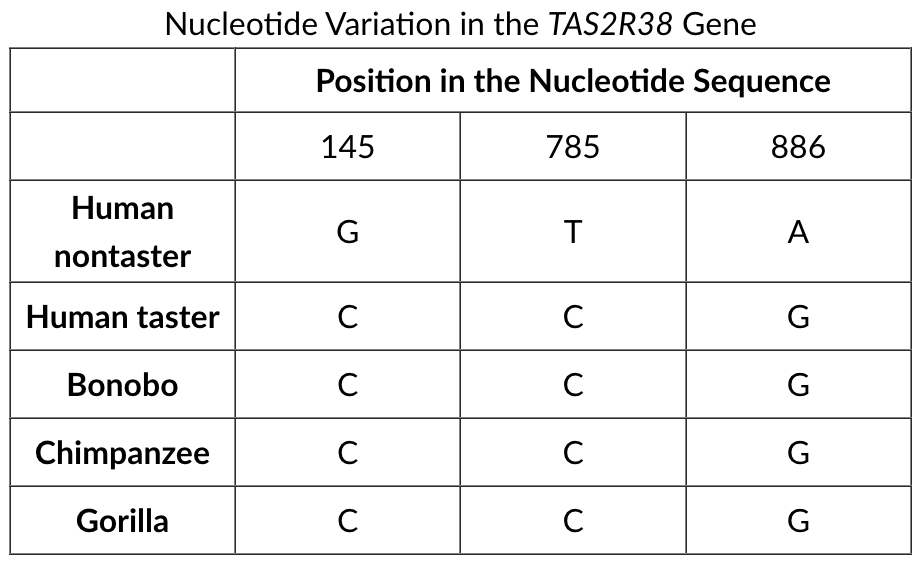
The TAS2R38 gene encodes a receptor protein that influences the ability to taste bitterness. The gene has two alleles: a dominant, wild-type allele that enables an individual (taster) to taste bitterness and a recessive, mutant allele that interferes with the ability of an individual (nontaster) to taste bitterness. Three single nucleotide mutations in the coding region of the TAS2R38 gene are associated with the nontaster allele. The nucleotides present at the three positions are shown in the table below.
Toxic substances often have a bitter taste that causes animals who try to eat such substances to spit them out rather than swallow them. Additional data suggest that gorilla populations have a very low frequency of nontasters.
In a sample of 2,400 people, 1,482 were found to have the dominant (taster) phenotype. Assuming that the population is in Hardy-Weinberg equilibrium, approximately how many individuals in the sample are expected to be heterozygous for TAS2R38?
1,133
Natural selection acts on ______, but the overall impact, evolution, is seen in changes to ______.
individuals; the population
Analysis of DNA sequences from two individuals of the same species results in a greater estimate of genetic variability than does analysis of amino acid sequences from the same individuals because
different DNA sequences can code for the same amino acid
The three-spined stickleback (Gasterosteus aculeatus) is a small fish found in both marine and freshwater environments. Marine stickleback populations consist mostly of individuals with pronounced pelvic spines, as shown in Figure 1. Individuals in freshwater stickleback populations, on the other hand, typically have reduced pelvic spines, as shown in Figure 2.
Two figures of stickleback fish are shown. Each figure shows an image of a stickleback fish with a genetic structure below it. The left figure is labeled Figure 1. Marine stickleback. A long Pelvic Spine on the fish is labeled. The genetic structure below the fish contains three enhancers, a promoter, and a gene. From left to right, the Enhancer Sequences are labeled Hindlimb, Pituitary, and Jaw. To the right of the Enhancer Sequences is a Promoter with an arrow moving up and to the right, over the top of the Pitx1 gene. The right figure is labeled Figure 2. Freshwater stickleback. A short Pelvic Spine on the fish is labeled. The genetic structure below the fish contains three enhancers, a promoter, and a gene. From left to right, the Enhancer Sequences are labeled Hindlimb, Pituitary, and Jaw. The Hindlimb enhancer is crossed out with an X, and it is labeled Disabled Due to Mutation. To the right of the Enhancer Sequences is a Promoter with an arrow moving up and to the right, over the top of the Pitx1 gene.
As represented in Figure 1 and Figure 2, the phenotypic difference between marine and freshwater sticklebacks involves Pitx1, a gene that influences the formation of the jaw, pituitary gland, and pelvic spine. Enhancer sequences upstream of the Pitx1 genetic locus regulate expression of the Pitx1 gene at the appropriate times and in the appropriate tissues during development. Previous studies have found that a mutation in the hindlimb enhancer interferes with the formation of a pronounced pelvic spine.
A mutation that affects Pitx1 gene function in all tissue types is most likely to be at which of the following genetic loci?
Promoter
Living cells typically have biosynthetic pathways to synthesize at least some of the amino acids used in making proteins. Some strains of E. coli, a prokaryote, can synthesize the amino acid tryptophan, while other E. coli strains cannot. Similarly, some strains of the yeast S. cerevisiae, a eukaryote, can synthesize tryptophan, while other S. cerevisiae strains cannot.
Which of the following describes the most likely source of genetic variation found in the tryptophan synthesis pathways of both species?
Errors in DNA replication lead to genetic variation.
Within a single cycle of PCR which statement is true?
Both strands of DNA are replicated.
Which of the following is most likely to create genetic variation in a population?
DNA polymerase errors during replication
The bacterium Vibrio cholerae is harmless unless a lysogenic bacteriophage provides the gene coding for the cholera toxin, which converts the bacterium to the virulent form that causes cholera. Which of the following best explains how the gene encoding cholera toxin becomes part of the bacterial genome?
The bacteriophage inserts the toxin gene into the host cell DNA, and the gene is expressed with the rest of the host cell’s genes.
Cell differentiation is a crucial stage of development in multicellular organisms. During differentiation, cells change their form and function as some genes are turned permanently on or off.
One of the key ways that gene expression is regulated is through modification and regulation of chromatin. In order to make the genes that need to be transcribed accessible, genes that are actively transcribed are maintained in a decondensed state called euchromatin. This looser DNA structure can be achieved through ______.
histone tail acetylation
A current challenge for doctors involves the bacterial strain Clostridioides difficile, which no longer responds to traditional antibiotic treatments.
Which of the following best explains why this particular strain of bacteria is resistant to antibiotic treatment?
The bacteria have high genetic variability and high reproductive rates.
The California newt, Taricha torosa, lives in the coastal areas around Los Angeles. Which of the following is a valid null hypothesis relating fitness to survival of a bottleneck event in a coastal area where a small, isolated population of California newts resides?
Surviving the bottleneck event will be random, so any change in the allelic frequencies of the salamander population is not attributed to fitness.
A survey reveals that 25 percent of a population of 1,000 individuals have attached earlobes (are homozygous recessive for the trait). For the following questions, assume that the population fits the parameters of the Hardy-Weinberg law.
If p equals the frequency of the dominant allele and q equals the frequency of the recessive allele, which of the following terms represents the frequency of the individuals who show the dominant phenotype?
p² + 2pq
Which of the following statements best explains how a condition of Hardy-Weinberg equilibrium results in a population that exhibits stable allele frequencies (i.e., a nonevolving population)?
In the absence of selection, allele frequencies in a population will not change.
More than 90 percent of the nitrogenous waste that is processed and excreted by humans is derived from the breakdown of proteins. Most of the remaining nitrogenous waste material is derived from the breakdown of
nucleic acids
True or false? DNA polymerase cannot begin replication of a strand of DNA without a primer.
True
Researchers were modeling the effects of repeated cycles of isolation with occasional interbreeding among five hypothetical fish species (species A, B, C, D, and E) found in two separate lakes (lakes I and II) that are occasionally joined by flooding, as shown in Figure 1. The research team indicated that species A would be considered to be the single common ancestor of species B, C, D, and E.
The figure presents the current locations of populations of fish species A, B, C, D, and E.
Figure 1. Current locations of populations of fish species A, B, C, D, and E
Which of the following mechanisms could most likely account for the origin of species B in Lake I?
Allopatric speciation
Which of the following statements is correct regarding the contributions of Charles Darwin to our understanding of evolution?
Darwin observed that species vary both globally and locally.
One of the oldest known mammalian fossils belongs to a small furry species, Hadrocodium wui, that lived 195 million years ago. For the following 100 million years, only a small number of groups of mammalian fossils are found in the fossil record. By 65 million years ago, the non-avian dinosaurs were extinct. By 55 million years ago, there were 130 mammal genera, including 4,000 different species that occupied a wide variety of habitats.
Which of the following best describes the cause of the rapid increase in the number of mammalian species between 65 and 55 million years ago?
After the dinosaur extinction, many ecological niches became available, leading to the adaptive radiation of mammals.
Some scientists claim that amphibians are currently experiencing a period of mass extinction.
Which of the following should be included in an alternative hypothesis that would best support this claim?
The current extinction rate of amphibians compared with the background rate of extinction as determined by the fossil record.
Explore top notes

