Language Disorder Exam 3
 Call Kai
 Learn
Learn Practice Test
 Spaced Repetition
 Match
Match Flashcards
 Knowt Play
1/81

There's no tags or description
Looks like no tags are added yet.
Name | Mastery | Learn | Test | Matching | Spaced | Call with Kai |
|---|
No analytics yet
Send a link to your students to track their progress
82 Terms
Etiology
Underlying medical cause of a symptom or deficit
Damage to the CNS or PNS
Results in communication, cognition, language, and behavior deficits: Determined by site and severity of damage
Etiologies of neurogenic communication disorders
Stroke
Traumatic Brain Injury (TBI)
Surgical trauma
Degenerative disorders
Infectious diseases
Idiopathic etiology
deficits or symptoms that are of an unknown or obscure origin
CNS (Central Nervous System)
brain and spinal cord
Peripheral Nervous System (PNS)
all the other pieces of the nervous system
Stroke
AKA: cerebrovascular accident (CVA)
Can occur within any area of the brain or brainstem.
Brain tissue is permanently destroyed or temporarily does not function due to decreased or absent blood supply to affected brain tissue
Strokes are the ___ leading cause of death in the U.S
4th
brain consumes ____ of oxygen taken in by the body and can survive six to eight minutes without oxygen
20%
____ seconds without blood circulation causes unconsciousness
5-8
____ minutes produces irreversible brain damage
6-8
Anoxia
complete lack of oxygen to the cell
Hypoxia
partial lack of oxygen to a cell
T/F: Strokes cause death more in women than men
True
factors that increase likelihood of strokes
Tobacco use, physical inactivity, atrial fibrillation, high blood
pressure
Main Types of Strokes
Ischemic stroke
Hemorrhagic stroke
Ischemic Strokes are caused by _____
a blockage of a blood vessel supplying the brain
most strokes are _____
ischemic
Ischemic Stroke Onset Symptoms
Loss of strength/sensation on one side of body
Problems with speech and language
Changes in vision and balance
ischemic core/infarct
the area of dead tissue following the stroke; tissue necrosis
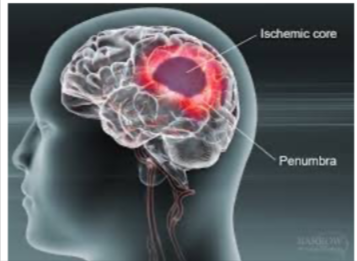
tissue necrosis
death of cells; irreversible.
ischemic Penumbra
Surrounding the ischemic core
This area of the brain is damaged but has received enough blood to stay alive
damage can typically be reversed if medical attention is received within 2 to 4 hours of onset of the stroke.
types of ischemic strokes
Thrombotic or embolic
transient ischemic attack
Thrombotic Stroke (Thrombosis)
Occurs when:
A thrombus forms
Interrupts blood flow within the brain
Thrombus
blood clot that forms inside a blood vessel and remains attached to the vessel wall (usually due to atherosclerosis)
Atherosclerosis
chronic disease
Buildup of fatty materials that accumulated slowly on the walls of arteries
Narrows the arteries
May restrict blood supply to the artery
Embolic Stroke (Embolism)
Occurs when a blood clot or other debris travels through the bloodstream and suddenly blocks an artery in the brain
Cuts off blood circulation to a part of the brain
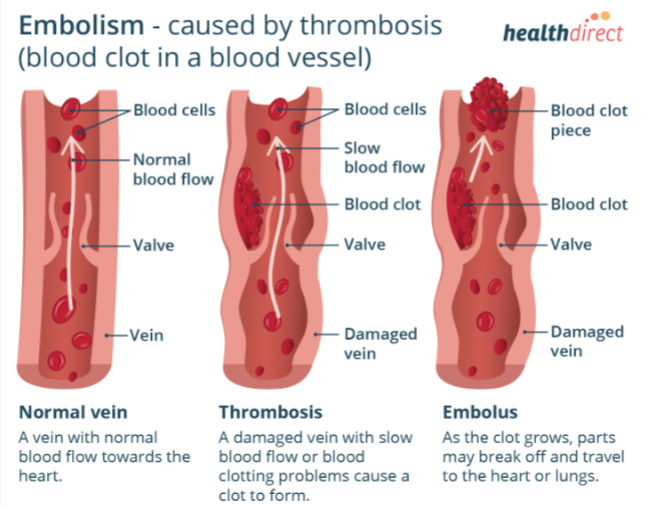
Embolus
A mass traveling through the circulatory system
Lodges in a blood vessel in the brain
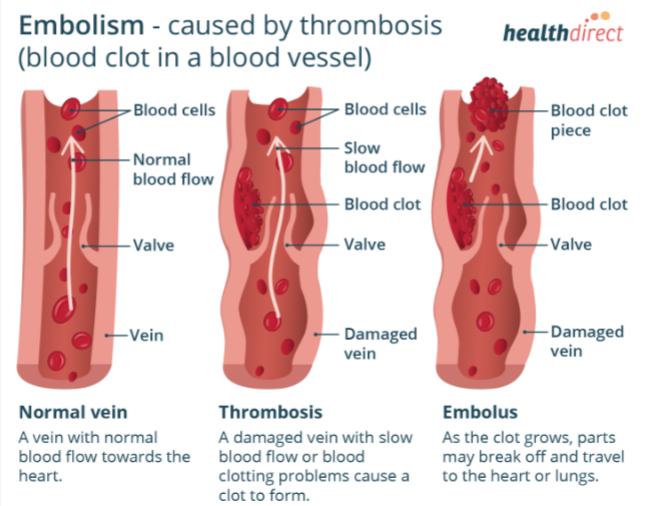
A thrombus can become an embolus if…
a piece of the thrombus breaks off, travels, and lodges within a vessel to interrupt circulation within the brain
Hemorrhagic Stroke
Occurs when:
A blood vessel within the brain ruptures
Blood spills into the brain
Deprives a part of the brain of blood flow
Hemorrhagic Strokes usually occur in those who:
Have high blood pressure, which is called hypertension
Are engaged in high periods of physical activity
Have a history of hemorrhagic stroke
Experience alcohol abuse
Two primary kinds of hemorrhagic strokes
Subarachnoid
Intracerebral
Subarachnoid
bleeding between the surface of the cerebrum and arachnoid membrane in the subarachnoid space
Intracerebral
bleeding occurs within the brain itself
Hemorrhagic Stroke symptoms
Severe headache, nausea, and vomiting
Three mechanisms of damage that may occur in Hemorrhagic Strokes
Blood supply to a portion of the brain has been interrupted due to a burst/broken blood vessel
Blood spilling out into the brain tissue where it does not belong causes damage
Intracranial pressure increases due to the continued release of blood into the brain or between the surface of the brain and the cranium
Transient Ischemic Attack (TIA)
“mini stroke”
Small ischemia in the brain that resolves itself within 24 hours
Symptoms include: Mild motor and cognitive deficits that go away after the blood clot is resolved
Does not cause permanent deficits unless TIAs are recurring
May be a warning sign of a larger oncoming stroke
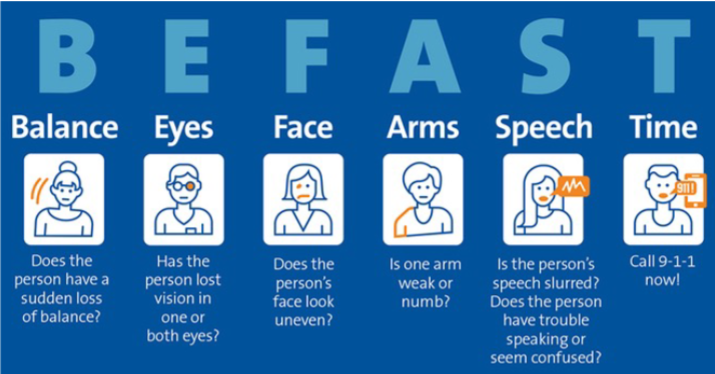
BE FAST Stroke signs
Balance
Eyes
Face
Arms
Speech
Time
Aneurysm
Abnormal stretching or ballooning out of the wall of a blood vessel due to:
Disease or hereditary factors
Hypertension and atherosclerosis
Usually occurs in the Circle of Willis
Symptoms of Aneurysm
Severe headache, nausea, vomiting, blurred vision, sensitivity to light, seizures, loss of consciousness
Traumatic Brain Injury (TBI)
Serious and life-threatening brain damage
Result of an external and forceful event
NOT due to disease, stroke, seizure, surgery
Immediate impact ranges from mild concussion to coma to death
Common TBI Causes
Falls, motor vehicle accidents (MVA), violent assault, being struck by an object
TBI Symptoms
Language and cognitive deficits are varied and complex
—> Depends on what areas of the brain were damaged/to what extent
slowed mental processing speed
attention deficits (sustain, divided, selective attention)
short-term memory and working memory deficits
executive functions (problem-solving, reasoning, inhibition
affect activities of daily living
Brain Tumor
Neoplasm
Primary tumors
Secondary Tumors
Neoplasm
Abnormal growth of cells in the brain
Serves no purpose to the body
Benign vs Malignant (brain cancer)
benign can be dangerous if it grows rapidly
Biopsy
Primary Tumor
Brain tumor that originates in the brain
Secondary Tumor
A cancerous tumor that spreads from another part of the body to the brain
Biopsy
surgery to remove a piece of tissue for testing
Malignant brain tumors
These brain tumors are brain cancer
Can grow and spread quickly to other body parts
Treated with surgical removal and radiation
Benign brain tumors
Cannot spread to other parts of the body
Mass effect may occur
Surgical Trauma
Damage to brain tissue that may occur during surgery to the brain
May result in acquired speech, language, cognitive, and swallowing deficits
May also cause secondary seizures, additional CVAs, infections, and increased intracranial pressure
Infection
Can damage CNS and PNS
May be viral, fungal, bacterial, parasitic
Impacts cognition, motor, and language
Depends on site, nature, and damage of infection
Some infections that affect the nervous system
Encephalitis
HIV/AIDS
Syphilis
Poliomyelitis
Encephalitis
Acute infection and inflammation of the brain or spinal cord
“-itis” = inflammation
Caused by a virus or bacterial infection
Symptoms will reflect the type and location of the infection
HIV/AIDS
se(x)ually transmitted disease
Weakens the immune system
NeuroAIDS, HIV/AIDS dementia
Language is often unaffected
Mild to severe language deficits have been reported
Neurological symptoms of HIV/AIDS
Inability to learn new information
slowed processing
disfluent speech
impaired recall
reduced attention
Creutzfeldt-Jacob Disease
Degenerative and fatal brain disease caused by a prion
Prion: tiny abnormal proteins that cause other normal proteins to misfold → destroy brain cells
As neurons die, the brain develops microscopic holes, giving it a “spongy” like appearance
Affects the CNS
Symptoms of Creutzfeldt-Jacob Disease
Dementia with rapid onset and involuntary movements (balance, myoclonus=muscle jerk)
Personality or Behavioral changes
Speech and Swallowing difficulties
Mayo Clinic
Syphilis
Sexually transmitted disease
Caused by bacteria called spirochetes
Neurosyphilis
Simultaneous HIV and syphilis infections are common
Symptoms of Syphilis
Meningitis
headaches
stiff neck
visual changes
facial weakness
cognitive deficits
motor problems
Neurosyphilis
A version of syphilis that affects the nervous system
Occurs years after initial infection and treatment
Poliomyelitis (Polio)
Virus that attacks motor nerve tracks of the PNS
Primarily infects children
Preventable with a vaccine
Symptoms of Poliomyelitis
Nonsymmetrical paralysis with diminished or absent reflexes
Inability of PNS to deliver volitional and nonvolitional commands to the muscles
Seizures
Sudden, often periodic, abnormal levels of electrical discharge occurring in the brain
Mild-moderate seizures can produce a slowly accumulating level of brain damage to the affected areas over time
Severe seizures are capable of creating immediate brain damage or even death
“Quiet Seizures” also possible, common in children
Seizure Causes
Stroke
TBI
tumor
surgical trauma
infections
epilepsy
Seizure Stages
→ Aura Stage
→ Ictus Stage Tonic
→ Ictus Stage Clonic
→ Post-ictal
Aura Stage
Period immediately before the seizure
Warning signs a seizure may occur:
Headache, déjà vu, panic, nausea, radical mood changes, tingling in limbs, visual abnormalities
Ictus
Main stage of the seizure
Convulsions and loss of consciousness
Post-ictus
Period after the seizure
Post-ictal confusion
Short-term cognitive deficits
Interictal period
time between seizures
Status epilepticus
Seizures one after the other without an interictal period
Partial Seizures
Pathological electrical overstimulation confined to
a limited region of the brain
• Can create any motor, sensory, or emotional
symptom
Simple partial seizure
Consciousness maintained during seizure
Complex partial seizure
Causes an altered state of consciousness
Generalized Serizures
Affect the entire brain and are associated with total loss of consciousness
• Tonic clonic seizure (grand mal)
• Petit mal (absence attacks)
Tonic clonic seizure (grand mal)
Tonic phase
Loss of consciousness and body stiffens
Clonic phase
Body convulses violently
Petit mal (absence attacks)
Loss of awareness for a few seconds
No motor activity, shaking, or convulsing
If a person is experiencing a seizure
Put nothing in their mouth
Clear away sharp or dangerous objects
Turn them on their side
Put a pillow or something soft under their head
Stay with the person until the seizure ends or, if in a hospital, the appropriate medical personnel arrive

