AP Psychology Chapter 6 Vocab
 Studied by 8 people
 Call Kai
 Learn
Learn Practice Test
 Spaced Repetition
 Match
Match Flashcards
 Knowt Play
1/54

There's no tags or description
Looks like no tags are added yet.
Name | Mastery | Learn | Test | Matching | Spaced | Call with Kai |
|---|
No analytics yet
Send a link to your students to track their progress
55 Terms
Learning
the process of acquiring new and relatively enduring information or behaviors.
Learning is when experience changes how you think or act for a long time.
Habituation
an organism’s decreasing response to a stimulus with repeated exposure to it
You stop reacting because you’re used to it.
Ex. You don’t notice the ticking clock anymore.
Associative Learning
learning that certain events occur together. The events may be two stimuli (as in classical conditioning) or a response and its consequences (as in operant conditioning).
Learning that things go together

Stimulus
any event or situation that evokes a response
Cognitive Learning
the acquisition of mental information, whether by observing events, by watching others, or through language.
Learning by thinking, watching, or understanding
Ex. Watching someone else get yelled at and deciding not to do the same thing.
Classical Conditioning
a type of learning in which one learns to link two or more stimuli and anticipate events.
Learning that one thing predicts another
Ex. Bell → food → salivation (Pavlov)
Behaviorism
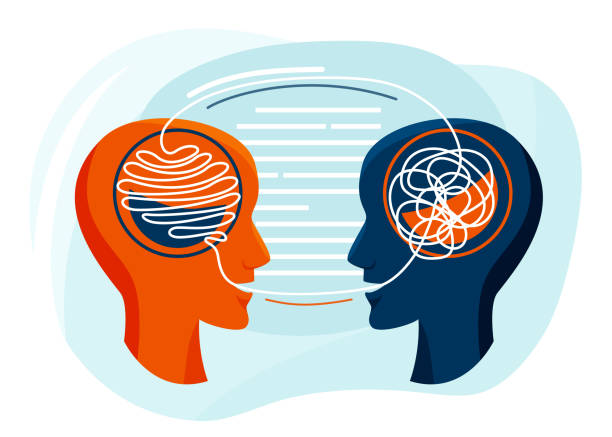
the view that psychology (1) should be an objective science that (2) studies behavior without reference to mental processes. Most research psychologists today agree with (1) but not with (2).
Focuses only on observable behavior, not thoughts
Neutral Stimulus (NS)
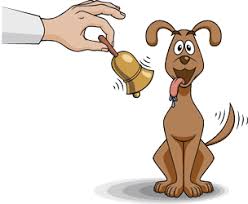
in classical conditioning, a stimulus that elicits no response before conditioning
A bell before conditioning
Unconditioned Response (UR)
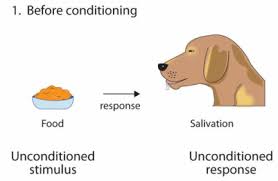
in classical conditioning, an unlearned, naturally occurring response (such as salivation) to an unconditioned stimulus (US) (such as food in the mouth).
Unconditioned Stimulus (US)
in classical conditioning, a stimulus that unconditionally—naturally and automatically—triggers a response (UR)
Ex. food in dogs mouth automatically causes salivation
Conditioned Response (CR)
in classical conditioning, a learned response to a previously neutral (but now conditioned) stimulus (CS).
The learned reaction
Salivating to the bell
Conditioned Stimulus
in classical conditioning, an originally irrelevant stimulus that, after association with an unconditioned stimulus (US), comes to trigger a conditioned response (CR).
A once-neutral thing that now triggers a response
The bell after learning
Acquisition
in classical conditioning, the initial stage, when one links a neutral stimulus and an unconditioned stimulus so that the neutral stimulus begins triggering the conditioned response. In operant conditioning, the strengthening of a reinforced response
The learning phase (when the association is forming)
Higher-Order Conditioning
a procedure in which the conditioned stimulus in one conditioning experience is paired with a new neutral stimulus, creating a second (often weaker) conditioned stimulus. For example, an animal that has learned that a tone predicts food might then learn that a light predicts the tone and begin responding to the light alone. (Also called second-order conditioning.)
One learned thing teaches another thing
Ex. Bell → food, then light → bell → food.
Extinction
the diminishing of a conditioned response; occurs in classical conditioning when an unconditioned stimulus (US) does not follow a conditioned stimulus (CS); occurs in operant conditioning when a response is no longer reinforced.
The response fades because the connection stops
Bell rings, no food → eventually no more salivation
Spontaneous Recovery
the reappearance, after a pause, of an extinguished conditioned response.
Generalization
the tendency, once a response has been conditioned, for stimuli similar to the conditioned stimulus to elicit similar responses.
Similar things cause the same reaction
Fear of one dog → fear of all dogs
Discrimination
in classical conditioning, the learned ability to distinguish between a conditioned stimulus and stimuli that do not signal an unconditioned stimulus.
Knowing the difference
Ex. Only reacting to your phone’s ringtone
Operant Conditioning
a type of learning in which behavior is strengthened if followed by a reinforcer or diminished if followed by a punisher.
Learning based on rewards and punishments
Law of Effect
Thorndike’s principle that behaviors followed by favorable consequences become more likely, and that behaviors followed by unfavorable consequences become less likely.
Rewards make behavior repeat; punishment stops it.
Operant Chamber (Skinner Box)
in operant conditioning research, a chamber containing a bar or key that an animal can manipulate to obtain a food or water reinforcer; attached devices record the animal’s rate of bar pressing or key pecking.
Reinforcement
in operant conditioning, any event that strengthens the behavior it follows.
Anything that increases behavior.
Shaping
an operant conditioning procedure in which reinforcers guide behavior toward closer and closer approximations of the desired behavior
Rewarding small steps toward a goal
Ex. cleaning your room and starting by only making your bed
Discriminative Stimulus
in operant conditioning, a stimulus that elicits a response after association with reinforcement (in contrast to related stimuli not associated with reinforcement).
A signal that tells you a reward is available.
Positive Reinforcement
increasing behaviors by presenting positive reinforcers. A positive reinforcer is any stimulus that, when presented after a response, strengthens the response.
Add something good to increase behavior
Ex. getting candy for good grades
Negative Reinforcement
increasing behaviors by stopping or reducing negative stimuli. A negative reinforcer is any stimulus that, when removed after a response, strengthens the response. (Note: Negative reinforcement is not punishment.
Remove something bad to increase behavior
Primary Reinforcer
an innately reinforcing stimulus, such as one that satisfies a biological need
Naturally rewarding
Ex. water when you’re thirsty
Conditioned Reinforcer
a stimulus that gains its reinforcing power through its association with a primary reinforcer; also known as a secondary reinforcer.
Learned reward.
Ex. money because you can use it to buy food
Reinforcement Schedule
a pattern that defines how often a desired response will be reinforced
Continuous Reinforcement
reinforcing the desired response every time it occurs.
Partial (intermittent) Reinforcement
reinforcing a response only part of the time; results in slower acquisition of a response but much greater resistance to extinction than does continuous reinforcement.
Fixed-Ratio Schedule
in operant conditioning, a reinforcement schedule that reinforces a response only after a specified number of responses.
based on fixed number
Ex. paid every 10 times
Variable-Ratio Schedule
in operant conditioning, a reinforcement schedule that reinforces a response after an unpredictable number of responses
based on random number
Ex. gambling
Fixed-Interval Schedule
in operant conditioning, a reinforcement schedule that reinforces a response only after a specified time has elapsed
Based on specific amount of time
Ex. paid hourly
Variable-Interval Schedule
in operant conditioning, a reinforcement schedule that reinforces a response at unpredictable time intervals.
Based on random intervals of time
Ex. checking for texts
Punishment
an event that tends to decrease the behavior that it follows.
Biofeedback
a system for electronically recording, amplifying, and feeding back information regarding a subtle physiological state, such as blood pressure or muscle tension
Using machines to control body responses
Respondent Behavior
behavior that occurs as an automatic response to some stimulus.
Ex. flinching
Operant Behavior
behavior that operates on the environment, producing consequences.
Chosen action
Ex. raising your hand
Cognitive Map
a mental representation of the layout of one’s environment. For example, after exploring a maze, rats act as if they have learned a cognitive map of it
A mental picture of where things are.
Latent Learning
learning that occurs but is not apparent until there is an incentive to demonstrate it
Learning that shows up later.
Ex. Knowing the route but not using it until needed
Insight
a sudden realization of a problem’s solution.
Intrinsic Motivation
a desire to perform a behavior
Doing something because you enjoy it.
Extrinsic Motivation
a desire to perform a behavior to receive promised rewards or avoid threatened punishment.
Doing something for rewards or to avoid punishment.
Coping
alleviating stress using emotional, cognitive, or behavioral methods
Problem-Focused Coping
attempting to alleviate stress directly—by changing the stressor or the way we interact with that stressor.
Fix the problem
Ex. study more to be more prepared for the test
Emotion-Focused Coping
attempting to alleviate stress by avoiding or ignoring a stressor and attending to emotional needs related to one’s stress reaction
manage the emotions the stress is causing
Ex. explaining your problems to a friend
Learned Helplessness
the hopelessness and passive resignation an animal or human learns when unable to avoid repeated aversive events
Giving up because you think nothing will help.
External Locus of Control
the perception that chance or outside forces beyond our personal control determine our fate.
Internal Locus of Control
the perception that you control your own fate
Self-Control
the ability to control impulses and delay short-term gratification for greater long-term rewards.
Resisting now for something better later.
Observational Learning
learning by observing others. Also called social learning.
Learning by watching.
Modeling
the process of observing and imitating a specific behavior.
Mirror Neurons
frontal lobe neurons that some scientists believe fire when performing certain actions or when observing another doing so. The brain’s mirroring of another’s action may enable imitation and empathy.
Brain cells that help you copy and empathize
Prosocial Behavior
positive, constructive, helpful behavior. The opposite of antisocial behavior.
Ex. Helpful, kind actions
 Note
Note  Flashcards (74)