PSYC 3082 Exam 2
 Call Kai
 Learn
Learn Practice Test
 Spaced Repetition
 Match
Match Flashcards
 Knowt Play
1/234

There's no tags or description
Looks like no tags are added yet.
Name | Mastery | Learn | Test | Matching | Spaced | Call with Kai |
|---|
No analytics yet
Send a link to your students to track their progress
235 Terms
what is the first criteria according to the DMS-5 to be diagnosed with PTSD
traumatic exposure
traumatic exposure can be
direct or observed
some clinical aspects of PTSD
trauma exposure
continued re-experiencing
avoidance
emotional numbing
reckless or self destructive behavior
interpersonal problems
these symptoms:
trauma exposure
continued re-experiencing
avoidance
emotional numbing
reckless or self destructive behavior
interpersonal problems
must last how long after the trauma in order to be diagnosed ?
more than 1 month
If the PTSD symptoms last less than 1 month it could be
acute stress disorder (ASD)
If the PTSD symptoms last more than 1 month... it can be
diagnosed as PTSD
DSM-5 PTSD criteria A.
person must have a
traumatic exposure
DSM-5 PTSD criteria B.
person must have at least
1 intrusive symptom
DSM-5 PTSD criteria C.
person must have at least
1 avoidance symptom
DSM-5 PTSD criteria D.
person must have more than 2
negative alterations in cognition and mood
DSM-5 PTSD criteria E.
person must have these set of symptoms for more than
a month
may be diagnosed on to three months post trauma
acute PTSD
experience PTSD symptoms immediately post trauma exposure for 0-1 months
acute stress disorder
diagnosed after 3 months post trauma
chronic PTSD
onset six months or more post traumatic exposure
delayed onset
Core PTSD symptom categories
Re-experiencing, avoidance, numbing, reckless behavior
PTSD requires exposure to
actual or threatened death, injury, or sexual violence
DSM-5 PTSD Criterion A is Exposure to ______________
trauma (death, injury, sexual violence)
What are the ways trauma exposure can occur
Direct
indirect/witnessed
learned
repeated exposure
First responders handling remains is an example of
indirect exposure
____________ symptoms involve the trauma repeatedly entering awareness.
Intrusion
flashbacks, nightmares, distressing memories, and strong reactions to reminders are examples of
intrusive symptoms
Re-experiencing trauma involuntarily
intrusive symptoms
What triggers distress in PTSD?
Internal or external reminders
avoid thoughts, feelings, or reminders of trauma in people with PTSD are experiencing
Avoidance and Numbing
(They may also feel detached, lose interest in activities, or have limited emotional expression.)
Reduces emotional responsiveness
Emotional numbing
Feeling detached from others is an example of
numbing
________ alters thinking and mood, including negative beliefs, self-blame, and inability to feel positive emotions.
PTSD
in PTSD __________ of the trauma may also be impaired
memory
negative cognition in PTSD is defined as
negative beliefs about self/world
persistent negative mood
PTSD emotional symptom
Inability to recall trauma details
PTSD memory issue
what percent of people experience PTSD at some point.
7% of people
most common causes of PTSD
Combat and sexual assault
many people exposed to trauma do not develop PTSD
True
may be diagnosed 1-3 months post trauma exposure
acute PTSD
PTSD immediately post trauma (up to one month)
acute stress disorder
onset 6mo or 6mo+ post trauma exposure
delayed onset of
diagnosed 3 months post trauma exposure
chronic
Strong social support reduces risk does what for PTSD
lowers Rish
PTSD risk depends on
trauma intensity
learned fear responses,
biology
lack of control
social support
Why are PTSD twin correlations not close to 1?
because there is a strong environmental influence (trauma required)
Monozygotic twin PTSD correlations
0.28-0.41
dizygotic twin PTSD correlations
0.11-0.24
PTSD annual prevalence
3.5%
PTSD lifetime prevalence
6.8%
most people exposed to trauma do not develop PTSD
true
the tendency to develop PTSD also has to do with
type of trauma
proximity to the trauma
for PTSD to develop one needs to have
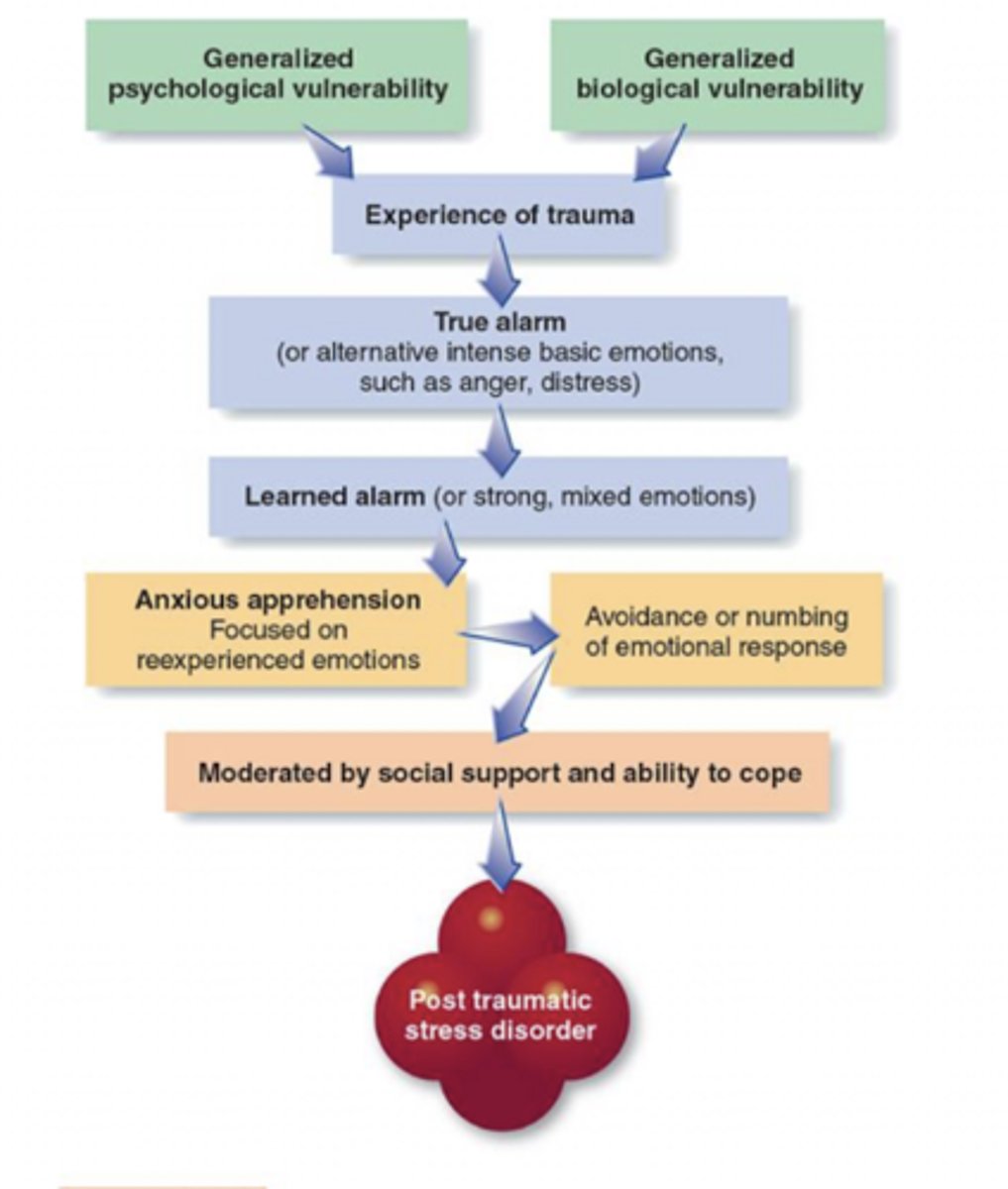
generalized psychological vulnerability OR generalized biological vulnerability
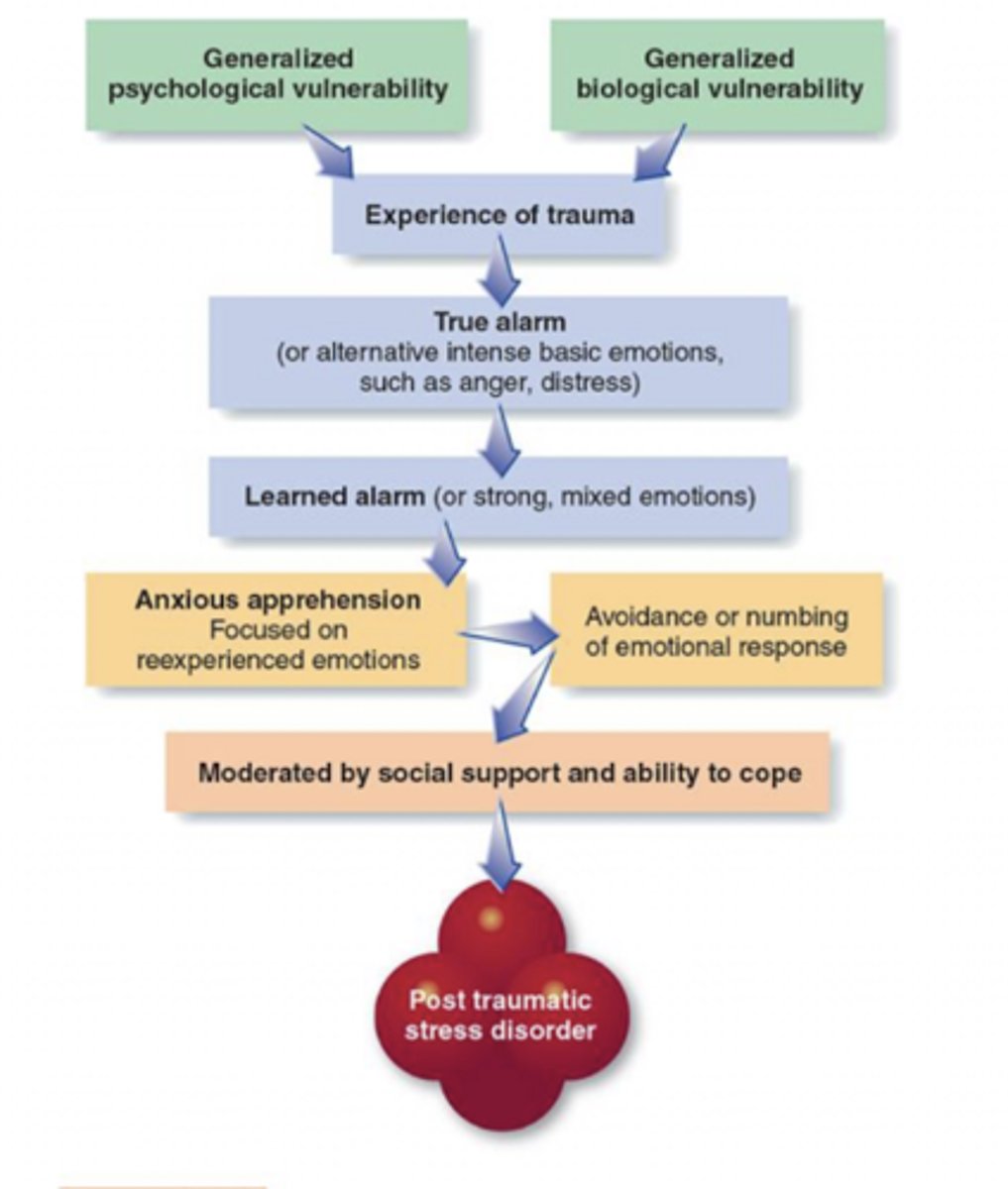
must have
generalized psychological vulnerability OR generalized biological vulnerability
THEN experience of _____________
trauma
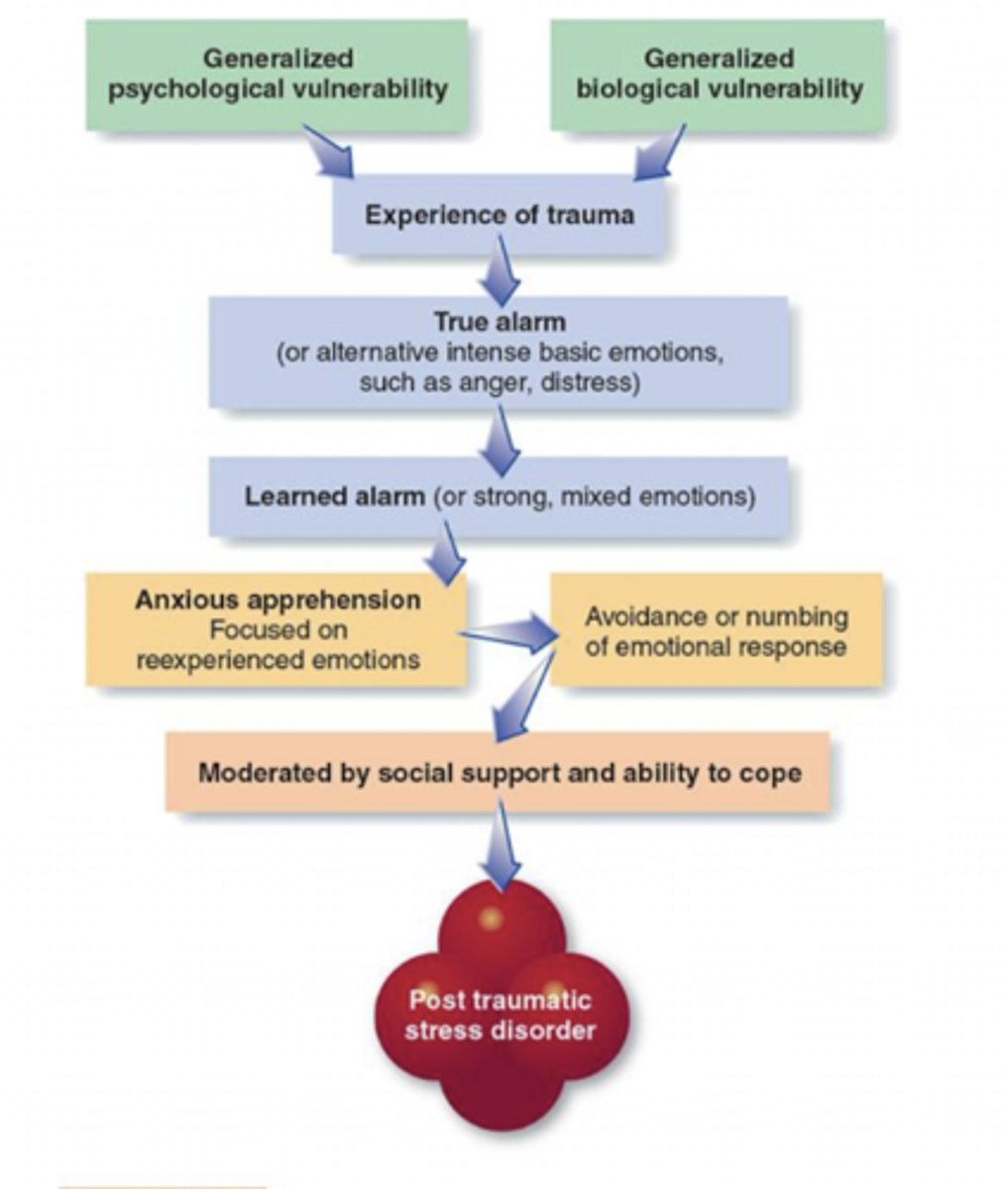
okay so once you experience/exposure to trauma.... what alarm is next
true alarm
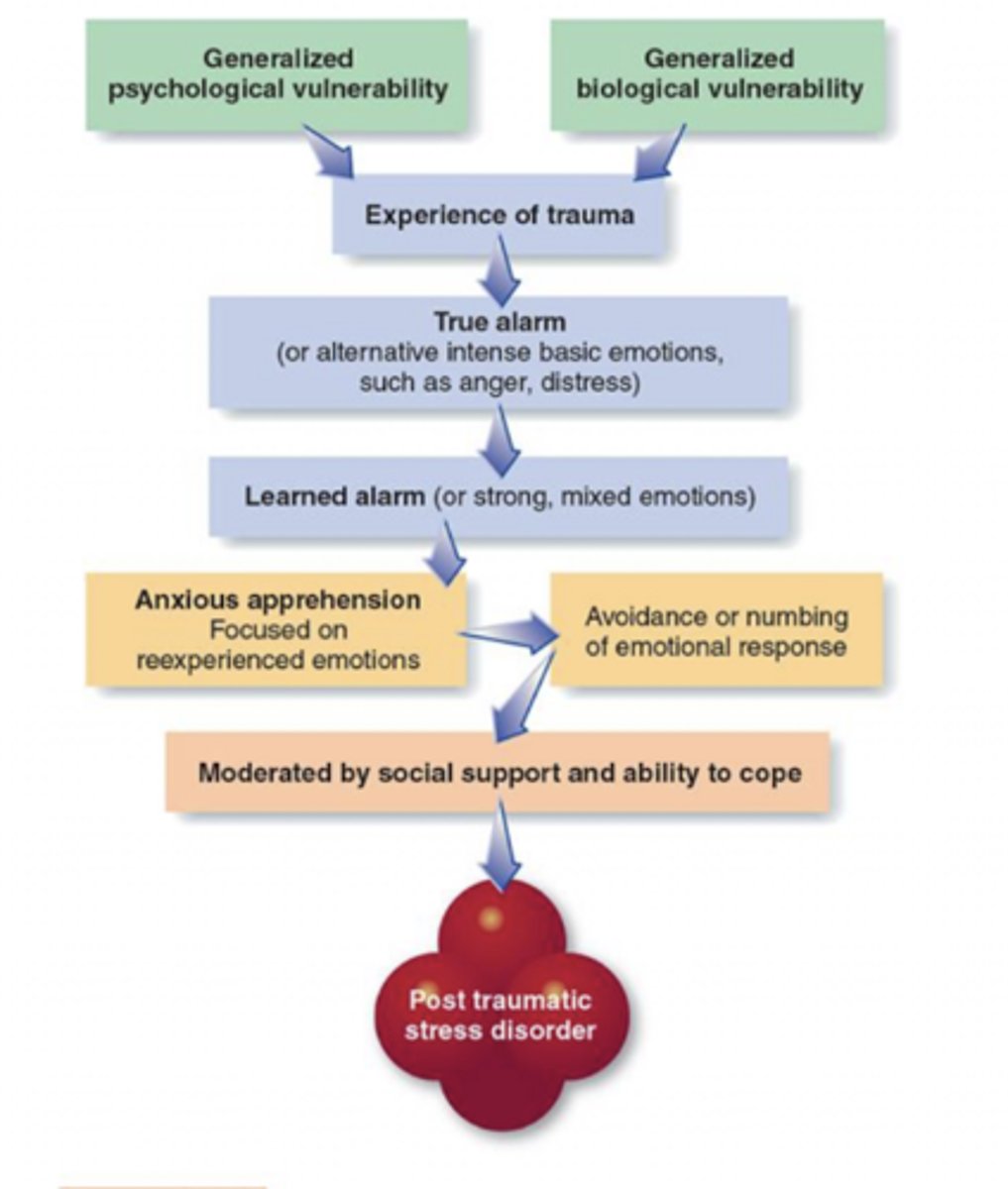
Intense fear during trauma
true alarm
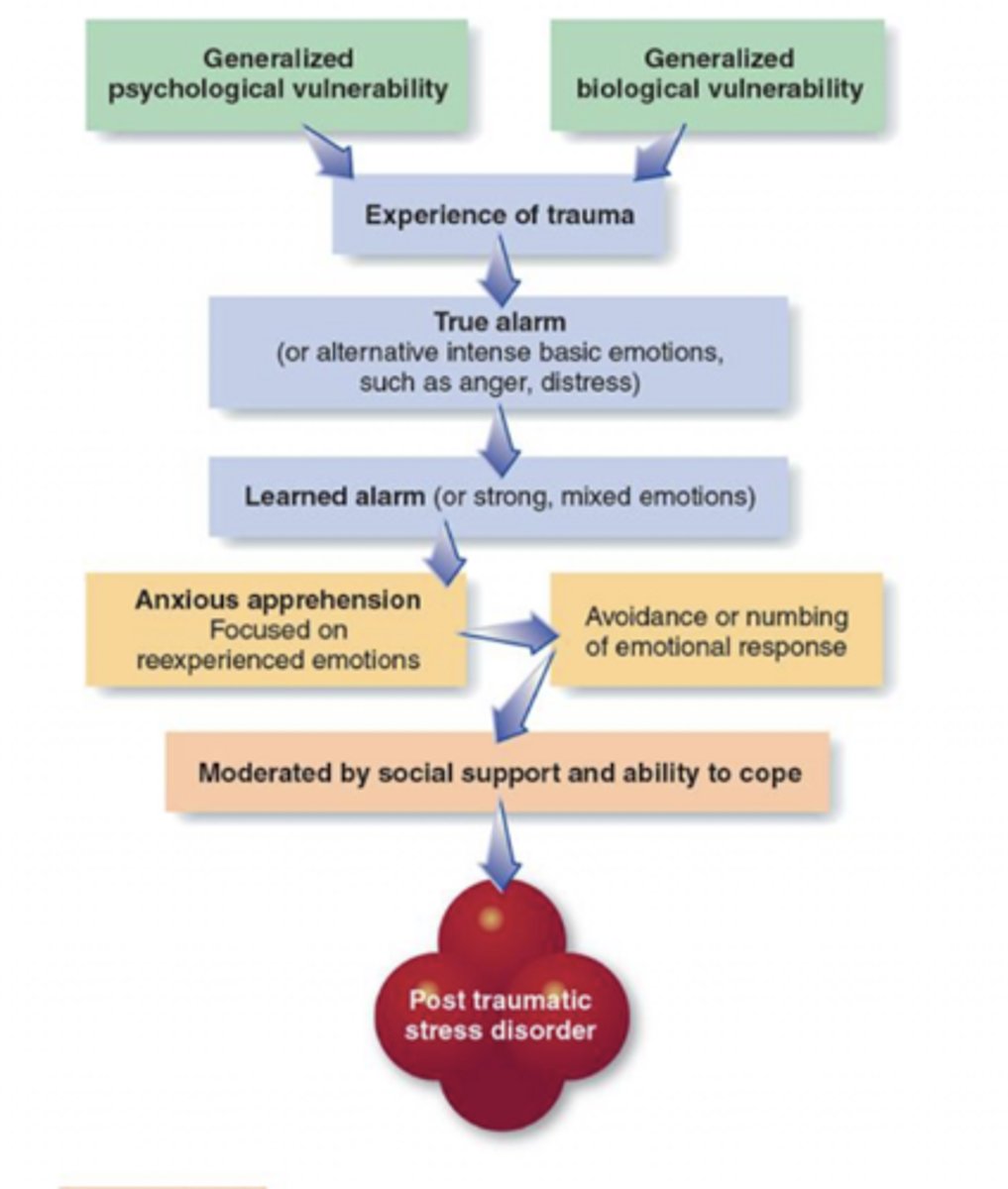
strong, mixed emotions
learned alarm
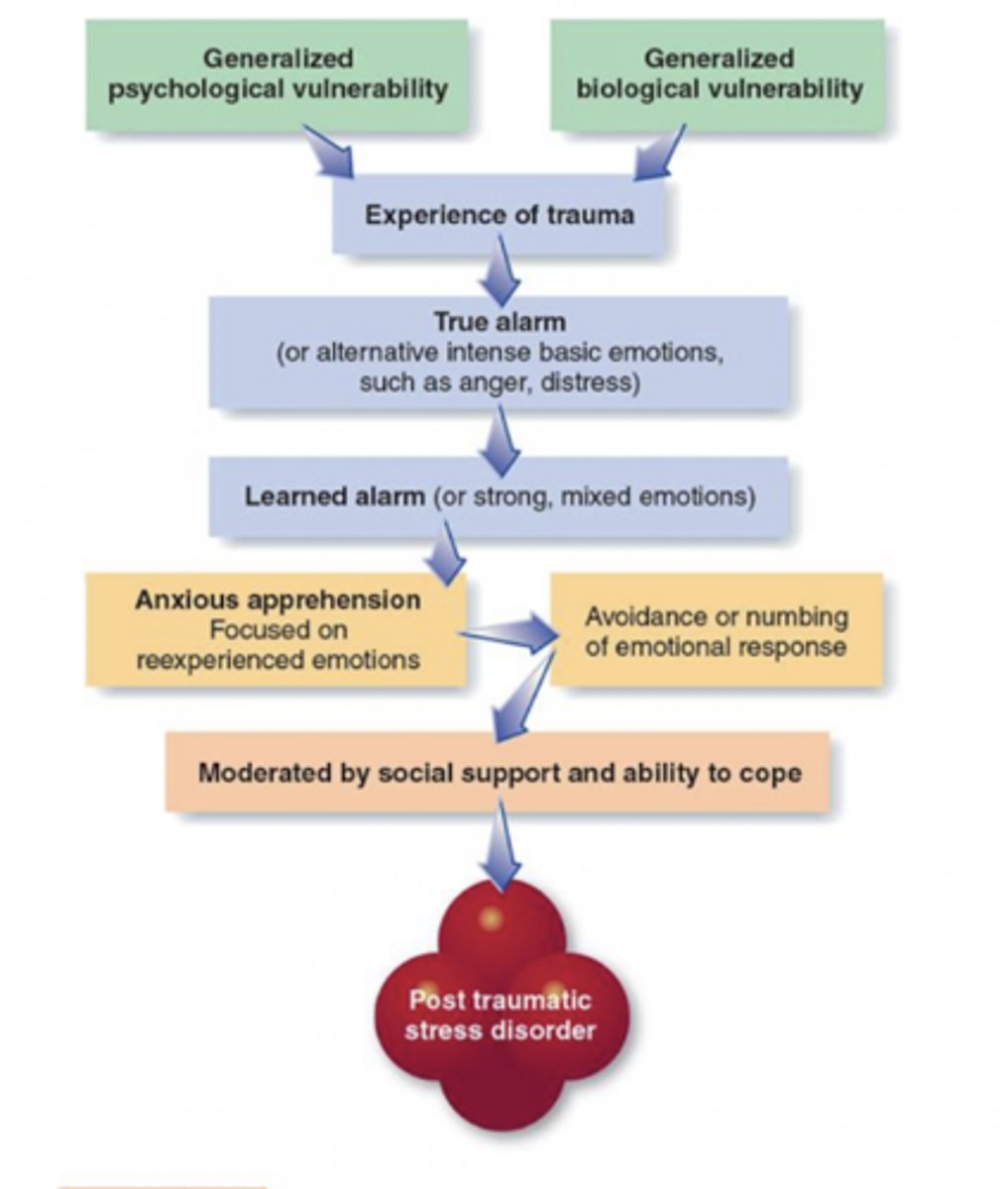
focused on reexperienced emotions
anxious apprehension
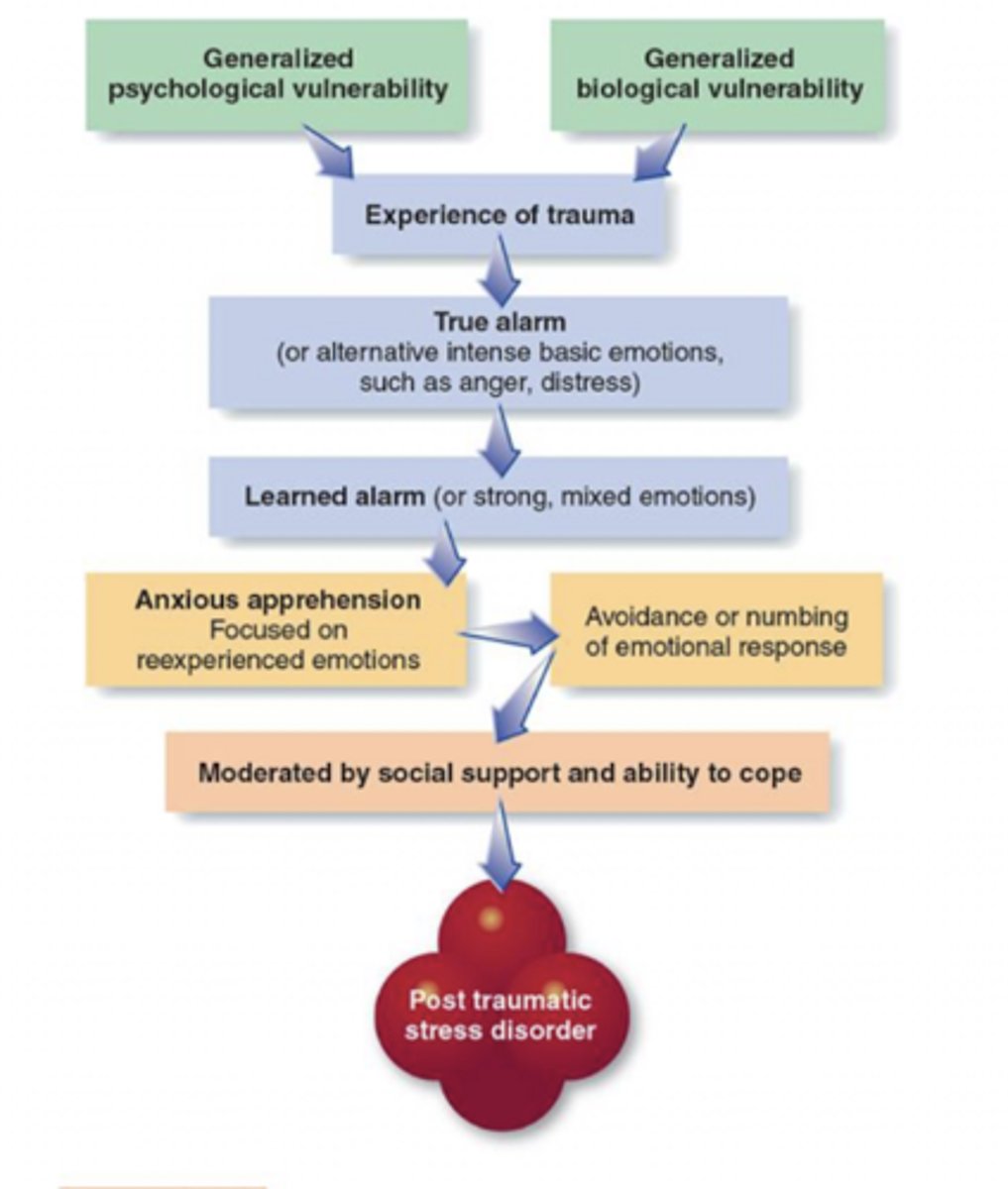
anxious apprehension can lead to
avoidance or numbing of emotional response
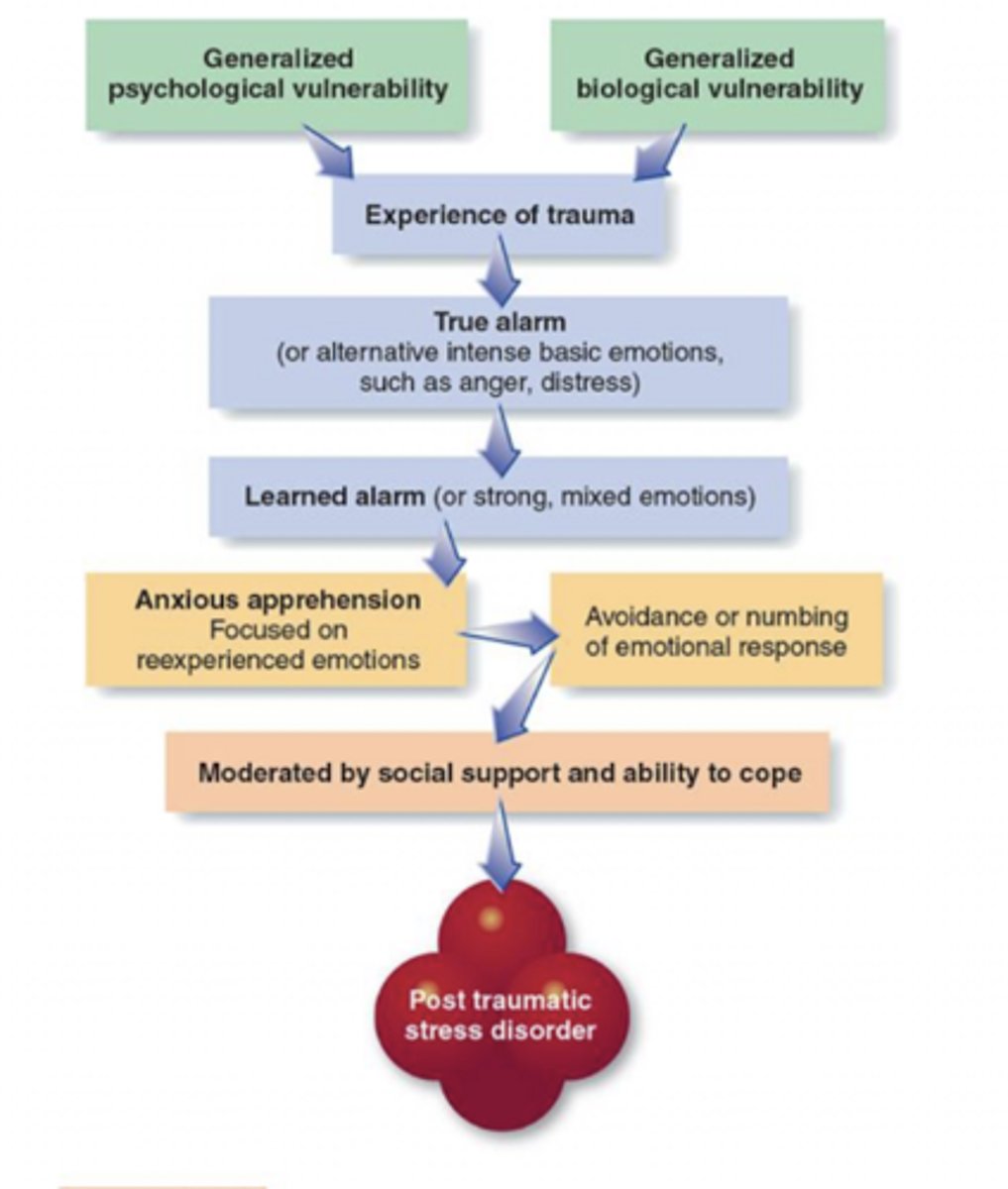
PTSD develops from interaction of
biological + psychological vulnerability + trauma exposure.
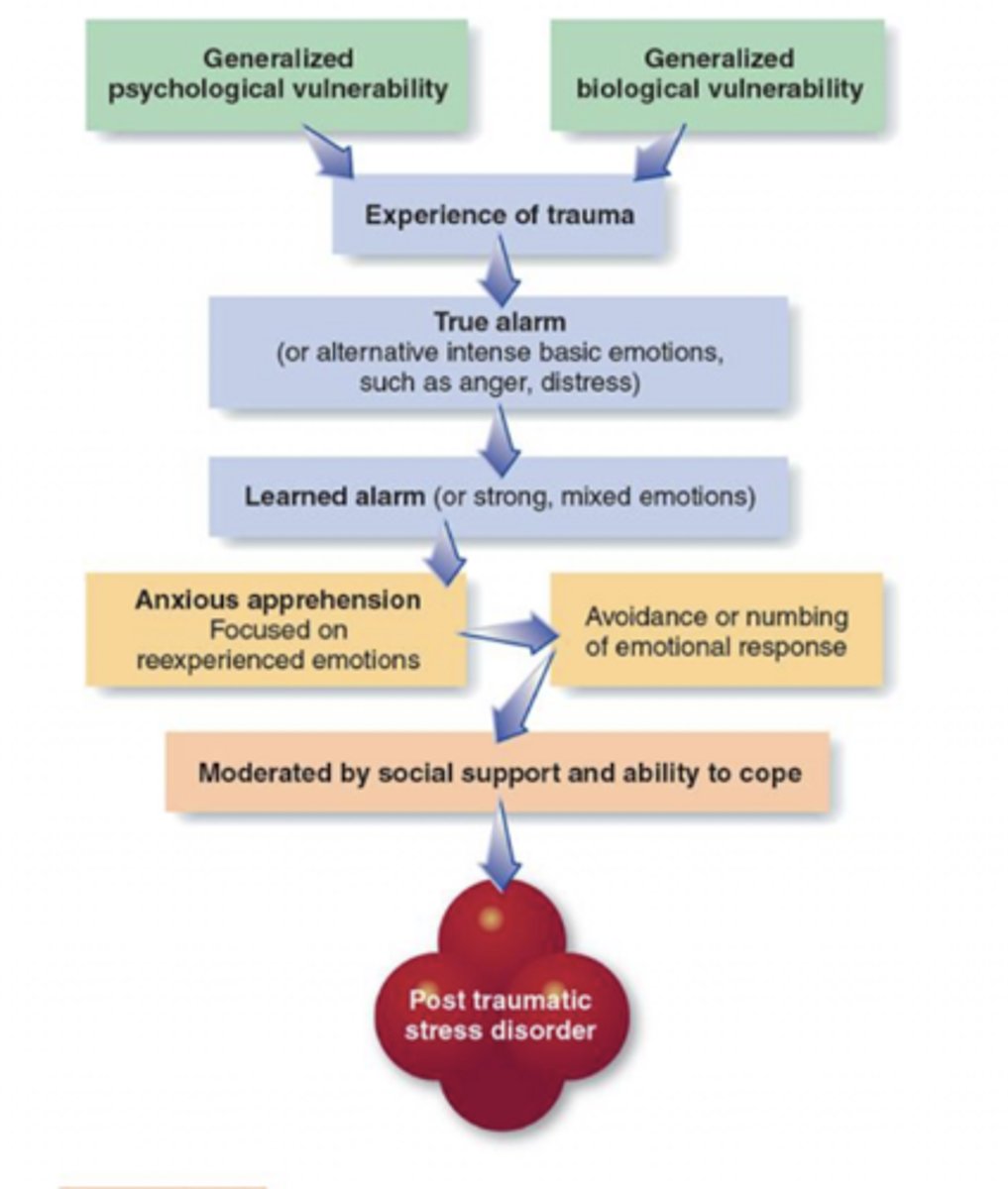
biological + psychological vulnerability + trauma exposure can lead to
learned fear, avoidance, and eventually PTSD if not resolved.
imaginal exposure to memories of a traumatic event until extinguished is an example of
CBT
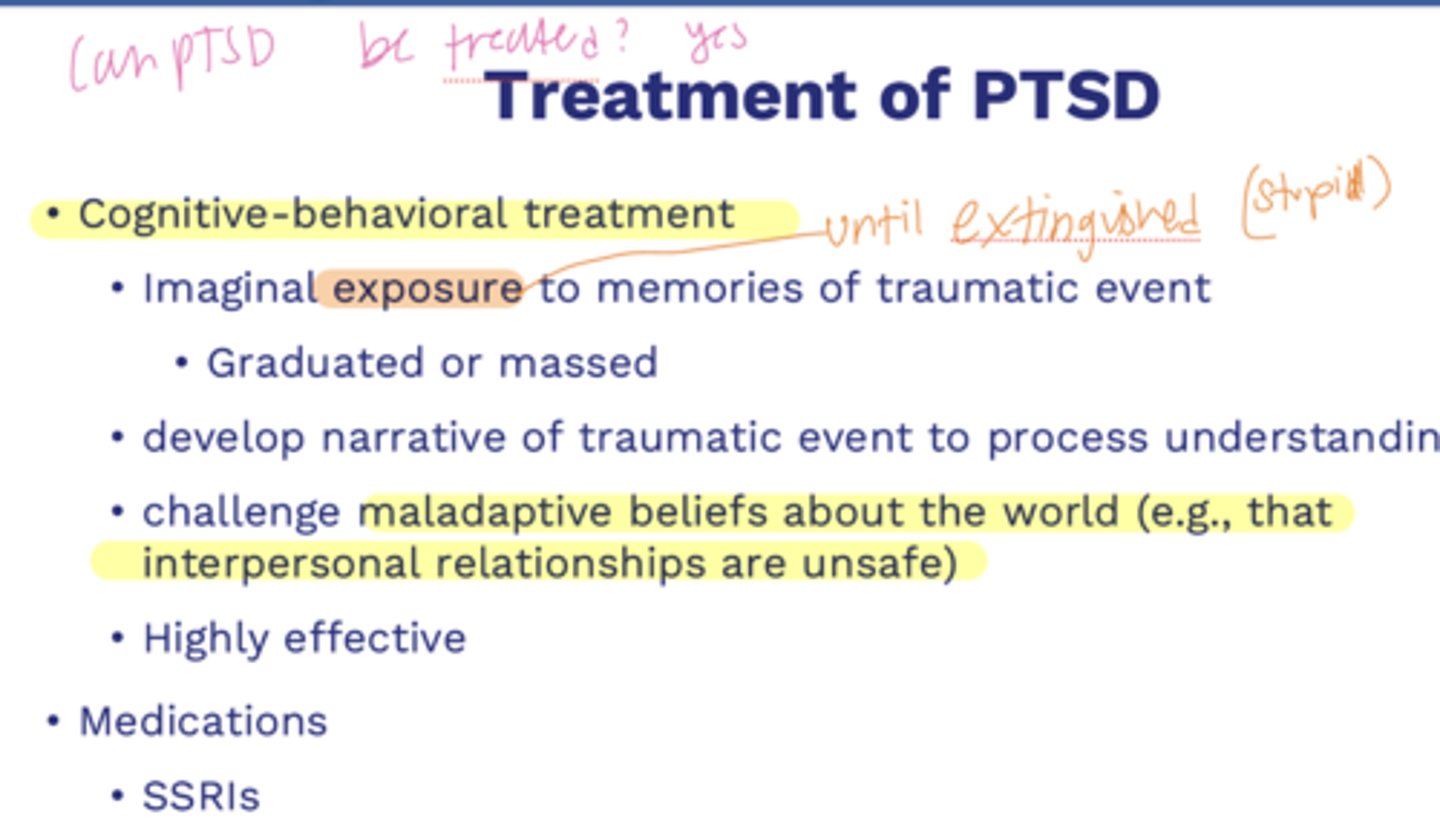
best treatment for PTSD
CBT
what disorders include
prolonged grief
adjustment disorders
or attachment disorders in children
stress-related disorders
prolonged adaptation to the loss of a loved on, grief may even intensify with time
prolonged grief disorder
anxious or depressive reactions to life stress that are generally milder than would be seen in acute stress disorder or PTSD but still impairing
adjustment disorders
disturbed and developmentally inappropriate behaviors in children
attachment disorders
child does not bond to or seek out cargiver
reactive attachment disorder
child shows no inhibitions around adults
disinhibited social engagement disorder
involves obsessions (intrusive thoughts) and compulsions (behaviors to reduce anxiety).
OCD
in OCD the compulsions temporarily relieve distress but
reinforce the cycle
Intrusive, nonsensical thoughts, images, or urges
People are usually aware they are ridiculous
Obsessions
thoughts or actions that provide relief
compulsions
compulsions are an example of
negative reinforcement
Compulsions act as
behaviors that temporarily remove or reduce the intense anxiety, distress, or unwanted thoughts (obsessions)
avoiding the cracks in the ground is an example of a
compulsion
not obsession
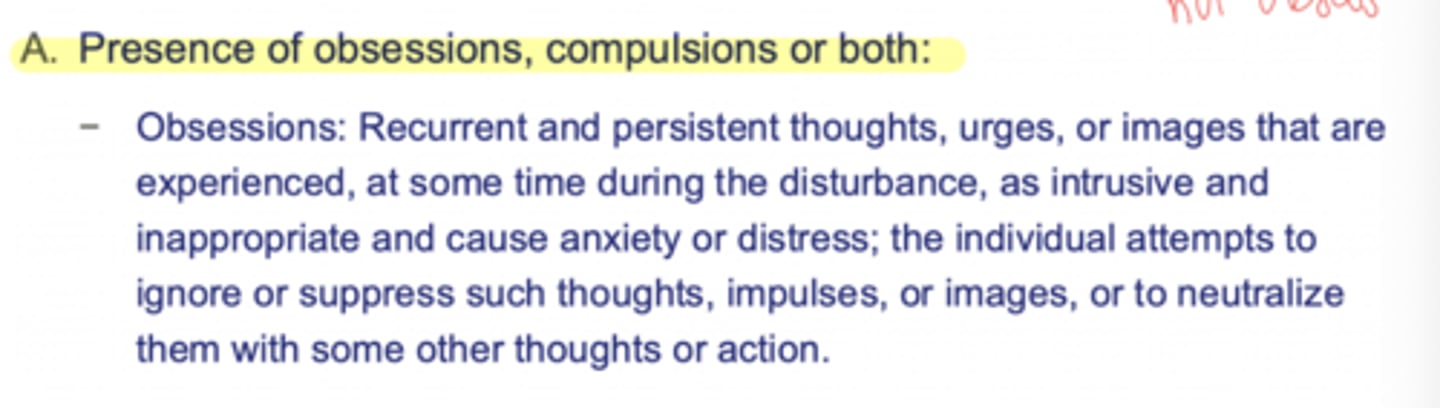
reoccurring and persistent thoughts, urges or images experienced
obsession
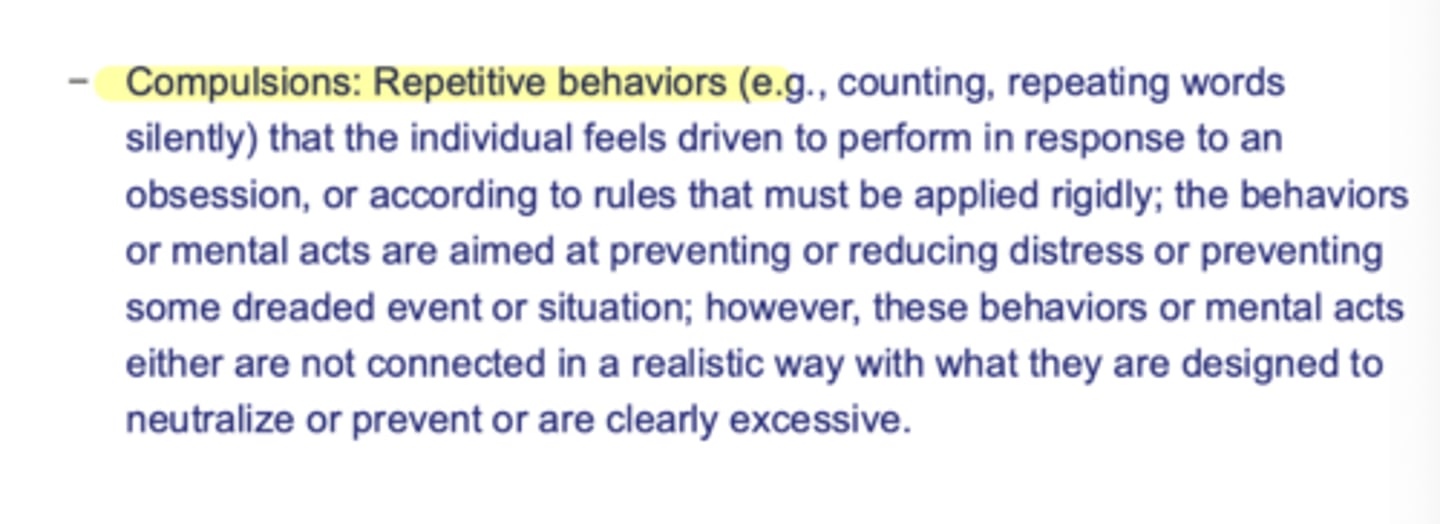
repetitive BEHAVIORS
counting, repeating words silently
the individual feels driven to perform in response to an obsession
compulsions
the obsession and compulsions are time consuming and must last
more than 1 hour per day OR cause clinically significant distress in important areas of functioning
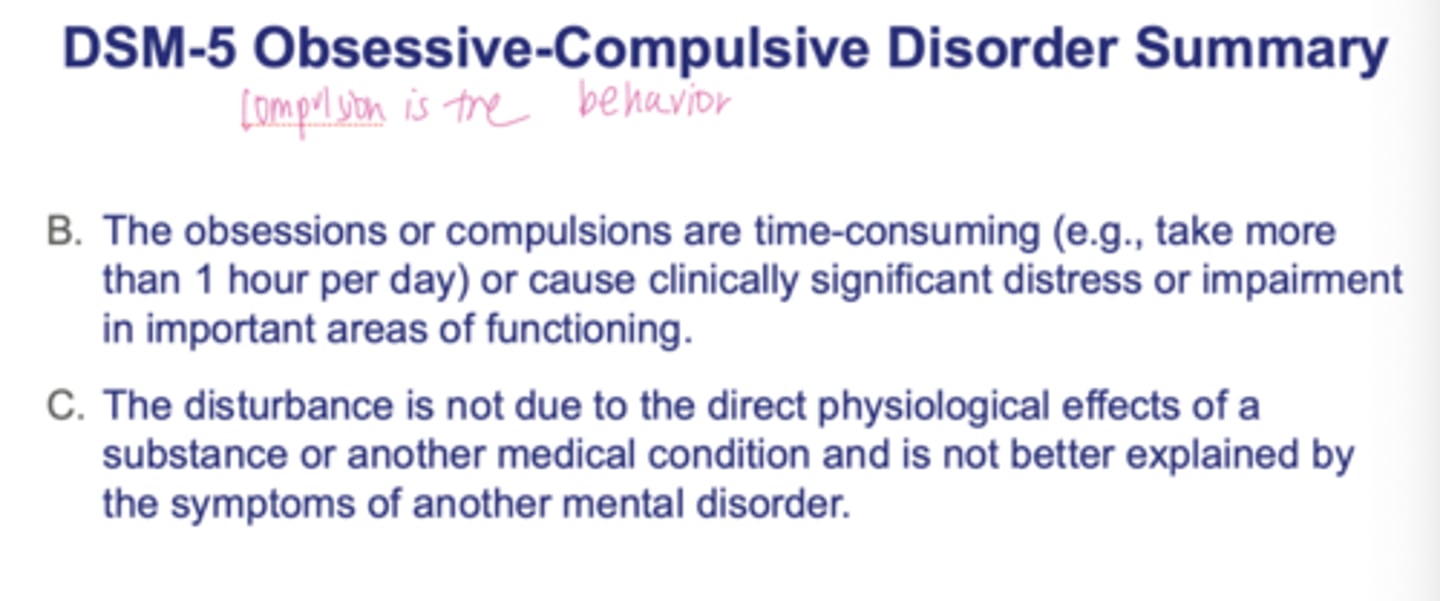
the disturbance is not due to the direct physiological effects of a substance or other medical condition- AND it is NOT better explained by the symptoms of another mental disorder
OCD
OCD annual prevalence is
1%
OCD lifetime prevalence is
1.6-2.3%
OCD rates in male and female are
the same
onset of OCD
childhood to 30s
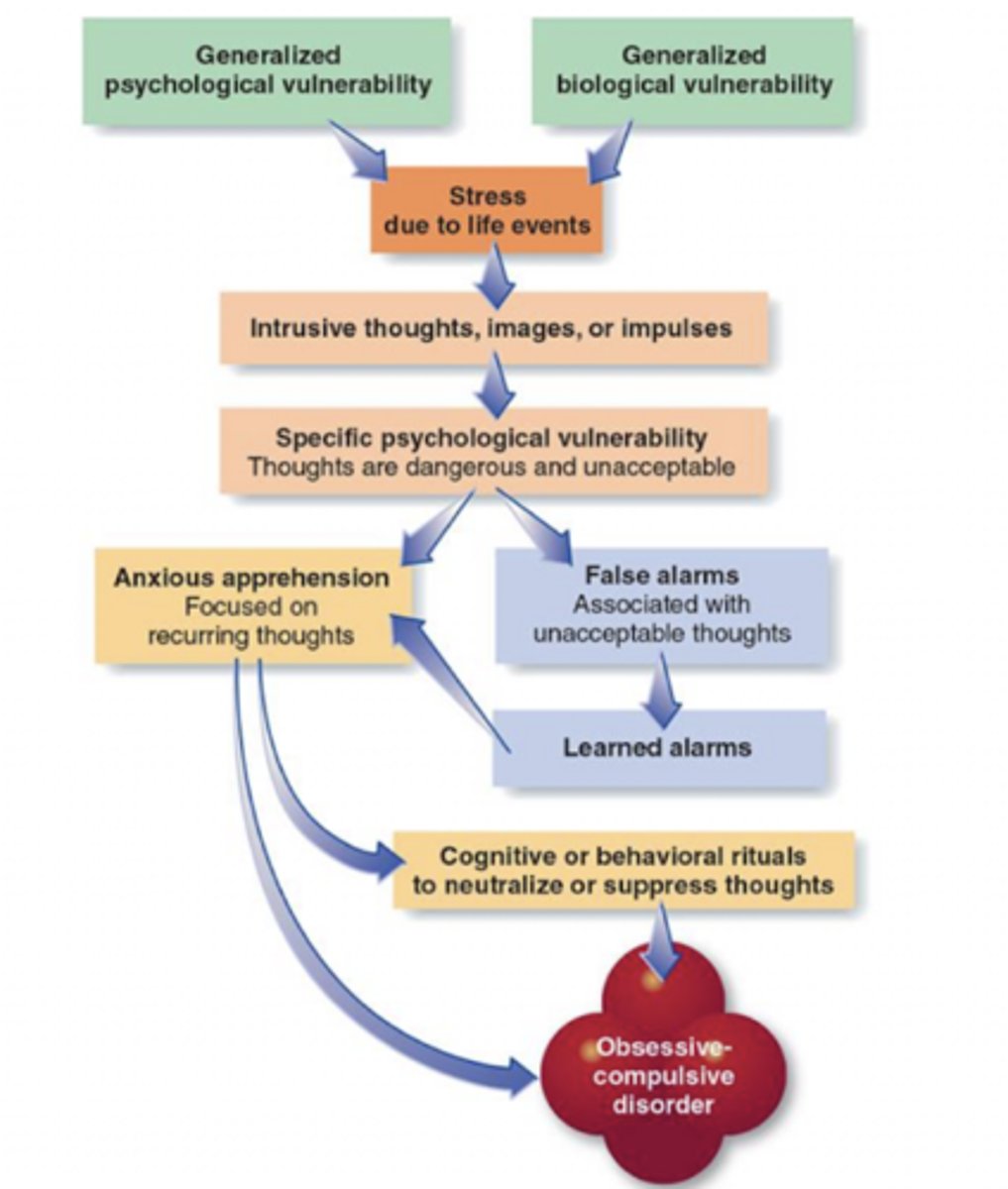
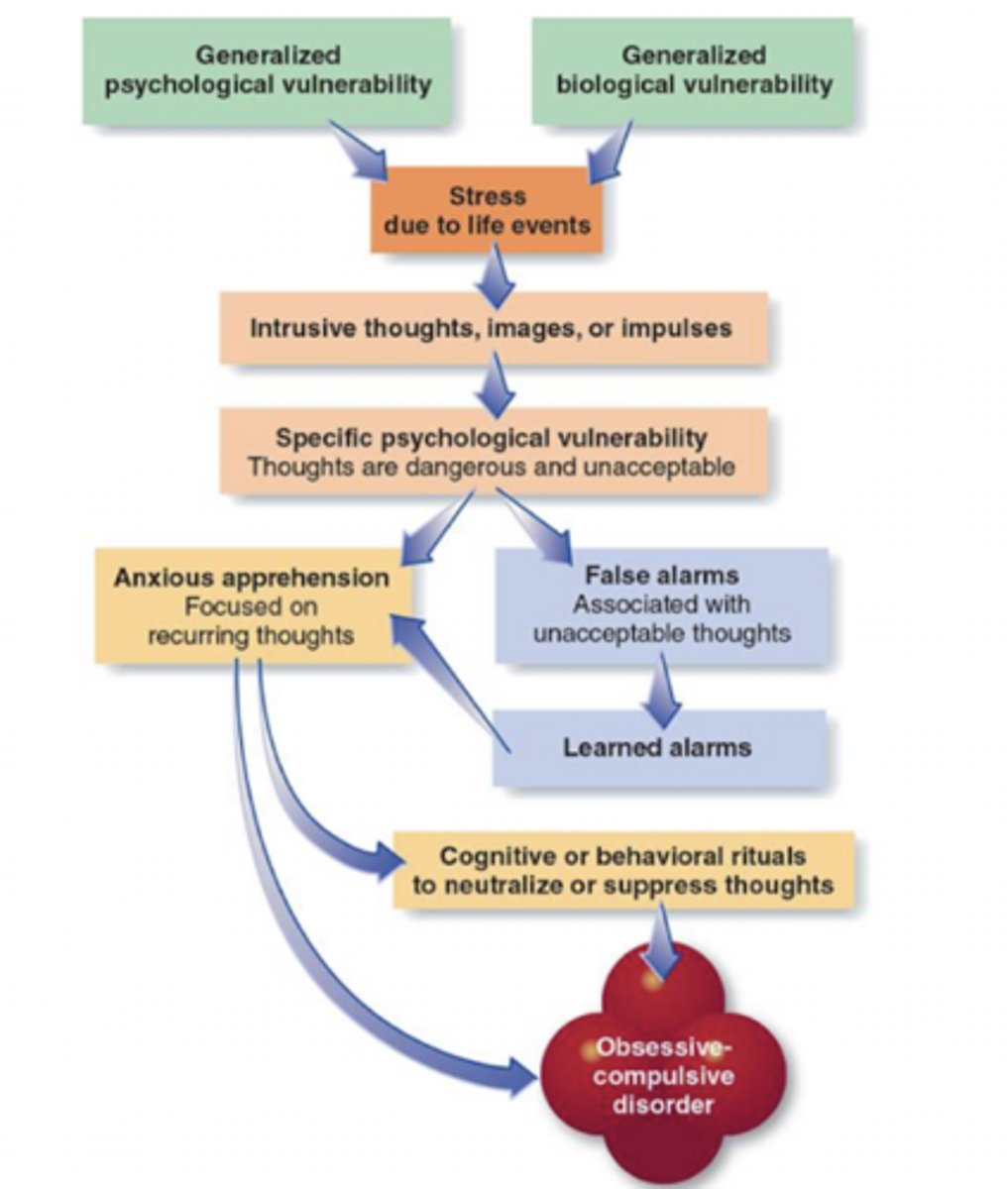
OCD develops from vulnerability + stress leading to intrusive thoughts. These thoughts are misinterpreted as dangerous, leading to __________________
compulsions
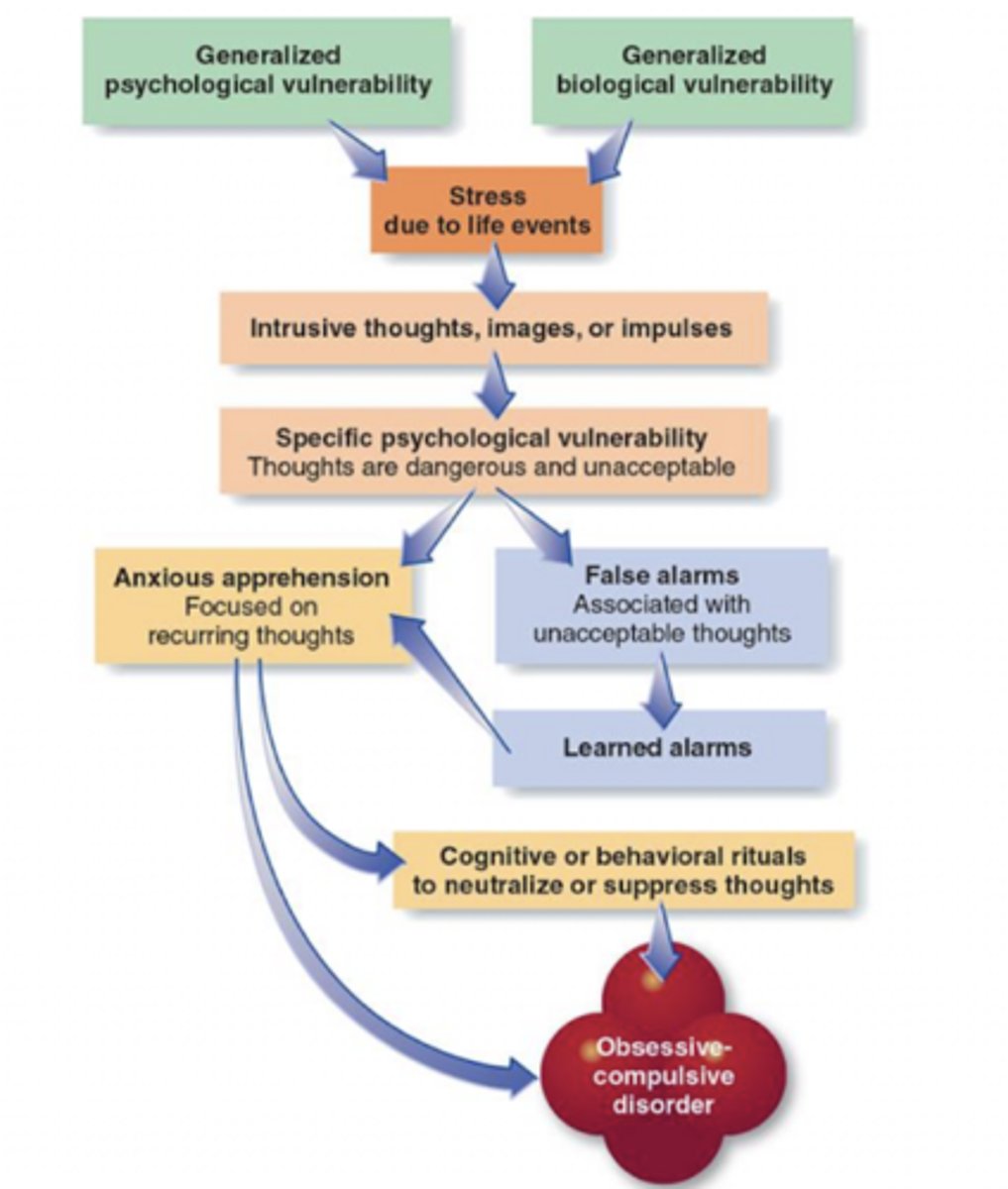
Trigger of OCD
Intrusive thoughts
Key cognitive error in OCD is that
Thoughts = danger
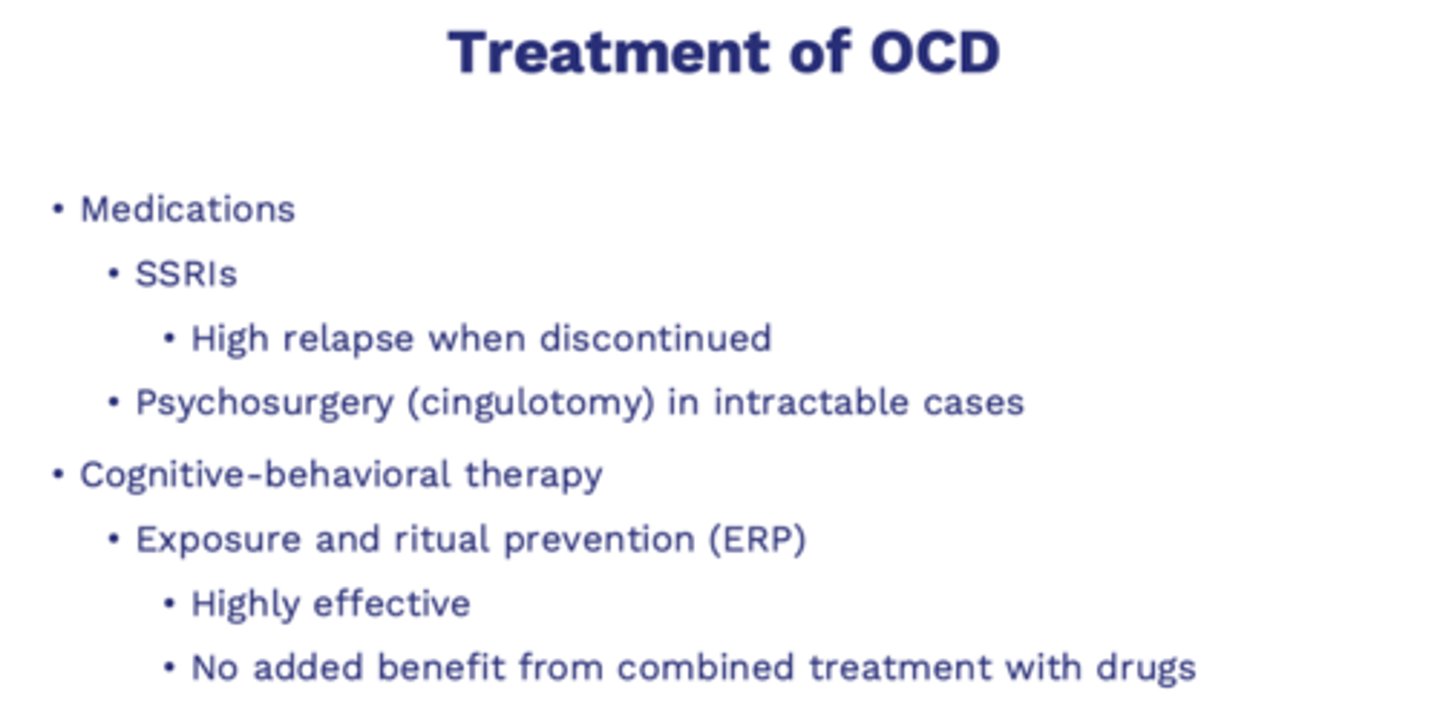
Best treatment for OCD
type of CBT therapy
ERP (exposure and response prevention).
ERP stands for
Expose without compulsion
in OCD SSRIs can help but
relapse is common when stopped.
what are OCD Related disorders
body dysmorphic disorder hoarding
trichotillomania
skin picking
preoccupation with some imagined defect in appearance
body dysmorphic disorder
excessively collecting and keeping items with minimal value, leading to clutter and disruption of living space
hoarding disorder
the urge to pull out one's hair from anywhere in the body
trichotillomania
repetitive and compulsive picking of the skin leading to tissue damage
excoriation
Characterized by intrusion symptoms, avoidance, negative alterations in cognition and mood, and/or alterations in arousal and reactivity
PTSD
Preoccupation with some imagined defect in appearance
Body dysmorphic disorder
Disturbed and developmentally inappropriate behaviors in children characterized by a lack of restraint around adults
Disinhibited social engagement disorder
Characterized by unwanted thoughts, images, and/or impulses that the individual tries to completely avoid through the use of rituals like checking or counting
Obsessive-compulsive disorder
Cadence witnessed a horrific tornado level her farm 3 weeks ago. Since then, she's had many flashbacks of the incident, trouble sleeping, and a fear of going outside in storms.
Acute stress disorder
Sanjay was involved in a car accident 6 weeks ago in which the driver of the other car was killed. Since then, Sanjay has been unable to get into a car because it brings back the horrible scene he witnessed. Nightmares of the incident haunt him and interfere with his sleep. He is irritable and has lost interest in his work and hobbies.
PTSD
Patricia was raped at the age of 17, 30 years ago. Just recently, she has been having flashbacks of the event, difficulty sleeping, and fear of sexual contact with her husband.
Delayed onset posttraumatic stress disorder
________ are intrusive and nonsensical thoughts, images, or urges an individual tries to eliminate or suppress.
obsessions
The practices of washing, counting, and checking to suppress obsessions and provide relief are called ________.
compulsions

