Vertebral Column & Bony Thorax
 Call Kai
 Learn
Learn Practice Test
 Spaced Repetition
 Match
Match Flashcards
 Knowt Play
1/32

There's no tags or description
Looks like no tags are added yet.
Name | Mastery | Learn | Test | Matching | Spaced | Call with Kai |
|---|
No analytics yet
Send a link to your students to track their progress
33 Terms
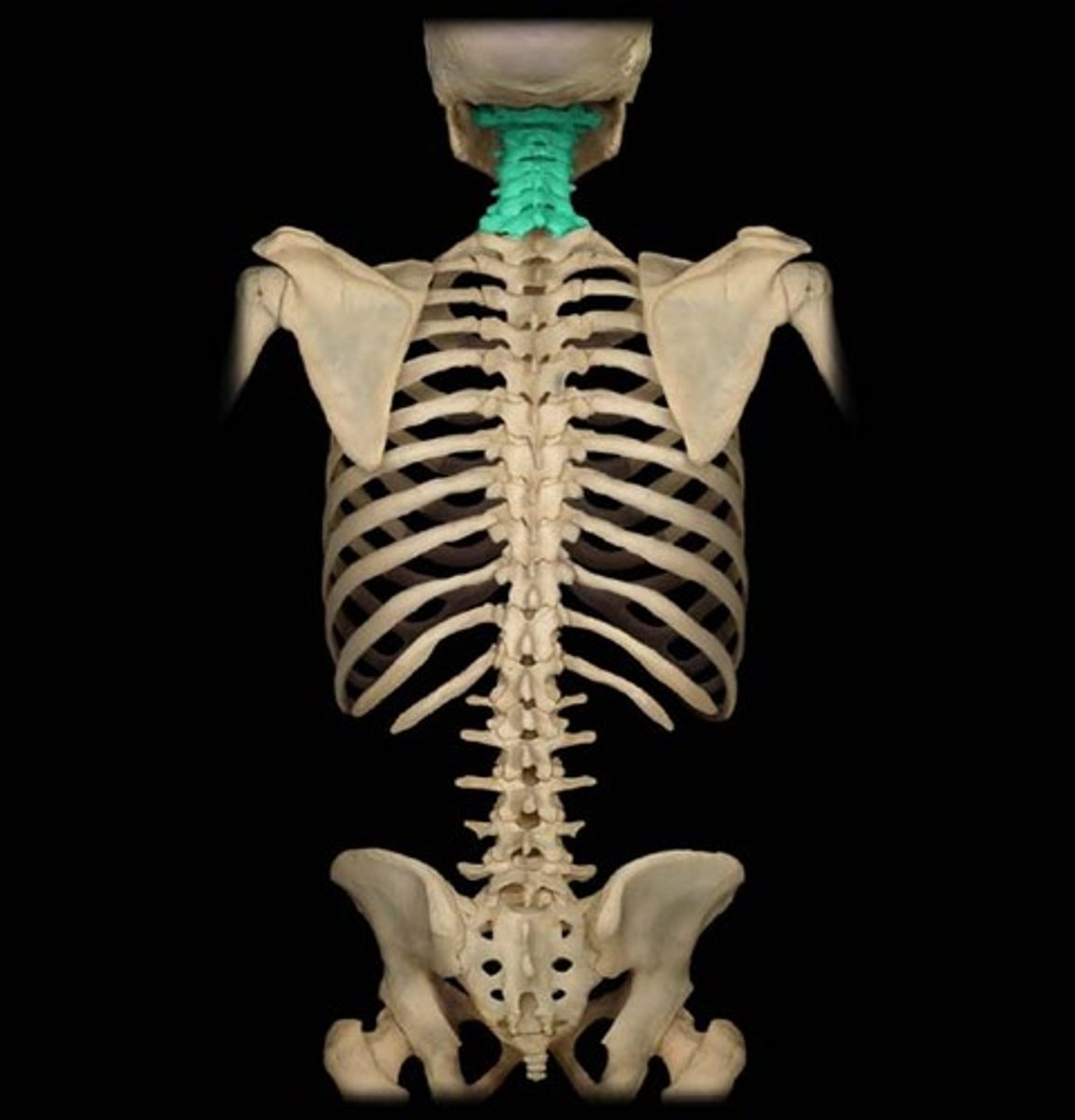
Cervical Region
Neck region; 7 unfused vertebrae.
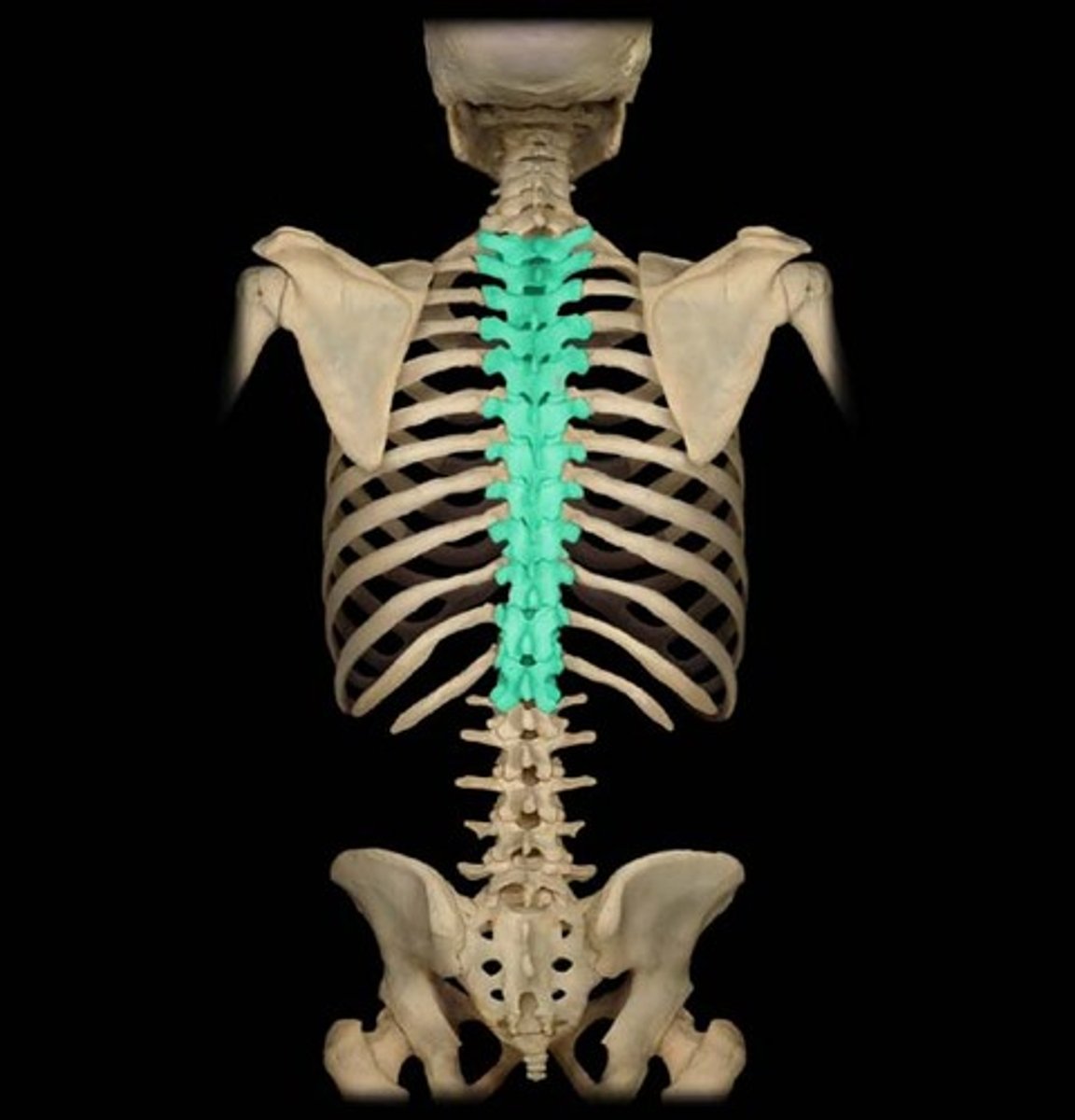
Thoracic Region
Chest region; 12 unfused vertebrae.
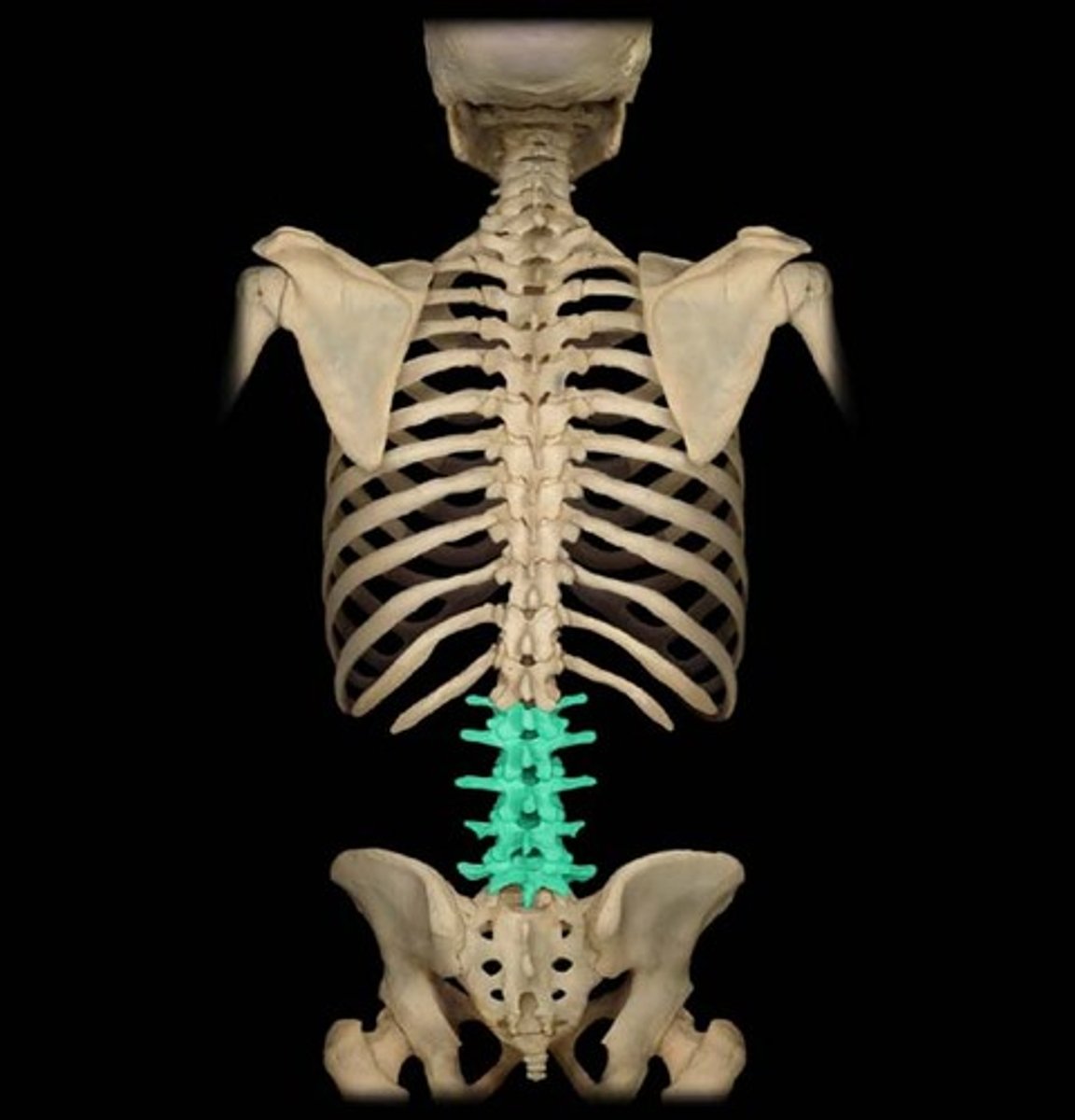
Lumbar Region
Lower back; 5 unfused vertebrae.
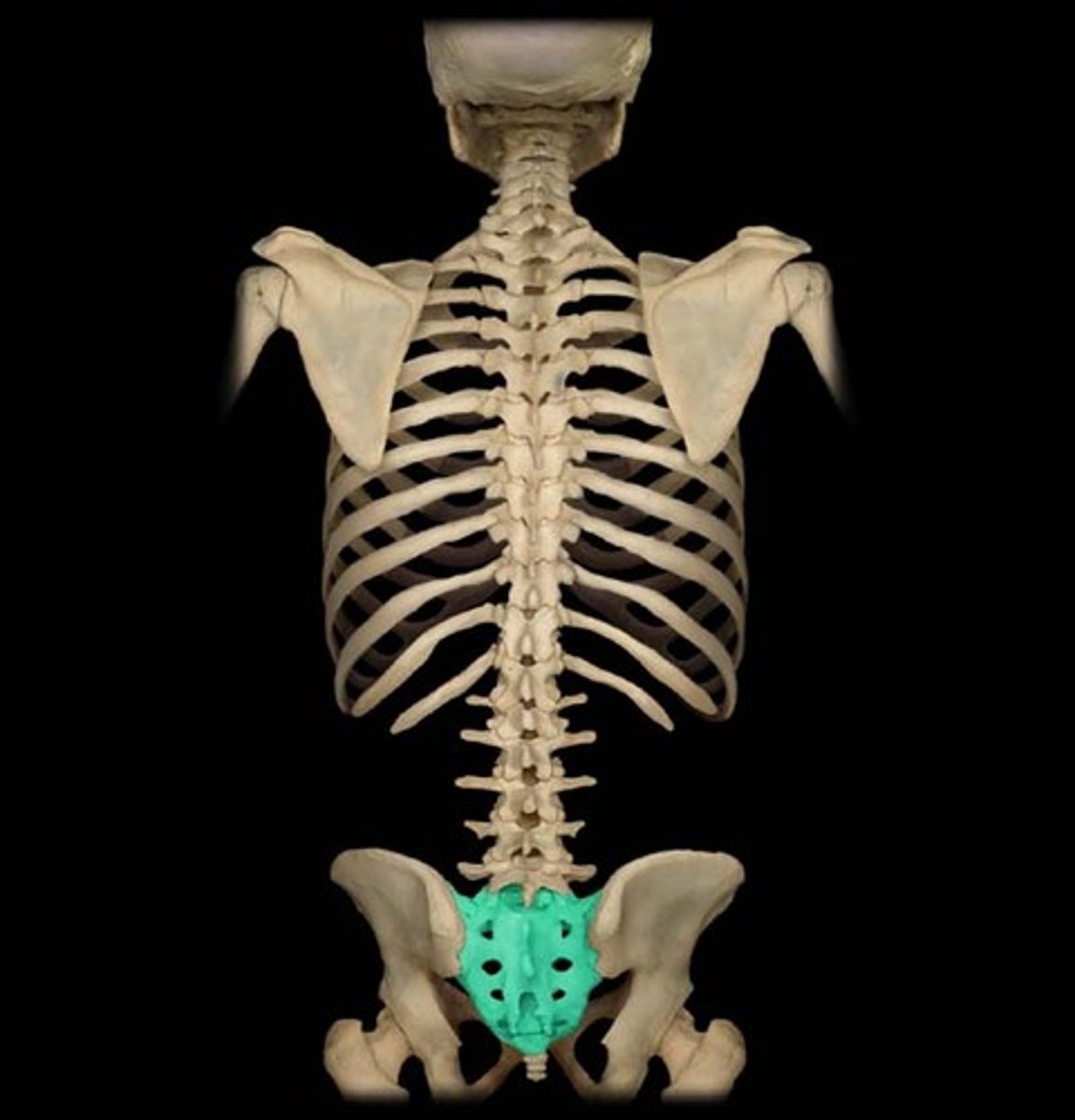
Sacral Region
Saddle shaped composite bone.
Coccyx Region
Composite bone; also known as tailbone.
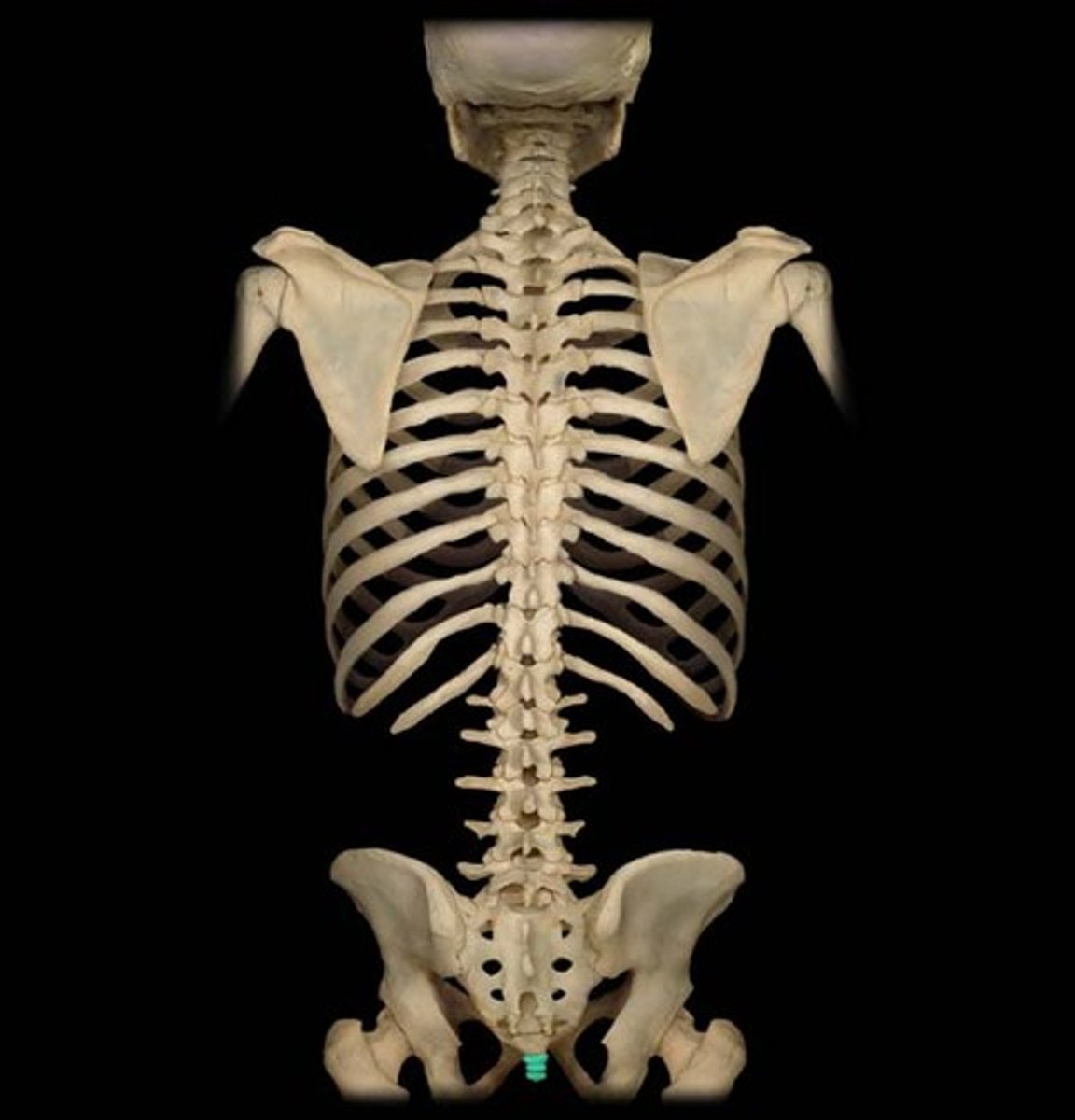
Intervertebral Discs
Fibrocartilage pads between vertebrae.
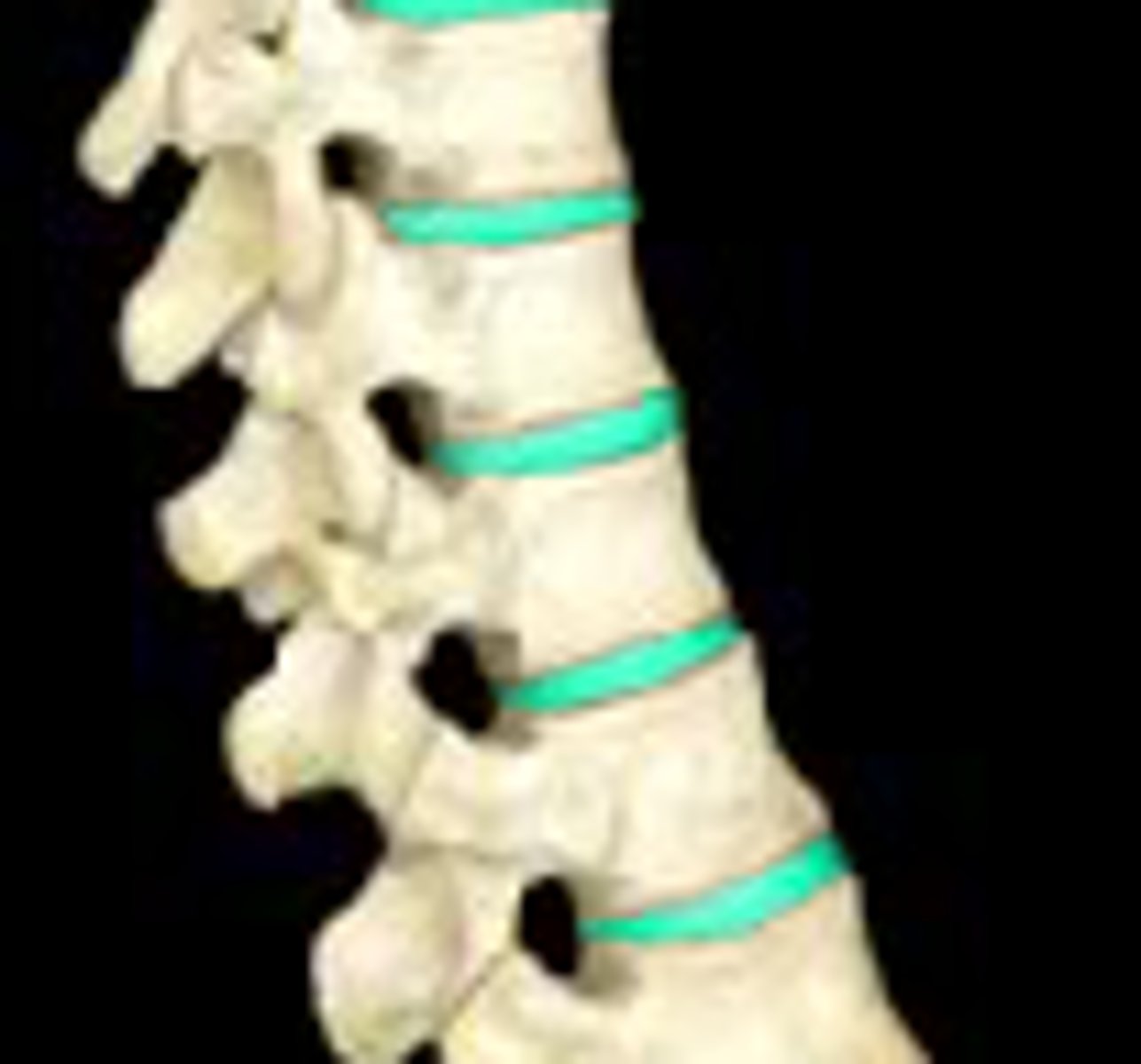
Scoliosis
A lateral curvature of the spine.
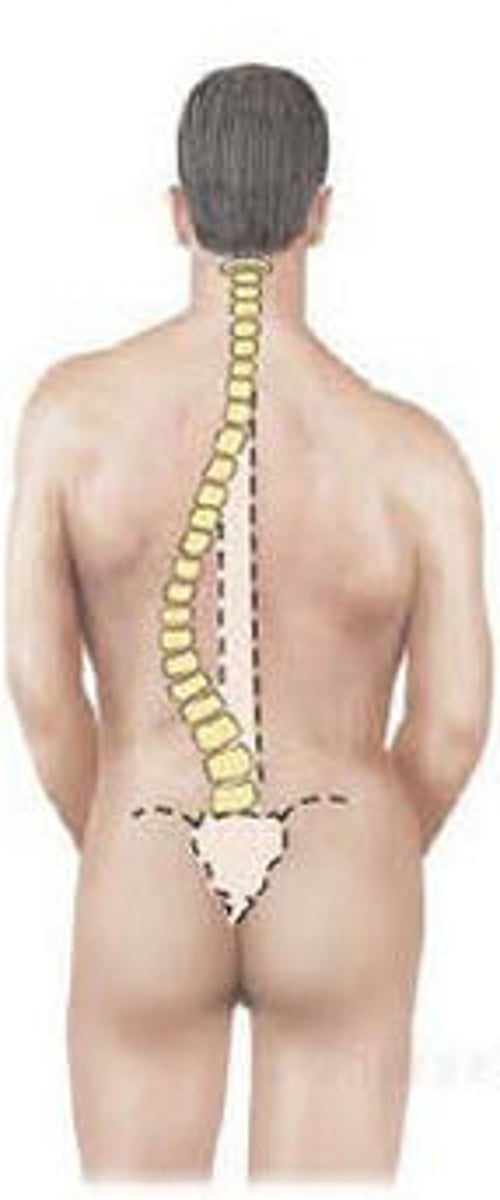
Kyphosis
An exaggerated thoracic curvature.
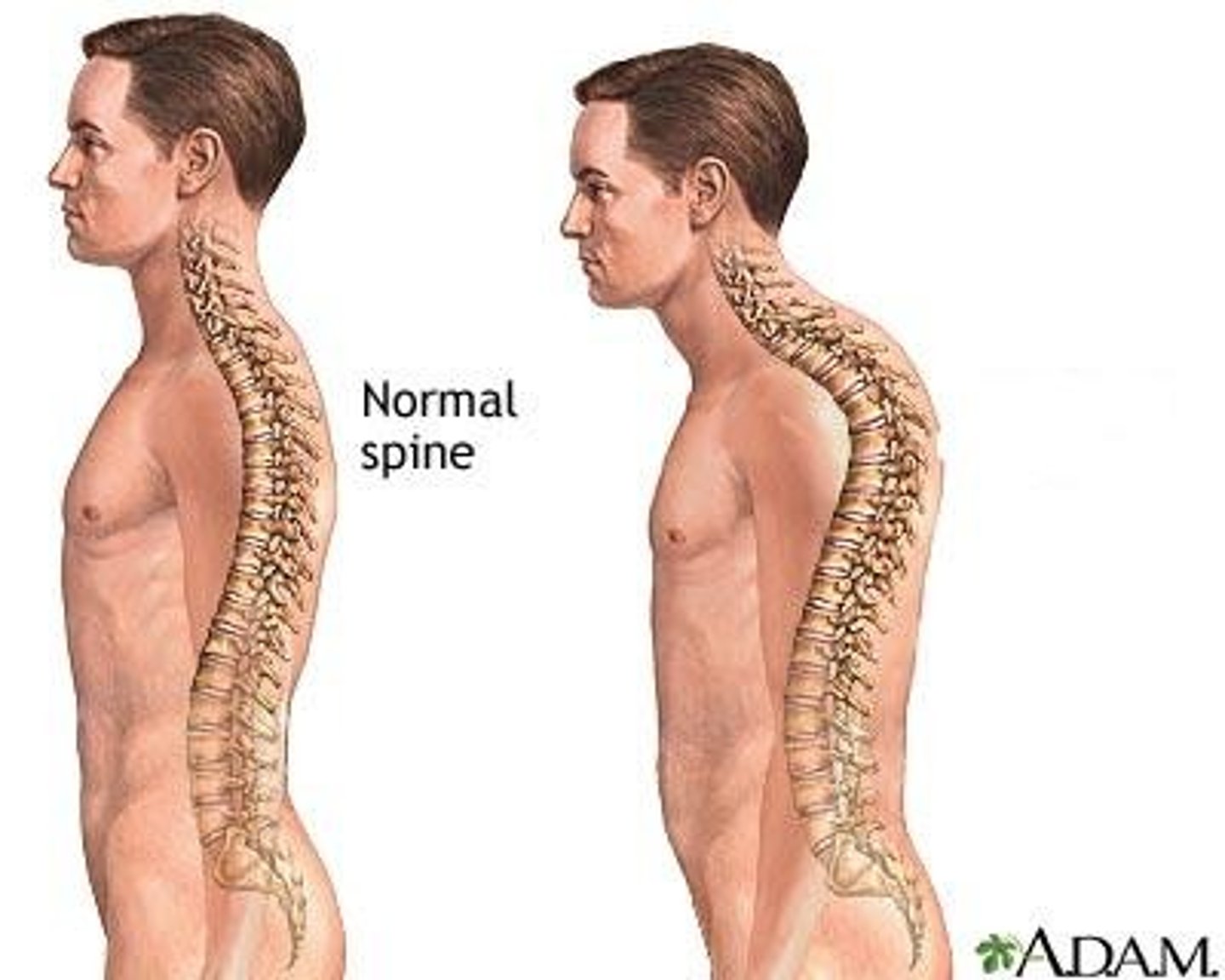
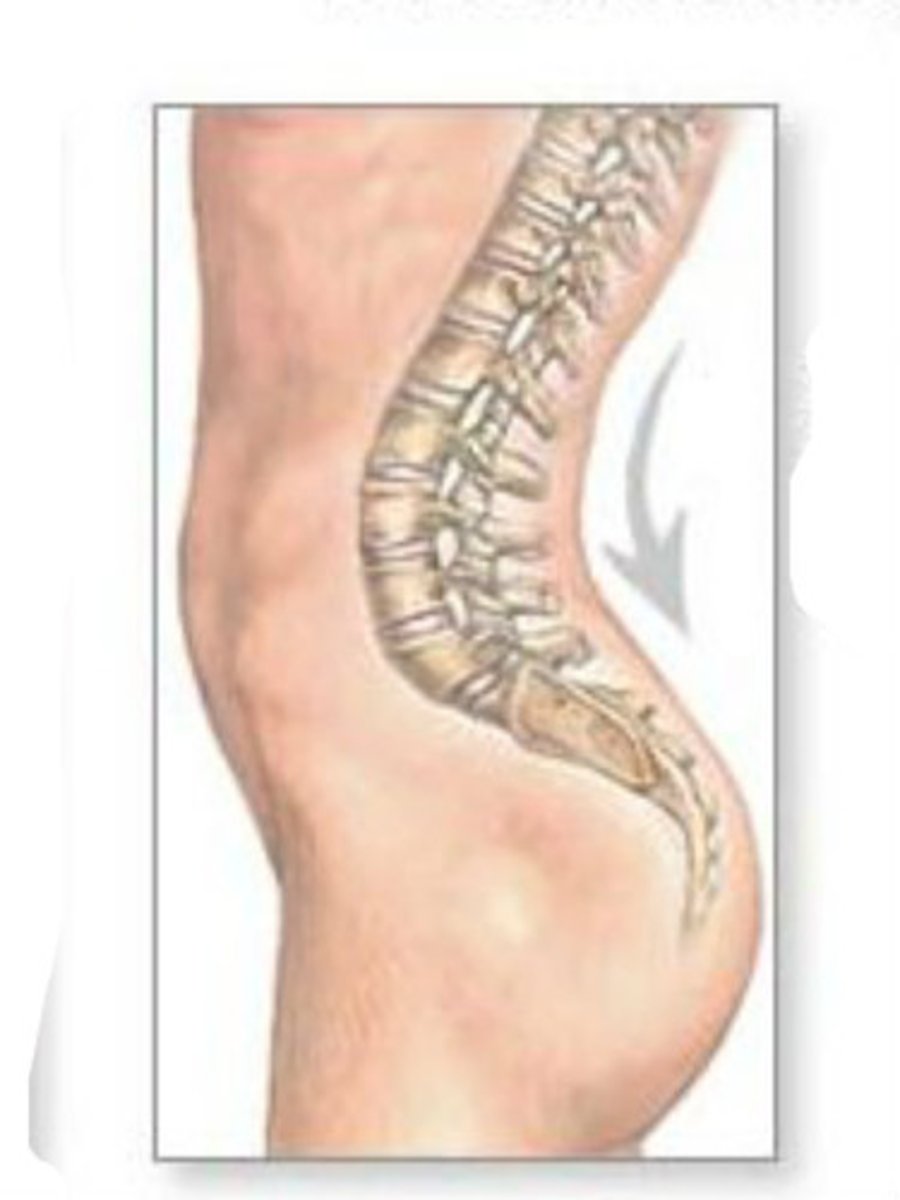
Lordosis
An exaggerated lumbar curvature.
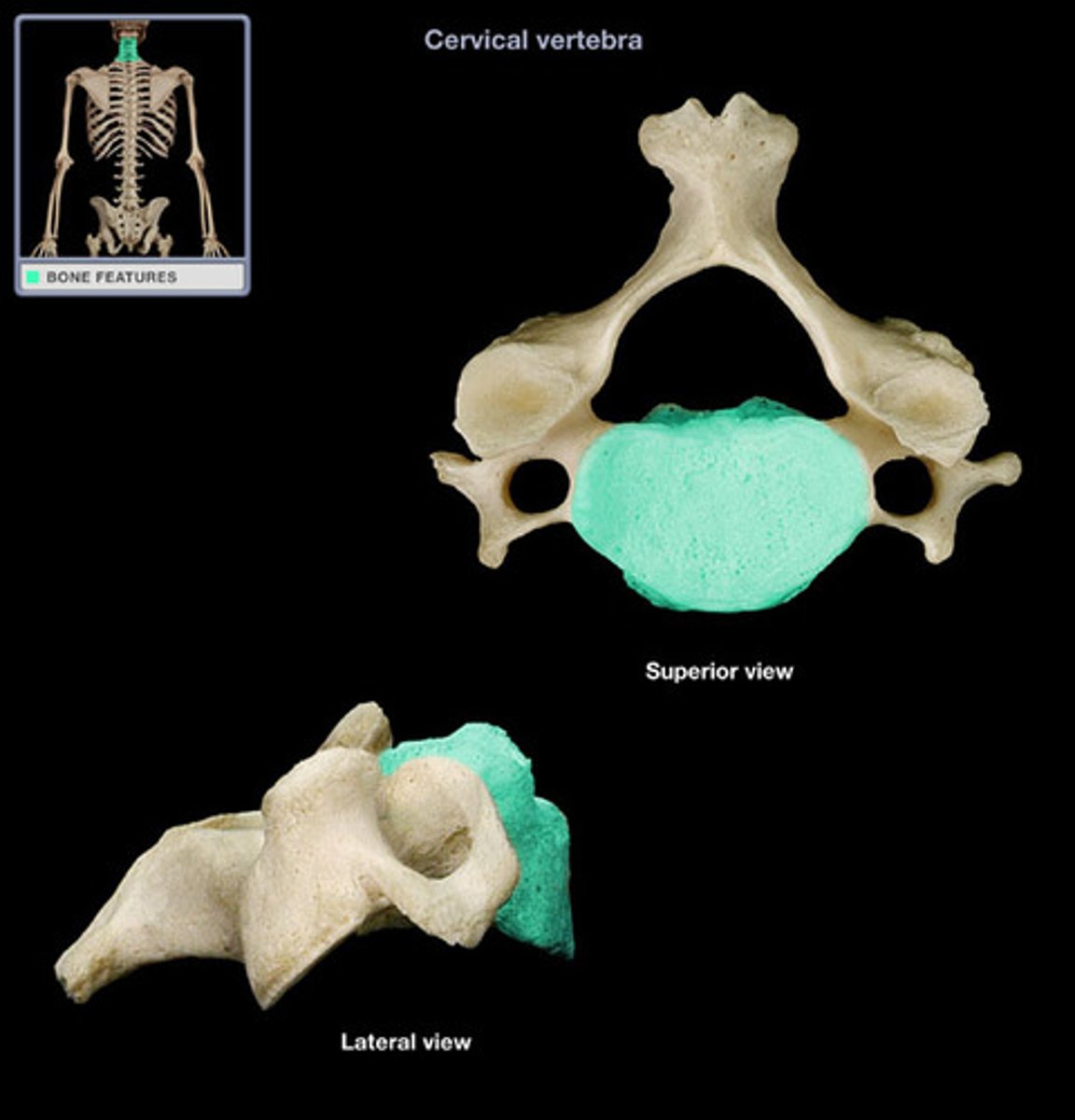
Vertebrae Body (centrum)
Weight bearing portion of vertebrae.
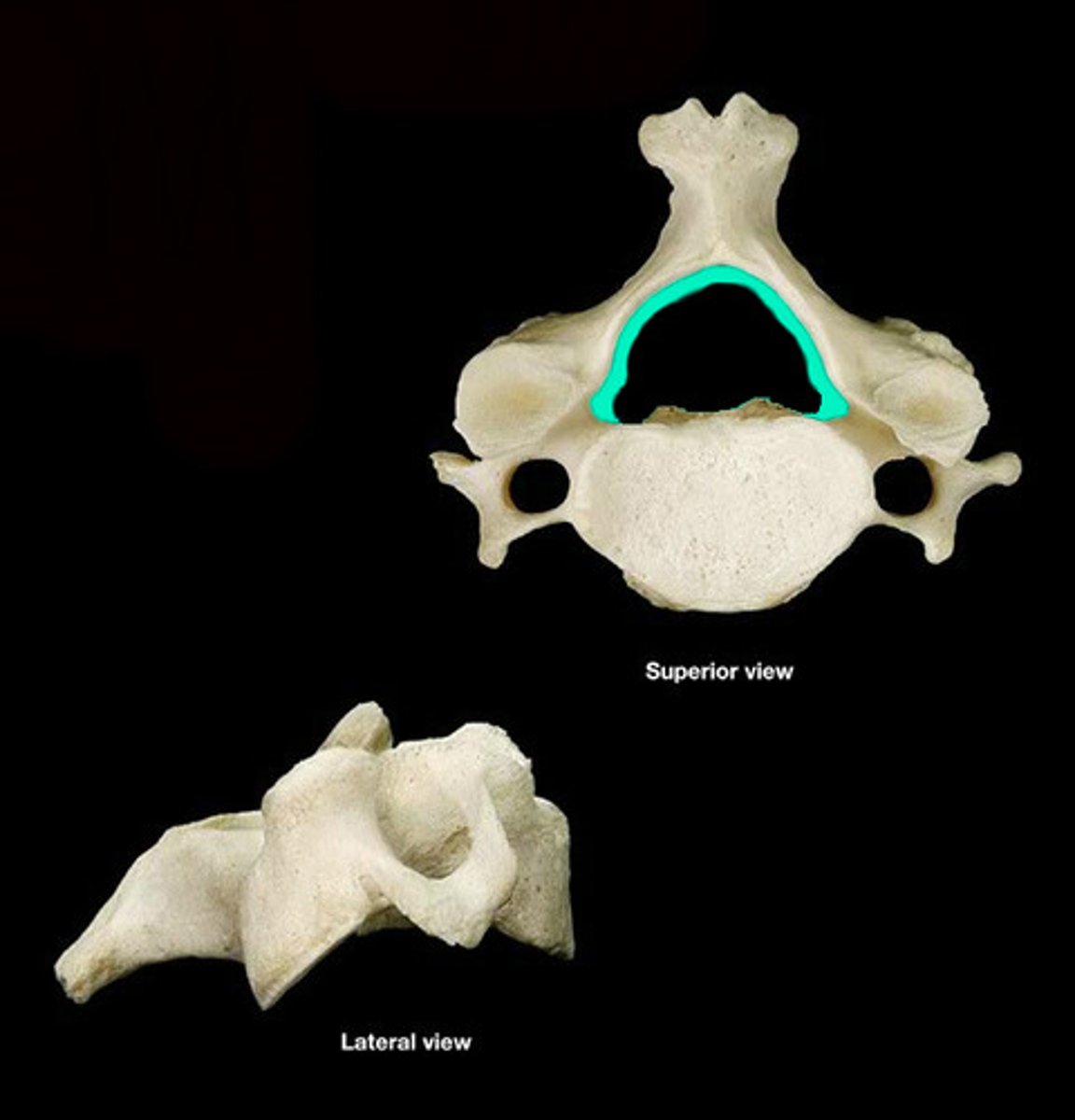
Vertebral Arch
Circle of bone around the vertebral foramen; formed by the pedicle & lamina.
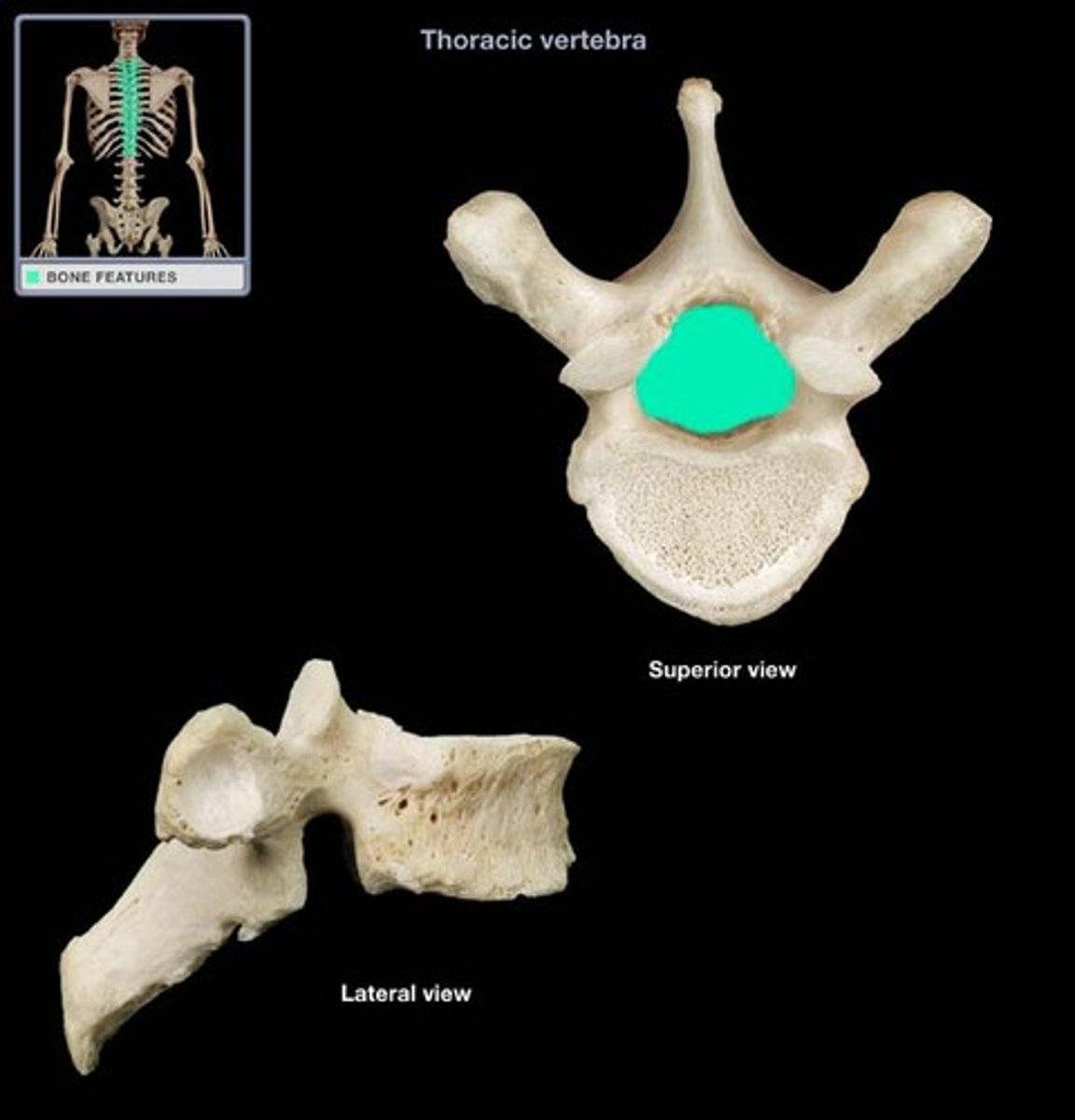
Vertebral Foramen
Opening for passage of spinal cord.
Transverse Process
Lateral projections (on right and left) of each vertebrae.
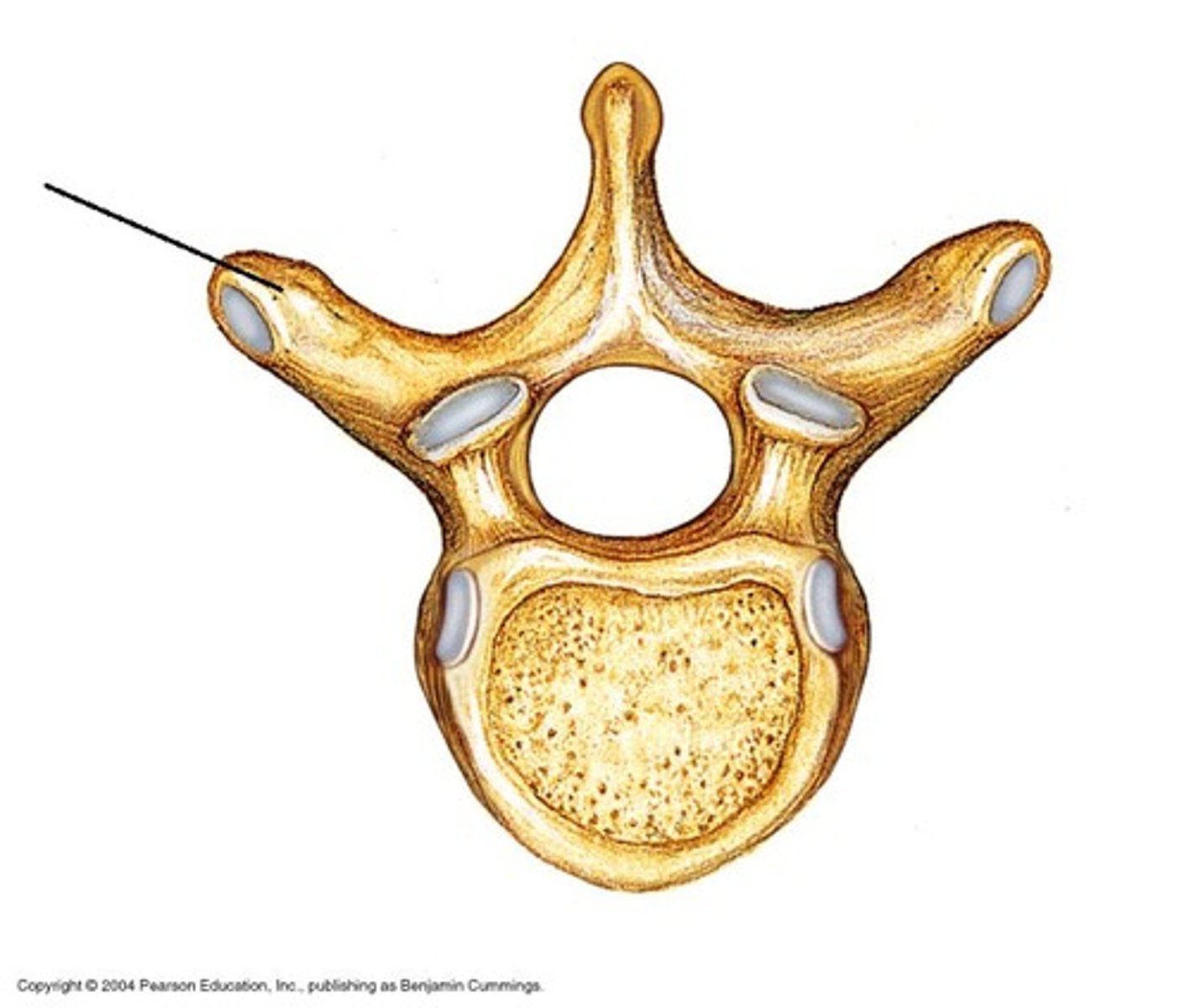
Spinous Process
Posterior projection; can be felt through skin.
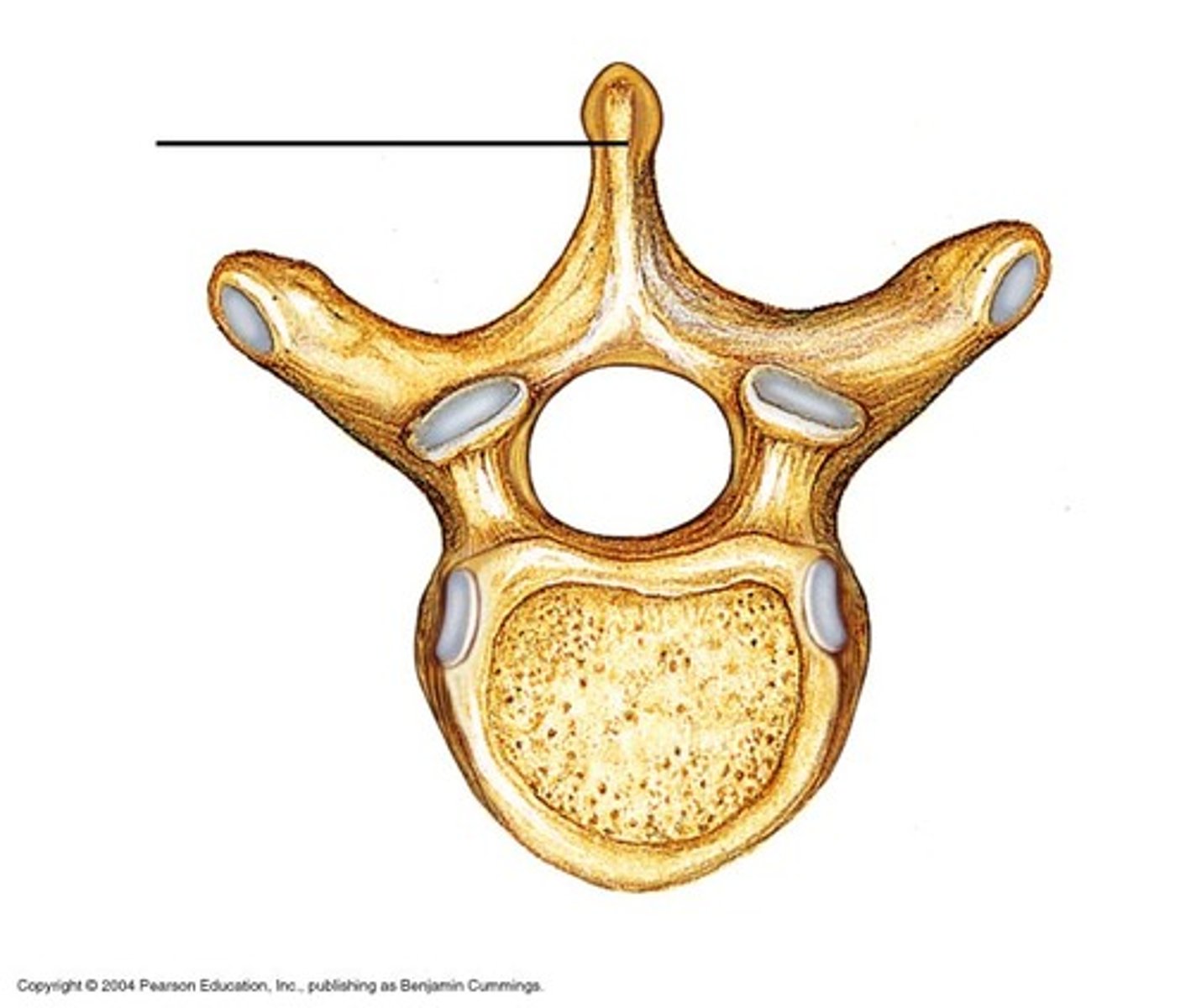
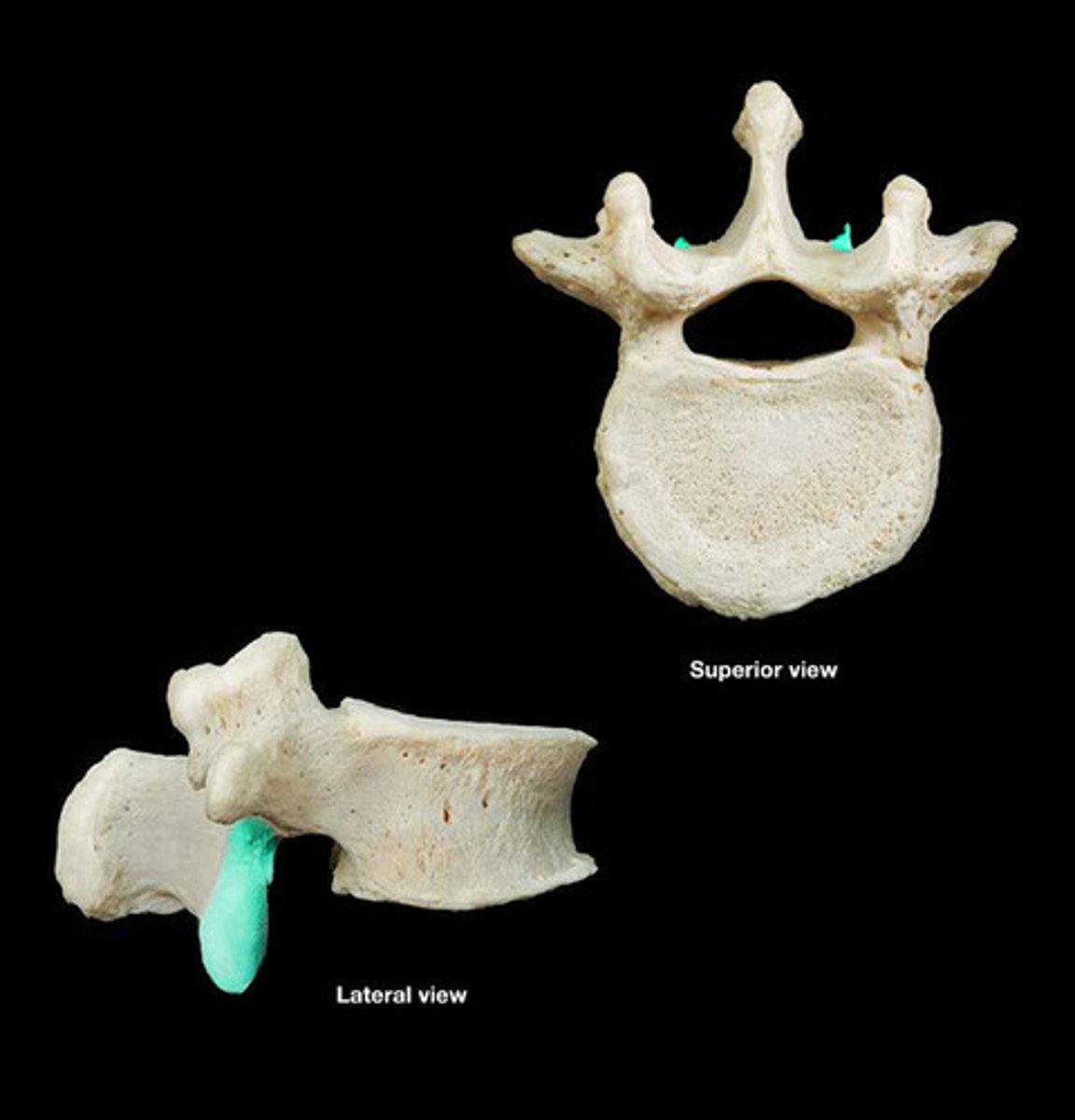
Articular Facets
There are inferior and superior
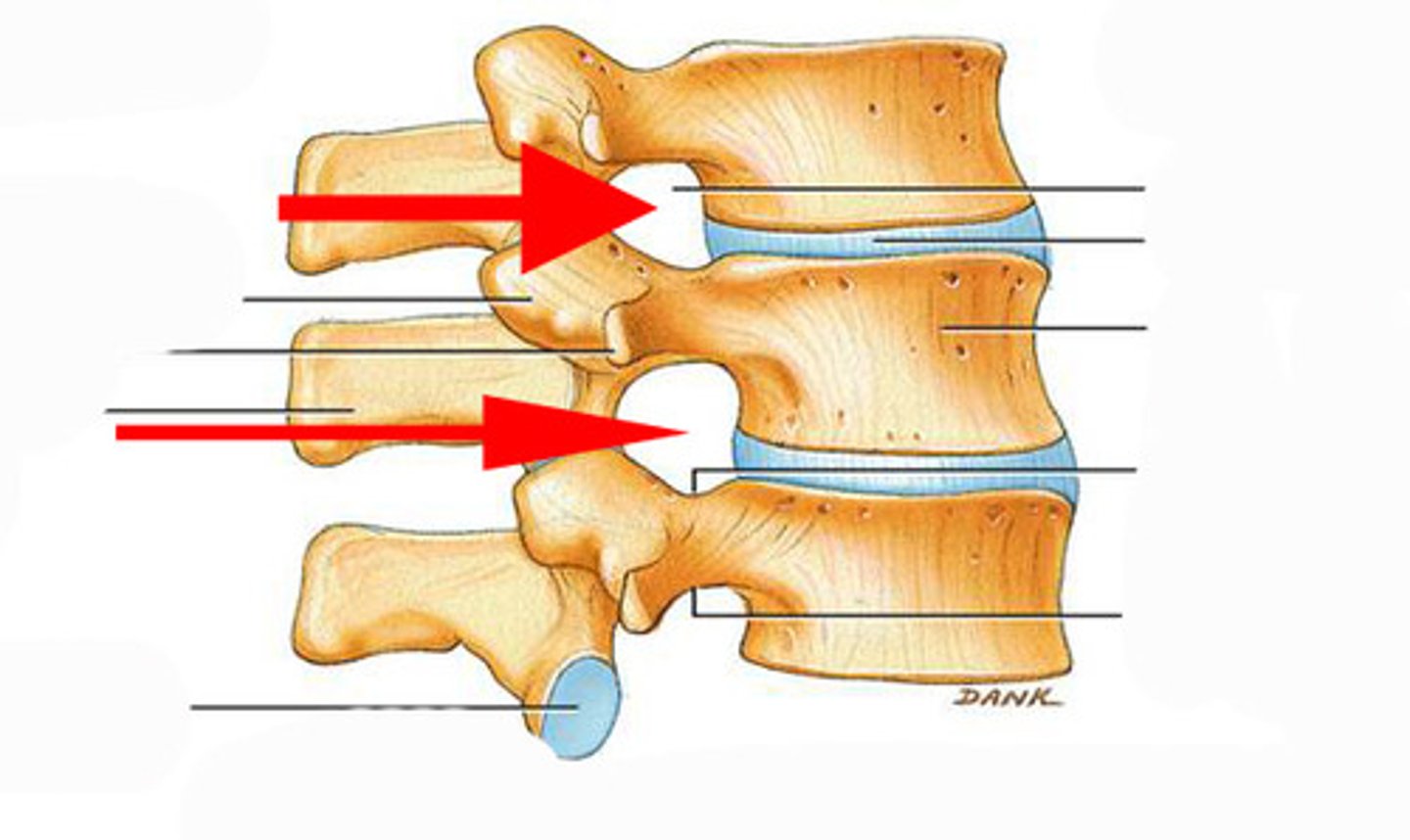
Intervetebral Foramen
Space between vertebrae to allow for passage of nerves.
C1 (Atlas)
Articulates with the occipital condyles
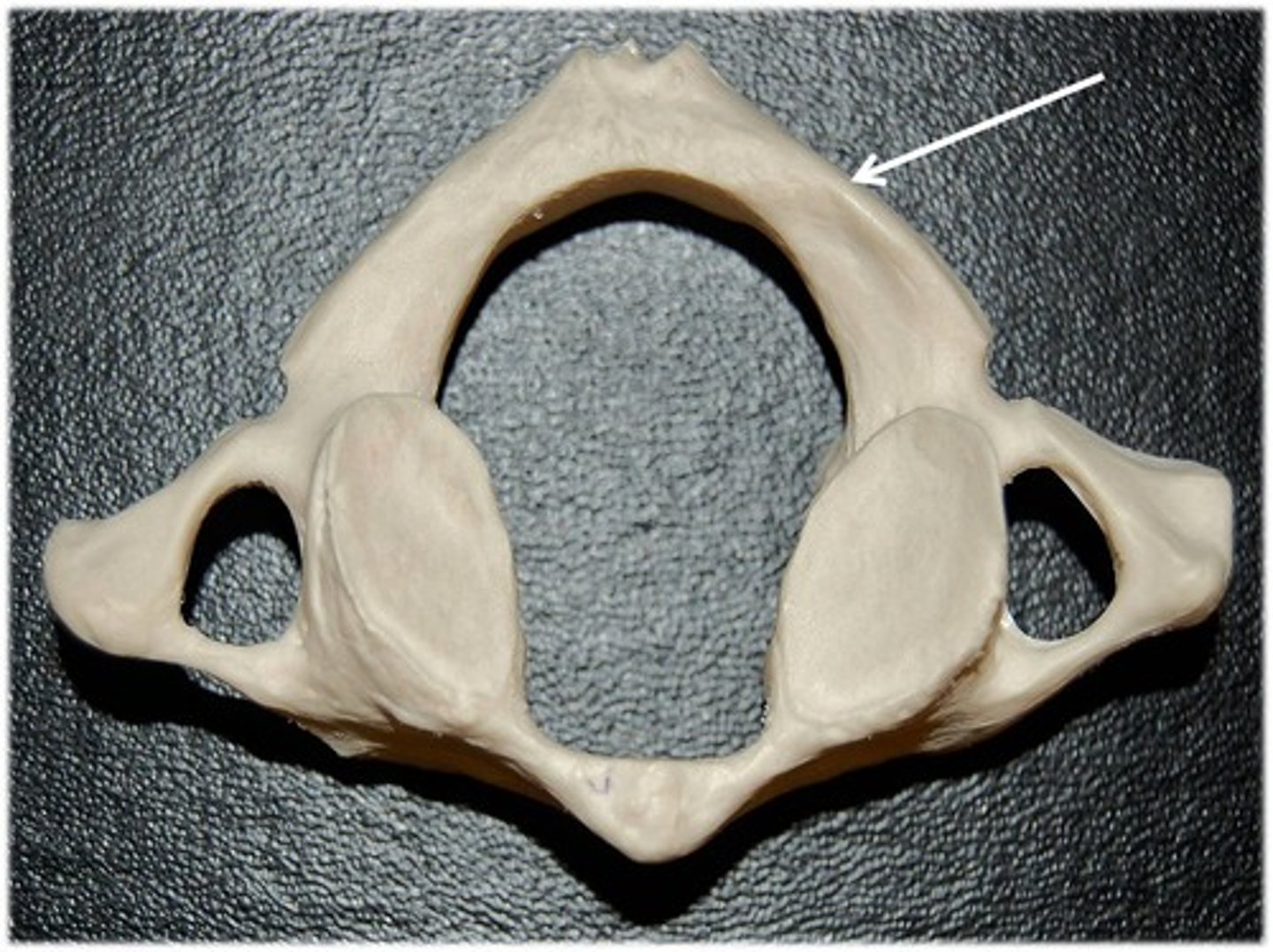
Bifid (forked) Spinous Processes
Only POSSIBLY on C2 through C6
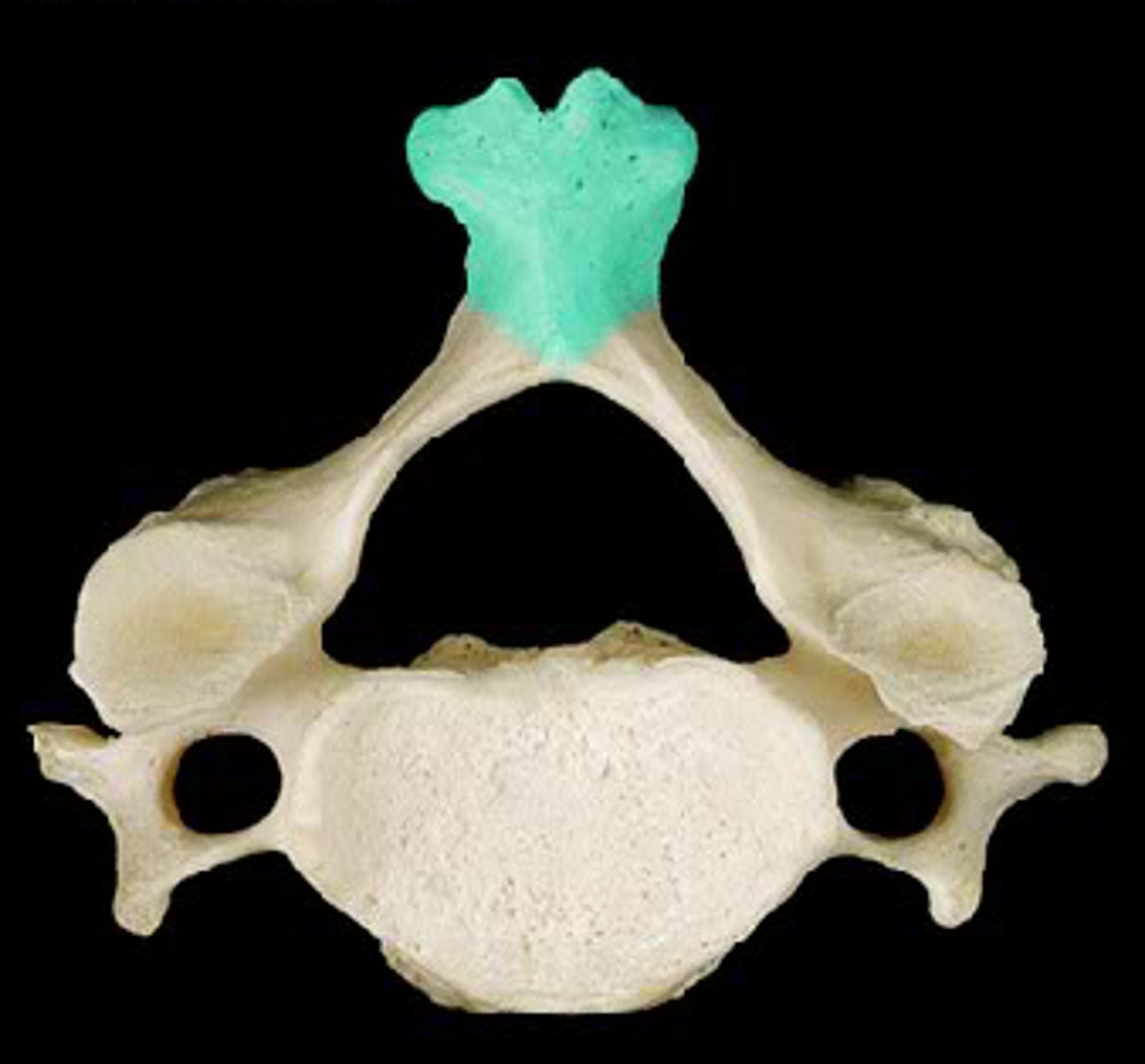
C2 (axis)
The dens of this bone sticks up into the vertebral foramen of C1
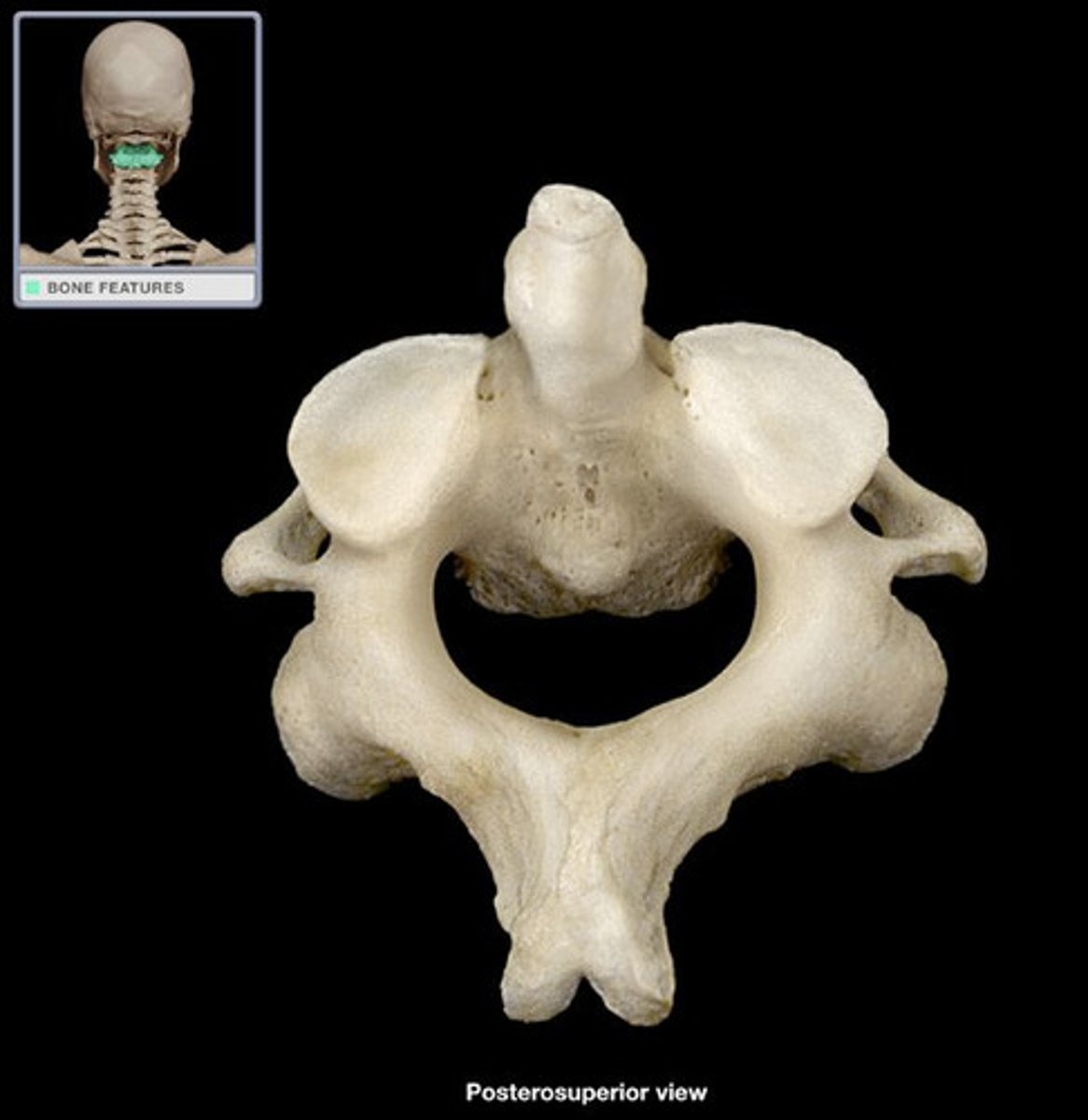
Transverse Facets
Only found in the thoracic region so that the ribs can articulate
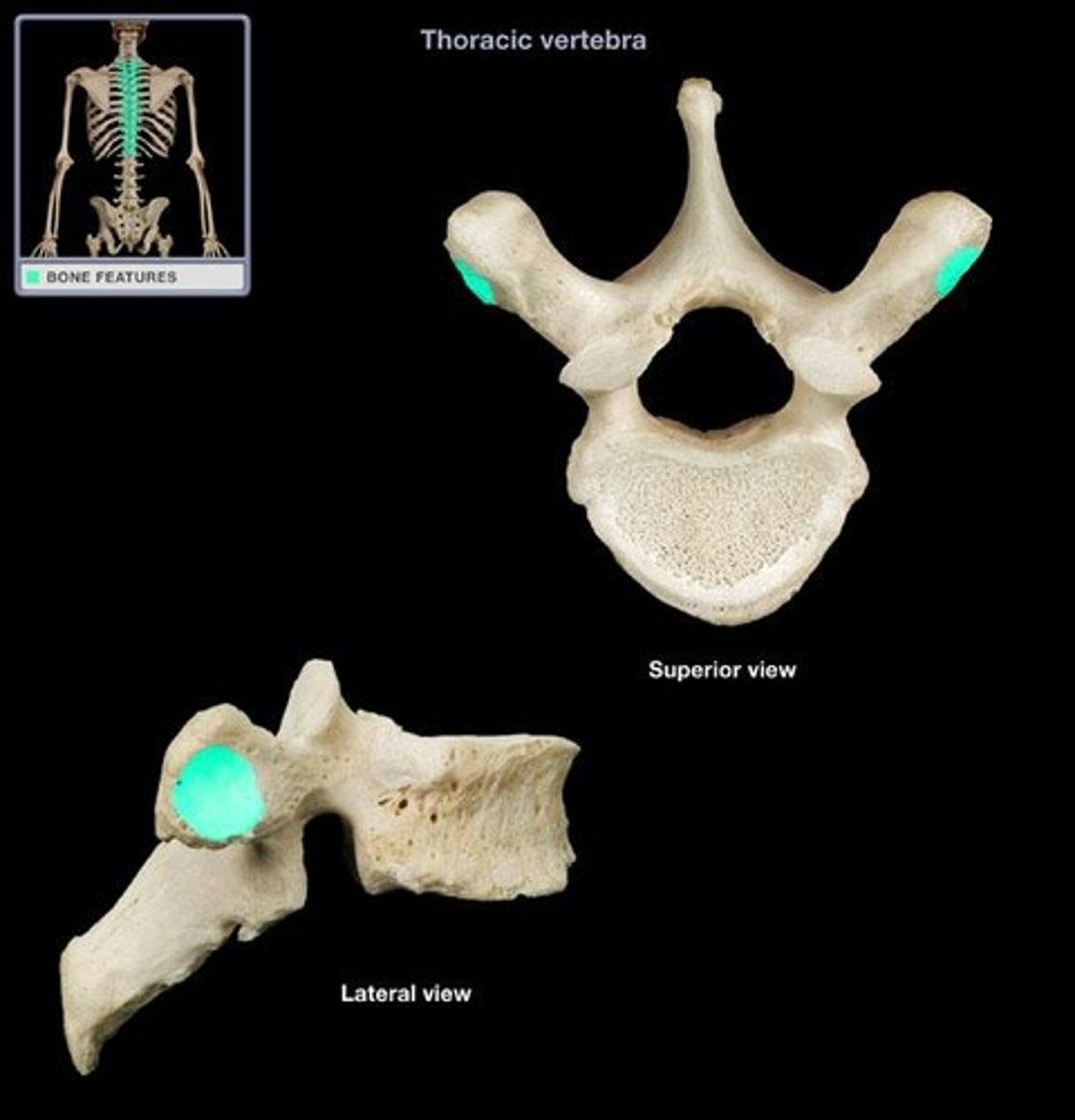
Lumbar Vertebrae
Strongest vertebrae in the body, mainly used for load bearing
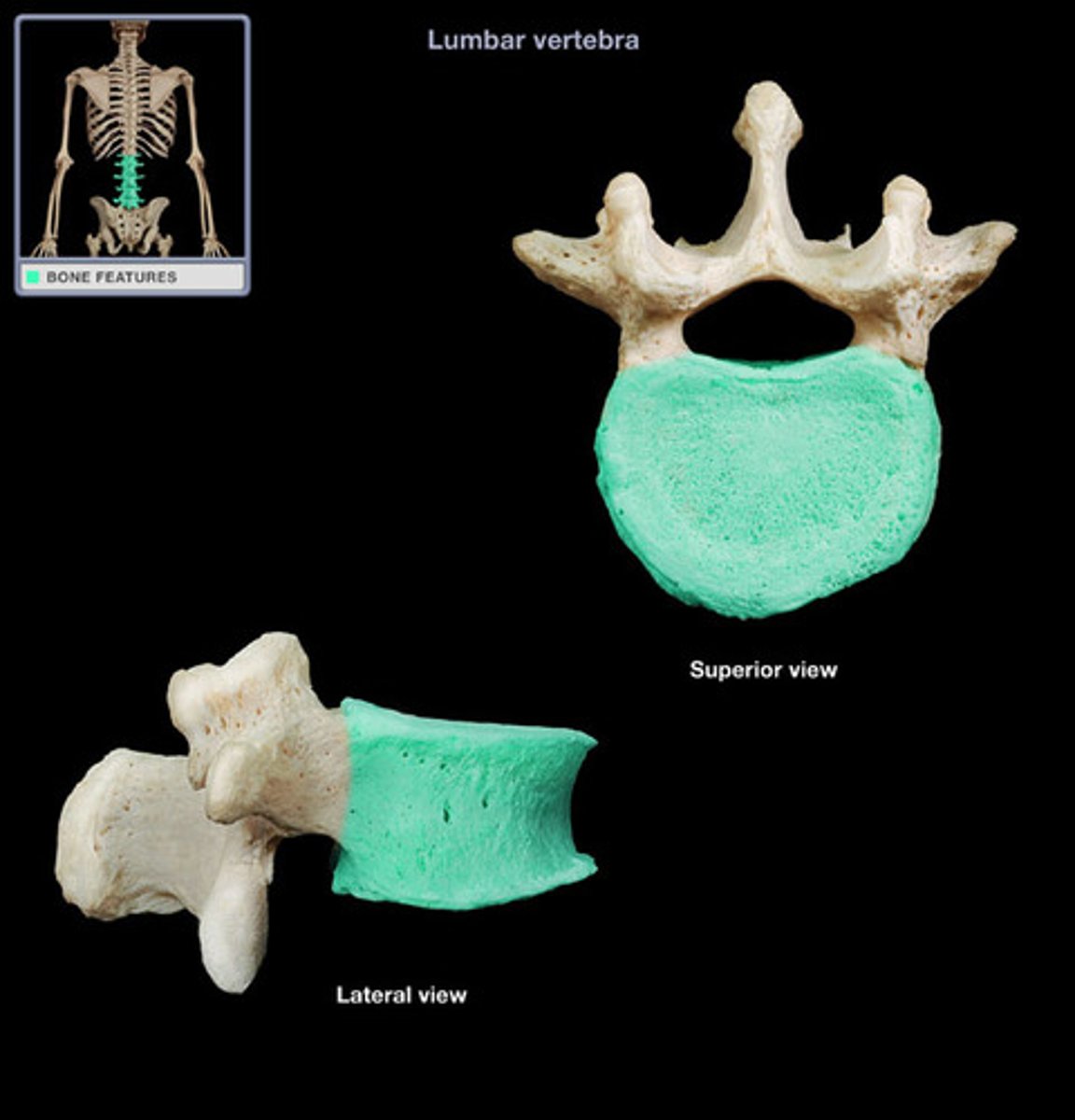
Sternum
breastbone
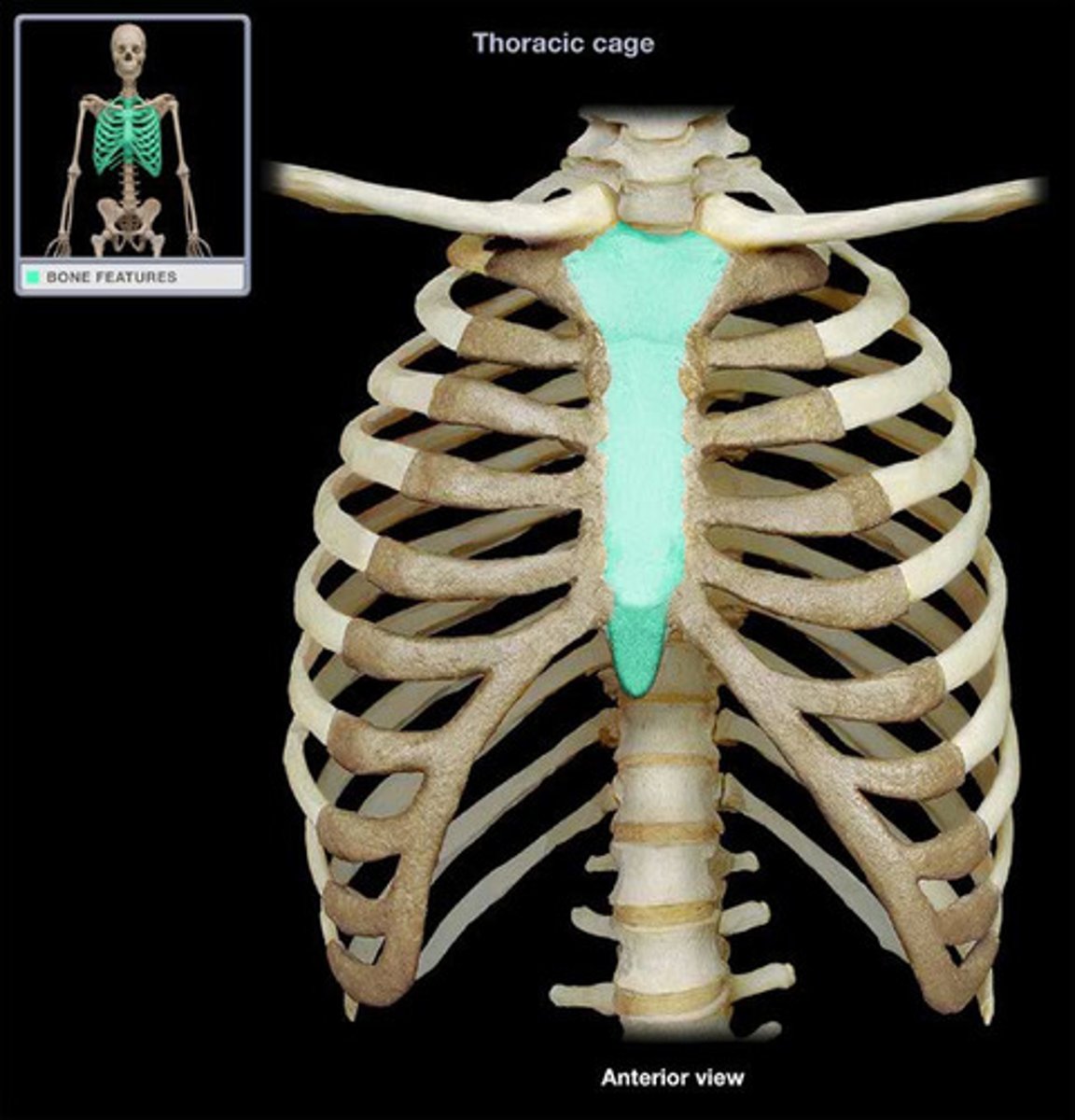
Manubrium
Top bone of the sternum
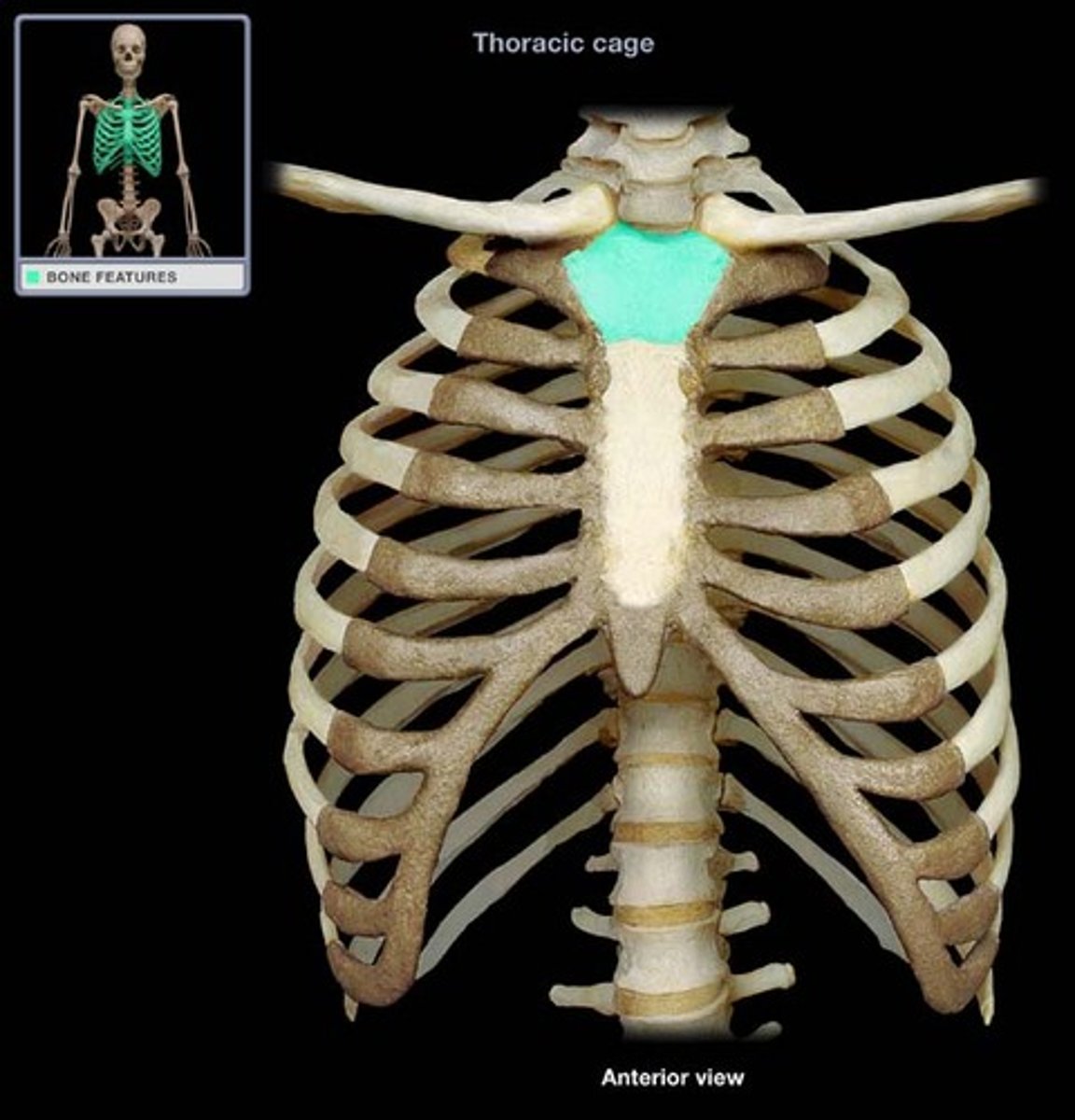
Sternum Body
Middle bone of the sternum
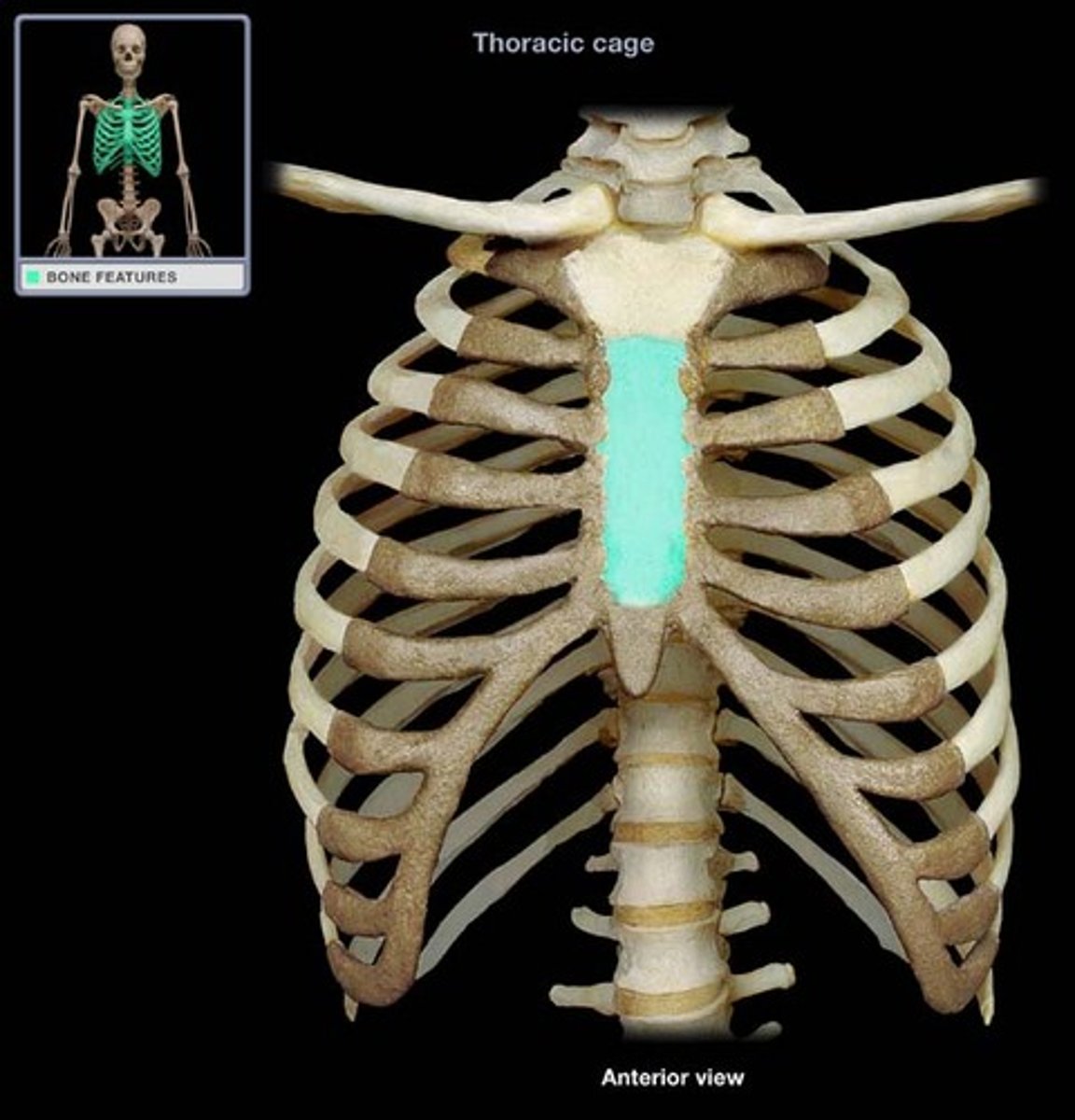
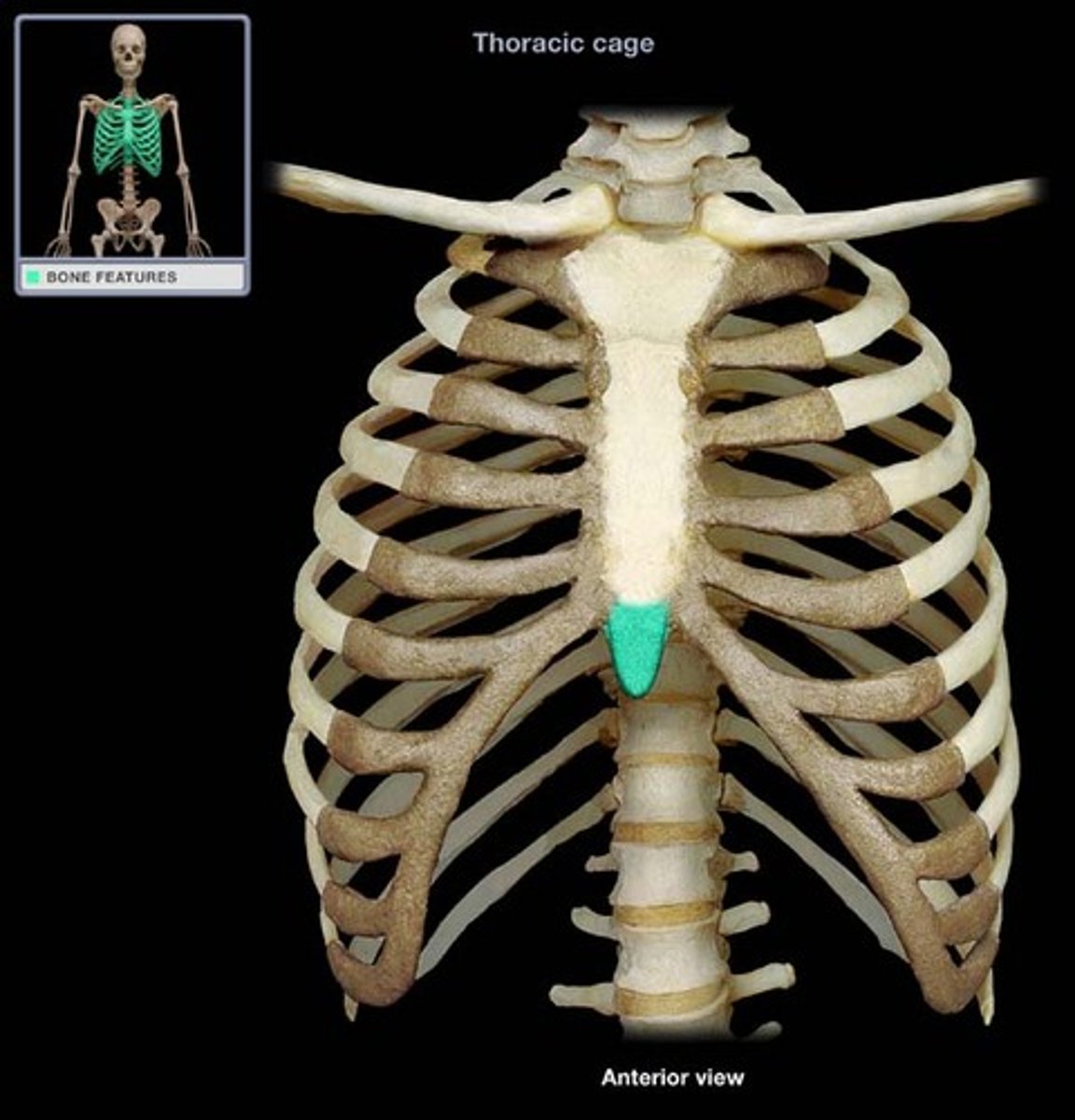
Xiphoid Process
Very bottom of the sternum
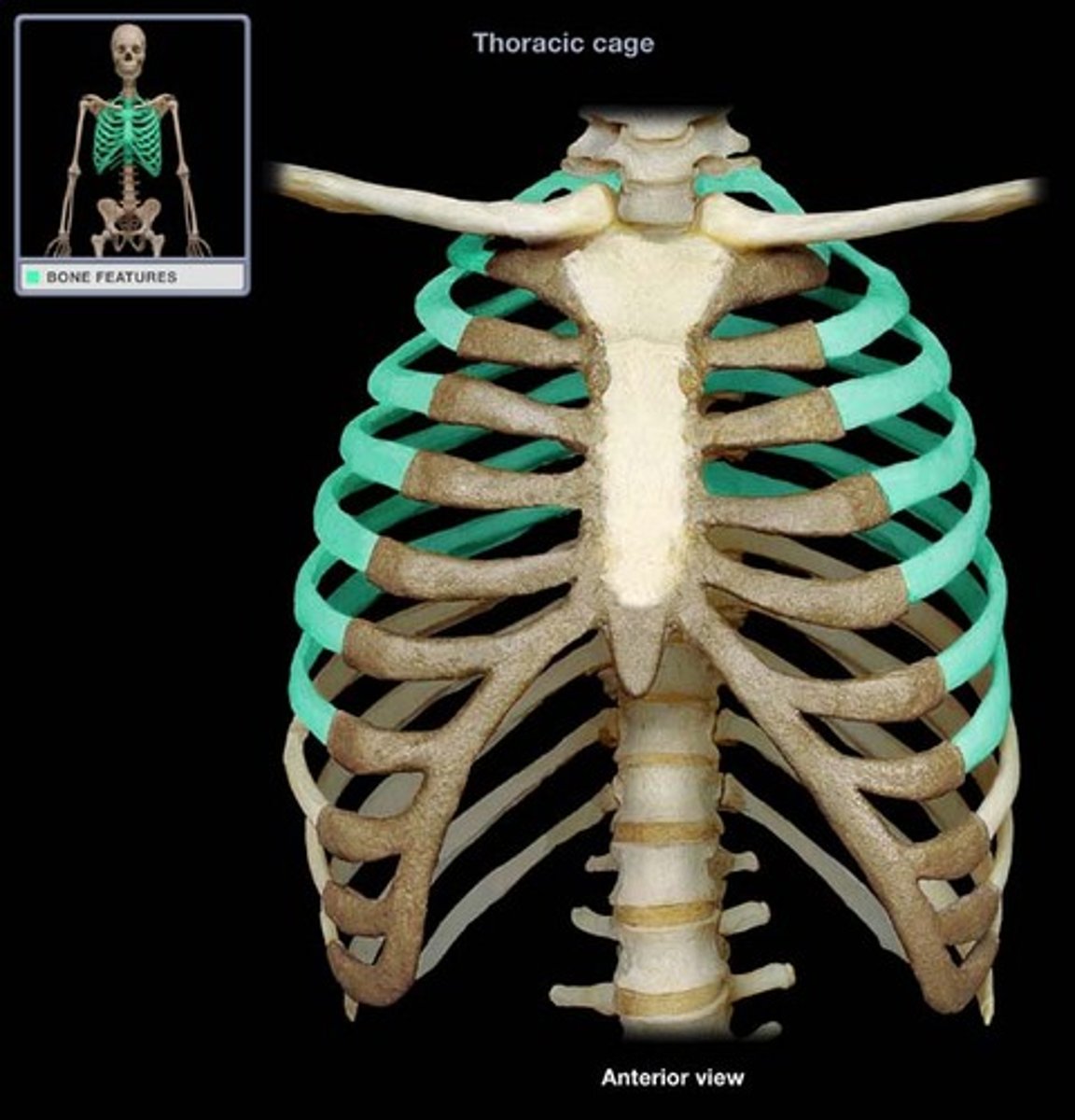
True Ribs
Ribs 1-7 because they have their own piece of costal cartilage that connects it to the sternum
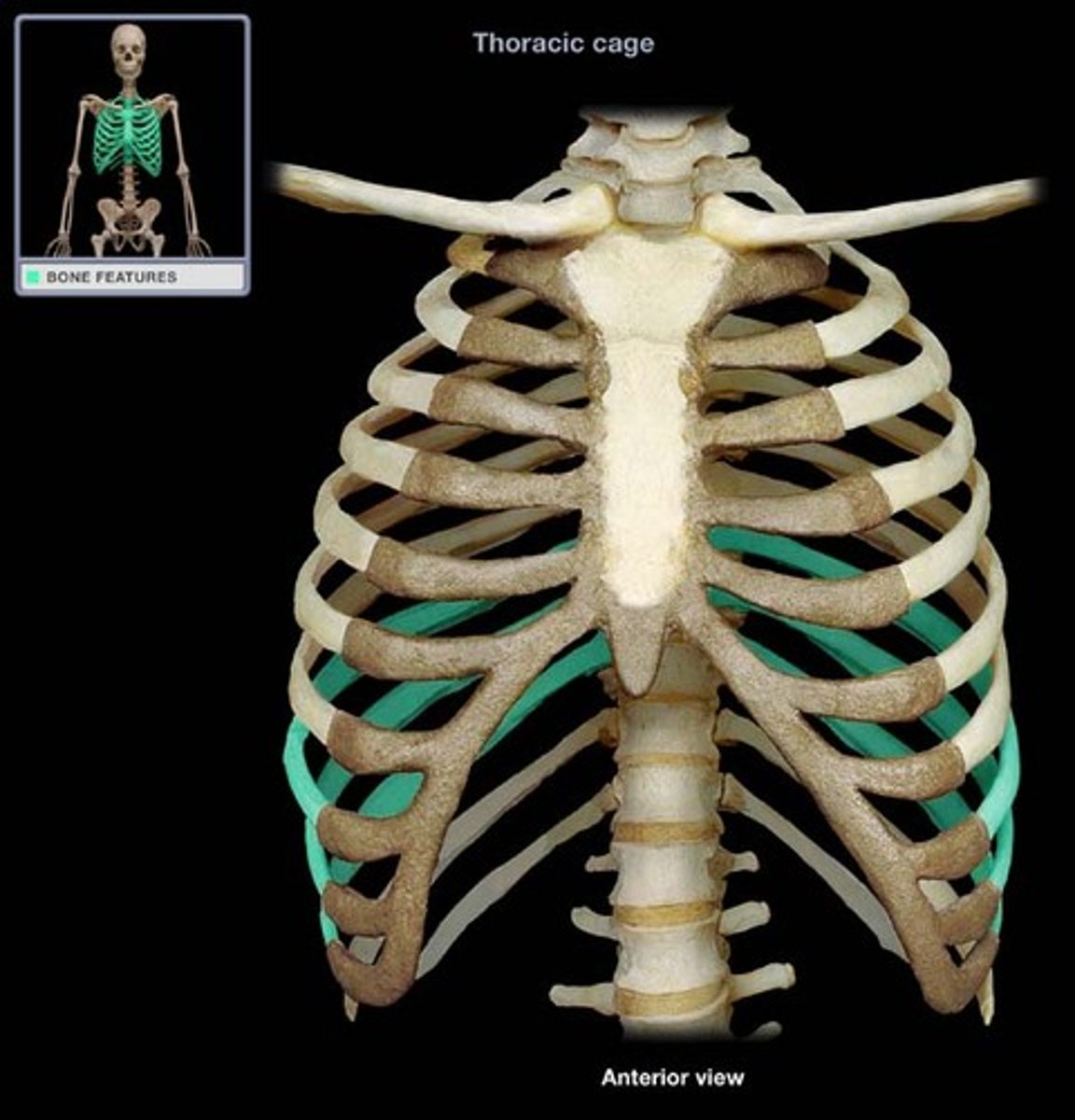
False Ribs
Ribs 8-10 because they aren't directly attached to the sternum
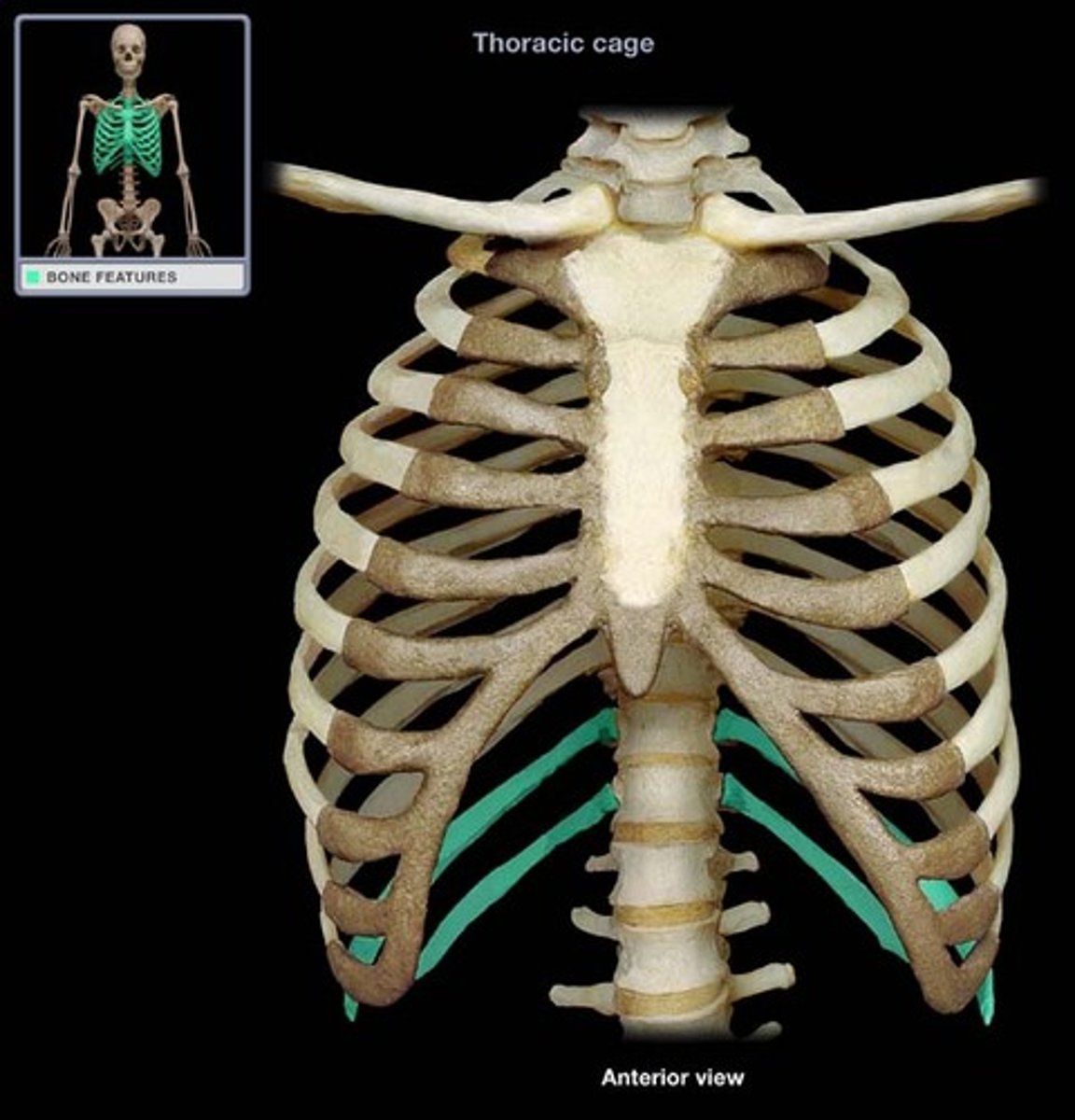
Floating Ribs (11, 12)
Ribs that have no anterior attachment
Intercostal Space
Space between the ribs
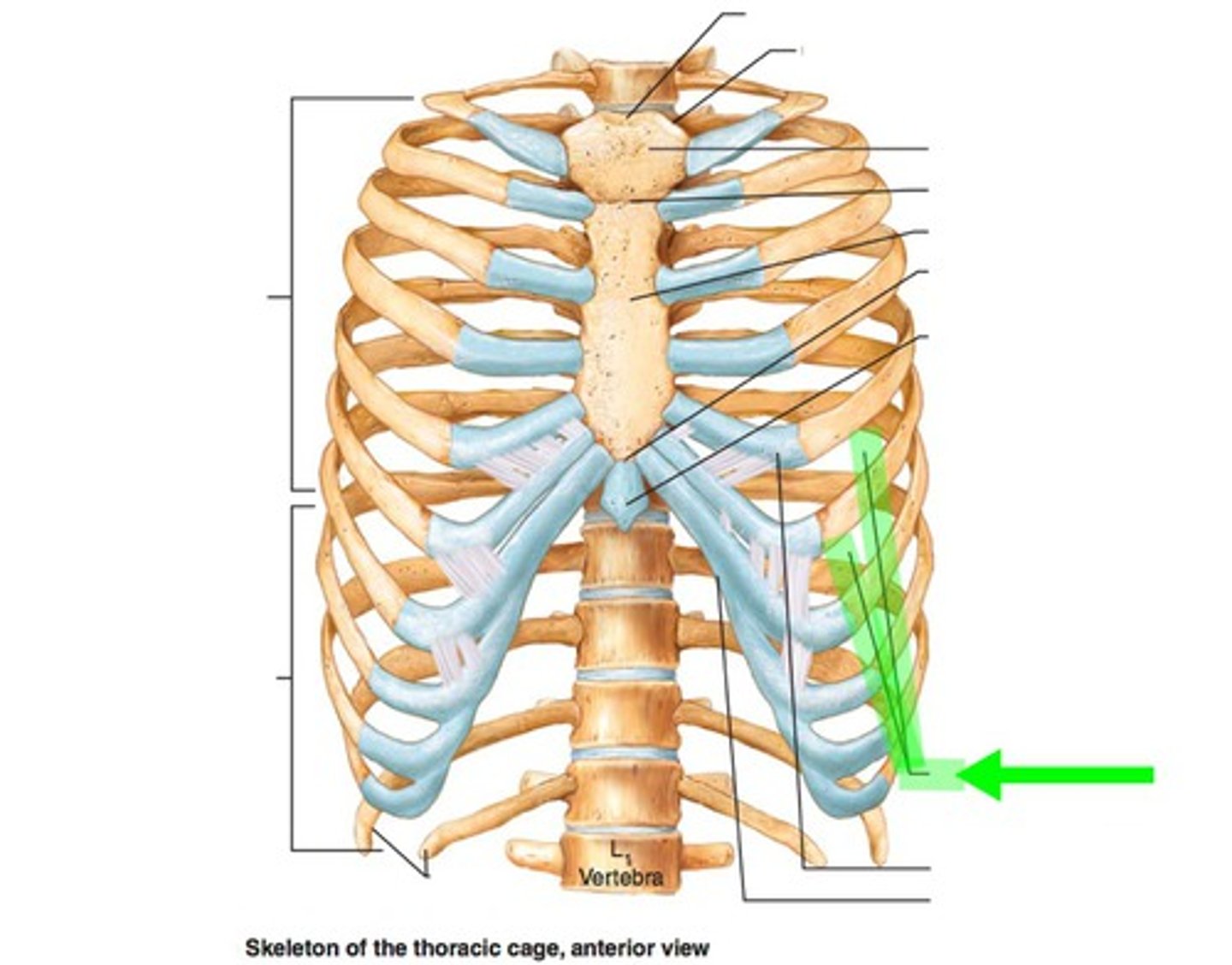
Thoracic Vertebrae
characterized by long sharp spinous process and facets for articulation with the ribs.
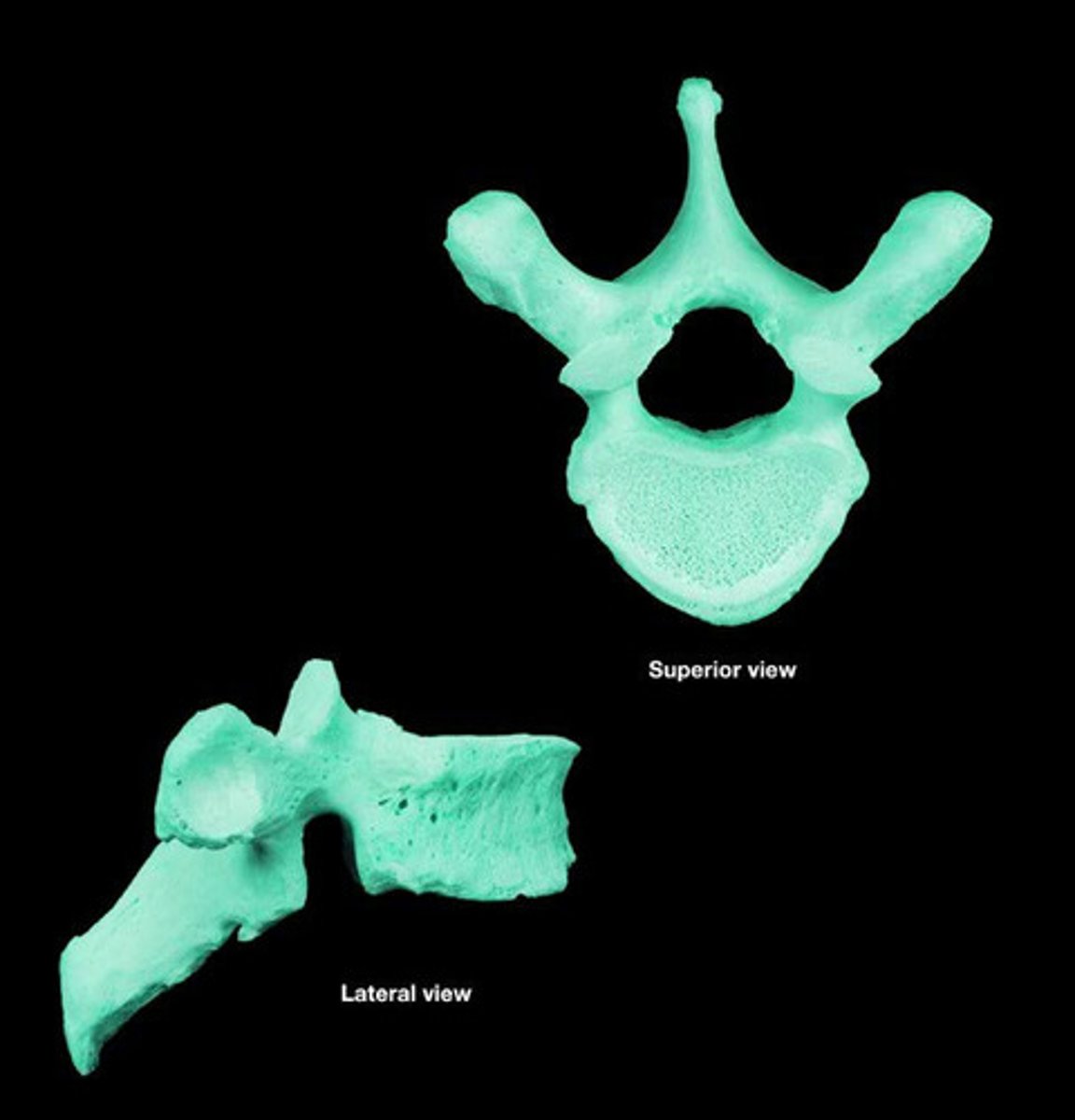
cervical curvature
curvature (1) in photo; Secondary spinal curvature that develops in a child as a result of supporting the weight of the head on their own
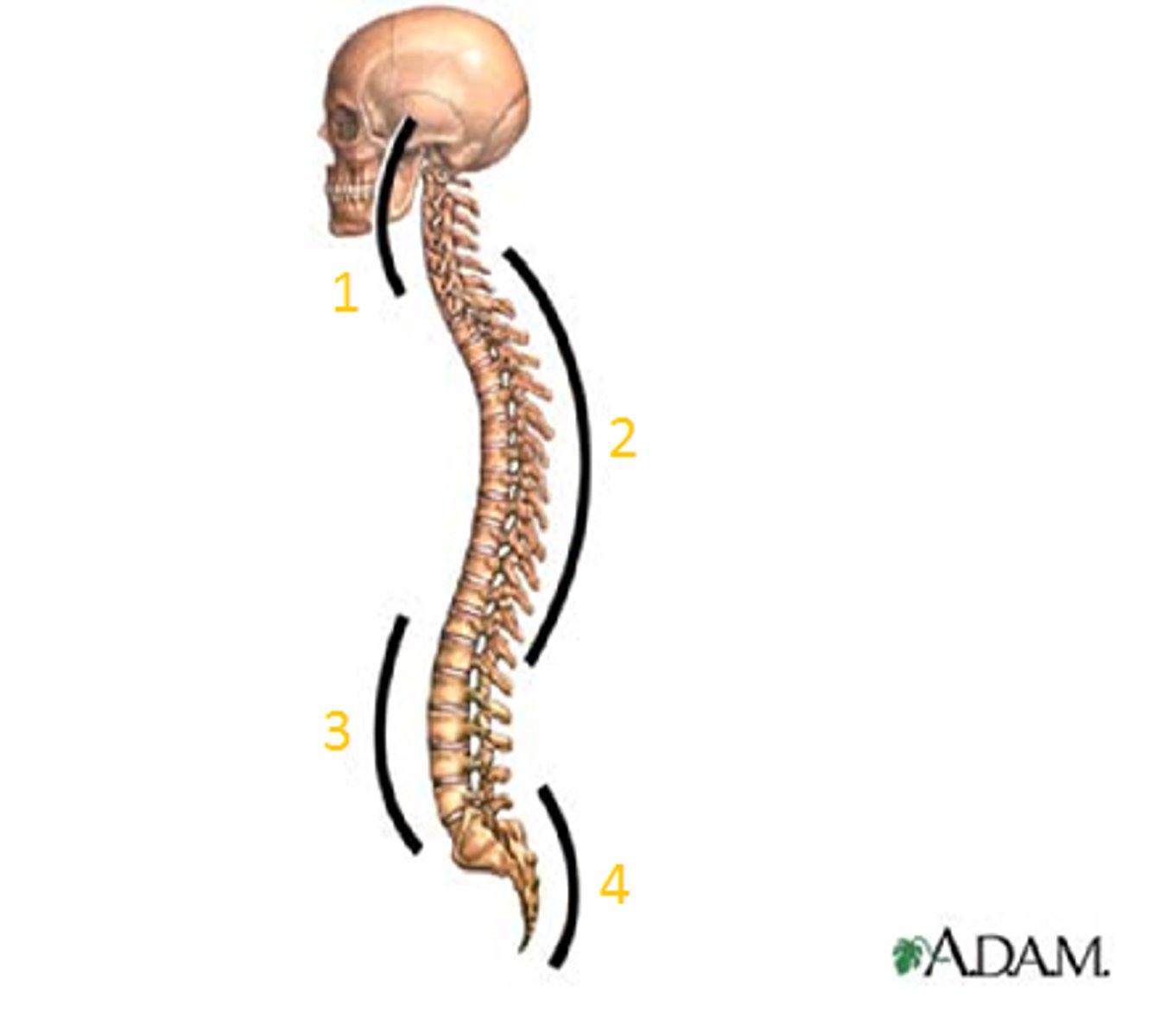
lumbar curvature
curvature (3) in photo; Secondary spinal curvature that develops as a result of walking.
Still learning (14)
You've started learning these terms. Keep it up!
Explore top notes

Explore top flashcards
