Humanities exam year 9
 Call Kai
 Learn
Learn Practice Test
 Spaced Repetition
 Match
Match Flashcards
 Knowt Play
1/64

There's no tags or description
Looks like no tags are added yet.
Name | Mastery | Learn | Test | Matching | Spaced | Call with Kai | Chat |
|---|
No analytics yet
Send a link to your students to track their progress
65 Terms
duration of WW1
1914-1918
the countries that are in the Triple Alliance
Germany, Austria-Hungary, and Italy
countries that are in the Triple Entente
Russia, France, and Great Britain.
long term causes of World War 1
Militarism
Alliances
Imperialism
Nationalism
Militarism
The process of enlarging your armed forces in order to strengthen your ability to fight and intimidate others.
E.g. The German leader, Kaiser Wilhelm II, wanted the biggest army. In the meantime, Britain had the world’s largest navy and was keen to ensure things stayed that way.
Alliances
Alliances are agreements which are made between nations. Under these agreements, countries promise to fight alongside the other in the event of war.
E.g. The Triple Entente and The Triple Alliance
Imperialism
Imperialism refers to the process of enlarging your empire by militaristic or colonial means.
E.g. Great Britain had already done a fair bit of colonising by the 1800s/19th century (Canada, India, Australia, etc)
benefits of imperialism
Imperialism=Owning land
This has two main benefits:
More land = more resources
(timber, oil, metal, etc)
More land = more people to work and
fight for your empire
Nationalism
Nationalism’ refers to having a sense of pride in your country and culture, and a belief that your country is superior to all others.
E.g. The new German Empire and its friends in Austria-Hungary believed themselves to be the best nation and culture, and were eager to take their place as the single biggest power in Europe. To achieve this plan though, would mean conquering other nations by force.
How the assassination of Arch Duke Ferdinand was the catalyst that started the war (short term cause)
Bosnia, part of Austria-Hungary, was home to ethnic Bosnians who opposed being part of the empire.
Serbia, an independent nation, supported Bosnians' desire for independence.
Tensions grew due to efforts to separate Bosnians and others from Austria-Hungary.
Archduke Franz Ferdinand, heir to the Austria-Hungarian throne, toured Sarajevo, a Bosnian city.
A Serbian-led terrorist group, including a Bosnian, assassinated the Archduke and his wife during the tour.
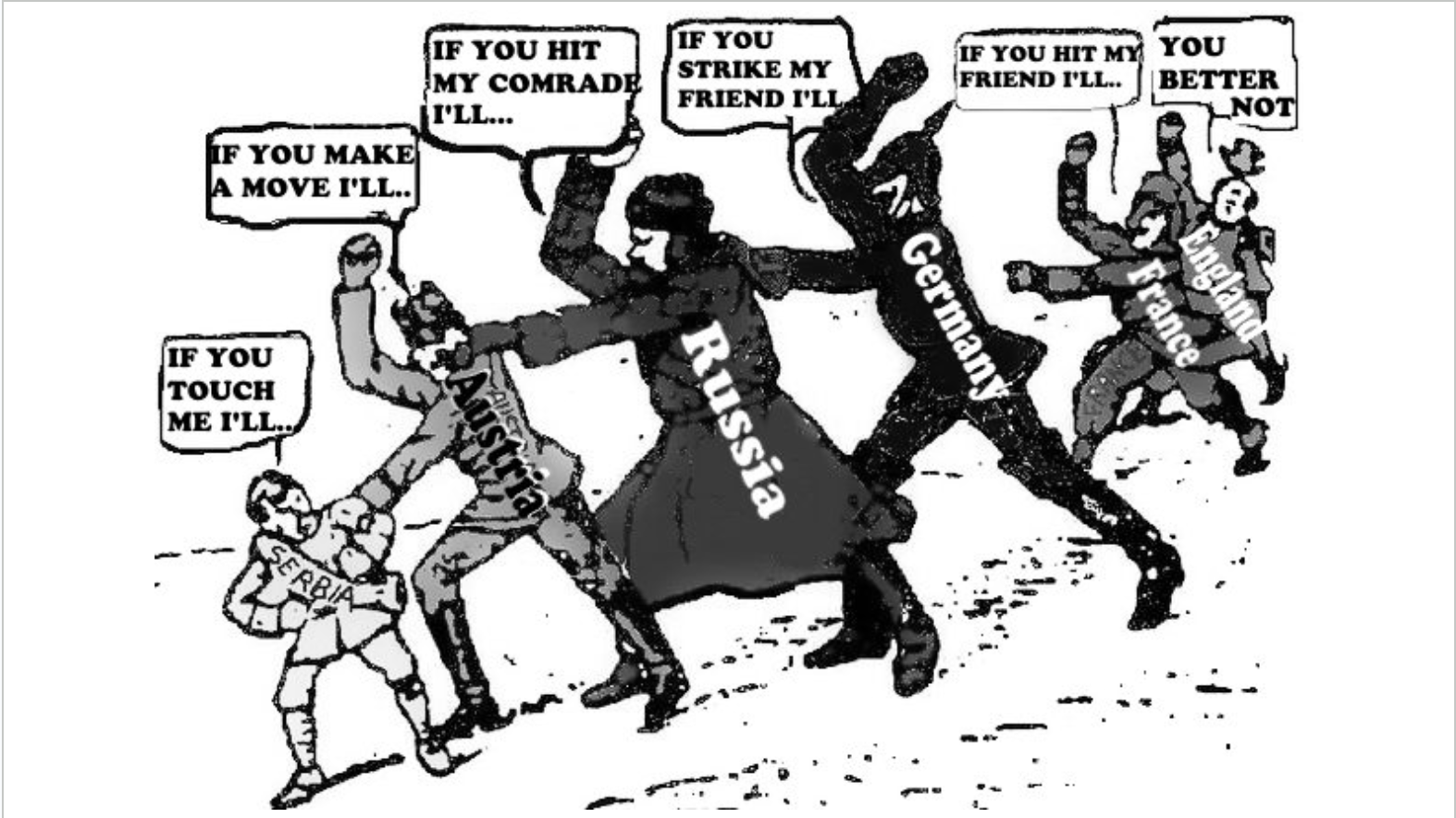
Austria-Hungary, supported by Germany, issued an ultimatum to Serbia with 10 demands.
Serbia agreed to 9 demands but refused one, escalating tensions.
Austria-Hungary declared war on Serbia on July 28, 1914.
Russia prepared for war to protect Serbia.
Germany demanded Russia stop preparing for war; when Russia didn’t comply, Germany declared war on Russia.
explain the Schlieffen Plan
In 1905, Germany had developed a strategy for what they would do if they ended up in a war that was fought on two fronts. This plan was called the Schlieffen Plan.
The plan was to invade France by going through Belgium.
The assumptions made by the German military for the Schlieffen Plan to work
It would take Russia at least 6 weeks to get its army ready for war
France could easily be defeated in 6 weeks
Belgium would not resist if Germany attacked them
Britain would remain neutral
Germany thought that if war broke out, it would attack (and quickly defeat) Belgium and France, then turn its attention to Russia.
the effect the Schlieffen Plan had on the outbreak of World War 1
On 3 August 1914, Britain sent Germany a message announcing that if Germany did not withdraw their troops from Belgium by midnight, Britain would declare war.
Germany did not respond to this message, so on August 4, Britain found itself at war with Germany.
list of reasons that Australians wanted to go to war
Pure loyalty to Britain (‘the mother country’)
Desire to show what the new young nation of Australia could contribute to world conflict
The idea that Australia needed to show support to Britain in case we needed their help in the future
Out of a sense of adventure and an opportunity to leave home and travel the world.
To earn an income (the pay of 6 shillings per day matched the average wage of Australian workers)
how recruitment posters influenced Australians to join up for the war
Propaganda encouraged enlistment by evoking emotions like fear and patriotism.
Posters depicted fighting as a moral duty to combat an "evil" enemy, often portraying Germany as barbaric or monstrous.
Fear of invasion, loss of freedoms, and harm to loved ones motivated many to enlist to protect their families.
List of variety of new and improved technologies developed in WW1
Tanks
Guns and Artillery(long range weapons)
Aircraft
Communications Technology
Poison Gas and Chemical Weapons
Clothing and PPE
Ships and Submarines
The impact of Guns and Artillery
Impact of Guns and Artillery: Increased firepower with weapons like machine guns and heavy artillery, causing massive casualties and prolonged trench warfare.
The impact of aircraft in battle
Helped to gather info about enemy troops, areas and battlefield conditions.
Introduced aerial combat, leading to innovations in bombing and air strategy.
The impact of Poison Gas and Chemical Weapons
Created fear, death and devastation, causing horrific injuries and leading to advancements in chemical defence and international bans.
The role of technology in the extension of WW1
Deadlier Weapons: Machine guns, artillery, and chemical weapons led to trench warfare and high casualties, causing a stalemate.
Defense: Barbed wire, bunkers, and trenches made offences difficult, leading to prolonged battles.
Large production Scale: Mass production of weapons and supplies allowed both sides to sustain the war for years.
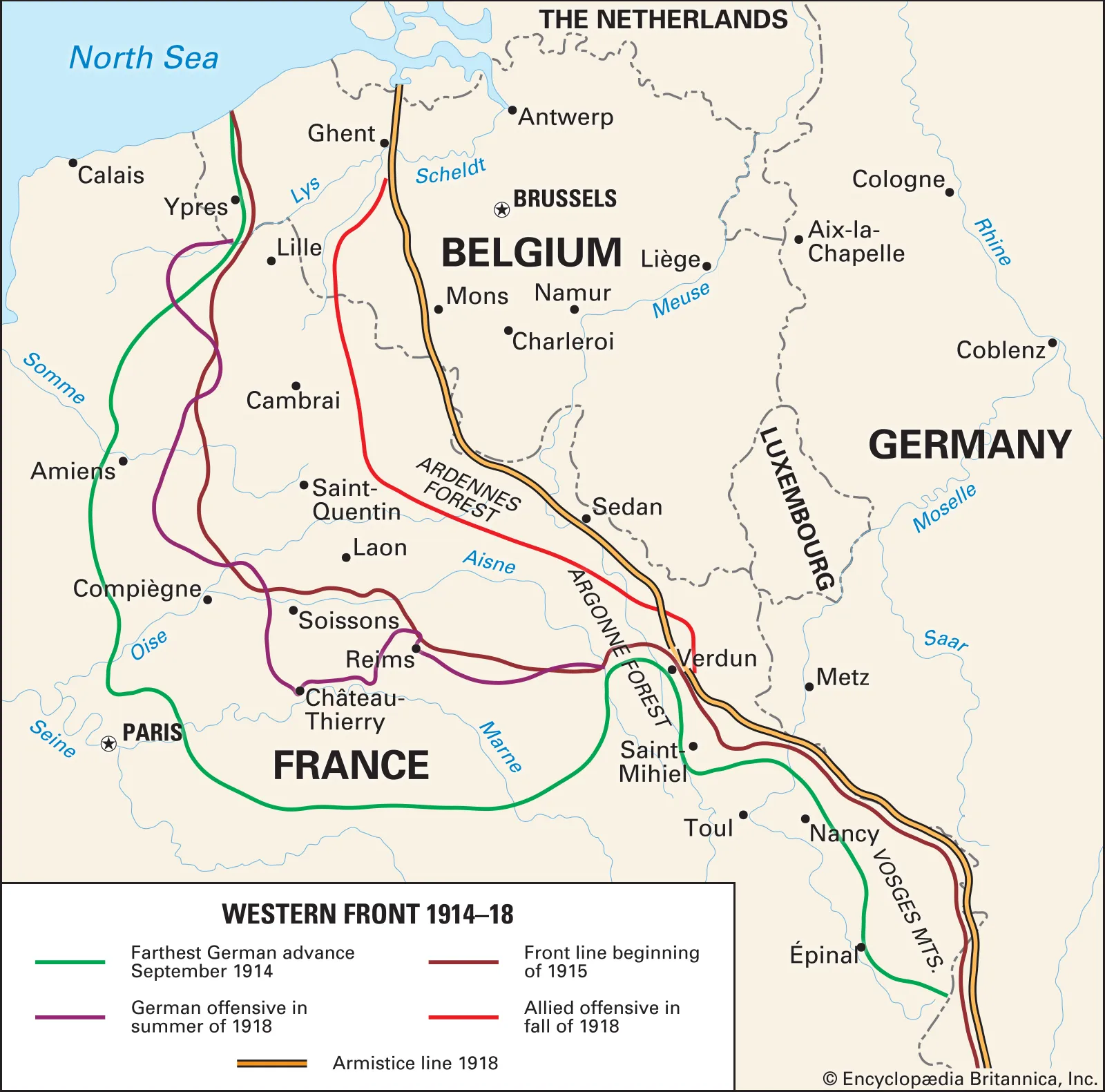
Where the war occurred- The Western front
The 700 km stretch of trenches between Belgium, France and Germany, where the opposing armies faced each other.
It went from the Belgian coast to the Swiss border.
It moved in small amounts after a series of battles over the 4 years of war.
where the war occurred- The Eastern front
A vast front stretching from the Baltic to the Black Sea, where Central Powers fought Russia.
the conditions for soldiers in the trenches
Lack of Sleep: Soldiers struggled to sleep due to constant fear of attack, noise, and discomfort.
Poor Hygiene: No privacy or sanitation, with rats, lice, and disease common.
Trench Damage: Constant repairs needed due to artillery damage or weather conditions.
Flooding: Wet weather caused trenches to flood, leaving soldiers standing in water, leading to trench foot.
Malnutrition: Limited food and poor diets led to malnutrition.
Harsh Weather: Extreme cold and damp conditions made life uncomfortable and dangerous.
Low Morale: Harsh living conditions contributed to low morale among soldiers.
the difficulties of trench warfare and how this led to a stalemate
Most attacks came at night, when it was harder for the enemy to see them approaching. However, this also made it harder to navigate No-Man’s Land.
This led to high casualties and ineffective offensives, contributing to the stalemate.
the reasons for the attack on Gallipoli
The Allies wanted to create a supply route through the Dardanelles to support Russia, who was struggling with inadequate supplies.
Capturing Gallipoli and Constantinople (Istanbul) would help secure this vital supply path to Russia.
By strengthening Russia, the Allies hoped to force Germany to divert resources away from the Western Front, easing pressure on the Entente forces there.
understand the perspectives of both sides of the gallipoli battle
ANZAC perspective: The troops faced unexpected challenges, including landing in the wrong location, confusion during the landings, and difficult terrain. They made no significant progress despite heavy casualties
Turkish perspective: The troops were well-prepared and dug into strong defensive positions on high ground, and were able to repulse the Allied advances. They had an advantage of familiar terrain.
why and how Gallipoli is such an important part of Australian history
It shows us how the ANZACs were resilient in tough times and never gave up despite great challenges.
the events that lead to America entering WWI
Intercepted German Communication:
British intelligence intercepted a German communication, where Germany offered Mexico an alliance in exchange for attacking America’s southern border. This was meant to distract the U.S. from the war.Unrestricted Submarine Warfare:
Germany began sinking all ships near Britain, including civilian and American vessels, putting American lives at risk.U.S. Joins the War (April 6, 1917):
President Wilson declared that “America has a duty to make the world safe for democracy,” and formally entered the war.
how America’s entry into WWI helped contribute to an eventual victory for the Allied Forces and an end to the war
Boosted morale: The arrival of fresh, fit, and enthusiastic American soldiers revitalised the weary Allied forces, breaking the stalemate of trench warfare.
Supplied resources: The USA provided essential supplies like food, weapons, and financial support, strengthening the Allies' war effort.
German realisation: The Germans understood they couldn't win with the USA involved, which weakened their resolve.
These factors contributed to Germany's surrender in 1918, leading to the end of the war.
The effects that WWI had on Australian women
Women were able to take on traditionally male dominated jobs
Women gained confidence, skills and independence, which helped shape Australia in the 1920s.
How German-Australians were affected by ww1
Given the term enemy alien, as they were believed to have divided loyalties between Australia and Germany.
Many German Australians were imprisoned in internment camps.
Australians boycotted German-made products like aspirin, preferring the locally made “Aspro” instead.
The government also closed down German schools and changed the names of towns that it thought sounded “too German”.
In the 1917 election, Australian-born Germans were forbidden from voting.
the consequences WW1 had on the Australian economy
The cost of war is significant - the government has to pay for weapons, ammunition and supplies for the soldiers.
To do this, the government introduced income tax and borrowed money from other countries (particularly Britain).
Because many materials needed to be sent to the war effort, there was a lack of supplies left in Australia. This meant the price of things rose - which meant the cost of living every day became higher.
the reasons why the Armistice was signed
Exhaustion and depletion: By 1918, both sides were fatigued, with dwindling resources and low morale, making continued fighting unsustainable.
USA’s involvement: The entry of the USA into the war provided fresh troops and resources to the Allies, diminishing Germany's chances of victory.
German anti-war sentiment: Growing discontent among German citizens, due to massive casualties, economic strain, and destruction, weakened support for the war.
Food shortages: Blockades by the Allies caused severe food shortages in Germany, further destabilising the country.
Loss of the French battle: Germany was losing ground in France, facing significant military setbacks.
German navy strike: The German navy's refusal to continue fighting signalled a breakdown in military unity, contributing to Germany’s decision to seek peace. These factors led to the signing of the Armistice, ending the fighting in November 1918.
the importance of the Treaty of Versailles
Official end to WWI: The Treaty of Versailles officially ended World War I and established the terms for peace.
Germany’s responsibility: Germany was held fully responsible for starting the war and had to accept blame for the damage caused.
Germany’s consequences: Germany had significant consequences, such as territorial losses, military restrictions, a ban from uniting with Australia, and $6.6 billion in respirations
Loss of life due to WW1
40 million civilian and military casualties
Physical damage due to WW1
Vast areas of north-eastern Europe had been reduced to rubble.
The homes of 750,000 French people were destroyed and the infrastructure of this region had also been severely damaged.
Such a loss greatly hindered the area’s ability to function normally.
Economic damage due to WW1
Massive Government Debt
Countries borrowed heavily to fund the war.
Germany faced severe reparations under the Treaty of Versailles.
Infrastructure Destruction
Battlefields in Europe destroyed farmland and industrial areas.
Rebuilding required huge financial resources.
Global Economic Disruption
Trade was disrupted, and inflation soared.
Catalyst
A critical point that can start a momentum or change.
Armistice
A pause in fighting brought about by agreement between the two sides.
Space
Physical features of a location
Place
Parts of the Earth’s surface which have been identified and given meaning by people
Types of a connection to a place
Cultural connection
Economic connection
Spiritual connection
Historical connection
different perceptions people have of place
Factors that influence how you perceive places include:
your age,
your ethnic origin,
your gender,
the time of day or night you are visiting the place,
whether you are travelling to the place alone or in a group,
whether you have a disability or are able-bodied.
interconnection
The way that people and/or geographical phenomena are connected to each other through environmental processes and human activity.
How interconnection affects space
Interconnections between places are the result of natural processes.
E.g. a rock in a riverbed may be connected, not only to the other surrounding rocks (likely broken off from larger rocks), but also to other areas entirely. Fast flowing rivers wear down rocks where they are shaped into new features.
This process is natural and it links together the mountains to the ocean or coastline.
How interconnection affects place
Some of the interconnections between places are the result of human interactions.
These can be the result of:
Trade - the links made when creating, selling, and purchasing goods and services.
Transport - getting around your local neighbourhood by bike, travelling to school or uni by train, or maybe flying to Europe.
Communication - sitting in your online class in 2020, talking to family members across the world.
globalisation
The process of the world becoming more interconnected as a result of increased trade and cultural exchange.
Positives of globalisation
Transport and communication technologies are continually advancing
Economically, one country may produce goods that another imports, creating a system where both benefit and depend on each other.
Culturally, ideas, traditions, and practices may spread and influence each other through shared media, travel, and communication.
It strengthens the connections between people and place
Negatives of globalisation
Loss of local identities and traditional lifestyles.
Environmental degradation due to increased industrialisation and resource consumption.
Wealth often concentrates in developed nations or large corporations, widening the gap between rich and poor.
Workers in developing countries may face poor working conditions, low wages, and lack of rights.
how communication technology has changed over time
Letters and physical mail, which took days to deliver, have been replaced by instant communication through emails, messaging apps, and social media, enabling real-time global interaction.
Positives of advancements of the internet
Access to information
Global communication
Educational opportunities
Entertainment
Online shopping
Social activism and awareness
Negatives of advancements of the internet
Cyberbullying and harassment
Misinformation and fake news
Privacy concerns
Addiction and overuse
Exposure to harmful content
Decreased face-to-face interaction
changes to ships over time
Early Ships: Initially, smaller and slower ships were used for trade and passenger transport, limited by technology and capacity.
Modern Megaships: Today’s mega-ships are massive vessels designed to efficiently transport goods and people across the globe at high speeds and low per-unit costs, playing a crucial role in globalisation.
the importance of transportation in connecting people to places.
It connects people to work, education, healthcare, and entertainment.
Promotes social and cultural exchange by enabling easier travel.
Supports economic activities by improving access to resources and markets.
outline the steps within the global supply chain
Natural resources: sourcing the raw materials
Manufacturing: transporting those materials to the factory where the product will be manufactured, and processing materials to turn them into the parts of the product and fixing them all together.
Distribution: transporting finished products overseas to distributors, retail stores or warehouses and in many cases, delivering them right to your door.
Use: Products are purchased and used by consumers
End of life: When products are no longer useful, they are thrown away, recycled, or reused to reduce waste and protect the environment.
How tourism impacts the economy positively
More local jobs
Increased infrastructure (roads, buildings, electricity, internet, transport etc) which can both support tourists and local communities. For example, road built between towns to make access easier for tourists can also make travel between the towns easier for locals.
Increased government income (taxes etc)
How tourism impacts the economy negatively
Job level friction: some companies employ non-locals for high-level roles which leads to conflict with the locals who may have difficulty finding employment.
Infrastructure for tourists may be prioritised over essential infrastructure for the locals including roads, schools etc.
Loss of essential/natural resources
Nations can become too dependent on tourism, so when tourism stops, there is no other local industry or economy
How tourism impacts cultures positively
Strengthening communities as they work together
Locals benefit from infrastructure
Increased quality of life from tourism income, education, etc
Tourists learn about culture and respect
Encourages locals to be proud of culture and environment
How tourism impacts cultures negatively
Loss of cultural identity, as focus on tourists increases
Cultural clashes between the local community and tourists e.g tourists ignoring dress codes.
Ethical issues - human trafficking, abuse of local community.
Possible resentment by locals towards tourists who are wealthier and possibly exploitative
How tourism impacts the environment positively
Development of eco-tourism.
Can raise awareness of environmental issues.
Increased government investment in conservation
How tourism impacts the environment negatively
Destruction of local environment to build tourist accommodation, infrastructure and tourist attractions.
Production of excessive waste
Energy used for transport, accommodation and recreation can contribute to greenhouse gases.
Impacts of trade and consumerism on the environment
Increased greenhouse gas emissions due to energy used for transportation
Depletion of Natural Resources
Large amounts of waste end up in landfills- some synthetic materials can take hundreds of years to break down in landfills.
Loss of biodiversity, as ecosystems are disrupted due to the need for raw materials
Impacts of trade and consumerism on people and cultures
In fulfilment centres, workers face unsafe conditions, long hours, and physically demanding tasks.
In factories, employees work in toxic, noisy environments with little regard for safety or well-being, often enduring exploitation.
These people are often underpaid
The desire for cheap, trendy products often leads to a loss of cultural identity and exploitation of local labour forces in developing nations.
Commercialism
the idea of businesses wanting to maximise their profits by selling goods and services to customers.
Tourism
The temporary movement of people away from the places they normally work and live.
Types of tourism:
Recreational Tourism
Adventure Tourism
Historical/Cultural Tourism
Natural/Eco-Tourism
Event-based Tourism
What role does Australia play in the global supply chain?
Resource-Rich Country:
Australia has large amounts of natural resources like coal, iron ore, and wool. These are more than we can use, so we sell the extra to countries that need them.Importing Goods:
Australia relies on other countries for products we can’t make ourselves or for items that are cheaper to buy from overseas.