Realism
 Studied by 0 people
 Call with Kai
 Learn
Learn Practice Test
 Spaced Repetition
 Match
Match Flashcards
 Knowt Play
1/6

There's no tags or description
Looks like no tags are added yet.
Name | Mastery | Learn | Test | Matching | Spaced | Call with Kai |
|---|
No study sessions yet.
7 Terms
Realism
Realism is an artistic movement of the mid-19th century that sought to represent contemporary life truthfully, focusing on ordinary people, everyday scenes, and social realities, without idealization or romantic emotion.
What happend:
Photography invented → new idea of truth and observation
Rejection of Romantic emotion and idealization
Characteristics:
Truthful depiction of reality (no idealization)
Everyday subjects: workers, peasants, modern life
Social realism: poverty, labor, inequality
Neutral, serious tone (anti-Romantic emotion)
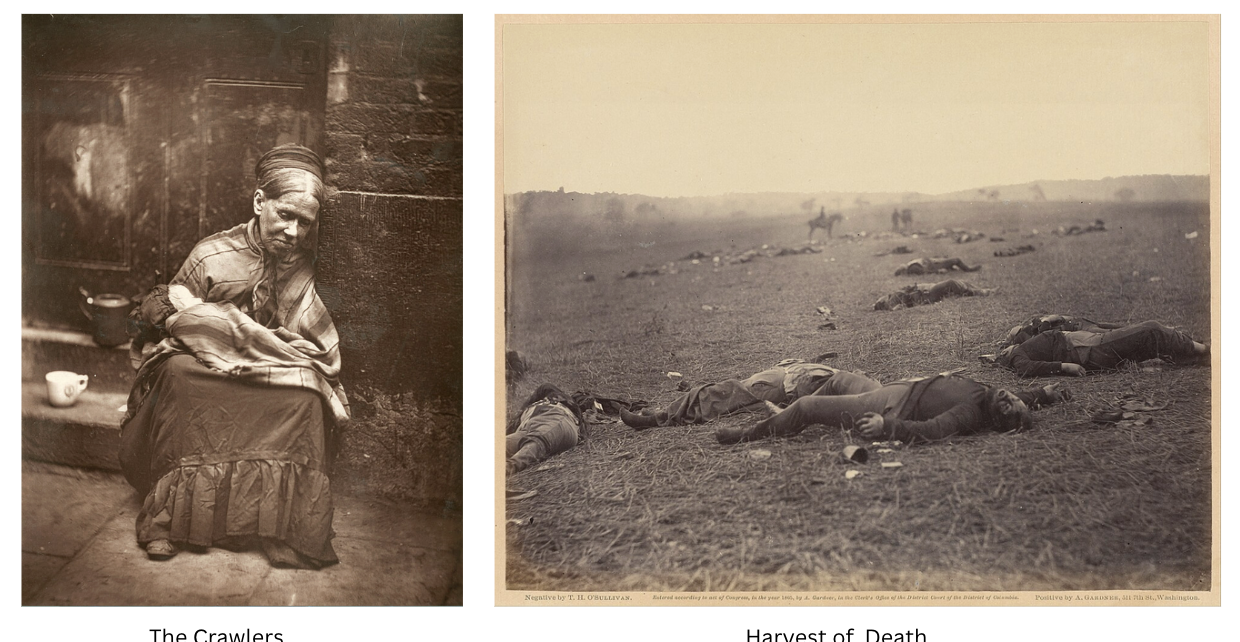
Photography & Its Impact
First photos: Niépce (1827) → heliograph.
Photography = new way of seeing, documenting social/political realities.
Examples:
John Thomson – The Crawlers (1877–78) → urban poverty.
O’Sullivan – Harvest of Death (Gettysburg, 1863) → war photography.
Challenged painting’s role → influenced Realism & Impressionism.
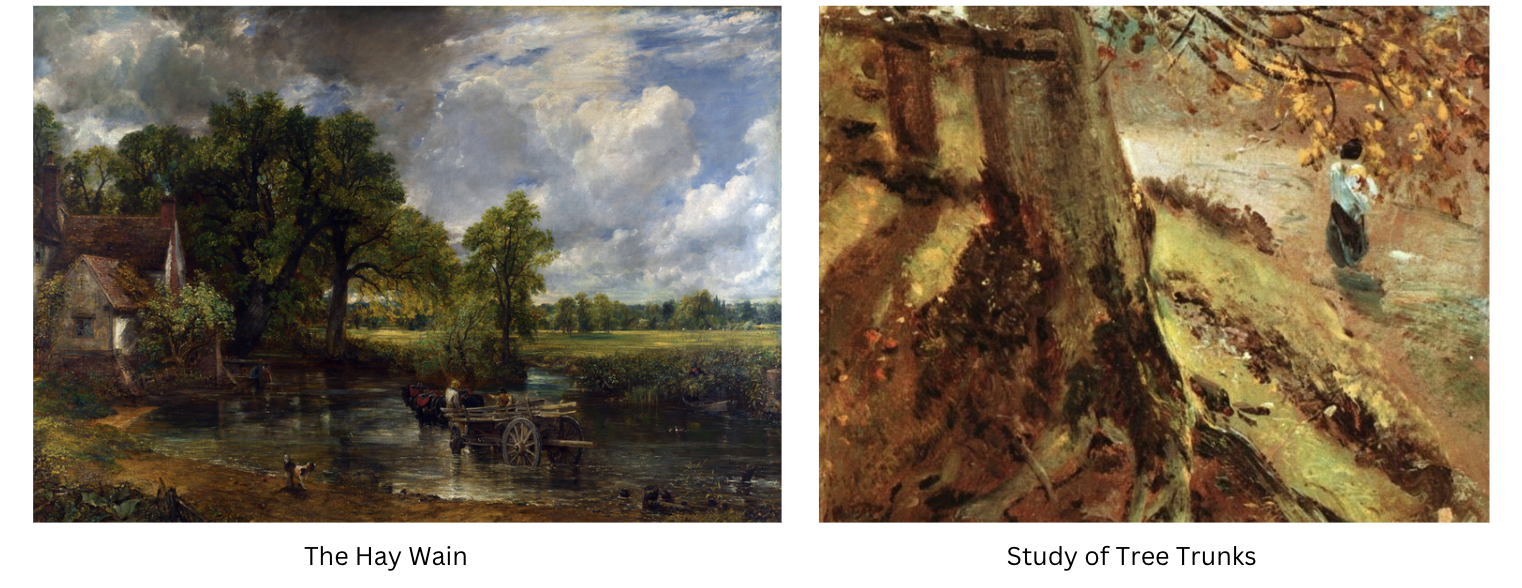
Precursors to Realism (Britain)
John Constable – The Hay Wain (1821)
Rural working landscape painted from observation
Everyday life, no heroism
Breaks with idealized classical landscapes
Nature painted as it is, not as myth
John Constable – Study of Tree Trunks (c.1821)
Close, detailed study of nature
Painting like scientific study
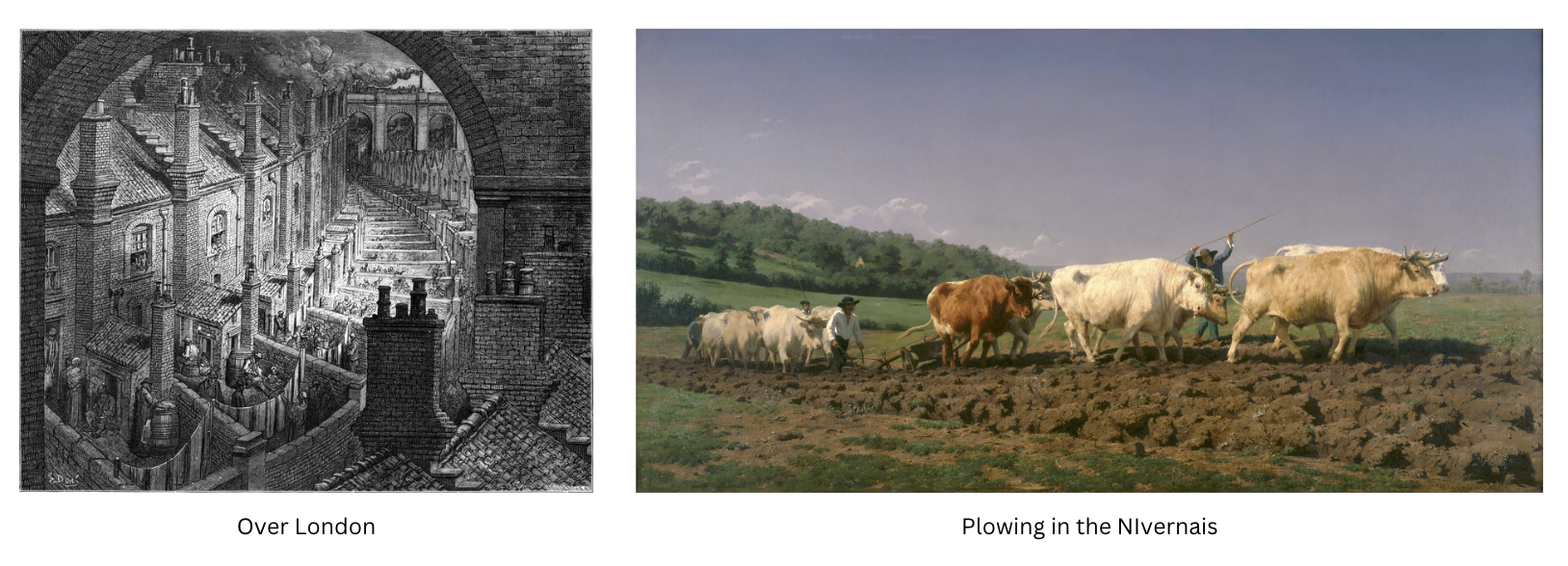
Realism in France (Social Realism)
Gustave Doré – Over London – by Rail (1872)
Dark industrial city
Realism as social critique
Rosa Bonheur – Plowing in the Nivernais (1849)
Agricultural labor and animals
No Romantic nostalgia
Scientifically Accurate
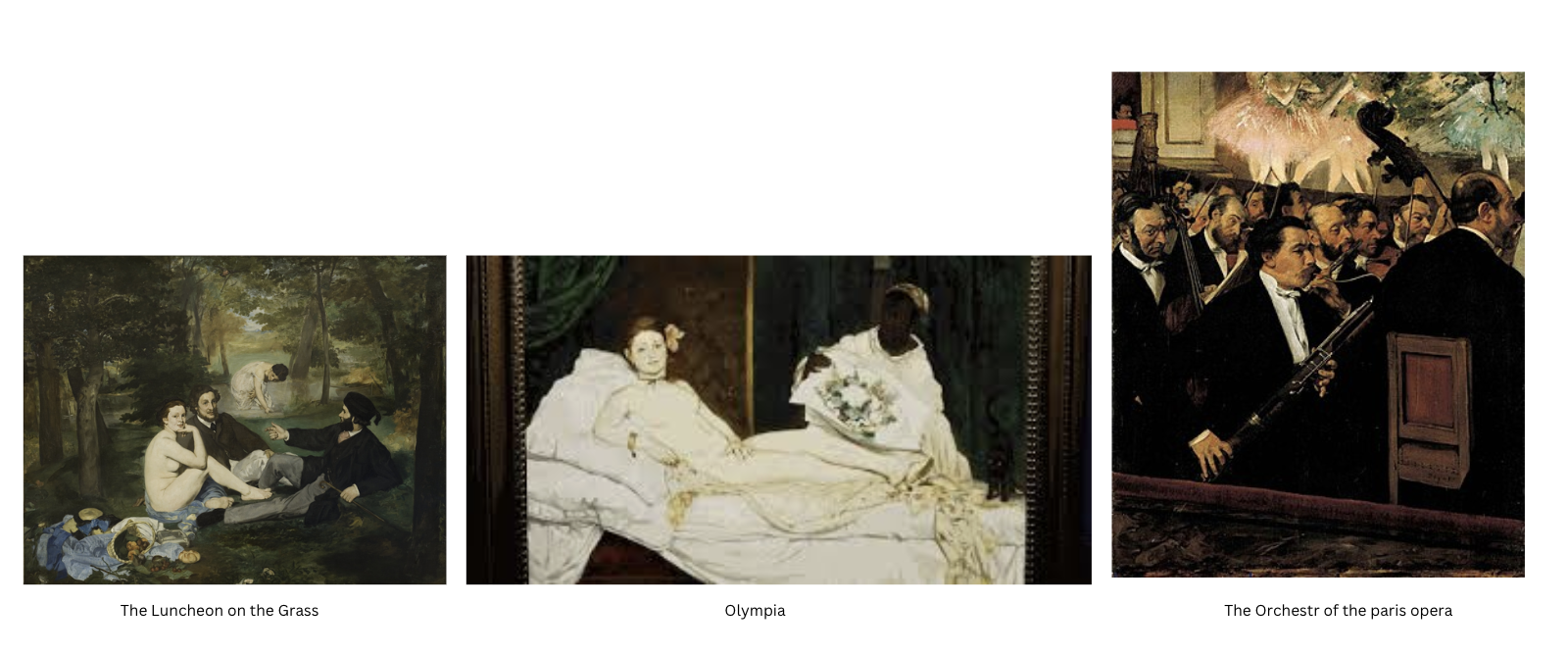
Realism & Modern Life
Édouard Manet – The Luncheon on the Grass (1863)
Contemporary figures, shocking nudity
Breaks academic rules
Beginning of modern art
Édouard Manet – Olympia (1863)
Modern nude, confrontational gaze
Rejects ideal beauty
Shows modern social reality (prostitution)
Edgar Degas – The Orchestra of the Paris Opéra (1868–69)
Musicians instead of performance
Photography & Japanese prints influence
Realism in North America
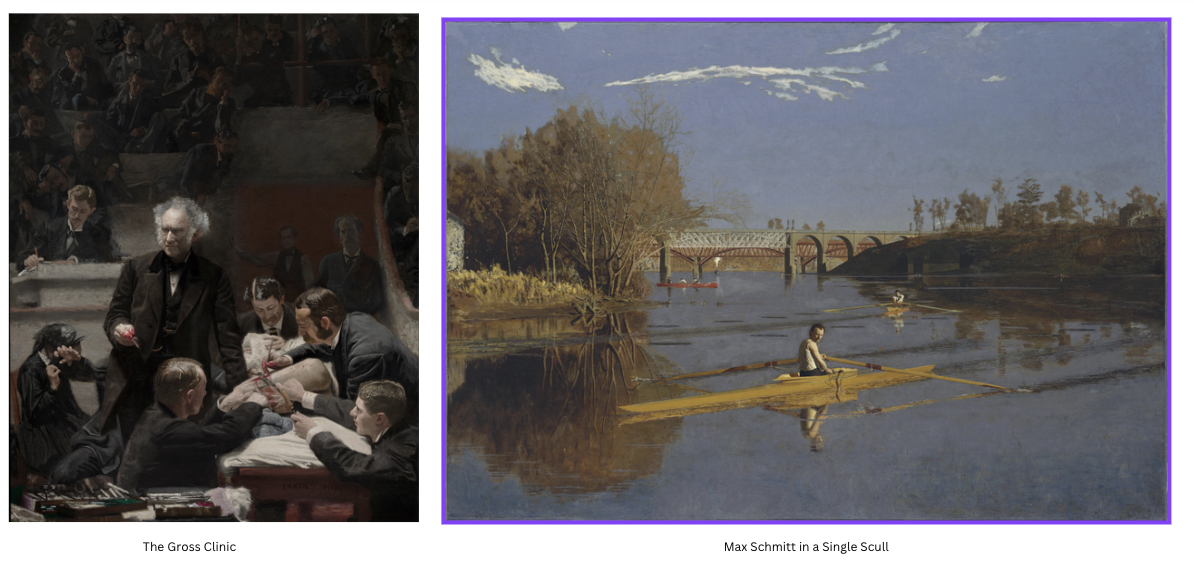
Thomas Eakins – The Gross Clinic (1875)
Science + realism
Art documents professional modern life
Max Schmitt in a Single Scull (1871)
sport, modern leisure.
Realism in Sculpture
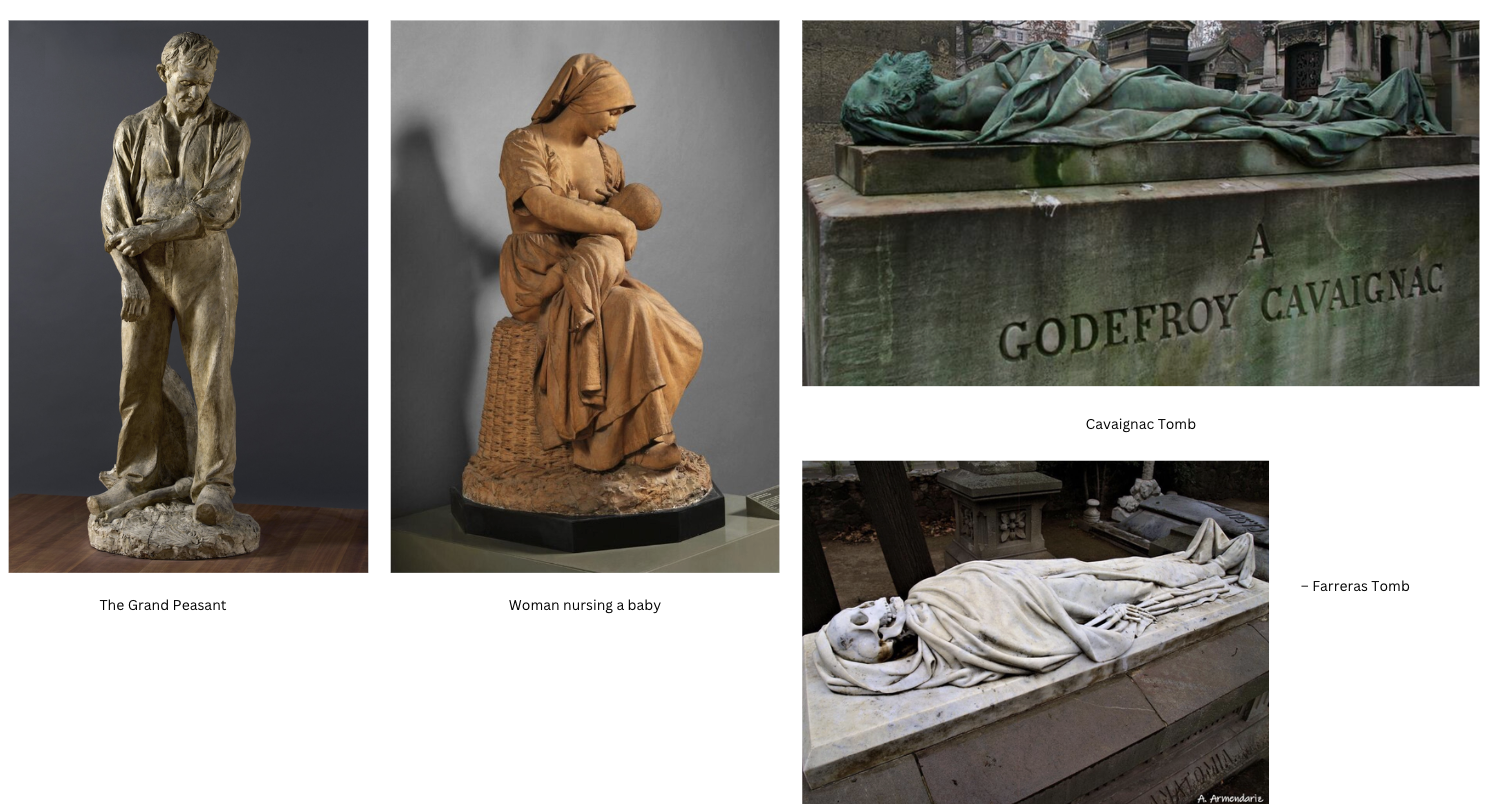
Jules Dalou - The Grand Peasant
Monumental sculpture of a rural worker
Physical realism (rough body, strong posture)
Social dignity without idealization
Political sympathy for laborers
Jules Dalou - Woman Nursing a Baby
Intimate scene of motherhood from everyday life
Ordinary, domestic subject
Natural pose and emotion
François Rude & Ernest Christophe Cavaignac Tomb
Realistic representation of grief
Emotional restraint, not idealization
Sculpture as public memory
Rossend Nobas – Farreras Tomb
Spanish funerary sculpture influenced by French Realism
Naturalistic figures
Emotional sincerity
 Note
Note  Flashcards (40)