Restorative Justice
 Studied by 0 people
 Call with Kai
 Learn
Learn Practice Test
 Spaced Repetition
 Match
Match Flashcards
 Knowt Play
1/25

There's no tags or description
Looks like no tags are added yet.
Name | Mastery | Learn | Test | Matching | Spaced | Call with Kai |
|---|
No study sessions yet.
26 Terms
restorative justice
focuses primarly at healing people and relationships by promoting:
meaningful accountability
collaborative dialogue
empowerment of offenders, victims, and communities
howard zehr’s contribution
argues for a paradigm shift in viewing the legal system, focusing on rethinking punishment and retribution
suggests that new lens is required to address the dysfunction in the current criminal justice system, advocating for restorative approach in personal lives and community interactions
characteristics of restorative jsutice
inclusive and problem solving focus
involves accountability, dialogue, and reparation
challenges existing justice structures
advocates for different approach to conflict
envisions a transformed view of conflict, harm, and punishment
goals of legal system
primarily focused on punishment and deterrance but also aims for offender treatment and rehabilitation
core principles of restorative justice
puts victims’ needs at the forefront of justice process
promotes community engagement
shifts focus from rules to emotional and relational dimensions of crime
difference from traditional approaches
focuses on interpersonal harm rather than punishment alone
rehabilitation
aims at reducing the risk of future harm from offenders by addresing behavioural causes (group therapy, anger management, etc.)
retribution
focuses on imposing discomfort as a detterent and teaching offenders a lesson without considering the relationships harmed by crime (incarceration, probation, fines)
community based initiatives
restorative processes can occur outside the criminal system, allowing individuals to seek justice without involving police
key stakeholders
victims, offenders, and community
victims involvement
restorative justice centers on victim needs and aims to provide:
enhanced participation
recognition of harm and consequences
supportive process enabling victims to control their justice experience
offender’s responsibilities
must acknowledge their actions and strive to repair both material and symbolic harm
community engagement
community responses must reconcile obligations and include various supportive actions
victim-offender dialogue
facilitated discussions focus on harm and reparative steps
conferencing
involves broader participation to support reparative discussions and agreement
circles
aimed at reintegration and community involvement in resolving conflicts
benefits for victims
direct accountability
engagement in the process
sense of community support
benefits for offenders
opportunities for accountability and community reintegration
benefits for the community
strengthened relationships
reduced fear of crime
restorative justice paradigm involves
inclusiveness
problem solving focus
accountability
dialogue
reparartion
pursuit of healing and righting relationships
comparisons of justice
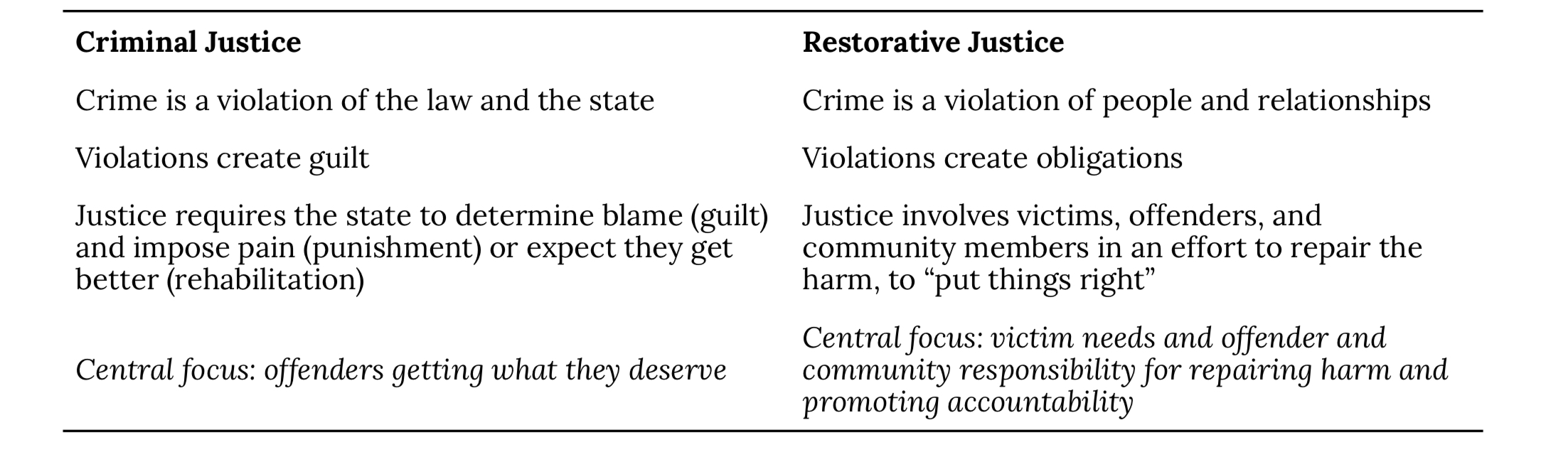
criminal justice asks …
what law was broken
who did it
what do they deserve
restorative, transformative justice asks…
who has been harmed
what are their needs
who/and/or what structures are obligated to address the harm caused
what needs to happen to address harm and promote healing?
restorative justice can interdependently of the CJS through:
self-referral option for victims
within Indigenous communities through their nation’s justice program
for interpersonal harm in the community, schools, and workplaces
to address harm in the aftermath of genocide, governmental issues, and/or discrimination
types and degrees if restorative justice practice
on textbook
criteria to move forward with restorative justice
offender must accept responsibility and open to making reparation
victim must participate voluntarily, and choose how the process will unfold
community members might be included
 Note
Note  Flashcards (20)