Classification Schemes
 Call Kai
 Learn
Learn Practice Test
 Spaced Repetition
 Match
Match Flashcards
 Knowt Play
1/18

There's no tags or description
Looks like no tags are added yet.
Name | Mastery | Learn | Test | Matching | Spaced | Call with Kai |
|---|
No analytics yet
Send a link to your students to track their progress
19 Terms
The three joint classes based on function are:
synarthrosis, amphiarthrosis, and diathrosis
Synarthrosis
immovable joints
The types of synarthroses are:
sutures, gomphosis, synchondrosis, and synostosis
Amphiarthrosis
slightly movable joints; connected by collagen fibers or cartilage
Diarthrosis
freely movable joints; all are synovial joints
The four joint classes based on composition are:
bony, fibrous, cartilaginous, and synovial
sutures
interlocked bones; skull
gomphosis
ligaments that hold teeth in socket
sychondrosis
cartilaginous bridge; epiphyseal cartilages, first ribs
synostosis
fused bones; epiphyseal lines
Types of amphiarthroses include:
syndesmosis and symphysis
syndesmosis
connected by ligament; distal tibiofibular joint
symphysis
connected by a wedge of fibrocartilage; pubic bones
Joint cavity
found in diarthroses, has walls of synovial membrane, and surrounded by fibrous capsule
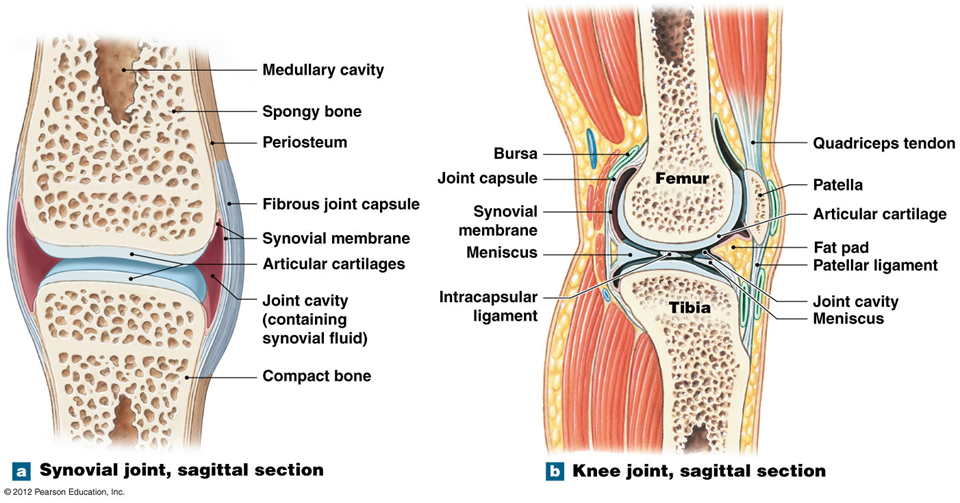
articular cartilages
smooth covering over bone surface; slides over film of synovial fluid; releases watery matrix when compressed
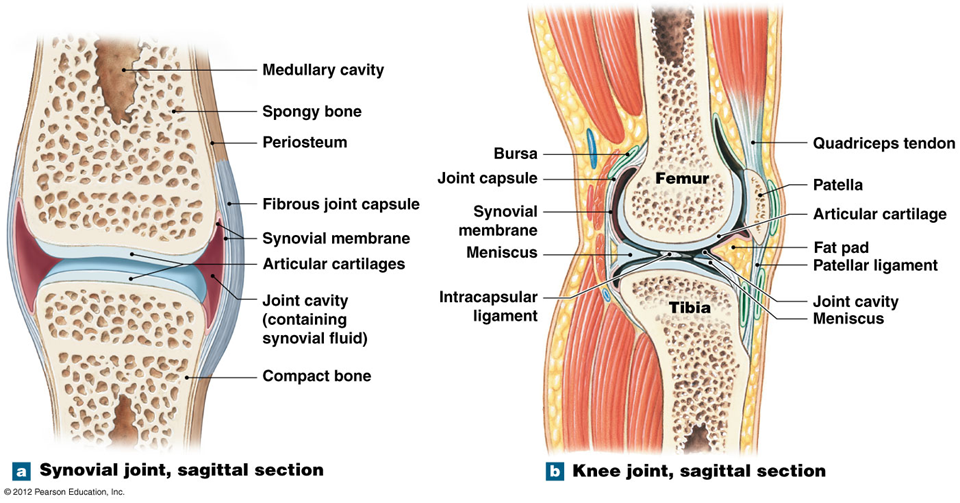
meniscus
fibrocartilage pad that subdivides the synovial joint cavity
Accessory structures of diarthroses include:
accessory ligaments and bursae
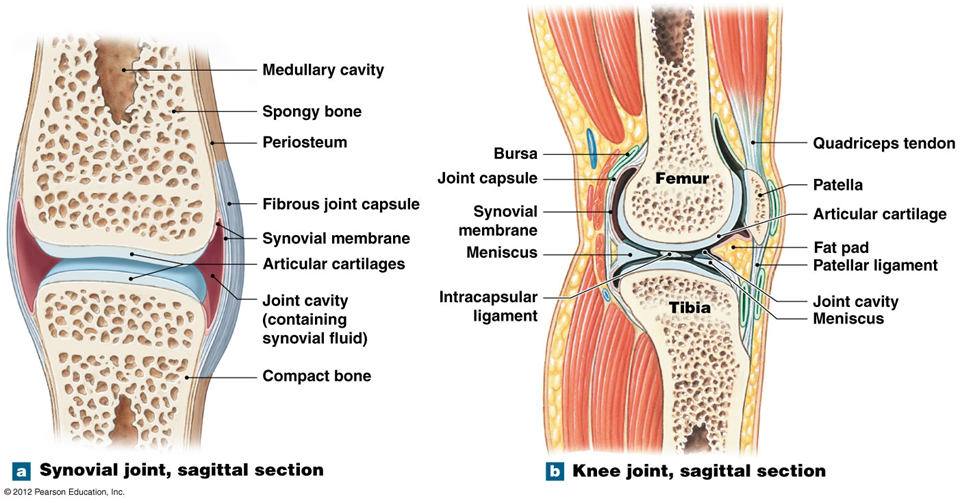
Accessory ligaments
supports and strengthens joint; intrinsic or extrinsic to capsule
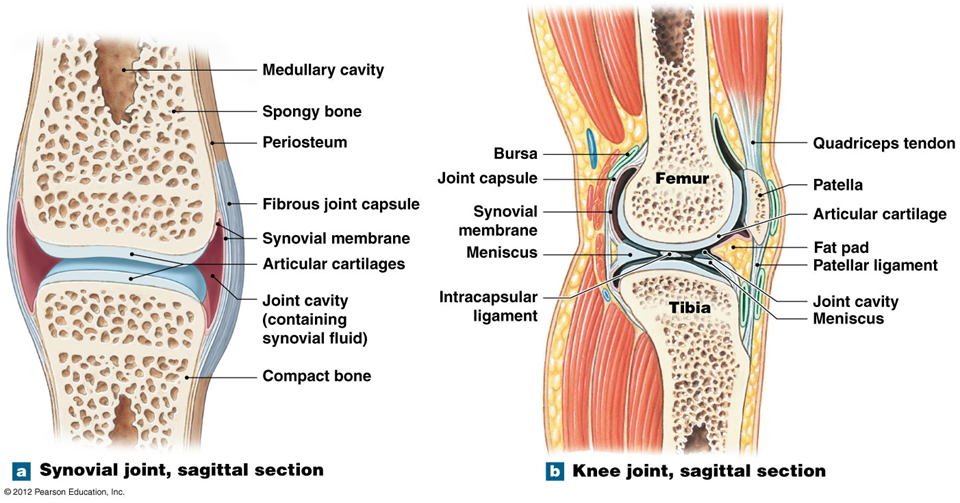
bursa
pockets filled with synovial fluid; prevents friction where tendons or ligaments rub against other tissues

