Cell Metabolism: Glycolysis and the TCA Cycle
 Call Kai
 Learn
Learn Practice Test
 Spaced Repetition
 Match
Match Flashcards
 Knowt Play
1/29

There's no tags or description
Looks like no tags are added yet.
Name | Mastery | Learn | Test | Matching | Spaced | Call with Kai |
|---|
No analytics yet
Send a link to your students to track their progress
30 Terms
Why is Metabolism Important?
Energy is required for:
Motion (muscle contraction)
Transport (of ions/molecules across membranes)
Biosynthesis of essential metabolites
Thermoregulation
Timing of these processes does not necessarily coincide with feeding times so storage forms of food are required
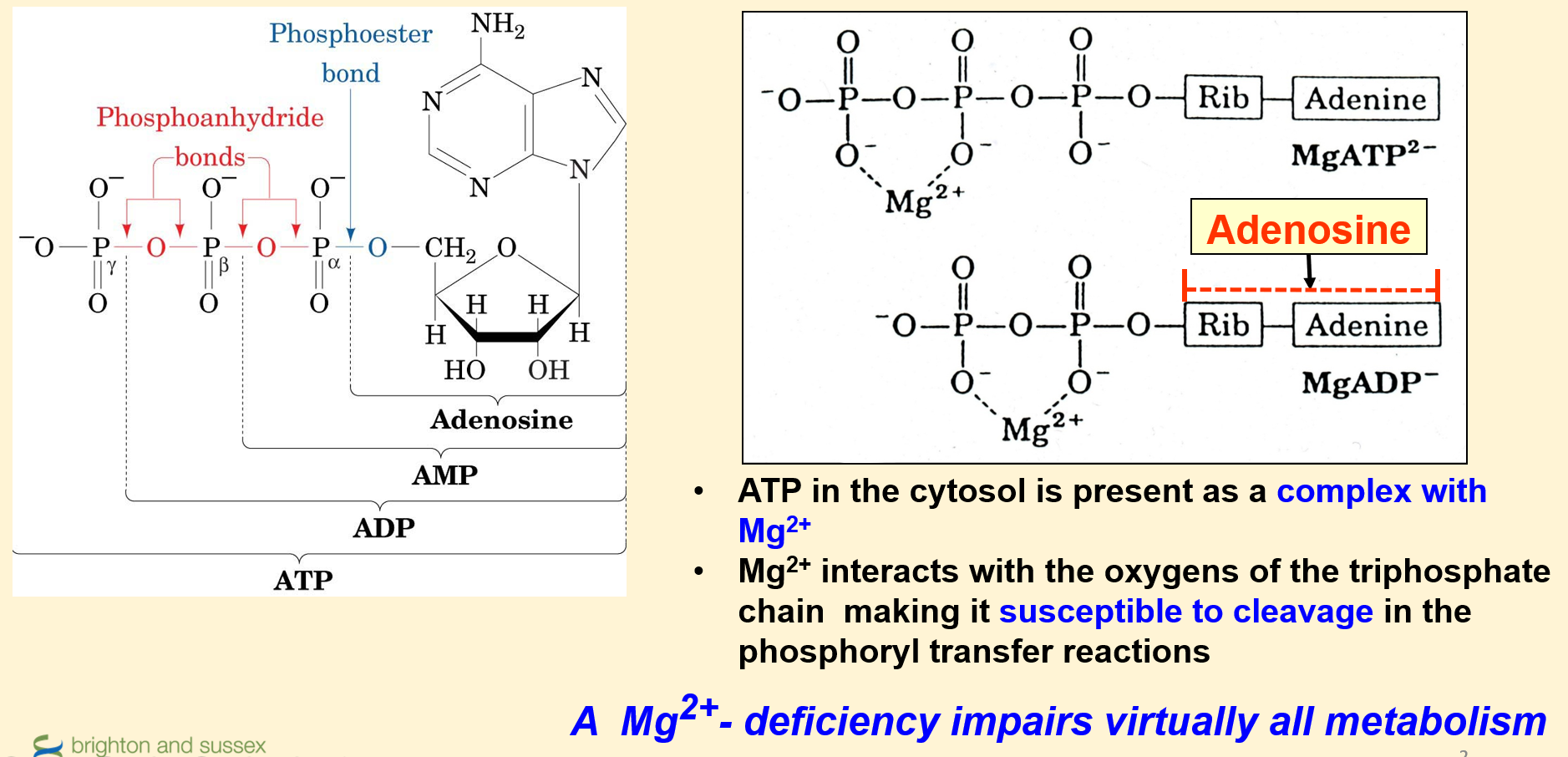
What is ATP?
•ATP (adenosine triphosphate) provides most of the energy required
•ATP is the energy currency of the cell
What is the Structure of ATP?
What is Metabolism?
Metabolism: integrated set of enzymatic reactions comprising both anabolic and catabolic reactions
What is Anabolism?
Anabolism: synthesis of complex molecules from simpler ones (necessary energy usually derived from ATP)
What is Catabolism?
Catabolism: breakdown of energy- rich molecules to simpler ones (CO2 H2O and NH3)
(energy released is ‘captured’ as ATP and stored for later use in anabolic reactions
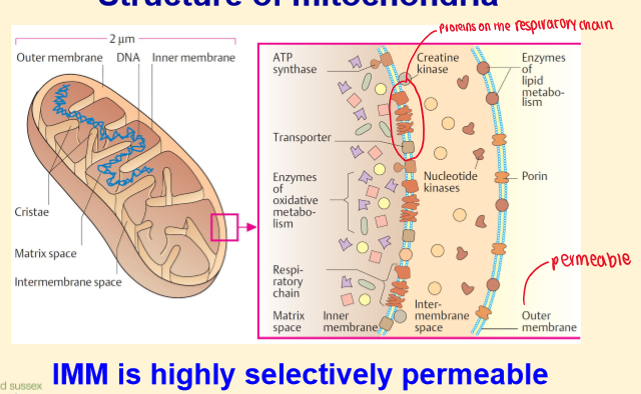
What is the Structure of Mitochondria?
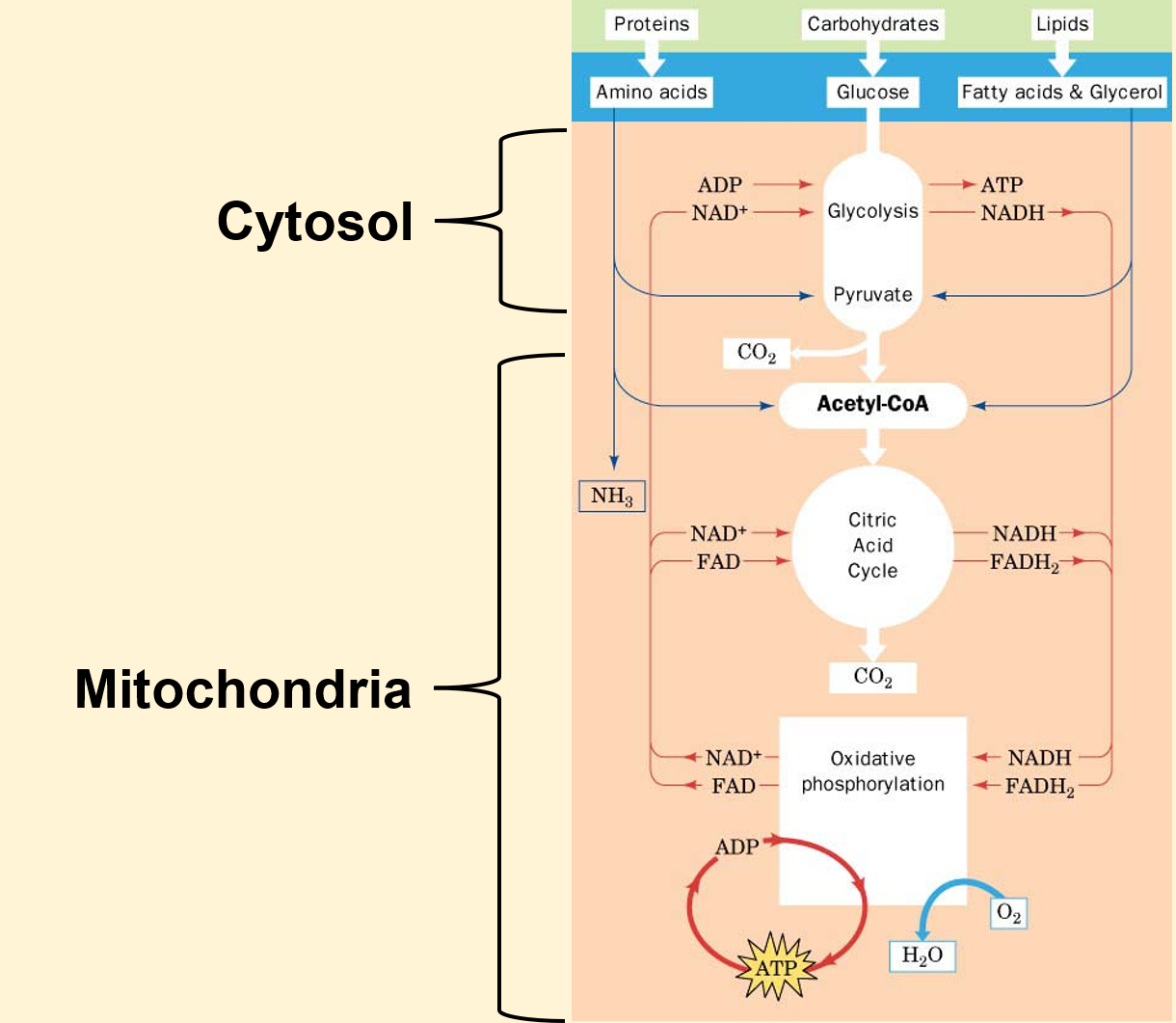
Cellular Energy Metabolism
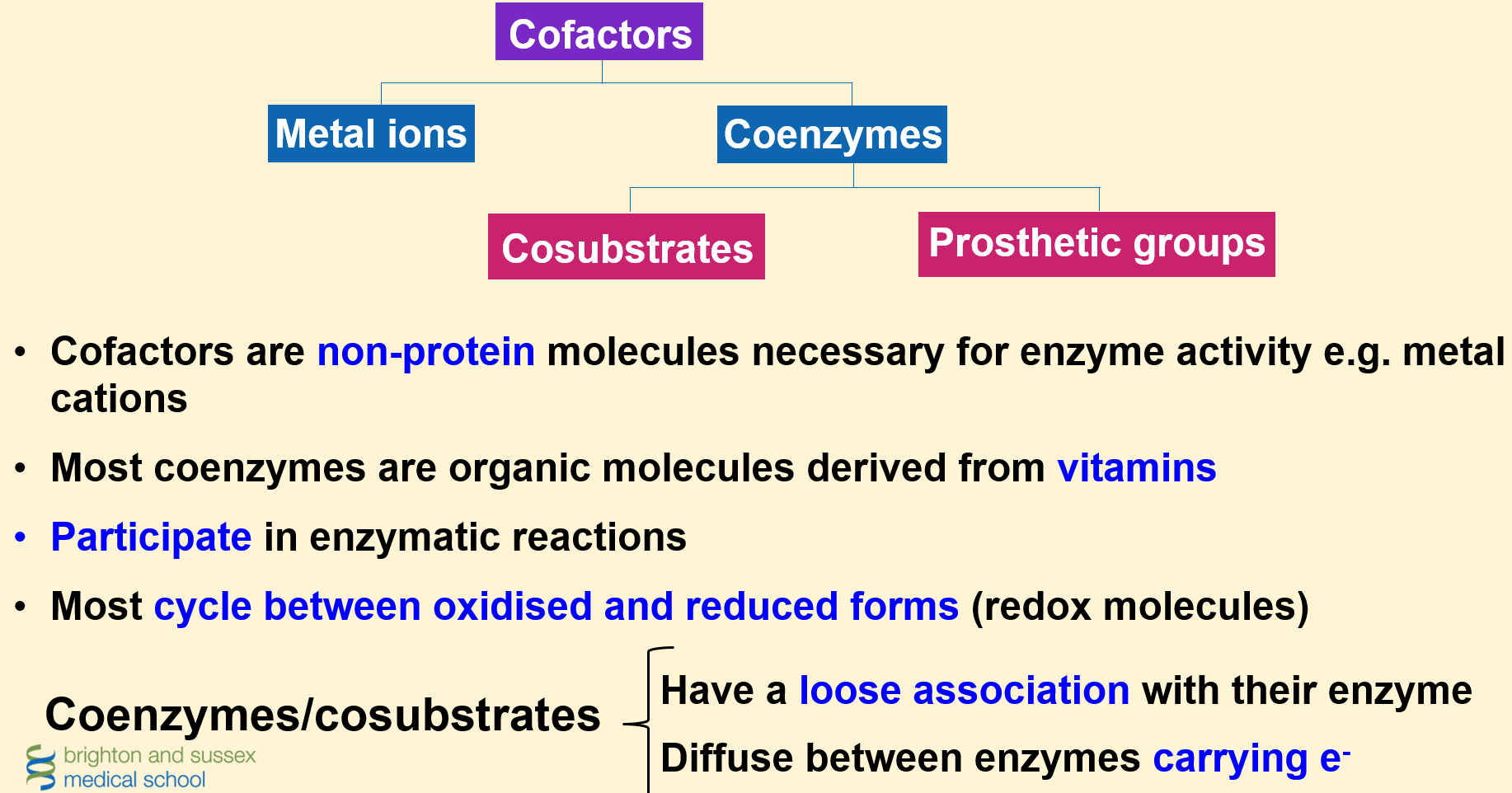
Cofactors, Coenzymes and Prosthetic Groups
The Redox Coenzymes/Prosthetic Groups
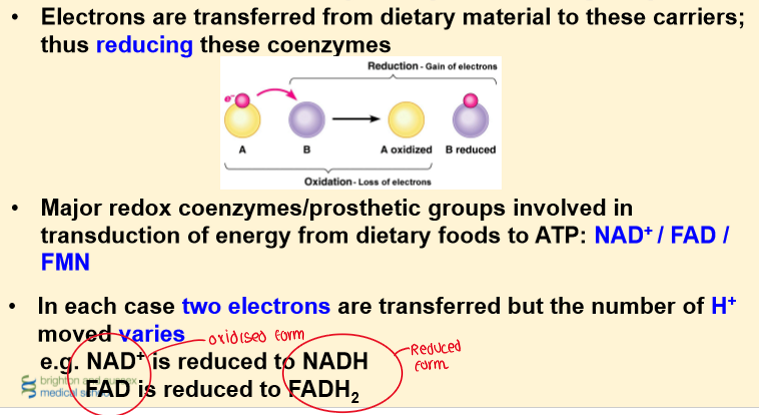
Re-oxidation of Redox Coenzymes
Re-oxidation (recycling) of NADH and FADH2 is via the respiratory chain in the mitochondria
This is coupled to ATP synthesis - process of oxidative phosphorylation
~ 2.5 molecules of ATP synthesised for each NADH re-oxidised
~ 1.5 molecules of ATP synthesised for each FADH2 re-oxidised
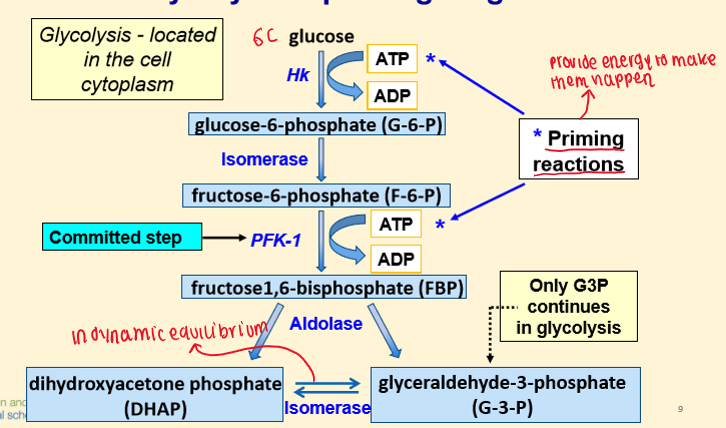
Glycolysis- Priming Stages
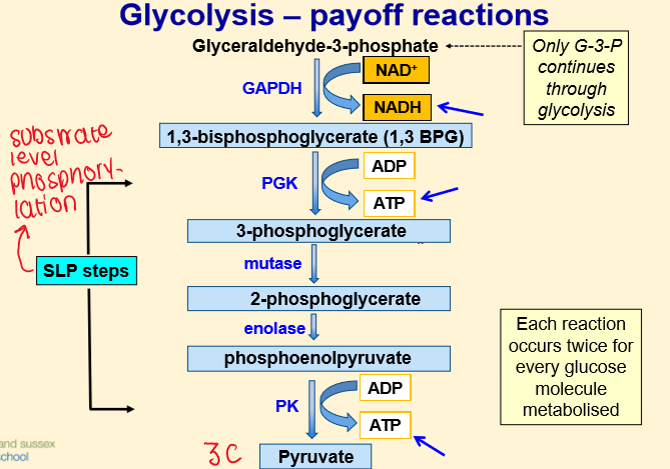
Glycolysis- Payoff Reactions
Summary of Glycolysis
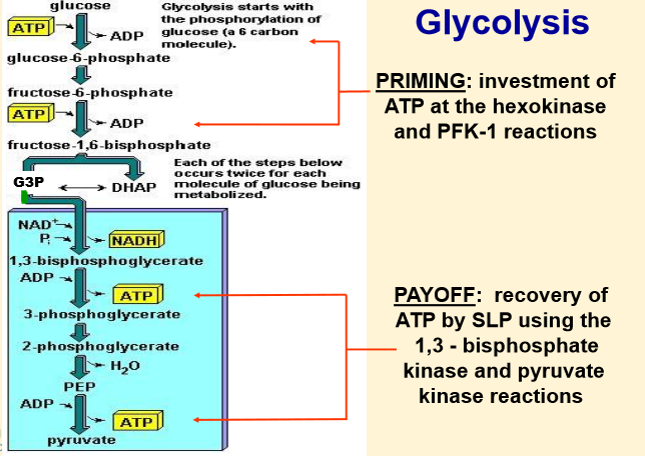
What are the Products of Glycolysis?
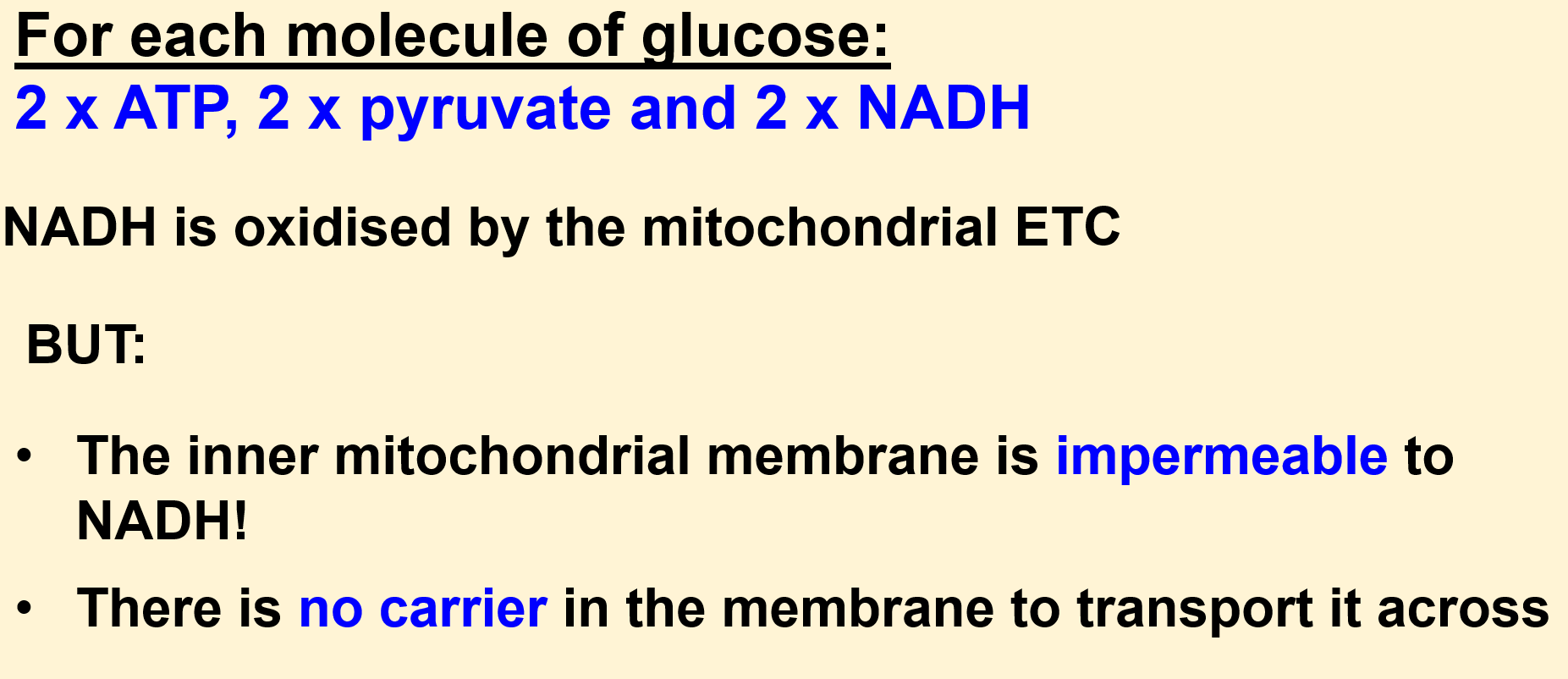
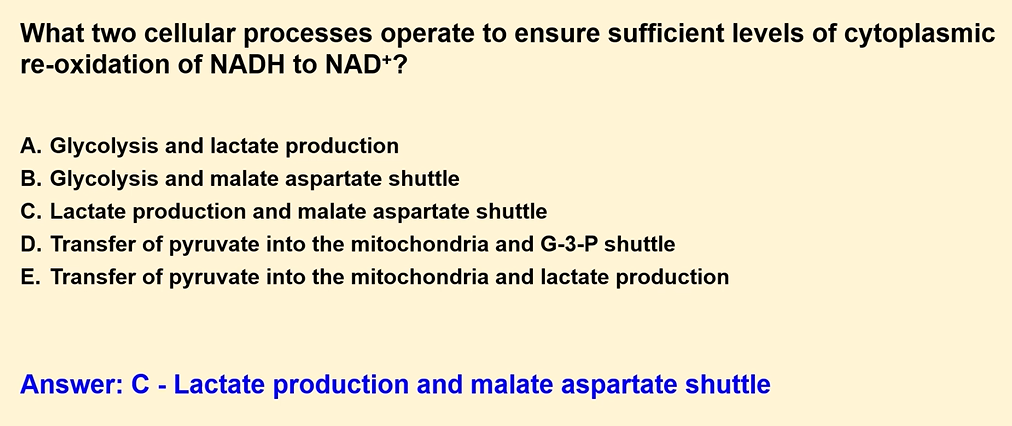
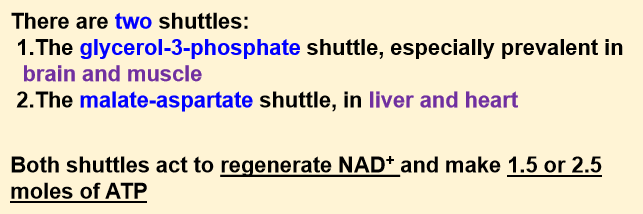
How do Electrons from NADH enter Mitochondria?
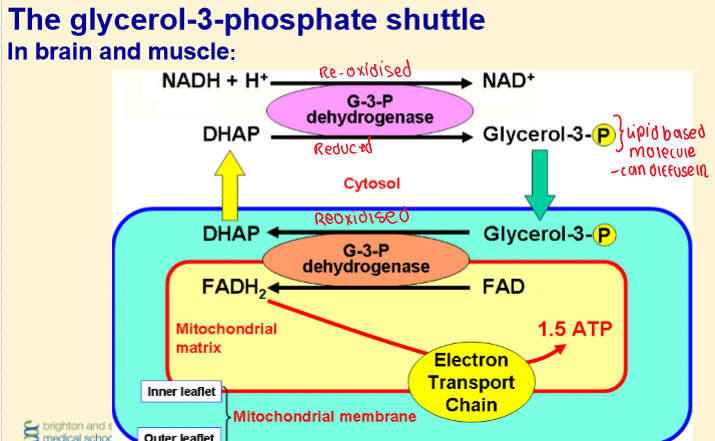
What is the Glycerol-3-Phosphate Shuttle?
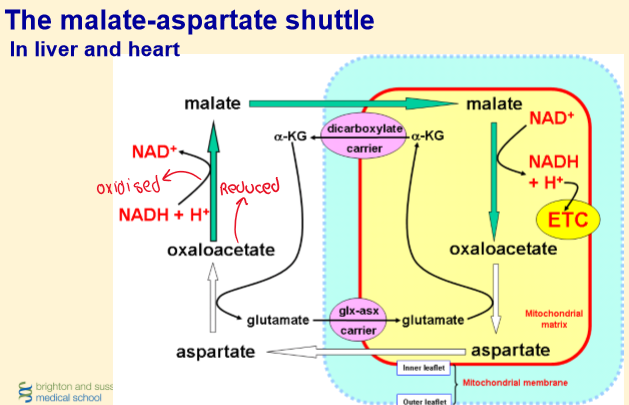
What is the Malate-Aspartate Shuttle
What is the Role of Pyruvate in Metabolism?
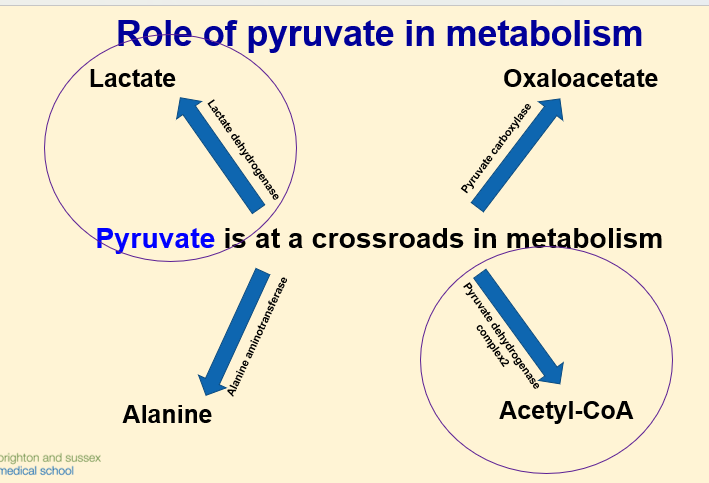
What are the Possible Fates of Pyruvate?
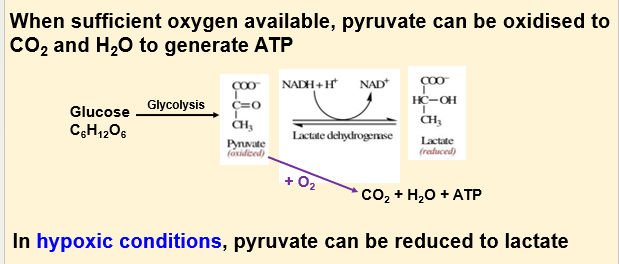
What happens to Pyruvate under Aerobic Conditions?
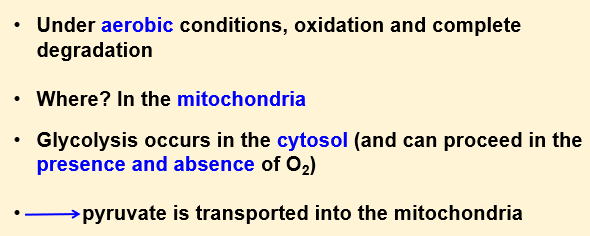
How is Pyruvate Transported into the Mitochondria?
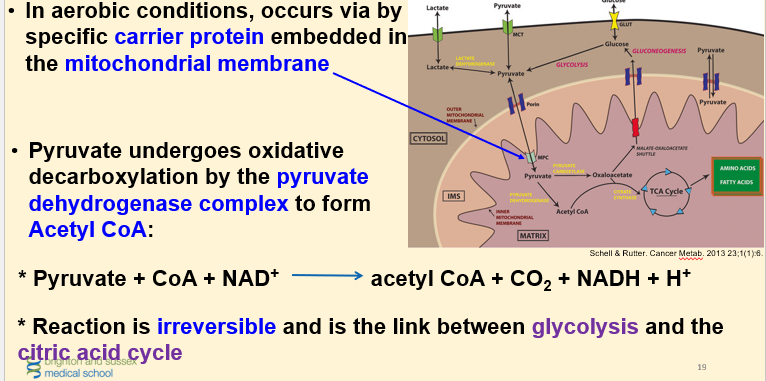
What is the Tricarboxylic Acid Cycle (TCA)?
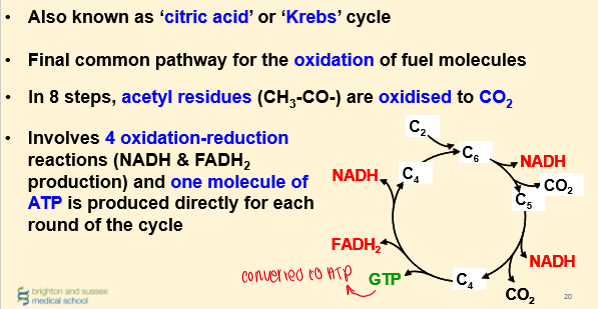
8 Intermediates of the TCA Cycle
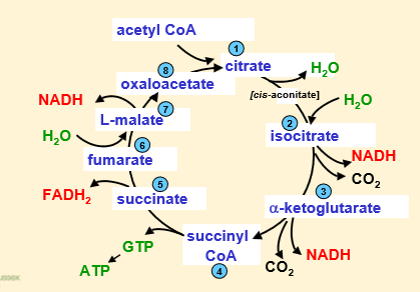
9 Enzymatic Steps in the TCA Cycle
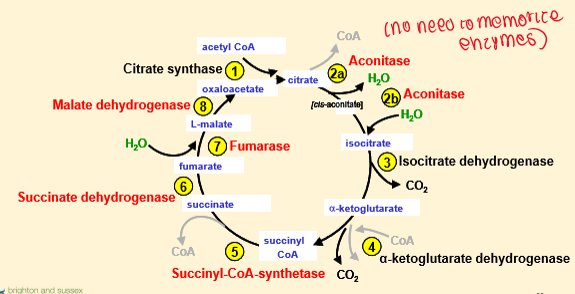
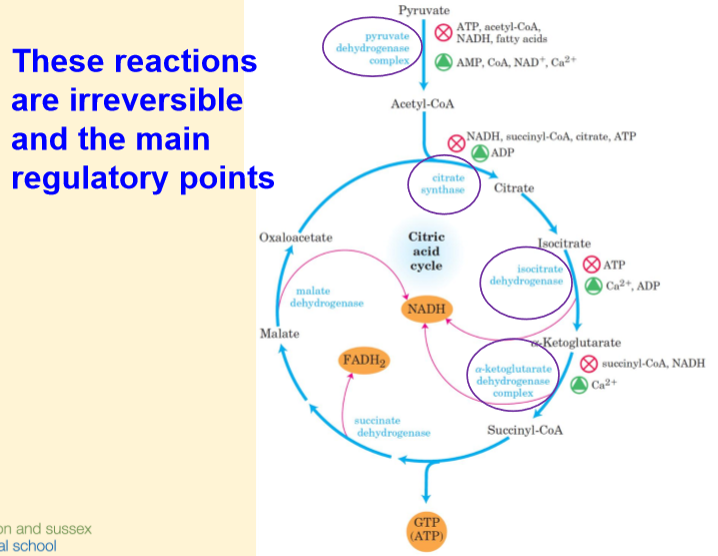
What are the Regulatory Points of the TCA Cycle?
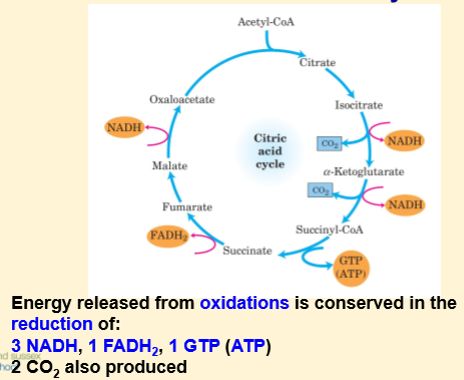
What are the Products of the TCA Cycle?
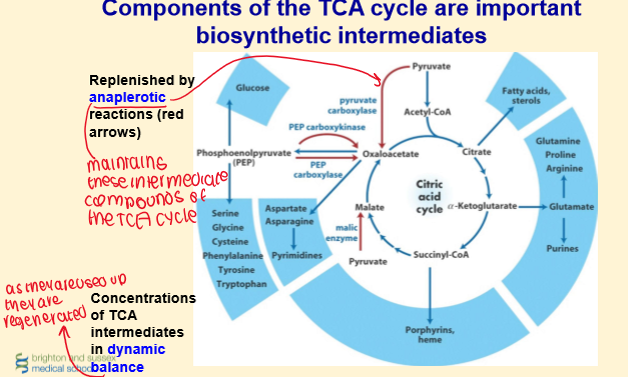
Components of the TCA cycle are important biosynthetic intermediates
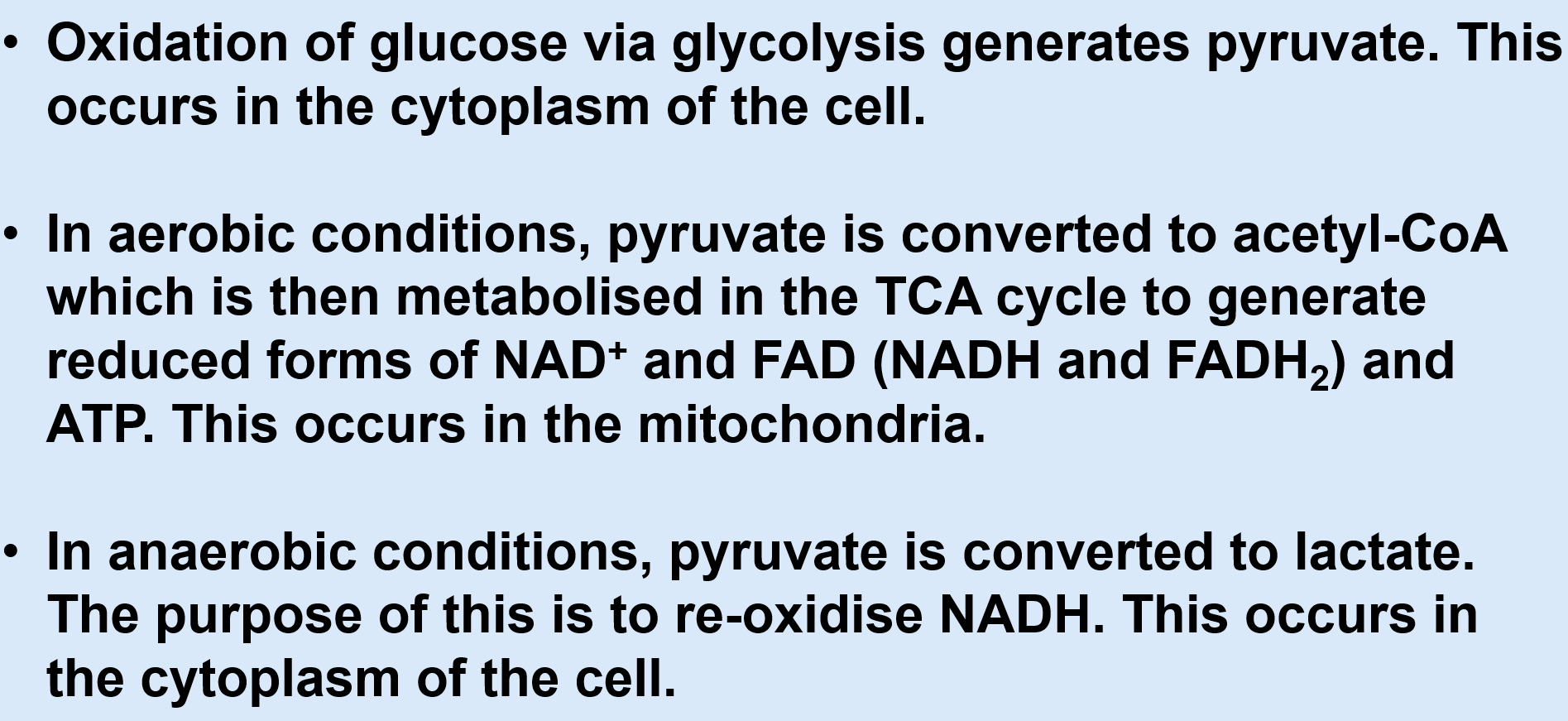
Summary
Question