Food Service Exam 2
 Studied by 0 people
 Call with Kai
 Learn
Learn Practice Test
 Spaced Repetition
 Match
Match Flashcards
 Knowt Play
1/277

There's no tags or description
Looks like no tags are added yet.
Name | Mastery | Learn | Test | Matching | Spaced | Call with Kai |
|---|
No study sessions yet.
278 Terms
types of delivery systems
conventional
comissary
ready prepared
assemble serve
factors to consider for layout and design
layout based on menu
what equipment is needed/where it will be place
good flow of materials and labor
flower of food service
receiving → storage → preparation → cooking → serving → clean-up
dominant food service in the US
conventional
traditionally used in most operations
conventional foodservice
foods are purchased in various stages of preparation for an individual operation, and production, distribution, and service are completed on the same premises
cook serve
foods may be distributed for service directly to an adjacent or nearby serving area
centralized or decentralized
as labor costs increase, managers often explore procuring more extensively processed foods
conventional operation flow in a hospital operation
food goes is purchased, prepared in production, then help hot until patient trays are assembled
assembled trays are transported to the patient areas and served
hot holding, meal assembly, and transportation increase time between production and service
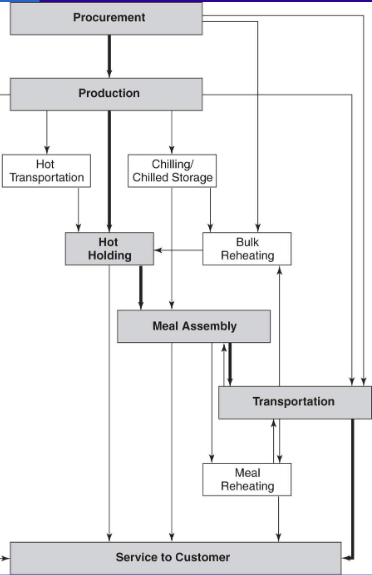
ready prepared
menu items are produced and help chilled or frozen until heated for service later
food items are stored and recorded in storage and withdrawn when needed for production
after production items are stored in refrigerators or freezers, and entered in the distribution inventory
time to use cook-chill foods
< 7 days
time to use cook-freeze foods
2 weeks to 3 months
when to reheat cook-chill and plate chilled food
just prior to service
HACCP
Hard Analysis Critical Control Points
program and follow specific production, storage, and documentation practices
commissary food service
centralized procurement and production facilities
distribution of prepared items to several remote areas for final preparation and service
central commissaries, commissariats, or food factories
satellite service centers
equipment preprocessing and production often is different from the used in conventional foodservice
large-scale production quantities require major modification of recipes and food production techniques
specialized distribution equipment may be needed, depending untype and location of service centers
assembly/serve
assembly/serve foodservice occurred primary. because of the market availability of foods that are ready to serve or require minimum cooking
convenience-foods foodservice or minimal cooking concept
another factor has been chronic shortage of skilled personnel in food production and increasing labor cost.
limited proceeding needs to occur
flow
movement of materials and people in an operation
goal is to have a straight-line flow from receiving through warewashing to minimize backtracking and cross over movement of food and people
product flow
food from receiving through trash removal
traffic flow
movement of employees as they complete their work
points to remember for flow
store at point of first use
keep products close to where they will be used
allow for economy of motion
store based on usage, heavy use within normal reach, heavier products lower
use space economically by providing for specific sizes
minimize handling
storage close to receiving, have carts available
systemize
organize, like products together
good handling practice
use lifts and trucks for lifting and moving, aisles clean, good traffic flow
communicate
conceptual planning committee
brad estimates for cost, space, equipment
actual physical plan
specific list of equipment, specification and actual physical plan
charrette planning process
collaborative planning session for a design project
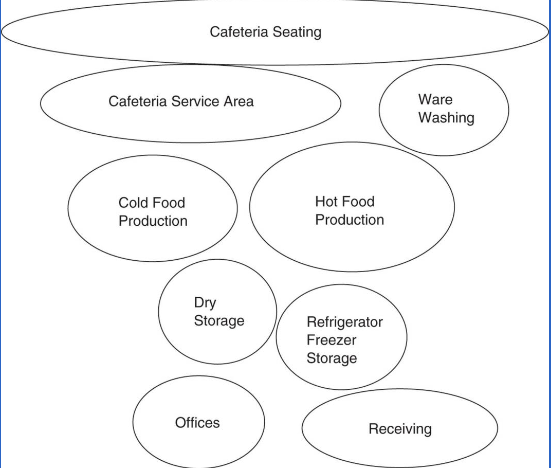
bubble diagram
defining spaces so can see the flow
what to consider when planning
Quantity of food and supplies
Amount and kind of production (to determine equipment)
Type of delivery system
How food served to the customers
to renovate or build
Operating cost of the facility
Any food safety issues of concern
# of employees
Any future plans
Going about getting started
network
visit facilities
seminars
tradeshows
equipment manufacturers
Steps for layout/design process
program
schematic design
blueprints
construction drawings
program
goals for the project
overview
project timeline
schematic design
preliminary plans, space drawings, proposed, electric, mechanical issues, costs
the basics
blueprints
specifics
mechanicals, electrical, plumbing
drawn to scale - usually ¼ inch = 1 foot
accompanied by a specifications book
sustainability in kitchen design/layout
increasingly important in design of future space, including foodservice operations
goal to be a “green building”
efficient use of energy, water, and materials, while reducing impact on human health and environment
LEED certification
sustainable certification process
designed to promote design/construction practices minimizing negative building impacts and improving internal environment
water conservation
sinks
toilets
foot petal sinks
high efficiency dishwashers
motion sensor sinks and lights
high velocity, high efficiency pre-rinse, spray nozzles
waste management
buy in bulk
pulpers
garbage disposals
recycling program
composting programs
receiving area materials
scale
table
sink
may want near manager’s office
dry storage
must be 10”-12” off floor for air flow
use vertical space
opaque windows
one door
secured
50-70 degrees F
3 types of storage
dry
refrigerated
frozen
preparation area
work table correct high
sinks for food prep
shelving
tool drawers
slicers
mixers
choppers
refrigeration
electrical capabilities
conduction
transfer of heat in direct contact with each other
convection
hot air circulating, fan, lower temp shorter time
radiation
energy transferred by waves of heat or light striking the food
induction
cooking vessel made of specific magnetic metal, copper coil in induction surface, electric current flows between, low voltage, faster and energy efficient
types of serving
banquet
restaurant
take-out
tray service
cafeteria
utensil dispense
used in cafeterias

clean up
garbage disposals
pulpers - works like a disposal but dehydrates the product into slurry by shredding and pressing out the water
waste is semi-dry
decreases solid waste by 85%
recycling
lighting
maybe 1/3 of energy cost
direct lighting - lighting aimed at a certain place
indirect lighting - shines over a space rather than at a certain place
incandescent lights
common light bulbs
a filament is encased in a sealed glass bulb
screwed into a socket
electric discharge lights
pass an electric arc through a tube with a special mixture of gasses
need an electronic or magnetic ballast
fluorescent
things to consider with lighting
ceiling height
wall color
floor finish
lumen
amount of light generated when 1 foot candle of light sines from a source
foot-candle
measurement of illumination equal to 1 lumen of light to 1 square foot of space
food code lighting level requirements
storage areas - 10 foot candles
hand/warewashing areas - 20 foot candles
food prep areas - 50 foot candle
layout and design books lighting suggestions
food prep areas - 70 to 100 foot candles
dining areas - 5-100 foot candles
guards over glass
prevent glass from falling
HVAC system
controls quality of air
indoor temp
humidity
air movement
room surface temp
produces comfortable work environment
HVAC equipment
furnaces or boilers - hot air
are conditioners or chillers - cold air
fans - circulate air
duct work - moves air
filters - clean air
supply air
air coming to the system through HVAC system
return air
air returning to the HVAC from the workplace
exhaust air
air that is removed form the workplace and building
makeup air
air being brought in to replace exhaust air
negative air pressure
more air removed than brought into space
slightly negative is good in kitchen
will prevent kitchen smells and odors going into dining room
positive air pressure
more air brought in than removed
Ventilation
circulation of fresh air
measure din cubic feet per minute
ventilation in different spaces
35 cfm per person in kitchen
15-20 cfm per person in DR
15-25 cfm per person in offices
hoods
ventilation system
heat, orders, grease, steam, and moisture generated
placed over cooking area to draw air out of the kitchen
20-30 total air changes in an hours
cleaned to avoid grease fires
automatic fire suppression systems
stainless steel
alloy of many metals
18-8 stainless steel - chromium (18%) and nickel (8%)
insert chemically, stain proof, strong and durables
#5 finish (bright satin) common
common gauge of stainless steel
20 gauge
1.5# per sq ft and 1/32 inch thing
higher the gauge…
thinner the stainless steel is
plastics
used for storage, less expensive
flooring considerations
ease of cleaning and maintenance
appearance
concrete floors
used in storerooms, receiving areas
Terrazzo floors
used in dining room, noisy
unglazed red clay tiles/quarry tiles
kitchen and heavily traffic areas
asphalt floors
light traffic, dining room
walls
glazed tiles 5"‘8” high
washable
impervious to moisture
ceilings
acoustically treated
higher in color than walls
14-18’ high
aisle space in kitchen
lane with one person - 36-42”
lane with more than one person or where mobile equipment passes 48-52”
main traffic lane 60”
counter height
heavy work - 36”
light work - 37-41”
work centers
smallest area planned in the facility
area where related tasks are performed
cold or hot food prep
volume to be prepared
# of employees
kind and amount of equipment
measuring productivity of workers
payroll cost per day
payroll cost per meal served
payroll cost per pt. day
meals served per labor hour
work design
program of continuing effort to increase the effectiveness of the work system
industrial engineers
material handling
movement of materials and products as they go through the system
good flow leads to increased efficiency
Frederick Taylor
father of scientific management
belief if design best work situation will decrease conflict between res
Gilbreths
principles of motion economy
aimed at reducing the effort and energy required to do a job
items easy to pick up, right height, better design of tools and equipment
work measurement
method of establishing equitable relationship between amount of work performed and human input needed to accomplish the task
what do you expect of production
activity analysis
work sampling
quality circles
Began in Japan in ‘60’s
small group of employees (3-25) 10 works best
have meetings during work hours
look at project as a whole
input from all
increased productivity, ee morale, product quality,
better work distributiondecreased absenteeism
determining space
Heaviest customer load
speed of service - average 5 people/minute in a straight-line system; less time with scatter system more efficient
menu variety - more items on line slower service
seat turnover - how many times in an hour do seats turn; hospital 30 min. turnover rate 2
length of serving period
the longer the serving period the fewer seats required
space allocation/seat
check w/ state & local building codes
width of service area
~14 ft. Space from back wall to customer line
length in hospital usually 30 ft.
plan in advance
do feasibility study to see if should go ahead or abandon it
architect, foodservice consultant, financial people in addition to manager or owner
prospectus
costs
income
expenses
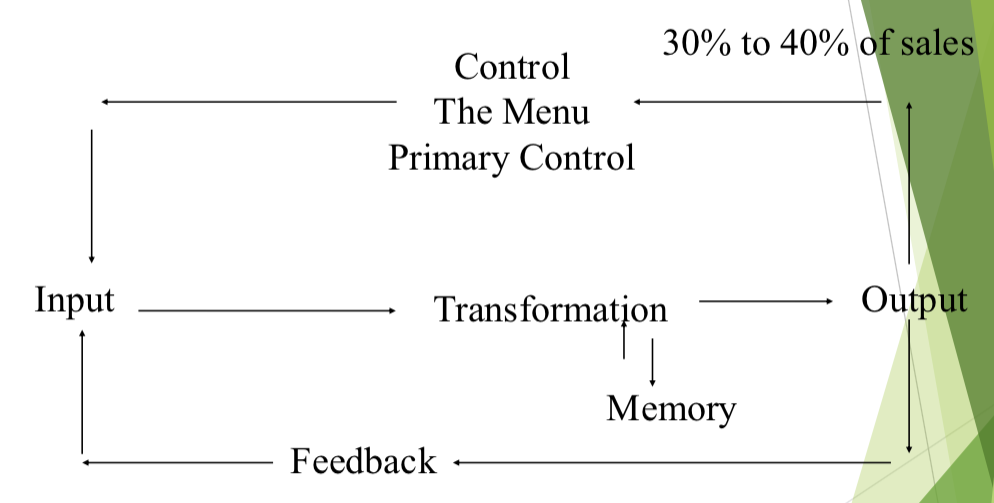
menu planning flow chart
menu psychology
design and layout of a menu is such a way to influence the sale offends served on the menu
eye gaze on 3 page menu
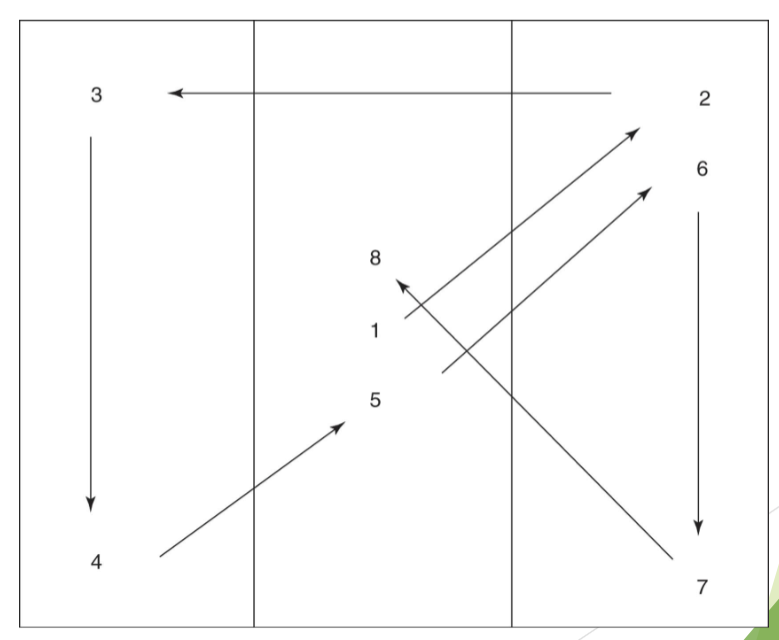
primacy and recency
items you want customers to buy 1st and last in category
front size and color
increase the size of font to attract customer, decrease to deflect, easy to read
color and brightness
increase color, brightness, and shading to draw attention
spacing and grouping
borders to draw attention
menu types
no choice
limited choice
choice restaurant
commercial (profit centered)
non-commercial (hospitals, schools, military)
no choice menu
very uncommon
serves those whoa re unable to or do not have a desire to choose
allows for greater forecasting and control
long-term care facilities
limited choice menus
may be able to choose side dishes, dessert, beverage
static menus
same menu items offered every day
usually restaurants but now institution food services - restaurant style menu
room service menus
cycle menus
series of menus offering different items daily
weekly, bi-weekly, or some other basis
could have different seasonal cycles
seen in schools, long-term care, hospitals
simplifies purchasing, standardizes preparation, gives more constant, and even workload distribution
choice menus
single use
planned for use on a particular day and not used in the same form
monotony breakers
usually non-commercial
aren’t these daily specials in commercial
catered events
degree of choice
the less choice the easier it is to forecast production needs
increase choices increases customer satisfaction
two tier menus
upscale menu items made for those willing to pay extra for them
table d’hote
several food items grouped together and sold for one price
 Note
Note  Flashcards (79)