Foundations Forensic Science

0.0(0)
studied byStudied by 2 people
call kaiCall Kai
learnLearn
examPractice Test
spaced repetitionSpaced Repetition
heart puzzleMatch
flashcardsFlashcards
GameKnowt Play
Card Sorting

1/181

flashcard set

Earn XP

Last updated 8:29 PM on 12/13/22
Name
Mastery
Learn
Test
Matching
Spaced
Call with Kai

No analytics yet

Send a link to your students to track their progress

182 Terms

1
New cards
Who developed the system known as anthropometry?
Alphonse Bertillon
2
New cards
What did the 2007 NAS Report discuss?
The NAS report called on the scientific community to increase scientific rigour and greater quality assurance in all fields of forensic science

\
Recommendations:


1. Create a National Institute of Forensic Science (NIFS)
2. Standardize terminology and reporting practices
3. Expand research on the accuracy, reliability and validity of the forensic sciences
4. Remove forensic science services from the administrative control of law enforcement agencies and prosecutor’s offices
5. Support forensic science research on human observer bias and sources of error
3
New cards
If there is blood at a crime scene, that does not belong to the victim, and the blood type is O, what can you say about a suspect with type O blood?
The suspect can not be excluded as contributing blood to the crime scene
4
New cards
The Kaufman report was concerned with what aspects of forensic investigations and forensic science:
tunnel vision, appropriate use of the scientific method, and not describing the limitations of physical matches
5
New cards
What is the problem with the anthropometry system for individual identification? \*
It sometimes yielded the same results (same measurements) of criminals to those already incarcerated
6
New cards
The Scientific Method has evolved over time and is currently viewed as a combination of theories from:
Bacon (observation), Popper (falsification), and Kuhn (paradigm shift)
7
New cards
Who undertook the first definitive study of fingerprints as a method of personal identification?
Francis Galton
8
New cards
The concept of “general acceptance” of scientific evidence relates to what?
Frye Standard
9
New cards
The Innocence Project refers to:
The exoneration of the wrongly convicted through DNA testing and the reform of the criminal justice system to prevent future injustices.
10
New cards
The fictional character of Sherlock Holmes was created by:
Arthur Conan Doyle
11
New cards
The Daubert Standard suggest that admissible scientific data must include which of the following criteria: 
testable predictions/adequate testing, peer-reviewed, known error rates, regular standards controlling the techniques, general acceptance
12
New cards
There are important differences and similarities between science and the law, a __**similarity**__ or __**similarities**__ in how science and the law are seeking the truth include(s):
adversarial process - the falsification of hypotheses and construction of alternative hypotheses
13
New cards
It is difficult for courts to sort good science from bad, whether the bad science is a matter of perjury, incompetence, or inadvertent language. The Daubert Standard was set to address these issues by requiring that expert testimony of physical evidence address the following:
Peer review of techniques , error rates of techniques, general acceptance of technique
14
New cards
The effectiveness of an expert’s testimony is almost always dependent on:
The ability of the expert to talk in clear, concise language, education background of the expert, the scientific validity of the test used
15
New cards
The dramatization of forensic science on television has led to a phenomenon known as what?
CSI effect
16
New cards
As a forensic scientist the word “match” means?  Provide the best answer.
we can't identify the difference between two items
17
New cards
In *Kumho Tire v. Carmichael*, the US Supreme Court ruled that the “gatekeeping” role of a trial judge: \*
applied not only to scientific testimony, but to (Allows all expert testimony).
18
New cards
What is subclass carryover in terms of physical evidence?
During the sequential manufacturing process, items that are created one after the other have attributes that are very closely related ,undermining the uniqueness of the item.
19
New cards
In Canada, the main ruling by the Supreme Court of Canada on the admissibility of scientific evidence is based on?
R.v. Mohan
20
New cards
Forensic science is the application of science to
law
21
New cards
The Colin Pitchfork case involved:
A 15-year-old girl in Narborough, Leicestershire was found raped/murdered in November of 1983. On the scene, they found semen. 3 years later, another girl was found with the same semen at the scene. Richard Buckland (17) confessed to the murder, (he was suspected because he knew intimate details of the case not released to the public), but DNA evidence was used to exonerate him. Afterwards, a mass DNA screening (4,000 people) was held to try to find the killer, but to no avail. However, a friend of Colin Pitchfork turned him into the police saying that he heard him brag about the murders. DNA evidence was used to then convict him. It was the first exoneration through DNA evidence. The First Murder conviction using DNA evidence, and the first mass DNA screening.
22
New cards
The 1st DNA type case in Canada took place in what year?
1988
23
New cards
What is an expert as assessed in a legal context?
An expert is a person possessed of special skill and knowledge acquired through study or experience that entitles them to speak authoritatively concerning their area of expertise.
24
New cards
The principle that states that a cross-transfer of materials occurs when two objects come into contact with each other is known as?
Lockards’s Exchange Principle
25
New cards
In the David Milgaard case, what was the major problem or problems with the focus of the criminal investigation?
inappropriate use of language, tunnel vision, not clearly describing the limitation of physical evidence
26
New cards
The case of Coppolino v. State highlights issues dealing with what?
the acceptability of new scientific tests
27
New cards
The Kaufman Inquiry made several recommendations including:
* reports must contain the conclusions drawn from the forensic testing and the limitations be placed upon those conclusions
* certain language is demonstrably misleading, terms such ‘match’ and ‘consistent with’
* The ‘scientific method’ means that scientists are to work to vigorously challenge or disprove a hypothesis, rather than prove one
* Identification and avoidance of tunnel vision which is the single-minded and overly narrow focus on a particular investigative or prosecutorial theory
28
New cards
Who devised a technique for determining the blood group of a __**dried**__ bloodstain, which he applied to criminal investigations? 
Leone Lattes
29
New cards
The scientific method requires that scientific evidence be validated by what means?
A) formulating pertinent questions

B) formulating hypotheticals

C) performing experiments
30
New cards
Y-STR markers are useful for what types of investigations?
Sexual assault investigations

\
when multiple males are involved in a sexual assault
31
New cards
To determine whether a bloodstain is of human or animal origin, what type of test would the serologist perform?
precipitin test
32
New cards
The amylase enzyme is a good indicator for what types of stains?
Saliva
33
New cards
Species identifications are normally done using what type of DNA? \*
mtDNA
34
New cards
The discriminating power of mtDNA is _____ the discriminating power of STR analysis.
less than
35
New cards
The means to detect the amelogenin gene is included in commercial STR kits used in crime labs because the gene allows determination of what?
Gender
36
New cards
What is PSA (p30)?
Prostate Specific Antigen
37
New cards
CODIS is a national system of what? 
Shared databases of DNA typing information from convicted felons and crime scene evidence.
38
New cards
Luminol can be used at crime scenes to do what?
luminate blood stains, show evidence of movement and detect traces of blood without compromising potential DNA typing
39
New cards
What is CITES?
Convention on international Endangered Species of Wild Fauna - protects species against over-exploitation through international trade
40
New cards
What is a SNP?
single nucleotide polymorphism
41
New cards
A gene pair made up of two similar alleles—for example, AA and BB—is said to be what?
homozygous
42
New cards
Wildlife DNA forensic investigations most often start with what type of analyses?
species identification from mtDNA, such as from cytochrome b, or cytochrome oxidase genes
43
New cards
Acid-phosphatase is a major constituent of what?
semen
44
New cards
Which is an advantage of working with short DNA fragments?
* They are more stable and less likely to break apart.
* Their quantity can be greatly amplified by PCR technology.
* They are less subject to degradation due to adverse environmental conditions.
45
New cards
The technology of DNA typing in forensics had its beginnings in 1985 with the work of whom?
Sir Alec Jeffreys
46
New cards
Y-STR markers are useful when multiple males are involved in a sexual assault. If three men are involved in such an attack of one female, the investigators would expect Y-STR analysis to show a maximum of how many peaks?
3 peaks
47
New cards
What is one of the biggest concerns with presumptive testing for biological fluids?
The primary concern with all presumptive tests is the lack of specificity, as the tests will often react with a range of different substances and so false positives are an issue. Furthermore some of the tests are not particularly sensitive and so small amounts of a body fluid may result in false negatives.
48
New cards
What is BOLD?
Barcode of Life Database
49
New cards
If you have a STR DNA profile from a bloodstain at a crime scene, and the genotype at a locus is comprised of 3 alleles, what can you say about the profile?
at least 2 people contributed to the stain?
50
New cards
A DNA sample is normally said to have a low copy number when it contains fewer than ________ DNA-bearing cells.
18
51
New cards
What does the PCR technique do? 
a technique used to amplify or make multiple copies of a specific gene or segment of a DNA sample
52
New cards
The Canadian National DNA Databank includes offender “hits” to crimes including:Murder, Robbery, Break and Enter, Sexual Assault, and Attempted Murder. As of March 31, 2020, how many “hits” have occurred since the inception of the NDDB in 2000?  Please provide the closest approximate number.
65,000+
53
New cards
In terms of the National DNA Databank, the CSI is also known as:
Crime Scene Index
54
New cards
What is the genotype of an individual with the following dinucleotide STR:

Allele 1: GTGTGTGTGT

Allele 2: GTGTGTGTGTGTGT
5,7
55
New cards
A stain can tentatively be identified as blood by what test?
A. The luminol test. \n B. The benzidine test. \n C. The phenolphthalein test.
56
New cards
Buccal cells obtained from? 
The cheek
57
New cards
How many bones are in the human male and female body, respectively?
207
58
New cards
Which of the following would lead to skeletal remains NOT being forensically relevant?
archaeological in nature, cemetery, teaching skills, relics
59
New cards
Which of the following is NOT a reportable death type to a Coroner?
Deaths caused by communicable diseases.
60
New cards
A biological profile developed by a forensic anthropologist would include:
sex, age at death, racial ancestry, height
61
New cards
What does the term *rigor mortis* refer to?
The hardening of the muscles and stiffening of the body that begins 3 to 4 hours after death.
62
New cards
Who is Bucky?
Skull found in bucket
63
New cards
Which of the following indicators can be used to estimate the time of death?
Rigor mortis, Eye fluid potassium levels (vitreous humor), Livor mortis
64
New cards
Livor mortis can assist in:
judging the time of death for a body, it also assists in determining if the body died where it was found, what position it was in, and whether it was moved
65
New cards
Classifications of trauma fall into 6 main categories that include:
Chemical, Mechanical, Blast, Radiation, Thermal and Electrical
66
New cards
Femurs can be used to determine the height of the victim, but if present, the femoral head can be used to determine sex.  Which of the following is TRUE of female femoral heads?\*
Longer than males and at a greater than 90 degree angle
67
New cards
Time of death is often approximated by analyzing the vitreous humor for the levels of what?
K+ (potassium)
68
New cards
A corpse was discovered in an apartment last November. It was that of a 50-year-old male who died of a heart attack. At the time of discovery, the body temperature was determined to be 89°F/31.7C. Knowing that living body temperature is 98.6F/37C, what is the most probable postmortem interval?
7 hours
69
New cards
A body that displays a cherry-red discoloration might lead a pathologist to suspect what type of poisoning?
Carbon Monoxide
70
New cards
The rate of cooling of a dead body is *not* influenced by which of the following?
Gender of victim
71
New cards
The death of an individual due to chronic alcoholism is ruled what?
Natural
72
New cards
Lividity (livor mortis) can be expected to be fixed after how long?
16 hours
73
New cards
Traditional autopsies have several drawbacks that include:
invasive and destructive, potential destruction of evidence, time consuming, extensive to perform, somewhat subjective
74
New cards
Virtopsy is best described as:
Non-invasive technique that scans the body and captures 2 dimensional and 3 dimensional images with the usage of CT, MRI, MSCT, CT, and CAT scans
75
New cards
Human skulls have subtle features that allow them to be categorized as either male or female.  These features include:
**Male skulls tend to have a larger, lower, more sloping frontal bone than female skulls**.
76
New cards
Putrefaction and autolysis are two types of ________ processes.
decomposition
77
New cards
*Homicide, suicide, accident, natural*, and *undetermined* are all categories of what?
Manners of Death
78
New cards
The Goudge Report was a critical investigation into the challenges of expert forensic testimony associated with:
**unreliable and flawed expert evidence leading to wrongful convictions**
79
New cards
A critical piece of evidence in the Ted Bundy murders, tying him directly to one victim included:
Bite mark evidence
80
New cards
The stage of fusion of various bones within a skeleton can be examined to learn what about the decedent.
Age
81
New cards
What is the cause of the largest percentage of __**accidental**__ deaths?
Transportation accidents
82
New cards
A pathologist would expect rigor mortis to largely disappear after how long?\*
36 hours
83
New cards
Which of the following can influence potassium levels in your eyeball fluid?
Burn victims, drug overdose, chronic illnesses
84
New cards
In the Death Investigation module, the lack of Active Transport was noted as important in the mechanism of PMI estimation for which of the following?
Rigor mortis - Active transport is the mechanism that transports molecules and other substances across membranes and requires an expenditure of cellular energy to move the molecules against a concentration gradient. When an organism dies, the active transport ceases due to the loss of cellular energy that is required for the process. When selective membrane permeability is lost, the analyte concentrations across barriers approach equilibrium values.
85
New cards
Evidence of tampering with the position of a body after death can be obtained by evaluating what?
Livor mortis
86
New cards
The amount of alcohol detected in the blood would be ______  in the alveolar breath.
2100:1
87
New cards
If blood is not available, which of the following ***can't*** the medical examiner use to determine the body's alcohol content to a reasonable degree of accuracy?
urine
88
New cards
In the short film on clandestine burials, two main means to locate graves were discussed including:\*
89
New cards
Normally, PMI is calculated using what type of blowfly species?\*
Necrophagous (Calliphoridaes)
90
New cards
The study of how animals decay and become fossilized is called:
Taphonomy
91
New cards
Antemortem injuries could include:
healed fractures
92
New cards
Carbon monoxide is toxic because it does what?
displaces oxygen in the blood and deprives the heart, brain and other vital organs of oxygen.
93
New cards
In one of the earliest cases of applying entomological data to a homicide, as described in “The Washing Away of Wrongs”, what were the flies attracted to, that helped identify the murderer?
blood on a sickle
94
New cards
Alcohol is oxidized primarily where in the body?
liver
95
New cards
Which of the following drugs is *not* found in blood or urine?
Heroin
96
New cards
In the Steven Truscott case, entomological evidence was extensively debated by several experts, and was key in determining if Steven had an alibi in the murder of Lynne Harper.  What was the debated evidence?
Time of death was reassessed based on the view that the body was not colonized the evening of June 9th, but that the insects likely only colonized the body on June 10th.  Thus, providing Truscott with an alibi during the suspected time of death. whether larvae are are deposited? during the night
97
New cards
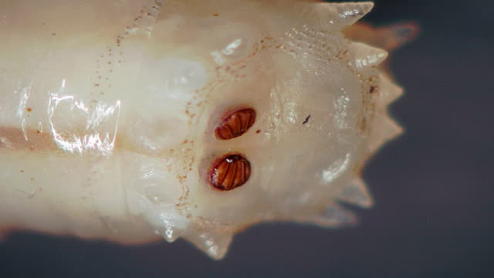
From this photo, state the stage of development this blowfly is in?
3rd instar
98
New cards
The rate of alcohol absorption on a full stomach is ________ the rate of absorption on an empty stomach.
faster than
99
New cards
The Theory of Spontaneous Generation established that:
life arose from nonliving matter
100
New cards
While there can be further subdivisions for the stages of decay, the four main stages of decay, in order of occurrence, include:
Fresh, bloat, decay, dry

Explore top notes

Imperialism Rise in Nationalism • During the French and Industrial Revolution, nationalism continued to inspire nations to increase their political and economic power. • Nationalism became the ideal force in the political, economic, and cultural life in the world, becoming the first universal ideology-organizing all people into a nation state. Nationalism Defined • The strong belief that the interest of a particular nation-state is of primary importance. o Nation-State – a state where the vast majority shares the same culture and is conscious of it. It is an ideal in which cultural boundaries match up with political ones. • As an ideology, it is based on the idea that the individual’s loyalty and devotion to the nation-state surpass other individual/group interests. • Exalting one nation’s belief above all others and placing primary emphasis on promotion of its culture and interests, excluding the interests of others. Changing the World through a Nationalistic Vision • The French Revolution significantly changed the political world and how countries govern. • The Industrial Revolution significantly changed the economic world. • The Age of Imperialism (1870-1914) dramatically changed the political, economic, and social world. What is Imperialism? • Imperialism- The policy of extending the rule of authority of an empire or nation over foreign countries, or of acquiring and holding colonies and dependencies. Power and influence are done through diplomacy or military force. Reasons for Imperialism • There are 5 main motives for empires to seek to expand their rule over other countries or territories: 1. Exploratory • Imperial nations wanted to explore territory unknown to them. • The main purpose for this exploration of new lands was for resource acquisition, medical or scientific research. o Charles Darwin • Other reasons: o Cartography (map making) o Adventure 2. Ethnocentric • Europeans acted on the concept of ethnocentrism o Ethnocentrism- the belief that one race or nation is superior to others. • Ethnocentrism developed out of Charles Darwin’s “survival of the fittest” theory. Philosophers used the theory to explain why there were superior races and inferior races. o This became known as Social Darwinism. • Most imperial nations believed that their cultural values or beliefs were superior to other nations or groups. • Believed imperial conquest would bring successful culture to inferior people. 3. Religious • Imperial expansion promoted a religious movement of people setting out to convert new members of conquered territories. • With the belief that Christianity was superior, missionaries believed it was their duty to spread Christianity to the world. • Christian missionaries established churches, and in doing so, they spread Western culture values as well. • Typically, missionaries spread the imperial nation's language through education and religious interactions. 4. Political • Patriotism and Nationalism helped spur our imperial growth, thus creating competition against other supremacies. • It was a matter of national pride, respect, and security. • Furthermore, European rivalry spurred nations for imperial conquest. Since land equaled power, the more land a country could acquire the more prestige they could wield across the globe. • Empires wanted strategic territory to ensure access for their navies and armies around the world. • The empire believed they must expand, thus they needed to be defended. 5. Economic • With the Industrial Revolution taking place during the same time, governments and private companies contributed to find ways to maximize profits. • Imperialized countries provided European factories and markets with natural resources (old and new) to manufacture products. • Trading posts were strategically placed around imperialized countries to maximize and increase profits. o Such places as the Suez Canal in Egypt which was controlled by the British provided strategic choke hold over many European powers. o Imperial powers competed over the best potential locations for resources, markets, and trade. History of Imperialism • Ancient Imperialism 600 BCE-500 CE o Roman Empire, Ancient China, Greek Empire, Persian Empire, Babylonian Empire. • Middle Age Imperialism (Age of Colonialism-1400-1800s) o Great Britain, Spain, Portugal, France, Netherlands (Dutch), Russia. • Age of Imperialism 1870-1914 o Great Britain, Spain, Portugal, France, Germany, Belgium, Italy, Japan, United States, Ottoman Empire, Russia. • Current Imperialism...? o U.S. Military intervention (i.e. Middle East) o Russia’s Invasion of Ukraine. Imperialism Colonialism • Refers to political or economic control, either legally or illegally. • Refers to where one nation assumes control over the other. • Creating an empire, expanding into neighboring regions and expanding the dominance far outside its borders. • Where a country conquers and rules over other regions for exploiting resources from the conquered country for the conqueror's benefit. • Foreign government controls/governs a territory without significant settlement. • Foreign government controls/governs the territory from within the land being colonized. • Little to no new settlement established on fresh territory. • Movement to settle to fresh territory. Age of Colonialism WHEN? • Started around the late 1400s and ended around the late 1700s/early 1800s. WHY? • Primary Reason: European countries, wished to find a direct trade route to Asia (China & India) and the East Indies. o Quicker and relatively more effective than land routes over Asia. • Secondary Reason: Empire expansion (land power) WHO? • Countries involved: Great Britain, France, Spain, the Dutch & Portugal. • Individuals’ knowns as Mercantilists believed that maintaining imperialized territory and colonizing the region could serve as a source of wealth, while personal motives by rulers, explorers, and missionaries could therefore promote their own agenda. o This agenda being “Glory, God and Gold”. Mercantilism • Mercantilism was a popular and main economic system for many European nations during the 16th to 18th centuries. • The main goal was to increase a nation’s wealth by promoting government rule of a nation’s economy for the purpose of enhancing state power at the expense of rival national power. • It was the economic counterpart of political absolutism. Why did mercantilists want colonies? • Mercantilists believed that a country must have an excess of exports over imports. • By colonizing territory, it provided the nation with indispensable wealth of precious raw materials. • Therefore, the claimed territory served as a market and supplier of raw materials for the mother country. Which, in time, provided an excess of exports for the nation and thus created wealth. o Development of Trading Companies to support this economic system. Hudson Bay Company – (1670). Controlled primarily North America. o Dutch East Indie Trading Company (1682) o East Indian Trading Company (1600) o Royal African Trade Company (1672) WHERE? • European nations begun to colonize the America, India and the East Indies to create a direct trade route. • Great Britain was the leading power in India, Australia and North America, South Africa. • Spain colonized central and South America. • French held Louisiana, coastal land of Africa and French Guinea. • The Dutch built an empire in the East Indies. • The Portuguese was able to take control of present-day Brazil and the southern tip of South America and Japan. Age of Colonialism • As countries started to imperialize these regions, eventually the concept of colonization took hold: • This is what makes the Age of Colonialism extremely different! End of Colonialism • By 1800, colonialism became less popular • Why? o Revolutions (Spain, France & American) o The Napoleonic Wars o Struggle for nationalism and democracy. o Exhausted all money and energy to supervise their colonies. Waiting to wake again • Imperialism would stay quiet for close to 50 years before Great Britain and France’s economies revitalized. • The outbreak of the Industrial Revolution only encouraged and revitalized European nations to begin their conquest for new territory and resources. Age of Imperialism THE SCRAMBLE FOR AFRICA 1870-1914 Conditions Prior to Imperialism of Africa  European interest in exploiting Africa was minimal.  Their economic interests & profit in Africa primarily came through coastal trade that took place during the 1500-1700s.  The slave trade became the main source of European profit.  Furthermore, disease, political instability, lack of transportation and unpredictable climate all discouraged Europeans from seeking territory. Slave Trade & the Trans-Atlantic Slave Voyages  Forced labor was not uncommon during the 13-17th Centuries. Africans and Europeans had been trading goods and people across the Mediteranea for centuries.  This all changed from 1526 to 1867, as a new system of slavery was introduced that became highly “commercialized, racialized and inherited”  By 1690, the America and West Indies saw approximately 30,000 African people shipped from Africa. A century later, that number grew to 85,000 people per year.  By 1867, approximately 12.5 million people (about twice the population of Arizona) left Africa in a slave ship. What Changed? 1. End of the Slave Trade- Left a need for trade between Europe and Africa. 2. Innovation in technology- The steam engine and iron hulled boats allowed Europe 3. Discovery of new raw materials- Explorers located vast raw materials and resources and this only spurred imperialism with Europe in the wake of the Industrial Revolution. 4. Politics- Unification of Germany and Italy left little room to expand in Europe. Germany and Italy both needed raw materials to “catch up” with Britain and France so they looked to Africa. The Scramble for Africa  The scramble started in 1870.  Although some coastal land had previously been acquired before 1870, the need for territory quickly accelerated as European countries looked t get deeper into Africa.  Within 20 years, nearly all continents were placed under imperialistic rule. Who was Involved?  Great Britain  France  Germany  Italy  Portugal  Belgium  Spain (kind) Violent Affairs  Violence broke out multiple times when European nations looked to claim the same territory.  Germ Chancellor. Otto van Bismarck. Attempted to avert the possibility of violence against the European powers.  In 1884, Bismarck organized a conference in Berlin for the European nations. The Berlin Conference (1884-85)  The conference looked to set ground rules for future annexation of African territory by European Nations.  Annexation is the forcible acquisition and assertion of legal title over one state’s territory by another state, usually following military occupation of the territory.  From a distant perspective, it looked like it would reduce tensions among European nations and avert war.  At the heart of the meeting, these European countries negotiated their claims to African territory, made it official and then mapped their regions.  Furthermore, the leaders agreed to allow free trade among imperialized territory and some homework for negotiating future European claims in Africa was established. Further Path  After the conference, european powers continued to expand their claims in Africa so that by 1900. 90% of the African territory had been claimed. A Turn towards Colonization?  Upon the imperialization of African territory, European nations and little interest in African land unless it produced economic wealth.  Therefore, European governments put little effort and expertise into these imperialized regions.  In most cases, this emat a form of indirect rule. Thus, governing the natin without sufficient settlement and government from within the mother country. Some Exceptions  There were some exemptions through in Africa as colonization was a necessary for some regions i n Africa.  Some regions where diamonds and gold were present. Government looked to protectorate the regions and establish rule and settlement in the regions.  Protectorates: A state controlled and protected by another state for defense against aggression and other law violations. Would  Some examples include South Africa, Botswana, Zimbabwe and Congo. Conclusion  Although it may appear that the Berlin Conference averted war amid the African Scramble, imperialism eventually brought the world into worldwide conflict.  With the continued desire to create an empire by European nations. World War 1 would break out which can be linked to this quest at imperialism.
Updated 490d ago
note Note
Imperialism Rise in Nationalism • During the French and Industrial Revolution, nationalism continued to inspire nations to increase their political and economic power. • Nationalism became the ideal force in the political, economic, and cultural life in the world, becoming the first universal ideology-organizing all people into a nation state. Nationalism Defined • The strong belief that the interest of a particular nation-state is of primary importance. o Nation-State – a state where the vast majority shares the same culture and is conscious of it. It is an ideal in which cultural boundaries match up with political ones. • As an ideology, it is based on the idea that the individual’s loyalty and devotion to the nation-state surpass other individual/group interests. • Exalting one nation’s belief above all others and placing primary emphasis on promotion of its culture and interests, excluding the interests of others. Changing the World through a Nationalistic Vision • The French Revolution significantly changed the political world and how countries govern. • The Industrial Revolution significantly changed the economic world. • The Age of Imperialism (1870-1914) dramatically changed the political, economic, and social world. What is Imperialism? • Imperialism- The policy of extending the rule of authority of an empire or nation over foreign countries, or of acquiring and holding colonies and dependencies. Power and influence are done through diplomacy or military force. Reasons for Imperialism • There are 5 main motives for empires to seek to expand their rule over other countries or territories: 1. Exploratory • Imperial nations wanted to explore territory unknown to them. • The main purpose for this exploration of new lands was for resource acquisition, medical or scientific research. o Charles Darwin • Other reasons: o Cartography (map making) o Adventure 2. Ethnocentric • Europeans acted on the concept of ethnocentrism o Ethnocentrism- the belief that one race or nation is superior to others. • Ethnocentrism developed out of Charles Darwin’s “survival of the fittest” theory. Philosophers used the theory to explain why there were superior races and inferior races. o This became known as Social Darwinism. • Most imperial nations believed that their cultural values or beliefs were superior to other nations or groups. • Believed imperial conquest would bring successful culture to inferior people. 3. Religious • Imperial expansion promoted a religious movement of people setting out to convert new members of conquered territories. • With the belief that Christianity was superior, missionaries believed it was their duty to spread Christianity to the world. • Christian missionaries established churches, and in doing so, they spread Western culture values as well. • Typically, missionaries spread the imperial nation's language through education and religious interactions. 4. Political • Patriotism and Nationalism helped spur our imperial growth, thus creating competition against other supremacies. • It was a matter of national pride, respect, and security. • Furthermore, European rivalry spurred nations for imperial conquest. Since land equaled power, the more land a country could acquire the more prestige they could wield across the globe. • Empires wanted strategic territory to ensure access for their navies and armies around the world. • The empire believed they must expand, thus they needed to be defended. 5. Economic • With the Industrial Revolution taking place during the same time, governments and private companies contributed to find ways to maximize profits. • Imperialized countries provided European factories and markets with natural resources (old and new) to manufacture products. • Trading posts were strategically placed around imperialized countries to maximize and increase profits. o Such places as the Suez Canal in Egypt which was controlled by the British provided strategic choke hold over many European powers. o Imperial powers competed over the best potential locations for resources, markets, and trade. History of Imperialism • Ancient Imperialism 600 BCE-500 CE o Roman Empire, Ancient China, Greek Empire, Persian Empire, Babylonian Empire. • Middle Age Imperialism (Age of Colonialism-1400-1800s) o Great Britain, Spain, Portugal, France, Netherlands (Dutch), Russia. • Age of Imperialism 1870-1914 o Great Britain, Spain, Portugal, France, Germany, Belgium, Italy, Japan, United States, Ottoman Empire, Russia. • Current Imperialism...? o U.S. Military intervention (i.e. Middle East) o Russia’s Invasion of Ukraine. Imperialism Colonialism • Refers to political or economic control, either legally or illegally. • Refers to where one nation assumes control over the other. • Creating an empire, expanding into neighboring regions and expanding the dominance far outside its borders. • Where a country conquers and rules over other regions for exploiting resources from the conquered country for the conqueror's benefit. • Foreign government controls/governs a territory without significant settlement. • Foreign government controls/governs the territory from within the land being colonized. • Little to no new settlement established on fresh territory. • Movement to settle to fresh territory. Age of Colonialism WHEN? • Started around the late 1400s and ended around the late 1700s/early 1800s. WHY? • Primary Reason: European countries, wished to find a direct trade route to Asia (China & India) and the East Indies. o Quicker and relatively more effective than land routes over Asia. • Secondary Reason: Empire expansion (land power) WHO? • Countries involved: Great Britain, France, Spain, the Dutch & Portugal. • Individuals’ knowns as Mercantilists believed that maintaining imperialized territory and colonizing the region could serve as a source of wealth, while personal motives by rulers, explorers, and missionaries could therefore promote their own agenda. o This agenda being “Glory, God and Gold”. Mercantilism • Mercantilism was a popular and main economic system for many European nations during the 16th to 18th centuries. • The main goal was to increase a nation’s wealth by promoting government rule of a nation’s economy for the purpose of enhancing state power at the expense of rival national power. • It was the economic counterpart of political absolutism. Why did mercantilists want colonies? • Mercantilists believed that a country must have an excess of exports over imports. • By colonizing territory, it provided the nation with indispensable wealth of precious raw materials. • Therefore, the claimed territory served as a market and supplier of raw materials for the mother country. Which, in time, provided an excess of exports for the nation and thus created wealth. o Development of Trading Companies to support this economic system. Hudson Bay Company – (1670). Controlled primarily North America. o Dutch East Indie Trading Company (1682) o East Indian Trading Company (1600) o Royal African Trade Company (1672) WHERE? • European nations begun to colonize the America, India and the East Indies to create a direct trade route. • Great Britain was the leading power in India, Australia and North America, South Africa. • Spain colonized central and South America. • French held Louisiana, coastal land of Africa and French Guinea. • The Dutch built an empire in the East Indies. • The Portuguese was able to take control of present-day Brazil and the southern tip of South America and Japan. Age of Colonialism • As countries started to imperialize these regions, eventually the concept of colonization took hold: • This is what makes the Age of Colonialism extremely different! End of Colonialism • By 1800, colonialism became less popular • Why? o Revolutions (Spain, France & American) o The Napoleonic Wars o Struggle for nationalism and democracy. o Exhausted all money and energy to supervise their colonies. Waiting to wake again • Imperialism would stay quiet for close to 50 years before Great Britain and France’s economies revitalized. • The outbreak of the Industrial Revolution only encouraged and revitalized European nations to begin their conquest for new territory and resources. Age of Imperialism THE SCRAMBLE FOR AFRICA 1870-1914 Conditions Prior to Imperialism of Africa  European interest in exploiting Africa was minimal.  Their economic interests & profit in Africa primarily came through coastal trade that took place during the 1500-1700s.  The slave trade became the main source of European profit.  Furthermore, disease, political instability, lack of transportation and unpredictable climate all discouraged Europeans from seeking territory. Slave Trade & the Trans-Atlantic Slave Voyages  Forced labor was not uncommon during the 13-17th Centuries. Africans and Europeans had been trading goods and people across the Mediteranea for centuries.  This all changed from 1526 to 1867, as a new system of slavery was introduced that became highly “commercialized, racialized and inherited”  By 1690, the America and West Indies saw approximately 30,000 African people shipped from Africa. A century later, that number grew to 85,000 people per year.  By 1867, approximately 12.5 million people (about twice the population of Arizona) left Africa in a slave ship. What Changed? 1. End of the Slave Trade- Left a need for trade between Europe and Africa. 2. Innovation in technology- The steam engine and iron hulled boats allowed Europe 3. Discovery of new raw materials- Explorers located vast raw materials and resources and this only spurred imperialism with Europe in the wake of the Industrial Revolution. 4. Politics- Unification of Germany and Italy left little room to expand in Europe. Germany and Italy both needed raw materials to “catch up” with Britain and France so they looked to Africa. The Scramble for Africa  The scramble started in 1870.  Although some coastal land had previously been acquired before 1870, the need for territory quickly accelerated as European countries looked t get deeper into Africa.  Within 20 years, nearly all continents were placed under imperialistic rule. Who was Involved?  Great Britain  France  Germany  Italy  Portugal  Belgium  Spain (kind) Violent Affairs  Violence broke out multiple times when European nations looked to claim the same territory.  Germ Chancellor. Otto van Bismarck. Attempted to avert the possibility of violence against the European powers.  In 1884, Bismarck organized a conference in Berlin for the European nations. The Berlin Conference (1884-85)  The conference looked to set ground rules for future annexation of African territory by European Nations.  Annexation is the forcible acquisition and assertion of legal title over one state’s territory by another state, usually following military occupation of the territory.  From a distant perspective, it looked like it would reduce tensions among European nations and avert war.  At the heart of the meeting, these European countries negotiated their claims to African territory, made it official and then mapped their regions.  Furthermore, the leaders agreed to allow free trade among imperialized territory and some homework for negotiating future European claims in Africa was established. Further Path  After the conference, european powers continued to expand their claims in Africa so that by 1900. 90% of the African territory had been claimed. A Turn towards Colonization?  Upon the imperialization of African territory, European nations and little interest in African land unless it produced economic wealth.  Therefore, European governments put little effort and expertise into these imperialized regions.  In most cases, this emat a form of indirect rule. Thus, governing the natin without sufficient settlement and government from within the mother country. Some Exceptions  There were some exemptions through in Africa as colonization was a necessary for some regions i n Africa.  Some regions where diamonds and gold were present. Government looked to protectorate the regions and establish rule and settlement in the regions.  Protectorates: A state controlled and protected by another state for defense against aggression and other law violations. Would  Some examples include South Africa, Botswana, Zimbabwe and Congo. Conclusion  Although it may appear that the Berlin Conference averted war amid the African Scramble, imperialism eventually brought the world into worldwide conflict.  With the continued desire to create an empire by European nations. World War 1 would break out which can be linked to this quest at imperialism.
Updated 490d ago
note Note

Explore top flashcards

Unit 5: Genetics
Updated 375d ago
flashcards Flashcards (29)
La familia
Updated 784d ago
flashcards Flashcards (38)
CMS III Final: EM
Updated 255d ago
flashcards Flashcards (212)
2b: Cell structure
Updated 1171d ago
flashcards Flashcards (30)
deelsteppen
Updated 1065d ago
flashcards Flashcards (87)
PSYC 14
Updated 148d ago
flashcards Flashcards (64)
Unit 5: Genetics
Updated 375d ago
flashcards Flashcards (29)
La familia
Updated 784d ago
flashcards Flashcards (38)
CMS III Final: EM
Updated 255d ago
flashcards Flashcards (212)
2b: Cell structure
Updated 1171d ago
flashcards Flashcards (30)
deelsteppen
Updated 1065d ago
flashcards Flashcards (87)
PSYC 14
Updated 148d ago
flashcards Flashcards (64)



