Appendicular Skeleton

0.0(0)
studied byStudied by 0 people
0.0(0)
call with kaiCall with Kai
learnLearn
examPractice Test
spaced repetitionSpaced Repetition
heart puzzleMatch
flashcardsFlashcards
GameKnowt Play
Card Sorting

1/31

flashcard set

Earn XP

Description and Tags

ANP1106A

Study Analytics
Name
Mastery
Learn
Test
Matching
Spaced
Call with Kai

No study sessions yet.

32 Terms

1
New cards

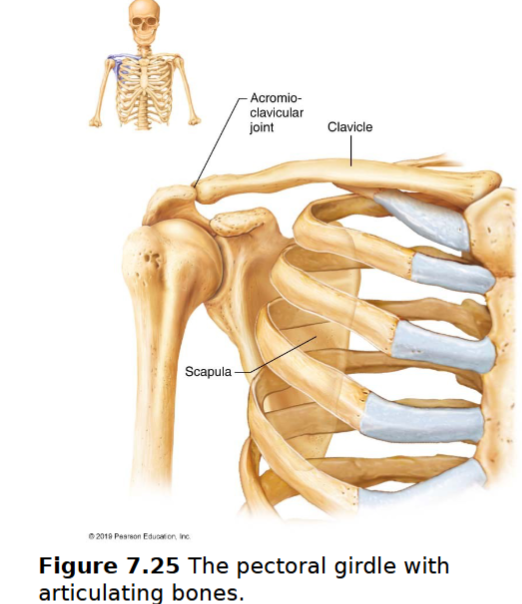
Pectoral girdle

  • 2 pairs of bones: clavicles & scapulae almost a complete circle around upper trunk

    • bones are light & very movable- because scapulae only attached laterally- not attached to the axial skeleton

    • socket of shoulder joint (glenoid cavity) is shallow & poorly reinforced

    • attachment points of muscles that move upper limbs
<ul><li><p>2 pairs of bones: clavicles &amp; scapulae almost a complete circle around upper trunk</p><ul><li><p>bones are light &amp; very movable- because scapulae only attached laterally- not attached to the axial skeleton</p></li><li><p>socket of shoulder joint (glenoid cavity) is shallow &amp; poorly reinforced</p></li><li><p>attachment points of muscles that move upper limbs</p></li></ul></li></ul><p></p>
2
New cards

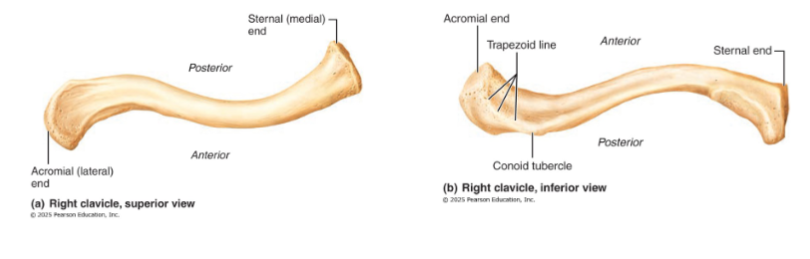
Clavicles

  • collarbones

  • mildly S-shaped sternal end articulates with the sternum (curvature ensures outward fracture, away from subclavian artery)

  • Flattened acromial end articulates laterally with scapula

  • sternal end articulates with manubrium

  • insertion points for muscles, also a brace to push arms laterally
<ul><li><p>collarbones</p></li><li><p>mildly S-shaped sternal end articulates with the sternum (curvature ensures outward fracture, away from subclavian artery)</p></li><li><p>Flattened acromial end articulates laterally with scapula</p></li><li><p>sternal end articulates with manubrium</p></li><li><p>insertion points for muscles, also a brace to push arms laterally</p></li></ul><p></p>
3
New cards

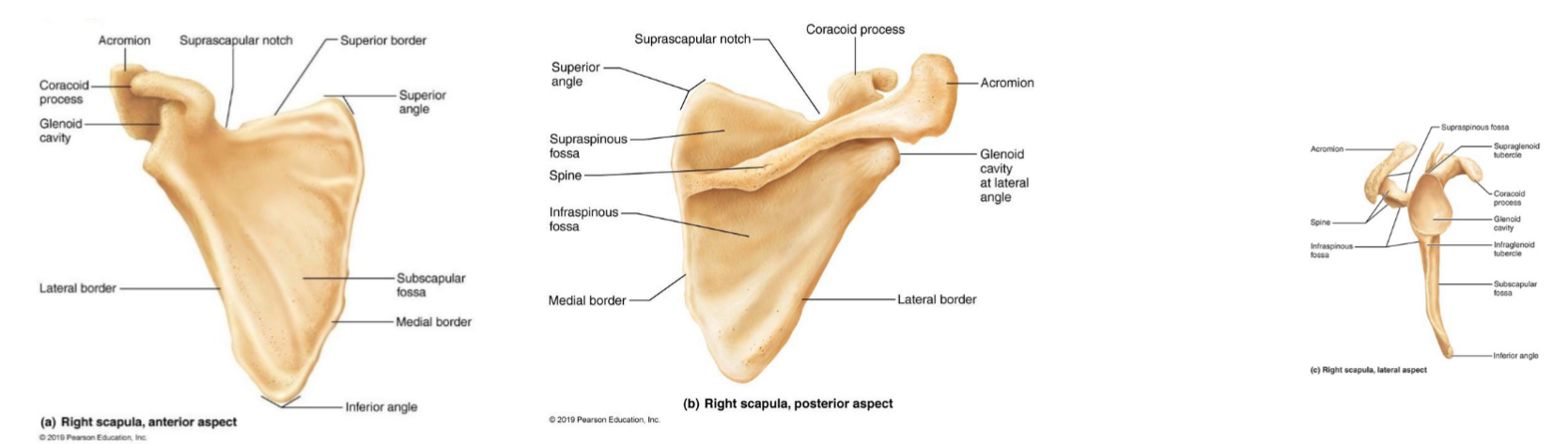
Scapulae

  • shoulder blades

  • thin, triangular, irregular bones

  • dorsally, between ribs 2 & 7

  • Each has 3 borders:

    • superior

    • medial

    • lateral - near armpit, ends superiorly in glenoid cavity fossa (shoulder joint)

  • Several large fossae, named according to location

    • spine

    • acromion

      • lateral projection that articulates with acromial end of clavicle

      • number of muscles attach here as well

    • coracoid process

      • For biceps muscle

<ul><li><p>shoulder blades</p></li><li><p>thin, triangular, irregular bones</p></li><li><p>dorsally, between ribs 2 &amp; 7</p></li><li><p>Each has 3 borders:</p><ul><li><p>superior</p></li><li><p>medial</p></li><li><p>lateral - near armpit, ends superiorly in glenoid cavity fossa (shoulder joint)</p></li></ul></li><li><p>Several large fossae, named according to location</p><ul><li><p>spine</p></li><li><p>acromion</p><ul><li><p>lateral projection that articulates with acromial end of clavicle </p></li><li><p>number of muscles attach here as well </p></li></ul></li><li><p>coracoid process</p><ul><li><p>For biceps muscle</p></li></ul></li></ul></li></ul><p></p>
4
New cards

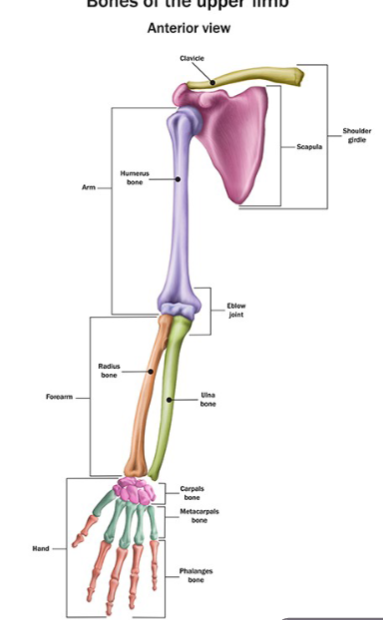
Upper Limb

30 bones form skeletal framework of each upper limb

  • Arm

    • Humerus

  • Forearm

    • Radius and ulna

  • Hand

    • 8 carpal bones in the wrist

    • 5 metacarpal bones in the palm

    • 14 phalanges in the fingers

<p>30 bones form skeletal framework of each upper limb</p><ul><li><p>Arm</p><ul><li><p> Humerus</p></li></ul></li><li><p>Forearm</p><ul><li><p>Radius and ulna</p></li></ul></li><li><p>Hand</p><ul><li><p>8 carpal bones in the wrist</p></li><li><p>5 metacarpal bones in the palm</p></li><li><p>14 phalanges in the fingers</p></li></ul></li></ul><p></p>
5
New cards

Upper Limb

  • Humerus

  • Forearm

  • Ulna

  • Radius

6
New cards

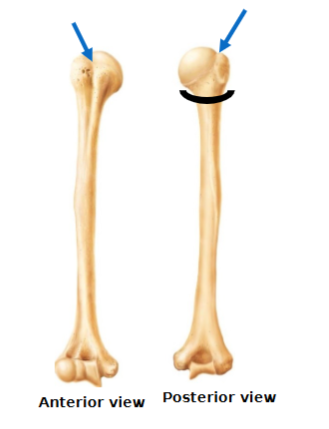
Humerus

  • longest, largest bone of upper limb and the only bone of the arm articulates with scapula, radius & ulna

    • Head - inserts into the glenoid cavity

    • Anatomical neck vs surgical neck

      • surgical neck (black semicircle) is below the greater and lesser tubercle and it more commonly fractured

    • Greater & lesser tubercle separated by the intertubercular sulcus (groove)

    • Deltoid tuberosity

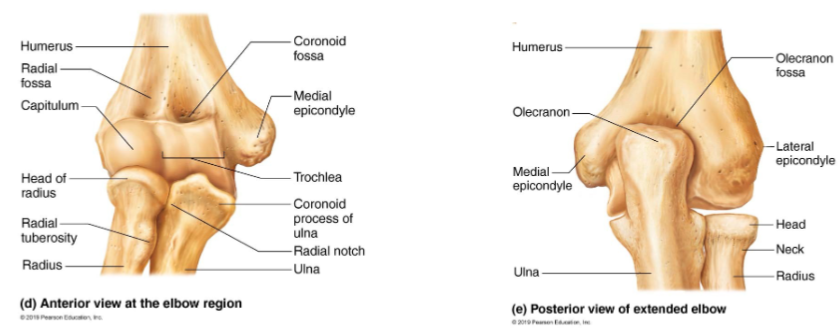
    • Fossae: olecranon (elbow bone), coronoid and radial

  • Two condyles:

    • Trochlea articulates with the ulna

    • Capitulum articulate with the radius

  • Two epicondyles

    • point of attachment for muscles to allow movement of fingers

      • Medial and lateral

        • Note: the ulnar nerve behind medial epicondyle (nerve that gets irritated when you hit the ‘funny bone’)
<ul><li><p>longest, largest bone of upper limb and the only bone of the arm articulates with scapula, radius &amp; ulna</p><ul><li><p>Head - inserts into the <u>glenoid cavity</u></p></li><li><p>Anatomical neck vs surgical neck</p><ul><li><p>surgical neck (black semicircle) is below the greater and lesser tubercle and it more commonly fractured </p></li></ul></li><li><p>Greater &amp; lesser tubercle separated by the intertubercular sulcus (groove)</p></li><li><p>Deltoid tuberosity</p></li><li><p>Fossae: olecranon (elbow bone), coronoid and radial</p></li></ul></li><li><p>Two condyles:</p><ul><li><p>Trochlea articulates with the ulna</p></li><li><p>Capitulum articulate with the radius</p></li></ul></li><li><p>Two epicondyles</p><ul><li><p>point of attachment for muscles to allow movement of fingers</p><ul><li><p>Medial and lateral</p><ul><li><p>Note: the ulnar nerve behind medial epicondyle (nerve that gets irritated when you hit the ‘funny bone’)</p></li></ul></li></ul></li></ul></li></ul><p></p>
7
New cards

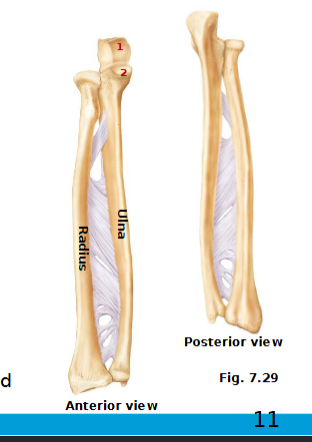
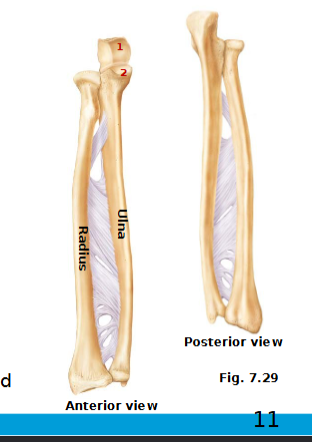
Forearm

  • parallel long bones: radius & ulna

  • Articulates with

    • Humerus (proximal) & wrist bones (distal)

    • with each other at superior & inferior radio-ulnar joints

  • What is the interosseous membrane

    • white structure, a fibrous sheath of CT that spans length of the bones. It holds them together, limiting their movement

8
New cards

Ulna (elbow joint)

  • slightly longer than radius

  • olecranon & coronoid processes

    • locking of olecranon prevents elbow hyperextension

  • radial notch on coronoid process

  • Styloid process: ligaments to the wrist
<ul><li><p>slightly longer than radius</p></li><li><p>olecranon &amp; coronoid processes</p><ul><li><p>locking of olecranon prevents elbow hyperextension</p></li></ul></li><li><p>radial notch on coronoid process</p></li><li><p>Styloid process: ligaments to the wrist</p></li></ul><p></p>
9
New cards

Radius(Wrist joint)

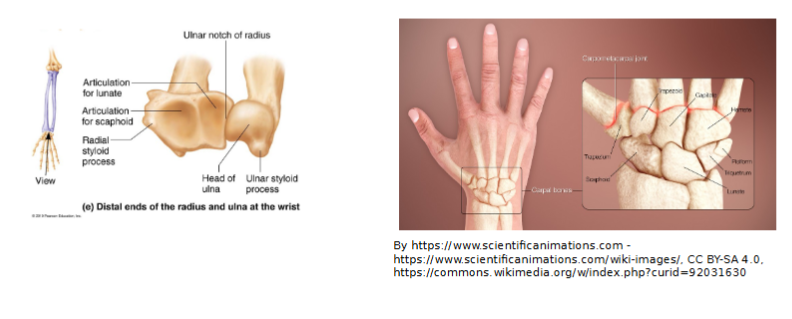
  • head at proximal end

  • distal end at the wider end

  • distal end has medial ulnar notch & lateral styloid process
<ul><li><p>head at proximal end</p></li><li><p>distal end at the wider end</p></li><li><p>distal end has medial ulnar notch &amp; lateral styloid process</p></li></ul><p></p>
10
New cards

Articulation at the elbow

knowt flashcard image
11
New cards
<p>Hand </p>

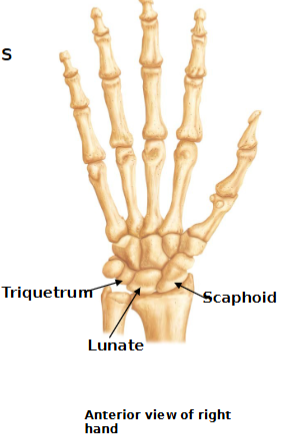
Hand

  • 27 bones

    • includes bones of carpus, metacarpus and phalanges

  • Carpus (wrist)

    • 8 carpal bones in two rows

    • Proximal row:

      • scaphoid, lunate, triquetrum, pisiform (“So Long To Pittsburgh” )

  • Distal Row

    • trapezium, trapezoid, capitate, hamate

      • (“Time To Call Home” )

  • Only scaphoid, lunate and triquetrum form the wrist join

    • (“Sally Left The Party To Take Cathy Home)
<ul><li><p>27 bones</p><ul><li><p>includes bones of carpus, metacarpus and phalanges</p></li></ul></li><li><p>Carpus (wrist)</p><ul><li><p>8 carpal bones in two rows</p></li><li><p>Proximal row:</p><ul><li><p>scaphoid, lunate, triquetrum, pisiform (“So Long To Pittsburgh” )</p></li></ul></li></ul></li><li><p>Distal Row</p><ul><li><p>trapezium, trapezoid, capitate, hamate</p><ul><li><p>(“Time To Call Home” )</p></li></ul></li></ul></li><li><p>Only scaphoid, lunate and triquetrum form the wrist join</p><ul><li><p>(“Sally Left The Party To Take Cathy Home)</p></li></ul></li></ul><p></p><p></p>
12
New cards

Carpus

  • wrist

    • 8 carpal bones in two rows

    • Proximal row:

      • scaphoid, lunate, triquetrum, pisiform (“So Long To Pittsburgh” )

  • Distal Row

    • trapezium, trapezoid, capitate, hamate

      • (“Time To Call Home” )

  • Only scaphoid, lunate and triquetrum form the wrist join

    • (“Sally Left The Party To Take Cathy Home)

13
New cards

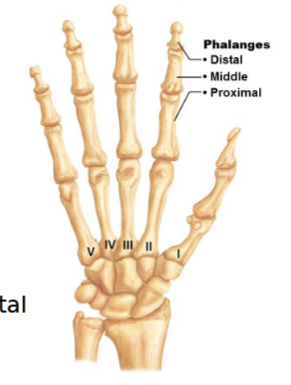
Metacarpals

  • 5 long bones - distal ends are knuckles

  • numbered I - V from thumb to little finger

  • Bases articulate with carpals, and heads articulate with proximal phalanges

14
New cards

Phalanges (fingers)

  • numbered I-V from thumb to little finger

  • Miniature long bones - phalanges

  • Digits II to V has 3 bones: proximal, middle & distal phalanx

  • Digit I (pollex) has 2 bones

<ul><li><p>numbered I-V from thumb to little finger</p></li><li><p>Miniature long bones - phalanges</p></li><li><p>Digits II to V has 3 bones: proximal, middle &amp; distal phalanx</p></li><li><p>Digit I (pollex) has 2 bones</p></li></ul><p></p>
15
New cards

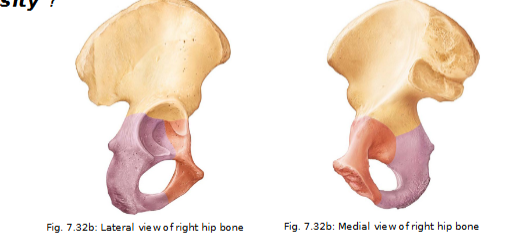
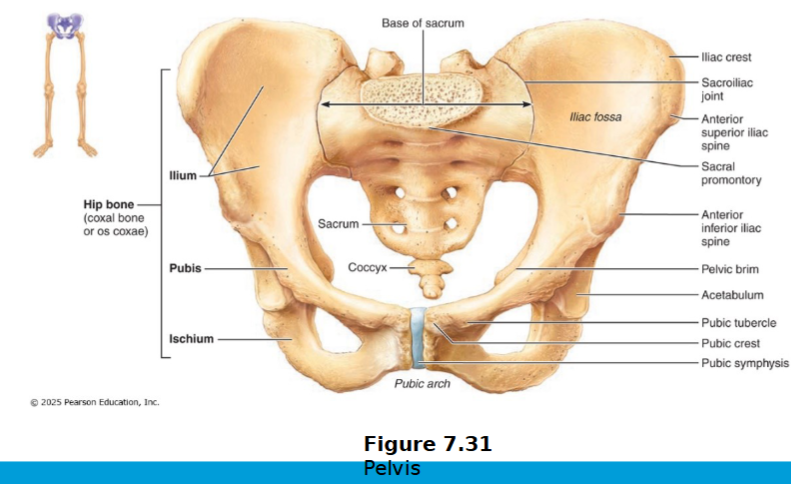
Pelvic girdle

  • Two hip bones (each also called coxal bone or os coxae); form a complete circle

  • left & right coxal bones unite with each other anteriorly & with sacrum posteriorly

  • attach the lower limbs, transmits weight of upper body to lower limbs; support pelvic organs

  • Each os coxa consists of 3 bones that fuse at puberty: ilium, ischium, pubis

  • Acetabulum is area where all 3 bones join »» forms socket of hip joint
<ul><li><p>Two hip bones (each also called coxal bone or os coxae); form a complete circle</p></li><li><p>left &amp; right coxal bones unite with each other anteriorly &amp; with sacrum posteriorly</p></li><li><p>attach the lower limbs, transmits weight of upper body to lower limbs; support pelvic organs</p></li><li><p>Each os coxa consists of 3 bones that fuse at puberty: ilium, ischium, pubis</p></li><li><p>Acetabulum is area where all 3 bones join »» forms socket of hip joint</p></li></ul><p></p>
16
New cards

Pelvic girdle: ilium

  • large flaring bone that forms most of os coxa

  • iliac crest (superior border); iliac spines (attachment of muscles)

  • Greater sciatic notch

  • Auricular surface: connects to sacrum to make sacral ilium

  • anteriorly, the body of the ilium joins the ischium and the pubis
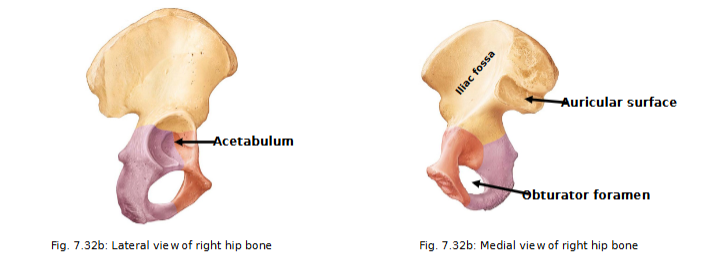
<ul><li><p>large flaring bone that forms most of os coxa</p></li><li><p>iliac crest (superior border); iliac spines (attachment of muscles)</p></li><li><p>Greater sciatic notch</p></li><li><p>Auricular surface: connects to sacrum to make sacral ilium </p></li><li><p>anteriorly, the body of the ilium joins the ischium and the pubis</p></li></ul><p></p>
17
New cards

Ischium

  • postero-inferior part of hip bone

  • thicker superior body joining ilium and thinner, inferior ramus (joins the pubis)

  • ramus= bar of bone

<ul><li><p>postero-inferior part of hip bone</p></li><li><p>thicker superior body joining ilium and thinner, inferior ramus (joins the pubis)</p></li><li><p>ramus= bar of bone</p></li></ul><p></p>
18
New cards

What is Ischial tuberosity?

  • supports your weight while sitting and is supported by ischial tuberosity

19
New cards

Pubis

  • anterior part of ox cosa

  • Consists of the body and superior and inferior pubic rami

  • 2 pubic bones unite at pubis symphysis

20
New cards

Pelvic structure and childbearing

  • Female pelvis tends to be wider, shallower, lighter, and rounder than male’s

    • Adapted for childbearing

  • Pelvic brim

    • the bony rim (pelvic inlet) that separates the upper "false pelvis" (part of the abdomen) from the lower "true pelvis" (the actual pelvic cavity)

      • True pelvis: inferior to pelvic brim; defines birth canal

  • Pelvic outlet: inferior margin of true pelvis
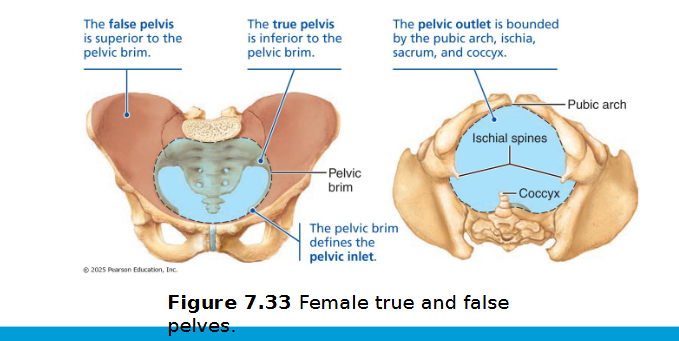
<ul><li><p>Female pelvis tends to be wider, shallower, lighter, and rounder than male’s</p><ul><li><p>Adapted for childbearing</p></li></ul></li><li><p>Pelvic brim</p><ul><li><p>the bony rim (pelvic inlet) that separates the upper "false pelvis" (part of the abdomen) from the lower "true pelvis" (the actual pelvic cavity)</p><ul><li><p>True pelvis: inferior to pelvic brim; defines birth canal</p></li></ul></li></ul></li><li><p>Pelvic outlet: inferior margin of true pelvis</p></li></ul><p></p>
21
New cards

Comparison of male and female pelvis
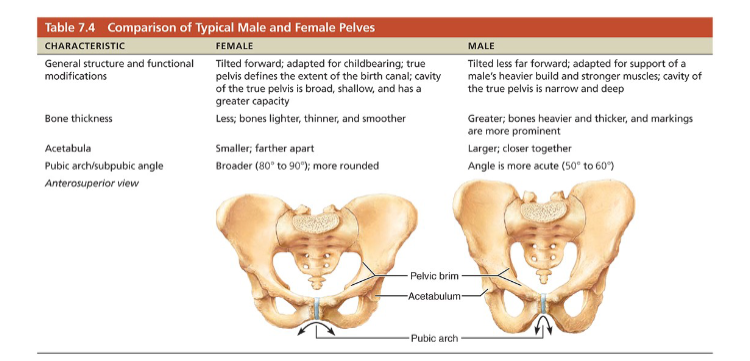
knowt flashcard image
22
New cards

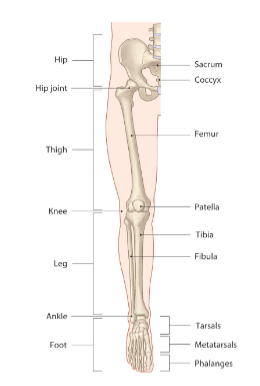
Lower limb

  • Carries entire weight of erect body

  • Subjected to exceptional forces during jumping or running

  • Three segments of lower limb

    • Thigh

    • Leg

    • Foot

<ul><li><p>Carries entire weight of erect body</p></li><li><p>Subjected to exceptional forces during jumping or running</p></li><li><p>Three segments of lower limb</p><ul><li><p>Thigh</p></li><li><p>Leg</p></li><li><p>Foot</p></li></ul></li></ul><p></p>
23
New cards

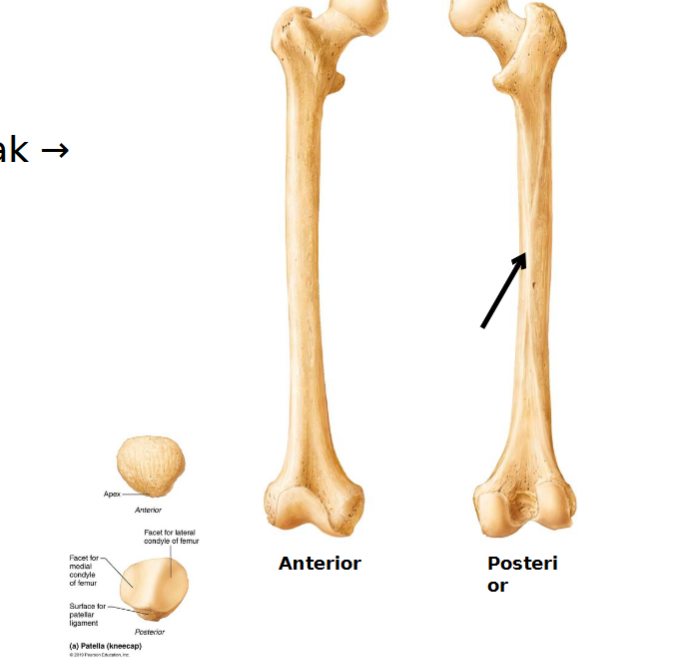
Thigh

  • Femur is the largest, strongest and longest bone in the body making up about ¼ of a person’s height.

    • Articulates proximally with acetabulum of hip and distally with tibia and patella

    • Fovea capitis

    • Head and neck

      • neck (angles laterally to shaft; weak → fractures)

  • Greater and lesser trochanters: site for muscle attachment

  • Linea aspera: roughened ridge on surface of femoral shaft; site for muscle attachment

  • Distally

    • Lateral & medial condyles (attachment site for joint)

      • articulate with tibia

    • Lateral & medial epicondyles

      • Sites of muscle attachment

  • Patellar surface (between condyles)

    • patella site in between it

<ul><li><p>Femur is the largest, strongest and longest bone in the body making up about ¼ of a person’s height.</p><ul><li><p>Articulates proximally with acetabulum of hip and distally with tibia and patella</p></li><li><p>Fovea capitis</p></li><li><p>Head and neck</p><ul><li><p>neck (angles laterally to shaft; weak → fractures)</p></li></ul></li></ul></li><li><p>Greater and lesser trochanters: site for muscle attachment</p></li><li><p>Linea aspera: roughened ridge on surface of femoral shaft; site for muscle attachment </p></li><li><p>Distally</p><ul><li><p>Lateral &amp; medial condyles (attachment site for joint)</p><ul><li><p>articulate with tibia</p></li></ul></li><li><p>Lateral &amp; medial epicondyles</p><ul><li><p>Sites of muscle attachment</p></li></ul></li></ul></li><li><p>Patellar surface (between condyles)</p><ul><li><p>patella site in between it</p></li></ul></li></ul><p></p>
24
New cards

Lower limb: leg

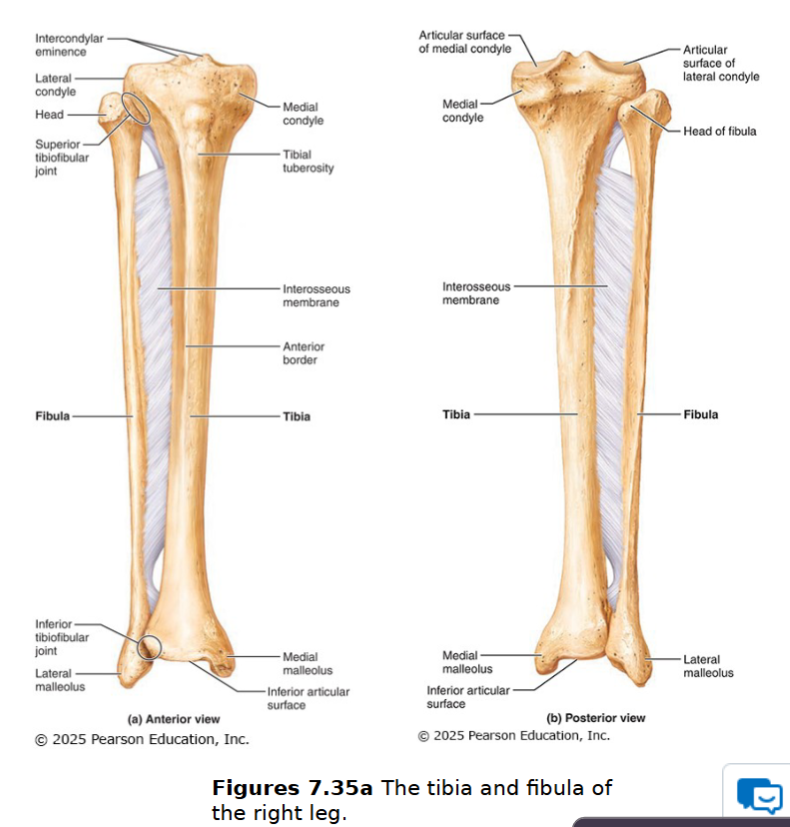
  • 2 parallel bones: tibia & fibula connected by interosseus membrane and proximal & distal tibiofibular joints (rigid)

  • fibula not contributor to knee join

25
New cards

Tibia

  • next largest & strongest bone

  • receives weight from femur & transfers it to foot

  • medial bone of the leg

  • medial & lateral condyles

  • tibial tuberosity (patellar ligament): insertion point for tendons of quadricep muscles

  • Medial malleolus

<ul><li><p>next largest &amp; strongest bone</p></li><li><p>receives weight from femur &amp; transfers it to foot</p></li><li><p>medial bone of the leg</p></li><li><p>medial &amp; lateral condyles</p></li><li><p>tibial tuberosity (patellar ligament): insertion point for tendons of quadricep muscles </p></li><li><p><strong>Medial malleolus</strong></p></li></ul><p></p>
26
New cards

Fibula

  • not weight bearing/no articulation with femur

  • head

  • lateral bone of leg

  • Lateral malleolus

27
New cards

Lower limb: foot

  • total of 26 bones: tarsus (ankle bone), metatarsus & phalanges

28
New cards

Tarsus

  • 7 tarsal bones

    • cuboid, navicular, medial, intermediate, and lateral cuneiform, talus and calcaneus

    • largest is the calcaneus (heel bone) and second largest is the talus (part of ankle joint).

      • talus connects to tibia, which is weight of upper body is transferred

    • these two primarily carry the weight of the body
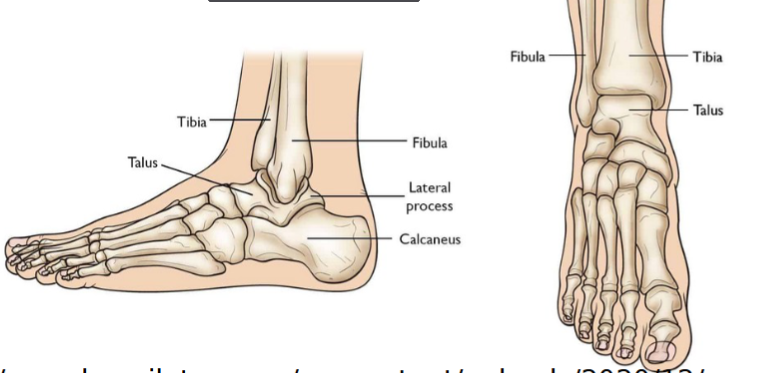
<ul><li><p>7 tarsal bones</p><ul><li><p>cuboid, navicular, medial, intermediate, and lateral cuneiform, talus and calcaneus</p></li><li><p><strong>largest is the calcaneus (heel bone)</strong> and <strong>second largest is the talus (part of ankle joint).</strong></p><ul><li><p>talus connects to tibia, which is weight of upper body is transferred</p></li></ul></li><li><p>these two primarily carry the weight of the body</p></li></ul></li></ul><p></p>
29
New cards

Metatarsus

  • 5 miniature long bones numbered I-V from the hallux to the little toe

  • hallux: has only proximal and distal end

  • Phalanx~single, phalanges~ plural

    • naming a bone: position AND what toe or finger it is

  • in numbering of phalanges of upper limb, number from pinky to pollex (medial to lateral)
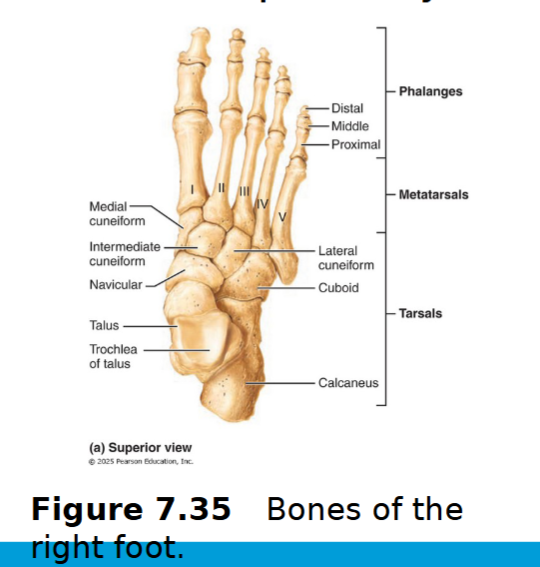
<ul><li><p>5 miniature long bones numbered I-V from the hallux to the little toe</p></li><li><p>hallux: has only proximal and distal end</p></li><li><p>Phalanx~single, phalanges~ plural</p><ul><li><p>naming a bone: position AND what toe or finger it is </p></li></ul></li><li><p>in numbering of phalanges of upper limb, number from pinky to pollex (medial to lateral)</p></li></ul><p></p>
30
New cards

Phalanges of lower limb

  • 14 bones of toes

  • Digit I (hallux) has two

  • Digits II to V have 3 bones - proximal, middle & distal phalanx
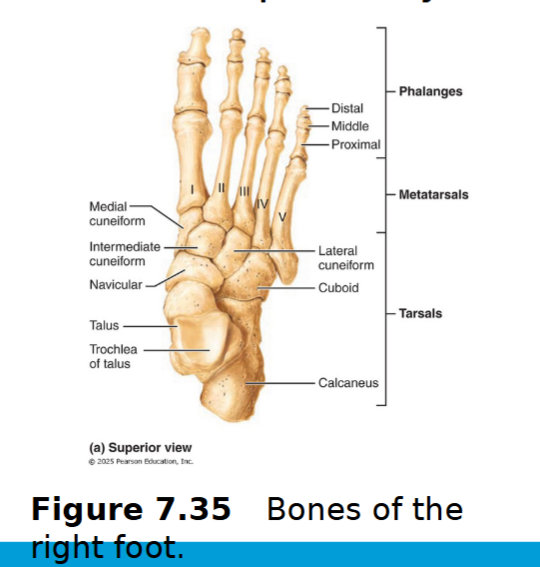
<ul><li><p>14 bones of toes</p></li><li><p>Digit I (hallux) has two</p></li><li><p>Digits II to V have 3 bones - proximal, middle &amp; distal phalanx</p></li></ul><p></p>
31
New cards

Arches of the foot

  • Maintained by interlocking foot bones, ligaments, and tendons

  • Allow foot to bear weight

  • Three arches

  • flat foot= collapse of medial and longitudinal arche, walking = overpronation=foot rolls inward too much

  • arches too high cause stress on lateral structures

  • plantar fasciitis: band of tissue runs along
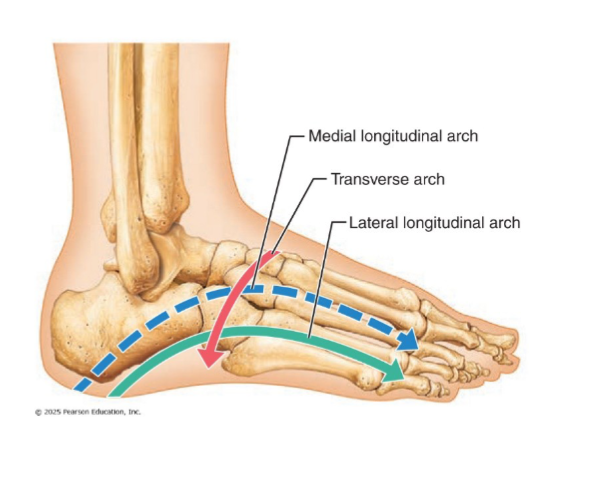
<ul><li><p>Maintained by interlocking foot bones, ligaments, and tendons</p></li><li><p>Allow foot to bear weight</p></li><li><p>Three arches</p></li><li><p>flat foot= collapse of medial and longitudinal arche, walking = overpronation=foot rolls inward too much </p></li><li><p>arches too high cause stress on lateral structures </p></li><li><p>plantar fasciitis: band of tissue runs along </p></li></ul><p></p>
32
New cards

3 arches of the foot

  • Lateral longitudinal: low curve that elevates lateral part of foot

  • Medial longitudinal: arch curves upward

  • Transverse: runs obliquely from one side of foot to other
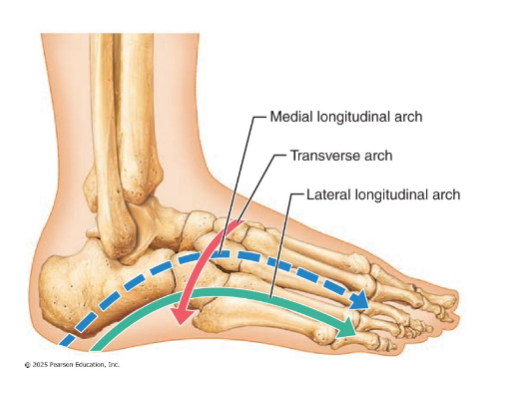
<ul><li><p> Lateral longitudinal: low curve that elevates lateral part of foot</p></li><li><p>Medial longitudinal: arch curves upward</p></li><li><p>Transverse: runs obliquely from one side of foot to other</p></li></ul><p></p>