8 anxiety - Agoraphobia
 Call Kai
 Learn
Learn Practice Test
 Spaced Repetition
 Match
Match Flashcards
 Knowt Play
1/30

There's no tags or description
Looks like no tags are added yet.
Name | Mastery | Learn | Test | Matching | Spaced | Call with Kai | Chat |
|---|
No analytics yet
Send a link to your students to track their progress
31 Terms
Westphal in 1871
Who first coined the term “agoraphobia” and when?
Observing three males who experienced intense anxiety
when walking across open spaces.
What triggered the identification of agoraphobia according to Westphal?
Palpitations
blushing
trembling
sensations of heat.
What physiological symptoms of anxiety did Westphal describe in agoraphobia?
one of the most disabling
one of the most challenging phobias to treat.
How is agoraphobia characterized today?
marked fear and avoidance
of being alone, or in public places
from which escape might be difficult or help unavailable
in case of sudden incapacitation (عجز مفاجىء)
How did the APA (1980) define agoraphobia?
a type of anxiety disorder in which
a person fears and avoids
places or situations that might cause panic
and make them feel trapped, helpless, or embarrassed.
What is agoraphobia?

Actual or anticipated situations
Being alone outside the home
Using public transportation; traveling in a car, bus, or airplane
being in crowded areas (standing in line)
being in enclosed places such as shops and cinema or being on a bridge جسر or in an elevator.
being in open spaces; (markets, parking lots)
being in places where escape might be difficult.
Active avoidance of all fear-provoking situations and becoming housebound for prolonged periods.
Feelings of detachment or estrangement غربةfrom others, feelings of helplessness, and dependence upon others.
Anxiety or panic attack (acute severe anxiety).
What situations do people with agoraphobia commonly avoid? (What are agoraphobia symptoms?)
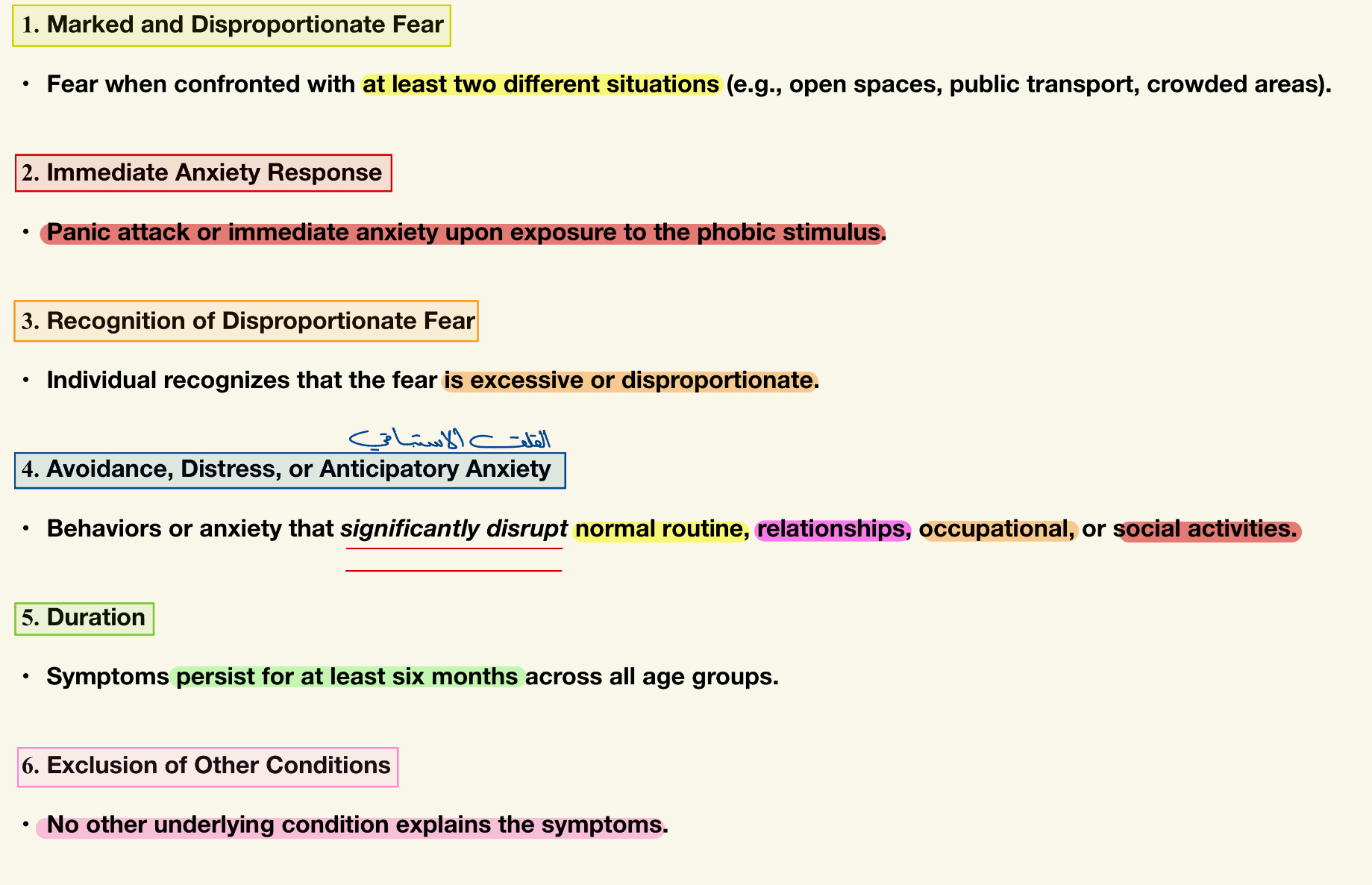
What are the DSM-5 criteria for agoraphobia?
Approximately 1.7%
What is the prevalence of agoraphobia among adolescents and adults?
Women more
2:1
How does the prevalence of agoraphobia differ between men and women?
► Usually in late adolescence
► or early adulthood (before 35)
► it can also occur in childhood.
When does agoraphobia typically onset?
► Children fear becoming lost
► adults fear panic-like symptoms
older adults fear falling.
How do fear thoughts in agoraphobia change with age?
Other anxiety disorders (such as panic disorder or specific phobia)
depressive disorders.
Which disorders commonly co-occur with agoraphobia?
Most people develop it after having one or more panic attacks,
which causes them to worry about another attack
and avoid places where it may happen again.
How does agoraphobia usually develop?
Because they often feel unsafe, especially where crowds gather.
Why do people with agoraphobia have difficulty in public places?
They may feel the need for a companion, such as a relative or friend, to accompany them.
What strategy might a person with agoraphobia use to go to public places?
It can be so overwhelming that a person may feel unable to leave home.
How severe can the fear in agoraphobia become?
Because many sufferers find ways to avoid the situations that trigger their phobia.
Why is agoraphobia often unreported?
Agoraphobic situations must almost always create fear and anxiety that are out of proportion to the actual danger,
these signs typically last for a minimum of six months.
What criteria must be met for agoraphobia to be considered a diagnosis?
It can cause serious disability
some people are unable to work
rely heavily on family members for
shopping
household errands
accompanying them outside the “safety zone.”
How can agoraphobia affect daily functioning?
People may become housebound for years, resulting in impaired relationships.
What long-term effect can agoraphobia have on social relationships?
More than one-third 1/3
What proportion of people with agoraphobia do not leave their home or cannot work?
A combination of life experiences, psychological traits, and/or genetic factors.
What factors contribute to the development of agoraphobia?
61%
making it the phobia most strongly linked to genetic predisposition.
What is the reported heritability of agoraphobia?
Having panic disorder or other phobias
responding to panic attacks with excessive fear and avoidance
having an anxious or nervous temperament
Relative with agoraphobia
What individual risk factors contribute to agoraphobia?
Experiencing stressful events (death of a parent, being attacked or mugged)
being raised in a household with little warmth and high overprotection.
What environmental factors are associated with developing agoraphobia?
false
people with social anxiety disorder must develop agoraphobia✅❌
True
people with social anxiety disorder not necessarily develop agoraphobia✅❌
► agoraphobia: results from fear of panic attacks
► SAD: fear of social interactions.
What is the main cause of agoraphobia compared to social phobia?
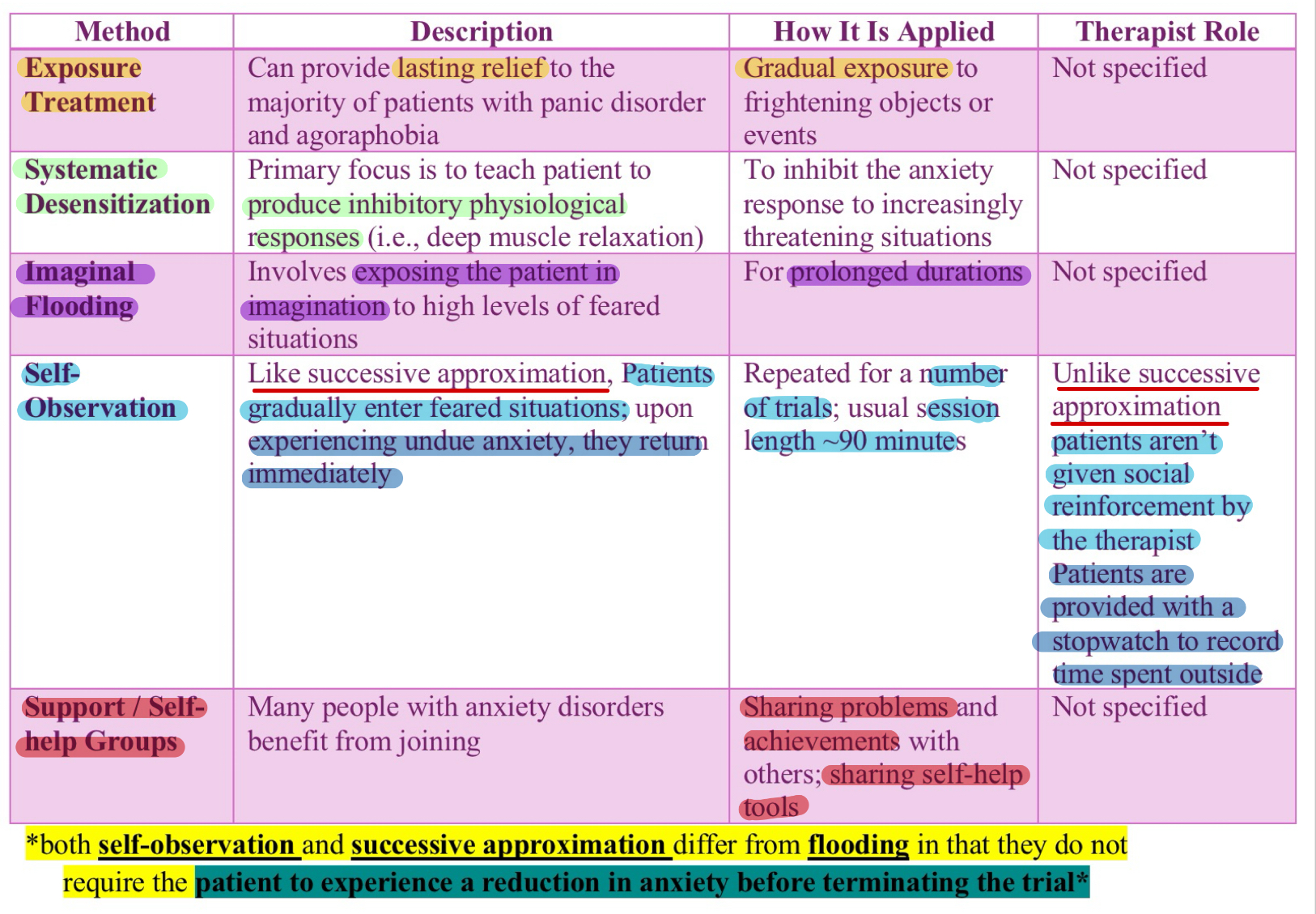
What treatments can be provided to agoraphobia patients?
by Emmelkamp and colleagues
The self-observation procedure for treating agoraphobia was introduced by?