FINAL ( GOOD LUCK!!!)
 Studied by 0 people
 Call Kai
 Learn
Learn Practice Test
 Spaced Repetition
 Match
Match Flashcards
 Knowt Play
1/92

There's no tags or description
Looks like no tags are added yet.
Name | Mastery | Learn | Test | Matching | Spaced | Call with Kai |
|---|
No analytics yet
Send a link to your students to track their progress
93 Terms
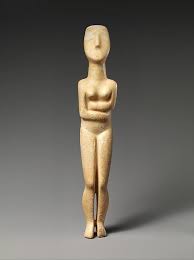
What were the figures shown in the image used for, what materials and colors were applied, and what key features define them?
These are Cycladic Folded-Arm Figurines.
They were likely funerary objects placed in graves, sometimes handheld for ritual or symbolic use. They were carved from white marble and originally painted with blue, red, and sometimes green, often in asymmetrical patterns that may represent tattooing.
Their features include sleek, abstracted forms, emphasis on flat surface decoration, painted wide-open eyes on the forehead, cheeks, thighs, and nose sides, and most depict nude female figures.
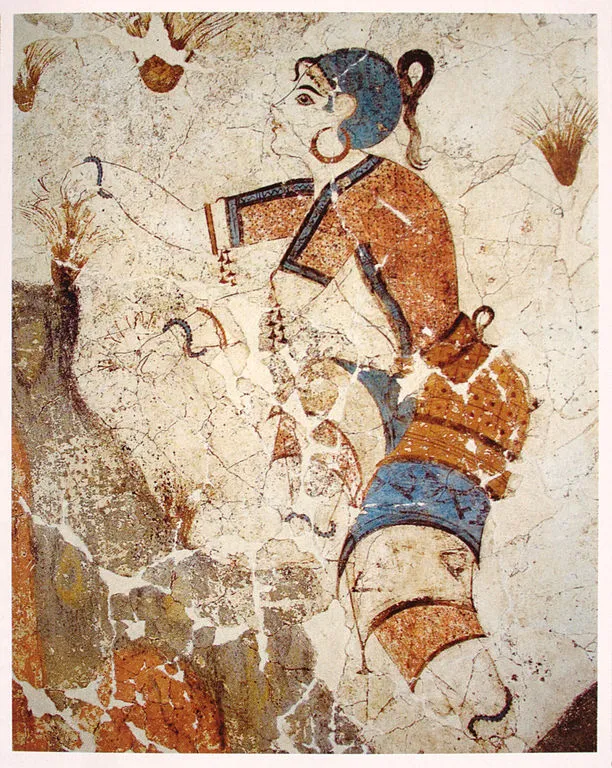
What is depicted in the fresco at Akrotiri? What was its purpose, and what Minoan artistic influences are visible?
Depiction & Purpose: Shows a young woman involved in a coming-of-age ceremony (picking crocuses), girls would have their hair shaved up to a ponytail until the transition to adulthood.
Minoan Influence (New Palace period):
Color and detail: Vivid color selection and intricate detailing.
Clothing and accessories: She wears a flounced skirt, short-sleeved open-breasted bodice, large earrings, and bracelets, reflecting Minoan style and emphasis on elaborate costume and adornment.
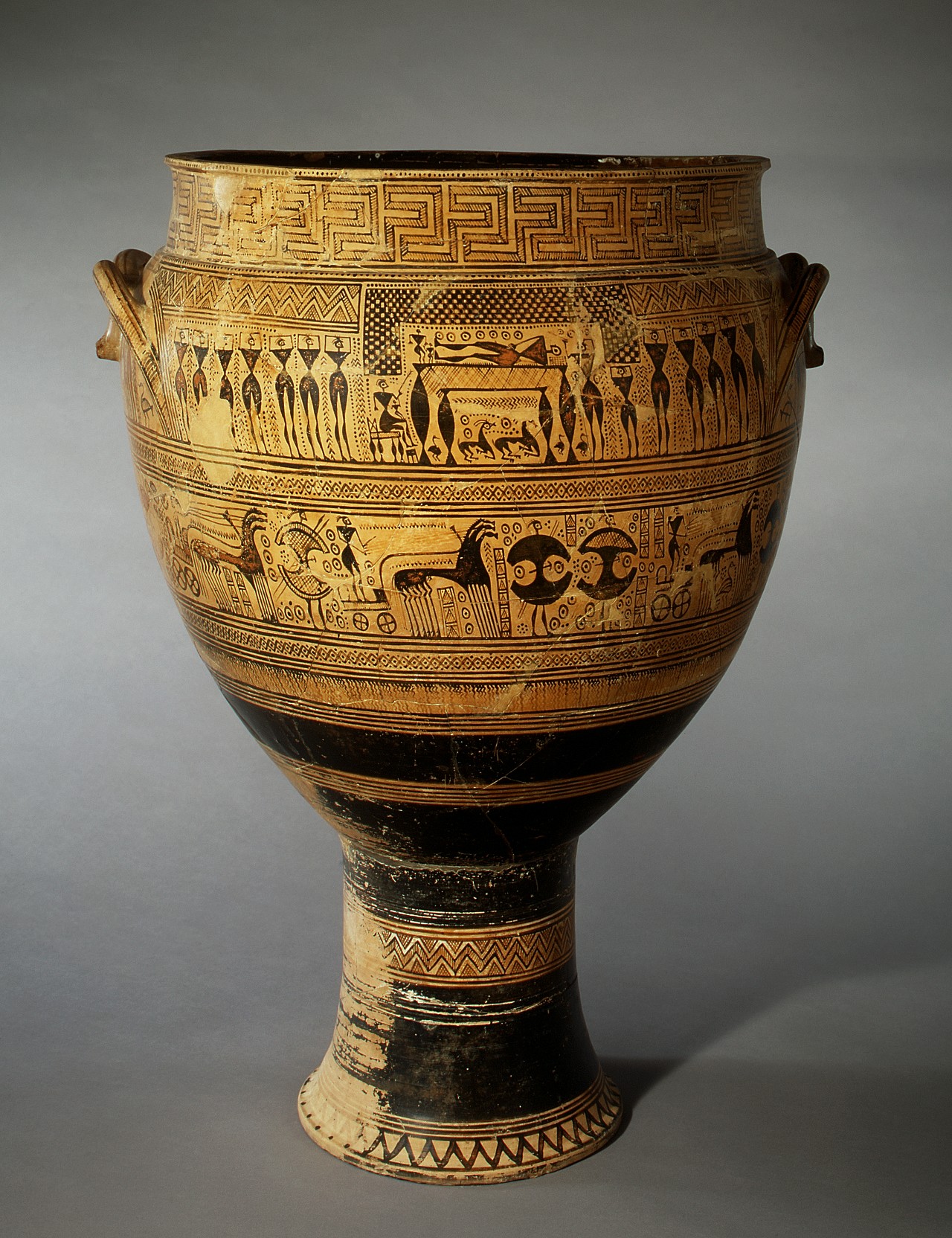
When was the Krater from the Dipylon Cemetery created, what was it used for, and what is shown in its decoration?
It was made around 750–735 BCE (during the Geometric Period) in Athens. The vessel was used as a grave marker for an important person, and its decoration shows funerary rituals—the deceased lying on a platform surrounded by mourners tearing their hair in grief. Below that, chariots and soldiers are shown in procession, all drawn with geometric patterns and shapes typical of the time.
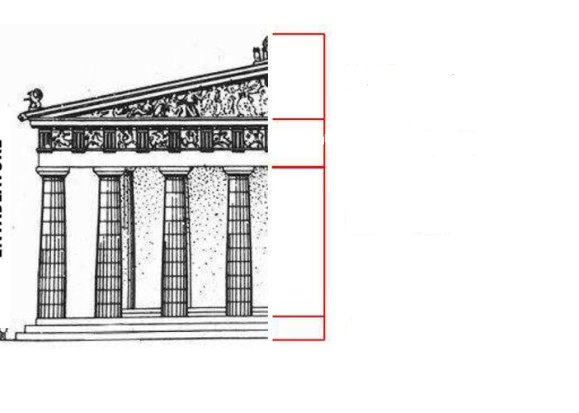
What is this architecture?
Pediment
Entablature
Column
Base
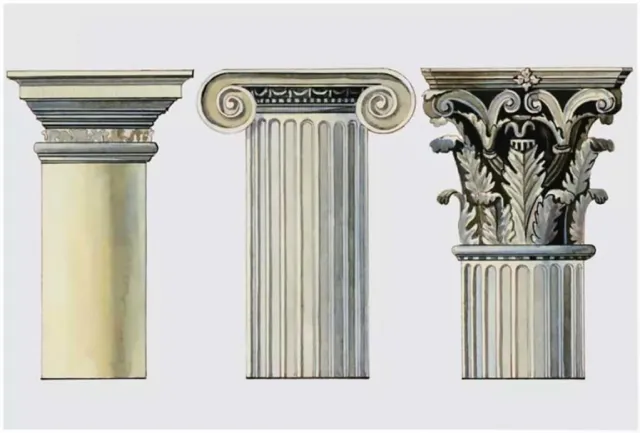
What are the three main types of Greek columns, and how do they differ in when they were made, their appearance, and their symbolic meaning or use?
Doric Column
Period: Archaic
Appearance: Thick, short, no base, plain rounded capital
Symbolism/Use: Considered male, conveys strength, used for large temples
Ionic Column
Period: Archaic, 6th century BCE
Appearance: Taller, thinner, has a base, capital with scroll-like volutes
Symbolism/Use: Considered female, elegant and graceful, used for smaller buildings or interiors
Corinthian Column
Period: Later (5th century BCE)
Appearance: Slender, has a base, capital with ornate acanthus leaves
Symbolism/Use: Floral and decorative, represents beauty and refinement, rarely used by Greeks but later popular with Romans
What is the word for the top part of a column that sits above the shaft?
It’s called the capital. The capital can have different designs depending on the type of column (plain for Doric, scroll-like for Ionic, ornate for Corinthian).
When were the Dying Warrior sculptures made, how do the east and west pediment figures differ in style, and what is being depicted?
The Dying Warrior figures were made during the transition from the Archaic to Early Classical period (East Pediment c. 490 BCE, West Pediment c. 480 BCE). They depict warriors struggling in death:
East Pediment: The figure still shows the Archaic smile, a stylized expression that is less realistic, with a slightly rigid posture.
West Pediment: The warrior appears more human and naturalistic; you can feel the pain and struggle as he tries to rise while dying, with a realistic body posture and softer flesh.
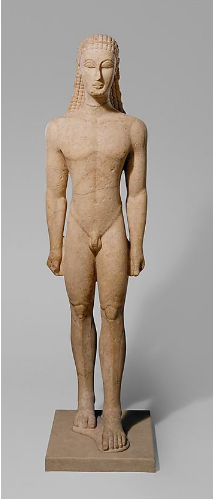
What is the name of this Archaic Greek freestanding statue, how does it reflect Egyptian influence, and what was its purpose?
The statue is called the Anavysos Kouros.
Egyptian Influence: It copies Egyptian proportions and posture, with one foot forward, linear anatomy, and symmetry.
Purpose: Served as a grave marker for a fallen warrior, symbolizing valor rather than representing a specific individual.
Additional Features: Shows bulging muscles, heroic strength, and careful anatomy, the Archaic smile, and wiglike hair. The figure is meant to represent the ideal male figure.
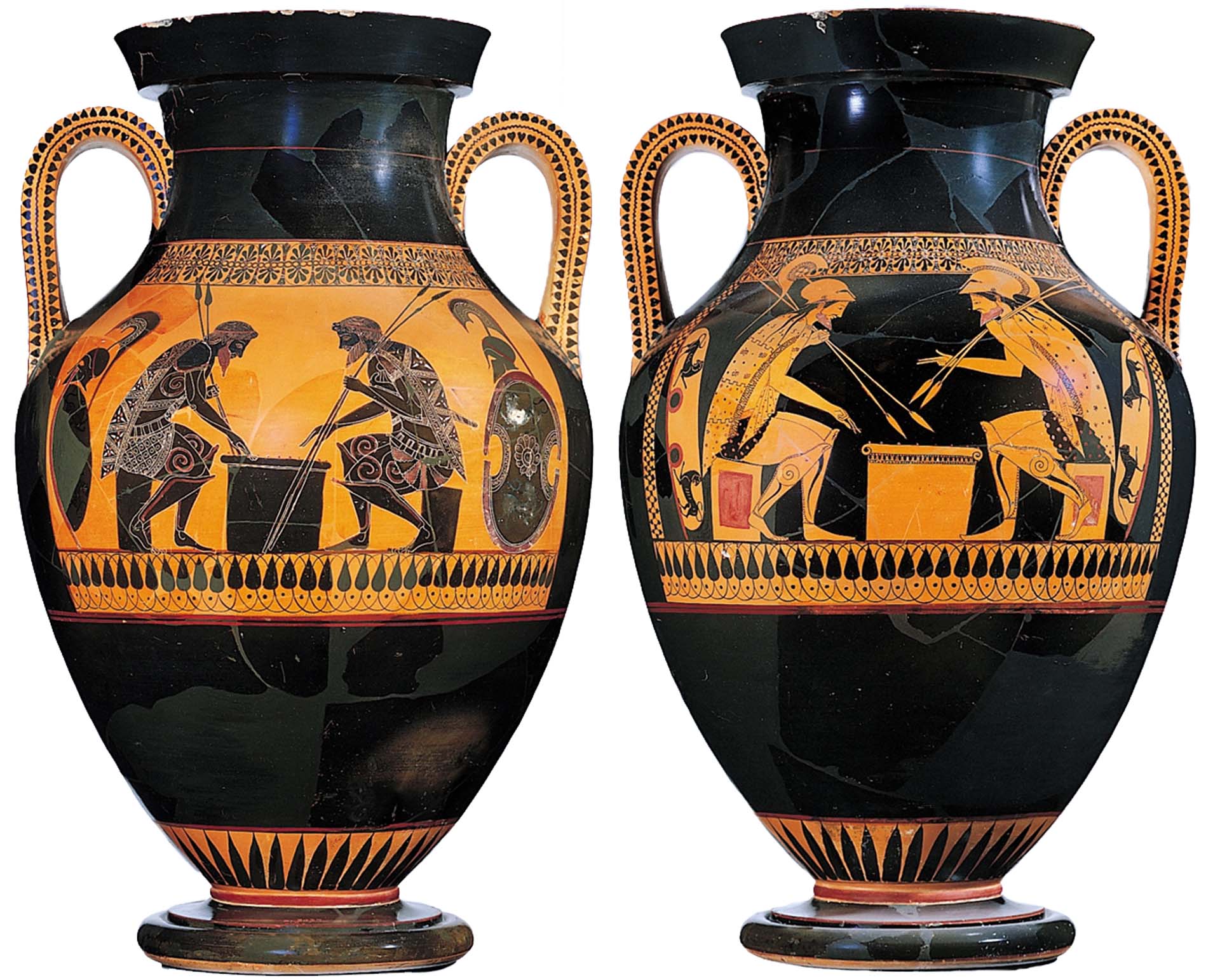
What is the name of this type of Greek pottery, when was it made, and how do the two main techniques differ in style and detail?
Name of Pot: Depends on the technique used (one is called black-figure, the other red-figure).
Technique 1 (c. 700 BCE, originated in Corinth; adopted in Athens c. 625–600 BCE):
Figures are dark-colored on a light background.
Details are incised into the figures.
Women were painted with added white, men remained black.
Technique 2 (c. 525–520 BCE, invented in Athens):
Background is painted, leaving the figures in red (negative space).
Details are painted with a brush, allowing more flexibility.
Human figures appear livelier, with a more developed sense of bodily form.
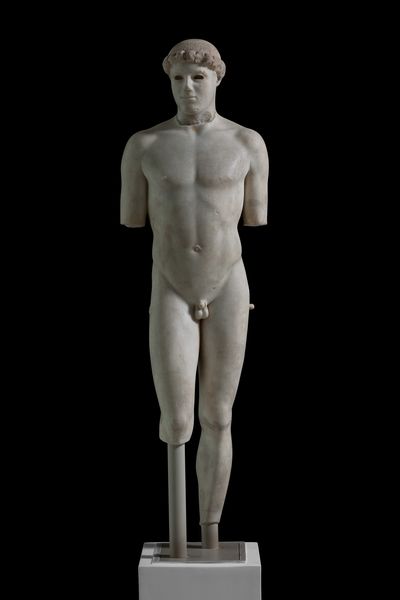
What is the name of this Greek sculpture, when was it made, and how does it differ from earlier kouros in style and posture?
The sculpture is called the Kritios Boy, created around 480 BCE during the Early Classical period.
Differences from Archaic Kouros:
Features softly rounded body forms, broad facial features, and a calm expression instead of the stiff, rigid posture of Archaic kouros.
Shows the beginnings of contrapposto: the asymmetrical arrangement of shoulders and hips creates a more natural, balanced stance.
A slight turn of the head invites the viewer to move around the figure, giving a sense of self-confidence and lifelikeness.
Earlier Kouros: Stiff, stick-like figure with rigid frontality and limited sense of movement.
What are the different fresco styles in Greek wall painting, how were they used, and how were they created?
Fresco Styles:
True (wet) fresco: Pigments are applied to wet plaster, allowing the colors to bond with the wall as it dries.
Secco (dry) fresco: Pigments are applied to dry plaster, sometimes with a binder like egg or glue, but the paint does not become part of the wall.
Usage:
Used to decorate tombs, walls, and sanctuaries.
Common themes include rituals, symposia (banquets), and the transition between life and death.
Example: The Tomb of the Diver (discovered 1968, southern Italy) features scenes symbolizing the passage from life to the afterlife.
Technique:
Wet fresco: Apply pigments while plaster is wet → colors sink in → very durable.
Dry fresco: Apply pigments to dry plaster → colors sit on surface → less durable.
What posture was used in 5th-century BCE Greek sculpture, and how did it change in the 4th century BCE?
5th Century BCE (Polykleitos):
Posture Name: Contrapposto – an asymmetrical stance where the line of the shoulders contrasts with the hips while maintaining balance.
Figures have ideal proportions (six-and-a-half or seven heads tall) and a balanced, harmonious posture.
4th Century BCE:
New Canon: Figures are taller (eight or more heads) with a more twisting, sensual, and off-balance posture.
Shows greater movement and expressiveness, moving away from the rigid harmony of earlier contrapposto.
What are the main differences between Classical and Hellenistic Greek art in style, expression, and viewer experience?
Classical Style:
Balanced and harmonious compositions.
Smooth, evenly illuminated surfaces.
Emphasizes serenity, stability, and ideal beauty.
Engages the viewer intellectually rather than emotionally.
Hellenistic Style:
Theatrical and complex compositions.
Focus on interaction of space and form.
Uses dramatic contrasts of light and shade and high relief.
Displays extreme expressions: pain, stress, anger, fear, despair.
Engages the viewer emotionally, encouraging empathy with the figures.
When did the Greeks begin creating sculptures of nude women, and how did the Romans later engage with these works?
Greeks: Began sculpting nude female figures in the late Classical period (4th century BCE), later than male nudity, which was common from the Archaic period. A famous example is Praxiteles’ Aphrodite of Knidos.
Romans: Reproduced Greek originals, often in marble, preserving the forms and styles of the Greek nude female figures.
Comparison to males: Male nudity was idealized and common earlier (from Archaic kouros), while female nudity was introduced later, emphasizing beauty, sensuality, and divine qualities rather than heroic strength.
The Old Kingdom pyramids were built for three kings:
Khufu
oldest, Biggest, Father and grandpa
Khafre
Son, Known for the sphinx, best preserved
Menkaure
Newest, Grandson
The main purpose of the Book of the Dead was to guide the deceased to the afterlife and ensure their acceptance by the gods
True or false
True
The first identified architect in history was…
Imhotep
Which statement is not correct?
a) The palette of Narmer shows United Egypt
b) Hatshepsut was always depicted as a woman in her statues
c) The function of the cash that you was to house the spirit of the deceased
d) The Armada Period introduced monotheism focus on the god Aten
Hatshepsut was always addicted as a woman her statues
True or false: The seated scribe represents an idealized, athletic figure like Khafre
False
Where is the Upper and Lower Egypt?
Upper Egypt is south while Lower Egypt is north because the river flows from south to north
Describe three main differences between a Ziggurat and an Egyptian pyramid in terms of purpose and construction
Purpose:
Ziggurats were temples for worship, while pyramids were tombs for the dead.
Location:
Ziggurats were placed on the middle of the city, whereas pyramids were in necropolis.
Material & Technique:
Ziggurats were typically made of mud-brick, while pyramids were constructed from limestone or granite, reflecting different building resources and methods.
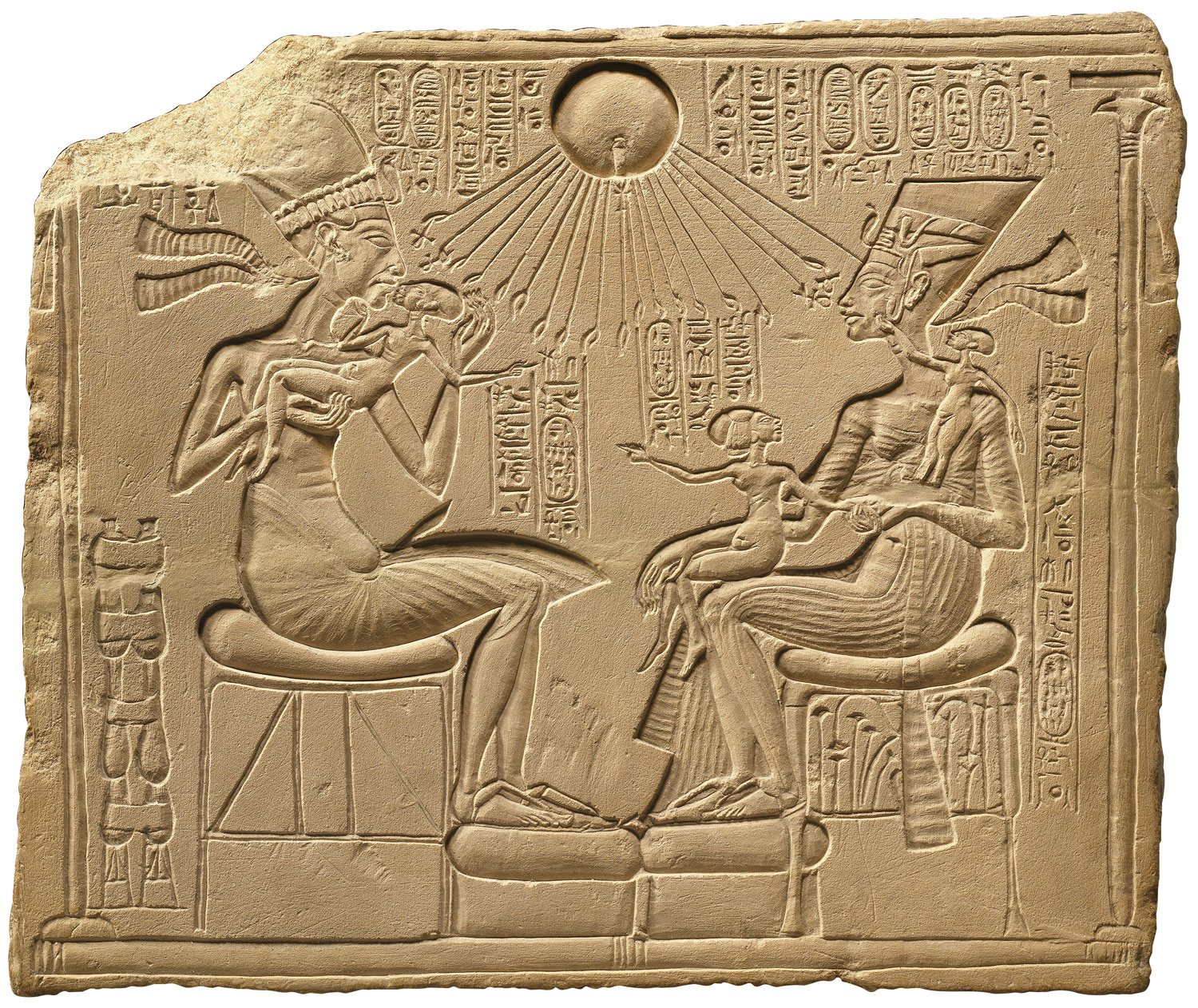
When was the relief created, and what does it depict? Explain the subject matter and its significance.
This relief is called “Relief of Akkhenaten, Nefertiti and three daughters” (1353 to 1336 BCE)
The relief shows the pharaoh Akkhenaten, Queen Nefertiti, and their three daughters sitting together under the rays of the sun god Aten, whose hands extend down to give the family the ankh, the symbol of life.
They were drawn in an alien like manner due to the fact that they wanted to look different than everyone else. Queen of Nefertiti is sitting on the throne more decorated, while I Akkenaten is sitting in a more plain one, showing how equal he treated his wife.
This relief has religious meaning, as a symbolizes the divine connection between Aten and the royal family, who are believed to be Aten’s chosen representatives on Earth.
Match the gods goddesses with their descriptions
The goddess represents truth and balance
The god who weighed the heart of the deceased against the feather of truth
The god of afterlife, the dead, and Resurrection
Falcon god of kingship, the sky, and protection
Ma’at
Anubis
Osiris
Horus
What are the two functions of the falcon in the statue of Khafre?
Divine function:
The falcon (Horus) symbolizes divine protection and kingship, shows close relationship with the god
Structural function:
The falcon is carved behind Khafre’s head to give support and make sure the head doesn’t break.
The Sumerians invented the first system of writing called….
Cuneiform
The Persians won the loyalty of their subjects by tolerating..
Native customs and religions
Ziggurats function symbolically as..
Bridges between the earth and the heavens
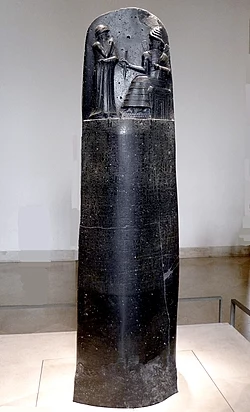
What is this object and what images and information you can find on it? (Please mention the material, time. And all the information about the image in the top and writing and writing on the bottom)
The Code of Hammurabi (1792 to 1750 BCE) (babylon)
Made of black basalt
Has 282 rules, most deal with commercial and property matters. The laws are ”god-given”, “An eye for an eye and a tooth for a tooth”
At the top of the stele, Hammurabi is praying before Shamash, the sun god and the god of justice;
There are rays rising from Shamash's shoulders as he sits on the throne; he has a horned cap, which equals divinity
On his feet, the “stairs” symbolize the mountains
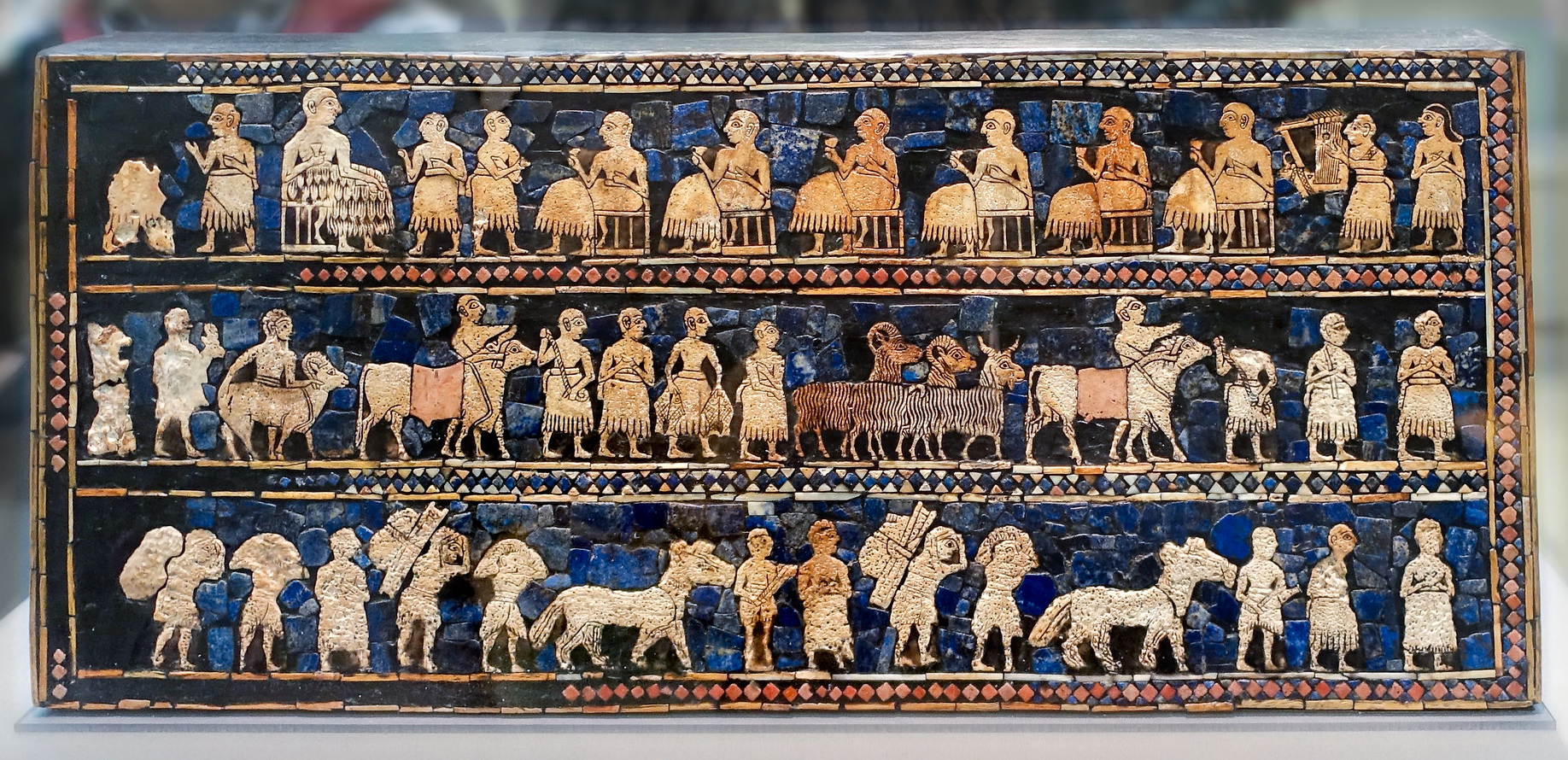
What is this object and what image is an information can you find on it? (Please mention the material, time. And all the information about the image on both sides)
Standard of ur (2600 to 2,500 BCE)
Wooden box with lapis lazuli (Shows the trading from Afghanistan), Function unknown (Maybe a “standard banner”)
They are two sides;
Battle side:
Bottom register
War intensity grows from left to right
Middle register
Sumerian soldiers strip armor from enemies: right side shows more chaos and defeated poses
Top register
Defeated army from right to ruler, showing surrender
Peace side:
Bottom two registers
Servants bringing supplies for a large banquet
Top register
Ruler supervises the feast, facing the guests with drinking cups raised
Far right
Woman sings, music played with lyre
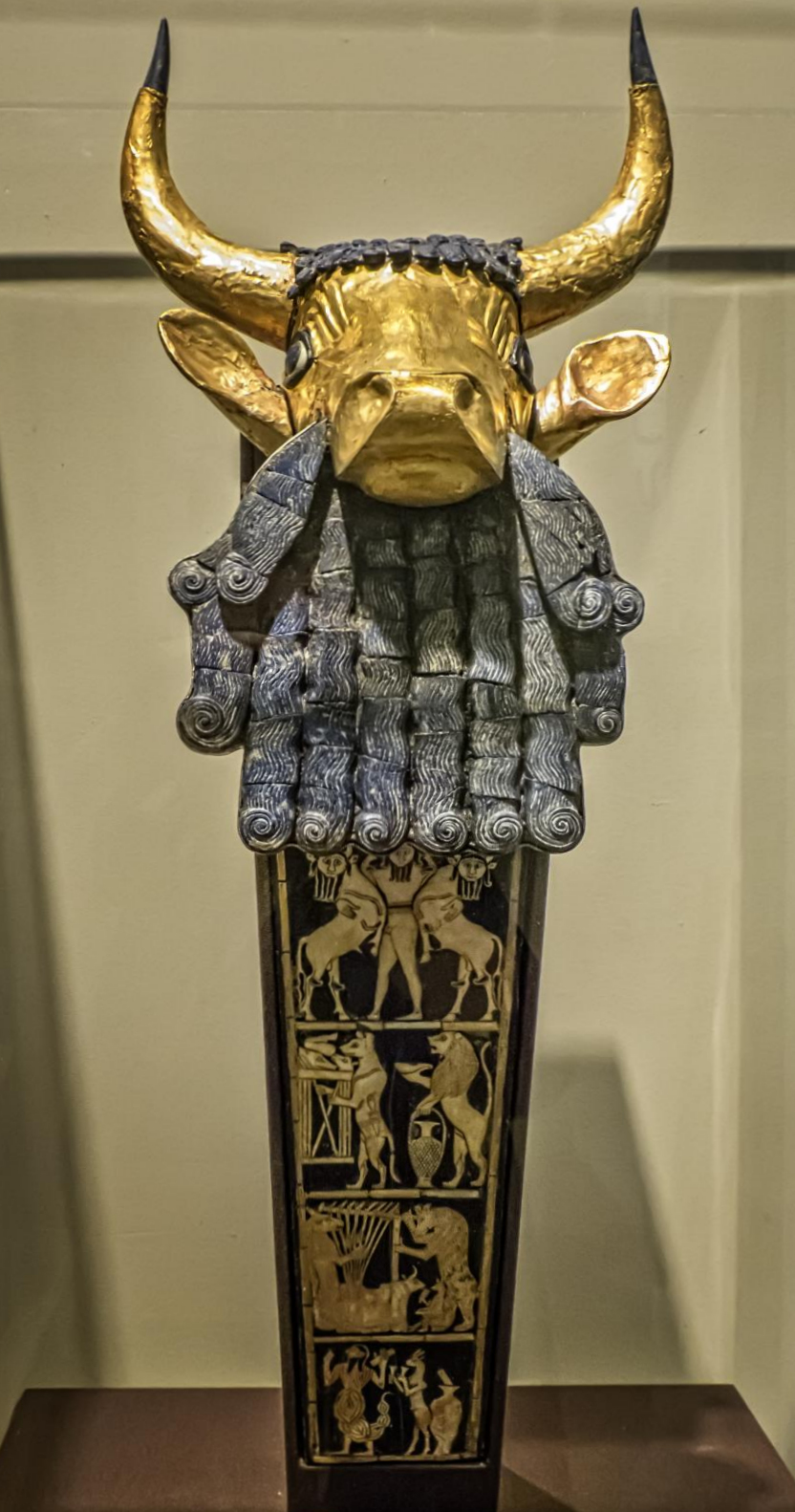
Match the votive and funerary objects
Bullhead lyre
Warka Vase
Bull head lyre
Funerary
Warka Vase
Devotional
Who is Naramsim?
An Akkadian ruler and the third after Sargon the Great, His helmet sprouted horns, making him a god.
The Ishtar gate is decorated with…..
Dragons (Sacred to Marduk)
Bulls associated with Adad, the storm god
Lion associative Ishtar
All the statements are correct about Neolithic life, EXCEPT:
a) They had permanent houses and architecture
b) They used domestic animals
c) They had ceramic vessels and pottery
d) They had bronze tools
b) They had Bronze tools
Woman of Brassempouy
Lepenski Vir
Stonehenge
Altamira
Made with ivory, 30,000 BCE. It is one of the earliest examples of abstract art
People lived in Serbia, next to the Danube River, about 6,3005,500 BCE, known for their unique trapezoidal houses, burials (They were buried under the house), and stones depicting human fish hybrids
Not the largest or the oldest, but one of the most complex megalithic sculptures
The cave paintings have cultural effects by painting over and around the natural irregularities of rocks
Prehistoric includes all of human existence before the development of…..
Writing
What new technologies and Lifestyles emerged in the Neolithic period?
a) Using bronze weapons
b) casting iron
c) writing
d) Farming and taming animals
Farming and taming animals
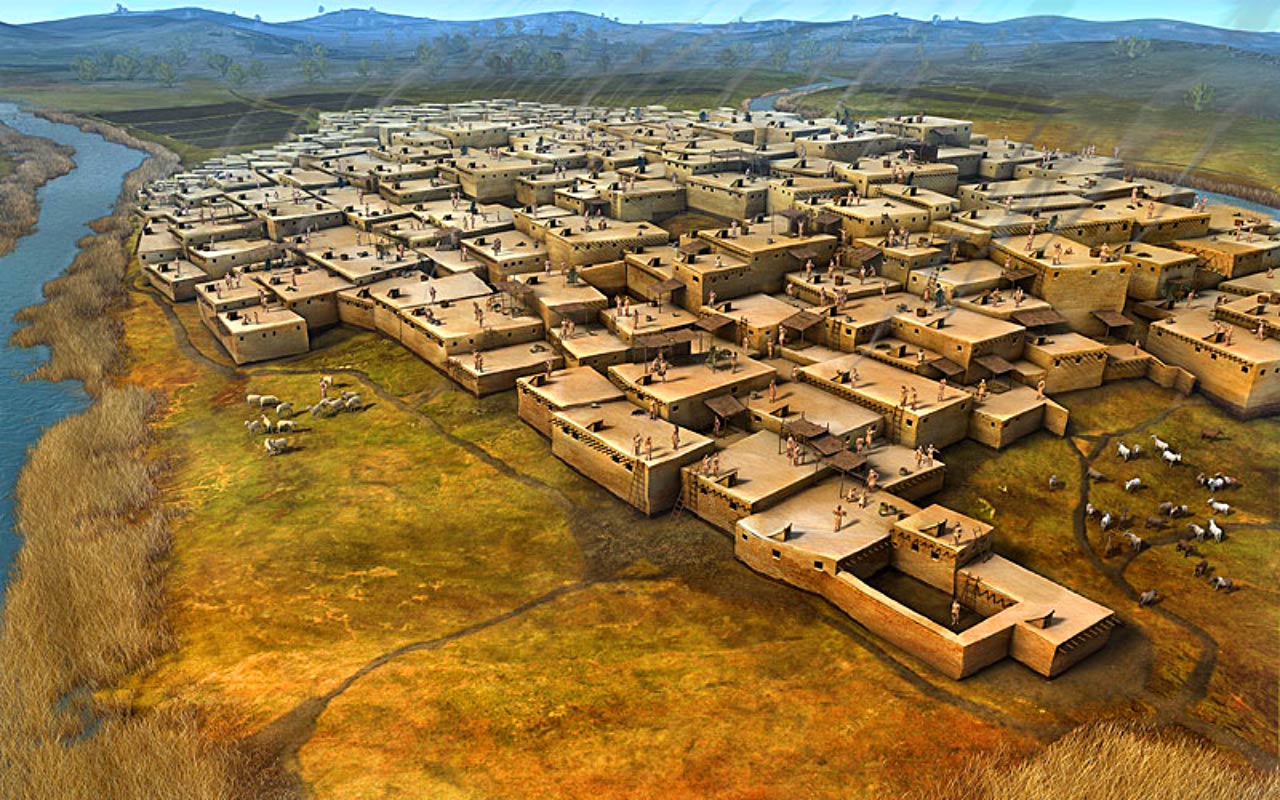
What settlement is shown in the image, where is it located, and what are two notable features of its society and burial practices?
This is the Çatalhöyük settlement in modern-day Turkey. It is known for relatively high levels of gender equality, and its inhabitants buried bodies under the floors of their houses.
What techniques were used in cave painting? name four of them
Spraying fingers with two piece of charcoal
Blocks of ocher
Paintbrush made of hair or moss
Engraving
What evidence supports the belief that the nude woman (Venus of Willendorf) was meant to be held in the hand? Choose all answers that apply
a) The figure has no feet and can’t stand on its own
b) The figure is symmetrical
c) The figure is small
d) The figure is carved from limestone
The figure has no feet and can’t stand on its own
The figure is small
What prevents historians from knowing the original meanings of The nude Woman (Venus of Willendorf)? Choose all answers that apply
a) It’s historical context is unknown
b) It’s culture produced no known written documents
c) The object is broken and lost a lot of details
d) Interpretation can be clouded by modern biases
It historical context is unknown
It’s culture produced no known documents
Interpretation can be caught up by modern biases
Explain two common features between Newgrange (Ireland) And Stonehenge (England)?
Astronomical alignment
both were carefully designed to align with the movements of the sun
Megalithic construction
both for buit using massive stones, which are transported and arranged with careful planning
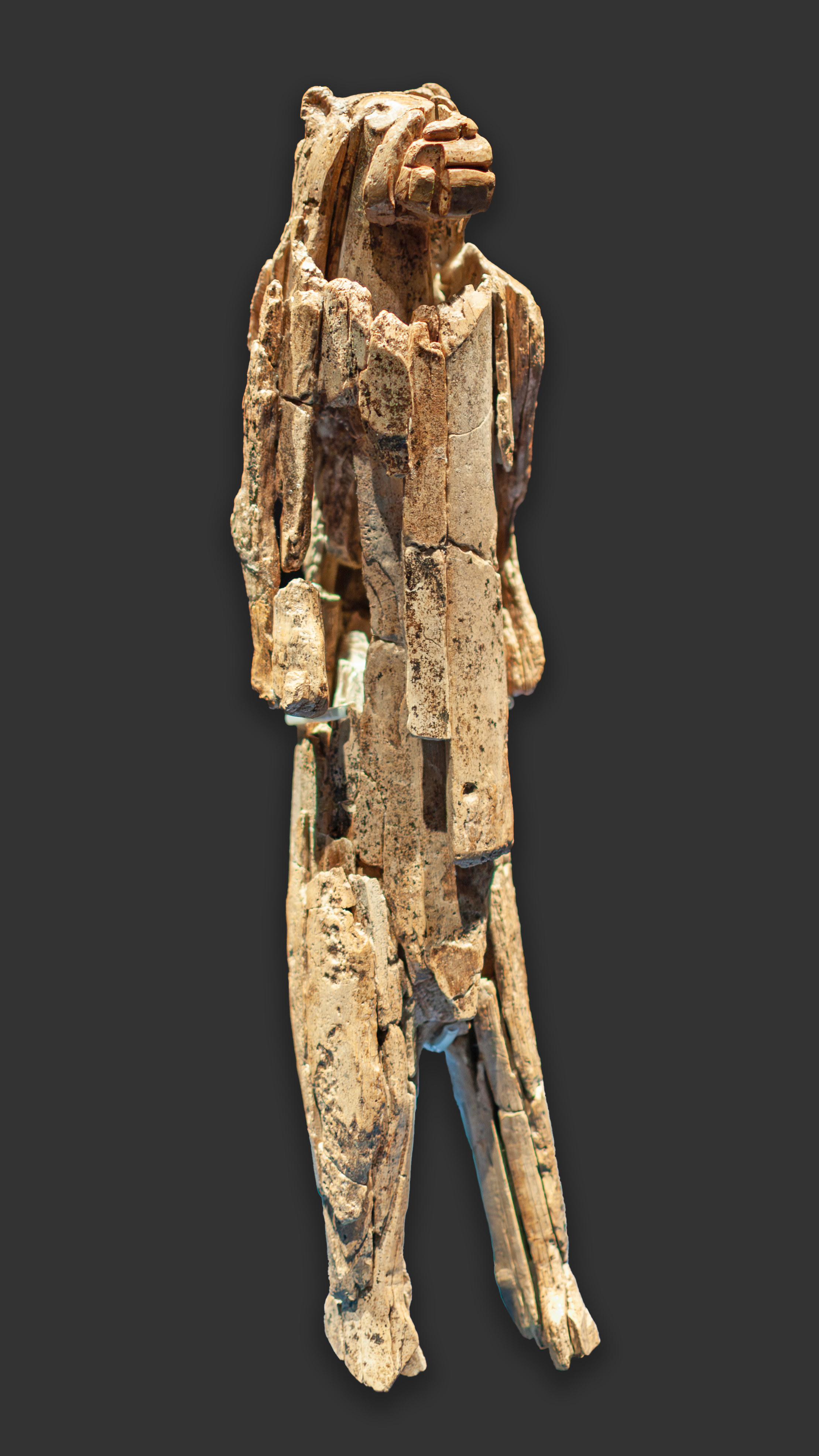
Why is a lion humans sculpture remarkable for the Paleolithic period? What material is it is made of? When was it made?
It was remarkable because it shows the earliest examples of human imagination, it combines the features of a human and an animal instead of what they usually saw in nature. Which suggest that early humans were capable of symbolic or mythical beliefs. It was carved out of mammoth ivory and it dates back to around 40,000 years ago (38,000 to 33,000 BCE). It also shows one which suggests that it was passed down, maybe to keep away evil or for good luck.
What are some differences between Greek and Etruscan Temple?
Material
Greek - stone, marble
Etruscan - wood, mud brick, terracotta
Column
Greek - all around
Etruscan - front only
Access
Greek - all sides
Etruscan - front only
Style
Greek - symmetrical
Etruscan - frontal/dramatic
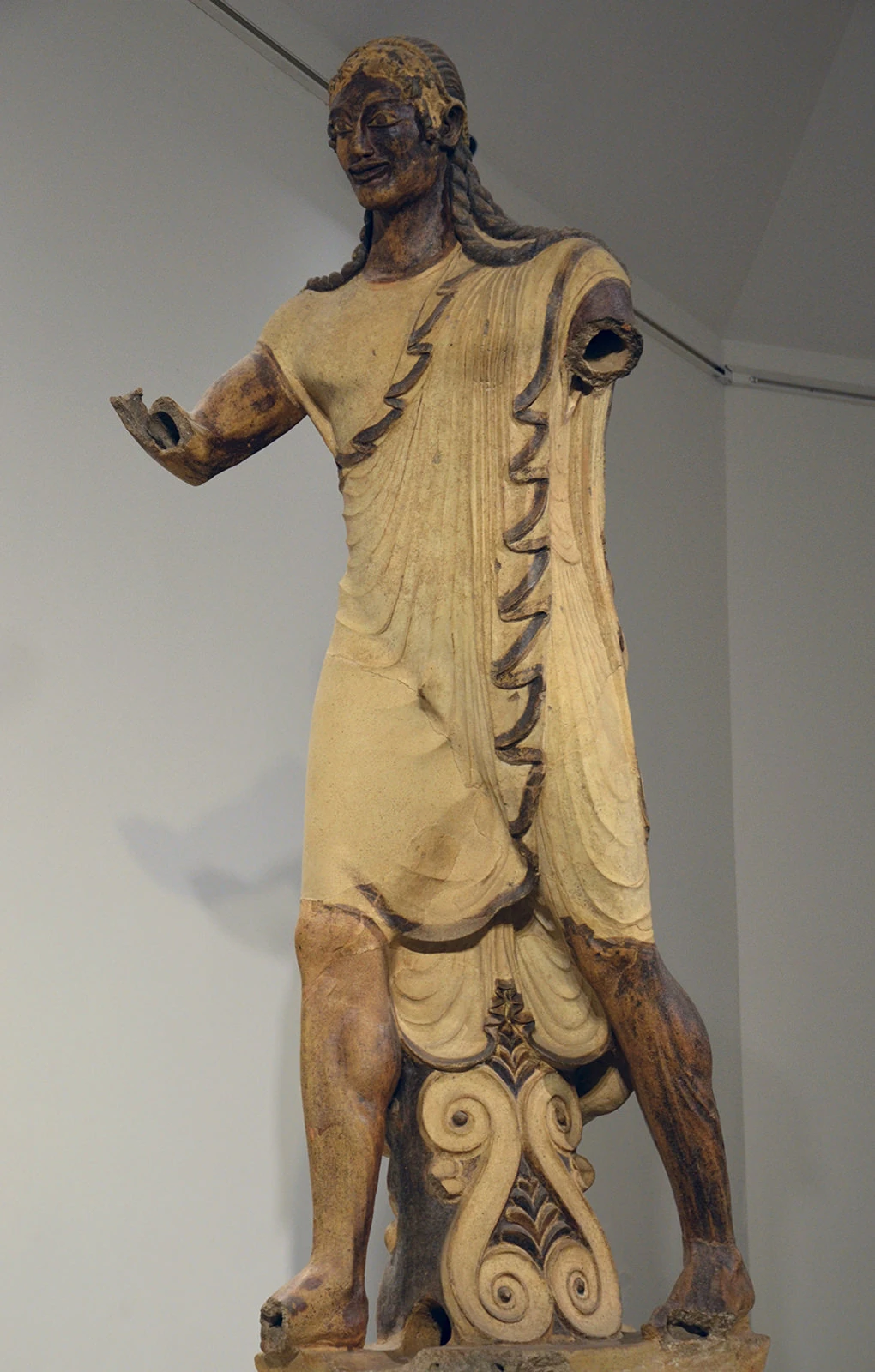
What are the differences and similarities in Apulu and Kourus?
Differences
Apulu is clothed, and has more motion in the pose
Kourus is more rigid, and nude
Similarities
well developed body
archaic smile
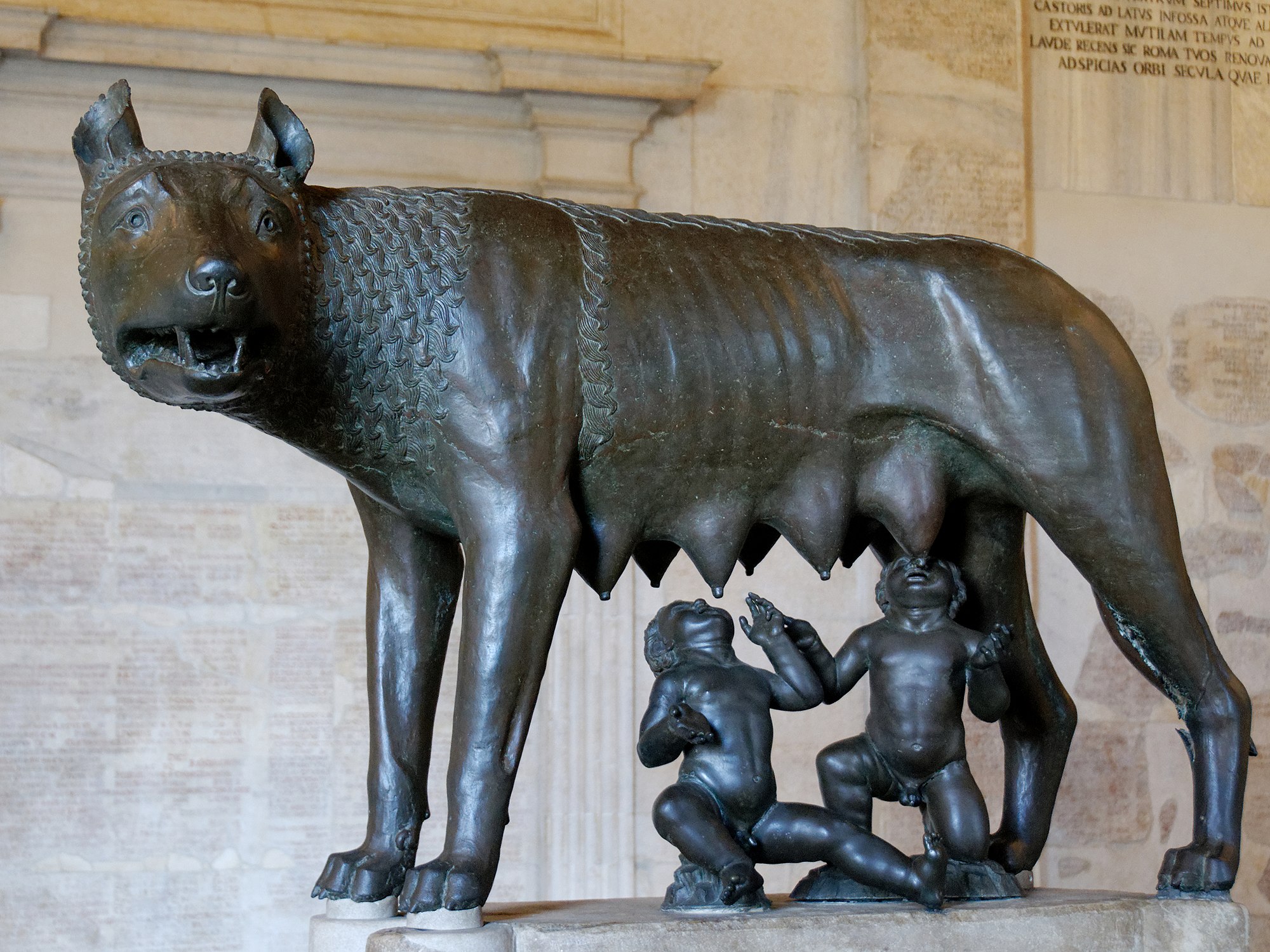
What is this sculpture? What does it depict?
She-Wolf
500 BCE or 800 CE
believed to be symbolic of the story of Romulus and Remus, the founders of Rome
The animal confronts us with a vicious snarl, tense body, thin flanks, and protruding ribs contrasting with her hanging milk-filled teats.
Story of the twins Romulus and Remus, legendary founders of Rome, who were nursed back to health by a she-wolf after having been left to die on the banks of the Tiber.
What happened to Roman art?
Romans went more realistic instead of perfect, the focused on individuality
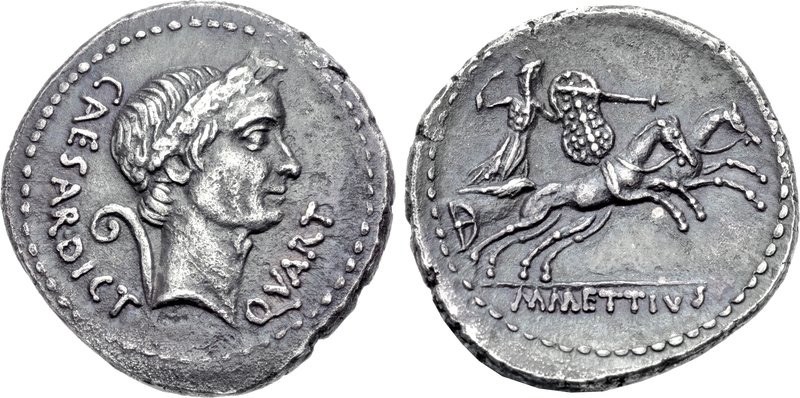
What was the coin that Julius Caesar made, what did it have on it, what did it symbolize?
Denarius was a widely circulated coin by the Roman’s.
Julius Caesar was the first Roman leader to place his image on a coin, it symbolized power, authority, and divine association.
Who is Agustus, what does his name mean?
Agustus (octavian) was a man adopted by JC, he became the first emperor after his death
(reign 27-14 CE)
Agustus = “Exalted” , “Sacred”
was given the title “Agustus” by the same senate who killed JC
What was the Pax Romana, and why is it important?
The Pax Romana (“Roman Peace”) was a period of relative peace and stability across the Roman Empire lasting roughly 27 BCE to 180 CE, allowing economic growth, cultural development, and expansion of trade.
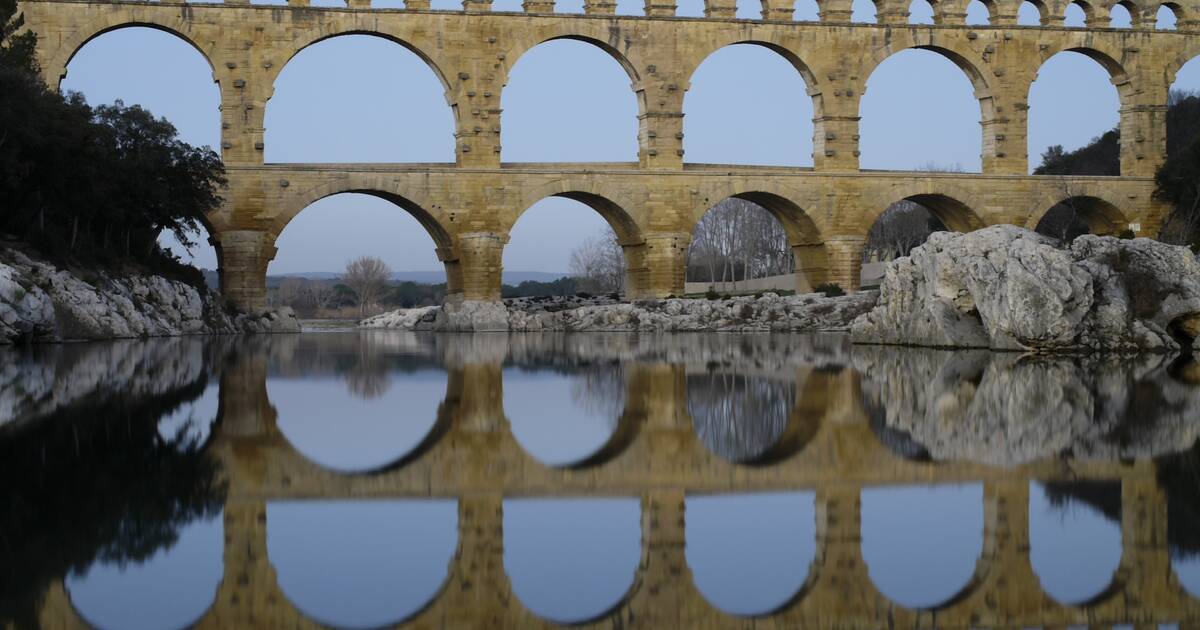
what is this? What does it do?
Pont du Gard
Early Roman masterpiece using round arch
Aqueduct, brought water up to 30 miles, supplied about 100 gallons per person /day
shows Roman engineering skills, balance, and harmony
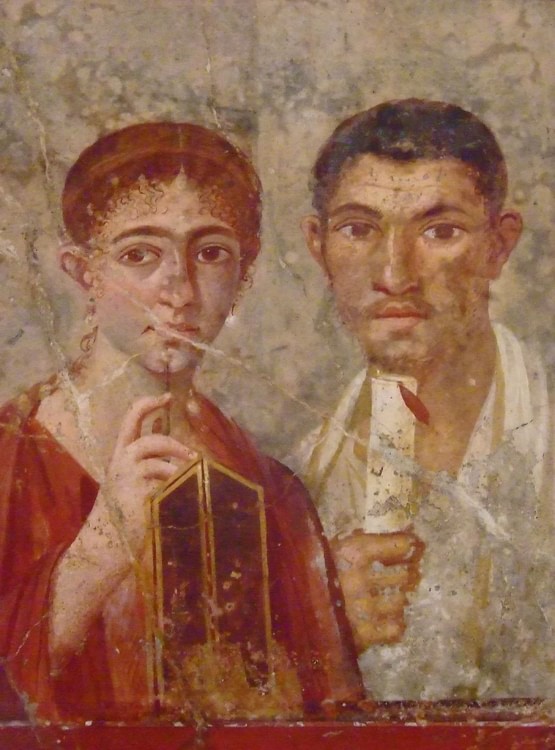
What is shown in the image, where is it from, and what subjects are depicted in its decoration?
This is a Roman fresco from the Villa di Guilia Felice in Pompeii (c. 60 CE). It shows Terentius Neo holding a scroll and his wife holding a stylus and writing tablet, and the villa walls were richly decorated with subjects such as mythology, erotica, architecture, trompe-l'œil, religious practices, sports, and family portraits
Arch of Titus
built by Domitian to honor Titus victory (capturing Jerusalum)
concrete and marble, had a bronze statue of Titus on top
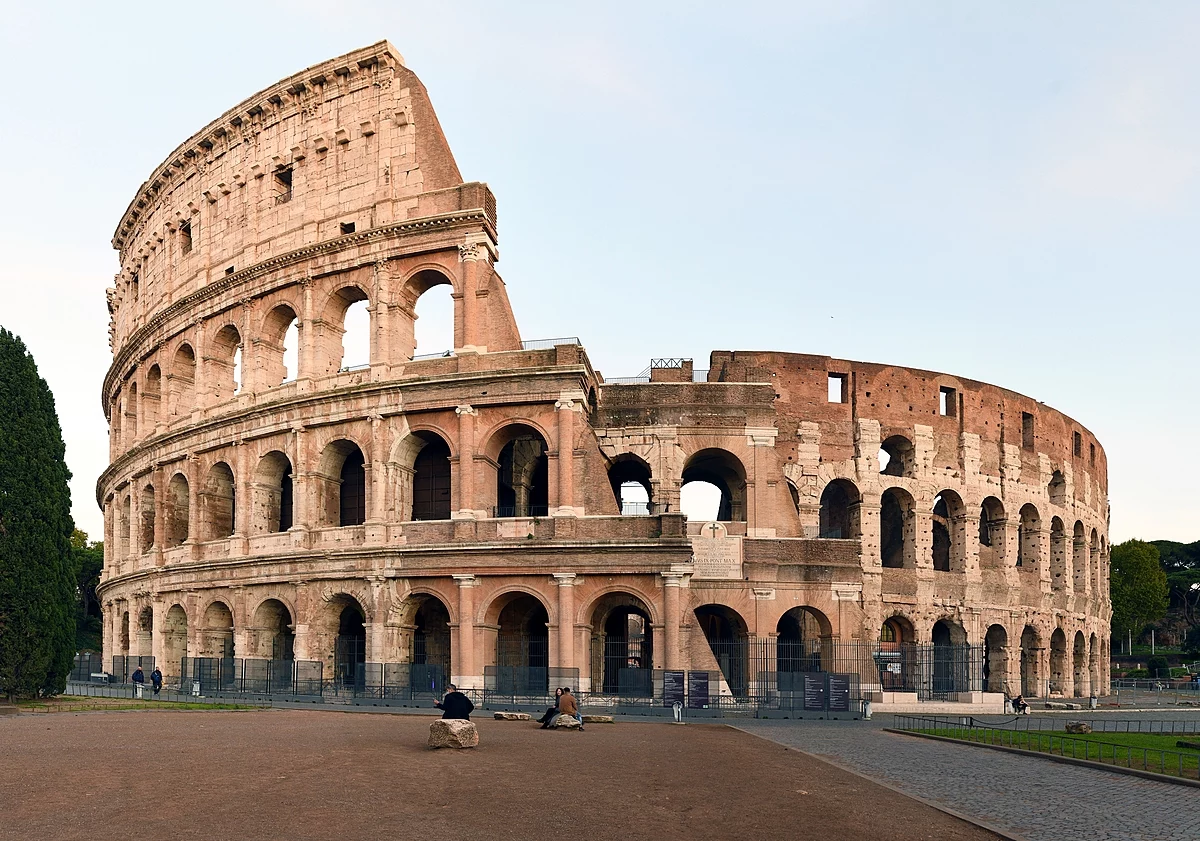
The colosseum
Flavian Amphitheater
(started by Vespian, finished by Titus)
Floor covered in sand, Arena = Sand
Events
- animal hunts
- gladiators
- acrobats
- trained animals
- mock sea battles
Seats (down → up)
- emperor + VIPs (best seats near arena floor)
- senators (front rows - podium lvl)
- knights
- roman men
- roman women + poor citizens
What is the “rule of four”?
Emperor Diocletian divided the Roman Empire
East ruled by Diocletian
West ruled by Maximianus (they shared the title “Agustus”)
Each ‘Agustus’ got a ‘Caesar’ to help and eventually take over
Augustus = Diocletian
Caesar = Constantinus
Augustus = Maxianus
Caesar = Galerius
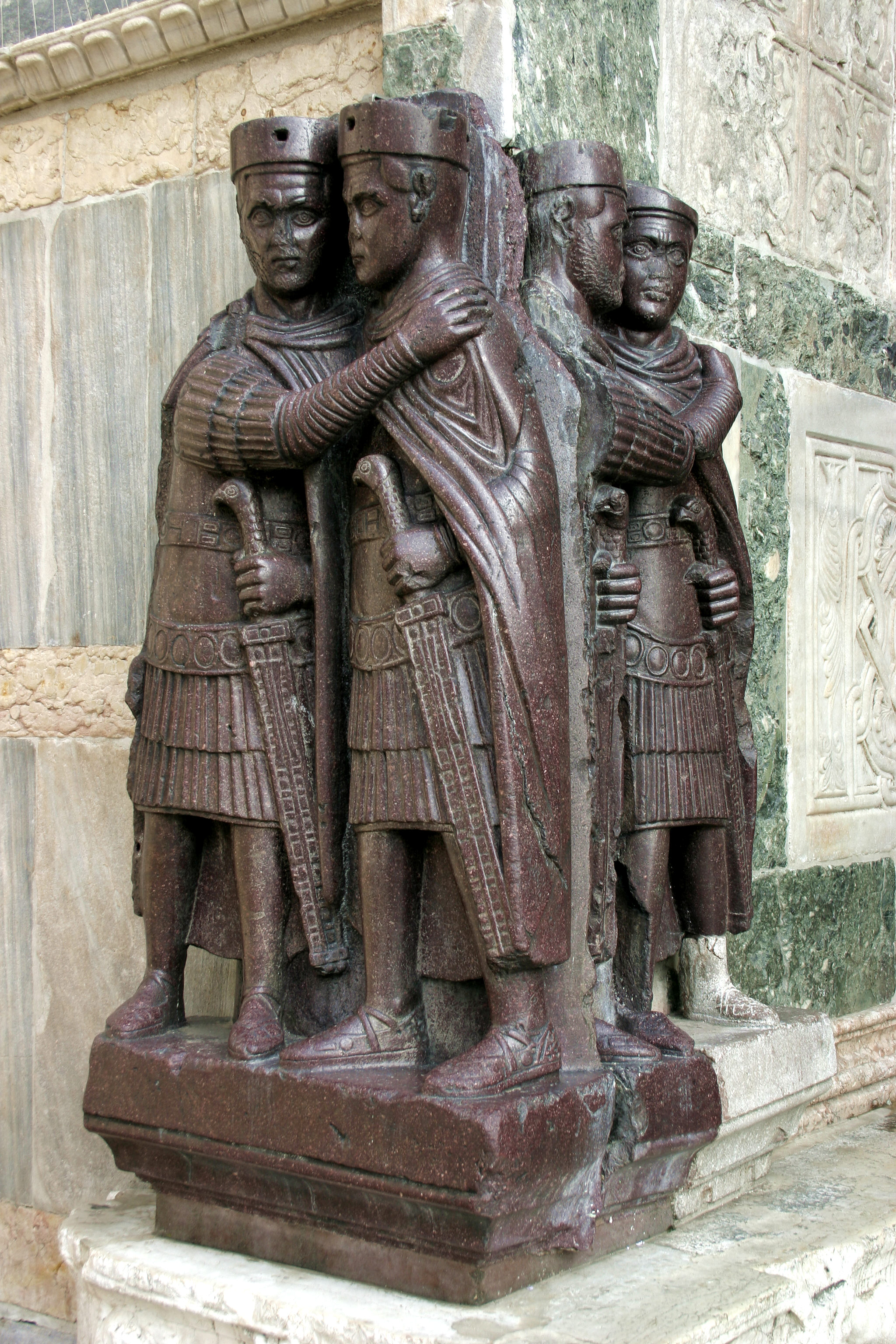
New Artistic style + The Tretarchy Sculpture
New Artistic Style
- Style becomes hard, geometric, and abstract
- look intentionally similar
purpose: emphasize unity, power, and stability
The Tretarchy Sculpture
- figures are nearly identical (symbolizing unity)
- Augusti = beards, Caesar = clean shaven
- shown in military uniform w/ swords
- embracing each other = cooperation + shared power
- hard purple Egyptian stone (Porphyryl)
Constantine the Great
305 CE, Diocletian stepped down + forced Maximianus , power struggle followed
Candidates
Maxentius (Maximianus son’s)
Constantine (son of Caesar Constantius)
Constantine defeated Maxentius
Impact on Religion
- ended persecution of Christians
- Made Christianity legal in the empire (influenced by his Christian mother, Helena)
What three major ideas often guide the meaning and function of African art?
Spirituality
power/wealth
identity
What aspect of the human figure is emphasized in African art instead of naturalism?
Stylization and symbolic proportions (not literal likeness)
Why might an artwork intentionally appear fearsome or abstract in certain African traditions?
To convey spiritual power or protective force
What roles do animals and hybrids often play in African artistic symbolism?
They express myths, spiritual beliefs, and symbolic roles rather than realism
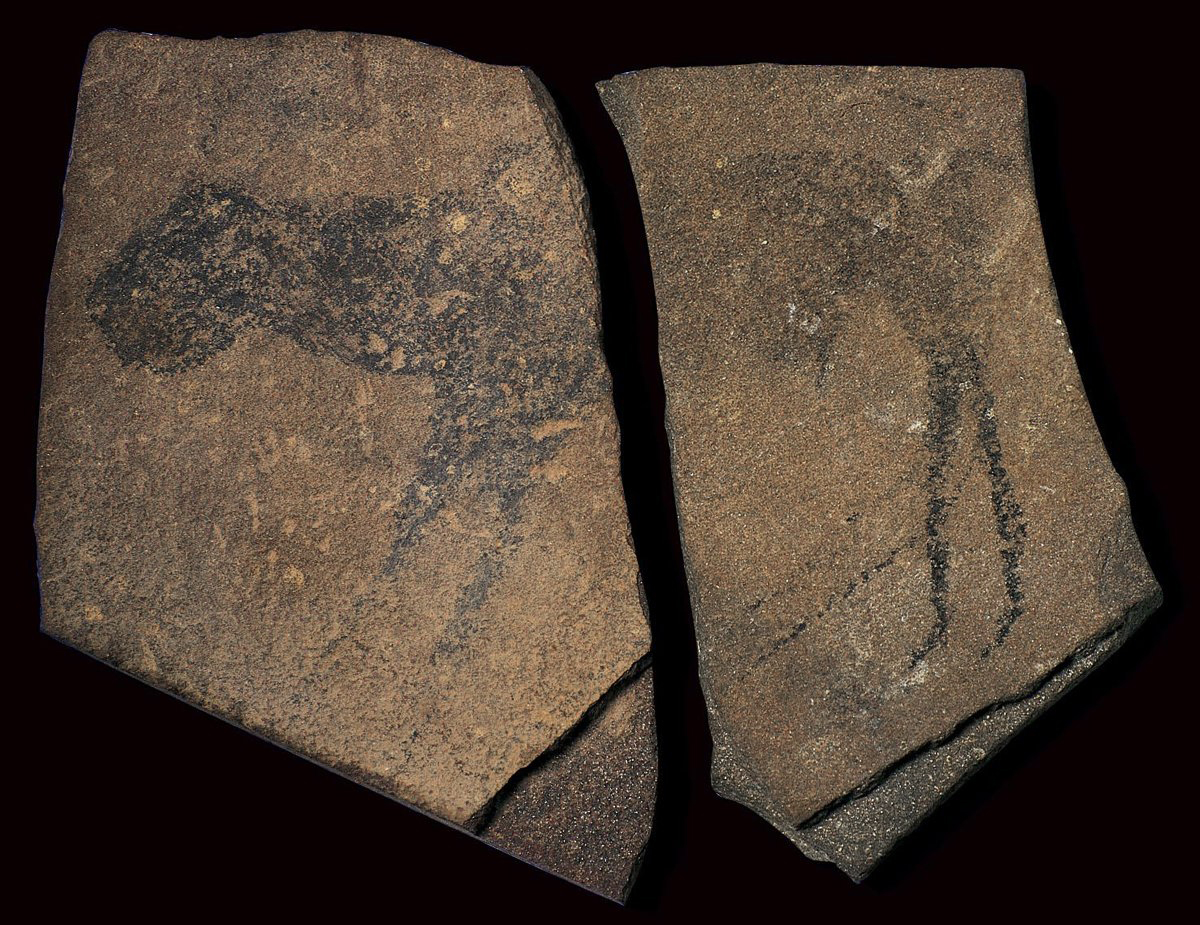
What is the name of the prehistoric African artwork shown in the image, where is it from, and what were the materials used?
The Apollo 11 Cave Stones from Namibia — they depict an abstracted animal figure painted with charcoal and ochre pigments on stone slabs.
What themes define the rock art traditions created by the San peoples?
Ritual scenes, especially medicine dances
How did environmental changes in the Sahara influence the types of animals depicted in prehistoric art?
When the climate dried, savanna animals disappeared — reflected in the shift in imagery.
Which ancient African kingdom blended Egyptian artistic traditions with its own local styles?
Nubia/Kush.
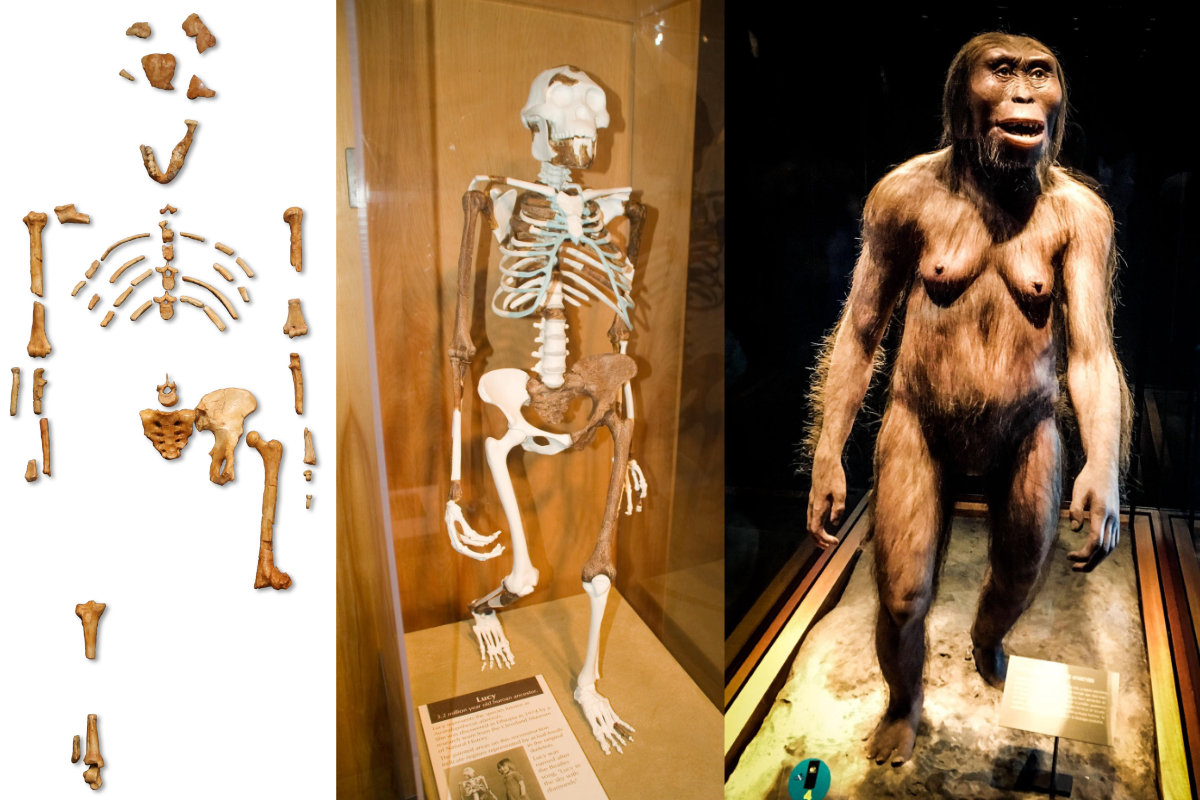
Who or what is shown in the image, where was it found, and why is it significant?
“Lucy” (Australopithecus afarensis), found in Ethiopia, is a major archaeological discovery that provides evidence of early human origins
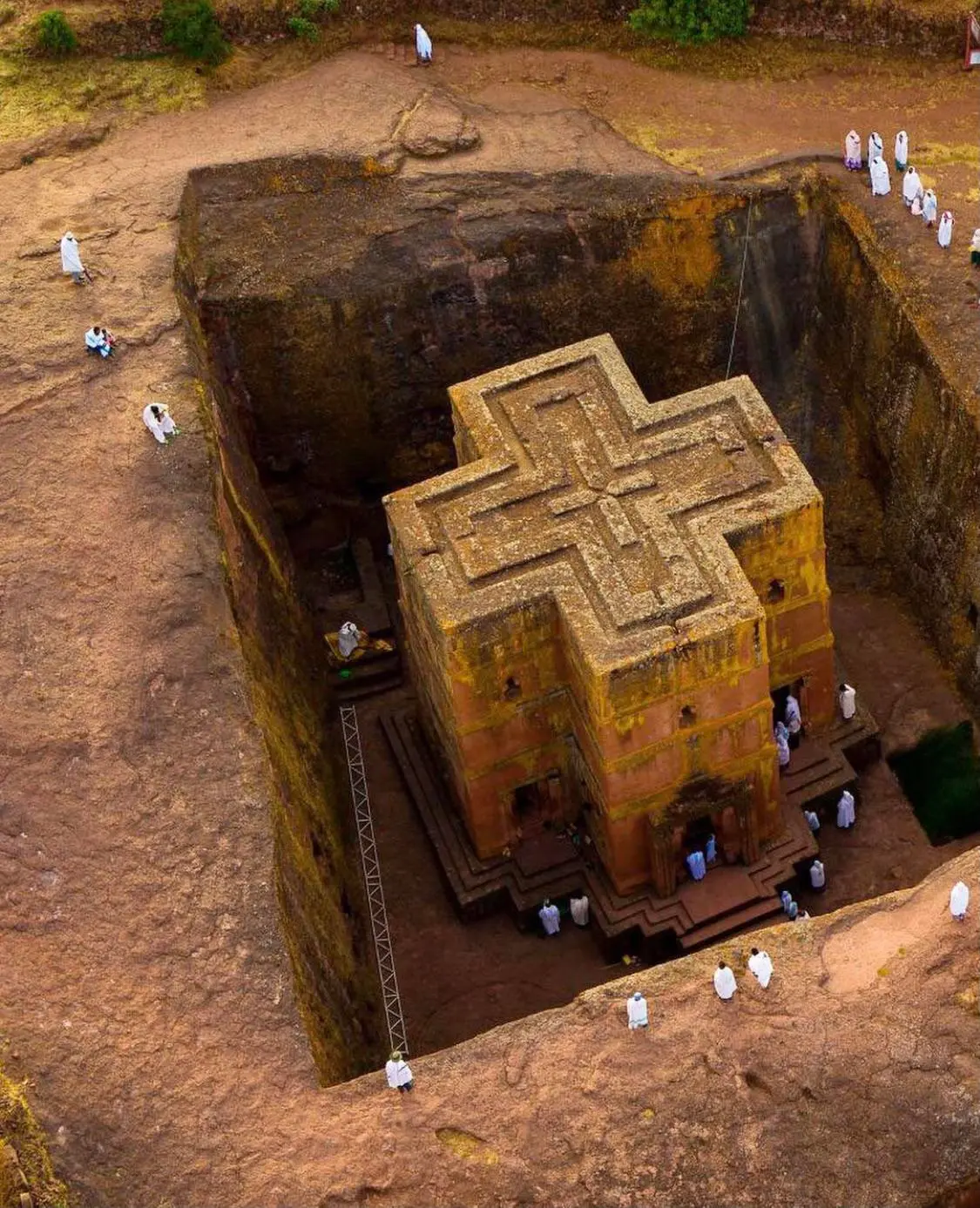
What is shown in the image, where is it located, and what makes it unique?
The rock-cut churches of Lalibela in Ethiopia, unique because they are carved from a single mass of living rock. According to tradition, they were built under the guidance of King Lalibela, who was inspired by a vision from God
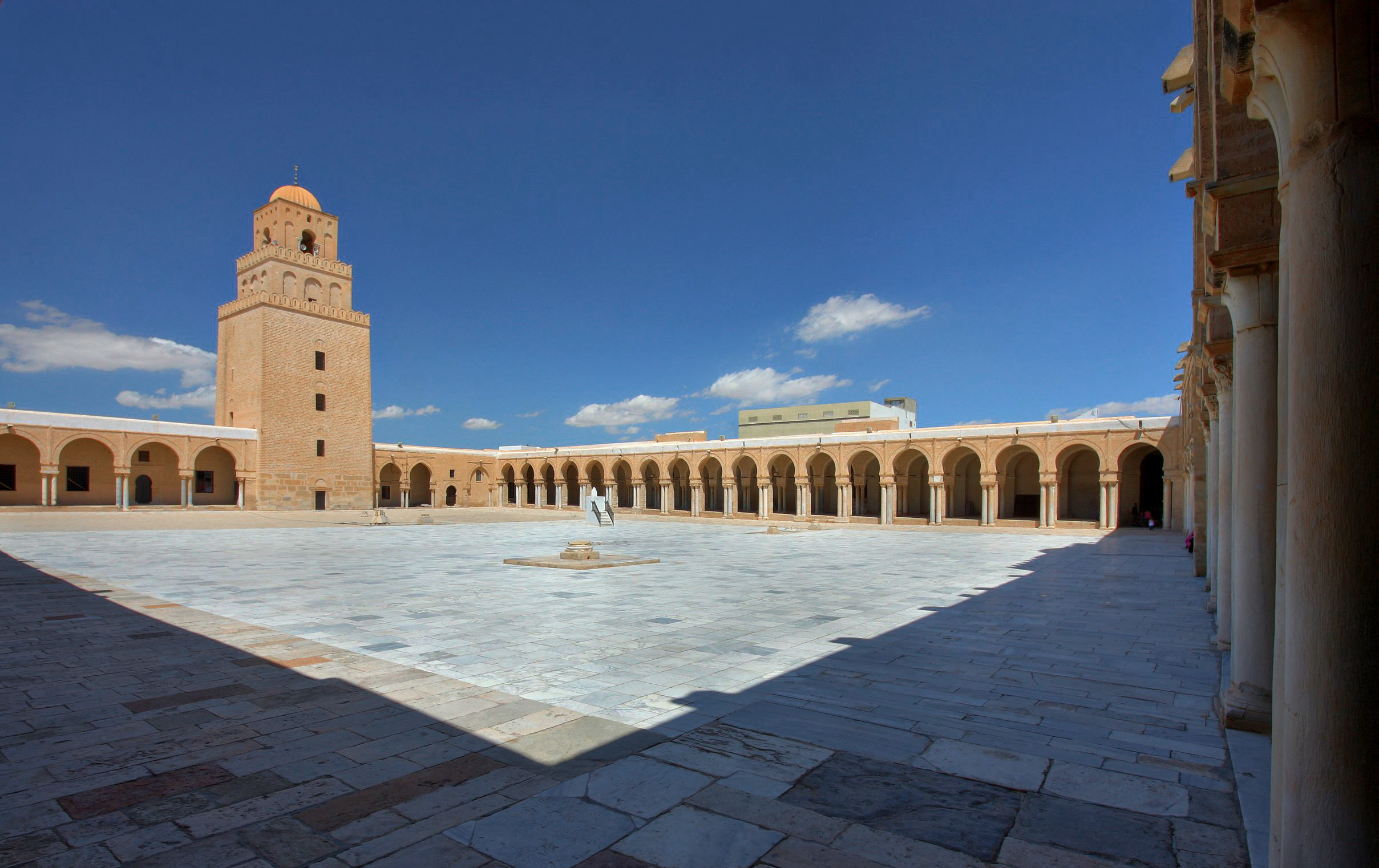
What is shown in the image, where is it located, and what was its significance?
The Great Mosque of Kairouan in Tunisia, significant because it served as a major center of Islamic learning in addition to being a place of worship. It was founded in 670 CE and became an important hub for religious and educational activities.
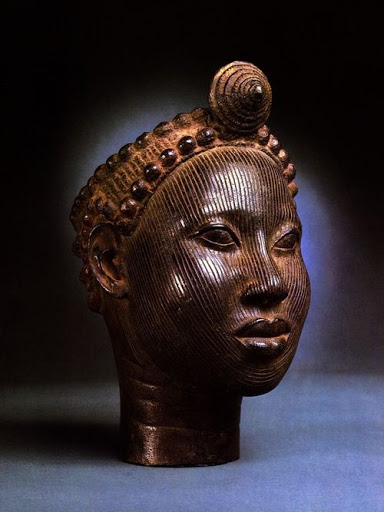
What is shown in the image, where is it from, and what is known?
The bronze heads of Ife from the Yoruba people in Nigeria, known for their highly naturalistic portraiture. They were created by skilled Yoruba artists, reflecting royal or elite figures and showcasing advanced metalworking techniques.
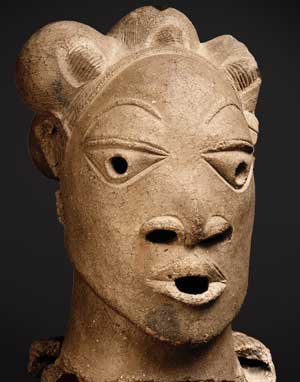
What is shown in the image, where is it from, and what is known?
Terracotta sculptures of the Nok culture from Nigeria, known for their stylized heads with D-shaped eyes. They were created by the Nok people, one of the earliest known sub-Saharan African cultures, and demonstrate early mastery of terracotta sculpting.
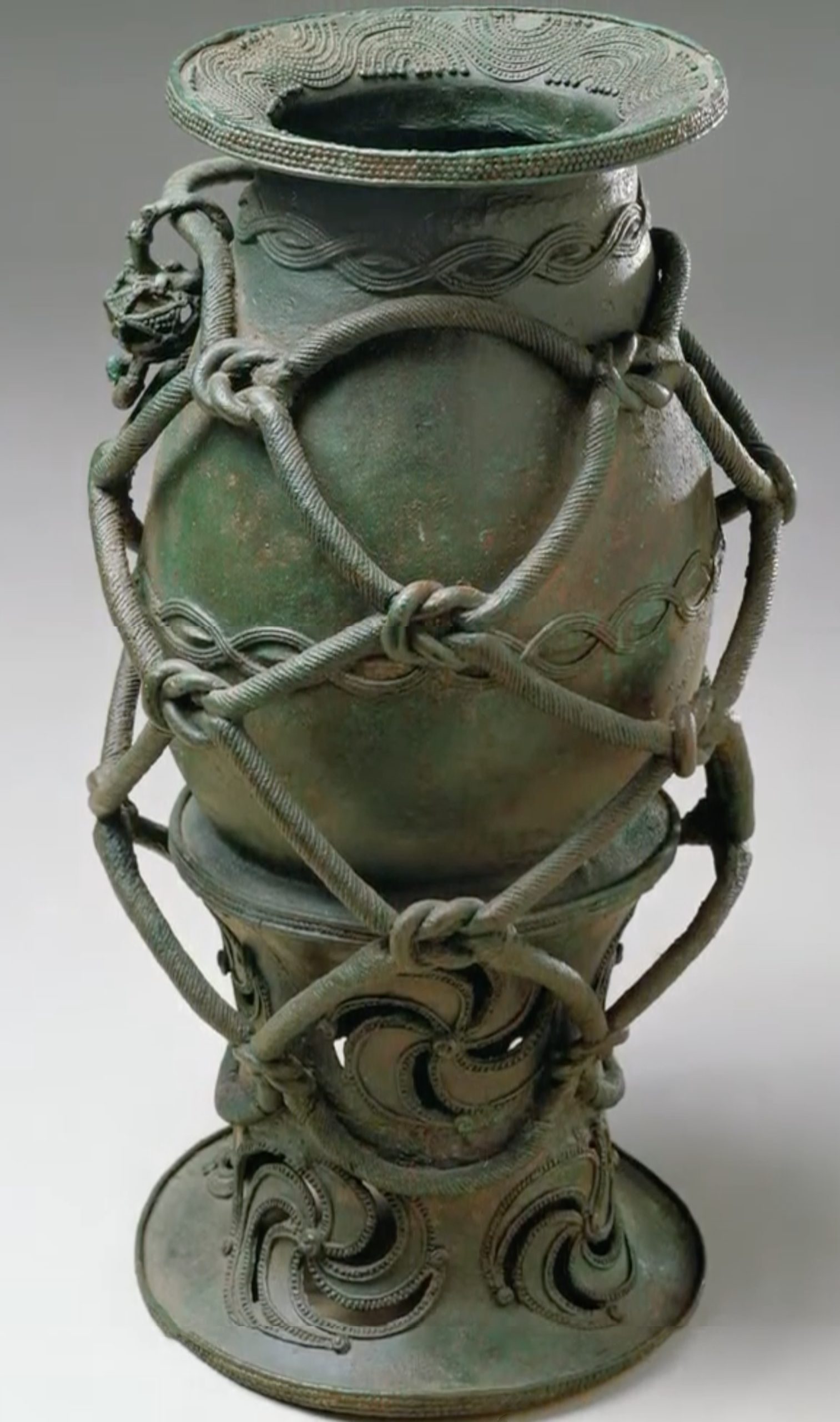
What culture created the artwork shown in the image, where is it from, and what technique did they use?
The Igbo-Ukwu culture from Nigeria, known for exceptional bronze castings made using the lost-wax technique. These works demonstrate highly advanced metalworking skills and were used for ritual and ceremonial purposes.
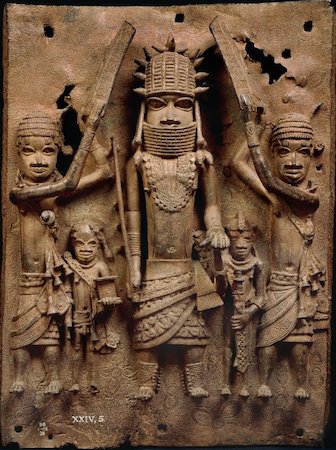
What culture created the objects shown in the image? Where are they from? What were they used for? What happened to them?
The Benin Kingdom in Nigeria, which decorated the royal palace with brass plaques. These plaques were made by skilled Edo artists to display royal history, authority, and hierarchy. Many were looted by the British in 1897 and are now held in museums around the world, with ongoing efforts for repatriation
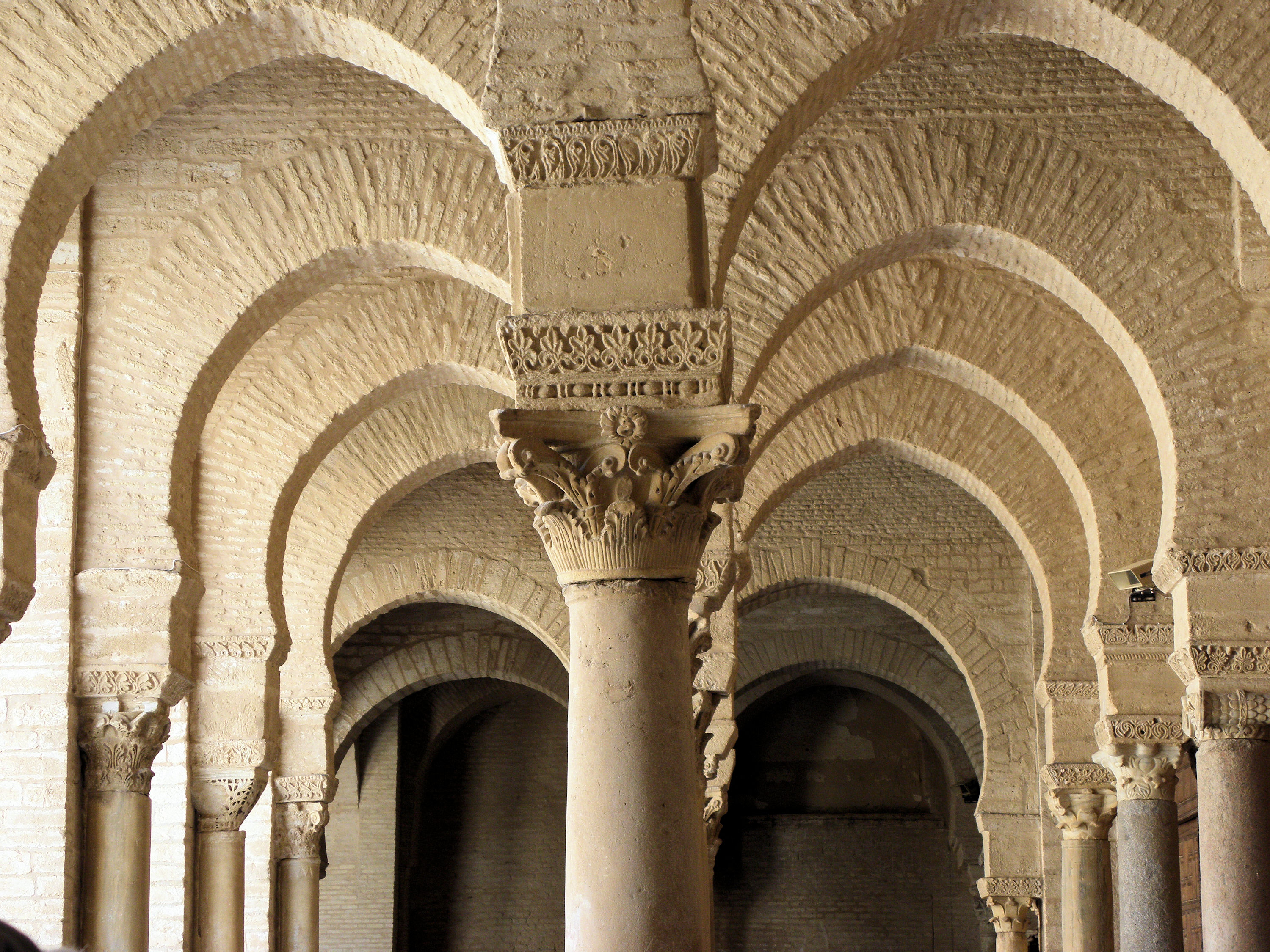
What is this type of arch, where is it found, and what difference did it make?
A horseshoe arch found in the Great Mosque of Kairouan, Tunisia. Its design redirects the pressure downward instead of outward, allowing the builders to construct slimmer walls while maintaining structural stability.
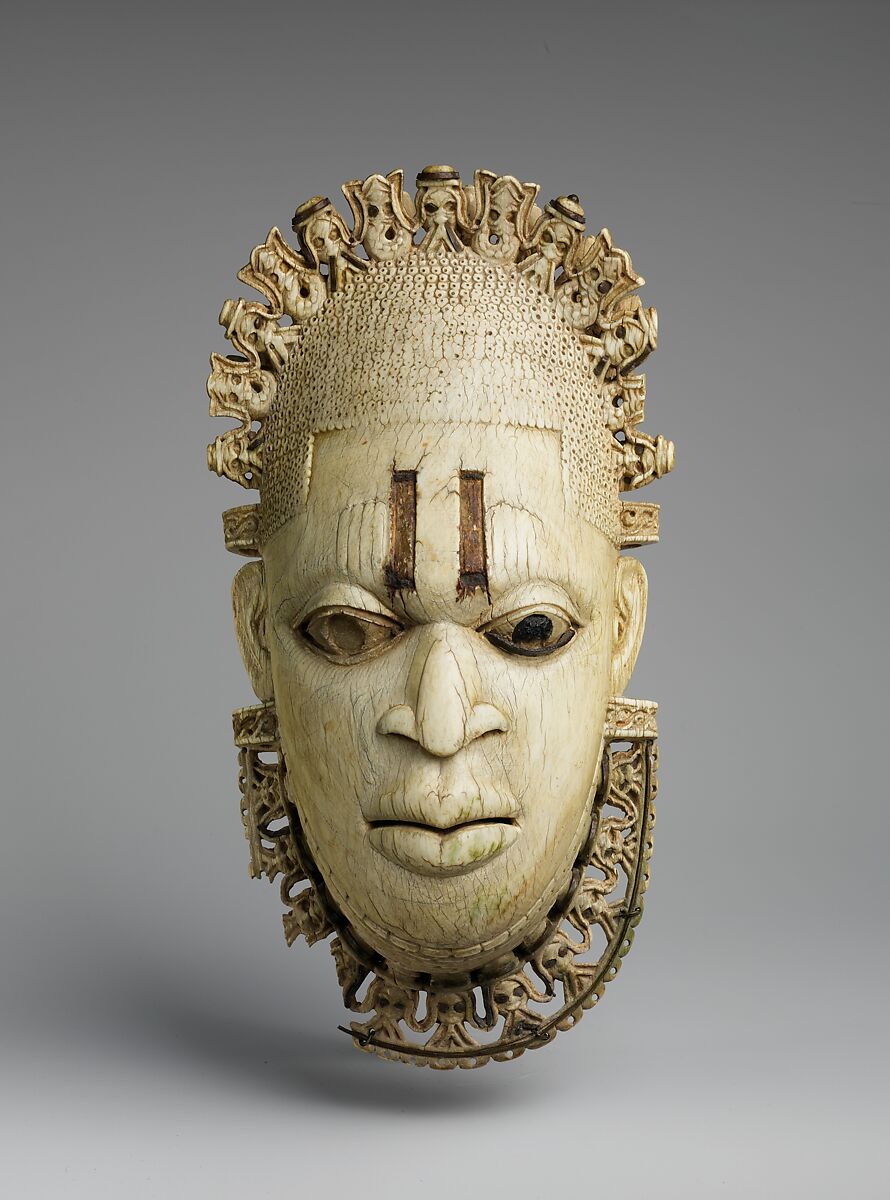
What is shown in the image, what culture created it, and what symbolic meanings are represented by its figures?
The Queen Mother Idia pendant mask from the Benin Kingdom, Nigeria. It depicts the Queen Mother Idia, with mudfish representing rebirth, spiritual power, and electricity, and Portuguese figures representing wealth, trade, and foreign influence.
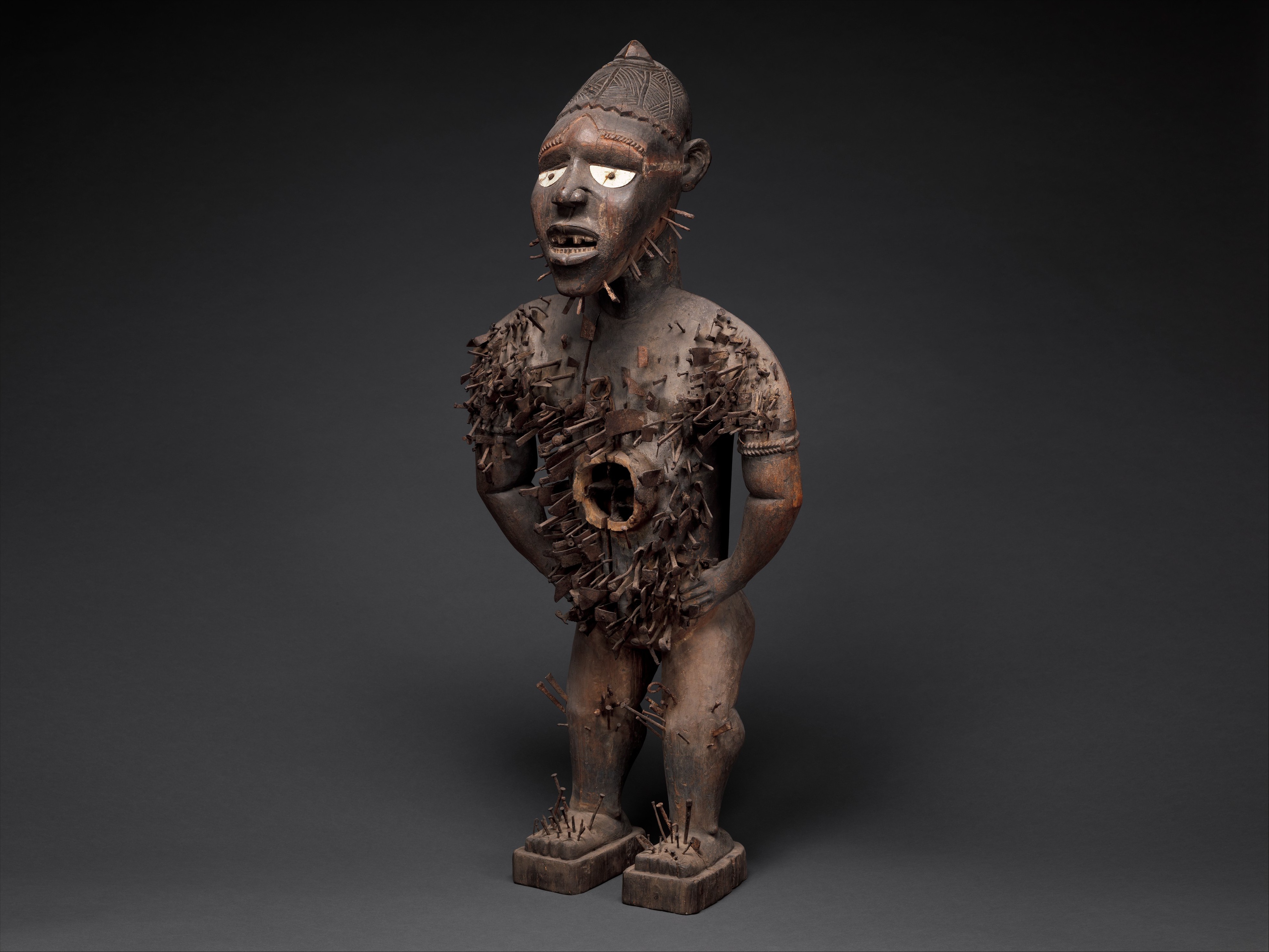
What culture created the object shown in the image, where is it from, what materials were used, and what purpose did it serve?
The Kongo people of Central Africa (Congo region) created the ‘Power Figure’. Sacred substances were placed inside the figure’s chest or body cavity to hold spiritual power. Nails were driven into the figure to activate its power, which was used to settle disputes, enforce oaths, protect health, and ensure justice within the community.
What natural resources is the Congo region known for?
rich in minerals such as copper, diamonds, and coltan.
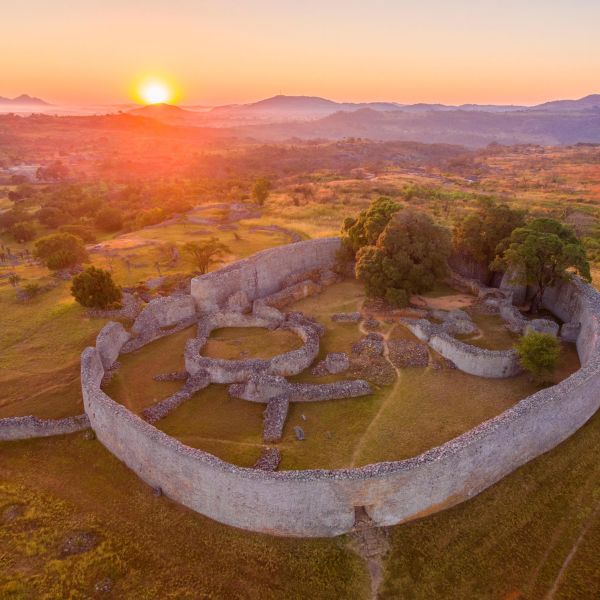
What culture created the structure shown in the image, where is it located, what construction technique was used, and what does the conical tower likely symbolize?
The Shona people of Great Zimbabwe (Southern Africa) built it using dry-stone masonry (large stone walls without mortar). The conical tower likely symbolizes wealth, prosperity, or grain storage, representing the economic power of the elite.
Name some important domesticated plants and animals in early American civilizations.
corn
beans
squash
cacao
potatoes
llamas
turkeys
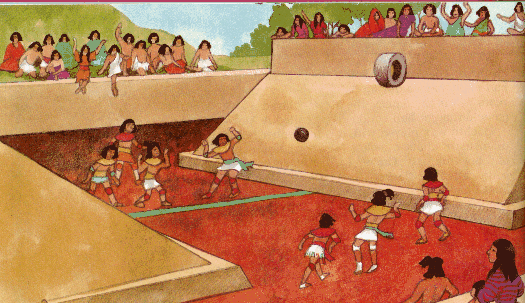
What ancient Mesoamerican game is shown in the image, how was it played, and where is the most famous colossal ballcourt found?
It is the ritual-political ballgame played using the hips and torso with padded gear, never the hands or feet. Its most famous colossal ballcourt is at Chichén Itzá, and the game was important as a religious and political ritual, sometimes involving human sacrifice to honor the gods and ensure cosmic balance.
Name the major pyramids of Teotihuacan.
Moon
Sun
Feathered Serpent
What is significant about the Feathered Serpent Pyramid?
Associated with warfare, sacrifice, and serpents with obsidian eyes.
What happened to Teotihuacan in the 7th century?
The city burned, but it influenced the Maya civilization.
Name some Maya cultural achievements.
Advanced astronomy
math (concept of zero)
calendars
rituals like ballgame
bloodletting
sacrifice
chocolate use.
Name the Mayan city known as a “rainforest skyscraper city.”
Tikal — with plazas, pyramids, and later Teotihuacan influence.
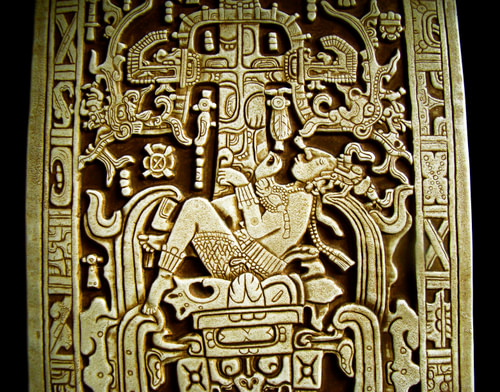
Who is shown in the image, where was this tomb found, and what made its discovery so significant?
This is Pakal the Great, whose tomb was discovered intact in Palenque in 1952. It contained his jade funerary mask, elongated skull, idealized royal features, and a sarcophagus lid decorated with ancestor-tree and rebirth imagery, making it one of the most important archaeological finds in Maya history
What rituals are shown on Yaxchilan lintels?
Elite rituals, including Lady Xook performing bloodletting and the Vision Serpent.
What role do women play in Maya political imagery?
Women are central figures, often performing rituals linked to power.
Name a Postclassic feature of Chichén Itzá related to astronomy.
Equinox serpent-shadow effect on El Castillo.
What sacred features are present at Chichén Itzá?
Sacred cenote and militaristic imagery.
Name some notable art and material culture from Central America.
Jade
gold
featherwork
ceramics
Costa Rica stone spheres (over 300)
Name pre-agriculture monumental architecture and early cultures in the Andes
Chavín oracle temple (Lanzón sculpture)
Paracas mummy bundle textiles
Nazca geoglyphs (hummingbird)
What is significant about Moche art and architecture?
Portrait vessels
Warrior Priest imagery
adobe pyramids
advanced metallurgy
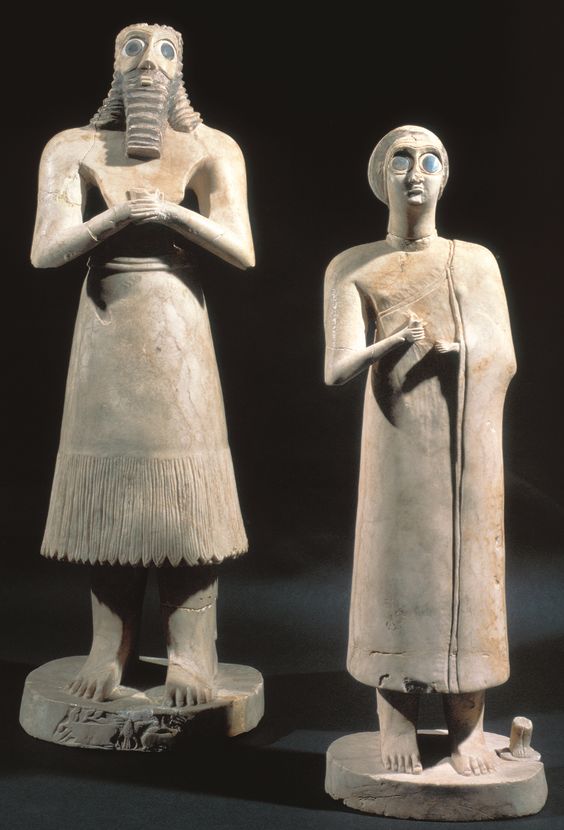
What are the figures shown in the image, when and where were they created, what purpose did they serve, and what visual features characterize them?
They are Sumerian votive figures from ancient Mesopotamia (c. 2900–2600 BCE, often carved from limestone).
These figures were placed in temple shrines to stand in for worshippers, offering constant prayer and recording the donor’s devotion to the gods.
They are defined by stylized bodies, clasped hands, and wide, attentive eyes, with men shown bare-chested in sheepskin skirts and both male and female figures having massive, cylindrical forms.
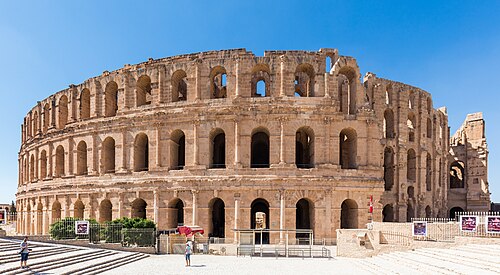
What is shown in the image, where is it located, and why is it significant?
This is the Amphitheater of El Djem in Tunisia, significant for being the third largest amphitheater in the Roman world.
 Note
Note  Flashcards (70)