5.0 Neuroendocrine System
 Call Kai
 Learn
Learn Practice Test
 Spaced Repetition
 Match
Match Flashcards
 Knowt Play
1/51

Earn XP
Description and Tags
Neuroendocrine System
Name | Mastery | Learn | Test | Matching | Spaced | Call with Kai |
|---|
No analytics yet
Send a link to your students to track their progress
52 Terms
HOMEOSTASIS is regulated by
nervous & endocrine systems regulate the internal environment of the body → to confront internal
& external changes
Homeostasis allow it to be
modified appropriately when the internal & external environment require it.
Hormones
A chemical messenger secreted by specialized cells into the bloodstream that can act at greater or lesser distances, often slowly, on specific organs & tissues.
Hormones allow
cells in different parts of the body to coordinate their functioning
Regulatory mechanisms
Nervous system
Endocrine system
Nervous system
Release of neurotransmitters
Endocrine system (homoestasis)
Releasing of hormones into the bloodstream from glands & specialized tissues
Thymus function
Release hormones that have local effects on cells of the immune system - lymphocytes
Distribution of the endocrine system
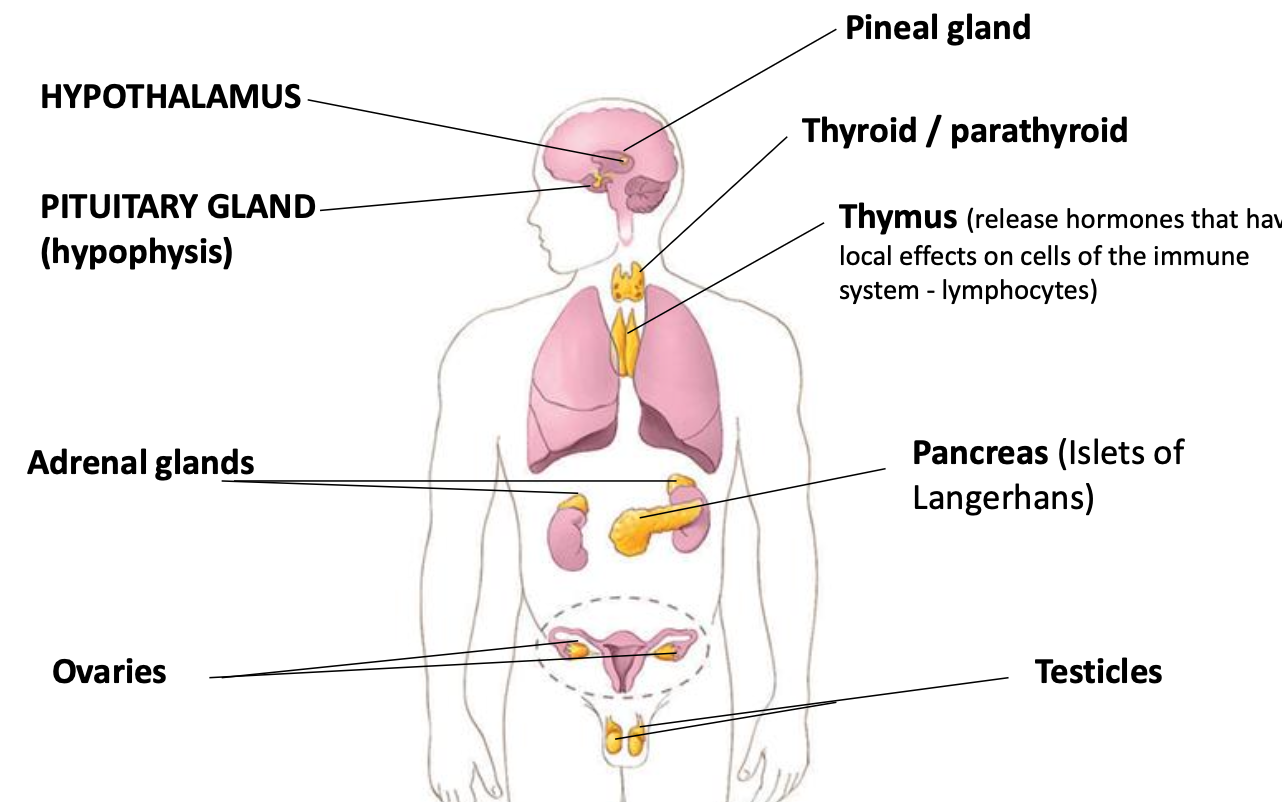
Endocrine
Specialized endocrine cells secrete hormones, which travel through the bloodstream & act over target cells which are widely distributed throughout the body.
→ Ex: insulin, thyroid hormones, pituitary hormones.
Neuroendocrine
Neurohormones are secreted by neurons, & travel through the bloodstream until they reach the target cell.
→ Ex: hormones released by the hypothalamus
Hormones bind to specific
receptors on the target cells
Hormone-receptor modifies
the target cell
Response after the hormone has modified the target cell
Changes in protein synthesis (increasing or decreasing expression of specific genes)
Enzyme activation or inactivation (making reactions faster or slower)
Regulating membrane transport (e.g. opening or closing ion channels)
A single hormone can act on
different tissues
The response to the same hormone can be
Different in different tissues (depends on the receptor)
Action mechanisms of hormones
have different action mechanisms depending on whether they are HYDROPHOBIC/APOLAR or HYDROPHILIC/POLAR
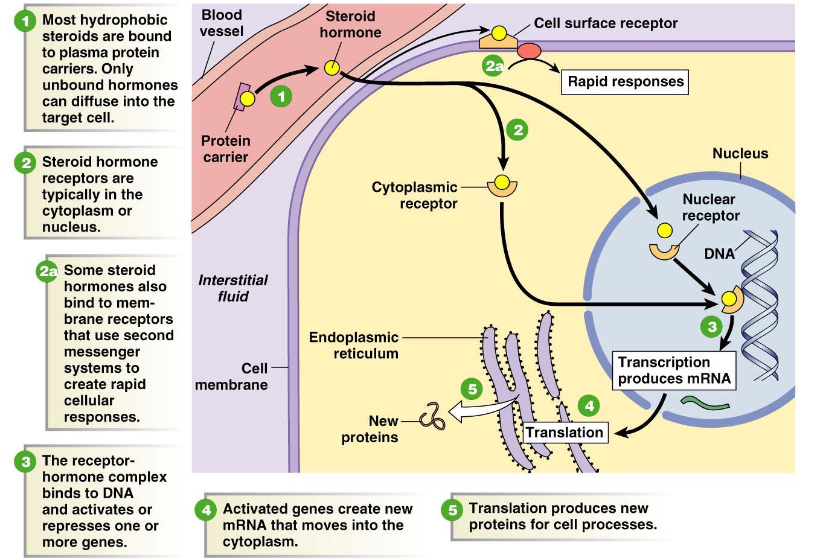
HYDROPHOBIC/APOLAR
Thyroid & steroid hormones
They activate or repress genes.
Hormone-receptor interaction → Transcription factors
Much slower effect than hydrophilic hormones → 45 min to several days for a full effect
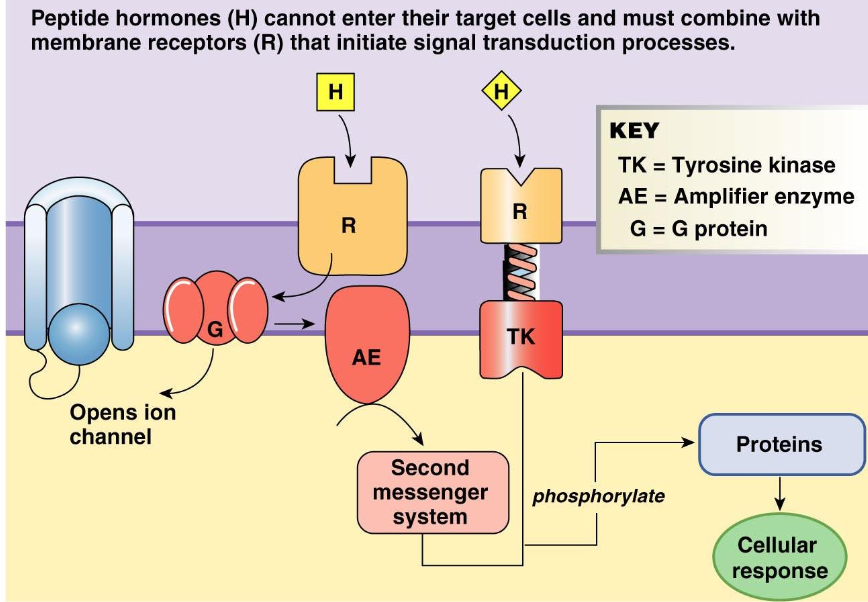
HYDROPHILIC/POLAR
Peptides & amino acids
G-protein-coupled receptors
Receptors with enzymatic activity (Tyrosine kinase)
Receptors are always on the surface of the plasma membrane
Hormone interactions
Different hormones can cooperate to increase their influence on the target cell
Synergism
Antagonism
Synergism
When a combination of several hormones has a greater effect than the simple sum (addition) of the individual effects (1+1=3), as opposed to an additive effect (1+1=2).
Antagonism (hormone)
A hormone that has the opposite effect from another, so their effects cancel each other.
Opposite physiological effects and they counterbalance each other.
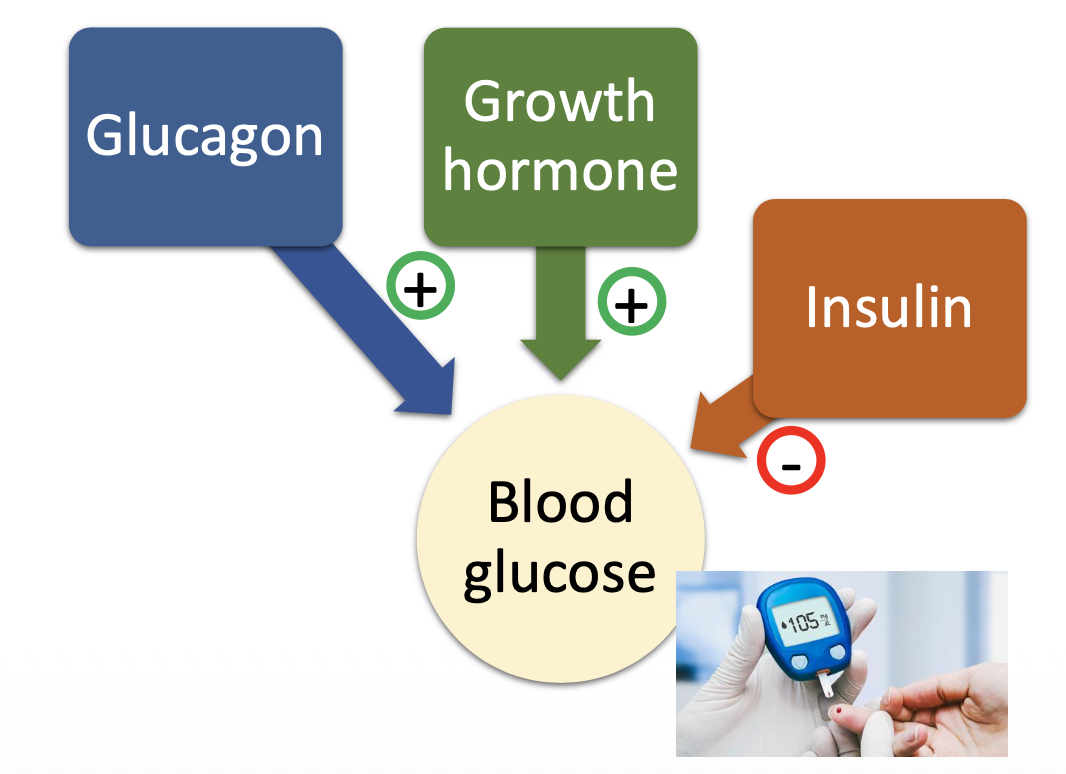
Synergism: Example
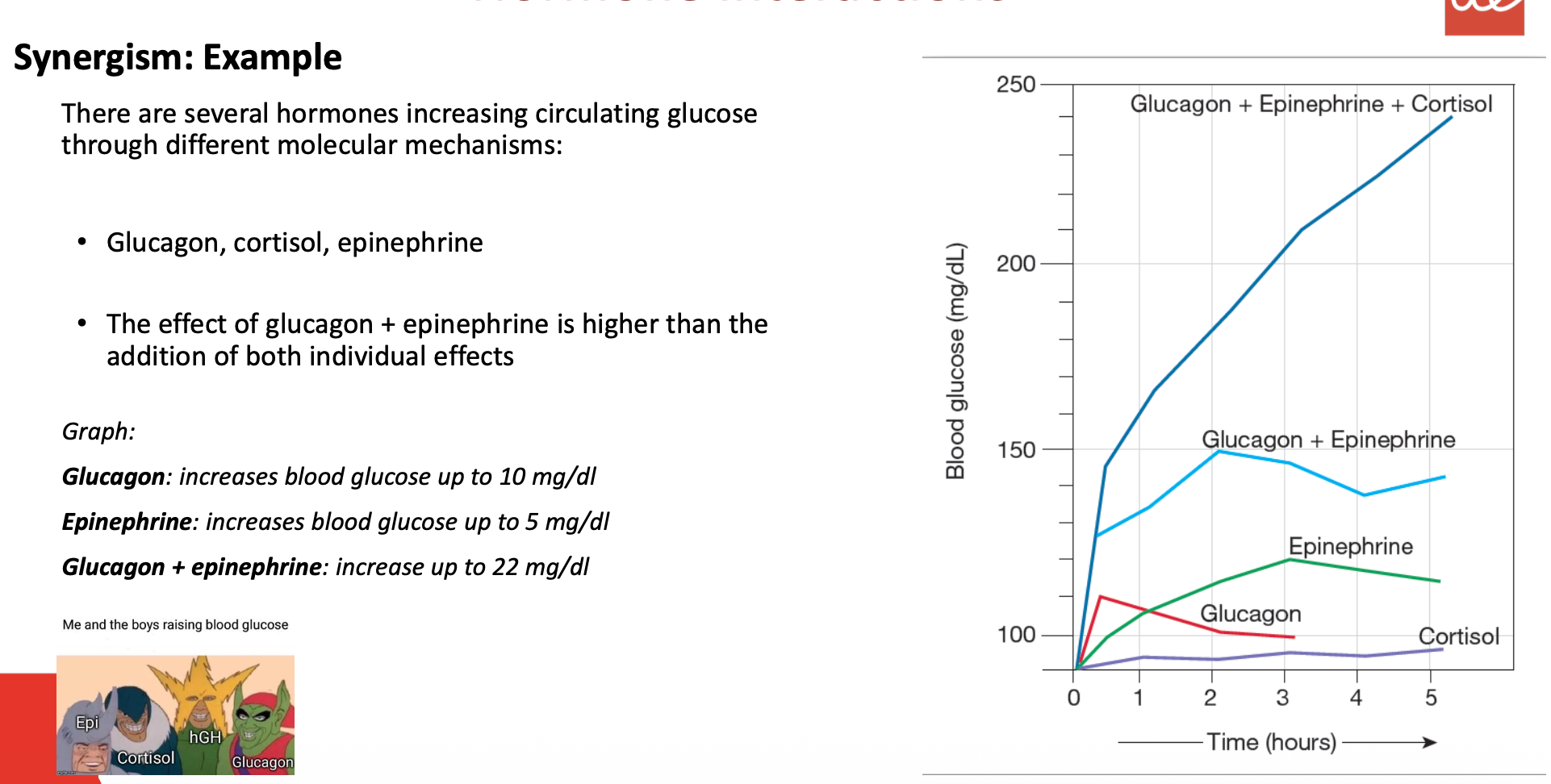
There are several hormones increasing circulating glucose through different molecular mechanisms:
Glucagon, cortisol, epinephrine
The effect of glucagon + epinephrine is higher than the addition of both individual effects
HYPOTHALAMUS
Brain area specialized in the maintenance of homeostasis
Hypothalamus Regulates several physiological functions
Hunger and thirst
Body temperature
Circadian rhythms
Sleep and arousal
Endocrine system
Hypothalamus dysfunction
Eating & metabolic disorders
Narcolepsy
Mood changes & depression
HYPOTHALAMUS segregation (anterior)
HYPOTHALAMUS → Pituitary portal system → ANTERIOR PITUITARY/ Adenohypophysis (Glandular tissue)
HYPOTHALAMUS segregation (posterior)
HYPOTHALAMUS → POSTERIOR PITUITARY/ Neurohypophysis (Nervous tissue)
The anterior pituitary
a true endocrine gland
derived from embryonic epithelial tissue & produces six hormones (GH, TSH, ACTH, LH & FSH and Prolactin)
The posterior pituitary
is an extension of a nerve tissue
stores two neurohormones (oxytocin & ADH) in hypothalamus.
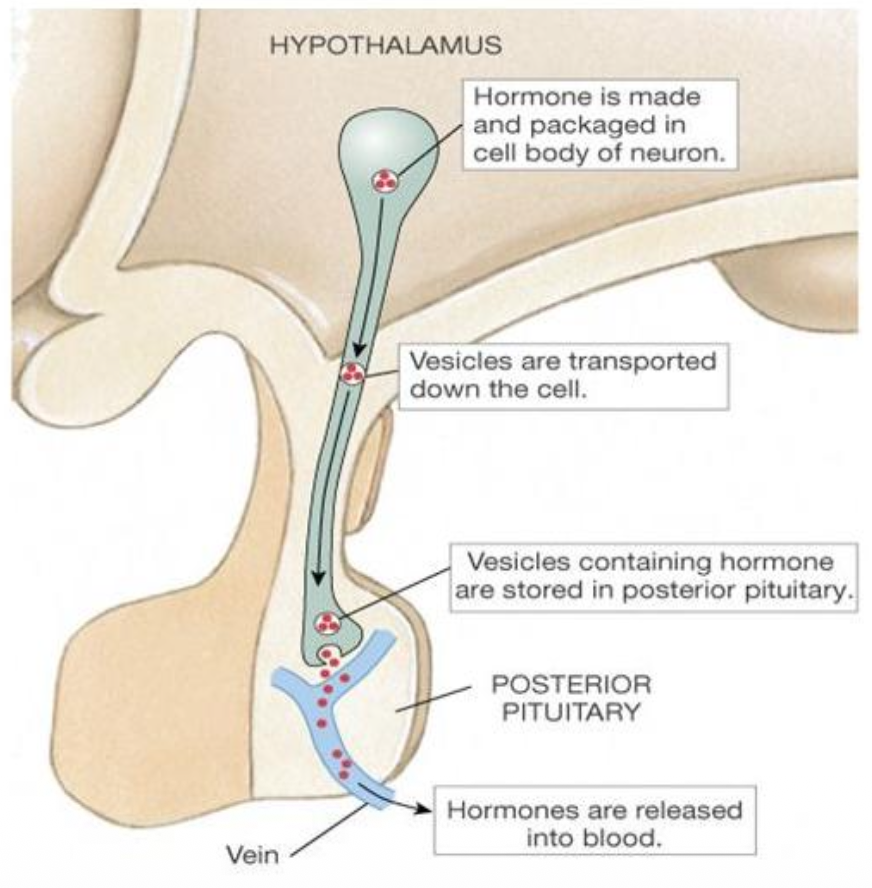
Antidiuretic hormone (ADH) / vasopressin (secreted by posterior pituitary) is involved in
Blood volume → Increases reabsorption of water at the renal level
Participates in the regulation of blood pressure, it is secreted in response to increased blood osmolarity or low blood pressure
Oxytocin (secreted by posterior pituitary)
females → contractions during childbirth & ejection of breast milk
social behaviour & relationships (males/females)
attachment bonds
possible role in anti-depressant & anxiolytic role
Oxitocin & reproduction In women
Labor: Stimulates uterine contractions via a positive feedback loop
Breastfeeding: Enhanced by nipple stimulation, triggers milk ejection
Sexual activity: Released during arousal & orgasm → muscle contractions, pleasure
Oxitocin & reproduction In men
Released during sexual arousal & orgasm
Supports ejaculation through rhythmic contractions
Oxytocin: the “tend-and-befriend” hormone → in both sexes
Oxytocin is released as a response to physical touch, sexual activity, comforting experiences, & positive social stimuli.
Promotes emotional bonding and intimacy
Promotes empathy, cooperation & altruistic behavior.
Enhances pleasure & reward (via interaction with dopamine & endorphins).
Helps reduce stress & anxiety (multiple mechanisms)
Neurohormones from the hypothalamus
control release of the anterior pituitary hormones
portal system
The hypothalamic hormones reach the anterior pituitary through a specialized region of the circulation
Sequence of Hypothalamus & pituitary ANTERIOR PITUITARY / ADENOHYPOPHYSIS
Hypothalamic neurons secrete TROPHIC NEUROHORMONES →
ENDOCRINE CELLS in the anterior pituitary release the HORMONES to the blood →
Hormones affect specific TARGET ORGANS
Hypothalamus
neurons → portal veins → endocrine cells
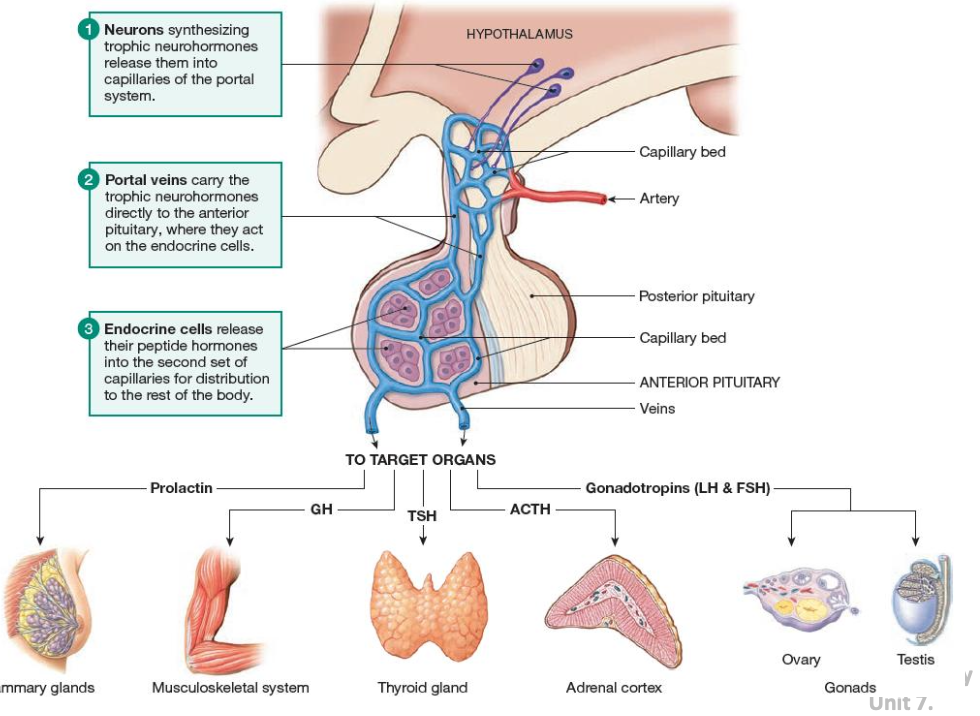
Neurons
Synthesizing trophic neurohormones release them inot capillaries of the portal system.
Portal veins
Carry the trophic neurohormones directly to the anterior pituitary, where they act on the endocrine cells.
Endocrine cells
release their peptide hormone into the second set of capillaries for distribution to the rest of the body
TROPHIC HORMONES
Hormones that control the secretion of other hormones.
Negative feedback loops
The hormones released inhibit their source glands decreasing their own synthesis
It is the most common regulatory mechanism in the body
What are the steps of the neuroendocrine (hypothalamic–pituitary–endocrine gland) axis, including feedback loops?
Stimulus
→ Hypothalamus (IC₁) → releases trophic hormone (H₁)
→ Anterior pituitary (IC₂) → releases trophic hormone (H₂)
→ Endocrine gland (IC₃) → releases hormone (H₃)
→ Target tissue → produces response
Feedback loops:
Short-loop negative feedback: Pituitary hormones inhibit the hypothalamus
Long-loop negative feedback: Final hormone (H₃) inhibits both hypothalamus & pituitary
What are the steps of the hypothalamic–pituitary–adrenal (HPA) axis?
Hypothalamus → releases CRH (corticotropin-releasing hormone)
→ Anterior pituitary → releases ACTH (adrenocorticotropic hormone)
→ Adrenal cortex → releases cortisol
→ Cortisol acts on target tissues → produces stress response
Feedback:
Cortisol provides long-loop negative feedback to both hypothalamus & anterior pituitary
Anterior pituitary hormones (H2) includes
Growth hormone
Corticotropin
Thyrotropin
Prolactin
Gonadotropins
Growth hormone
Growth of bones & muscles
Corticotropin
Act on adrenal gland to release glucocorticoids & adrenal androgens
Thyrotropin
Act on thyroid gland to secrete the thyroid hormones T3 & T4
Prolactin
Promotes the growth of mammary glands & breast milk production
Gonadotropins
Act on reproductive organs & regulates reproductive cycles
LH: Luteinizing hormone
FSH: Follicle stimulating hormone

