nervous system
 Call Kai
 Learn
Learn Practice Test
 Spaced Repetition
 Match
Match Flashcards
 Knowt Play
1/26

There's no tags or description
Looks like no tags are added yet.
Name | Mastery | Learn | Test | Matching | Spaced | Call with Kai |
|---|
No analytics yet
Send a link to your students to track their progress
27 Terms
what is the nervous system
a bodywide system of nerve cells that collect information from the world. process it, and take action via directing bodily organs and muscles
what is the nervous system divided into
the Central Nervous System (CNS)
the Peripheral Nervous System (PNS)
what are the parts of the CNS
the brain- all conscious and most unconscious processing
Spinal Chord- recieves and transmits info, some reflex processing
What is the Peripheral nervous system and its function
A bodywide network of messenger neurons
sensory to CNS and motor from CNS
what is the PNS split into
Somatic nervous system- skeletal muscles, voluntary system
Autonomic nervous system- Internal organs and glands, involuntary system, split into 2 parts
what are the 2 parts of the Autonomic nervous system
Sympathetic- stress response- stimulates body
Parasympathetc- rest- calms body
what is homeostasis
Regulation of the internal environment. In normal conditions there is a balance between the sympathetic and para sympatheic systems. This is called maintaining homeostasis
what pathway does the reflex arch follow
sensation is detected by sensory receptors in the sensory nerve (SN)
electrical signal moves along dendrite to axon terminal
moves as a chemical signal from the SN to the relay neuron accross the synapse
Moves through a synapse to the motor neuron and to CNS (but later to avoid nerve damage)
Signal reaches effector- muscle or gland- which shows the effect
what is another term for the electrical impulse
action potential
what are the 3 types of neuron
sensory neuron
relay neuron
motor neuron
what are the parts of a neuron
dendrites
nucleus
cell body
axon
myelin sheath
axon terminal
what is the function of a dendrite
recieves signals from other neurons or sensory receptors
what is the function of the cell body
the control centre of the neuron
wehere the action potential leaves from
what is the function of the axon
the action potential travels along this to the axon terminal
what is the function of the myelin sheath
to insulate the axon to allow for faster transmission
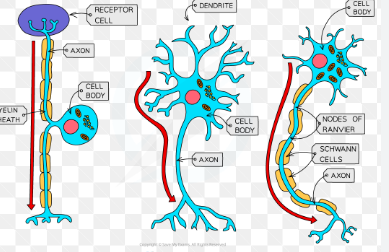
which neuron is which
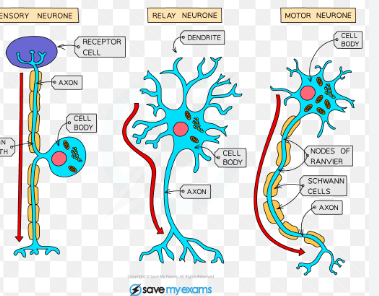
what is the function of the sensory neuron
to carry nerve impulses from sensory receptors to the spinal chord and brain where the impulse is translated into sensations
those to the spinal chord are for reflex action
what is the function of the relay neuron
allow sensory and motor neurons to communicate with each other
Lie entirely in the brain and spinal chord
what is the function of the motor neurons
responsible for muscle contreaction
cell body located in the motor cortx, brainstem, or spinal chord
Axons project to and outside of the spinal chorrd and have synapses with muscles and glands
neurotransmitters are released which bond to muscles and trigger muscle contraction
what is synaptic transmission
the movement of an action potential between neurons as neurotransmitters across a junction called the synapse
what occurs during synaptic transmission for neurotransmitters to enter the synapse
ie step 1-2
synaptic vesicles at the end of the presynaptic axon contain neurotransmitters
the action potential releseas the vesicles and neurotransmitters are releases into the synaptic gap by exocytosis
what occurs during synaptic transmission for the signal to pass to the second neuron
ie stages 3-5
neurotransmitters diffuse across the gap and bind onto specialised receptors on the surface of the postsynaptic neuron
once activated, receptor molecules have excitatory or inhibitory effects on the postsynaptic neron
the quicker the re-uptake of the neurotransmitter into the presynaptic neuron, the shorter the effect
what are the types of neurotransmitter
there are many different types but all are either excitatory or inhibitory
what are excitatory neurotransmitters
neurotransmitters which trigger nerve impulses to stimulate the brain into action
what are inhibitory neurotransmitters
neurotransmitters which slow nerve impulses to calm the brain and balance mood
examples of excitatory neurotransmitters
dopamine and noradrenaline
make postsynaptic cell more likely to fire
example of inhibitory neurotransmitter
GABA
acts as an off switch making the postsynaptic cell less likely to fire

