BIOL 65 Anatomy CH 1 Intro to Human Anatomy
 Studied by 0 people
 Call Kai
 Learn
Learn Practice Test
 Spaced Repetition
 Match
Match Flashcards
 Knowt Play
1/84

There's no tags or description
Looks like no tags are added yet.
Name | Mastery | Learn | Test | Matching | Spaced | Call with Kai |
|---|
No analytics yet
Send a link to your students to track their progress
85 Terms
Gross Anatomy
Study of structures that can be seen with the naked eye
Microscopic Anatomy (Histology)
the study of structures that are so small they can only be seen with a microscope
Radiologic Anatomy
study of internal structure using x-rays and other medical imaging techniques
Systemic vs Regional Anatomy
Systemic:Study of one organ at a time vs. Regional: Study of multiple organ systems in a region.
Surface Anatomy
The external structure of the body.
Inspection
Looking at surface appearance.
Palpation
Feeling a structure
Ausculation
Listening to normal sounds
Percussion
Tapping and listening
Dissection
Cutting and separating of tissues
Invasive
Penetrating into body
Non-invasive
no penetration of the body
Situs solitus
normal arrangement of organs
Situs inversus
reversed position of organs
Situs perversus
one organ atypically positioned
Structural levels of an organism AMOCTOOO
Atoms, Molecules/Macromolecules, Organelles, Cells, Tissues, Organs, Organ System, Organism
Organ system of Protection, Support, and Movement
Integumentary, Skeletal, Muscular
Organ system of Internal Communication & Integration
Nervous, Endocrine
Organ system of Fluid Transport
Circulatory, Lymphatic
System of Intake & Output
Respiratory, Digestive, Urinary
Reproductive System
Male/Female
1. Integumentary
2. Skeletal
3. Muscular
4. Nervous
5. Endocrine
6. Cardiovascular
7. Lymphatic
8. Respiratory
9. Digestive
10. Urinary
11. Reproductive
What are the 11 organ systems? AMOCTOOO
Integumentary System
Skin, hair, nails, cutaneous glands
Protection, water retention, thermoregulation
Skeletal System
Bones, cartilages, ligaments
Support, movement, protective enclose of viscera, blood formation, mineral, storage
Muscular System
Skeletal muscles
Movement, stability, communication, control of body openings, heat production
Lymphatic System
Lymph nodes, lymphatic vessels, thymus, spleen, tonsils
Recovery of excess tissue fluid, detection of pathogens, production of immune cells, defense against diesase
Respiratory System
nose, pharynx, larynx, trachea, bronchi, lungs
Absorption of oxygen, discharge of cardon dioxide, speech
Digestive System
Teeth, tongue, salivary glands, stomach, small and large intestines, liver, gallbladder, pancreas
Nutrient breakdown and absorption, Liver functions include metabolism of carbohydrates, lipids, proteins, vitamins, and minerals; synthesis of plasma protein; disposal of drugs, toxins, and hormones; and cleansing of blood
Nervous System
Brain, spinal cord, nerves, ganglia
Rapid internal communication, coordination, motor control and sensation
Endocrine System
Pituitary gland, pineal gland, thyroid gland, parathyroid glands, thymus, adrenal glands, pancreas, testes, ovaries
Hormone production; internal chemical communication and coordination
Circulatory System
Heart, blood vessels
Distribution of nutrients, oxygen, wastes, hormones, electrolytes, heat, immune cells, and antibodies; fluid, electrolyte, and acid-base balance
Urinary System
Kidneys, ureters, urinary bladder, urethra
Elimination of wastes; regulation of blood volume and pressure; stimulation of red blood cell formation; control of fluid, electrolyte, and acid-base balance; detoxification
Male Reproductive System
Testes, epididymides, spermatic ducts, seminal vesicles, prostate gland, bulbourethral glands, penis
Production and delivery of sperm and secretion of sex hormones
Female Reproductive System
Ovaries, uterine tubes, uterus, vagina, mammary glands
Production of eggs site of fertilization and fetal development; fetal nourishment; birth; lactation ; secretion of sex hormones.
Anatomical Position
To stand erect with arms at the sides and palms of the hands turned forward
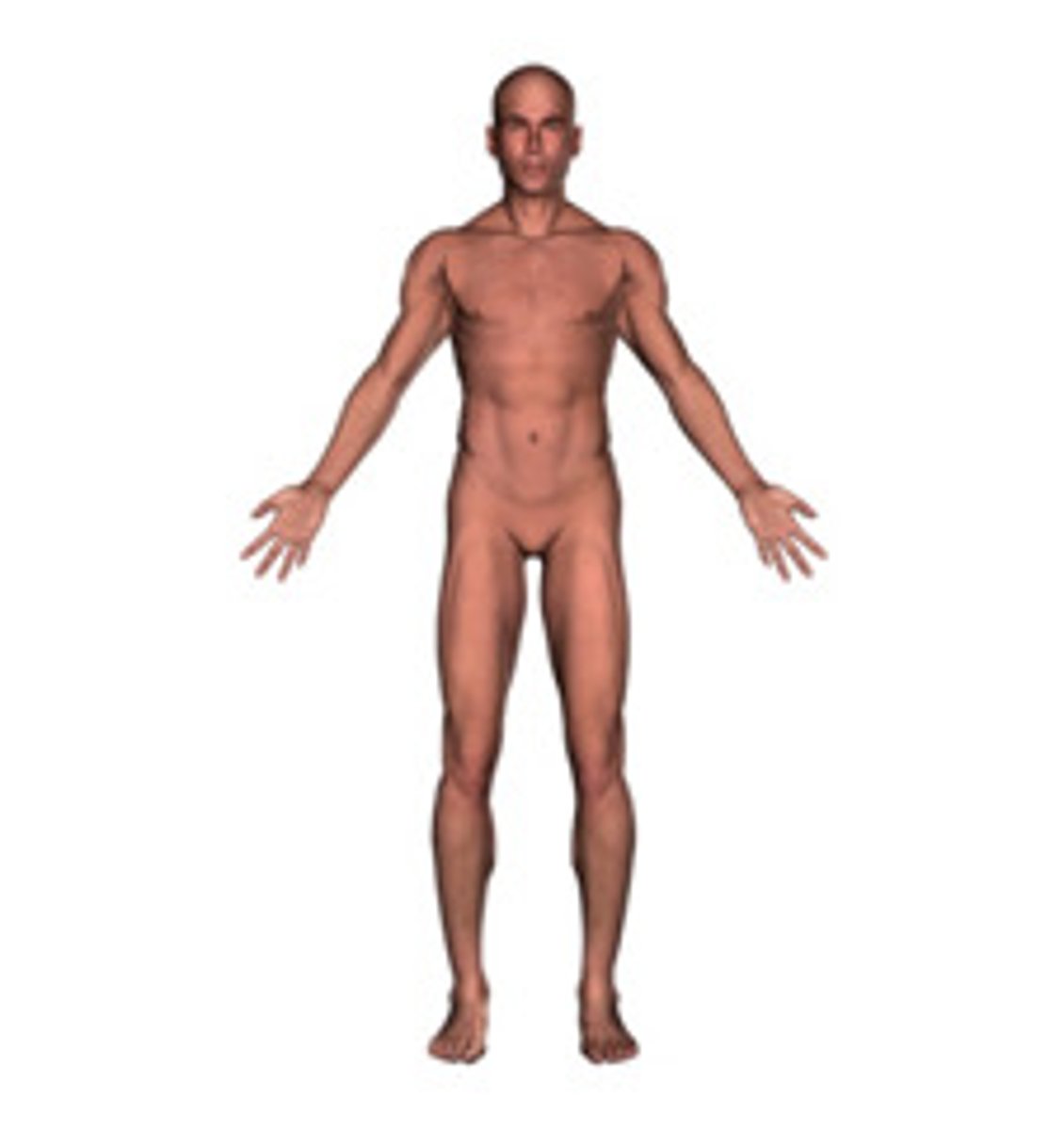
Frontal Plane
Divides the body into front and back portions.
sagittal plane
vertical division of the body into right and left portions
Transverse Plane
horizontal division of the body into upper and lower portions
Parasagittal
unequal left/right portions
Anterior
toward the front
Posterior
toward the back
Ventral
Toward the anterior side
Dorsal
Toward the posterior side
Superior
Above
Inferior
Below
Cephalic
Toward the head or superior end
Rostral
Toward the forehead of nose
Caudal
Toward the tail or the interior end
Medial
Toward the midline of the body
Lateral
Away from the midline of the body
Proximal
Closer to the point of attachment or origin
Distal
farther from the origin of a body part or the point of attachment
Ipsilateral
On the same side of the body
Contralateral
on the opposite side of the body
Superficial
Closer to body surface
Deep
Farther from the body surface
Nuchal
back of neck
Prone
lying face down
supine
lying face up
Acromial
Shoulder
Axillary
Armpit
Brachial
Arm
Antebrachial
forearm
Carpal
Wrist
Palmer
Palms
Patellar
Kneecap
Cervical
Neck
Femoral
Thigh
Crural
shin
tarsal
ankle
pedal
foot
plantar surface
sole of feet
Dorsum of hand
back of hand
Perineal
ass crack
popliteal
back of knee
calcaneal
heel
brachial region
arm
antebrachial region
forearm
carpal region
wrist
manual region
hand
digits
fingers/toes
femoral region
thigh
crural region
shin
tarsal region
ankle
pedal region
foot

