Cell Biology Chapter 6 Review: Intercellular Junctions and ER Functions
 Call Kai
 Learn
Learn Practice Test
 Spaced Repetition
 Match
Match Flashcards
 Knowt Play
1/71

Earn XP
Description and Tags
A set of vocabulary flashcards covering key concepts from Chapter 6 on Intercellular Junctions and ER Functions.
Name | Mastery | Learn | Test | Matching | Spaced | Call with Kai |
|---|
No analytics yet
Send a link to your students to track their progress
72 Terms
Plasmodesmata
Junctions found in plant cells that allow for the exchange of materials between cells.
Tight Junctions
Type of intercellular junction that connects cells tightly together, preventing substances from passing between them.
Desmosomes
Intercellular junctions that anchor cells together but allow for some flexibility and space between cells.
Gap Junctions
Junctions that allow direct communication between adjacent cells through cytoplasmic channels.
Extracellular Fluids
Fluids outside cells that may move through intercellular spaces, largely affected by the type of junctions present.
Rough Endoplasmic Reticulum (Rough ER)
A type of endoplasmic reticulum that is involved in protein synthesis due to the presence of ribosomes.
Smooth Endoplasmic Reticulum (Smooth ER)
A type of endoplasmic reticulum primarily involved in the detoxification of drugs and metabolism of lipids.
Intercellular Junctions
Structures that connect cells to one another, facilitating communication and structural integrity.
Cytoplasmic contact
Direct connection between the cytoplasm of adjacent cells, as seen in gap junctions.
Detoxification
The process by which the liver removes toxins from the body, associated with the smooth ER.
Eukaryotic Cells
Have a nucleus, and membrane bound organelles
Prokaryotic Cells
Have a nucleoid region and are only found in bacteria and archaea, lacking membrane bound organelles.
DNA in nucleus contains instructions for..?
Protein synthesis
Where is protein synthesized?
In ribosomes
Endomembrane system
Regulates protein traffic and performs various metabolic functions
Cytoskeleton
Network of fibers that organizes structures and activities within the cell.
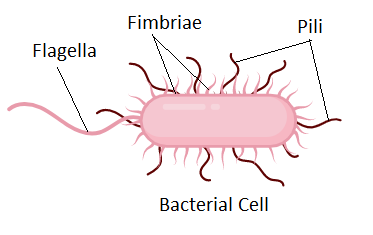
Fimbirae
Hair like structures for attachment on Prokaryotic Cells
Plasma membrane on prokaryotic cells
Encloses the cytoplasm
Cytoplasm
Region between the nucleus and plasma membrane
What is the typical size of a eukaryotic cell?
10-100 um in diameter
Where does photosynthesis happen?
In the chloroplasts
What pigment is in chloroplasts?
Chlorophyll
What are the stacks of thykaloids called?
Grana
Endoplasmic reticulum
Network of membranous tubules and sacs
What is the rough ER studded with?
Ribosomes
What processes are the smooth ER involved in?
Lipid synthesis and detoxification processes
What is the nuclear envelope?
Double membrane structure, encloses the nucleus and separates its concets from the cytoplasm
What do pore complexes in the nuclear envelope do?
Regulate entry of proteins, RNAs, and large macromolecules
What is the nuclear lamina
Netlike array of protein filaments
What does the nuclear lamina do?
Supports the nuclear envelope and helps maintain the shape of the nucleus
Nuclear matrix
Framework of protein fibers that helps ORGANIZE GENETIC MATERIAL
Chromatin
DNA-protein complex
How many chromosomes do human cells have?
46
How many chromosomes do sx cells have?
23
What is the nucleolus involved in synthesizing?
Ribosomal RNA (rRNA) and assembling ribosomal subunits from rRNA and proteins
How does the nucleus direct protein synthesis?
By synthesizing messenger RNA (mRNA) from DNA. The mRNA is transported to the cytoplasm via nuclear pores, where ribosomes translate the mRNA into POLYPEPTIDEs.
What are ribosomes made of?
Complexes made of ribosomal RNAs and proteins that carry out protein synthesis
Are ribosomes considered organelles?
No, they are not membrane bound
When cells have high rates of protein synthesis, that means they have…
Large numbers of ribosomes and prominent nucleoli
Other than bound to the rough ER, where else can ribosomes be found?
Free in the cytosol
Can free and bound ribosomes switch roles?
Yes
What do bound ribosomes generally produce proteins for?
For insertion into membranes, packaging within organelles, or secretion from the cell.
Example of a cell that specializes in protein secretion
Pancreatic cells, have lots of bound ribosomes
Nucleoli are compssed of…
RNA and proteins
As cells begin to divide…
Chromosomes condense. They become shorter and thicker.
When chromosomes condense in cell division,
The coiling and supercoiling of DNA around histone proteins gets involved.
What does the endomembrane system in eukaryotic cells include?
Nuclear envelope, endoplasmic reticulum, Golgi apparatus, lysosomes, vesicles, vacuoles, and plasma membrane.
What is the endomembrane system responsible for?
Protein synthesis, transport, lipid metabolism and movement, and detoxification.
What is the ER continuous with?
The nuclear envelope
The smooth ER lacks….
Ribosomes
The smooth ER stores…
Calcium ions
What does the Rough ER function as
The membrane factory, adding membrane proteins and phospholipids to its own membrane.
What does the golgi apparatus function as?
The warehouse for products sent from the ER, such as proteins.
Golgi apparatus
Consists of flattened membranous sacs called cisternae.
The cisternae are
Stacked and separated from the cytosol.
What do vesicles do?
Transport materials between the ER, Golgi, and other cellular structures.
How do transport vesicles ensure they deliver their contents to the correct target organelle or plasma membrane?
They possess external molecules on their surface that RECOGNIZE and BIND to specific docking sites on the target membrane.
Lysosomes are..
Membranous sacs containing hydrolytic enzymes used to digest macromolecules in eukaryotic cells.
What does the 3D shape of lysosomal membrane proteins do?
Protect them from enzymatic attack
Phagocytosis
Process where specialized immune cells ear and destroy dead cells.
Autophagy
Process where lysosomes recycle cells own organic material
Vacuoles
Large vesicles derived from the endoplasmic reticulum and Golgi apparatus
Where are Hydrolytic vacuoles found?
In plants and fungi. They carry out enzymatic HYDROLYSIS(BREAKDOWN W WATER)
How do central vacuoles in mature plant cells play a large role?
By absorbing water, which allows the cell to enlarge with minimal new cytoplasm.
What does the number of mitochondria in a cell correlate to?
The cells metabolic activity
What are the components of the mitochondrial matrix?
Enzymes, mitochondrial DNA, and ribosomes
What happens when the cristae increases the inner membrane surfaces area?
It enhances cellular respiration efficiency
What is the chloroplast enclosed by?
An envelope consisting of two membranes with a narrow inter-membrane space.
What is the fluid outside of thykaloids in chloroplasts?
Stroma
What are peroxisomes
Specialized metabolic compartments bounded by a single membrane.
What organelle contains enzymes that remove hydrogen atoms from substrates and transfer them to oxygen and produces hydrogen peroxide as a by product?
Peroxisomes

