module 3: heart and blood vessels

0.0(0)
studied byStudied by 0 people
0.0(0)
full-widthCall Kai
learnLearn
examPractice Test
spaced repetitionSpaced Repetition
heart puzzleMatch
flashcardsFlashcards
GameKnowt Play
Card Sorting

1/28

encourage image

There's no tags or description

Looks like no tags are added yet.

Study Analytics
Name
Mastery
Learn
Test
Matching
Spaced

No study sessions yet.

29 Terms

1
New cards

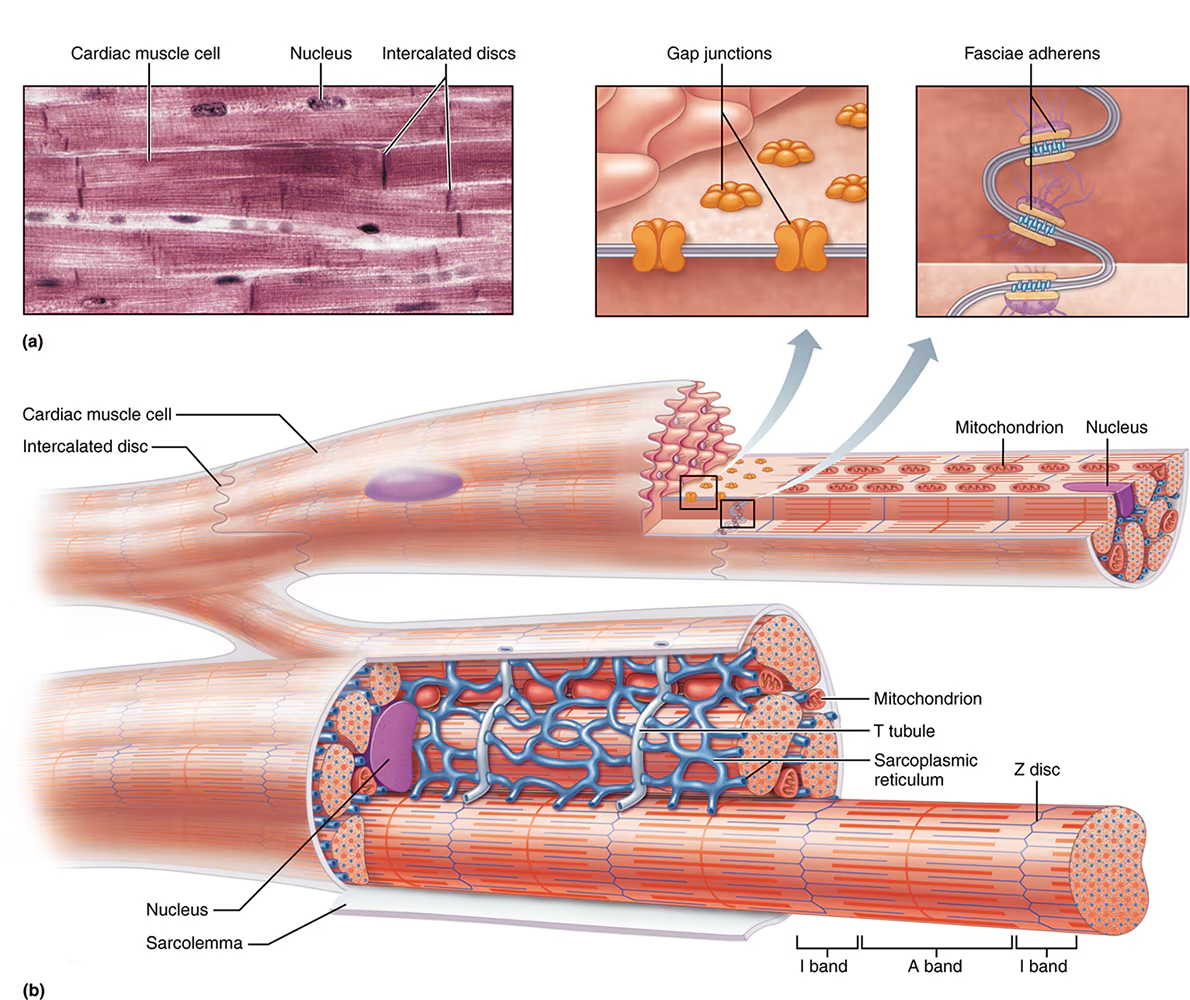
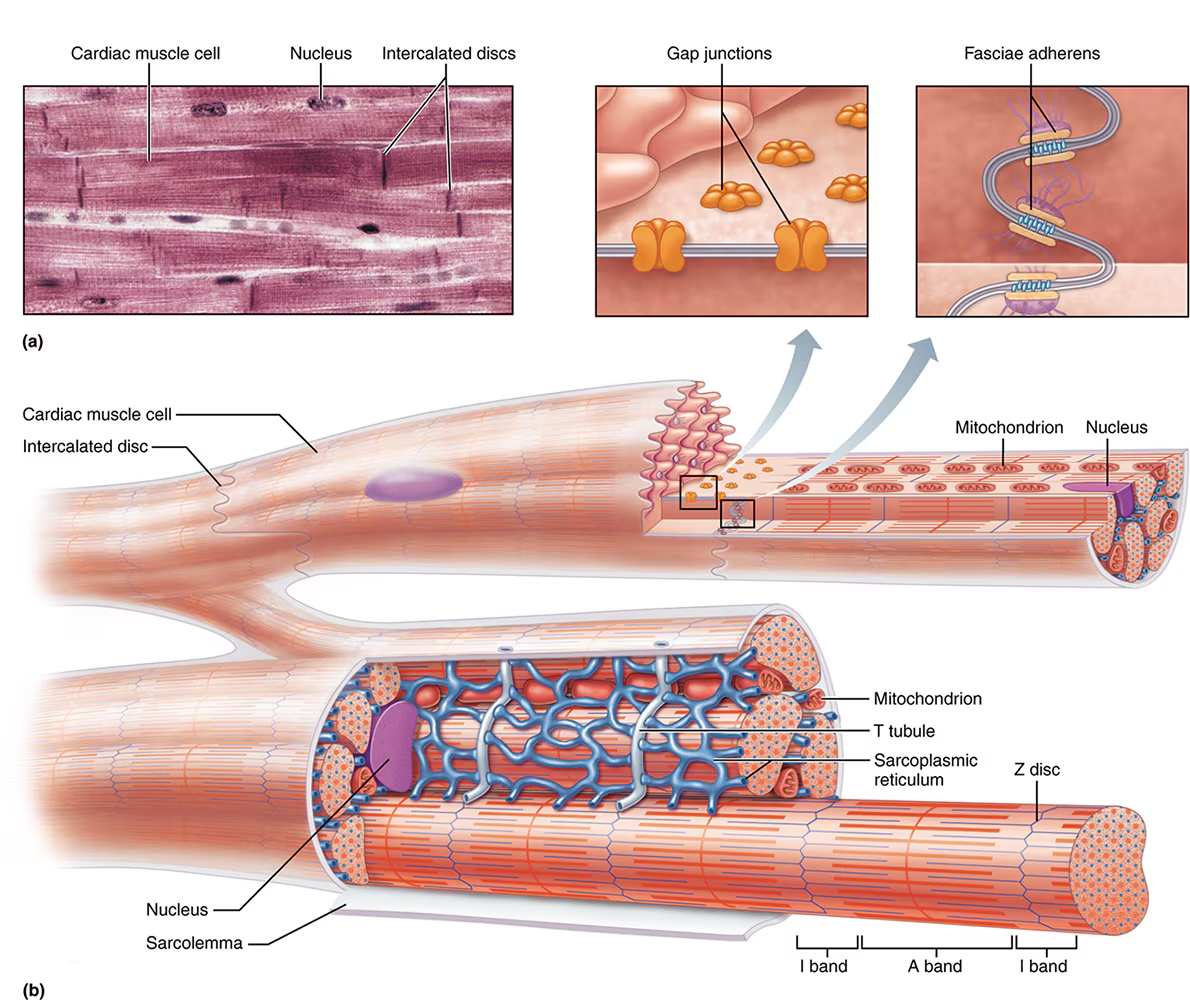
what are intercalated discs? what 2 regions are within the discs?

Intercalated discs are junctions that joint sarcolemma’s together like interlocking fingers, they contain 2 regions:

  1. fasciae adherens

  2. gap junctions

2
New cards

what is the function of the fasciae adherens within intercalated discs?

desmosome-like junctions: long, strong stitches

  • physically bind cells together

  • transmit the contractile force to adjacent cells
<p>desmosome-like junctions: long, strong stitches</p><ul><li><p>physically bind cells together</p></li><li><p>transmit the contractile force to adjacent cells</p></li></ul><p></p>
3
New cards

what is the function of the gap junctions within intercalated discs?

small channels made of connexons

  • allow passage of ions between cells: “"cell to cell communication”
<p>small channels made of connexons</p><ul><li><p>allow passage of ions between cells: “"cell to cell communication”</p></li></ul><p></p>
4
New cards

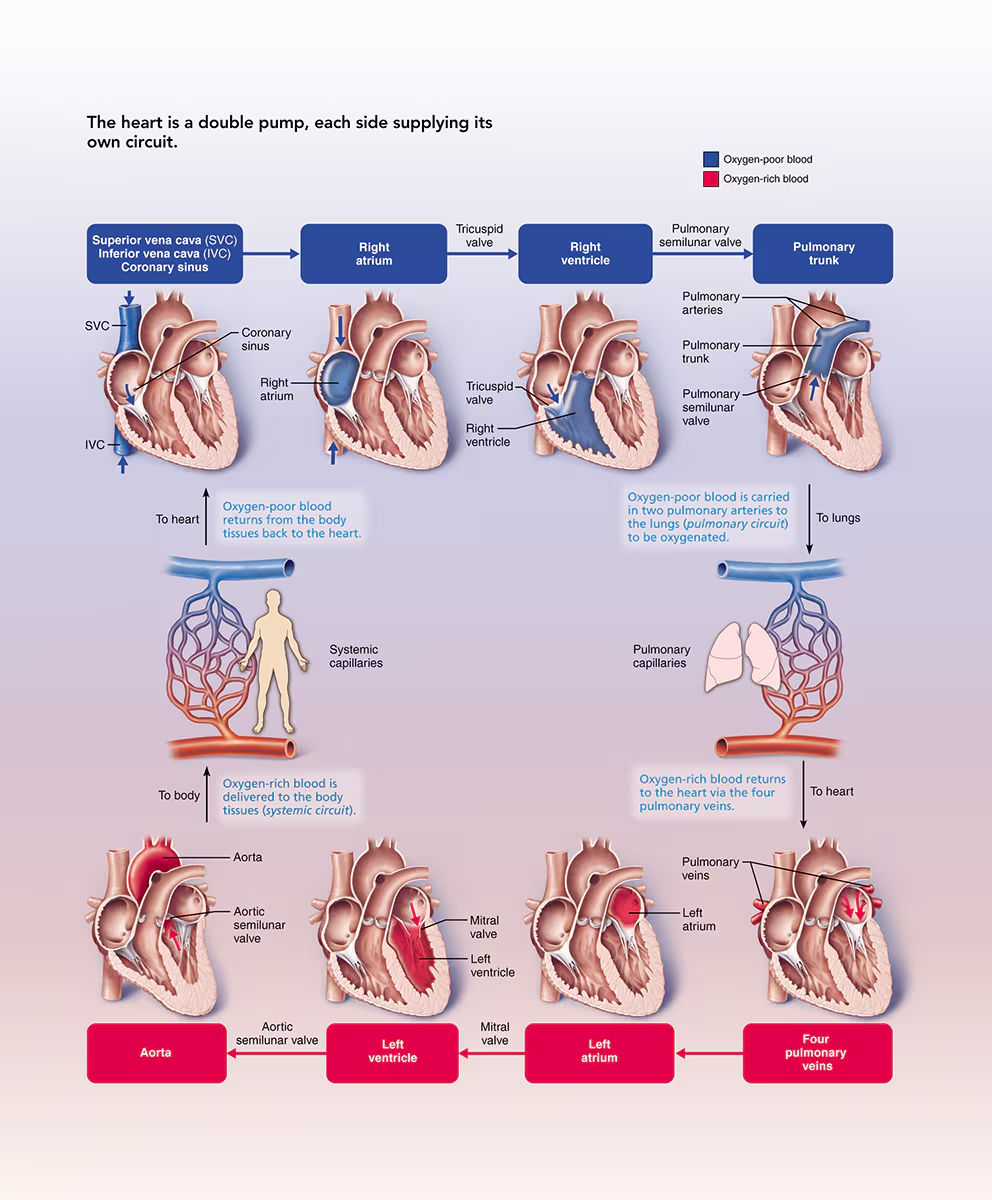
Flow of Blood (where is blood oxygenated/deoxygenated)

  1. SVC / IVC / Coronary Sinus

  2. Right atrium → tricuspid valves

  3. Right ventricle → pulmonary semilunar valve

  4. Pulmonary trunk / artery

  5. Lung / pulmonary capillaries → back to the heart / pulmonary veins

  6. Left atrium → mitral / bicuspid valve

  7. Left ventricle (strongest chamber) → aortic semilunar valve

  8. aorta → body

<ol><li><p>SVC / IVC / Coronary Sinus</p></li><li><p>Right atrium → tricuspid valves</p></li><li><p>Right ventricle → pulmonary semilunar valve</p></li><li><p>Pulmonary trunk / artery</p></li><li><p>Lung / pulmonary capillaries → back to the heart / pulmonary veins</p></li><li><p>Left atrium → mitral / bicuspid valve</p></li><li><p>Left ventricle (strongest chamber) → aortic semilunar valve</p></li><li><p>aorta → body</p></li></ol><p></p>
5
New cards

Arrhythmias: what is tachycardia and bradycardia (include bpm)?

  • Tachycardia: heart beats too fast (>100bpm)

  • Bradycardia” heart beats too slow (<60bpm)

6
New cards

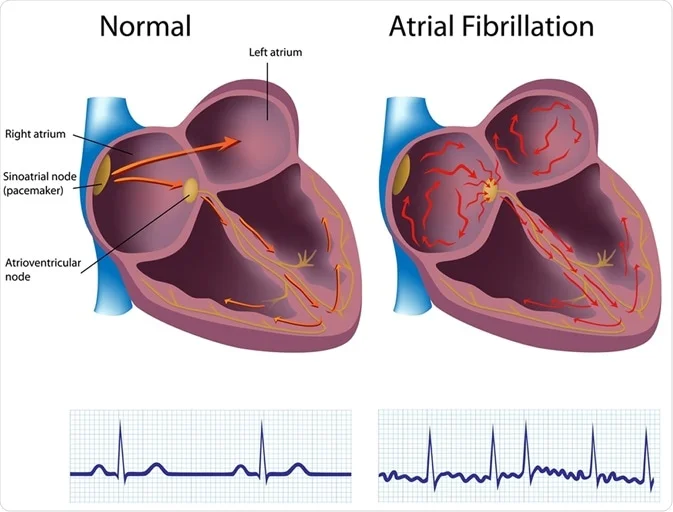
Arrhythmias (variation from normal heart rhythm): what is atrial fibrillation?

  • random signals from the AV node cause ventricles to contract quickly and irregularly

  • can form clots, which can break off, reach the brain, and cause strokes
<ul><li><p>random signals from the AV node cause ventricles to contract <strong>quickly </strong>and <strong>irregularly</strong></p></li><li><p>can form clots, which can break off, reach the brain, and cause <strong><em>strokes</em></strong></p></li></ul><p></p>
7
New cards

Arrhythmias (variation from normal heart rhythm): what is ventricular fibrillation? what causes this?

  • Random, random firing of electrical impulses in the ventricles

  • Causes ventricles to be unable to pump blood into the arteries

  • crippled conducting system

  • results in cardiac arrest

8
New cards

what is the conducting system? does it depend on extrinsic nerve impulses?

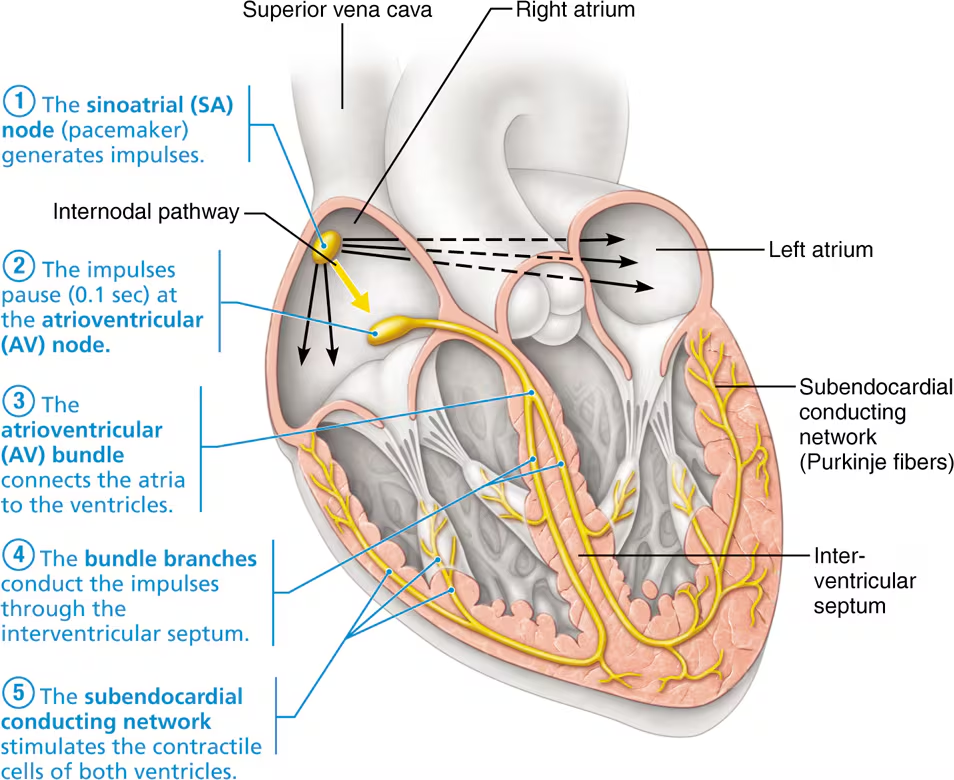
Conducting system: specialized cardiac muscle cells that carry impulses throughout the heart

  • does not depend on extrinsic nerve impulses, functions independently

9
New cards

what is the order of the conducting system pathway (5 components)?

  1. SA node

  2. AV node

  3. AV bundle

  4. bundle branches

  5. subendocardial conducting network

<ol><li><p>SA node</p></li><li><p>AV node</p></li><li><p>AV bundle</p></li><li><p>bundle branches</p></li><li><p>subendocardial conducting network</p></li></ol><p></p>
10
New cards

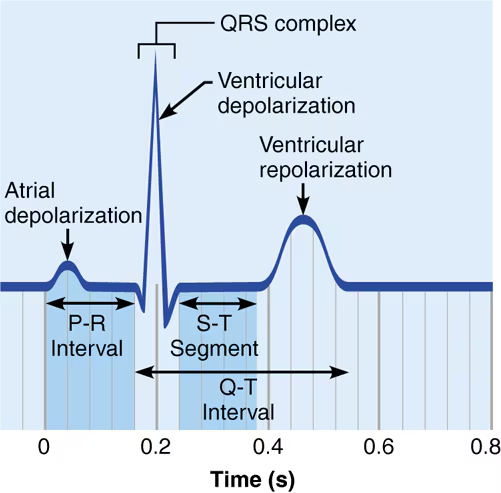
describe the 3 structures represented on an EKG, what does each represent?

  1. P wave: atria contract (depolarize)

  2. QRS complex: atria recharge (repolarization not visible, hidden by the spike) and ventricles contract (depolarize)

  3. T wave: ventricles relax and recharge (repolarize)
<ol><li><p>P wave: atria contract (depolarize)</p></li><li><p>QRS complex: atria recharge (repolarization not visible, hidden by the spike) and ventricles contract (depolarize)</p></li><li><p>T wave: ventricles relax and recharge (repolarize)</p></li></ol><p></p>
11
New cards

heart sounds: lub-dup sound is made by what?

sound of valves closing

12
New cards

first sound: name and what causes it?

Lub (S1)

  • AV valves close (mitral & tricuspid)

  • ventricles start to squeeze

13
New cards

second sound: name and what causes it?

Dub (S2)

  • semilunar valves (aortic and pulmonary) close

  • ventricles begin to relax

14
New cards

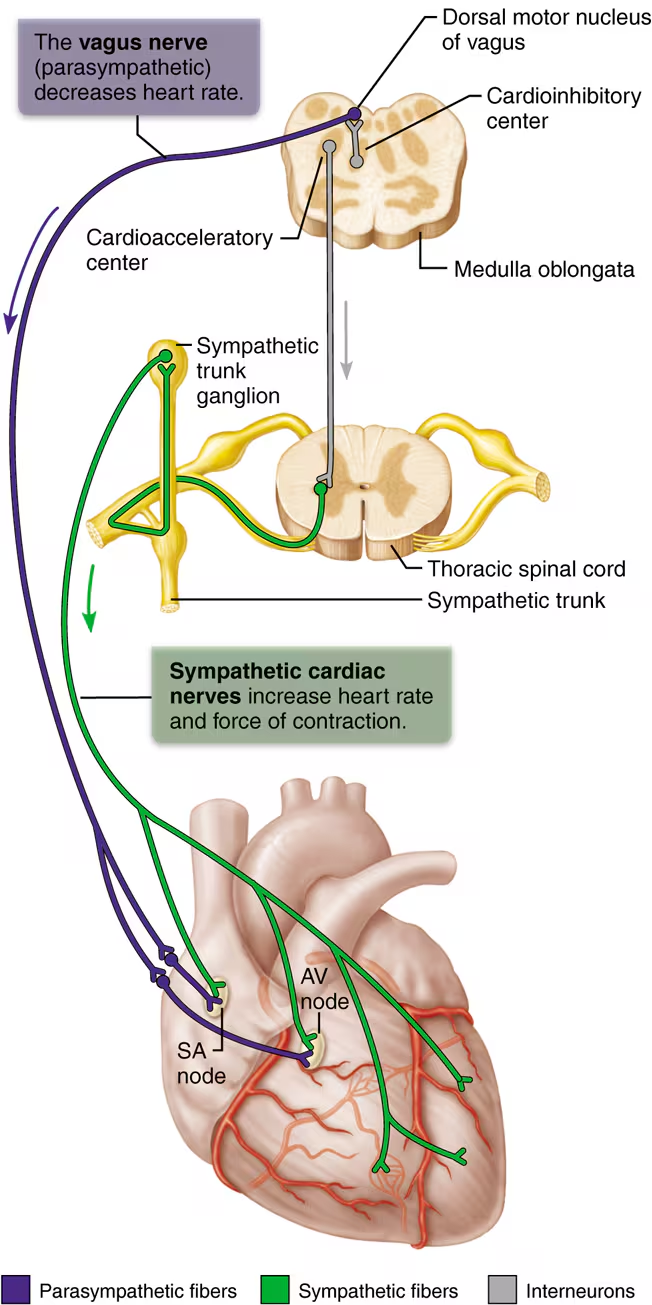
what controls heart rate? this can be altered by which 2 extrinsic neural controls?

SA node, sets the hearts inherent rate of contraction

  1. Parasympathetic nerves: decreases HR (i.e. rest and digest)

  2. Sympathetic nerves: increase HR and strength of contraction (i.e. fight or flight, emotion, exercise)
<p>SA node, sets the hearts inherent rate of contraction</p><ol><li><p>Parasympathetic nerves: decreases HR (i.e. rest and digest)</p></li><li><p>Sympathetic nerves: increase HR and strength of contraction (i.e. fight or flight, emotion, exercise)</p></li></ol><p></p>
15
New cards

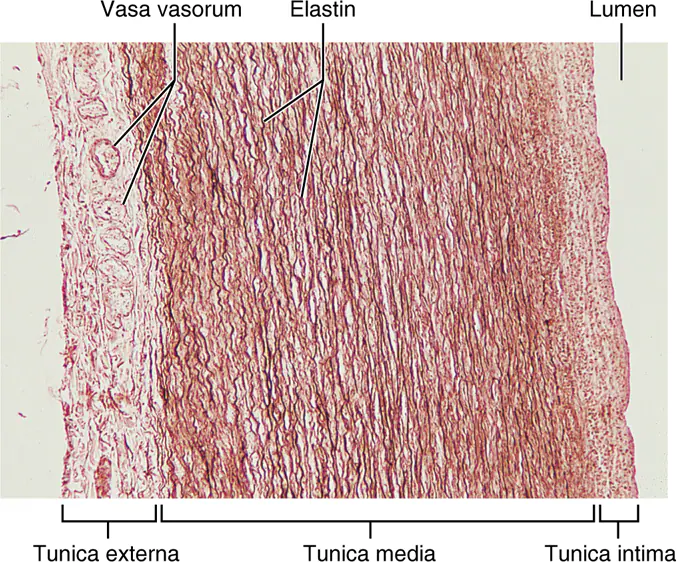
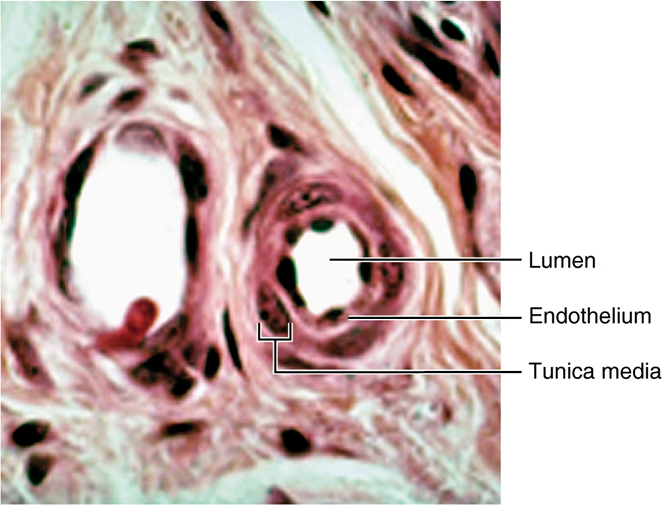
describe the 3 tunics that form the wall of blood vessels. what is the blood-filled space of a vessel called?

  1. Tunica intima (deepest)

  • Contains simple squamous epithelium

  1. Tunica media (functional layer)

  • contains smooth muscle for vasoconstriction and vasodilation

  1. Tunica externa

  • composed of connective tissue

  1. Lumen: contains blood

16
New cards

what are the 3 types of arteries?

  1. elastic arteries

  2. muscular (distributing) arteries

  3. arterioles

17
New cards

Elastic arteries are the largest arteries, they contain a lot of (_) to help (_)?

Includes the aorta and its major branches

  • a.k.a. conducting arteries because they are the pathway for blood leaving the heart

  • High amount of elastin softens the surge of blood pressure

<p>Includes the aorta and its major branches</p><ul><li><p>a.k.a. conducting arteries because they are the pathway for blood leaving the heart</p></li><li><p>High amount of elastin softens the surge of blood pressure</p></li></ul><p></p>
18
New cards

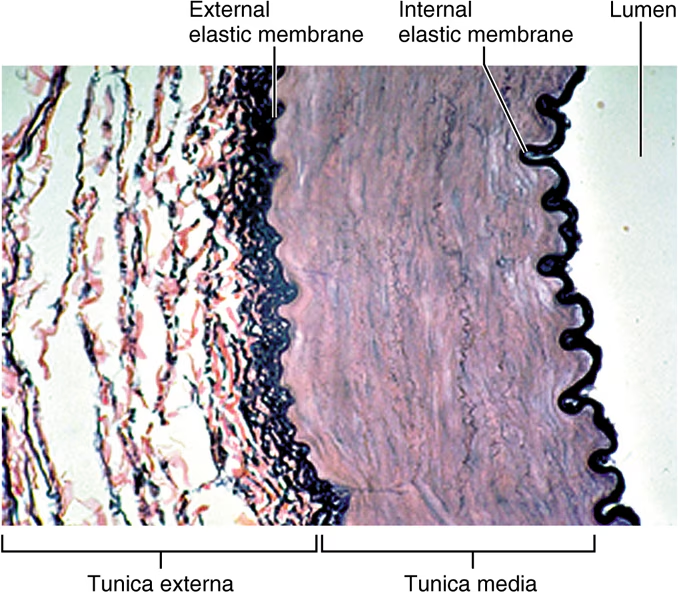
Muscular (distributing) arteries include most named arteries, what are 2 unique features of these arteries? what is their primary function?

  1. tunica media is thick

  • softens the pressure of blood

  1. contains internal and external elastic membranes

  • actively adjusts the diameter of the artery to regulate the amount of blood needed by an organ

<ol><li><p>tunica media is thick</p></li></ol><ul><li><p>softens the pressure of blood</p></li></ul><ol start="2"><li><p>contains internal and external elastic membranes</p></li></ol><ul><li><p>actively adjusts the diameter of the artery to regulate the amount of blood needed by an organ</p></li></ul><p></p>
19
New cards

Arterioles are the smallest arteries, how does this effect small vs large arterioles? what 2 things regulate the diameter of arterioles?

  • Larger arterioles posses all three tunics

  • Smaller arterioles have only epithelium and smooth muscle layers

  1. local factors in tissues

  2. sympathetic NS

  • fight-or-flight triggers vasocontraction

  • increases BP and makes skin pale

<ul><li><p>Larger arterioles posses all three tunics</p></li><li><p>Smaller arterioles have only epithelium and smooth muscle layers</p></li></ul><ol><li><p>local factors in tissues</p></li><li><p>sympathetic NS</p></li></ol><ul><li><p>fight-or-flight triggers <strong>vasocontraction</strong></p></li><li><p><strong>increases BP</strong> and makes skin <strong>pale</strong></p></li></ul><p></p>
20
New cards

capillaries are the smallest blood vessels, for this reason RBCs pass through in (_). what are 4 site-specific function of capillaries?

  • Red blood cells pass through single file

  1. Lungs: exchange O2 and CO2

  2. Small intestines: receive nutrients

  3. Endocrine glands: receive hormones

  4. Kidneys: remove nitrogenous wastes

21
New cards

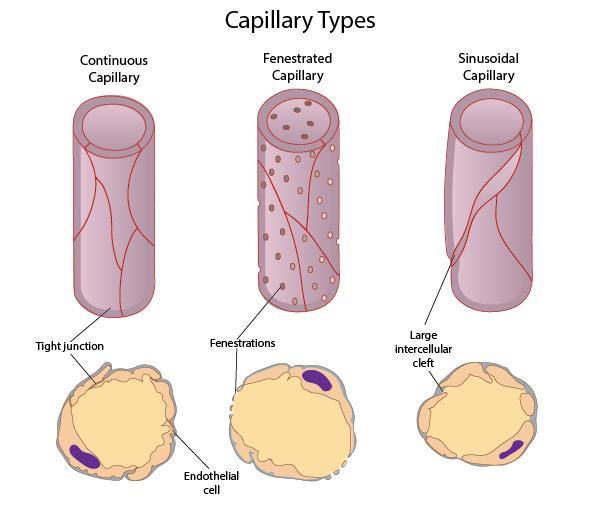
continuous capillaries are the most common type of capillary, the endothelial cells are held together by which 2 junctions? what are the gaps between endothelial cells?

Least permeable

  1. Endothelial cells are held together by tight junctions and desmosomes

  • block the passage of small molecules

  1. Gaps of unjoined membrane are called intercellular clefts

  • allow small molecules to pass

<p><strong>Least permeable</strong></p><ol><li><p>Endothelial cells are held together by tight junctions and desmosomes</p></li></ol><ul><li><p>block the passage of small molecules</p></li></ul><ol start="2"><li><p>Gaps of unjoined membrane are called intercellular clefts</p></li></ol><ul><li><p>allow small molecules to pass</p></li></ul><p></p>
22
New cards

like continuous capillaries, fenestrated capillaries are also joined by (_). fenestrated differ in that they have increased (_) because of (_). they occur in areas of active (_) or (_).

  1. tight junctions and desmosomes

  2. permeability

  3. pores in their endothelium (pores=passageways)

  4. absorption

  5. filtration

  • e.g. small intestine, kidneys, endocrine glands

<ol><li><p>tight junctions and desmosomes</p></li><li><p>permeability</p></li><li><p>pores in their endothelium (pores=passageways)</p></li><li><p>absorption</p></li><li><p>filtration</p></li></ol><ul><li><p>e.g. small intestine, kidneys, endocrine glands</p></li></ul><p></p>
23
New cards

sinusoid capillaries are very leaky due to what 2 things? what 2 locations are they primarily found in?

Wide and twisted course, making blood flow slowly, increasing time of exchange

  1. Fenestrations and wide open intercellular clefts

  2. bone marrow and spleen

<p><strong>Wide and twisted</strong> course, making blood flow slowly, increasing time of exchange</p><ol><li><p>Fenestrations and wide open intercellular clefts</p></li><li><p>bone marrow and spleen</p></li></ol><p></p>
24
New cards

Locations without capillary beds, avascular. 4

  1. epithelium

  2. cartilage

  3. cornea

  4. lens

25
New cards

describe the size of venules. venules join the form what?

  • smallest veins

  • venules join to form veins

26
New cards

what are 4 key structural differences between veins and arteries?

  1. veins have a larger lumen

  2. veins have a thicker tunica externa

  3. arteries have more elastic in walls

  4. arteries have thicker walls

27
New cards

where does pulmonary circulation begin and end? is blood oxygenated or deoxygenated?

Thinner vessels = low pressure

  • pulmonary circulation beings as oxygen-poor blood leaves the right ventricle of the heart via the pulmonary trunk

  • pulmonary circulation ends in the left atrium as oxygenated blood enters from the lungs via pulmonary veins

28
New cards

where does systemic circulation begin and end? is blood oxygenated or deoxygenated?

Thicker vessels = higher pressure

  • systemic circulation begins with oxygenated blood in the left ventricle, which enters the aorta

  • the blood reaches the capillaries and returns as deoxygenated blood to the right atrium

29
New cards

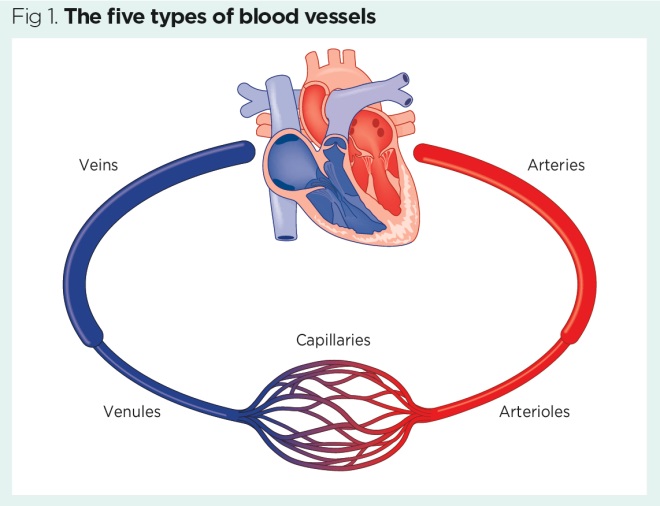
Flow of blood through blood vessels. 6 steps, 5 types of blood vessels

  1. Heart → arteries

  2. Arteries → arterioles

  3. arterioles → capillaries

  4. capillaries → venules

  5. venules → veins

  6. veins → heart

<ol><li><p>Heart → arteries</p></li><li><p>Arteries → arterioles</p></li><li><p>arterioles → capillaries</p></li><li><p>capillaries → venules</p></li><li><p>venules → veins</p></li><li><p>veins → heart</p></li></ol><p></p>