ECON 3330 Test 2
 Studied by 40 people
 Call Kai
 Learn
Learn Practice Test
 Spaced Repetition
 Match
Match Flashcards
 Knowt Play
1/69

Earn XP
Description and Tags
Bowes
Name | Mastery | Learn | Test | Matching | Spaced | Call with Kai |
|---|
No analytics yet
Send a link to your students to track their progress
70 Terms
Why do interest rates change over time?
Bond market, equilibrium changes due to a change in supply/demand
Interest rates are deteremined by
The demand for and supply of bonds
Interest rates increase in what direction?
Downward
Demand for bonds depends on…
Income (wealth)
Expected return
Liquidity
Risk
Expected inflation
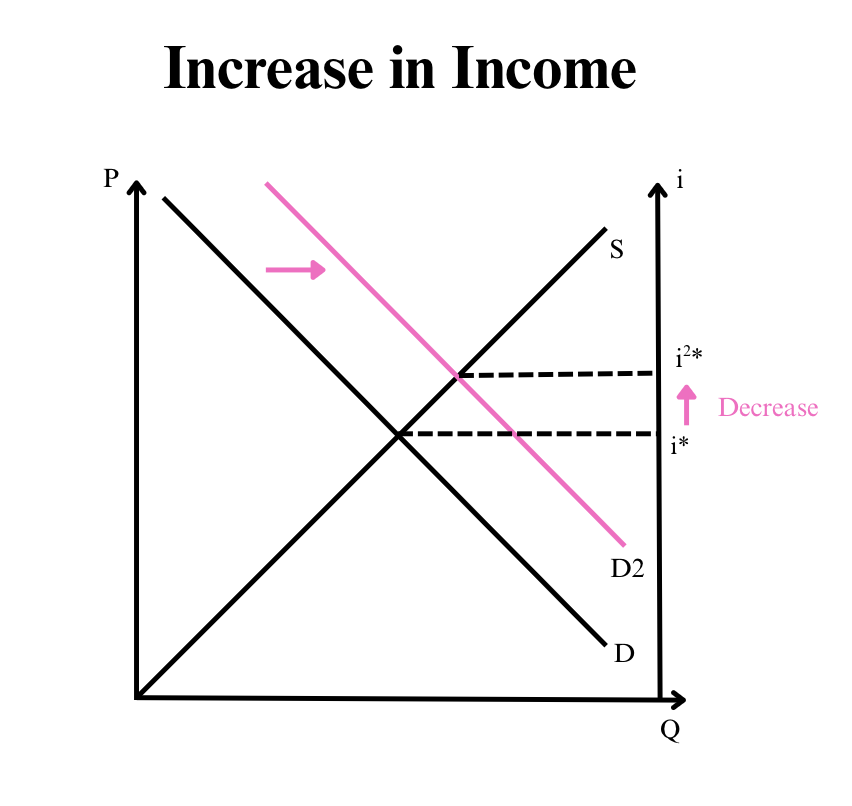
How does an increase in income affect demand?
Increase in income,
Increase in demand,
Decrease in interest rate
(positive relation)
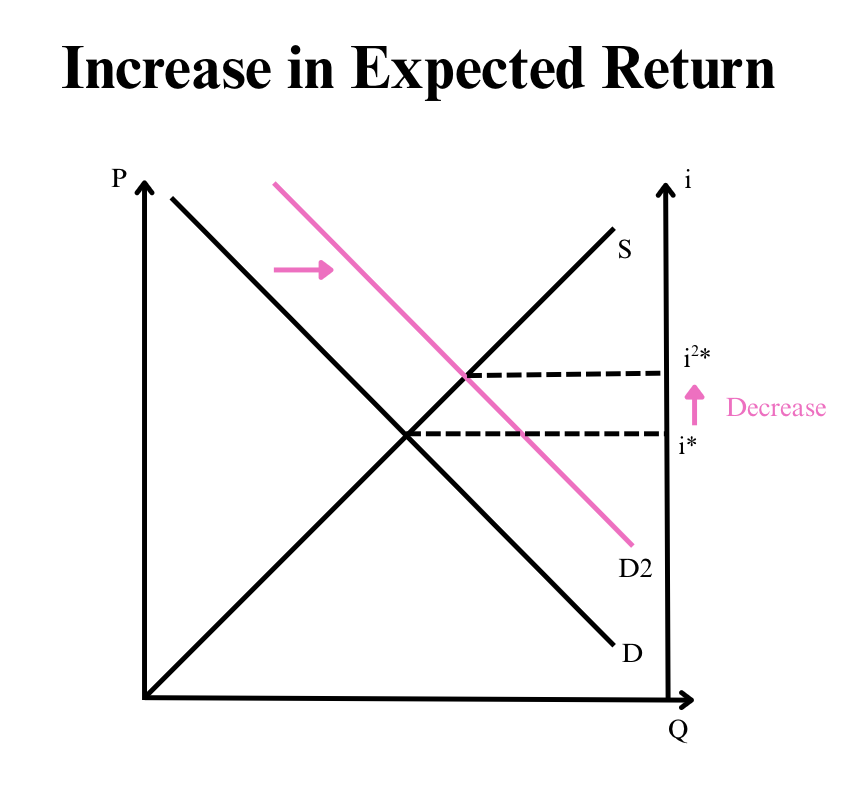
How does an increase in expected return on bonds affect demand?
Increase in expected return,
Increase in demand,
Decrease in interest rate
(positive relation)
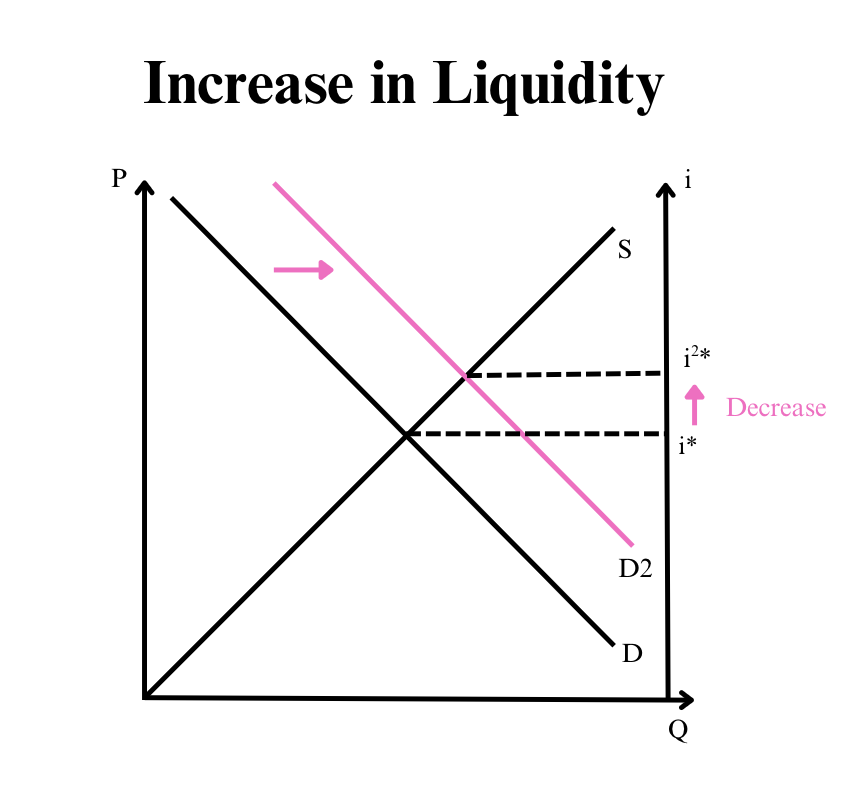
How does liquidity of bonds affect demand?
Increase in liquidity,
Increase in demand,
Decrease in interest rate
(positive relation)
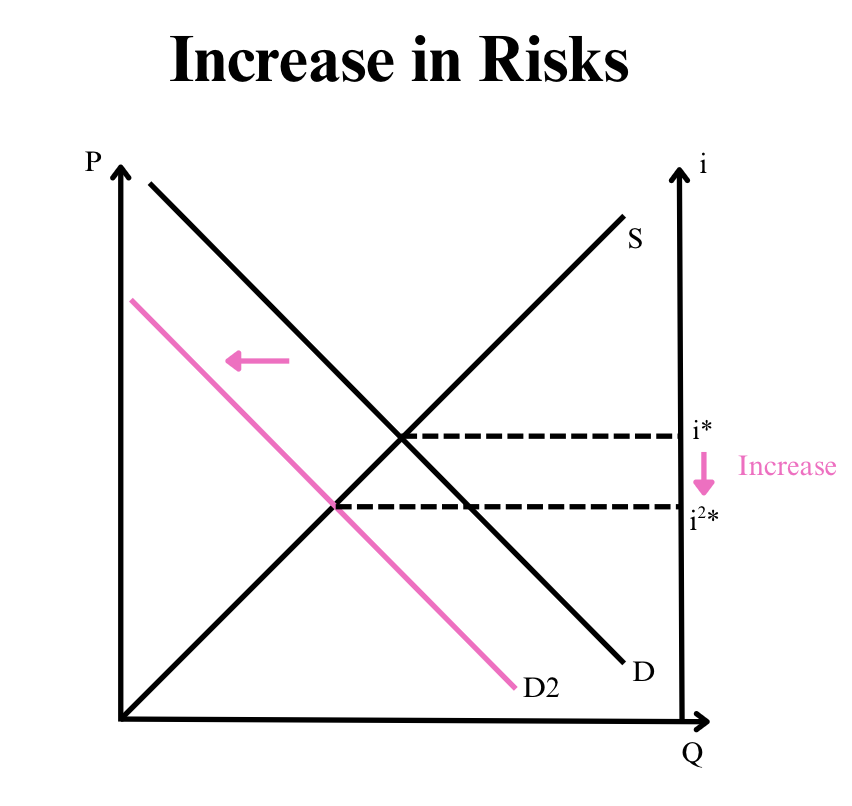
How does the risk of bonds affect the demand?
Increase in risks,
Decrease in demand,
Increase in interest rate
(negative/opposite relation)
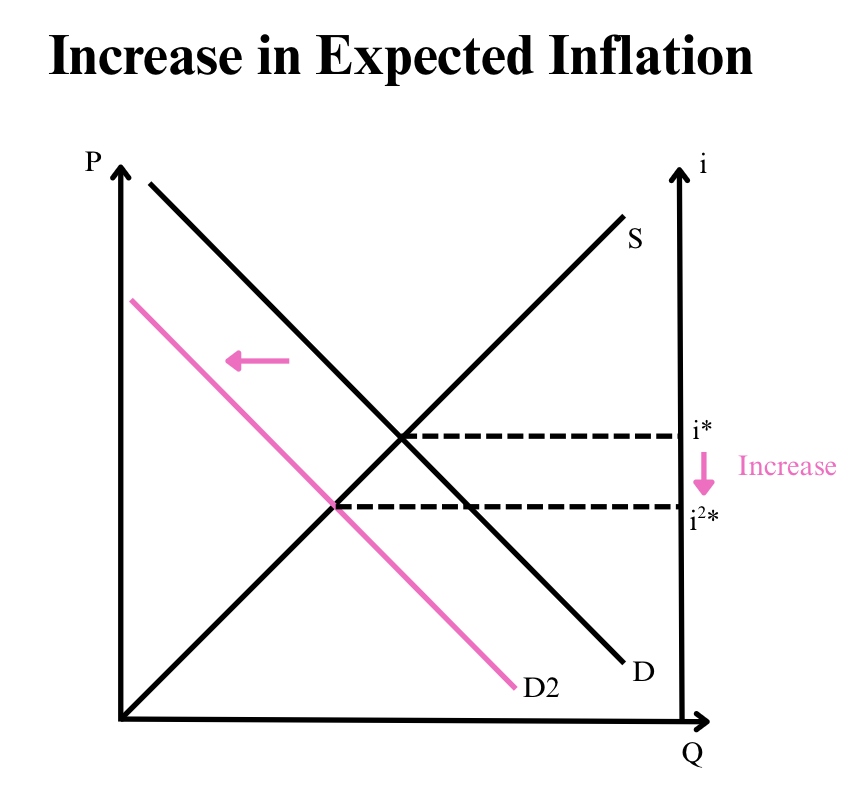
How does a increase in expected inflation affect demand?
Increase expected inflation,
Decrease in demand
Increase Interest rates
Supply of bonds depends on…
Business Conditions (number and profitability of investment opportunities)
Government deficit spending
Expected inflation
How do the number and profitability of investment opportunities affect supply of bonds?
Increase in number/profitability,
Increase in supply,
Increase in interest rates
(positive relation)

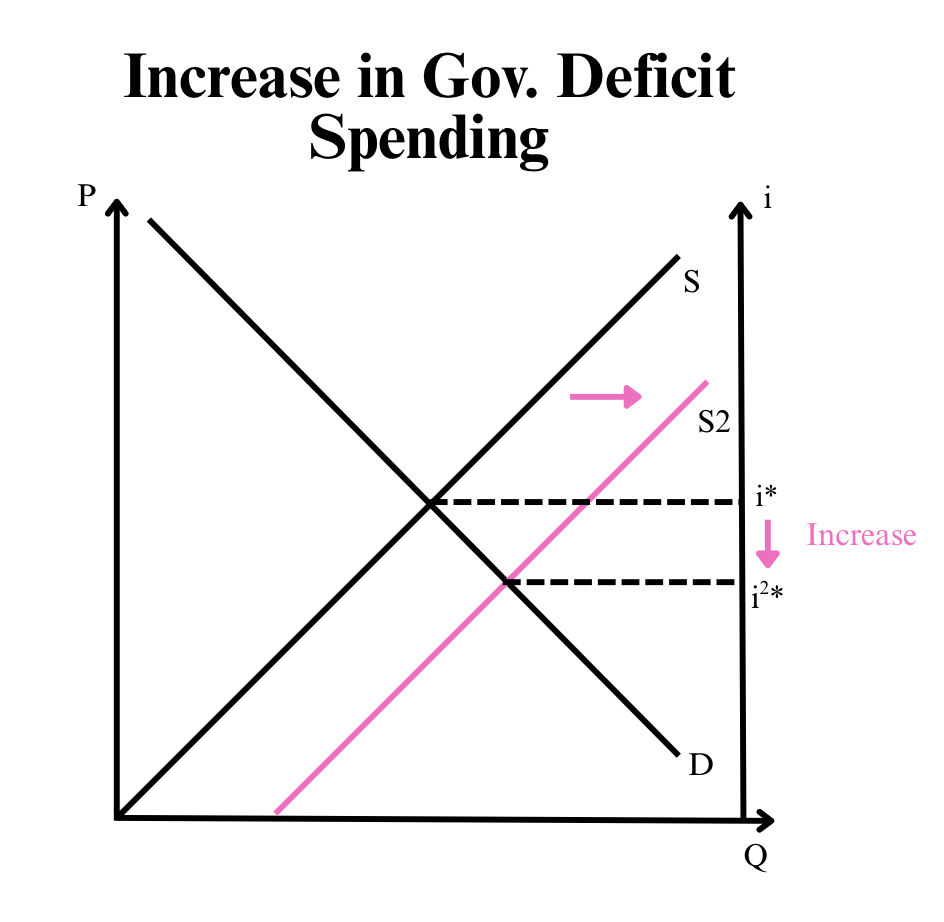
How does an increase in government deficit spending affect the supply of bonds?
Increase in gov. deficit spending,
Increase in supply,
Increase in interest rates
(positive relation)
Crowding out
Occurs when the government sells bonds, raising interest rates and discouraging private investment
*not good*
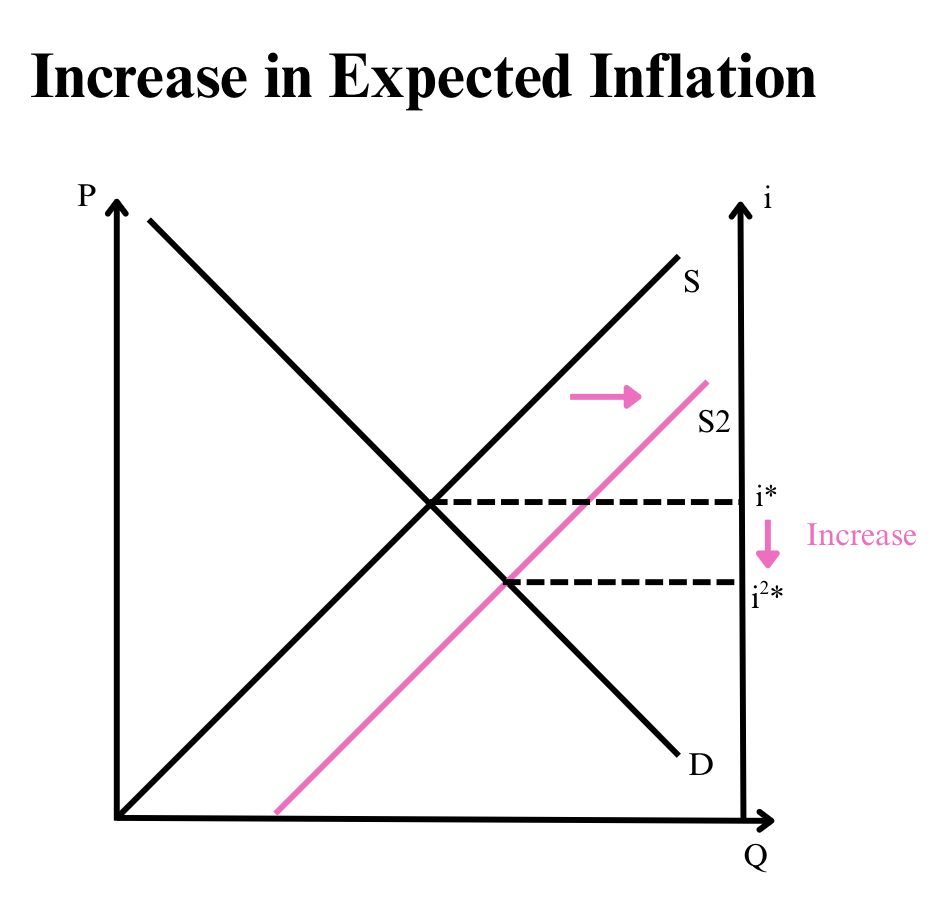
How does an increase in expected inflation affect the supply of bonds?
Increase in expected inflation
Increase in supply
Increase in interest rates
Fisher effect
Higher expected inflation results in higher market (nominal) rates, supply and demand changes reinforce each other
Interest rates are pro-cyclical
Go up during expansion & fall during reces
Why are interest rates different for different securities?
Differences in risk
Risk structure
Describes the difference in interest rates for bonds of similar maturity, but different risk.
For bonds of the same maturity, riskier bonds will have a higher interest rate
Risk premium
Bond interest rate - risk-free rate
Risk free rate in practice
Treasury rate of the same maturity
Bond ratings
Illustrate risk structure
Term structure
Describes the difference in interest rates for bonds of similar risk but different maturity
Term Structure theories
Expectations hypothesis and Liquidity preference/premium
Expectations hypothesis
Today’s long-term rates are average of expected short-term rates;
Helps explain why rates for all maturities move together and short-term rates are more volatile
Liquidity premium/preference
Must add a liquidity premium to the rate for longer maturities;
Helps explain why long-term rates are usually higher. Swings the yield curve up
What does the yield curve show graphically?
The difference in interest rates for bonds of different maturities.
Yield curves can be an indicator
What can an inverted yield curve can signal?
A recession coming
19th century characterized by conflict between
Rural farmers & urban bankers
Mistrust in centralized authority
Bank of North America 1782
1st Bank of the United States 1791
Second Bank of the United States 1816
Conflicts that sunk the first attempts at a central bank in U.S.
Bank of North America 1782 &
First Bank of United States
created central authority for banks in U.S.
private institution controlled by wealthy urban bankers
Why did Bank of North America and First Bank of United States fail?
Mistrust of central authority
Conflict between rural farmers and rich bankers
Who was the Second Bank of the United States (1816) eliminated by?
President Andrew Jackson
Most banks in the 19th century were…
Local, state banks, printed thier own money
18th century was characterized by frequent bank failures also known as
Panics, contaigions, and bank runs
The National Bank Act 1863
Created national charters and a national currency
to stabilize the banking system, and pay for civil war
Still have a dual banking system
Federal Reserve Act 1913
Created the Federal Reserve System and the first true central bank in the U.S
McFadden Act 1927
Prohibited interstate banking and limited branching
banks had to be small, local, and numerous
Bank failures in 1930
Started in 1920s, banks used savers’ money to buy corporate stocks
Stock markets crashed, banks lost savers’ money and closed
Glass-Steagall Act 1933
Prohibits banks from owning risky assets
FDIC Act 1933
Created deposit insurance
Eliminated bank runs/panics
S&L crisis in 1980s resulted from
Differences in interest rates on deposits and fixed-rate mortgages
began relaxation of restrictions from Glass-Steagall
Bank crisis 1980s simplified
banks charged low rates for mortgages (rates were their income)
high inflation forced banks to pay high rates for deposits
with low-rate income and high rate expenses, banks lost tons of money
Riegle–Neal Interstate Banking & Branching Efficiency Act 1994
Eliminated McFadden Act
Technology made McFadden obsolete
Gramm–Leach–Bliley Act 1999
Eliminated Glass-Steagall
lasted until 2008
Because of the elimination of the Glass-Steagall and McFadden Act, today’s U.S. banks are characterized by
Consolidation
Today’s U.S. Banking Consolidation
Fewer and larger banks
Due to relaxation of interstate restrictions
Larger banks may take advantage of economies of scale/scope
Economies of scale
Larger banks have lower costs
Ecnoomies of Scope
Cheaper for one firm to do multiple things than multiple firms each doing something different
Bad things about large bank taking over small local bank
may close branch
charge higher fees/have worse rates
riskier (Too-Big-To-Fall)
bad customer service
Benefits of large bank taking over small local bank
more locations/ATMs
Lower fees/better rates
less risky (absorb local losses)
more services
Why are banks increasing international operations?
expanding international trade
multi-national operations
international investment activity
Who do U.S. firms overseas want to deal with?
U.S. based banks
Regulating agencies
Federal Reserve
Comptroller of Currency
State agencies
FDIC
SEC
Why are banks regulated?
stability of system required to help move money from savers to borrowers (important to economy)
prevent monopoly (not really a realistic problem)
promote trust and protect savers (form asymmetric info, moral hazard & adverse selection)
Types of bank regulation
Asset Restrictions
Capital Requirements
Disclosure requirements
Supervision and Examination
Restrictions on competition
Safety net
Asset restrictions
Prohibit banks from owning risky assets (Glass-Steagall)
Capital requirements
Reduce banks’ incentive to buy risky assets by making use their own money
Disclosure requirements
Banks must provide information to depositors about the bank’s assets
Supervision and Examination
Regulating agencies set rules & standards, periodically send teams to examine banks to make sure rules are followed
Restrictions on competition
Ex. McFadden Act
Safety Net
Deposit insurance
Purchase and assumption
Lender of Last Resort
Problems with safety net
Makes moral hazard worse
“Too-Big-To-Fall” issue (gov having to give money to banks to “bail them out”)
Issues in bank regulation
International regulation
Regulatory competition vs. Regulatory consolidation
Regulatory competition
Multiple regulating agencies with overlapping functions
Benefits to regualtory competition
Check on each other (outdo each other)
Focus on different areas of banking system
Issues with regulatory competition
Expensive
Banks can seek out “easiest” regulator
Potential regulatory forbearance
Regualtory consolidation
Merge all bank regulating agencies into a single “super regulator”
Benefits to regualtory consolidation
More cost-efficient
Can’t expect others to do the job
Issues with regulatory consolidation
No one to check on mistakes
May overlook small, local banks
International regulation
business spread around the world
banks follow them
when banks operate in multiple countries, follow both regualtions and resolve the conflicts between
 Note
Note  Flashcards (20)