Ex phys exam 3
 Call Kai
 Learn
Learn Practice Test
 Spaced Repetition
 Match
Match Flashcards
 Knowt Play
1/99

There's no tags or description
Looks like no tags are added yet.
Name | Mastery | Learn | Test | Matching | Spaced | Call with Kai |
|---|
No analytics yet
Send a link to your students to track their progress
100 Terms
Neuroendocrine system
• Endocrine system releases hormones
• Nervous system uses neurotransmiIers
Endocrine glands
release hormones directly into the blood
Hormones
Alter the actvity of tissues that possess receptors to which the hormone can bind
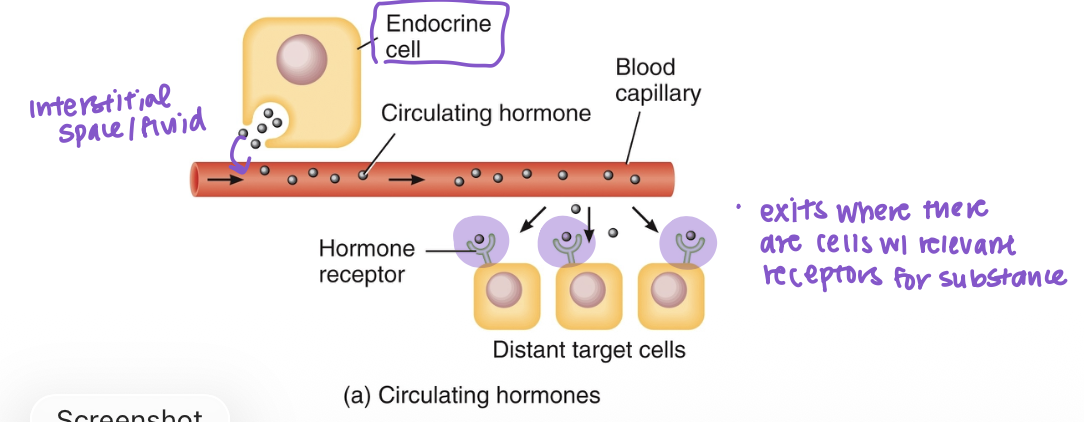
Endocrine hormones
Secreted into interstitial fluid and then absorbed into the bloodstream to be carried systemically to any cell that displays the appropriate type of receptor
The effect of a hormone on a tissue is determined by
the plasma concentration
What determines the plasma concentration
Rate of secretion of hormone from endocrine gland, Rate of metabolism or excretion of hormone, quantity of transport protein, changes in plasma volume
Rate of secretion of hormone from endocrine gland is
magnitude of input and stimulatory versus inhibitory input
Rate of metabolism or excretion of hormone is
at the receptor and by the liver and kidneys
Quantity of transport protein is
steroid hormones, limited by carrier protein
How to increase insulin secretion
increase plasma glucose, plasma Amino acids, parasympathetic activity and decrease incretins and plasma epinephrine
Hormones only affect tissues with specific receptors and the magnitude of effect is dependent on
concentration of the hormone, number of receptors on the cell and affinity of the receptor for the hormone
Downregulation
decrease in receptor number in response to high concentration of hormone
Upregulation
increase in receptor number in response to low concentration of hormone
mechanisms of hormone action
altering membrane transport, altering activity of DNA to modify protein synthesis, activating second messengers via G protein
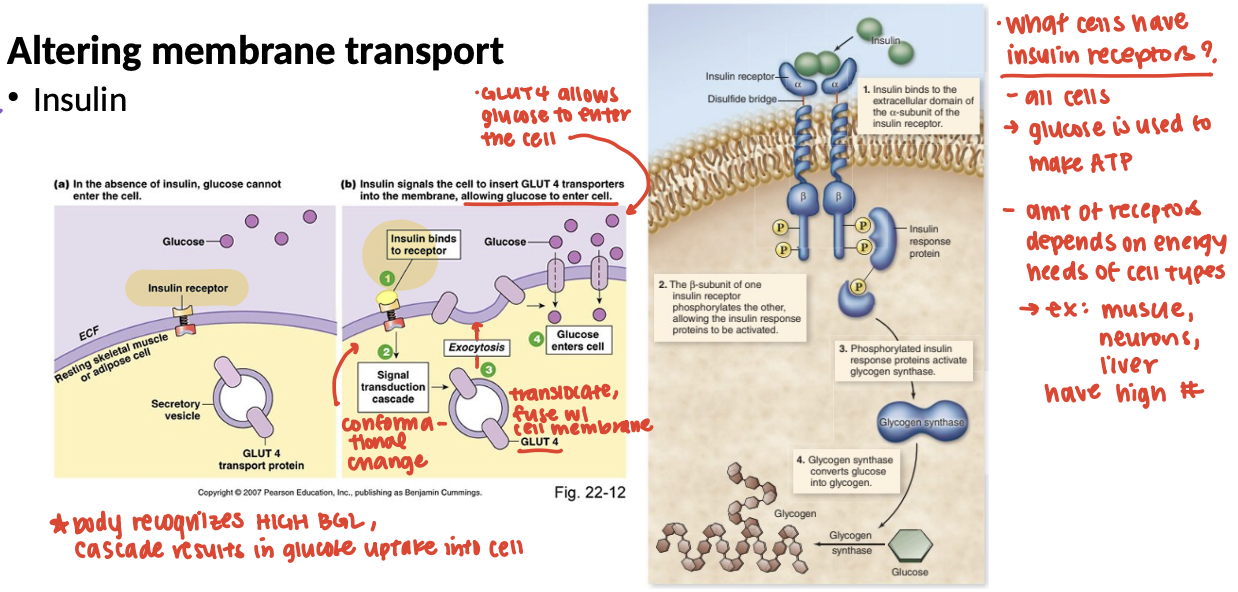
Altering membrane transport is associated with what hormone
Insulin
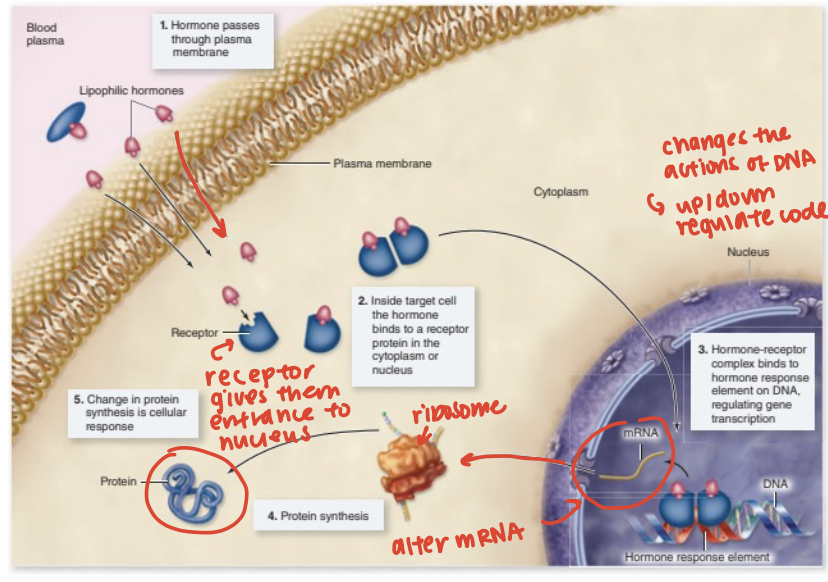
Altering activity of DNA to modify protein synthesis is associated with what hormone
Steriods
Activating second messengers via G protein us associate with what hormone
Cyclic AMP, Ca++, Inositol triphosphate and Diacylglycerol
Testosterone
Released from testes, anabolic steroid (to build) and androgenic steroid
Anabolic steroid
Promotes tissue (muscle) building, performance enhancement
Androgenic steroid
promotes masculine characteristics
Estrogen and progesterone
released from ovaries, establish and maintain reproductive function and levels vary throughout the menstrual cycle
Anabolic steroids
promote protein synthesis through muscle growth, block cortisol( drives break down), can have negative effects for adoleseneitcs ( raises impulsivity ad aggression), can damage organs due to high BP and cancer, to much can convert estrogen and can cease feminization , medically it helps with muscle wasting and is used at a much lower dose than recreational use
Initial studies showed that anabolic steroids have
no benefit for developing muscle mass and subjects used 10 to 100 times the recommended dosage
Side effects of anabolic steroids with Testosterone
H-P-A suppression, mood and behavior disorders, risk of CV disease, liver dysfunction, insulin resistance, glucose intolerance , gynecomastia (enlarged breast tissue)
Side effects of anabolic steroids with estrogen
Enlargement of the clitoris, deepening of the voice, hirsutism (hair growth, PCOS) and change in body build
What is the hormone for the anterior pituitary
Growth Hormone
WHat is the action of the anterior pituitary
Increases growth, FFA mobilization and gluconeogenesis; decreases glucose uptake
What is the controlling factors of the anterior pituitary
Hypothalamic GH-releasing hormone; hypothalamic somaostain
what is the stimuli of the anterior pituitary
Exercise; stress; low blood glucose
What is the exercise effect of the anterior pituitary
Increases
What is the hormone of the posterior pituitary
Adrenocorticotrophic hormone (ACTH), antidiuretic hormone (ADH) (vasopressin)
what is the action of the posterior pituitary with the hormone Adrenocorticotrophic hormone (ACTH)
Increases cortisol synthesis secretion
what is the Controlling factor of the posterior pituitary with the hormone Adrenocorticotrophic hormone (ACTH)
Hypothalamic ACTH-releasing hormone
what is the Stimuli of the posterior pituitary with the hormone Adrenocorticotrophic hormone (ACTH)
Stress bone breaks; heavy exercise; burns, etc
what is the exercise effect of the posterior pituitary with the hormone Adrenocorticotrophic hormone (ACTH)
There is a question mark here so it could be either or but google says increases
what is the action of the posterior pituitary with the hormone antidiuretic hormone (ADH) (vasopressin)
Decreases water loss at kidney; increases peripheral resistance
what is the Controlling factors of the posterior pituitary with the hormone antidiuretic hormone (ADH) (vasopressin)
Hypothalamic neurons
what is the stimuli of the posterior pituitary with the hormone antidiuretic hormone (ADH) (vasopressin)
Plasma volume; plasma osmolality
what is the Exercise effect of the posterior pituitary with the hormone antidiuretic hormone (ADH) (vasopressin)
Increases
What is the Hormone for the Adrenal Cortex
Cortisol and Aldosterone
what is the action of the Adrenal cortex with the hormone cortisol
increases gluconengensis, FFA mobilization and protein synthesis; decreases glucose utilization
what is the controlling factors of the Adrenal cortex with the hormone cortisol
ACTH
what is the Stimuli of the Adrenal cortex with the hormone cortisol
ACTH
what is the exercise effect of the Adrenal cortex with the hormone cortisol
Increase heavy exercise and decrease light exercise
what is the action of the Adrenal cortex with the hormone Aldosterone
Increases potassium secretion and sodium reabsorption at kidney
what is the Controlling factor of the Adrenal cortex with the hormone Aldosterone
Plasma potassium concentration and renin angiotensin system
what is the Stimuli of the Adrenal cortex with the hormone Aldosterone
Low blood pressure and plasma volume; elevated plasma potassium and sympathetic activity to kidney
what is the Exercise effect of the Adrenal cortex with the hormone Aldosterone
Increases
What is the Hormone for the Adrenal Medulla
Epinephrine (80%) and norepinephrine (20%)
What is the Action for the Adrenal Medulla
Increases glycogenolysis, FFA mobilization, heart rate, stroke volume and peripheral resistance
What is the Controlling Factors for the Adrenal Medulla
Output of baroreceptors; glucose receptor in hypothalamus; brain and spinal centers
What is the Stimuli for the Adrenal Medulla
Low blood pressure and blood glucose; to much stress; emotion
What is the Exercise effect for the Adrenal Medulla
Increases
What is the Hormone for the Pancreas
Insulin and Glucagon
What is the Action for the Pancreas with the hormone Insulin
Increases glucose amino acid and FFA uptake into tissues
What is the Controlling Factors for the Pancreas with the hormone Insulin
Plasma glucose and amino acid concentrations; autonomic nervous system
What is the Stimuli for the Pancreas with the hormone Insulin
Elevated plasma glucose and amino acid concentrations decreased epinephrine and norepinephrine
What is the Exercise effect for the Pancreas with the hormone Insulin
Decrease
What is the Action for the Pancreas with the hormone Glucagon
Increases glucose and FFA mobilization; gluconeogensis
What is the Controlling Factors for the Pancreas with the hormone Glucagon
Plasma Glucose and amino acid concentrations; autonomic nervous system
What is the stimuli for the Pancreas with the hormone Glucagon
Low plasma glucose and amino acid concentrations, elevated epinephrine and norepinephrine
What is the Execrise effect for the Pancreas with the hormone Glucagon
Increases
Hypothalamus
stimulates release of hormones from anterior pituitary gland
• Provides hormones for release from posterior pituitary gland
Anterior pituitary gland
Adrenocorticotropic hormone (ACTH)
• Follicle-Stimulating hormone (FSH)
• Luteinizing hormone (LH)
• Melanocyte-stimulating hormone (MSH)
• Thyroid-stimulating hormone (TSH)
• Growth hormone (GH)
• Prolactin
Posterior Pituitary gland
Oxytocin
Antidiuretic hormone (ADH)
neurons synthesizing trophic hormones
release them into capillaries of the portal system
Portal Vessels carry the trophic hormones
directly to the anterior pituitary
Endocrine cells release their hormones into the
second set of capillaries for the distribution the rest of the body
What organs does the pituitary gland target
Mammary glands, Musculoskeletal system, Thyroid gland, Adrenal Cortex, Ovary , tetsis , gonads
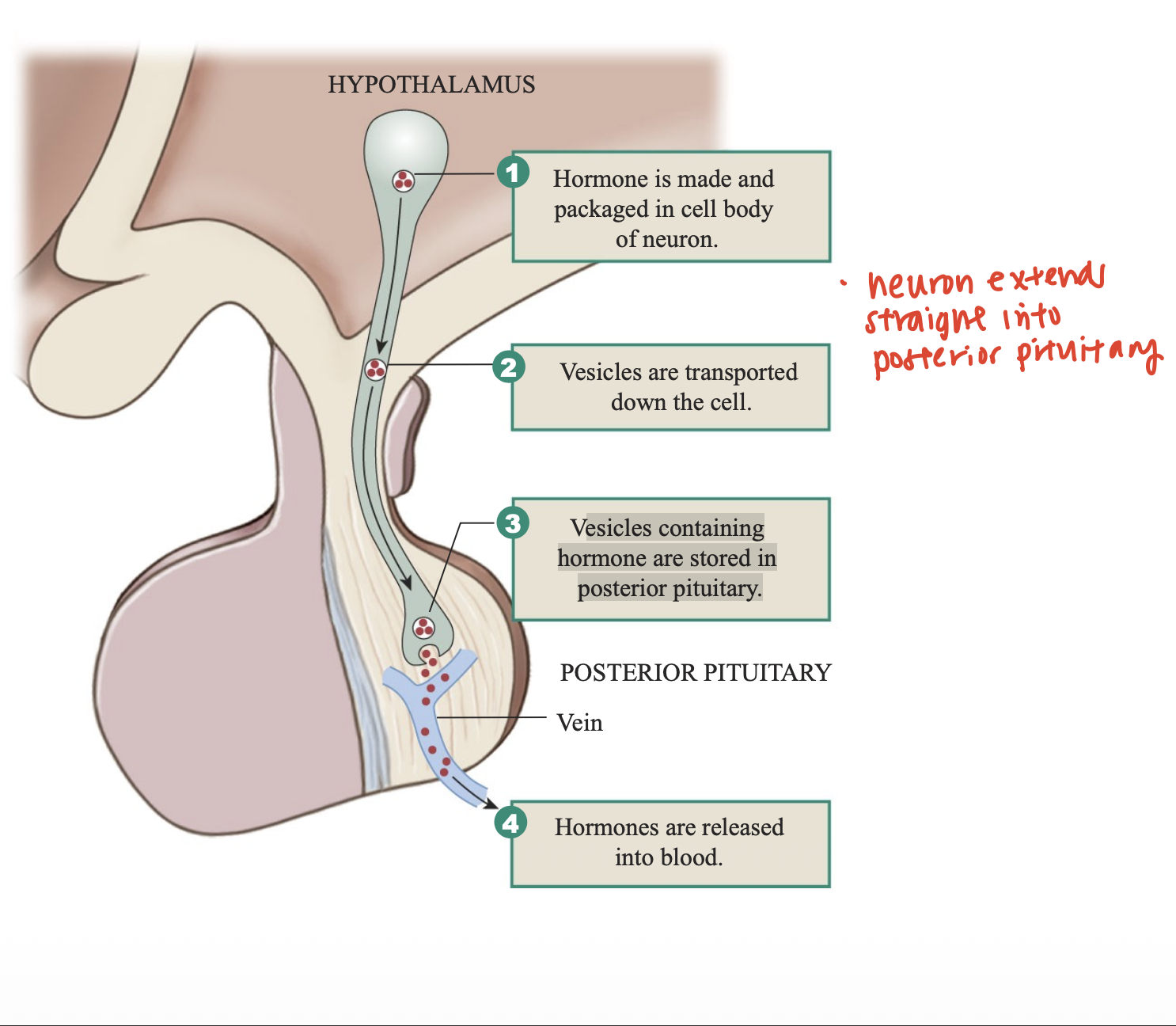
What of the steps from hypothalamus to the pituitary gland
1- Hormone is made and packaged in cell body of neuron.
2- Vesicles are transported down the cell.
3- Vesicles containing hormone are stored in posterior pituitary.
4- Hormones are released into blood
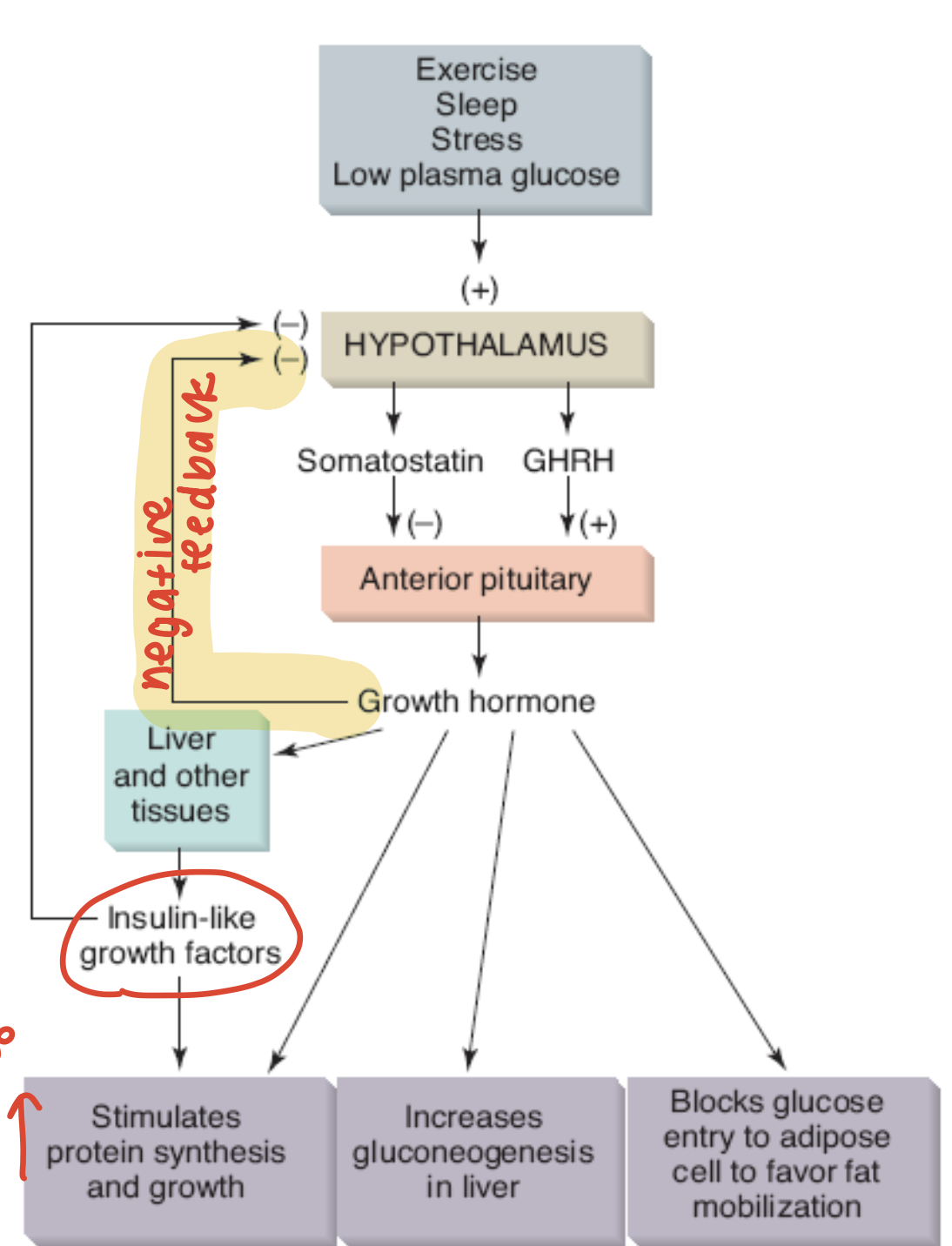
Influences on growth hormone release
Stimulates release of insulin like growth, essential growth of all tissues, spares plasma glucose
How does Growth Hormone relate stimulate release of insulin like growth hormone
IGF-1 in muscle responsible for muscle growth
Growth hormone release is essential growth of all tissues becasue of
Amino acid uptake and protein synthesis along with long bone growth through childhood
Why does Growth hormone spare plasma glucose
reduces the use of plasma glucose, increases gluconeogenesis and mobilize fatty acids from adipose tissue, provide a different substrate so the body can continue to make ATP
Growth Hormone and performance
GH increases protein synthesis in muscle and long bone growth , More adverse effects than benefits, minimal evidence that GH promotes strength gains, Difficult to detect usage by athletes
Why does Growth hormone and performance help GH increase protein synthesis in muscle and long bone growth
Becasue its used to treat childhood dwarfism and its also used athletes and elderly
Why does Growth hormone and performance help minimize evidence that GH promotes strength gains
Protein synthesis is mostly collagen, not contractile protein, increases in lean mass is predominately water retention
Side effects of taking growth hormone
Nerve, muscle, or joint pain
• Swelling (edema)
• Carpal tunnel syndrome
• Numbness/tingling in skin
• High blood cholesterol
• Increased risk of diabetes
• Increased growth of cancerous tumors
• High blood pressure
What is the role of growth hormone in the maintanance of plasma glucose
Slow acting homrmone with the Effects of supporting the action of cortisol and increasing in plasma GH with increase and a greater response in trained runners
Effects of Growth Hormone in the Maintenance of Plasma Glucose along with supporting the action of cortisol
Decreases glucose uptake by tissues, increases free fatty acid mobilization and enhances gluconeogensis in the liver
4 Subsystems of motor control
upper motor neurons - cortex and brainstem
cerebellum
basal ganglia
lower motor neurons- spinal cord and brainstem
What is the structure of the Central Nervous system (CNS)
Brain and Spinal Cord
What is the Function of the central Nervous system (CNS)
Integrative and control centeres
What is the structure of the Peripheral nervous system (PNS)
Cranial nerves and spinal nerves
What is the function of the Peripheral nervous system (PNS)
Communication lines between the CNS and the rest of the body
Waht is the Strcture of the Sensory (afferent) division
Somatic and visceral sensory nerve fibers
Waht is the Function of the Sensory (afferent) division
Conducts impulses from receptors to the CNS
Waht is the Structure of the Motor (efferent ) division
Motor Nerve fibers
Waht is the Function of the Motor (efferent ) division
Conducts impulses from the CNS to effectors (muscles and glands)
What is the Structure of the Somatic Nervous System
Somatic Motor (voluntary)
What is the function of the Somatic Nervous system
Condcuts impulses from the CNS to skeletal muscles
What is the structure of the autonomic nervous system (ANS)
Visceral motor (involuntary)
What is the function of the autonomic nervous system (ANS)
Conducts impulses from the CNS to cardiac muscles, smooth muscles and glands
What is the function of the sympathetic division of the autonomic nervous system
Mobilizes body systems during activity
What is the function of the Parasympathetic division of the autonomic nervous system
Conserves enegry, promotes house keeping functions during rest

