Lymphatic System and Immunity: Functions, Organs, and Defense Mechanisms
 Call Kai
 Learn
Learn Practice Test
 Spaced Repetition
 Match
Match Flashcards
 Knowt Play
1/51

There's no tags or description
Looks like no tags are added yet.
Name | Mastery | Learn | Test | Matching | Spaced | Call with Kai |
|---|
No analytics yet
Send a link to your students to track their progress
52 Terms
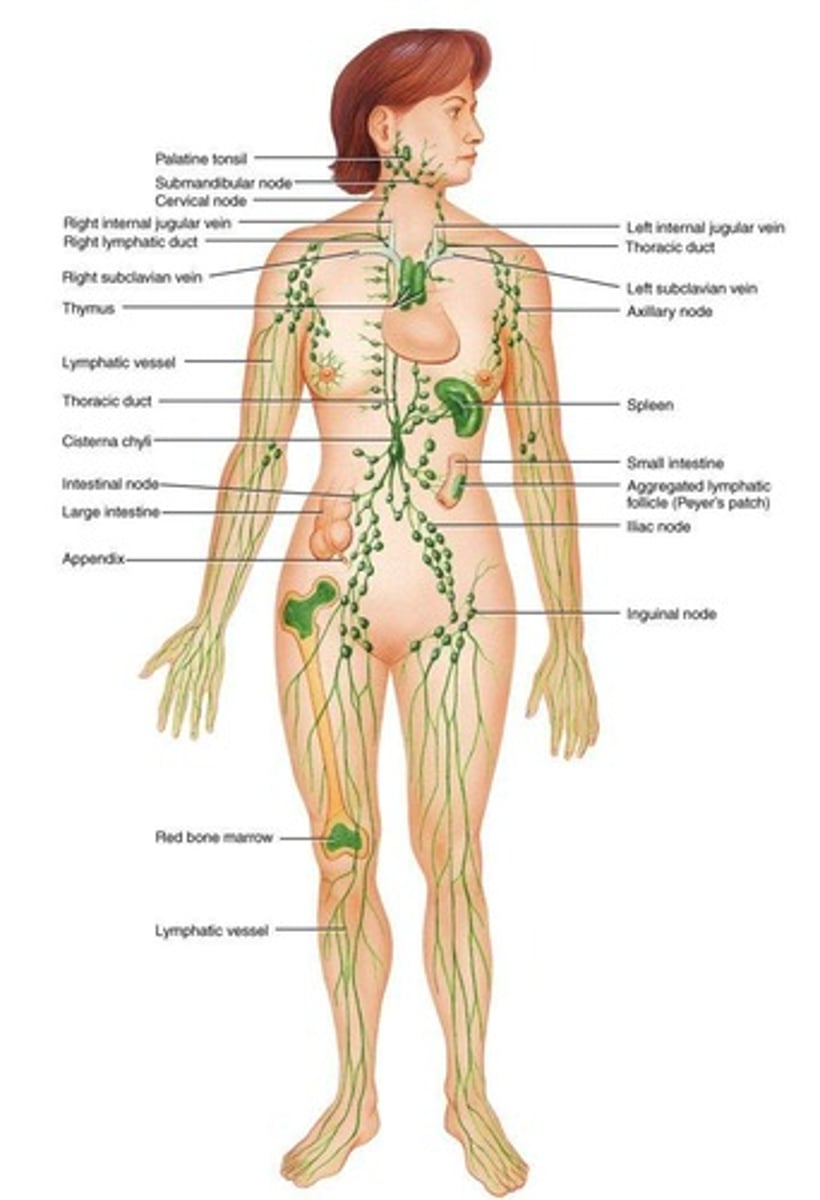
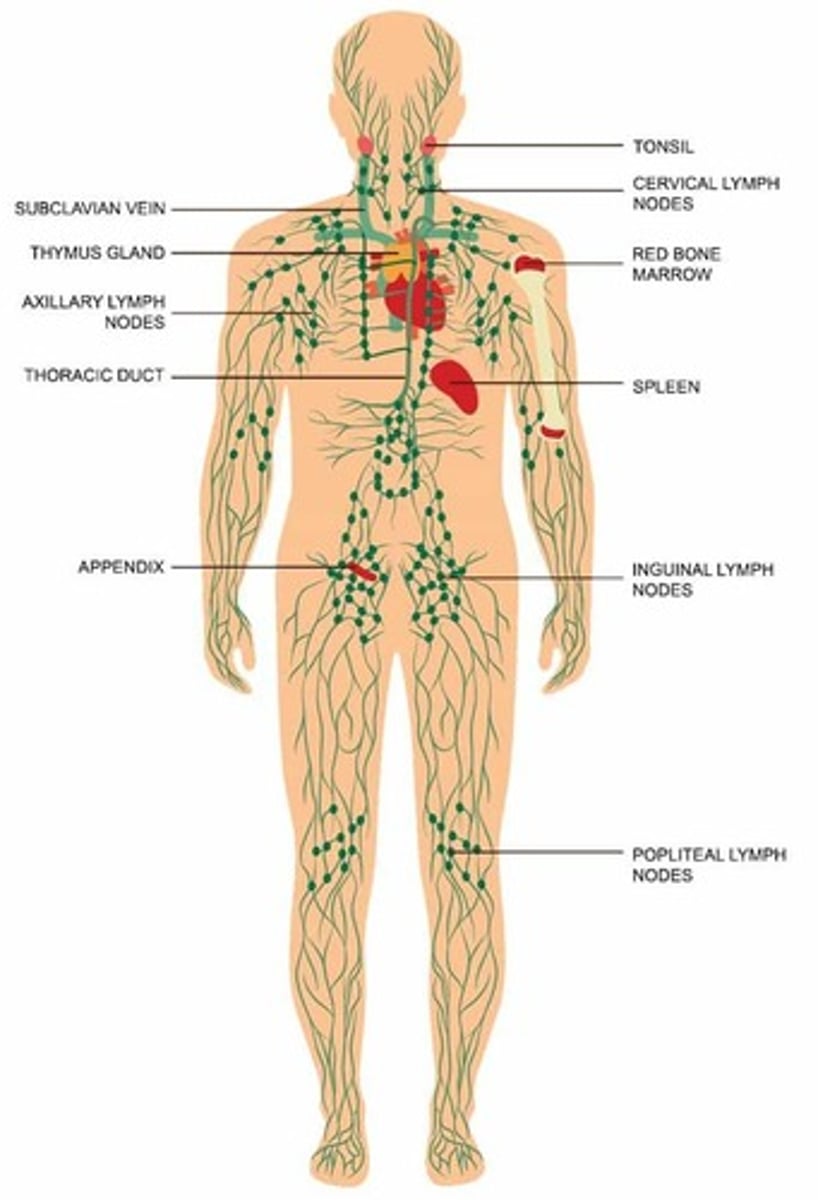
What is the primary function of the lymphatic system?
Defense against pathogens, production and distribution of immune cells.
What are the two types of immunity?
Innate immunity and adaptive immunity.
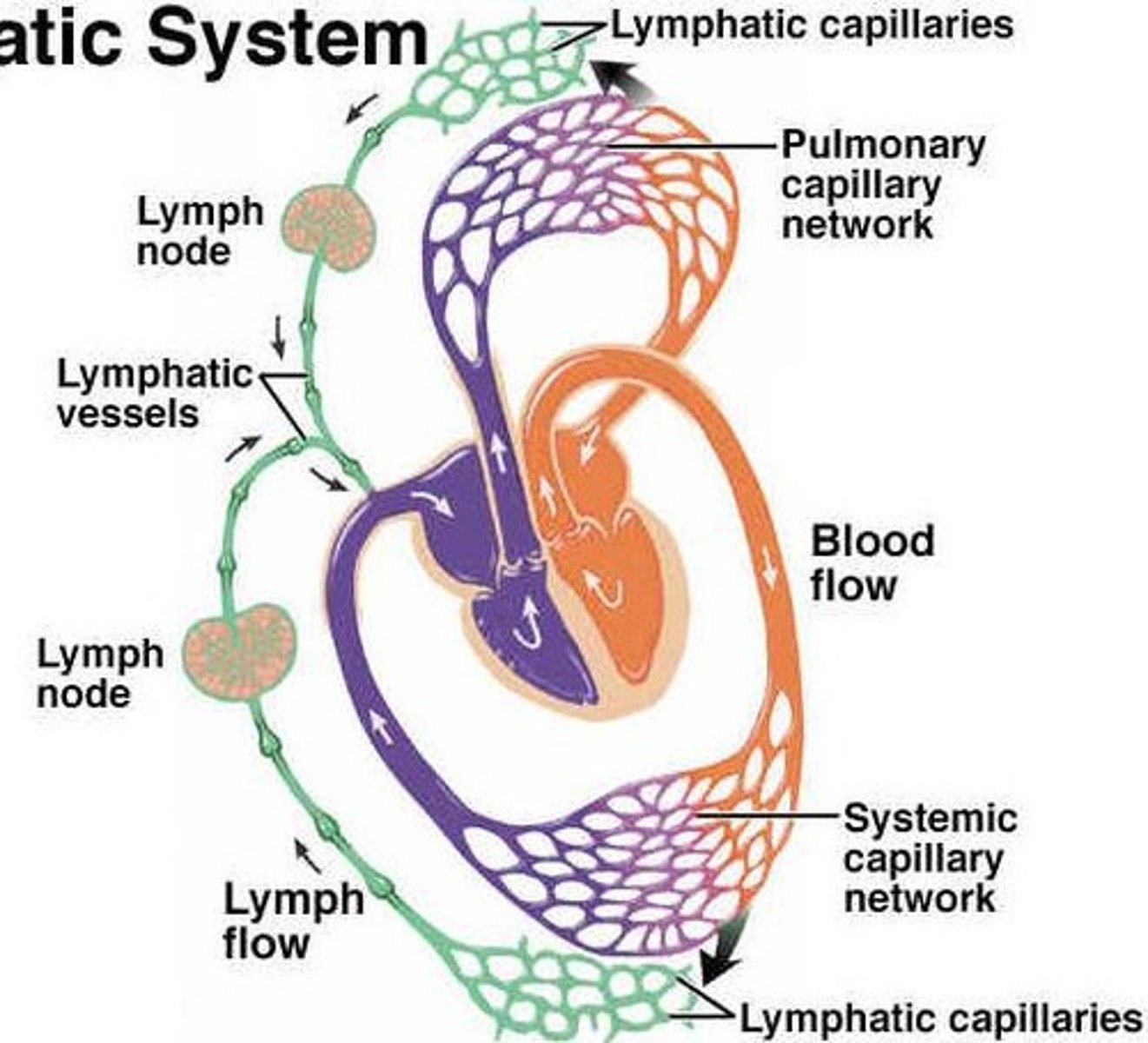
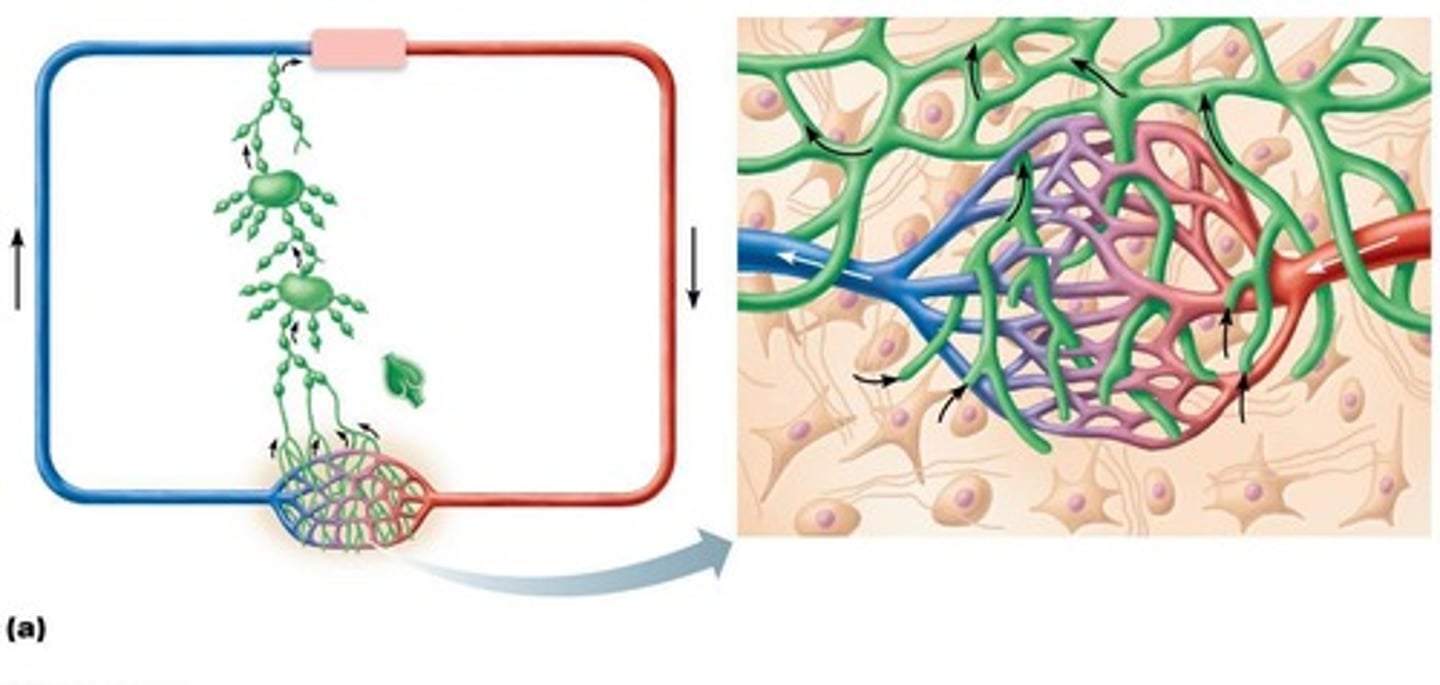
How does the lymphatic system contribute to fluid balance?
By absorbing excess tissue fluid and returning it to the bloodstream.
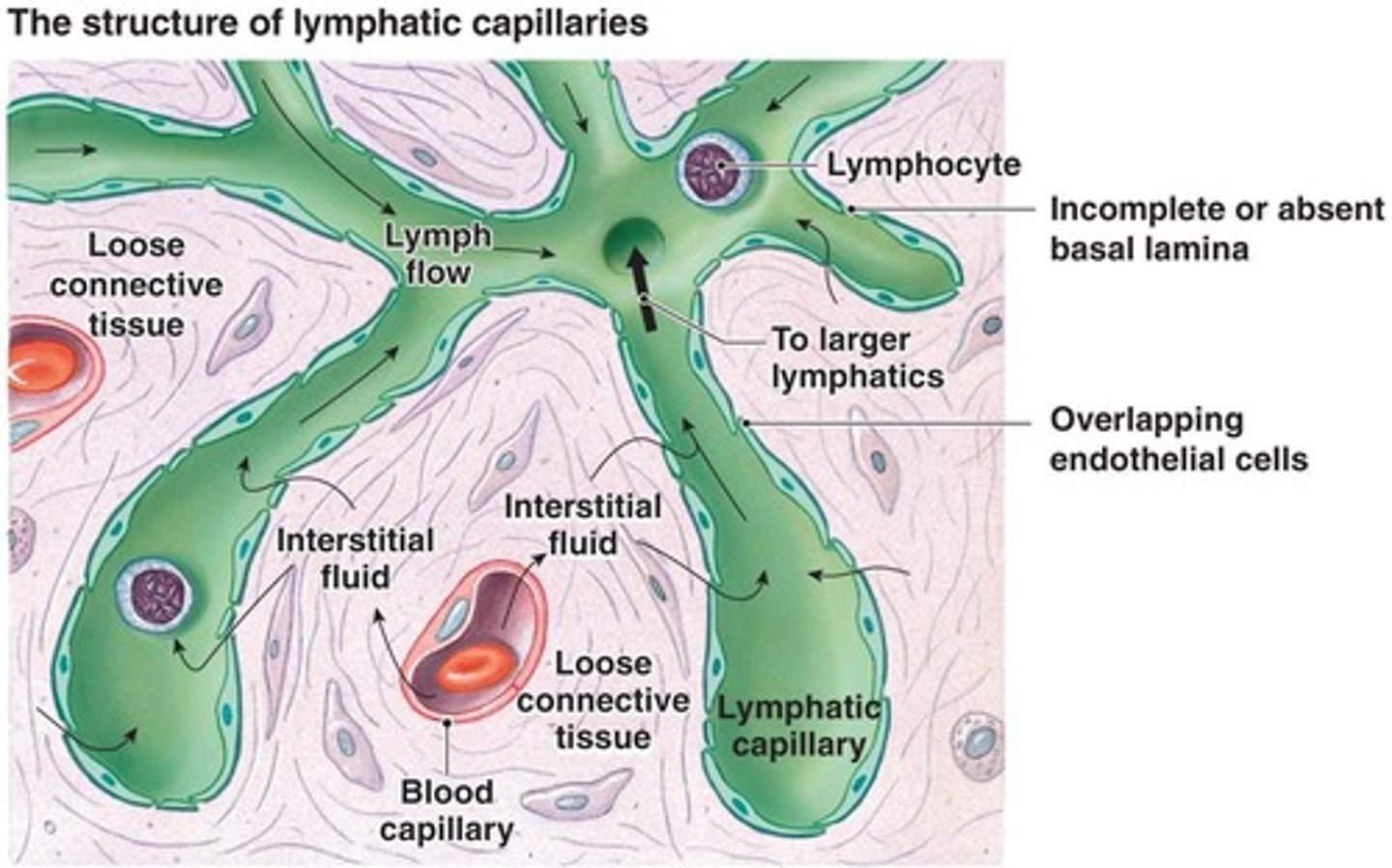
What is the role of lymphatic capillaries?
They are blind-ended vessels that absorb excess tissue fluid.
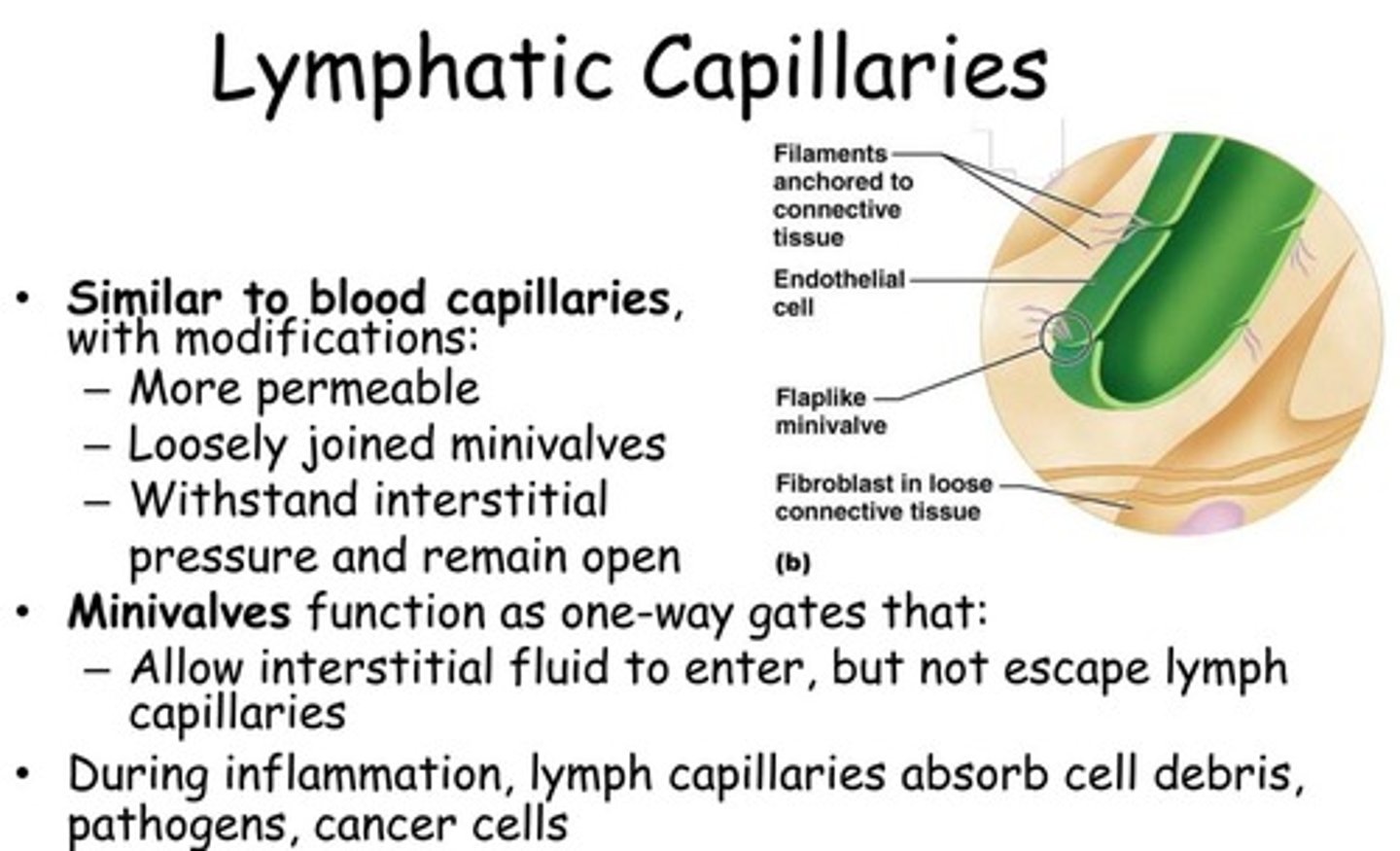
What is lymph?
Fluid in lymphatic vessels.
What are lymph nodes responsible for?
Cleansing lymph.
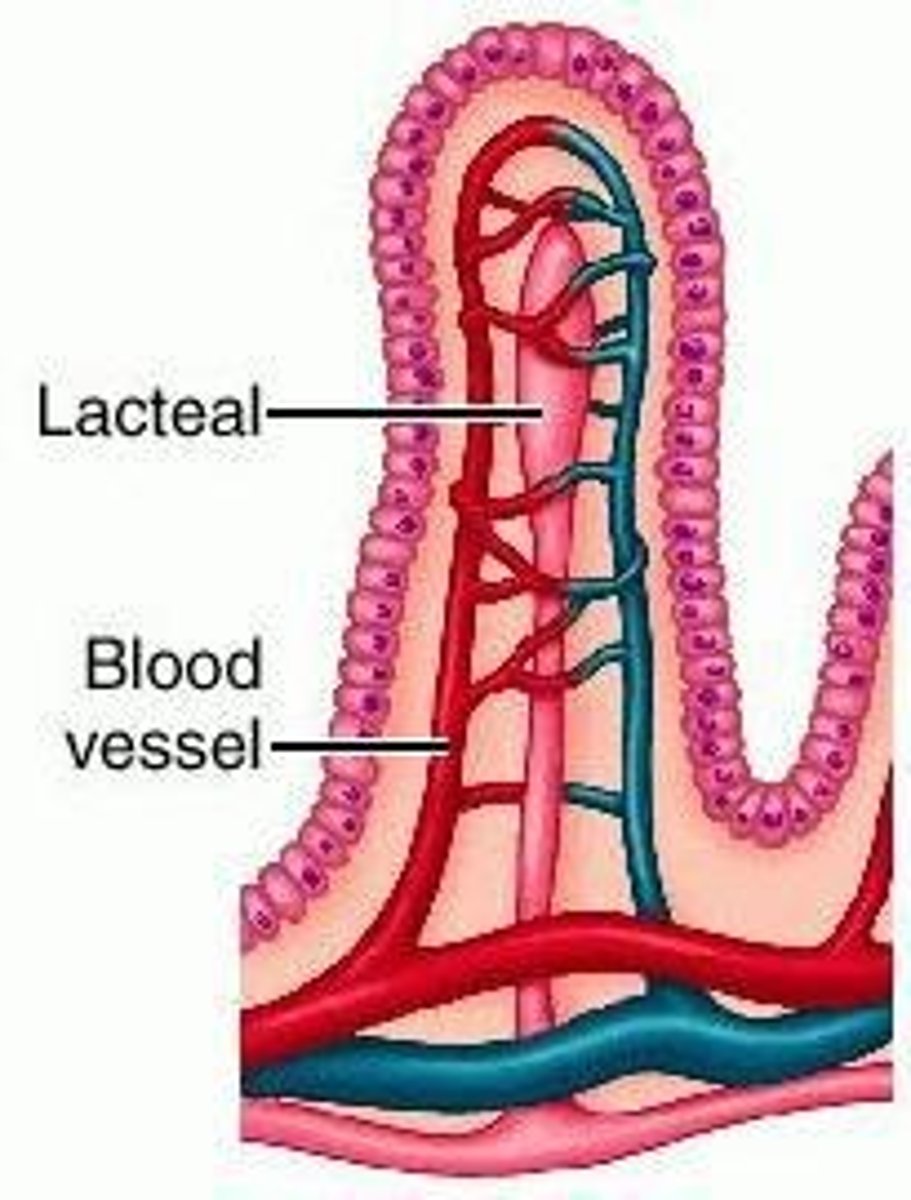
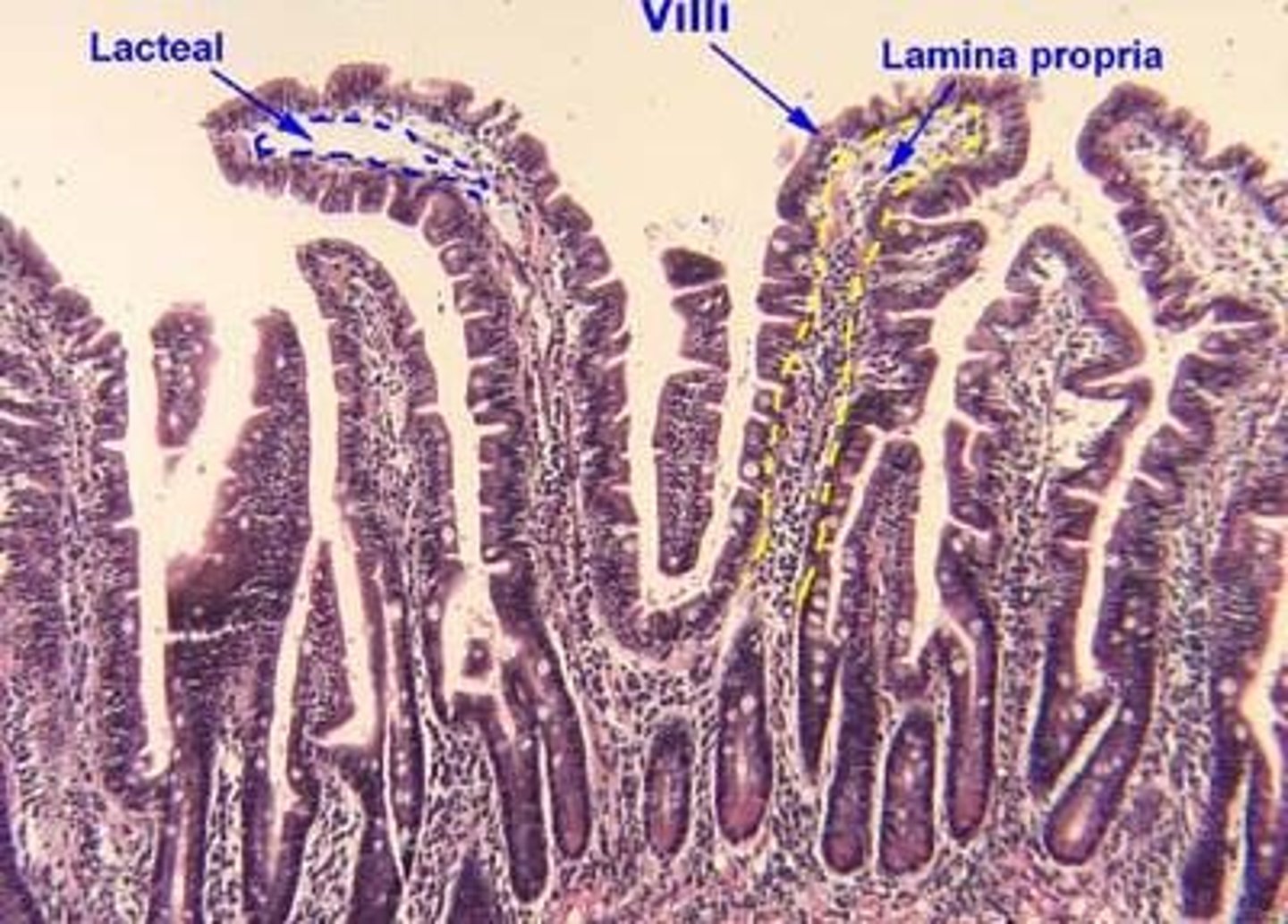
What are lacteals?
Special lymphatic capillaries in the small intestine that transport lipids.
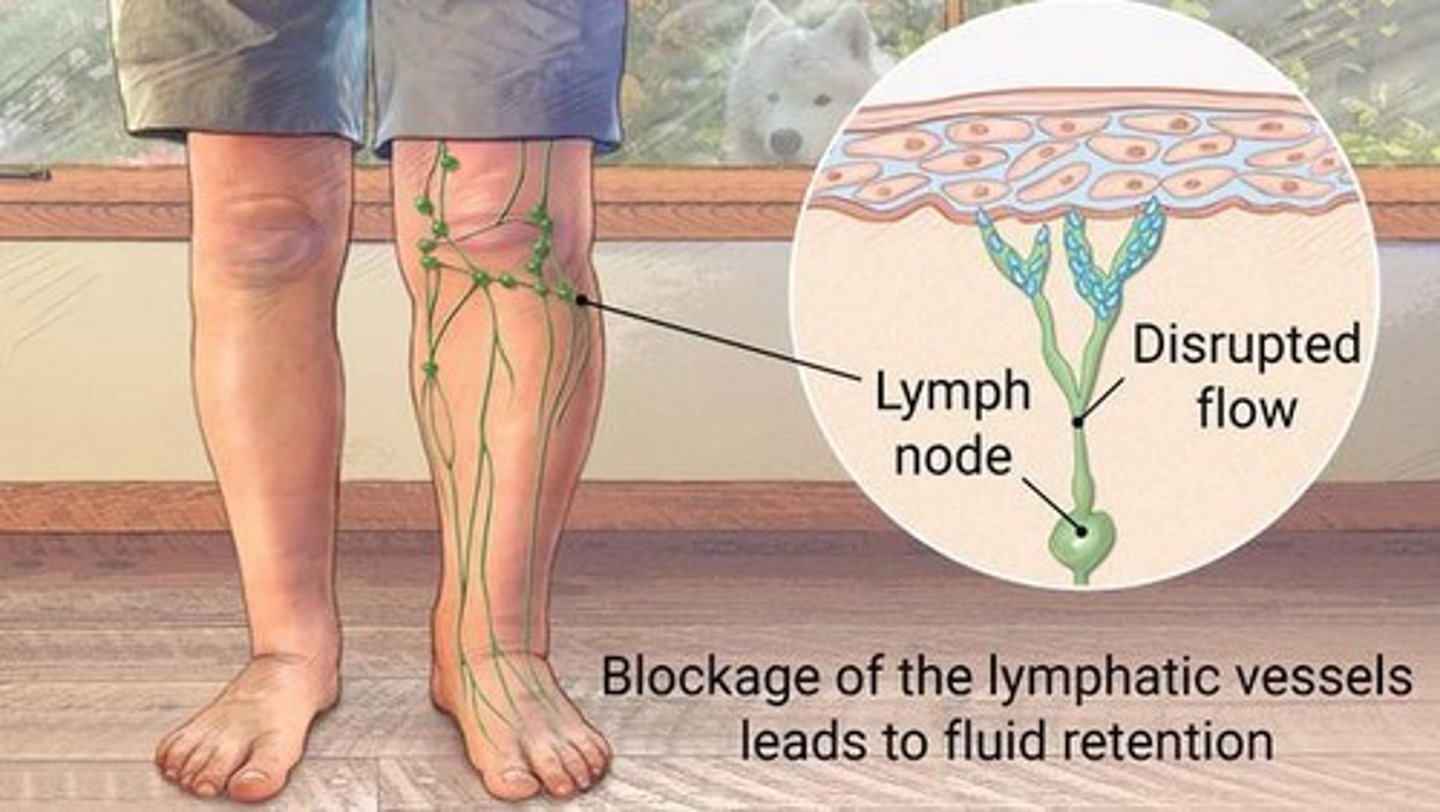
What is lymphedema?
Severe localized edema caused by anything that prevents normal return of lymph to blood.
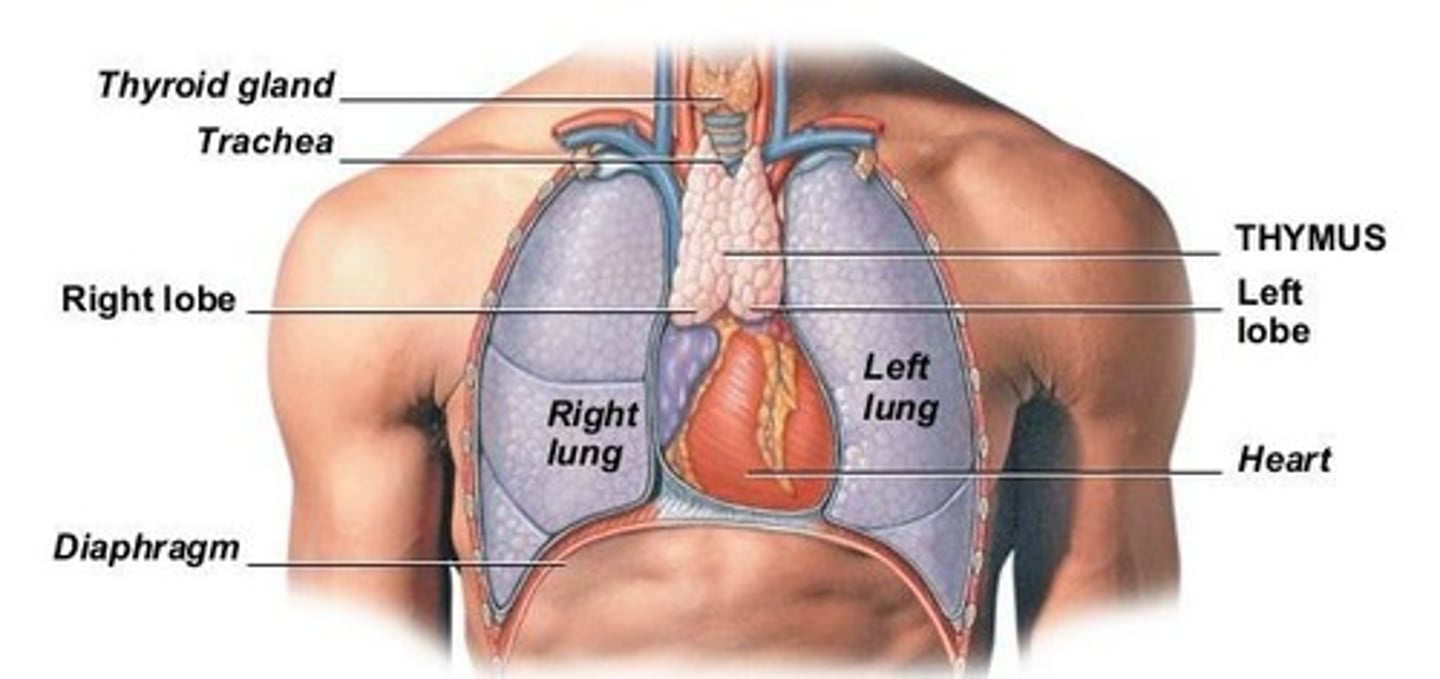
What are the primary lymphoid organs?
Thymus and red bone marrow.
What are the secondary lymphoid organs?
Lymph nodes, tonsils, spleen, and Peyer's patches.
What is the function of the thymus?
Maturation of T lymphocytes.
What hormones does the thymus secrete?
Thymopoietin, thymulin, and thymosins.
What is the spleen's primary function?
Site of lymphocyte proliferation and immune response.
What are the two types of pulp in the spleen?
White pulp (lymphocytes) and red pulp (disposes old blood cells).
What happens if the spleen is ruptured?
It can lead to bleeding, shock, and increased risk of bacterial infections.
Where does hematopoiesis occur after birth?
In the red bone marrow.
What is the role of reticular cells in lymphoid organs?
They produce reticular fibers that support immune cells.
What is the blood-thymus barrier?
It keeps immature T lymphocytes isolated from antigens to prevent premature activation.
What is the significance of lymphatic valves?
They ensure one-way flow of lymph toward the heart.
What can lymphatic capillaries take up that blood capillaries cannot?
Larger molecules and particles such as proteins, cell debris, and pathogens.
What is the function of macrophages in the spleen?
They remove debris and cleanse the blood of aged blood cells.
What occurs during splenic contractions?
They can cause a 'stitch' during exercise.
Where do B lymphocytes mature?
They mature in the red bone marrow.
Where do T lymphocytes mature?
They mature in the thymus.
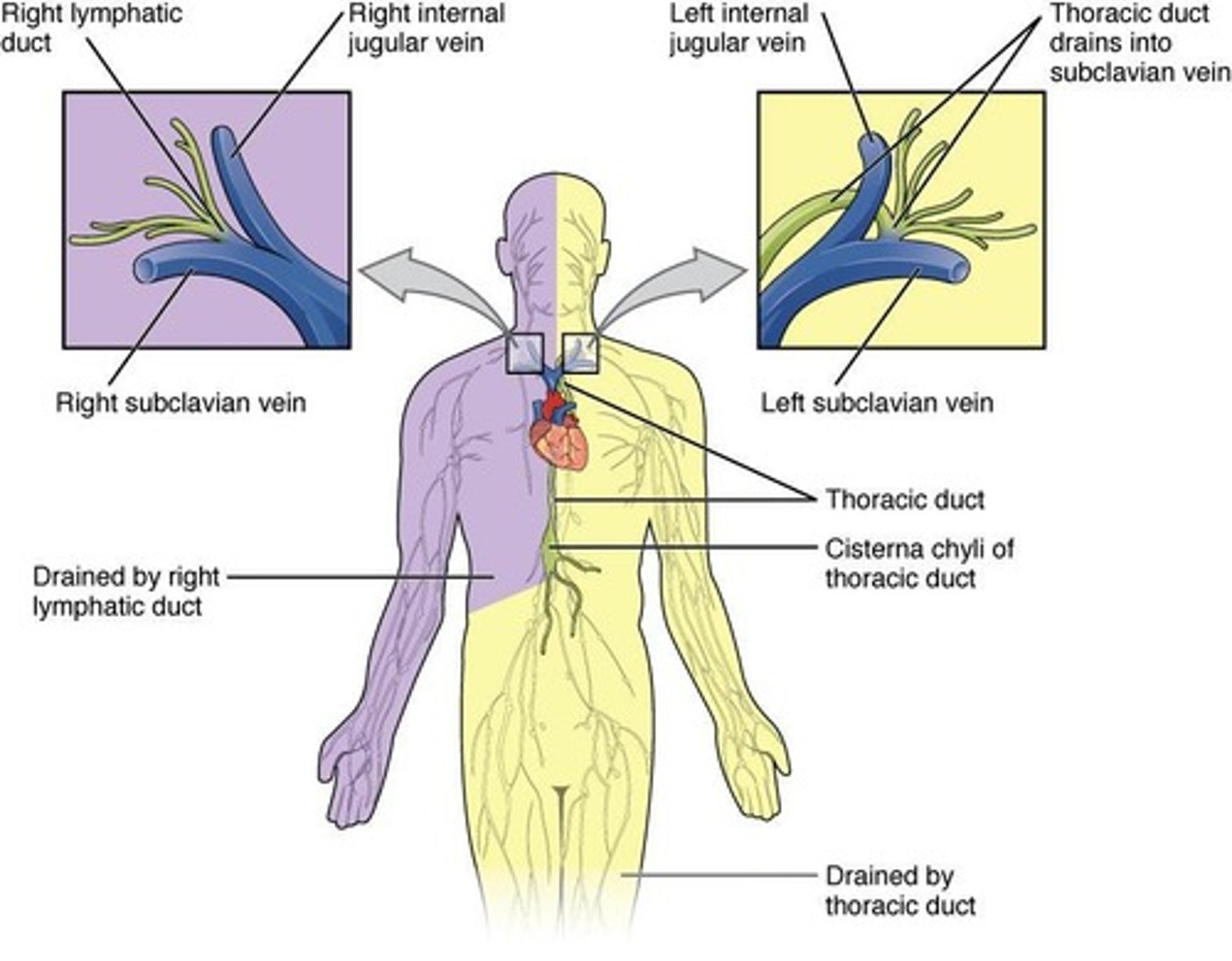
What is the relationship between lymphatic vessels and the venous system?
Lymphatic vessels return fluids to the venous system.
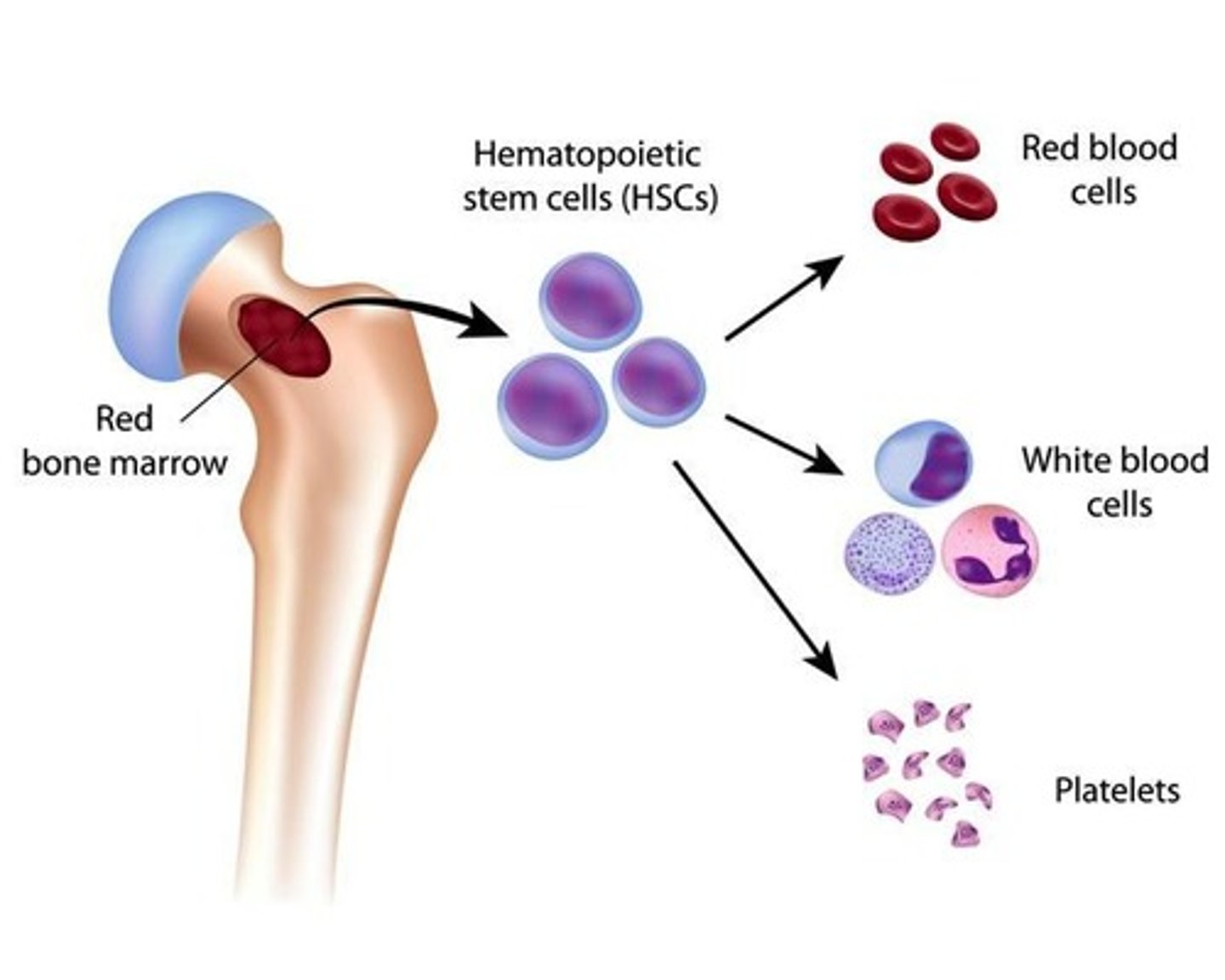
What is the primary site of blood cell production in adults?
Red bone marrow.
What happens to the thymus during adolescence?
It stops growing and gradually atrophies.
What are lymph nodes?
Principal secondary lymphoid organs of the body that filter lymph and activate the immune system.
Where are lymph nodes primarily located?
Throughout the body, embedded in connective tissue along lymphatic vessels.
What are the two main functions of lymph nodes?
1. Cleansing the lymph by filtering microorganisms and debris. 2. Immune system activation for lymphocyte response.
What type of cells are found in the superficial area of the lymph node cortex?
Follicles with germinal centers that are rich in dividing B cells.
What is the role of macrophages in lymph nodes?
To remove and destroy microorganisms and debris that enter lymph.
What is lymphadenitis?
Swelling and pain in lymph nodes in response to foreign antigens.
What are the four types of tonsils?
1. Palatine tonsils 2. Lingual tonsils 3. Pharyngeal tonsils 4. Tubal tonsils.
What is the function of the appendix?
To destroy bacteria and generate memory lymphocytes.
What does MALT stand for?
Mucosa-associated lymphoid tissue.
What are Peyer's patches?
Clusters of lymphoid follicles in the wall of the distal small intestine.
What is the largest lymphoid organ?
The spleen.
What are the two intrinsic systems of the immune system?
1. Nonspecific (innate) defense system 2. Specific (adaptive) defense system.
What is the first line of defense in the immune system?
External body membranes, including skin and mucosae.
What is the second line of defense in the immune system?
Includes antimicrobial proteins, phagocytes, and inflammatory responses.
What do natural killer (NK) cells do?
They attack and destroy infected or cancerous cells.
What is the role of defensins in the immune system?
Antimicrobial peptides that inhibit microbial growth.
What is the primary role of the spleen's red pulp?
Blood filtering.
What is the primary role of the spleen's white pulp?
Immunity.
What is the acid mantle?
A fine acidic film on the skin that inhibits microbial growth.
What are the functions of mucin in the immune system?
Traps microorganisms in the digestive and respiratory tracts.
What is the role of lysozyme?
An enzyme that kills many microorganisms found in saliva and other secretions.
What is the difference between innate and adaptive immunity?
Innate immunity is immediate and nonspecific; adaptive immunity is slower and specific.
What are the two main types of lymphoid tissues?
1. Diffuse lymphoid tissue 2. Lymphoid follicles (nodules).
What is the function of the germinal centers in lymphoid follicles?
Sites of B cell proliferation.
How do lymphocytes circulate in the body?
They continuously move among blood, lymph nodes, and lymph.

