CELLULAR FUNCTION
 Call Kai
 Learn
Learn Practice Test
 Spaced Repetition
 Match
Match Flashcards
 Knowt Play
1/33

There's no tags or description
Looks like no tags are added yet.
Name | Mastery | Learn | Test | Matching | Spaced | Call with Kai |
|---|
No analytics yet
Send a link to your students to track their progress
34 Terms
which concept is cell signalling akin to
induced fit (rather than lock and key)
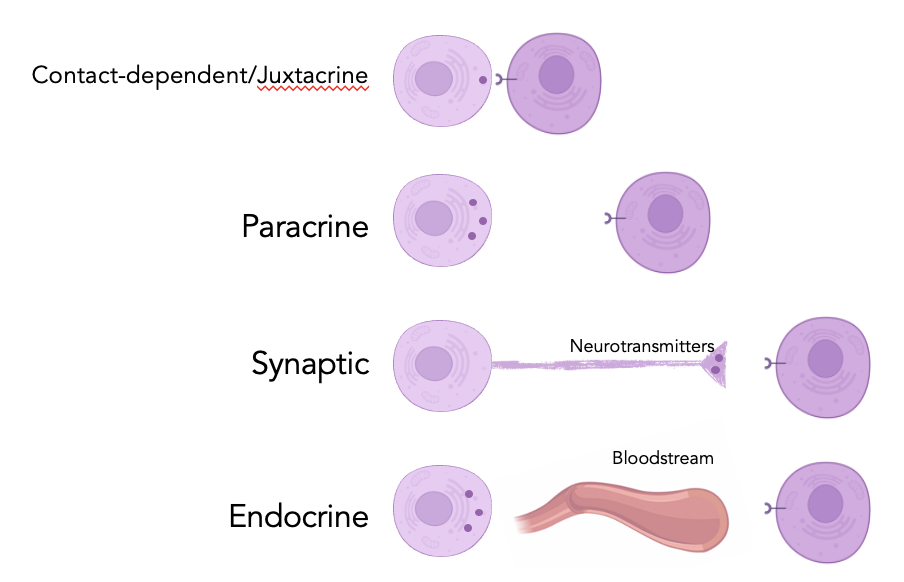
state the types of cell communication
contact-dependent/ juxtacrine: signalling cell and target cell are in contact
paracrine: signalling cell and target cell are in proximity
endocrine: signalling cell and target cell are distant (signal arrives through the bloodstream)
synaptic: depends on neurotransmitter
give an example of cell signalling in dentistry
osteointegration dependent on autocrine PDGF signalling
diagram showing summary of steps of communication
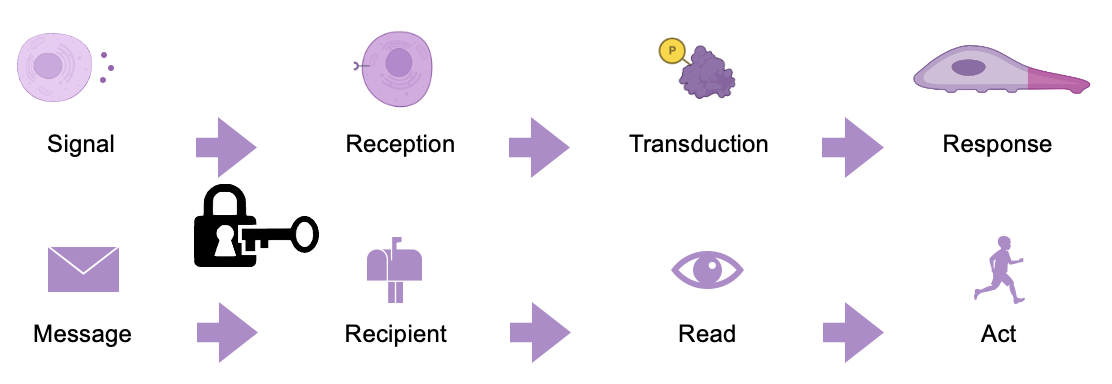
give an example of a process in the order of the steps of communication
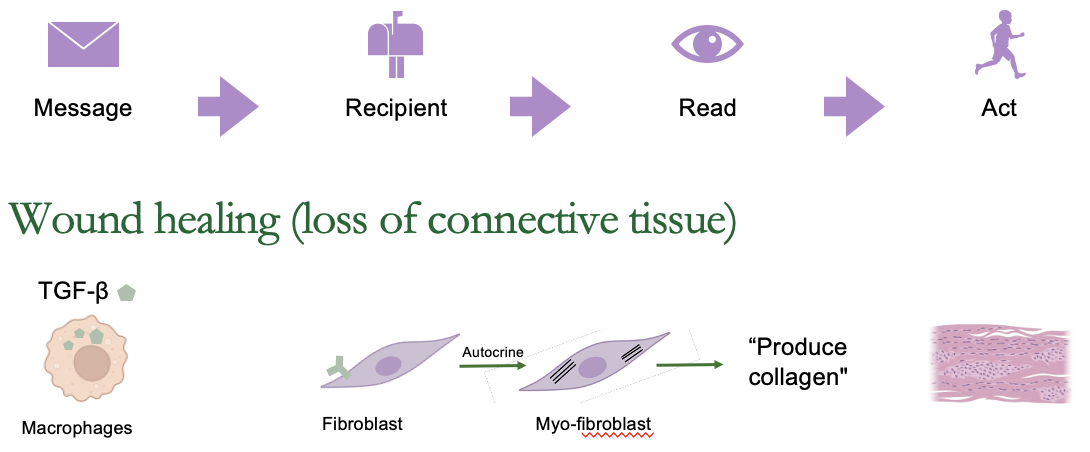
list the types of signals (6)
growth factors
hormones
vitamins
chemicals
enzymes
sugars
give examples of the types of signals and their response
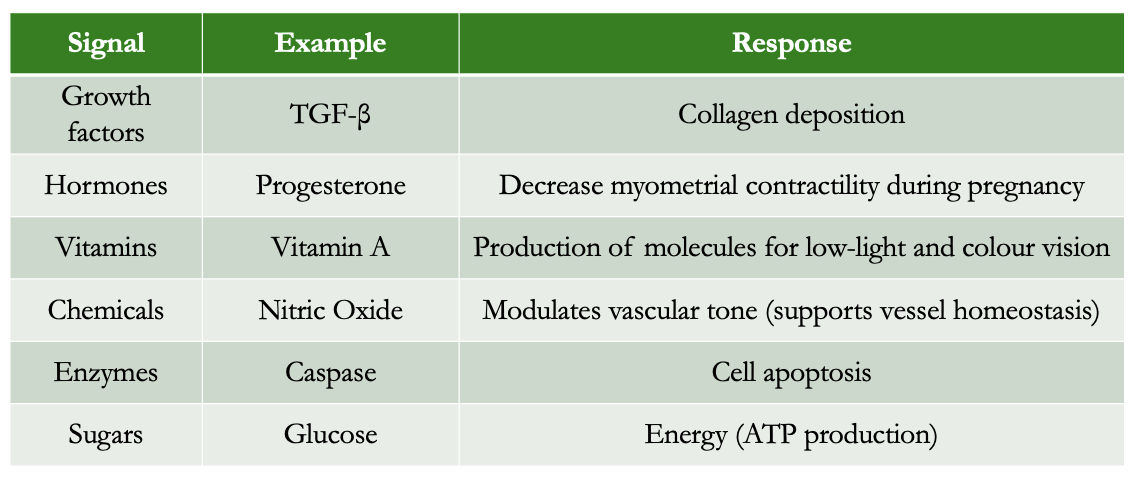
give examples of physiological cell responses
growth i.e. cell division
differentiation
migration
metabolism
cell survival
what is considered a pathological response
when a cell produces a signal that is not needed
give examples of pathological cell responses
apoptosis
gene transcription
secretion
contract/ relax
give a specific example of a physiological vs pathological response
physiological
macrophages produce and secrete VEGF during wound healing to induce angiogenesis
pathological
cancer cells produce and secrete VEGF to stimulate greater blood supply
this allows the tumour to grow more
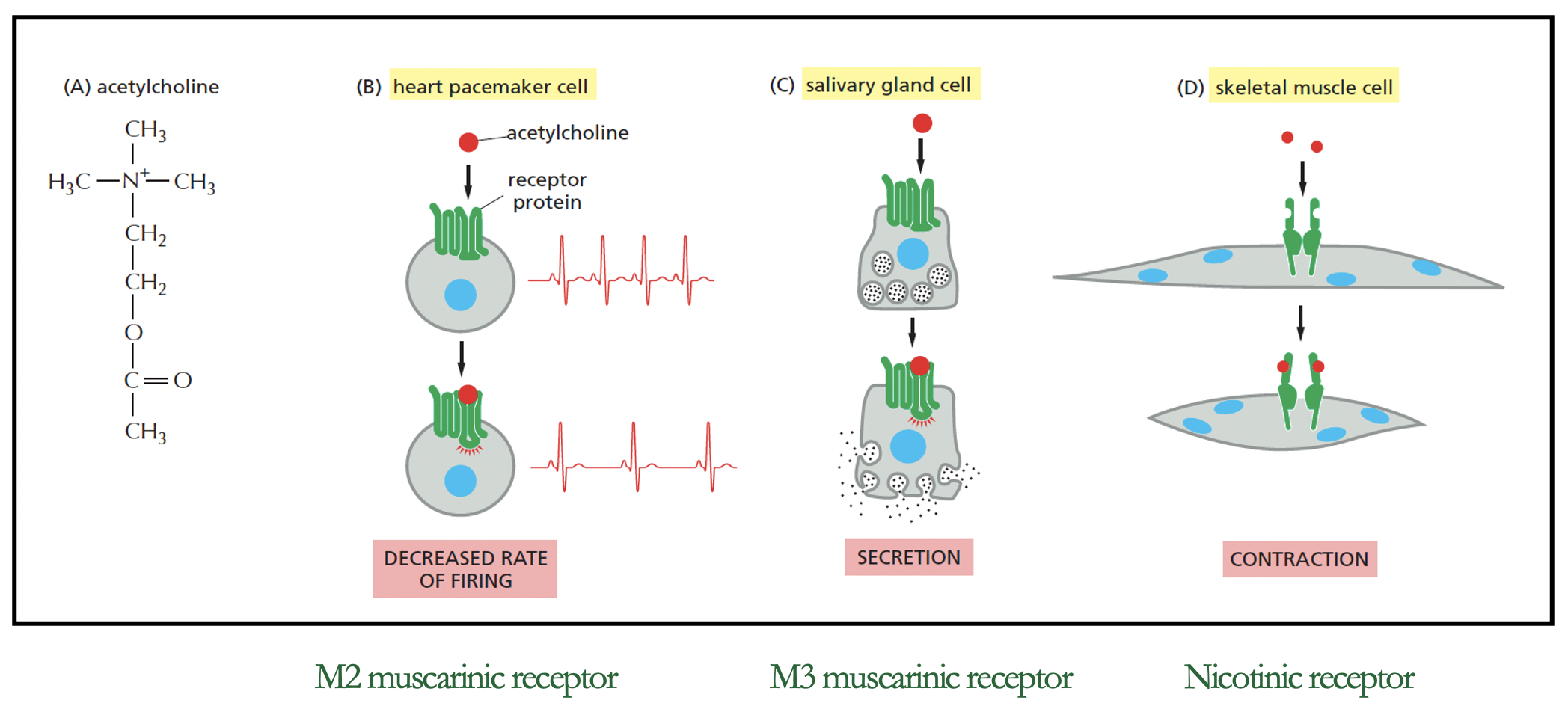
what does this image show about receptor specificity
acetylcholine can bind to many different receptors
so even though it is one chemical, it can induce different responses based on the receptor it binds to
state the types of receptors
intracellular receptors
membrane receptors
ion channel-linked receptors
G-protein-linked (7-TM) receptors
enzyme-linked receptors
receptor tyrosine kinases (RTKs)
outline intracellular receptors
aka internal receptors or cytoplasmic receptors
signal is hydrophobic therefore it can pass through the cell membrane
signal is transported into the nucleus to provide signal transduction e.g. induce transcription
give examples of intracellular receptors
steroids
nitric oxide
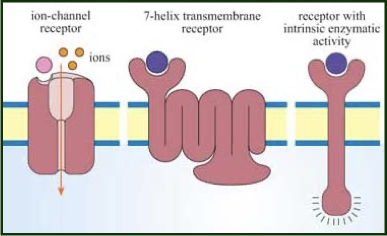
outline membrane receptors
cell surface, membrane-anchored or integral proteins that bind to external ligand molecules
convert an extracellular signal » intracellular signal
ligands that interact with cell-surface receptors do not have to enter the cell
what are the three main components of membrane receptors
external ligand-binding domain (extracellular domain)
hydrophobic membrane-spanning region
intracellular domain
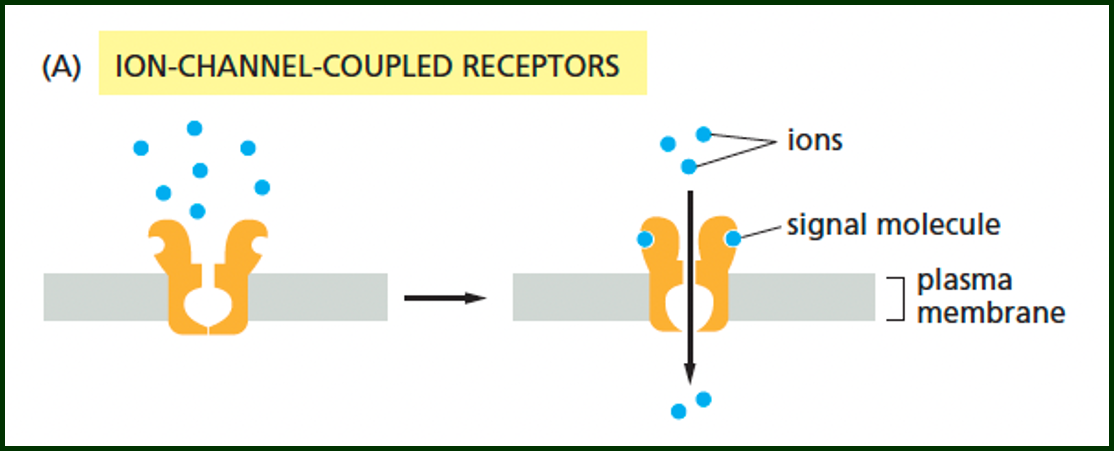
outline ion channel receptors (membrane receptor)
interaction of a chemical with the receptor causes opening or closing i.e. a conformational change
very fast (so involved in rapid cell signalling)
e.g. rapid synaptic signalling between nerve cells and other electrically excitable target cells
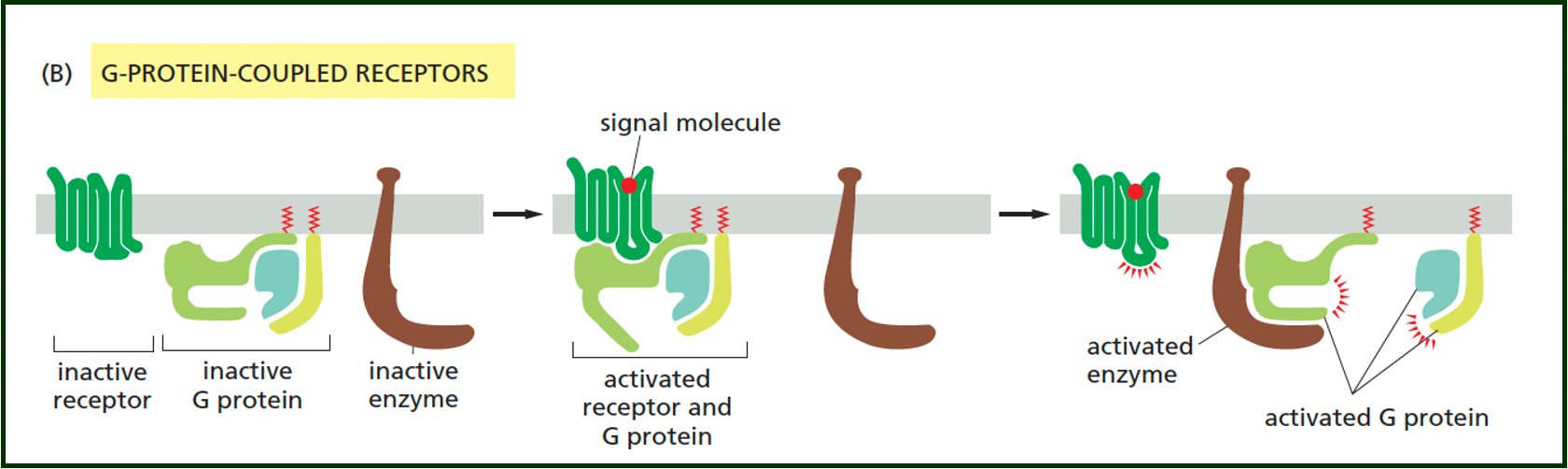
outline G-protein-linked (7-TM) receptors (membrane receptors)
indirect mechanism
trimeric GTP-binding-protein (G protein) mediates the interaction between an activated receptor and a separate target plasma-membrane-bound target protein
receptor is an inactive molecule, needs to bind to G-protein to become active
very common in mechanisms across the body e.g. acetylcholine in pacemaker cells and salivary glands
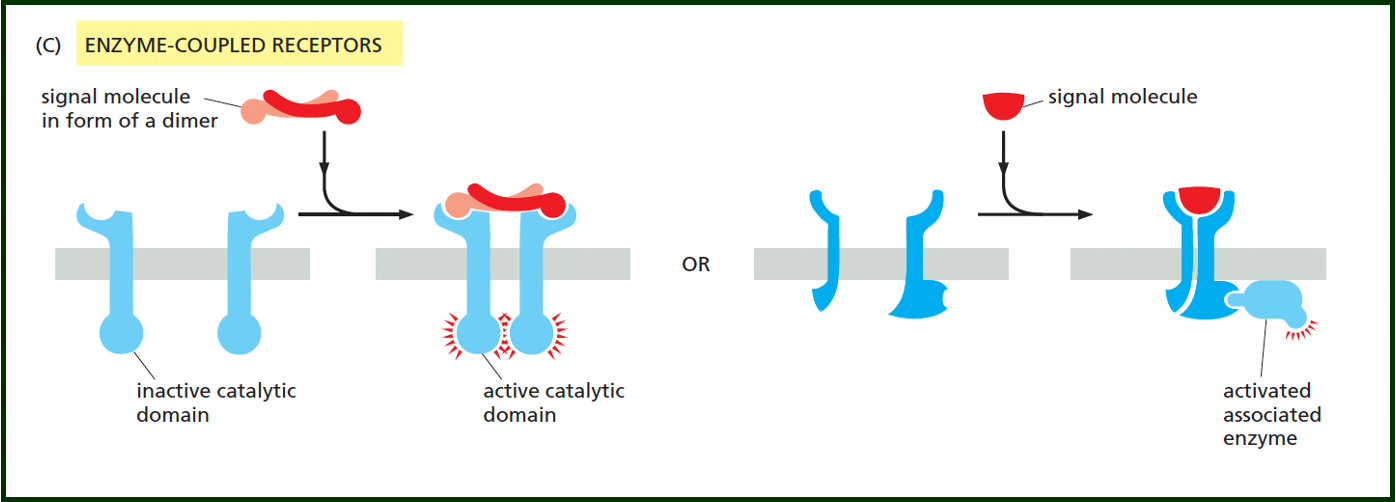
outline enzyme-linked receptors (membrane receptors)
usually single-pass transmembrane proteins that have their ligand-binding site outside the cell
hydrophobic single alpha helix transmembrane domain
catalytic or enzyme-binding site inside
majority are receptor tyrosine kinases
—
diagram: single pass transmembrane protein dimerises therefore depicted as a pair
outline receptor tyrosine kinases (RTKs) - class of enzyme-linked receptors
cell surface receptors for growth factors e.g. EGF, VEGF, cytokines and hormones
have intrinsic enzyme activity - dimerises and autophosphorylates upon ligand binding to the extracellular domain, activating the receptor
conformational change allows signalling molecules to bind and initiate downstream cascades
key regulators of normal cellular processes - also have critical roles in the development and progression of many cancers
diagram showing the complexity of signalling pathways
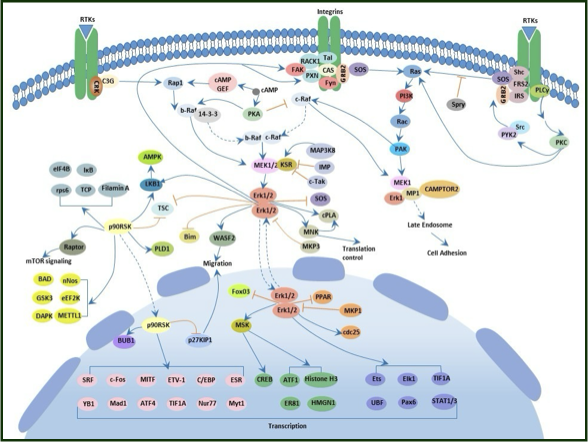
what do signalling pathways target
therapeutic targets
signalling pathways can also be used as therapeutic targets
what is a solution to cancer cells secreting VEGF to stimulate angiogenesis
produce a signal for the VEGF receptor
this cuts off the blood supply (nutrients) to the cancer cells which leads to cell death
diagram showing RTK hyperactivation and dysregulation in cancer
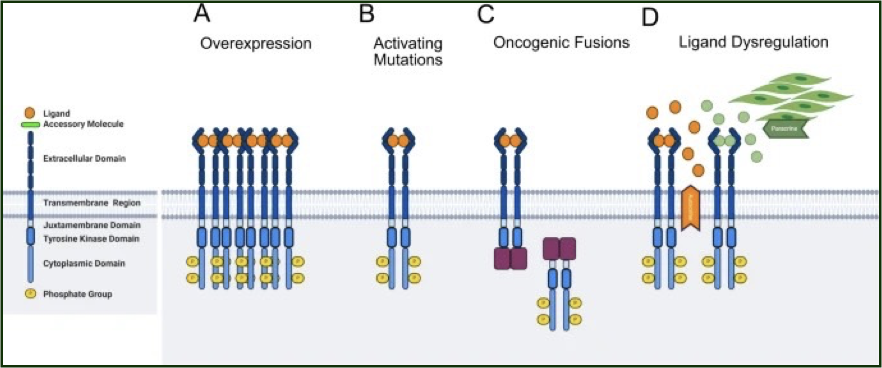
outline therapeutic targets (RTKs)
RTKs have a central importance in ‘pro-growth’ signalling networks
multiple cancers display ‘oncogenic addiction’ to RTKs
RTKs therefore represent a major class for targeted therapeutics
small molecule-based tyrosine kinase inhibitors (TKI) and monoclonal antibodies (mABs)
TKI and mABs have been approved for numerous cancers
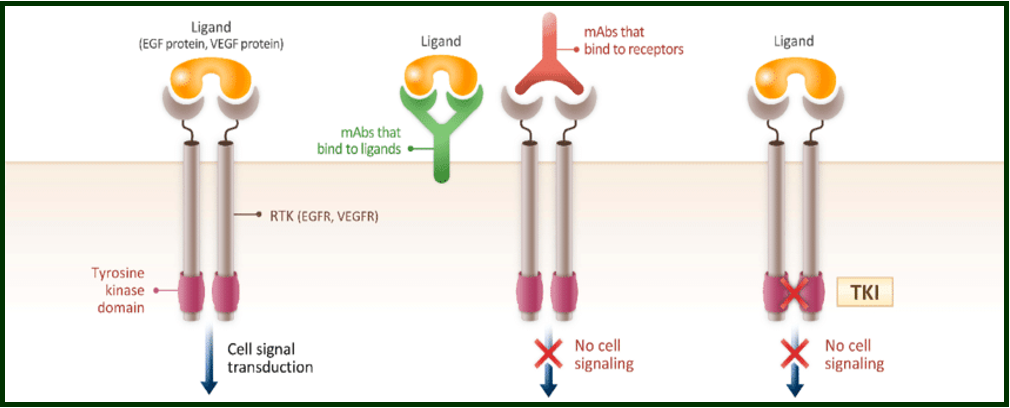
what are limitations of TKI and mABs
off-target effects
resistance
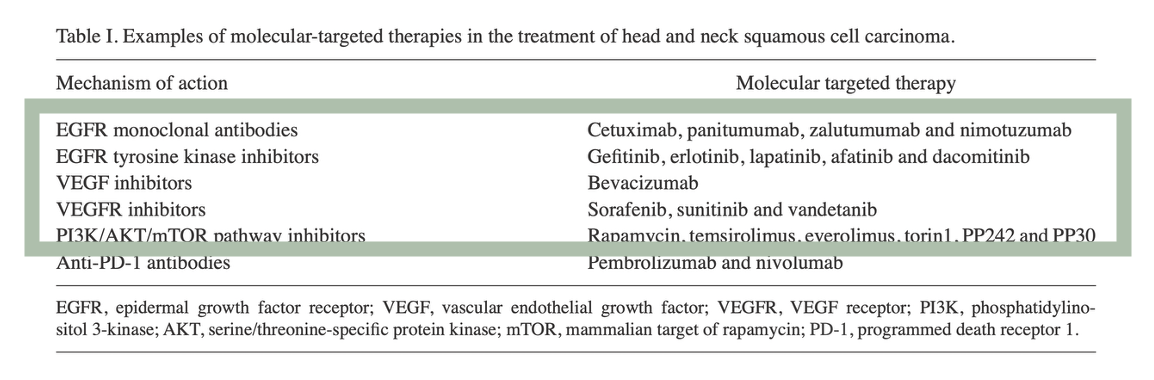
if a drug name ends in -nib what is the drug’s mechanism of action
the drug is an inhibitor
if a drug name ends in -mab what is the drug’s mechanism of action
the drug is a monoclonal antibody
table showing therapies for head and neck squamous cell carcinoma
give an example of a case study in cancer precision medicine
breast cancer
routine to check for epidermal growth factor receptor 2 (HER2) overexpression on diagnosis
overexpressed in 15-20% of cancers
what is HER2 treated with
either mABs
Trastuzumab - Herceptin
Pertuzumab - Perjeta
or TKIs (tyrosine kinase inhibitors)
Lapatinib - Tykerb
Neratinib - Nerlynx
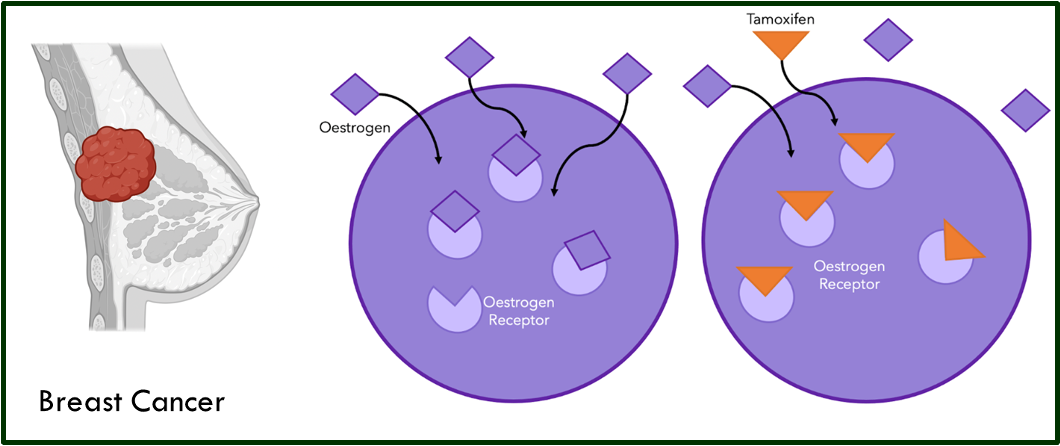
what other receptor is it routine to check for in breast cancer diagnosis
oestrogen receptor
expressed in 75% of breast cancers
oestrogen promotes growth
what is oestrogen receptor expressed in breast cancer treated with
oestrogen mimic
Tamoxifen - targets signals, not the tumour itself