Unit 6 APUSH Vocab
 Studied by 3 people
 Call Kai
 Learn
Learn Practice Test
 Spaced Repetition
 Match
Match Flashcards
 Knowt Play
1/106

Earn XP
Description and Tags
Unit 6 APUSH (1865-98)
Name | Mastery | Learn | Test | Matching | Spaced | Call with Kai |
|---|
No analytics yet
Send a link to your students to track their progress
107 Terms
Transcontinental Railroads
The development of the western United States after 1865 differed from the settlement patterns before because of industrialization. The biggest difference was the building of transcontinental railroads across the US. The great age of railroad building happened at the same time settlements were being built in the last Western Frontiers. Railroads not only promoted the settlement of the Great Plains, but also connected the West and East together economically, creating a national market. During the Civil War, Congress authorized land grants and loans for the building of the first transcontinental Railroad to connect California with the rest of the Union. Two newly incorporated railroad companies divided the work, The Union Pacific (UP) started in Omaha, Nebraska and built West across the Great Plains. The UP would employ thousands of war veterans and Irish immigrants under the direction of General Grenville Dodge. The Central Pacific started from Sacramento, California, and built Eastward. Led by Charles Crocker, the workers, including as many as 20,000 Chinese immigrants, took on the great risks of laying track and blasting tunnels through the Sierra Nevada Mountains. The two railroads came together on May 10, 1869, at Promontory Point, Utah, where a golden spike was ceremoniously driven into the rail tie to make the linking of the Atlantic and Pacific states. In 1883, three other transcontinental railroads were completed. The Southern Pacific tied New Orleans to LA. The Atchison, Topeka, and Santa Fe linked Kansas City and LA. The Northern Pacific connected Duluth, Minnesota, with Seattle, Washington. In 1893, the Great Northern finished the fifth transcontinental railroad, which ran from St. Paul, Minnesota, to Seattle. Companies built many other short line and narrow-gauge railroads to open up the Western interior to settlement by miners, rangers, farmers, and business owners, leading to more towns and cities. Progress came with significant costs. The railroads helped to transform the West during this period, but many proved failures as businesses. They were built in areas with few customers and with little promise of returning a profit in the near term. The frenzied rush for the West’s natural resources seriously damaged the environment and nearly exterminated the buffalo. Most significantly, the American Indians who lived in the region paid a high human and cultural price.

Great American Desert
At first, the settlement and economic development of the Great Plains, the Rocky Mountains, and the Western Plateau did not seem promising. Before 1860, these lands between the Mississippi River and the Pacific Coast were known as “the Great American Desert” by pioneers passing through on the way to the green valleys of Oregon and the goldfields of California. The plains west of the 100th meridian had few trees and usually received less than 15 inches of rainfall a year, which was not considered enough moisture to support farming. Winter blizzards and hot dry summers discouraged settlement. However, after 1865 the Great Plains changed so dramatically that the former “frontier” largely vanished. By 1900, the great buffalo herds had been wiped out. The open western lands were fenced in by homesteads and ranchers, crisscrossed by steel rails, and modernized by new towns. Ten new western states had been carved out of the last frontier. Only Arizona, New Mexico, and Oklahoma remained as territories awaiting statehood at the end of the century. California’s great gold rush of 1849 set the pattern for other gold rushes. Individual prospectors poured into the region and used a method called placer mining to search for traces of gold in mountain streams. They needed only simple tools such as shovels and washing pans. Following these individuals came mining companies that could employ deep-shaft mining that required expensive equipment and the resources of wealthy investors. As the mines developed, companies employed experienced miners from Europe, Latin America, and China. The California Gold Rush was only the first of a series of gold strikes and silver strikes in what became the state of South Dakota, Colorado, Montana, Idaho, Nevada, and Arizona. These strikes kept a steady flow of hopeful prospectors pushing into the western mountains into the 1890s that helped settle the West. The discovery of gold near Pike’s peak, Colorado,in 1859 brought nearly 100,000 miners to the area. In the same year, the discovery of the fabulous Comstock Lode led to Nevada entering the Union in 1864. Idaho and Montana also received early statehood, largely because of mining booms. Rich strikes created boomtowns, overnight towns that became infamous for saloons, dance-hall girls, and vigilante justice. Many of these, however, became lonely ghost twins within a few years after the gold or silver ran out. The mining towns that endured and grew evolved more like industrial cities than the frontier towns depicted in western films. For example, Nevada’s Virginia City, added theaters, churches, newspapers, schools, libraries, railroads, and police. Mark Twain started his career as a writer working on a Virginia City newspaper in the early 1860s. A few twins that served the mines, such as San Francisco, Sacramento, and Denver, expanded into prosperous cities. The economic potential of the vast open grasslands that reached from Texas to Canada was realized by ranchers in the decades after the Civil War. Earlier, cattle had been raised and rounded up in Texas on a small scale by Mexican cowboys, or vaqueros. The radiations of the cattle business in the late 1800s, like the hard “Texas” longhorn cattle, were borrowed from the Mexicans. By the 1860s, wild herds of about 5 million head of cattle roamed freely over the Texas grasslands. The Texas cattle business was easy to get into because both the cattle and the grass were free. The construction of railroads into Kansas after the war opened up eastern markets for the Texas cattle. Joseph G. McCoy built the first stockyards in the region, at Abilene, Kansas. Those stock yards held cattle that could be sold in Chicago for the high price of $30 to $50 per head. Dodge City and other cow towns sprang up along the railroads to handle the millions of cattle driven up the Chisholm, Goodnight-loving, and other trails out of Texas during the 1860s and 70s. The cowboys, many of whom were African Americans or Mexicans, received about a dollar a day for their dangerous work.

Barbed Wire
The long cattle drives began to end in the 1880s. Overgrazing destroyed the grass, and a winter blizzard and drought of 1885-6 killed of 90% of the cattle. Another factor that closed down the cattle frontier was the arrival of homesteaders, who used barbed wire fencing to cut off access to the formerly open range. Wealthy cattle owners turned to developing huge ranches and using scientific ranching techniques. They raised new breeds of cattle that produced more tender beef by feeding the cattle hay and grains. The Wild West was largely tamed by the 1890s. HOwever, in these few decades, Americans’ eating habits changed from pork to beef, and people created the enduring legend of the rugged, self-reliant American cowboy.

Homestead Act
The Homestead Act of 1862 encouraged farming on the Great Plains by offering 160 acres of public land fee to any family that settled on it for a period of five years. The promise of free land combined with the promotions of railroads and land speculators induced hundreds of thousands of native-born and immigrant families ot attempt to farm the Great Plains between 1870 and 1900. About 500,000 families took advantage of the Homestead Act. However, five times that number had to purchase their land, because the best public lands often ended up in the possession of railroad companies and speculators. The first “sodbusters'“ on the dry and treeless palin’s often built their homes of sod bricks. Extremes of hot and cold weather, plagues of grasshoppers, and the lonesome life on the plains challenged even the most resourceful of the pioneer families. Water was scarce, and wood for fences was almost non-existent. The invention of barbed wire by Joseph Glidden in 1874 helped farmers to fence in tehri lands on the lumber-scarce plains. Using mail-order windmills to drill deep wells provided some water. Even so, many homesteaders discovered too late that 160 acres was not adequate for farming the Great Plains. Long spells of severe weather, together with falling prices for their crops and the cost of new machinery, caused the failure of two-thirds of the homesteaders’ farms on the Great Plains by 1900. Western Kansas alone lost half of its population between 1888 and 1892. Those who managed to survive adopted “Dry Farming” and deep-plowing techniques to make the most of the moisture available. They also learned to plant hardy strains of Russian wheat that withstood the extreme weather. Ultimately, government programs to build dams and irrigation systems saved many western farmers, as humans reshaped the rivers and physical environment of the West to provide water for agriculture.

National Grange Movement
By the end of the 1800s, farmers had become a minority within American society. While the number of US farms more than doubled between 1865 and 1900, people working as farmers declined from 60% of the working population in 1860 to less than 37% in 1900. At the same time, farmers faced growing economic threats from railroads, banks, and global markets. With every passing decade in the late 1800s, farming became increasingly commercialized —- and also more specialized. Northern and western farmers of the late 19th century concentrated on raising single cash crops, such as corn or wheat, for both national and international markets. As consumers, farmers began to procure their food from the stores in town and their manufacture goods from mail-order catalogs sent to them by Montgomery Ward and Sears Roebuck. As producers, farmers became more dependent on large and expensive machines, such as steam engines, seeders, and reaper-threshers combines. Larger farms were run like factories. Unable to afford the new equipment, small, marginal farms could not compete and, in many cases, were driven out of business. Increased production of crops such as wheat and corn in the United States as well as in Argentina, Russia, and Canada drove prices down for farmers around the world. In the UNited States, since the money supply was not growing as fast as the economy, each dollar became worth more. This put more downward pressure on prices, resulting in deflation. As prices fell, farmers with mortgages faced both high interest rates and the need to grow more and more to pay off old debts. Of course, increased production only lowered prices. The predictable results of this vicious circle were more debts, foreclosures by banks, and more independent farmers forced to become tenants and sharecroppers. Farmers felt victimized by impersonal forces of the larger national economy. Industrial corporations were able to keep prices high on manufactured goods by forming monopolistic trusts. Wholesalers and retailers took their cut before selling to farmers. Railroads, warehouses, and elevators took what little profit remained by charging high or discriminatory rates for the shipment and storage of grain. Railroads would often charge more for short hauls on line with no competition than for long hauls on lines with competition. Taxes also seemed unfair to farmers. Local and state governments taxed property and land heavily but did not tax income from stocks and bonds. The tariffs protecting various American industries were viewed as just another unfair tax paid by farmers and consumers for the benefit of the industrialists. A long tradition of Independence and individualism restrained farmers from taking collective action. FInally, however, they began to organize for their common interests and protection. The National Grange of Patrons of Husbandry was organized in 1868 by Oliver H Kelley Primarily as a social and educational organization for farmers and their families. Within five years, chapters of the Grange exists in almost every state, with the most in the Midwest. As the National Grange Movement expanded, it became active in economics and politics to defend members against middlemen, trusts, and railroads. For example, Grangers established cooperatives (Businesses owned and run by the farmer to save the costs charged by middlemen). In Illinois, Iowa, Minnesota, and Wisconsin, the Grangers, with help from local businesses, successfully lobbied their state legislatures to pass laws regulating the rates charged by railroads and elevators. Other Granger laws made it illegal for railroads to fix prices by means of pools and to give rebated to privileged customers. In the landmark case of Munn v. Illinois (1877), the Supreme Court upheld the right of a state to regulate businesses of a public nature, such as railroads. Farmers also expressed their discontent by forming state and regional groups known as Farmer’s alliances. Like the Grange, the alliances taught about scientific farming methods. Unlike the Grange, alliances always had the goal of economic and political action. Hence, the alliance movement had serious potential for creating an independent national political party. By 1890, about 1 million farmers had joined farmers’ alliances. In the South, both poor White and Black farmers joined the movement. That potential nearly became reality in 1890 when a national organization of farmers, the national Alliance, met in Ocala, Florida, to address the problems of rural America. The Alliance attacked both major parties as subservient to Wall Street bankers and big business. Ocala delegates created the Ocala Platform that called for significant reforms:
Direct election of US senators (in original US Constitution senators elected from state legislatures)
Lower tariff rates
A graduated income tax
A new banking system regulated by the federal government
In addition, the Alliance platform demanded that Treasury notes and silver be used to increase the amount of money in circulation. Farmers wanted to increase the supply of money in order to create inflation, thereby raising crop prices. The platform also proposed federal storage for farmers’ crops and federal loans, freeing farmers from dependency on middlemen and creditors. The alliances stopped short of forming a political party. However, local and state candidates who support alliance goals received decisive electoral support from farmers. Many of the reform ideas of the Grange and the farmers alliances would become part of the Populist movement, which would shake the foundations of the two-party system in the elections of 1892 and 1896.

Granger laws
As the National Grange Movement expanded, it became active in economics and politics to defend members against middlemen, trusts, and railroads. For example, Grangers established cooperatives (Businesses owned and run by the farmer to save the costs charged by middlemen). In Illinois, Iowa, Minnesota, and Wisconsin, the Grangers, with help from local businesses, successfully lobbied their state legislatures to pass laws regulating the rates charged by railroads and elevators. Other Granger laws made it illegal for railroads to fix prices by means of pools and to give rebated to privileged customers. In the landmark case of Munn v. Illinois (1877), the Supreme Court upheld the right of a state to regulate businesses of a public nature, such as railroads.

Munn v. Illinois
In Illinois, Iowa, Minnesota, and Wisconsin, the Grangers, with help from local businesses, successfully lobbied their state legislatures to pass laws regulating the rates charged by railroads and elevators. Other Granger laws made it illegal for railroads to fix prices by means of pools and to give rebated to privileged customers. In the landmark case of Munn v. Illinois (1877), the Supreme Court upheld the right of a state to regulate businesses of a public nature, such as railroads.

Frederick Jackson Turner
The historical perspective on the social and cultural development of the West has changed since the 1890s. The Oklahoma Territory, once set aside for the use of American Indians, was opened for settlement in 1889, and hundreds of homesteaders took part in the last great land rush in the West. In 1890 the US Census Bureau declared that the entire frontier—except for a few pockets— had been settled. Three years after the Census Bureau declaration, historian Frederick Jackson Turner published a provocative, influential essay, “The Significance of the Frontier in American History.” He presented the settling of the frontier as an evolutionary process of building civilization. Into an untamed wilderness came wave after wave of people. The first were hunters. Following them came cattle ranchers, miners, and farmers. Then the last would be the foundation of towns and cities. Turner argued that 300 years of frontier life had shaped American culture, promoting independence, individualism, inventiveness, practical-mindedness, and democracy. But people also became wasteful of natural resources Historians have argued against Frederick’s claims, notably that towns in the frontier provided huge importance. For example, 19th century “boosters” tried to create settlements overnight in the middle of nowhere in the frontier. Urban markets also played a huge role in the frontier. The cattle frontier was able to have the successes that it had because it was connected to urban markets such as Chicago due to the railroads that were in the West. The development of the Western Frontier became integrated with the development of cities and towns. The closing of the frontier scared Frederick, who viewed the frontier as way to release discontent in American society. The frontier was always a place to have a fresh start, but Frederick worried that without it the US would follow the same class struggles and society as Europe. While many debate over Frederick's thesis, the biggest migration of the time was people moving from rural to urban, simply put there was more opportunity in urban areas. Not only was the West coming to an end, but the decline of rural America.

“The Significance of the Frontier in American History” (1893)
Three years after the Census Bureau declaration, historian Frederick Jackson Turner published a provocative, influential essay, “The Significance of the Frontier in American History.” He presented the settling of the frontier as an evolutionary process of building civilization. Into an untamed wilderness came wave after wave of people. The first were hunters. Following them came cattle ranchers, miners, and farmers. Then the last would be the foundation of towns and cities. Turner argued that 300 years of frontier life had shaped American culture, promoting independence, individualism, inventiveness, practical-mindedness, and democracy. But people also became wasteful of natural resources Historians have argued against Frederick’s claims, notably that towns in the frontier provided huge importance. For example, 19th century “boosters” tried to create settlements overnight in the middle of nowhere in the frontier. Urban markets also played a huge role in the frontier. The cattle frontier was able to have the successes that it had because it was connected to urban markets such as Chicago due to the railroads that were in the West. The development of the Western Frontier became integrated with the development of cities and towns. The closing of the frontier scared Frederick, who viewed the frontier as way to release discontent in American society. The frontier was always a place to have a fresh start, but Frederick worried that without it the US would follow the same class struggles and society as Europe. While many debate over Frederick's thesis, the biggest migration of the time was people moving from rural to urban, simply put there was more opportunity in urban areas. Not only was the West coming to an end, but the decline of rural America.

Little Big Horn
The Native Americans who lived in the West in 1865 belonged to a wide and diverse ray of cultures and tribes. For example, New Mexico and Arizona had groups such as the Zuni and Hopi living permanent settlements raising corn and livestock. The Navajo and Apache people of the Southwest were nomadic hunters who eventually adapted a more settled lifestyle, including the development of arts and crafts. In the Northwest, groups such as the Chinook and Shasta created complex communities with the abundance of fish and game. But, around 2/3rd of Native Americans around this time lived in the Great Plains. Most notably tribes include the Sioux, Blackfoot, Cheyenne, Crow, and Comanche. These tribes let go of farming in colonial times after they were introduced to the horse by the Spanish. By the 1700s, they had become extremely skillful horsemen who centered their way of life around the Buffalo. Even though they lived in tribes of several thousand, they would groups themselves up in bands of 300-500. In the late 19th century, most of the conflicts between White settlers and Native Americans was due to the settlers lack of understanding of the lifestyle of the Native Americans. In the 1830s, President Andrew Jackson moved Native Americans in the East to the West with the Indian Removal Act, this was partly under the belief that lands west of the Mississippi River would forever be “Indian Country”. This expectation would soon fail, as settlers began moving to Oregon through the Oregon trail and the establishment of a transcontinental Railroad. Around this time, in 1851, negotiations began (councils) at fort Laramie (Wyoming) and Fort Atkinson (Wisconsin). The Federal Government would assign large tracts of land to Great Plains tribes, reservations, with definite boundaries. However, most of the plain tribes would refuse to restrict their movement to set boundaries and instead follow the normal migration of the buffalo. In the late 1800s, the settlement of miners, ranchers, and homesteaders on Native American land led to conflict. Fighting between Native Americans and US troops were extremely brutal, the US Army would often respond with large scale massacres of Native Americans in response. In 1866, during the Sioux War, the Great Plains tribes were able to gain an upper hand when a warband of Sioux destroyed an entire army column under Captain William Fetterman. After these wars, another round of treaties would occur where the Federal Government tried to isolate Native American tribes further on even smaller reservations. However, they did “promise” government support. But, gold miners refused to stay off Native American land of gold was found, which happened in the Dakota Black Hills. Very quickly, minor chiefs who weren’t involved in the treaty making and younger warriors would denounce the treaties and try to take back their land. A new round of conflicts began in the 1870s. The Indian Appropriation Act of 1871 ended the recognition of tribes as independent nations by the Federal government and ended all negotiations of treaties between Native American tribes and Congress. A few conflicts that occurred were the Red River War against the Comanche tribes in the Southern plains and the second Sioux War led by Sitting Bull and Crazy Horse in the Northern Plains. Before the Sioux were defeated, they attempted and succeeded an ambush against Colonel George Custer’s troops at Little Big Horn in 1876. They devastated Colonel’s troops. However, in the Northwest, Chief Joseph’s courageous effort to lead a band of the Nez Perce into Canada failed and lead to surrender in 1877. The constant pressure of the US troops against tribe after tribe force them to comply with the Federal Government’s terms, even though the government violated the treaties. To add on, the harrowing decline of the Buffalo in the 1880s led to the end of the Plain’s lifestyle. Plains Native Americans had to change their traditions as a nomadic hunting culture.

Ghost Dance Movement
The last effort of Native Americans to resist the Federal Government was the spread of a new religious movement called the Ghost Dance Movement. Leaders believed that the dance would eventually bring back prosperity for Native Americans on the American Continent. The famous Sioux medicine man Sitting Bull was killed during his arrest, as the federal government began a brutal campaign to suppress the movement. Then in December of 1890, the US Army gunned down more than 200 Native Americans at the “battle” (massacre) of Wounded Knee in the Dakotas. This final act marked the end of the wars against the Native Americans on the prairies.

Helen Hunt Jackson
The crimes and injustices against Native Americans were chronicled in Helen Hunt Jackson’s best-selling book, A Century of Dishonor (1881). Although it created sympathy for Native Americans, especially in the East, it also created support for the end of Native American culture through assimilation. Reformers advocated for education, job training, and conversion to Christianity as a way to become “more civilized” and assimilate. People even created boarding schools to separate young Native American children from society and try to assimilate them to White culture and society, such as the Carlisle School in Pennsylvania.

Dawes Act of 1887
A new phase of the relationship between Native Americans and the federal government began in 1887. The Dawes Act of 1887 was passed, which was designed to break up tribal organizations, which was viewed by many Americans as preventing Native Americans from becoming “civilized”. The Dawes Act divided the tribal lands into plots of 160 acres, depending on family size. US citizenship would be granted to those who stayed on the land for 25 years and adopted more “civilized ways”. Under the Dawes Act, the Federal Government gave out 47 million acres to Native Americans. However, 90 million of Native American land was instead sold to White settlers, often the best land. By the start of the next century, the Native American population had declined due to disease and poverty to just 200,000 people.

Indian Reorganization Act
In 1924, partially recognizing that assimilation had failed, the federal government gave citizenship to all Native Americans regardless if they had followed the Dawes Act. In FDR’s New Deal in the 1930s, Congress passed the Indian Reorganization Act (1934) which promoted the reestablishment of tribal organizations and culture. Since then, the number of people who identify as Native Americans has increased. Today, 3 million identify as Native Americans, as well as 500 tribes now live in the US.

Santa Fe Trail
Mexico’s independence from Spain 1821 increased the trade and cultural exchange with the US. The Santa Fe Trail, an almost 1,000 mile overland route between Sante Fe, New Mexico and western Missouri linked the regions. The trail opens up the Spanish-speaking Southwest to economic development and settlement. It was a vital link until the railroad in 1880. Mexican landowners in the Southwest and California were guaranteed their rights and citizenship after the Mexican American War. However, out-dated legal proceedings often resulted in the selling or loss of lands to new Anglo settlers. Hispanic cultures were preserved in the US through large Spanish speaking populations, such as the New Mexico territories, the border towns, and California. During this time, Mexican-Americans were moving out on to the West to find work. Many found jobs in the sugar beet fields and mines in Colorado, and building railroads in the region. Before 1917, the border with Mexico was open, and few records were kept for either seasonal workers or permanent settlers. Mexicans, like other European immigrants, were drawn to the explosive economic opportunity of the region. Mexican American, White settlers, and Native Americans competed for land and its resources.

John Muir
The worries of deforestation led to the conservation movements. Breathtaking paintings and photographs of western landscapes helped convince Congress to preserve Western icons such as Yosemite Valley, a state park in 1864 (national in 1890) and Yellowstone become the first national park in 1872. In the 1800s, Secretary of Interior Carl Schurz advocated for the creation of forest reserves and a federal forest service to protect federal lands from exploitation. Presidents Benjamin Harrison and Grover Cleveland reserved 33 million acres of national timber. With the ending of the frontier, Americans become more concerned about the loss of public lands and the natural environment. The Forest reserve Acts of 1891 and the Forest Management Act of 1897 withdrew federal timberlands from development and regulated the industry. While most “conservationists” believed in scientific management and regulated used of natural resources, “preservationists”, such as as John Muir, a leading founder of the Sierra Club in 1892, went further by wanting no human interference in hunting grounds. The creation of Arbor day in 1872, a day dedicated to planting trees, and the educational efforts of the Audubon Society and the Sierra Club reflected the growing environmental awareness by 1900.

Sierra Club
The worries of deforestation led to the conservation movements. Breathtaking paintings and photographs of western landscapes helped convince Congress to preserve Western icons such as Yosemite Valley, a state park in 1864 (national in 1890) and Yellowstone become the first national park in 1872. In the 1800s, Secretary of Interior Carl Schurz advocated for the creation of forest reserves and a federal forest service to protect federal lands from exploitation. Presidents Benjamin Harrison and Grover Cleveland reserved 33 million acres of national timber. With the ending of the frontier, Americans become more concerned about the loss of public lands and the natural environment. The Forest reserve Acts of 1891 and the Forest Management Act of 1897 withdrew federal timberlands from development and regulated the industry. While most “conservationists” believed in scientific management and regulated used of natural resources, “preservationists”, such as as John Muir, a leading founder of the Sierra Club in 1892, went further by wanting no human interference in hunting grounds. The creation of Arbor day in 1872, a day dedicated to planting trees, and the educational efforts of the Audubon Society and the Sierra Club reflected the growing environmental awareness by 1900.

“New South”
While the West was being developed, the South was recovering from the Civil War. Some Southerners hoped for a “New South” built on industrial growth, modernized transportation, improved race relations, and a self-sufficient economy. However, its agricultural past and racism hindered attempts to fully realize this dream. Henry Grady, an editor for the Atlanta Constitution, became a champion for a “New South” with economic diversity and laissez-faire capitalism in his editorials (opinions). To attract business, local governments would provide tax exemptions to investors and the promise of low-wage labor. The growth of cities, the textile industry, and improved railroad lines in the South symbolized efforts to create such “New South”. Some examples include:
Birmingham, Alabama, developed into of the nation’s main steel producers
Memphis, Tennessee, prospered as a huge hub for the timber industry.
Richmond, Virginia, became the nation’s leading city in the tobacco industry after being the capital of the former Confederacy
Georgia, North, and South Carolina would overtake the New England states in producing textiles. By 1900, the South had around 400 cotton mills that had 100,000 white workers. Southern railroad companies quickly converted the gauges for railroads in the South to the same as the East and West, connecting the South to the national rail network. The South’s rate of postwar growth equaled or surpassed that of the rest in the country in population, industry, and railroads from 1865-1900. However two factors slowed the industrial progress of the South. 1: Northern Financing dominated much of the economy, Northern investors controlled 3/4ths of the Southern railroads and by 1900 the steel industry. Large amounts of profits went to the pockets of investors and financiers in the North instead of recirculating in the South. Adding on to this, was that the South failed to expand public education in the state and local level. They didn’t create technical and engineering schools for White or Black residents like the North had done. As a result, few Southerners had skills needed in the Industrial Development. Without a good education, the Southern workforce faced many limiting economic opportunities. Southern industrial workers (94% were White), earned half that national average and worked longer hours than any other work elsewhere.

George Washington Carver
While industry did grow in the South, the region still was largely agricultural and also still the poorest. By 1900, more than half of the region’s Whiter farmers and ¾ of the Blacker farmers were either tenant farmers or sharecroppers. Since people were poor, and the profits of industry flowed North, Southern banks had little money to lend to farmers. This shortage caused farmers to borrow supplies from local merchants with a lien, or mortgage, on their crops. This combination caused farmers to become serfs tied to the land by debt. They barely got by. The South’s postwar economy also remained tied to the growing of cotton. Between 1870 and 1900, cotton planting doubled. Increasing the amount of cotton only made things worse since the result of more cotton lowered prices by more than 50% by the 1890s. Per Capita income in the South declined while farmers lost their farms. Some Southern farmers wanted to diversify the crops they grew in order to escape the cycle of debt. George Washington Carver, an African Americans scientist at Tuskegee Institute in Alabama, proposed that more farmers grow peanuts, sweet potatoes, and soybeans. His work helped play an important role in helping shift the agriculture of the South to be more diverse. Despite some diversity, most small farmers in the South remained in a cycle of debt and poverty. Just like the North and West, hard times produced discontent. By 1890, the Farmer’s Southern Alliance claimed more than 1 million members, while a separate group for African Americans, the Colored Farmer’s National Alliance, had around 250,000 members. Both organizations focused on political reforms to help solve farmers’ issues. If poor Black and White farmers would have come together in the South, they would have become a potent political force. However, racial attitudes of White people and economic interests of the upper class in the South stood in the way.

Tuskegee Institute
Some Southern farmers wanted to diversify the crops they grew in order to escape the cycle of debt. George Washington Carver, an African Americans scientist at Tuskegee Institute in Alabama, proposed that more farmers grow peanuts, sweet potatoes, and soybeans. His work helped play an important role in helping shift the agriculture of the South to be more diverse. Despite some diversity, most small farmers in the South remained in a cycle of debt and poverty.

Civil Rights Cases of 1883
When Reconstruction ended in 1877, the North withdrew protections of African Americans and left the South to solve their own problems. Democratic politicians who were in power, known as redeemers, won support from the business community and white supremacists. White supremacists wanted African Americans to be treated as inferior and create separate, or segregated, public facilities by race. The redeemers often used race to help deflect attention from real concerns such as tenant farming and the working conditions of the South. These redeemers discovered that they could exert political power by using the racial fears and racism of Whites. During Reconstruction, federal laws helped protect African Americans from discrimination by local and state governments. However, starting in the late 1870s, the US Supreme Court struck down these laws. In the Civil Rights Cases of 1883, the Court ruled that the government can’t ban racial discrimination done by private citizens and businesses, which included railroads and hotels, used by the public.

Plessy v. Ferguson
In 1896, in the major case Plessy v. Ferguson, the Supreme Court upheld a Louisiana State law that created “separate but equal accommodations” White and Black railroad passengers. The Court declared that Louisiana didn’t violate the 14th Amendment’s “equal protections” clause.

Jim Crow laws
The federal court decisions of the Civil Rights Cases of 1883 as well as Plessy v. Ferguson, created a wave of segregation laws, commonly known as Jim Crow laws. These laws, originally from 1870 but being readopted, segregated washrooms, drinking fountains, park benches, and most public spaces. Only streets and most stores was not restricted according to a person’s race.

literacy tests
Other discriminatory laws resulted in the disenfranchisement of Black voters in 1900. In Louisiana for example, 130,334 Black voters were registered in 1896, however by 1904 only 1,342 were (a 99% decrease). Southern states created various political and legal devices to prevent African Americans from voting, among the most common were literacy tests, poll taxes, and White only primaries. Many Southern states also adopted grandfather clauses, which allowed a man to vote if his grandfather had voted in elections before Reconstruction. The Supreme Court again approved such tests in a case in 1898. Other discrimination occurred too in the South, African Americans couldn’t serve on juries. If convicted of a crime, African Americans often were given worse punishments than Whites. In some cases, African Americans accused of crimes didn’t get the formality of court-ordered sentences, instead they were lynched. Lynch mobs killed more than 1,400 Black men during the 1890s. Economic discrimination was also widespread, keeping most Southern African Americans out of skilled trades and factory jobs. Therefore, while poor Whites and immigrants learned the industrial skills that helped them rise to the middle class, African Americans often remained engaged in farming and low-paying domestic work.

poll taxes
Southern states created various political and legal devices to prevent African Americans from voting, among the most common were literacy tests, poll taxes, and White only primaries. Many Southern states also adopted grandfather clauses, which allowed a man to vote if his grandfather had voted in elections before Reconstruction. The Supreme Court again approved such tests in a case in 1898.

grandfather clauses
Southern states created various political and legal devices to prevent African Americans from voting, among the most common were literacy tests, poll taxes, and White only primaries. Many Southern states also adopted grandfather clauses, which allowed a man to vote if his grandfather had voted in elections before Reconstruction. The Supreme Court again approved such tests in a case in 1898.

Ida B. Wells
Segregation, disenfranchisement, and lynching left African Americans in the South oppressed but not powerless. Some responded with confrontation such as Ida B Wells. Ida B Wells was an editor of the Memphis Free Speech, a Black newspaper, who campaigned against lynching and the Jim Crow laws. Death threats as well as the destruction of her printing press caused Wells to carry her work from the North. Other Black leaders advocated for leaving the South, such as Bishop Henry Turned who formed the International Migration Society in 1894 to help Blacks move to Africa. Many African Americans moved to Kansas and Oklahoma.

Booker T. Washington
A third response was to accommodate it, advocated by Booker T Washington. Washington was born enslaved, but ended up graduating from Hampton Institute in Virginia. In 1881, he established an industrial and agriculture school for African Americans in Tuskegee, Alabama. African Americans learned skilled trades as well as the virtues of hard work, moderation, and economic self help from Washington. Washington viewed having money would empower African Americans more than a political ballot. Speaking at a convention in 1895 in Atlanta, Washington argued that Black Southerners as well as white Southerners shared a responsibility for making the South prosper, known as the Atlanta Compromise. He wanted African Americans to work hard at their jobs and not challenge segregation. In return, Whites should support education and some legal rights for African Americans. In 1900, Washington organized the National Negro Business League, which created 320 chapters across the country. The NNBL helped support business owned and operated by African Americans. Washington also further emphasized economic cooperation, as well as racial harmony, which won much praise from Whites such as Andrew Carnegie and President Theodore Roosevelt.

W. E. B. Du Bois
Later civil rights leaders had mixed feelings to Washington’s approach. Some criticized him as to willing to accept discrimination, such as WEB Du Bois who would demand an end to segregation after 1900. He also argued fro granting equal civil rights to all Americans. Some writers however praised Washington for paving the way for Black self-reliance because of his emphasis for supporting and creating Black-owned businesses.

Atlanta Compromise
Speaking at a convention in 1895 in Atlanta, Washington argued that Black Southerners as well as white Southerners shared a responsibility for making the South prosper, known as the Atlanta Compromise. He wanted African Americans to work hard at their jobs and not challenge segregation. In return, Whites should support education and some legal rights for African Americans. In 1900, Washington organized the National Negro Business League, which created 320 chapters across the country. The NNBL helped support businesses owned and operated by African Americans. Washington also further emphasized economic cooperation, as well as racial harmony, which won much praise from Whites such as Andrew Carnegie and President Theodore Roosevelt.

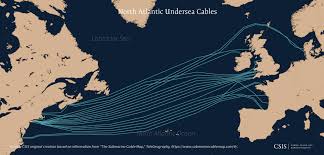
Transatlantic Cable
Important to the industrial development of the US after the Civil War were new inventions. Communication, transportation, basic industries, electric power, and urban growth were all improved through technological advancements. The first important change to the speed of communication was the creation of the telegraph by Samuel F. Morse, created in 1844. By the start of the Civil War, electronic communication through the telegraph as well as quick transportation by the railroad were going hand and hand as well as becoming the new standard parts of modern society, especially in the North. After the war, Cyrus W Field created the transatlantic cable in 1866 where it was now possible to send messages across seas in minutes. By 1900, most of the world was now connected with hundreds/thousands of these cables that linked up all inhabited continents of the world creating instantaneous global communication. This communication internatilization markets, making prices for basic commodities such as as grains, coal, and steal at the mercy at international forces (often placed on local and smaller producers).
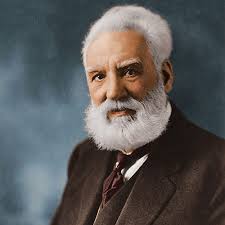
Alexander Graham Bell
More noteworthy inventions of the time in the late 19th century were the typewriter (67), the telephone by Alexander Graham Bell (76), the cash register (79), the calculating machine (87), and adding machine (88). These new products became essential for new business. Products that became widespread for consumers were GEorge Eastman’s Kodak camera (88), Lewis E. Waterman’s fountain pen (84), and King Gillette’s safety razor and blade (95).
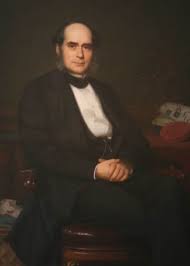
Henry Bessemer
The technological breakthrough that launched the rise of heavy industry was the discovery of a new way to make large quantities of steel that also made it a better quality. In the 1850s, both Henry Bessemer in England and William Kelly in the US discovered that blasting air through molten iron produced high-quality steel. Because the Great Lakes had access to abundant coal reserves from Pennsylvania to Illinois and access to the iron ore of Minnesota’s Mesabi Range, it became a center of steel production.
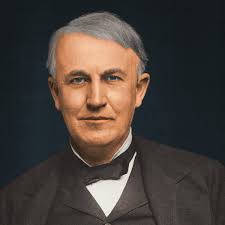
Thomas Edison
Arguably one of the greatest inventors of the 19th century, Thomas Edison worked as a telegraph operator as a young man. In 1869, at 22, he patented his first invention that was a machine that recorded voices. Income from his early inventions allowed Edison to create a research laboratory in Menlo Park, New Jersey, in 1876. This became the world’s first modern research lab, which was Edison’s “invention factory”. He declared that it would produce minor inventions every ten days and major ones every six months. This lab became one of Edison’s biggest accomplishments because it introduced the idea of mechanics and engineering as a group project than independent. Edison’s lab brought out more than a thousand inventions, including the phonograph, the dynamo for generating electricity, the mimeograph, and the motion picture camera. Edison is most well-known for his improvement of the incandescent lamp in 1879 (the first practical electric light bulb). Electric light revolutionized life, especially in cities, from the way people worked and how they shopped. During his lifetime, Edison became a mythic figure even though other inventors improved his work.
George Westinghouse
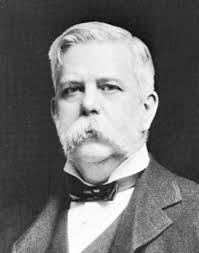
Another remarkable inventor of this time period was George Westinghouse, who held more than 400 patents. He was responsible for developing an air brake for railroads (69) and a transformer for producing high-voltage alternating current (AC). The last invention made it possible for the lighting of cities and the operation of electric street cars, subways, and electric powered machinery and appliances. Westinghouse and GEneral Electric came to dominate electric technology with their AC power supply systems, which came to replace Edison’s direct current. By 1900, various electric trades employed nearly a million people, making light and power of the nation’s largest and fastest growing industries.
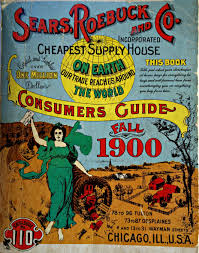
Mail-order companies
Development of how people moved and the building they lived in and worked in remade the urban landscape. Cities grew both outward and upward. Improvements in urban transportation mad e the growth of cities possible. During the walking cities of pre-Civil War America, people had little choice but to live within walking distance of their shops or jobs. Cities gave way to streetcar cities, in which people lived in residences many miles from their jobs and commuted to work on horse-drawn streetcars. By the 1890s, both horse drawn cars and cable cars were being replaced by electric trolleys, elevated railroads, and subways, which could transport people to urban residences even farther from the city’s commercial center. the building of massive steel suspension bridges such as New York’s Brooklyn Bridge (83) also made possible longer commutes between residential areas and city centers. As cities expanded outward, they also grew upward since the costs/value of land in the central business district increased, meaning building upward was more profitable. In 1885, Chicago became the home of the first skyscraper with a steel skeleton, a ten story building designed by William Le Baron Jenny. Structures of these size were made possible by such innovation as the Otis elevator and the central steam-heating system with radiators in every room. By 1900, steel-framed skyscrapers for offices of industry had replaced church spires as the dominant feature of American urban skylines. The increased output of US factories and invention of New consumer products allowed businesses to sell merchandise to a larger public. R.H. Macy in New York and Marshall Field in Chicago made the large department store popular in urban centers. Frank Woolworth’s five-and-dime stores brought nationwide chain stores to towns and urban neighborhoods. Two large mail-order companies, Sears, Roebuck and Co, and Montgomery Ward, used the improved rail system to ship to rural customers everything from hats to houses that people ordered from each company’s thick catalog. The Sears catalog became famous as the “wish book”. Packaged foods under such brand name as Kellogg and Post became common items in American homes. Refrigerated railroad cars and canning enabled Gustavus Swift and other Packers to change the eating habits of Americans with mass-produced meat and vegetable products. Advertising and new marketing techniques not only promoted a consumer economy but also create a consumer culture in which shopping became a favorite pastime.
Cornelius Vanderbilt
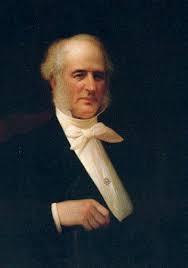
While new tech helped pushed the development of industry and economic growth after 1865, the most important invention however was the creation of new management and financial structures that helped create large-scale industries. The increased desire for wealth created a desire for consolidation of businesses and wealth. The combination of business leadership, money, tech, markets, labor, and federal/state/local support was first seen in the development of the nation’s first big business—railroads. After the Civil War, railroad mileage increased by 5X in 35 years (1865 had 35,000 to 1900 193,000). The federal government helped this growth by providing low interest loans as well as giving away millions of acres of public land. Railroads helped create a market for goods nationally, and helped encourage mass production, consumption, and economic specialization. The resources also in railroad building caused other industries to grow such as coal and steel. Railroads also affected public life, prior to 1883 there were 144 local time zones. During this time, each community or region could determine when noon is. However, the American Railroad Association in 1883 put this to an end by dividing the country into four time zones. Railroad time became standard for all. The most important invention created by railroad companies was the creation of the modern stockholder corporation. Railroads required so much investment that they needed to create complex structures in finance, business, and regulation of competition. In the early decades of railroading (1830-60), the creation of different local and separate lines created different sized gauges and incompatible equipment. These problems were soon reduced after the Civil War where competing railroads started to become consolidating and integrated into trunk lines. Trunk lines are a major line between cities, smaller branches helped connect trunk lines to local towns. “Commodore” Cornelius Vanderbilt used his millions from the steamboat business to merge local railroads into the New York Central Railroad (1867), which ran from New York City to Chicago. It operated more than 4,500 miles of track, other trunk lines such as the Baltimore and Ohio Railroad and Pennsylvania Railroad connected eastern seaports with Chicago and other Midwestern cities. They helped set the standards of excellence and efficiency for the rest of the industry.
Jay Gould
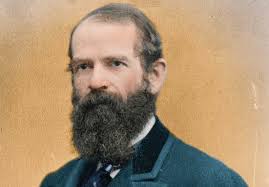
However, railroads were not always efficient. Like other new tech through history, investors overbuilt in the 70s and 80s. Some companies suffered from mismanagement and fraud, speculators such as Jay Gould entered the railroad business for only quick profits and made their millions by selling off assets and watering stock (inflating value of a corporation’s assets and profits before selling its stock to the public). In order to survive, railroads competed by offering rebates (discounts) and kickbacks to favoured shoppers while charging a huge amount for freight rates to smaller customers such as farmers. Railroads also created pools where competing companies agreed secretly to fix rates and share traffic.
J. Pierpont Morgan
A financial panic in 1893 caused one-quarter of all railroads into bankruptcy. Bankers led by JP Morgan quickly bought and took control of the vankrupts railroads and consolidated them. With competition eliminated, he could stabilize rates and reduce the debt. By 1900, seven giant systems controlled nearly 2/3rds of the nation’s railroads, the consolidation made the rail system more efficient but was controlled only by a few powerful men such as Morgon who dominated the boards for competing railroad corps through interlocking directorates (same directors ran competing companies). They were able to create regional railroad monopolies. In the late 19th century, local, state, and federal governments invested in the development of railroads. However, at the same time, customers and small investors often felt victims for slick financial schemes and ruthless practices. early attempt to regulate railroads by law didn’t work, the Granger laws passed in Midwestern states in the 1870s were overturned and the federal Interstate Commerce Act of 1887 was at first ineffective. It won’t be until the early 1900s that Congress expand the powers of the Interstate Commerce Commission to protect the public.
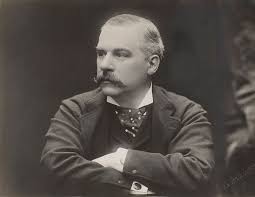
Andrew Carnegie
The late 19th century had a major shift in the nature of industry. Early factories had focused on making textiles, clothing, and leather products. After the Civil War, a second wave of industry (often called the “Second Industrial Revolution) took over causing the growth of a large-scale industry. During this era, steel, petroleum, electricity, and industrial machinery were the main industry producers. Leadership of the rapidly growing steel industry was took over by Andrew Carnegie. Andrew was born in Scotland in 1835, immigrated to the Us and worked his way up from poverty to become a superintendent of a Pennsylvania Railroad. In the 1870s, he started manufacturing steel in Pittsburgh and soon outlapped his competitors by combining salesmanship and use of the latest technology. Carnegie employed a business strategy known as vertical integration, where a company would control every stage of the industrial process, mining the raw material to transport the finished product. By 1900, Carnegie Steel employed 20,00 workers and produced more steel than all the mills in Britain. He decided to retire later on in his life and devote himself to philanthropy. Carnegie sold his company in 1900 for more than $400 million to a new combination led by Morgan. The new corporation, United States Steel, was the first billion-dollar company. It was the largest enterprise in the world, employing 168,000 people and controlling more than 3/5ths of the nation’s steel business.
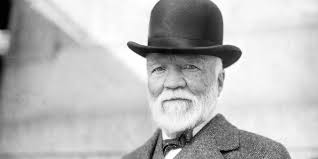
United States Steel
He decided to retire later on in his life and devote himself to philanthropy. Carnegie sold his company in 1900 for more than $400 million to a new combination led by Morgan. The new corporation, United States Steel, was the first billion-dollar company. It was the largest enterprise in the world, employing 168,000 people and controlling more than 3/5ths of the nation’s steel business.

John D. Rockefeller
The first US oil well was drilled by Edwin Drake in 1859 in Pennsylvania. Four years later, 1863, a young John D Rockefeller’s founded a company that would quickly eliminate its competition and took control of most of the nation’s oil refineries. By 1881, his company, known as the Standard Oil Trust, controlled 90% of the oil refinery business. It had become a monopoly, where a company dominates a markets so much that it faces little to no competition. By controlling the supply and prices of oil, Standard Oil’s profits soared and so did Rockefeller’s fortune. When he retired, his fortune was worth around $900 million. Standard Oil grew due to applying new tech and efficient management practices. Even though it sometimes kept prices lower for consumers, the company gew it became very powerful. Rockefellers was able to extort rebate from railroad companies and temporarily cut prices in order to force rival companies to sell out.
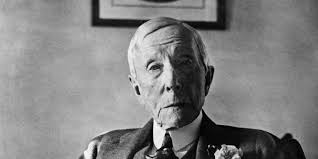
Standard Oil
The first US oil well was drilled by Edwin Drake in 1859 in Pennsylvania. Four years later, 1863, a young John D Rockefeller’s founded a company that would quickly eliminate its competition and took control of most of the nation’s oil refineries. By 1881, his company, known as the Standard Oil Trust, controlled 90% of the oil refinery business. It had become a monopoly, where a company dominates a markets so much that it faces little to no competition. By controlling the supply and prices of oil, Standard Oil’s profits soared and so did Rockefeller’s fortune. When he retired, his fortune was worth around $900 million. Standard Oil grew due to applying new tech and efficient management practices. Even though it sometimes kept prices lower for consumers, the company gew it became very powerful. Rockefellers was able to extort rebate from railroad companies and temporarily cut prices in order to force rival companies to sell out.
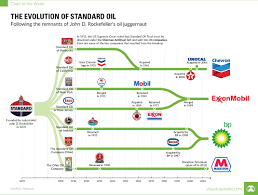
Horizontal integration
Emulating the success of Rockefellers, Carnegie, and Morgan, industry leaders in the meat, sugar, tobacco, and other industries also formed huge companies to gain control of the markets. The companies were organized in various ways:
A trust is an organization or board that manages the assets of multiple companies. For example, under Rockefellers, Standard Oil became a trust in which one board of trustees managed a combination of once-competing oil companies
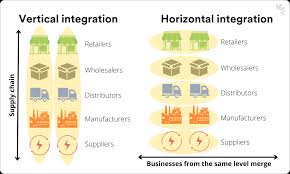
Horizontal integration is a process through which one company takes control of all its competition in a market, for example in oil refining or coal mining
Vertical Integration is a process where a company takes control of all of the steps below them to make their product. For example, Carnegie Steel controlled coal mines, ore ships, steel mills, and distribution systems for the steel company to reduce their own costs and improve efficiency resulting in more profit
Holding Company is a company that is created to own and control companies in different industries. Banker J Pierpont Morgan managed a holding company that owned various companies in several businesses such as banking, rail, and steel.
Critics often argue that these giant corporations are bad for the economy. By creating monopolies, they reduced competition in the open and free markets. Monopolies, also in their views, slow innovation, overcharge consumers, and develop huge amounts of political influence. The word “monopoly” came to be known as a giant company that became so large that it was a threat to the public interest.
vertical integration
Emulating the success of Rockefellers, Carnegie, and Morgan, industry leaders in the meat, sugar, tobacco, and other industries also formed huge companies to gain control of the markets. The companies were organized in various ways:
Vertical Integration is a process where a company takes control of all of the steps below them to make their product. For example, Carnegie Steel controlled coal mines, ore ships, steel mills, and distribution systems for the steel company to reduce their own costs and improve efficiency resulting in more profit
Holding Company is a company that is created to own and control companies in different industries. Banker J Pierpont Morgan managed a holding company that owned various companies in several businesses such as banking, rail, and steel.
Critics often argue that these giant corporations are bad for the economy. By creating monopolies, they reduced competition in the open and free markets. Monopolies, also in their views, slow innovation, overcharge consumers, and develop huge amounts of political influence. The word “monopoly” came to be known as a giant company that became so large that it was a threat to the public interest.

holding company
Emulating the success of Rockefellers, Carnegie, and Morgan, industry leaders in the meat, sugar, tobacco, and other industries also formed huge companies to gain control of the markets. The companies were organized in various ways:
Vertical Integration is a process where a company takes control of all of the steps below them to make their product. For example, Carnegie Steel controlled coal mines, ore ships, steel mills, and distribution systems for the steel company to reduce their own costs and improve efficiency resulting in more profit
Holding Company is a company that is created to own and control companies in different industries. Banker J Pierpont Morgan managed a holding company that owned various companies in several businesses such as banking, rail, and steel.
Critics often argue that these giant corporations are bad for the economy. By creating monopolies, they reduced competition in the open and free markets. Monopolies, also in their views, slow innovation, overcharge consumers, and develop huge amounts of political influence. The word “monopoly” came to be known as a giant company that became so large that it was a threat to the public interest.

laissez-faire
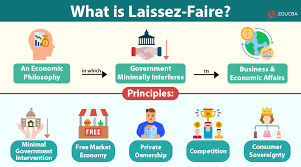
Federal, state, and even local governments supported businesses and economic growth through passing high tariffs, building infrastructure, and operating public schools and universities. However, the economic, scientific, and religious beliefs of the time led people to not regulate businesses. The economic expression of these beliefs was summed up in the French phrase “laissez-faire”.
social Darwinism
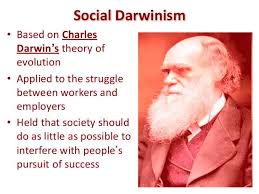
In 1776, an economist named Adam Smith argued in his paper The Wealth of Nations that Mercantilism was less efficient than allowing businesses to naturally grow through the “invisible hand” of the law of supply and demand. While Smith agreed that there should be some government regulation, he believed that unregulated businesses would be motivated by their own self-interest to offer improved goods and services at lower prices. In the 19th century, American capitalists and industrialists used the laissez-faire theory to justify their way of gaining wealth. The rise of monopolies in the 1880s seemed to undercut the competition needed for natural regulation. Laissez-faire theory would be constantly used in the Congress and lobbies to ward off any threat of government regulation. Charles Darwin’s theory of natural selection in biology created controversy with religious conservatives, but used by conservative economists. Herbert Spencer, an English social philosophers, argued for Social Darwinism which was the idea that Darwin’s theories about natural selection and the survival of the fittest should be used in the marketplace. Spencer believed that giving wealth and power only to the elite would benefit everyone (would call them “fit”). A student of Spencer’s beliefs, William Graham Sumner of Yale, introduced the ideas of Social Darwinism to sociology in the US, arguing that helping the poor was misguided because it interfered with the laws of nature and only weakened the evolution of the species. The teachings of respected scholars like Sumner provided the “scientific” reasoning for racial intolerance. Race theories around the superiority of groups of others would spill over to the 1900s.
survival of the fittest
Charles Darwin’s theory of natural selection in biology created controversy with religious conservatives, but used by conservative economists. Herbert Spencer, an English social philosophers, argued for Social Darwinism which was the idea that Darwin’s theories about natural selection and the survival of the fittest should be used in the marketplace. Spencer believed that giving wealth and power only to the elite would benefit everyone (would call them “fit”). A student of Spencer’s beliefs, William Graham Sumner of Yale, introduced the ideas of Social Darwinism to sociology in the US, arguing that helping the poor was misguided because it interfered with the laws of nature and only weakened the evolution of the species. The teachings of respected scholars like Sumner provided the “scientific” reasoning for racial intolerance. Race theories around the superiority of groups of others would spill over to the 1900s.

Protestant work ethic
More Americans instead found religious beliefs as a way to justify the wealth and power of the industrialists and bankers of the time. John D Rockefeller applied the Protestant Work Ethic (that material success was a sign that God favored you and wanted to reward you) to both his own personal life and business. He can then say that “God gave me my riches”. In a popular lecture of the time, “Acres of Diamonds”, a reverend by the name of Russel Cornwell preached that everyone had a duty to become rich. By the 1890s, the richest 10% of the US controlled 90% of the nation’s wealth. Industrialization created a new class of millionaires who would splurge on their wealth with lavish parties and mansions. Many Americans ignored the increasing gaps of the poor and rich. They would instead focus on “self-made men” in businesses such as Andrew Carnegie and Thomas Edison. However, opportunities for upward mobility did exist but only, statistically, for Anglo-Saxon, white, Protestant males from upper or middle class backgrounds whose father was in business or banking. Corporations in the late 19th century wanted to do business more internationally, such as Asia and Latin America. Industries wanted raw materials to process finished goods. Around 1900, imports from Cuba, Brazil, and Asia of sugar and rubber was 30% of the US’s imports. Businesses also wanted to sell finished products internationally, as well. Around the same time, the US only accounted for 5% of the world’s population but 15% of global exports. The growth of business and their interest’s abroad was one reason why the US became more involved in the international affairs in the late 1800s and early 1900s.

collective bargaining
The growth of industry during this time was based on hard physical labor like in mines or factories. For the people doing these jobs, life was hard. By 1900, 2/3rds of all employed people in the US worked for wages, usually jobs that required ten hours a day, six days a week. Wages were determined by the economic principle of supply and demand, and since there was a massive amount of immigration in the US, wages were kept at a level barely liveable. However, these low wages would be justified by people like David Ricardo, who argued his famous “iron law of wages” that raising wages would increase the amount of people working, thereby naturally causing wages to lower and creating an endless cycle of misery and starvation. Real wages rose steadily in the late 19th century, however most people living on wages couldn’t survive with one income source. So instead, working-class families needed the income of both women and children. In 1870, about 12% of the country’s children were employed, by 1900 that number increased to 20%. In 1890, 11 million for the 12.5 million families in the US averaged less than $380 a year. Before the industrial revolution, workers worked in small workshops that focused on artisan skills. People would often feel accomplished for completing their work. Factory work was totally different, workers were often assigned just one step in the processes, performed semiskilled tasks monotonously. Both immigrants and rural migrants had to learn to work under the clock, and in many industries such as railroads and mining the working conditions were dangerous. Many workers were exposed to chemicals and pollutants that were only later discovered to cause illnesses and early death. Industrial workers rebelled against intolerable working conditions by missing work or quitting. They often changed jobs, often every 3 years. About 20% of the industrial workers dropped out of the industrial workplace, which was higher than people who joined labor unions. During the late 19th century, the country witnessed the most deadly and frequent labor conflicts in its history. Many feared for open conflict between the working class and elite. With a surplus of low-cost labor, management held most of the power in the struggles against organized labor. Strikes could easily go away by bringing in strike breakers or scabs who are unemployed people looking jobs (replacing them). They also used lockouts (act of closing a factory before organization occured), blacklist (names of pro-union workers that employers circulated to prevent them from getting jobs again), yellow-dog contract (contract that doesn’t allow you to join a union), private guards and state militia (used by employers to put down strikes), and Court injunctions (judicial action to prevent a strike). Management would also foster publice fear of unions by presenting them as anarchistic and un-American. Before 1900, management won most battles since if violence did occur, they could bring in federal and state governments to help. Workers were divided on the best methods for defending themselves against management. Some Union leaders wanted political action, other wanted direct confrontation such as strikes, picketing, boycotts, and slowdowns in order to achieve Union recognition as well as collective bargaining. Collective bargaining is the ability of workers to negotiate as group with employers about conditions and wages.

Railroad strike of 1877
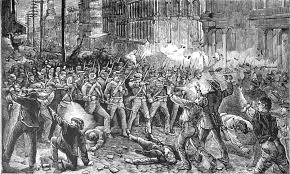
One of the worst outbreaks of Labor violence happened in 1877. During an economic depression, the railroad companies cut wages in order to reduce their costs. A strike on the Baltimore and Ohio Railroad quickly spread across 11 states and caused 2/3rds of the country’s rail lines to be shut down. Railroad workers were then further assisted by 500,000 workers from other industries in an increasingly escalating strike that rapidly became national. For the first time since 1830s, president Rutherford B Hayes used federal troops to end a labor dispute. The strike and violence ended, but more than 100 people would lose their lives. After the strike, some employers addressed the issues by improving wages and conditions, while others doubled-down and became harsher against Unions.
National Labor Union
Before the 1860s, Unions were originally organized as local associations in a city or region, usually craft unions which focused on one type of work. The first attempt to organize all workers, regardless of job, was the National Labor Union. Founded in 1866, it had around 640,000 members by 1868. they championed the goals of higher wages, 8 hour work day, and other social programs such as equal rights for both women and African Americans, monetary reform, and worker cooperatives. Its chief victory was winning the 8 hour work day for federal government workers, but lost support after a depression in 1873 and an unsuccessful strike in 1877.
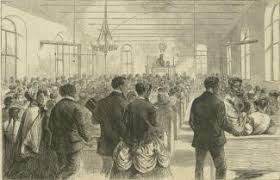
Knights of Labor
A second national Labor Union began in 1869 as a secret society to avoid detection by employers, known as the Knights of Labor. Under the leadership of Terence V. Powderly, the Union went public in 1881, opening its membership to all workers including African Americans and women. Powdelry pushed for reforms such as a forming worker cooperative, abolishing child labor, abolishing trusts and monopolies and settling labor dispute by arbitration than strikes. However, because the Knights were loosely organized, Powderly couldn’t control local units that decided to strike. The Knights of Labor grew tremendously, having a peak membership of 730,000 members in 1886. However, public opinion after the 1886 Haymarket bombing turned against them and caused membership to decline.
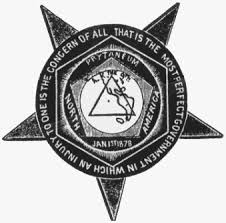
Haymarket bombing
Chicago, with around 80,000 Knights in 86, was the site of the first May Day labor movement. Living in Chicago were also 200 anarchists who wanted a violent overthrow of all government. In response to the May Day movement calling for a general strike to get an eight hour work day, laborers became violent at Chicago’s McCormick Harvester plant. On May 4, workers held a public meeting in Haymarket Square. Police attempted to break up the meeting, but someone threw a bomb which killed seven police officers. The bomb thrower was never found, but anarchist leaders were tired from the crime and seven were sentenced to death. Many American, horrified by the bomb incident, viewed Unions as radical and violent. The Knights of Labor, the most prominent labor Union at the time, lost popularity and therefore membership.
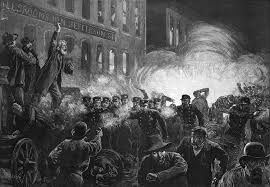
American Federation of Labor (AFL)
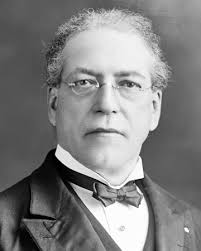
The American Federation of Labor focused on more narrower economic goals. Created in 1886 as a combination of 25 craft unions for skilled workers, the AFL focused on higher wages and improving worker conditions led by Samuel Gompers until 1924. Gompers told his local unions to strike until his employer agreed to negotiate a new contract through collective bargaining. By 1901, the AFL was the nation’s largest labor organization with 1 million members. However, this Union would not achieve any major achievements until the early decades of the 1900s.
Samuel Gompers
The American Federation of Labor focused on more narrower economic goals. Created in 1886 as a combination of 25 craft unions for skilled workers, the AFL focused on higher wages and improving worker conditions led by Samuel Gompers until 1924. Gompers told his local unions to strike until his employer agreed to negotiate a new contract through collective bargaining. By 1901, the AFL was the nation’s largest labor organization with 1 million members. However, this Union would not achieve any major achievements until the early decades of the 1900s.
Homestead strike
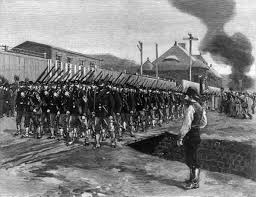
Two massive strikes in the last decade of the 1800s showed the growing discontent of labors as well as the power of management. Henry Clay Frick, a manager of Andrew Carnegie’s homestead Steel plant around Pittsburgh, caused a strike when he cut wages by around 20% in 1892. Frick used a lockout, private guards, and strikebreakers to defeat the workers after 5 months of striking. 16 people died and the failure of the Homestead strike set back the Union movement in the steel industry until the New Deal in the 1930s.
Pullman strike
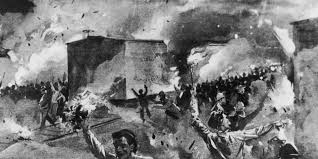
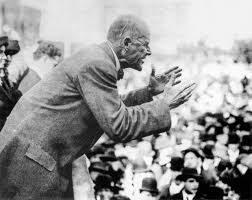
Another alarming strike for conservatives was a strike by workers in George Pullman’s company near Chicago. The Pullman Palace Car Company manufactured railroad sleeping car and in 1894 Pullman announced a general cut in wages and fired the leaders of a workers delegation. The workers at Pullman laid down their tools and asked for help from the American Railroad Union. The ARU leader, Eugene V Debs, told railroad workers not to handle any trains with Pullman cars. The boycott caused major tie ups in transportation across the country. Railroad owners decided to support Pullman by linking Pullman car to mail trains, which allowed them to appeal President Grover Cleveland to use the army to keep the mail trains running. A federal court issued an injunction to forbid interference with mail cars and ordered railroad workers to abandon the boycott. For failing to respond to this, Debs and other Union leaders were arrested and jailed. The jailed effectively ended the strike, and in the case for In re Debs (1895), the Supreme Court approved the usage of Court injunctions against strikes, which gave employers another power legal weapon against Unions.
Eugene v. Debs
Another alarming strike for conservatives was a strike by workers in George Pullman’s company near Chicago. The Pullman Palace Car Company manufactured railroad sleeping car and in 1894 Pullman announced a general cut in wages and fired the leaders of a workers delegation. The workers at Pullman laid down their tools and asked for help from the American Railroad Union. The ARU leader, Eugene V Debs, told railroad workers not to handle any trains with Pullman cars. The boycott caused major tie ups in transportation across the country. Railroad owners decided to support Pullman by linking Pullman car to mail trains, which allowed them to appeal President Grover Cleveland to use the army to keep the mail trains running. A federal court issued an injunction to forbid interference with mail cars and ordered railroad workers to abandon the boycott. For failing to respond to this, Debs and other Union leaders were arrested and jailed. The jailed effectively ended the strike, and in the case for In re Debs (1895), the Supreme Court approved the usage of Court injunctions against strikes, which gave employers another power legal weapon against Unions. By 1900, only 3% of American workers belonged to Unions. Management often times had the upper hand, alongside government support usually. But, people started to realize the need for better balance. During the Gilded Age, industrial growth was focused in the Northeast and Midwest, the parts of the country with the largest population, capital, and best transportation. As industries grew, These regions created more cities and attracted even more people.
“old” immigrants
In 1893, more than 12 million people attended the Chicago World’s Fair (World’s Columbian Exposition). Chicago’s population had grown from a small town of 4,000 to the second largest city in the country with more than 1 million residents, fastest growing city in that nation if not the world. However, visitors often were complaining about the different languages spoken since more than 3/4ths of the population were either foreign-born or children of foreign-born. In the last half of the 19th century, the US pop more than tripled from 23.2 million in 1850 to 76.2 million in 1900. 16.2 million helped provide this growth, alongside another 8.8 million in the peak years of immigration (1901-10). A number of pushes and pulls in the world created the dramatic increase of immigration:
The poverty of displaced farmers from political turmoil or mechanization
Overpopulation and joblessness in Europeans cities
Religious persecution, specifically Jewish people in Eastern Europe
Positive reasons for moving to the US included the religious and political freedom as well as the economic opportunity from the West and industrial jobs. Economic opportunity fluctuated with the economy, meaning that times of prosperity meant an increase in immigration. Not only that but the introduction of large steamships that offered low cost one-way tickets in the ships’ steerage made it possible for millions of poor people to physically move to the US. Through the 1880s, most immigrants came from Western and Northern Europe: British isles, Germany, and Scandinavia. Most of the “old immigrants” were Protestants and mostly spoke English, alongside having high levels of literacy and skills which made them easily blend into rural American society. But, Irish and German Catholics would face heavy discrimination.
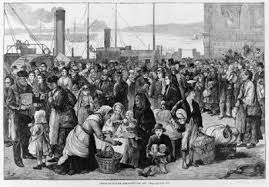
“new” immigrants
From the 1890s to the start of WW1 (1914), most of the origins of immigrants changed to Southern and eastern Europe. They were Italians, Greeks, Croats, Slovaks, Polish, and Russians. Many were poor illiterate peasants who left autocratic countries, therefore they were unaccustomed to Democratic traditions. Unlike the “old immigrants”, they were religious diverse (Catholic, Russian and Greek Orthodox, and Jewish). When first arriving, most crowded the poor ethnic neighborhoods of New York, Chicago, and other major cities. Around ¼ of them were young men contract to work for unskilled factory, mining, and construction jobs known as “birds of passage”, who would return back home once they had a fair amount of money to bring home.
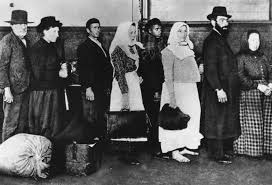
Chinese Exclusion Act (6.8)
The original immigration of people from Asia was in the 1840’s and 50’s when Chinese immigrants moved to California after the discovery of gold (1848). Even though the Chinese Exclusion Act in 1882 ended the immigration of people from China, other groups from Japan, Korea, and the Philippines moved and found work in Hawaii, California, and other states. The first immigrants from South Asia came in the early 1900s, but Congress would pass immigration restrictions in 1917 and 24 that almost completely stopped immigration from the entire country after a wave of anti-Asia feelings. Only Filipinos could immigration because the US took possession of the islands in 1898.
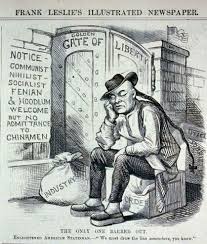
Tenement apartments
Urbanization and industrialization worked together, cities provided both labor for factories as well as a market for their goods.The shift from rural to urban became increasingly apparent over the decades, by 1900 40% of American lived in towns or cities while in 1920, for the first time, more American would live in urban areas. People moving to cities included both immigrants and native Americans moving from rural areas. In the late 19th century, millions of young Americans would move to urban areas to look for new economic opportunities, leaving farms for industrial and commercial jobs. Joining among these internal migrants were African Americans from the South. Between the years of 1897 and 1930, nearly 1 million Black Southerners would move to either Western or Northern cities. Cities changed dramatically, growing as well as structurally changing. Mass transportation segregated cities by income, upper and middle class families moving away from the district centers to streetcar suburbs (communities that used transit routes) in order to escape the pollution, poverty, and crime. The leaving of higher-income classes left older sections to the working poor, most were immigrants. The differences in the areas of the cities contributed to the social-economic divisions of the time. When the poor moved into the business districts, landlords divided their inner-city housing into small, windowless rooms in order to increase profit. The tenement apartments and slums would cram 4,000 people into a single city block. In 1879, the City of New York would pass a law the required each bedroom to have a window. Landlords responded to the law by building cheap dumbbell tenements, buildings with open ventilation shafts in the center to provide a window for each room. However, the overcrowding and overall poor conditions lead to the rapid spread of deadly diseases, such as cholera, typhoid, and tuberculosis. In their crowded tenement parts, immigrant groups created ethnic neighborhoods where each group could maintain their culture. Many groups would even support their own newspapers or schools. Even though they were often crowded, unhealthy, and crime ridden, these neighborhoods (sometimes called “ghettos”) would serve as a foundation for hard-working immigrants and their children to achieve the American dream. The explosive amount of immigration in the US after 1865 renewed the populist protest to reduce the number of immigrants from the past, especially ones that differed from ethnicity, language, and religion from “old” immigrants. The efforts to discourage or restrict “new” immigrants caused earlier opposition to Irish, Italian, and Chinese migrants.
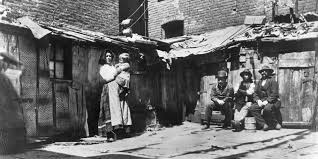
Chinese Exclusion Act (6.9)
Several groups supported the resistance against the wave of immigration from 1865-98. Each group had their own reasons, that often overlapped with one another:
Labor union members were motivated by economic concerns. They disliked that employers could use immigrant labor to lower wages and break up strikes.
Employers benefited from the competition among workers, but they feared immigrants would want radical reforms. Business owners often blamed strikes and labor movements on immigrants.
Nativists were distressed that immigrants would not only take their jobs but also weaken the Anglo majority of the nation. Most nativists were Protestants who were openly prejudice against Catholics. The biggest anti-Catholic organization was the American Protective Association of the 1890s.
Social Darwinists believed that people of Southern, Eastern, and non-European heritage were biologically inferior to Anglo-Saxon and Germanic heritage. This idea was support by the leading biologists of the time of the 19th century, until it was entirely discredited.
The first major laws against immigration were against the Chinese. The hostility around the Chinese came from mainly Western states. Most mining towns in the West, half of their population would often be foreign-born and most were Chinese immigrants. California would pass a Miner’s Tax of $20 a month to all foreign born miners, in response from native miners. In 1882, Congress would pass the Chinese Exclusion Act, which would ban all immigration from China, and be finally LIFTED IN 1965.
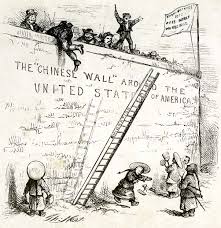
Ellis Island
Restrictions also came in 1882 against immigrants who were labeled as “undesirable”, such as paupers, criminals, convicts, and those with mental disabilities. The Contract Labor Law of 1865 restricted temporary workers, in order to protect American workers from competition. A literacy test for immigrants would be vetoed by President Cleveland, but passed in 1917. The immigration center of Ellis Island in New York harbor in 1892 would create more rigorous medical examinations and a pay tax before entering the US. During a heavy depression in the 1890s, nativist angry would increase as some jobless workers and employers used immigrants as a convenient scapegoat for economic trouble. However, anti-immigrant feelings and early restrictions didn’t stop the flow of immigration. Between 1860 and 1920, the foreign-born population consistently stood between 13 to 15 percent of the population. The Statue of Liberty stood a beacon of hope for the poor and oppressed immigrants of Southern and Eastern Europe until the Quota Acts of the 1920s almost closed the liberty’s gates.
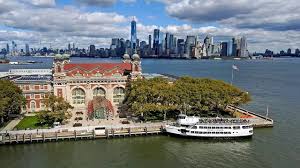
Political Machines
In many cities, politicians would use the newly arrived immigrants as a way to gain their loyalty in future elections. These tightly organized groups of politicians became known as political machines, each with a “boss”, top politician who gave orders and gave out government jobs to loyal supporters. Several political machines, such as Tammany Hall in New York City, would start as social clubs and later develop into power center to organize the needs of businesses, immigrants, and the underprivileged. In return, the machines only asked for the votes of the people on election day. Successful bosses knew how to managed the competing social, ethnic, and economic groups in the city. Machines often brought modern services to the city, such as a crude form of welfare for newcomers. The organizations would provide apartments and jobs to newly arrived immigrants and give baskets of food for poor families during times of trouble. But the machines could be greedy and generous, and would often steal millions from taxpayers in the form of graft and fraud. In New York for example in the 1860s, around 65% of public building funds went straight into the hands of Tammany Hall’s “Boss” Tweed and his cronies.
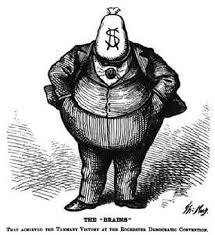
Tammany Hall
In many cities, politicians would use the newly arrived immigrants as a way to gain their loyalty in future elections. These tightly organized groups of politicians became known as political machines, each with a “boss”, top politician who gave orders and gave out government jobs to loyal supporters. Several political machines, such as Tammany Hall in New York City, would start as social clubs and later develop into power center to organize the needs of businesses, immigrants, and the underprivileged. In return, the machines only asked for the votes of the people on election day. Successful bosses knew how to managed the competing social, ethnic, and economic groups in the city. Machines often brought modern services to the city, such as a crude form of welfare for newcomers. The organizations would provide apartments and jobs to newly arrived immigrants and give baskets of food for poor families during times of trouble. But the machines could be greedy and generous, and would often steal millions from taxpayers in the form of graft and fraud. In New York for example in the 1860s, around 65% of public building funds went straight into the hands of Tammany Hall’s “Boss” Tweed and his cronies.
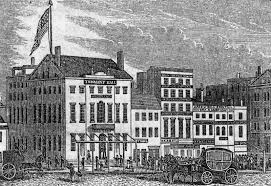
Jane Addams
Worried about the lives of the poor and immigrants, several young well-educated middle-class women and men would live in neighborhoods in order to learn about their problems. Working and living in settlement houses, these young reformers wanted to help relieve the struggles of poverty by providing early social services for people. The most well-known was the Hull House in Chicago by Jane Addams and a college classmate in 1889. Settlement houses taught English, early childhood education, industrial arts, and created neighborhood theaters and music schools. By 1910, there were more than 400 settlement houses in America’s largest cities. Although most immigrants remained in low paying jobs and lived in poverty, their children would take advantage of the education and other parts of the industrial economy, eventually joining the middle-class.
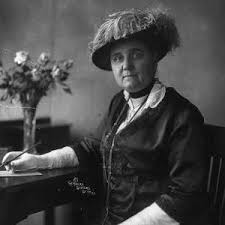
Settlement Houses
Worried about the lives of the poor and immigrants, several young well-educated middle-class women and men would live in neighborhoods in order to learn about their problems. Working and living in settlement houses, these young reformers wanted to help relieve the struggles of poverty by providing early social services for people. The most well-known was the Hull House in Chicago by Jane Addams and a college classmate in 1889. Settlement houses taught English, early childhood education, industrial arts, and created neighborhood theaters and music schools. By 1910, there were more than 400 settlement houses in America’s largest cities. Although most immigrants remained in low paying jobs and lived in poverty, their children would take advantage of the education and other parts of the industrial economy, eventually joining the middle-class.
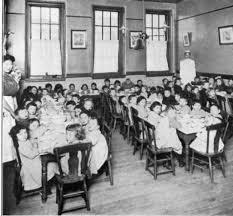
Melting Pot
The common view of the 19th and early 20th century was that the US was a melting pot, where immigrant groups would shed their old-world characteristics in order to become successful citizens of their new country.
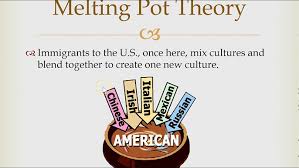
“Gospel of Wealth”
The inequality and divide of America’s working class with the rich should not obscure the development of the middle class. Industrialization also provided better paying jobs, cities needed more professionals and specialists and changes in American education also created more jobs for both men and women. The growing of the middle class led to more free-time, allowing the creation of popular culture. Since colonial times, self-employed jobs like doctors, lawyers, merchants, and artisans created a middle class between small farmers and the wealthy elite. The growth of large industries and corporations required new jobs for millions of white-collar workers (jobs that don’t involve physical labor). Middle management was needed to coordinate operations between chief executives and the factories, scientists and engineers were needed for advanced scientists, and scales and marketing departments required salespeople, accountants, and clerical workers. This increase of middle-class job openings caused an increase for the demand for other middle-class jobs such as professionals (doctors and lawyers), public employees, and storekeepers. The number of white-collar and salarized jobs increases to more than a fourth of all non agricultural jobs employees by 1910. The role of the wealthy and upper classes of American in the late 19th century wasn’t only starting businesses and creating jobs. Many business leaders created or joined civic organizations and charities in order to address problems related to rapid urbanization. In the “Gospel of Wealth”, Andrew Carnegie argued that the wealthy have a huge moral responsibility to help out the community by carrying out projects of civic philanthropy. But, he did defend unregulated capitalism saying that even though it would be difficult for the average person, it was great for the greater good.
W.E.B. Du Boise (6.10)
One adult woman out of 5 in 1900 was working in the labor force for wages. Most were young and single, in 1900, both men and women believed that if a family could afford it, a woman’s proper place was staying home and raising children. However, women with access to higher education were able to break into professions such as doctors, lawyers, and even college professors. As the demand for clerical workers was raised, more and more women went into formal male occupied jobs such as secretaries, bookkeepers, typists, and telephone operators. feminized jobs such as nursing and teaching lost status and received lower wages and salaries. Factory work for women was usually in textiles, garment, and food processing where people thought the work was an extension of out home duties. Cities in the late 19th century saw changes in their internal structure and design. In the United States, wealthier people started moving into "healthier” suburbs while poorer classes started to move into the center, which contrasted most cities of other countries. Some reasons for moving to suburbs were:
Low cost, more land reduced the price of buying a house
Inexpensive transportation of the time allowed commuting to work easier
The building of the homes was cheaper due to new construction methods (wooden, balloon-frame houses)
Some people wanted to live in all-White communities because of their racial prejudice
Many people wanted grass, privacy, and their own individual house
landscape architect Frederick Law Olmsted would design suburban communities with curved roads and open spaces after designing Central Park in the 1860s in New York City. By the 1900, suburbs had been created in every major US city, and owning a single-family home with a lawn became an American symbol of comfortable living and the middle-class status. This created the world’s first suburban nation. At the beginning, people carried out life in the cities like life in a small village. Private enterprise helped shaped the city and provided services like streetcars for their own profit. However, overtime the increased disease, crime, waste, and pollution convinced reform-minded people and city government that there should be municipal water purification, sewage systems, waste disposal, street lighting, police departments, and zoning laws. In the 1890s, the “City Beautiful” movement wanted to add cities with trees and public attractions. The debate of the private goods and public goods for the advancement of cities would continue. The growth of the middle class as well as changes in social sciences raised questions about what schools should teach. Elementary schools after 1865 continued to employ the 3 R's (reading, writing, arithmetic). They taught traditional moral values in the McGuffey’s readers. New compulsory education laws made children attend school which increased the number of students and the literacy rate would increase to 90% in 1900. The practice of sending kids to kindergarten (concept from Germany) became popular and showed the increase interest of early education. Most significant however was the support for tax-supported public schools. At first they followed the basic ideals of a pre-college curriculum, but soon they became more comprehensive such as vocational and citizenship education for the changing urban society. The growing demand for white-collar workers also increased the number and size of US colleges. Funding for these schools came from several different areas:
The Morrill Acts of 1862 and 1890 gave land grants to states to create colleges. Land Grant schools often focused on careers in agriculture, mining, engineering, science, and industry compared to earlier schools that focused on being in the clergy or a lawyer. These state-run schools were also cheaper for the middle class and became valuable research centers for new products and techniques.
Wealthy philanthropists would found or help existing colleges, for example John D Rockefeller helped create the University of Chicago
Advocates for more education for women created new colleges for women such as Smith, Bryn Mawr, and Mount Holyoke. By 1900, 71% of colleges allowed women and they made up more than 1/3 of all students.
Supported for education of African Americans founded more than 50 private and public colleges including Fisk, Howard, Morehouse, and Meharry Medical College
The increased availability of affordable colleges encouraged a massive increase of students from 50,000 in 1870 to 600,000 in 1920. The college curriculum changed as well, after becoming president of Harvard in 1869, Charles W. Eliot reduced the number of required courses and introduced electives to help teach modern languages and sciences. Johns Hopkins University was created in Baltimore in 1876 as the first American college to focus on graduate studies. Following the ideals of German universities, John Hopkins focused on research and free inquiry, and the results of these innovations allowed the US to produce its first generation of scholars that could compete with other intellectual achievements in Europe. Colleges also started to add social activists, fraternities, and collegiate sports that would dominate the experience for students. The applying of the scientific method and theory of evolution with the study of human affairs helped revolutionize how scholars looked at human society in the late 19th century. New fields in social sciences emerged such as psychology, sociology, anthropology, and political science. Richard T Ely of Johns Hopkins studied labor unions, trusts, and other existing economic organizations to understand them but also made solutions for economic problems of the day. He attacked laissez-faire policies based on his research. Evolutionary theory influenced leading sociologists (Lester F Ward), political scientists (Woodrow Wilson), and historian (Frederick Jackson Turner) to understand the process of human behavior instead of logical, unchanging views. One social scientist who used new statistical methods to understand crime in urban neighborhoods was WEB Du Boise. He was the first African American to get a doctorate from Harvard and was the leading Black intellectual of the era. He wanted racial equality, integrated schools, and equal access to higher education for the “talented tenth” of African Americans.
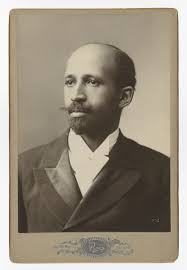
Clarence Darrow
Scientific theory and methodology also influences doctors, educators, social workers, and lawyers. Oliver Wendell Holmes Jr. argued that the law should be able to evolve with the times from the constant changes needed, and not remain restricted by legal precedents. Clarence Darrow, a famous lawyer, that criminal behavior could be caused by a person’s environment of poverty, neglect, and abuse. Darrow’s views challenged the mainstream beliefs that people were born as criminals or purposely chose to break laws. These changes in the profession, along side changes in universities, would create a boost in progressive legislation and liberal reform in the 20th century.
Joseph Pulitzer
The increase of leisure time, particularly for the middle class, was major business in the late 1800s. Besides higher incomes, other factors increased the amount of time such as a gradual reduction of working hours, improved transportation, billboards and advertising, and the decline of restrictive Puritan and Victorian values that discouraged wasting time on “play”. Popular Press/Mass-circulation newspapers had been around since the 1830s, but the first newspaper to exceed 1 million copies was Joseph Pulitzer’s New York Globe in 1890. Pulitzer filled his daily paper with sensational stories of crimes and disasters, as well as features on stories around political and economic corruption. Another major New York publisher was William Randolph Hearst who would push scandals and sensationalism to new heights (or lows).
William Randolph Hearst
Popular Press/Mass-circulation newspapers had been around since the 1830s, but the first newspaper to exceed 1 million copies was Joseph Pulitzer’s New York Globe in 1890. Pulitzer filled his daily paper with sensational stories of crimes and disasters, as well as features on stories around political and economic corruption. Another major New York publisher was William Randolph Hearst who would push scandals and sensationalism to new heights (or lows). Mass-circulation magazines also became popular in the 1880s. Advertising revenues and new printing tech made it possible for magazines like the Ladies Home Journal and others to be sold for as small as 10 cents. Theaters that showed comedy and dramas flourished during this time, but vaudeville that had a variety of acts, drew massive audiences. Traveling circuses such as the ones operated by the Ringling Brothers used the new railroad network to move huge numbers of acts and animals from place to place. The Wild West show was also very popular with William F Cody (“Buffalo Bill”) and personalities such as Sitting Bull and markswoman Annie Oakley. Commuter street cars and railroad companies also promoted weekend activities in order to keep their cars running on Sunday and holidays. they created parks in the countryside near the end of the line so that urban families could enjoy picnics and outdoor recreation. With the growth of cities came the increased demand for more music and even more tastes. By 1900, most large cities had an orchestra, Opera house, or both. In smaller towns, outdoor bandstands were the setting for playing popular marches by John Philip Sousa. Among the greatest innovators of the era were African Americans in New Orleans. Jelly Roll Morton and Buddy Bolden expanded the audience for jazz, a music style that combined African rhythms with European instruments with mixed improvisation and structure format. Black composers like Scott Joplin would help push the music forward by selling nearly a million copies with his sheet of music “Maple Leaf Rag” (1899). Also from the South was Blues music that expressed the pains of the black experience. Jazz, ragtime, and blues would gain popularity even more in the 20th century as New Orlean performers went north into Memphis, St Louis, Kansas City, and Chicago. Professional sports originated in the 19th century. Baseball, while it focuses on a rural past of green fields and fences, was very much an urban game that needed teamwork for an industrial age. Owners would organize teams into leagues like trusts of the day. In 1909, President William HOward Taft threw the first pitch in a game creating the tradition for the president to do such. Jim Crow law and customs however would prevent black players from joining all-White big-league baseball teams between the 1890s to 1947. Football would develop as a college activity. The first game was played in 1869 between Princeton and Rutgers. In the 1920s, professional football teams and leagues were organized, and in 1891 Basketball was invented at Springfield College in Massachusetts. After a few years, high schools and colleges across the nation had teams. The first professional basketball league was created in 1898, however it took years for some spectator sports such as football to gain middle-class respectability. The value of sports as healthy exercise would gain acceptance by the middle and upper classes in the late 19th century. women were considered unfit for most competitive sports but did recreational activities such as croquet and bicycling. Sport like gold and tennis grew, but mostly among athletic clubs. The very rich did expensive sports like water polo and yachting. Private clubs would generally discrimination against Jews, Catholics, and African Americans.
Salvation Army
Early efforts by farmers and labors to create reforms largely failed in the Glided age. However, many of these reforms were able to strengthen with the addition of an educated middle class who had more time to join and create organizations to bring on change. Many literature, art, and architecture responded to the new ways of challenging industrialization and urbanization. Urban problems like the poverty of the working class caused an awakening of the middle class. Reform movements in earlier decades would gain increased strength in the 1880s and 90s. San Francisco journalist Henry George created a book in 1879 called Progress and Poverty. In his book, he focused on the alarming inequalities of wealth during the time as well as proposed a single land tax to solve poverty. In Looking Backward, 2000-1887, Edward Bellamy in 1888 wrote about life in the year 2000 where society is cooperative and eliminated poverty, greed, and crime. George and Bellamy both shared similarities such as being criticized as utopians, inspired followers who support other reform movements, and both encouraged a shift in the American public away from laissez-faire economics to more government regulated. All religions adapted to the stress and challenges of modern living. The Roman Catholic church grew rapidly as a result of major immigration. Catholic leaders like Cardinal James Gibbons of Baltimore inspired the support of old and new immigrants by supporting the Knights of Labor and the cause of unions. In Protestants, Dwight Moody would found Moody Bible Institute in Chicago in 1889 which would help generations of urban evangelists to adapt to traditional Christianity in city life. The Salvation Army, from England in 1879, would help homeless people and the poor while also preaching the Gospel.

Social Gospel
In the 1880s and 90s, various Protestant clergy would help the cause of social justice for the poor, specifically the urban poor. They preached the ideas of the Social Gospel: applying Christian principles to social problems by improving housing, increasing wages, and supporting public health. They believed that by helping society, people would reach individual salvation. This was in contrast to many traditional Christians who believed that individual salvation would lead to less social problems. Walter Rauschenbusch, a Baptist minister from New York City’s Hell’s Kitchen, would become the leader of this movement in the late 19th and 20 century. He would write multiple books urging organized religions to take up on the cause of social justice. His Social Gospel created a link with Christianity with the Progressive movement which encouraged many middle-class Protestants to attack urban problems.
Jane Addams (6.11)
The creation of settlement houses, such as Jane Addams of Hull House in Chicago, provided the foundation for the later job of social worker. Besides volunteers, many were also political activists who wanted child-labor laws, housing reforms, and women’s rights. Two settlement workers, Frances Perkins and Harry Hopkins would end up in leadership roles in FDR’s reform program in the 1930s. Urban life placed major strains on families by isolating them from their relatives as well as village support. Divorce rates would increase to 1 and 12 marriages by 1900, partly because of the number of states increasing the grounds of divorce to include cruelty and desperation. Family sizes also suffered from the move from rural to urban, instead of a economic advantage on the farm, more kids become an economic liability therefore decreasing the national aver for birthrates and family sizes in the last decades of the 19th century.
Susan B Anthony (6.11)
The cause for women’s suffrage, sparked by the Seneca Falls Convention in 1848, would continue by a number of middle class women. In 1890, Susan B Anthony and Elizabeth Cady Stanton, would create the National American Women Suffrage Association (NAWSA) after being the pioneers of the movement in the 1840s. The point of NAWSA was to help secure the vote for women. Wyoming, a western state, would become the first state to grant full suffrage to women in 1869. By 1900, some state allowed women to vote in local elections and most allowed women to own and control property after marriage.
NAWSA
The cause for women’s suffrage, sparked by the Seneca Falls Convention in 1848, would continue by a number of middle class women. In 1890, Susan B Anthony and Elizabeth Cady Stanton, would create the National American Women Suffrage Association (NAWSA) after being the pioneers of the movement in the 1840s. The point of NAWSA was to help secure the vote for women. Wyoming, a western state, would become the first state to grant full suffrage to women in 1869. By 1900, some state allowed women to vote in local elections and most allowed women to own and control property after marriage.
WCTU
Another cause that caught the eye of urban reformers was temperance. The excessive drinking by male factory workers in immigrant and working class was one cause of poverty. The Woman’s Christian Temperance Union (WCTU) was created in 1874. Focusing on the total abstinence of alcohol, the WCTU had 500,000 members by 1898 under the leadership of Frances E Willard of Evanston, Illinois. The Anti-Saloon League, created in 1893, became a very powerful political force and by 1916 got 21 states to close down all saloons and bars. Carry A Nation, a religious zealot who couldn’t wait for the time for laws to change, created a sensation by raiding saloons and smashing barrels of beer with a hatchet in Kansas.
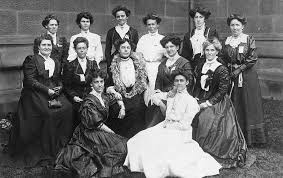
Anti-Saloon League
The Anti-Saloon League, created in 1893, became a very powerful political force and by 1916 got 21 states to close down all saloons and bars. Carry A Nation, a religious zealot who couldn’t wait for the time for laws to change, created a sensation by raiding saloons and smashing barrels of beer with a hatchet in Kansas.
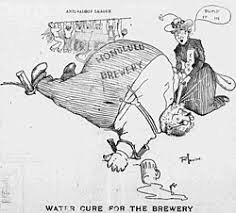
Carrie Nation
The Anti-Saloon League, created in 1893, became a very powerful political force and by 1916 got 21 states to close down all saloons and bars. Carry A Nation, a religious zealot who couldn’t wait for the time for laws to change, created a sensation by raiding saloons and smashing barrels of beer with a hatchet in Kansas.
Mark Twain
Across the country, grassroots efforts started to occur to combat corruption in city governments. In New York, a reformer by the name of Theodore Roosevelt tried to clean the New York City Police department. His efforts would give him a vice-president nominee in 1896 and later become president. However, many reformers in the Glided age would not see their reforms come to reality until the 20th century. American writers and artists had diverse ways to respond to industrialization and urban problems. However, the best known tried to create authentic and American style that focused on realism on the time. Many of the popular books of the post-Civil War era were romantic novels that had heros and heroines. Breaking with this literary tradition were regional writers such as Bret Harte who showed life in a rough mining camp of the West. Mark Twain (Pen name for Samuel L Clemens) became the first great realist author. His most famous work, The Adventures of Huckleberry Finn (1884), revealed greed, racism, and violence in American society. A younger generation of authors in the 1890s would become known for their works around naturalism, which was the idea of how emotions and experiences shaped human experiences. Stephen Crane’s novel, Maggie: A Girl of the Streets (1893), showed the brutal urban environment and how it could destroy someone. Crane wrote other books like The Red Badge of Courage, and other authors like Jack London who focus on the conflict between civilization and nature in his book The Call of the Wild (1903). A naturalistic book that caused a sensation was Sister Carrie (1900) by Theodore Dreiser which talked about a working girl in Chicago.
Frank Lloyd Wright
Some American artists appealed to the public’s desire of romantic subjects, but others decided to focus on realism. Winslow Homer, a for most American painter of seascapes and watercolors, would render his scenes of nature in a matter-of fact way. James Mcneill Whistler, a Massachusetts born, created famous paintings such as Arrangement in Grey and Black, No 1 while spending most of his life in Paris. Upsetting to romanticists and realists were abstract paintings that some artists were experimenting with. A large exhibit in 1913 in New York City, the Armory Show, caused many shocks in the artistic community. This kind of art would be rejected by most Americans until the 1950s. In the 1870s, Henry Hobson Richardson changed the architecture of America by focusing on medieval Romanesque style instead of the traditional Roman and Greek. Louis Sullivan of Chicago went a step further by creating tall, steel-framed, office buildings of the 1880s and 90s. Sullivan’s building created a much admired unity aesthetically, a Hallmark of the Chicago School of Architecture. An employee of Sullivan’s was Frank Lloyd Wright in the 1890s, who created his own “organic” style of architecture that focused on working with the natural environment. His vision included long, horizontal lines of prairie style houses. Wright would become the most famous architect of the 20th century. Some architects revived the classical Greek and Roman design, such as Daniel H Burnham. One of the most influential urbanists was Frederick Law Olmsted who worked on the planning of city parks and scenic boulevards. He worked on Central Park and the grounds of the US Capitol. As the creator of the landscape architecture, Olmsted not only designed parks, parkways, campuses, and suburbs but also created the basis for late urban designs. While laissez-faire economics would dominate the rest of the 19th century, the foundation of cultural change and reforms that helped the Progressive movement would be started in this time.

Credit Mobilier
The little government action of the time was in tune with two ideas of the time, Laissez-faire economics and Social Darwinism.The laissez faire views shared by business leaders and their supporters wanted little government action in the economy. Most would argue that the economy would grow most without any government interaction. The federal courts often supported these views, with narrow decisions that helped protect businesses from being regulated. However, the government was involved with supporting businesses during this time. It gave land grants to railroads at the expense of taxpayers and passed high tariffs to protect industries at the expense of the consumers. They even followed “hard” money policies that helped banks but hurt farmers. The government was less active in the economy than later periods, however the government would help support business growth during this time period. The federal government gave subsidies of land and loans to the railroad companies in order to promote growth. The government gave more than 170 million area of public land, a total area larger than Texas, to 80 different railroad companies. The land was given in alternate mile-square sections, in a checkerboard pattern, in the proposed route of the railroad. The government expected that the railroad would sell the land to new settlers to finance construction. Not only that but the railroad might increase the value of government lands and provide lower rates for carrying mail and moving troops. The subsidies, however, provided negative consequences. The land grants and cash loans led to hasty and poor construction and furthered corruption in all levels of government. Insiders used construction companies to bribe government official and make huge profits, like Credit Mobilier. Protests against land grants would start around the 1880s when people started to realize that some railroad companies would own half of a Western state’s land.
Interstate Commerce Act, 1887
State laws to help regulate railroad rates would seen face legal problems. The Supreme Court in Wabash v Illinois (1886) ruled that states can’t regulate interstate commerce. This, in effect, nullified many state law regulated by the Grangers. Congress responded to the outcry from farmers and shippers by passing the fir federal effort to regulate railroads. The Interstate Commerce Act of 1887 required railroad rates to be “reasonable and just”. It also created the first federal regulatory agency Interstate Commerce Commission (ICC) which had the power to investigate pools, rebate, and other discriminatory practices as well as prosecute companies. However, the ICC actually helped the railroad business more than the farmers. The new commission would lose most of its cases in federal courts in the 1890s, and helped stabilize rates and stop destructive competition until the law was strengthened in the 20th century.

Sherman Antitrust Act, 1890
Corporate trusts, like Standard Oil, started to become under widespread scrutiny in the 1880s. Middle class citizens feared the unchecked power that trusts had while urban elites increasingly resented the influence of the new rich. After failing to regulate trusts on a state level, reformers finally got Congress to pass the Sherman Antitrust Act of 1890, which prevented any form of trust or conspiracy that restrained trade or commerce.
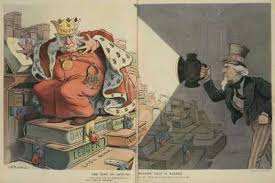
United States v. E.C. Knight Co
Although a federal law against trusts was created (Sherman Antitrust Act of 1890), the language of the law was too vague to stop the development of trusts in the 1890s. The Supreme Court, furthermore, ruled in US v EC Knight Co (95) that the Sherman Antitrust Act only applies to commerce not manufacturing. Because of this, the US Department of Justice was only able to get a few convictions until the progressive era where it would be strengthened. The government also used its foreign policy to shape economic changes. For example, the US bought Alaska from Russia as well as annexed Hawaii in order to promote trade with Asia and become more involved with Latin America.
Pendleton Act of 1881
During the 1870s and 80s, Congress was mainly focused on patronage, money supply, and tariffs. They left states and local governments to deal with the growing problems of urbanization and industrialization. Public outcry over the assassination of President Andrew Garfield in 1881, where a deranged office seeker shot the president, caused Congress to remove certain government positions from political party selection (party patronage). The Pendleton Act of 1881 created the Civil Service Commission and a system where certain classified jobs would be chosen based on score in a competitive exam. The law also prevented civil servants from making political contributions. At first, the law only applied to about 10% of federal jobs. However, in later decades, that number would grow until most federal jobs were classified (out of political party hands). Politicians adapted to this by instead of relying on their masses for support, focusing on the rich for donations to fund their campaigns. People still debate which method is more harmful to democracy.
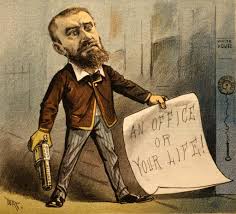
Civil Service Commission
Public outcry over the assassination of President Andrew Garfield in 1881, where a deranged office seeker shot the president, caused Congress to remove certain government positions from political party selection (party patronage). The Pendleton Act of 1881 created the Civil Service Commission and a system where certain classified jobs would be chosen based on score in a competitive exam. The law also prevented civil servants from making political contributions. At first, the law only applied to about 10% of federal jobs. However, in later decades, that number would grow until most federal jobs were classified (out of political party hands). Politicians adapted to this by instead of relying on their masses for support, focusing on the rich for donations to fund their campaigns. People still debate which method is more harmful to democracy.

“Soft” money
The most controversial question of the Glided Age was if the government should expand the money supply. In order for the economy to grow, there needed to be more money in circulation. However, the question would reflect the growing tensions between classes. Debtors, farmers, and start-up businesses wanted more “soft” money in circulation, which would allow them to borrow money at lower interests and pay off their loans more easily with inflated money. After the Panic of 1873, many Americans would blame the gold standard for restricting the amount of money in circulation. To expand the US’s supply of money, supporters wanted more Green-backs (paper money) and then for unlimited coinage of silver.

Panic of 1873
After the Panic of 1873, many Americans would blame the gold standard for restricting the amount of money in circulation. To expand the US’s supply of money, supporters wanted more Green-backs (paper money) and then for unlimited coinage of silver.
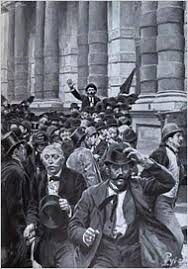
“Hard” money
Bankers, creditors, investors, and already established businesses wanted “hard” money, meaning currency backed up by gold in government vaults. Supporters argued that money backed by gold would hold their value against inflation. Holders of money knew that as the US economy and population grew, it would grow at a rate faster than the dollar therefore increasing the value of each dollar. As predicted, the dollar would increase in value by as much as 300% between 1865 to 95.

Bland-Allison Act
Paper money not backed by Specie (gold or silver) had been created by the government in the 1860s as an emergency measure during the Civil War. Northern farmers, who saw prices increases, benefited from the usage of “greenbacks”. But, creditors and investors attacked the usage of unbacked money as a violation of the natural law of supply and demand. In 1875, Congress supported the creditors and investors by passing the Specie Resumption Act, which withdrew all greenbacks from circulation. Supporters of paper money would create a new party called the Greenback Party. In the congressional elections of 1878, Greenback candidates got around 1 million votes, and 14 members. When the hard times of the 1870s ended, the Greenback Party would as well but not the issues. Not only did Congress stop the circulation of greenbacks, they also stopped the coinage of silver. Critics would often call this the “Crime of 1873”. Then silver discoveries in Nevada revived the demand for silver in circulation. A compromise law, the Bland Allison Act would be passed that limited coinage of silver between $2 million and $4 million each month at a standard rate of 16 oz of silver or 1 oz of gold. Still not satisfied, farmers, debtors, and western miners would continue to press for unlimited silver. During the Civil War the federal government would increase tariffs in order to protect US industry as well as help fund the government. After the war, Southern Dems and Northern Dems opposed the high tariffs due to them harming consumers. Protective tariffs also caused other nations to put their own protective tariffs on US farm products. American farmers lost overseas sals, while also contributing to an increase surplus of wheat and corn causing farm prices to lower even more. From a farmers point of view, industry seemed to grow at the expense of rural America. The politics of stalemate and complacency would begin to lose their hold by the late 1880s. Protests over government and industry were growing, and politicians started to take small steps to respond to public concerns. However, it would take a third party (Populist party) and a major depression in 1893 in order to shake up the Democrats and Republicans from their lethargy.
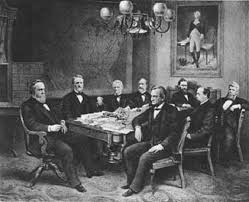
African Americans
Congress had created an ambitious reform program during the 1860s and 70s. After the compromise of 1877, the National government started to go into an era of stalemate and inactivity. It was an era of “forgettable” presidents who largely ignored problems from the growth of industry and both major parties avoided taking controversial stands on issues. They rarely debate political ideology. Several factors led to the complancy and conservatism of the era, the way parties conducted campaigns, importance of party patronage, and beliefs about political strategy. Election campaigns of the time were focused on brass bands, buttons, picnics, and free beer. Both parties had strong organizations, Republicans more at the state level while Democrats more in the cities. Nearly 80% of voters voted in elections, higher than later periods. The high turnout was a result of strong party identification and loyalty, often connected with regional, religious, and ethnic ties of voters. Since neither party had an active legislative agenda, politics became solely about winning seats, keeping office, and providing jobs to supporters. Who got patronage jobs became more important than any policy. Reform-minded politicians who didn’t play the patronage game were called “Mugwumps” for sitting on the fence, their “mugs” on one side and “wumps” another. Republicans in the North kept the memories of the Civil War alive by “waving the bloody shirt”. This was essentially reminding, often former Union soldiers, that the war was started by Southern Democrats and that Abraham Lincoln was shot by a Democrat. The party of Lincoln, due to its reform-minded past, kept the votes of reformers and African Americans. The core of the Republican strength came from men in business and from Middle Class, WASP’s who supported temperance/prohibition. The Republicans followed its early predecessors of Hamilton and the Whigs by supporting pro-business through high protective tariffs.
“Solid South”
After 1877, Democrats could rely on winning all states of the former Confederacy, “Solid South” until the mid 1900s. In the North, political support came from immigrants and political machines in big cities. Democrats were often Catholics, Lutherans, and Jews were against Temperance and the target of such crusades from WASP that were largely Republican. Gilded Age Democrats followed the predecessors of Jefferson thru state’s rights and limited federal involvement. The closeness of the elections between 1876 - 1892 were reasons why both parties avoided controversial stands. The Democrats won only two presidential campaigns in the Electoral College (four in popular vote). They controlled the House after 8 out of 10 general elections. This caused a divided government with elections so evenly split that the main objective for most politicians was to hold office by offering patronage jobs and government contracts to help gain support.
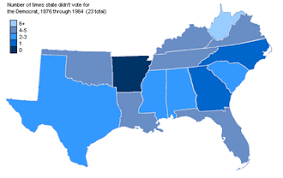
Farmers’ Alliance
Politics in the 1890s was disrupted by growing agrarian discontent in the South and West. Members of the Farmer’s Alliances elected congressmen, governors of several states, and majorities in 4 state legislatures in the West. The Alliance movement provided a foundation for a new political party called the People’s, or Populist party. Different delegates met in Omaha, Nebraska, in 1892 to create a political platform as well as chose their candidates for VP and P. Populists were determined to act against the large concentration of economic power held by trusts and bankers that used the government as a tool. Their Omaha platform called for political and economic reform. Politically, they wanted direct election of senators as well as initiatives and referendums that allowed citizens to vote directly on proposed laws. Economically, the Populist party wanted unlimited coinage of silver in order to increase the supply of money, graduate income tax, government ownership of railroads, telegraph lines, and telephone systems, loans and federal warehouse in order to allow farmers to stabilize their prices, and an eight-hours day for industrial workers. The Populist party seemed revolutionary for the time due to it attacking laissez-faire economics as well as trying to unite White and Black voters politically. In the South, Thomas Watson of Georgia appealed to poor farmers of both races to to join the People’s Party.
Omaha Platform
The Alliance movement provided a foundation for a new political party called the People’s, or Populist party. Different delegates met in Omaha, Nebraska, in 1892 to create a political platform as well as chose their candidates for VP and P. Populists were determined to act against the large concentration of economic power held by trusts and bankers that used the government as a tool. Their Omaha platform called for political and economic reform. Politically, they wanted direct election of senators as well as initiatives and referendums that allowed citizens to vote directly on proposed laws. Economically, the Populist party wanted unlimited coinage of silver in order to increase the supply of money, graduate income tax, government ownership of railroads, telegraph lines, and telephone systems, loans and federal warehouse in order to allow farmers to stabilize their prices, and an eight-hours day for industrial workers. The Populist party seemed revolutionary for the time due to it attacking laissez-faire economics as well as trying to unite White and Black voters politically. In the South, Thomas Watson of Georgia appealed to poor farmers of both races to to join the People’s Party.
 Note
Note  Flashcards (105)