T Cell Development - 1
 Call Kai
 Learn
Learn Practice Test
 Spaced Repetition
 Match
Match Flashcards
 Knowt Play
1/40

Earn XP
Description and Tags
Module 7 pt 1
Name | Mastery | Learn | Test | Matching | Spaced | Call with Kai |
|---|
No analytics yet
Send a link to your students to track their progress
41 Terms
Lymphocytes derive
from a common progenitor
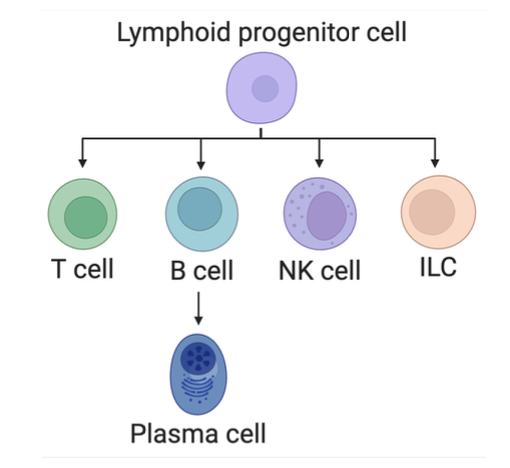
lymphocyte lineage commitment
is controlled by master transcription factors
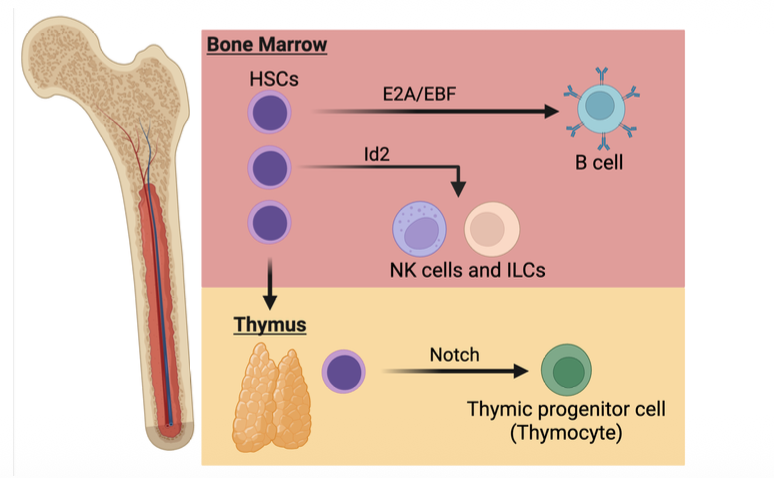
Thymocytes undergo
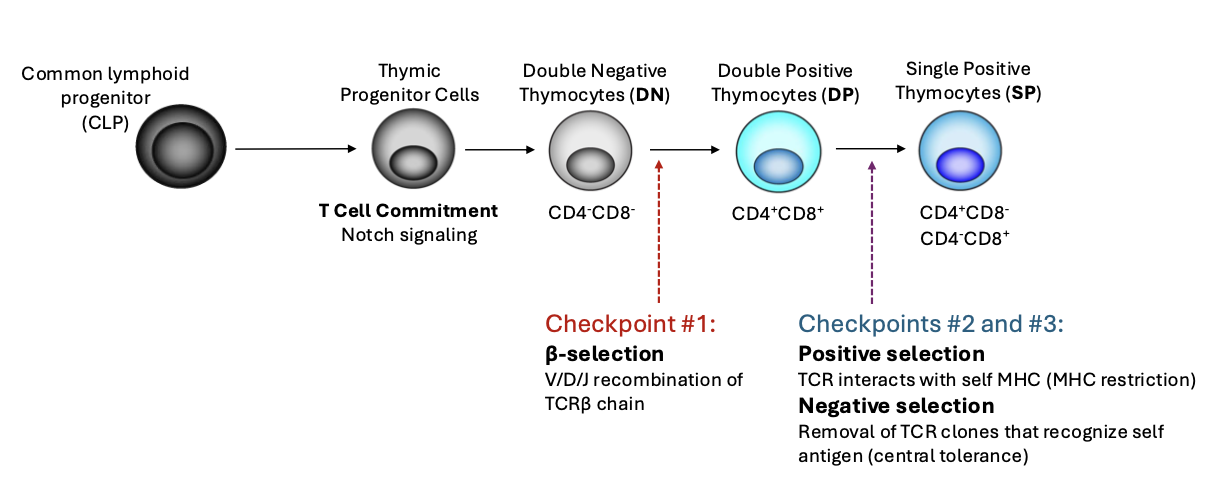
critical selection steps before becoming mature T cells
Common lymphoid progenitor (CLP)
Thymic Progenitor Cells (T Cell Commitment- Notch Signalling)
Double Negative Thymocytes (DN)
Checkpoint #1: Beta selection - V/D/J recombination of TCR beta chain
Double Positive Thymocytes (DP)
Checkpoint #2: Positive Selection - TCR interacts with self MHC (MHC restricition)
Checkpoint #3: Negative Selection: Removal of TCR clones that recognize self antigen (central tolerance)
Immature thymocytes undergo
sequential maturation stages in the thymic cortex
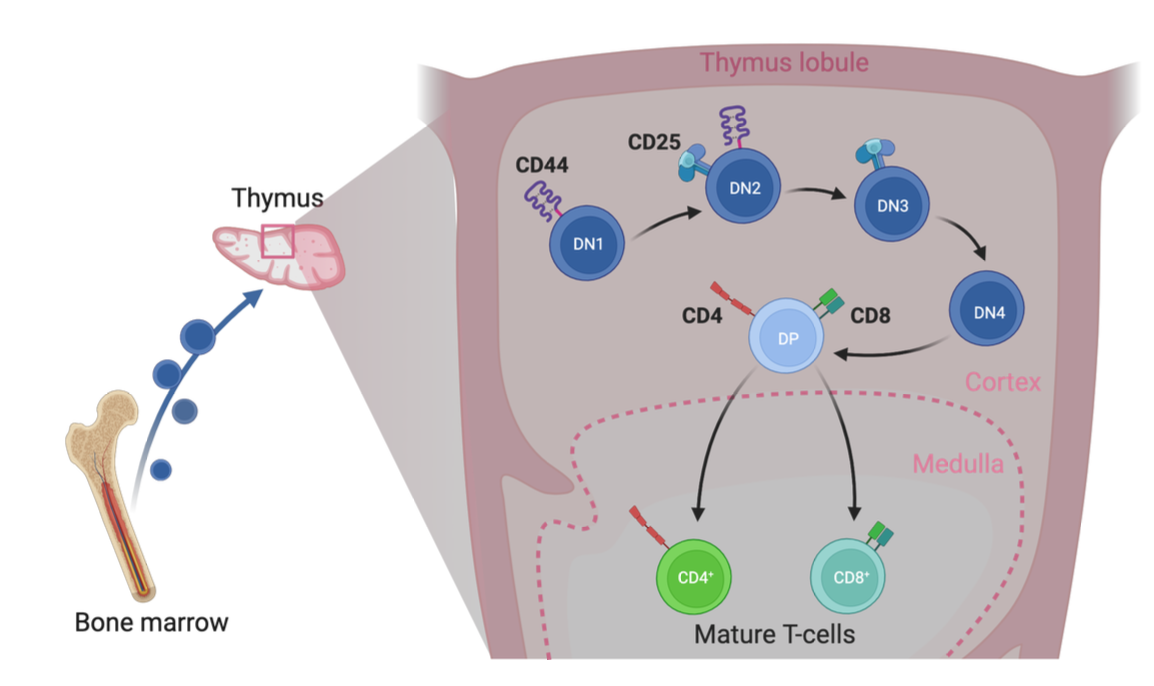
T cell lineage commitment and β selection happen in
DN thymocytes
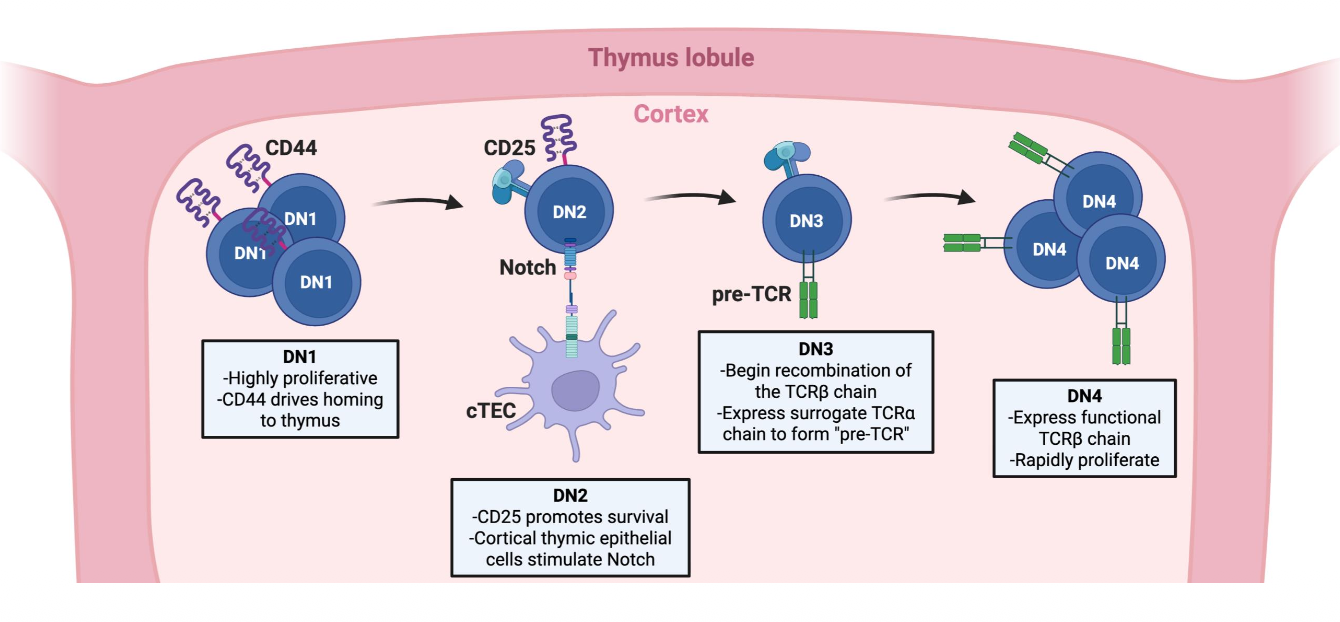
DN1
highly proliferative
CD44 drives homing to thymus
DN2
CD25 promotes survival
cortical thymic epithelial cells stimulate Notch
cTec
HSC to E2A/EDF
B cell
HSC to Id2
NK Cells and ILCs
HSC to thymus and Notch
Thymic progenitor cells
CLP to
Thymic progenitor
double negative thymocytes (DN = CD4-CD8-)
Checkpoint 1
Double positive Thymocyte (DP)
Positive Selection OR NEGATIVE SELECTION
Single Positive Thymocyte (CD4+CD8- OR CD4-CD8+)
beta selection
VDJ recombination of TCRbeta chain
Positive Selection
TCR interacts with self MHC (MHC restriction)
Negative selection
Removal of TCR clones that recognize self antigen (central tolerance)
Immature thymocytes undergo
sequential maturation stages in the thymus
CD44 and DN1
CDD25 and DN2
DN3
DN4
CD4 + CD8
leads to mature T-cells in medulla
CD4 or CD8
DN3
pre-TCR
begin recombination of the TCRbeta chain
express surrogate TCR alpha to form pre-TCR
DN4
express functional TCRbeta chain
rapidly proliferate
T cell lineage commitment is transcriptionally controlled by NOTCH
Notch —> ADAM10 with S2 cleavage
then S3 cleavage
- intracellular notch
if no notch= transcriptional repression
if notch = transcriptional activation
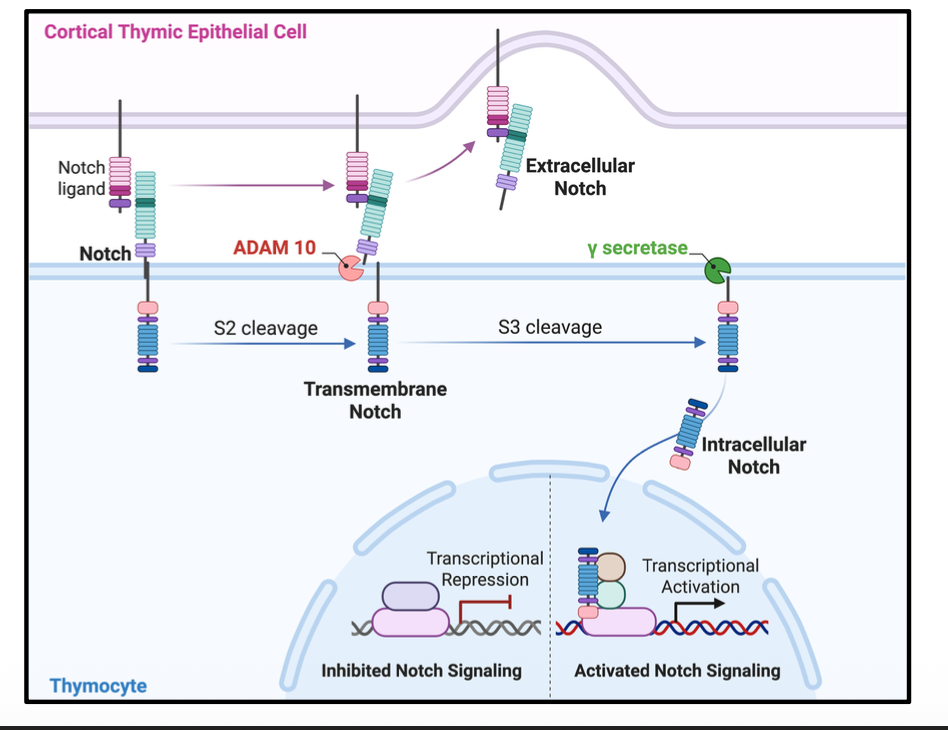
Notch signaling
induces recombination in the TCRbeta using clusters of D and J
chromosome 7
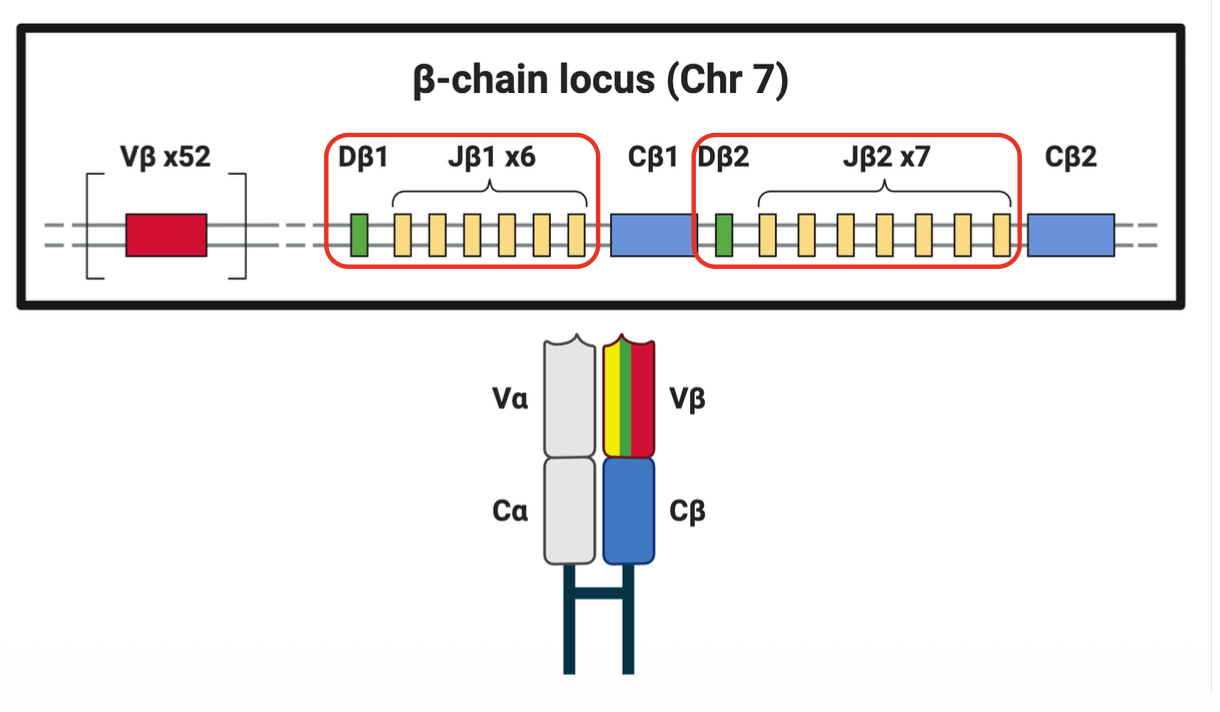
Successful recombination of a TCRβ chain
promotes thymocyte survival (β selection)
survival signal to DN3 thymocyte
from pre-TCR and MHC
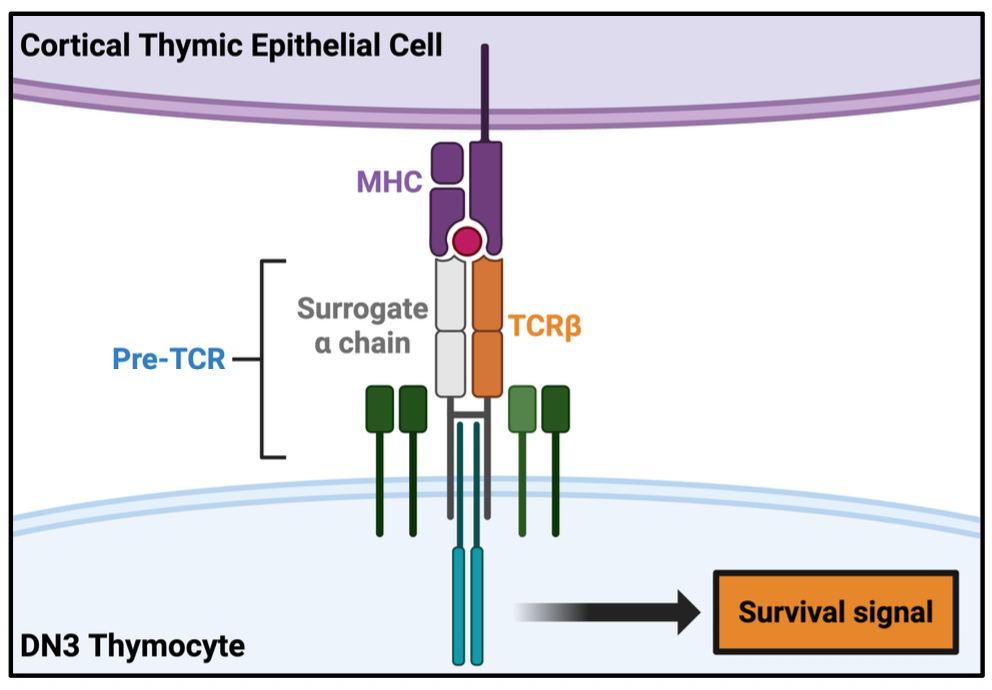
β selection tests successful
V/D/J recombination of the TCRβ chain at the DN stage
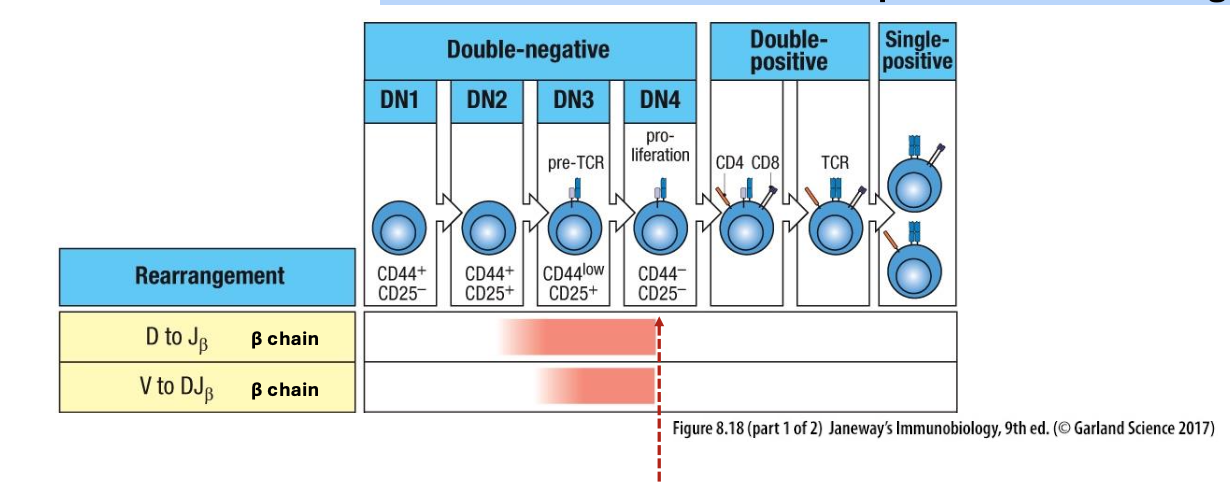
beta-selection
CHECKPOINT #1
Pairs with α surrogate chain (pTα) to form preTCR (allows for testing β chain functionality)
Result: proliferation + expression of CD4 and CD8 (yields DP thymocytes)
Expression of only 1 β chain per T cell (allelic exclusion)
preTCR signaling is antigen-independent
Summary 7.1
T cells become lineage committed using master transcription factors
Expression of Notch commits lymphocyte progenitors to thymic progenitor cells
Functional Notch signaling requires cTEC help
T cell development occurs in a spatially and temporally restricted fashion
T cells first mature from DN to DP in the thymic cortex
β chain recombination occurs during DN stage and uses DJ configuration to make multiple attempts
Summary 7.1 pt. 2
Beta selection acts as a checkpoint for developing thymocytes
Beta selection uses a surrogate alpha chain and is antigen independent
Successful selection results in proliferation and allelic exclusion
DP thymocytes undergo
additional selection steps to ensure a functional TCR repertoire
between double positive and single positive
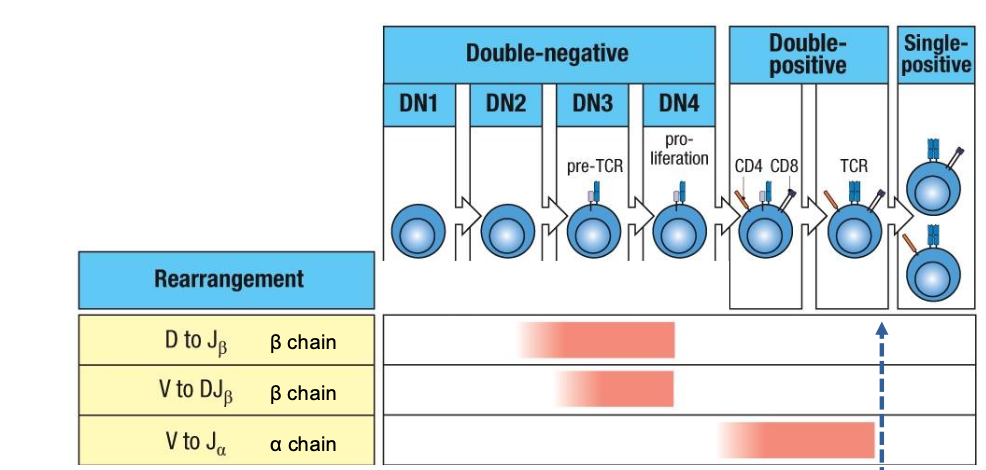
Checkpoint #2- positive selection
Tests whether V/J recombination of α chain pairs with β chain to produce a TCR that recognizes self MHC (MHC Restriction)
Checkpoint #3 - negative selection
Removal of TCR clones that recognize self antigen; avoid autoimmunity
Result = Mature CD4+ or CD8+ T cells that are not autoreactive
DP thymocytes engage in successive
recombination in the TCR alpha locus
initial non productive rearrangement
subsequent rearrangements bypass nonfunctional VJ gene segment
multiple rounds of rearrangement may occur to generate a functional alpha chain
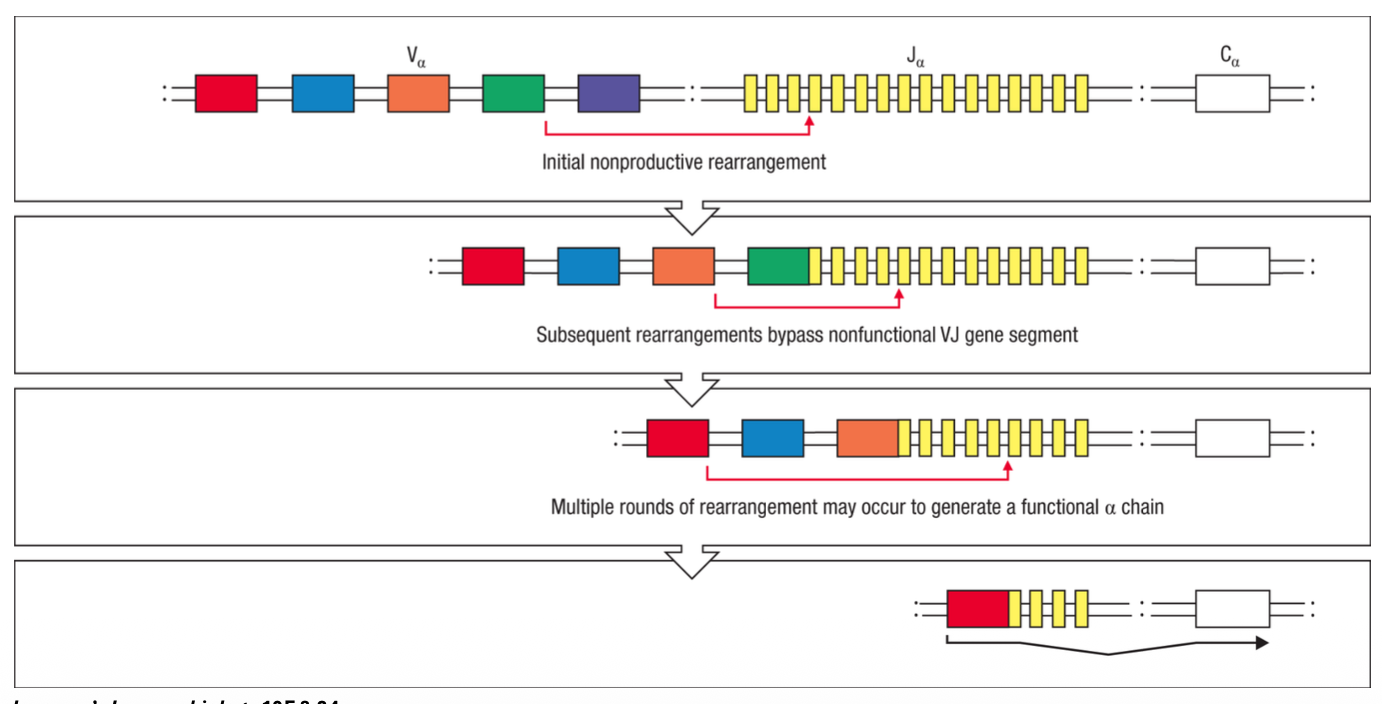
Successfully recombined TCRalpha chains
weakly interact with self peptide/MHC
lead to survival signal
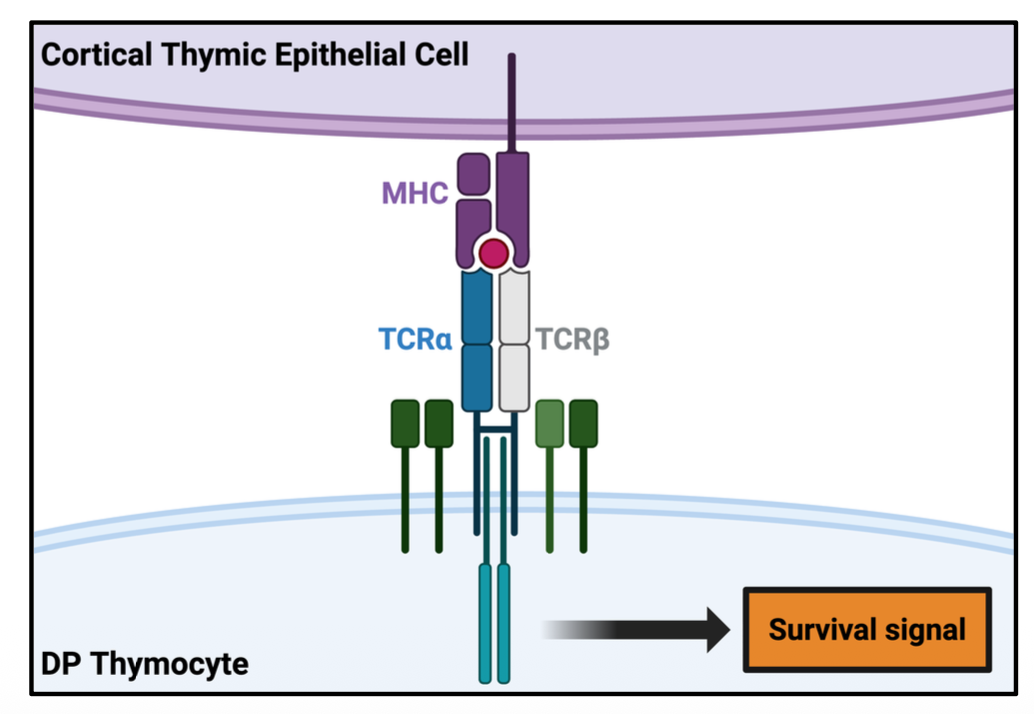
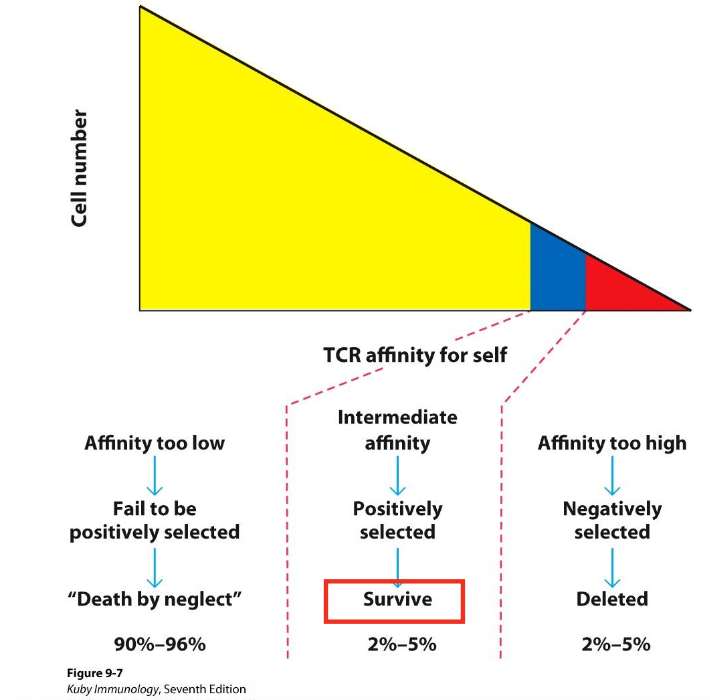
Most TCRs have too low affinity
for self MHC and fail positive selection
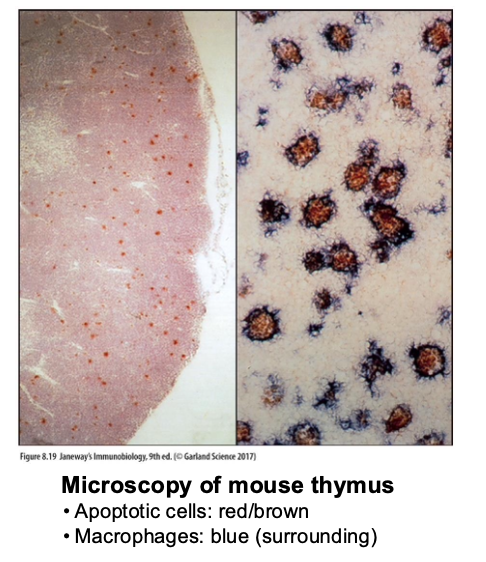
microscopy of mouse hymus has more apoptotic cells than macrophages blue
TCR affinity for self
too low - not positively selected == death by neglect (90-95%)
intermediate affinity — positively selected —> survive (2-5%)
affinity too high — negatively selected —> deleted (2-5%)
TCR with intermediate affinity
receive survival signals
positive selection
Checkpoint #2: Positive selection
• TCR must bind to self antigen-MHC with moderate affinity: confirms ability to recognize
self MHC (MHC restriction)
• Tested using self peptide, but this group of TCRs will include ones that are ideal for recognizing foreign peptide-MHC
• Answers the question: Is this TCR useful?
Affinity too high - strongly autoreactive T cell receptors
removed via negative selection
deleted (2-5%)
Checkpoint #3: Negative selection
• If TCR binds to self antigen-MHC with strong affinity, the TCR recognizes self peptide-MHC
and is autoreactive
• Negative selection is an essential mechanism of central tolerance
• Answers the question: Is this TCR dangerous?
central tolerance
a critical immune system mechanism that prevents autoimmunity by deleting or neutralizing self-reactive T and B lymphocytes during their development in primary lymphoid organs (thymus for T cells, bone marrow for B cells). It ensures immature lymphocytes recognizing self-antigens are eliminated via apoptosis or receptor editing before reaching the periphery
Successful positive selection also drives
CD8 or CD4 lineage commitment
CTec has MHC with DP thymocyte
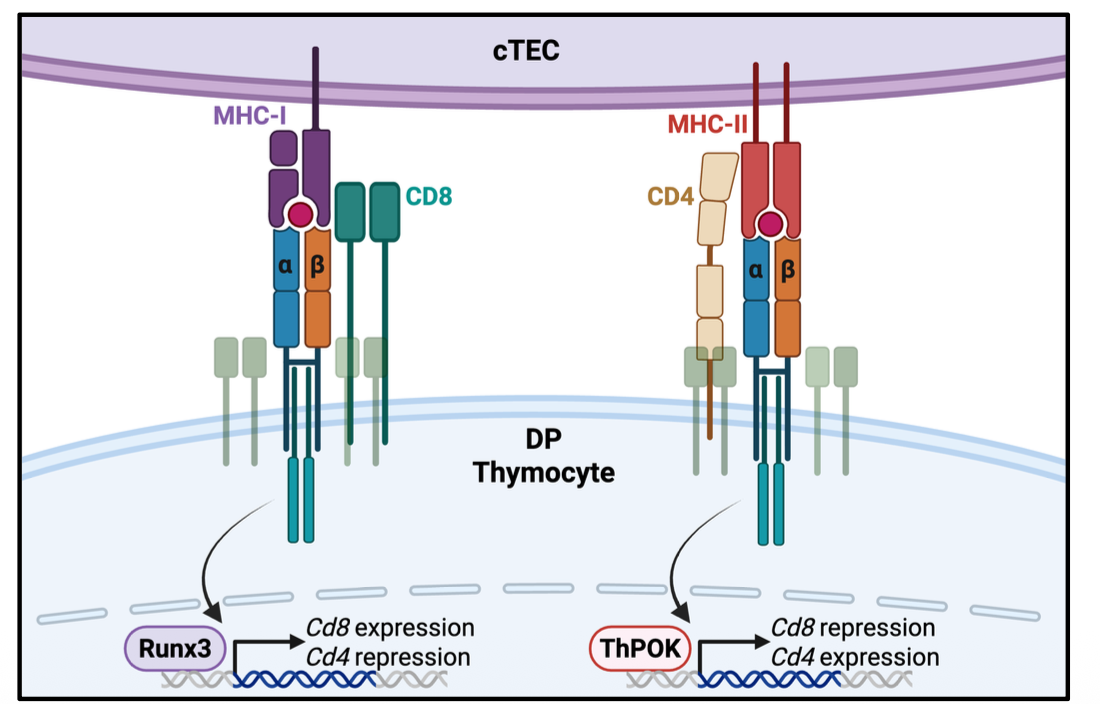
Runx3
CD8 expression, CD4 repression
ThPOK
CD4 expression, CD8 repression
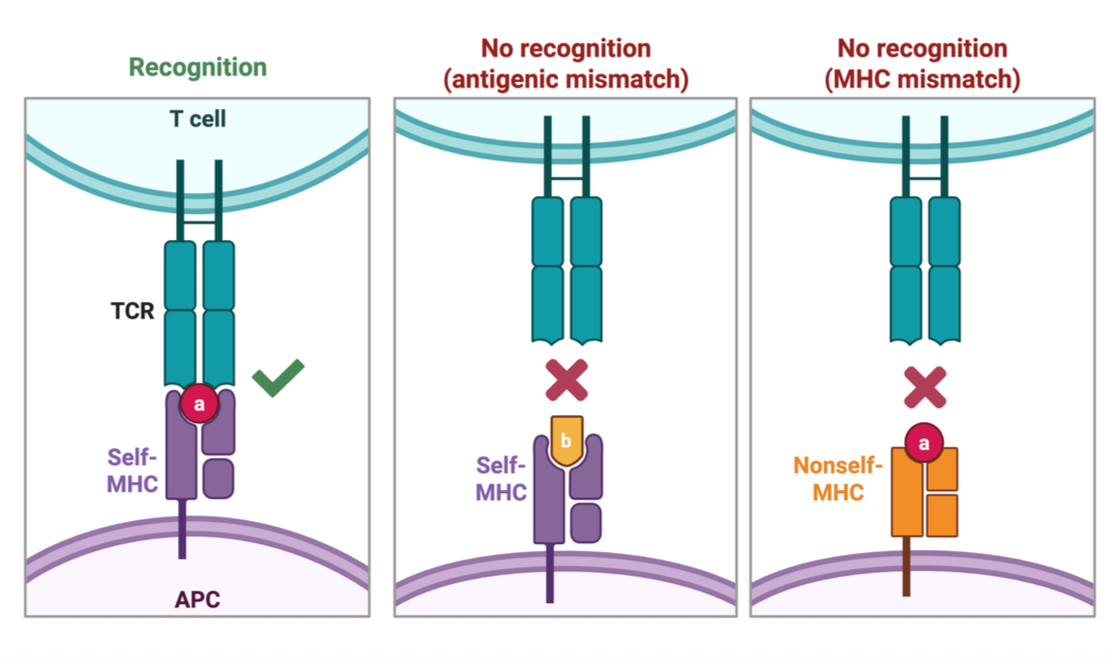
T cell development results in
and MHC-restricted repertoire
TCR recognition of
self-MHC on APC
no recognition because antigenic mismatch with self MHC
no recognition because MHC mismatch with nonself MHC
Summary 7.2
⍺ chain recombination occurs in thymocytes with a successful β chain recombination
Alpha chain recombination can occur successively at the same locus
Successful recombination results in positive/negative selection
Positive selection ensures thymocytes interact with self MHC
Intermediate affinity interaction results in survival signal
The vast majority of thymocytes die by neglect during positive selection
Summary 7.2 (extra)
Negative selection ensures autoreactive thymocytes are removed
Autoreactive T cells are removed via apoptosis
Negative selection is essential mechanism to maintain central tolerance
CD4/CD8 lineage commitment results in functional naïve T cells
Lineage commitment is driven by interaction with MHC and respective transcription factors
Functional naïve T cells only recognize self MHC (MHC-restricted)

