Unit 4 lecture 2 - signal detection theory
 Studied by 0 people
 Call Kai
 Learn
Learn Practice Test
 Spaced Repetition
 Match
Match Flashcards
 Knowt Play
1/11

There's no tags or description
Looks like no tags are added yet.
Name | Mastery | Learn | Test | Matching | Spaced | Call with Kai |
|---|
No analytics yet
Send a link to your students to track their progress
12 Terms
3 domains of expericne as humans
Sensory: five ways of bringing info in
○ Cognition: information processing &
decision making
○ Action: motor system
what is the signal detection theory
A framework for understanding accuracy of decision making is quantified into...
4 outcomes
1. Hit (signal w right response)
2. Miss (signal wrong response)
3. False alarm (no signal wrong response) TYPE 1 ERROR
4. Correct negative (no signal right response) TYPE 2 ERROR
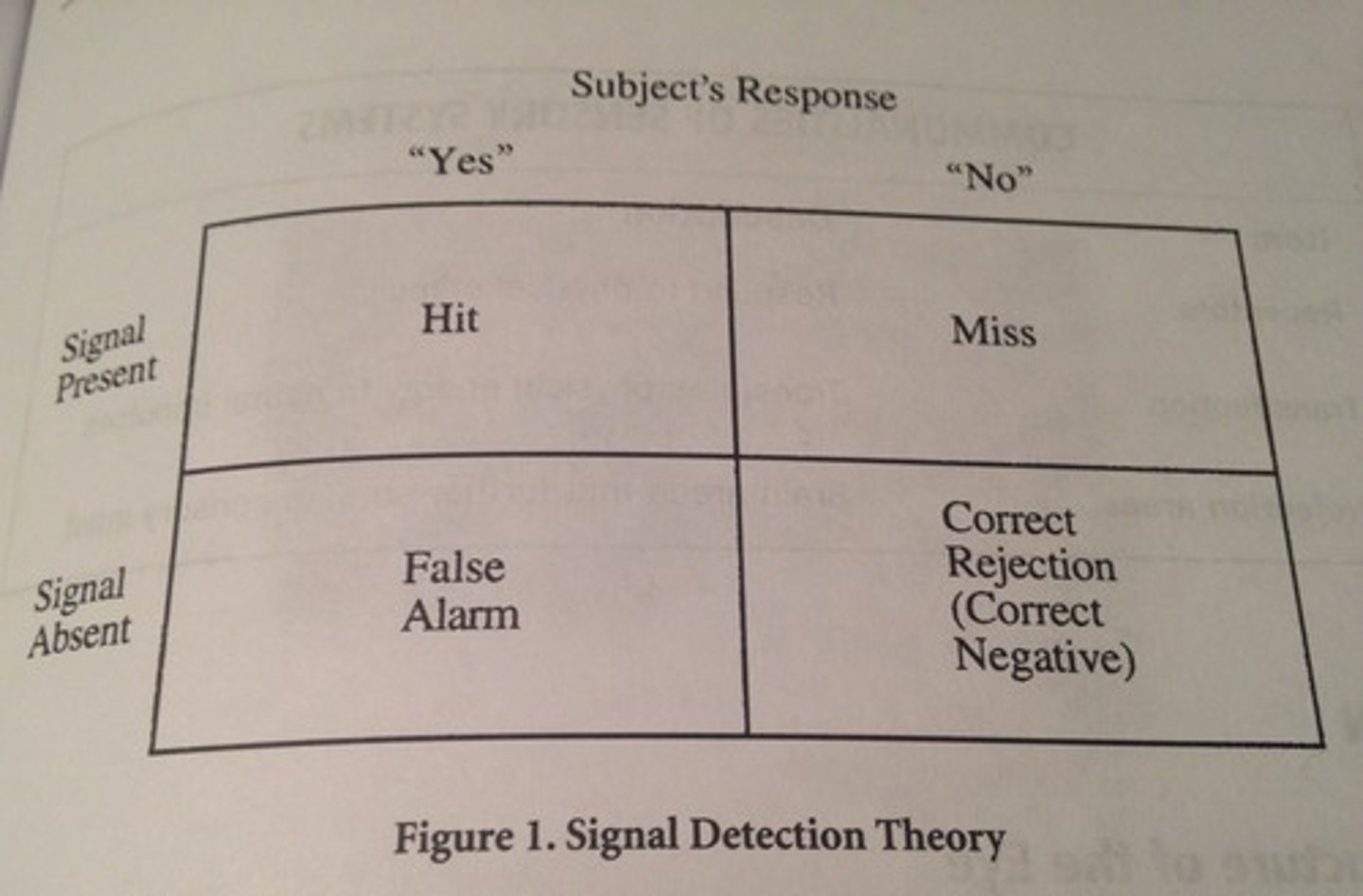
SDT is the ability to...
differentiate between
"information-bearing patterns" (stimulus/signals) and "random patterns" that distract from the information
*during unpaced task just focus on accuracy bBUT uncertainty is present
Applying SDT to motor learning
helps understand how accurately and consistently someone makes decision s while their learning a new skill
Eg. athlete must decide is that movement signal important (signal) or irrelevant (noise)
Recall: selective attention
explain the sdt gaph theoretically if both categoiescan be detected w 100% accuracy
x axis - OUR internal sense of what we think the dot on the radar is
*yellow line...
ß = Criterion/cut off - this is our descision to choose one over the other --> past the line will decide its a airplane and before it will descide as bird
d' = dscriminibility/perceptual sensitivity
--> The distance between those two curves, The larger the d', the easier it is to distinguish
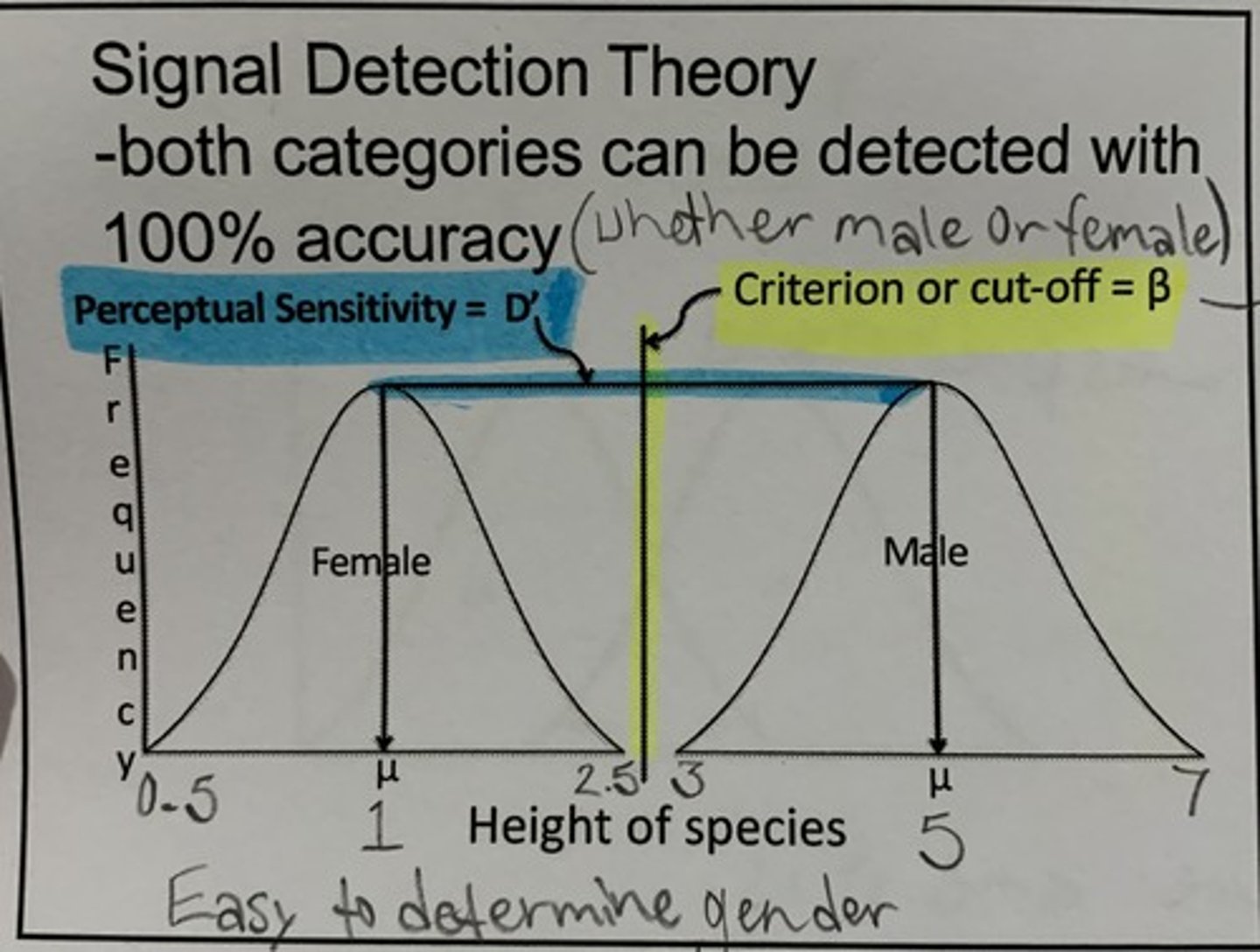
beta shifts
changes the number of H, M, CN, FA
*we only have control over the criterion not the discrimintibility
beta shift left - lax/liberal
(okay with getting more FA (calling it a plane when its a bird) if that means getting less misses)
eg. looking attb xray call anything thats even a little blur a concern so you dont miss but might have false negative
beta shift right - strict
only calls it a plane if theyre very sure so they are less false alarms but may be misses
eg. in medical situations to diagnose only if very sure of a hit

Perceptual performance depends on.. ● Two major factors:
- Perceptual sensitivity of the performer (more sensistive = more appropriate response and less false alarms)
- Expectancies about the performer
and the rewards and penalties inherent in the situation (essentially what ß shift they wanna do)
**these factors are independant of eachother
perceptual sensistivity (d')
With high sensitivity there are more correct decisions (hits and correct negatives) and fewer errors (false alarms and misses) made
● Reverse is true for low sensitivity
● Note that correct decisions and errors are
related. If one changes so does the other.
what might cause a change is perceptual sensiotiviety d'
- environemntal conditions eg wetaher
- individual diferences eg. sight, experience (novice vs expert)
observers criterion ß
determeined byt the performer and reflects their expectation and rewardsa and penalties in the situation eg. whats on the line if we miss is it worth gett more false alarms
The position of the criterion affects the number of correct decisions and errors in the same manner as d'
d' and ß simmilarities/dif
both affects performance but change independant of eachother
eg. d could be the same in both novice and expert but but b is more lax in experts
D' is more about environmental noise and beta is more internal
B Shifts in drivers
noobs = strict shift to right
- inc miss less false alarm bc too puss to respond to hazardous dituation
expert = lax shift to left
- decr miss, inc fals alarm
better safe than sorry and react to hazardous situation even if tis not acc there
 Note
Note  Flashcards (27)