Gluconeogenesis (lec 11)
 Call Kai
 Learn
Learn Practice Test
 Spaced Repetition
 Match
Match Flashcards
 Knowt Play
1/10

There's no tags or description
Looks like no tags are added yet.
Name | Mastery | Learn | Test | Matching | Spaced | Call with Kai |
|---|
No analytics yet
Send a link to your students to track their progress
11 Terms
Gluconeogensis
the creation of 6 carbon glucose from 3-4 carbon precursors, normally non carbohydrate sources
pretty much the reverse of glycolysis but has 4 extra steps, starts from pyruvate and goes back up
requires 6 energy equivalents to produce 1 molecule of glucose from 2 pyruvate
precursors for gluconeogenesis
Lactate: skeletal muscle, erythrocytes
Amino Acids: dietary protein, muscle protein breakdown
propionate: derived from fatty acids, amino acids
glycerol, and stored fats under starvation conditions
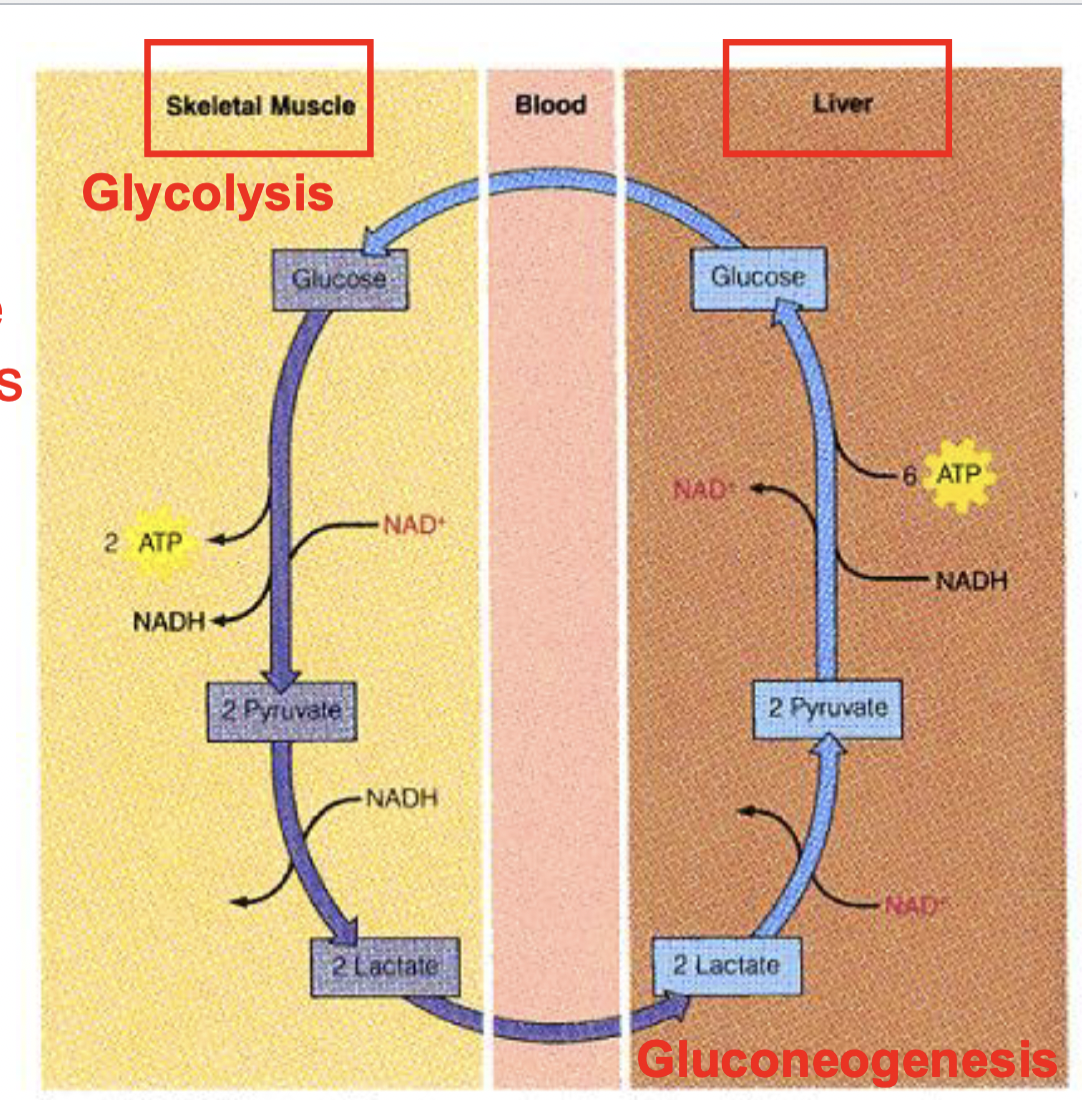
The Cori cycle
Purpose: turn lactate to glucose then transport it back to muscles
After exercise
Lactate is transported from muscle to liver
Glucose is transported from liver to muscles
Anabolic Glucose Metabolism
glucose is made within most organism
pathway is also known as gluconeogenesis
process is strikingly similar to glycolysis, with the exception of 4 reactions
Step 1
pyruvate cannot be directly converted to PEP
pyruvate carboxylase is in the mitochondria and turned into oxaloacetate (OAA)
OAA cannot cross mitochondrial membrane so it is converted to malate
malate is transported to cytosol then converted back to OAA
Step 2
cytosolic OAA is converted to PEP by PEP carboxykinase (PEPCK)
Uses GTP— another energy currency
Step 3: Fructose Bisphosphatase
comes after step 8 of glycolysis
removes one of the phosphates on F-1,6-bP
removes 1 x Pi
Step 4: Glucose 6-phospatase
removes the last Pi
Allows glucose to leave the cell
A futile cycle
pathways running in opposite directions resulting in a net loss of energy
this is how we keep cells from spending all the energy they make from glycolysis going gluconeogenesis
An enzyme used in both glycolysis and gluconeogenesis is:
3-phosphoglycerate kinase
Which substrate CANNOT contribute to net gluconeogenesis in mammalian liver?
palmitate

