Eating Disorders
 Studied by 0 people
 Call with Kai
 Learn
Learn Practice Test
 Spaced Repetition
 Match
Match Flashcards
 Knowt Play
1/44

There's no tags or description
Looks like no tags are added yet.
Name | Mastery | Learn | Test | Matching | Spaced | Call with Kai |
|---|
No study sessions yet.
45 Terms
How many people in the U.S. experience eating disorders?
at least 30 million people of all ages + genders
What age group has the largest percentage of eating disorder cases?
18-30 year old women
At what age do 85% of eating disorders begin?
adolescence
What are the third most common chronic illnesses among adolescents?
Eating disorders
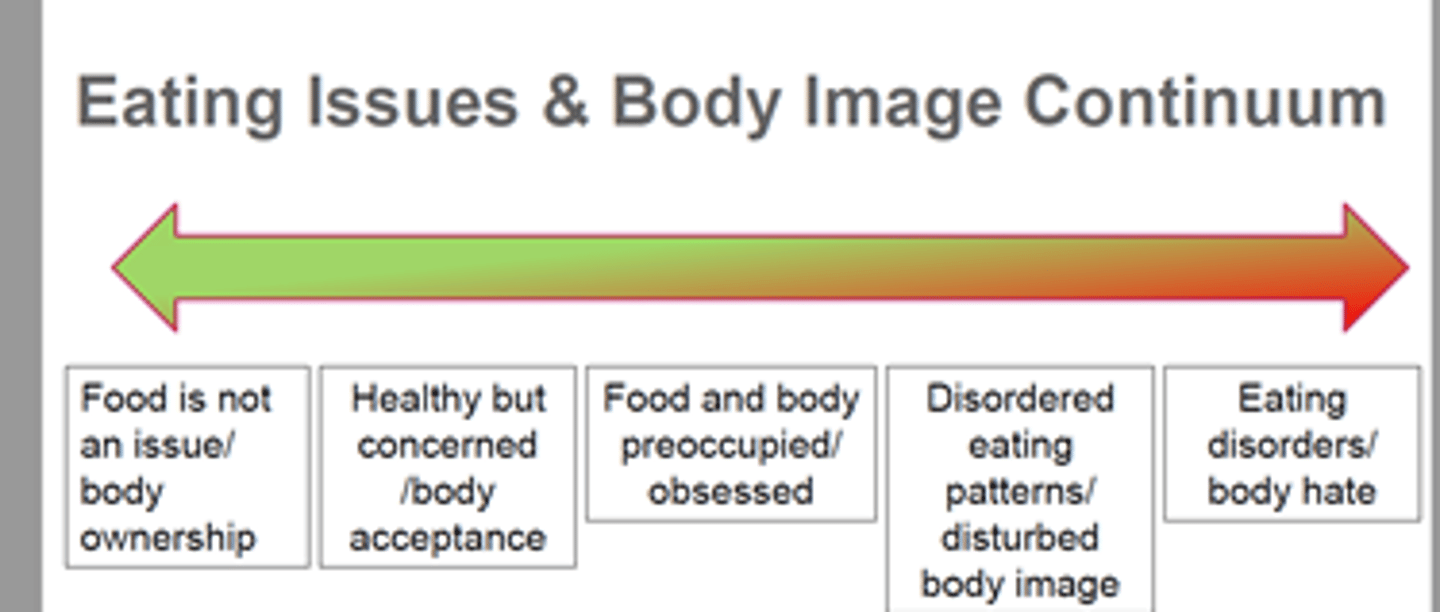
Body image continuum
-Body hate/dissociation
-Distorted body image
-Body preoccupied/ obsessed
-Body acceptance
-Body ownership
What is the exact cause of ED's
It is unknown/ there isn't one
What are some possible contributors of eating disorders?
Genetics, psychological and emotional factors, family history, trauma, dieting, mental health disorders, trauma and sexual abuse, distorted body image, and societal pressure.
What is a distorted body image?
central issue in diagnosis of anorexia nervosa, individuals have a skewed perception of their body weight or shape.
What are the main types of eating disorders?
Anorexia nervosa, bulimia nervosa, binge eating disorder, and other specified feeding or eating disorders.
What characterizes anorexia nervosa?
Extreme dietary restriction leading to significantly low body weight, distress about weight gain, and disturbed body perception.
What are common behaviors associated with anorexia nervosa?
Extreme dieting, hiding food, preparing meals for others, denial of hunger, short list of SAFE foods, and excessive exercise.
What are weight and shape concerns of anorexia?
Frequent weighing and critical of self
What are some changes in personality and social behavior of someone with anorexia?
Withdrawal from family and friends, depression, anxiety, irritable, defensive, low energy and fatigue
Extreme dietary rules severely limit...
NUTRITIONAL INTAKE with people with anorexia
What physical effects can result from anorexia nervosa?
Lower body temperature, slowed metabolic rate, low blood pressure, fatigue, bone weakening, nutritional deficiencies (anemia), slow GI function, electrolyte imbalance, amenorrhea, infertility, arrested maturity
What defines bulimia nervosa?
Recurrent binge eating followed by compensatory behaviors "purging" to prevent weight gain, occurring at least once a week for three months.
Characteristics of bulimia
Tend to be close to normal body weight (or slightly above) but with large weight fluctuation; periods of calorie restriction alternate with periods of bingeing and purging
What are common behaviors of bulimia nervosa?
Binge eating, purging, elaborate and strict food rules, often hidden from others, overvalue weight for self-esteem, changes in personality and behavior
What do people normally binge on?
Cakes, cookies, ice cream, other high-carbohydrate convenience foods
About how many calories may a binge consist of?
OVER 3000 kcal
What are examples of purging (compensatory behaviors)?
Vomiting, laxatives to avoid wight gain; excessive exercise to counter kcal intake
What are the physical effects of bulimia nervosa?
Weight fluctuations, menstrual irregularities, dental erosion, irritation of esophagus, and impairs fluid and electrolyte imbalances which can lead to abnormal heart rhythms
What characterizes binge eating disorder?
Recurrent binge eating without compensatory behaviors, often leading to distress about eating habits.
What are common behaviors associated with binge eating disorder?
Eating large amounts of food rapidly without compensatory behaviors, eating beyond fullness, and feelings of guilt or self-disgust, uses food to reduce stress, provide feeling of power, most experience depression
What are some changes to lifestyle and social behaviors that can accommodate binges?
Isolating self to eat large quantities, avoids public eating, lies to hide guilt
Bulimia is most common in who?
Men, among severely obese
What eating disorder is the most common?
Binge eating disorder
When does binge eating disorder arise?
When a person is stressed by environmental triggers (emotional stress)
What are the physical effects of binge eating disorder?
Higher risk for obesity-related conditions such as hypertension, cardiovascular disease, high cholesterol, and type 2 diabetes.
How much more likely is it for someone with binge eating disorder to have a BMI in the obese range?
3-6 times!
What is OSFED?
Other Specified Feeding or Eating Disorders, which may show signs of anorexia, bulimia, or binge eating but do not meet full criteria for diagnosis.
Orthorexia
obsession with eating foods one considers healthy
Treatments of ED
Involves a multi-disciplinary professional team including, physicians, psychiatrists/psychologists, RDN, other counselors; cognitive behavioral therapy, outpatient/inpatient treatment, often involves medications
What is the role of a multidisciplinary team in treating eating disorders?
Involves various professionals like physicians, psychiatrists, and dietitians to provide comprehensive care.
Selected aspects of nutrition therapy
Learn to eat in response to hunger rather than emotional needs or external factors, record perceptions of physical hunger, learn to respond to fullness at each meal
What is cognitive behavioral therapy (CBT) in the context of eating disorders?
helps change thoughts + behaviors related to eating + body image.
Why should one struggling with ED avoid weight loss diets?
Deprivation may trigger binge eating
What is a long-term goal of nutrition therapy for eating disorders?
learn to eat all foods in moderation and respond to hunger cues.
What are some prevention strategies for eating disorders?
Encouraging positive eating behaviors, discouraging restrictive dieting, and promoting a positive body image.
What is the significance of societal pressure in the development of eating disorders?
Societal pressure for thinness and media messages can contribute to the onset of eating disorders.
What is the relationship between eating disorders and mental health?
Eating disorders are often associated with other mental health conditions like depression and anxiety.
What is the impact of dieting on eating disorders?
Dieting can trigger binge eating episodes and exacerbate eating disorder symptoms.
What are some emotional triggers for binge eating disorder?
Environmental stressors and emotional stress can lead to binge eating episodes.
What is the importance of family meals in preventing eating disorders?
Encouraging family meals can promote healthy eating habits and positive body image.
What is the role of self-talk in maintaining a healthy body image?
Positive self-talk can help individuals nurture their bodies and maintain a healthy relationship with food.
 Note
Note  Flashcards (256)