Flashcards 2.3-3.2
 Call Kai
 Learn
Learn Practice Test
 Spaced Repetition
 Match
Match Flashcards
 Knowt Play
1/172

There's no tags or description
Looks like no tags are added yet.
Name | Mastery | Learn | Test | Matching | Spaced | Call with Kai |
|---|
No analytics yet
Send a link to your students to track their progress
173 Terms
What are the four basic types of tissue in the body?
Epithelial, connective, muscle, and nervous tissue
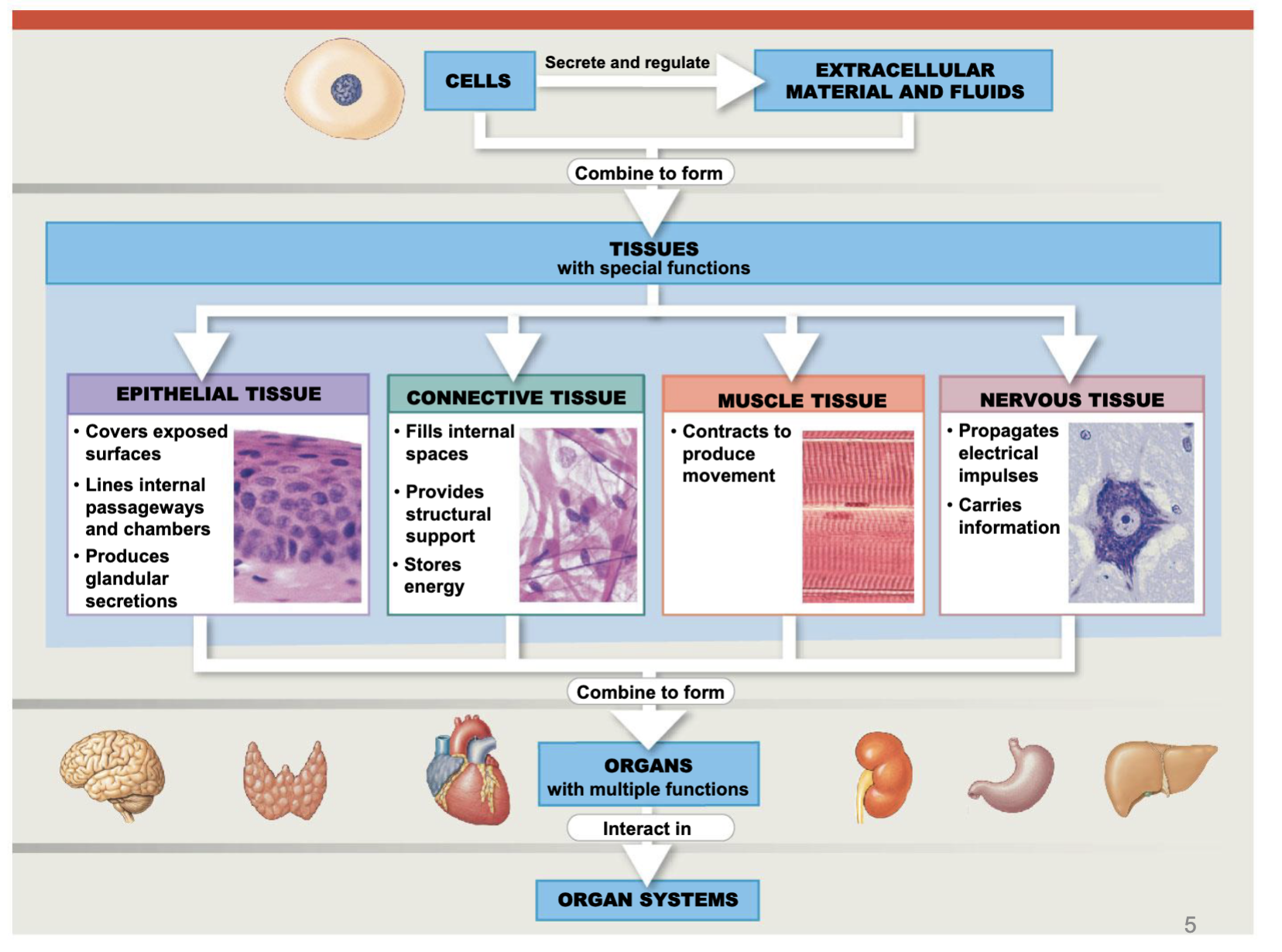
What is the main function of epithelial tissue?
To cover surfaces, line cavities, and form glands
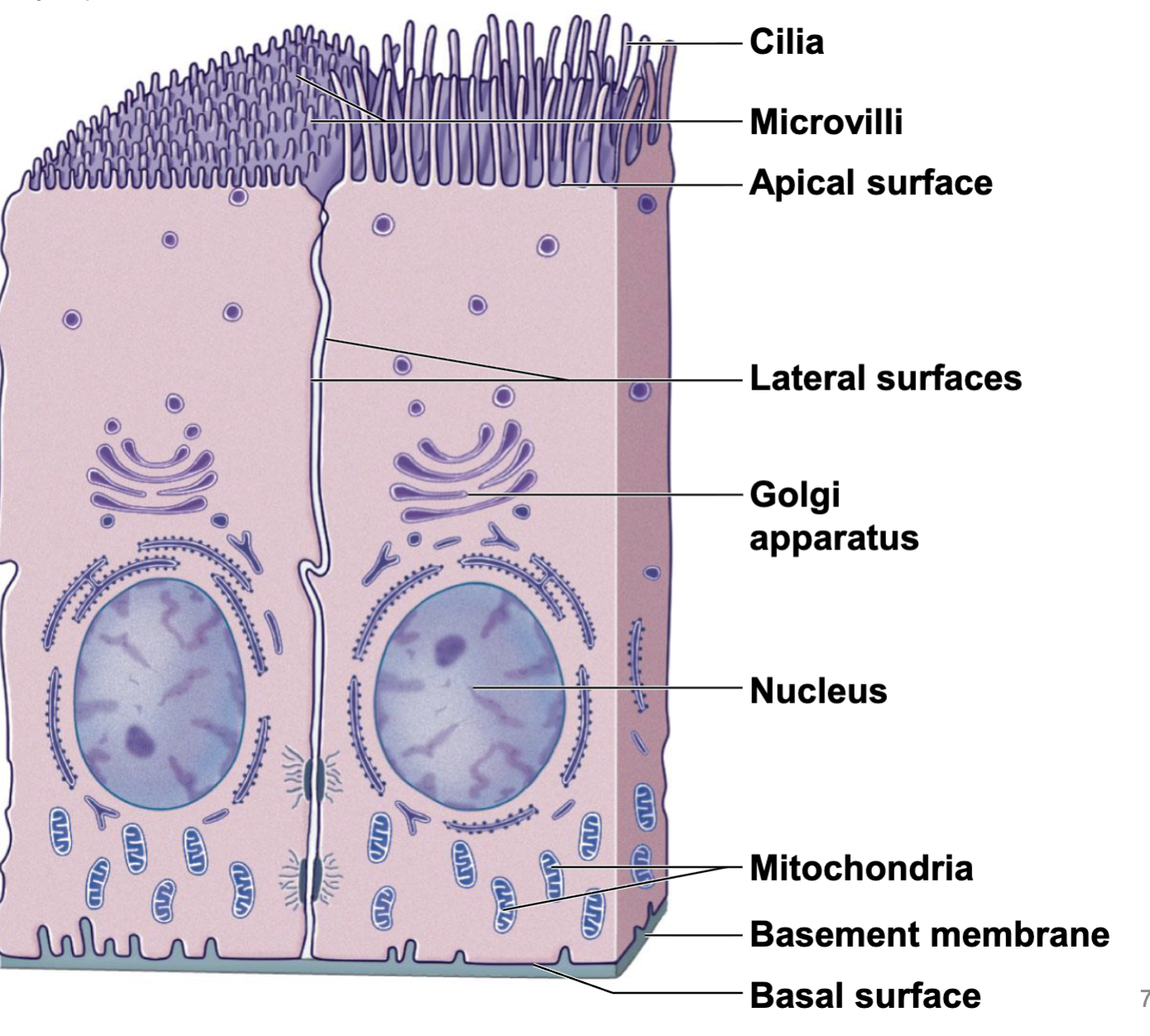
What are the key characteristics of epithelial tissue?
High cellularity, polarity, basement membrane, avascular
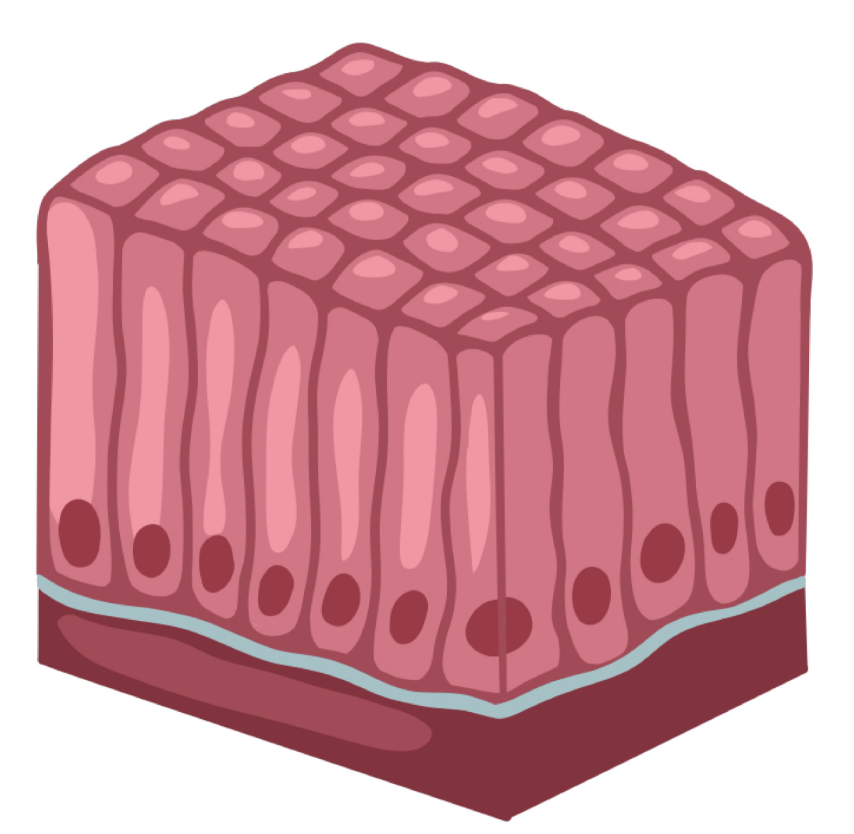
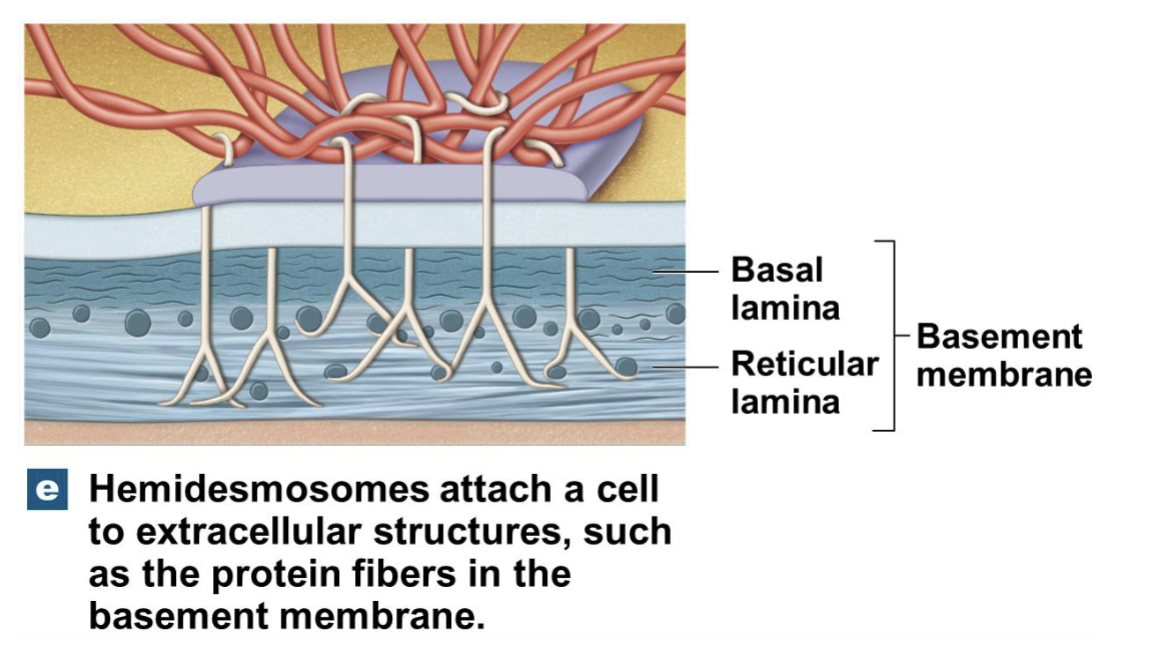
What is the basement membrane?
A layer anchoring epithelium to connective tissue
How are epithelial tissues classified?
By (Intercellular connections– Cell junctions), (shape), and (number of layers)
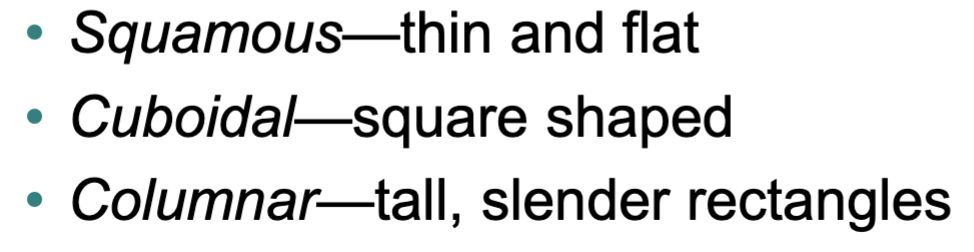
What are the three epithelial cell shapes?
Squamous, cuboidal, columnar
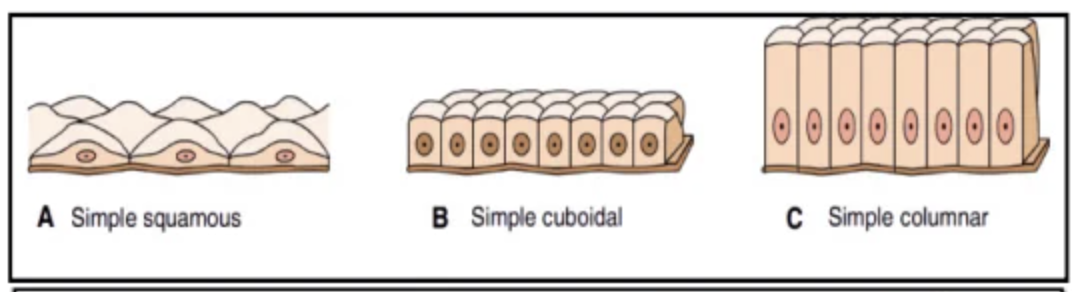
What defines simple epithelium and Stratified epithelium?
simple epithelium: Single layer of cells. & Stratified epithelium: several layers of cells
What is the function of simple epithelium?
Absorption, secretion, filtration, and diffusion
What defines stratified epithelium?
to or more layers of stacked cells
What is the function of stratified epithelium?
Protection
What are cell junctions?
Connections between cells or extracellular material
What are the three types of cell junctions?
Gap junctions, tight junctions, desmosomes
What do gap junctions do?
Allow communication between cells
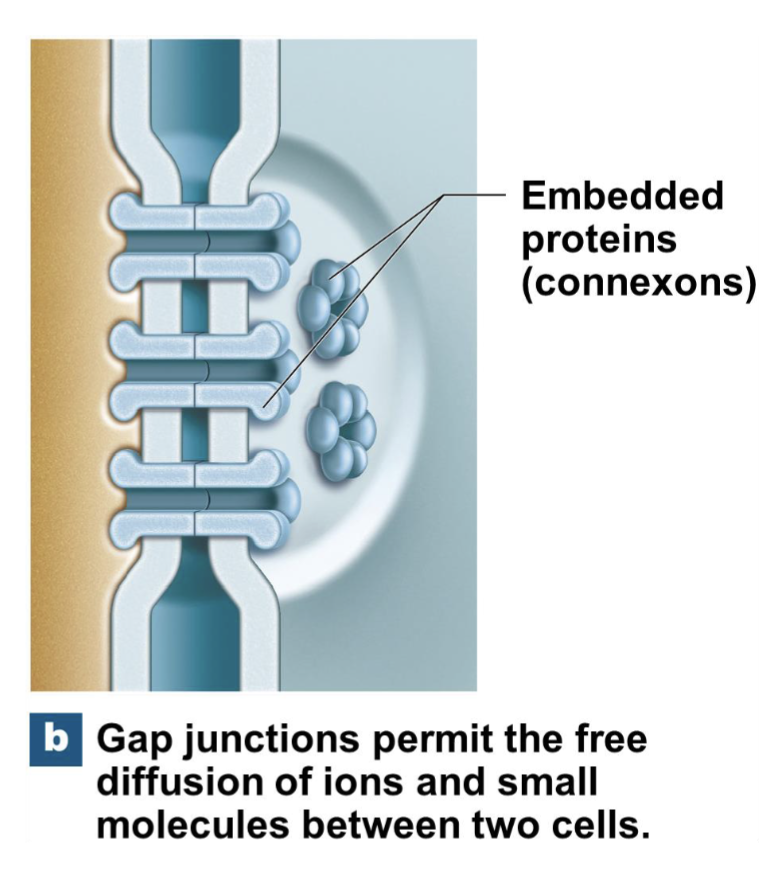
What passes through gap junctions?
Ions and small molecules
What do tight junctions do?
Prevent passage of water and solutes
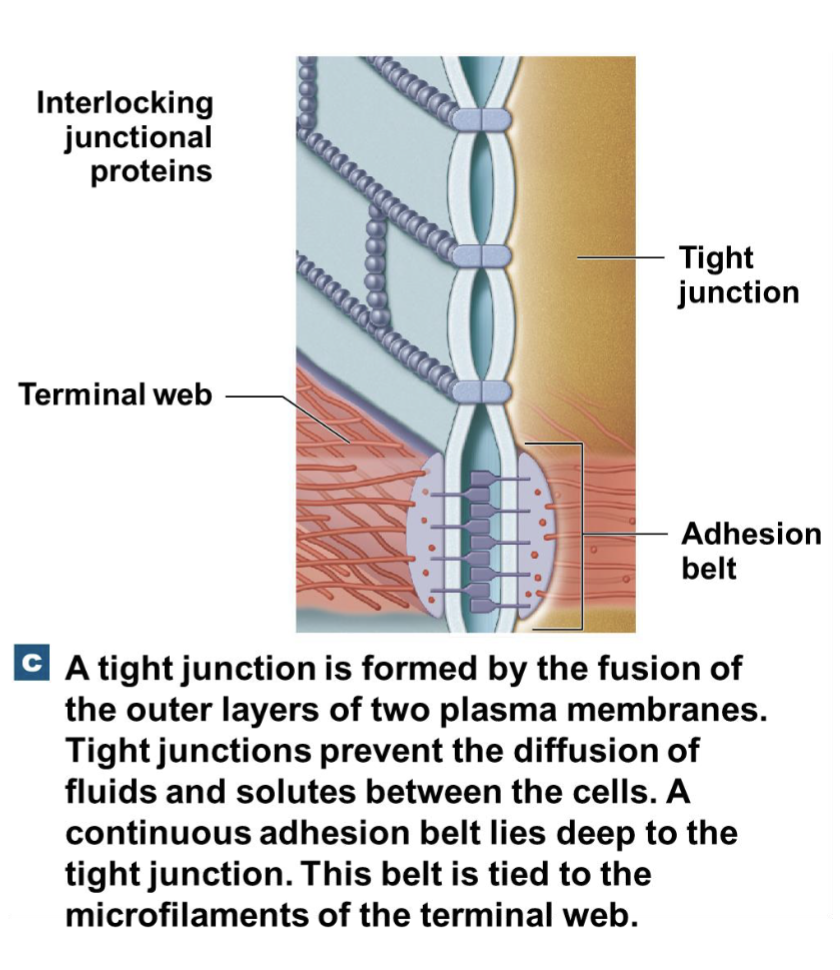
Where are tight junctions important?
Digestive tract
What do desmosomes do?
Bind cells together
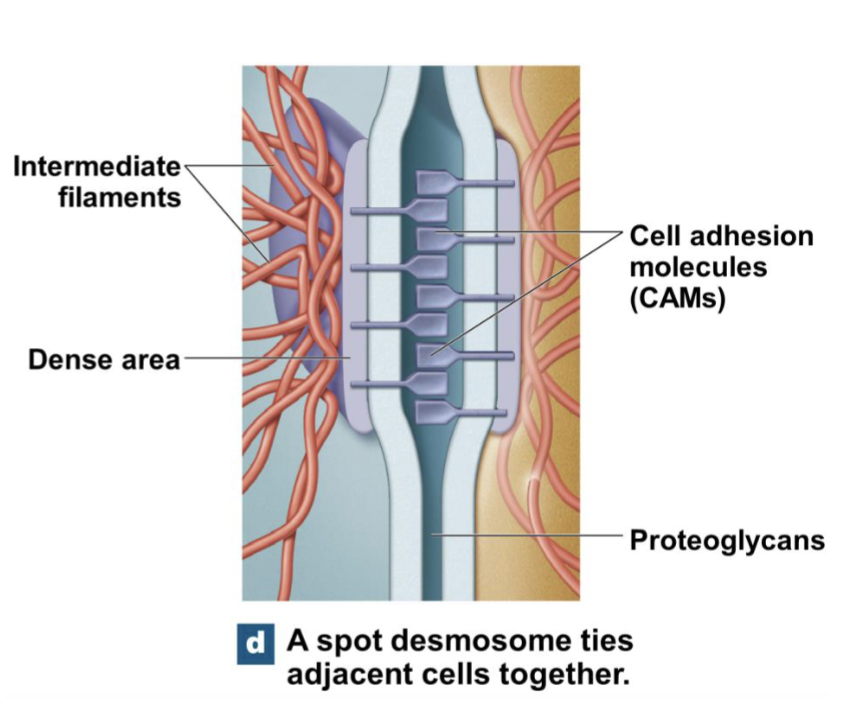
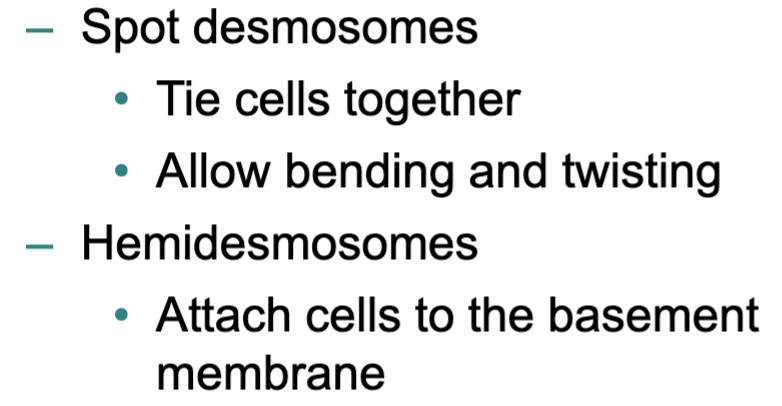
Difference between spot and hemidesmosomes?
Spot connect cells; hemi attach to membrane
What are basement membrane layers?
Basal lamina and reticular lamina
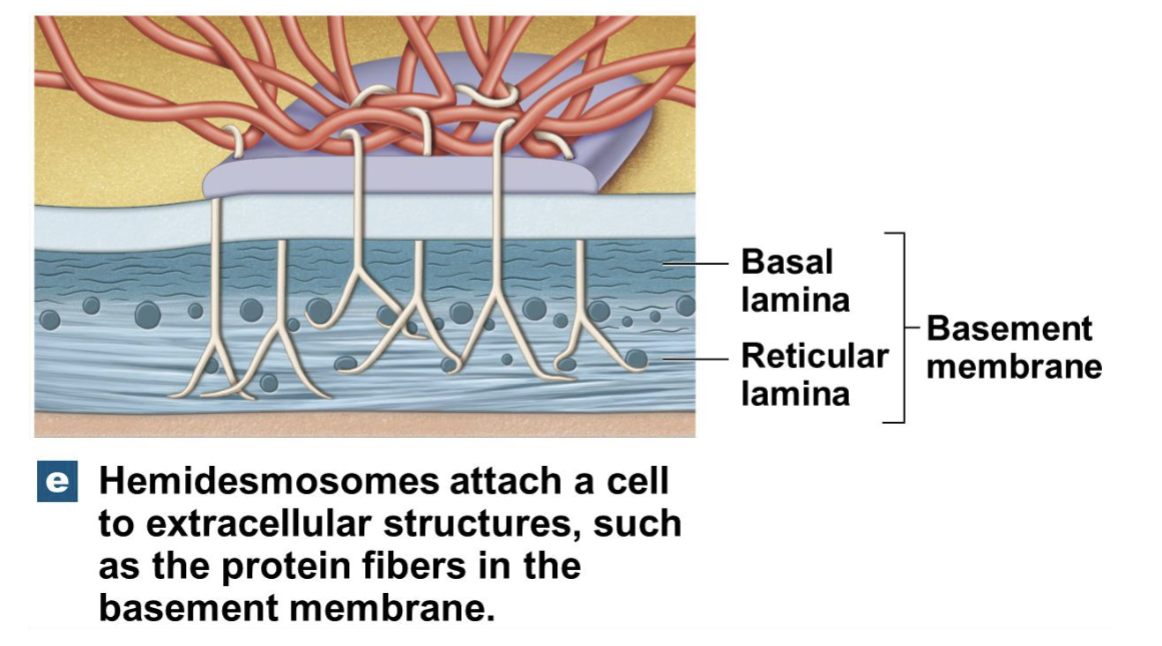
Function of reticular lamina?
Provides strength
How are epithelia classified?
Shape and layers
What is squamous?
Thin and flat
Difference between endocrine and exocrine glands?
Endocrine into blood; exocrine via ducts
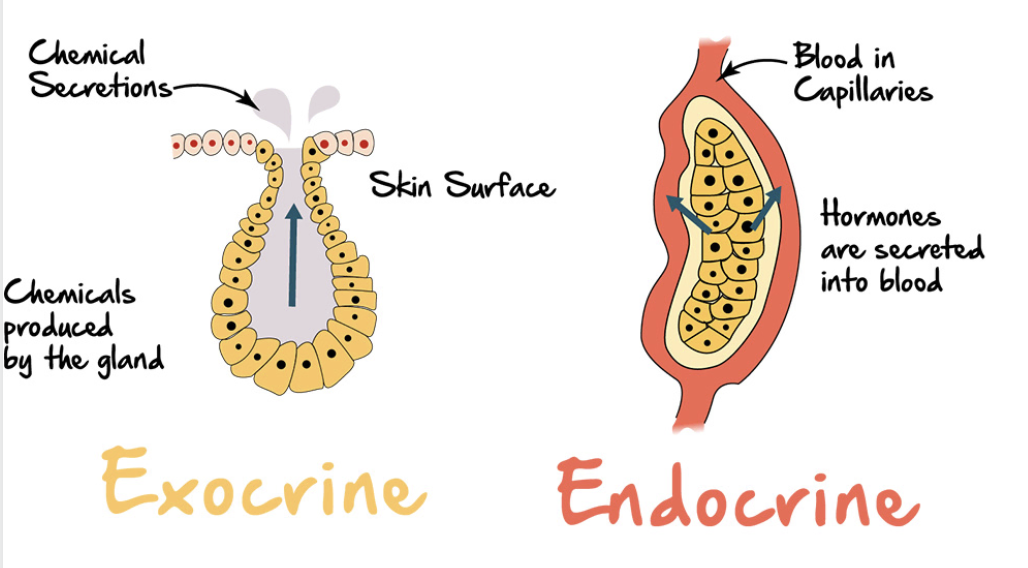
What is glandular epithelium?
Glands are collections of epithelial cells that produce secretions
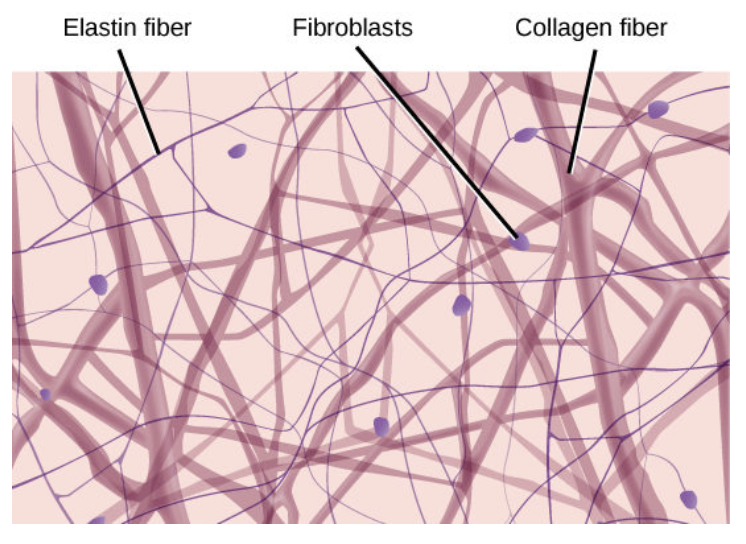
Components of connective tissue?
Specialized Cells, Extracellular protein fibers, ground substance
What is the matrix?
Fibers + ground substance
Function of connective tissue?
Support, protection, Transporting fluids, and Interconnecting other types of tissue
How does connective tissue defend the body?
Protects from microorganisms
Categories of connective tissue?
Proper (Connect and protect), fluid (Transport), supporting (Structural strength)
Function of fluid connective tissue?
Transport
Loose vs dense connective tissue?
Loose more ground substance; dense more fibers
Example of dense connective tissue?
Tendons
Components of connective tissue proper?
Fibers, ground substance, cells
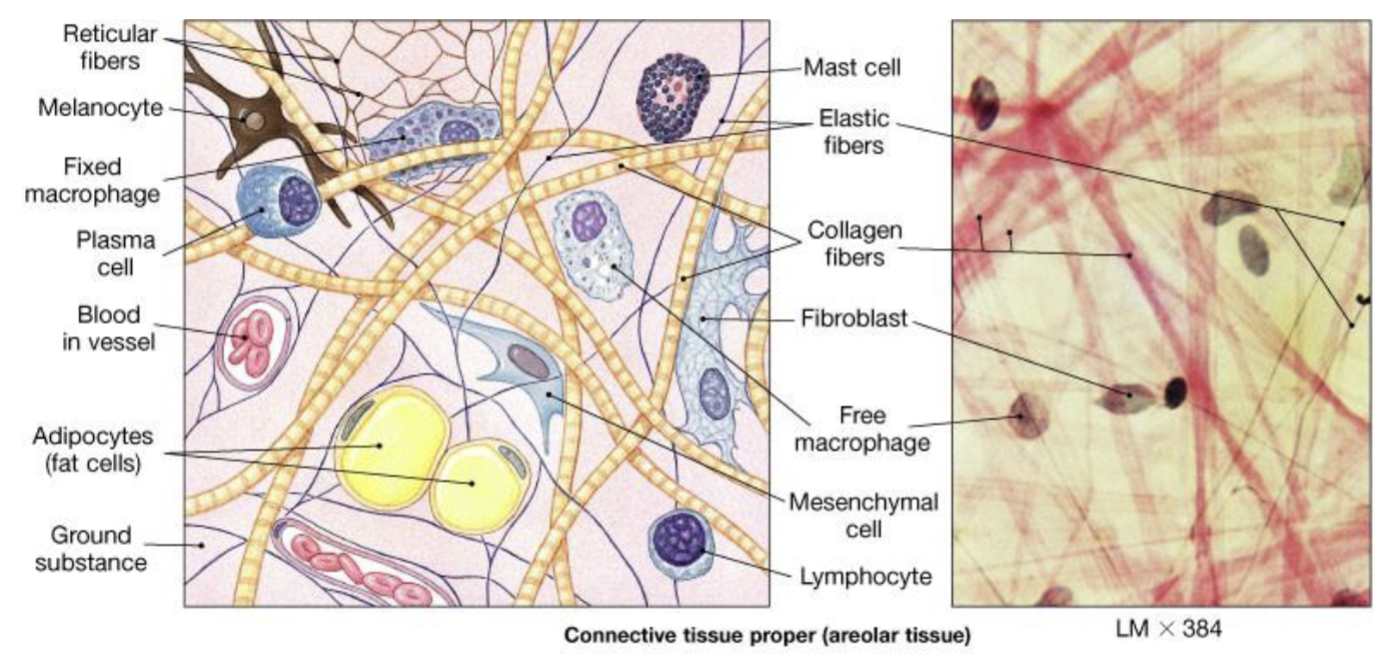
What is ground substance?
Viscous fluid
Examples of loose connective tissue?
Areolar, adipose, reticular
Types of dense connective tissue?
Regular and irregular
Types of fluid connective tissue?
Blood and lymph
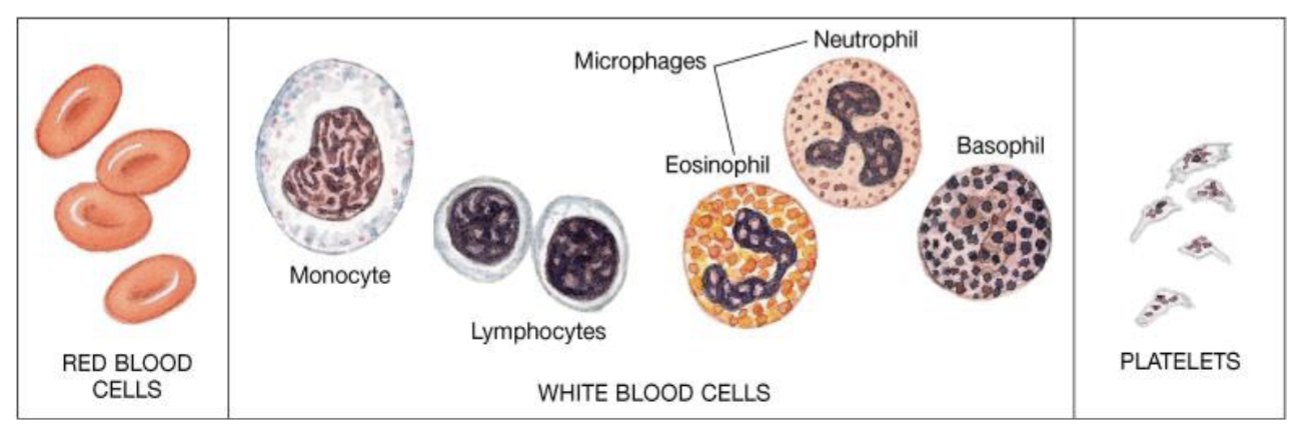
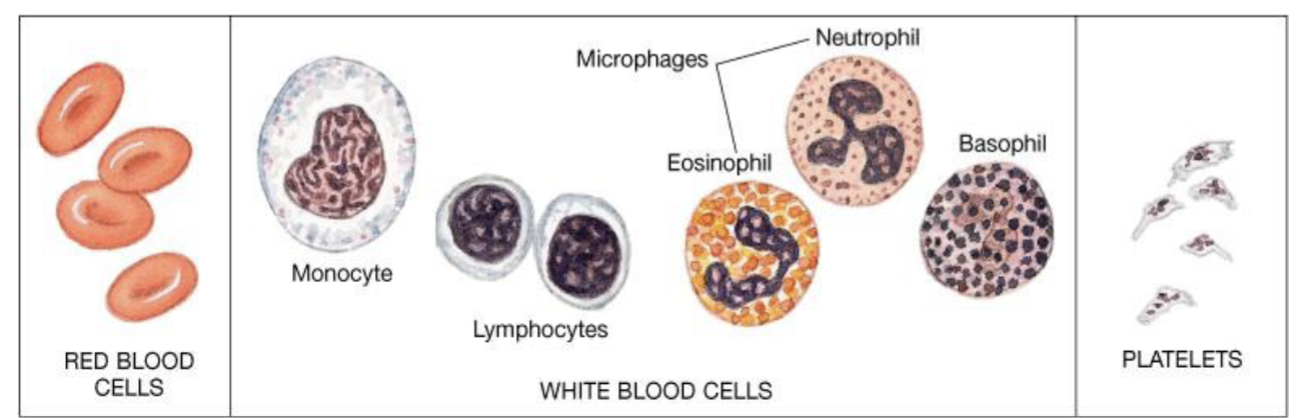
Formed elements of blood?
RBCs, WBCs, platelets
Types of cartilage?
Hyaline, elastic, fibrocartilage
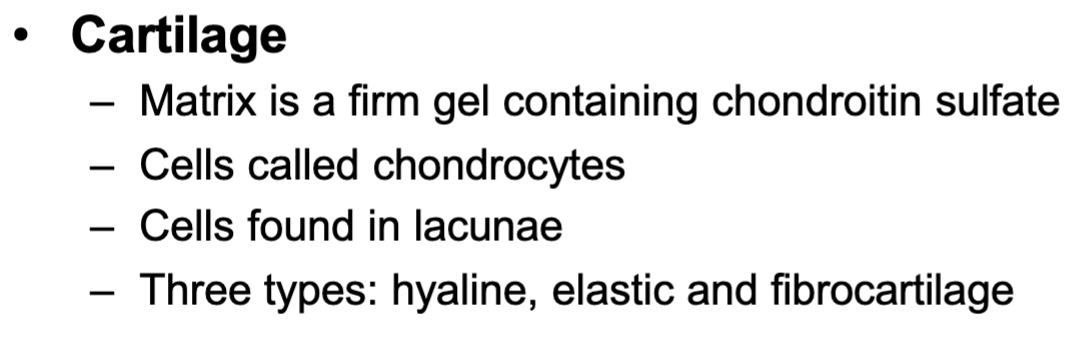
Cartilage cells called?
Chondrocytes
Function of bone?
Support and protection
Bone cells called?
Osteocytes
Function of canaliculi (channels through matrix)?
Exchange nutrients/waste with blood
Function of muscle tissue?
Movement
Types of muscle tissue?
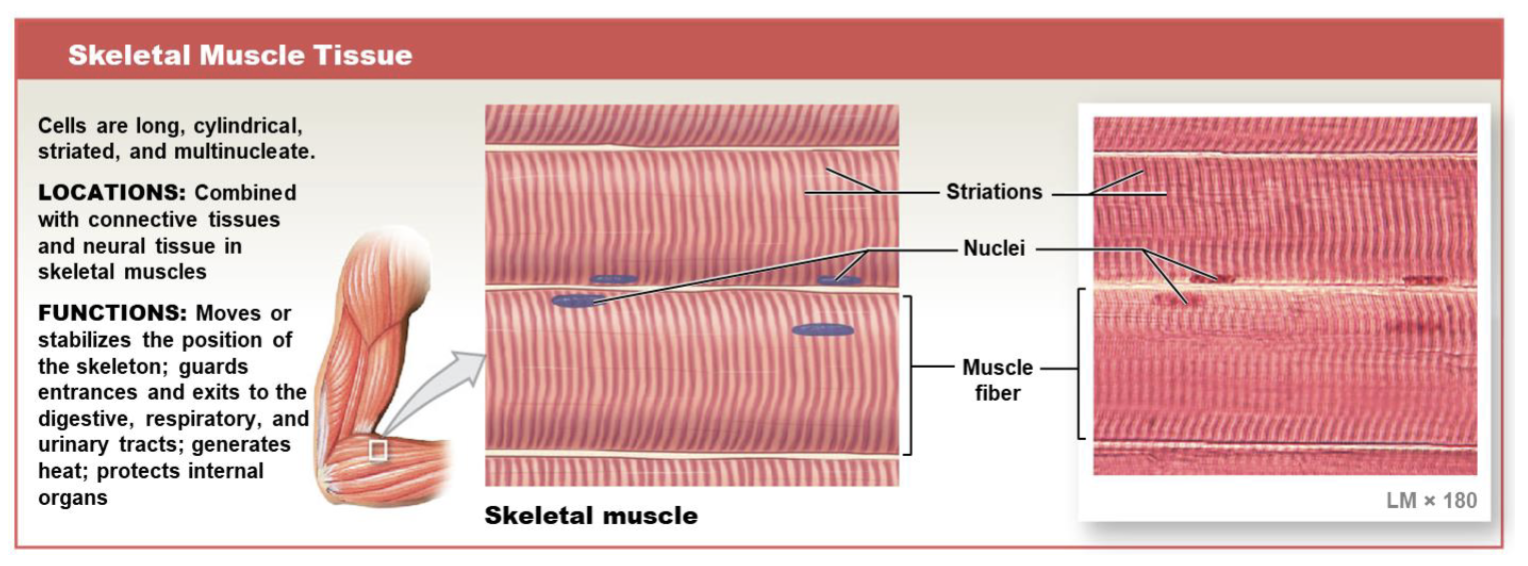
Skeletal, cardiac, smooth
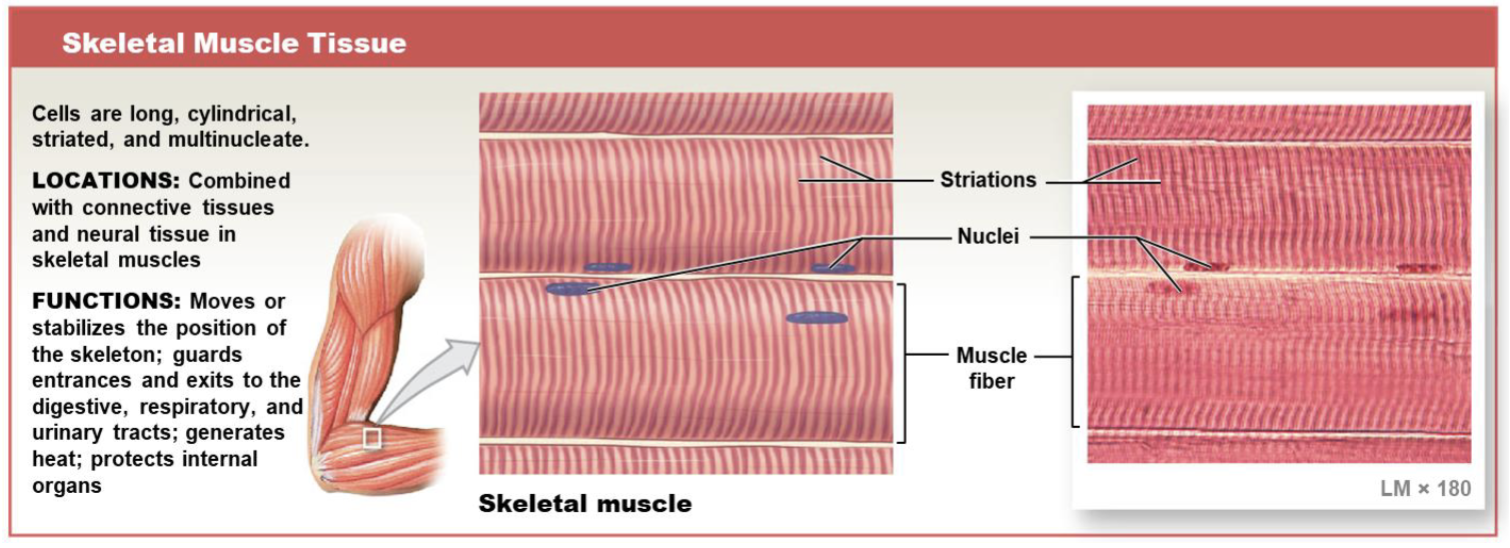
Skeletal muscle characteristics?
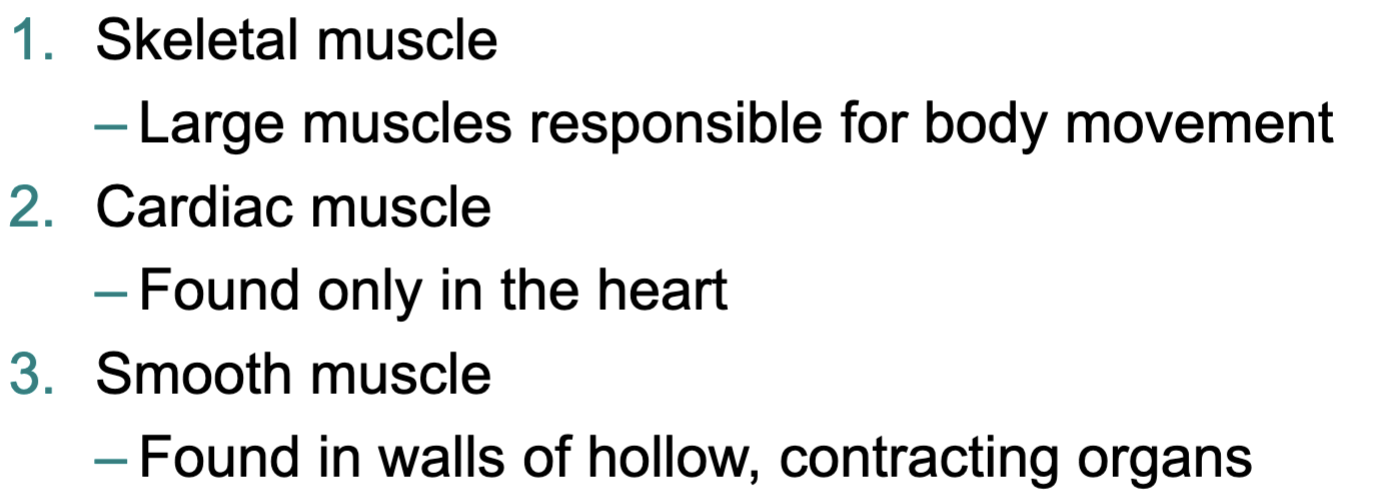
-Striated voluntary muscle
-Consists of long, thin cells called muscle fibers
-Cells do not divide; instead produced by divisions of myosatellite cells
Do skeletal muscle cells divide?
No
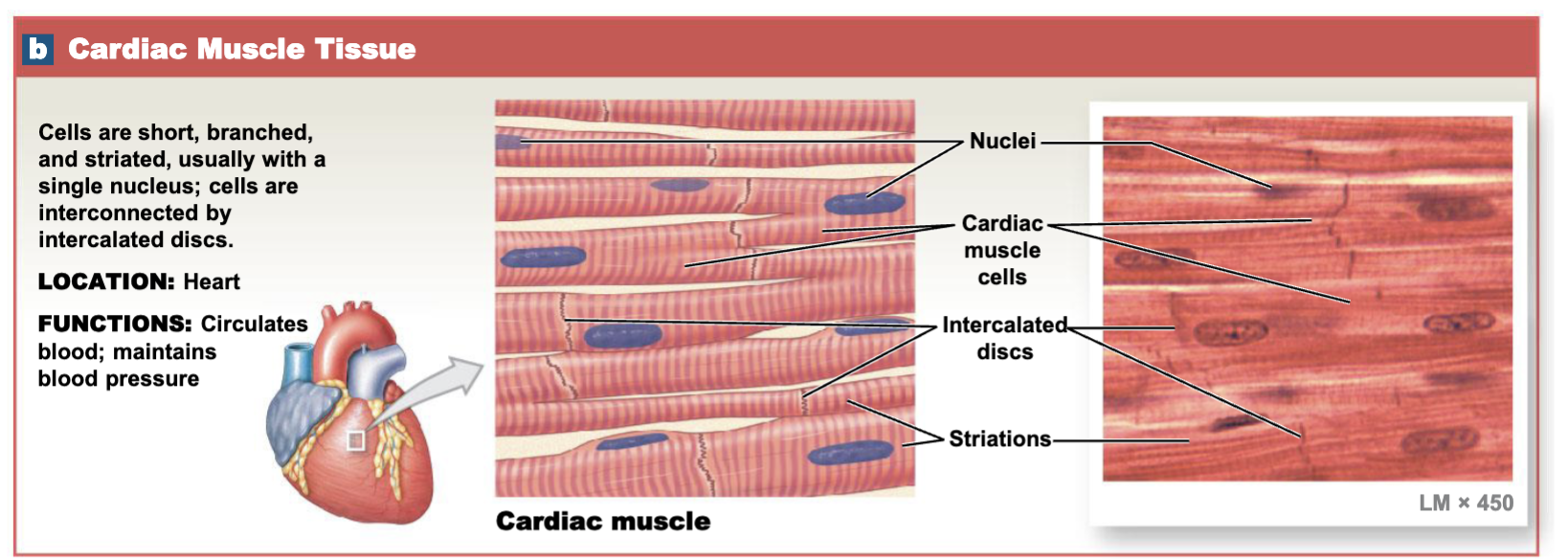
Cardiac muscle characteristics?
Striated, involuntary, branched
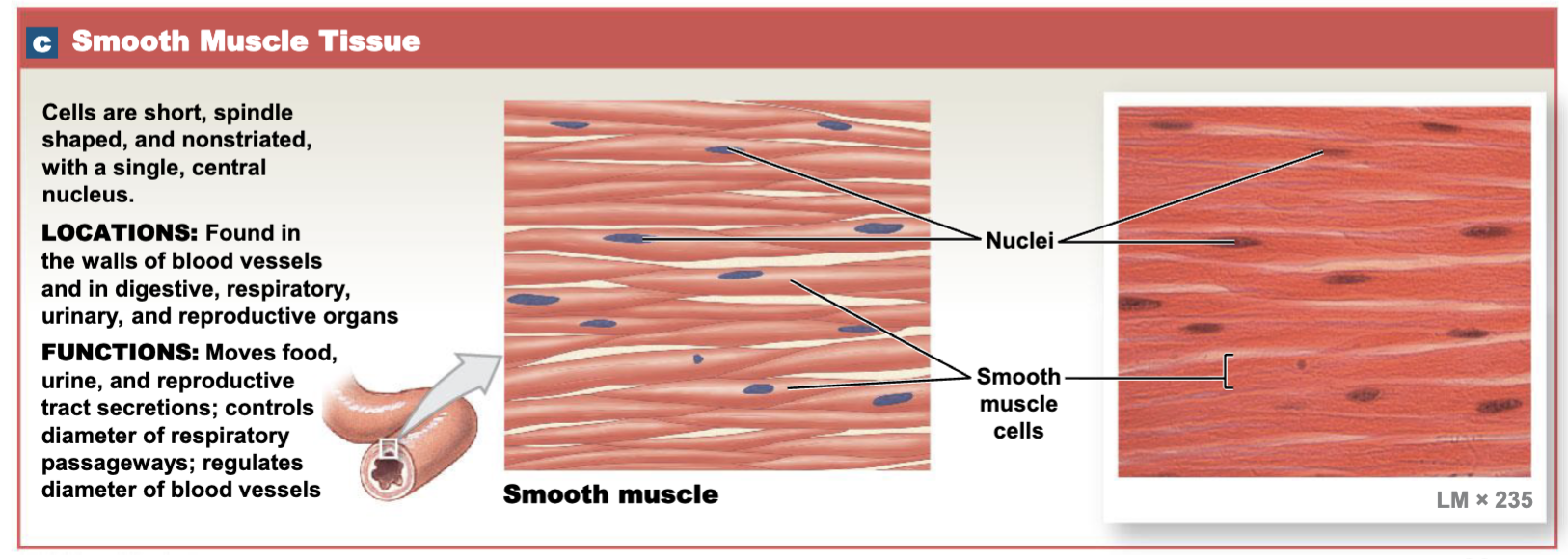
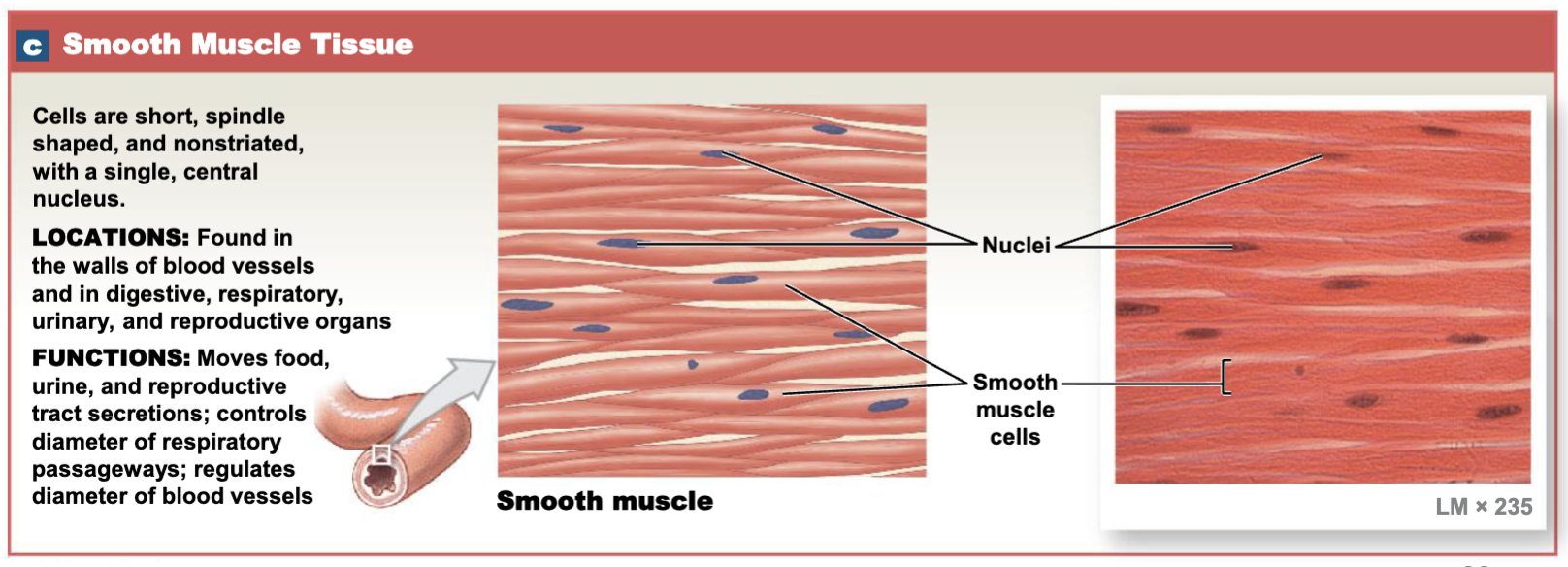
Smooth muscle characteristics?
Nonstriated, involuntary
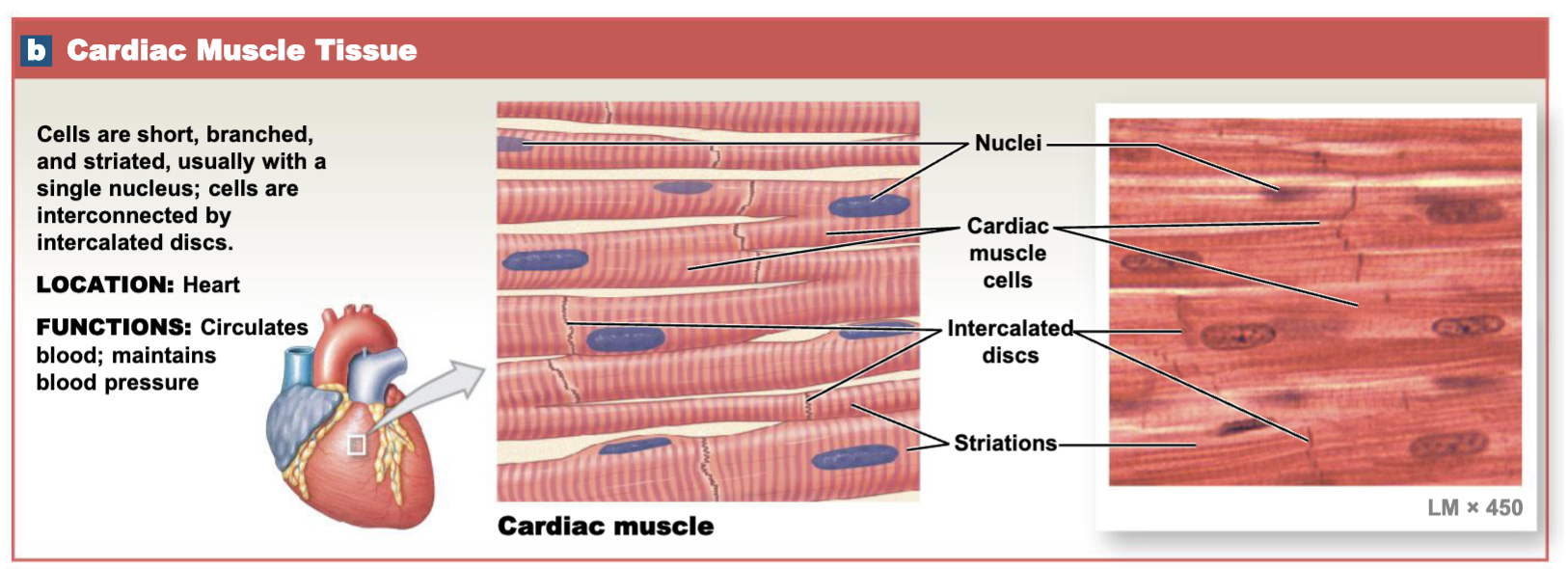
Where is cardiac muscle found?
Heart
Function of smooth muscle?
Move substances(urine, food, reproductive secretions), controls diameter of respiratory
passageways; regulates diameter of blood vessels
Function of nervous tissue?
Conduct impulses
Where is nervous tissue found?
Brain and spinal cord
Parts of a neuron?
Cell body, dendrites, axon
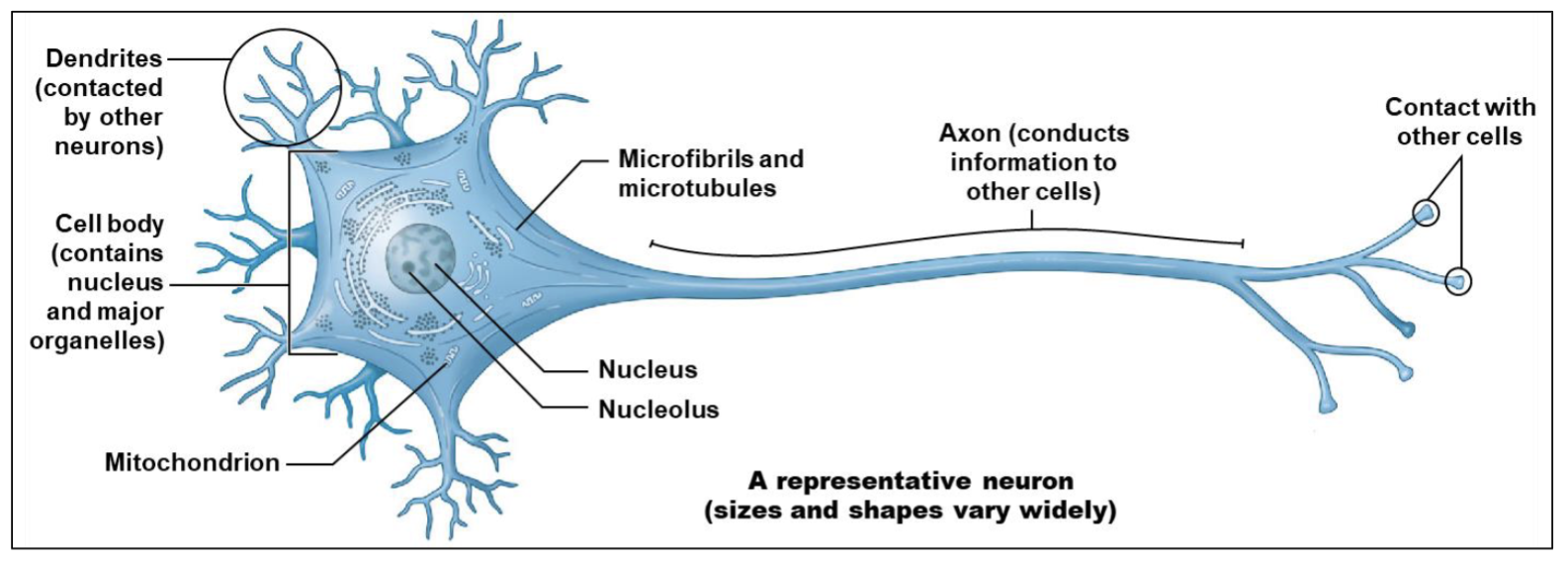
Function of dendrites?
Receive signals
Function of axon?
Send signals
What are neuroglia?
Supporting cells
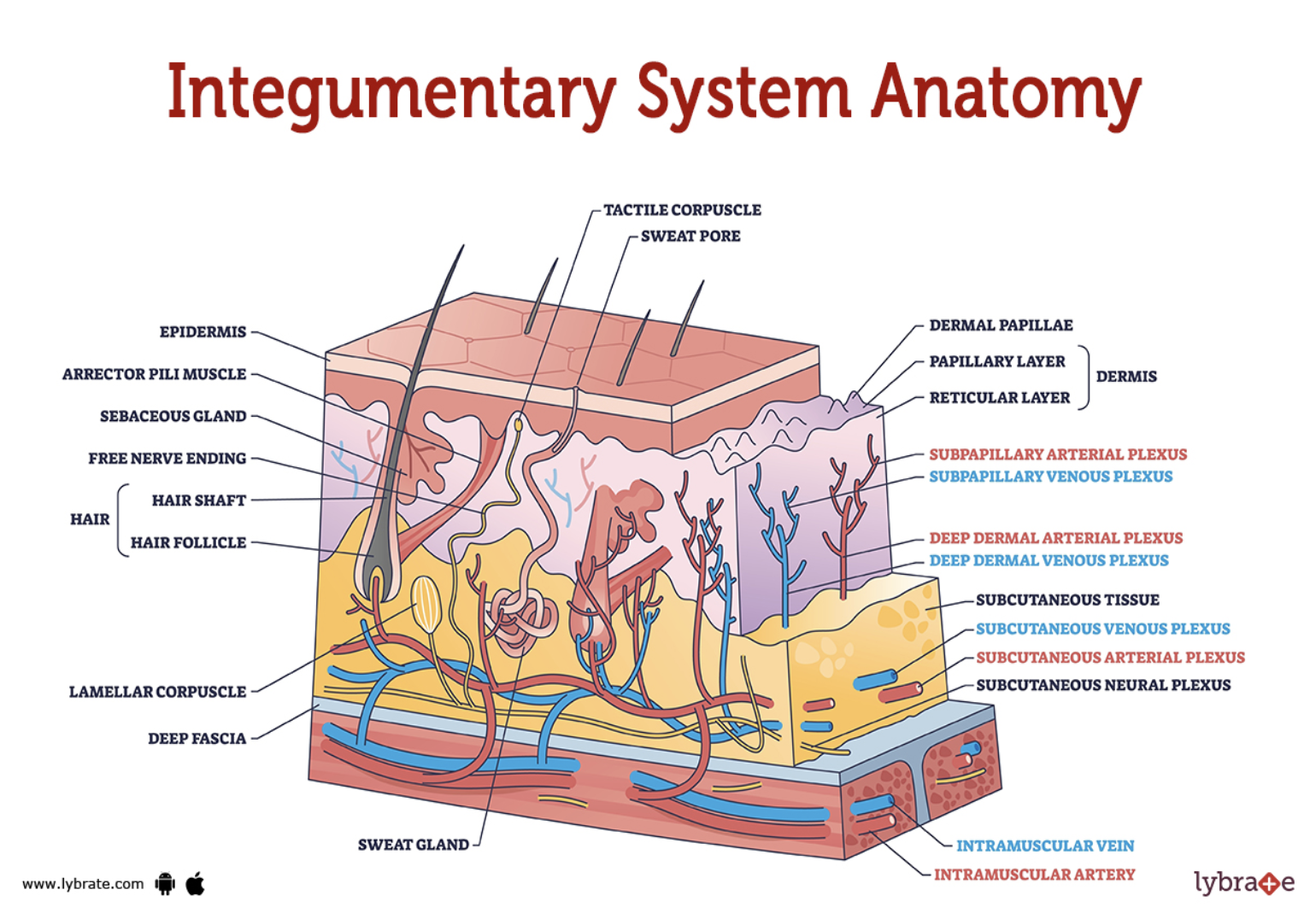
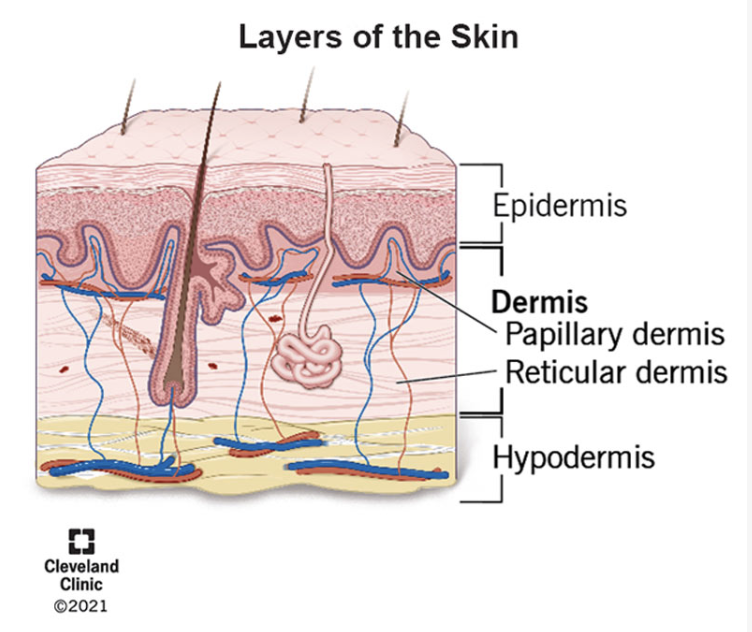
What are the two parts of integumentary system?
Skin and accessory structures
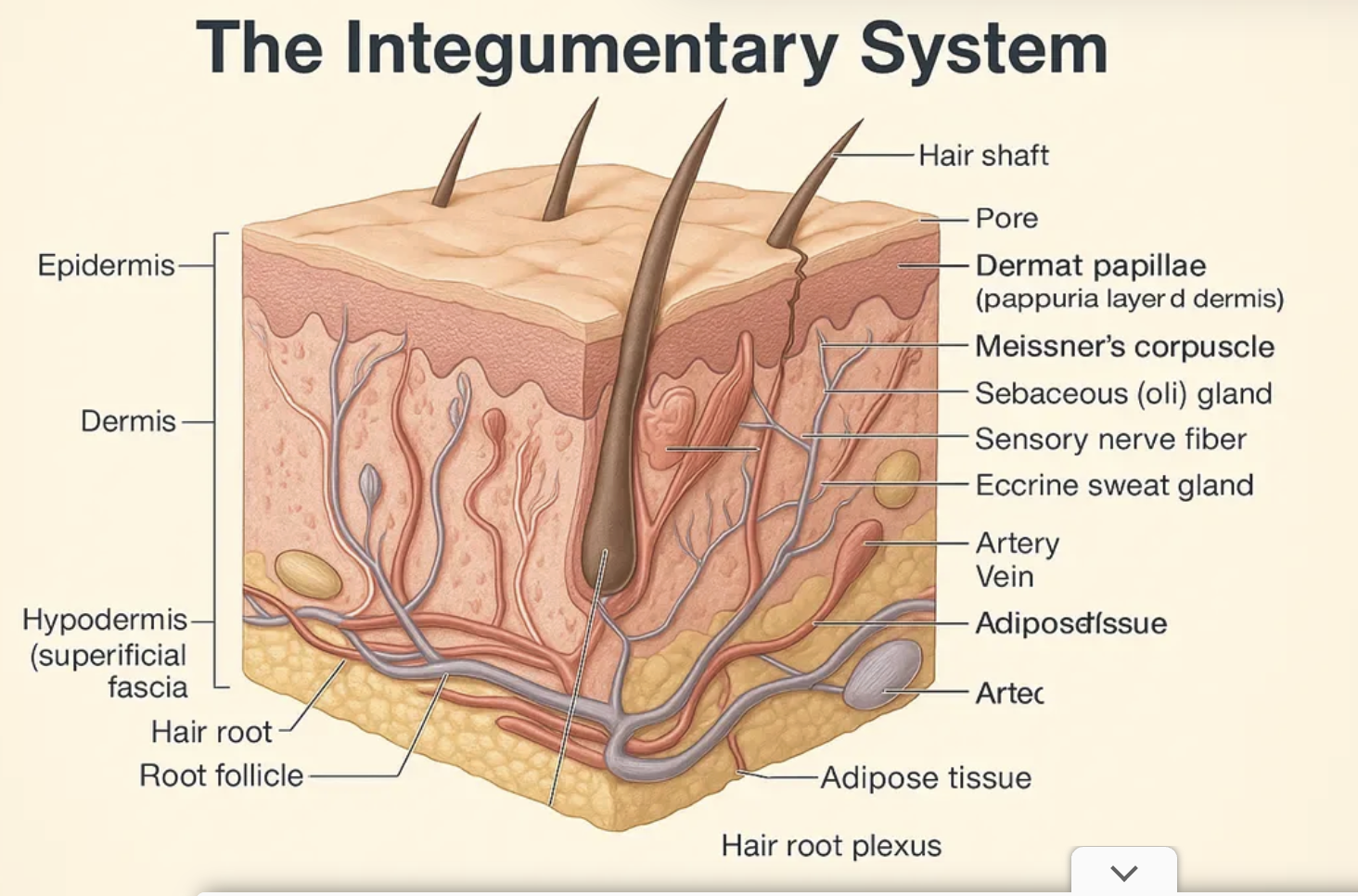
Layers of cutaneous membrane?
Epidermis (Outer) and dermis (inner)
Examples of accessory structures?
Hair, glands, nails
What is subcutaneous layer?
Loose connective tissue below dermis
What does integument contain?
Blood vessels and receptors
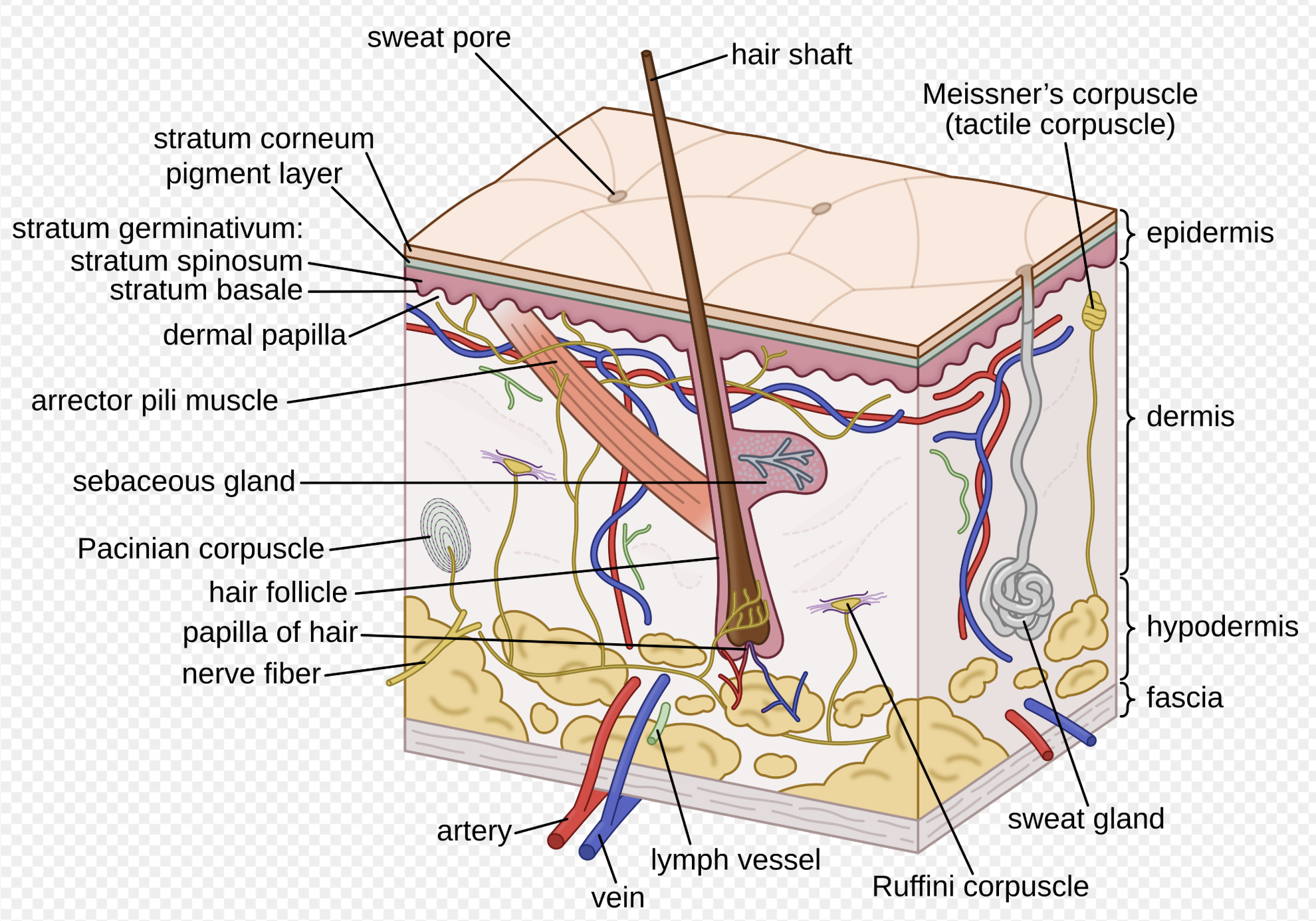
Function of integument?
-Protection of organs
-Excretion of salts, water, and organic wastes
-Maintenance of normal body temperature
-Production of melanin
-Production of keratin
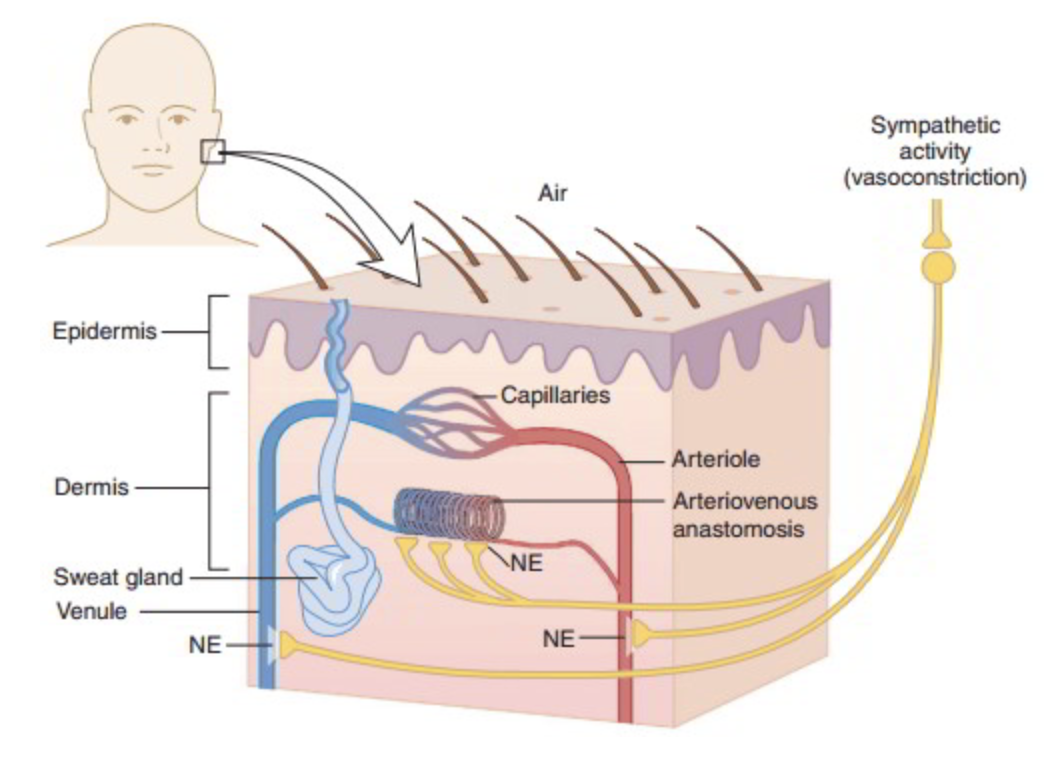
How does skin regulate temperature?
Sweating and blood flow
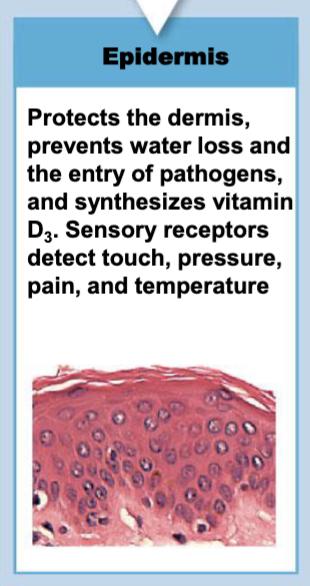
Function of epidermis?
-protects the dermis,
-prevents water loss and the entry of pathogens
-Sensory receptors
-detect touch, pressure,
-pain, and temperature
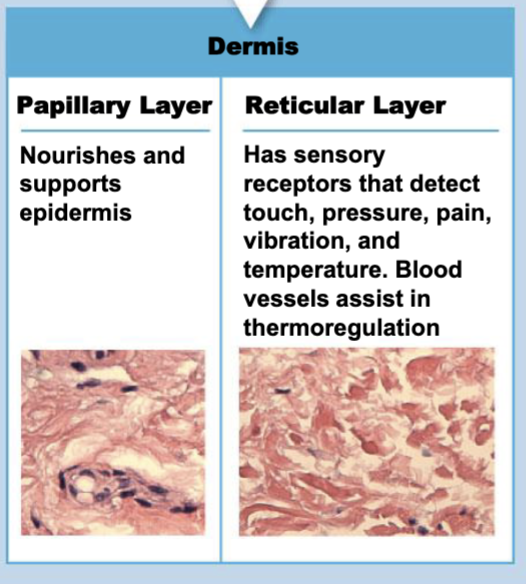
Function of dermis?
Papillary Layer: Support and nourish
Reticular Layer: Has sensory receptors that detect touch, pressure, pain, vibration, and temperature.
epidermis tissue is?
-Stratified squamous epithelium
-Avascular, like all epithelia
-Nutrients and oxygen diffuse from capillaries in the dermis
Why is epidermis avascular?
No blood vessels, gets nutrients through basement membrane
What are keratinocytes?
Main epidermal cells
Contain large amounts of keratin
• Occurs on all exposed skin surfaces
What do keratinocytes produce?
Keratin
Thin vs thick skin?
4 vs 5 layers of keratinocytes
Where is thick skin?
Palms and soles
Five epidermal layers?
(From basement membrane to free surface) Basale→ spinosum→granulosum→ lucidum→ corneum
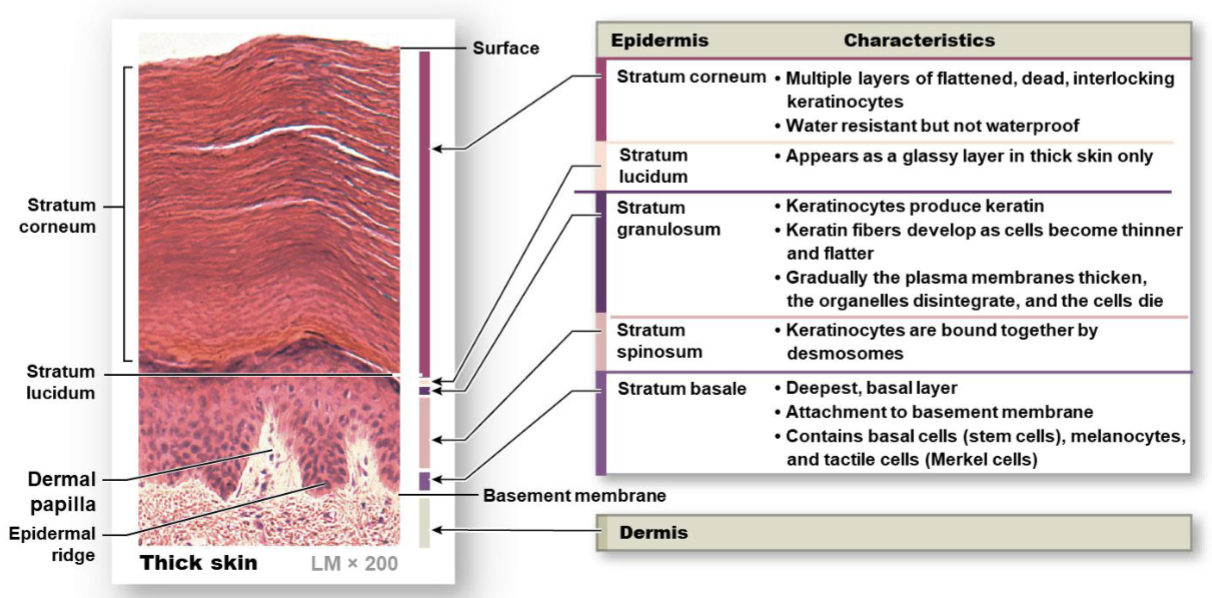
Top epidermal layer?
Stratum corneum
Location of dermis?
Between epidermis and hypodermis
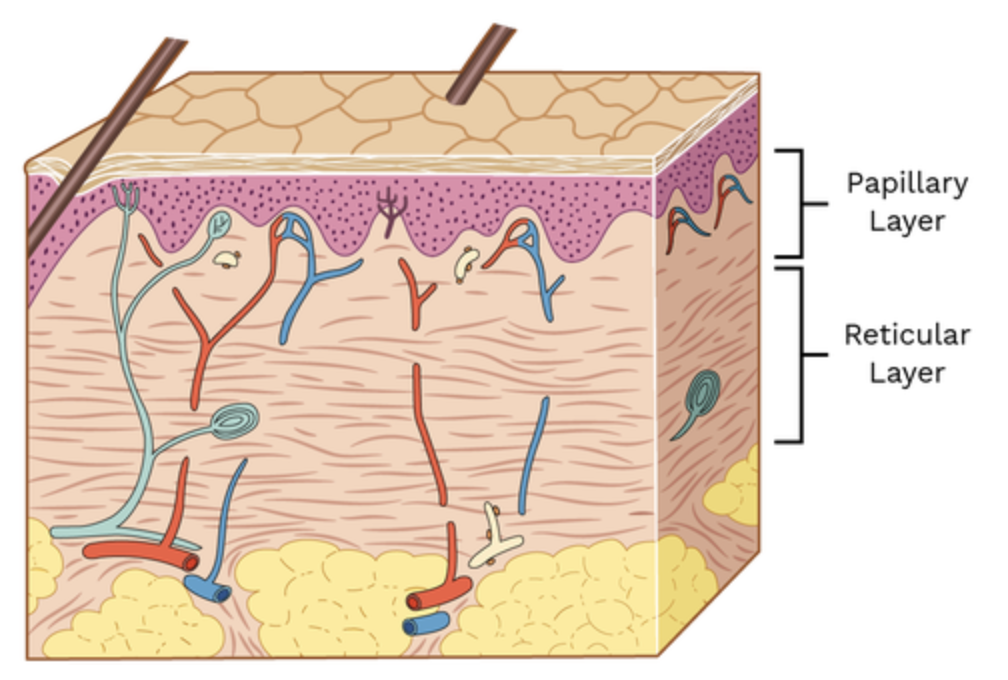
Layers of dermis?
Papillary and reticular
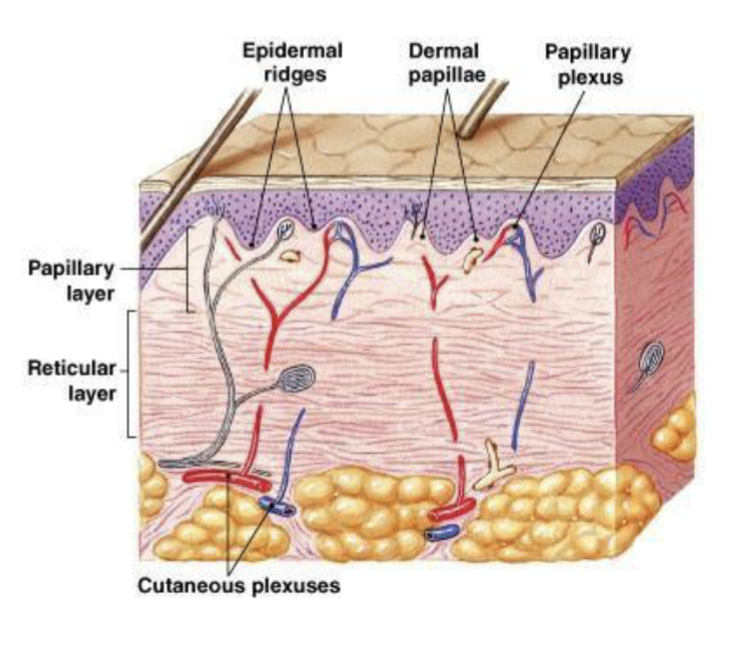
Papillary layer contains?
Capillaries and nerves
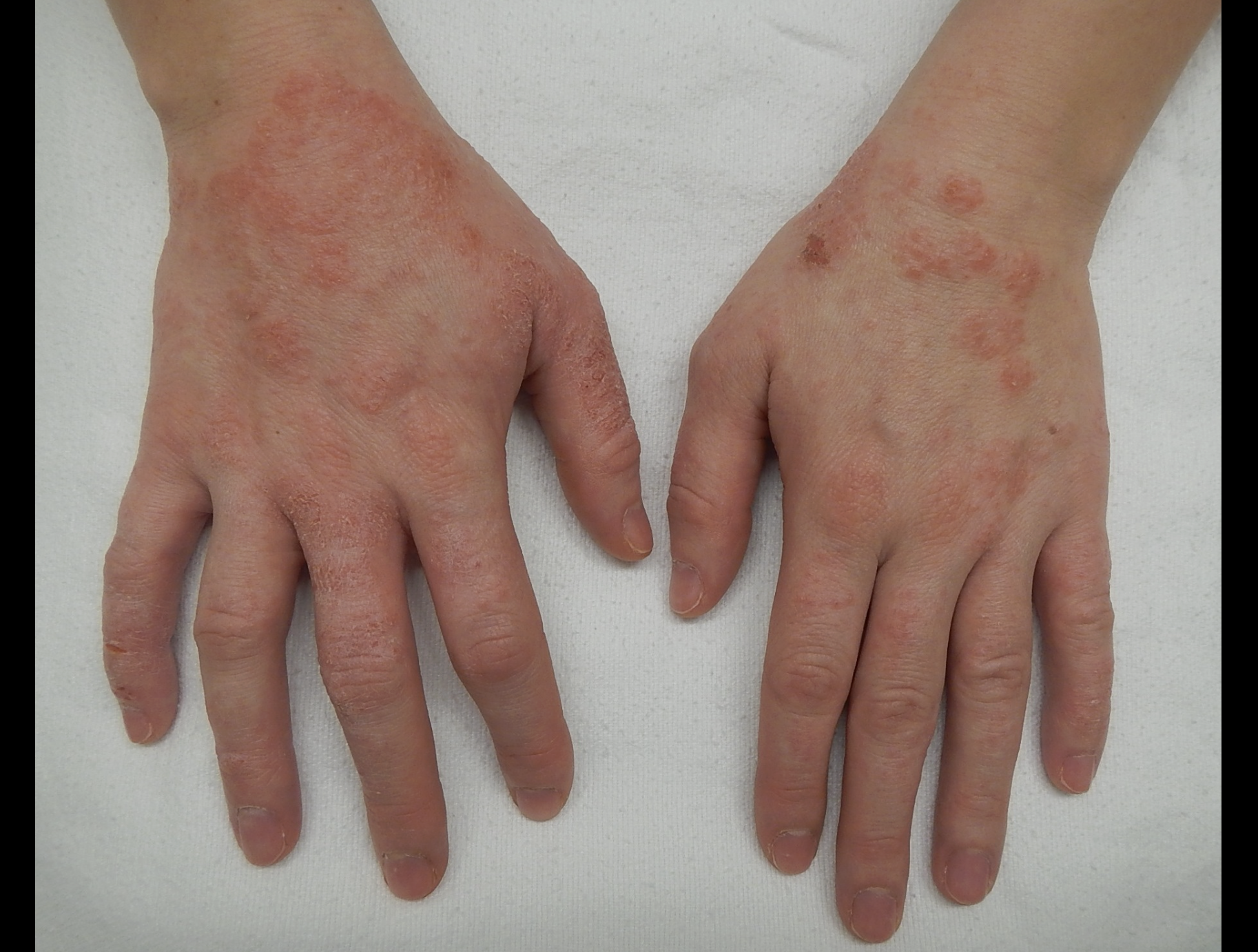
Cause of dermatitis?
Inflammation
Reticular layer tissue?
Dense irregular connective tissue
Fibers in reticular layer?
Collagen and elastic
What are tension lines?
Collagen fiber lines
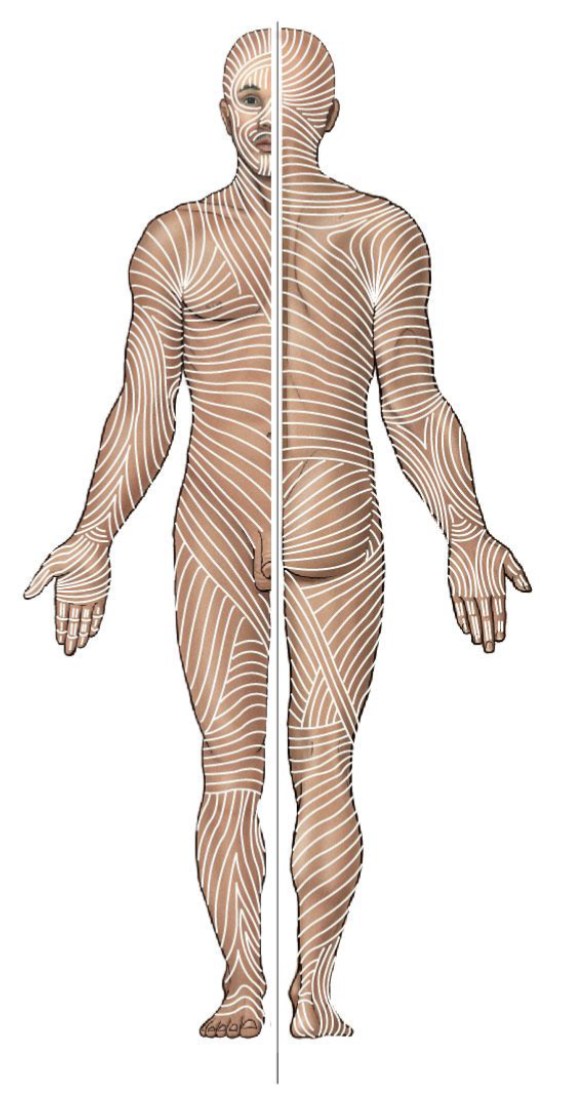
Why important surgically?
A cut made parallel to a tension line remains shut, heals well
Pigments in skin?
Melanin and carotene
Where are pigments?
Epidermis
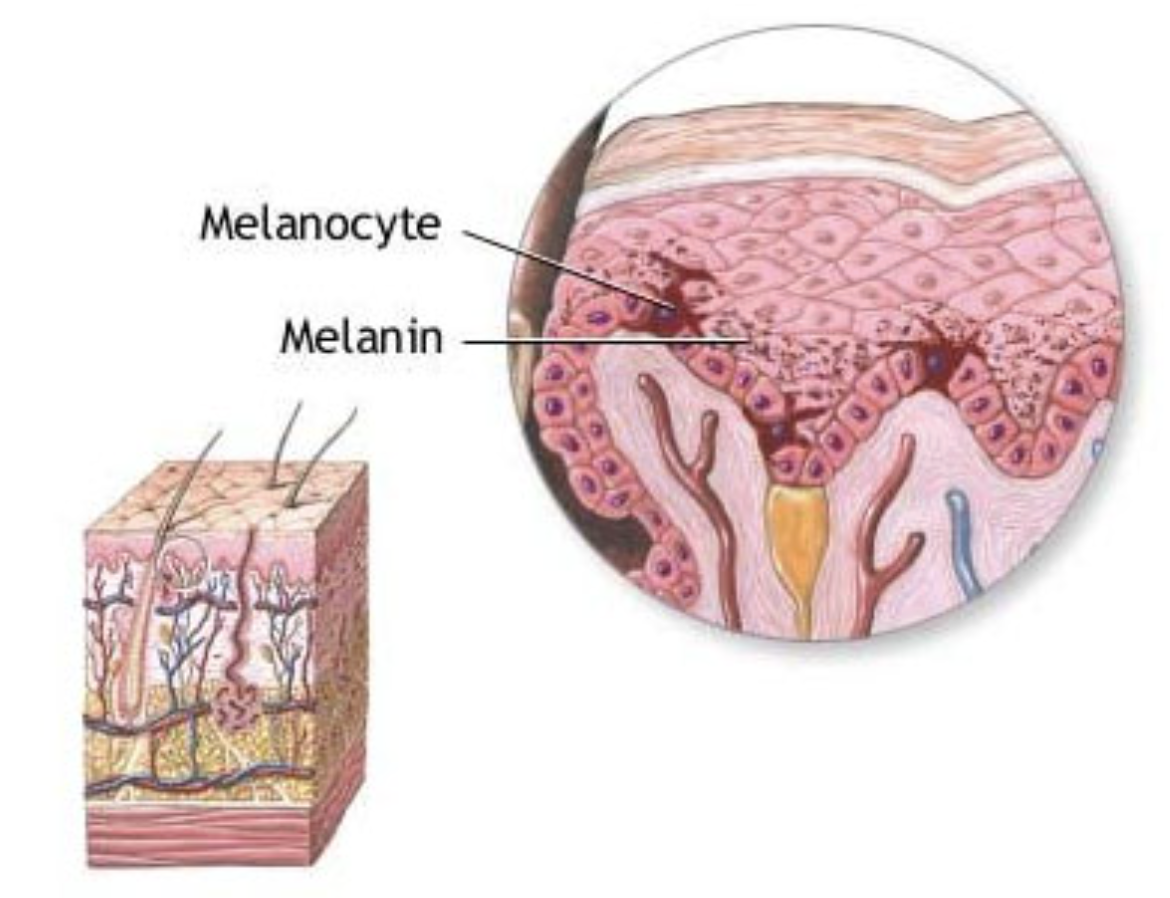
What is melanin?
UV-protective pigment
Cells that produce melanin?
Melanocytes
What is carotene?
Orange-yellow pigment
Can be converted to vitamin A, required for
• Maintenance of epithelia
• Synthesis of photoreceptor pigments in eye
Carotene converts to?
Vitamin A
Effect of oxygenated blood?
Reddish skin- When blood vessels dilate from heat
What is cyanosis?
Hemoglobin turns dark red when oxygen is released- Bluish skin
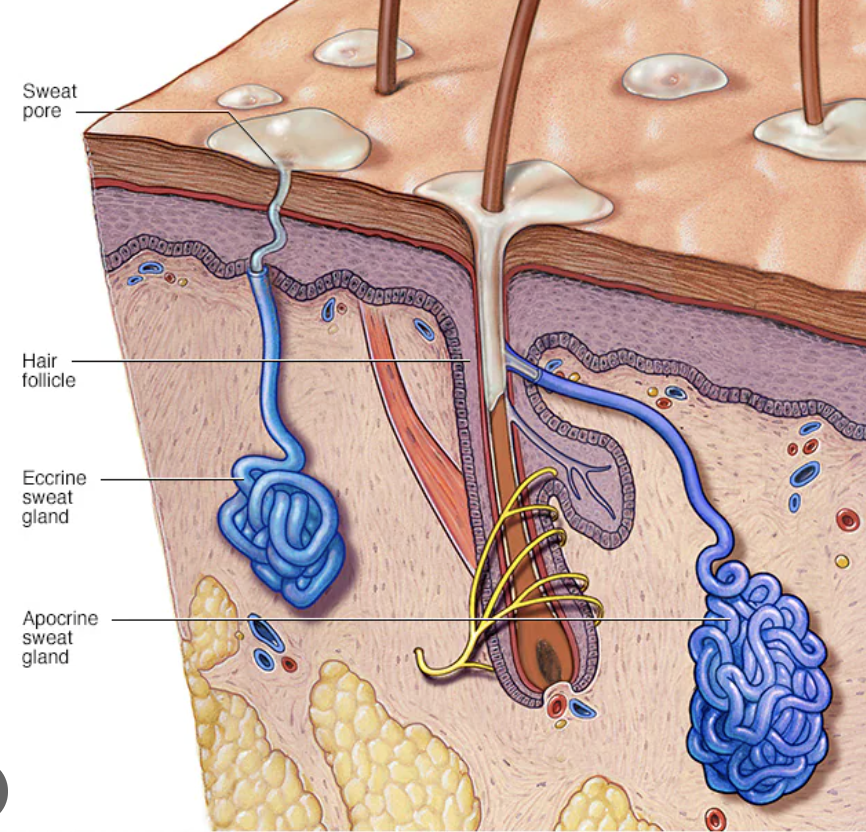
Accessory structures?
Hair, glands, nails- Located in dermis, but project to skin surface
Origin of accessory structures?
Dermis
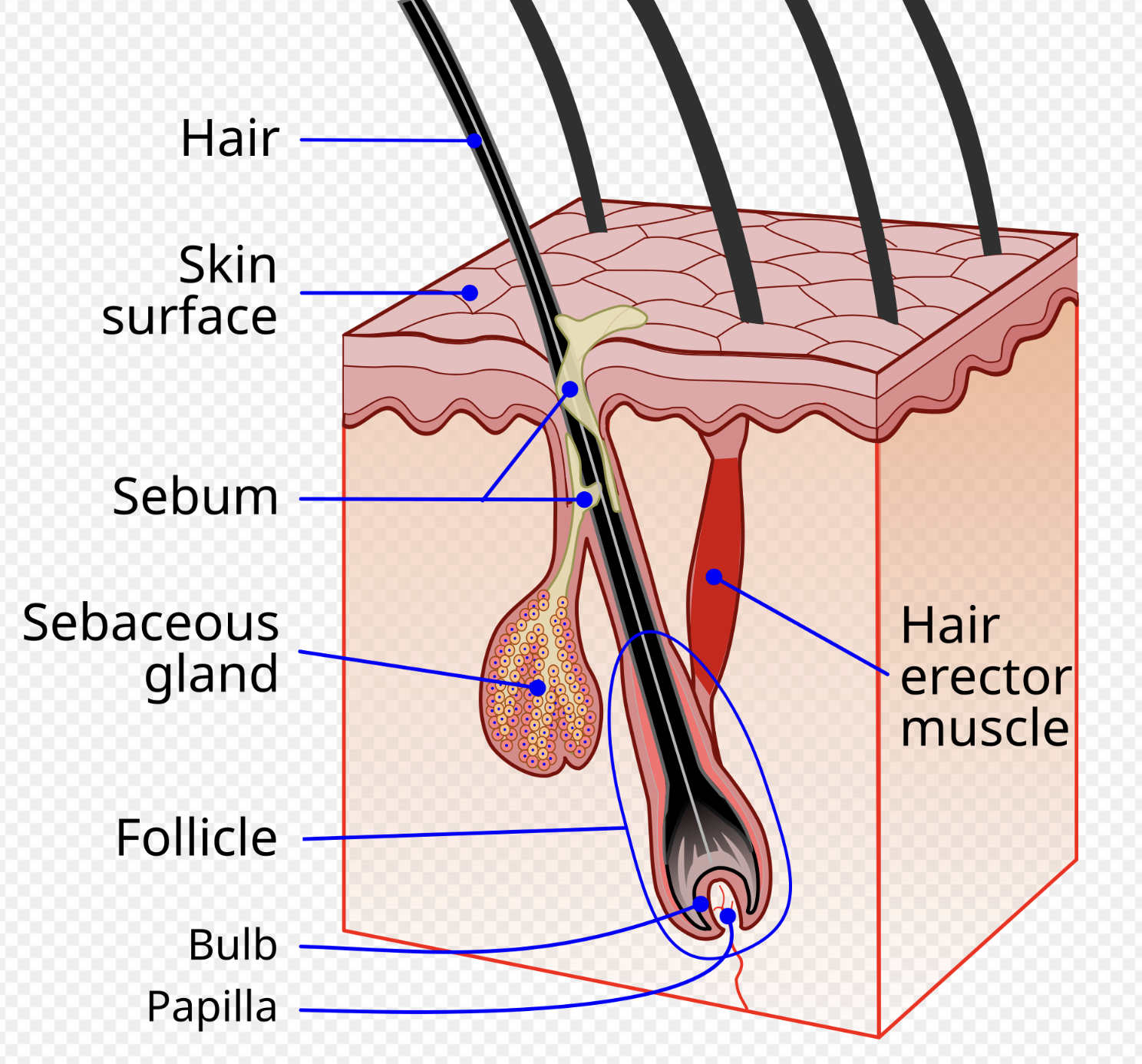
Function of hair?
Protection and sensation
Hair follicles located?
Dermis
Sebaceous glands secrete?
Sebum
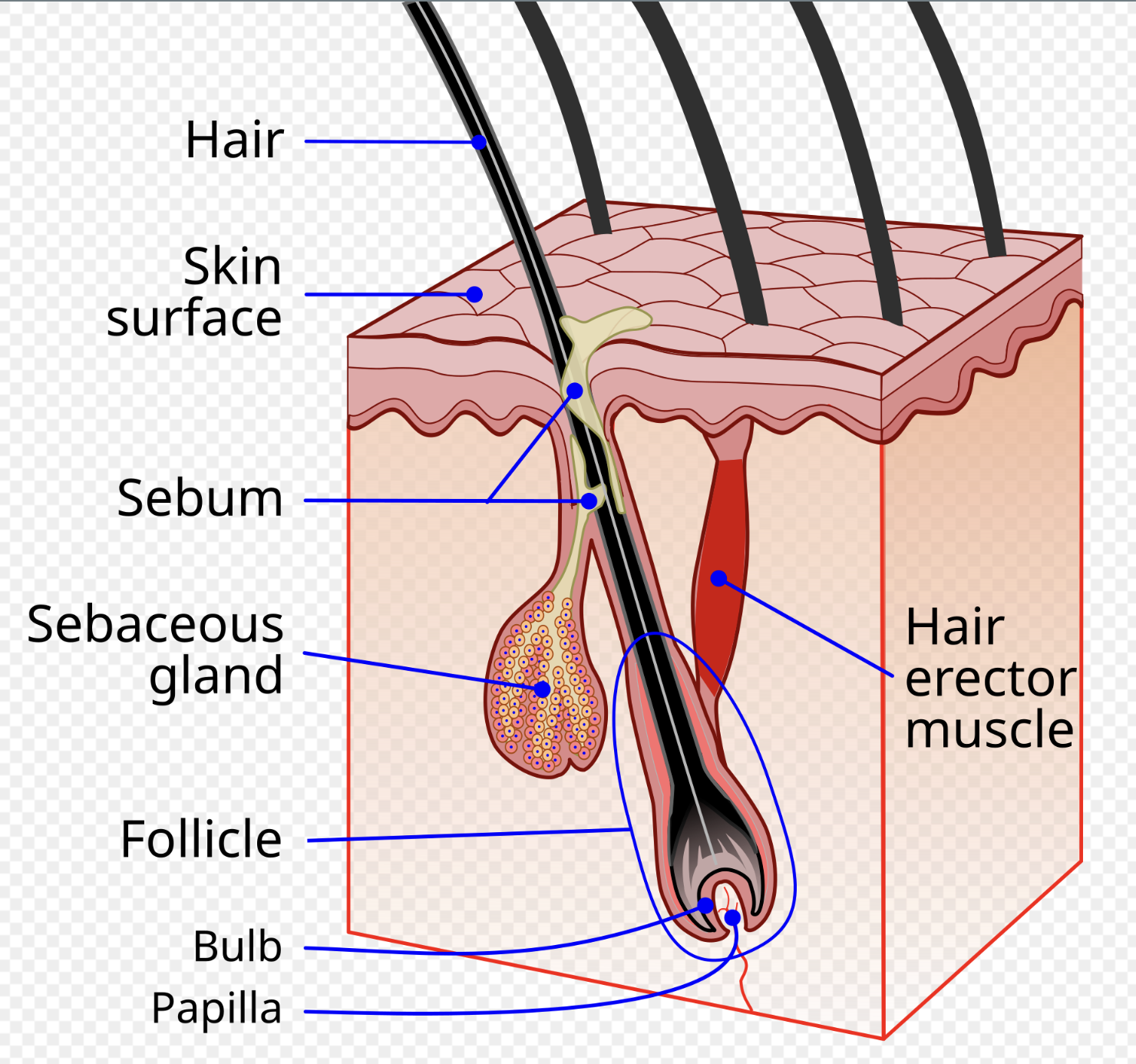
Function of sebum?
Lubrication
Apocrine glands location?
Armpits, groin
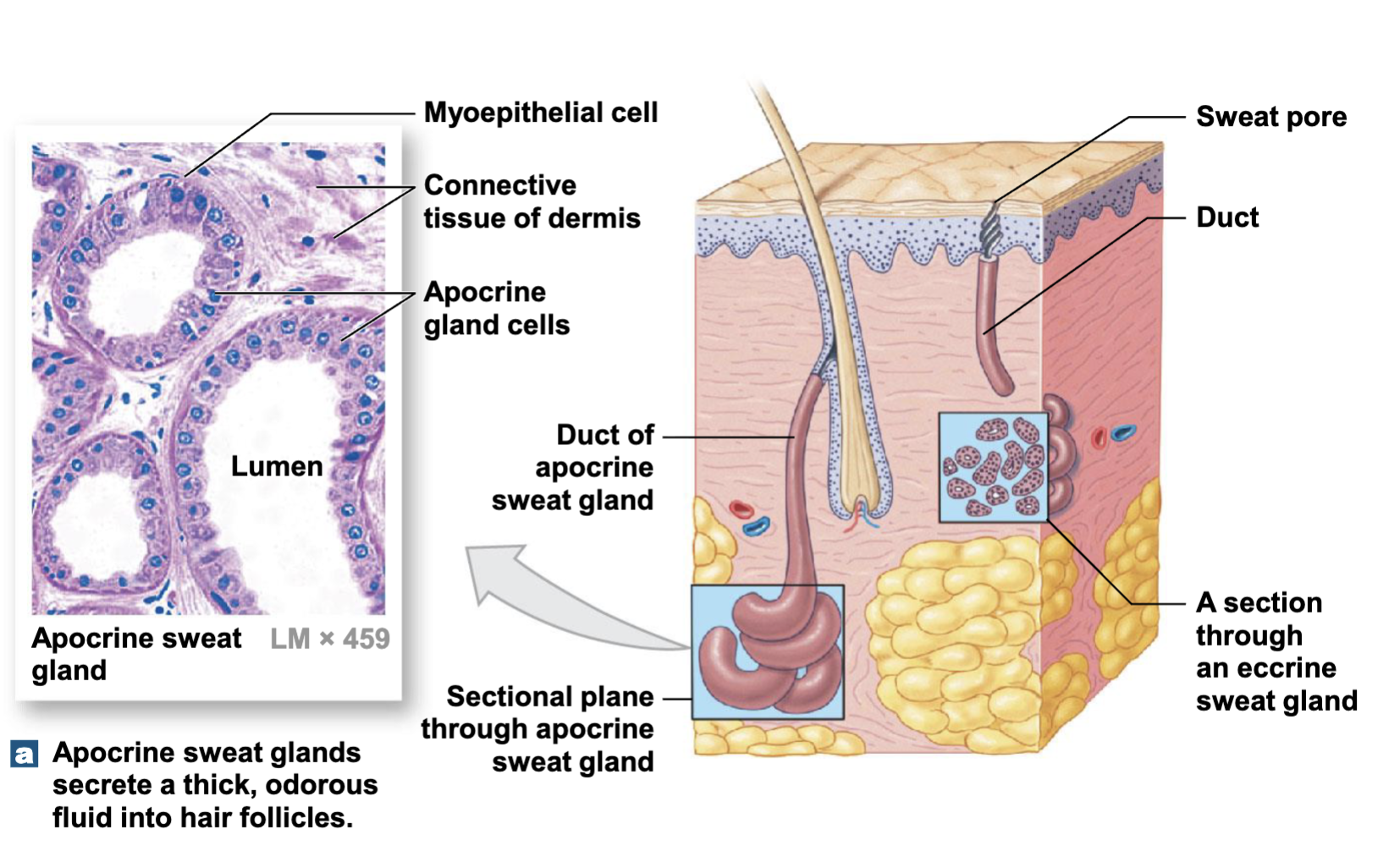
Why apocrine smell?
Bacteria
Apocrine secretion?
Thick fluid