Astronomy Final 17-29
 Studied by 2 people
 Call Kai
 Learn
Learn Practice Test
 Spaced Repetition
 Match
Match Flashcards
 Knowt Play
1/81

There's no tags or description
Looks like no tags are added yet.
Name | Mastery | Learn | Test | Matching | Spaced |
|---|
No study sessions yet.
82 Terms
Imaging/ photometry
Using images of s star to measure its brightness or position
spectroscopy
uses a prism/grating to spread starlight out, examining color in high detail
luminosity
total amount of energy a star emits in all wavelengths
features of luminosity
measures a stars true energy output independent of distance
more luminous stars burn fuel faster than fainter stars, leading to a shorter lifetime
Apparent brightness
measures how much stars light reaches the earth
light prorogation
as light radiates away from the source, its energy spreads out leading to a decrease
temperature of stellar colors
hot stars emit blue and ultraviolet light
cooler stars emit more red and infrared light
UBV system
measures apparent magnitudes
Color index
measures a stars B-V
Hotter stars are brighter in blue light and have lower B-V
Cooler stars are fainter in blue light, leading to a higher bV
UBV system color names
U: ultraviolet magnitude
B: Blue
V: visual magnitude
R: red magnitude
I: infrared
starlight spectra
when starlight is spread into a spectrum, dark absorption lines appear at specific wavelengths
star spectra in terms of temperature
cool stars have more absorption lines from neutral atoms
hot stars get absorption lines from ionized atoms
spectral category
Hottest —> coolest
O
B
A
F
G
K
M
corresponds to temperature range
Brown Dwarfs
objects with masses to low to sustain hydrogen fusion in the core
emit infrared
very faint
features of giant stars
extended atmospheres, low pressure, narrow spectral lines
features of dwarf stars
compact and dense atmosphere, broader spectral lines
metallicity
the fraction of a stars mass composed of metals
key aspects of metallicity
traces the chemical evolution of the galaxy
young stars have a higher metallicity than older stars
Center of mass for binary stars
center of mass of the binary star system lays closer to the more massive stars center of mas s
Visual binary
a pair of stars gravitationally bound together, but are observed separately through a telescope
keplers 3rd law
Spectroscopic binary
absorption lines from either star in the system show varying doppler shifts during orbit *cannot be seen through visual binary
eclipsing binary
one star blocks the light of the other during orbit
*cannot be seen through visual binary
measures the radius/diameter of both stars
optical double
stars that lie in the same line of sight but are not gravitationally bonded
Hertzprung-russel
calculated the Radii of stars with known temperature and luminosity
Luminosity classes
I: supergiant
II: bright giant
III: giant
IV: subgiant
v: main sequence dwarf
VI: subdwarf
D: white dwarfs
Absolute Magnitude “M”
The apparent magnitude a star would have if the distance was 10 pc
m-M = -2.5log10 (d/10pc) or d= 100 m-M +5/5
Giant molecular cloud (GMC
composed of hydrogen H20 and Hydrocarbons
if its mass is high enough it can withstand pressure from gas
Jeans Mass
the critical limit for gravitational collapse
Order of star Formation
the GMC contains dense clumps (core)
center of core is a protostar taking gas from cloud converting potential energy to heat and light
the rotating core flattens into a disk
protostar forms bipolar outflow— removing remaining metal
Protostar is now T Tauri star still collecting material
Main sequence evolution
hydrogen fusion at the equilibrium rate
time on MS relies on stellar mass
MS lifetime is 80-90% of total stellar lifetime
Planetary Nebula formation
ejects cloud of gas and dust
star ejects gas from surface
gas is channeled into directly opposing streams
Very massive stars in Main sequence
explode as a supernova, eventually becoming a black hole
Massive stars Main sequence
explode as a supernova but form as a neutron star
intermediate mass star Main sequence
becomes white dwarfs
low mass stars Main sequence
has some connective layers with strong magnetic fields
Very Low mass stars Main sequence
fully connective layers converting all hydrogen into helium, with a long lifetime
Core-collapse supernova
cycles of fusion in the core produce layers of heavy elements, fusion stops once iron forms. the core implodes once it reaches critical mass
Open clusters
Groups of thousands of stars
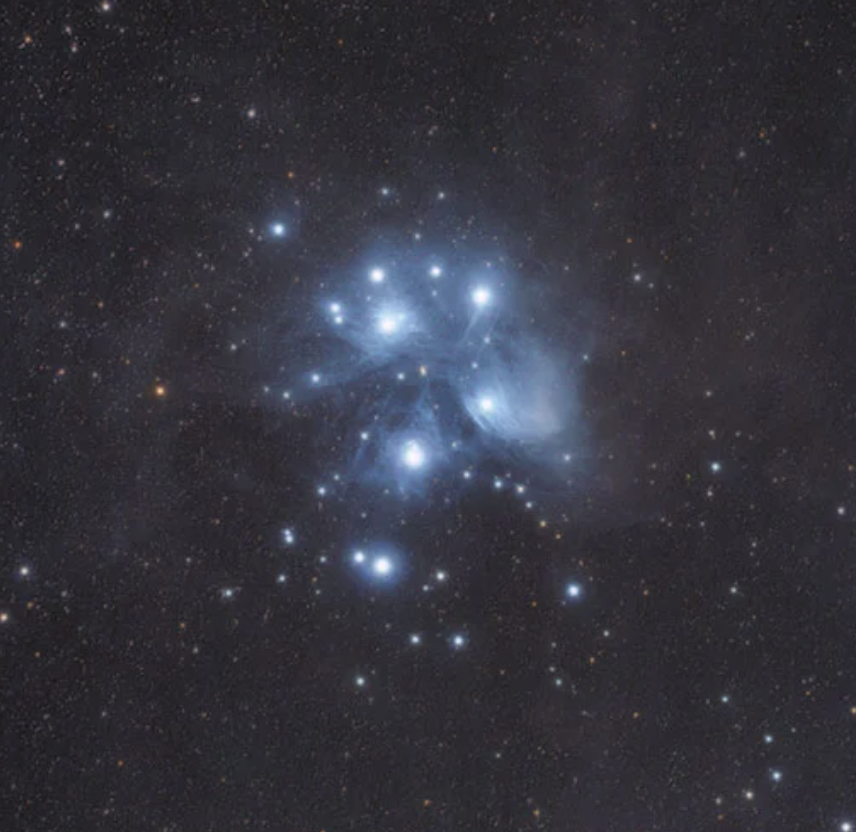
Features of open clusters
young stars, loosely shaped, located in the galactic disk
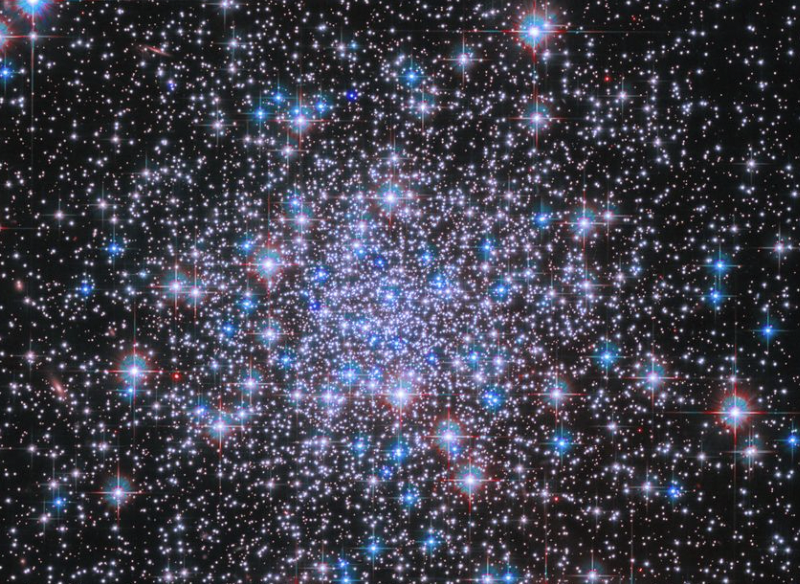
globular clusters
denser groups of thousands of stars
features of globular clusters
earliest formation in our galaxy, low metallicity, only low mass stars left in main sequence, located in galactic halo
Roche Lobe
the surface surrounding each star where the gravitational influences are equal
Ordinary Nova
when white dwarfs accumulate enough hydrogen to surface letting out a breif burst of H fusion
Type Ia supernova
generally produced by gathering white dwarfs or the merging of 2 WD
type of standard candle
Standard Candle
a star with a intrinsic luminosity, lets astronomers measure intrinsic distances
Henrietta Levitt
discovered the relationship between cepheids intrinsic luminosity and pulsation period. measures distances within milky way and nearby galaxies
“Levitt Law”
Log10 <L>/ Lsun = 1.15 log10 P +2.47
Edwin Hubble
calculated distance to spiral nebula
white dwarfs
dense, hot, earth size cores, made up of carbon and oxygen, no fusion in core
Pauli-exclusion principal
requires each electron to have its own space, once the minimum volume is reached electrons create pressure to withstand collapse
Type II Supernova
this occurs in massive star in MS, core electrons disappear fusing into protons, neutrinos fly outwards and the remaining core is stabilized by neutron degeneracy. leaving a neutron star remnant
features of a black hole
star builds iron core, when fusion stops the outer shell cannot stop collapse
iron core collapse and becomes dense
nuetron degeneracy pressure cannpt support collapsing core
core reaches its critical radius as gravity prevents light from escaping
event horizon
where velocity surpasses speed of light, and strength of gravity is so strong nothing escapes
singularity
remnants from black hole that contains all the mass concentrated into a singular small region
supermassive black holes
found at the center of most galaxies, mass measured by keplers 3rd law, stars closer to galactic center orbit faster eventually overtaking those in larger orbits, leading to spiral arms
spiral arms
the problem that came with understanding the orbit of stars, its believed that stars orbit within the disk of a spiral galaxy, creating dense clumps that created spiral arms.
*like a traffic jam caused by diff orbiting stars
Vera ruben
first evidence of dark matter
Dark matter
flat curves that indicate unidentified material
features of dark matter
emits no wavelengths = invisible
has a gravitational effect on stars and gas
95% of total galaxy mass
Spiral galaxies
Sa/ Sba
Sb/ SBb
Sc/ SBc
Sa galaxy features
tightly wounded with smooth arms and light central bulge
Sb galaxy
the milky way, fainter bulge and less tightly wound
Sc Galaxy
loose spiral arms, clear stellar clusters, smaller bulge
features of spiral galaxies
young stars, star forming regions, dust in the spiral arms
central bulge appears due to older star population
global clusters are distributed aroung galactic halo
elliptical galaxies
smooth and featurless, most common galaxy, large range in size and mass, contains highly evolved, low mass, low metallicity population of stars, limited dust or gas.
lecticular galaxies
intermediate between ellipticals and spirals, appears disk like but lacks spiral arms, SBo classification
irregular galaxies
don’t fit into hubble sequence
tully-fisher relation
as the galaxy rotates one gas moved towards us and gas on the other side moves away. this links a galaxies luminosity to its rotational velocity
Minor mergers
dwarf galaxies get taken over by other large galaxies— galactic cannabolism. this does not disrupt the larger galaxy
major mergers
two large galaxies merge causing major disruption. this can strip gas out of a galaxy or cause a starburst galaxy
galaxy cluster
members of a galaxy cluster are gravitationally bound to each other
supercluster
contains dozens of galaxy clusters that are not bound by gravity
voids
regions of the universe where no galaxies are found
geroge lamatire
“expansion of the universe” —> clusters of galaxies are not moving apart but space time of universe is moving
cosmological redshift,z.
caused by stretching of photons wavelengths as it passes through the expanded universe
Big bang
marks creation of the universe. the universe was originally a dense singularity where time and space were created
evidence of big band
expansion of the universe
most other galaxies are moving away from our milky way
the farther the galaxy the faster it recedes
cosmic wave background
big banged produced a hot explosion filling universe with high energy short-wave photons
cosmic neutrino background
dark energy
a mysterious force that causes the universe's expansion to accelerate, there is no known orgin, makes up 73 % of space
Horizon problem
the universe is the same almost everywhere due to thermal equilibrium (shouldn’t happen)
the addition of a period — expansion of universe — created a isotropic universe
Inflation
is the reason temperatures increase exponentially together throughout the universe
 Note
Note  Flashcards (69)