HITT EXAM 3 (C. 5-6)
 Call Kai
 Learn
Learn Practice Test
 Spaced Repetition
 Match
Match Flashcards
 Knowt Play
1/206

There's no tags or description
Looks like no tags are added yet.
Name | Mastery | Learn | Test | Matching | Spaced | Call with Kai |
|---|
No analytics yet
Send a link to your students to track their progress
207 Terms
Receives blood from the veins and pumps blood into the arteries.
Heart/o
Blood Vessels/o
Transport blood to and from all areas of the body.
Arteries/o
Transport blood away from the heart to all parts of the body.
Capillaries/o
Permit the exchange of nutrients and waste products between the blood and the cells.
Veins/o
Return blood from all body parts to the heart.
Immature cells = hematopoietic stem cells (HSCs) or hemocytoblasts
differentiate into erythrocytes, platelets, and leukocytes as they develop.
Plasma/o
Contains nutrients, hormones, waste products, and clotting proteins.
Erythrocytes/o (RBC) - Make up about 45% of the blood by volume
Transport oxygen to the tissues. (erythr/o means red, and -cytes means cells).
Platelets/o also called --thrombocytes are (THROM-boh-sights) the smallest formed elements of the blood.
Play an important role in the clotting of blood.
angi/o
blood or lymph vessels
ather/o
plaque, fatty substance
peri-
surrounding
phleb/o
vein
-sclerosis
abnormal hardening
tachy-
fast, rapid
thromb/o
clot
ven/o
vein
ACE inhibitor. Medication that relaxes blood vessels.
Blocks the action of the enzyme that causes the blood vessels to contract, resulting in hypertension
anemia (ah-NEE-mee-ah)
Condition marked by a deficiency of red blood cells
aneurysm (AN-you-rizm)
Abnormal bulge in a blood vessel
angina (an-JIGH-nuh)
Chest pain due to inadequate blood flow to the myocardium.
angiography (AN-jee-oh-plas-tee)
(angi/o means blood vessel, and -graphy means the process of recording).
An x-ray of the blood vessels after the injection of a contrast medium
anticoagulant (an-tih-koh-AG-you-lant)
Medication that prevents blood clotting. Coumadin and Heparin
-lytic
means to destroy
aorta (ay-OR-tah)
Main artery of the body
aortic stenosis (ay-OR-tick steh-NOH-sis)
Narrowing of the aortic valve
arrhythmia (ah-RITH-mee-ah)
YTH
Irregular heartbeat
atherectomy (ath-er-ECK-toh-mee)
Surgical removal of plaque from an artery
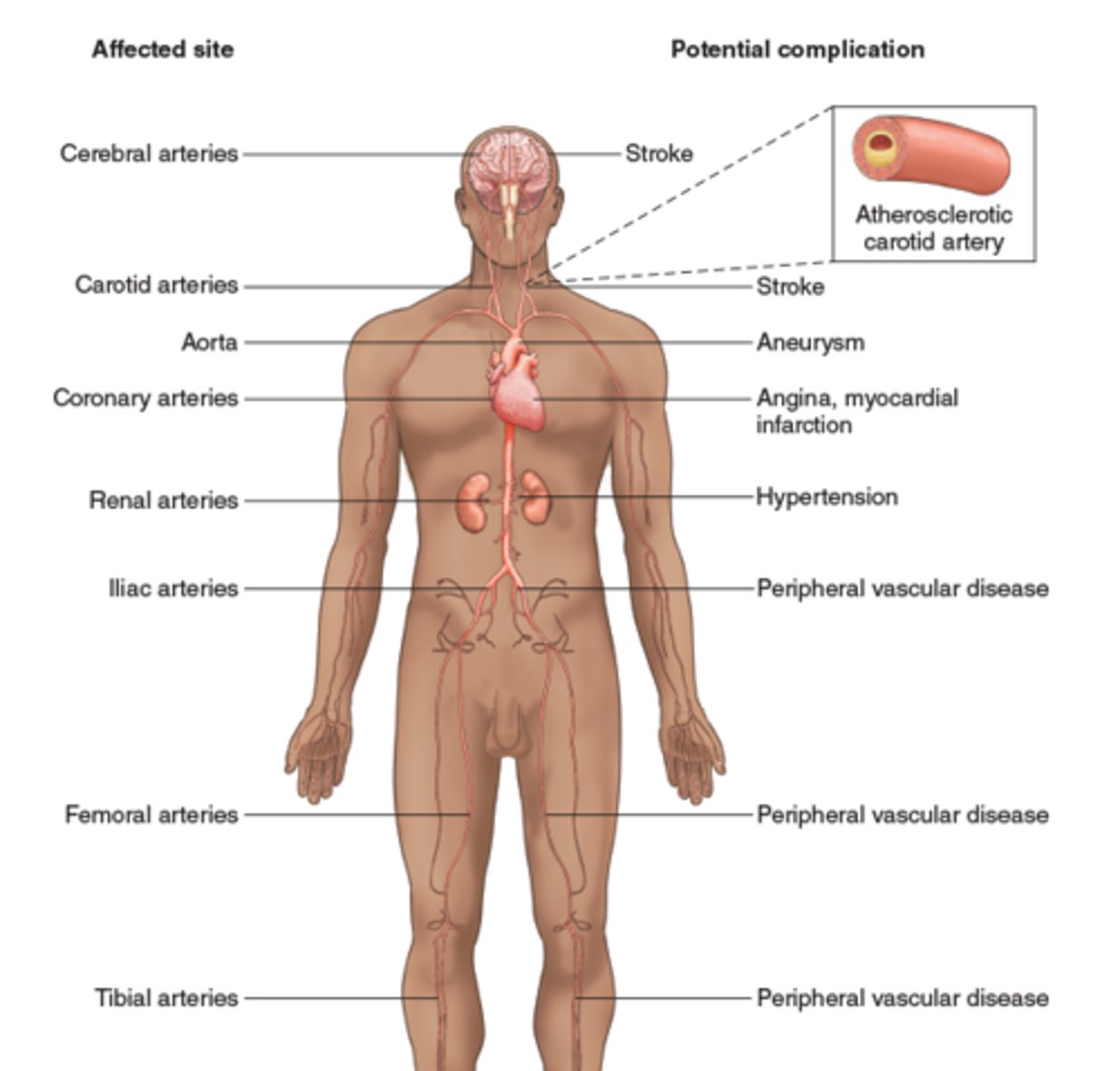
atherosclerosis (ath-er-oh-skleh-ROH-sis) -
ather/o means plaque or fatty substance, and -sclerosis means abnormal hardening
Hardening of arteries due to plaque buildup.
atrial fibrillation (AY-tree-al fih-brih-LAY-shun)
Irregular and often rapid heart rate
automated external defibrillator (dee-FIB-rih-lay-ter)
Device that restores normal heart rhythm
beta-blocker (BAY-tah-blok-er)
Medication that reduces heart rate
bradycardia (brad-ee-KAR-dee-ah)
(brady- means slow, card means heart, and -ia means abnormal condition)
Slow heart rate
capillaries (KAP-uh-ler-eez)
Small blood vessels where exchange occurs
cardiac arrest
Sudden loss of heart function
cardiac catheterization (KAR-dee-ack) (Kath-eh-ter-eye-ZAY-shun)
A diagnostic and treatment procedure in which a catheter is passed into a vein or artery and then guided into the heart
cardiomyopathy (kar-dee-oh-my-OP-ah-thee)
Disease of the heart muscle
carotid endarterectomy (kah-ROT-id end-ar-ter-ECK-toh-mee)
(end- means within, arter means artery, and -ectomy means surgical removal).
Surgical procedure to reduce stroke risk
cholesterol (koh-LES-ter-ol)
Fat-like substance in the blood
chronic venous insufficiency
Condition where veins cannot pump enough blood
coronary artery disease (CAD) or (CHD)
Narrowing of coronary arteries. This creates an insufficient supply of oxygen that can cause angina (pain), myocardial infarction (heart attack), or death
coronary thrombosis (KOR-uh-nerr-ee throm-BOH-sis)
Blood clot in a coronary artery
defibrillation (dee-fih-brih-LAY-shun)
Restoration of normal heart rhythm
diastole (dye-AS-toh-lee)
Phase of the heartbeat when the heart relaxes
diuretic (dye-you-RET-ick)
Medication that increases urine production
electrocardiogram (ee-leck-troh-KAR-dee-oh-gram)
(electr/o means electric, cardi/o means heart, and -graphy means the process of recording a picture or record)
Recording the electrical activity of the myocardium
electrophysiologist (eh-LEK-troh-fiz-ee-ol-oh-jist)
Specialist in heart's electrical system
embolism (EM-boh-lizm)
(embol means something inserted, and -ism means condition).
Blockage caused by an embolus
embolus (EM-boh-lus) - Blood clot
Blood clot or other substance that travels
endocarditis (en-doh-kar-DYE-tis)
Inflammation of the heart's inner lining
erythrocytes (eh-RITH-roh-sights)
Red blood cells - (erythr/o means red, and -cytes means cells)
heart murmur
Abnormal heart sound
hemoglobin (HEE-moh-gloh-bin)
(hem/o means blood, and -globin means protein)
Protein in red blood cells that carries oxygen
hypoperfusion (high-poh-per-FYOU-zhun) - Perfusion is the circulation of blood through an organ or tissues.
Inadequate blood flow to an organ
ischemia (iss-KEE-mee-ah)
(isch means to hold back, and -emia means blood)
Insufficient blood supply to an organ
long QT syndrome - Long QT intervals between beats
Heart rhythm disorder
mitral valve prolapse (MY-tral VALV proh-LAPS)
Condition where the mitral valve does not close properly
myocardial infarction (my-oh-KAR-dee-al in-FARK-shun)
Heart attack
orthostatic hypotension (or-thoh-STAT-ick high-poh-TEN-shun)
ortho = upright
Drop in blood pressure when standing up
pericardium (pehr-ih-KAR-dee-um)
Membrane surrounding the heart
Narrowing of arteries in the limbs
peripheral artery disease
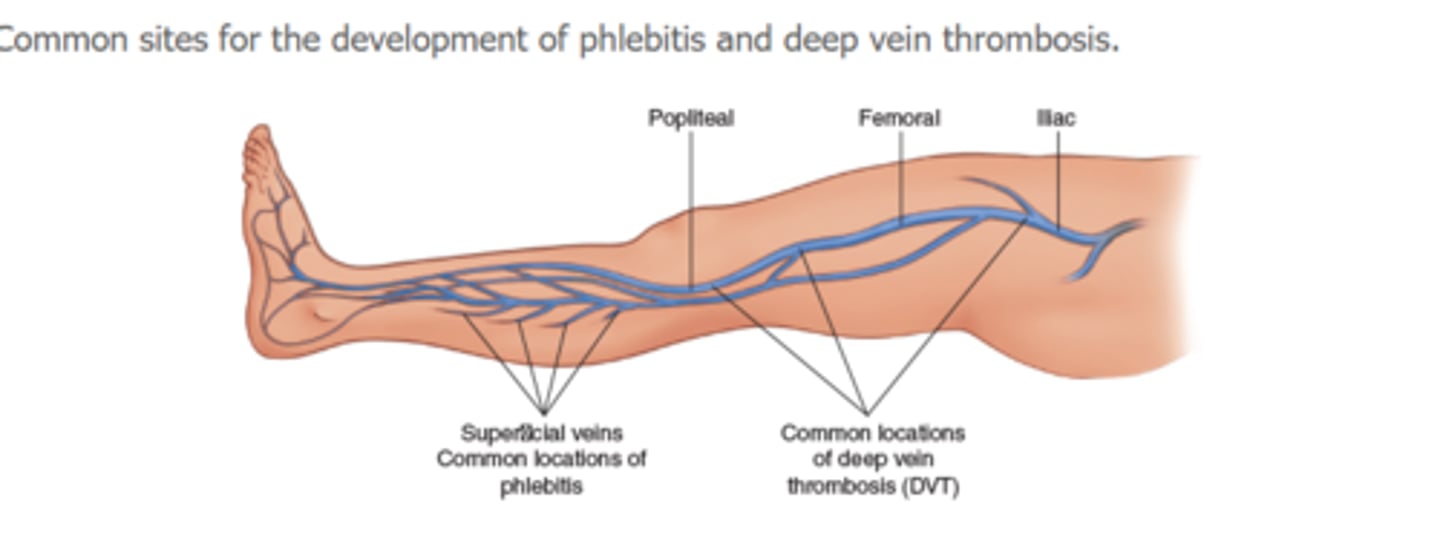
phlebitis (fleh-BYE-tis) - (phleb means vein, and -itis means inflammation).
Inflammation of a vein
Raynaud's disease (ray-NOHZ)
Condition causing reduced blood flow to fingers and toes
sinoatrial node (sigh-noh-AY-tree-ahl)
Natural pacemaker of the heart
systole (SIS-toh-lee) or systolic
Phase of heartbeat when the heart contracts
tachycardia (tack-ee-KAR-dee-ah)
(tachy- means rapid, card means heart, and -ia means abnormal condition)
Fast heart rate
telemetry nurse (teh-LEM-eh-tree)
Nurse monitoring patients' heart rhythms
temporal arteritis (TEM-poh-ral ar-teh-RYE-tis)
Inflammation of blood vessels in the head
thallium stress test (TST) (THAL-ee-um)
Test to assess blood flow to the heart
thrombolytic (throm-boh-LIT-ick)
Medication that dissolves blood clots
thrombosis (throm-BOH-sis)
Formation of a blood clot
thrombotic occlusion (throm-BOT-ick ah-KLOO-zhun)
Blockage caused by a thrombus
thrombus (THROM-bus)
Blood clot that forms in a blood vessel
varicose veins (VAHR-ih-kohs VAYNS)
Enlarged veins due to valve failure
venous thromboembolism
Blood clot in a vein that travels
ventricular fibrillation (ven-TRICK-you-lar fih-brih-LAY-shun)
Life-threatening heart rhythm
ventricular tachycardia (ven-TRICK-you-lar tack-ee-KAR-dee-ah)
Fast heart rate originating from the ventricles
chromat/o
color
coagul/o
clotting, coagulation
-emia
blood, blood condition
erythr/o
red
fibrin/o
fibrin, fibers, threads of a clot
-globin
protein
myel/o
spinal cord, bone marrow
-oid
resembling
-penia
deficiency
plasma, plasm/o
something molded or formed, plasma
-poiesis
to make
-stasis
maintenance of a constant level
allogeneic transfusion (al-loh-jen-EEH-ick)
Blood transfusion from a donor all/o means different, gene means origin, and -ic means pertaining to)
antigen (AN-tih-jen)
Substance that triggers an immune response
aplastic anemia (ay-PLAS-tick ah-NEE-mee-ah)
(a- means without, plast means growth, and -ic means pertaining to)
Condition where bone marrow fails to produce enough blood cells.
autologous transfusion (aw-TOL-uh-guss)
Transfusion of one's own blood
basophils (WBCs)- least common type. Formed in red bone marrow.
(allergic)
Responsible for the histamines that cause the symptoms of allergic reactions.
coagulation (koh-ag-you-LAY-shun)
(coagul means clotting, and -ation means action).
Process of blood clotting
coagulopathy (koh-ag-you-LOP-ah-thee)
Disorder of blood clotting
comprehensive metabolic panel (CMP) - Chem 14
A screening tool used to see the body’s metabolism by measuring fourteen different substances in the blood.
decompression sickness
Condition from rapid ascent in sea-divers
direct antiglobulin test
Test for autoimmune hemolytic anemia
eosinophils WBCs (ee-oh-SIN-oh-fills) - plays a role in allergic reactions
Formed in red bone marrow and then migrate to tissues throughout the body.

