Lecture 1: Fluid Compartments, Homeostasis, and Feedback Systems
 Studied by 0 people
 Call with Kai
 Learn
Learn Practice Test
 Spaced Repetition
 Match
Match Flashcards
 Knowt Play
1/39

Earn XP
Description and Tags
These flashcards cover key concepts related to fluid compartments, homeostasis, feedback systems, and the electrical properties of neurons highlighted in Lecture 1.
Name | Mastery | Learn | Test | Matching | Spaced | Call with Kai |
|---|
No study sessions yet.
40 Terms
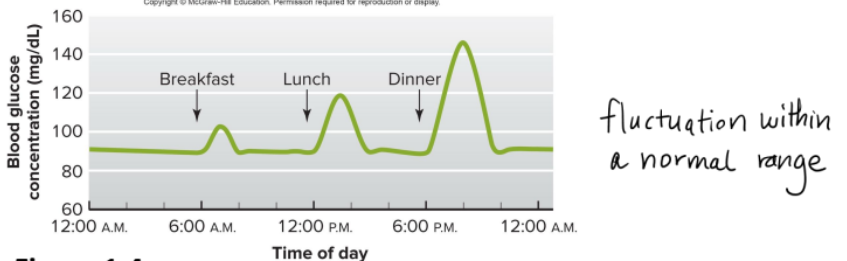
Homeostasis
The physiological variables in a state of dynamic constancy, it is NOT a static process
Feedback Systems
Mechanisms that help regulate homeostasis by responding to changes in the body, including negative and positive feedback.
Ionic Basis of Action Potentials
The movement of ions across the neuronal membrane that creates an action potential.
Fluid Compartments
The various areas in the body where fluids are contained, such as intracellular fluid and extracellular fluid.
Negative Feedback
A feedback system where the response moves in the opposite direction of the stimulus, helping to stabilize physiological changes.
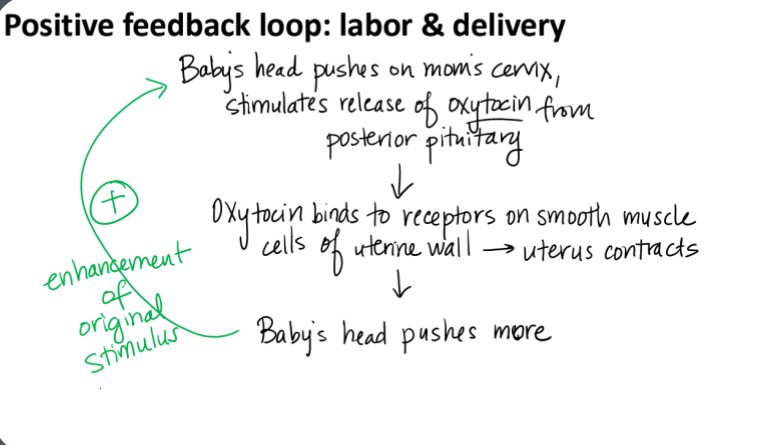
Positive Feedback
A feedback system that enhances or accelerates the original stimulus until a specific event is completed.
Resting Membrane Potential
The voltage difference across a membrane at rest, typically around -70mV in neurons.
Graded Potential
A potential change of variable amplitude and duration that is conducted decrementally, having no threshold or refractory period.
Action Potential
A brief all-or-none depolarization of the membrane, which reverses polarity in neurons and has a threshold and refractory period.
Electrolyte Balance
The distribution and concentration of ions in the body fluids, crucial for maintaining membrane potentials and cellular functions.
Intracellular Fluid
Fluid contained within cells, making up about two-thirds of total body water.
Extracellular Fluid
Fluid outside cells, including interstitial fluid and plasma, contributing to one-third of total body water.
Depolarization
A decrease in the membrane potential, making it more positive and closer to the threshold for triggering an action potential.
Hyperkalemia
A condition characterized by elevated levels of potassium in the blood, which can affect resting membrane potential and excitability of cells.
Threshold Potential
The membrane potential at which an action potential is initiated, typically around -55mV for neurons.
Membrane Permeability
The ability of ions to pass through the cell membrane, which influences resting and action potentials.
What is physiology
Study of FUNCTION
Function and INTEGRATION
Why is it important that there are different concentrations of sodium ions in and outside of cells
More Na+ OUTSIDE than inside
Makes inside more Negatively charged
Allows for action potential/nerve impulses → contractions
Regulated cell volume/prevent bursting
Secondary active transport for glucose, amino acids, calcium
Blood is part of which fluid compartment?
Plasma
Interstitial fluid and plasma are both considered extracellular
fluid and thus have similar ionic components.
True
Circulatory system
Circulatory System
Major organs/tissues: Heart, blood vessels, blood
Primary functions: Transport of blood throughout the body
Digestive System
Major organs/tissues: Mouth, salivary glands, pharynx, esophagus, stomach, small & large intestines, anus, pancreas, liver, gallbladder
Primary functions: Digestion and absorption of nutrients and water; elimination of wastes
Endocrine System
Major organs/tissues: Pituitary, thyroid, parathyroid, adrenals, pancreas, ovaries/testes, hypothalamus, pineal gland
Primary functions: Regulation and coordination of body activities (growth, metabolism, reproduction, blood pressure, electrolytes)
Musculoskeletal System
Major organs/tissues: Bones, cartilage, ligaments, tendons, joints, skeletal muscle
Primary functions: Support, protection, movement; blood cell production
Nervous System
Major organs/tissues: Brain, spinal cord, peripheral nerves, ganglia, sense organs
Primary functions: Rapid regulation and coordination; sensation, response to stimuli, consciousness, learning, memory
Reproductive System
Male organs/tissues: Testes, penis, ducts, glands
Female organs/tissues: Ovaries, fallopian tubes, uterus, vagina, mammary glands
Primary functions:
Male: Production and transfer of sperm
Female: Production of eggs; support and nourishment of embryo/fetus and infant
Respiratory System
Respiratory System
Major organs/tissues: Nose, pharynx, larynx, trachea, bronchi, lungs
Primary functions: Gas exchange (O₂ and CO₂); regulation of blood pH
Urinary System
Urinary System
Major organs/tissues: Kidneys, ureters, bladder, urethra
Primary functions: Regulation of plasma composition; excretion of water, ions, and wastes
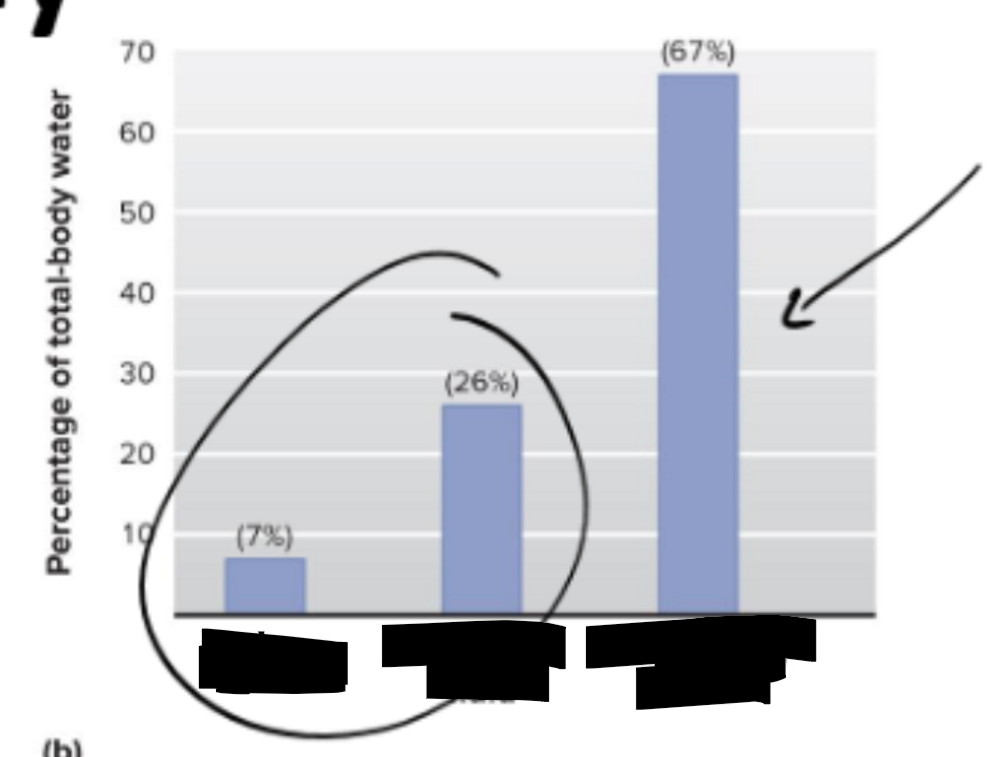
Fluid Compartments in the Body
7% Plasma
26% Interstitial Fluid
67% Intracellular Fluid
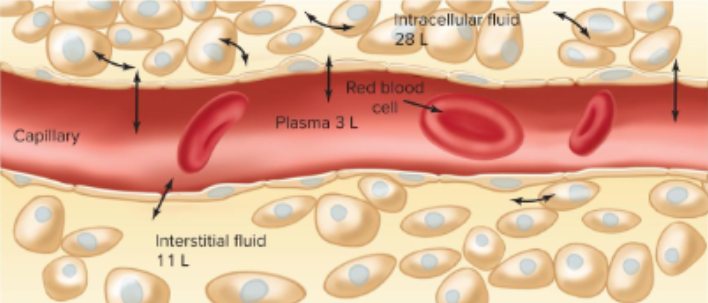
intracellular
Fluid within cells (e.g., cytoplasm); makes up about 2/3 of total body water.
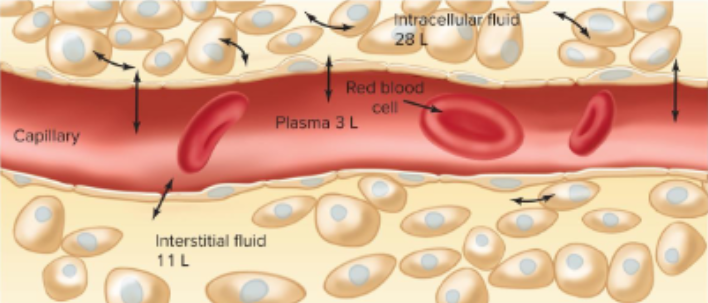
Extracellular
Fluid outside cells; includes interstitial fluid and plasma, which have similar composition; makes up about 1/3 of total body water.
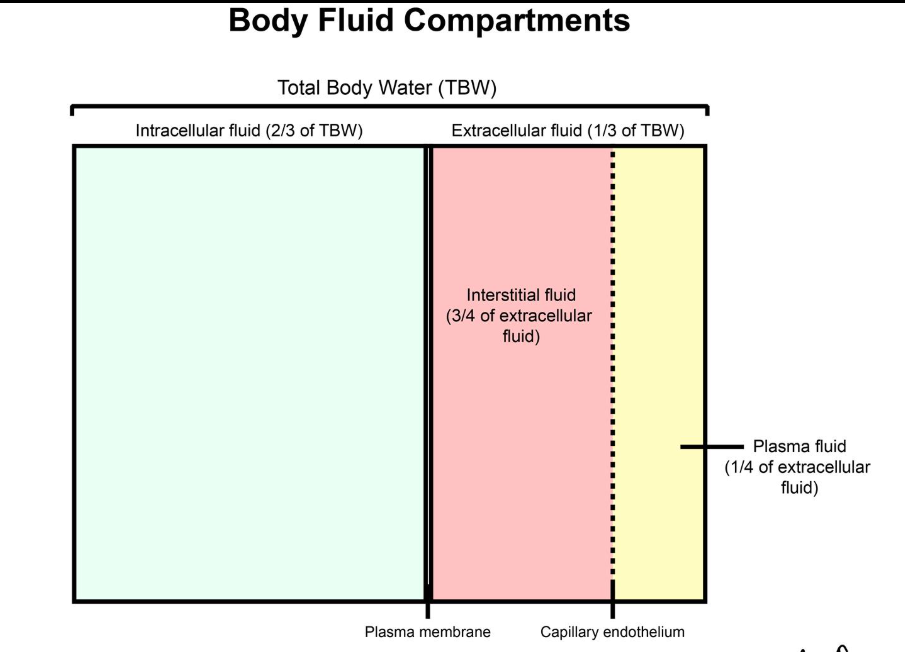
Fluid Compartments in the Body: Why do we care?
Cells only work if their fluid environment is stable.
It explains what happens when patients get IV fluids
Edema, dehydration, and shock all come down to fluid shifts
Drugs and electrolytes depend on compartments
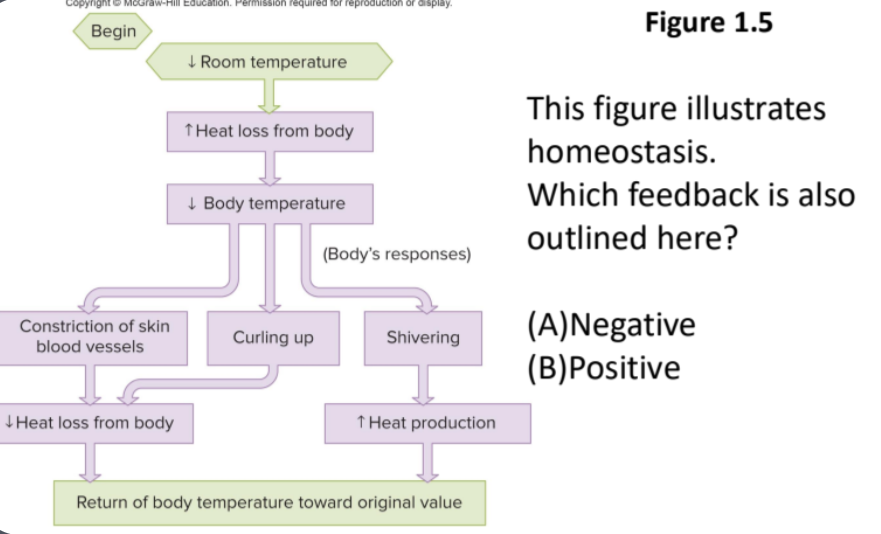
negative feedback
Why:
The drop in body temperature triggers responses (vasoconstriction, curling up, shivering) that oppose the initial change by:
decreasing heat loss
increasing heat production
These responses return body temperature toward its original value, which is the defining feature of negative feedback.
👉 Key rule to remember:
Negative feedback = reverses the change
Positive feedback = amplifies the change
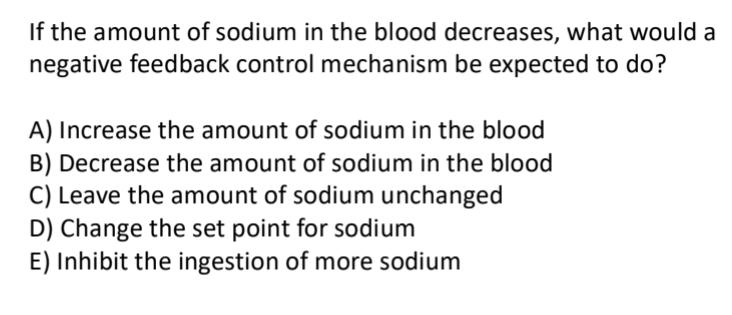
If the amount of sodium in the blood decreases, what would a negative feedback control mechanism be expected to do?
A) Increase the amount of sodium in the blood
Negative Feedback Systems
increase or decrease in variable → response moves it in opposite direction
Positive Feedback Systems
accelerated process, explosive system, ends when stimulus is gone
Negative feedback loop Ex. blood sugar DESCRIBE
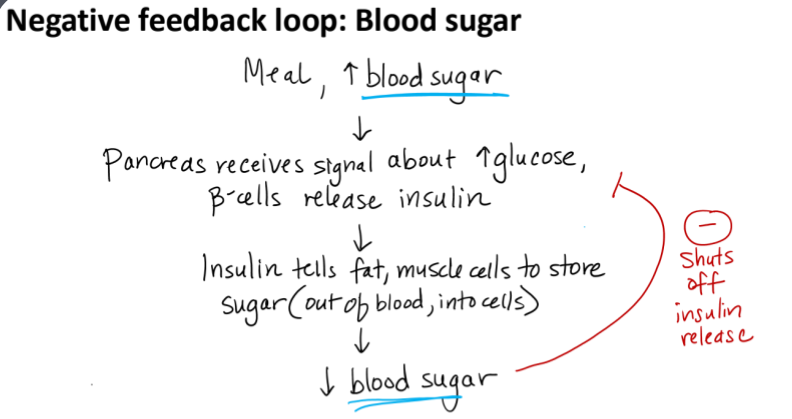
Positive feedback loop: labor & delivery DESCRIBE
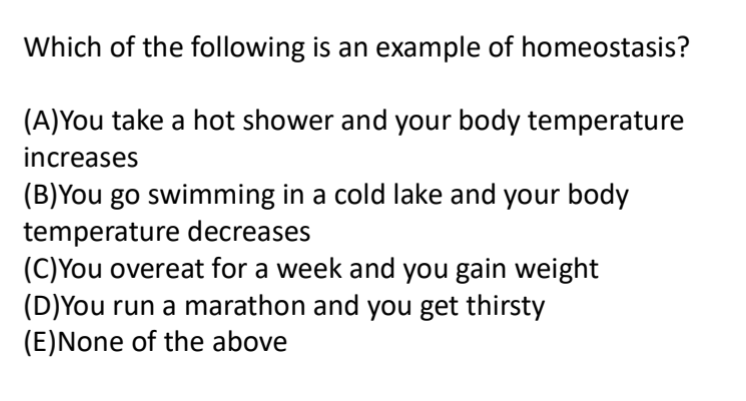
Which of the following is an example of homeostasis?
none of the above
 Note
Note  Flashcards (56)